Disinformation simply isn’t on the RADAR–or writing history that is safe for Western academic consumption
Posted by romanianrevolutionofdecember1989 on June 10, 2025
Having inhabited both the intelligence analysis and academic worlds in my professional life, I believe I gained insights that I would not have acquired had I resided solely in one world or the other. A fundamental observation involves the level of emphasis placed on voluntarist vs. structural explanations of behavior and outcomes. This is a first, early, and unfinished take on this question.
Nothing is more of a “nullifier” in the Western academic world than the taint of “conspiratorial thinking.” I don’t think this is accidental. In part, it is a somewhat reflexive, defensive reaction to the conspiratorial thinking that Western academics identify in the non-Western countries they study. Critics might call this a variant of neo-Orientalism. My own experience comes in particular in the study of communist/post-communist “Eastern Europe,” the Balkans, especially Romania.
While it is true that locals attracted by and desirous of integrating Western academic trends in Romania also denounce the conspiratorial thinking of others, often their competitors or their enemies, they remain a minority. Moreover, and perhaps more interesting, is that Romanian academic emigres to the West are unwilling in practice to fully assimilate the same level of preference for structure over agency, and for unintentional or accidental outcomes, that their non-emigre Romanianist colleagues display. There seems to be precious little acknowledgement and discussion that such a Western academic preference is itself potentially a cultural affect, derivative of the status of outsiders examining a foreign country. This is not to say that it is wrong, or even automatically wrong, just to say that it needs to be acknowledged, just as the proclivity of Romanians for “conspiratorial thinking” is stressed by these same scholars.
Take, the most “Western academic” among “Western academic studies” on the topic, The Romanian Revolution of December 1989 (Cornell University Press, 2005) by Peter Siani-Davies. You can do a search, as I did, on Google Books, for terms like “rumor” and “myth” and get back essentially three dozen hits for each. Of course, both rumor and myth in the Western connotation, especially Western academic connotation, tend to subsume/be preceded by the word “false.” And, crucially, the underlying assumption is that these are predominantly organic phenomena, that to the extent they are wrong, they were/are unintentional or accidental. A good counterpoint is to look up terms like “disinform/ation,” “misinform/ation,” or “lie” in Siani-Davies volume. One finds almost nothing. This highlights a major flaw underlying Siani-Davies’ analysis: the unspoken assumption that confusion, stereotypes, and understandable, but ultimately unsubstantiated suspicion, explain ACCURATELY what happened in December 1989 in Romania. That should be a hypothesis, something to be tested, not a stealth assumption in the background.
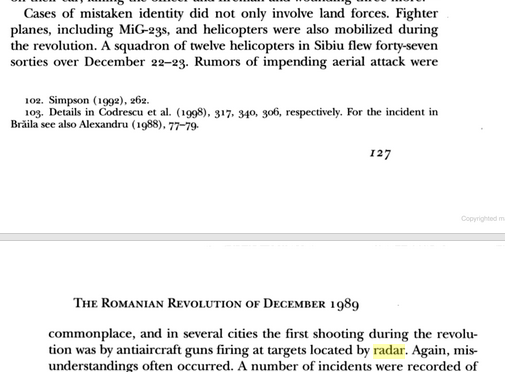
In Siani-Davies’ volume, a search for “radar” in Google Books comes up with three hits, but only one of any real consequence. Even then, Siani-Davies blithely recounts that “in several cities the first shooting during the revolution was by antiaircraft guns firing at targets located by radar.” Siani-Davies makes no attempt to investigate the targets on radar further, focusing instead on the misunderstandings that ensued. This is also a fundamental error in Siani-Davies’ analysis: the assumption that misunderstandings completely take the place of or cannot coexist with real, intentional confrontations. Siani-Davies fails to ask if the targets on the radar were real or artificial, the latter a consequence of intentional disinformation, or both? That is a critical question and one that has dominated much of the discussion of this question in Romania. Siani-Davies should have known that, and perhaps does, although it is doubtful a single reviewer of his work did, cared, or realized its significance.
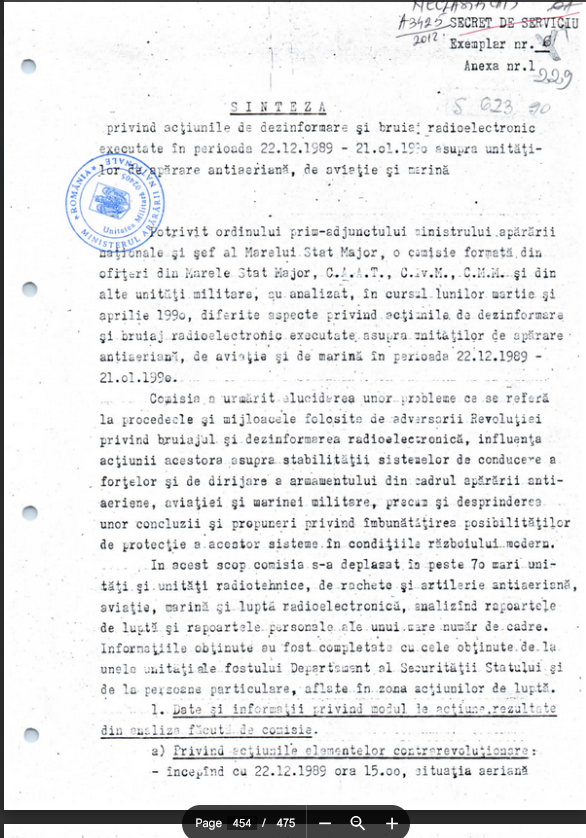
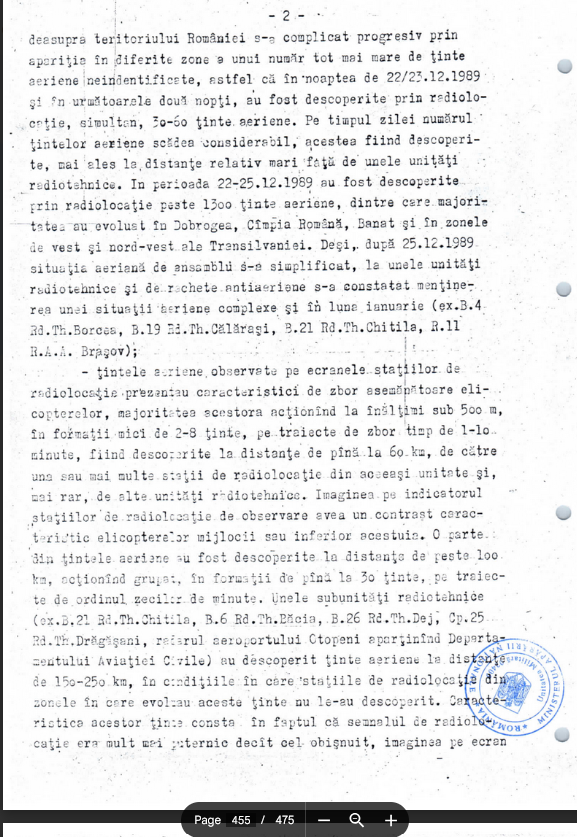
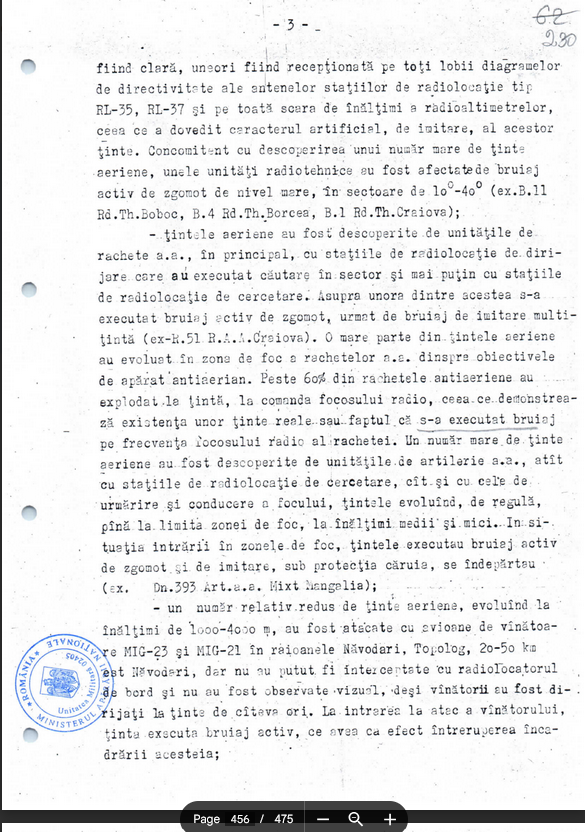
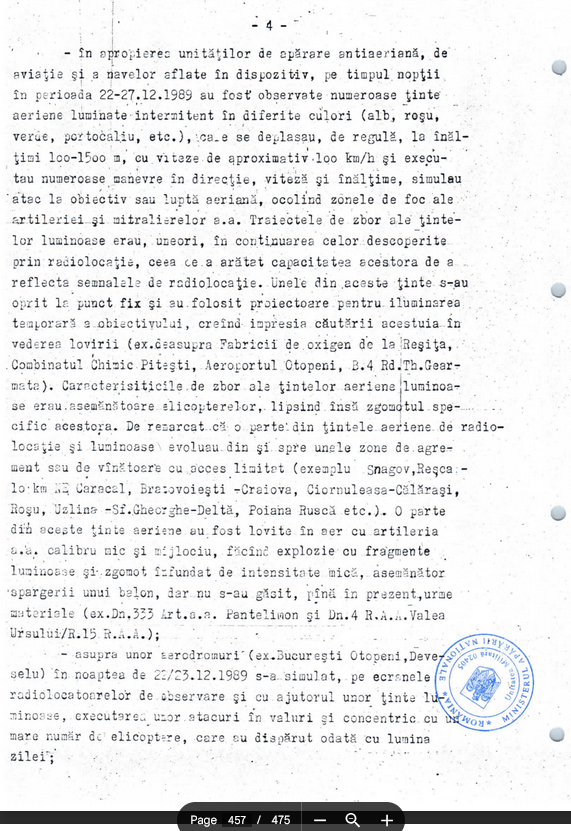
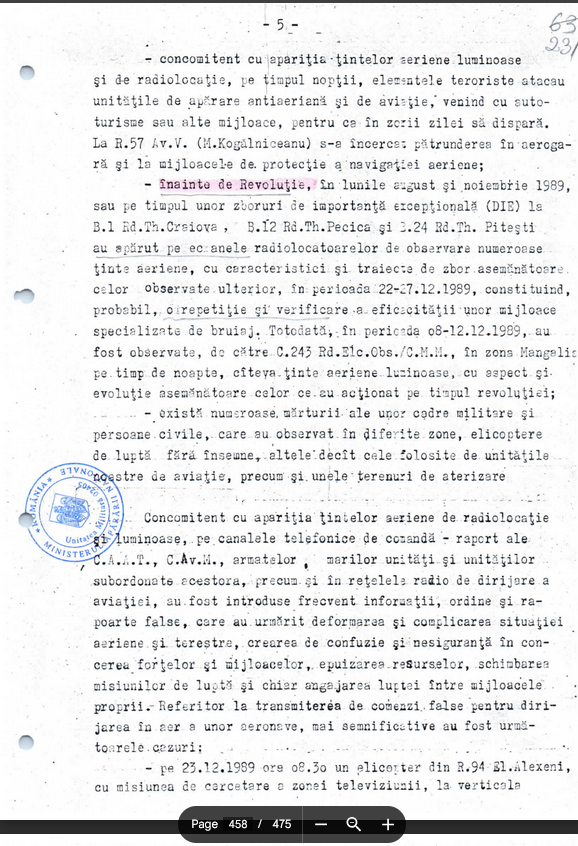
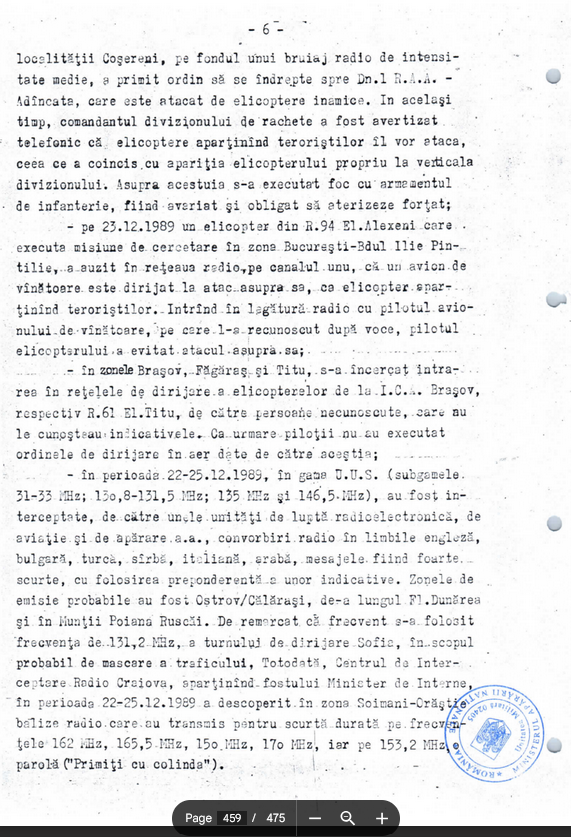
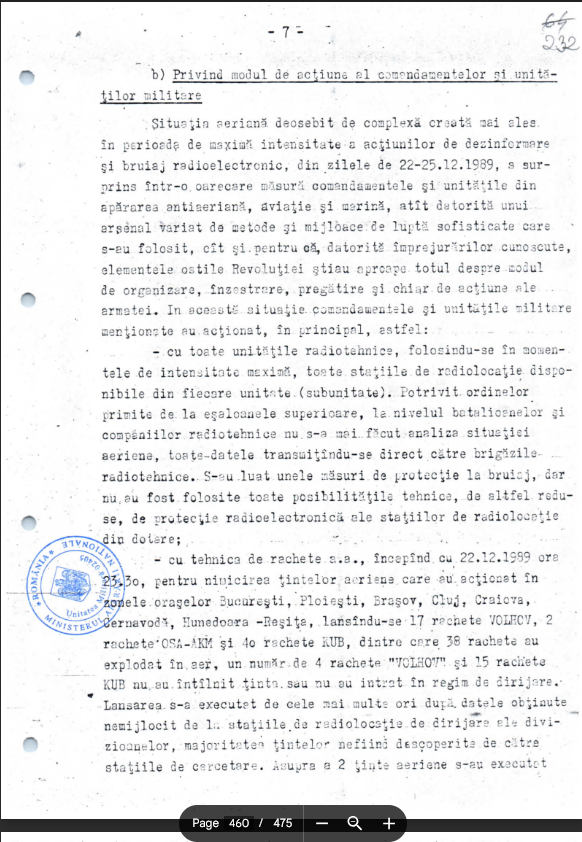
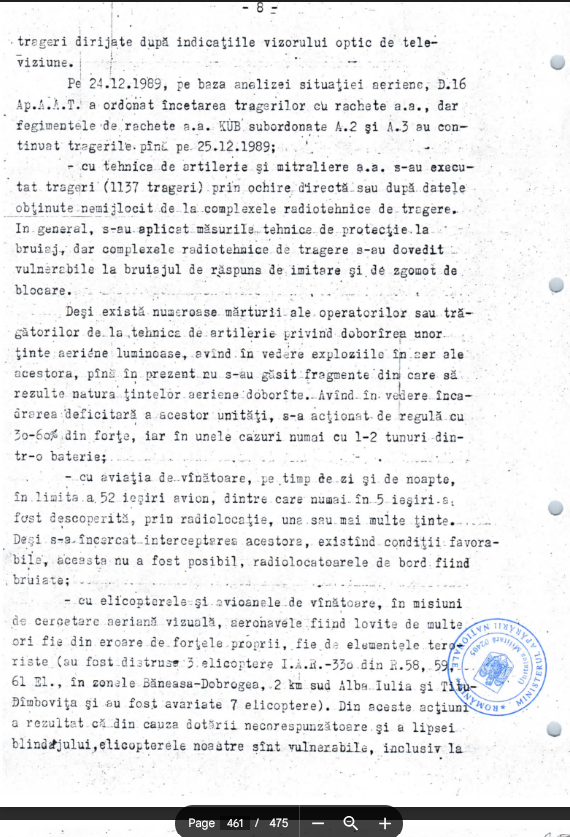
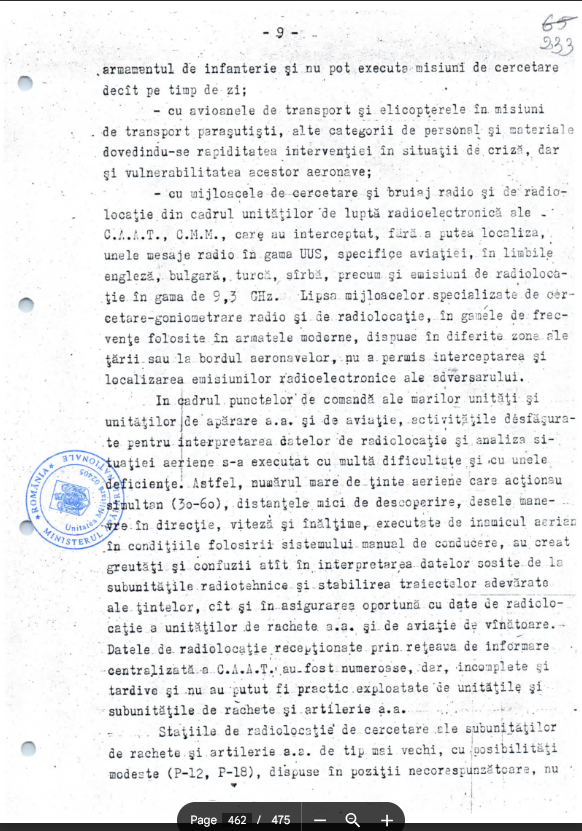
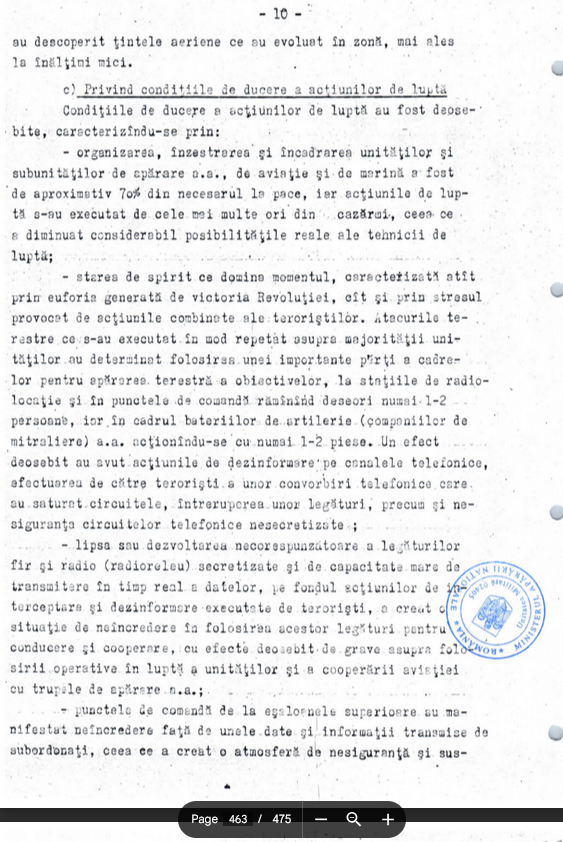
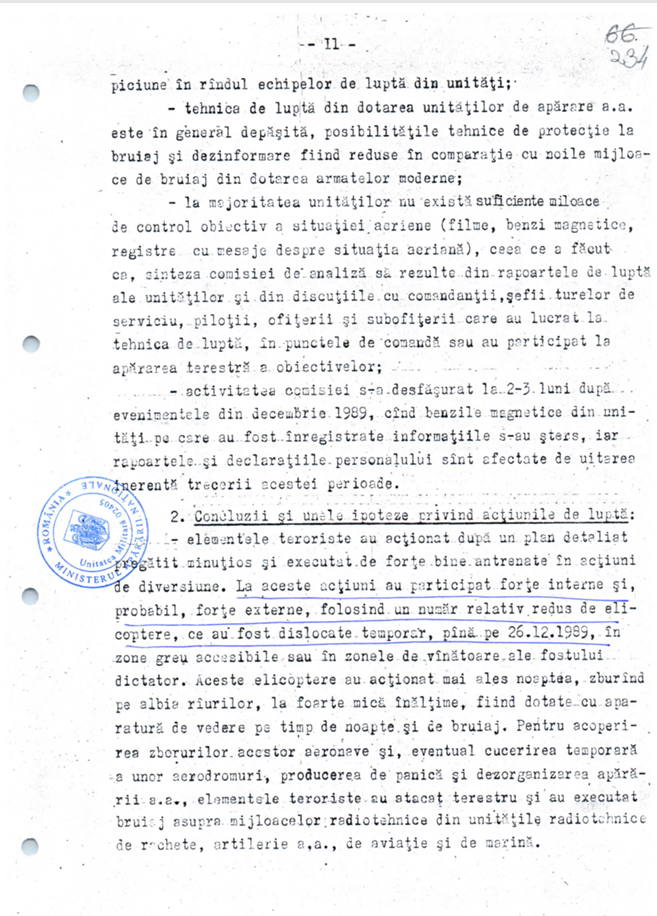
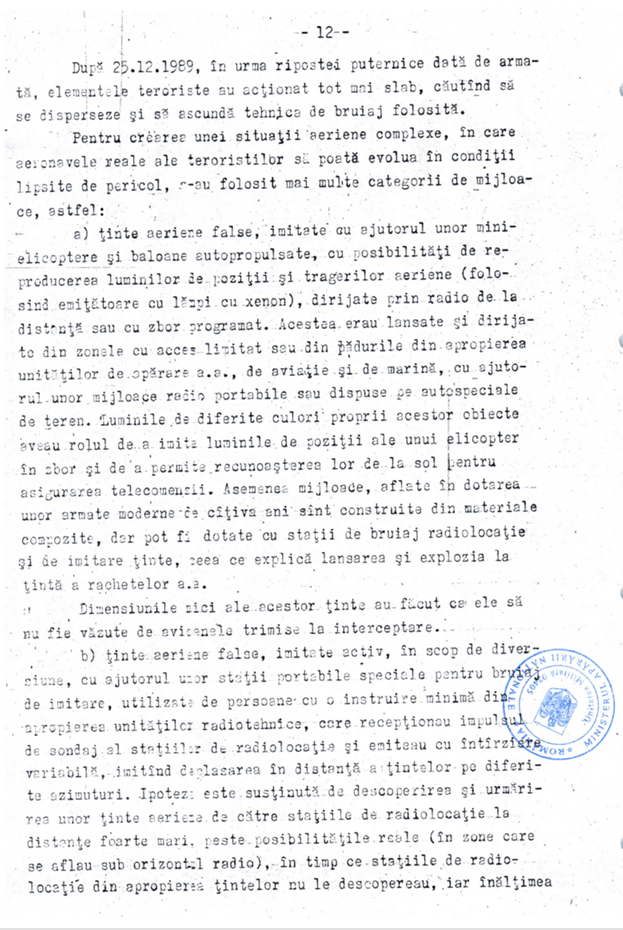
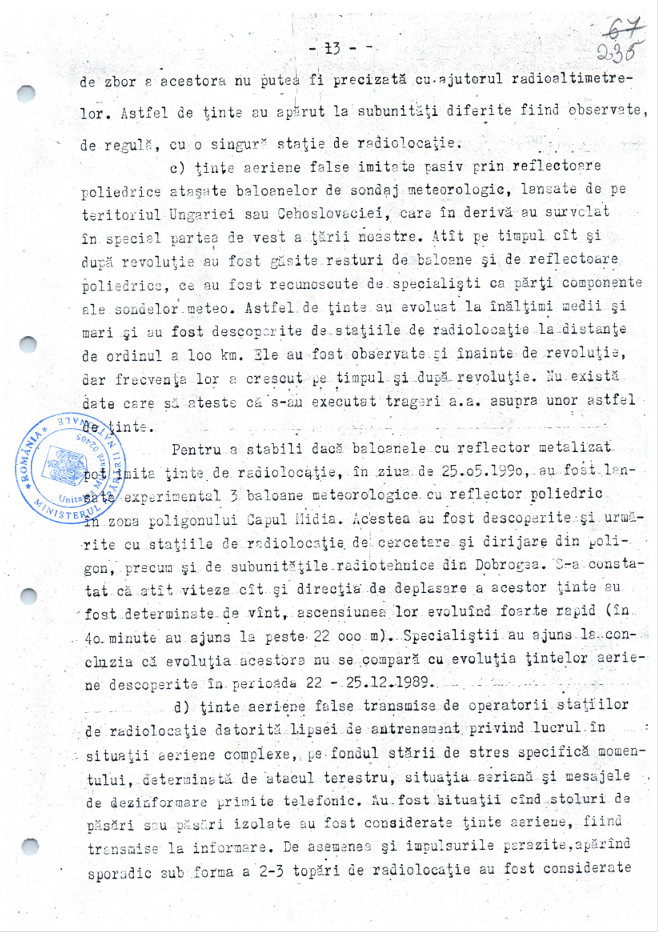
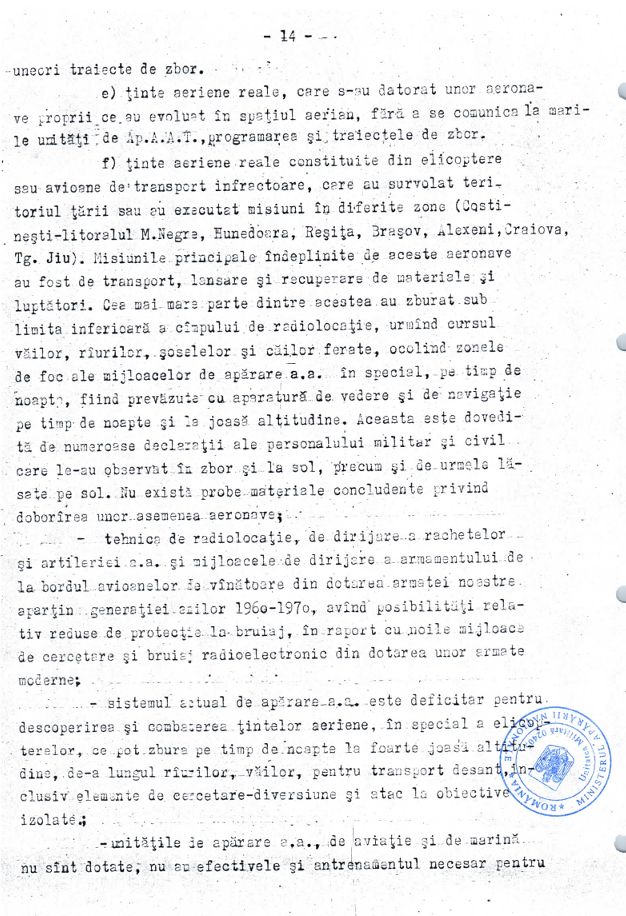
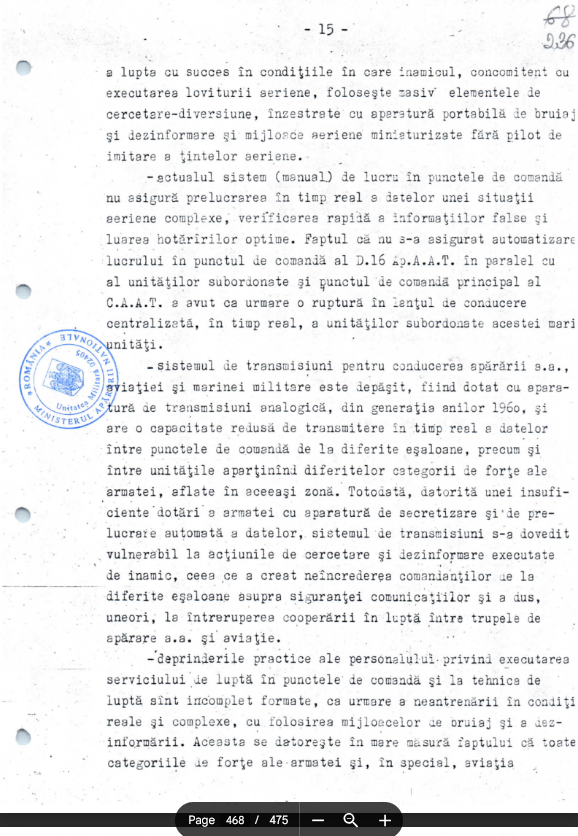
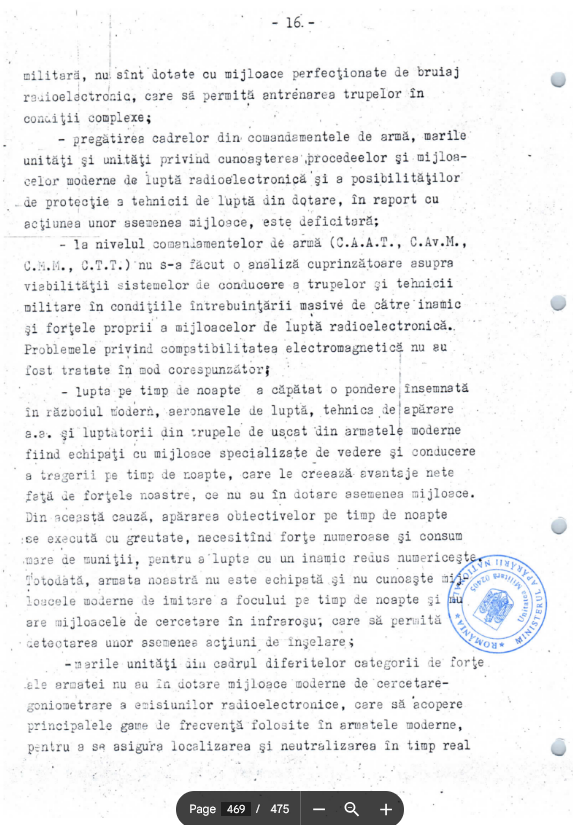
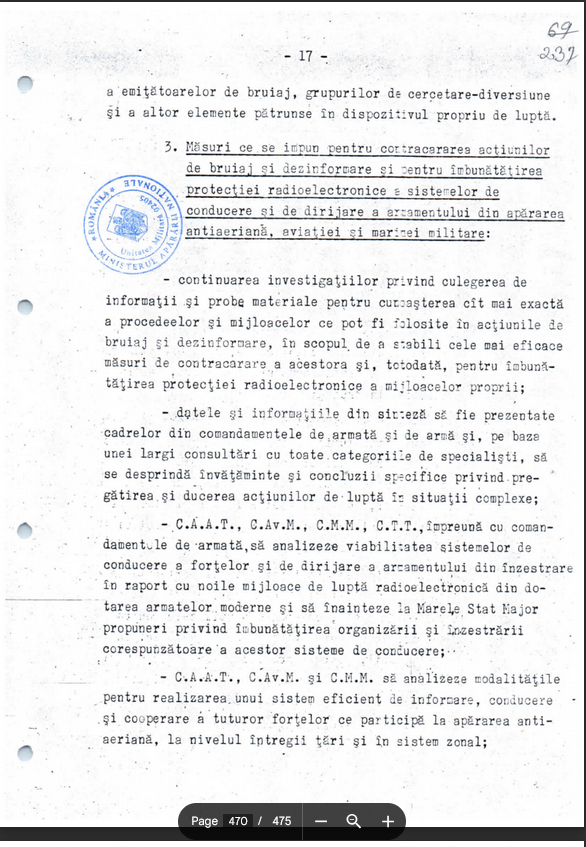
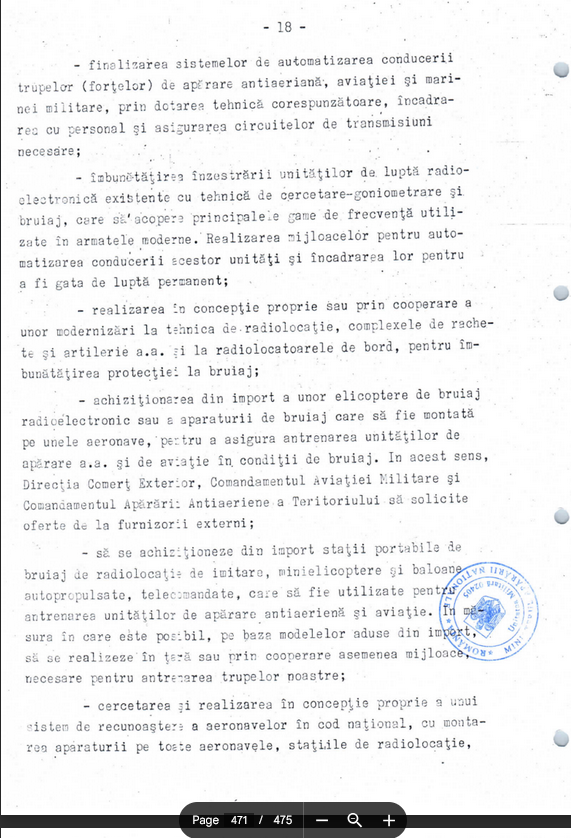
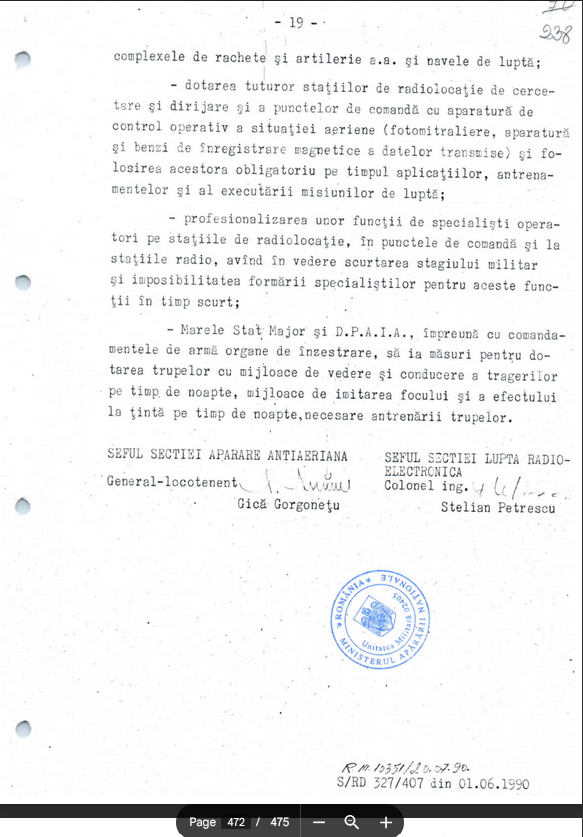
We see just how important the issue of disinformation and psychological warfare was in December 1989 in the following almost 20 page document from 1 June 1990 concerning “the actions of disinformation and radioelectronic jamming executed between 22.12.1989 and 21.01.1990 against (military) units of antiaircraft defense, aviation, and the navy.” This is an after-action report for internal use only and as it says it was tasked by the first deputy of the Defense Ministry and Chief Head of Defense. The commission investigating these questions contained officers from the Chiefs of Staff, the Territorial Air Defense Command, the Military Aviation Command, the Naval Command, and other units, and was carried out in March and April 1990. It clearly suggests this was a big deal and not just some talking point for public consumption, as Siani-Davies, to the extent he even mentions it, and others, would have us believe….
 The Archive of the Romanian Revolution of December 1989
Leave a Reply