The Archive of the Romanian Revolution of December 1989

A Catch-22 December 1989, Groundhog-Day Production. Presenting the Personal Research & Scholarship of Richard Andrew Hall, Ph.D.

Archive for the ‘decembrie 1989’ Category

“Life punishes those who come too late!”: East Germany’s 40th and Last Anniversary Celebration (7 October 1989)

Posted by romanianrevolutionofdecember1989 on October 7, 2014

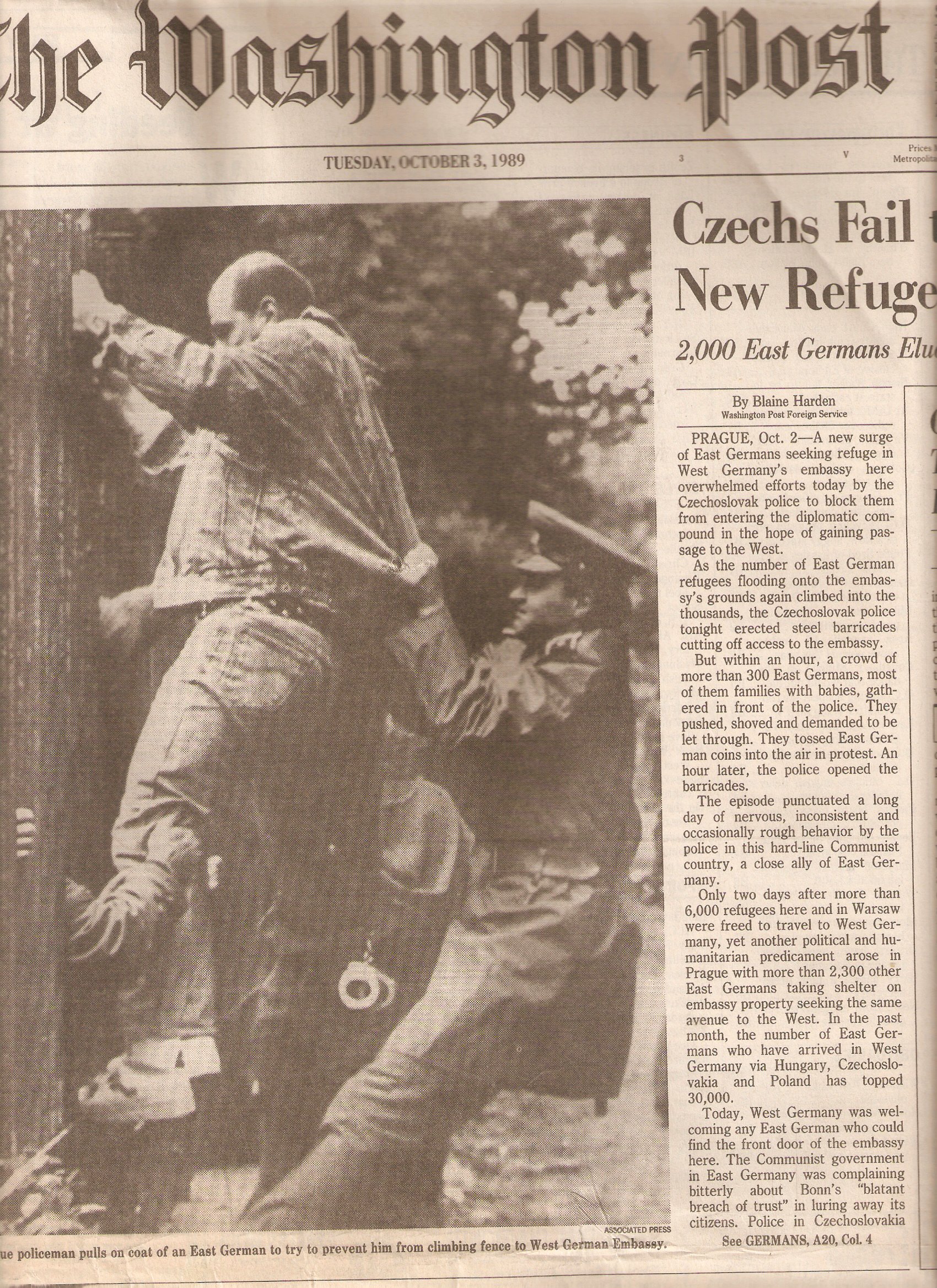
http://atomic-temporary-3899751.wpcomstaging.com/2014/09/30/the-collapse-of-european-communism-25-years-ago-the-east-german-exodus-through-prague-september-october-1989/

http://atomic-temporary-3899751.wpcomstaging.com/2014/08/16/the-light-and-guns-of-19-august-media-accounts-and-video-about-an-important-day-in-the-fall-of-european-communism-in-1989-featuring-hungary-poland-and-romania/

Mark Kramer of Harvard University’s Cold War Studies Center highlighted the centrality of East Germany to the region-wide collapse of communism in Eastern Europe in 1989 as follows  in “The Demise of the Soviet Bloc” (see pages 235-241 here, http://www.ustrcr.cz/data/pdf/seminare/2013/kramer/demise-of-the-soviet-bloc.pdf :

The crucial test case in all this, at least for Soviet policy, was the GDR, which for historical, geographic and strategic reasons was the keystone of the Warsaw Pact. [p. 236]

image0-001

image0-003

image0-005

The following timetable/chronicle of daily events is from this highly useful site:

http://www.chronik-der-mauer.de/index.php/de/Start/Index/id/652005

October 6: In the newspaper “Leipziger Volkszeitung,” under the headline “No more tolerance for subversion,” an article published under the name of the commander of the combat group contingent “Hans Geiffert,” Günter Lutz, says that, with regard to the forthcoming “Monday demonstration,” the combat groups are ready and willing “to protect what we have created with the work of our own hands and to put an end to these counter-revolutionary actions. If necessary, with weapon in hand.”
Mikhail Gorbachev arrives to take part in celebrations for the 40th anniversary of the GDR in Berlin on 6 November 1989

October 6/7: State ceremonies for the 40th anniversary of the GDR, attended by Mikhail Gorbachev, who is greeted with calls of “Gorbi, help us”. The West German TV programmes “Tageschau” and “Tagesthemen” report on the events of the day.

Mikhail Gorbachev, General Secretary

In a tête-à-tête between the two general secretaries, Honecker boasts about the GDR’s successes, especially praising the SED’S housing programme and East Germany allegedly leading worldwide position in the field of micro-electronics. Gorbachev, who is well aware that the GDR is really nearly insolvent, feels that he is being made a fool of.
40th anniversary of the GDR: Military parade of the National People’s Army, 7 October 1989

“I was horrified. I talked with him for three hours. … And he kept on wanting to convince me about the wonderful achievements of the GDR.”

In a spontaneous interview at the Neue Wache in East Berlin, Mikhail Gorbachev says the sentence “Danger only lies in wait for those who do not react to life!” Speaking to the SED Politburo, he modifies this sentence: “If we lag behind, life will punish us straight away.”
40th anniversary of the GDR: Gorbachev next to Honecker in the VIP stand

It is not Gorbachev, but his press secretary Gennadi Gerassimov, who in the evening turns this into the saying, “Life punishes those who come too late!”

On the evening of 7 October, young people demonstrate in front of the Palace of the Republic. On this evening and the next, the Volkspolizei carry out attacks and make mass arrests in East Berlin and other cities.

On the evening of the 40th anniversary of the founding of the GDR, thousands of people in the centre of East Berlin demonstrate for political reform

October 8: Erich Honecker tells the First Secretaries of the SED district leaderships that demonstrations of the day before “were directed against the constitutional basis of our socialist state.” He says that further “riots” are to be expected. He gives the command that, if such protests occur, “they are to be put down immediately.” Honecker instructs the district operation commands to meet without delay and discuss “measures”; the First Secretaries are told to report back to the Department of Party Organs of the Central Committee about the way the situation was developing.

Stasi chief Mielke also describes the domestic situation “as considerably more critical”. He orders all members of the Ministry of Security to be on “full standby duty” in order to effectively repress or stop all “mobs” and for enough reserve forces to be at the ready, “whose quick deployment to undertake , if needs be, offensive measures to stop and disperse mobs is to be ensured.” Stasi members are to keep their service weapons with them at all time until further notice. Reports by Western journalists on demonstrations are to be rigorously prevented. – Notwithstanding this, the dialogue between the opposition (“Gruppe der 202) and the district SED leadership begins in Dresden.

The GDR government deploys uniformed and civilian

October 9: “Tag der Entscheidung” (Decision Day) in Leipzig: 70,000 people demonstrate peacefully for reforms. Although the East German security authorities plan to prevent the demonstration and its staff have practised dispersing it and arresting the “ringleaders,” the state does not intervene. The unexpectedly large number of demonstrators breaks the security organs’ will to act. – In Halle and in Magdeburg, several thousand people also take part in demonstrations.

October 10: Talks between the mayor of Dresden, Wolfgang Berghofer, and the opposition awaken hopes that a dialogue may begin.

October 10/11: At the end of an unusually heated two-day crisis meeting, the SED Politburo announces that the party is ready to enter into a dialogue with the people. For the first time, the Politburo admits that the reasons why people are trying to flee are to be found in the GDR itself as well. It also puts forward its concept for the dialogue that is being demanded by so many people: “Together, we want to discuss all the fundamental questions of our society that are to be solved today and in the future. (…) These concern the continuation of the unity of economic and social policies. They concern economic efficiency and its benefit to all, a democratic coexistence and committed involvement, a good supply of commodities and adequate pay, realistic media, possibilities for travel and a healthy environment.” – Egon Krenz has pushed through this declaration against the bitter resistance of Honecker in the Politburo.

October 16: More than 100,000 people demonstrate in Leipzig. They demand that Neues Forum be permitted, free elections and freedom to travel, a free press and freedom of expression. Demonstrations with around 10,000 participants in Dresden and Magdeburg, 5,000 in Halle and 3,000 in Berlin also take place peacefully.

October 17/18: A fierce power struggle in the SED Politburo ends with the downfall of Erich Honecker, who is forced to cite health reasons as being behind his resignation from the SED Central Committee. Egon Krenz becomes the new SED general secretary. Krenz announces the credo for his policy of reform: “We are guided by the firm conviction that all the problems in our society can be solved politically.” In his inaugural address, Egon Krenz also promises “to prepare a draft bill regarding travel abroad for GDR citizens. We believe that this draft should be discussed and resolved upon in the People’s Parliament (Volkskammer) after being publicly announced. In connection with this, the temporary restrictions on travel to fellow socialist countries could also be lifted or modified.”

October 21: At a meeting of the extended leadership of the Ministry of Security, Stasi chief Mielke leaves little room for doubt that the party’s strategy of solving political problems with political means goes against his fundamental chekist convictions. It meant, Mielke says, not reacting to the “anti-socialist gatherings” in the way “these forces really deserve.” The fact that Mielke, even though he was not in agreement, categorically ruled out any independent policy of the ministry over the party’s head, had all the more decisive an effect on the behaviour of the Ministry of Security up to the time the Wall came down and even later. “In everything that we do,” he admonishes his top staff, “we must be absolutely clear that all measures undertaken by the Ministry of State Security, by every department, must be in accordance with the general strategy, the decisions of the Central Committee and its Politburo, and have to be directed at their strict implementation.” Force, he says, could only be used “if there is direct danger to people or objects that cannot be averted in any other way.” In the next few days, Mielke announces, central decisions would be made about how to proceed against opposition movements in future.

October 23: Three hundred thousand people demonstrate in Leipzig, tens of thousands in Magdeburg, Dresden, Schwerin, Zwickau, Halle, Stralsund and Berlin, as well as in Plauen and Rostock during the previous days.

October 24: The SED Politburo passes a resolution on “Trips by GDR citizens abroad”: “1. A draft bill on travel abroad by GDR citizens and proposals for financing this travel are to be presented to the Politburo soon. (…) 2. An argumentation is to be worked out [as a basis for] a broad discussion of the draft bill.”

October 26: On this day alone, the Ministry of Security counts 160,000 citizens who, at demonstrations in the districts Rostock, Erfurt, Gera, Schwerin, Chemnitz, Neubrandenburg, Dresden and Halle, call above all for free elections, the free formation of opposition groups and freedom to travel. Whereas the Ministry for Security registered altogether 140,000 demonstrators at 24 demonstrations in the week from 16 to 22 October, from 23 to 30 October 540,000 people take part in 145 demonstrations. Leading SED functionaries no longer rule out the imposition of a state of emergency. In a twenty-minute conversation with West German Chancellor Helmut Kohl, SED General Secretary Egon Kreuz states his interest in placing relations with West Germany “on a – if I may put it like this – on a new level”. Chancellery Minister Seiters and state secretary Schalck-Golodkowski are named as confidants.

October 27: The GDR State Council announces an amnesty for all refugees and participants in demonstrations. – The GDR Council of Ministers decides to lift the “temporary ban on travel without passport or visa” to the CSSR that was imposed on October 3. From this moment on, GDR citizens are meant to be able to cross the border to the CSSR again with their identity card.

October 31: The USA and the Soviet Union organise a summit on Malta scheduled for 2/3 December.

October 31: The SED Politburo discusses a white paper by five leading economists on the “Analysis of the Economic Situation of the GDR with Conclusions”. To avoid the necessary lowering of the living standard by 25 to 30 percent and the imminent insolvency of the GDR, they recommend offering the West German government the Wall in return for urgently needed new loans and extended economic cooperation.

In October, 57,024 GDR citizens manage to flee to the West; 30,598 people are allowed to leave the GDR with permission.

Posted in decembrie 1989 | Tagged: , , , , , , | Leave a Comment »

Turn out the lights, the party’s over: The Hungarian Socialist Workers Party Rebrands Itself (6-10 October 1989)

Posted by romanianrevolutionofdecember1989 on October 6, 2014

image0-013

Az első MSZP kongreszus- így alakult meg az MSZP (1989)

image0-016

Így alakult meg az MSZP 1989

PARTY IN HUNGARY SEEKING TO REBUILD

Published: October 6, 1989

BUDAPEST, Oct. 5— As the Communist Party gathers its shrinking forces for a Congress opening Friday, the party’s chief of ideology propaganda said the leadership’s expectations were modest.

The leaders hope the Congress will be a major step in bringing the party into line with the nation’s new reality. Since the party held its last major meeting, in May 1988, through opposition initiative and leadership disarray, the party’s monopoly on power in Hungary has been broken by a new, independent party. Preliminary elections for a multiparty parliament are scheduled for the first part of next year.

”If a new model left-wing socialist party can emerge from the Hungarian Socialist Workers Party, then it will have some chance of coming out of the election as the strongest single party,” said the official, Janos Barabas, Politburo member and secretary for ideology, agitation and propaganda. ”But that still doesn’t mean it could form a one-party government.” Seeking Yet Another New Name

The Hungarian Socialist Workers Party is the name the Communists adopted during the 1956 uprising crushed by the Soviet Army. Mr. Barabas said it will change its name soon, but he added that it saddened him that the party had already changed names six times in its 71 years of history.

”I think this party should have a new name to give it credibility,” said Mr. Barabas. He said among the ”countless” names suggested were Hungarian Socialist or Democratic Socialist Party.

Mr. Barabas said the transformations the Congress is expected to endorse would greatly reduce the membership.

”I’m convinced that after all the restructuring some 400,000 to 500,000 will remain,” Mr. Barabas said. The party announced this week that its membership had shrunk to 725,000 from 800,000 as the year began. On Jan. 1, 1988, there were 871,000 Communists. Loss of Members Expected

The chief ideologist said he expected the loss of members to result not from a split down the middle, as some Communists predict, but from a drifting away at the fringes. He appeared to share a belief of many Communists that their great majority has cast its lot with those who demand reform.

Views are divided on whether orthodox Communists, who appear to be in the minority, will stay in the party after a reforming congress, opt out or regroup in a counter-Communist Party.

”The party today is not a political party in the European sense but a conglomerate of widely differing views,” said Mr. Barabas, who said he spoke for the reform-minded majority.

”It will become an unambiguous left-wing socialist party, breaking with the Bolshevik Communist tradition. It will mark a break with the dictatorship of the proletariat, with thinking exclusively in terms of power and with the ideological sense of Messianic mission.” Yielding the ‘Leading Role’

Mr. Barabas said that the party has abandoned its historic claim to ”the leading role” in the state. ”We say now that the party has a right to be present in the state structure only to the extent to which its representation in Parliament justifies it,” he said.

Party leaders estimate that in Hungary’s first free elections since 1947 the Communists’ best hope is to obtain 30 percent of the vote. Its principal rival is expected to be the nationalist Hungarian Democratic Forum.

The chief ideologist said he believed that the ”successor” to the current party ”will have to show persuasively that it wants democracy and wants to break with everything in its path that must be broken.”

When asked whether the party would insist on retaining control of the defense and interior ministries, as the Polish Communist Party did after Solidarity won its sweeping victory in elections this year, he evaded the question. He finally conceded, ”I think geopolitical realities must be acknowledged by any political force that shares in government.” Worries About Stability

He said a recent visit to Moscow had convinced him that Hungary enjoyed ”intellectual support from representatives of the Gorbachev line.” But he added: ”We also sense some worries about our ability to preserve stability.” After a pause, Mr. Barabas said, ”I share these worries.”

The principal threat to stability, he said, is ”what’s happening in the economy.”Burdened with the heaviest per-capita foreign debt in Europe -$18 billion – the Government appears unable to halt a continuing slide in the standard of living. About 20 percent of the population is shown in official statistics to be living below the poverty line. As loss-producing state enterprises face enforced shutdowns, unemployment is expected to rise sharply.

Mr. Barabas says the party should preserve elements of the Communist-Socialist system, including ”solidarity, equality of opportunity, striking a balance between collective and individual freedom.”

Asked how the party intended to equalize opportunities in a multiparty system by giving up such advantages of its power monopoly as the headquarters palace on the banks of the Danube, where the interview took place, Mr. Barabas said the party would have to return expensive properties to the Government and let Parliament decide its redistribution.

As for the headquarters, known popularly as the ”White House,” the chief ideologist said: ”You won’t recognize this party in one year, one and a half years. We won’t have the money to maintain this kind of building. There will be so few of us in the apparat that we’ll have to move to a much smaller office.”

Key Hungarian Communist Urges More Open Party and Ties to West

Published: October 7, 1989

BUDAPEST, Oct. 6— One of the four top leaders of the Hungarian Communist Party told his comrades at a party congress today that they had to change their basic orientation.

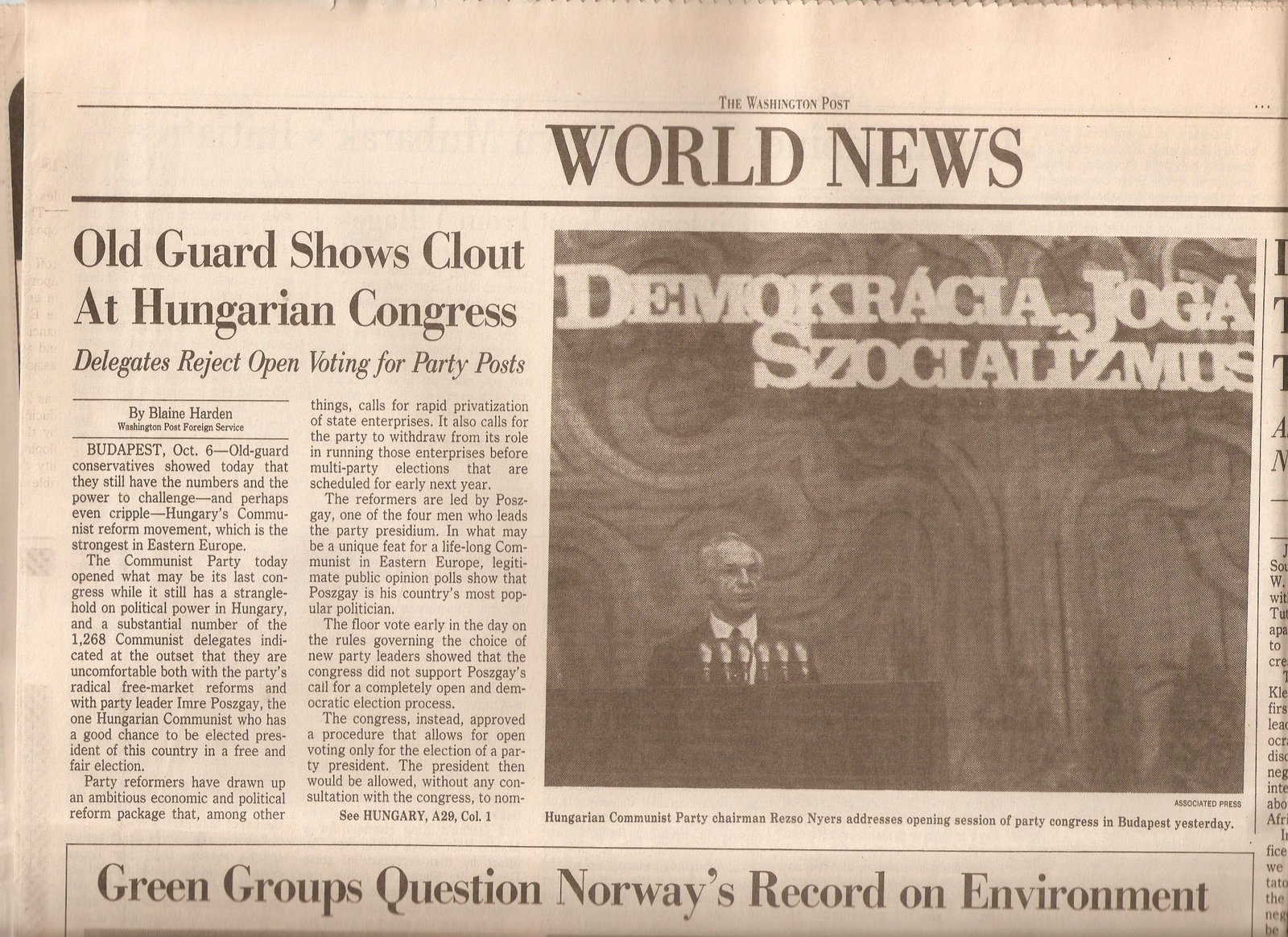
”It cannot be Communist, and it cannot be simply a social democratic party,” the official, Rezso Nyers, the party president, said in his address at the congress, which opened today. ”We should seek a synthesis to be created from the coming together of social democratic and Communist traditions, values and practices.”

In his address, Mr. Nyers declared that the party, known formally as the Hungarian Socialist Workers Party, should be superseded by a new one that would broaden its links to the Soviet Communist Party by establishing ties to Western socialist and social democratic groupings. Prospect of Many Parties

Whether Mr. Nyers’s suggestion is immediately followed or not, it was raised amid the prospect that the Hungarian party, which now still maintains a monopoly of political power, may fragment or that its members may become part of a spectrum of new parties when legislation permitting the formation of openly competing opposition groups goes into effect.

Mr. Nyers said the successor to the present party should seek friendly relations with Communist parties that are changing in the East and West, particularly with the Soviet party.

He also called, for the first time among ruling Communist parties, for ”friendly bonds” with the Socialist International, the grouping of democratic socialist parties long reviled by the Soviet Union and its allies.

The congress is expected to adopt, possibly with minor amendments, two basic documents and a new party statute worked out by the Central Committee in months of discussion. They are marked by the dominant tendency toward change.

The new party program fully endorses its new ideology of a traditional left-wing European socialist party, into which the Communists wish to transform themselves. It calls for a ”democratic state of laws,” the prevention of ”exaggerated concentration of power,” a freely elected parliament to which the Government will be responsible and ”free competition” between freely created parties.

In a bow to its past, the party pledges itself to prevent by ”all political means” a restoration of capitalism. But it fully endorses freedom of property in a market economy. ”We must abandon our stubborn prejudice against private property,” the program stated. Education Monopoly Opposed

In a major change of heart on a social issue, the Communists proposed abolition of ”the state monopoly in education.”

Mr. Nyers, State Minister Imre Pozsgay and Prime Minister Miklos Nemeth, the three more change-minded members of the party Presidium, appear to be attuned to the majority of the 1,256 delegates assembled in the convention center.

But the more conservative fourth member, General Secretary Karoly Grosz, spoke with a self-assurance and authority that belied rumors assiduously circulated by radical reformists that his downfall was assured.

He was applauded when in a thinly disguised attack on Mr. Pozsgay he condemned as ”Stalinists” those who steered so radical a course of change as to want to force out of the party those who do not share their views. An Alliance Is Seen

Mr. Grosz, while endorsing change, chided those who view all of the party’s 44 years in power as years of failure and say ”they are ashamed in the eyes of their children and grandchildren.” He warned against the party’s ”ignoring the working class and the values and ideals of Communism.”

Party officials believe that a de facto alliance has been formed between Mr. Nyers and Mr. Grosz, despite their differing views, to work to prevent a major party split, at which Mr. Pozsgay has been hinting. Both the President and the General Secretary are thought to have been moved to the middle of the road in reaction to Mr. Pozsgay’s more radical language.

Mr. Pozsgay was named before the congress as the party’s candidate for the new post of President of the republic, to be elected probably next month. This explains his attempts to appeal to non-Communist voters.

Indications are growing that Mr. Nyers may be the majority candidate for election to the new post as the party’s sole president. The election is expected just before the end of the congress, probably on Monday. Defeated on Procedure

Mr. Pozsgay’s supporters were defeated on a procedural point this morning, which would have provided for the election of the new leadership on Saturday. Their apparent hope was either to provoke the conservatives to walk out or at least to chasten them during the remaining days of debate.

In the text of the party program, Communism is only glancingly mentioned and its eventual attainment no longer postulated as the ultimate goal.

Describing the ideology of the new party it intends to become, the statement said, ”the roots of its spirituality reach back to the Marxian system of ideas, but it is open to all new, scientifically founded thought.”

The second document before the congress, prepared under Mr. Pozsgay’s chairmanship, deals with the party’s history.

In its crucial passages it drops the highly unpopular thesis that the 1956 uprising, crushed by Soviet forces, was a ”counterrevolution.” Instead, it praises its leader, Imre Nagy, and the associates who were hanged with him. ”Their stand, even accepting martyrdom, is exemplary,” the document states. Traditional Slogans Replaced

In another departure from the almost ritual customs of Communist Party congresses, no top party leaders from other Communist countries, not even the Soviet Union, were invited.

Only the speaker and the chairman faced the public from the stage, the entire leadership sat with the rest of the delegates. The traditional slogans of the ”long live Communism” type were replaced by three words on the stage wall: ”Democracy-Legality-Socialism.”

In other parts of Budapest today, in apparent coincidences, Otto Hapsburg, the son of Hungary’s last King, addressed a meeting of ”old boys” of West German dueling university fraternities wearing their caps and sashes, and a copy of the tall statue of Stalin, pulled down in 1956, was erected at its old site, to be toppled again for a movie. PLEASE KEEP LAST GRAF.

COMMUNIST PARTY IN HUNGARY VOTES FOR RADICAL SHIFT

Published: October 8, 1989

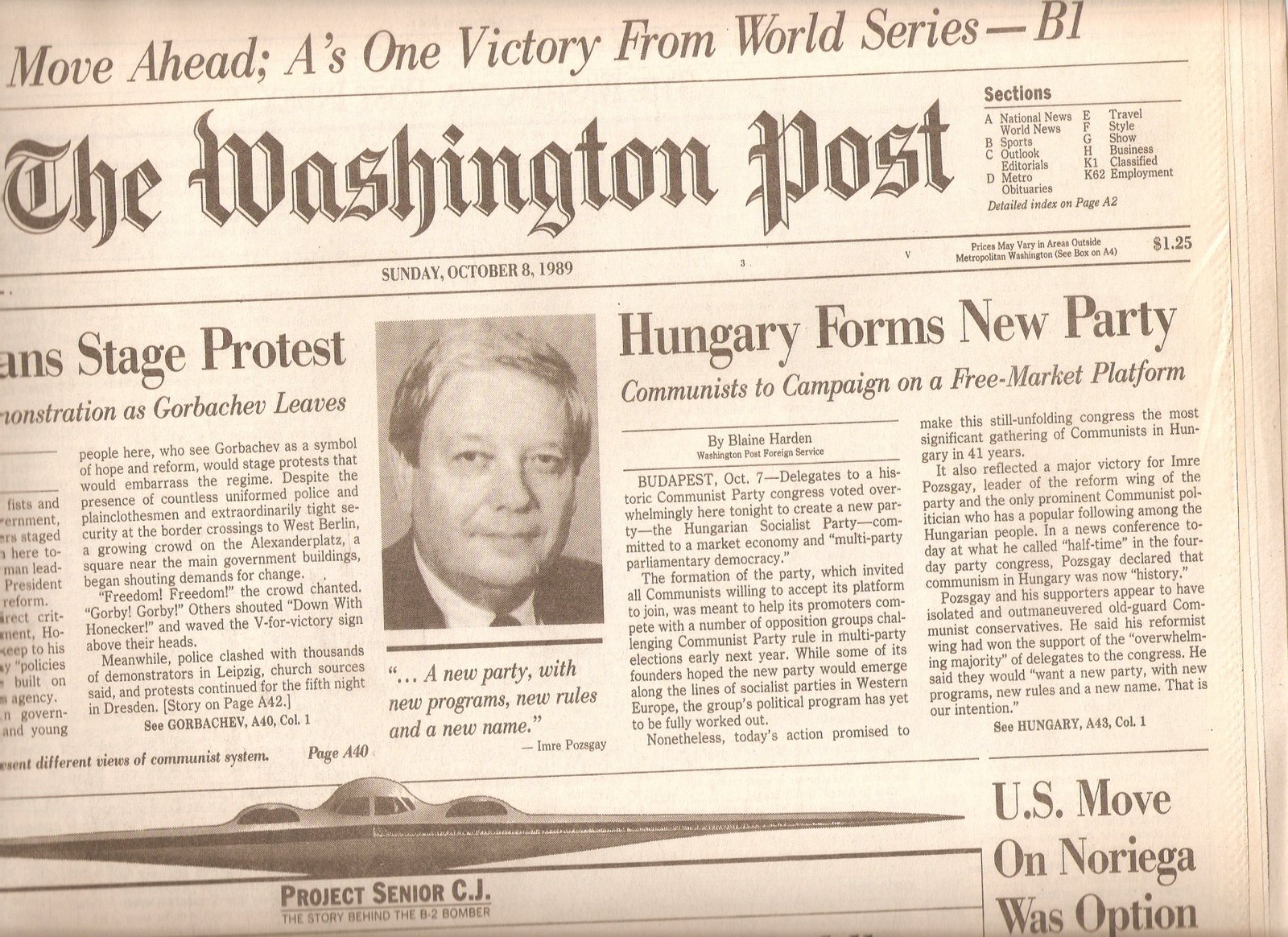
BUDAPEST, Oct. 7— The Hungarian Communist Party voted today to transform itself into a socialist party and said it would strive to bridge the gulf between doctrinaire Marxism and European democratic socialism.

In a series of votes to change the party’s name to the Hungarian Socialist Party and set general party direction, the delegates at an extraordinary party congress here greatly raised expectations that the reform-oriented leadership’s entire program to overhaul the party would be adopted. Among the changes expected are more democratic procedures for choosing the leadership.

With Poland, Hungary is at the forefront of change in the Eastern bloc. But unlike Poland, where the Solidarity union has taken the reins of power with the Communist Party largely unchanged, Hungary is pushing through radical change from within its Communist Party. Approval From the Floor

While decisive, tonight’s vote totals were difficult to ascertain because some measures were approved by a show of hands of the large number of delegates and went uncounted.

In a news conference before the voting, Imre Pozsgay, a member of Hungary’s collective presidency and a leader of those advocating major change, said an overwhelming majority of the delegates supported the leadership’s program so that the party can better confront new, independently formed parties in free parliamentary elections due to be held by next June.

Mr. Pozsgay did not elaborate on the party’s new path, but details of the nature of the renamed party and its prospective leadership were disclosed by an official close to Rezso Nyers, the party President. Elections Ahead

The official said in an interview that by this morning, a majority of the more than 1,200 delegates to the congress had agreed on the new party structure, the leaders to be elected and the program to be adopted before the congress ends Sunday or Monday.

The official said Mr. Nyers would be chosen as party president. Mr. Pozsgay and Prime Minister Miklos Nemeth, another member of the presidency, are to be named vice presidents, and it is possible that a Politburo member, Pal Vastagh, will be elected to that same rank.

The post of General Secretary, now held by Karoly Grosz, is to be abolished. Instead, the lesser position of National Secretary is to be created. Jeno Kovacs, now a Central Committee secretary, has been chosen to fill the office, which is to manage the day-by-day work of the party.

Dispensing with the traditional Politburo and Central Committee, the new party is to be guided by a presidium of 15 to 21 members and a national committee of about 150.

Contrary to Communist practice, the national committee will not be chosen by the party congress, as the Central Committee is, but through balloting by all party members, a bow to greater democracy. Central Committee secretaries, the party’s equivalent of government ministers, are to be replaced by presidium members assigned to specific tasks.

Faced with severe economic problems and declining popularity, as shown in recent losses in several parliamentary by-elections, the party has gradually introduced liberalizations in recent years, including the scheduling of next year’s multiparty national elections, the country’s first in more than four decades.

Another change came this year when, in an opening to the West, Budapest lifted restrictions along its border with Austria, setting off a mass migration of East Germans through Hungary and on to West Germany. Defection of the Orthodox

The official close to Mr. Nyers said the leadership expects the Communist transformation to prompt as many as a third of the present membership of 725,000 to leave the party.

It is expected that some of those who leave will regroup in a new party. In expectation of such a move, the official said, the party has taken legal steps to secure its hold over such assets as the grandiose party headquarters on the Pest bank of the Danube.

In speeches, several delegates to the congress demanded that the party return to the Government many of its extensive assets throughout Hungary, including office buildings, hotels and resorts, and commercial properties.

The biggest loser in the creation of a new leadership is likely to be Mr. Grosz. Since unseating Janos Kadar last year, Mr. Grosz has seemed to be a reluctant reformer. As recently as Friday, he insisted in a toughly worded speech that reforms be limited and Communist ideals retained. And He aimed a sharp rebuke at Mr. Pozsgay, without mentioning him by name, accusing him of seeking to drive more orthodox Communists out of the party.

In a sharp rebuff to Mr. Grosz, the delegates tonight approved an amended text of a statement that specifically rejected a Grosz proposal. The General Secretary had strongly urged the Communists to simply declare a renewal of the party rather than the establishment of a new one. The amendment pointedly redrafted the declaration to make it clear that the old party was dead and that it considered itself a new party.

Mr. Nyers is said to have managed months of internecine disputes and maneuvers to prevent an open split in the congress while still securing the transformation of the party, which had been formally known as the Hungarian Socialist Workers Party. Although there is personal antipathy between Mr. Nyers and Mr. Pozsgay, both advocate change, as does Prime Minister Nemeth.

All three have stressed that their commitment to change does not mean that the party means to question Hungary’s alliance with the Soviet Union in the Warsaw Pact.

Today, Mr. Nemeth sounded the clearest call yet for drastic change to prepare for next year’s elections.

”We must be the most democratic of all Hungarian parties,” he said to applause. ”We need a new party, with a new form of organization, a new platform and a new name. We need a reformed membership. Our members should not be a flock of sheep following a bellwether. Those who don’t feel at home in this party should form a new party.”

Mr. Nemeth made evident the ultimate purpose of the reorganization, saying, ”We don’t want members, we want voters.”

Hungary’s Extraordinary Change Draws Critics of Varying Ideologies

Published: October 9, 1989

BUDAPEST, Oct. 8— A day after the Hungarian Communist Party changed its name to the Socialist Party and rejected orthodox Marxism, leaders contended today with criticism from members who thought it had not gone far enough as well as from die-hards who thought it had gone too far.

Despite an overwhelming vote on Saturday night to change the name and model the party along social democratic lines, some of those most staunchly in favor of reform, like Deputy Prime Minister Peter Medgyessy, said the changes would fail to achieve the ”necessary purification” to purge hard-liners from the party.

”This is a compromise, and I am not convinced the compromise is convincing enough,” he said. ”It is not necessary to carry with us the former party as a whole.” Grosz Must Choose

Among orthodox Communists, the principal losers, there were also rumblings of disaffection and mutterings of breaking away. Karoly Grosz, the General Secretary before the large-scale shifts this weekend, said in an interview with the party’s daily newspaper, Nepszabadsag, that he would either register as a member of the Socialist Workers Party, as the Communist Party had been formally known, or retire from politics.

And there was criticism from non-Communist opposition groups expected to take part in multiparty elections next year. Ferenc Kosseg, a leader of the Alliance of Free Democrats, said he considered the restructuring of the governing party as ”a compromise to satisfy reform-minded party intellectuals without hurting the party apparatus.”

But he said the party had avoided a ”split down the middle” that would have been ”healthy but dangerous” since it would have left the armed forces and the bureaucracy uncertain about who commanded them. Vanguard of Change

The vote of 1,005 to 159 by party delegates on Saturday night came at a special congress that has been meeting to prepare for the elections, which must occur by June. Facing major economic problems and rising unpopularity, the party has placed Hungary alongside Poland at the forefront of change in the Soviet bloc.

The congress is dominated by Communists who declare themselves in favor of far-reaching change in a ruling party that most say has outlived its capacity to act in a more open and technologically advanced world.

But among them today, only the largest group, the middle-of-the-road faction represented by Rezso Nyers, the party President, appeared to be satisfied with the compromise that produced Saturday’s heavy majority.

Disaffection among orthodox Communists had been expected. Janos Barabas, party chief of ideology and propaganda, said last Monday that the leadership expected the changes at the congress to cause membership to drop to a range of 400,000 to 500,000 from the present 725,000.

Party officials interpreted Mr. Grosz’s remarks in the newspaper interview to mean that he would not recognize the party’s transformation; they said he might gather around him many Communists who contest the legality of the new Socialist Party’s claim as successor.

Followers of the late Janos Kadar, the Communists’ leader for 32 years until Mr. Grosz unseated him last year, said they would form a party of those who remained faithful to Communism.

Criticism today from the leaders most enthusiastic about change was somewhat unexpected, though. Is the Change Sufficient? Deputy Prime Minister Medgyessy, a former Finance Minister who is considered one of the party’s leading technocrats, said he had ”considerable doubt” about whether the negotiations between the dominant reformist group and the harder-line factions had brought about the needed wholesale changes in the membership.

In a dramatic aside, Mr. Medgyessy added, ”I haven’t made up my mind yet whether I’m a member of this party or not.” Like others in his group, he appeared unhappy that Mr. Nyers had not led a vigorous enough fight to prompt more hard-liners to leave.

The Deputy Prime Minister said the party’s positions need to be clarified so that opponents of the reorientation toward left-wing socialism would see whether they could adopt the new policies or quit. He said the party needed to make clear its attitude toward its past policies, its readiness for fundamental renewal and its determination to privatize sectors of the economy.

In less diplomatic language, a member of the dominant group promoting change said at a caucus today, ”Those with blood on their hands may have left, but the rats are remaining.”

Like Mr. Barabas at a news conference Saturday night, Mr. Medgyessy conceded that leaders were at a loss to define the new party’s ideological stance and undecided on how much of their former ideology and symbols would remain.

”The ideology is taking shape at the moment,” the Deputy Prime Minister said. ”The party is socialist and leftist. It rejects Stalinist theory and practice.” Censoring the Sage

He added, ”We have to delete a number of things from Marxism.”

Mr. Barabas said he had no answer yet to the question of how many tenets of Lenin would remain in practice or whether the ubiquitous pictures of the patriarch of Soviet Communism would continue to adorn the walls of virtually all party offices.

As a first sign of a change of symbols, Nepszabadsag appeared today for the first time without the slogan ”Workers of the World, Unite,” the Marxist entreaty that is the front-page motto of official Communist Party papers everywhere. And, instead of describing itself as the official organ of the party, Nepszabadsag restyled itself a ”socialist daily.”

Budapest Encore: Old Socialist Elected

Published: October 10, 1989

BUDAPEST, Oct. 9— The newly named Hungarian Socialist Party, which as the Communist Party over the weekend abandoned hard-line Marxist dogma, today elected Rezso Nyers, a once and present Socialist, as its President.

Mr. Nyers had served as head of a four-member party presidency since June. In his new function, he will be the party’s sole chief. A 23-member Presidium was also elected and will take the place of the Politburo characteristic of Communist parties.

Mr. Nyers, 66 years old, was chosen by 78 to 80 percent of the 1,256 delegates to the party congress meeting here, said Janos Barabas, a spokesman. But, the nomination and voting took place behind closed doors and required almost four hours of sometimes heated debate.

A bloc of delegates that advocated a greater distancing of the new party from its predecessor challenged Mr. Nyers. They proposed policies that would have alienated more orthodox Communists. How to Attract Voters

Those leaders most favorable to change believe that only policies and statements that Hungarian voters accept as marking a clean break with communism would give the renamed party a good chance in the period of free elections. This multiparty voting, to take place by next June, is supposed to transform Hungary into a state observing the norms of West European democracies.

In a stormy session on Sunday night, the bloc of delegates pressing for greater change demanded that the party withdraw its cells from all places of work. Mr. Nyers sided with a middle-of-the road majority.

The issue is considered vital for the campaign. Advocates of change believe that the party’s presence in shops and factories has long been a thorn in the sides of workers, who feel that party functionaries are the real bosses of all enterprises. More orthodox party members, however, believe that they cannot hold its members together if it does not organize them at their jobs.

In the heated debate, Imre Pozsgay, a State Minister, and Prime Minister Miklos Nemeth opposed the party President, and this apparently caused the unraveling of a leadership compromise engineered by Mr. Nyers with the two others.

As a result, an official close to Mr. Nyers said tonight, Mr. Pozsgay and Mr. Nemeth were not elected vice presidents, as planned. Presidium Posts

But the compromise did succeed in placing 11 reformists, including Mr. Pozsgay and Mr. Nemeth, on the Presidium. The other members are largely middle-of-the-road socialists, Communists until Saturday, and can be counted on to support Mr. Nyers in steering a reformist course.

In his news conference, Mr. Nyers, referring to his reputation as father of Hungary’s first economic liberalizations, said he did not disagree with the liberal minority’s goals but with its means, which he deemed radical. Differences Are Reconcilable

Still, ”I’m easygoing,” he said. ”I live in the style and taste of the 1930’s and don’t want to change.”

To indicate that no bad feelings remained after the election struggle, Mr. Nyers said he has urged the renamed party to reaffirm its predecessor’s nomination of Mr. Pozsgay as its candidate for the national presidency.

He conceded that he had had some differences of opinion on economics with Mr. Nemeth, but said that ”the clouds are going away. The sky is clearing.”

An aide said Mr. Nyers would soon name a Presidium member, Jeno Kovacs, as National Secretary. The new post will replace that of the old General Secretary. The job has been downgraded, however, and Mr. Kovacs is to be in charge of the daily management of party affairs, not policy-making.

The last General Secretary, Karoly Grosz, was the principal victim of the transformation. He was dropped from all party functions and said that he did not wish to be a member of the new Socialist Party. But he told Hungarian journalists, he intended to continue to be ”present” in political life.

Many party officials believe that hard-line Communists are likely to put aside differences among themselves. These aides think the hard-liners will eventually form a separate party or declare that they do not recognize the name change but consider themselves still members of the Hungarian Socialist Workers Party, as the Communists called themselves. Printer Rose Rapidly

Mr. Nyers started his working career as a printer and his political career as a member of the Social Democratic Party and rose quickly to high party posts. He joined a faction of the party that merged with the Communists in 1948.

Having studied economics in the meantime, he became a senior official of the Internal Trade Ministry in 1952. From 1957 to 1960, he was chairman of the National Association of Consumer Cooperatives. He became Finance Minister in 1960 and was a secretary of the Communist Central Committee for economics, the equivalent of a ministerial post.

Mr. Nyers was elevated to the Politburo in 1962 and quickly became known as an advocate of economic change, seeking to free the highly centralized economy from excessive controls and parcel out responsibility and rewards to enterprises.

The changes were put into operation in 1968 but halted, at Soviet demand, in the early 1970’s. From then until 1988, Mr. Nyers lived in relative obscurity as director, and later adviser, in an economic research institute.

He was brought back to the Politburo last year, when a reformist wave swept the late Janos Kadar, party leader for 32 years, from office.

Photo of Mikhaly Bihary, a member of Hungary’s Socialist Party speaking with Prime Minister Miklos Nemeth, and the poet Sandor Csouri, a leader of the Democratic Forum. (AP); Rezso Nyers after being elected head of Hungary’s new Socialist Party. (Reuters)

Posted in decembrie 1989 | Tagged: , , , , | Leave a Comment »

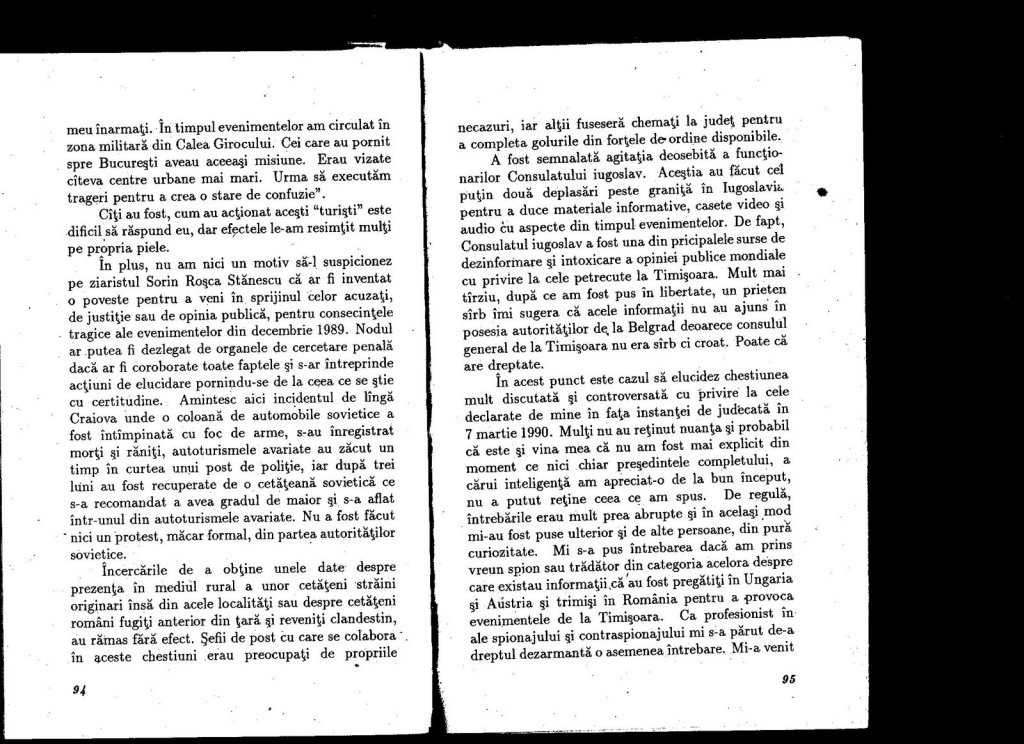
Sorin said that on the eve of the revolution…people in civilian clothes and carrying heavy bags began arriving [at the Hotel Parc in Arad] from Bucharest. “We knew they were police and that they were bringing guns…In the end that was where the sniping was from. (Harvey Morris, “Changing of the Guard for Doina Cornea,” The Independent (London), 15 January 1990) (II)

Posted by romanianrevolutionofdecember1989 on October 5, 2014

(purely personal views as always, based on two decades of prior research and publications)

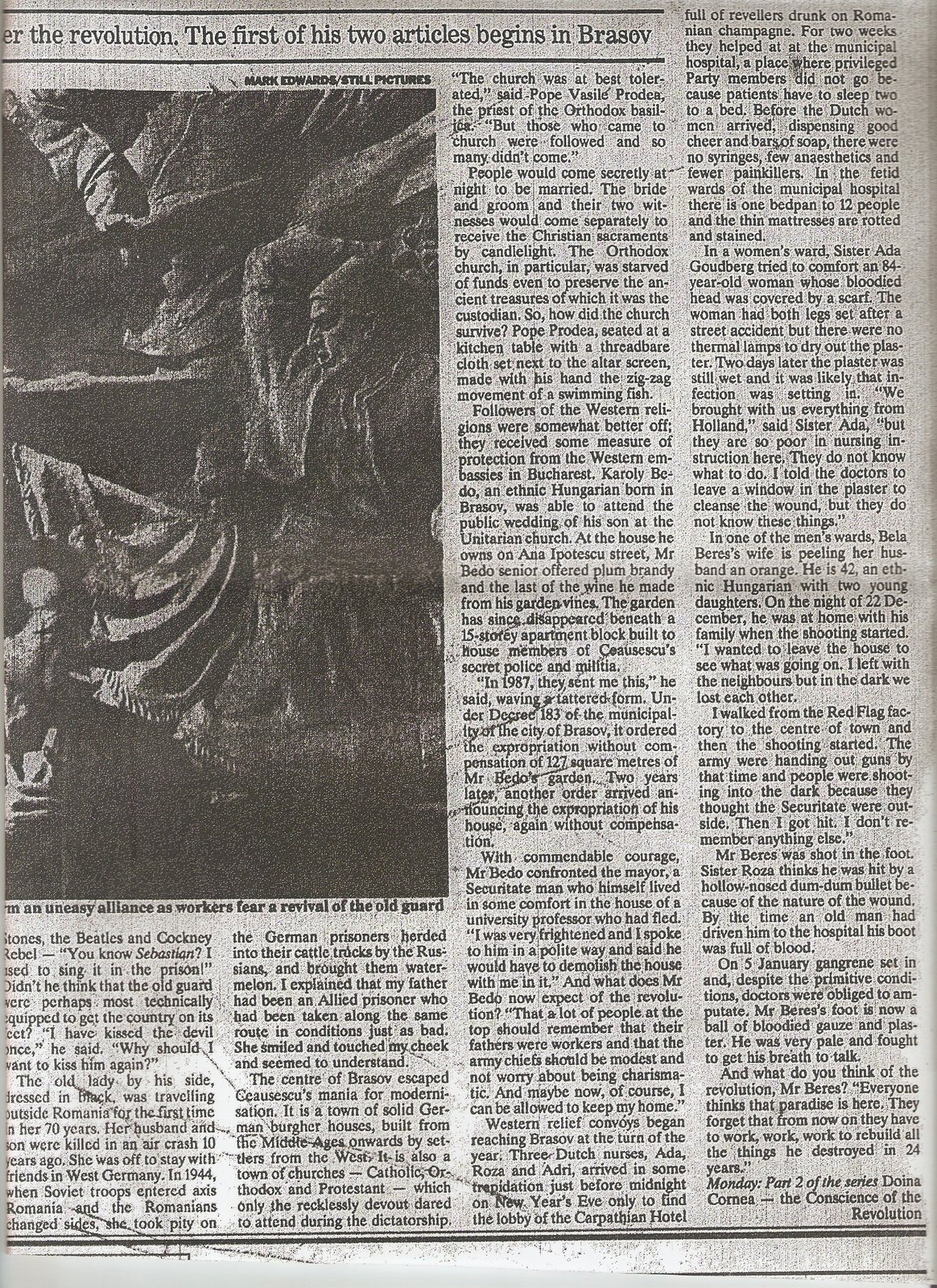
Sorin said that on the eve of the revolution…people in civilian clothes and carrying heavy bags began arriving [at the Hotel Parc in Arad] from Bucharest. “We knew they were police and that they were bringing guns…In the end that was where the sniping was from. (Harvey Morris, “Changing of the Guard for Doina Cornea,” The Independent (London), 15 January 1990) (I)

image0

Sorin said that on the eve of the revolution they were working over at the Park Hotel [Arad] which has a clear field of fire towards the army barracks.  People in civilian clothes and carrying heavy bags began arriving from Bucharest.  “We knew they were police and that they were bringing guns and we told the army but they took no notice.  In the end that was where the sniping was from.  The Manager of the Park was in on it.  She’s called Sanda Kern and she took holidays every year in West Germany and had a foreign car.  Her husband’s a barman at the airport.  Do you know what she is doing now?  She’s a member of the Arad National Salvation Front.”

Harvey Morris, “Changing of the Guard for Doina Cornea,” The Independent (London), 15 January 1990, p. 12.

 http://www.transira.ro/bb3/download/file.php?id=95617

 The Securitate and Militia terrorists–as in Sibiu http://atomic-temporary-3899751.wpcomstaging.com/2013/08/16/final-boarding-call-for-taroms-special-rombac-service-from-bucuresti-to-sibiu-would-the-large-party-of-suspicious-soviet-tourists-please-report-to-the-gate-immediately-iv/ –preferred to travel by TAROM ROMBAC 111’s!  And where did Generals Nuta and Mihalea–and the 29 cadre traveling with them–head fleeing their role in the repression of demonstrators in Timisoara:  why the Hotel Parc, of course!  And, as we know, the hotel had already been prepared for them, as in other towns!

image0-003

image0-001

image0-005

image0-007

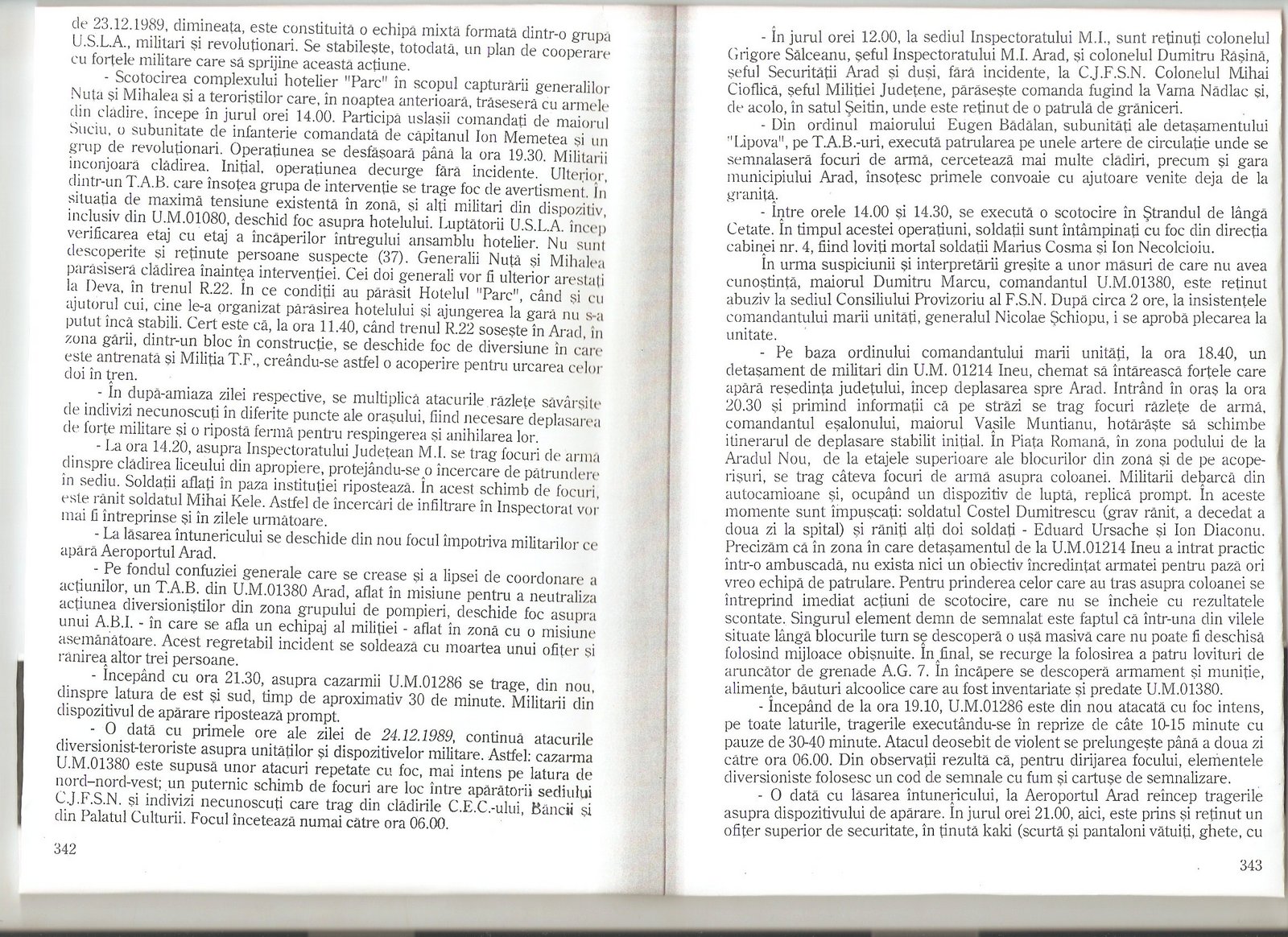
Maiorul Alexandru Chis, ” 22-24 decembrie 1989″ Armata Poporului, nr. 11 14 martie 1990, p. 3.

image0-009

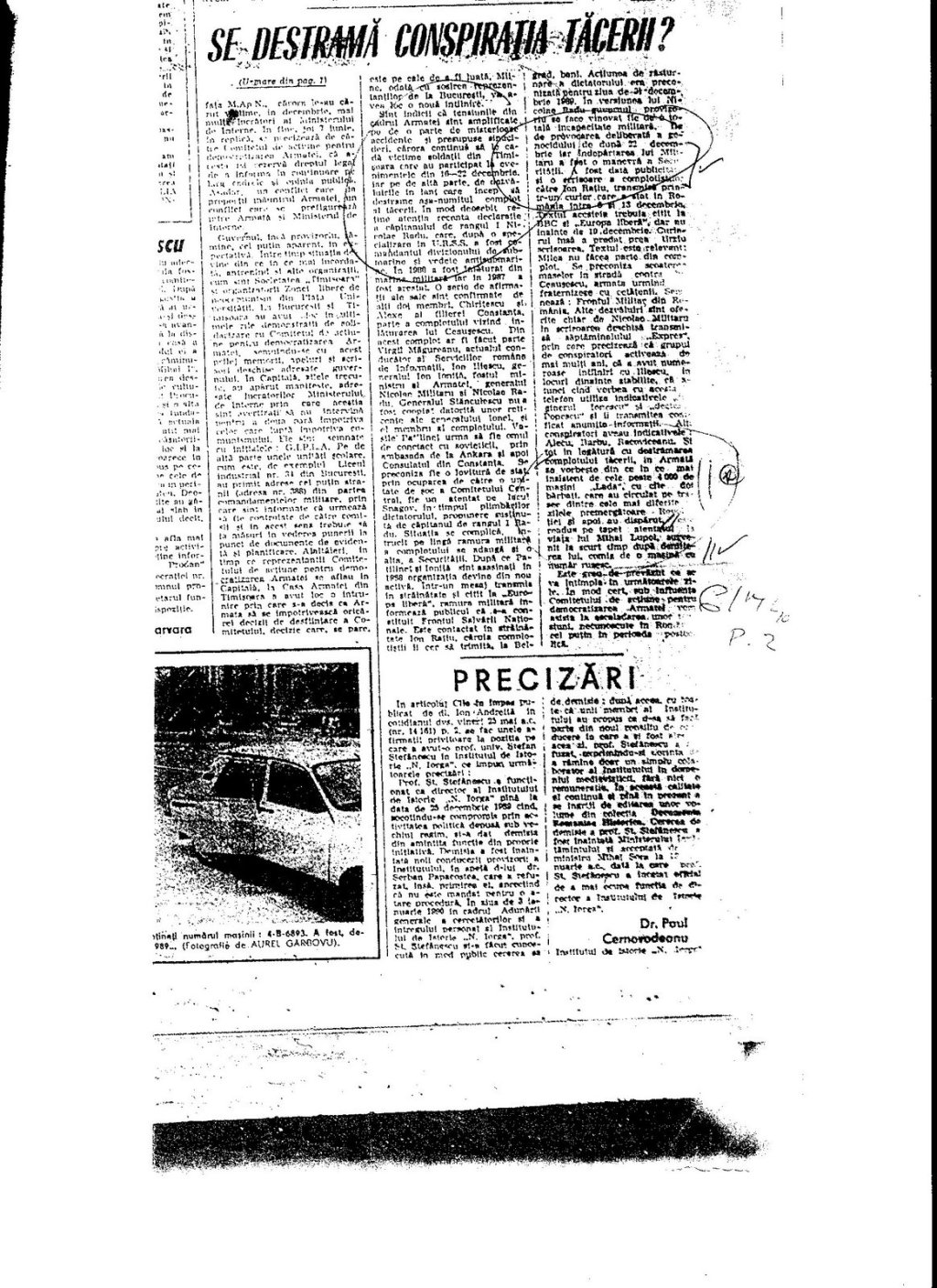
And of course as elsewhere, the Securitate terrorists left their calling card:  exploding dum-dum bullets.

23 decembrie 1989: Tot la Arad “n-au existat gloante dum-dum”

Posted by romanianrevolutionofdecember1989 on December 21, 2009

Iată cum descrie această tragedie supravieţuitorul Ovidiu Păiuş: ”După ce am trecut de jumătatea Podului „Decebal” s-a început să se tragă bestial asupra noastră. Parbrizul camionului a fost dintr-o dată dezintegrat, fiind împroşcaţi cu mii de cioburi de sticlă, care mi-au intrat în gură, nas şi urechi, simţind însă o durere mai mare în palma stângă. Ulterior aveam să aflu că un glonţ „dum-dum” a explodat lângă capul meu! Norocul meu a fost că în clipa respectivă palmele mâinilor îmi acopereau faţa, schijele intrând în mâna stângă. Atât eu cât şi Andrei Safaleru ne-am lăsat pe spate, între scaune. Am deschis ochii, eram speriat că am orbit. Am reuşit să-l văd pe şoferul Ciumedean Dănuţ căzut peste volan, curgându-i sângele din gură. Mai târziu am aflat că un glonţ ieşit prin gură, i-a rupt patru dinţi. Speriat mi-am întors capul în cealată parte, tocmai când mandibula lui Doru Miclea a fost străpunsă de un glonţ. Dintr-o dată mandibula „i-a sărit” câţiva centimetri în faţă şi un şuvoi de sânge i-a ţâşnit pe gură! Atunci Andrei Safaleru a făcut o greşeală capitală, s-a ridicat în fund, după care s-a aruncat pe burtă. În noua sa poziţie l-au străpuns 17 gloanţe! Unul i-a intrat în plămân, iar restul, până la 17 gloanţe, în bazin şi în rinichi! Tot atunci, un glonţ „dum-dum” m-a lovit în laba piciorului. În momentul exploziei, adidasul mi-a fost smuls din picior! Apoi cabina basculantei s-a rabatat înainte şi am căzut de pe pod între malul râului Mureş şi intrarea în Ştrand! După circa 40 – 50 de minute am fost adunaţi de militarii care au inspectat zona, să vadă pe cine au împuşcat!” („Întrebătorul din Agora”, vol.I, p. 268 – 278).
Eveniment
printeazatrimite e-mail

22 – 25 DECEMBRIE’89

20 decembrie 2009 23:04

Declanşarea diversiunii în Arad
În seara zile de 22 decembrie se încheie cea de-a doua etapă a Revoluţiei din Decembrie 1989 la Arad, respectiv „revoluţia de catifea”, nonviolentă, şi începe cea de-a treia etapă, pe care am numit-o violentă, „revoluţia de sânge”, care durează până după 25 decembrie 1989, când au fost executaţi soţii Ceauşescu, însă ultimele focuri de armă s-a auzit până în 28 decembrie.
La scurt timp după preluarea puterii de către Comitetul Frontului Democratic Român, în după-amiaza zilei de 22 decembrie a început o diversiune concentrată, care a luat prin surprindere pe toată lumea. Analizând evenimentele din decembrie 1989 de la Arad am constatat că întreaga diversiune s-a desfăşurat pe mai multe paliere. Primul palier a fost la nivelul înspăimântării populaţiei, apoi, al doilea pentru intimidarea primei structuri de putere create de revoluţionarii care au intrat în sediul fostului Comitet judeţean de partid, iar al treielea palier a fost la nivelul structurilor militare, de apărare, care au primit o serie de informaţii şi ordine contradictorii. Toate cele trei nivele de diversiuni au fost foarte bine orchestrate de cineva care a acţionat din umbră, fără să mai poată fi depistat până în prezent.
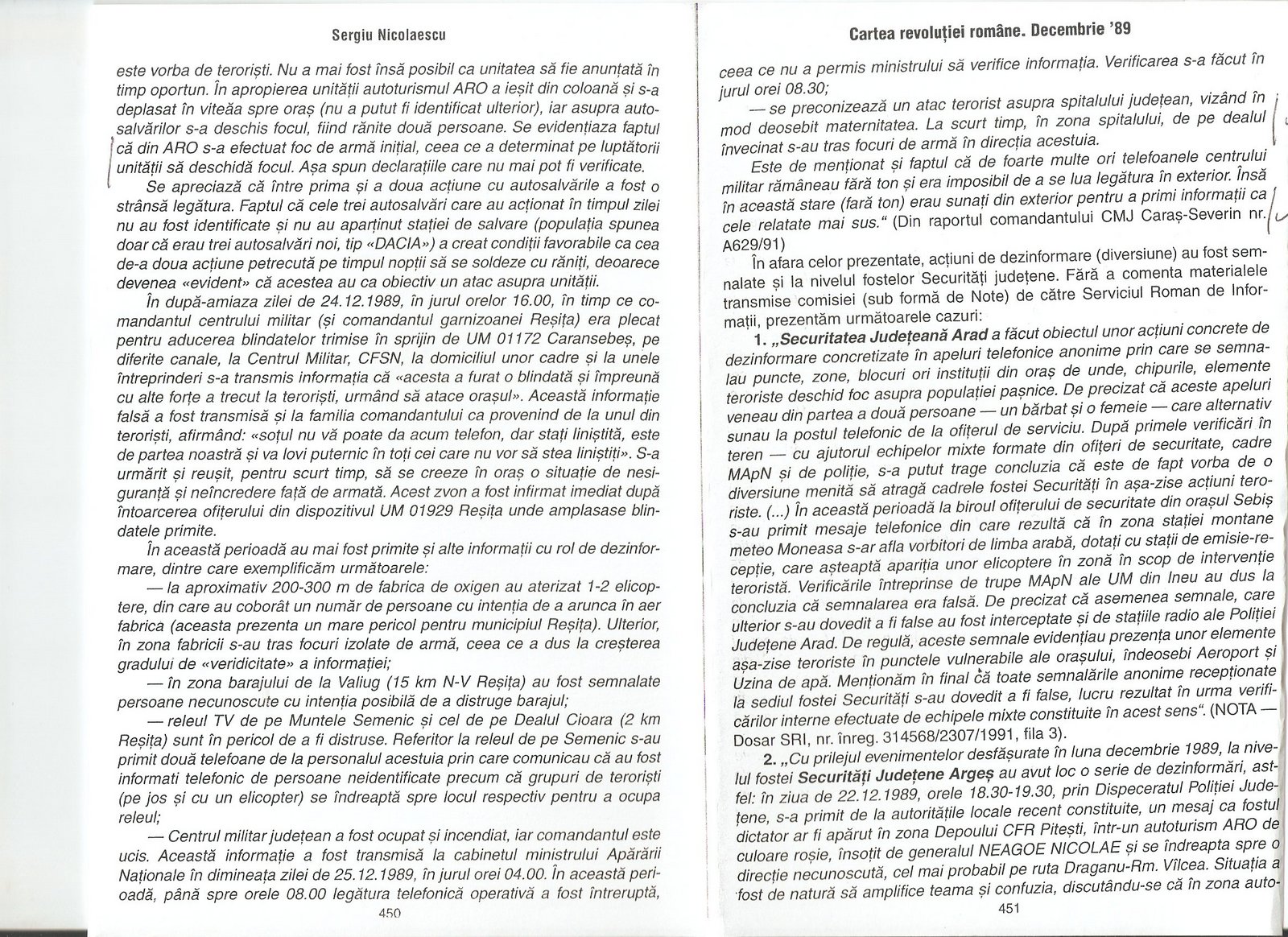
La circa două ore de la preluarea puterii au început să apară primele zvonuri alarmante că există forţe ascunse care îl vor apăra pe Ceauşescu. Lumea începea să vorbească despre trupe de comando speciale, respectiv despre „terorişti”.
La ora 15,20 a apărut zvonul că apa este otrăvită în Arad! Avertismentul a fost rostit de la balconul Consiliului, de unde, cu puţin timp în urmă, liderul revoluţiei din acest oraş a declarat Aradul oraş liber, apoi s-au perindat la microfon o mulţime de vorbitori. „După un timp, după ce a apărut zvonul că apa este otrăvită, nu ştiu exact cât timp a trecut – ne-a mărturisit revoluţionara Ofelia Călugăru –  când tocmai aveam eu microfonul în mână, a venit o informaţie care ne-a liniştit. S-a apropiat de mine un domn, care mi-a spus:”Mă numesc Trifa Ioan şi am venit să vă anunţ că apa nu este otrăvită în Arad, personal vin de la laborator, unde mi s-a confirmat acest lucru!”.
Temuţii generali Nuţă şi Mihalea de la Timişoara sosesc la Arad
În seara şi noaptea zilei de 22. decembrie 1989 Aradul a fost teatrul de desfăşurare a unei ample acţiuni de diversiune psihologică, care a născut şi întreţinut o psihoză teroristă în rândul populaţiei şi a creat suspiciune şi confuzie între forţele care trebuiau să menţină stabilitatea. Psihoza a fost amplificată odată cu sosirea la Arad a doi generali M.I., Nuţă Constantin şi Mihalea Velicu cu mai mulţi „colaboratori”. Având în vedere densitatea evenimentelor întâmplate în cursul nopţii de 22 spre 23 decembrie 1989, vom prelua, pentru autenticitatea relatării, această secvenţă din Raportul Comisiei Senatoriale, menţionat mai sus.
În ziua de 17 decembrie 1989, cei doi generali au fost trimişi la Timişoara din ordinul lui Nicolae Ceauşescu. Ei au făcut parte din grupa operativă, alături de alţi generali din armată şi ofiţeri superiori, trimişi de Ceauşescu pentru organizarea lichidării „tulburărilor”.
„După fuga soţilor Ceauşescu, cei doi generali, intenţionând să revină la Bucureşti, s-au urcat în avionul care făcea cursa regulată Timişoara – Bucureşti, dar care în 22 decembrie 1989, din lipsa de pasageri suficienţi, a suplinit şi cursa Arad – Bucureşti, astfel că avionul a făcut o escală la Arad. Cursa a avut o mare întârziere, trebuia să plece din Arad la orele 17,50, dar a aterizat abia după orele 21,00. Era un „RomBac 111”, din care au coborât iniţial pasagerii pentru Arad. După ce la Bucureşti, gl. Zărnescu, comandantul aviaţiei civile, a interzis continuarea zborului, pasagerilor rămaşi în avion li s-a comunicat că datorită condiţiilor meteorologice avionul nu mai poate pleca la Bucureşti, că vor continua zborul a doua zi şi se va asigura transportul acestora la gară sau la hotel. Cei doi generali au plecat de la aeroport spre hotel cu autoturismul şefului compartimentului antiterorist (M.I.).
În acelaşi avion era şi un grup de 5 revoluţionari din Timişoara, în frunte cu Lorin Fortuna, care doreau să ajungă la Bucureşti, la Televiziune şi la FSN. Acest grup s-a întors la Timişoara încă din seara respectivă.
Pasagerii pentru Bucureşti, în număr de 29, au fost cazaţi la hotelul „Parc”.
În cursul serii, de la Bucureşti, în numele gl. Guşe, s-a trimis armatei, din nou, alarma de luptă generală. Gl.lt. Călinoiu a ordonat deplasarea la Arad a efectivelor de la Lipova. Mr. Diaconescu a şi pornit spre municipiu cu 300 militari, 20 TAB-uri şi 10 tancuri. La UM 01380 din Cetate s-a primit indicativul „Fanfara”, ceea ce însemna luarea măsurilor necesare împotriva unui atac iminent asupra Aeroportului. Blindatele au fost dispuse circular în jurul pistei de aterizare.
La sediul consiliului, pe la ora 20, a sunat pe telefonul operativ Ion Iliescu, s-a interesat de situaţia existentă în Arad. A spus să se ia legătura cu Timişoara, pentru că are informaţii că se trage în Piaţa Operei. Judecătorul Trifa Ioan, care a fost cooptat în conducerea Comitetului Frontului Democratic Român din Arad, s-a interesat la Timişoara, apoi a mai apucat să vorbească cu Bucureştiul, să confirme că, într-adevăr, se trage în Timişoara, după care telefonul operativ s-a întrerupt.
Pe celelalte telefoane, au apărut şi răspândit în continuare fel de fel de ştiri alarmante, potrivit cărora elicoptere inamice care zboară la mică înălţime se apropie de Valea Mureşului spre Arad, a fost minat podul CFR peste Mureş, o coloană de 30-40 de autovehicule pline de securişti vin de la Timişoara spre Arad. La întâmpinarea acestora au fost trimise 7 tancuri la staţia PECO din Aradul Nou, dar ulterior, motivând că nu rămân forţe de rezervă suficiente, aceste tancuri au fost retrase.
De la cercetarea prin radiolocaţie a parvenit ştirea potrivit căreia dinspre Deva se apropie o formaţie de elicoptere.
La ora 19,40, la UM 01380, din Cetate, s-a primit informaţia că la sediul Inspectoratului M.I. se trage, apoi că a fost atacată Poşta centrală. Toate s-au dovedit a fi informaţii false. În jurul orei 22,30, generalii Nuţă şi Mihalea au sunat de la hotelul Parc la sediul Miliţiei, întrebând de ofiţerii Cioflică, Răşină, Sălceanu sau Văduva (locţiitorul lui Cioflică), dar niciunul nu se găsea acolo. În personalul de miliţie şi securitate a intrat panica, cei doi generali fiind cunoscuţi ca şefi cu un comportament foarte dur faţă de subordonaţi.
În UM Cetate, ofiţerii Statului Major, împreună cu mr. Bădălan şi Său, de la Marea Unitate din Oradea, pregăteau pe hărţi sistemul de apărare al Unităţii Militare şi al oraşului. S-a discutat problema capturării celor doi generali, suspectaţi de genocid săvârşit la Timişoara. Mr. Marcu a pornit spre Consiliu, pentru a consulta şi revoluţionarii.
După ora 23 au fost trase primele focuri de armă. Mr. Marcu afirmă că primul cartuş a fost tras cu aprobarea sa de către cpt. Memetea, ca avertisment, pentru a se face linişte la sediu. Atunci, ca răspuns,
s-a tras asupra Consiliului Judeţean. S-au stins luminile şi s-a executat foc masiv şi prelungit din clădire în afară. Alţi martori afirmă că prima dată au fost trase focuri răzleţe asupra consiliului din diferite clădiri din jurul pieţii.
În piaţă, mulţimea continua să cânte „Ole, ole, ole, Ceauşescu nu mai e!”
Pe la ora 24 s-a deschis foc din hotelul „Parc” şi dinspre Ştrandul „Neptun” asupra UM din Cetate, de unde s-a răspuns cu foc masiv. Un ziarist englez şi un corespondent de la Radio Budapesta au reuşit să pătrundă în clădirea întunecată şi „asediată” a Consiliului.
La Aeroport, după orele 0,00 (23.12. 1989), s-a primit un ordin de la lt.col. Drăghicescu Nicolae (comandantul regimentului de aviaţie de la Timişoara) să fie blocată pista de aterizare pentru că se prevede un atac aerian iminent asupra Aeroportului. Când au ieşit cele trei autovehicule (autobuz, cisterna şi maşina PSI) din remiza auto cu care trebuia blocată pista şi au ajuns aproape de pistă şi au aprins farurile, dintr-un TAB aflat în dispozitivul de apărare s-a deschis foc asupra autovehiculelor. Focul s-a înteţit, s-a tras din toate părţile, au fost avariate autovehiculele, turnul de control, avionul RomBac 111 care staţiona.
S-au tras rafale de pistol-mitralieră din aerogară spre pistă şi de pe acoperişul clădirii aeroportului. S-a tras, de asemenea, spre şi dinspre Secţia de carotaj, unde exista un depozit de materiale explozive şi radioactive şi un pichet de pază militară. Au fost grav răniţi un soldat şi şoferul de pe vehiculul PSI, care abia dimineaţa au fost transportaţi la spital.(Din „Raportul Comisiei Senatoriale”)
Împuşcăturile au continuat cu intermitenţe toată noaptea, atât în jurul hotelului „Parc” – unde erau cazaţi generalii Nuţă Constantin şi Mihalea Velicu – şi în jurul Unităţii Militare din Cetate, cât şi la Consiliu şi la Aeroport.
Primele victime
la Podul „Decebal”
Colonelul Liviu Stranski, comandantul Gărzilor Patriotice, cel care a împărţit arme civililor din Consiliu, în momentul în care a constatat că muniţia este pe terminate, a luat o hotărâre la fel de nefericită ca aceea de a împărţi arme şi muniţie revoluţionarilor, respectiv de a trimite cinci persoane din Consiliu cu o basculantă RABA de 16 tone a I.J.T.A. la UM.01380 din Cetate pentru muniţie. În acest sens au fost trimişi şoferul Ciumedean Dănuţ, maistrul militar Gheorghe Dupţa şi civilii Doru Miclea, Ovidiu Păiuş şi Andrei Safaleru.
La plecarea din Consiliu, „echipajul” a fost asigurat că totul a fost rezolvat telefonic la UM.01380, că militarii de la Podul „Decebal” din faţa intrării principale în UM Cetate au fost anunţaţi de sosirea lor cu basculanta pentru muniţie. În ciuda acestei asigurări date de col. Stranski, în momentul în care au ajuns pe Podul „Decebal” militarii care alcătuiau „ambuscada” de la piciorul podului au deschis focul asupra basculantei RABA de 16 tone! Primul rănit a fost şoferul Ciumedean Dănuţ şi maistru militar Gheporge Dupţa, apoi Doru Miclea şi Ovidiu Păiuş, iar tânărul Andrei Safaleru a fost împuşcat mortal, ciuruit cu 17 gloanţe, în vreme ce basculanta RABA s-a răsturnat de pe pod pe porţiunea dintre râul Mureş şi intrarea în Ştrandul „Neptum”. Iată cum descrie această tragedie supravieţuitorul Ovidiu Păiuş: ”După ce am trecut de jumătatea Podului „Decebal” s-a început să se tragă bestial asupra noastră. Parbrizul camionului a fost dintr-o dată dezintegrat, fiind împroşcaţi cu mii de cioburi de sticlă, care mi-au intrat în gură, nas şi urechi, simţind însă o durere mai mare în palma stângă. Ulterior aveam să aflu că un glonţ „dum-dum” a explodat lângă capul meu! Norocul meu a fost că în clipa respectivă palmele mâinilor îmi acopereau faţa, schijele intrând în mâna stângă. Atât eu cât şi Andrei Safaleru ne-am lăsat pe spate, între scaune. Am deschis ochii, eram speriat că am orbit. Am reuşit să-l văd pe şoferul Ciumedean Dănuţ căzut peste volan, curgându-i sângele din gură. Mai târziu am aflat că un glonţ ieşit prin gură, i-a rupt patru dinţi. Speriat mi-am întors capul în cealată parte, tocmai când mandibula lui Doru Miclea a fost străpunsă de un glonţ. Dintr-o dată mandibula „i-a sărit” câţiva centimetri în faţă şi un şuvoi de sânge i-a ţâşnit pe gură! Atunci Andrei Safaleru a făcut o greşeală capitală, s-a ridicat în fund, după care s-a aruncat pe burtă. În noua sa poziţie l-au străpuns 17 gloanţe! Unul i-a intrat în plămân, iar restul, până la 17 gloanţe, în bazin şi în rinichi! Tot atunci, un glonţ „dum-dum” m-a lovit în laba piciorului. În momentul exploziei, adidasul mi-a fost smuls din picior! Apoi cabina basculantei s-a rabatat înainte şi am căzut de pe pod între malul râului Mureş şi intrarea în Ştrand! După circa 40 – 50 de minute am fost adunaţi de militarii care au inspectat zona, să vadă pe cine au împuşcat!” („Întrebătorul din Agora”, vol.I, p. 268 – 278).
Tragediile au continuat toată noaptea la Podul „Decebal”. O autosanitară de la UM. 01380, după ce a transportat la Spitalul judeţean o angajată civil căreia i s-a făcut râu în UM Cetate, la întoarcere nu a mai fost recunoscută de militarii care alcătuiau „ambuscada” de la Podul „Decebal” şi au deschis un foc necruţător asupra ei. Autosanitara a avut aceeaşi soartă ca basculanta RABA, fiind ciuruită de gloanţe. În urma focului şoferul autosanitarei – soldatul Adrian Victor Puşcău – a fost împuşcat mortal, iar medicul, mr. dr. Aurel Chiş, a fost rănit cu un glonţ în picior. De asemenea a fost rănit şi cpt. Prodan Liviu, care se afla în autosanitară alături de medic.
Tot în acea noapte fatală de 22 spre 23 decembrie 1989, cetăţeanul maghiar Toth Şandor, care a venit în România din Ungaria cu un convoi cu autocamioane, pline cu ajutoare (alimente şi medicamente) la Spitalul din Arad, după ce a descărcat a fost solicitat să facă un transport până în Cetate. A fost de acord, dar la apropierea de podul de peste Mureş a fost întâmpinat cu foc de către militarii care apărau UM. Cetate, fiind împuşcat mortal.
În cursul nopţii telefoanele Unităţilor Militare au fost intoxicate cu informaţii false, cu zvonuri alarmante despre presupuse atacuri teroriste: că au aterizat trei elicoptere la Combinatul chimic, că vin „teroriştii” din Timişioara, că la Întreprinderea de strunguri miliţenii trag în oameni, că un tir cu nr.BH6729, plin cu „terorişti”, vine de la Oradea, că la Campingul din Aradul Nou sunt „terorişti” arabi.
Aceste zvonuri şi ştiri false au fost întărite cu acţiuni reale de diversiune. S-a executat foc real sau cu simulatoare de foc automat, sporadic sau succesiv, din locuri diferite. Astfel, s-a tras, ori s-a simulat tragerea asupra  sediului Consiliului din podul Palatului cultural, din clădirea Liceului sanitar, din turnul restaurantului „Mureşul”, ori dinspre parc şi faleza Mureşului. S-a observat foc la gura ţevii ce îşi schimba poziţia şi din UM Cetate. Apărea când pe faleza Mureşului, când în parcarea de la Hotel „Parc”, când pe str. Teiului, de lângă malul Mureşului. Iar în dispozitivul de apărare al UM.01380 Cetate a fost împuşcat mortal soldatul t.r. Almen Werner! „Cartea Revoluţiei Române – Decembrie’89”, p. 355 – 356).
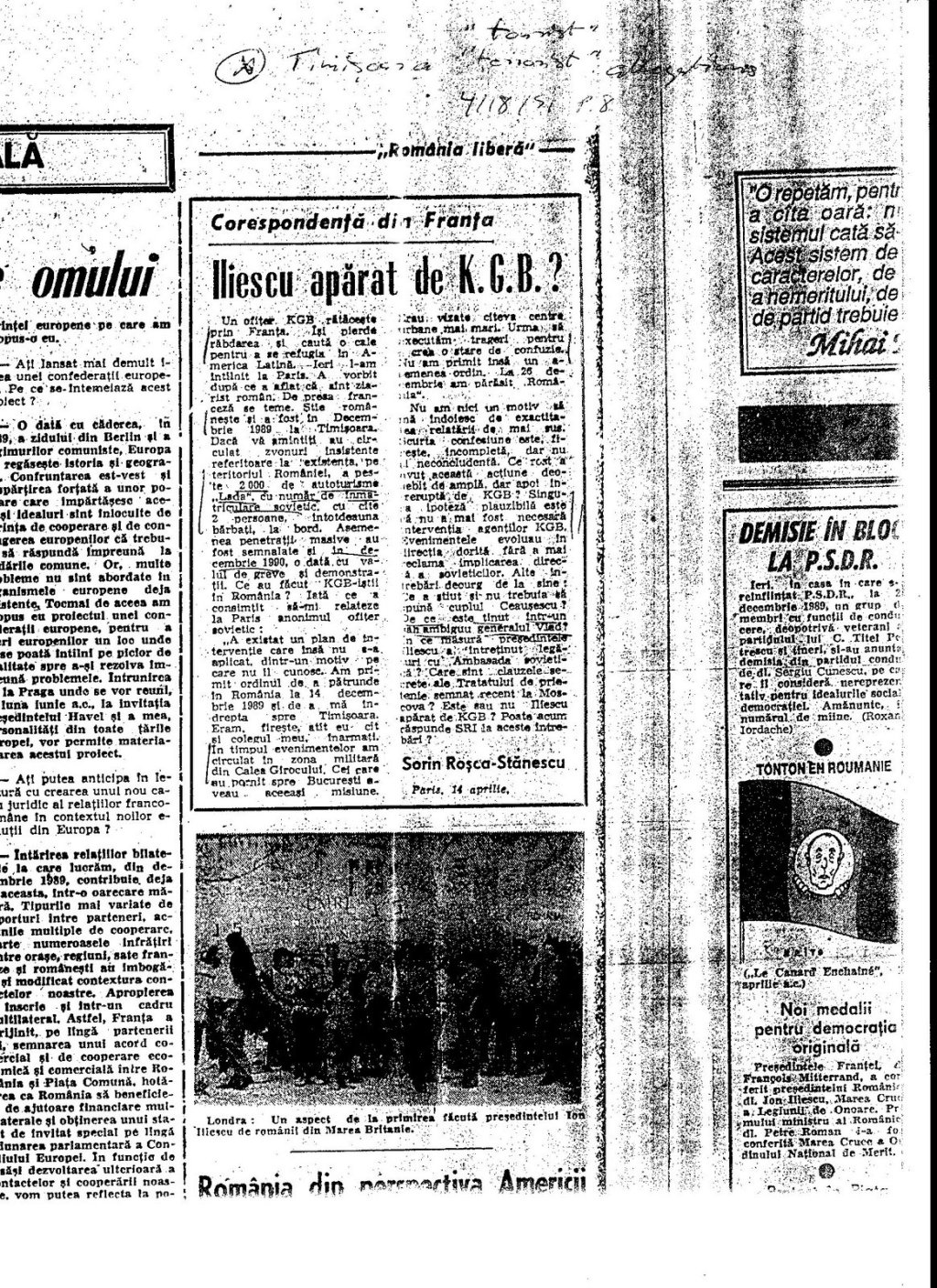
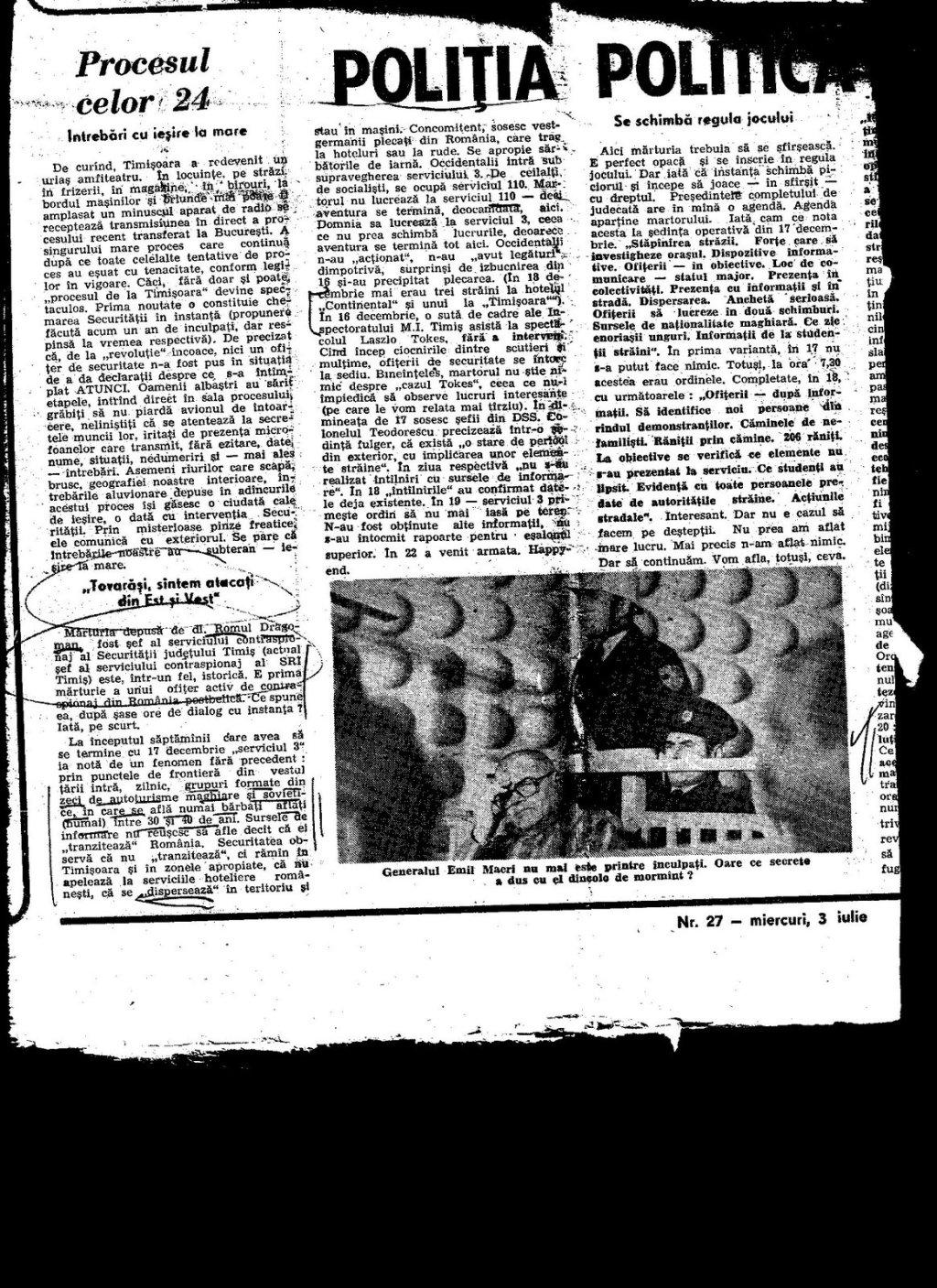
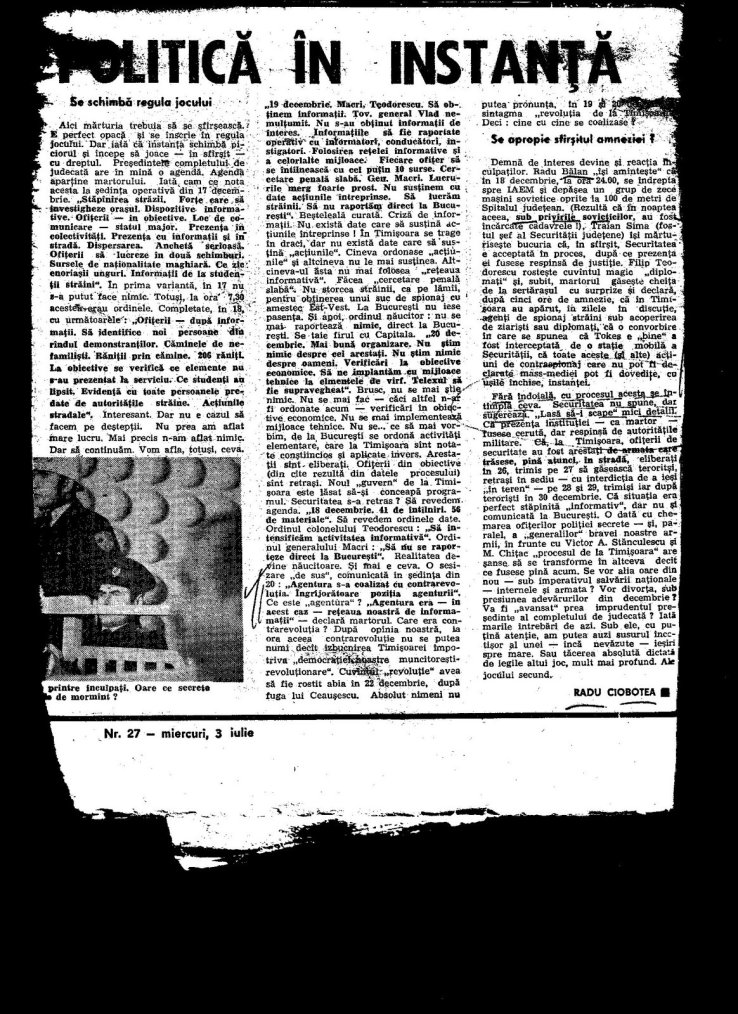
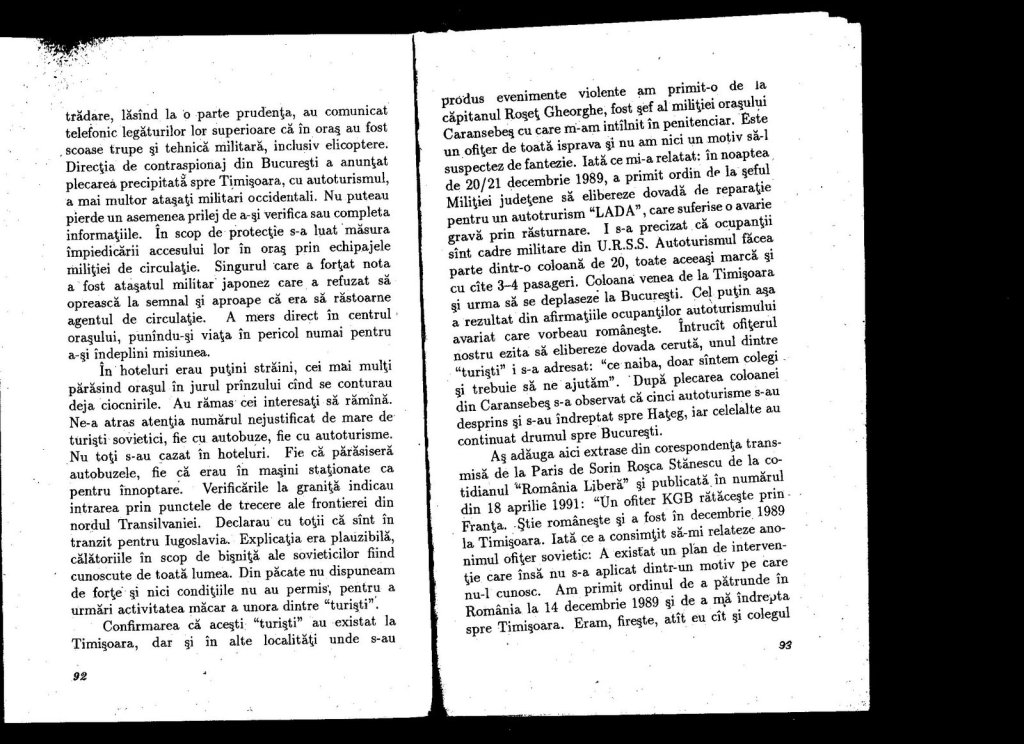
In Arad, Major Suciu of the USLA, who had been sent out on 23 December to help with the arrest of Militia Generals Nuta and Mihalea and the others who were shooting (“terrorists”) from the “Hotel Parc”—an unsuccessful mission—was arrested at noon on 24 December along with other Interior Ministry people, including USLA, probably in relation to an “accidental” confrontation involving an ABI.[133]
[133] Codrescu et. al., Armata Romana in Revolutia din Decembrie 1989, pp. 209-213.  Vasile Surcel, “19 oameni au murit la Arad in zilele Revolutiei,” Jurnalul National, 29 October 2004, online edition.

19 oameni au murit la Arad in zilele Revolutiei

29 Oct 2004 – 00:00

SPECIAL

19 morti si 38 de raniti. Acesta este tributul de sange platit de locuitorii Aradului in zilele Revolutiei din decembrie 1989. Victimele au aparut abia dupa fuga lui Ceausescu, in luptele duse cu “teroristii”. Bilantul tragic este privit acum si cu alte conotatii in urma numirii generalului Eugen Badalan la conducerea Armatei, ofiterul participand, potrivit unor marturii, la represiunea impotriva manifestantilor anti-ceausisti. Presedintele Romaniei, Ion Iliescu, a afirmat ieri ca “la Arad nu au existat confruntari si pierderi de vieti omenesti”. Realitatea, mult prea dramatica si complexa pentru a putea fi descrisa in aceste cateva cuvinte, este insa cu totul alta: la Revolutia din Decembrie 1989, in Arad au murit 19 oameni si alti 38 au fost raniti. Iar aceste victime au aparut acolo doar dupa fuga Ceausestilor.

VASILE SURCEL
Click pentru a mari imaginea
FATA IN FATA. La inceput, civilii si militarii s-au aflat in “tabere” diferite. Dupa fuga lui Ceausescu, toti s-au unit in lupta contra “teroristilor”

In “Raportul Comisiei Senatoriale privind actiunile desfasurate in Revolutia din Decembrie 1989 in municipiul Arad”, publicat in anul 1997, se afirma ca maiorul Dumitru Marcu ar fi recunoscut ca primele focuri de arma trase in Arad, dupa fuga cuplului Ceausescu, s-au inregistrat in noaptea de 22/23 decembrie, putin dupa ora 23:00. Fostul comandant al UM 01380 a sustinut ca primul glont s-a tras, cu aprobarea sa, in Consiliul Judetean. Fara a se gandi prea mult la consecinte, el a dispus aceasta masura pentru a face liniste in sediul in care toata lumea vorbea, dar nimeni nu mai asculta pe nimeni. Ca raspuns la acea prima salva, in scurt timp a inceput sa se traga, din exterior, asupra cladirii. In aceasta situatie, crezandu-se asediati de “teroristi”, cei din interior, militari, dar si civili care fusesera inarmati la voia intamplarii au stins luminile si au executat foc intens si prelungit asupra cladirilor din zona. Din fericire, acest prim incident s-a incheiat fara nici o victima. AU EXISTAT “SIMULATOARE”? Poate ca totusi ordinul de a se trage acea prima rafala nu a fost dat chiar intamplator. Actorul Valentin Voicila ne-a declarat ca dupa catva timp, cand situatia s-a mai calmat, cativa dintre oamenii care au participat la acel incident au observat ca, desi in acea noapte avusesera impresia ca sunt atacati cu foc sustinut, din exterior, in zidurile cladirii nu exista nici o urma de glont. O situatie oarecum asemanatoare cu cea inregistrata in Capitala, la sediul CC, unde, in aceeasi noapte, “teroristii superinstruiti” au tras ca disperatii asupra cladirii, dar nu au reusit sa tinteasca nu celebrul “balcon” iluminat ca in miezul zilei, dar nici macar fatada imobilului. Aceasta situatie ciudata i-a facut pe multi aradeni sa creada ca si in orasul lor au existat “simulatoare”, al caror rol “tactic” a fost sa creeze panica si sa provoace raspunsuri haotice, cu focuri de arma reale. Revolutionarul Pintea Mos afirma chiar ca “la unitatea din Gai, pe copertinele de la intrare au fost gasite simulatoare de tragere”. Nimeni nu mai stie insa ce s-a intamplat ulterior cu aparatele. Oricum ar fi, la auzul rafalelor, in tot orasul s-a instaurat panica. Unii dintre oamenii aflati la fata locului s-au imprastiat speriati, in timp ce altii au venit chiar si din cartiere mai indepartate ca sa afle ce se intampla. In cursul aceleiasi nopti, dinspre Hotelul “Parc”, unde erau cazati generalii Nuta si Mihalea, dar si dinspre strandul din apropiere s-a deschis focul asupra UM 01380-Cetate. La randul lor, militarii de acolo au raspuns cu focuri de arma intense. Insa nici de asta data nu s-au inregistrat victime. MOARTEA REVOLUTIONARULUI GRUBER. Primul om care si-a pierdut viata la Arad a fost in noaptea de 23/24 decembrie revolutionarul Gheza Gruber. Moartea lui este considerata si acum unul dintre misterele Revolutiei de la Arad. Gruber s-a aflat pe strazile orasului, inca de la inceput. Apoi, dupa fuga cuplului Ceausescu si ocuparea sediului Consiliului Judetean de Partid a intrat si el inauntru. Pana in momentul in care a fost impuscat, a stat in biroul lui Oancea, fostul primar al Aradului, la telefonul “TO”, care asigura inca legatura cu exteriorul, pe “firul scurt”. De acolo a “monitorizat” toate legaturile telefonice si toate mesajele primite in acea perioada. Revolutionarii care au fost impreuna cu el sustin ca Gruber a avut un registru in care si-a notat continutul tuturor convorbirilor, precum si numerele de la care s-a sunat. Valentin Voicila isi aminteste ca, la un moment dat, Gruber l-a strigat spunandu-i ca are sa-i comunice ceva deosebit de important. Ocupat, actorul a amanat pentru mai tarziu acea discutie, care nu a mai apucat sa aiba loc, pentru ca, peste doar cateva minute, Gruber a fost impuscat. Oficial s-a spus ca el ar fi fost impuscat mortal in cap, cu un singur glont, in zona fetei. Cei care au fost de fata contrazic insa aceasta “varianta” si sunt convinsi ca, in realitate, moartea lui Gruber a fost provocata de un al doilea glont, care l-a lovit din spate, in zona inimii. Revolutionarul Ofelia Calugaru afirma chiar ca ar fi gasit in incapere tubul unui cartus de mic calibru, care nu ar fi avut ce cauta acolo daca victima ar fi fost impuscata din strada. Dupa ce a fost impuscat, Gruber a fost intins pe o saltea, cu fata in sus. Colegii lui afirma ca, atunci cand a fost ridicat de pe saltea, aceasta era patata cu sange exact in zona inimii. Ei mai sustin ca, in acele momente, in camera in care fusese impuscat Gruber s-au mai aflat inca doua persoane, doi militari. Ei sunt si acum convinsi ca glontul care le-a ucis prietenul nu a venit pe geam, de pe strada, ci a pornit chiar din interiorul acelei incaperi. Misterul mortii lui Gruber este intarit de un fapt ciudat, inca neelucidat: registrul in care acesta isi notase toate convorbirile telefonice a disparut in scurt timp, fara urma. Revolutionarii cred ca informatia a carei aflare l-a costat viata pe Geza Gruber – pe care voia sa o comunice si celorlalti revolutionari – nu-i era destinata personal, provenea de la Bucuresti de la un inalt esalon militar, si se referea la faptul ca, pana dimineata, toti civilii veniti in sediu din strada trebuia sa fie “curatati”. Acum, la 14 ani de la acea tragedie, nu se mai poate sti cu precizie daca acea informatie a fost una adevarata sau doar o alta diversiune menita sa aduca haosul asupra orasului. Cea de-a doua victima inregistrata in Arad a fost Toth Sandor, soferul unui camion venit din Ungaria, plin cu ajutoare aduse pentru locuitorii Aradului. El a fost ucis in apropierea podului “Decebal”. “LANTUL” DIVERSIUNILOR CRIMINALE. Multi aradeni cred si acum ca haosul existent in acea perioada in toate zonele orasului ar fi fost provocat de “teroristii” sositi in oras impreuna cu generalii Nuta si Mihalea. Pana acum nu s-a putut afla mare lucru despre activitatea acelor “teroristi”. La fel cum nu s-a putut afla daca acest haos nu a fost cumva provocat de incompetenta si lipsa de comunicare ce a existat intre diversele componente ale fortelor militare dislocate acolo. Cert este ca, incepand cu noaptea de 22 decembrie, Aradul a devenit un fel de “poligon” in care zvonurile au venit de peste tot si au fost imprastiate pe toate canalele posibile. Unii martori afirma ca in noaptea de 22 decembrie, in jurul orelor 21:00, dinspre Hotelul “Parc” si din directia strandului s-a deschis focul asupra UM 01380-Cetate. La randul lor, militarii de acolo au deschis si ei focul catre “obiective”. In noaptea de 22/23 decembrie, dupa orele unu, lt. col. Nicolae Draghicescu (comandantul Regimentului de Aviatie Timisoara) a ordonat ca pista de aterizare a Aeroportului Arad sa fie blocata, pentru ca se prevedea un atac masiv al teroristilor. In acest scop, un autobuz, o cisterna si o masina de pompieri au fost scoase din remiza auto, pentru a fi deplasate in capatul pistei. Nu au mai apucat sa ajunga acolo, pentru ca dintr-un TAB inclus in dispozitivul de aparare al aeroportului a inceput sa se traga asupra lor. Apoi, focul s-a generalizat si a inceput sa se traga din toate directiile, fara nici un fel de coordonare. In urma acelor canonade, avionul ROMBAC 111, care ii adusese in oras pe generalii Nuta si Mihalea, a fost avariat destul de grav.

Click pentru a mari imaginea
TEHNICA DE LUPTA. “Armata e cu noi!” Cu tot cu TAB-uri si cu tancuri

De asemenea, au fost grav avariate vehiculele trimise sa blocheze pista. Acolo au fost grav raniti soferul de pe masina pompierilor si unul din soldatii aflati in zona. Cam tot in acelasi timp, din strandul despre care se spunea ca este ocupat de “teroristi” si dinspre Hotelul “Parc” s-a tras asupra unei autospeciale sanitare care apartinea UM 01380-Cetate. Aflat in acea masina, capitanul Nicolae Prodan a deschis focul asupra agresorilor nevazuti. Gestul sau a declansat o adevarata reactie in lant: observand ca se trage din acea masina pe care nu au recunoscut-o ca fiind a lor, militarii UM 01380 au deschis focul asupra ei. In acele imprejurari a fost ucis soldatul Adrian Victor Pascau, iar cpt. Niculae Prodan si mr. Victor Adrian au fos raniti. In aceeasi noapte, in jurul orei 2:45 s-a constatat ca revolutionarii din sediul Consiliului sunt pe punctul de a-si termina munitia. In aceasta situatie s-a luat decizia ca “stocul de munitie de lupta” sa fie completat cu alta, adusa de la UM 01380, cu o basculanta RABA de 16 tone, condusa de soferul Danut Ciumendean. Impreuna cu el au mai plecat maistrul militar Gheorghe Dupta si civilii Ovidiu Paius si Miclea Doru si tanarul Andrei Safaleru. La plecarea din incinta Consiliului, “echipajul” a fost asigurat ca vor fi bine primiti la UM 01380, ai carei militari ar fi fost anuntati anterior de sosirea basculantei. In ciuda acestor asigurari, in mod cu totul neasteptat, militarii de la “Cetate” au deschis focul asupra masinii care venea dupa munitie. Primul ranit a fost soferul Ciumendean, apoi toti ceilalti. Ciuruit de gloante, tanarul Andrei Safaleru a murit in scurt timp. Un alt episod dramatic a fost pe 24 decembrie cand s-a decis formarea unor patrule mixte, compuse din revolutionari, militari si militieni, care sa circule cu blindate (ABI sau TAB-uri) in zonele in care se afirma ca exista “teroristi”. Pe Calea Aurel Vlaicu, asupra unui astfel de echipaj s-a deschis focul dintr-un automobil “Dacia 1300”. S-a ripostat si in schimbul de focuri a fost ucis plt. de Militie Gheorghe Clepe, iar alte trei persoane au fost ranite. In scurt timp, un ABI, condus de capitanul de Militie Liviu Ursu, a fost chemat in zona pentru a da ajutor. A sosit insa prea tarziu, cand tragedia era deja consumata. La intoarcere, ABI-ul a fost ajuns din urma de TAB-ul condus de cpt. Dumitru Oprea de la UM 01191 care, crezand ca are in fata niste “teroristi”, a deschis foc de nimicire asupra ABI-ului. In acele imprejurari a fost ucis capitanul Pavel Duma, iar cpt. Ursu si revolutionarul Romeo Popa au fost raniti grav. Ranitii din ABI au fost totusi dusi la spital, unde au fost tinuti sub paza, crezandu-se ca sunt teroristi”. Iar aceste cazuri nu sunt singurele. In urma unor actiuni asemanatoare si-au pierdut viata sau au fost ranite celelalte victime de la Arad. In anii care au trecut de la aceste drame, justitia nu a putut sa descopere nici la Arad, la fel ca in restul tarii, vreun “terorist” adevarat, care sa fie judecat si condamnat sub aceasta acuzatie. CIUDATENII PE CERUL BANATULUI. Un fost ofiter de radiolocatie, care, desi a fost trecut de mult timp in rezerva, se teme si acum sa vorbeasca asumandu-si identitatea reala, ne-a declarat ca in timpul Revolutiei, in zona sa de competenta au existat cateva situatii in care s-a manifestat “razboiul radioelectronic”. “Pe ecranele uneia dintre statiile radar apareau grupuri de impulsuri care pareau sa apartina unor avioane sau elicoptere aflate in zbor. Erau grupuri care se repetau dand impresia unei invazii in valuri. Aparent, ele pareau ca vin din Ungaria, perpendicular pe granita si apoi dispareau undeva pe directia Deva – Timisoara, Muntii Poiana Rusca – Timisoara si apoi pareau ca se indreapta catre granita cu sarbii”. Ciudatenia relatarii fostului ofiter a aparut abia cand ne-a povestit ca aceleasi tipuri de semnale radar, cu aceeasi viteza si pe aceleasi traiectorii, au fost observate si in lunile septembrie si octombrie, in general, noaptea, intre orele 21:00 si 23:00. Ofiterul are si acum impresia ca acele aparitii au fost un fel de “repetitii”, un fel de antrenamente pentru aparitiile identice observate pe cerul Banatului in zilele si mai ales in noptile Revolutiei. El mai afirma ca, desi le-a raportat esaloanelor superioare, nimeni nu s-a interesat in mod real de natura acelor aparitii. Abia dupa 1990 li s-au cerut informatii despre acele “tinte”. Atunci s-a intocmit un intreg dosar legat de acele aspecte. Dosarul a fost inaintat la Divizia de Timisoara, dar de atunci nu s-a mai auzit absolut nimic despre soarta lui. Astfel ca, la aproape 15 ani de la intocmirea lui, nimeni nu pare curios sa afle cine s-a “jucat” in toamna anului 1989 cu “OZU-uri radioelectronice” pe cerul unei mari parti a Banatului. CE STIAU RUSII DE LA AMBASADA URSS? Acum, la 15 ani de la Revolutia din decembrie ’89, nu mai mira aproape pe nimeni faptul ca, la fel ca in alte cateva zone ale tarii, si la Arad au aparut o multime de “turisti” rusi care s-au plimbat nestingheriti, pe unde au vrut. Sau poate, pe unde au avut ordin. De altfel, rusii au mai aparut la Arad, intr-un mod ciudat, cel putin inca odata. Actorul Valentin Voicila ne-a relatat ca, in primavara anului 1990, pe cand indeplinea functia de primar interimar al Aradului, a avut mai multe contacte oficiale cu Eric Borger, un norvegian care locuia in California, om de afaceri specializat in instalatii de filtrare a apei. Intr-o buna zi, cand acesta se afla in biroul lui Voicila, acolo au venit doi membri ai Ambasadei URSS, intr-o vizita oficiala. La scurt timp de la venirea lor, Botger a plecat. Dupa iesirea lui din birou, unul dintre rusi l-a intrebat curios pe Voicila: “Dar ce cauta americanul aici?”. De altfel inca de la inceput actorul isi daduse seama, din comportamentul lor ca, desi straini unul de celalalt, musafirii sai se cunosteau. Ceva mai tarziu, in cursul discutiilor, rusii care vorbeau foarte bine romaneste i-au spus ca unul dintre colegii lor a fost impuscat in mana pe cand se afla la Bucuresti. Ceea ce-si mai aminteste Voicila este ca la un moment dat, in cursul discutiilor, unul dintre oaspeti i-a spus pe neasteptate “Vreti Basarabia, pierdeti Transilvania”. Dupa aceasta afirmatie, despre care Voicila afirma ca l-a inspaimantat, discutia lor nu a mai atins absolut deloc acest subiect. Stiau ceva acei rusi ciudati? Nu vom sti niciodata.
ARAD

“Noaptea se auzeau focuri de armă. Ni se spunea că se trage cu gloante speciale, a căror învelis se topeste. Se auzea cum se lovesc de pereti, de poarta de metal. Soldatii nostri ripostau si ei. Se zăreau lumini pe clădirea Fabricii de Vagoane si la unele case din fata tipografiei. La un moment dat, când focurile de armă au stat, unul dintre militarii care păzeau intrarea dinspre service-ul de la UTA, a adormit pe hol si din greseală a apăsat pe trăgaci, producând panică printre noi. Ne-am aruncat unul pe celălalt, a fost o nebunie, mai ales că se tot vorbea despre teroristi” – spune Dorel Pintea.

http://www.observator.info/cutenews/arhiva.php?subaction=showfull&id=1135121929&archive=1135207455&start_from=&ucat=22& Arad


http://atomic-temporary-3899751.wpcomstaging.com/2009/12/23/numai-din-saptamana-aceasta-cazuri-de-gloante-dum-dum-si-vidia-folosite-in-decembrie-89-mentionate-in-presa-romana-disponsibila-pe-internetul/

Posted in decembrie 1989, raport final | Tagged: , , , , , , , , , | 1 Comment »

Sorin said that on the eve of the revolution…people in civilian clothes and carrying heavy bags began arriving [at the Hotel Parc in Arad] from Bucharest. “We knew they were police and that they were bringing guns…In the end that was where the sniping was from. (Harvey Morris, “Changing of the Guard for Doina Cornea,” The Independent (London), 15 January 1990) (I)

Posted by romanianrevolutionofdecember1989 on October 4, 2014

(purely personal views as always, based on two decades of prior research and publications)

The Dutch Nurse, Sister Roza, thinks Mr. Beres, who was shot in the foot on the night of 22 December 1989 in Brasov, was hit by a hollow-nosed dum dum bullet because of the nature of the wound (Harvey Morris, “When the workers of Romania said no,” The Independent (London), 13 January 1990)

image0

Sorin said that on the eve of the revolution they were working over at the Park Hotel [Arad] which has a clear field of fire towards the army barracks.  People in civilian clothes and carrying heavy bags began arriving from Bucharest.  “We knew they were police and that they were bringing guns and we told the army but they took no notice.  In the end that was where the sniping was from.  The Manager of the Park was in on it.  She’s called Sanda Kern and she took holidays every year in West Germany and had a foreign car.  Her husband’s a barman at the airport.  Do you know what she is doing now?  She’s a member of the Arad National Salvation Front.”

Harvey Morris, “Changing of the Guard for Doina Cornea,” The Independent (London), 15 January 1990, p. 12.

 http://www.transira.ro/bb3/download/file.php?id=95617

image0-005

image0-004

The circumstance of firing from hotels into surrounding buildings and of individuals with obvious or likely “police” (i.e. active or former Securitate or Militia) ties carrying heavy bags to apartments or hotel rooms in December 1989 was not at all limited to Arad, as the example of Brasov makes clear:

http://atomic-temporary-3899751.wpcomstaging.com/2011/05/23/brasov-decembrie-1989-zona-modarom-hotel-capitol-in-decembrie-1989/

image0-008

Alin Alexandru, “Brasov:  Linistea dinaintea macelului,” si “Ajutati-ma sa mor de moarte buna,” Expres, 1990.

image0-010

http://atomic-temporary-3899751.wpcomstaging.com/2010/12/14/iasi-14-decembrie/

Iesenii isi amintesc–cum pot sa uite?!–ca in zilele de 13 si 14 decembrie, toate caile de penetratie in Piata Unirii erau pazite de acele grupe de comando, care–s-a aflat–aveau si mitraliere, si tunuri de apa.  S-a mai aflat, apoi, ca in podul Hotelului Traian erau montate alte mitraliere, iar baietii de la ‘Dinamoviada’  erau masati la etajele 1 si 2 din Hotelul Unirea.  Cu lunete si pistoale-mitraliera.  Generalul Olteanu, fostul secretar cu propaganda al C.C. venise la Iasi cu ofiteri superiori din Departmentul securitatii pentru anchete.  Revoltator este ca anchetorii si batausii securitatii sint libera astazi…. (Vasile Iancu, “Sa nu uitam!,” Romania Libera, 14 decembrie 1990).

Posted in decembrie 1989, raport final | Tagged: , , , , , , , , , | 2 Comments »

The Dutch Nurse, Sister Roza, thinks Mr. Beres, who was shot in the foot on the night of 22 December 1989 in Brasov, was hit by a hollow-nosed dum dum bullet because of the nature of the wound (Harvey Morris, “When the workers of Romania said no,” The Independent (London), 13 January 1990)

Posted by romanianrevolutionofdecember1989 on October 1, 2014

(purely personal views as always, based on two decades of prior research and publications)

image0-001

http://atomic-temporary-3899751.wpcomstaging.com/2014/05/18/surgeons-from-bucharests-main-hospitals-discuss-their-experiences-in-december-1989-lt-gnl-traian-oancea-dr-nicolae-nae-constantinescu-dr-dan-gavriliu-dr-nicolae-angelescu/

http://atomic-temporary-3899751.wpcomstaging.com/2014/07/26/nicolae-ghircoias-colonel-de-militie-director-al-institutului-de-criminalistica-din-inspectoratul-general-al-militiei-igm-decembrie-1989-ianuarie-1990/

http://atomic-temporary-3899751.wpcomstaging.com/2014/09/07/dosarele-revolutiei-de-la-timisoara-si-alte-marturii-v-procurorul-romeo-balan-10-cazuri/

http://atomic-temporary-3899751.wpcomstaging.com/2013/08/25/tvr-chirurgi-si-reportaje-despre-gloante-explozive-dum-dum/

http://atomic-temporary-3899751.wpcomstaging.com/2014/03/02/25-for-2014-25-things-you-should-know-about-the-romanian-revolution-on-the-25th-anniversary-of-the-fall-of-nicolae-ceausescus-communist-regime-4-timisoara-demonstrators-injured-and-killed/

image0-003

Doctors and Dum-Dum Bullets in Romania in December 1989 (I): Dr. Manuel Burzaco (Médecins Sans Frontières)

Doctors and Dum-Dum Bullets in Romania in December 1989 (II): Trimisi in strainatate (Italia, Franta, Austria, Anglia, si Germania) pentru tratament

Doctors and Dum-Dum Bullets in Romania in December 1989 (III): Ce spun medici romani?

25 for 2014: 25 Things You Should Know about the Romanian Revolution on the 25th Anniversary of the Fall of Nicolae Ceausescu’s Communist Regime: #5 Timisoara (Podul Decebal) Evidence Suggests only the Securitate Had Dum-Dum Bullets

image0-005

In early March 1990, Agence France Presse reported the declared findings of surgeons in Bucharest, attesting to the fact that many of those wounded on 21-22 December 1989 in Bucharest had been shot with exploding bullets, DUM-DUM bullets.  [Significantly, a slew of military prosecutors, among them General Dan Voinea, General Romeo Balan, and General Teodor Ungureanu have attempted to deceive Romanians in the years since by denying or avoiding mention of the existence and use of DUM-DUM munitions in December 1989.]

Lt. Gnl. Traian Oancea, chief of surgery in part of the Central Military Hospital in Bucharest, and Dr. Nicolae “Nae” Constantinescu, chief of surgery at the Coltea Hospital, discussed this at a meeting of the Society of Surgeons in Bucharest.


©AFP Général – Mardi 6 Mars 1990 – 13:52 – Heure Paris (482 mots)

Roumanie medecine
De nombreux blesses du 21 et 22 decembre ont ete touches dans le dos ou a bout portant
   BUCAREST 6 mars – De tres nombreux blesses lors des affrontements des 21 et 22 decembre a Bucarest ont ete touches par des balles qui ont ete tirees de dos, parfois a bout portant, ainsi que par des balles dum-dum, a constate la Societe de Chirurgie de la capitale roumaine.
   La societe s est reunie a deux reprises, les 15 fevrier et le 1er mars dernier, sous la presidence du lieutenant-general Traian Oancea, chef de la 2e section de chirurgie de l Hopital militaire central de Bucarest.
   Au cours de ces travaux, menes ” scientifiquement ” , a precise mardi a l AFP le chef du service de chirurgie de l hopital de Colcea (centre de la ville) le dr Nicolae Constantinescu, les experts en balistique ont pu determiner qu un pourcentage important de blessures par balles avaient ete causees non par des balles de guerre mais par des balles coupees ou trafiquees.
   Les blessures observees etaient en effet non pas des trajectoires rectilignes, comme c est le cas en general pour les balles de guerre normales, mais des cavites creusees dans les tissus par l eclatement du projectile a son impact, resultant d une balle aplatie ou cisaillee s ecrasant sur le corps au lieu de le penetrer. ” Nous avons effectue 930 interventions dans la capitale sur des blessures par balle ” , a precise le docteur Constantinescu.
   la peur.
   ” Apres discussion entre nous, nous sommes en mesure de dire qu il ne s agit pas d affrontements mais d un crime organise contre le peuple. D autant, ajoute-t-il en parlant des cas qu il a traites lui-meme a l hopital Colcea, que 60% des plaies etaient dans le dos ou sur le flanc, et non de face, et que 10 a 15% des coups avaient ete tires a bout portant, avec des calibres 9 et 6,35mm ” .
   Le premier jour des affrontements, le 21, la majorite des blesses etaient des jeunes. ” Ils avaient tellement peur qu ils ne demandaient meme pas des calmants apres l anesthesie ” , ajoute le docteur qui cite le cas du danseur roumain de l Opera de Paris Vlad Stoinescu, blesse devant l hotel intercontinental : ” une balle l a touche au flanc, lui traversant l abdomen. La peur lui a fait parcourir tout seul les 300 metres le separant de notre hopital, ou il a donne son nom avant de s evanouir ” .
   Par ailleurs, les analyses de sang effectuees sur ces jeunes blesses ont fait decouvrir un taux anormalement bas de proteines dans le sang : 5 a 6 grammes pour cent au lieu de 7,3. ” C est la preuve de leur malnutrition, ils n avaient pas du manger de viande et de fromage depuis six mois pour la plupart ” , a ajoute le medecin.
   BAY/ave.
Tous droits réservés : ©AFP Général
411FD1741841E311716203546AC34BEC9C6CF7F0A69644B4

Posted in decembrie 1989, raport final | Tagged: , , , , , , , , | 3 Comments »

The Collapse of European Communism 25 Years Ago: The East German Exodus through Prague, September-October 1989

Posted by romanianrevolutionofdecember1989 on September 30, 2014

(purely personal views as always)

Iconic photo by Associated Press “Prague Policeman pulls on coat of East German to prevent him from climbing fence to West German Embassy”

image0

For earlier related see:

http://atomic-temporary-3899751.wpcomstaging.com/2014/09/20/25-years-ago-east-german-exodus-continues-and-things-start-getting-serious-press-from-the-time/

http://atomic-temporary-3899751.wpcomstaging.com/2014/08/16/the-light-and-guns-of-19-august-media-accounts-and-video-about-an-important-day-in-the-fall-of-european-communism-in-1989-featuring-hungary-poland-and-romania/

For some good links on the East German exodus via Prague, see for example:

Exit-Voice Dynamics and the Collapse of East Germany: The …

books.google.com/books?isbn=0822387921
Steven Pfaff – 2006 – ‎History

The Crisis of Leninism and the Revolution of 1989 Steven Pfaff … hundreds of embassy occupiers agreed to re- turn to East Germany, but thousands more … On September 30, the West German foreign minister, Hans- Dietrich Genscher, and … principal route to Hungary as well as the conduit to the FRG embassy in Prague.

It is worth noting the extraordinary growth in the number of East German emigrants/refugees in 1989, from approximately 5,000 a month from January 1989 to April 1989 to approximately:

May, 10,000

June 12,000

July 11,700

August 21,000

September 33,200

October 57,000

This is abundant demonstration of the fact that any model that gives primacy to the extent of structural factors at the expense of contingency does a disservice to the effort to understand the phenomenon of 1989 in communist Eastern Europe.

A particularly good and useful English language source that I recently found is the following:  http://www.chronik-der-mauer.de/index.php/de/Start/Index/id/652147

September 1989

A young couple from the GDR arrives in the Csilleborc refugee reception centre near Budapest after the opening of the Hungarian-Austrian border, 4 September 1989In this month, the Hungarian government opens Hungary’s border with Austria for East German citizens without asking Moscow for permission – thus tearing the first hole in the Wall.

September 4: Following the regular Monday prayer for peace in the Nikolaikirche in Leipzig, there is a demonstration by around 1,200 people. Demonstrators express their desire to be able to leave the country freely by chanting “We want out!” and demand to be allowed to travel to the West – In Böhlen, representatives of a socialist opposition group meet and formulate an appeal “for a united left wing in the GDR,” which argues in favour of radical socialist reform and sees the best economic and political conditions for such a reform in East Germany and the CSSR.
GDR citizens wait for the opening of the border between Austria and Hungary on the evening of 10 September 1989September 8: Persuaded by assurances from the GDR lawyer Vogel, all East German citizens leave the West German Permanent Mission in East Berlin. It is then shut to visitors. – In Budapest, Stasi members do not succeed in convincing would-be emigrants to return to the GDR.

September 9: The West German news programme “Tagesschau” reports that East German refugees are about to leave Hungary for the West.

10/11 September 1989: Hungary opens the border to Austria for GDR citizens

September 10: In the night of 10-11 September, the Hungarian government opens the border to Austria for East German citizens. In the following days and weeks, tens of thousands of GDR citizens travel to West Germany via Austria. The General Secretary of the Communist Party of the Soviet Union, Mikhail Gorbachev, later confirms that Hungary did not ask permission in Moscow before carrying out this step.

GDR citizens cross the Hungarian-Austrian border, 11 September 1989September 11: Another prayer for peace in the Nikolaikirche in Leipzig; the Volkspolizei closes off the church yard to prevent a demonstration. Numerous people are arrested.

September 12: At the Tuesday Politburo meeting, Günter Mittag, standing in for an ill Honecker, brings up the question of how “to close the hole in Hungary” as the most important issue, as the number of applications for travel to Hungary has risen steeply all over the GDR. To prevent “heavy losses” of citizens, Mittag proposes “not to allow departures on such a universal basis anymore. Why do the doubtful contenders have to travel? But this internal regulation must not affect our party and the majority of the population. We would make them angry. The Ministry of Security and the Interior Ministry should be the ones to carry out these measures.”

On the very same day, Stasi minister Mielke orders a “programme of measures for the timely recognition and prevention of the abuse of trips to or through the People’s Republic of Hungary.” It stipulates that all applications for travel to Hungary, Bulgaria and Romania are to be checked by the Stasi. “The unit responsible has to decide whether objections should be raised against allowing the trip for security reasons” on the basis of the material collected about the applicant, and these objections are to override the Volkspolizei, the authority actually responsible for such applications.

September 12: At the invitation of the German Confederation of Trade Unions (DGB), the chairman of the Free German Trade Union Federation (FDGB), Harry Tisch, arrives in West Germany. When asked by journalists about the flood of refugees from the GDR, he angrily demands, among other things, that the “mud fight” stop.

September 14: In Bonn, the Erfurt pastor Edelbert Richter announces the founding of the GDR opposition group “Demokratischer Aufbruch” (Democratic Awakening), which champions a “socialist social order on a democratic basis” and speaks out in favour of human rights, freedom to travel, freedom of expression, of the press and of assembly, and free elections in the GDR. – The West Berlin Senate discusses the growing number of East German refugees and how to put them up. It decides that everything possible should be done to organise emergency accommodation.

Leipzig, 18 September 1989: People in front of the cordon of People’s PoliceSeptember 18: Hundreds of demonstrators take to the streets in Leipzig after the prayer for peace in the Nikolaikirche: they chant “We’re staying here!” and not “We want out!” as in previous weeks. Numerous demonstrators are arrested. – In view of the number of people leaving the country, rock musicians, songwriters and entertainers issue a public resolution demanding forms of democratisation and reform that are compatible with socialism, saying that cowardly delay provided “arguments and preconditions for all-German ideas.”
Leipzig, 18 September 1989: People in front of the cordon of People’s PoliceSeptember 19: The group “Neues Forum,” which has made a public founding statement on September 10, applies to be officially registered as a citizens’ association. Two days later, the Interior Ministry rejects the application, saying that the Neues Forum was a “subversive platform”. Three thousand people have so far signed the statement by the Neues Forum. – The synod of the Federation of Protestant Churches (Evangelischer Kirchenbund) passes a resolution in Eisenach in which it calls for a pluralist media policy, a democratic diversity of parties, freedom to travel for all citizens, economic reforms and freedom to demonstrate, describing all these things as “long overdue reforms”.

September 20: The West German embassy in Warsaw has to be closed because of overcrowding. – The Central Committee of the Communist Party of the Soviet Union issues a statement on nationalities policy, in which republics are promised economic independence.

September 22: Erich Honecker, firmly resolved to put a swift end to all demonstrations and “provocations,” sends a telex to the First Secretaries of the SED district administrations, telling them “that these hostile actions must be nipped in the bud, that no mass basis for them is allowed.” They are also to make sure “that the organisers of the counterrevolutionary activity are isolated.”

September 24: The West German embassy in Prague becomes a meeting place for GDR refugees, because the CSSR has tightened checks on its border to Hungary.
Leipzig, 25 September 1989: People standing near the Church of St. Nicholas (Nikolaikirche), shortly before the start of the demonstrationSeptember 25: At the “Monday demonstration” in Leipzig, 5,000 to 8,000 demonstrators call for democratic reforms and official recognition of the Neues Forum movement. Those wanting to leave the GDR have now become a minority among the demonstrators.

September 26: The deputy Stasi minister, Rudolf Mittig, calls together the deputy leaders of the district administrations of the Ministry of Security and gives them the watchword to “operatively work on” the “hostile, oppositional alliances” with the aim of destroying them. The Ministry of Security, he says, is to provoke infighting, sow mistrust, split up the members and try to stop the politicisation of the groups by raising issues regarding organisation and structure – a major role here is to be played by the “inoffizielle Mitarbeiter” (“unofficial collaborators”) in their ranks.
Leipzig, 25 September 1989: The protest march turns around on Tröndlinring and heads back to the main railway stationIt is also on this day that Honecker orders the “Bezirkseinsatzleitung Berlin” (“Berlin District Operational Command”) and the various “Kreiseinsatzleitungen” (“Operational Commands”) of the Berlin districts to be ready to take command to “ensure security and order” and “to prevent provocations of various sorts” for the 40th anniversary of the GDR. On the basis of this order, Defence Minister Kessler orders the National People’s Army (Nationale Volksarmee/NVA) to take up position for action in Berlin from 6 to 9 October as a precautionary measure.

September 27: The CSSR government says that there will be no Hungarian solution for the now more than 900 people occupying the Prague embassy.

September 29: Union members from VEB Bergmann-Borsig, a large Berlin company, express their outrage to the FDGB chairman and Politburo member Harry Tisch “for depicting the desertion by so many of our people as being the result of machinations on the part of the class enemy, where these GDR citizens are supposedly mere victims or pawns.” Along with rock musicians, artists, authors, academics and representatives of the “block parties,” they call on the SED to enter into dialogue with all social powers.

September 30: The GDR yields to Soviet pressure in the Prague embassy conflict: West German Foreign Minister Genscher and Chancellery Minister Seiter travel to Prague and announce that the people occupying the embassy can leave the country. Several thousand East German refugees are taken to West Germany via GDR territory in special sealed trains.

In September, 33255 GDR citizens manage to flee to the West; 11903 are given permission to leave the GDR.

A commentary attributed to the Allgemeiner Deutscher Nachrichtendienst (ADN) calls after the East German citizens emigrating via Prague: “We won’t shed any tears over them.”

October 3: The GDR virtually closes its borders by stopping visa-free travel to the CSSR; the next day, this measure is extended to transit travel to Bulgaria and Romania as well. This results in protests and even threats of strike action in the areas bordering on the CSSR.

Arrival of GDR refugees in Ahlsfeld, October 1989 October 4: Once more, around 7,000 East German citizens who have again occupied the Prague embassy are allowed to travel to West Germany in special closed trains. In the night of October 5 here is a street fight at Dresden’s main train station between security personnel and around 10,000 demonstrators who want to jump onto the refugee trains.
http://www.chronik-der-mauer.de/index.php/de/Start/Index/id/652005

August 1989

GDR citizens rush a border gate to Austria in SopronBeginning of August: According to the draft of a paper presented by the Central Committee Security Issues Department (“Information and Conclusions on Some Current Issues Regarding Hostile Influences on Citizens of the GDR”), GDR security organs have counted 160 “hostile, oppositional groups,” including 150 so-called grass-roots church groups, with altogether 2,500 members. The paper says that “around 25 non-permitted printed and duplicated publications with anti-socialist content were produced and distributed, almost always using church-owned or private equipment.” One of the main strategies used by oppositional elements, it says, is to allege that the GDR “permanently lags behind, particularly with regard to implementing human rights. This includes continually calling into question the validity of local elections.” The existence of 51 skinhead groups (to which around 1,000 young people belong), ten punk groups, 32 heavy metal groups and nine gothic groups is seen as a “non-socialist tendency”.
The breakthrough: GDR citizens rush a border gate to Austria in SopronAugust 5: The GDR government makes its first official statement on the embassy refugees on GDR television, confirming that the exodus constitutes a problem.

August 7: The SED leadership rescinds the so-called “lawyer’s promise”. The lawyer Wolfgang Vogel tells the West German Ministry for Inner-German Relations that he can offer those seeking refuge in West German missions impunity when leaving and returning to the GDR, but cannot, as previously, promise them a quick, affirmative decision on their applications to leave the country. – In an official statement by the GDR Foreign Ministry, the West German government is harshly accused of a “gross intervention in sovereign affairs of the GDR” for taking GDR citizens into its care; the statement calls this “typical pan-German arrogance” and says that it could “lead to far-reaching consequences”.
The breakthrough: GDR citizens rush a border gate to Austria in SopronAugust 8: The West German Permanent Mission in East Berlin, which is being occupied by around 130 GDR citizens, is shut. This is followed on August 14 and 22 by the closures of the embassies in Budapest and Prague, in which, respectively, 171 and 140 would-be emigrants are staying. At nearly every meeting with SED leaders, West German politicians have emphasised that they do not desire a flood of refugees from the GDR. West German politicians from government and opposition now publicly warn GDR citizens not to flee their country. In West Germany, a public debate begins on whether the country can or wants to take in refugees and how many it can absorb. – Chancellery Minister Rudolf Seiters announces that 46,343 people have legally moved from the GDR to West Germany up to the end of July. He appeals to GDR citizens wanting to leave East Germany not to do so via West German diplomatic missions.
Invitation to take part in the Pan-European Picnic (pamphlet)Every day, up to 100 GDR citizens are managing to flee from Hungary to Austria. However, hundreds are still being arrested as well. Several thousand GDR holidaymakers camp out on roadsides and front gardens in Budapest in 35-degree heat and wait for their chance to flee.

August 14: At the handing-over of the first functional models of 32-bit microprocessors by the Erfurt collective combine Mikroelektronik, Erich Honecker says: “Neither ox nor mule can stay socialism’s rule.” (“Den Sozialismus in seinem Lauf halt weder Ochs noch Esel auf.”)
Invitation to take part in the Pan-European Picnic (pamphlet)August 19: The Hungarian Democratic Forum and other Hungarian opposition groups, under the patronage of the MEP Otto von Habsburg and the Hungarian reformist politician Imre Pozsgay, member of the HSWP Politburo and state minister, have organised a “Pan-European Picnic” at the Hungarian-Austrian border near Sopron to demonstrate for the abolition of borders and a united Europe by symbolically opening a border gate and allowing a “one-off, occasional border crossing”. Over 600 GDR citizens rush through the half-open gate to Austria. The gate is shut again after a few hours.
Cars left behind by GDR refugees, who had waited and saved for them for yearsAs later becomes known, this chance to cross the border without danger has been made possible by a standstill agreement between the state minister Pozsgay, the interior minister and the head of the border troops – and is a test to see how the Soviet Union reacts to such actions.

August 21: Several hundred people are arrested during demonstrations in Prague on the 21st anniversary of the “Prague Spring”.

August 22: A GDR citizen is shot dead by a Hungarian border guard while trying to escape to Austria.
Arrival in Austria: unbounded joy at being liberated
August 23: Hundreds of thousands of people in the Baltic republics of the Soviet Union commemorate their lost independence.

August 24: With the assistance of the International Red Cross, over one hundred would-be East German emigrants from the Budapest embassy are flown to West Germany via Austria. In Poland, the co-founder of the Solidarity movement, Tadeusz Mazowiecki, is elected as the first non-communist prime minister.

August 25: In Bonn, the Hungarian prime minister, Miklos Németh, and Foreign Minister Gyula Horn meet secretly at Gymnich Castle with West German Chancellor Helmut Kohl and Foreign Minister Hans Dietrich Genscher. Németh says that he opened the talks with Kohl and Genscher with the words: “Chancellor, Hungary has decided to allow GDR citizens to leave freely. The decision was taken mostly on humanitarian grounds.”
Arrival in Austria: unbounded joy at being liberatedAccording to Horst Teltschik, Kohl promises his guests to compensate any disadvantages that Hungary might experience as the result of reprisals on the part of the GDR. The German government later gives Hungary an additional loan of 500 million marks and promises to abolish mandatory visas and to provide political aid to Hungary in its bid to join the European Community.

August 26: An initiative group including Martin Gutzeit, Markus Meckel, Arndt Noack and Ibrahim Böhme calls for the formation of a social democratic party in the GDR.

August 29: At a SED Politburo meeting, perplexity prevails on the question of how to proceed in the refugee crisis. Günter Mittag, who is standing in for a sick Erich Honecker, says: “Sometimes I’d like to smash the television, but that’s no use. (…) The business with Hungary wasn’t prepared by chance. It is an attack on the weakest point aimed at bringing the GDR into disrepute as well.

Comrade Mielke could talk for an hour or more about what means were used. Then there is the front-line reporting of the enemy, as we have very correctly called it. We have to show the main weaknesses of imperialism. We have to show where it aims to undermine socialism. But the basic guideline is: we do this calmly and don’t come to blows. We have to think about how to continue our line of argumentation.”
GDR citizens wait in a refugee centre run by the August 31: The Hungarian foreign minister, Gyula Horn, arrives in East Berlin to talk with GDR Foreign Minister Oskar Fischer and Günter Mittag. Horn announces that Hungary is going to allow the refugees to leave the country as of September 11, if they have not by then been persuaded to return to the GDR by assurances that they will be allowed to depart. Mittag and Fischer reject both options.

In August, 20,995 GDR citizens manage to flee to the West; 12,812 people are given permission to leave the GDR.

http://www.chronik-der-mauer.de/index.php/de/Start/Index/id/652002

http://www.chronik-der-mauer.de/index.php/de/Start/Index/id/652001

June 12: Hungary’s joining of the Geneva Convention Relating to the Status of Refugees comes into force. The Convention makes it unlawful to send refugees back to the country from which they have escaped. A worried Stasi delegation in Budapest enquires about the consequences for GDR refugees. The Hungarian secret service chief Ferenc Pallagi tells it that GDR citizens will still not be recognised as refugees, and will be deported to the GDR. “Leaving for West Germany/Austria or another country of their choice will not be permitted.”

May 1989

Hungarian soldiers cut through the border fence on 2 May 1989May 2: Hungarian border forces start taking down the barbed-wire fence to Austria. – In a memo of May 6 to SED General Secretary Erich Honecker about the start of the “planned dismantling of the border security fence on the national border of the Hungarian People’s Republic to Austria,” GDR Defence Minister Heinz Kessler assumes that it is only a cosmetic measure and that the Hungarian government will continue to keep the border secure.

January 1989

Erich Honecker, 18 January 1989 January 3: According to figures from the West German Interior Ministry, reception centres in West Germany registered 39,832 emigrants from the GDR in 1988, double the number in the year before (1987: 18,985). The number of immigrants of German descent, mainly from Poland, the Soviet Union and Romania, but also from other countries, also rose steeply in comparison with the previous year (1988: 202,673; 1987: 78,523). The number of asylum-seekers rose by 80 percent to 103,076 (1987: 57,379).


Posted in decembrie 1989, raport final | Tagged: , , , , , , , , , , | 1 Comment »

25 for 2014: 25 Things You Should Know about the Romanian Revolution on the 25th Anniversary of the Fall of Nicolae Ceausescu’s Communist Regime: #6 The Securitate Sends a Coded-Message to Its Undercovers in the Field (“Citeva sfaturi pentru cei aflati in aceste zile la mare,” Scinteia Tineretului, 18 December 1989)

Posted by romanianrevolutionofdecember1989 on September 28, 2014

(Purely personal views as always, based on over two decades of research and publications inside and outside Romania)

2014 marks the 25th anniversary of the collapse of communism in central and eastern Europe–Poland, Hungary, East Germany, Czechoslovakia, Bulgaria, and Romania.  This (likely aperiodic) series looks at 25 things I have learned about the events of the Romanian Revolution of December 1989.  The numbering is not designed to assign importance, but rather–to the extent possible–to progress chronologically through those events.

Significance:   The morning after the bloodbath in Timisoara, a by-any-standard bizarre article entitled “Some [very specific] advice for those who find themselves at the ocean these days,” was published in the official central organ, Scinteia Tineretului.  From the beginning the explanation that this was a joke–who in the dead of December would be vacationing at the beach in these days?–as the claimed author of this article later maintained was implausible.  The morning after the Timisoara massacre, when the Ceausescu regime was across the board in a high-state of alert, when the regime was desperately attempting to cover up that anything was wrong, on that morning the author and the editors decided this would be a good time for a joke about summer vacations?  Highly unlikely, and downright suicidal under such circumstances.  Of somewhat greater plausibility is the suggestion that the article was either an effort to communicate to would-be protesters about how to carefully assemble, or that this was the coded message of some KGB/GRU mole to Russian agents in the country.  Neither of these stands up very well either.  Everybody knew then as now, but especially in those tense days, that the Securitate controlled what got published and it is hard to see either of these scenarios playing out.  Another more plausible scenario is that it was from the Romanian military, a DIA message.  However, given the relationship between DIA and the Securitate at that time–not good–it is hard to see that happening.  Moreover, what is most significant, and what would seem to confirm the most likely scenario that it was a Securitate coded-message to undercovers in the field in light of what had happened in Timisoara, is that we now know the Romanian military was trying to divine the meaning of the message during December 1989 and January 1990.  Most significant in this regard are the revelations/interpretations below by General Dan Ioan.

Photo from http://www.agentia.org/anchete/decriptarea-textului-din-scanteia-tineretului-321.html
“Citeva sfaturi pentru cei aflati in aceste zile la mare,” Scinteia Tineretului, 18 decembrie 1989
Photo from “Decriptarea textului din Scanteia Tineretului,” Luni, 28 decembrie 2009 11:51 by Mihaela G.

http://www.agentia.org/anchete/decriptarea-textului-din-scanteia-tineretului-321.html

Aceasta este decriptarea trimisa CSAT in 2007 – Declansati, pe neasteptate, planul ”Soare”. Incepeti prudent, cu operatiuni scurte, de 10-15 minute, simultan in mai multe zone, pana la acoperirea intregii tari.2 – Nu depasiti obiectivele. Altfel sunteti in mare pericol si nu va va ajuta nimeni.3 – Bazati-va pe sprijinul trupelor speciale care au rol activ intre orele 5,30 si 7,30 in scopul recuperarii ranitilor.4 – Devastati librariile si distrugeti ”operele alese” (cartile lui Ceausescu – n.r.) pentru instigare si intimidare.5 – Pentru nehotarati: nu tradati scopul, daca va iubiti tara.

Securitate General Iulian Vlad’s Declaration of 29 January 1990 identifying the “terrorists”:  http://atomic-temporary-3899751.wpcomstaging.com/2013/11/20/when-a-truth-commission-misses-crucial-evidence-the-romanian-cpadcr-final-report-and-securitate-general-iulian-vlads-declaration/

“Acel articol a fost un cosmar pentru mine. In 22 decembrie au aparut fluturasi in Bucuresti cu “sfaturile ” din “Scinteia Tineretului “. Cine avea xeroxuri in acea vreme?”, se intreaba Sorin Preda. Am fost anchetat de Ministerul Apararii Nationale pentru ca generalul Militaru a considerat sau i s-a sugerat ca articolul meu era un semnal si pentru teroristi. Articolul il scrisesem cu patru zile inainte de aparitie si avea o introducere in care explicam caracterul lui umoristic. Nu stiu de ce acea introducere a disparut.”
 
…Buna ziua. Imi pare rau sa spun asta dar nu cred nici cat negru sub unghie ceea ce declara dl. Sorin Preda legat de articolul referitor la “sfaturile” pentru cei aflati pe litoral “la plaja” pe 18 Decembrie 1989. Este absurd. Ar fi prea multe coincidente. Eu detin ziarul respectiv in intregime. La vremea aceea eram ofiter activ in Brasov si vreau sa va spun ca dupa aparitia articolului, imediat dupa teleconferinta tinuta de Ceausescu in 17.12.1989, evenimentele au inceput sa se desfasoare intocmai cum era “ordonat” in “sfaturile” aparute in Scinteia Tineretului din 18.12.1989. Daca doriti sa va dau si decodificarea articolului o fac bucuros.Cu stima,Mircea
——————————————————————————
Mircea Ferestrăuariu avea 25 de ani în decembrie 1989 şi era locotenent în cadrul Şcolii Militare de Ofiţeri Activi şi Artilerie Antiaeriană şi Radiolocaţii „Leontin Sălăjan” din Braşov. Îşi aminteşte clar cum s-a răspândit în unitatea militară zvonul că „e ceva” cu articolul din „Scînteia tineretului”, că ar fi un articol codat şi cum, după câteva zile, a apărut şi o decodare pe care mai toată lumea din unitate şi-o copia de pe o fiţuică.  Mircea Ferestrăuariu are şi-acum decodarea, într-o cutie cu documente din casă. „Nu ştiu cum a intrat în şcoală decodarea, cine a adus-o, de unde, dar ea părea veridică. Iar la sfârşitul decodării scria că ea fusese făcută de un maior şi de un căpitan, maiorul Ioan Ardelean şi căpitanul Ioan Hendre. Numele nu-mi erau cunoscute, nu erau din unitatea noastră.  Oricum, eu sunt absolut convins că articolul a fost un ordin codat către forţele de represiune care nu făceau parte din structurile militare. Cine se duce la mare în decembrie să facă plajă şi baie? E de neconceput ca la vremea respectivă să apară un astfel de articol şi nimeni să nu sesizeze că e ceva aberant”.

General Magistrat (r) Ioan Dan, Teroristii din ’89 (Lucman, 2012):

In luna ianuarie 1990 eram la Timisoara, cand un subaltern mi-a prezentat un articol intitulat “Cateva sfaturi pentru cei aflati in aceste zile la mare,” publicat in ziarul ‘Scanteia Tineretului’ din ziua de 18 decembrie 1989.  Articolul–la care, de asemenea, m-a referit–se compune din 5  fraze sub forma de strofe, pe care le reproduc:

image0-001

Cu toate incercarile de a fi convins de contrariu, am considerat si consider ca acest articol a constituit ordinul de lupta transmis structurilor acoperite ale Securitatii.  Spun “ordin”, deoarece cuvantul “sfaturi” este pus intre ghilimele.

image0

“Avem inca o declaratie, din atatea altele, care ne duce cu gandul la acel faimos articol din ziua de 18 decembrie 1989, publicat in “Scanteia Tineretului”, prin care se dadeau sfaturi la cei aflati in acele zile de decembrie la mare si faceau plaja, sa inceapa cu reprize scurte, de 10-15 minute, cand pe-o parte, cand pe alta.”

image0-001

p. 309 In aceaste ordine de idei…

Ion Costin Grigore, Cucuveaua cu pene rosii (1994, Editura Miracol)


Textul din Scateia Tineretului:”Citeva sfaturi pentru cei aflati in aceste zile la mare”*Evitati expunerea intempestiva si prelungita la soare. E de preferat sa incepeti mai prudent, cu reprize scurte de 10-15 minute – cand pe-o parte, cand pe alta. Astfel, va veti asigura un bronzaj placut si uniform.* Nu va avantati prea mult in larg. Oricum, in caz de pericol, nu strigati. Este inutil. Sansele ca prin apropuiere sa se afle vreo persoana dispusa a va asculta sunt minime.* Profitati de binefacerile razelor ultraviolete. Dupa cum se stie, ele sunt mai active intre orele 5,30 si 7,30. Se recomanda cu precadere persoanelor mai debile.* Daca sunteti o fire sentimentala si agreati apusurile soarelui, librariile de pe litoral va ofera un larg sortiment de vederi cu acest subiect.* Si inca ceva – daca aceste <sfaturi> v-au pus pe ganduri si aveti deja anumite ezitari, gandindu-va sa renuntati in favoarea muntelui, inseamna ca nu iubiti in suficienta masura marea. (S.P.)”Aceasta este decriptarea trimisa CSAT in 20071 – Declansati, pe neasteptate, planul ”Soare”. Incepeti prudent, cu operatiuni scurte, de 10-15 minute, simultan in mai multe zone, pana la acoperirea intregii tari.2 – Nu depasiti obiectivele. Altfel sunteti in mare pericol si nu va va ajuta nimeni.3 – Bazati-va pe sprijinul trupelor speciale care au rol activ intre orele 5,30 si 7,30 in scopul recuperarii ranitilor.4 – Devastati librariile si distrugeti ”operele alese” (cartile lui Ceausescu – n.r.) pentrui instigare si intimidare.5 – Pentru nehotarati: nu tradati scopul, daca va iubiti tara.
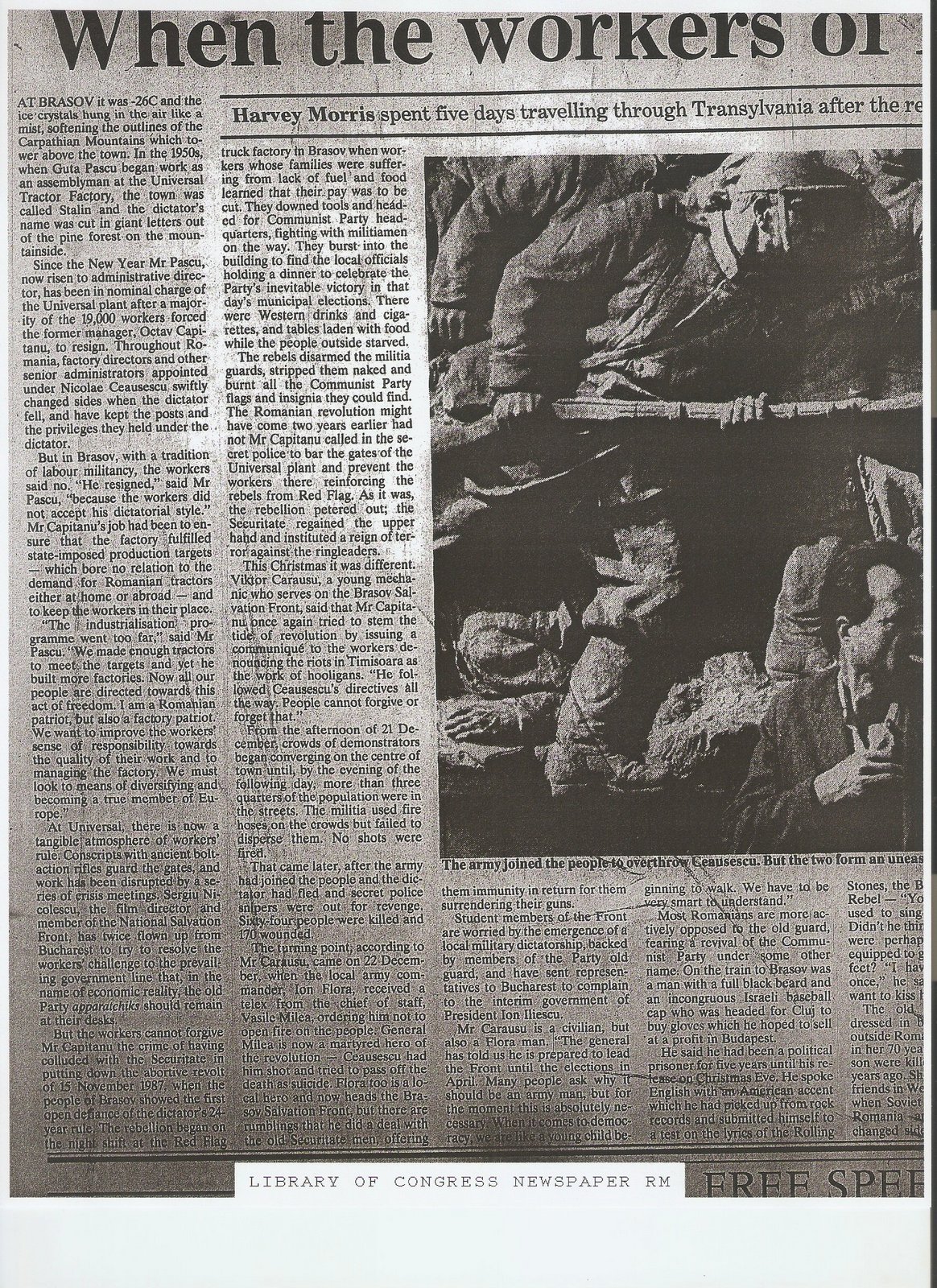
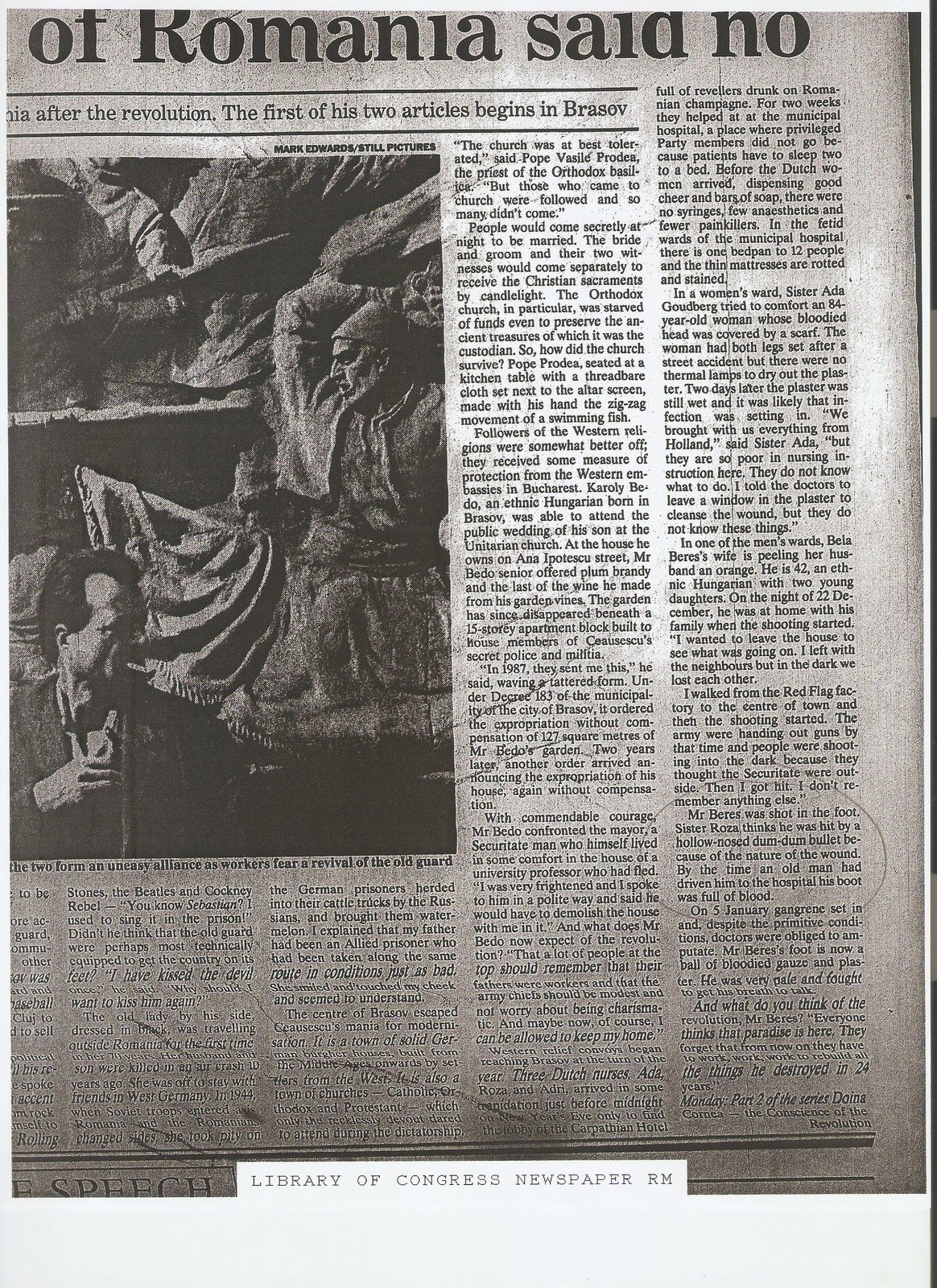
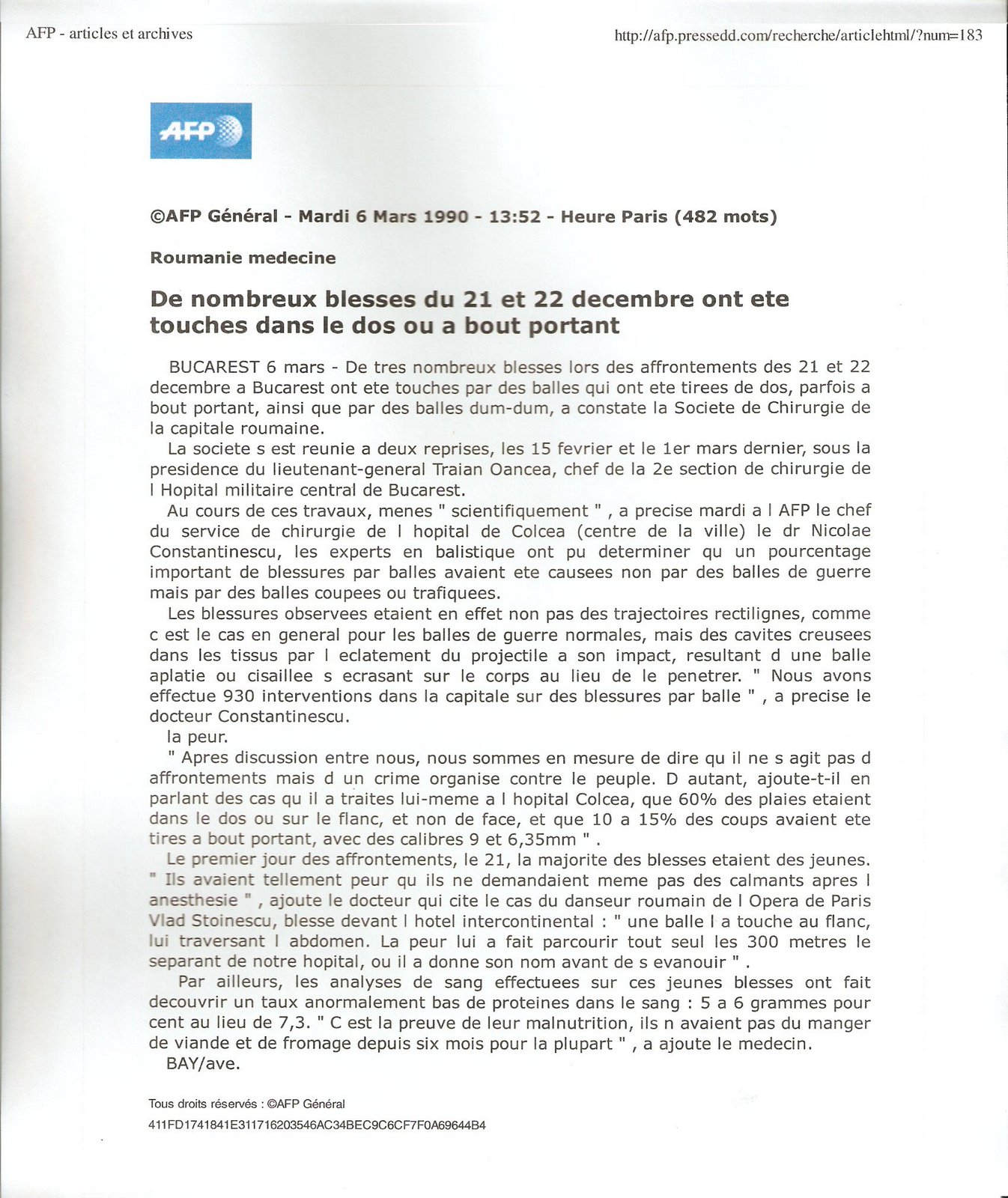
—————————————
“Acel articol a fost un cosmar pentru mine. In 22 decembrie au aparut fluturasi in Bucuresti cu “sfaturile ” din “Scinteia Tineretului “. Cine avea xeroxuri in acea vreme?”, se intreaba Sorin Preda. Am fost anchetat de Ministerul Apararii Nationale pentru ca generalul Militaru a considerat sau i s-a sugerat ca articolul meu era un semnal si pentru teroristi. Articolul il scrisesem cu patru zile inainte de aparitie si avea o introducere in care explicam caracterul lui umoristic. Nu stiu de ce acea introducere a disparut.”
…Buna ziua. Imi pare rau sa spun asta dar nu cred nici cat negru sub unghie ceea ce declara dl. Sorin Preda legat de articolul referitor la “sfaturile” pentru cei aflati pe litoral “la plaja” pe 18 Decembrie 1989. Este absurd. Ar fi prea multe coincidente. Eu detin ziarul respectiv in intregime. La vremea aceea eram ofiter activ in Brasov si vreau sa va spun ca dupa aparitia articolului, imediat dupa teleconferinta tinuta de Ceausescu in 17.12.1989, evenimentele au inceput sa se desfasoare intocmai cum era “ordonat” in “sfaturile” aparute in Scinteia Tineretului din 18.12.1989. Daca doriti sa va dau si decodificarea articolului o fac bucuros.Cu stima,Mircea
——————————————————————————
Mircea Ferestrăuariu avea 25 de ani în decembrie 1989 şi era locotenent în cadrul Şcolii Militare de Ofiţeri Activi şi Artilerie Antiaeriană şi Radiolocaţii „Leontin Sălăjan” din Braşov. Îşi aminteşte clar cum s-a răspândit în unitatea militară zvonul că „e ceva” cu articolul din „Scînteia tineretului”, că ar fi un articol codat şi cum, după câteva zile, a apărut şi o decodare pe care mai toată lumea din unitate şi-o copia de pe o fiţuică.  Mircea Ferestrăuariu are şi-acum decodarea, într-o cutie cu documente din casă. „Nu ştiu cum a intrat în şcoală decodarea, cine a adus-o, de unde, dar ea părea veridică. Iar la sfârşitul decodării scria că ea fusese făcută de un maior şi de un căpitan, maiorul Ioan Ardelean şi căpitanul Ioan Hendre. Numele nu-mi erau cunoscute, nu erau din unitatea noastră.  Oricum, eu sunt absolut convins că articolul a fost un ordin codat către forţele de represiune care nu făceau parte din structurile militare. Cine se duce la mare în decembrie să facă plajă şi baie? E de neconceput ca la vremea respectivă să apară un astfel de articol şi nimeni să nu sesizeze că e ceva aberant”.
—————————————————————-
Photo from “Decriptarea textului din Scanteia Tineretului,” Luni, 28 decembrie 2009 11:51 by Mihaela G.
Photo from http://www.agentia.org/anchete/decriptarea-textului-din-scanteia-tineretului-321.html

Decriptarea textului din Scanteia Tineretului

  • Luni, 28 decembrie 2009 11:51
  • |
  • 2309 vizualizari
  • |
  • Anchete
Sfaturi catre securisti in decembrie ’89Pe Ceausescu l-a doborat “o gluma” * In ziarul UTC, in plina iarna apare textul “Sfaturi pentru cei aflati in aceste zile la mare” * La Timisoara era razboi civil, Armata tragea in populatie * Dupa 12 ani, un general din contraspionaj a trimis decriptarea textului la CSAT * Autorul sustine ca a scris un text umoristicIn data de 18 decembrie 1989, in timp ce in Timisoara era razboi civil, “Scanteia Tineretului” a publicat, in pagina 5, un text straniu, care nu avea nicio logica. Textul a facut valva la acea vreme, ca si in anii imediat urmatori Revolutiei. Erau sfaturi pentru cei ce se bronzau in acel moment, adica in mijlocul lunii decembrie, la mare. Textul a atras atentia imediat, in sensul ca semana cu un semnal incifrat pentru a se declansa ceva – dar pana azi contextul aparitiei sale nu a fost elucidat. A ramas ”o gluma”. In decembrie 2007, un general activ din contraspionajul romanesc a trimis decriptarea textului pentru a fi citita intr-o sedinta a Consiliului Suprem de Aparare a Tarii (CSAT). El era consilier in cadrul CSAT la acea vreme.
Textul din Scateia Tineretului:”Citeva sfaturi pentru cei aflati in aceste zile la mare”*Evitati expunerea intempestiva si prelungita la soare. E de preferat sa incepeti mai prudent, cu reprize scurte de 10-15 minute – cand pe-o parte, cand pe alta. Astfel, va veti asigura un bronzaj placut si uniform.* Nu va avantati prea mult in larg. Oricum, in caz de pericol, nu strigati. Este inutil. Sansele ca prin apropuiere sa se afle vreo persoana dispusa a va asculta sunt minime.* Profitati de binefacerile razelor ultraviolete. Dupa cum se stie, ele sunt mai active intre orele 5,30 si 7,30. Se recomanda cu precadere persoanelor mai debile.* Daca sunteti o fire sentimentala si agreati apusurile soarelui, librariile de pe litoral va ofera un larg sortiment de vederi cu acest subiect.* Si inca ceva – daca aceste <sfaturi> v-au pus pe ganduri si aveti deja anumite ezitari, gandindu-va sa renuntati in favoarea muntelui, inseamna ca nu iubiti in suficienta masura marea. (S.P.)”

Aceasta este decriptarea trimisa CSAT in 2007 – Declansati, pe neasteptate, planul ”Soare”. Incepeti prudent, cu operatiuni scurte, de 10-15 minute, simultan in mai multe zone, pana la acoperirea intregii tari.2 – Nu depasiti obiectivele. Altfel sunteti in mare pericol si nu va va ajuta nimeni.3 – Bazati-va pe sprijinul trupelor speciale care au rol activ intre orele 5,30 si 7,30 in scopul recuperarii ranitilor.4 – Devastati librariile si distrugeti ”operele alese” (cartile lui Ceausescu – n.r.) pentru instigare si intimidare.5 – Pentru nehotarati: nu tradati scopul, daca va iubiti tara.

Autorul spune ca a fost o glumaAutorul articolului, Sorin Preda, a declarat atat in fata anchetatorilor Ministerului Apararii cat si in presa, ca el a scris un text umoristic si atat. Adica cele cinci paragrafe, care au avut trimitere pe prima pagina, nu aveau nicio legatura cu Revolutia si a fost o simpla intamplare faptul ca au sunat atat de straniu in acele zile. Trebuie mentionat aici ca fisetul in care se pastrau manuscrisul si spaltul acestor ”sfaturi” a fost spart iar obiectele mai sus mentionate au disparut in timpul evenimentelor de dupa 22 decembrie 1989.Mihaela G.

25 for 2014: 25 Things You Should Know about the Romanian Revolution on the 25th Anniversary of the Fall of Nicolae Ceausescu’s Communist Regime: #1 The Securitate Deny Foreign Instigation of the Timisoara Uprising

25 for 2014: 25 Things You Should Know about the Romanian Revolution on the 25th Anniversary of the Fall of Nicolae Ceausescu’s Communist Regime: #2 Shattered Glass: Securitate Vandalism to Justify Timisoara Crackdown

25 for 2014: 25 Things You Should Know about the Romanian Revolution on the 25th Anniversary of the Fall of Nicolae Ceausescu’s Communist Regime: #3 “Anti-terrorism” and Regime Repression

25 for 2014: 25 Things You Should Know about the Romanian Revolution on the 25th Anniversary of the Fall of Nicolae Ceausescu’s Communist Regime: #4 Timisoara Demonstrators Injured and Killed by Dum-Dum Bullets

25 for 2014: 25 Things You Should Know about the Romanian Revolution on the 25th Anniversary of the Fall of Nicolae Ceausescu’s Communist Regime: #5 Timisoara (Podul Decebal) Evidence Suggests only the Securitate Had Dum-Dum Bullets

Posted in decembrie 1989 | Tagged: , , , , , , , , , | 2 Comments »