The Archive of the Romanian Revolution of December 1989

A Catch-22 December 1989, Groundhog-Day Production. Presenting the Personal Research & Scholarship of Richard Andrew Hall, Ph.D.

Archive for the ‘raport final’ Category

“This Many People Can’t Be Wrong”: The Six Categories of People Who Attest to the Use of Exploding Dum-Dum Bullets in Timisoara in December 1989

Posted by romanianrevolutionofdecember1989 on November 8, 2014

(Purely personal views as always, based on over two decades of research and publications inside and outside Romania)

for my publications on this topic, please see, for example:  http://atomic-temporary-3899751.wpcomstaging.com/december-1989-2009-bullets-lies-and-videotape/; http://atomic-temporary-3899751.wpcomstaging.com/2009/12/20/the-romanian-revolution-for-dum-dums-or-never-mind-the-bullets-romania-nicolae-ceausescu-and-december-1989-twenty-years-later/; http://www.revista22.ro/nou/arhivapdf/51_1996.pdf  (see page 10, Richard Andrew Hall, “Ce demonstreaza probele balistice dupa sapte ani?”)

Timisoara Decembrie 1989 / Timisoara December 1989, regia/directed by – Ovidiu Bose Pastina, , imaginea/camera – Doru Segal, Sahiafilm 1991

This is a great documentary only recently available to the public again.  It is in Romanian but has effective English subtitles, although speakers are not identified (many of them appear in the discussions below however).  The discussion of the experience of hospital workers begins at about 48:40.  The medical personnel talk specifically about the high destructive character of the wounds protesters suffered and at approximately 51:00 a medic says explosive bullets were used.
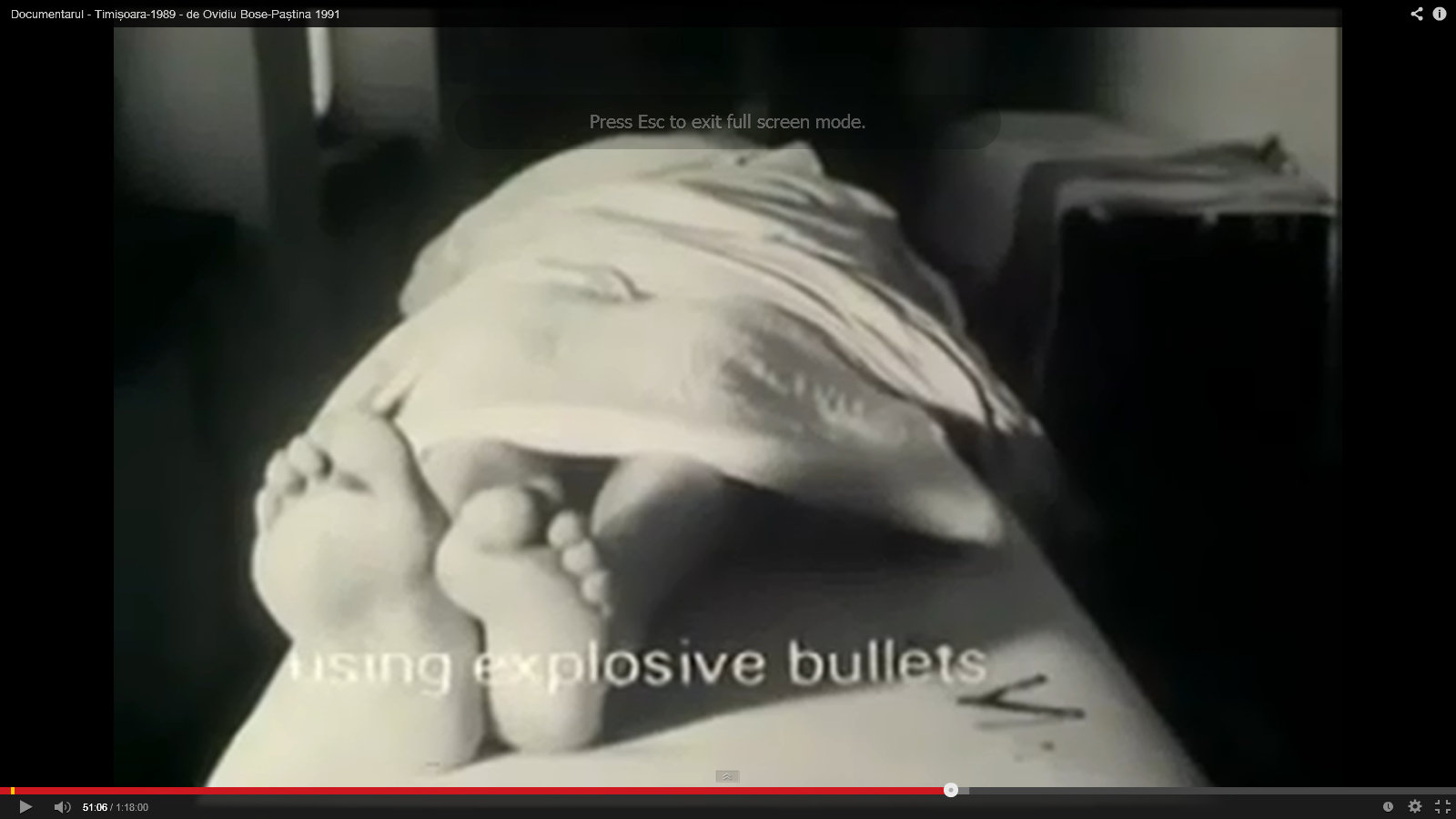
Fullscreen capture 1182014 81626 AM

Who has given evidence that exploding dum-dum bullets were used in the killing and maiming of people in Timisoara before and/or after 22 December 1989?

1) Doctors and medical personnel who operated on and/or treated, and/or saw those who died or were wounded

2) Military personnel, who were in the streets in these days, including military officers

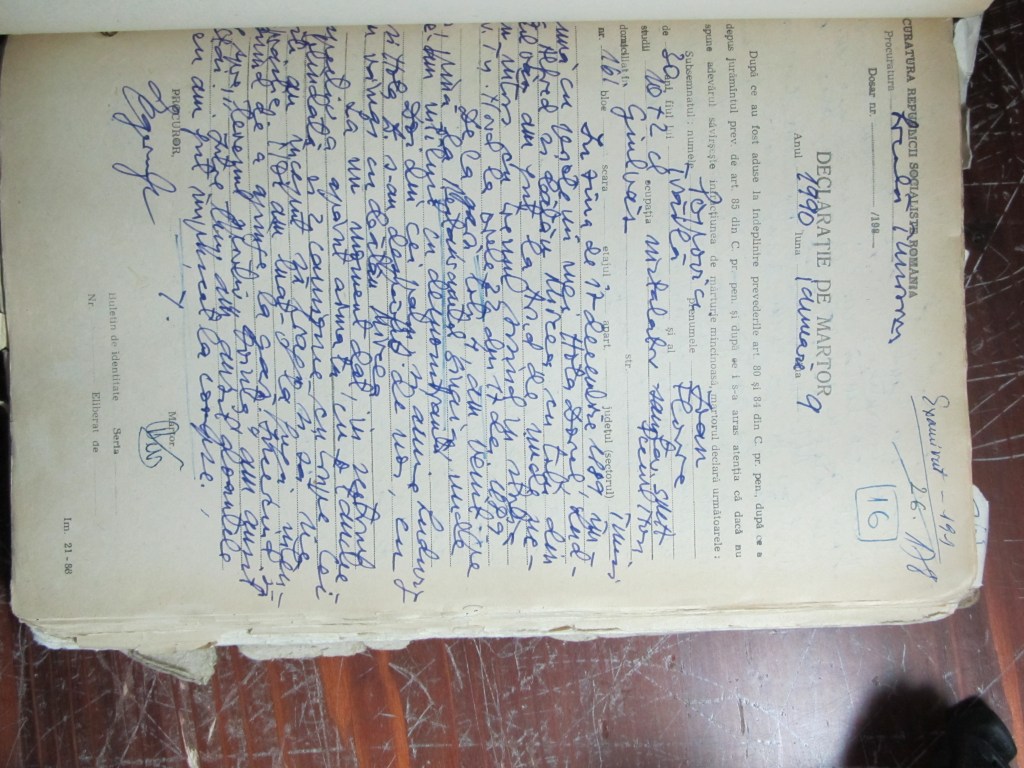
3) Relatives of the dead and wounded, some of whom were in the streets themselves, in sworn declarations  for the Military Prosecutor immediately after the December 1989 events or in sworn testimony in the so-called Timisoara Trial of 1990-1991

4) People who were wounded in December 1989, some of whom were sent abroad for follow-up treatment and who were told by those foreign doctors what type of bullet they believed they had been shot with, in sworn declarations  for the Military Prosecutor immediately after the December 1989 events or in sworn testimony in the so-called Timisoara Trial of 1990-1991.

5) Civilians who overheard during 17-19 December the discussion among regime forces of the use of such bullets

6) A former Securitate officer who went public after 1989 (Roland Vasilevici) and an unnamed former USLA recruit

————————————————————————————————————————————————————————————————————————-

Examples from each of the categories, listed somewhat differently than above but including all six groups:

1) The testimonies of the demonstrators Ion Popovici (9 January 1990) and Marin Stoica (8 January 1990) show that they overheard the discussion of the use of Dum-Dum bullets between soldiers and Interior Ministry personnel.

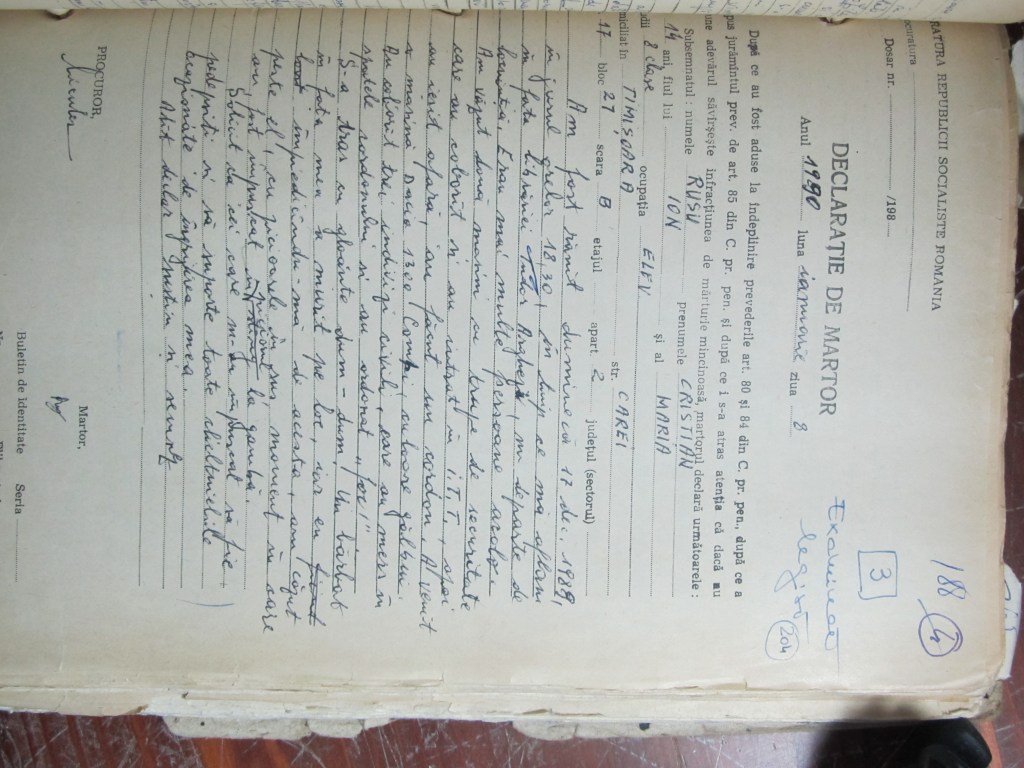
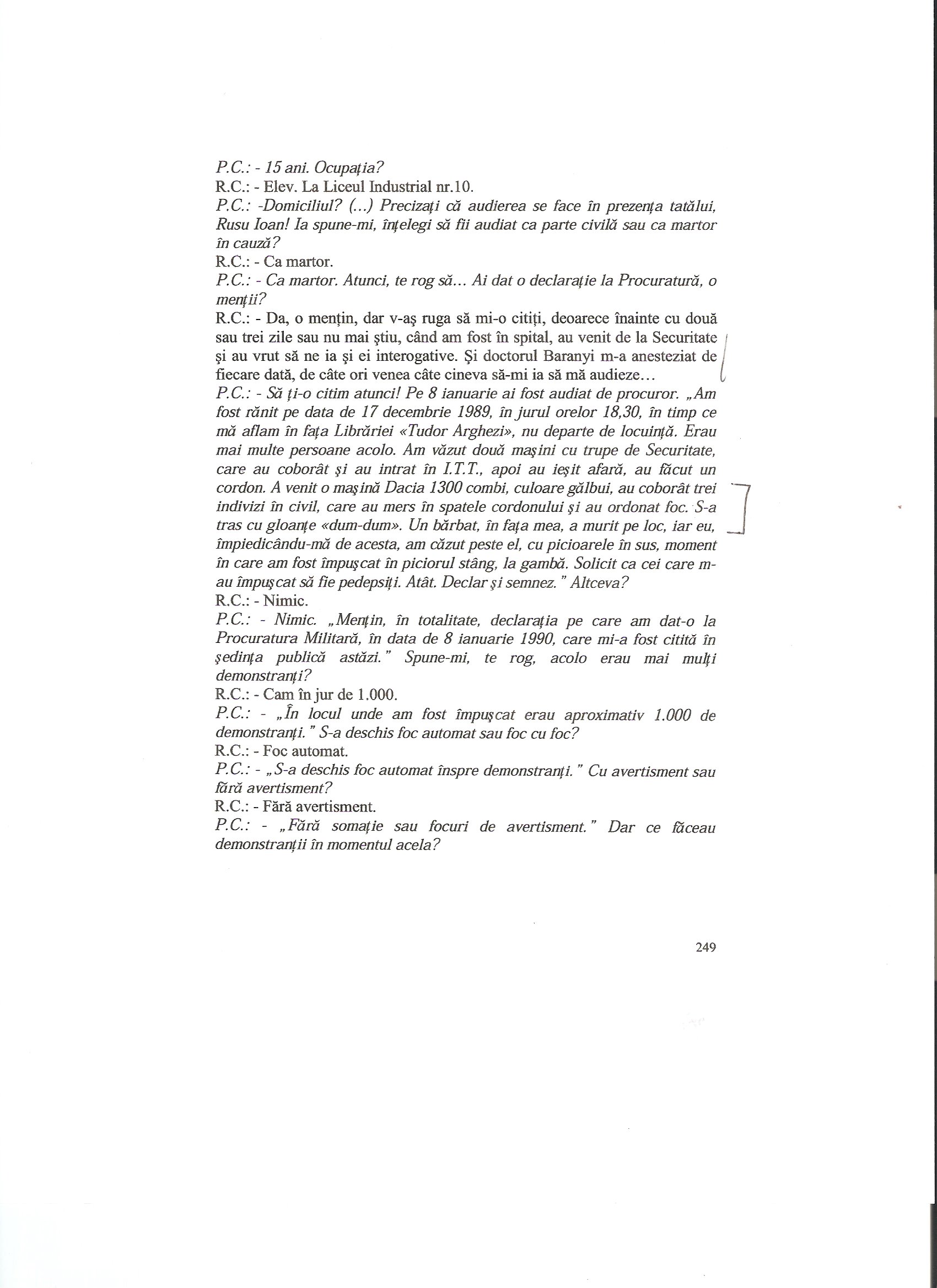
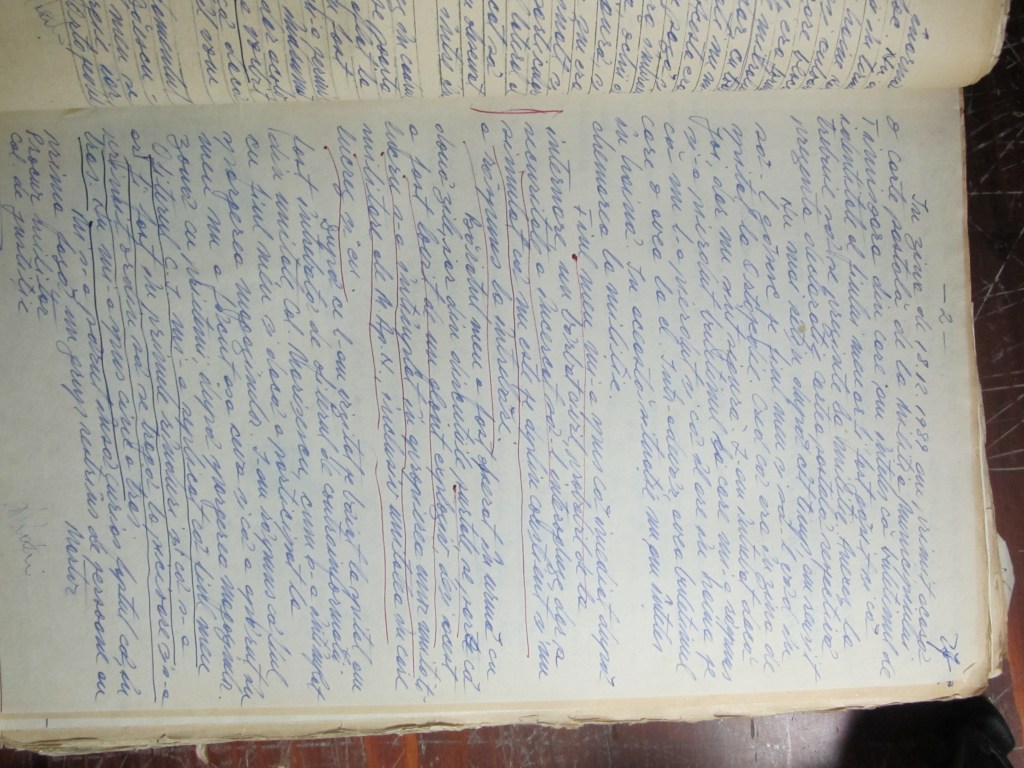
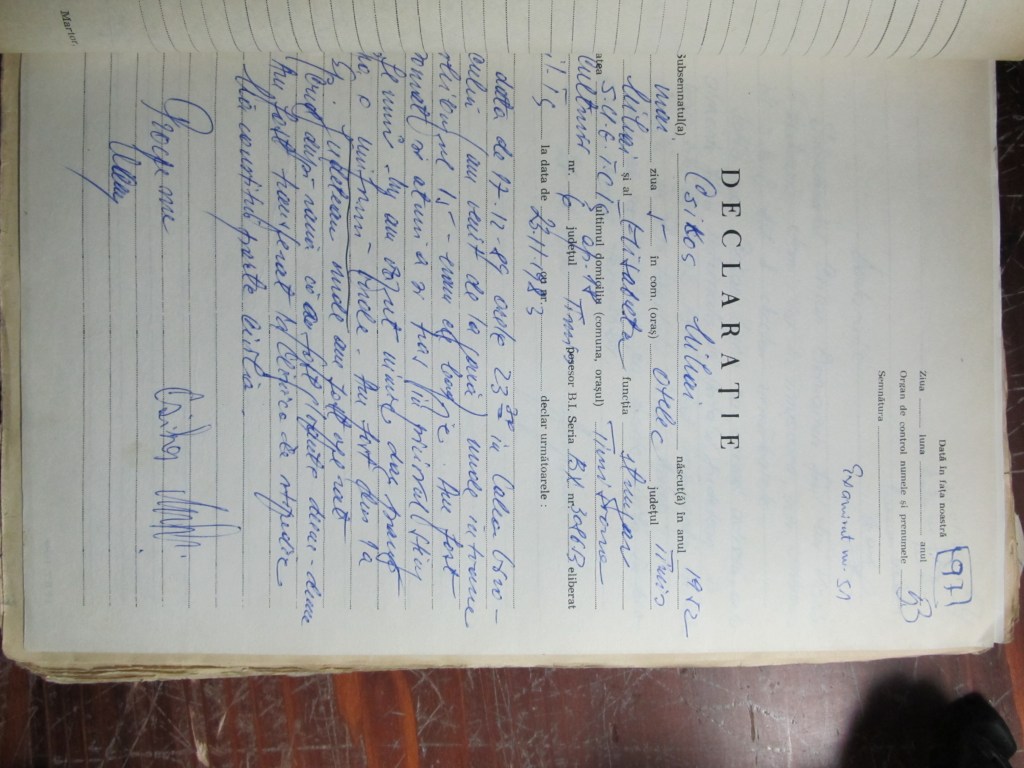
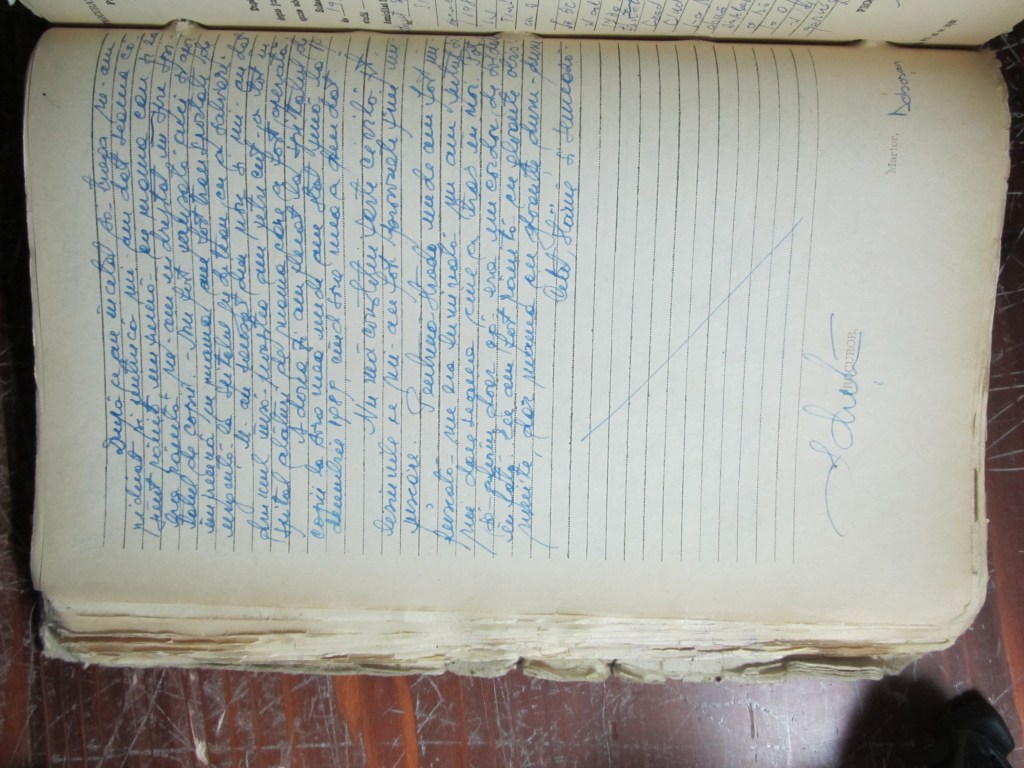
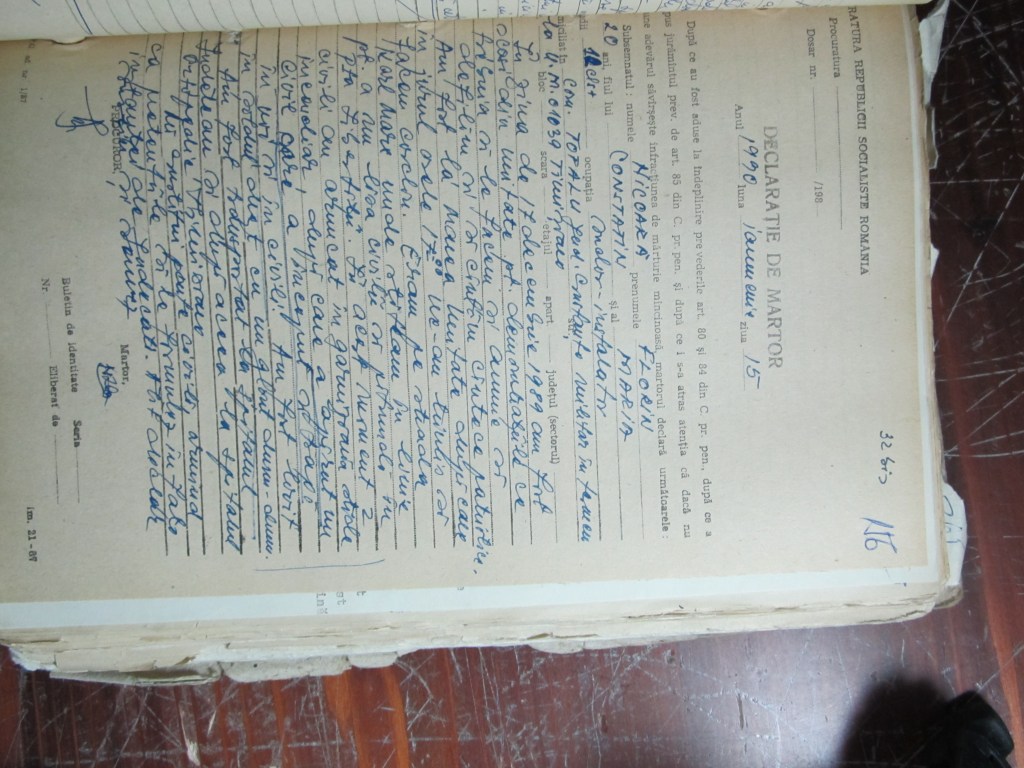
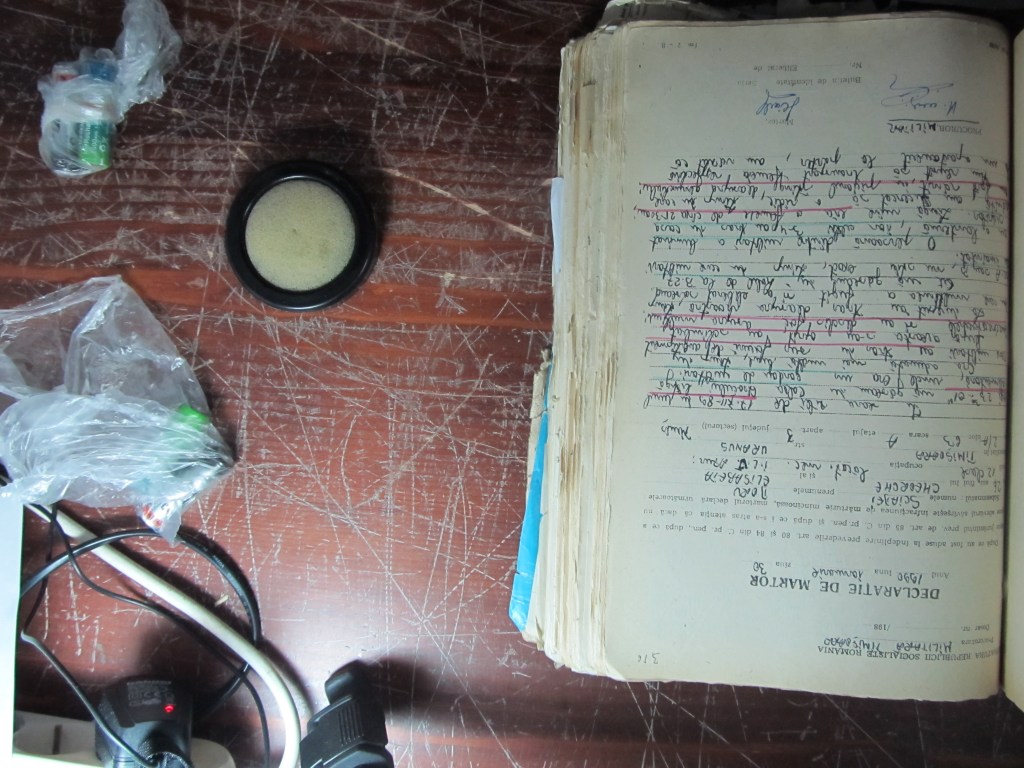
2) 7 Declarations and/or courtroom testimony about demonstrators injured or killed by dum-dum bullets:  Doina Gherasim, Cristian Rusu, Robert Buzatu, M. Csikos, Dobosan, Florin Nicoara, and Doru Sciadei.

3) 10 other testimonies from Victims or Relatives of Victims of Dum-Dum Bullets on 17-18 December 1989:  Valentin Aparashivei, Ioan Musca, Danut Gavra, Octavian Tintaru, Adrian Kali, Mariana Rodica Farcau, Leontina Banciu, Vasile Avram, Marius Ciopec, and Florica Sava.

4) 6 Doctors/Medical personnel from Timisoara alone have discussed the use of dum-dum bullets against demonstrators in Timisoara…:  Dr. Aurel Mogosanu, Dr. Atanasie Barzeanu, Rodica Novac, Dr. Fluture, Csaba Ungor, Goga Andras.

5) Former Securitate Roland Vasilevici and an USLA recruit

6) Lt. Col. Petre Ghinea (Army)

After reading these six sections, it should be pretty clear that anyone who denies the use of exploding dum-dum bullets in Timisoara is either uninformed, lying, or so in denial that they cannot bring themselves to admit reality.  This many people attesting to the presence and use of these munitions are simply not wrong…

————————————————————————————————————-

1) The testimonies of the demonstrators Ion Popovici (9 January 1990) and Marin Stoica (8 January 1990) show that they overheard the discussion of the use of Dum-Dum bullets between soldiers and Interior Ministry personnel.

Popovici:  “Mi-am revenit intr-un camion militar in care eram multi civili unii morti fiind adusi la garnizoana militara.  La garnizoana eu am fost dat jos si predat unui cpt (capitan) sau unui lt.major (locotenent major). vazand rana mea n-a vrut sa ma primeasca exprimand: Voi trageti cu dum dum si noi sa raspundem pentru acest lucru.”  (my thanks to A.K. for this transcription)

Popovici:  “I came to in a military truck in which there were lots of civilians some dead being brought to the military garrison.  At the garrison I was taken down and surrendered to a captain or lt. major, who looking at my wound did not want to receive me, exclaiming:  You shoot with dum-dum bullets and we are held responsible for it.”

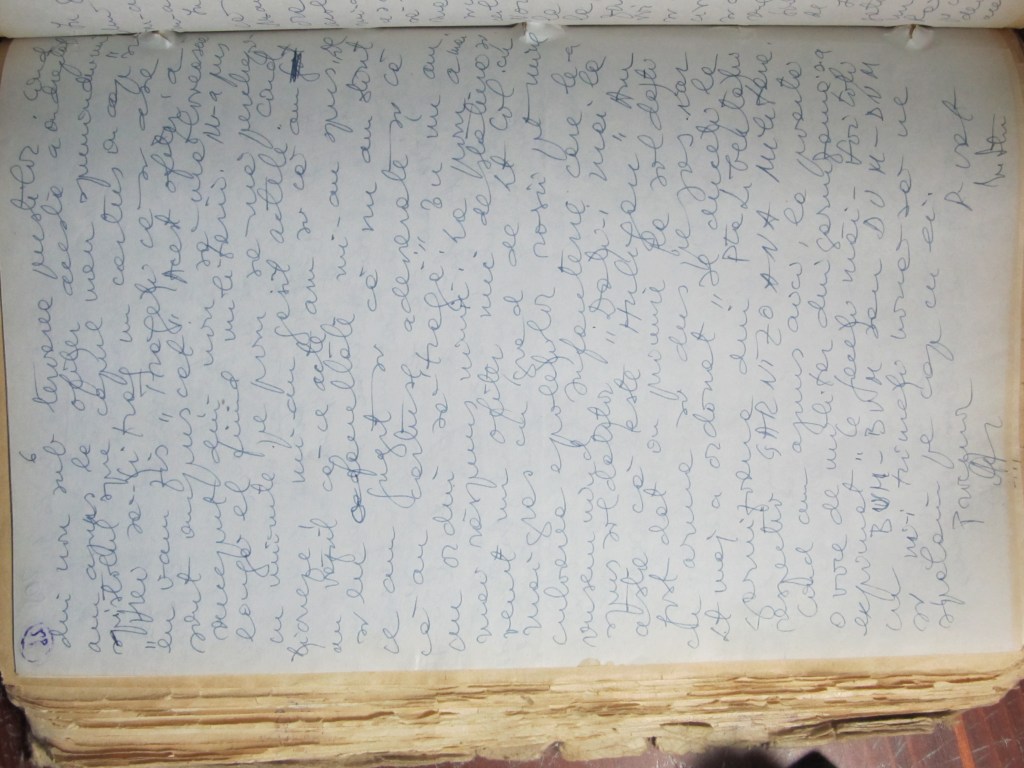
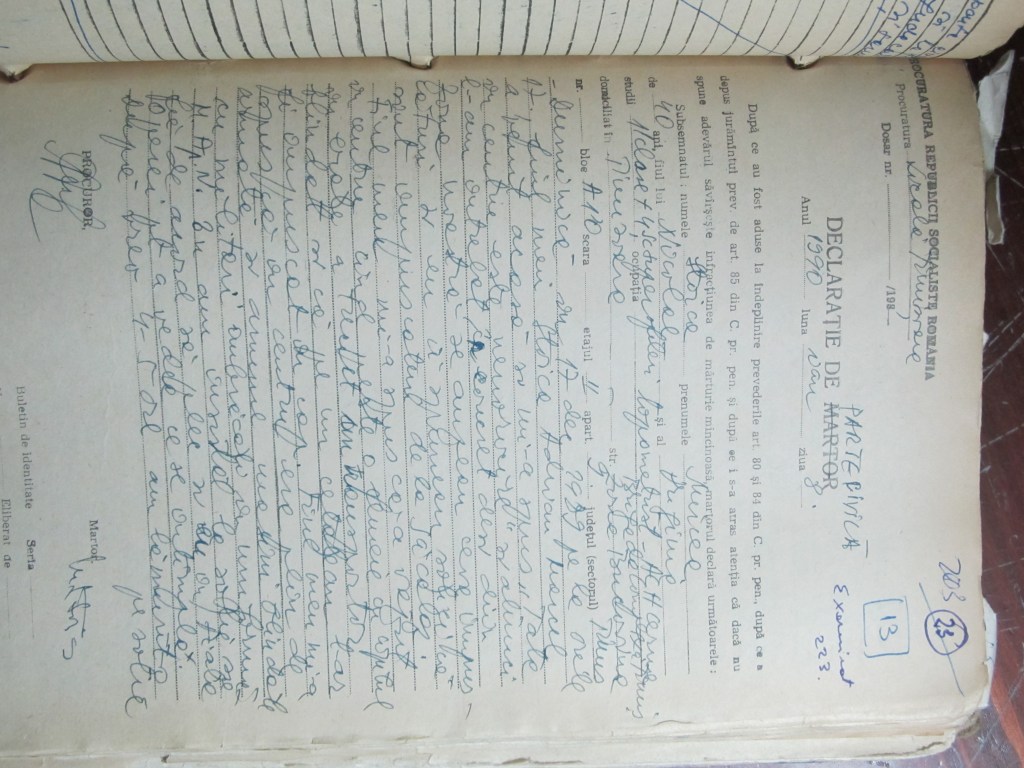
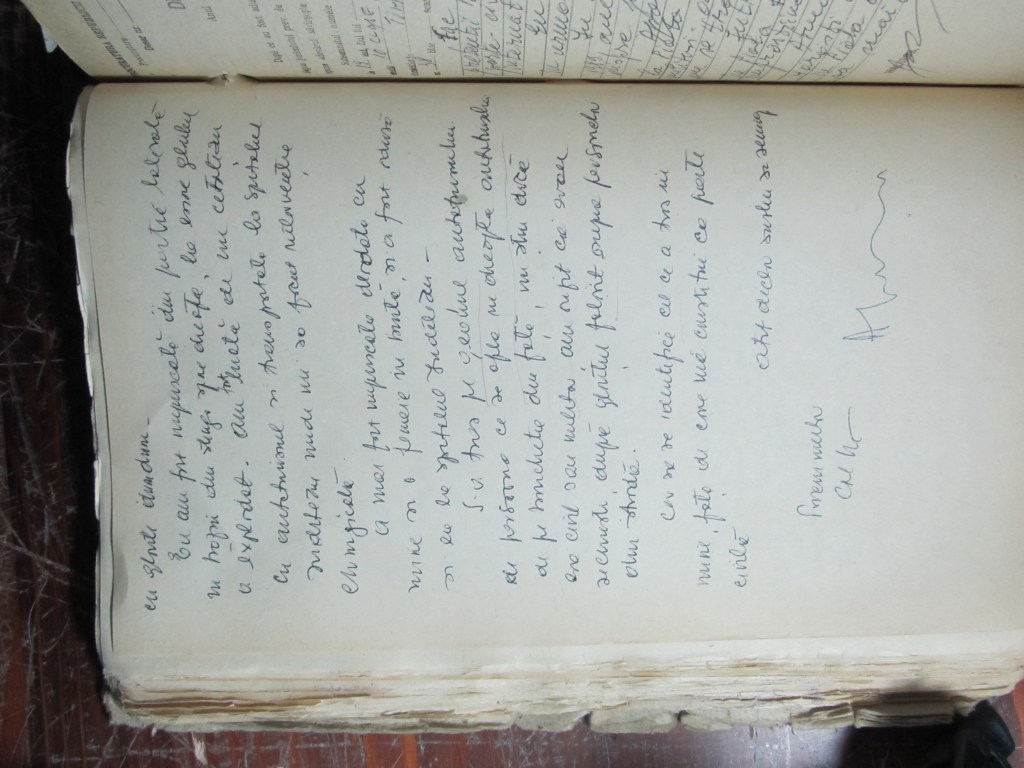
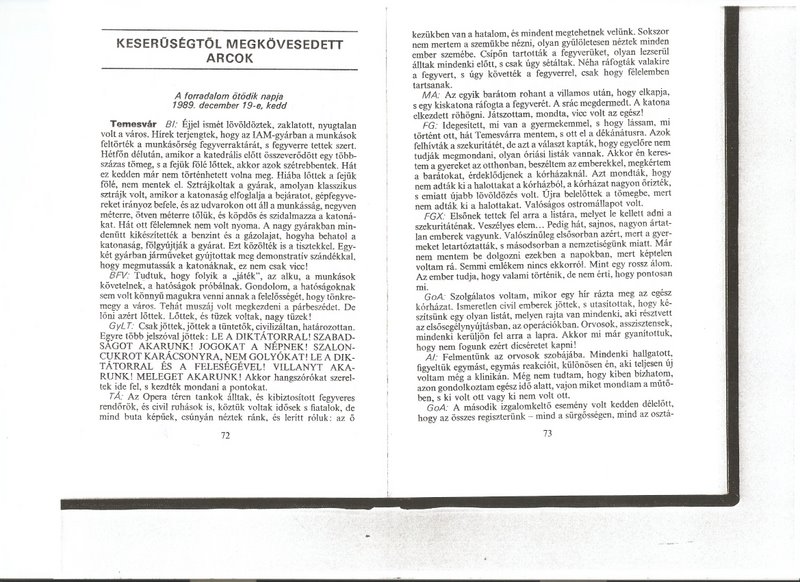
Mircea Stoica (declaratie, 8 ian 1990):  “Cind am ajuns aici, la poarta o voce de militar din garnizoana s-a exprimat:  “Ce faceti mai — voi toti cu BUM-BUM sau DUM-DUM si ni-i trimiteti noua sa ne spalam pe cap cu ei.”

Mircea Stoica (declaration, 8 January 1990):  “When I got there, I heard a soldier’s voice from the garrison exclaim:  “What are you guys doing? You all with your BUM-BUM or DUM-DUM and then you send`em to us to solve the problem [almost impossible to solve]” <very angry, pissed off> (my sincere thanks to Gigga Adrian Tudor for this transcription and translation of the quote!)
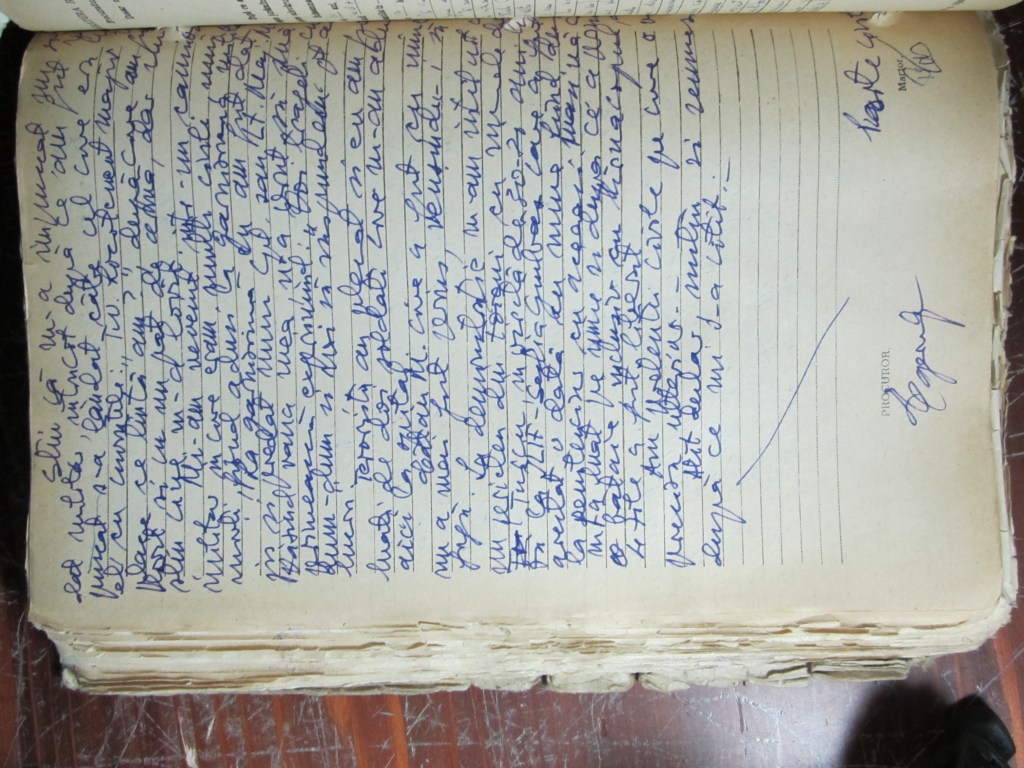
IMG_0291

available on this site http://www.banaterra.eu/romana/procesul-de-la-timisoara-1990-1991-vol-v ].  The following is from Volume V.]

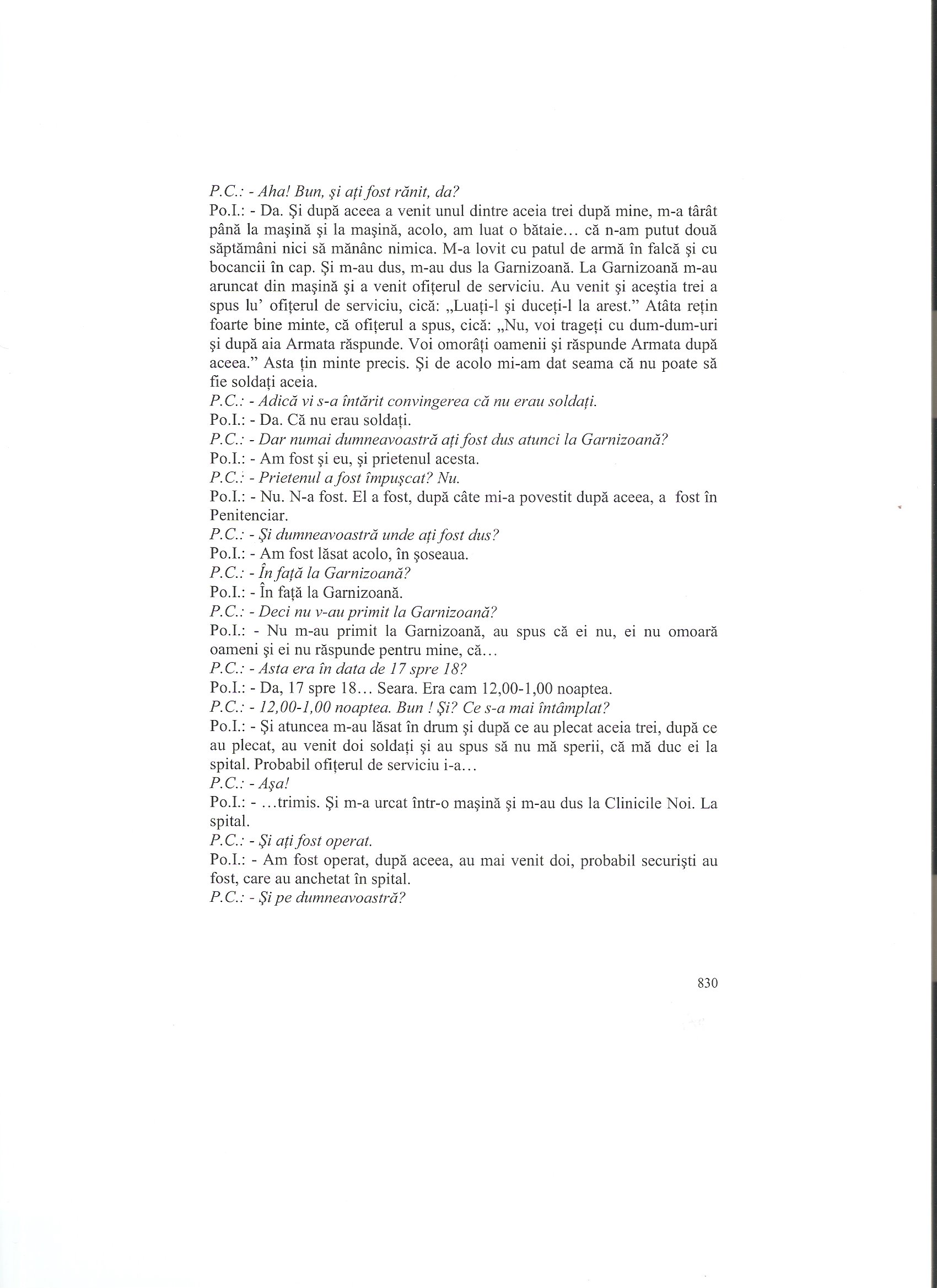
Some excerpts: P.C.:  Ati dat o declaratie?   Po. I. :  Da  P.C.:  O mentineti?  Po. I. Da (p. 827) P.C.:  “Inteleg sa fiu audiat in cauza ca parte civila”, da?  V-as ruga sa faceti putin liniste!  “Mentin declaratia de la Procuratura si…” (p. 833)

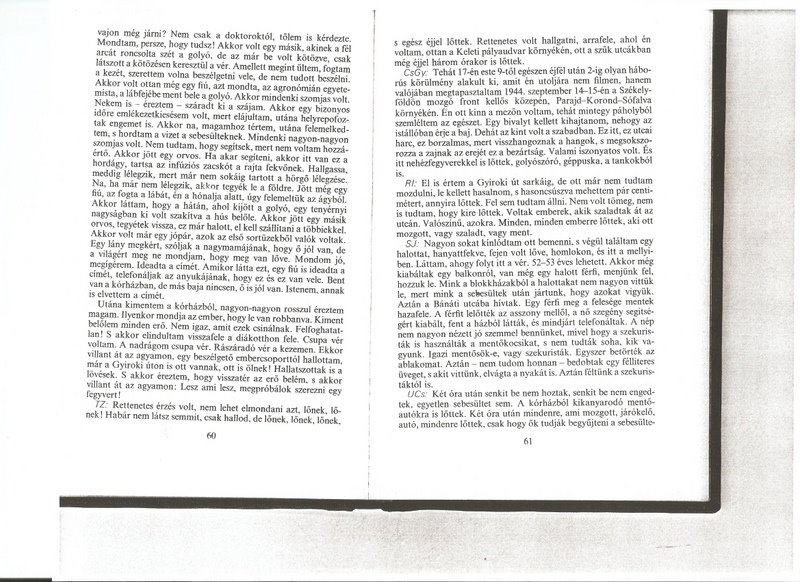
Po. I.:  …Da [am fost ranit].  Si dupa aceea a venit unul dintre trei [civili mai in varsta] dupa mine, m-a tarat pana la masina si la masina, acolo, am luat o bataie…ca n-am putut doua saptamani nici sa mananc nimica.  M-a lovit cu patul de arma in falca si cu bocancii in cap.  Si m-au dus, m-au dus la Garnizoana.  La Garnizoana m-au aruncat din masina si a venit ofiterul de serviciu.  Au venit si acestia trei a spus lu’ ofiterul de serviciu, cica:  “Luati-l si duceti-l  la arest.”  Atata retin foarte bine minte, ca ofiterul a spus, cica:  “Nu, voi trageti cu dum-dum-uri si dupa aia Armata raspunde.  Voi omorati oameni si raspunde Armata dupa aceea.”  Asta tin minte precis.  Si de acolo mi-am dat seama ca nu poate sa fie soldati aceia. (p. 830)

Procesul de la Timisoara (II). Audierea partii civile Popovici Ion: “…Atata retin foarte bine minte, ca ofiterul a spus, cica: ‘Nu, voi trageti cu dum-dum-uri si dupa aia Armata raspunde.’”
IMG_0290

Mircea Stoica (declaratie, 8 ian 1990):  “Cind am ajuns aici, la poarta o voce de militar din garnizoana s-a exprimat:  “Ce faceti mai — voi toti cu BUM-BUM sau DUM-DUM si ni-i trimiteti noua sa ne spalam pe cap cu ei.”

Mircea Stoica (declaration, 8 January 1990):  “When I got there, I heard a soldier’s voice from the garrison exclaim:  “What are you guys doing? You all with your BUM-BUM or DUM-DUM and then you send`em to us to solve the problem [almost impossible to solve]” <very angry, pissed off>

(my sincere thanks to Gigga Adrian Tudor for this transcription and translation of the quote!)

Stoica Mircea, 40 ani, topometrist, Bd. Republicii, impuscat mina si picior http://www.timisoara.com/mioc/REVT06~1.HTM

197. Partea vătămată Stoica Maria cere 500000 lei, lunar, contribuţie de întreţinere, motivînd că, în decembrie 1989, soţul ei, Mircea Stoica a fost împuşcat, patru luni spitalizat, a rămas handicapat (gradul II de invaliditate), apoi a decedat.  În dovedirea cererii, depune acte de spitalizare şi de stabilire a capacităţii de muncă, care atestă vătămarea, cauzele şi consecinţele ei. Mai depune: declaraţia împuşcatului, actul lui de deces, actul de căsătorie şi carnetul de muncă (vol. 6 p. 304; vol. 10 p. 58-60, 170, 245-250; vol. 14 p. 54-61; vol. 27 p. 179-207).

http://www.procesulcomunismului.com/marturii/fonduri/mmioc/curteasup/docs/0307pciv.htm

IMG_0335

“Cind am ajuns aici, la poarta o voce de militar din garnizoana s-a exprimat:  “Ce faceti mai — voi toti cu BUM-BUM sau DUM-DUM si ni-i trimiteti noua sa ne spalam pe cap cu ei.”

IMG_0330

intreaga declaratie e aici:

imaginea 330
imaginea 331
imaginea 332
imaginea 333
imaginea 334
imaginea 335
imaginea 336

It doesn’t take a genius to recognize the important similarity between the testimonies of Mircea Stoica and Ioan Popovici:  both are party to/overhear military personnel referring to the 1) use of DUM-DUM bullets, 2) that those who are using them are clearly not fellow soldiers and instead likely M.I./Securitate personnel, and 3) the Army personnel are resentful of essentially being left to “hold the bag” for the results of the DUM-DUM munitions!

———————————————————————————————————————————

2) Declarations and/or courtroom testimony about demonstrators injured or killed by dum-dum bullets:  Doina Gherasim, Cristian Rusu, Robert Buzatu, M. Csikos, Dobosan, Florin Nicoara, Doru Sciadei, and Valentin Aparaschivei.

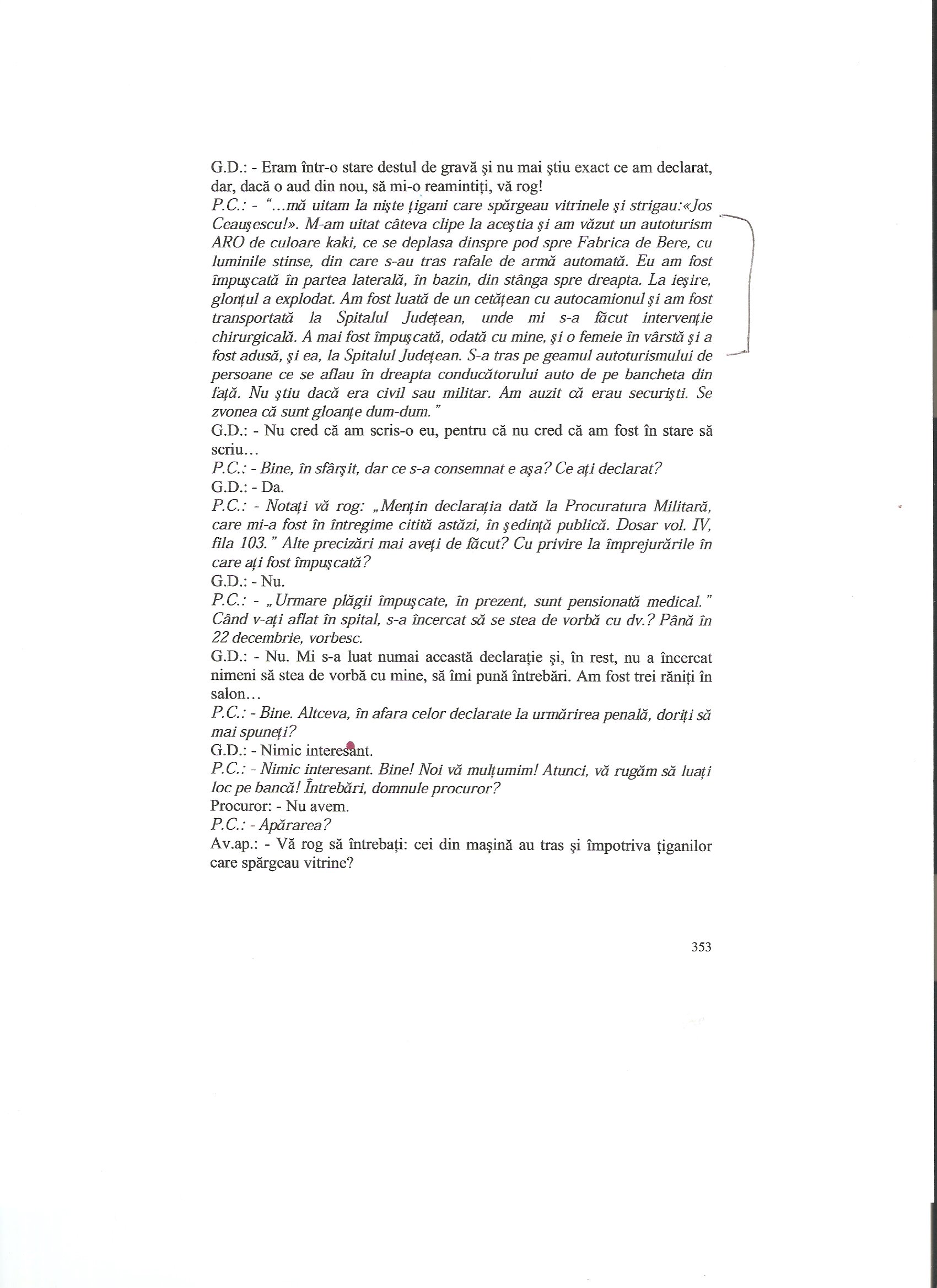
Doina Gherasim

IMG_0175

IMG_0305

Cristian Rusu:  Pe 8 ianuarie audiat de procuror:  …A venit o masina Dacia 1300 combi, culoare glabui, au coborat trei indivizi in civil, care au mers in spatele cordonului si au ordonat foc.  S-a tras cu gloante “dum-dum.”

Robert Buzatu “a fost lovit de un glont exploziv”

IMG_0045

imaginea 43
imaginea 44
imaginea 45
imaginea 46

Csikos [?] “Cred dupa rana [?]  ca au fost gloante dum-dum”

IMG_0088

Dobosan “am fost ranit…cu gloante dum-dum”

imaginea 127
imaginea 128

IMG_0128

Florin Nicoara “Am fost lovit in soldul drept cu un glont dum-dum”

IMG_0257

Griga “civilii au fost impuscati cu gloante plate [?], care asa cum spuneau medicii cu rupt tesuturile”

imaginea 170
imaginea 171

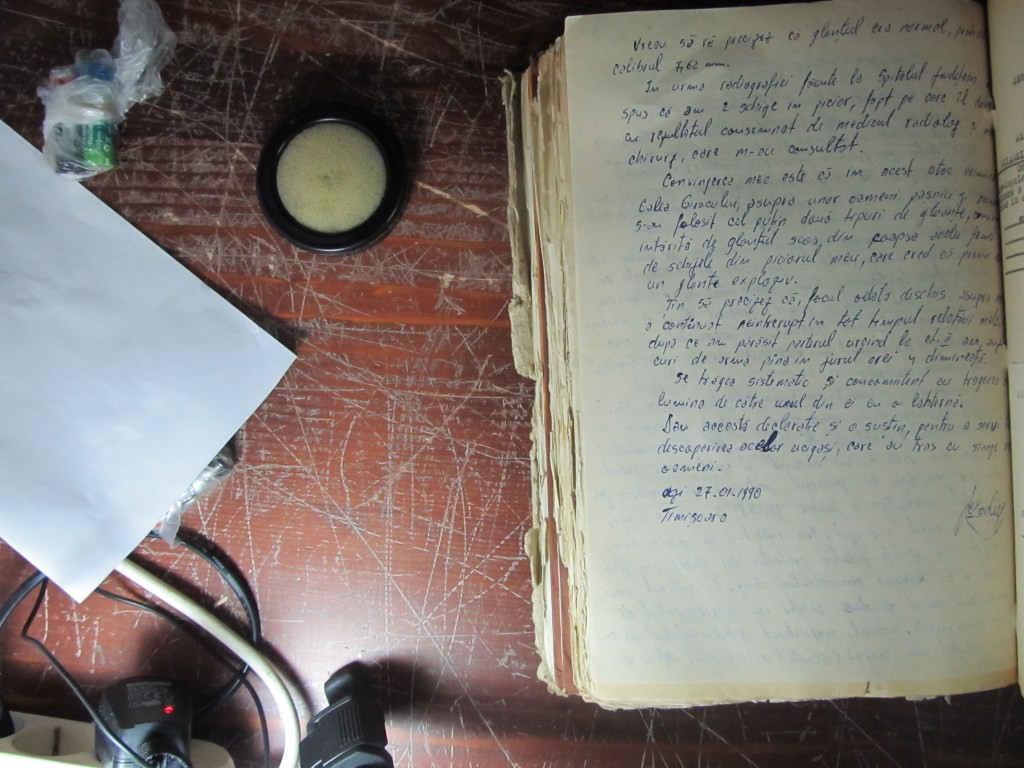
Doru Sciadei’s statement, 27 January 1990

IMG_0932

“In urma radiografiei facute la Spitalul Judetean au spus ca am 2 schije in picior…consemnat de medicul radiolog si chirurg, care m-au consultat.

Convingerea mea este ca in acest atac (pe ?) Calea Girocului, asupra unor oameni pasnici si (?) s-au folosit cel putin doua tipuri de gloante, convingerea intirita de glontul scos din coapsa (?) si schijele din piciorul meu, care cred ca provin de un glonte exploziv.

…Se trage sistematic si concomitent cu tragerea de lumina de catre unul din ei cu o lanterna.”

IMG_0929

——————————————————————————————————————————————-

3) Other testimonies from Victims or Relatives of Victims of Dum-Dum Bullets on 17-18 December 1989:  Valentin Aparashivei, Ioan Musca, Danut Gavra, Octavian Tintaru, Adrian Kali, Mariana Rodica Farcau, Leontina Banciu, Vasile Avram, Marius Ciopec, and Florica Sava.

Followed by 6 Medical Personnel Who Treated the Victims Attest to the Use of Dum-Dum Bullets

Cases available on the Internet mentioning the wounding or killing of demonstrators with dum-dum explosive bullets on 17-18 December 1989.  There are more than a dozen in all, many of whom we have seen were testified about during the Timisoara trials.

Doru Sciadei’s recollections are similar to those of Dorina Aparaschivei, whose husband, Valentin, was shot at the same location on Calea Girocului in Timisoara on 17 December 1989:

http://adevarul.ro/locale/timisoara/decembrie-89-manifestantii-ucisi-s-au-refugiat-casa-scarilor-1_50ad7b6a7c42d5a66395fbe7/index.html

Pe 17 decembrie 1989, duminică seara, toată Calea Girocului a fost cuprinsă de febra revoltei. Mii de locuitori au ieşit pe stradă să îşi arate nemulţumirea faţă de sistem. Pe fondul izbucnirii conflictelor între manifestanţi şi soldaţi, s-a format un grup de 40 de militari sub comanda lt.col. Constantin Caraivan, care aveau misiunea de a restabili ordinea. „În jurul orei 23, când au început să tragă, am decis să ne retragem spre casă. Am fost şi noi la baricade. Soţul meu spunea că se trage cu gloanţe de cauciuc, voia să mă liniştească”, a spus Dorina Aparaschivei.

Ca în filmele de acţiune

Cordoanele de militari înaintau pe de o parte şi de alta a trotuarului, iar în mijloc se deplasa un tanc. „Noi ne-am băgat în scara de bloc unde erau peste 20 de persoane. Valentin era de mână cu cei doi copii, care aveau 12 şi 15 ani. La un moment dat am văzut o lumină puternică, moment în care au început să tragă”, a mai adăugat femeia. Au fost cinci gloanţe trimise către casa scării, iar unul dintre ele a trecut prin geam şi l-a nimerit în piept pe Valentin Aparaschivei. În acel moment, un bătrân a ieşit în genunchi şi a strigat „Măi militarilor, de ce aţi împuşcat un om nevinovat?”. I s-a răspuns: „Bagă capul că te împuşc şi pe tine!”.

Salvarea a sosit în scurt timp, însă medicii nu au putut să mai facă nimic. „Avea o gaură mare în piept, cât o gură de pahar. Se spunea că erau gloanţe explozibile. L-am dus în casă cu pătura şi l-am pregătit pentru înmormântare. A doua zi au venit patru oameni în albastru, cu un sicriu şi l-au luat”, a mai povestit Dorina Aparaschivei. [my emphasis inserted in this sentence]

Criminali cu lanterne

În aceea seară şi în noaptea care a urmat, în zonă au acţionat pe lângă militari persoane necunoscute, care aveau în dotare lanterne foarte puternice. Îndreptau fasciculul luminos către balcoane şi scări, după care trăgeau. Au acţionat de asemenea, şi securişti şi miliţieni în civil. Pe toată Calea Girocului, de la intersecţia cu strada Albac până la intersecţia cu Liviu Rebreanu au fost 11 victime prin împuşcare şi 26 de răniţi.

from Adevarul http://www.adevarul.ro/locale/timisoara/DECEMBRIE_-89-_Si-a_pierdut_iubita_si_piciorul_stang_0_173982752.html author Stefan Both

Danut Gavra with his two daughters in the Heroes’ Cemetery in December 2009

Irish Television (RTE) captured what were apparently the last hours of Florica Sava’s  tragic end.  Warning:  the scene from 11:00 to 11:30 is graphic and unsettling.

posted by mikenork

http://www.youtube.com/watch?v=c3A6IiaOWhs

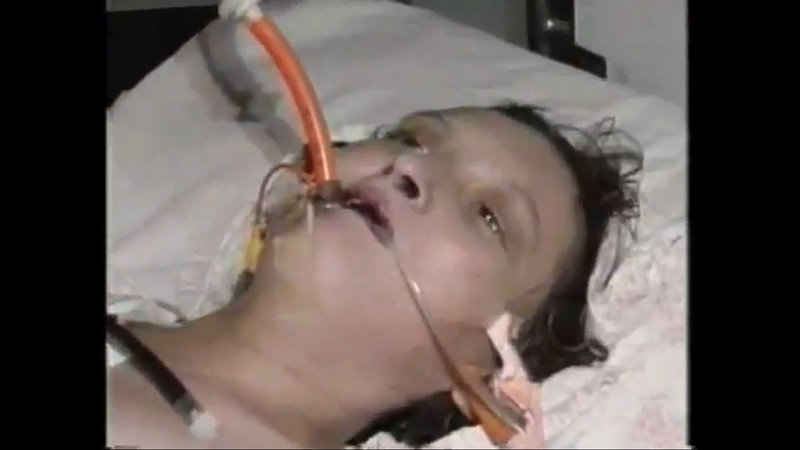
Brendan O’Brien (reporter):  “Florica Sava, a 33 year old mother of two young sons, was shot from a car with a dum-dum bullet.  It caused massive internal injuries.  Doctors said she had just hours to live.”

http://atomic-temporary-3899751.wpcomstaging.com/2011/05/11/lets-go-to-the-videotape-i-to-the-army-its-confirmation-that-theyve-been-dealing-with-a-specially-trained-force-because-its-the-type-of-bullet-theyve-never-seen-before-itn-uk-telev/

———————————————————————————————————————————————————————————————————————–

4) SIX Doctors/Medical personnel from Timisoara alone have discussed the use of dum-dum bullets against demonstrators in Timisoara…:  Dr. Aurel Mogosanu, Dr. Atanasie Barzeanu, Rodica Novac, Dr. Fluture, Csaba Ungor, Goga Andras

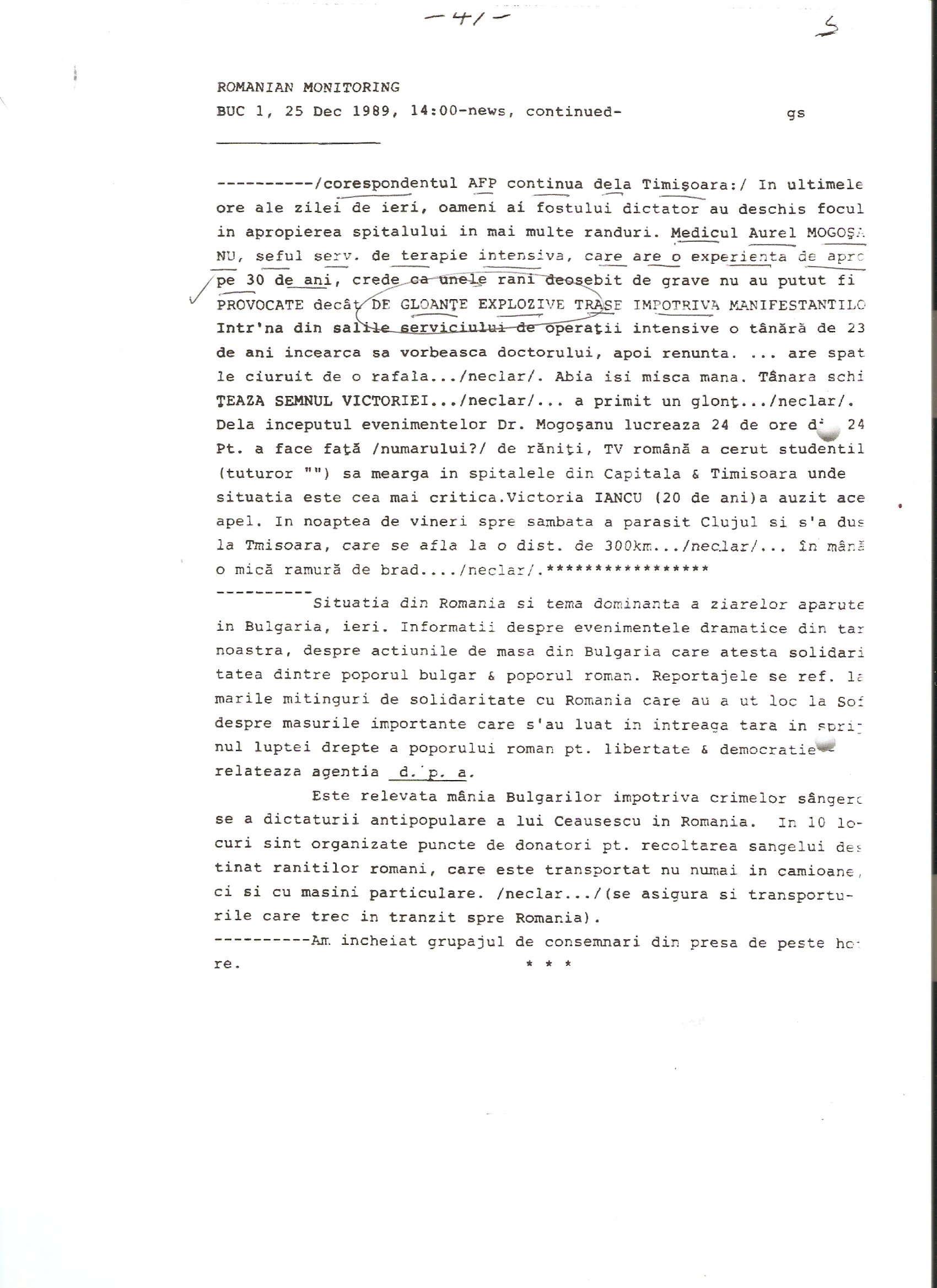
Doctors also reported on the wounds caused by explosive bullets (i.e. dum-dum bullets):  In this dispatch from Agence France Presse, relayed by Radio Free Europe on 25 December 1989, Dr. Aurel Mogosanu, a medic in the intensive care unit of a Timisoara hospital, says based on his thirty years of experience, some of the wounds could only have been CAUSED by EXPLOSIVE BULLETS SHOT AT THE PROTESTERS”

sursa (documentele Europa Libera disponibile la):  http://media.hotnews.ro/media_server1/generic_file-2009-12-22-6754154-0-radio-bucuresti-25-dec-pdf.pdf (p. 49 of 82)

©AFP Général – Lundi 25 Décembre 1989 – 08:33 – Heure Paris (386 mots)
Roumanie, prev Nuit de Noel a l hopital central de Timisoara De l un des envoyes speciaux de l AFP, NICOLAS MILETITCH
   TIMISOARA (Roumanie) 25 dec – Devant l hopital central de Timisoara, dimanche soir, une quarantaine de camions remplis de medicaments et de produits alimentaires tout juste arrives, attendaient d etre decharges.
   ” L aide nous vient d un peu partout. Hongrie, RFA, Tchecoslovaquie, France, Yougoslavie, URSS, Bulgarie, Italie… ” , indique a l AFP l un des soldats qui gardent l hopital. Les militaires sont partout autour de l hopital, sur les toits, dans les cours et meme a l interieur.
   ” Des hommes de la Securitate ont tire pres de l hopital a plusieurs reprises, ces dernieres heures ” , explique le docteur Aurel Mogosianu, chef du service de soins intensifs, en donnant des ordres a un soldat qui passe, la mitraillette a l epaule, dans un couloir, entre les malades.
   Le Dr Mogosianu, qui a une trentaine d annees d experience, pense que certaines blessures particulierement horribles, n ont pu etre provoquees que par des balles explosives tirees contre les manifestants.
   Dans une salle de soins intensifs, une femme de 23 ans essaie de parler au docteur, puis renonce. ” C est un cas difficile. Elle a eu le dos transperce par une rafale ” , precise le Dr Mogosianu.
   En bougeant a peine la main, la jeune femme esquisse le ” V ” de la victoire pour dire ” au revoir ” . Un effort irrealisable pour son voisin qui a recu une balle dans le cou, impossible a extraire.
   Comme la plupart de ses collegues, le docteur travaille, a peu de choses pres, 24 heures sur 24 depuis le debut des evenements. Dans un coin, une infirmiere dort, ecroulee sur une chaise.
   Pour faire face a l afflux de blesses, la television de Bucarest a demande a tous les etudiants en medecine du pays de se rendre dans les hopitaux de la capitale et de Timisoara, ou la situation est la plus critique.
   Victor Jancu, 20 ans, a entendu cet appel. Dans la nuit de vendredi a samedi, il a quitte Cluj et reussi a rejoindre Timisoara, a plus de 300 kms de la, en arretant des camions.
   Quelques visiteurs arrivent a l hopital, portant a la main une petite branche de sapin : a Timisoara aussi, on voudrait feter Noel.
   nm/jga/vr.
Tous droits réservés : ©AFP Général
021851451DC1ED1D715E06849EA4C6E0F37C0C25ECE8D503

mai mult despre Dr. Aurel Mogosanu in decembrie 1989:  http://www.sorinbogdan.ro/2009/12/timisoara-18-decembrie-1989/.

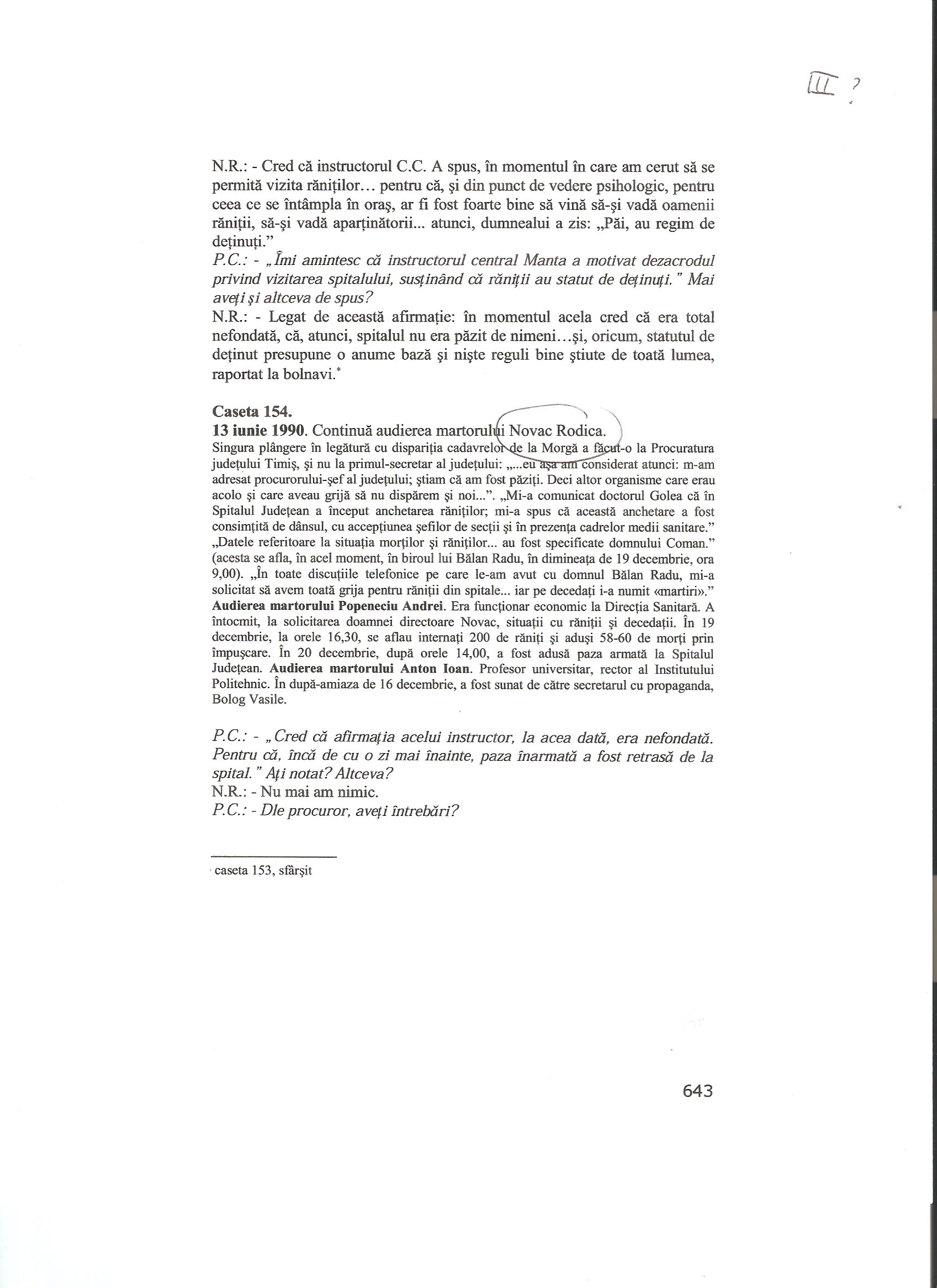
http://atomic-temporary-3899751.wpcomstaging.com/2011/09/30/procesul-de-la-timisoara-iii-audierea-martorului-rodica-novac-directorul-directiei-sanitare-timis-13-iunie-1990/

Rodica Novac’s claim is corroborated elsewhere by four other medical officials on call during the Timisoara repression.  First, in Romanian, by Dr. Atanasie Barzeanu, then in Hungarian by three doctors (Vladimir Fluture, Csaba Ungor, and Andras Goga) present and performing surgery in Timisoara hospitals from 17-19 december 1989 who recount separately their discovery of dum-dum exploding bullets among the bullets with which demonstrators arriving at the hospital had been shot.  december 1989: temesvari orvosok, dum-dum golyok, es a roman forradalom

Sava Florica, 33 de ani, vinzatoare la Loto-pronosport in cartierul Fabric, impuscata din mers, in Piata Traian

Barzeanu Atanasie, 65 anit, medic primar, doctor in stiinte, chirurg, Spitalul Judetean Timisoara

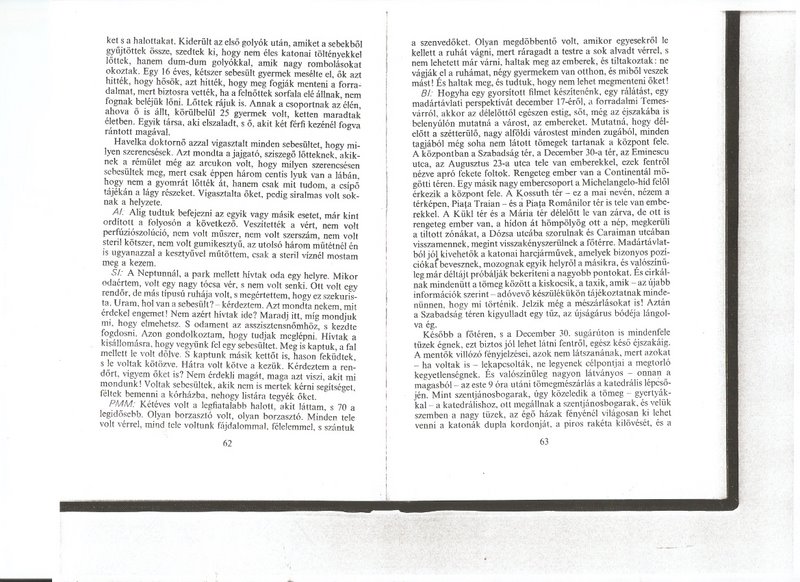
“…sintem deci in 18 decembrie…Pe la orele doua si patruzeci, cind inchideam o operatie–Sava Florica, 33 de ani, vinzatoare la Loto-pronosport in cartierul Fabric, impuscata din mers, in Piata Traian, dintr-un ARO, pacienta prezentindu-se o echimoza cu distrugerea tesuturilor (plaga in diametru de 15 centimetri), a tesuturilor din regiunea epigastrica, inclusiv a muschilor drepti abdominali, cu ruptura a colonului ascendent transvers si a jejuno-ileonului, fiind in stare de soc grav traumatic, hemoragic–, fara sa-mi poti explica nici macar acum cu ce fel de gloante a putut fi lovita, pentru ca nu am identificat nici orificiul de iesire si nici pe cel de intrare, a venit o asistenta de la Chirurgie I, care mi-a spus sa merg la domnul Ignat.”

Titus Suciu, Reportaj cu Sufletul la Gura, (Editura Facla 1990), pp. 133-134.

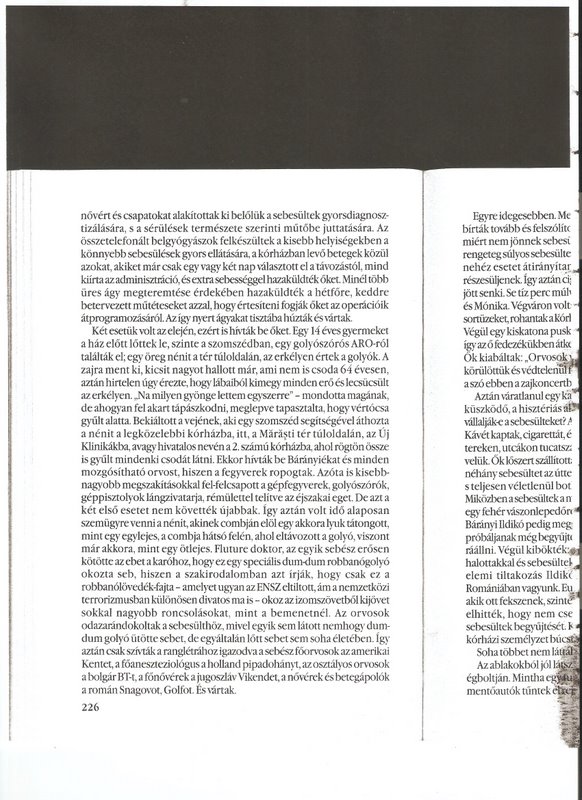
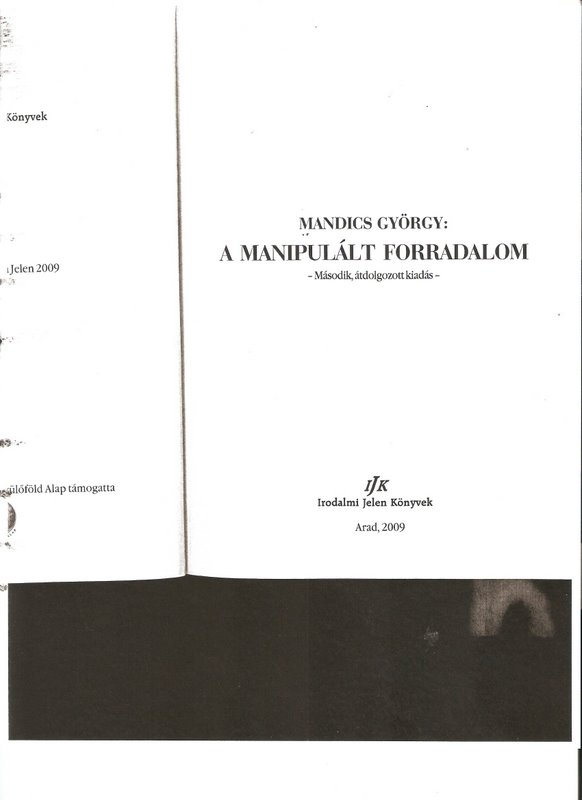
The following first appeared in Gyorgy Mandics’s Temesvari golgota (1991) pp. 348-349 and is reprinted in his A Manipulalt Forradalom (2009).  [My guess is this is also the source for the reference to dum dum bullets in the German language wikipedia entry for http://de.wikipedia.org/wiki/Rum%C3%A4nische_Revolution_1989 — Hans Vastag, György Mandics, Manfred Engelmann: Temeswar. Symbol der Freiheit. Wien 1992. ]

pp. 348-349

Ket esetuk volt az elejen.  Ezert is hivtak be oket.  Egy 14 eves gyermeket a haz elott lottek le, szinte a szomszedban, egy golyoszoros ARO-rol talaltak el; egy oreg nenit a ter tuloldalon, az erkelyen ertek a golyok.  A zarja ment ki, kicsit nagyott hallott mar, amire is csoda, 64 evesen, azt hirtelen ugy erezte, hogy labaibol kimegy minden ero es lecsusott az erholya.  Na milyen gyonge lettem egyszeruen–mondotta maganak. de ahogyan fel akart tapaszkodni meg lepve tapasztalt, hogy vertocsa gyult alatta.  Bekialtolt a vegenek aki egy szomszed segitsegevel athozta a nenit a legkozelebbi korhazba, itt a Marasti ter tuloldalan, az uj Klinikakba, avagy hivatalos neven a 2 szamu korhazba, ahol rogton osszecodult mindenki csodat latni.  Ekkor hivtak be Baranziekat es minden mozgositato orvost, hiszen a fegyverek ropogatak.  Azota is kisebb nagyobb megszakitasokkal, felfelecsapolt a gepfegyverek, golyoszorok, geppisztolyok langzivatarja, remulettel telitva az ejszaki eget.

p. 349

De azt a ket elso esett nem kovettek ujabbok.  Igz aztan volt ido alaposan szemugyre venni a nenit akinek combjan elol egz akkora lyuk tatongott mint egy egy lejes, a comba hatso felen ahol eltavotott a golyo, ott viszont mar akkora mint egy otlejes.  Fluture doktor, az egzik sebesz erosen kototte az ebet a korohoz, hogy ez egz specialis dum-dum robbanogolyo okozta seb, hiszen a szakirodalomban azt irjak, hogy csak ez a robbannolovedek-fajta-amelyet ugyan az ENSZ eltitott, am a nemzetkozi terrorizmusban kulonesen divatos ma is–okoz az izomszovetbol kijovet sokkal nagyobb roncsolasokat mint a bemenetnel.  Az orvosok odazarandokoltak a sebesulthoz, mivel egzik sem latott semhogy dum-dum golyo utotte sebet, de egyaltalan lott sebet sem soha eleteben.  Igz aztan csak szivtak a rangeletrahoz igazodva a sebesz foorvosok az amerikai Kentet, a foamnesztezialogus a holland pipadohanyt, az asztalyos orovosok a bolgar BT-t, a fonoverek a jugoslav Vikend-et, a noverek es helyapolok a roman Snagov-t, Golfot.  Es vartak.

(Note: it is unclear who the 64 yr. old described was…there are several individuals without ages listed as injured or dead during the events, but I think it more likely the age of the woman is incorrect)

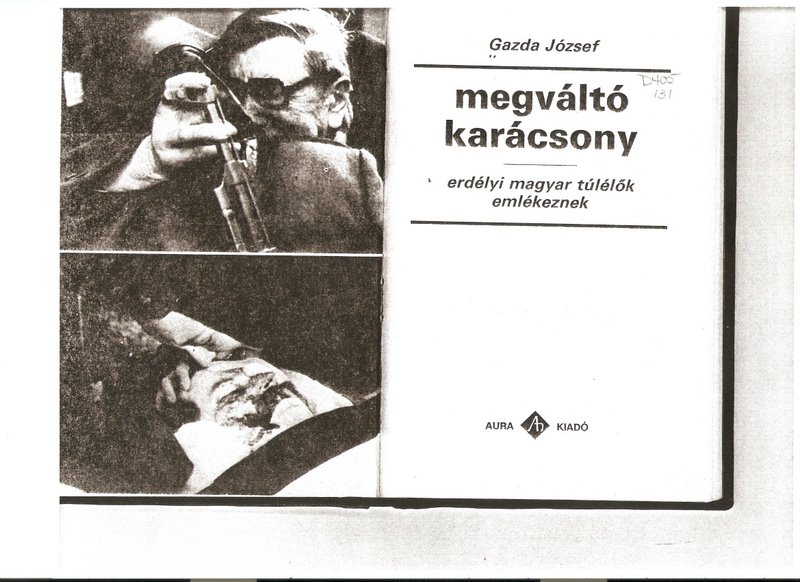
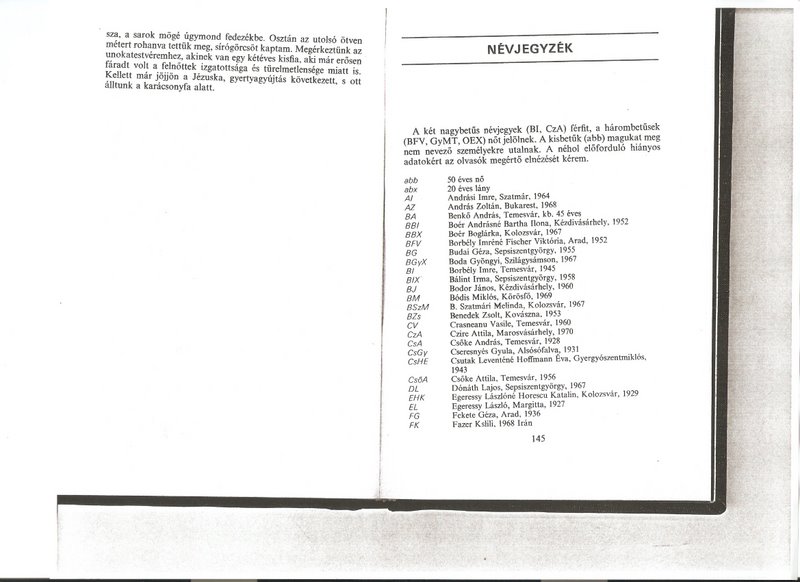
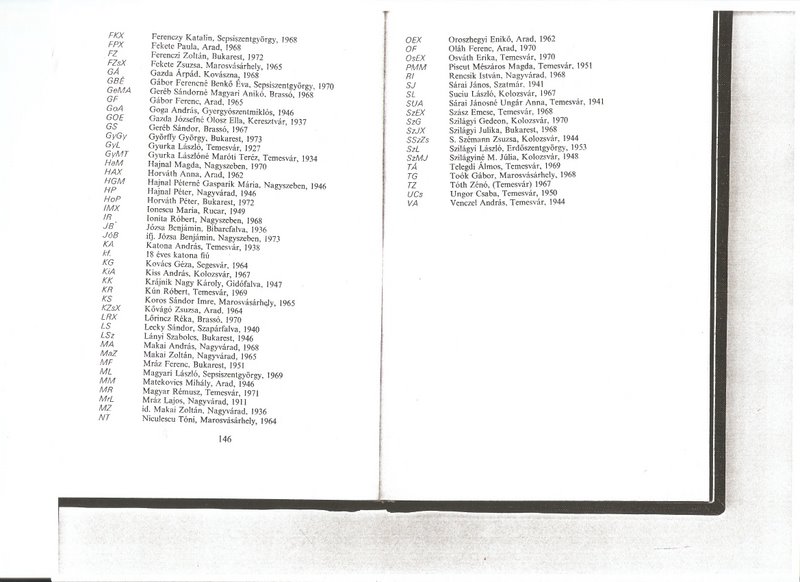
Jozsef Gazda Megvalto karacsonyErdelyi magyar tulelok emlekeznek. (1990)

Ungor Csaba:  Ket ora utan senkit be nem hoztak, senkit be nem engedtek, egyetlen sebesult sem.  A korhazbol kikanyarado  mentoautokra is lottek.  Ket ora utan mindre, ami mozgott, jarokelo, auto, mindenre lottek, csak hogy ok tudjak begyujteni a sebesulteket s a halottakat.  Kiderult az elso golyok utan, amiket a sebekbol gyujottek ossze, szedtek ki, hogy nem eles katonai toltenyekkel lottek, hanem dum-dum golyokkal, amik nagy rombolasokat okoztak.  Egy 16 eves, ketszer sebesult gyermek meselte el, ok azt hittek, hogy hosok, azt hittek, hogy meg fogjak menteni a forradalmat, mert biztosra vettek, ha a felnottek sorfala ele allnak, nem fognak belejuk loni.  Lottek rajuk is.

Goga Andras:  A masodik izgalomkelto esemeny volt kedden delelott, hogy az osszes regiszterunk–mind a surgossegen, mind az osztalyon–, melyekre felirtuk a muteteinket, eltuntek, a mai napig sem talaltuk meg.  Bennuk voltak az ev osszes mutetei[***]…En aznap kettot operaltam.  Egy tuntetonek a bore alol vettem ki egy nagyon kulonleges golyok, nem is golyot, egy ilyen repeszdarabot, melyet a katonasag aztan megvizsgalt, s azt mondtak, nekik nincs tudmasuk, hogy ez mi lehet.  Egy masiknak pedig fejserulese volt, persze abban nem talaltam golyot, atment rajta.

RELATED:

Procesul de la Timisoara (XII): Timisoara, the key to the Revolution then; the key now to the truth about the Counter-revolution

Procesul de la Timisoara (XI): Dupa 22 decembrie–teroristii. Martorii Alexandru Koos, Ion Flocioiu, si Herlea Floarea

Procesul de la Timisoara (X): Gloante explozive (dum-dum) dupa 22 decembrie 1989

Procesul de la Timisoara (IX): Cine au fost cei “necunoscuti,” mai in varsta, care au tras inainte de 22 decembrie 1989? (2)

Procesul de la Timisoara (VIII): Cine au fost cei “necunoscuti”, mai in varsta, care au tras inainte de 22 decembrie 1989?

Procesul de la Timisoara (VII): “La Timisoara cred ca si domnul procuror a vazut cartuse de acest calibru…Dar au existat in corpurile delicte ale procuraturii. Eu l-am vazut. Este un cartus ceva mai lung, negru, cu botul taiat. 5,56.”

Procesul de la Timisoara (VI): Impuscati dintr-un ARO…Al cui apartinea ARO-ul?

Procesul de la Timisoara (V): Martorii Cristian Rusu, Daniela Lengyel, si Aurica Rusu (mama lui Marius Ciopec)

Procesul de la Timisoara (IV): Martorii Adrian Kali, Ioan Musca, Traian Orban, si Alexandru Koos

Procesul de la Timisoara (III): Audierea martorului Rodica Novac, directorul Direcţiei Sanitare Timiş (13 iunie 1990)

Procesul de la Timisoara (II). Audierea partii civile Popovici Ion: “…Atata retin foarte bine minte, ca ofiterul a spus, cica: ‘Nu, voi trageti cu dum-dum-uri si dupa aia Armata raspunde.’”
Procesul de la Timisoara (I): Missed Press Opportunities. The testimonies of Margaret Cacoceanu and Doina Gherasim (25-26 September 1990)

http://www.banaterra.eu/romana/search/node/%22procesul%20de%20la%20timisoara%22
Procesul de la Timişoara (1990-1991) – Vol. V
 ASOCIAŢIA MEMORIALUL REVOLUŢIEI  16-22 DECEMBRIE 1989, TIMIŞOARA     Editor: Miodrag Milin Timişoara, 2009   Ataşament Mărime procesul_de_la_timisoara_volumul_V_final.pdf 4 …Articol – dbaiski – 24 Iul 2009 – 16:03 – 0 comentarii – 1 fişier ataşat
Procesul de la Timişoara (1990-1991) – Vol. IV
 ASOCIAŢIA MEMORIALUL REVOLUŢIEI  16-22 DECEMBRIE 1989, TIMIŞOARA     Editor: Miodrag Milin Timişoara, 2009   Ataşament Mărime procesul_de_la_timisoara_volumul_IV_prefata.pdf …Articol – dbaiski – 24 Iul 2009 – 16:02 – 0 comentarii – 3 fişiere ataşate
Procesul de la Timişoara (1990-1991) – Vol. III
ASOCIAŢIA MEMORIALUL REVOLUŢIEI  16-22 DECEMBRIE 1989, TIMIŞOARA   Editor: Miodrag Milin Timişoara, 2009 Ataşament Mărime procesul_de_la_timisoara_volumul_III_prefata.pdf 126.6 KB proc …Articol – banaticus – 24 Iul 2009 – 16:01 – 0 comentarii – 4 fişiere ataşate
Procesul de la Timişoara (1990-1991) – Vol. I, II
ASOCIAŢIA MEMORIALUL REVOLUŢIEI  16-22 DECEMBRIE 1989, TIMIŞOARA   Editor: Miodrag Milin Timişoara, 2009 Ataşament Mărime prefata.pdf 199.39 KB procesul_de_la_timisoara_volumul_I.pdf …Articol – banaticus – 24 Iul 2009 – 16:00 – 0 comentarii – 3 fişiere ataşate
Procesul de la Timişoara (1990-1991) – Vol. VII
 Postul teritorial de Radio Timişoara Asociaţia ALTAR 1989, Timişoara Editor: Miodrag Milin Ataşament Mărime procesul_de_la_timisoara_volumul_VII_nota_asupra_editiei.pdf 68.46 KB procesu …Articol – dbaiski – 20 Mai 2009 – 17:06 – 0 comentarii – 3 fişiere ataşate
Procesul de la Timişoara (1990-1991) – Vol. VI
  ASOCIAŢIA MEMORIALUL REVOLUŢIEI  16-22 DECEMBRIE 1989, TIMIŞOARA   Editor: Miodrag Milin Timişoara, 2009 Ataşament Mărime procesul_de_la_timisoara_volumul_VI_nota_asupra_editiei …Articol – dbaiski – 20 Mai 2009 – 16:51 – 0 comentarii – 2 fişiere ataşate
Much of this has now been reposted or reproduced here:dosarelerevolutiei.ro

5) Former Securitate personnel

Bullets, Lies, and Videotape:

The Amazing, Disappearing Romanian Counter-Revolution of December 1989

by Richard Andrew Hall, Ph.D.

Standard Disclaimer:  All statements of fact, opinion, or analysis expressed are those of the author and do not reflect the official positions or views of the Central Intelligence Agency (CIA) or any other U.S. Government agency.  Nothing in the contents should be construed as asserting or implying U.S. Government authentication of information or CIA endorsement of the author’s views.  This material has been reviewed by CIA to prevent the disclosure of classified information.  [Submitted 19 November 2009; PRB approved 15 December 2009]

I am an intelligence analyst for the Central Intelligence Agency.  I have been a CIA analyst since 2000.  Prior to that time, I had no association with CIA outside of the application process.

Those Who Have Told Us the Truth[1]

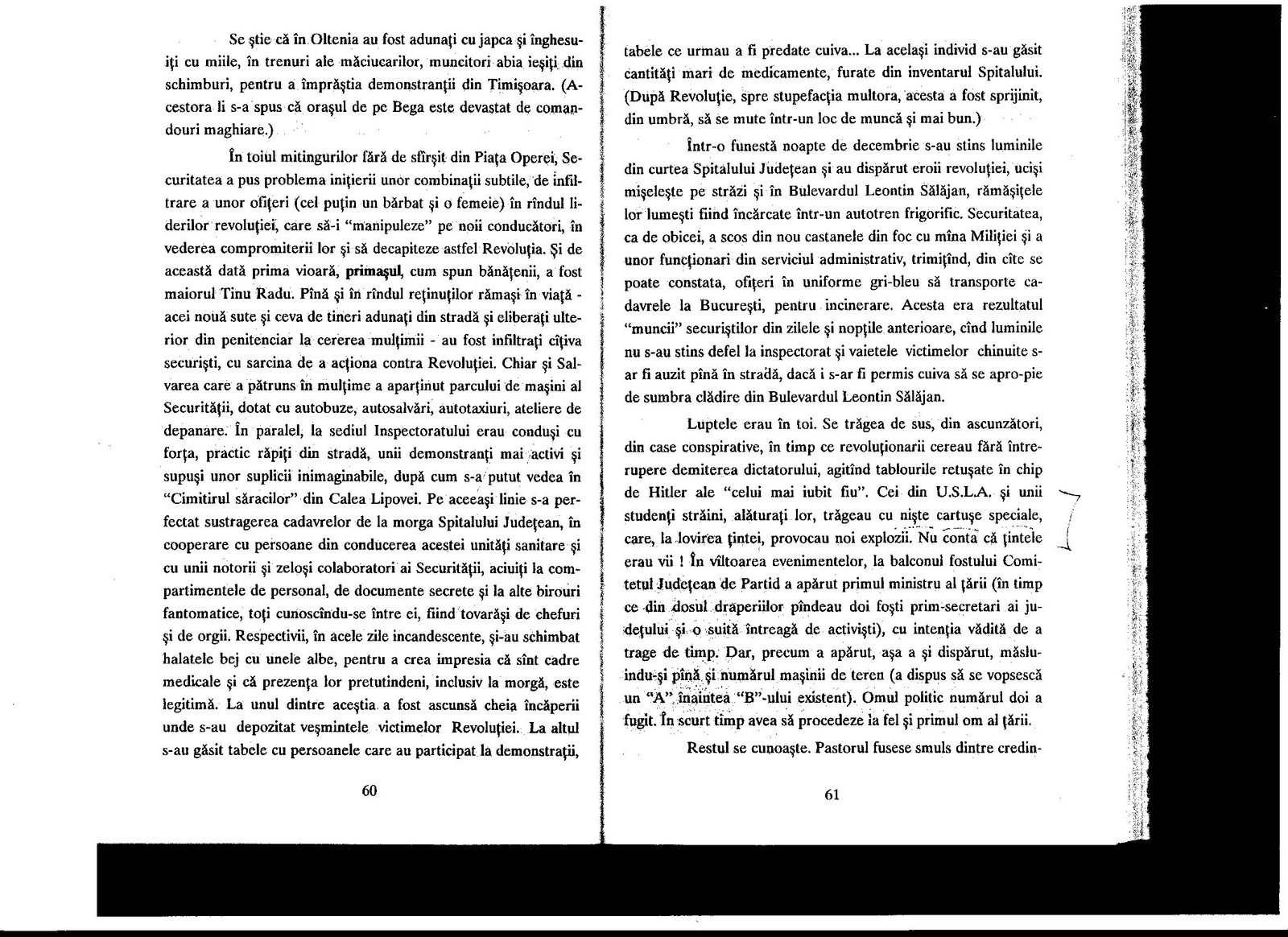
As opposed to the aforementioned Vladimir Belis, Pavel Corut, and Dan Voinea, all of whom who have strenuously and repeatedly denied the existence and use in December 1989 of atypical munitions of dum-dum bullets and vidia bullets, there exist those who have told us of the existence and use of these in December 1989.[2] They are essentially, for lack of a better term, former Securitate whistleblowers, who have admitted the Securitate’s role in providing the “terrorists” who caused so much destruction, mayhem, and loss of life in those days.

For years I have been essentially the sole researcher inside or outside the country familiar with and promoting the claims of 1) former Timisoara Securitate Directorate I officer Roland Vasilevici—who published his claims about December 1989 under the byline of Puspoki F. in the Timisoara political-cultural weekly Orizont in March 1990 and under the pseudonym “Romeo Vasiliu”—and 2) an anonymous USLA recruit who told his story to AM Press Dolj (published on the five year anniversary of the events in Romania Libera 28 December 1994…ironically (?) next to a story about how a former Securitate official attempted to interrupt a private television broadcast in which Roland Vasilevici was being interviewed in Timisoara about Libyan involvement in December 1989).

Vasilevici claimed in those March 1990 articles and in a 140 page book that followed—both the series and the book titled Pyramid of Shadows—that the USLA and Arab commandos were the “terrorists” of December 1989.  What is particularly noteworthy in light of the above discussion about “exploding [dum-dum] bullets” was his claim that the USLA and the foreign students who supplemented them “used special cartridgeswhich upon hitting their targets caused new explosions” [emphasis added]—in other words, exploding or dum-dum bullets.[3]

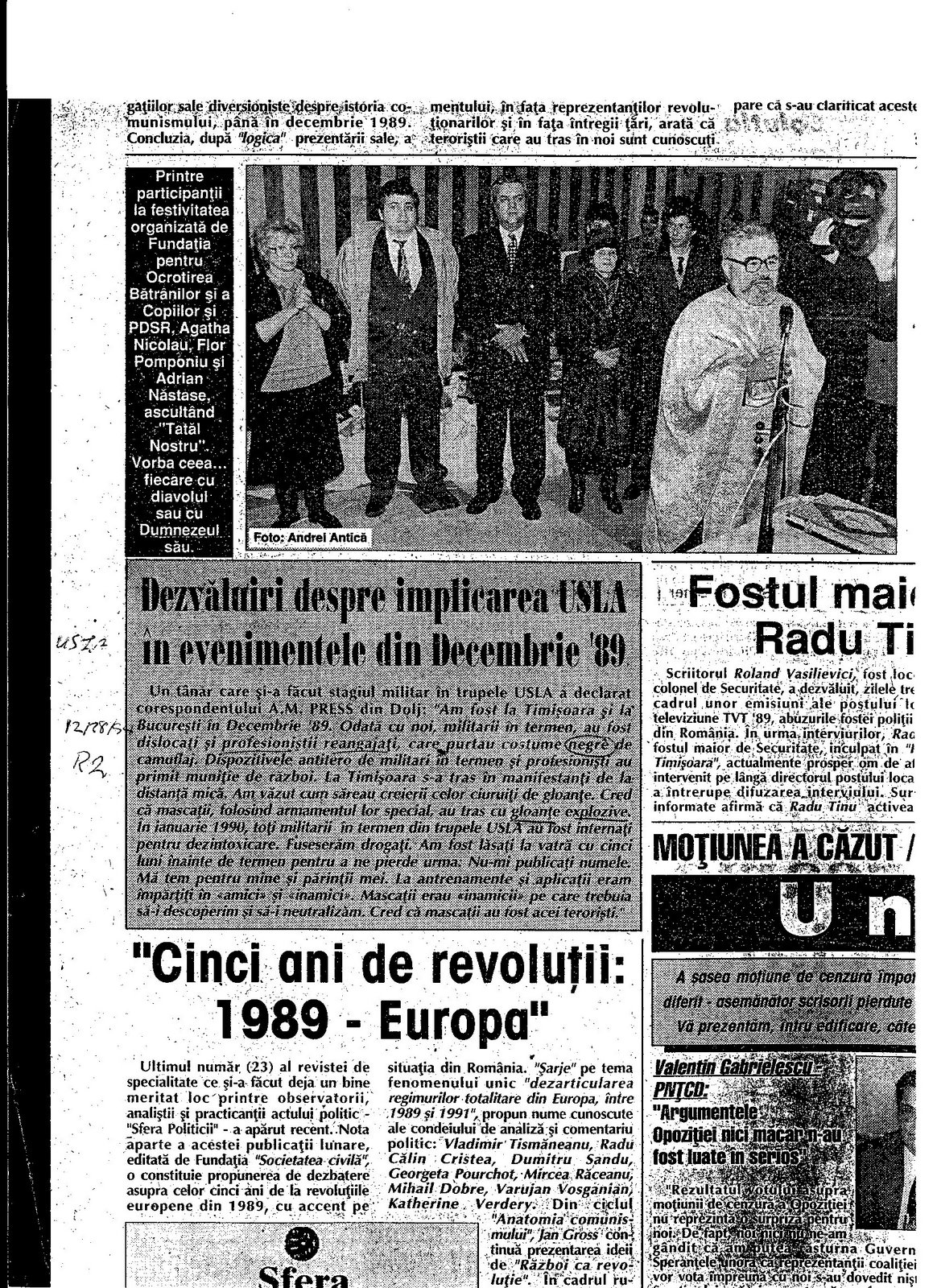
The anonymous USLA recruit stated separately, but similarly:

I was in Timisoara and Bucharest in December ’89.  In addition to us [USLA] draftees, recalled professionals, who wore black camouflage outfits, were dispatched.  Antiterrorist troop units and these professionals received live ammunition.  In Timisoara demonstrators were shot at short distances.  I saw how the skulls of those who were shot would explode. I believe the masked ones, using their own special weapons, shot with exploding bullets.  In January 1990, all the draftees from the USLA troops were put in detox.  We had been drugged.  We were discharged five months before our service was due to expire in order to lose any trace of us.  Don’t publish my name.  I fear for me and my parents.  When we trained and practiced we were separated into ‘friends’ and ‘enemies.’  The masked ones were the ‘enemies’ who we had to find and neutralize.  I believe the masked ones were the ‘terrorists’.[4] [emphases added]

Dezvaluiri despre implicarea USLA in evenimentele din Decembrie ‘89

Un tanar care si-a facut stagiul militar in trupele USLA a declarat
corespondentului A.M. PRESS din Dolj: “Am fost la Timisoara si la Bucuresti in
Decembrie ‘89. Odata cu noi, militarii in termen, au fost dislocati si
profesionistii reangajati, care purau costume negre de camuflaj. Dispozitivele
antitero de militari in termen si profesionisti au primit munitie de razboi. La
Timisoara s-a tras in manifestanti de la distanta mica. Am vazut
cum sareau creierii celor ciuruiti de gloante. Cred ca mascatii, folosind armamentul lor special, au tras cu
gloante explozive.
In ianuarie 1990, toti militarii in termen din trupele USLA
au fost internati pentru dezintoxicare. Fusesaram drogati. Am fost lasati la
vatra cu cinci luni inainte de termen pentru a ne pierde urma. Nu-mi publicati
numele. Ma tem pentru mine si parintii mei. La antranamente si aplicatii eram
impartiti in “amici” si “inamici.” Mascatii erau “inamicii” pe care trebuia sa-i
descoperim si sa-i neutralizam. Cred ca mascatii au
fost acei teroristi.”

(Romania Libera, 28 Decembrie 1994, p. 3)
As I have pointed out, despite the short shrift given these two revelations by Romanian media and Romanianists, one group has paid close attention:  the former Securitate.  That is not accidental.[5]

for full discussion of those who told us the truth (i.e. continuation of above), see discussion here:

Bullets, Lies, and Videotape: The Amazing, Disappearing Romanian Counter-Revolution of December 1989 (Part VII: Conclusion. Those Who Told Us the Truth) by Richard Andrew Hall (UPDATED with new xeroxes)

6) Lt. Col Petre Ghinea:

Petru Ghinea

Lt.col. Ghinea Petre, din U.M. 01185 Timişoara, a asigurat paza Comandamentului diviziei cu un număr de 5 transportoare blindate, care au intrat în dispozitiv în Piaţa Libertăţii în noaptea de 22/23 decembrie 1989 în jurul orelor 22,00. Acest ofiţer a menţionat:

„După orele 22,15 – 22,30 şi până către orele 23,00 în Piaţa Libertăţii s-au auzit sporadic rafale şi împuşcături izolate. Toate încercările de a localiza aceste împuşcături au eşuat. Singurul aspect care le diferenţia de zgomotul normal al muniţiei utilizate de armamentul din dotarea unităţilor noastre era zgomotul, mult diminuat de parcă ar fi fost utilizate arme cu calibre mici… La un moment dat în Piaţa Libertăţii s-au auzit strigăte care semnalau apariţia unor elicoptere în zbor şi a unor paraşutişti care fuseseră lansaţi. Personal nu am văzut nimic şi consider că focul declanşat fără justificare de mijloacele dispuse în faţa comandamentului a impus o puternică stare de nelinişte şi nesiguranţă asupra evenimentelor care se derulau. Am fost trimis de col. Mancu Florin să merg la fiecare mijloc de foc şi să-i determin să înceteze focul. Am transmis că focul se va deschide numai la ordin. Cu toate acestea au fost destule situaţii în care acest foc a fost deschis fără nicio justificare concretă.”[53]

Lt.col. Ghinea Petre a menţionat:

„De după monumentul din centru pieţei s-au auzit strigăte şi solicitări de ajutor. Am fugit acolo şi am ajutat câțiva oameni să iasă la lumină, din care unul rănit, l-am trimis la spital. I-am cerut scuze pentru cele întâmplate rănitului. Cei doi subofiţeri din T.A.B.-ul care executase foc, mi-au raportat că fuseseră trimişi de comanda U.M. 01185 Timişoara. Nu după multă vreme a mai apărut un T.A.B. fantomă, care s-a oprit din viteză în Piaţa Libertăţii şi a executat focul pe două direcţii: în lungul străzii unde era consignaţia, către ceainărie şi spre Spitalul militar, ulterior am aflat că au fost răniţi grav oameni. În T.A.B. era lt. Rusu cred şi mr. Şerban din U.M..01185 Timişoara.”[60]

http://mariusmioc.wordpress.com/2014/05/05/procuror-romeo-balan-teroristii-din-timisoara-dupa-22-decembrie-1989-3-piata-libertatii/

http://atomic-temporary-3899751.wpcomstaging.com/2011/06/02/iosif-costinas-cu-locotenent-colonelul-petre-ghinea-o-lupta-cu-fortele-raului-orizont-timisoara-nr-5-221990-p-5/

“O lupta cu fortele raului,” Orizont (Timisoara), nr. 5 (2 februarie 1990), p. 5.

Lt. Col. Petre Ghinea:  Primele rafale de arma automata le-au tras fostii securisti chiar in Piata Libertatii, unde noi aveam amplasate transportoarele blindate care completau sistemul de foc al tancurilor, pentru apararea Comandamentului militar.  Au tras din multe locuri, din podurile cladirilor.  In seara zilei de 22 decembrie, intre orele 22,30 si 23….

Iosif Costinas:  Cu toate astea, in seara zilei de 22 decembrie s-a tras, de aproape, asupra Comandamentul militar.

Lt. Col. Petre Ghinea:  Da.  Am fost de fata.  Au tras dintr-o “Dacie” alba…Foloseau mai multe autoturisme, schimbindu-le din loc in loc.  Le schimbeau si numerele….Din hotelul Central s-a tras asupra noastra si ne-au gaurit citeva pneuri de la transporter…

Iosif Costinas:  Duminica, 24 decembrie, inainte de masa, te-am auzit vorbind, prin amplificare, in Piata Libertatii…

Lt. Col. Petre Ghinea: …[nea Ionescu de la Filarmonica] A venit cu o propunere demna de toata atentia.  Am adus de la Filarmonica statia de amplificare si am instalat-o pe tarasa Casei Armatei.  Statia functiona excelent.  M-am adresat securistilor ascunsi prin casele din apropriere:  “Securisti, predati-va!  Nu mai aveti nici o sansa!  Facem apel la ultimul dram de omenie pe care-i mai aveti in voi!  Cursul evenimentelor este ireversibil!  Nu veti putea fugi din oras, predati-va!  Ne-am adresat si oamenilor care locuiesc in cladirile din care se tragea, spre a ne semnala locurile de unde se trage.  Unii din ei au iesit la geamuri (cei de la etajele superioare) si aratau de unde vin rafalele de arme automate….Desi am facut apel la ultimul dram de omenie al securistilor, unii au tras asupra noastra.  Din fericire, nu ne-au nimerit….In timp ce vorbea nea Ionescu mi-a fost impuscat un subordonat:  soldatul Mihai Budugan,  unul dintre cei mai curajosi baieti ai mei.  A fost impuscat deasupra inimii.  Dus la spital, a scapat cu viata.  Dupa un timp, in urma apelurilor noastre, in zona Pietei Libertatii focul a scazut in intensitate.  Au actionat si cercetasii si militarii de la unitatile de parasutisti.  Tot in urma apelurilor noastre, mai multi cetateni ne-au comunicat numerele masinilor din care au tras securistii.

Iosif Costinas: Care este opinia ta despre felul cum au actionat securistii-teroristi?

Lt. Col. Petre Ghinea: Spre deosebire de militarii nostri, ei au fost foarte bine pregatiti pentru lupta in oras. Dispuneau de armament modern, special (inclusiv simulatoare de foc). De pilda, la automatele lor rabatabile, cu gloante videa [vidia] sau gloante explozive, nu se putea vedea flacara la gura tevii….Initial, dupa opinia mea, au intrat in lupta elemente extrem de bine instruite, apoi acestea au disparut, lasind in locul lor o seama de colaboratori ai fostei Securitatii (din diferite, ca sa zi asa, categorii, socio-profesionale).  A fost un plan diabolic, indeplinit, din nefericire, in buna masura….

Iosif Costinas:  Ce te-a nemultumit cel mai mult in acele zile atit de grele pentru noi, timisorenii?

Lt. Col. Petre Ghinea:  Armata nu a putut sa faca fata tuturor solicitarilor.  Sa nu mai vorbim de faptul ca nu am fost pregatiti pentru un asemenea tip de lupta.  Caci, dupa cum se stie, nu este suficient sa ai in mina un pistol-mitraliera si o cantitate de munitie pentru a interveni cu eficicatate, unde este nevoie.  M-a nemultumit, spre pilda, si inexistenta, alaturi de noi, a militienilor si chiar a unor elemente din fosta securitate, care, dupa cite am auzit, se considerau de bunacredinta.  Foarte putini au raspuns apelurilor Comandamentului militar de a se prezenta la fostul lor sediu si de a ne da o mina de ajutor…
Posted in decembrie 1989, raport final | Tagged: , , , , , , , , , , , , , , , , , , , , , , , , , , | 4 Comments »

The Days Leading up to 9 November and the Fall of the Berlin Wall (Articles from the Washington Post)

Posted by romanianrevolutionofdecember1989 on November 7, 2014

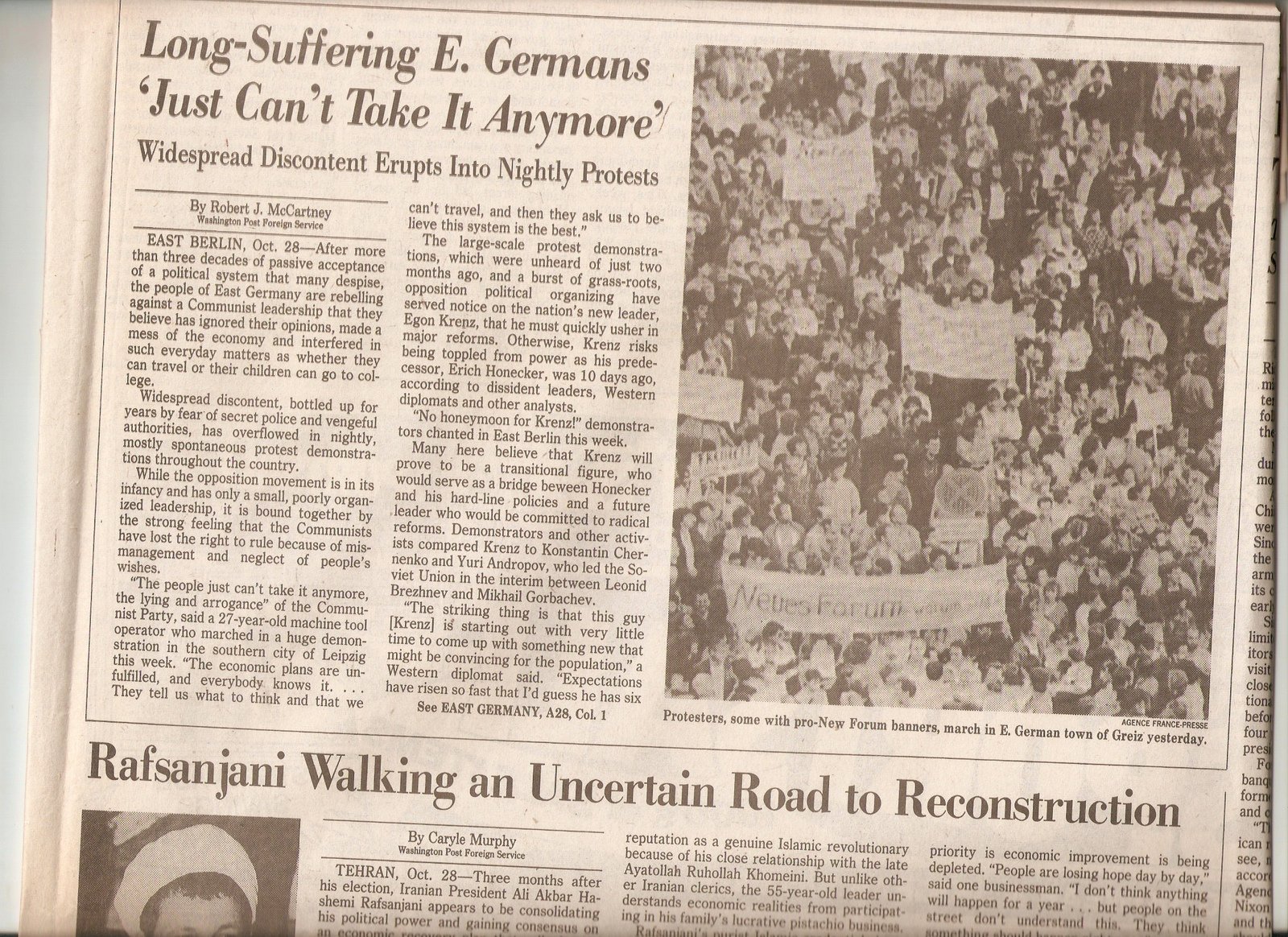
Robert J. McCartney, “Long-Suffering E. Germans ‘Just Can’t Take It Anymore.’  Widespread Discontent Erupts Into Nightly Protests,” Washington Post, 29 October 1989.

image0-006

image0-003

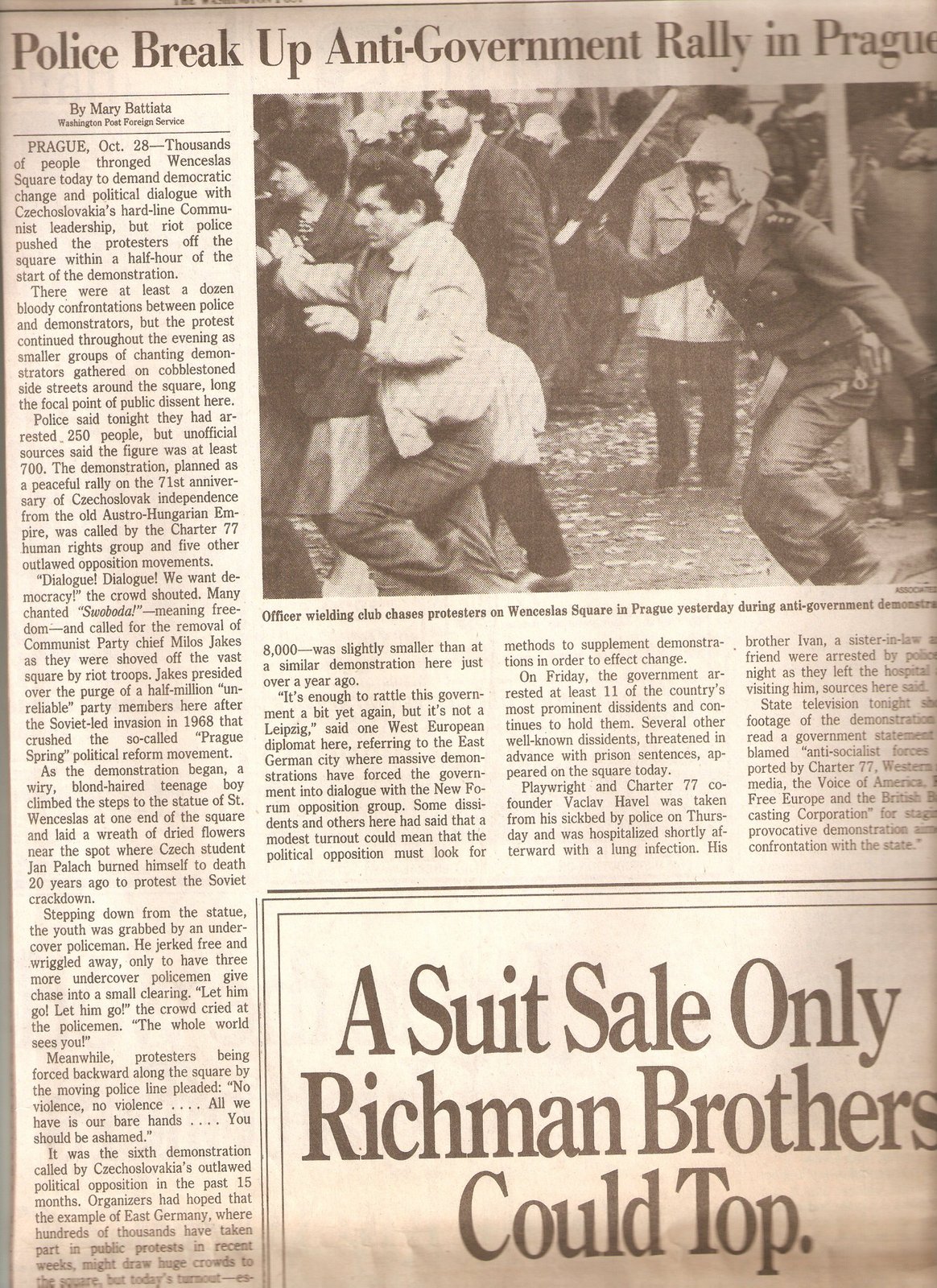
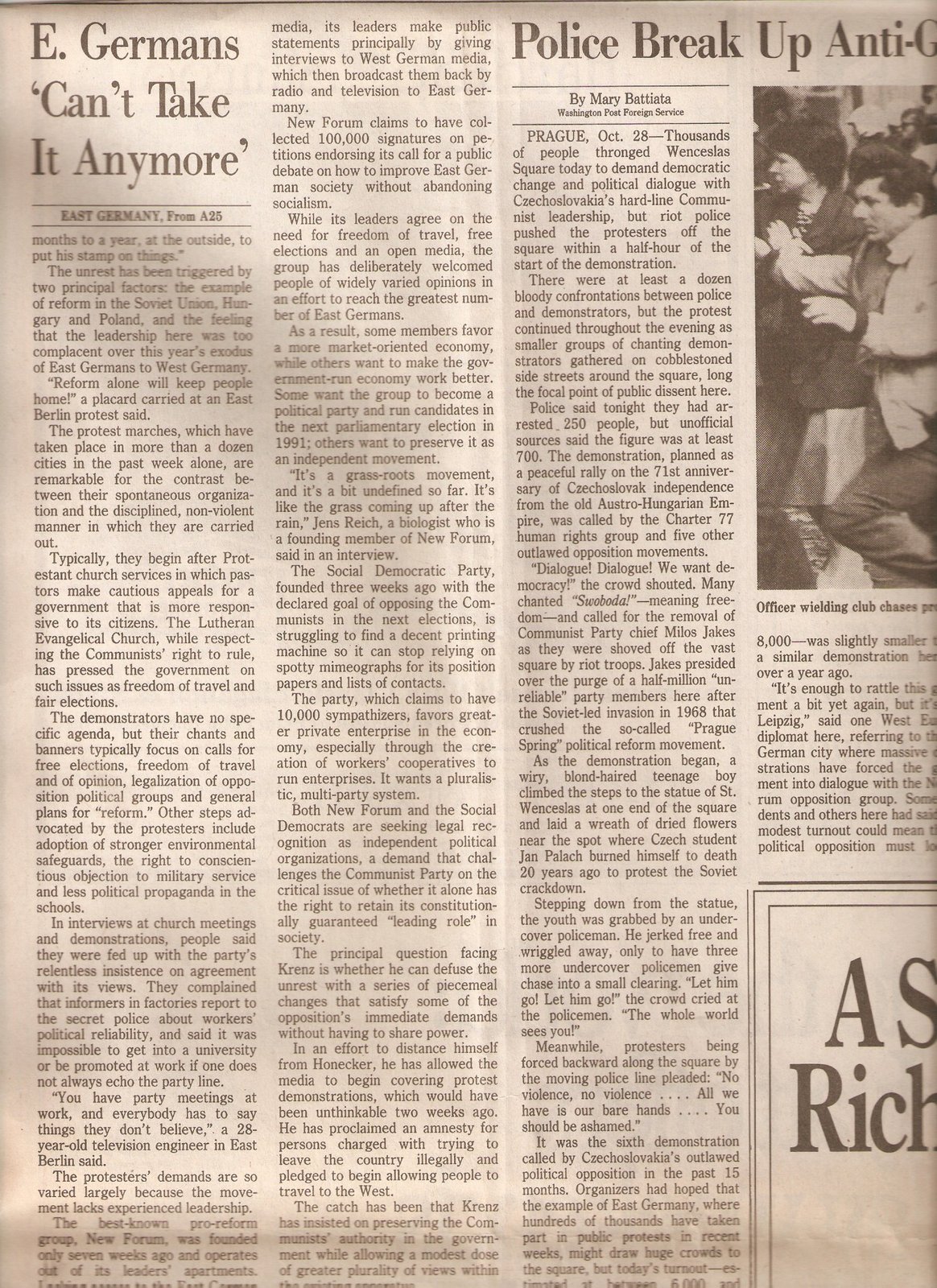
Mary Battiata, “Police Break Up Anti-Government Rally in Prague,” Washington Post, 29 October 1989.

image0-001

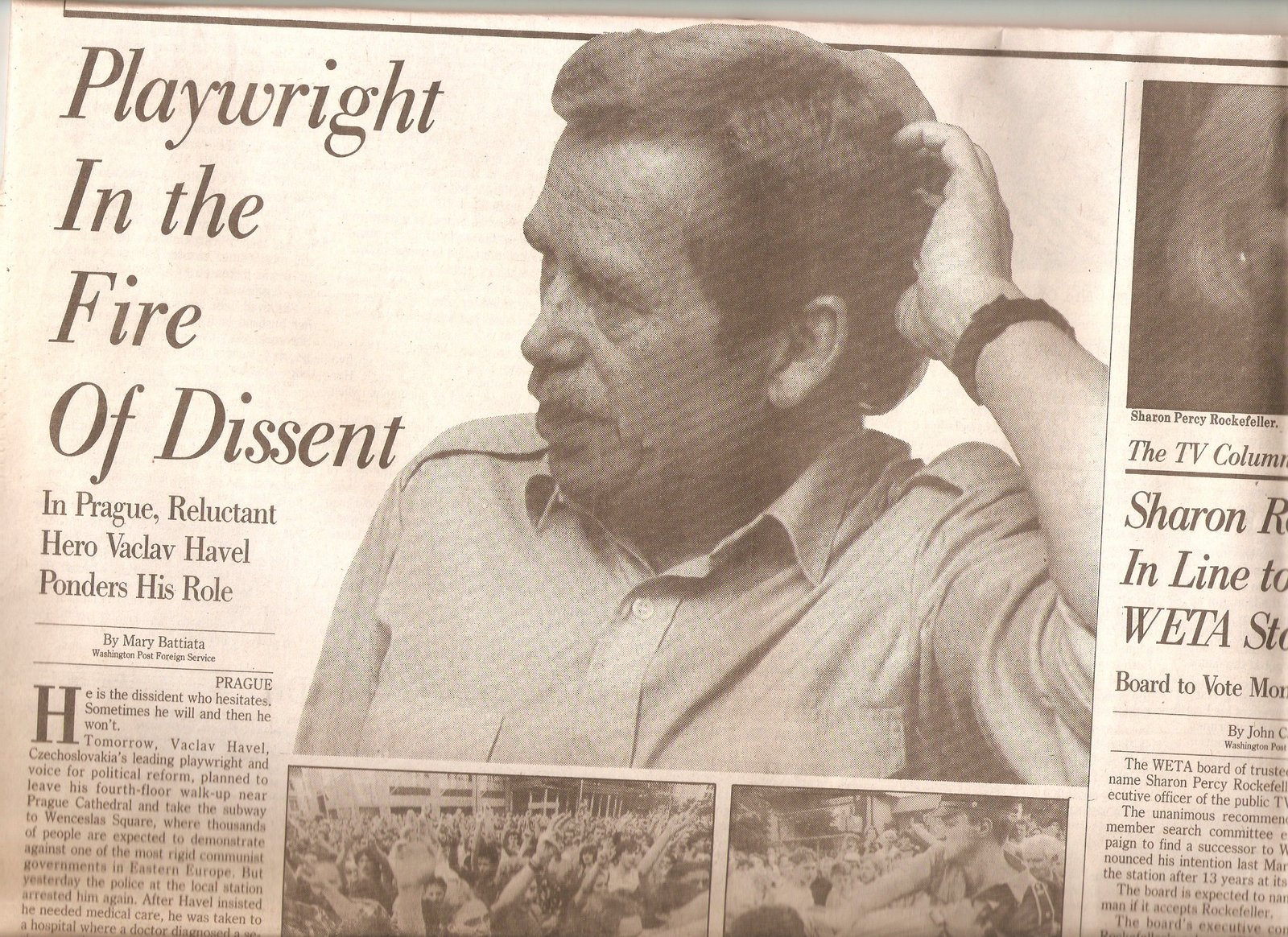
Mary Battiata, “Playwright In the Fire of Dissent.  In Prague, Reluctant Hero Vaclav Havel Ponders His Role,” Washington Post, 27 October 1989.

image0-017

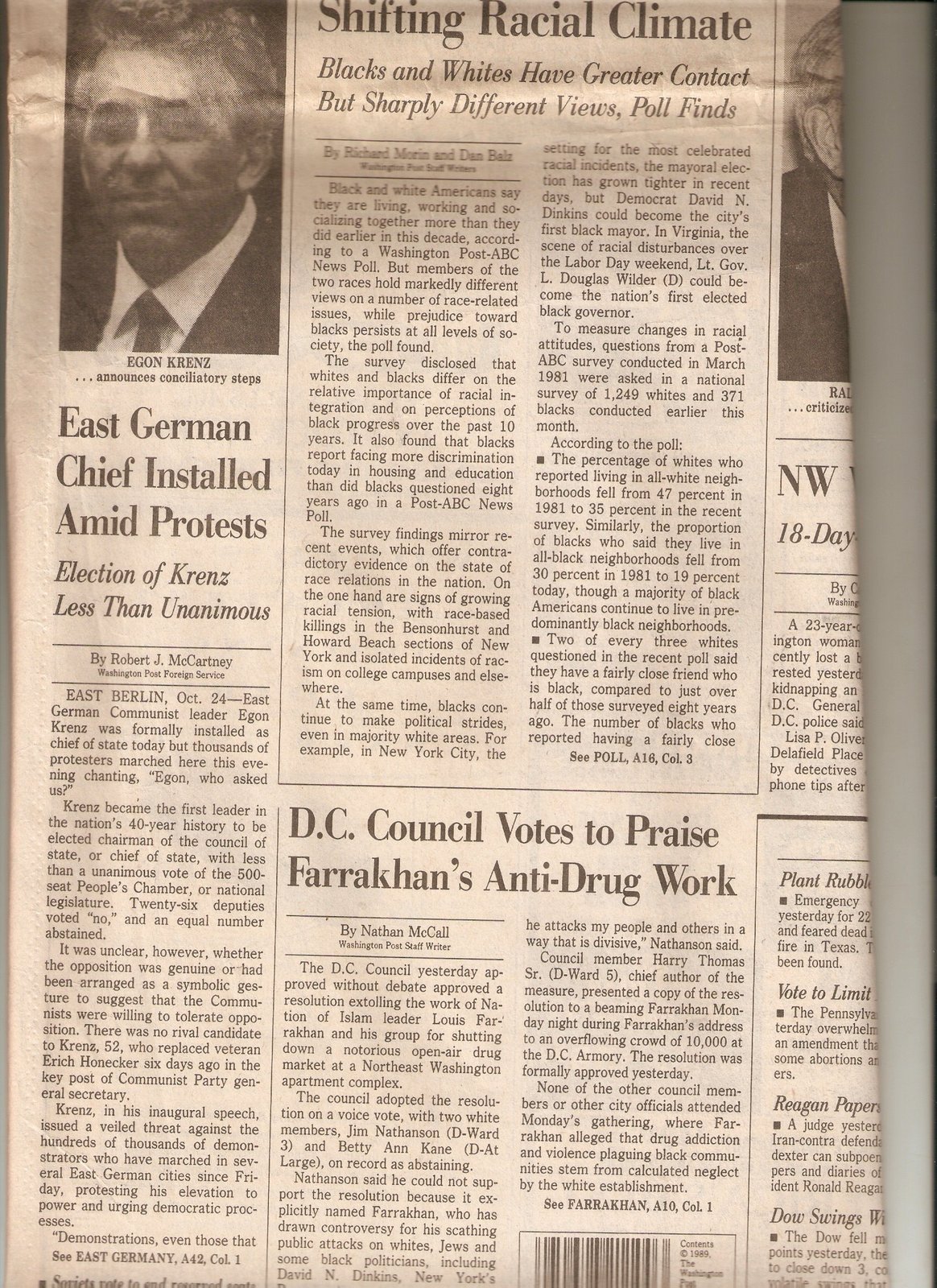
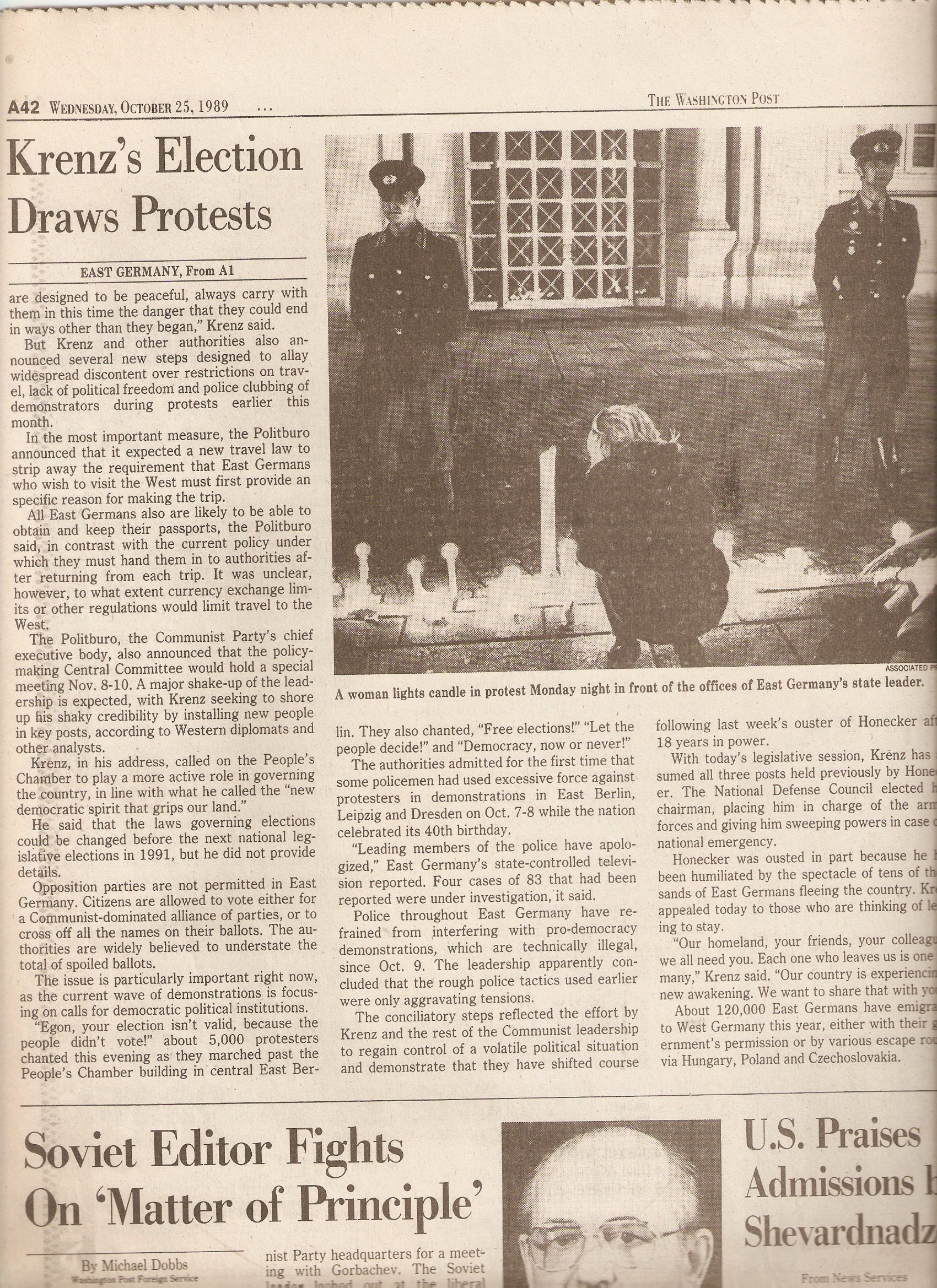
Robert J. McCartney, “East German Chief Installed Amid Protests.  Election of Krenz Less than Unanimous,” Washington Post, 25 October 1989.

image0-014

image0-015

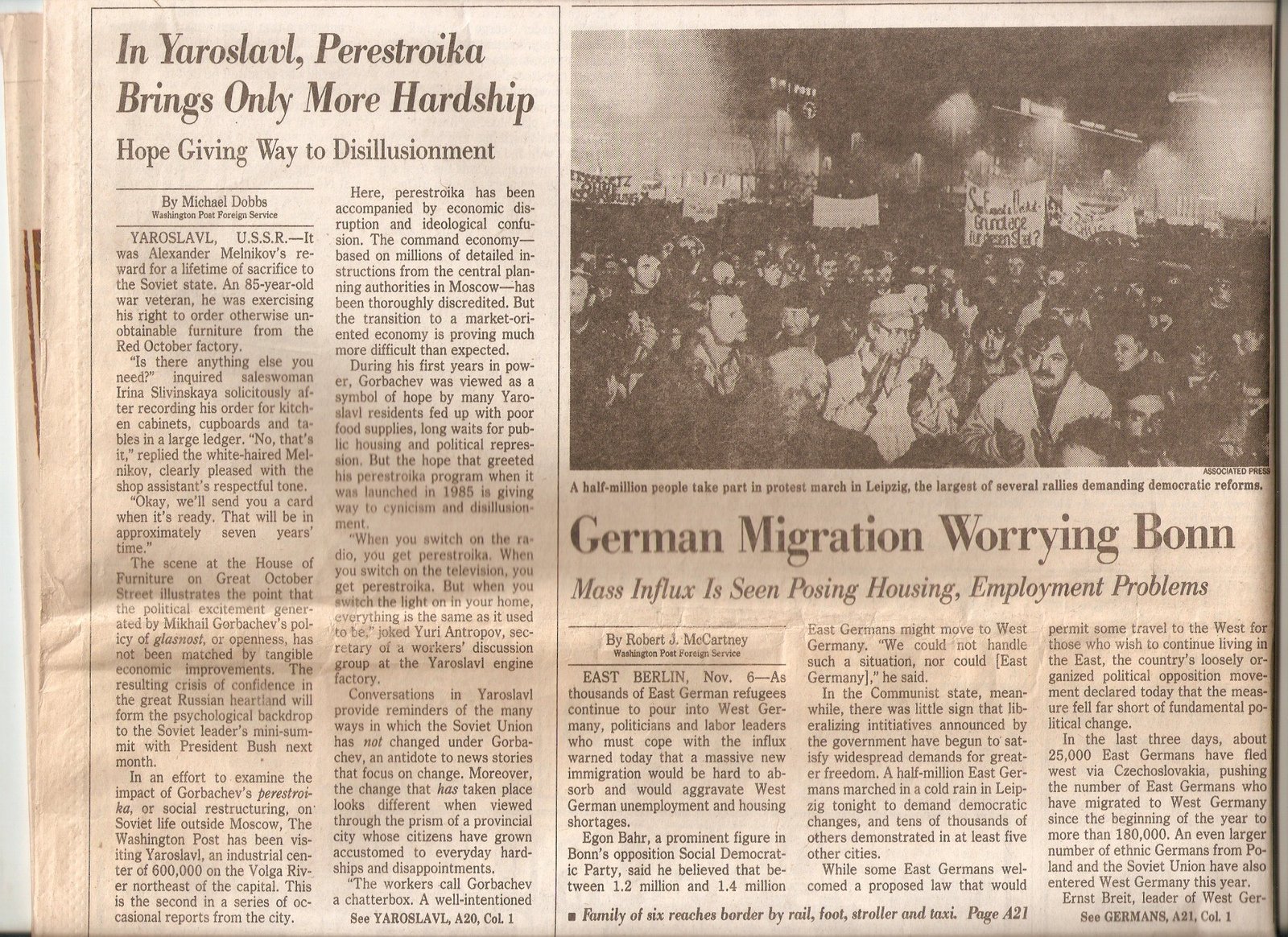
Robert J. McCartney, “German Migration Worrying Bonn. Mass Influx is Seen Posing Housing, Employment Problems,” Washington Post, 7 November 1989.

image0-009

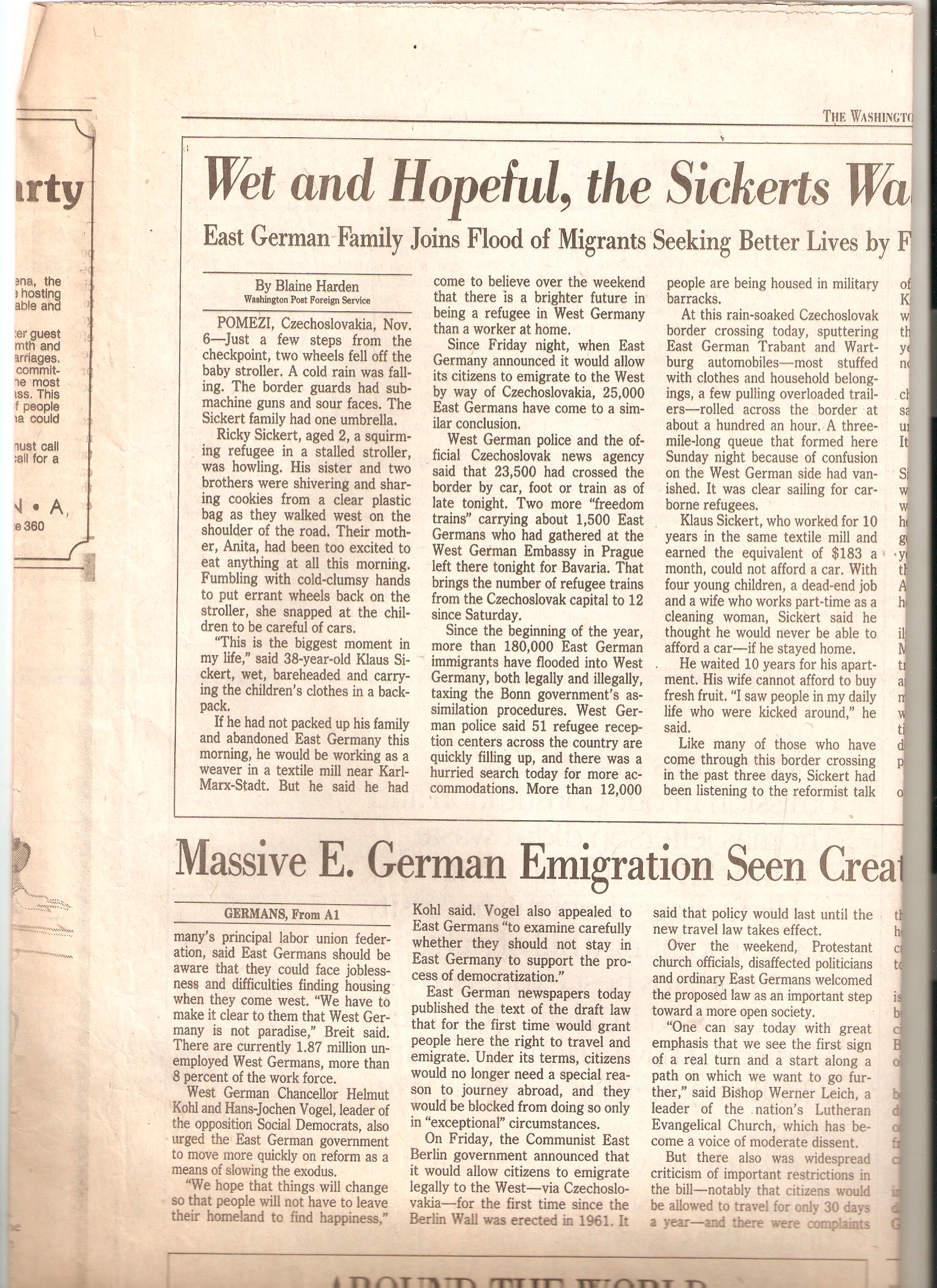
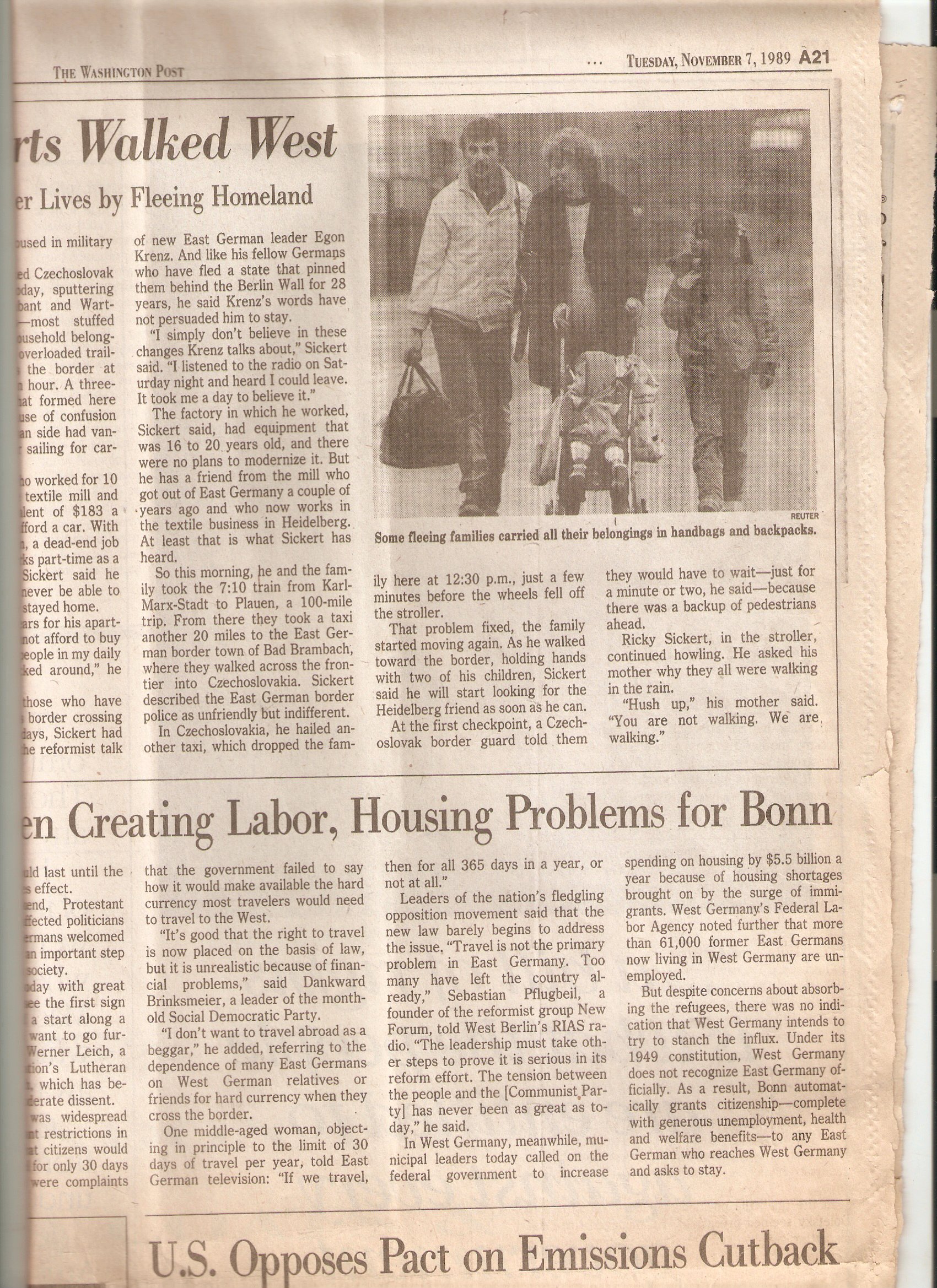
Blaine Harden, “Wet and Hopeful, the Sickerts Walked West.  East German Family Joins Flood of Migrants Seeking Better Lives by Fleeing Homeland,” Washington Post, 7 November 1989.

image0-010

image0-011

Posted in decembrie 1989, raport final | Tagged: , , , , , , , , , , , , , , | Leave a Comment »

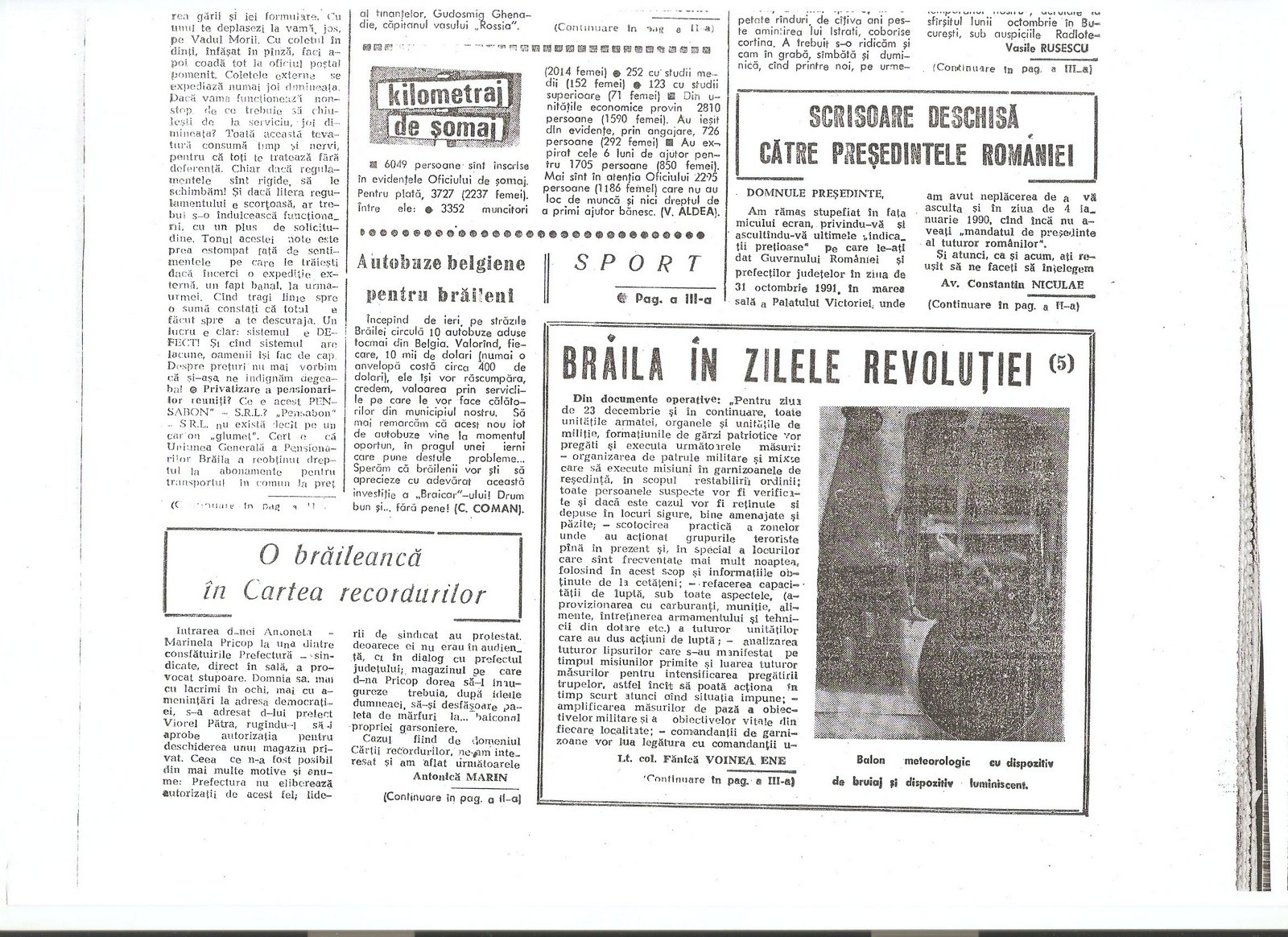
Braila in zilele revolutiei (5)

Posted by romanianrevolutionofdecember1989 on November 6, 2014


image0-001

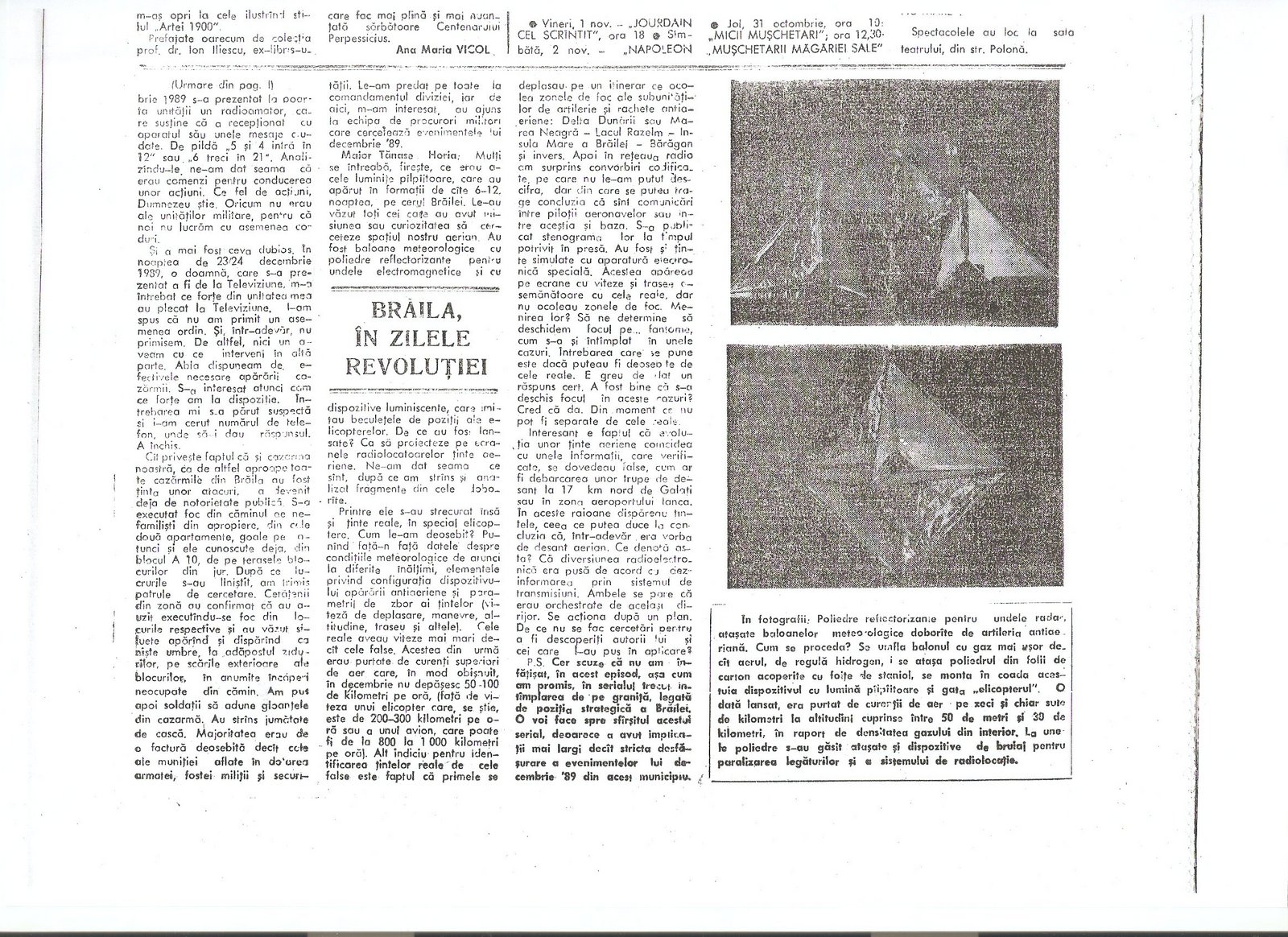
“Balonul meteorologic cu dispozitiv de bruiaj si dispozitie luminescent”

image0-003

Subinginer Nicu Preda:  Ciudat e ca n-am gasit tuburi la fata locului, dar de pe jos, unde ricosasera gloantele, am putut aduna proiectile de o factura deosebita, calibru mic, ascutite la virf.  Le-am predat procurorului militar.

image0-005

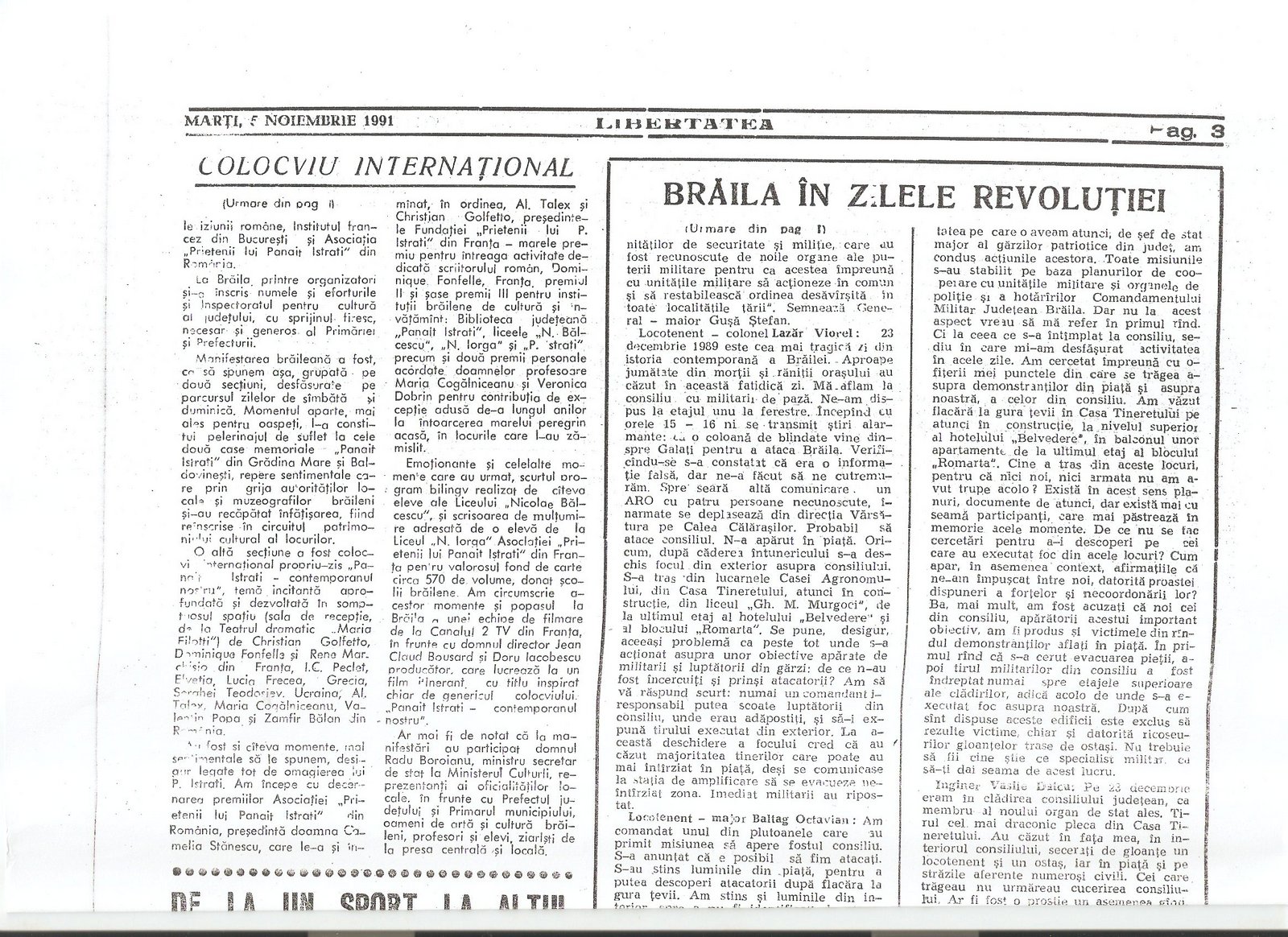
Lt. Col. Fanica VOINEA ENE, “Braila in zilele revolutiei (5),” Libertatea (Braila), 5 noiembrie 1991, p. 1; p. 3.

in legatura cu diversiunea radio-electronica, va rog sa vedeti aici:

http://atomic-temporary-3899751.wpcomstaging.com/2014/08/25/the-absurdity-of-the-allegation-that-the-romanian-military-was-responsible-for-the-radioelectronic-war-in-december-1989/

http://atomic-temporary-3899751.wpcomstaging.com/2014/01/19/what-would-it-have-looked-like-if-nicolae-ceausescus-securitate-executed-a-plan-to-counter-an-invasion-but-the-invaders-never-came-i/

http://atomic-temporary-3899751.wpcomstaging.com/2014/01/21/what-would-it-have-looked-like-if-nicolae-ceausescus-securitate-executed-a-plan-to-counter-an-invasionbut-the-invaders-never-came-ii/

http://atomic-temporary-3899751.wpcomstaging.com/2014/01/24/what-would-it-have-looked-like-if-nicolae-ceausescus-securitate-executed-a-plan-to-counter-an-invasionbut-the-invaders-never-came-iii/

http://atomic-temporary-3899751.wpcomstaging.com/2014/01/27/what-would-it-have-looked-like-if-nicolae-ceausescus-securitate-executed-a-plan-to-counter-an-invasionbut-the-invaders-never-came-iv/

Articole anterioare din serialul Braila in zilele revolutiei:

http://atomic-temporary-3899751.wpcomstaging.com/2014/11/05/braila-in-zilele-revolutiei-iv/

http://atomic-temporary-3899751.wpcomstaging.com/2014/10/22/braila-in-zilele-revolutiei-iii/

http://atomic-temporary-3899751.wpcomstaging.com/2014/10/20/braila-in-zilele-revolutiei-ii/

http://atomic-temporary-3899751.wpcomstaging.com/2014/10/18/braila-in-zilele-revolutiei-i/

Posted in decembrie 1989, raport final | Tagged: , , , , , , , | 7 Comments »

Braila in zilele revolutiei (4)

Posted by romanianrevolutionofdecember1989 on November 5, 2014

image0-001

Capitan de rangul I Nicolae Gavrila:  Am pus apoi soldatii sa adune gloantele din cazarma.  Au strins jumatate de casca.  Majoritatea erau de o factura deosebita decit ale munitiei aflate in dotarea armatei, fostei militii si securitatii.  Le-am predat pe toate la comandamentul diviziei, iar de aici, m-am interesat, au ajuns la echipa de procurori militari care cerceteaza evenimentele lui decembrie ’89

image0-003

Lt. Col. Fanica VOINEA ENE, “Braila in zilele revolutiei (4),” Libertatea (Braila), 31 octombrie 1991.

in legatura cu diversiunea radio-electronica, va rog sa vedeti aici:

http://atomic-temporary-3899751.wpcomstaging.com/2014/08/25/the-absurdity-of-the-allegation-that-the-romanian-military-was-responsible-for-the-radioelectronic-war-in-december-1989/

http://atomic-temporary-3899751.wpcomstaging.com/2014/01/19/what-would-it-have-looked-like-if-nicolae-ceausescus-securitate-executed-a-plan-to-counter-an-invasion-but-the-invaders-never-came-i/

http://atomic-temporary-3899751.wpcomstaging.com/2014/01/21/what-would-it-have-looked-like-if-nicolae-ceausescus-securitate-executed-a-plan-to-counter-an-invasionbut-the-invaders-never-came-ii/

http://atomic-temporary-3899751.wpcomstaging.com/2014/01/24/what-would-it-have-looked-like-if-nicolae-ceausescus-securitate-executed-a-plan-to-counter-an-invasionbut-the-invaders-never-came-iii/

http://atomic-temporary-3899751.wpcomstaging.com/2014/01/27/what-would-it-have-looked-like-if-nicolae-ceausescus-securitate-executed-a-plan-to-counter-an-invasionbut-the-invaders-never-came-iv/

Articole anterioare din serialul Braila in zilele revolutiei:

http://atomic-temporary-3899751.wpcomstaging.com/2014/10/22/braila-in-zilele-revolutiei-iii/

http://atomic-temporary-3899751.wpcomstaging.com/2014/10/20/braila-in-zilele-revolutiei-ii/

http://atomic-temporary-3899751.wpcomstaging.com/2014/10/18/braila-in-zilele-revolutiei-i/

Posted in decembrie 1989, raport final | Tagged: , , , , , , , | 8 Comments »

25 for 2014: 25 Things You Should Know about the Romanian Revolution on the 25th Anniversary of the Fall of Nicolae Ceausescu’s Communist Regime: #8 Romania closes its borders to almost all foreigners…except Russian tourists returning from shopping trips to Yugoslavia (18-19 December 1989)

Posted by romanianrevolutionofdecember1989 on November 1, 2014

(Purely personal views as always, based on over two decades of research and publications inside and outside Romania)

2014 marks the 25th anniversary of the collapse of communism in central and eastern Europe–Poland, Hungary, East Germany, Czechoslovakia, Bulgaria, and Romania.  This (likely aperiodic) series looks at 25 things I have learned about the events of the Romanian Revolution of December 1989.  The numbering is not designed to assign importance, but rather–to the extent possible–to progress chronologically through those events.

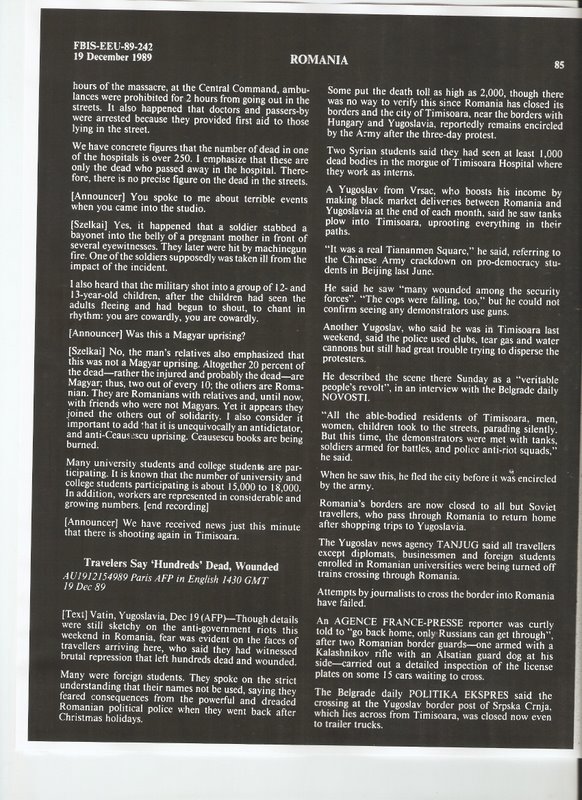
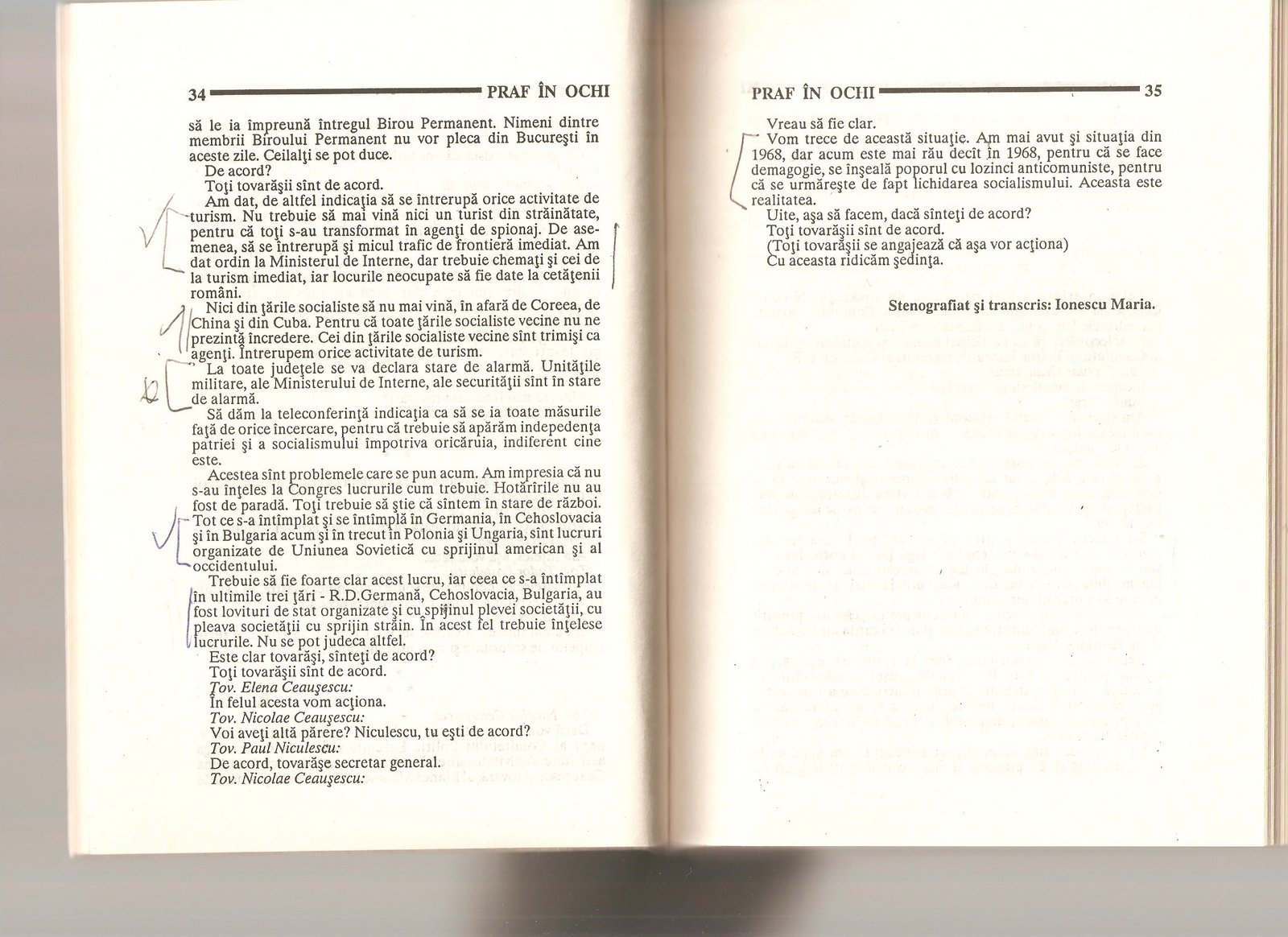
Significance:  During the meeting of the equivalent of the Politburo of the Romanian Communist Party on the afternoon of 17 December 1989, Nicolae Ceausescu announced:  “I have ordered that all tourist activity be interrupted at once. Not one more foreign tourist will be allowed in, because they have all turned into agents of espionage….Not even those from the socialist countries will be allowed in, outside of [North] Korea, China, and Cuba. Because all the neighboring socialist countries are untrustworthy. Those sent from the neighboring socialist countries are sent as agents.”  On 18 December 1989, in the aftermath of the bloodbath of regime repression that had transpired in Timisoara the night before, it was officially announced–in typical Ceausist- (and undeniably Orwellian) style–that Romania would not accept any more tourists because of a “shortage of hotel rooms” and because “weather conditions” were “not suitable for tourism.”  Only it turned out in practice one group of tourists from a neighboring communist state were exempted from this requirement:  Soviet tourists returning home from shopping trips in Yugoslavia…

image0

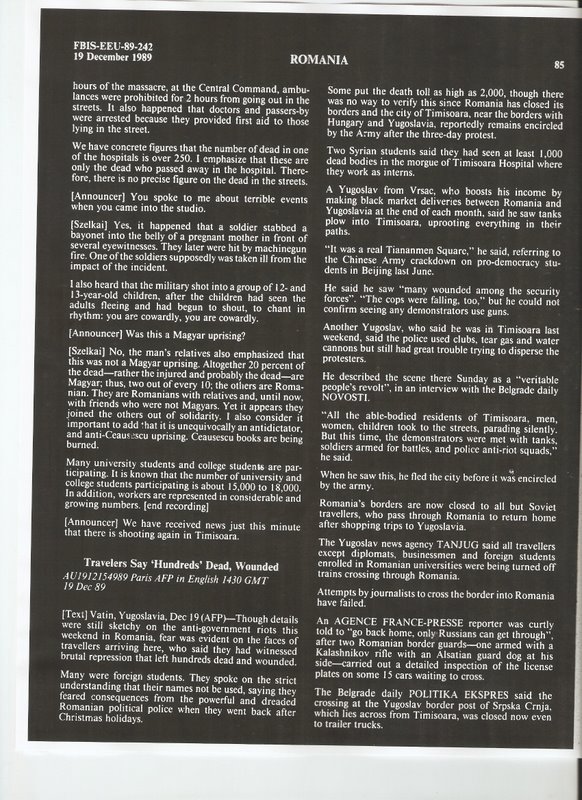
FBIS-EEU-89-242 (19 December 1989), p. 85.  Paris AFP in English 1430 GMT 19 December 1989.

Vatin, Yugoslavia, Dec. 19 (AFP)

Romania’s borders are now closed to all but Soviet travellers, who pass through Romania to return home after shopping trips to Yugoslavia….

An AGENCE FRANCE PRESSE reporter was curtly told to “go back home, only Russians can get through,” after two Romanian border guards–one armed with a Kalashnikov rifle with an Alsatian guard dog at his side–carried out a detailed inspection of the license plates on some 15 cars waiting to cross.

I have been using this source since back in the 1990s when I wrote my dissertation (defended December 1996) at Indiana University (Bloomington), but I still get a kick out of it when I come across it–particularly in light of the seemingly never-ending, snowballing revisionism which alleges that the Timisoara uprising was sparked by “Soviet tourists” or “Russian tourists,” etc.

http://atomic-temporary-3899751.wpcomstaging.com/2013/03/28/yugoslavia-romania-border-19-december-1989-an-agence-france-presse-reporter-was-curtly-told-to-go-back-home-only-russians-can-get-through/


An excerpt from

A chapter from my Ph.D. Dissertation at Indiana University: Richard Andrew Hall, Rewriting the Revolution: Authoritarian Regime-State Relations and the Triumph of Securitate Revisionism in Post-Ceausescu Romania (defended 16 December 1996). This is the original chapter as it appeared then [minus the xeroxes] and thus has not been revised in any form.

http://atomic-temporary-3899751.wpcomstaging.com/rewriting-the-revolution-1997-chapter-6-18-22-december-1989/ (traducere de catre Marius Mioc 18-19 decembrie 1989 )

18-19 December 1989: The Timisoara Crackdown in Ceausescu’s Absence

Considering the centrality of the “foreign tourist” scenario to Securitate-inspired accounts of the December events, it is interesting to note the actions taken by the Ceausescu regime on 18 December 1989. At the close of the emergency CPEx meeting on Sunday afternoon, Nicolae Ceausescu had announced:

I have ordered that all tourist activity be interrupted at once. Not one more foreign tourist will be allowed in, because they have all turned into agents of espionage….Not even those from the socialist countries will be allowed in, outside of [North] Korea, China, and Cuba. Because all the neighboring socialist countries are untrustworthy. Those sent from the neighboring socialist countries are sent as agents.[5]

[from Mircea Bunea, Praf in ochi:  Procesul celor 24-1-2 (Editura Scripta, 1994), p. 34.]

image0-001

On Monday, 18 December 1989, in typical Ceausist-style it was therefore announced that Romania would not accept any more tourists because of a “shortage of hotel rooms” and because “weather conditions” were “not suitable for tourism.”[6] Ironically, the only ones exempted from this ban were: “Soviet travellers coming home from shopping trips to Yugoslavia”(!)[7]

Thus, it is intriguing to see how former Securitate Colonel Filip Teodorescu tailors his characterization of Timisoara on 18 December to account for this change:

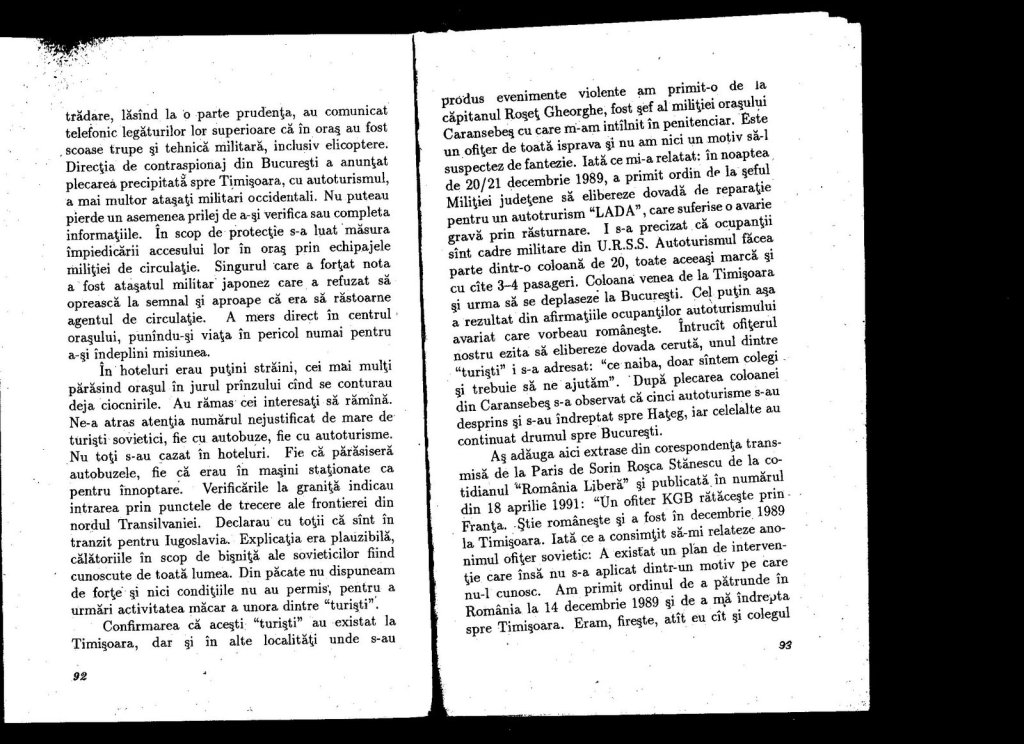
There were few foreigners in the hotels, the majority of them having fled the town after lunch [on 17 December] when the clashes began to break out. The interested parties remained. Our attention is drawn to the unjustifiably large number of Soviet tourists, be they by bus or car. Not all of them stayed in hotels. They either had left their buses, or stayed in their cars overnight. Border records indicate their points of entry as being through northern Transylvania. They all claimed they were in transit to Yugoslavia. The explanation was plausible, the Soviets being well-known for their shopping trips. Unfortunately, we did not have enough forces and the conditions did not allow us to monitor the activities of at least some of these “tourists.”[8]

[from Filip Teodorescu, Un Risc Asumat, 1992, p. 92]

image-68

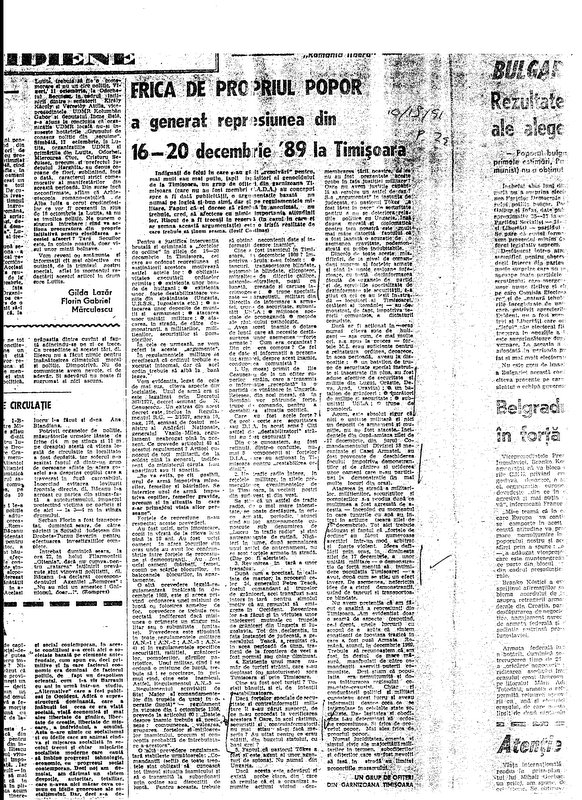
This raises the question of why, if the Soviet tourists were the ones suspected from the first of being behind the unrest, it should have been exactly they who were given continued access into Romania? One of the most effective rejections of the “tourist” scenario came in 1991 from “a group of [Army] officers from the Timisoara garrison.” In an open letter, they proclaimed:

If they [the tourists] appeared suspect to the special forces of the Securitate and counter-military intelligence, why did they not attempt to keep them under surveillance? During this period, did the Securitate and the counter-intelligence officers not know how to do their jobs? Did they somehow forget why they were paid such weighty sums from the state budget?[9]

[Un Grup de Ofiteri din Garnizoana Timisoara, Romania Libera, 15 octombrie 1991
“4.  Existenta unui mare numar de turisti straini, care s-au deplasat (cu autoturisme) spre Timisoara si prin Timisoara.
Cine au fost acei turisti?  Turisti banuiti, si ei, de intentii destabalizatoare.
Daca fortelor speciale de securitate si contrainformatii militare li s-au parut suspecti, de ce nu s-au procedat la verificarea acestora?  Oare in acel rastimp, securistii si contrainformatorii nu mai stiau sa-si faca meseria?  Au uitat pentru ce erau platiti, din bugetul statului, cu bani grei?”]

As we mentioned earlier, in an interesting psychological twist the former Securitate sometimes appear to attribute their own actions to others, especially the convenient phantom-like “foreign tourists.” Some of the Securitate‘s arguments also appear to be based on the manipulation and perversion of real information which has been ripped from its context and placed in another one which suits the Securitate‘s institutional interests better. For example, the comments of the Yugoslav News Agency (TANJUG) correspondent at the Vatin border post on 20 December 1989 may give us a hint as to where the idea of “foreign tourists travelling in convoys of cars” originated from:

People who spent a long time at this crossing point today say that the Romanian government is even accompanying private cars of tourists returning home via Romania. They usually wait until five or six of them assemble and then let them continue in convoys led by official Romanian cars.[10]

[5].. See Mircea Bunea, Praf in Ochi. Procesul Celor 24-1-2. (Bucharest: Editura Scripta, 1994), 34.

[6].. Belgrade Domestic Service, 1400 GMT 20 December 1989, in FBIS-EEU-89-243, 20 December 1989.

[7].. Agence France Presse, 19 December 1989, in FBIS-EEU-89-242, 19 December 1989.

[8].. Filip Teodorescu, Un Risc Asumat: Timisoara decembrie 1989 (Bucharest: Editura Viitorul Romanesc, 1992), 92.

[9].. Un grup de ofiteri din garnizoana Timisoara, “FRICA DE PROPRIUL POPOR… [Fear of your own people]” Romania Libera, 15 October 1991, 2a.

[10].. Belgrade TANJUG, 2137 GMT 20 December 1989, in FBIS-EEU-89-244, 21 December 1989, 80. Disinformation is frequently thought of as synonymous with the “big lie,” but indeed the most effective disinformation always contains a kernel of truth. Frequently, real facts are merely presented out of context. It is also intriguing to note the almost Freudian mirror-imaging quality of this disinformation–a characteristic common to totalitarian regimes. This is especially the case when it comes to the accusations of foreign powers being engaged in “terrorist actions”–an eerily accurate description of the Ceausescu regime’s own actions.

—————————————-

In combination with the following declarations from late December 1989 and early 1990 by senior officials of the former Securitate, dispatched to find evidence of Nicolae Ceausescu’s (/General Iulian Vlad’s) theory of what was transpiring in Timisoara, but who found no evidence of such involvement, this should be a body blow to the revisionist “recovered memory” regarding “Russian/Soviet tourists” in the Timisoara uprising.

http://atomic-temporary-3899751.wpcomstaging.com/2014/08/23/nicolae-ceausescus-paranoia-as-a-theory-for-explaining-december-1989/

http://atomic-temporary-3899751.wpcomstaging.com/2013/03/17/filip-teodorescu-adj-sef-dir-iii-contraspionaj-d-s-s-nu-sint-date-ca-ar-exista-instigatori-sau-conducatori-anume-veniti-din-strainatate/

http://atomic-temporary-3899751.wpcomstaging.com/2013/03/16/emil-macri-rezumind-sintetic-informatiile-obtinute-ele-nu-au-pus-in-evidenta-nici-lideri-si-nici-amestecul-vreunei-puteri-straine-in-producerea-evenimentelor-de-la-timisoara/

http://atomic-temporary-3899751.wpcomstaging.com/2013/03/10/liviu-dinulescu-cpt-la-serviciul-de-pasapoarte-al-jud-timis-precizez-ca-anterior-declansarii-evenimentelor-de-la-timisoara-din-datele-ce-le-detineam-serviciul-nostru-nu-rezulta-vreun-amestec-di/

http://atomic-temporary-3899751.wpcomstaging.com/2013/03/06/secretele-revolutiei-de-la-timisoara-col-niculae-mavru-fost-sef-al-sectiei-filaj-si-investigatie-de-la-securitatea-timis/

http://atomic-temporary-3899751.wpcomstaging.com/ultimul-raport-al-securitatii-catre-nicolae-ceausescu/


———————————————————————————————————————————————————————————————————————-

25 for 2014: 25 Things You Should Know about the Romanian Revolution on the 25th Anniversary of the Fall of Nicolae Ceausescu’s Communist Regime: #1 The Securitate Deny Foreign Instigation of the Timisoara Uprising

25 for 2014: 25 Things You Should Know about the Romanian Revolution on the 25th Anniversary of the Fall of Nicolae Ceausescu’s Communist Regime: #2 Shattered Glass: Securitate Vandalism to Justify Timisoara Crackdown

25 for 2014: 25 Things You Should Know about the Romanian Revolution on the 25th Anniversary of the Fall of Nicolae Ceausescu’s Communist Regime: #3 “Anti-terrorism” and Regime Repression

25 for 2014: 25 Things You Should Know about the Romanian Revolution on the 25th Anniversary of the Fall of Nicolae Ceausescu’s Communist Regime: #4 Timisoara Demonstrators Injured and Killed by Dum-Dum Bullets

25 for 2014: 25 Things You Should Know about the Romanian Revolution on the 25th Anniversary of the Fall of Nicolae Ceausescu’s Communist Regime: #5 Timisoara (Podul Decebal) Evidence Suggests only the Securitate Had Dum-Dum Bullets

25 for 2014: 25 Things You Should Know about the Romanian Revolution on the 25th Anniversary of the Fall of Nicolae Ceausescu’s Communist Regime: #6 The Securitate Sends a Coded-Message to Its Undercovers in the Field (“Citeva sfaturi pentru cei aflati in aceste zile la mare,” Scinteia Tineretului, 18 December 1989)

25 for 2014: 25 Things You Should Know about the Romanian Revolution on the 25th Anniversary of the Fall of Nicolae Ceausescu’s Communist Regime: #7 Nicolae Ceausescu Leaves on a Less-than-spontaneous Trip to Iran (18 December 1989)

Posted in decembrie 1989, raport final | Tagged: , , , , , , , , , , , , , , , , | Leave a Comment »

25 for 2014: 25 Things You Should Know about the Romanian Revolution on the 25th Anniversary of the Fall of Nicolae Ceausescu’s Communist Regime: #7 Nicolae Ceausescu Leaves on a Less-than-spontaneous Trip to Iran (18 December 1989)

Posted by romanianrevolutionofdecember1989 on October 26, 2014

(Purely personal views as always, based on over two decades of research and publications inside and outside Romania)

2014 marks the 25th anniversary of the collapse of communism in central and eastern Europe–Poland, Hungary, East Germany, Czechoslovakia, Bulgaria, and Romania.  This (likely aperiodic) series looks at 25 things I have learned about the events of the Romanian Revolution of December 1989.  The numbering is not designed to assign importance, but rather–to the extent possible–to progress chronologically through those events.

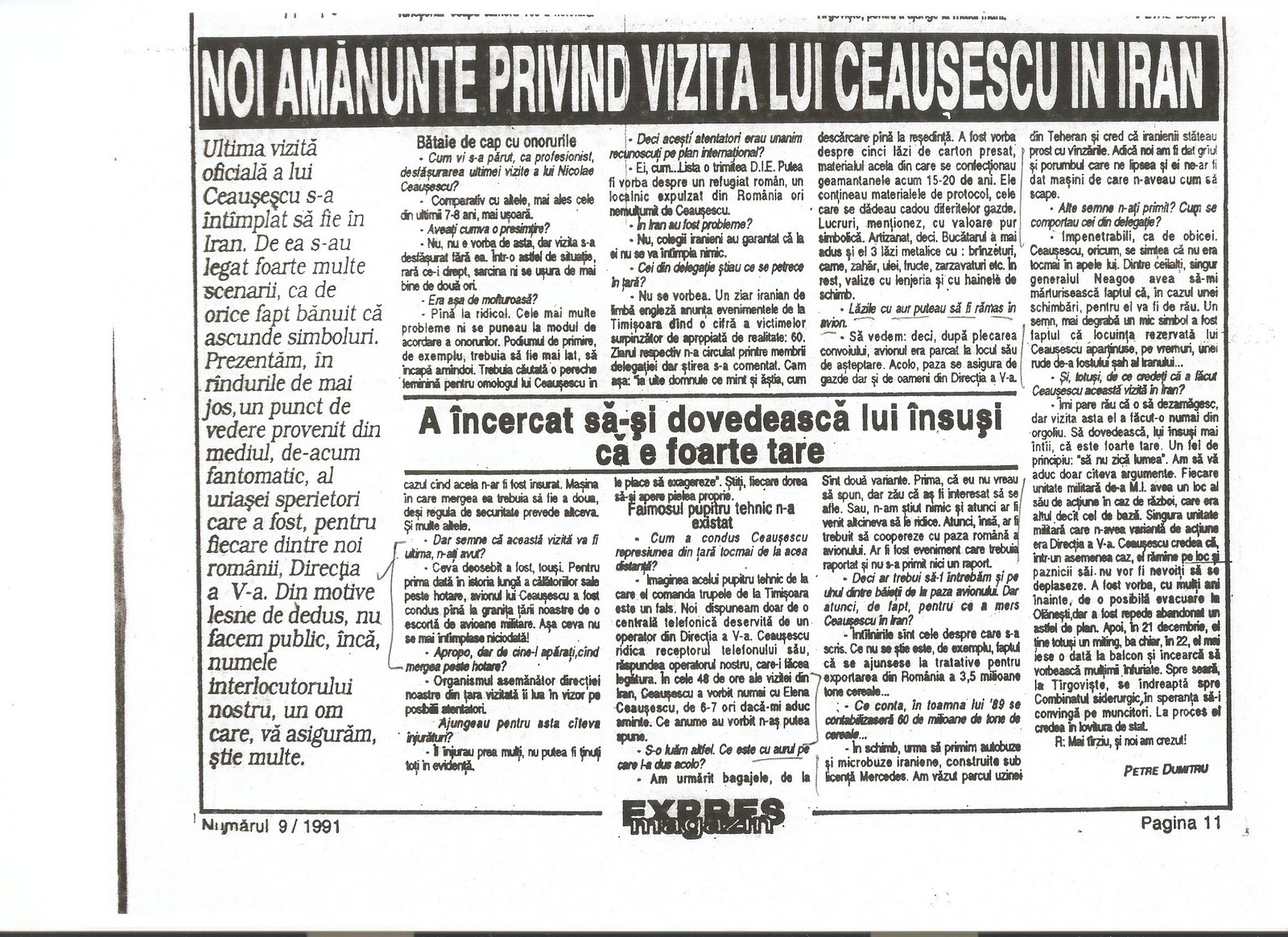
Significance:  On Monday 18 December 1989, the morning after the bloodbath in Timisoara, Nicolae Ceausescu left on a state visit to Iran.  On the one hand, some observers have jumped to the conclusion that this was a spontaneous, last-ditch effort by the dictator to seek the moral support of a friendly regime for the crackdown and perhaps to ask for military reinforcements or materiel.  As it turns out, Nicolae Ceausescu did not go to Iran as the result of a snap decision.  Instead, high-level Securitate and regime personnel had gone ahead to prepare for Ceausescu’s arrival, as early as 9 December 1989 (a fact we have known since March 1990, see article from Expres below)–therefore, a full week prior to the outbreak of the uprising against Ceausescu’s regime in Timisoara.  It is possible that Ceausescu brought gold for his hosts with him on this trip.

http://www.youtube.com/watch?v=pE14_P3Q9sA

http://www.ina.fr/video/CAG03010187

below a previously unposted article

image0-001

An excerpt from

A chapter from my Ph.D. Dissertation at Indiana University: Richard Andrew Hall, Rewriting the Revolution: Authoritarian Regime-State Relations and the Triumph of Securitate Revisionism in Post-Ceausescu Romania (defended 16 December 1996). This is the original chapter as it appeared then and thus has not been revised in any form.  (traducere in limba romana:  http://mariusmioc.wordpress.com/2009/01/05/rich-andrew-hall-rescrierea-istoriei-revolutiei-triumful-revizionismului-securist-in-romania-1-ceausescu-pleaca-in-iran/ si traducerea de catre marius mioc)

Ceausescu Departs for Iran

On Monday morning 18 December 1989, President Nicolae Ceausescu departed on a previously-scheduled state visit to Iran. He was the first head of state to pay an official visit to Tehran since the death of the Ayatollah Khomeini in June 1989.[1] By the time the presidential jet took off for Iran, Timisoara was under virtual military occupation by units of the Army, Securitate, and Militia. Ceausescu was apparently sufficiently satisfied by the news he was receiving on the status of the crackdown, that he judged it safe to leave the country. In his absence, the “Permanent Bureau of the Political Executive Committee (CPEx)” was left in charge. In effect, this meant that power resided with the First Deputy Prime Minister, his wife Elena–hardly a stranger to such power–and the Vice President of the country, Manea Manescu, who was married to Nicolae’s sister Maria.[2]

On the one hand, the fact that Ceausescu would leave the country in the midst of the most serious challenge ever to communist rule in Romania–fully aware of what had happened to his fellow communist leaders in the region earlier that fall–was a testament to how supremely overconfident and detached from reality he had become. On the other hand, Ceausescu’s absence from the country between 18 and 20 December for a period in excess of forty-eight hours provided regime elites with the perfect opportunity to oust him from power had they wanted to. Ceausescu would likely have been granted asylum by the Iranian regime. In theory it seems, had Ceausescu’s ouster been premeditated, this was the ideal moment to strike.

Most regime elites had a vivid memory of how Ceausescu’s absence from the country during the devastating earthquake of March 1977 had paralyzed the regime apparatus.[3] Moreover, having been threatened by Ceausescu at the emergency CPEx meeting of 17 December with removal from their posts and possible execution–and Ceausescu had been persuaded merely to defer, rather than to cancel this decision–Ceausescu’s commanders had a strong incentive to act fast. Instead, Ceausescu’s henchmen faithfully executed his orders and patiently awaited his return. This is a powerful argument against any suggestion that Ceausescu’s subordinates were scheming to replace him and had intentionally allowed the Timisoara unrest to elude their control.

Theories which maintain that Ceausescu was overthrown by a foreign-engineered coup d’etat also have trouble explaining why the plotters did not attempt to seize power during the period while Ceausescu was out of the country and then prevent him from returning to Romania. The Timisoara events had already assured that Ceausescu’s ouster would contain the popular dimension which was reputedly so central to this coup d’etat scenario. Furthermore, if the Timisoara protests had been instigated by foreign agents, why were these agents unable to “spread the revolution” to Bucharest (which remained surprisingly quiet) during these days?

In support of his contention that the December events were a Soviet-backed coup d’etat, Cornel Ivanciuc has cited the March 1994 comments of Igor Toporovski (director of the Moscow-based Institute for Russian and International Political Studies) which allege that the Soviet Politburo “…chose the moment when Ceausescu was in Teheran [to oust him] because otherwise the action would have been difficult to initiate.”[4] Yet the facts tell another story. Ceausescu was not driven from power at the most opportune moment–while he was in Iran–and the uprising in Timisoara did not spread outside of Timisoara until after Ceausescu’s return. These points cast doubt upon Toporovski’s claims.

[mai mult despre Ivanciuc…http://atomic-temporary-3899751.wpcomstaging.com/2010/12/17/timisoara-si-mostenitorii-revizionismul-securist/]

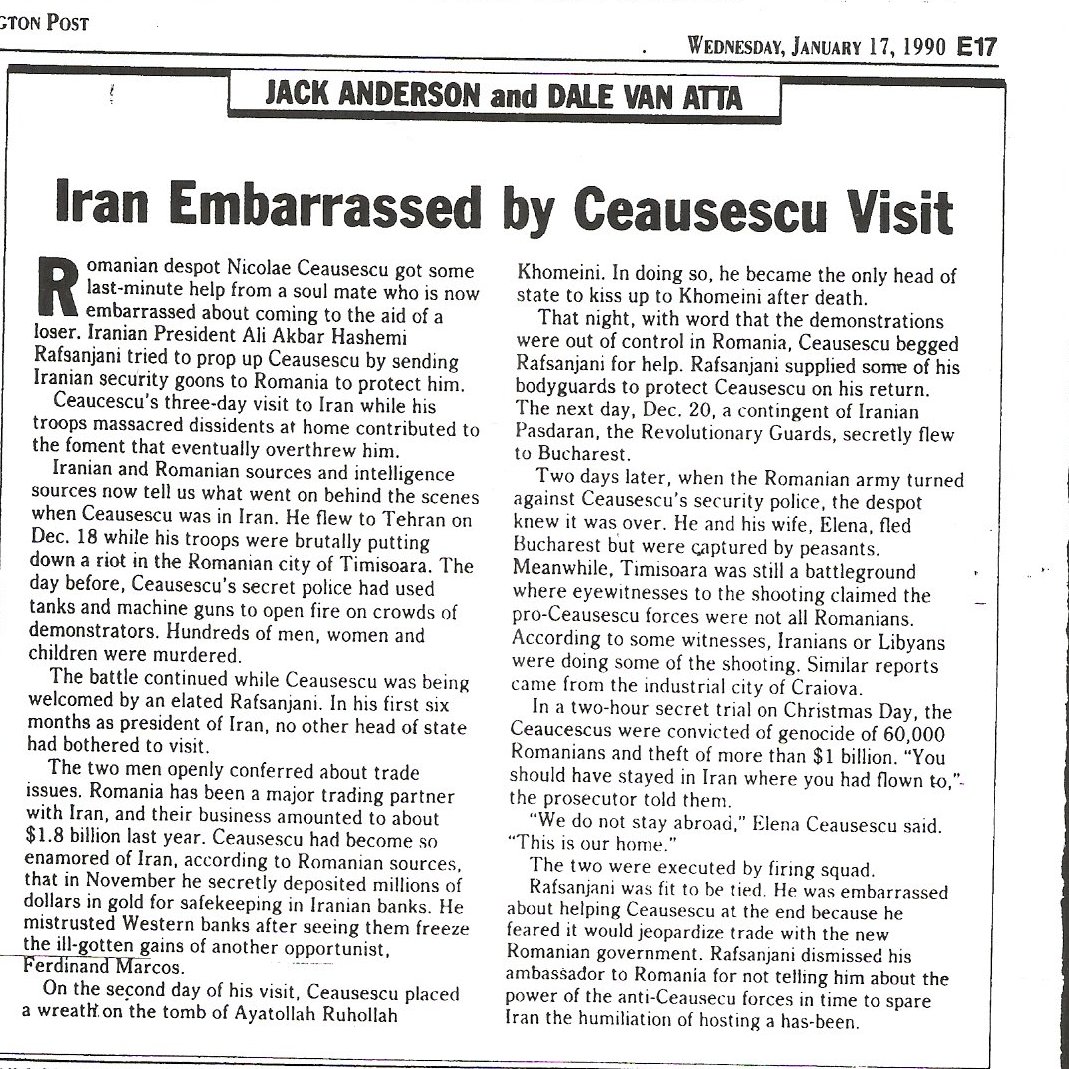
[1].. Jack Anderson and Dale Van Atta, “Iran Embarrassed by Ceausescu Visit,” The Washington Post, 17 January 1990, E17.

[2].. Martyn Rady, Romania in Turmoil: A Contemporary History (New York: IB Tauris & Co Ltd., 1992), 94. For Manescu’s link to the Ceausescu family, see ibid., 52-53.

[3].. Indeed, the abortive military coup d’etat attempt planned for October 1984 while the Ceausescus were on a state visit to West Germany had been inspired by memories of the March 1977 experience. See Silviu Brucan, The Wasted Generation: Memories of the Romanian Journey from Capitalism to Socialism and Back (Boulder, CO: Westview Press, 1993), 131-134.

[4].. Cornel Ivanciuc, “Raporturile dintre Frontul Salvarii Nationale si KGB,” 22, no. 21 (24-30 May 1995), 11.

in relation to Ceausescu’s trip to Iran, from Orwellian…Positively Orwellian (2006) http://atomic-temporary-3899751.wpcomstaging.com/2010/10/03/%E2%80%9Corwellian%E2%80%A6positively-orwellian%E2%80%9D-prosecutor-voinea%E2%80%99s-campaign-to-sanitize-the-romanian-revolution-of-december-1989-part-seven-foreign-involvement/

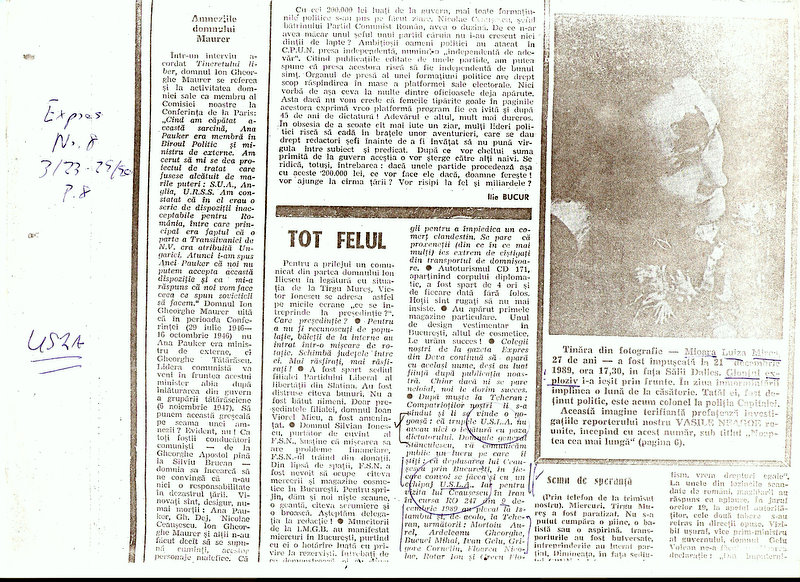
[85] …In no.8 (23-30 March 1990) Expres p. 8, Cornel Nistorescu wrote in “Tot Felul,”

“Our compatriots tried and are trying to sell a lie:  that the USLA had no role in guarding the dictator.  Mr. General Stanculescu, we communicate publicly to you something you know:  that every time Ceausescu went out in Bucharest, in each convoy there was an USLA team.  And for Ceausescu’s visit to Iran on flight RO 247 of 9 December to Istanbul and on to Teheran were the following:  Mortoriu Aurel, Ardeleanu Gheorghe, Bucuci Mihai, Ivan Gelu, Grigore Corneliu, Floarea Nicolae, Rotar Ion and Grecu Florin.  These weren’t diplomats and they weren’t going for a snack.”

Revista “Expres,” nr. 8 23-29 martie 1990, p. 8.

for further details on UM 0666 Directia V-a of the Securitate and some of the personalities listed above and below (Mihai Bucuci et. al.) see

http://www.procesulcomunismului.com/marturii/fonduri/rev89/simionica/manuscris/

Atentie, in special, la USLA, Stetikin/Stecikin, si “seviciu 150 Directia V-a a Securitatii”…

http://www.procesulcomunismului.com/marturii/fonduri/rev89/simionica/manuscris/docs/cap2.htm

http://www.procesulcomunismului.com/marturii/fonduri/rev89/simionica/manuscris/docs/cap3_1.htm

http://www.procesulcomunismului.com/marturii/fonduri/rev89/simionica/manuscris/docs/cap3_4.htm

http://www.jurnalul.ro/campaniile-jurnalul/jurnalul-national/ultima-excursie-in-iran-a-lui-nicolae-ceausescu-527641.html (Vasile Surcel)

PLECAŢI CU MULT ÎNAINTE
Contrar majorităţii “excursiilor” externe ale lui Ceauşescu, cea din Iran a fost foarte scurtă: a început la 18 decembrie 1989 şi s-a încheiat la 20. “Antemergătorii” au pornit însă la drum pe rând, cu mult înainte. Securiştii şi angajaţii MAE au plecat cu avionul, în primul “val”, la 9 decembrie, iar specialiştii în comerţ exterior la 12. Au făcut escală la Istanbul, de unde au ajuns la Teheran, tot pe calea aerului. Doar traseul ziaristului de la Agerpres a fost mai complicat. Plecat la 13 decembrie, el a trecut mai întâi pe la Moscova, unde a fost găzduit peste noapte la Ambasada României. La Teheran a ajuns abia a doua zi, la 14. În declaraţia sa, Ivanici nu a pomenit despre ciudatul ocol făcut pe la Moscova, într-o perioadă extrem de delicată pentru regimul comunist. Este drept că nici anchetatorii nu s-au arătat prea curioşi în privinţa acelui episod, despre care nu l-au întrebat absolut nimic.

VIAŢA DE SECURIST
Mihai Bucuci, Ioan Rotar şi Nicolae Florea, trei dintre “antemergătorii” delegaţiei oficiale, erau ofiţeri superiori de Securitate. Incluse în dosarul “T-Iran”, declaraţiile lor sunt interesante chiar şi acum, după atâţia ani de la prăbuşirea regimului comunist. Din ele aflăm, în premieră, cu ce se ocupau securiştii care pregăteau detaliile “tehnice” ale vizitelor externe la nivel înalt. Mihai Bucuci era colonel la UM 0666, iar de la el aflăm: “În toate cazurile am făcut parte din grupele pregătitoare care plecau în avans faţă de delegaţiile oficiale. Aceste grupe erau conduse de cadre cu funcţii importante: miniştri adjuncţi, secretari de stat sau şefi de unităţi. Activitatea grupei se baza pe un mandat scris, compus din 8-10 puncte. Concret, erau avute în vedere stabilirea şi organizarea măsurilor de pază la aeroport, la sosire şi la plecare, traseele de deplasare, reşedinţa şi obiectivele din program, dar şi asigurarea securităţii membrilor delegaţiei când se depuneau coroane de flori ori la vizitele în fabrici, uzine şi muzee”. Bucuci a plecat la 9 decembrie 1989 şi a ajuns la Teheran la 11, după o escală de o zi la Istanbul. Timp de o săptămână a pus la punct, cu organele de specialitate iraniene, paza delegaţiei oficiale. Pentru a evita orice manifestări ostile la adresa lui Ceauşescu, securiştii români au predat organelor locale de poliţie şi de siguranţă liste cu persoanele “periculoase”, de origine română sau străină, aflate în Iran ori în ţările vecine, liste întocmite “de unităţile centrale de Securitate”. Încercând poate să convingă că nu era un apropiat al Ceauşeştilor, Bucuci s-a plâns procurorilor: “Deşi am lucrat mult timp în UM 0666, care asigura paza fostului dictator, nu am fost agreat în reşedinţe, în apartamente sau birouri. Sarcinile «de intimitate» erau rezervate cadrelor din Serviciul 1″. În acelaşi timp, Bucuci a încercat să-i convingă pe procurori că nici nu prea era mare lucru să fii în slujba directă a lui Ceauşescu: “Serviciul 1 de la UM 0666 Bucureşti, care a asigurat securitatea lui N.C. şi a soţiei sale, era compus din 20 de ofiţeri cu vârste între 25 şi 55 de ani, care lucrau în ture, 24 cu 24. Salariile nu erau mult mai mari decât ale celorlalţi militari”. El a ţinut să menţioneze special că acei ofiţeri “trebuiau să aibă o condiţie fizică foarte bună, dar şi să joace bine volei, sport foarte agreat de Ceauşescu”. Aproape că îţi vine să le plângi de milă.

COMUNICAŢII “LA LIBER”
Securiştii care pregăteau vizitele oficiale răspundeau şi de legăturile telefonice cu ţara. În Iran această sarcină i-a revenit maiorului DSS Nicolae Florea, de la UM0695, specialist în telecomunicaţii. A ajuns la Teheran la 11 decembrie şi în câteva zile a pus pe roate întregul sistem de comunicaţii cu ţara. Era vorba despre telefon şi telex, precum releul tele-foto pentru Agerpres. Principalul “beneficiar” al muncii lui a fost chiar Ceauşescu. Cei care au stat în preajma preşedintelui afirmă că acesta a vorbit foarte mult cu Elena, pe care, în anumite perioade, a sunat-o şi din jumătate în jumătate de oră. În mod ciudat, convorbirile lui telefonice, la fel ca şi restul legăturilor cu ţara, nu au fost secretizate, fapt menţionat clar de fostul maior DSS Florea. Anchetatorii din 1990 nu au fost însă curioşi să afle de ce şi cine a avut interesul să nu codifice convorbirile lui Ceauşescu, făcând astfel accesibile toate ordinele date de el de la distanţă în acele zile tulburi.

DE CINE SE TEMEA CEAUŞESCU?
Această ciudăţenie tehnică nu a fost singura. În decembrie 1989, Ion Tâlpeanu era locotenent colonel în Serviciul l în Direcţia a V-a a Securităţii şi aghiotant prezidenţial. El relatează că delegaţia propriu-zisă, cea condusă de Ceauşescu, a plecat în Iran la 18 decembrie la ora 9:05 şi a ajuns la Teheran la ora 12:00. Ciudăţenia de care vorbeam a constat într-o adevărată premieră: în spaţiul aerian naţional şi al apelor teritoriale din Marea Neagră, avionul prezidenţial a fost escortat de patru avioane de vânătoare MIG 21, aparţinând flotei aeriene române. Aceleaşi măsuri de siguranţă neobişnuite s-au luat şi la 20 decembrie ’89, când, în jurul orei 15:00, aeronava prezidenţială a revenit acasă. De ce s-o fi considerat Ceauşescu vulnerabil atât timp cât a zburat “pe cerul patriei”? Nu vom şti niciodată.

TOVARĂŞI DE DRUM
Planificată cu mult înainte, această ultimă vizită oficială s-a înscris în tiparul celorlalte. Încă sigur pe el şi pe poziţia lui politică, probabil că lui Ceauşescu nici nu i-a trecut prin cap că, la 18 decembrie 1989, când pleca la Teheran, intrase în ultima lui săptămână de viaţă. Şi că peste doar câteva zile regimul comunist din România, pe care îl condusese 24 de ani, avea să se prăbuşească. În dimineaţa plecării, Ceauşescu a vorbit la reşedinţa din Primăverii cu generalii Iulian Vlad, Vasile Milea şi cu ministrul Tudor Postelnicu, veniţi la el rând pe rând. La întâlnirile cu ei, părea calm şi foarte liniştit. La ducere, Ceauşescu a discutat, în avion, în compartimentul de lucru, cu membrii delegaţiei: Ion Stoian, fost ministru de Externe, Constantin Mitea, consilier prezidenţial pe probleme de presă, secretarul personal Mihai Hârjeu, precum şi generalii Neagoe şi Iosif Rus.

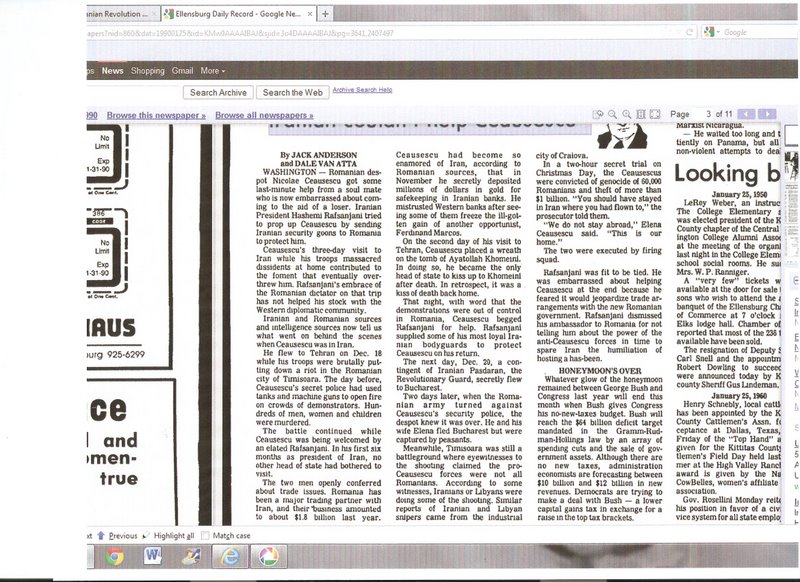
Jack Anderson and Dale Van Atta reported in mid-January 1990–in article that referenced “Iranian and Romanian sources and intelligence sources,”–that “Ceausescu had become so enamored of Iran, according to Romanian sources, that in November he secretly deposited millions of dollars in gold for safekeeping in Iranian banks.”

Jack Anderson and Dale Van Atta, “Iran Embarrassed by Ceausescu Visit,” The Washington Post, 17 January 1990, E17. (syndicated copy above) WASHINGTON — Romanian despot Nicolae Ceausescu got some help last-minute help from a soul mate who is now embarrassed about coming to the aid of a loser.  Iranian President Hashemi Rafsanjani tried to prop up Ceausescu by sending Iranian security goons to Romania to protect him.  Ceausescu’s three-day visit to Iran while his troops massacred dissidents at home contributed to the foment that eventually overthrew him.  Rafsanjani’s embrace of the Romanian dictator on that trip has not helped his stock with the Western diplomatic community. Iranian and Romanian sources and intelligence sources now tell us what went on behind the scenes when Ceausescu was in Iran. He flew to Tehran on Dec 18 while his troops were brutally putting down a riot in the Romanian city of Timisoara. The day before, Ceausescu’s secret police had used tanks and machine guns to open fire on crowds of demonstrators. Hundreds of men women and children were murdered. The battle continued while Ceausescu was being welcomed by an elated Rafsanjani. In his first six months as president of Iran, no other head of state had bothered to visit. The two men openly conferred about trade issues. Romania has been a major trading partner with Iran, and their business amounted to about $1.8 billion last year.  Ceausescu had become so enamored of Iran, according to Romanian sources, that in November he secretly deposited millions of dollars in gold for safekeeping in Iranian banks. He mistrusted Western banks after seeing some of them freeze the ill-gotten gain of another opportunist Ferdinand Marcos. On the second day of his visit to Tehran, Ceausescu placed a wreath on the tomb of Ayatollah Khomeini. In doing so, he became the only head of state to kiss up to Khomeini after death.  In retrospect, it was a kiss of death back home.  That night, with word that the demonstrations were out of control in Romania, Ceausescu begged Rajsanjani for help.  Rafsanjani supplied some of his most loyal Iranian bodyguards to protect Ceausescu on his return.  The next day, Dec 20, a contingent of Iranian Pasdaran, the Revolutionary Guard, secretly flew to Bucharest. Two days later, when the Romanian army turned against Ceausescu’s security police. the despot knew it was over.  He and his wife Elena fled Bucharest but were captured by peasants. Meanwhile, Timisoara was still a battleground where eyewitnesses to the shooting claimed the forces were not all Romanians.  According to some witnesses, Iranians or Libyans were doing some of the shooting. Similar reports of Iranian and Libyan snipers came from the industrial city of Craiova. In a two-hour secret trial on Christmas Day, the Ceausescus were convicted of genocide of 60,000 Romanians and theft of more than billion. “You should have stayed in Iran where you had flown to, the prosecutor told them. “We do not stay abroad,” Elena Ceausescu said. “This is our home.” The two were executed by firing squad. Rafsanjani was fit to be tied. He was embarrassed about helping Ceausescu at the end because he feared it would jeopardize trade arrangements with the new Romanian government. Rafsanjani dismissed his ambassador to Romania for not telling him about the power of the anti-Ceausescu forces in time to spare Iran the humiliation of hosting a has-been.

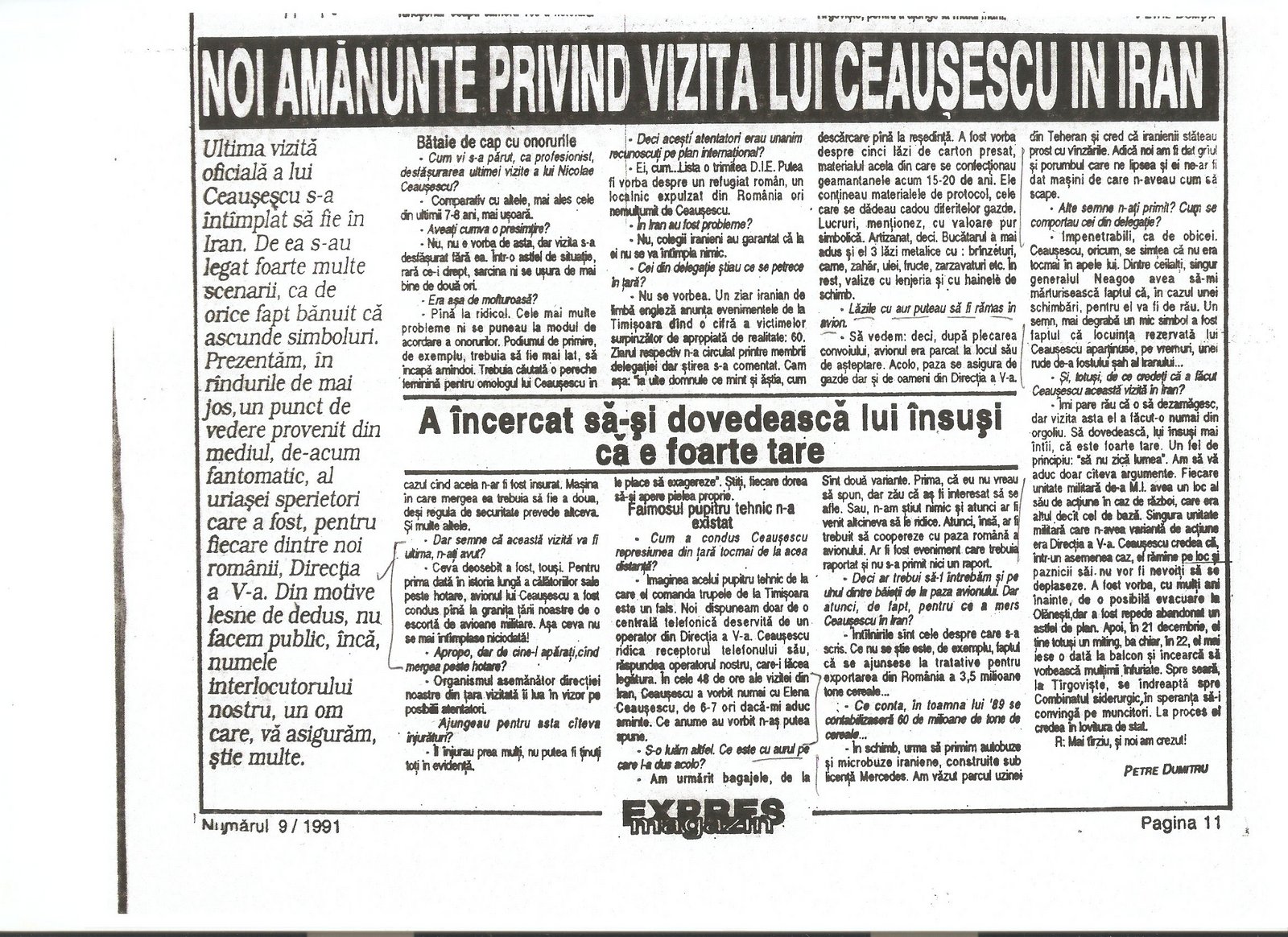
Petre Dumitru (cu un ofiter din Directia V-a), “Noi amanunte privind vizita lui Ceausescu in Iran,” Expres Magazin, nr. 9 (1991), p. 11.

image0-001

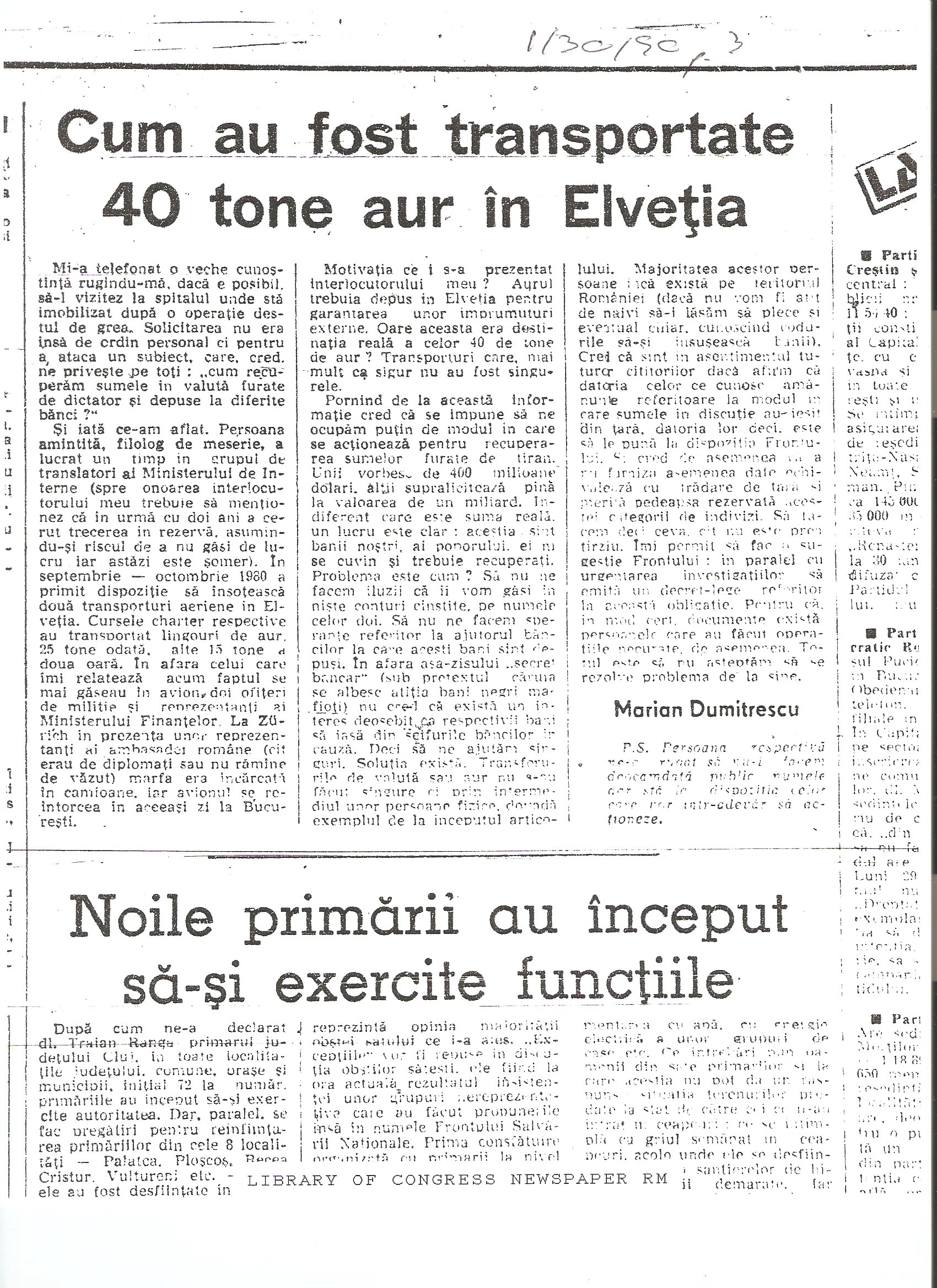
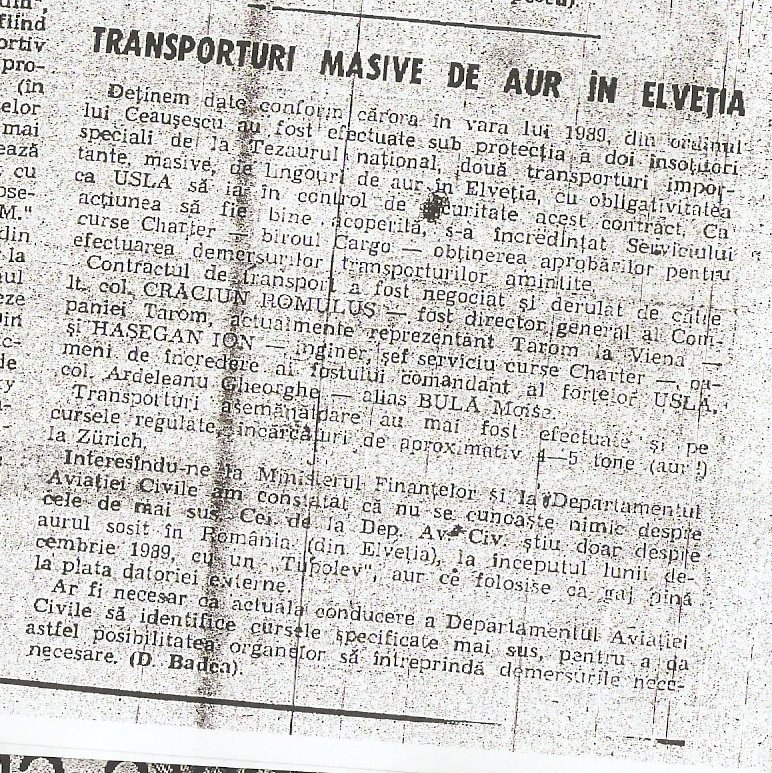
Articles suggesting that Ceausescu had been sending gold to Switzerland for safekeeping, prior to the outbreak of the December 1989 events.


image0

Marian Dumitrescu, “Cum au fost transportate 40 tone aur in Elvetia,” Romania Libera (?), 30 ianuarie 1990, p. 3.

Dan Badea reported later in the summer of 1991 about Ceausescu’s efforts in the summer of 1989 to have the USLA move some of his gold to Switzerland.

Dan Badea, “Transporturi Masive de Aur in Elvetia,” Expres nr. 23 (72) 11-17 June 1991, p. 16.


25 for 2014: 25 Things You Should Know about the Romanian Revolution on the 25th Anniversary of the Fall of Nicolae Ceausescu’s Communist Regime: #1 The Securitate Deny Foreign Instigation of the Timisoara Uprising

25 for 2014: 25 Things You Should Know about the Romanian Revolution on the 25th Anniversary of the Fall of Nicolae Ceausescu’s Communist Regime: #2 Shattered Glass: Securitate Vandalism to Justify Timisoara Crackdown

25 for 2014: 25 Things You Should Know about the Romanian Revolution on the 25th Anniversary of the Fall of Nicolae Ceausescu’s Communist Regime: #3 “Anti-terrorism” and Regime Repression

25 for 2014: 25 Things You Should Know about the Romanian Revolution on the 25th Anniversary of the Fall of Nicolae Ceausescu’s Communist Regime: #4 Timisoara Demonstrators Injured and Killed by Dum-Dum Bullets

25 for 2014: 25 Things You Should Know about the Romanian Revolution on the 25th Anniversary of the Fall of Nicolae Ceausescu’s Communist Regime: #5 Timisoara (Podul Decebal) Evidence Suggests only the Securitate Had Dum-Dum Bullets

25 for 2014: 25 Things You Should Know about the Romanian Revolution on the 25th Anniversary of the Fall of Nicolae Ceausescu’s Communist Regime: #6 The Securitate Sends a Coded-Message to Its Undercovers in the Field (“Citeva sfaturi pentru cei aflati in aceste zile la mare,” Scinteia Tineretului, 18 December 1989)

Posted in decembrie 1989, raport final | Tagged: , , , , , , , , , , , , , | 2 Comments »

Braila in zilele revolutiei (III)

Posted by romanianrevolutionofdecember1989 on October 22, 2014

image0-001

from Libertatea (Braila), 24 octombrie 1991

Maiorul Ionel Taralunga:  Pe seara, dupa caderea intunericului s-a tras asupra comandamentului diviziei si unitatii noastre, care se afla in aceeasi curte, in special din blocurile in constructie.  Aceleasi pocnete seci, care s-au auzit si in alte zone.  Am adunat destule asemenea gloante pe care le-am predat procurorului militar.  Erau calibrul 5.6 mm, cilindrice dintr-un metal dur de culoare alba. De altfel gaurile facute de ele in cladirile noastre se mai pastreaza inca.  Sint mai mici decit cele produse de gloante de calibru 7,62 mm.  S-a tras si cu munitie 7,62 mm…

image0-003

Locotenent-colonel Dumitru Marvela:  Aceleasi care s-au strins si din comandamentul diviziei si din alte obiective militare.  Gloante calibru 5,6 mm….Cred ca scopul atacului n-a fost de a cuceri acest obiectiv ci de a provoca, a stinjeni aprovizionarea cu munitie a unitatilor miltare, a produce panica.  Altfel actionau cu forte mai serioase.  N-au fost decit mai multi, 4-5 persoane.  Nici ranitul sau mortul n-a fost identificat.

Locotenent colonel Tache Ene:  Si la Braila, ca si in alte orase din tara, acelasi sistem de operatiuni asupra unitatilor militare si obiective de importanta deosebita:  “Trage si dispari!”, binecunoscut principiu al actiunilor grupurilor de comando.  Atacurile s-au petrecut aproape in exclusivitate noaptea, intunericul fiind o masca ideala pentru aceste misiuni.  S-a folosit indeosebi armament usor, calibru mic (5,6 mm), dotat cu dispozitive de ochire in timp de noapte….Ce scopuri urmareau?  Crearea unei situatii confuze, paralizarea conducerii unitatilor militare, dispersarea fortelor de aparare in cit mai multe puncte si altele.    

http://atomic-temporary-3899751.wpcomstaging.com/2014/10/20/braila-in-zilele-revolutiei-ii/

http://atomic-temporary-3899751.wpcomstaging.com/2014/10/18/braila-in-zilele-revolutiei-i/

Posted in decembrie 1989, raport final | Tagged: , , , , , , , , | 9 Comments »