Posted by romanianrevolutionofdecember1989 on December 17, 2014
(Purely personal views as always, based on over two decades of research and publications inside and outside Romania)
2014 marks the 25th anniversary of the collapse of communism in central and eastern Europe–Poland, Hungary, East Germany, Czechoslovakia, Bulgaria, and Romania. This series looks at 25 things I have learned about the events of the Romanian Revolution of December 1989. The numbering is not designed to assign importance, but rather–to the extent possible–to progress chronologically through those events.
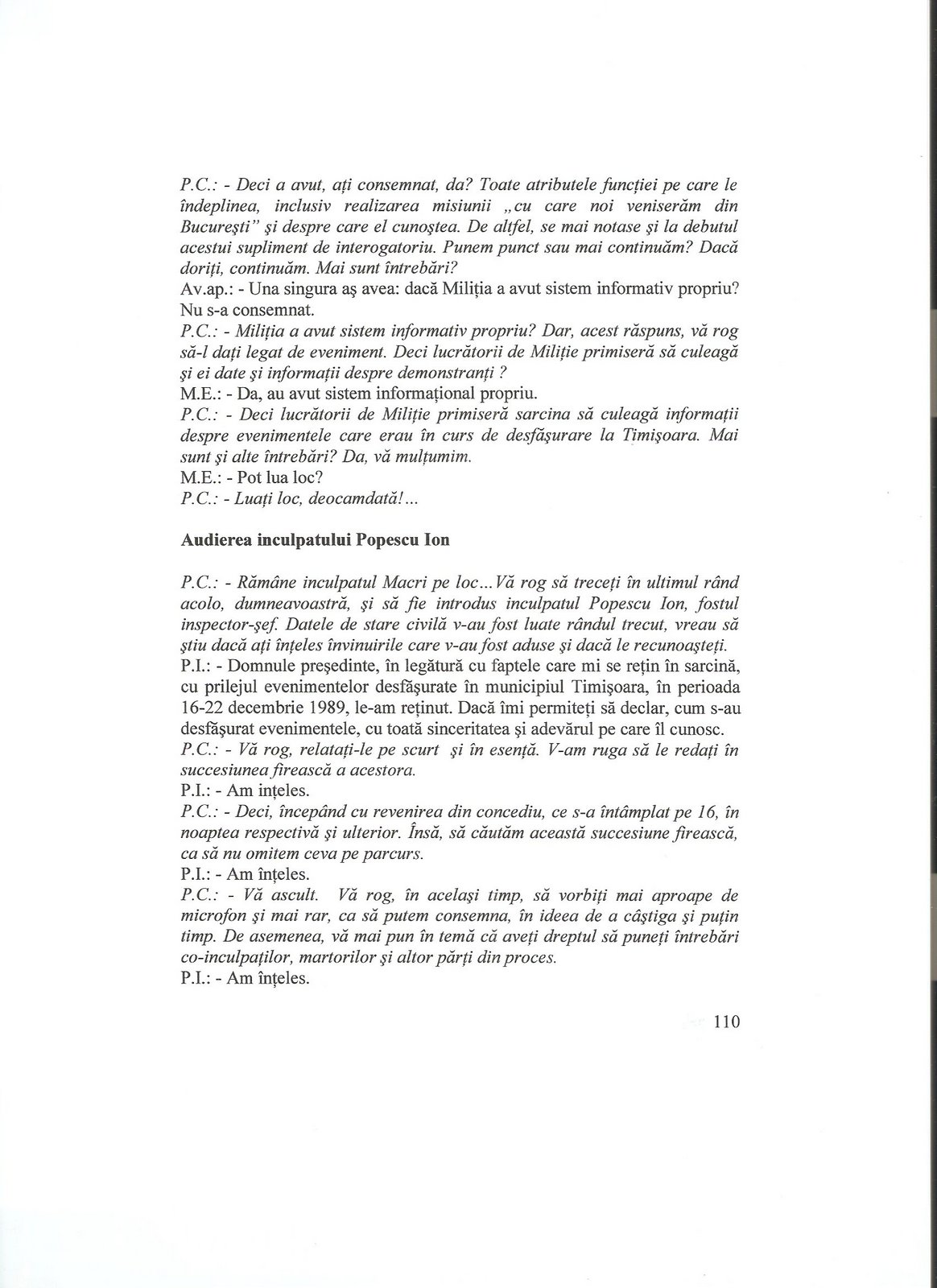
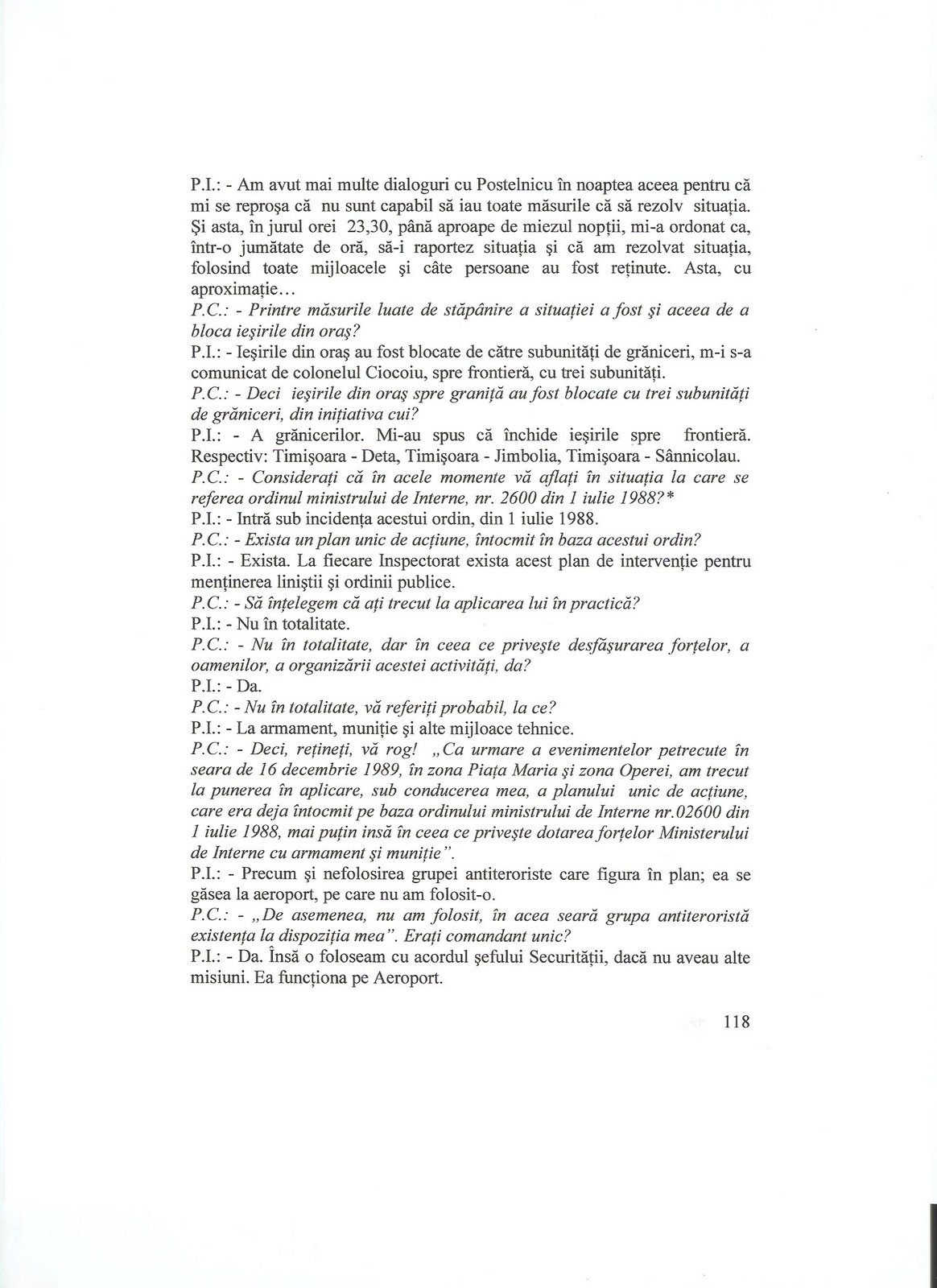
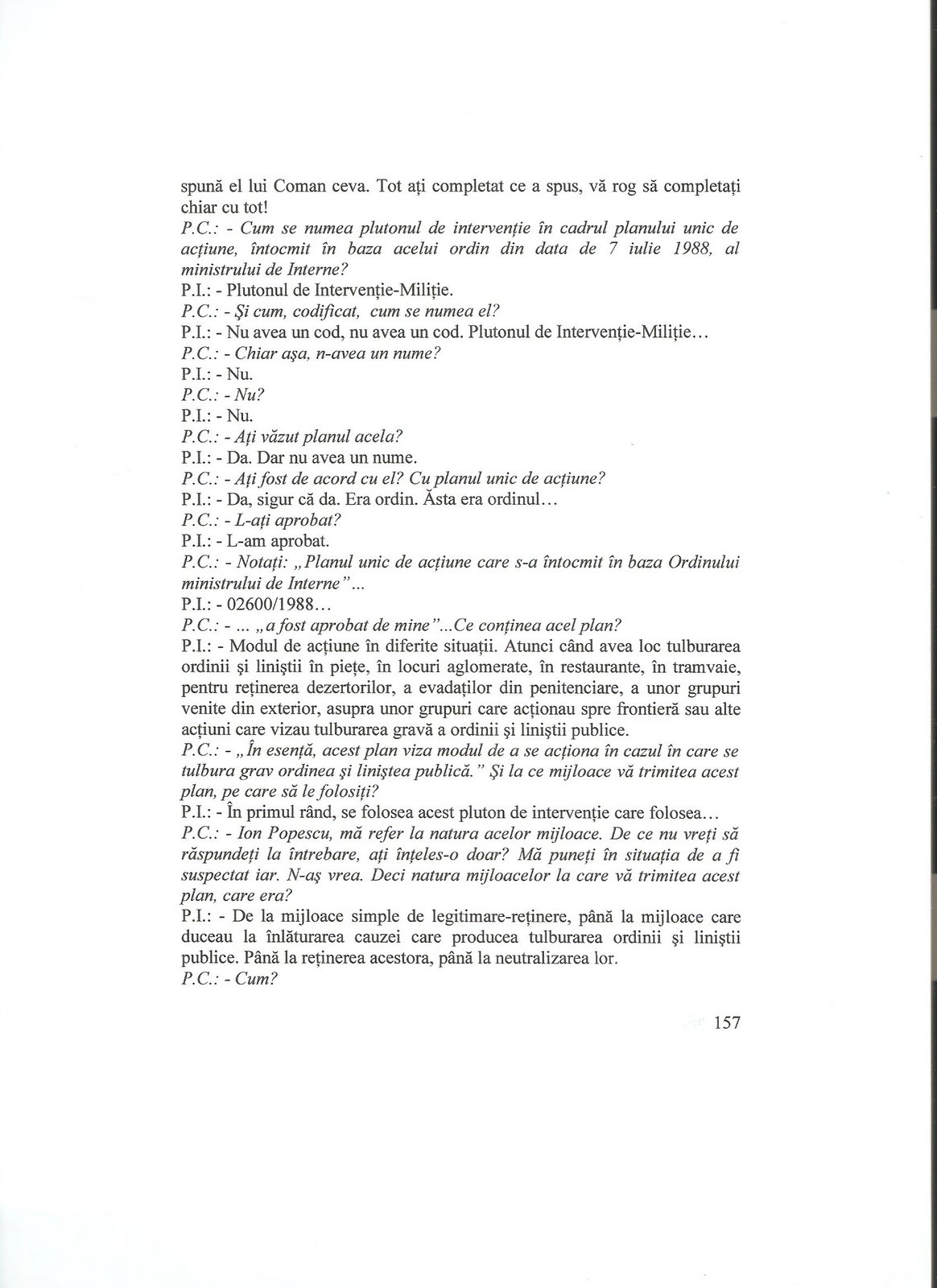
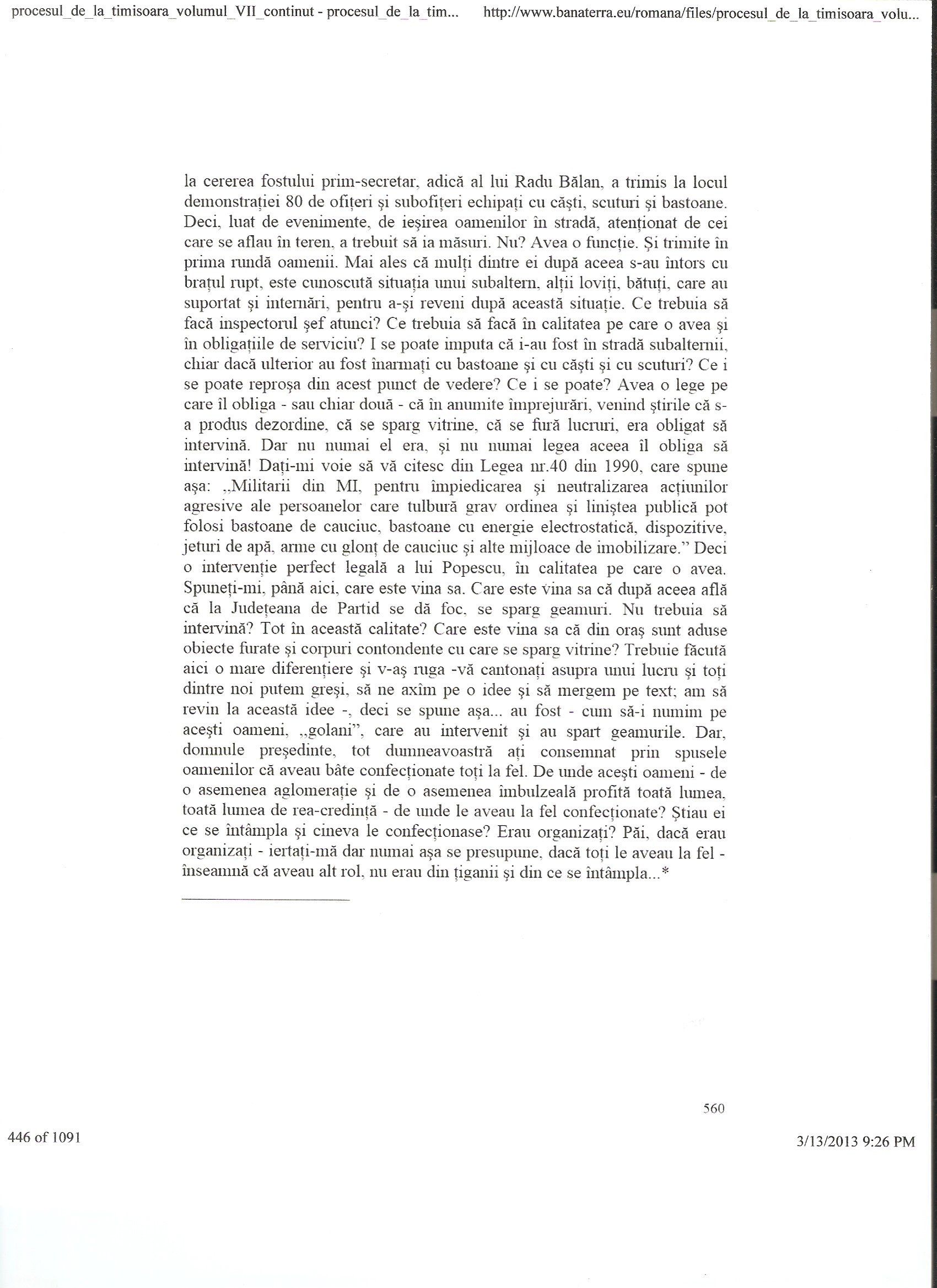
In Miodrag Milin’s compendium of the transcripts of the Timisoara trials http://www.banaterra.eu/romana/files/procesul_de_la_timisoara_volumul_I.pdf , on 5 March 1990 defendant Ion Popescu (former chief inspector of the Militia) acknowledged the implementation of Order 2600 beginning on 16 December 1989 as follows.
Acţiunile forţelor de represiune din Ministerul de Interne | 16-20 Decembrie 1989 |
16 Decembrie 1989
Activitatea pastorului László Tőkés era atent supravegheată de o echipă a Securităţii Timiş, condusă de maiorul Radu Tinu. Lucrătorii Securităţii urmăreau cu atenţie evenimentele care se derulau în faţa Bisericii Reformate. După ce tramvaiele din Piaţa Maria au fost oprite de către manifestanţi, protestul celor aflaţi acolo s-a transformat radical. Dacă iniţial timişorenii s-au adunat la Biserica Reformată pentru a se împotrivi evacuării pastorului László Tőkés, din acest moment protestul s-a radicalizat, cerându-se, pentru prima dată, schimbarea lui Ceauşescu, exprimată prin scandarea primei lozinci: „Jos Ceauşescu!”. În acel moment a avut loc şi prima altercaţie între manifestanţi şi efectivele Ministerului de Interne şi s-au făcut primele arestări.
Colonelul Popescu Ion, inspectorul-şef al Inspectoratului de Interne Timiş, în baza Ordinului 02600 din 1 iulie 1988, pune în aplicare planul unic de acţiune, desfăşurând în Timişoara trupele de intervenţie avute la dispoziţie. Astfel, au intrat în dispozitiv: 2 plutoane de intervenţie dotate cu căşti, scuturi şi bastoane, trei subunităţi de la Brigada de Securitate şi două subunităţi de la Trupele de Grăniceri. La Consiliul Judeţean au intervenit în forţă, bătând şi arestând o mare parte din manifestanţii aflaţi în zonă.
Posted by romanianrevolutionofdecember1989 on December 16, 2014
(Purely personal views as always, based on over two decades of research and publications inside and outside Romania)
2014 marks the 25th anniversary of the collapse of communism in central and eastern Europe–Poland, Hungary, East Germany, Czechoslovakia, Bulgaria, and Romania. This series looks at 25 things I have learned about the events of the Romanian Revolution of December 1989. The numbering is not designed to assign importance, but rather–to the extent possible–to progress chronologically through those events.
Significance: I have essentially been the only researcher who has consistently advocated this understanding. Most others–including Peter Siani-Davies–tended to dismiss it. Now we have documentary evidence that it took place.
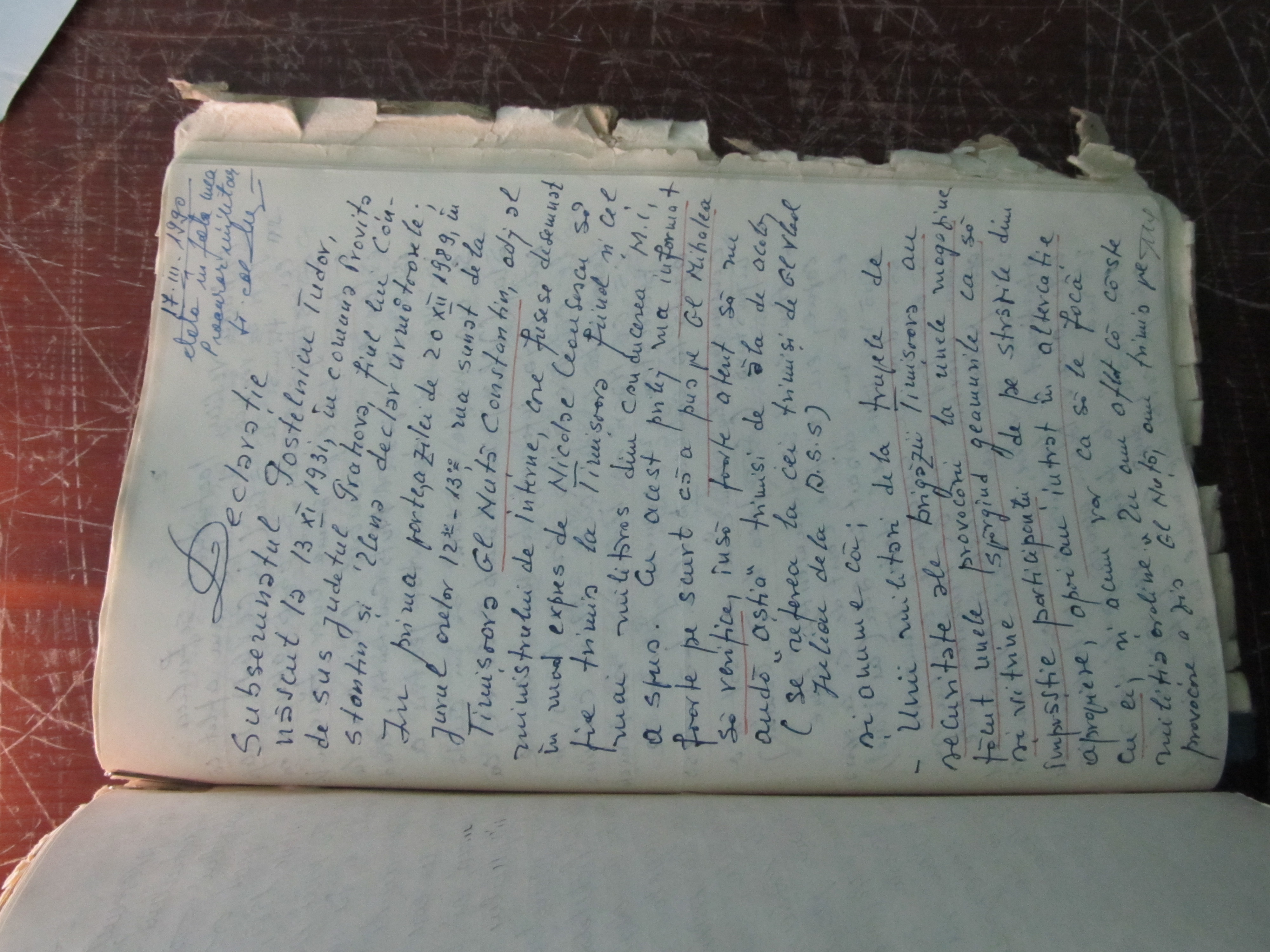
An excellent documentary from 1991 posted to the internet by Florin Iepan only recently and seen rarely if at all since its showing in 1991. There is much interesting information in this film. (The film seems to start at min. 19:00 and has to be rewound to its beginning.) Here, I will focus on the claim beginning at approximately min. 17:40 that the destruction of Timisoara shops and storefronts was organized and a pretext to justify–including legally–the repression by the Ceausescu regime of Timisoara demonstrators. Interior Minister Tudor Postelnicu’s declaration of 17 March 1990 confirms this claim and the observations of eyewitnesses.
Timisoara Decembrie 1989 / Timisoara December 1989,
regia/directed by – Ovidiu Bose Pastina
imaginea/camera – Doru Segal
Sahiafilm 1991
Tudor Postelnicu (Ministerul de Interne in decembrie 1989): “Unii militari de la trupele de securitate ale brigazii Timisoara au facut unele provocari la unele magazine si vitrine spargind geamurile sa imprastie participantii de pe straziile din apropriere, apoi au intrat in altercatie cu ei, si acum (?) vor sa le faca militia ordine. ‘Nu am aflat ca costa provocare a zis Gl. Nuta, am trimis pe …” (17.III.1990)
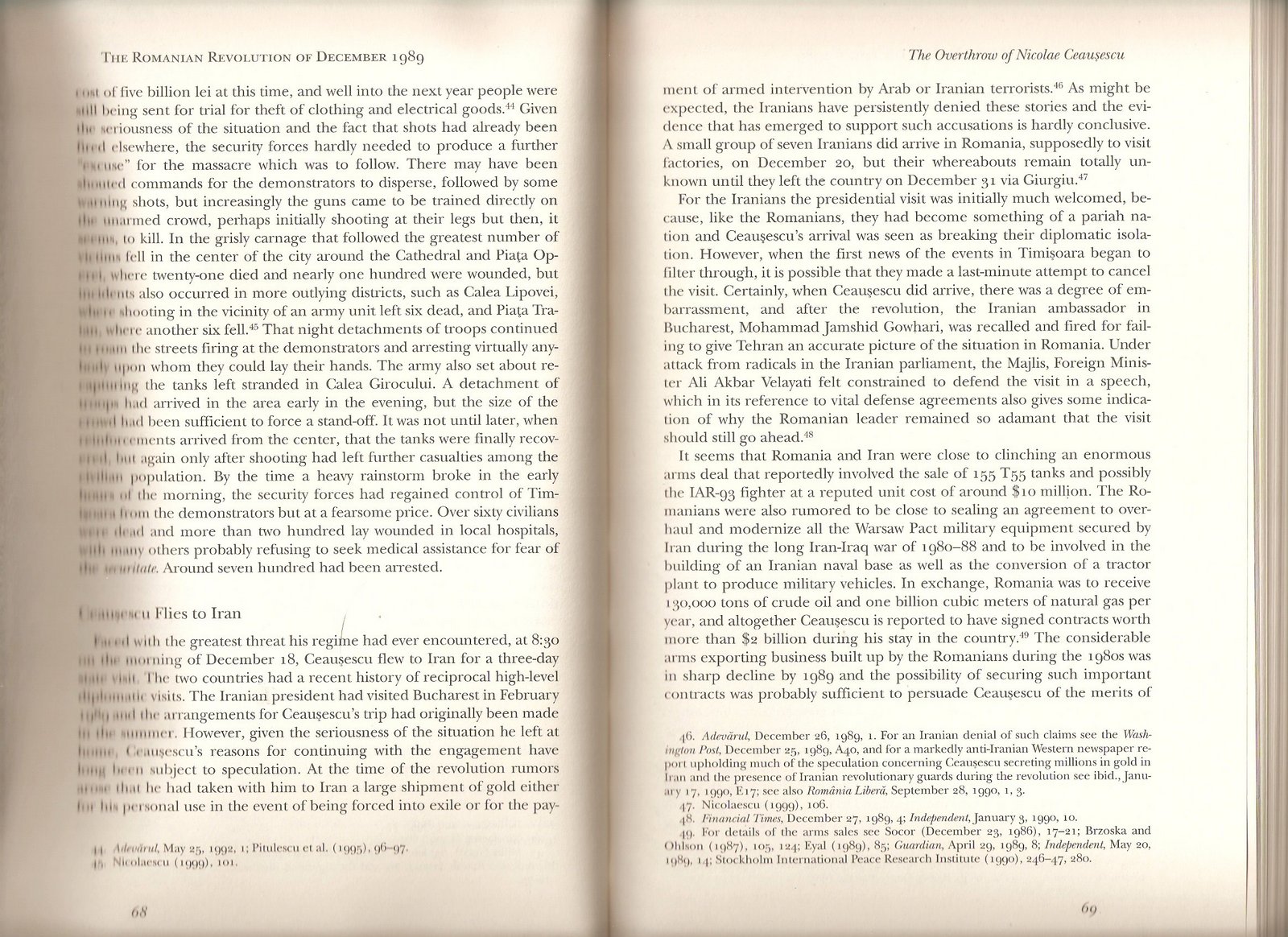
Before we move on here, it is worth noting how this destruction was covered in Peter Siani-Davies’ 2005 volume The Romanian Revolution of December 1989. As I have written on many occasions, Siani-Davies’ volume is wonderfully-written and is excellent, but the claim by Daniel Chirot that is a “near-definitive” account is far off the mark. One of the negative characteristics of Siani-Davies’ work is the use of “filler” rational choice, cui bono arguments where he concludes there is not enough information to make a valid judgment. The problem is the question is never one of “what was possible?” “what makes ‘sense’?” but rather what did happen?
Thus, for example in the case of the destruction of Timisoara Siani-Davies argues that there was already enough of a basis for the regime to crackdown, therefore why would they need to create a pretext for cracking down: “Given the seriousness of the situation and the fact that shots had already been fired elsewhere, the security forces hardly needed to produce a further ‘excuse’ for the massacre which was to follow.” (p. 68)
Back to exploring more of the evidence…
An excerpt from Chapter 5 of my Ph.D. Dissertation at Indiana University: Richard Andrew Hall, Rewriting the Revolution: Authoritarian Regime-State Relations and the Triumph of Securitate Revisionism in Post-Ceausescu Romania (defended 16 December 1996). This is the original chapter as it appeared then and thus has not been revised in any form.
Chapter Five. The Beginning of the End: Timisoara, 15-17 December 1989
…
The “Window Breakers”
The reportedly unusual scope of physical destruction which occurred in Timisoara, particularly on the afternoon and evening of 17 December 1989, has fueled revisionist arguments. Estimates of the damage during the Timisoara unrest are in the neighborhood of four to five billion lei (approximately forty to fifty million dollars at the time), a reasonably large sum given Romania’s standard of living at the time. A huge number of windows was broken and as many as 300 to 400 stores suffered some sort of damage, although relatively few were actually looted. On the evening of 17 December, stores, vehicles, and kiosks were burning in at least ten different areas of the city.[65]
Former Securitate officers clearly wish to link this destruction to the “foreign tourists” who were supposedly so ubiquitous in Timisoara during these days.[66] Perhaps somewhat surprisingly, former Securitate Director Iulian Vlad argued at his trial that
…the acts of vandalism, theft, destruction, arson… acts without precedent…could not have been the work [“opera”] of the faithful [apparently referring sarcastically to Tokes’ parishioners], nor the revolutionaries. They were produced by elements which wished to create a certain atmosphere of tension.[67]
Eyewitness accounts recorded soon after the events–therefore at a time before the various plots and scenarios had permeated the popular imagination–support the hypothesis that the vandalism was organized. Moldovan Fica remarks:
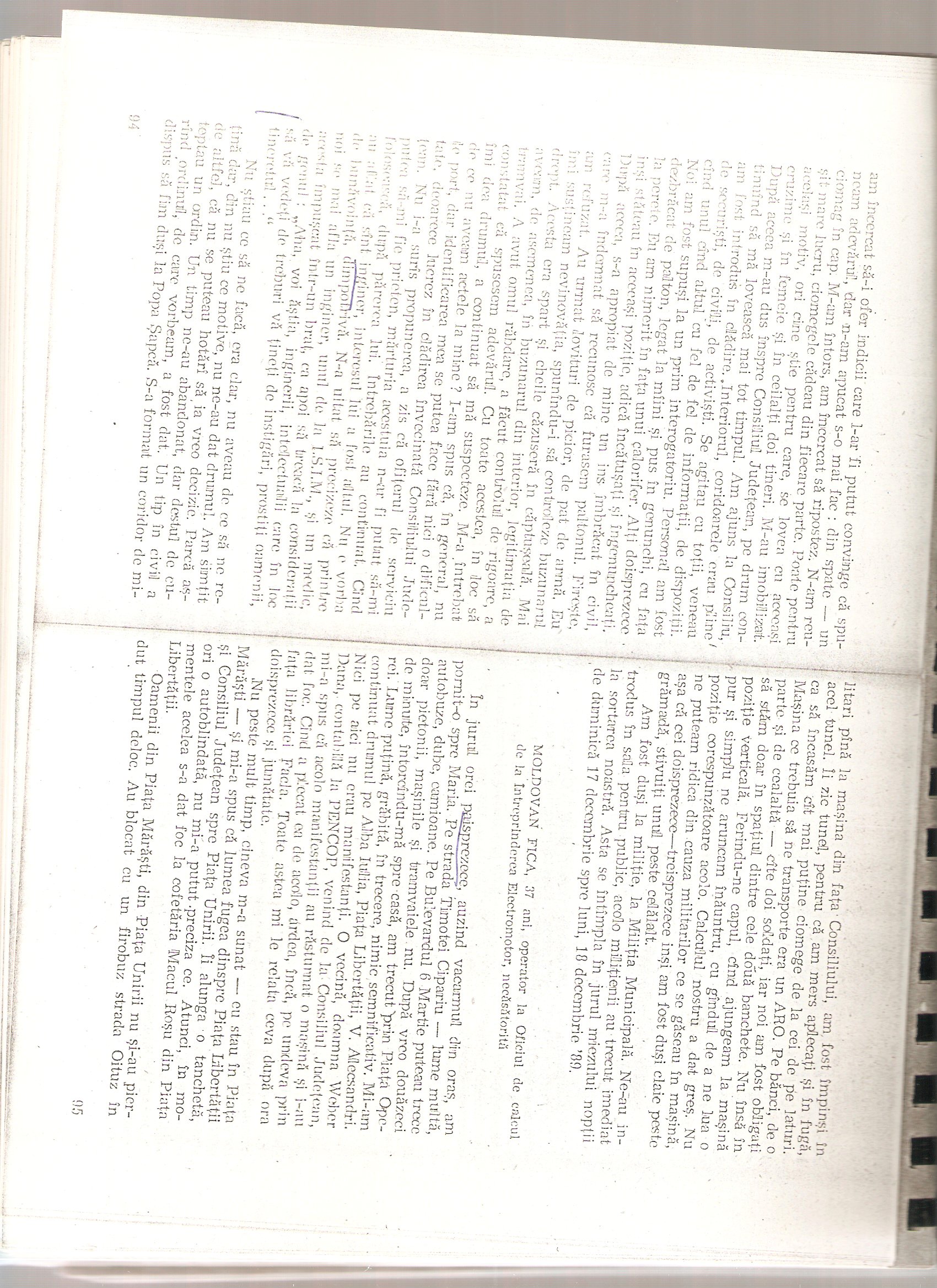
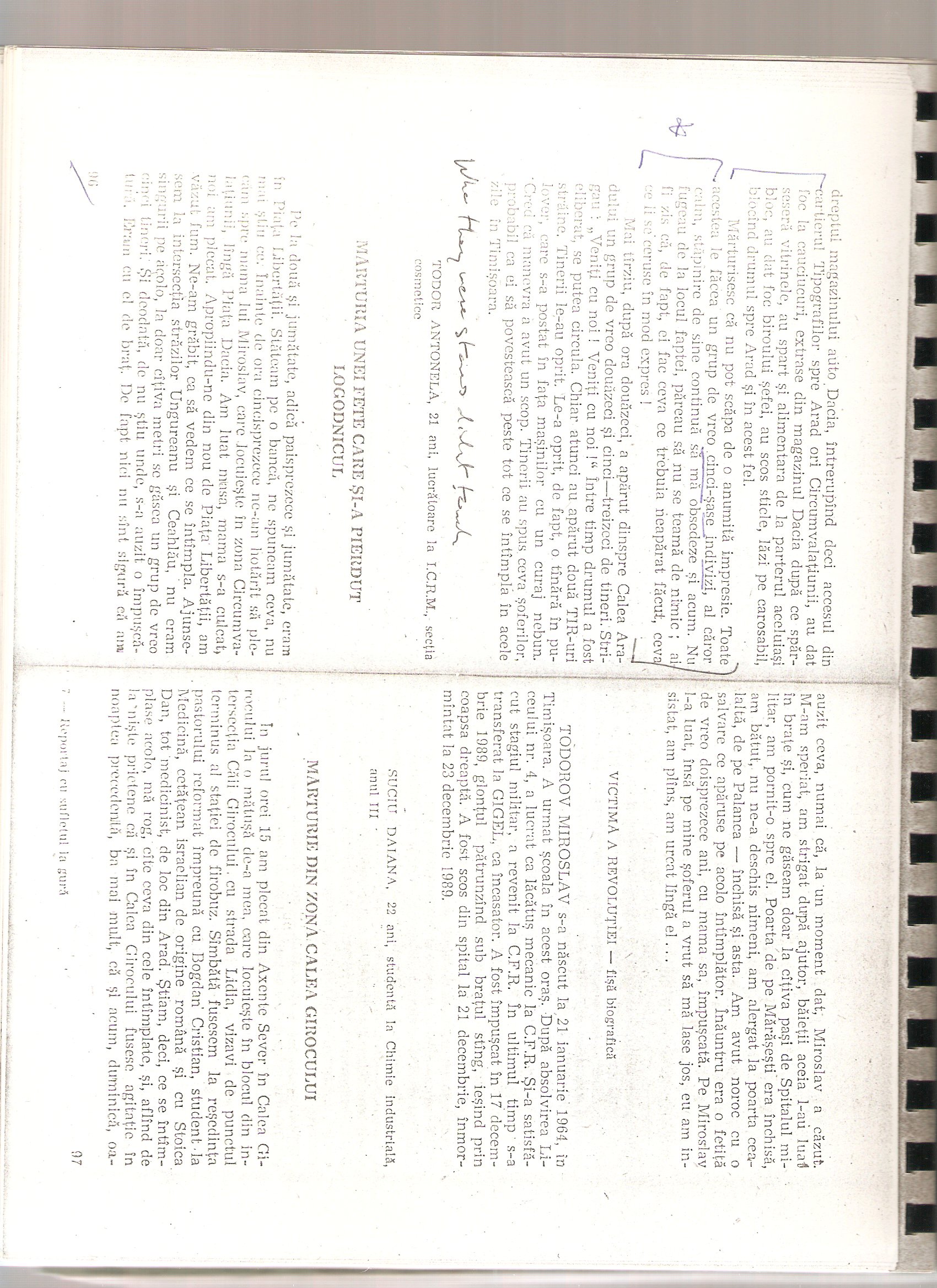
I admit that I cannot escape a certain conclusion. All of this [destruction] was done by a group of about five or six individuals, whose calm demeanor and self-control continues to stay with me to this day. They did not run from the scene, they appeared as if they did not fear anything; I would say that, in fact, they were doing what was required of them, something which had been ordered directly of them![75]
Describing destruction in a different part of the city, Andras Vasile observed that
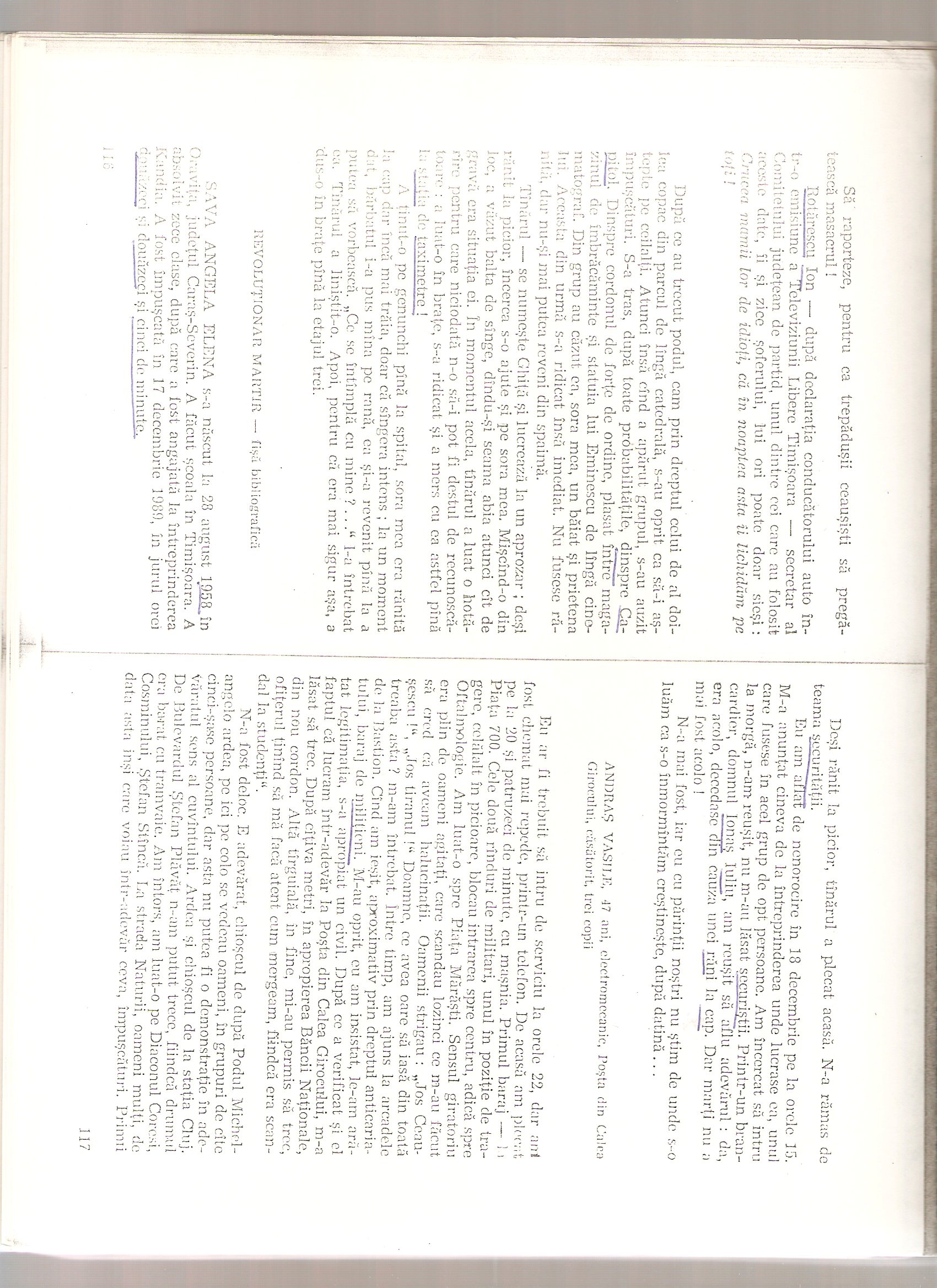
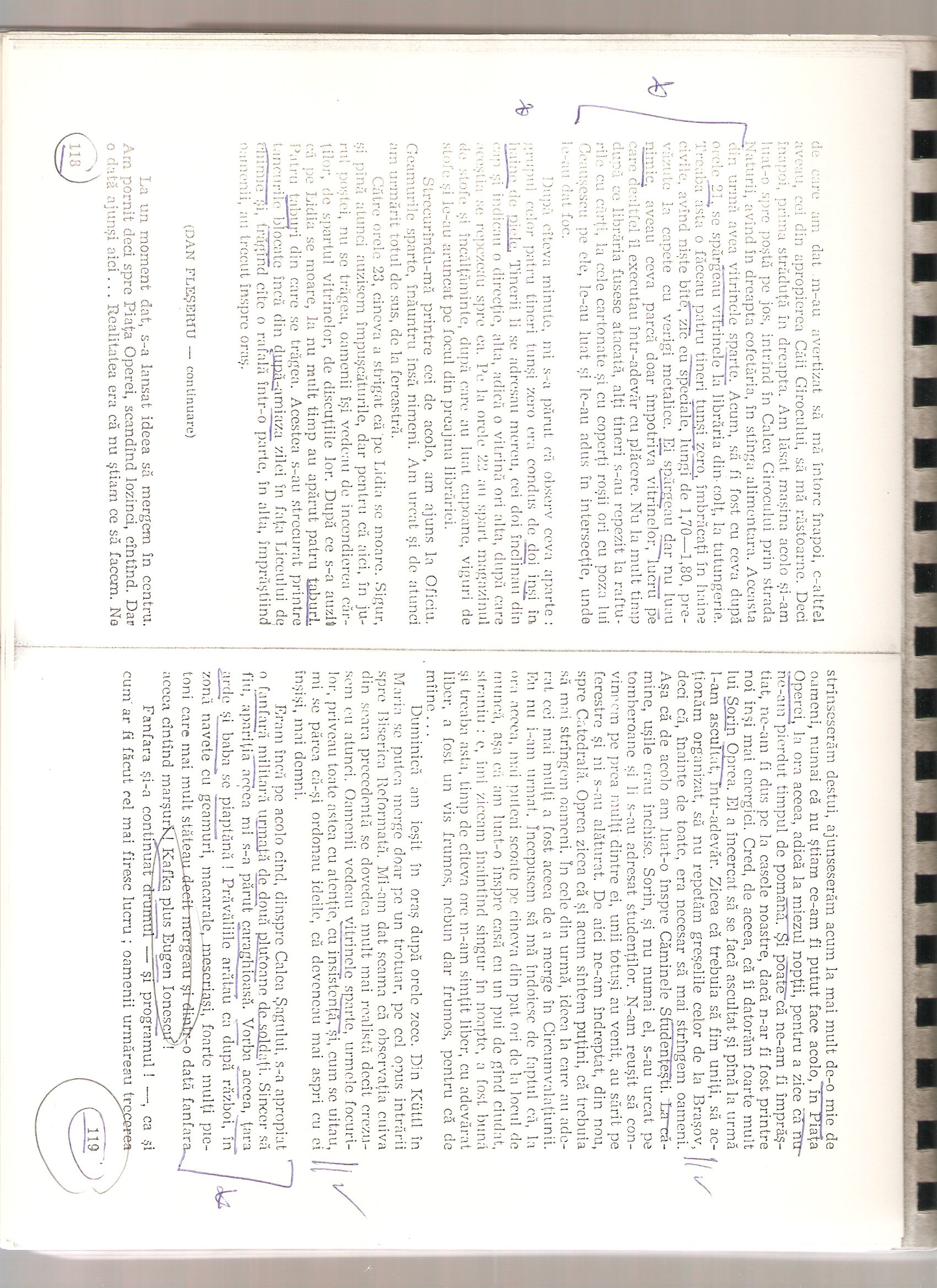
…four young men with shaved heads and wearing civilian clothes had sticks–I would term them special sticks–1.7 to 1.8 meters long, equipped with metal rings on the top of them. They were breaking the windows, but not taking anything, as if they only had something against the windows, something which they thus went about with great enjoyment…they were led by two individuals in leather jackets.[76]
Other eyewitnesses supply details which confirm the widespread character of the vandalism; its undeniably organized quality; the disinterest of its perpetrators in looting the stores; and the almost “drugged” nature of the perpetrators, who seemed unperturbed by the chaos and repression going on around them.[77]
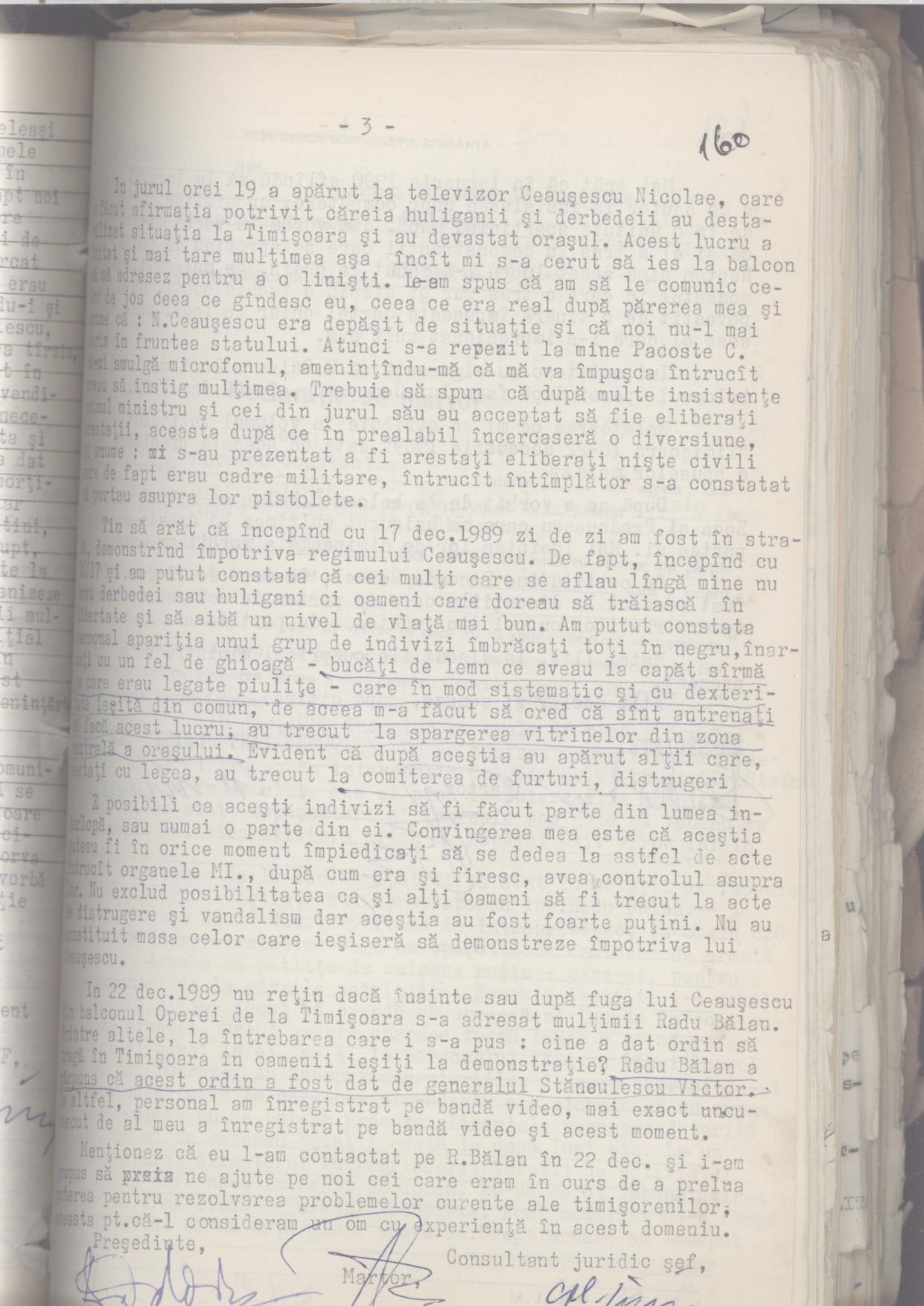
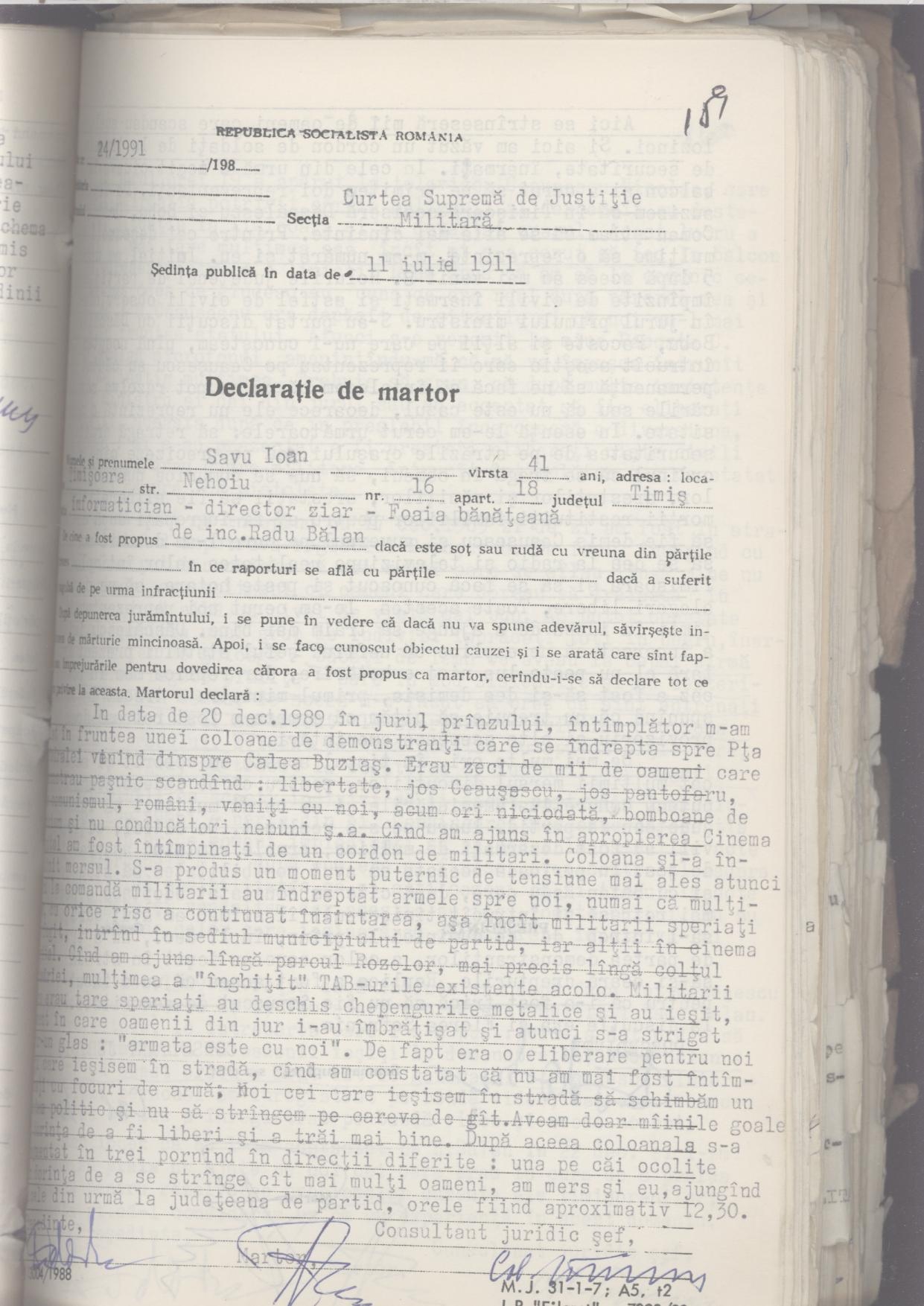
Ioan Savu discussed the windowbreakers as follows:
———————————-
Other depictions of this event available online:
Conducerea partidului, alarmată, a trimis în Piaţa Maria, conform Ordinului 02600, numeroşi miliţieni şi trupe speciale, pentru a lichida manifestaţia care luase amploare. Circulaţia în zonă se întrerupsese. În Piaţa Maria au fost trimişi aproximativ 200 de activişti de partid, miliţieni şi numeroşi ofiţeri de securitate, îmbrăcaţi în haine civile. Au urmat ciocniri violente, mai ales după ce manifestanţii s-au încolonat şi au pornit spre sediul CJ PCR, strigând “Libertate”, “Vrem pâine”, “Vrem căldură”, “Azi la Timişoara, mâine în toată ţara”.
În acea seară echipe de miliţie dinainte pregătite au spart vitrinele magazinelor din centrul oraşului, pentru a avea argumente pentru o intervenţie în forţă. Desigur, multe vitrine au fost sparte şi de derbedei, asupra cărora s-au găsit bunuri furate. În acea noapte au fost arestate aproape 5-600 de cetăţeni. Ei au fost duşi la Penitenciarul oraşului, unde au fost bătuţi în mod bestial. În zilele care au urmat arestării au fost anchetaţi în vederea trimiterii lor în judecată. Bineînţeles, dacă Revoluţia n-ar fi reuşit.
Totuşi, se ştie că în acele zile fierbinţi din Timişoara au existat „personaje neidentificate” care au acţionat în mai multe zone ale oraşului. Am să amintesc aici doar două aspecte concrete cu privire la implicarea acestora în evenimentele din Timişoara. În zilele de 16 şi 17 decembrie au fost sparte aproape toate vitrinele magazinelor din zona centrală a oraşului. Sunt zeci de declaraţii ale revoluţionarilor care fac o descriere clară a celor care au spart acele geamuri. Au fost oameni bine îmbrăcaţi, robuşti şi tunşi scurt. Aceştia erau dotaţi cu nişte beţe speciale cu care printr-un gest scurt şi foarte bine exersat loveau vitrinele, după care plecau fără a încerca să sustragă ceva din magazine. Aceste persoane au fost văzute chiar şi de forţele de ordine desfăşurate în acea zonă, care în mod ciudat nu au luat măsuri împotriva lor, ci au acţionat împotriva manifestanţilor ce demonstrau împotriva regimului ceauşist. Un alt aspect relatat de mulţi timişoreni se referă mai ales la zilele de 17-19 decembrie, când, în rândul cordoanelor militare din diferite dispozitive amplasate în zonele importante ale oraşului, între soldaţi, erau intercalate persoane mai în vârstă, nebărbierite îmbrăcate doar parţial în uniforme militare, care nu făceau parte din acele unităţi militare.
Cine au fost acele „persoane neidentificate”? De ce s-a dorit în unele cercuri, cu insistenţă chiar, acreditarea ideii că oamenii au fost scoşi în stradă de agenţi străini? De ce, chiar şi după 20 de ani, se fac afirmaţii de genul: cadavrele celor arşi la Crematoriul „Cenuşa” erau ale unor agenţi străini? Nu voi căuta acum răspunsuri la aceste întrebări, dar, cu siguranţă, ele există.
nascut in 30 iulie 1968 la Timisoara, muncitor la IJPIPS (1989), profesor de istorie la Liceul de informatica (1998), impuscat in spate
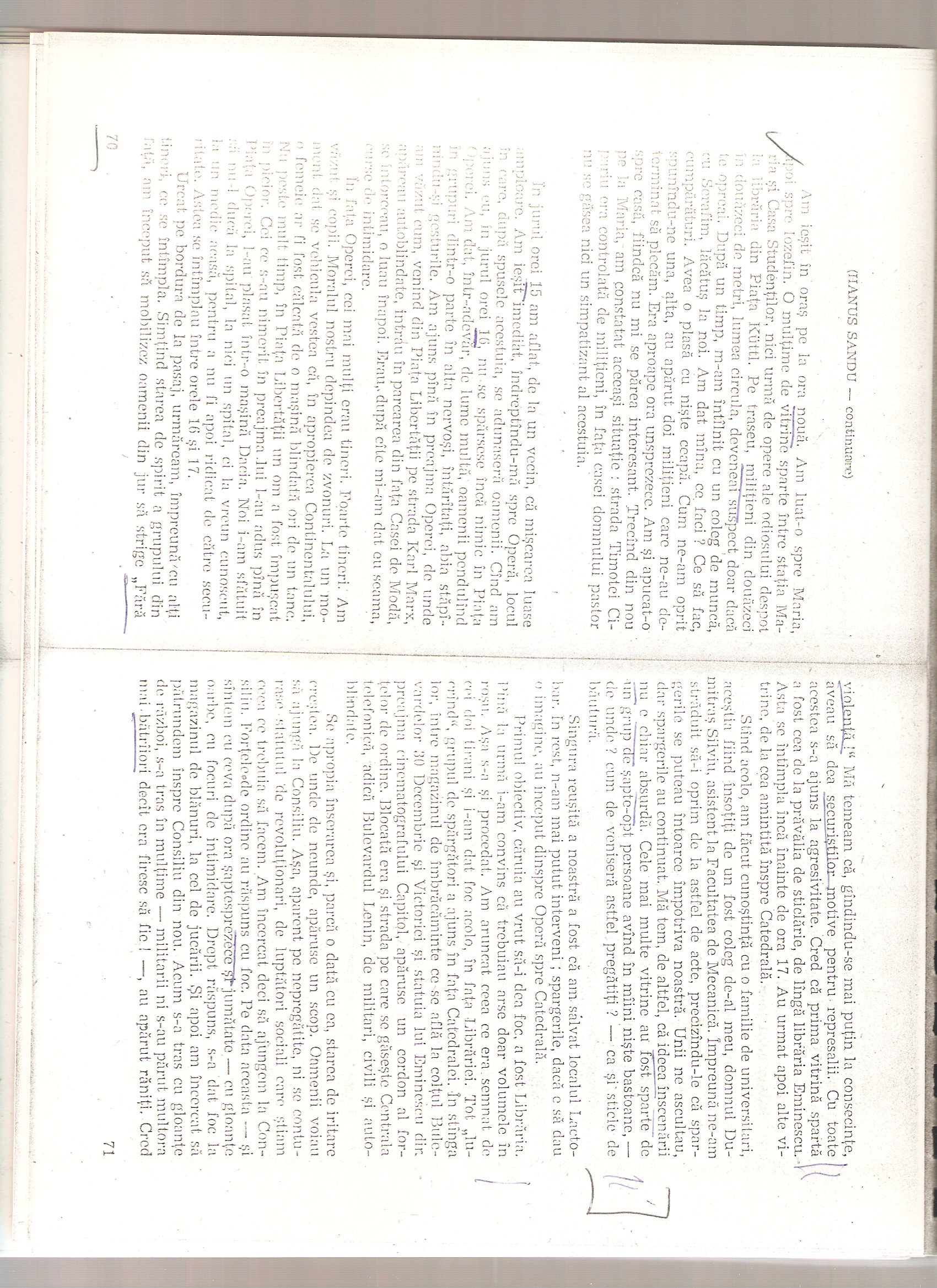
La Bijuterii concetatenii nostri tigani carau ce puteau. Numai la “Modex” nu era spart. Un grup de oameni se uitau cum niste indivizi bine instruiti spargeau geamurile de linga restaurantul Bulevard. Am rugat oamenii sa apere Modexul, pentru ca era clar ca spargatorii n-aveau nimic comun cu revolta. 30 septembrie 1995http://timisoara.com/newmioc/4.htm
“În data de 14 decembrie, securitatea a spart toate gemurile din partea străzii principale, iar clădirea arăta ca o cetate asediată. Fostul primar al Timişorei, Petre Moţ l-a vizitat pe Tokes şi a ieşit la geam pentru a vorbi mulţimii. Moţ a cerut să se pună geamuri noi. Erau foarte multe maşini ale securiştilor. Întreaga stradă era ocupată. Se făcea filaj. Eu locuiam acolo, ba intram, ba ieşeam. Nu se vorbea încă revoluţie. Era o solidaritatea faţă de pastor”, declarat Iosif Kabai (foto), care locuieşte şi acum în clădirea bisericii reformate.Citeste mai mult: adevarul.ro/locale/timisoara/16-decembrie-1989-ziua-timisoara-s-a-strigat-data-democratie-jos-comunismul-1_50bd3d887c42d5a663c8e01f/index.html
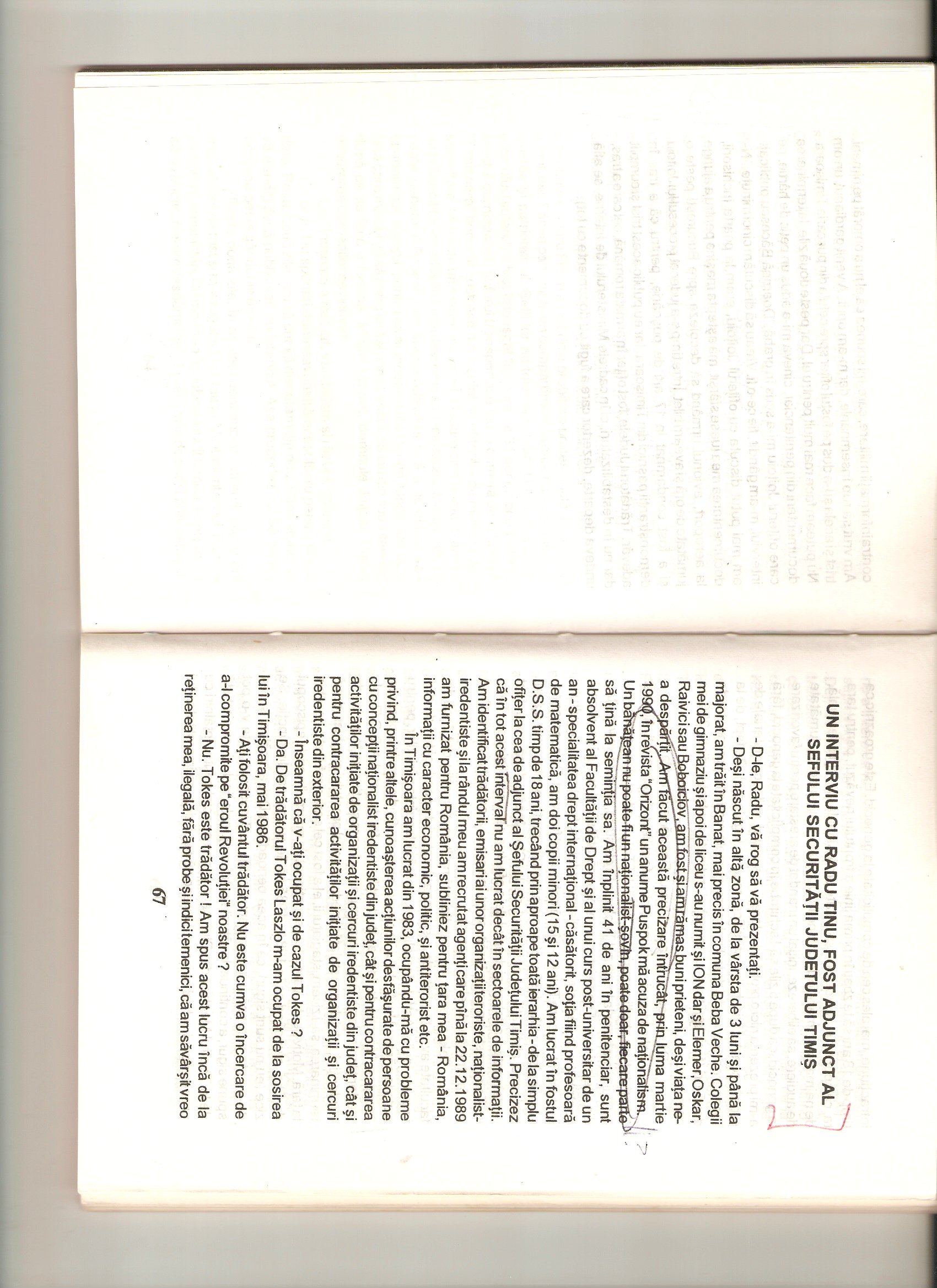
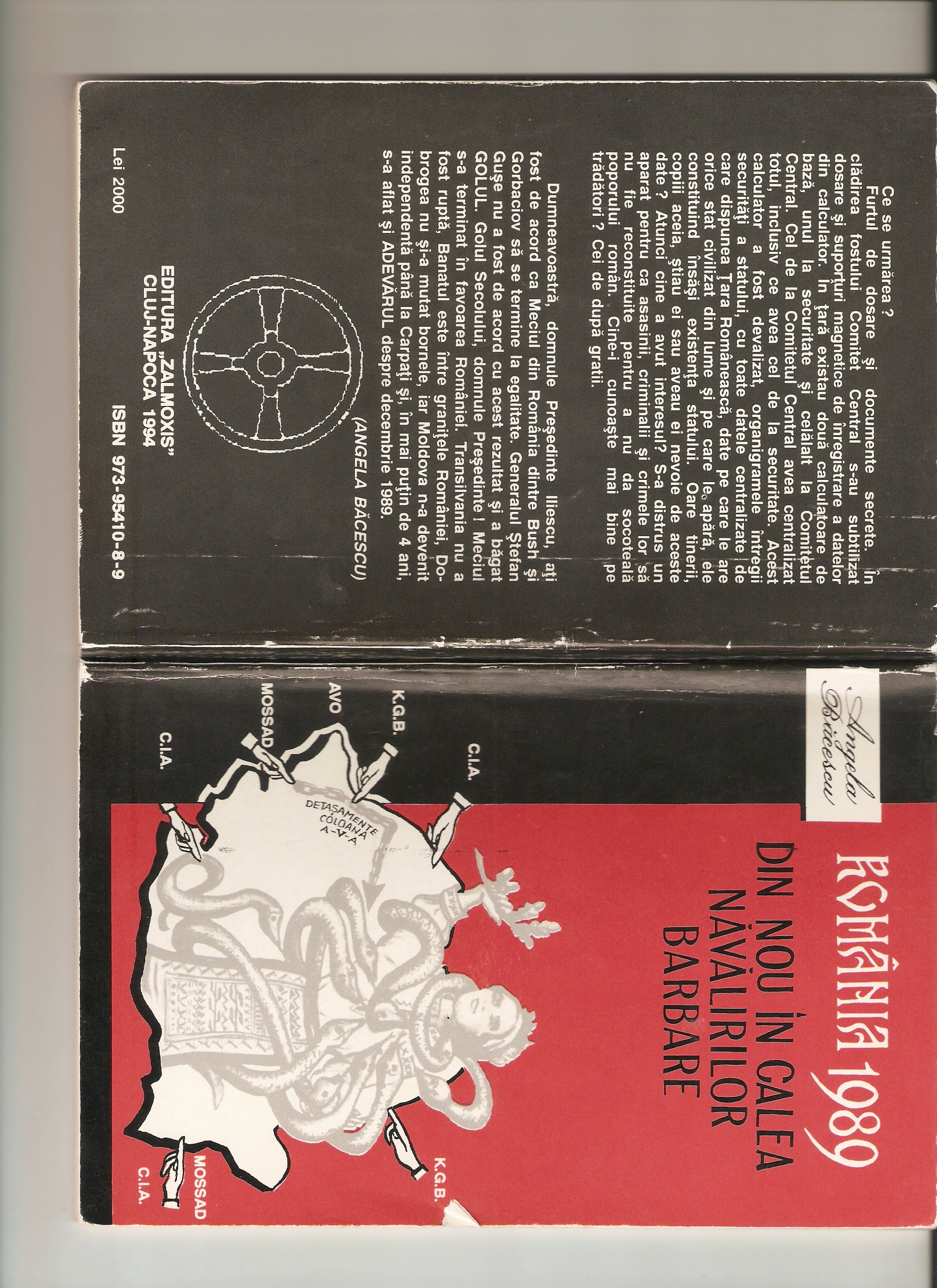
Radu Tinu cu Angela Bacescu…
The reportedly unusual scope of physical destruction which occurred in Timisoara, particularly on the afternoon and evening of 17 December 1989, has fueled revisionist arguments. Estimates of the damage during the Timisoara unrest are in the neighborhood of four to five billion lei (approximately forty to fifty million dollars at the time), a reasonably large sum given Romania’s standard of living at the time. A huge number of windows was broken and as many as 300 to 400 stores suffered some sort of damage, although relatively few were actually looted. On the evening of 17 December, stores, vehicles, and kiosks were burning in at least ten different areas of the city.[65]
Former Securitate officers clearly wish to link this destruction to the “foreign tourists” who were supposedly so ubiquitous in Timisoara during these days.[66] Perhaps somewhat surprisingly, former Securitate Director Iulian Vlad argued at his trial that
…the acts of vandalism, theft, destruction, arson… acts without precedent…could not have been the work [“opera”] of the faithful [apparently referring sarcastically to Tokes’ parishioners], nor the revolutionaries. They were produced by elements which wished to create a certain atmosphere of tension.[67]
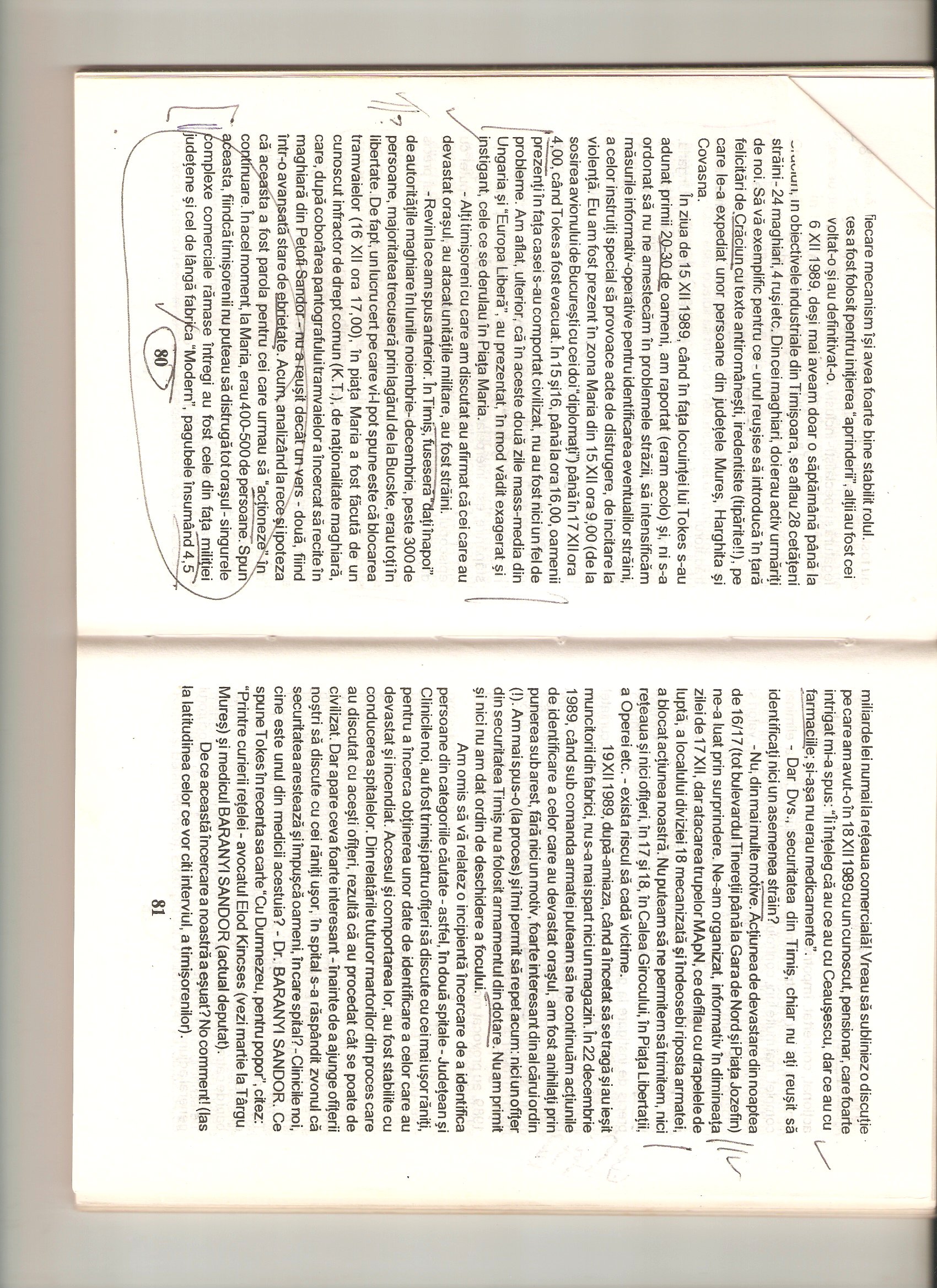
RADU TINU:…SINGURLE COMPLEXE COMERCIALE RAMASE INTREGI AU FOST CELE DIN FATA MILITIEI JUDETENE SI CEL DE LANGA FABRICA “MODERN”…
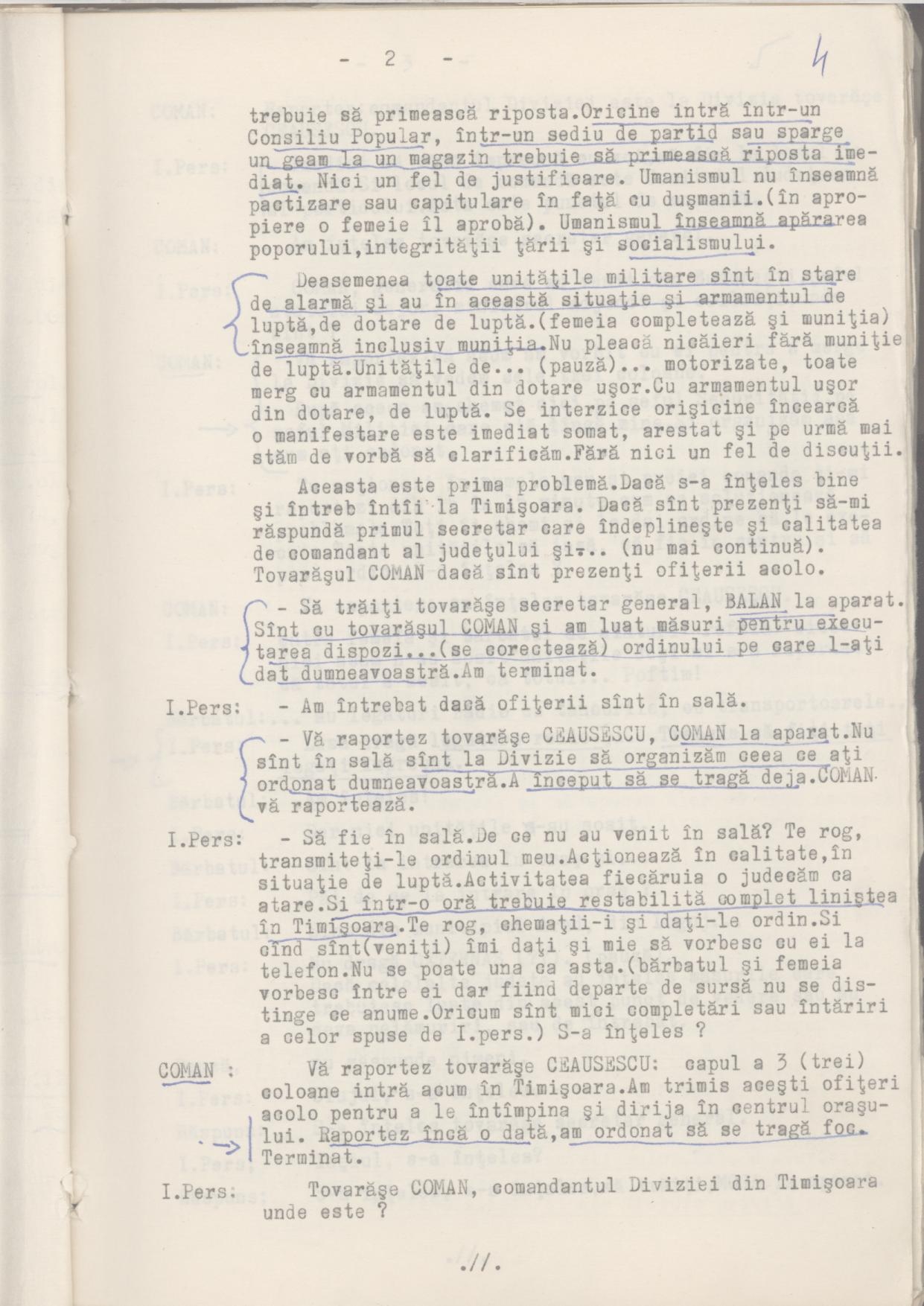
The significance of window-breaking as a justification for repression–something the Securitate would have realized–was outlined by Nicolae Ceausescu in his teleconference of 17 December 1989 as follows:
“Oricine intra intr-un Consiliu Popular, intr-un sediu de partid sau sparge un geam la un magazin trebuie sa primeasca riposta imediat.
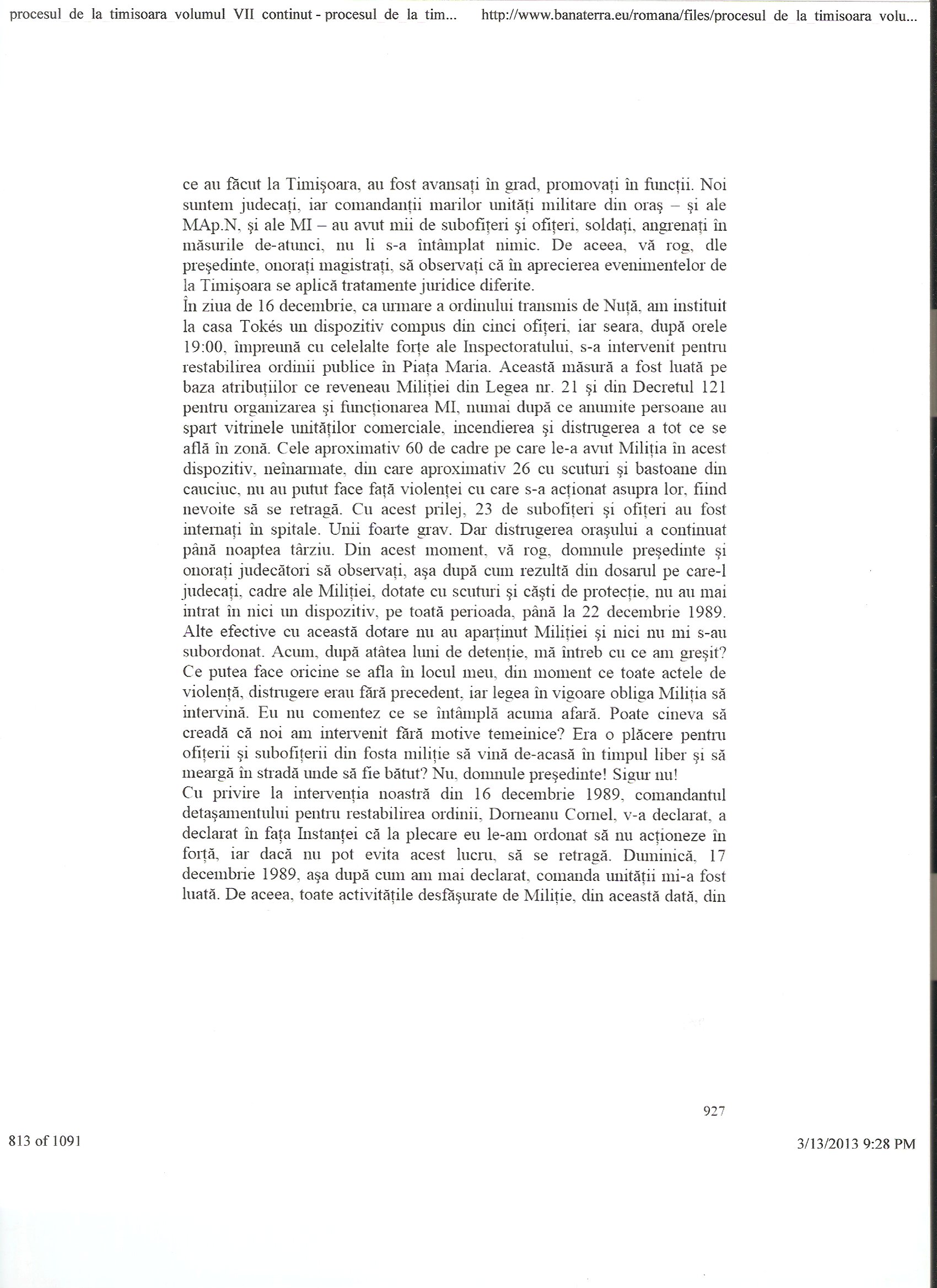
Col. Ion Popescu (sef IGM)’s defense lawyer appealed to Legea 21 and Decretul 121 specifically as obligating Interior Ministry (M.I.–Militia and Securitate) forces to intervene in response to the breaking of windows of commercial units…
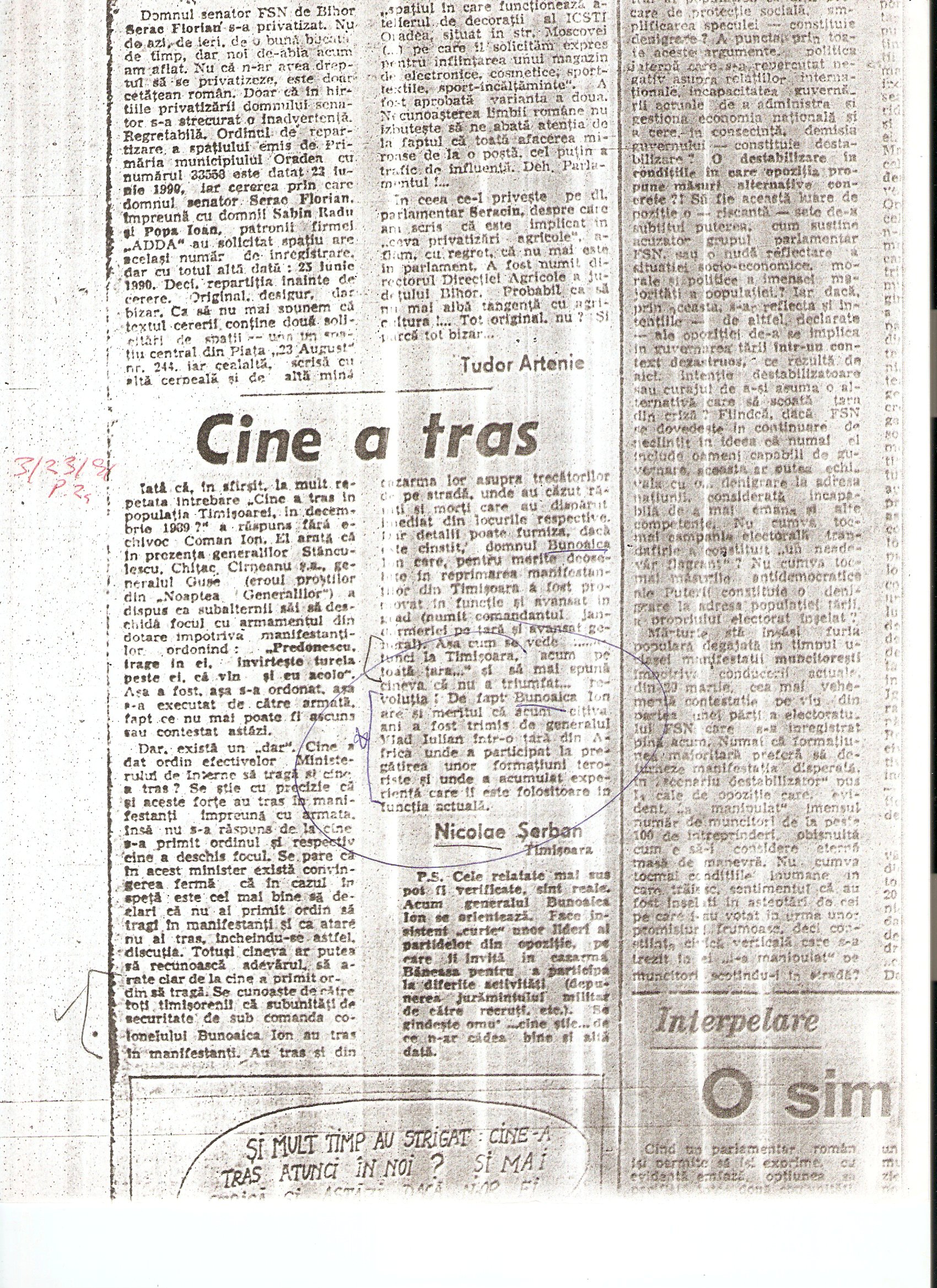
Thus, the breaking of windows, which according to Interior Minister was instigated and carried out in part by Securitate Brigade 30 under the command of Ion Bunoaica served a bureaucratic and legalistic function–a tactic not unknown in the annals of other totalitarian or authoritarian regimes…
———————————–
An excerpt from Chapter 5 of my Ph.D. Dissertation at Indiana University: Richard Andrew Hall, Rewriting the Revolution: Authoritarian Regime-State Relations and the Triumph of Securitate Revisionism in Post-Ceausescu Romania (defended 16 December 1996). This is the original chapter as it appeared then and thus has not been revised in any form.
Chapter Five. The Beginning of the End: Timisoara, 15-17 December 1989
…
The “Window Breakers”
The reportedly unusual scope of physical destruction which occurred in Timisoara, particularly on the afternoon and evening of 17 December 1989, has fueled revisionist arguments. Estimates of the damage during the Timisoara unrest are in the neighborhood of four to five billion lei (approximately forty to fifty million dollars at the time), a reasonably large sum given Romania’s standard of living at the time. A huge number of windows was broken and as many as 300 to 400 stores suffered some sort of damage, although relatively few were actually looted. On the evening of 17 December, stores, vehicles, and kiosks were burning in at least ten different areas of the city.[65]
Former Securitate officers clearly wish to link this destruction to the “foreign tourists” who were supposedly so ubiquitous in Timisoara during these days.[66] Perhaps somewhat surprisingly, former Securitate Director Iulian Vlad argued at his trial that
…the acts of vandalism, theft, destruction, arson… acts without precedent…could not have been the work [“opera”] of the faithful [apparently referring sarcastically to Tokes’ parishioners], nor the revolutionaries. They were produced by elements which wished to create a certain atmosphere of tension.[67]
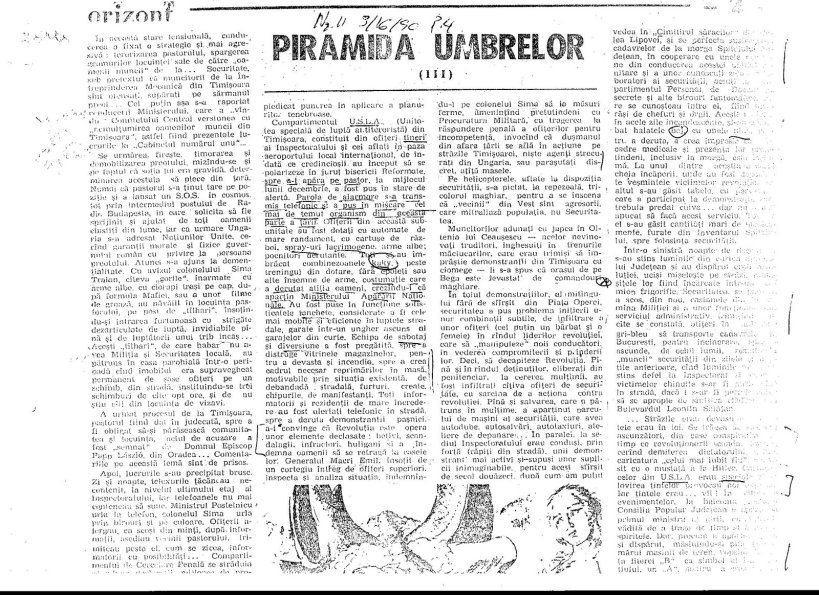
“A group of former Securitate officers” wrote to the Ceausist Democratia in September 1990 that after the Militia and Securitate refused to respond to the demonstrations provoked by the “foreign tourists”: “they advance[d] to the next stage: the massive destruction of public property designed to provoke forcible interventions–human victims were needed.”[68]
Nevertheless, here is how one opposition journalist, Grid Modorcea, has described the strange character of Timisoara destruction:
For the first time in history, a revolution…was announced in a previously unknown and absolutely original manner, both literally and figuratively speaking: through the methodical breakage of thousands of windows. On 16 and 17 December 1989, Timisoara was the city of [glass] shards. Well-trained groups of athletes spread throughout the town, tactically, but energetically smashing to pieces hundreds of huge windows without apparently being interested in stealing from these stores…they were like mythical Magis coming to announce the end of one world and the beginning of another. And they gave it an apocalyptic quality: the sound produced by the breaking glass was infernal. The panic this caused was indescribable….Those who “executed” the windows did so with karate-like kicks while yelling “Liberty and Justice”!…The crowds of people who came out into the streets transformed spontaneously into columns of demonstrators, of authentic revolutionaries. The effect was therefore monumental: the breaking of the windows unleashed the popular revolt against the dictator.[69]
Modorcea is convinced that the Tokes case was “merely a pretext” and that “someone–perhaps those who planned the vandalizing of the windows–has an interest in preventing it from being known who broke the windows.” Although Modorcea maintains he is unsure who was responsible, he insists on observing that:
Only the Customs people know how many tourists there were. All were men and long-haired. Inside their cars they had canisters. This fits with the method of the breaking of the windows, with the Molotov cocktails, and the drums used as barricades–they were exactly of the same type….To what extent the new regime which came to power was implicated, we cannot say![70]
Many Timisoara protesters appear torn between wishing to rationalize the extensive destruction as the courageous response of an enraged, long-suffering population, and denying that the perpetrators could have come from among their ranks. Even those investigators attuned to the retroactive psychology of the protesters cannot help but admit that widespread destruction occurred and that it could not have been wholly spontaneous.[71] Furthermore, as Laszlo Tokes has observed in discussing the events at Piata Maria, manipulation and attempts to instigate the crowd to violence were constant features during these days.
Tokes maintains that Securitate provocateurs had tried to agitate the crowd by shouting things like, “Let’s break into the house. The Securitate are in there; they’re trying to kidnap Laszlo Tokes! Let’s rush them!” and by appealing for him to “Come down into the street and lead us!”[72] According to Tokes:
I was alarmed at the obvious provocation from individuals in the crowd clearly intent on making the situation uncontrollable….Later, thinking about the events of those two days, I realized that the authorities would have had a great deal to gain if the situation had become a riot.[73]
Mircea Balan questions whether the protesters would have set stores on fire which were located on the ground floor of the buildings in which the protesters themselves lived.[74] Moreover, he wonders how even the revolutionary fury of the crowd could drive protesters to break so many windows, particularly given the presence of repressive forces on the streets. It is what Balan has termed the “systematic devastation” of property which raises questions.
Eyewitness accounts recorded soon after the events–therefore at a time before the various plots and scenarios had permeated the popular imagination–support the hypothesis that the vandalism was organized. Moldovan Fica remarks:
I admit that I cannot escape a certain conclusion. All of this [destruction] was done by a group of about five or six individuals, whose calm demeanor and self-control continues to stay with me to this day. They did not run from the scene, they appeared as if they did not fear anything; I would say that, in fact, they were doing what was required of them, something which had been ordered directly of them![75]
Describing destruction in a different part of the city, Andras Vasile observed that
…four young men with shaved heads and wearing civilian clothes had sticks–I would term them special sticks–1.7 to 1.8 meters long, equipped with metal rings on the top of them. They were breaking the windows, but not taking anything, as if they only had something against the windows, something which they thus went about with great enjoyment…they were led by two individuals in leather jackets.[76]
Other eyewitnesses supply details which confirm the widespread character of the vandalism; its undeniably organized quality; the disinterest of its perpetrators in looting the stores; and the almost “drugged” nature of the perpetrators, who seemed unperturbed by the chaos and repression going on around them.[77]
Mircea Balan has little doubt who committed this “systematic destruction”:
Demonstrators might have thrown rocks in windows, but the destruction of the entire store was not their work…Nobody need believe that for such a thing foreign intervention was necessary, seeing as there were enough first-class specialists in destruction and demolition right here at home. The Securitate could not have been foreign to what happened, no matter how much it fiercely attempts to deny this today. They were professionals in the art of destruction. They needed a justification for the bloody repression.[78]
In March 1990, Puspoki had been willing to identify the culprits more specifically. According to Puspoki, as the demonstrators began to gather to prevent Tokes’ eviction:
The USLA’s Sabotage and Diversion team was readied to break store windows, to devastate and set fires–to create the conditions necessary for mass repression: the existence of disorder in the streets and theft on the part of the demonstrators.[79]
Securitate Major Radu Tinu’s observation that the commercial complex “in front of the county Militia building” (i.e. the Inspectorate in which both the Securitate and Militia offices were located) was one of only two such complexes in the whole city to remain intact during these days may also be an indication of the source of the destruction.[80]
It is possible then that to the extent that this destruction did indeed contain an organized component, it was designed by the regime to subvert and cast suspicion upon the intentions of the protesters and to create a pretext for repression. To the extent that an organized component did contribute to the destruction, it was far more likely to have been regime forces attempting to undermine the protests than foreign agents attempting to provoke an uprising against the regime.
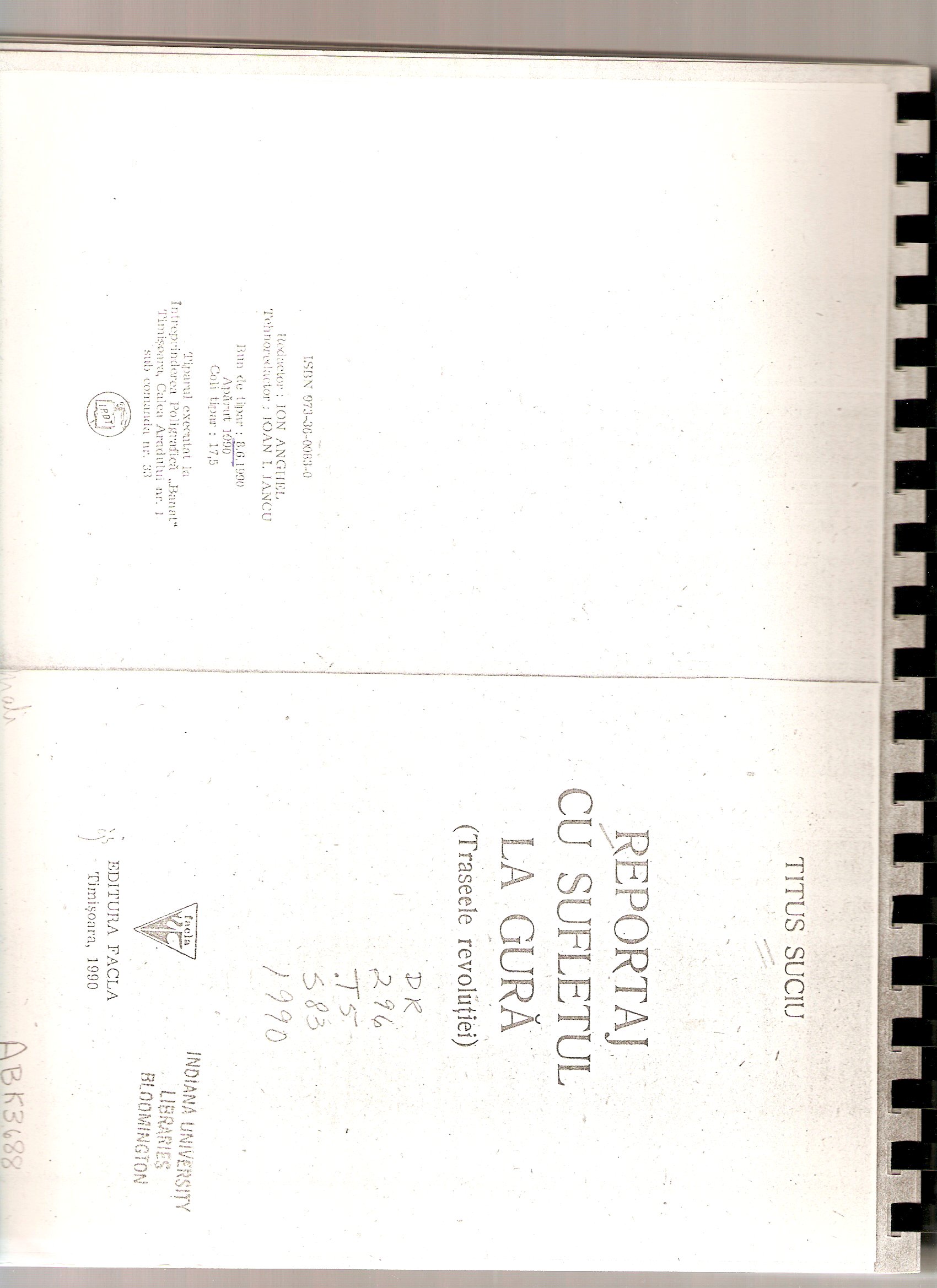
[65].. See, for example, Grid Modorcea, “Spargerea Geamurilor [The Breaking of the Windows],” Expres Magazin, no. 49 (1991), 8-9; Mircea Bunea, “Eroii noi si vechi [New and old heroes],” Adevarul, 2 February 1991, in Bunea, Praf in Ochi, 448-449; Suciu, Reportaj cu Sufletul, 57-58.
[66].. See, for example, the comments of Radu Tinu, the deputy director of the Timis County Securitate, in Bacescu, Din Nou in Calea, 67-85.
[67].. Mircea Bunea, “Ipse Dixit,” Adevarul, 21 February 1991, in Bunea, Praf in Ochi, 463. Vlad’s determination to emphasize that these were “acts without precedent” makes one wonder if they were indeed without precedent.
[68].. A group of former Securitate officers, “Asa va place revolutia? Asa a fost! [You like the revolution? Here is how it was!],” Democratia, no. 36 (24-30 September 1990), 4. The lengthy defense by these officers of the Fifth Directorate in this letter suggests that they were members of this directorate.
[76].. Ibid, 118. The fact that the two persons supervising the destruction are described as having worn “leather jackets” strongly suggests they may have been Securitate men. Mihai Decean claims that on a train headed for Bucharest on 25 December (therefore after Ceausescu’s flight), he helped in the arrest of two USLA officers whom he describes as “athletic, with shaved heads, and wearing leather jackets.” See Laura Ganea, “La Timisoara se mai trage inca” Tinerama, no. 77 (July 1991), 3.
[77].. Ibid., 71, 122. Some of the eyewitnesses cited in Modorcea, “Spargerea Geamurilor,” say similar things; Modorcea, however, gives them a very different interpretation.
The following was added some years later as a footnote to the section above in republications of this chapter. Badea says here “many years later” Postelnicu admitted this, but as we can now see from the Timisoara files, he wrote it in his declaration/statement dated 17 March 1990.
(In connection with the “window breakers” we do know a little more today than we did then back in 1996. Dan Badea wrote in 1999 Bunoaica and the Window Breakers that “Tudor Postelnicu, the Interior Minister at the time, was to declare many years later that the “breaking of the windows” was a mission executed by personnel from the 30th Securitate Brigade led by col. Ion Bunoaica). Orele 20.00 – 21.00: Sint sparte toate vitrinele magazinelor de pe Bulevardul 6 Martie (Tudor Postelnicu, ministru de interne la acea vreme, avea sa declare multi ani mai tirziu ca “spargerea vitrinelor” a fost o misiune executata de militari ai Brigazii 30 Securitate condusa de col. Ion Bunoaica).
2014 marks the 25th anniversary of the collapse of communism in central and eastern Europe–Poland, Hungary, East Germany, Czechoslovakia, Bulgaria, and Romania. This series looks at 25 things I have learned about the events of the Romanian Revolution of December 1989. The numbering is not designed to assign importance, but rather–to the extent possible–to progress chronologically through those events.
Looking through the Romanian media’s articles devoted to the 25th anniversary of the Romanian Revolution of December 1989 that overthrew the communist dictator Nicolae Ceausescu, one cannot help but be reminded of Valentin Ceausescu’s 1997 claim according to which (paraphrased),
–“Have you noticed? All the heroes…now are the militia and the Securitate.” “The villains are now the heroes…and the heroes are now the villains!”
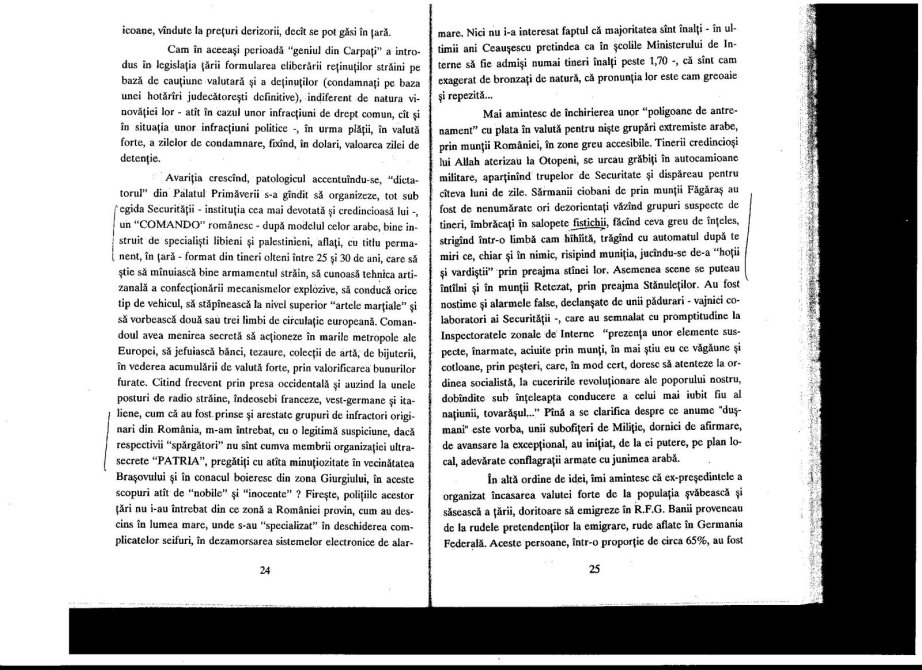
Until the documents [screen captures] below were made publicly available and I unearthed the following, we had to rely primarily on arguments emphasizing the Securitate roots of these claims and/or about the implausibility and often absurdity of these claims. We now have documentary evidence that in the immediate wake of December 1989 not even the Securitate believed in the claims they would make so frequently later on according to which foreign agents were allegedly responsible for the Timisoara uprising.
Back in 1997, the American novelist and Pulitzer Prize Winner William McPherson wrote of what Valentin Ceausescu, communist dictator Nicolae Ceausescu’s eldest son, told him about the events of the Romanian Revolution of December 1989. Here are some excerpts:
Valentin and I were having coffee in the Vox Maris, the same grand casino where the funeral feast was held. It was morning, two days after the funeral [of Nicu Ceausescu], and the crowds had not yet arrived.
“Nicu was never groomed to be the successor. That was [only] the rumor.” He paused for a moment. “But rumors even become the reality.”
“Yes. Especially in Romania.”
“Maybe others in the party thought it would be a good idea. He could command a lot of sympathy. He always wanted to look tough and act strong, but he wasn’t. He was more like a child than anything else.”
“What about the 90 people killed in Sibiu?”
“He did not order the shooting. I know when he’s trying to lie, and he wasn’t lying. I knew immediately. That’s why I defended him so strongly.”
He paused and lit another Pall Mall. “Have you noticed? All the heroes in Sibiu now are the militia and the Securitate – all the dead people, and now they are the heroes of the revolution.”
“So the villains are now the heroes?”
“Yes.”
And the heroes are now the villains.
The official toll of the dead, revised frequently with a final version released three years after the events, is 1,104; only 160 were killed before the dictator fled.
Curious – if the figures are accurate – that the majority of them were killed in Sibiu. “A lot of effort,” Valentin once said, “to kill these two old people.”
William McPherson, “A Balkan Comedy,” The Wilson Quarterly, Volume 21, Issue 3 (Summer 1997)
Thus it is that at Evenimentul Zilei, long hailed by Romania’s westward leaning intelligentsia and Romanianists in North America as the most authentically anti-communist and credible of Romania’s dailies, articles continue their reliance–very selectively–of recent years on the claims of senior former Securitate officers, Iulian Vlad, Emil Macri, Filip Teodorescu, Nicolae Mavru, etc., or on the research of Alex Mihai Stoenescu, whose work is detailed and meticulous and thus deserves to be read, but, who, it turns out, not accidentally, is also an acknowledged former Securitate collaborator. (Not for nothing, the Evenimentul Zilei series is entitled “25 de ani de la evenimentele din decembrie ’89. Lumini si umbre” thus intentionally or unintentionally conjuring up the name, appropriately enough, of the current preferred vehicle of the former Securitate for discussing December 1989, http://www.acmrr-sri.ro/categorii/19/revista-vitralii–lumini-si-umbre.html)
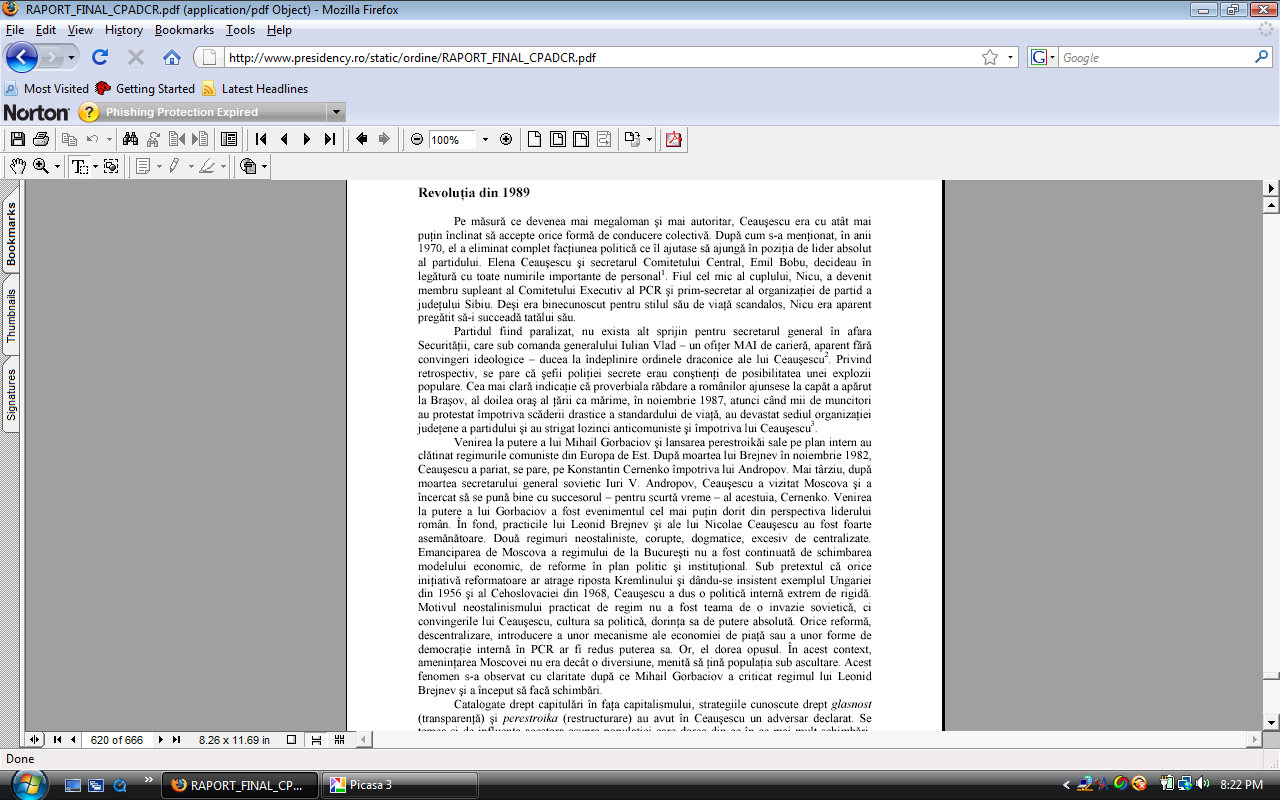
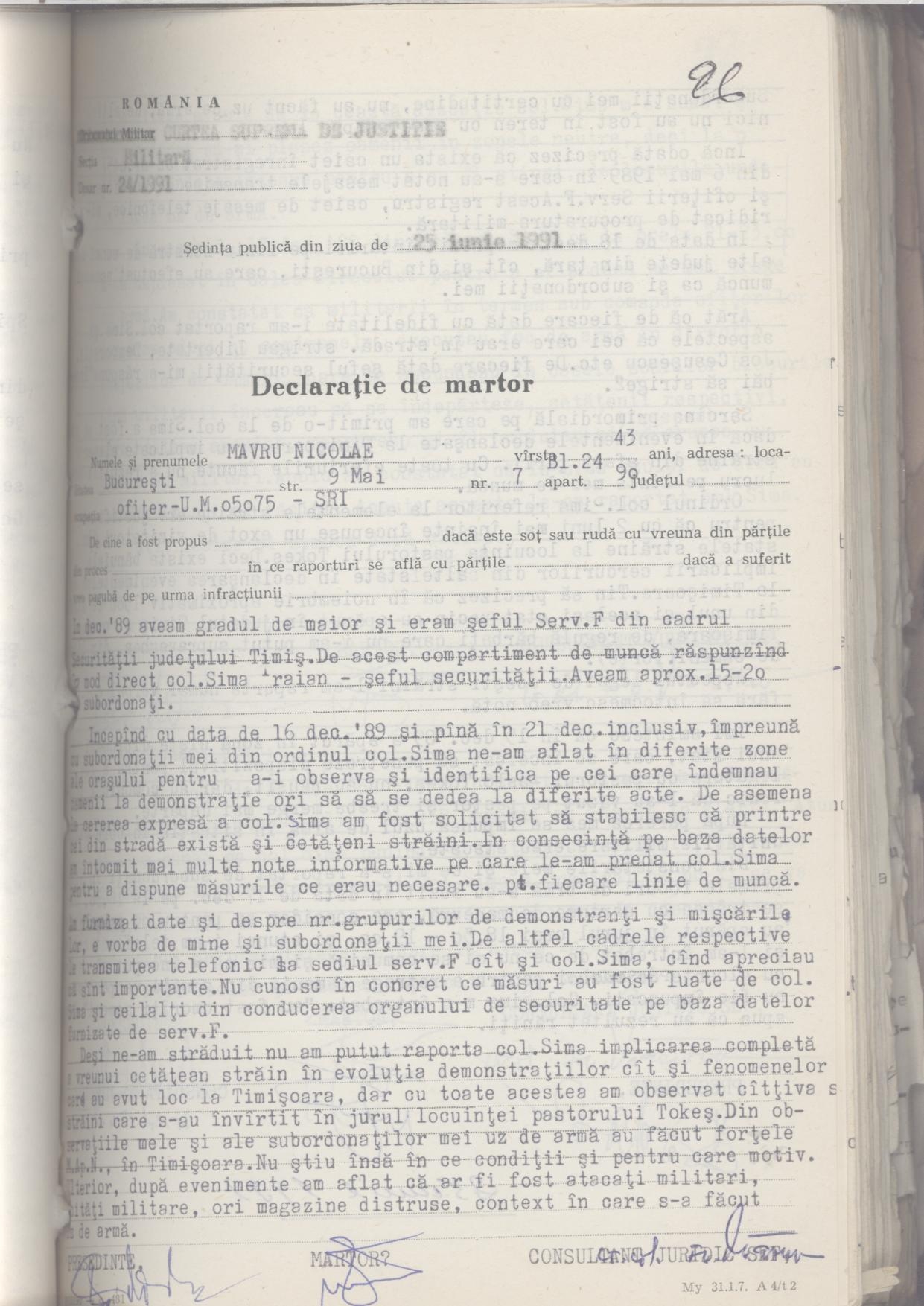
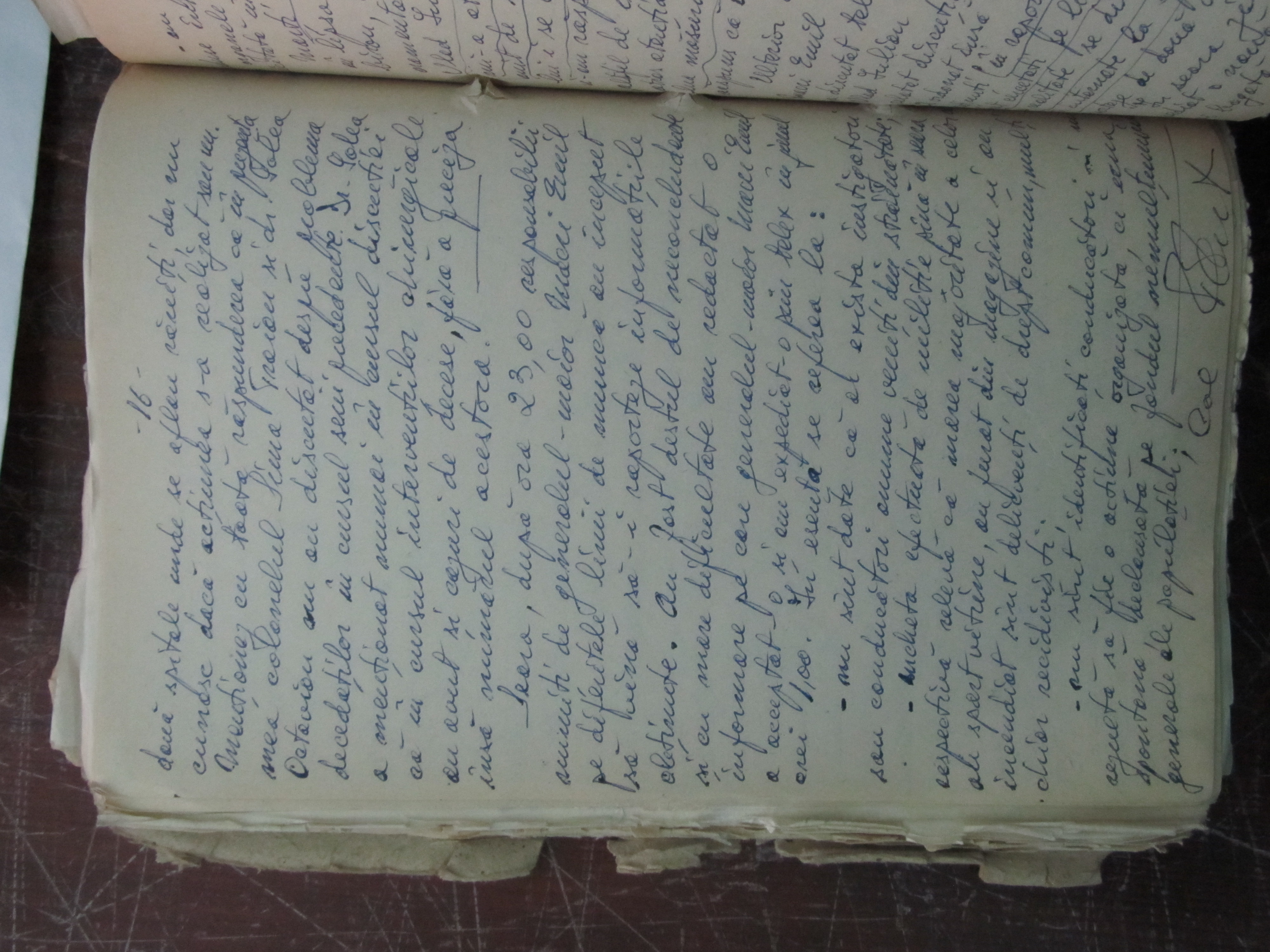
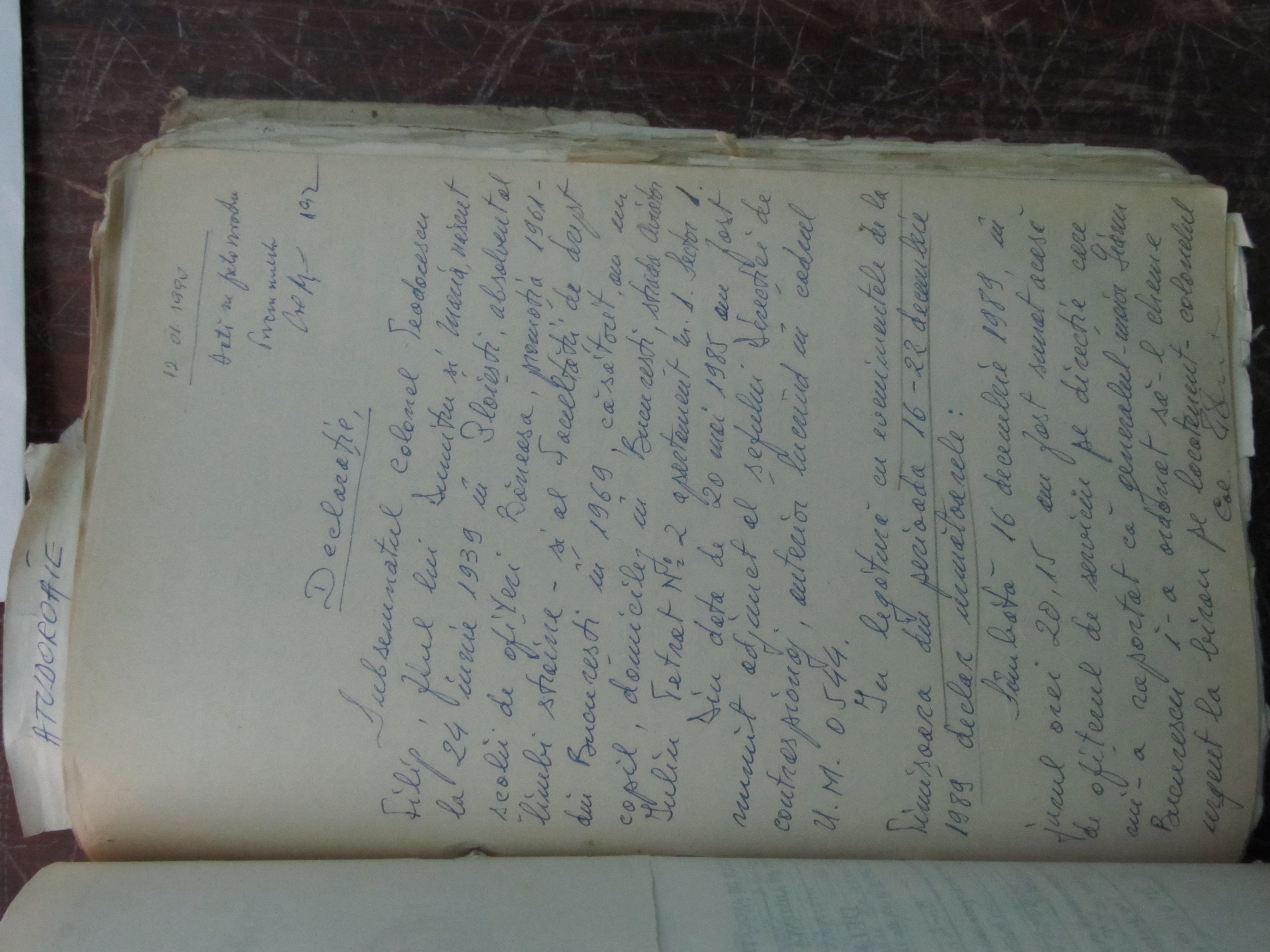
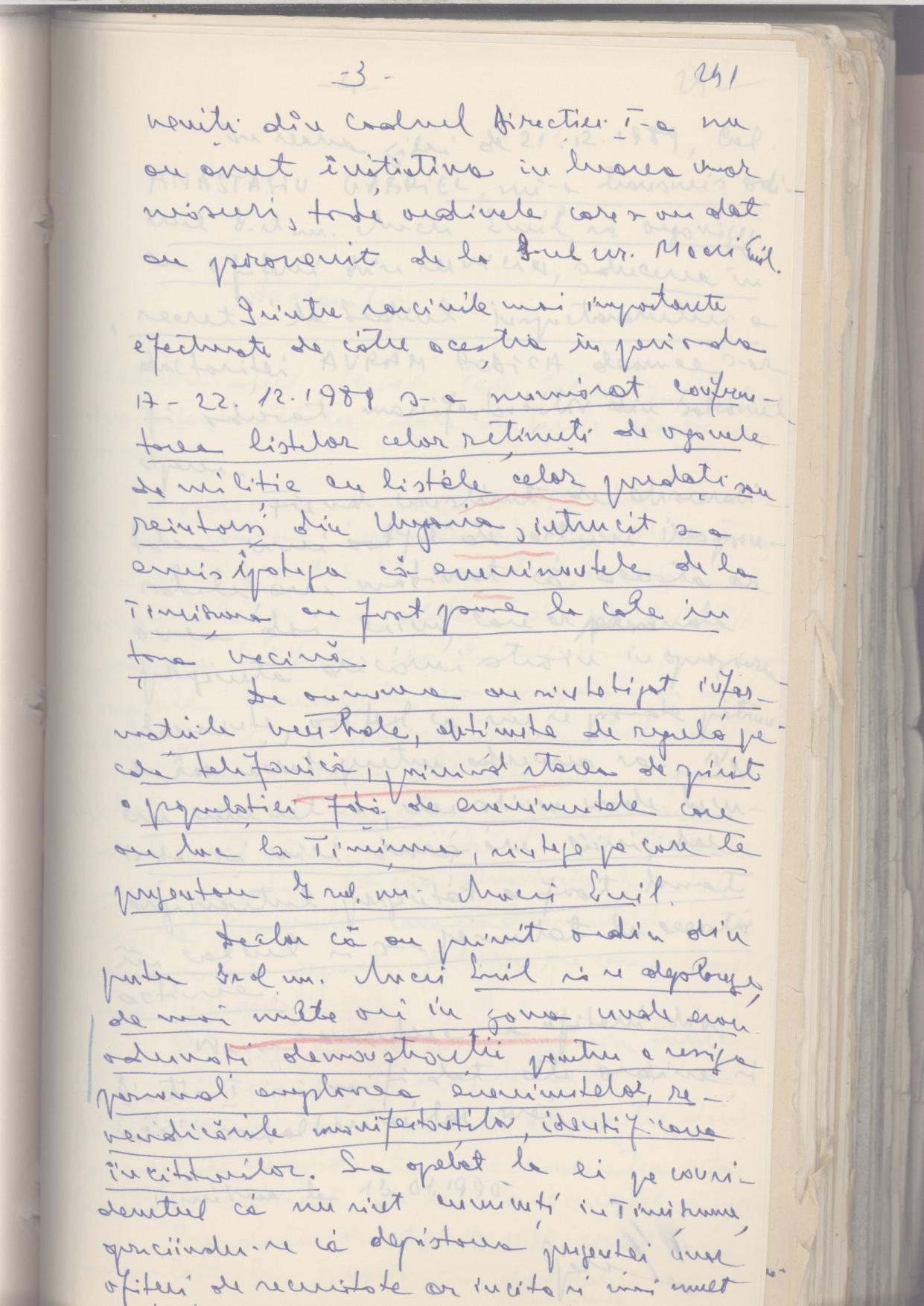
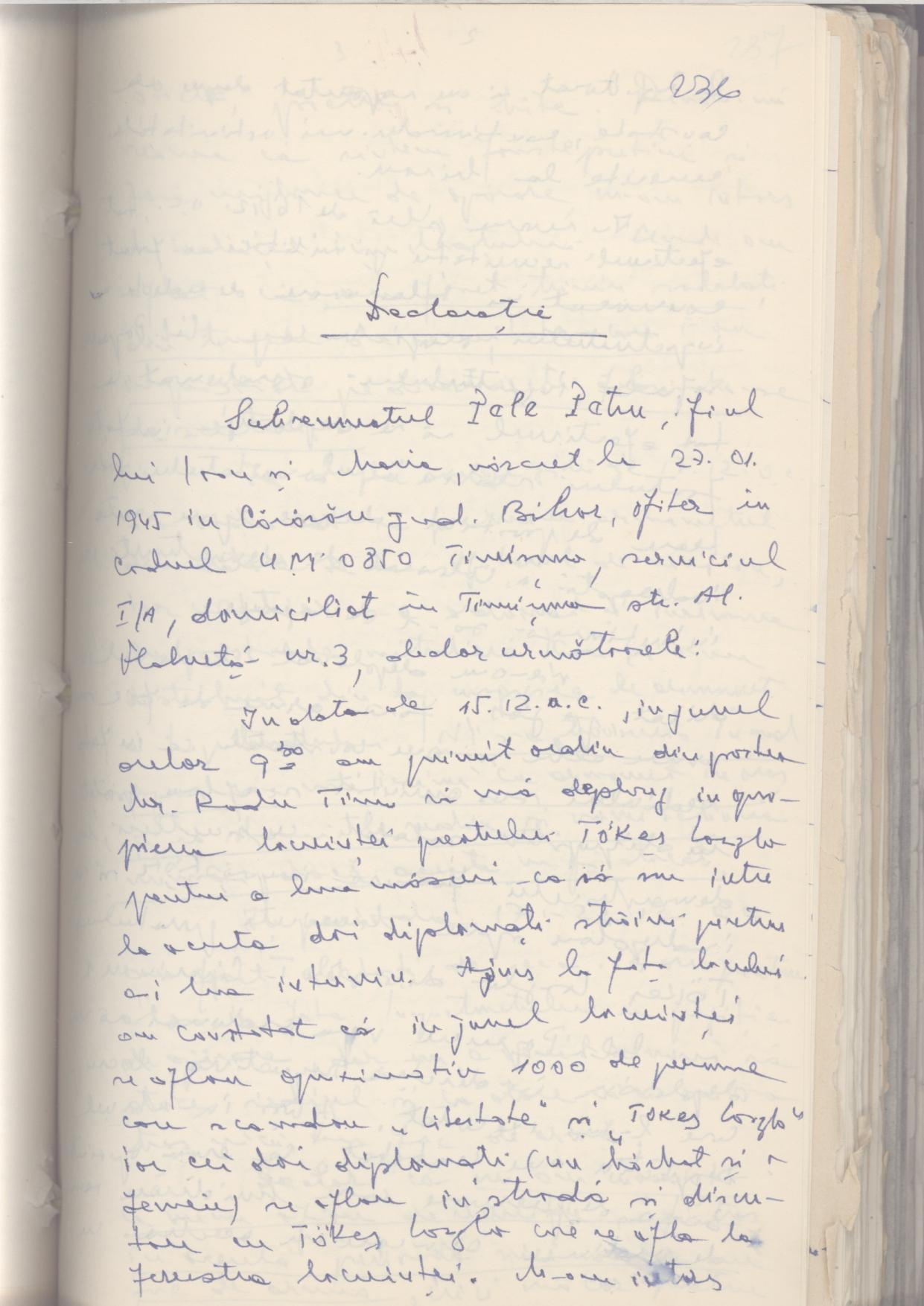
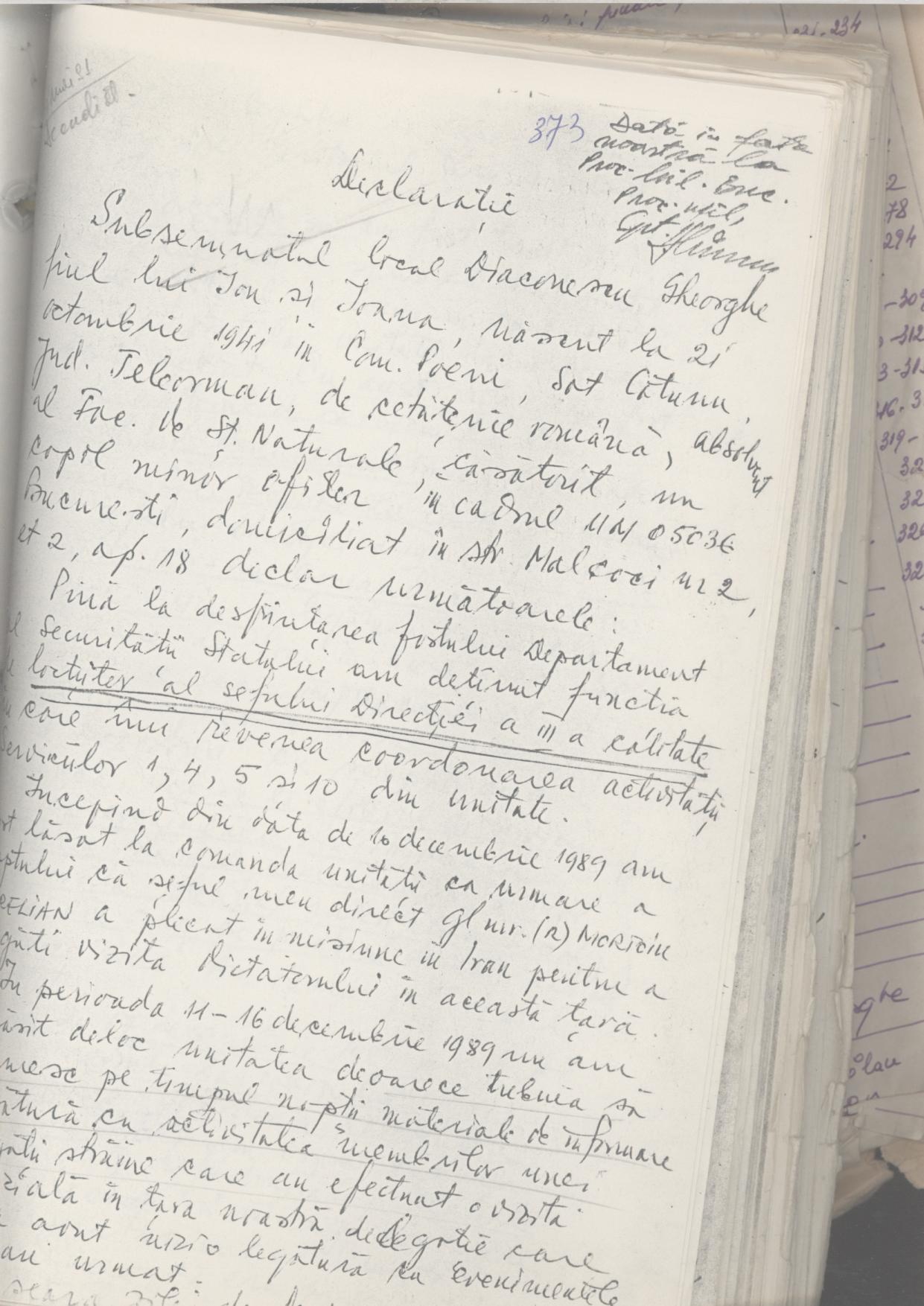
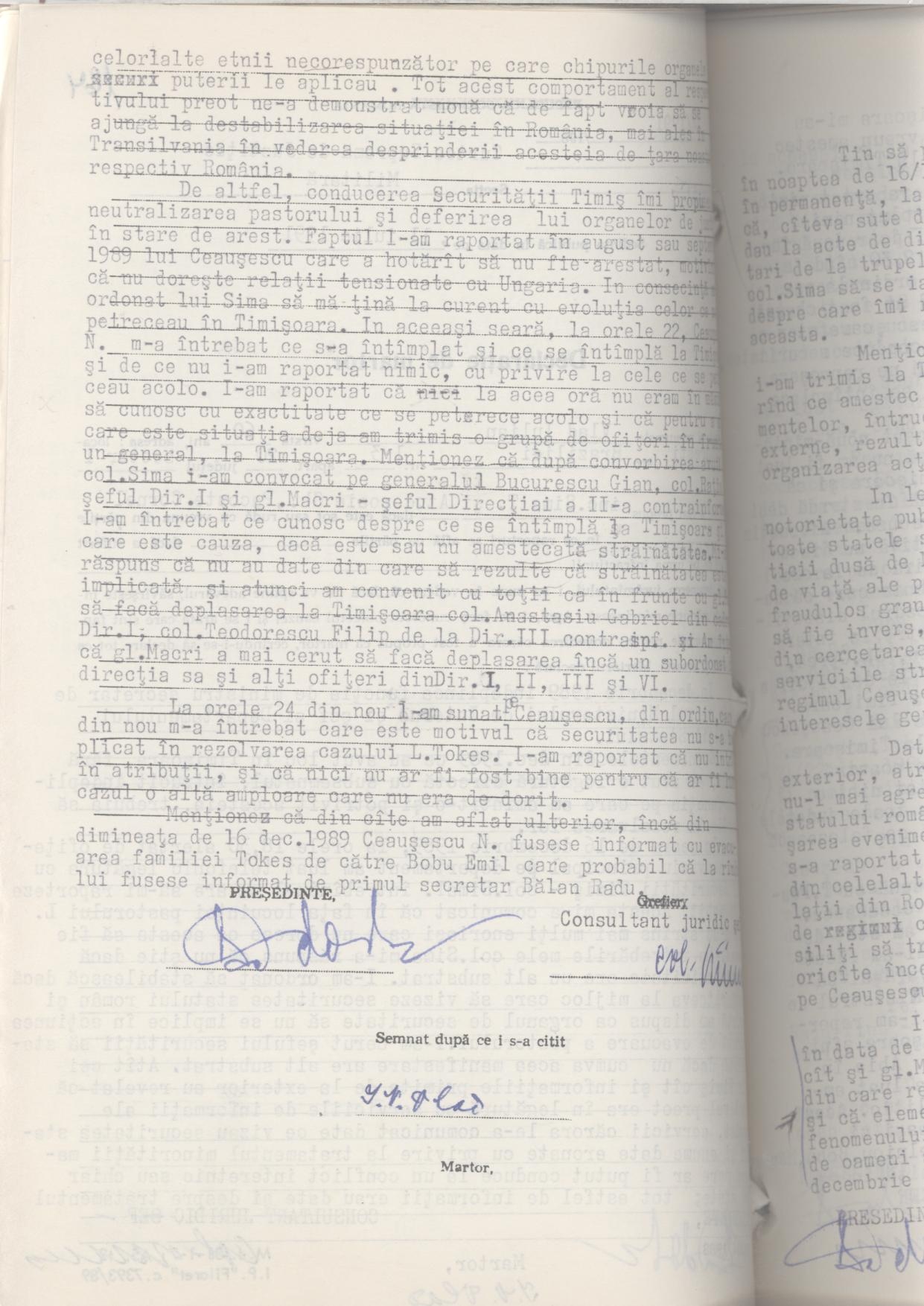
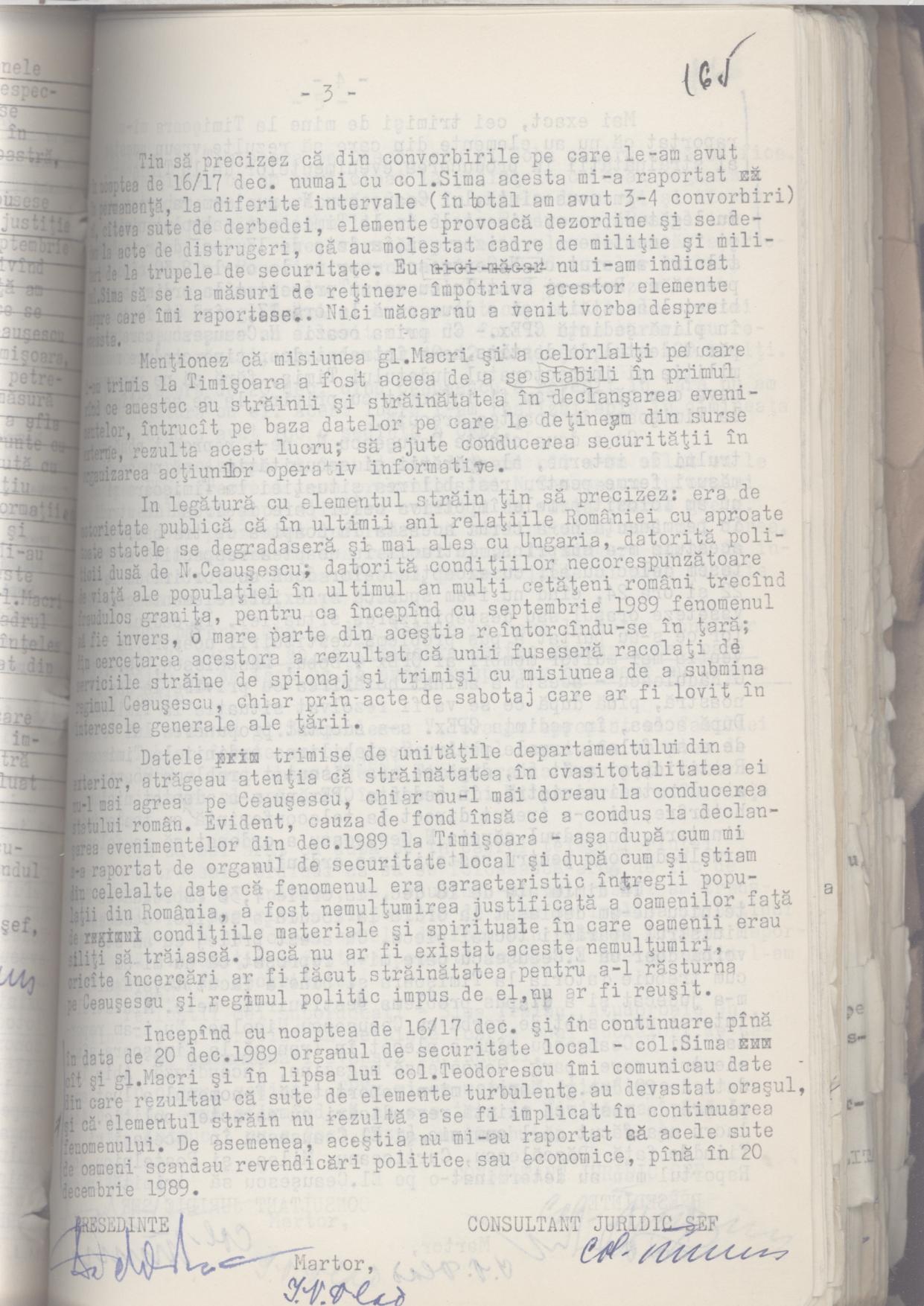
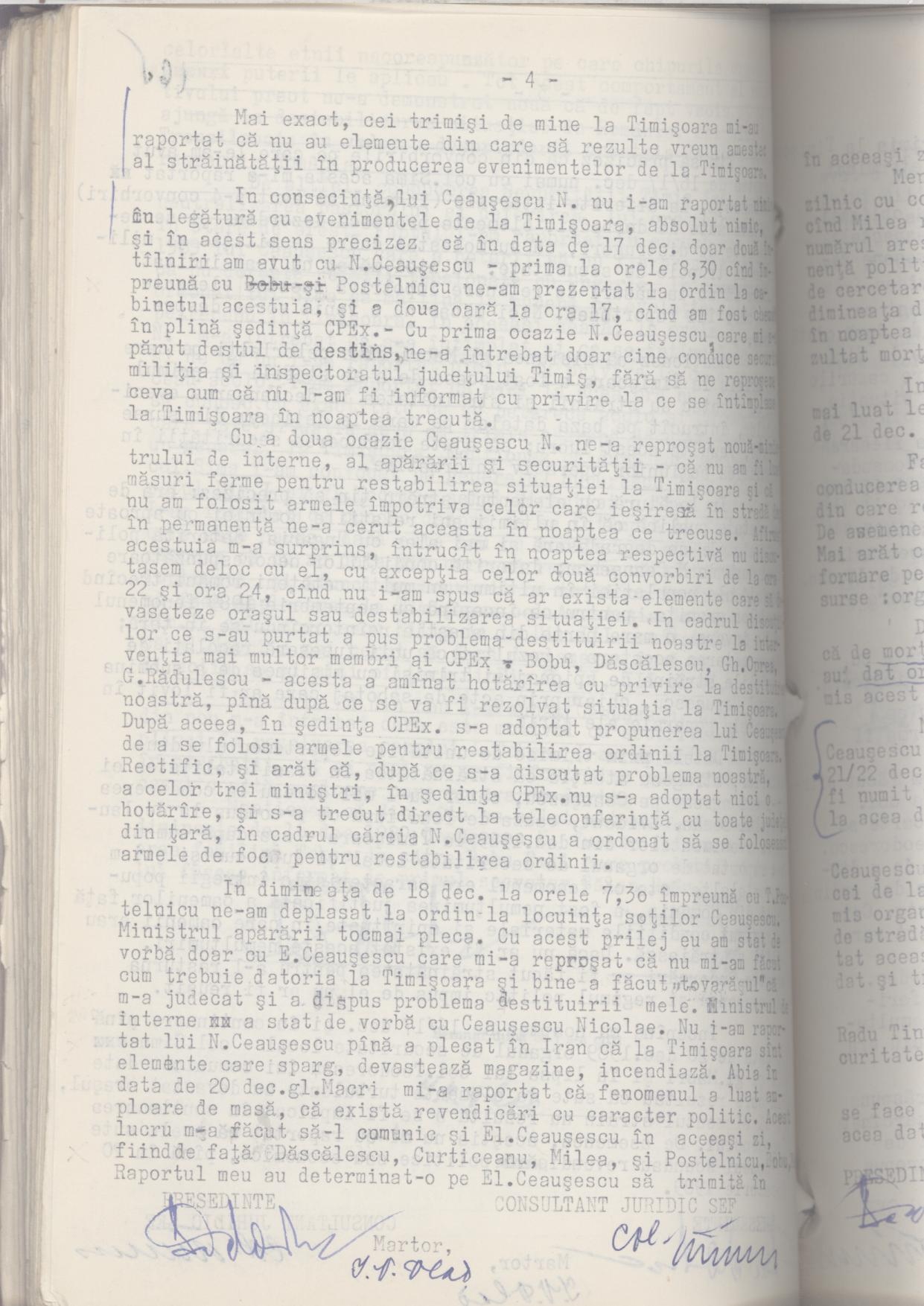
The Timisoara files about December 1989 are now publicly available (when the link works!) on the Internet at http://dosarelerevolutiei.ro/. What they show is that Securitate, Militia, and other regime officials from Timis County were asked by Bucharest–communicated via the person of Securitate Director, General Iulian Vlad–to investigate the role of foreign elements, specifically tourists, in the Timisoara protests of mid-December 1989. But they were not the only ones. General Vlad tasked senior Securitate officials from Bucharest sent to Timisoara to report back to him on this very topic alleging external involvement and manipulation of the Timisoara demonstrations. What remains unclear is how much of this tasking was General Vlad communicating his own “hypothesis” or how much of it was he relaying Nicolae Ceausescu’s “theory” about what was going on. This much is clear: neither those stationed in Timis County, nor those officials sent from Bucharest could find evidence of a foreign hand in the Timisoara uprising, despite being asked to investigate exactly this aspect. How do we know this? From their own written confessions immediately after the December 1989 events. (Below are four of them: Nicolae Mavru, Liviu Dinulescu, Emil Macri, and Filip Teodorescu.)
Niculae Mavru, fost sef al sectiei ‘Filaj si investigatie’ de la Securitatea Timis, declaratia din 13 ianuarie 1990: …la ordinul col. Sima Traian, am primit…misiuni de a observa si sesiza aspecte din masa manifestantilor, din diferite zone ale orasului in sensul de a raporta daca sint straini (ceea ce nu prea au fost) care incita la dezordine, acte de violenta sau altfel de acte… 25 iunie 1991 “Desi ne-am straduit nu am putut raporta col. Sima implicarea completa a vreunui cetatean strain in evolutia demonstratiilor cit si fenomenlor care au avut loc la Timisoara,..”
“Sarcina primordiala pe care am primit-o de la col. Sima a fost daca in evenimentele declansate la Timisoara erau implicate elemente straine din afara tarii. Cu toate eforturile facute nu a rezultat lucru pe linia mea de munca.”
26 iunie 1991, Declaratia lui Liviu Dinulescu, cpt. la Serviciul de Pasapoarte al jud. Timis (in decembrie 1989, lt. maj. ofiter operativ Securitate judetean la Serv. III, care se ocupa de contraspionaj)
“Precizez ca anterior declansarii evenimentelor de la Timisoara din datele ce le detineam serviciul nostru nu rezulta vreun amestec din exterior in zona judetului Timis.”
Generalul Emil Macri (seful Dir. II-a Securitatii, Contrainformatii Economice),
Declaratie 2 ianuarie 1990:
“Rezumind sintetic informatiile obtinute ele nu au pus in evidenta nici lideri si nici amestecul vreunei puteri straine in producerea evenimentelor de la Timisoara. Raportarea acestor date la esalonul superior respectivi generalului I. Vlad a produs iritare si chiar suparare…”
Filip Teodorescu (adj. sef. Dir III Contraspionaj D.S.S.), Declaratie, 12 ianaurie 1990: Seara [luni, 18 decembrie 1989], dupa 23:00, responsabili (anumiti ?) de generalul-maior Macri Emil pe diferitele linii de munca au inceput sa vina sa-i raporteze informatiile obtinute. Au fost destul de neconcludente si cu mare dificultate am redat o informare pe care generalul-maior Macri Emil a acceptat-o si am expediat-o prin telex in jurul orei 01:00 [marti, 19 decembrie 1989. In esenta se refera la:–nu sint date ca ar exista instigatori sau conducatori anume veniti din strainatate…http://atomic-temporary-3899751.wpcomstaging.com/2013/04/29/high-time-to-unpack-already-why-the-restless-journey-of-the-soviet-tourists-of-the-romanian-revolution-should-come-to-an-end/
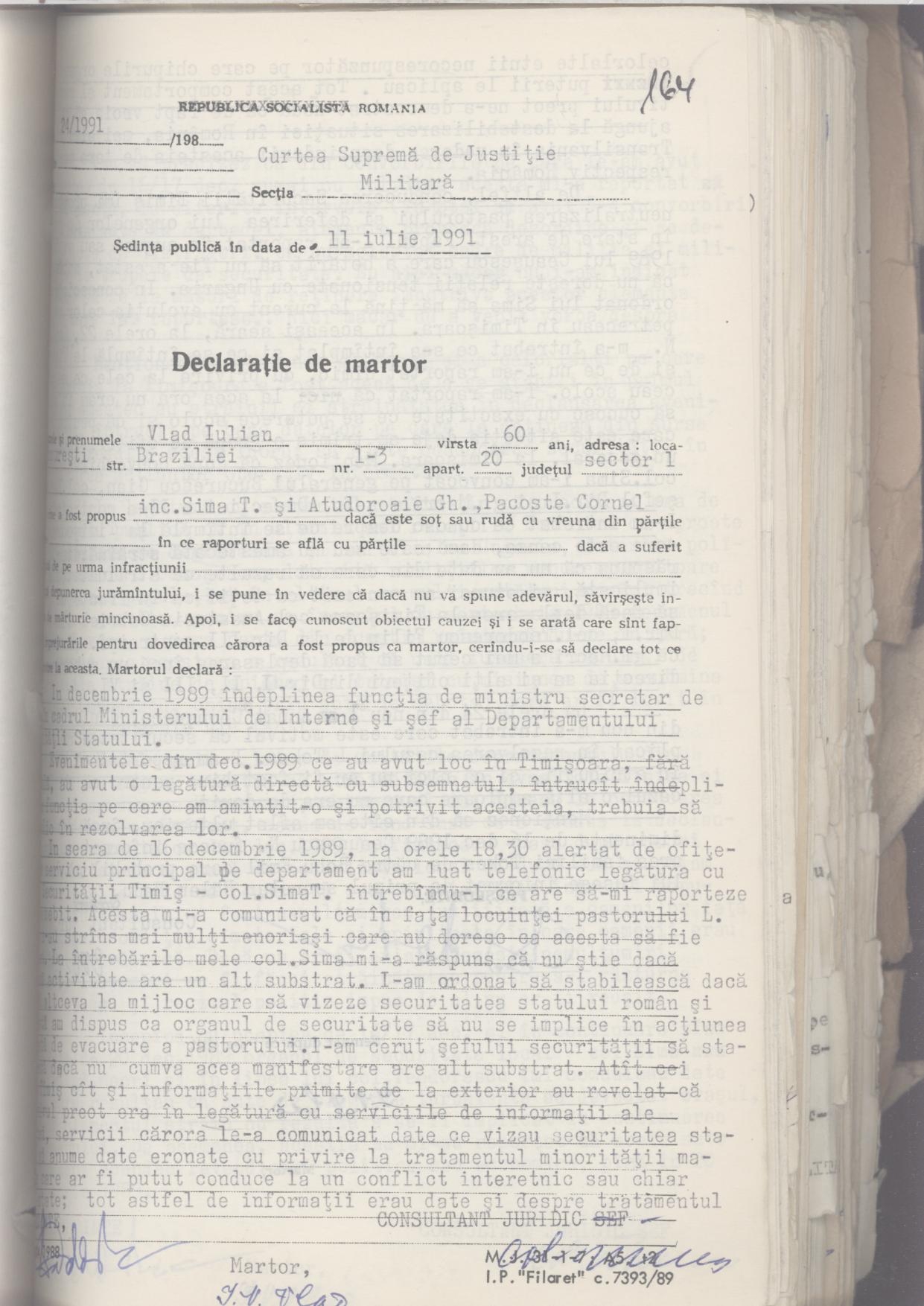
Mai jos, declaratiile lui Petre Pele, Tudor Postelnicu, Gheorghe Diaconescu, si Iulian Vlad Excerpt from Chapter 5 of my Ph.D. Dissertation at Indiana University: Richard Andrew Hall, Rewriting the Revolution: Authoritarian Regime-State Relations and the Triumph of Securitate Revisionism in Post-Ceausescu Romania (defended 16 December 1996). This is the original chapter as it appeared then and thus have not been revised in any form. http://atomic-temporary-3899751.wpcomstaging.com/rewriting-the-revolution-1997/
A Review of the Evidence
Although at first glance the regime’s treatment of Pastor Tokes seems strange and even illogical, within the context of the workings of the Ceausescu regime and the regime’s strategy for dealing with dissent it makes perfect sense. There is simply no convincing evidence to believe that the Securitate–or a faction within it–purposely dragged its feet in enforcing Pastor Tokes’ eviction, or was attempting to spark a demonstration in the hopes of precipitating Ceausescu’s fall. The regime’s decision to evict Tokes was not a last-minute decision. Moreover, the regime exerted tremendous and sometimes brutal pressure to silence Tokes in the months preceding this deadline. Interestingly, according to high-ranking members of the former Securitate, Nicolae Ceausescu’s unwillingness to approve the more definitive measures requested by the Securitate allowed the Tokes case to drag on without resolution (see below). The Tokes case suggests the bureaucratic and byzantine mentalities of the Ceausescu regime, and the clash between a dictator’s instructions and how the institutions charged with defending him interpret their mission. … The suggestion that the Securitate treated Tokes gently prior to his eviction is simply incorrect. On 2 November 1989, four masked men burst through the locked doors of the parochial residence, wielding knives and screaming in a fury. Tokes was slashed on the forehead before his church bodyguards could come to his rescue, causing the four to flee. The numerous Securitate men posted out front of the building had done nothing to intervene in spite of calls for help. Puspoki suggests that these “Mafia-like thugs,” who attacked as if from “an Incan tribe,” were some of Colonel Sima’s “gorillas,” sent to deliver a clear message to Tokes that he should leave immediately.[40] The view of the former Securitate–as expounded by Colonel Sima’s senior deputy, Major Radu Tinu–insinuates a “tourist”-like scenario. According to Tinu, the incident was clearly a “set-up” designed to draw sympathy to Tokes’ cause since the assailants fled away in a car with West German tags.[41] Not for the last time, the Securitate thus appears to attempt to attribute its own actions to foreign agents. A week after the mysterious attack by the masked intruders, all of the windows of the parochial residence and nearby buildings were smashed. Interestingly, the report drawn up for Bucharest by the Timisoara Securitate attempted to argue that “workers” from the Timisoara Mechanical Enterprise, offended by pastor Tokes’ behavior, had broken the windows. According to Puspoki, the use of a propaganda-like description was not accidental: the local Securitate was trying to present the incident as evidence of “the dissatisfaction of the working people of Timisoara” in the hope that it would finally prompt Ceausescu into approving definitive measures against Tokes.[42] Was Ceausescu responsible for the fact that the Tokes case dragged on without resolution? Support for such a conclusion comes from the comments of Securitate officers Colonel Filip Teodorescu and Major Radu Tinu. Teodorescu was dispatched to Timisoara with sixty other Securitate information officers in order to “verify” the request of the local Securitate that proceedings for treason be initiated against Tokes.[43] Teodorescu laments: Unfortunately, as in other situations…Nicolae Ceausescu did not agree because he didn’t want to further muddy relations with Hungary. Moreover, groundlessly, he hoped to avoid the criticisms of “Western democracies” by taking administrative measures against the pastor through the Reformed Church to which [Tokes] belonged.[44] Major Radu Tinu suggests that Ceausescu’s approval was necessary in the case of Securitate arrests and that the local Securitate remained “stupefied” that after having worked so long and hard in gathering information with which to charge Tokes with the crime of treason, Ceausescu rejected the request.[45] Tinu speculates that Ceausescu “did not want to create problems at the international level.” Because former Securitate officers rarely pass up the opportunity to absolve themselves of blame, and it would appear both easier and more advantageous to blame the deceased Ceausescu for being too unyielding in the Tokes affair, these allegations seem plausible. Thus, it would appear that because Nicolae Ceausescu was skittish of further damaging Romania’s already deteriorating relations with the international community, and the Tokes case was a high-profile one, he refrained from approving visible, definitive action against the pastor. The Securitate‘s attempt to goad Ceausescu to bolder action would appear to confirm Ghita Ionescu’s suggestion that where the security apparatus comes to dominate regime affairs it attempts to impose its institutional prerogatives upon political superiors. Ceausescu and the Securitate appear then to have had sometimes conflicting views over how to resolve the Tokes affair in the quickest and most efficient fashion. By December 1989, a huge group of Securitate officers were working on the Tokes case: the entire branch of the First Directorate for Timis county, the special division charged with combatting Hungarian espionage, high-ranking members of the First Directorate and Independent Service “D” (responsible for disinformation) from Bucharest, and members of the division charged with “Surveillance and Investigation.”[46] Puspoki describes Timisoara at this late hour as follows: Day and night, the telex machines on the top floor of the [County Militia] “Inspectorate” incessantly banged out communications, while the telephones never stopped ringing. Minister Postelnicu yelled on the phone, Colonel Sima yelled through the offices and the hallways. The officers ran, as if out of their minds, after information, besieged neighbors of the pastor, and dispatched in his direction–what they call–”informers with possibilities.”[47] Yet the case lingered on. On Sunday, 10 December 1989, Pastor Tokes announced to his congregation that he had received a rejection of his most recent appeal: the regime would make good on its threat to evict him on Friday, 15 December. He termed this an “illegal act” and suggested that the authorities would probably use force since he would not go willingly. He appealed for people to come and attend as “peaceful witnesses.”[48] They came.
[48].. Tokes, With God, for the People, 1-4. ————————————————————————————————
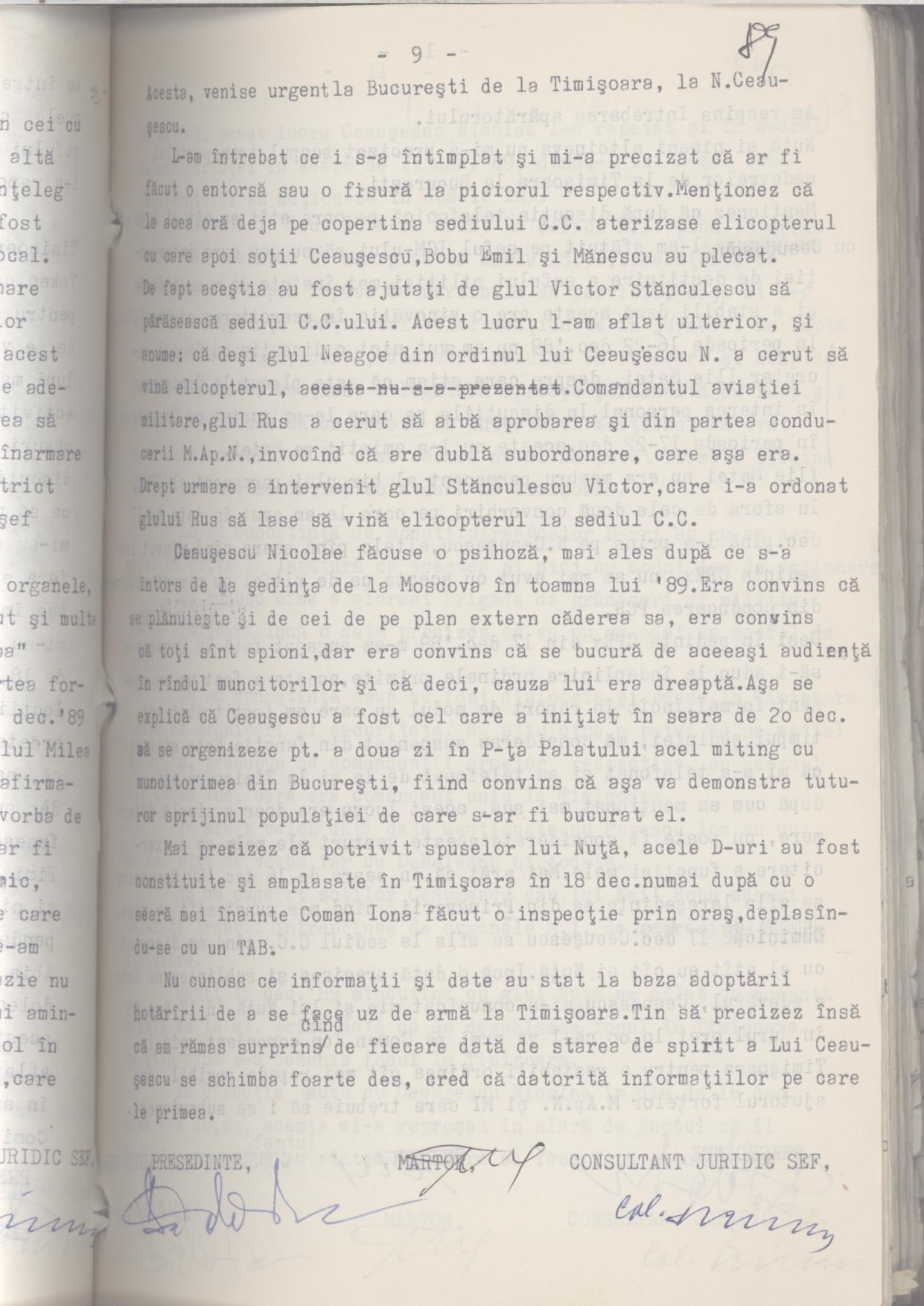
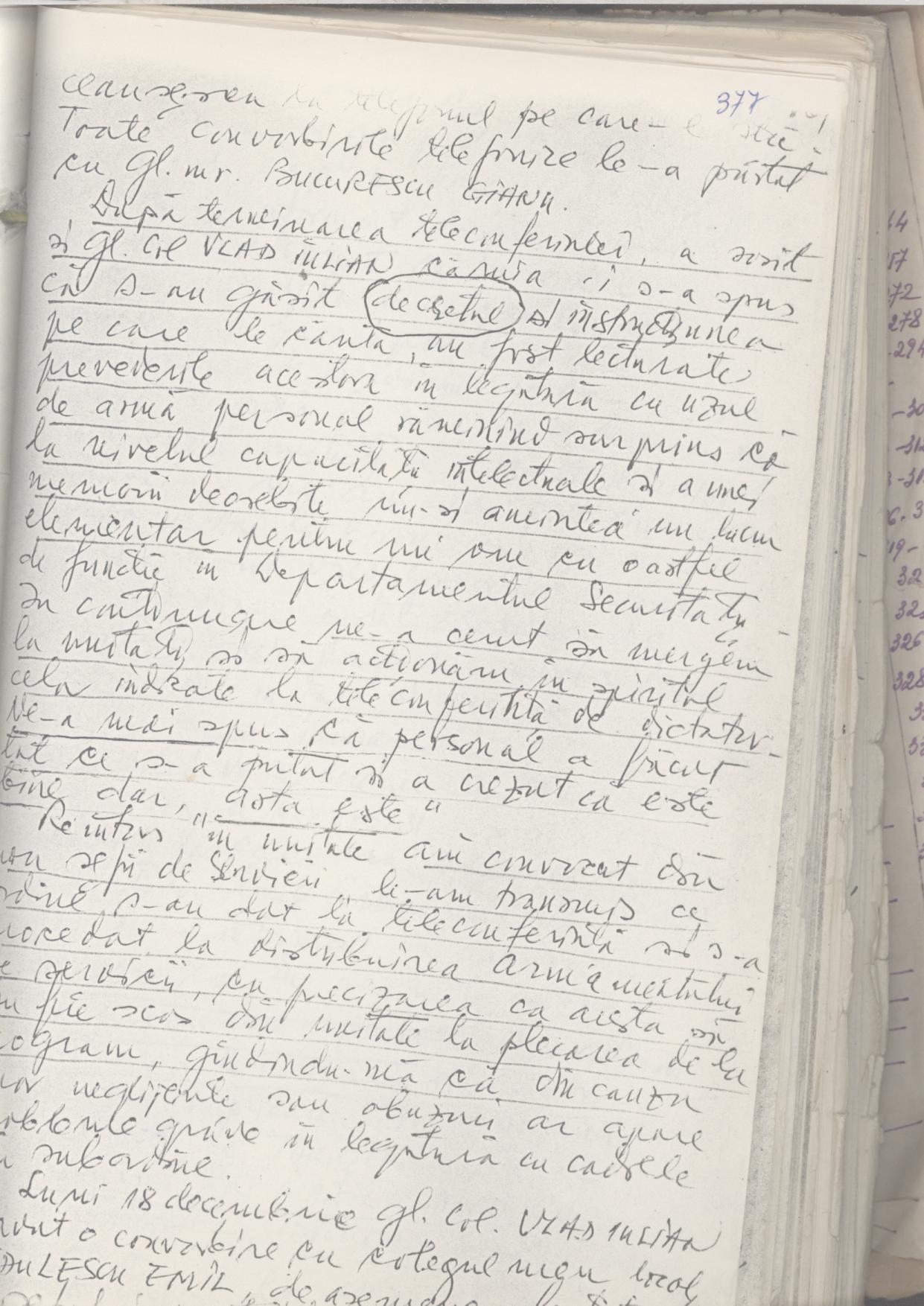
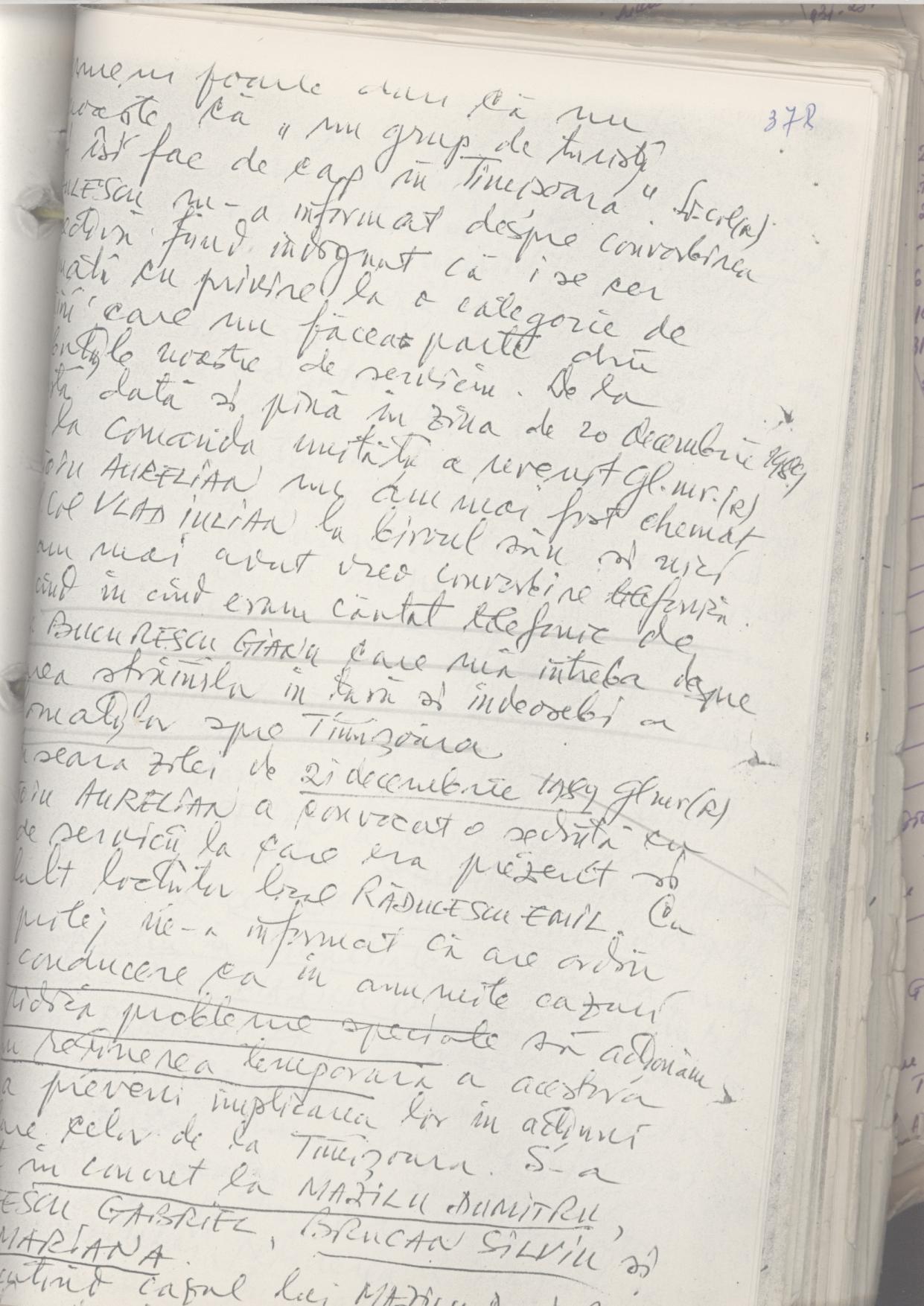
Tudor Postelnicu: “Ceausescu Nicolae facuse o psihoza, mai ales dupa ce s-a intors de la sedinta de la Moscova in toamna lui ’89. Era convins ca se planuieste si de cei de pe plan extern caderea sa, era convins ca toti sint spioni…” Petru Pele (Dir I, DSS). Declaratie, 16 ianuarie 1990: “Printre sarciniile mai importante efectuate de catre acestia in perioada 17-22.12.1989 s-a numerat (?) constituierea (?) listelor celor retinuti de organele militie cu listele celor predati sau reintorsi din Ungaria, intrucit s-a emis ipoteza ca evenimentele de la Timisoara au fost puse la cale in tara vecina…” Gheorghe Diaconescu, Declaratie 31 decembrie 1989 “Luni 18 decembrie gl. col. VLAD IULIAN a avut o convorbire cu colegul meu (local?) RADULESCU EMIL … Vlad Iulian (continuarea, declaratia lui Gheorghe Diaconescu) “?… foarte dur (?) ca nu (?) ca ‘un grup de turisti isi fac de cap in Timisoara’” Tocmai Iulian Vlad, el insusi, recunoaste ne-implicarea strainilor in evenimentele de la Timisoara, aici… “Incepind cu noaptea de 16/17 dec. si in continuare pina in data de 20 dec. 1989 organul de securitate local col. Sima cit si gl. Macri si in lipsa lui col. Teodorescu imi comunicau date din care rezulta ca sute de elemente turbulente au devastat orasul, si ca elementul strain nu rezulta a se fi implicate in continuarea fenomenului.” “Mai exact, cei trimis de mine la Timisoara mi-au raportat ca nu au elemente din care sa rezulte vreum amestec al strainatatii in producerea evenimentelor de la Timisoara.”http://atomic-temporary-3899751.wpcomstaging.com/2013/03/17/o-indicatie-pretioasa-de-pe-malurile-dimbovitei-implicarea-strainilor-in-evenimentele-de-la-timisoara-paranoia-lui-nicolae-ceausescu-sau-confirmarea-lui-iulian-vlad/
All this is important to keep in mind when coming across claims about the alleged role of these tourists in the overthrow of the communist regime of Nicolae Ceausescu: none of the authors purporting such claims have addressed the documents above. Among the authors who allege such a role and whose work is available on the Internet are the following:
Posted by romanianrevolutionofdecember1989 on December 15, 2014
Although newspapers of the time in the West really only started covering reports of the outbreak of the Timisoara uprising and the brutal response of the Ceausescu regime on 19 December 1989 (see, for example, http://www.nytimes.com/1989/12/19/world/upheaval-in-the-east-casualties-reported-in-rumania-protest-spawned-by-a-clash.html), shortwave radio in those days provided information much earlier. I don’t have the exact time or station recorded on this, but given my listening patterns and what I could tune in clearly on my Kenwood back then, it is probably from the BBC World Service and appears to report on the events in Timisoara up until Saturday evening/night 16 December 1989.
Upheaval in the East; Casualties Reported In Rumania Protest Spawned by a Clash
By THOMAS L. FRIEDMAN, Special to The New York Times
Published: December 19, 1989
WASHINGTON, Dec. 18— A confrontation between the police and a prominent church leader in Rumania over the weekend led to a large-scale anti-Government protest that reportedly resulted in many casualties as security forces responded with water cannon, tear gas and some gunfire.
Reporters were not allowed near the scene of the clash in the city of Timisoara in western Rumania, not far from the border with Hungary.
Accounts of the unrest were pieced together here from Eastern European and Western news agencies, which interviewed witnesses who left Rumania in the last two days. Details also came from radio broadcasts monitored by the State Department’s Foreign Broadcast Information Service and from briefings by department officials.
The State Department said today that the United States Embassy in Bucharest, the Rumanian capital, which is about 500 miles from the area of the unrest, still could not confirm reports of casualties. The witnesses’ accounts greatly varied – with the number of dead as low as two and as high as several hundred.
The demonstrations were the first reported in Rumania since people in East Germany, Czechoslovakia and Bulgaria began taking to the streets in recent months in peaceful uprisings that forced their Communist rulers to share power.
They apparently began as a result of ethnic tensions between the hard-line Communist regime of President Nicolae Ceausescu and members of the country’s Hungarian minority, which numbers about two million.
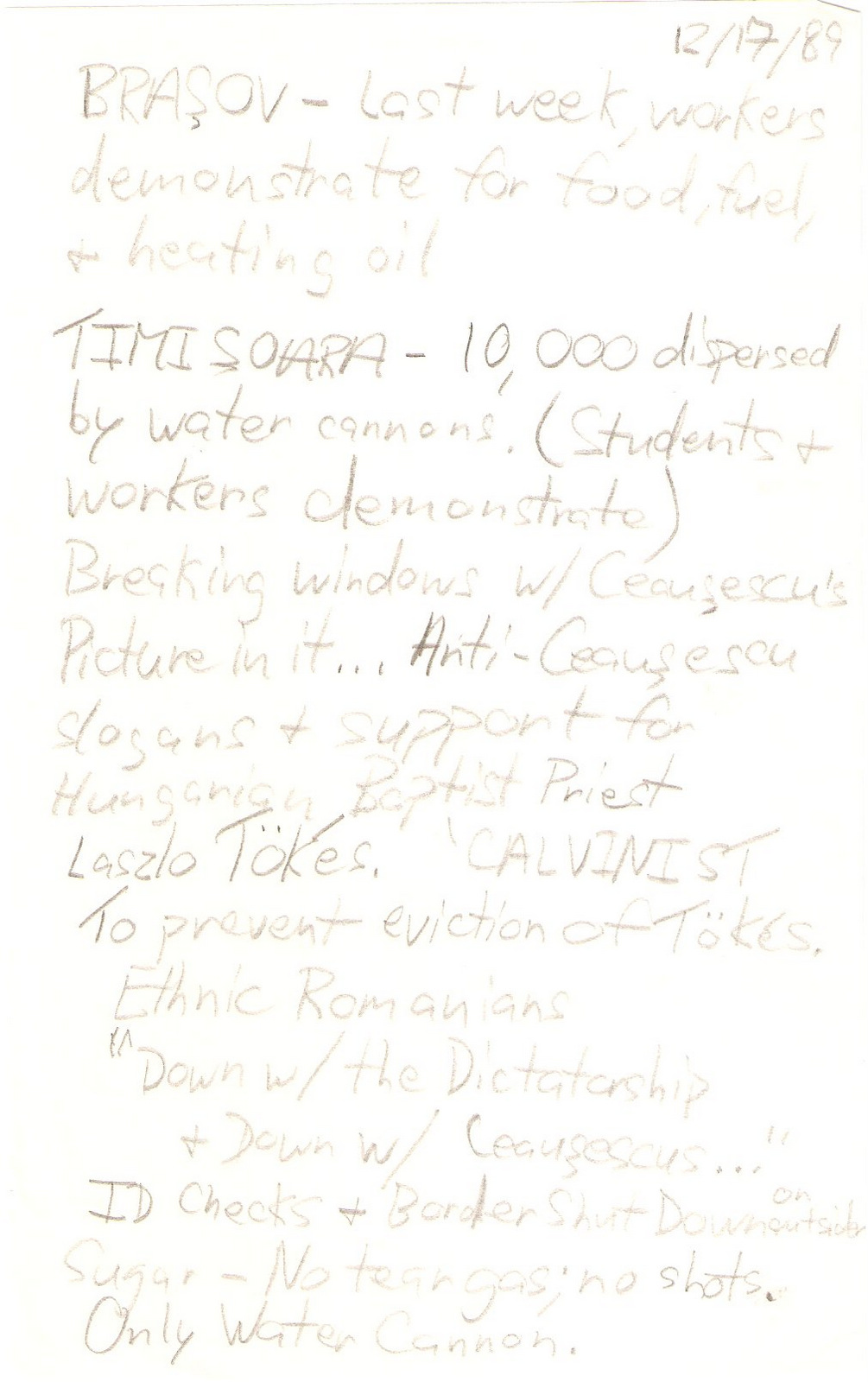
State Department officials and East European press agencies said the protests took on a broad anti-government character like those elsewhere in Eastern Europe. The official Yugoslav press agency said the police used guns and water cannon against as many as 10,000 protesters in Timisoara, who shouted ”Freedom!,” ”Rumanians rise up!” and ”Down with Ceausescu!”
”It looks like Rumania’s time may have finally come,” said a State Department analyst. ”I would emphasize the word ‘maybe’ though. Ceausescu has a pretty tight lid on the place. But it will happen sooner or later.”
The American Ambassador to Rumania, Alan Green Jr., was instructed by the State Department to lodge a complaint with Mr. Ceausescu’s Government, long considered the most repressive in Eastern Europe after that of Albania. Police Attacks Reported
Witnesses interviewed by Hungarian and Yugoslav press agencies said the clash began when the police attacked crowds trying to block the eviction of a popular ethnic Hungarian priest and human rights campaigner, the Rev. Laszlo Tokes. Witnesses who arrived tonight in Budapest told Hungarian television that the confrontation quickly turned into a demonstration against Mr. Ceausescu, with thousands of people taking part.
The State Department spokeswoman, Margaret D. Tutwiler, said several hundred members of Mr. Tokes’s congregation apparently mounted a demonstration on Saturday ”in support of his refusal to vacate the church premises.”
”The demonstration apparently grew in size and took on an anti-Government tone,” Miss Tutwiler said. ”On Sunday, Dec. 17, Government security units brutally put down the demonstration with the use of truncheons, tear gas and water cannons.”
A witness quoted by Hungarian television said a fire truck was set ablaze by demonstrators and another said the crowd marched on city hall, shouting that the Rumanian people should take note of what was happening in Czechoslovakia, Hungary and Bulgaria. No Food, Pregnant Woman Says
Another witness said a pregnant woman pointed at her belly and told soldiers to shoot her there because there was not enough food in the stores anyway to feed her children.
Yet another witness said she heard of similar protests taking place in Arad, a town near Timosoara.
American Embassy personnel have repeatedly tried to visit Mr. Tokes, Miss Tutwiler said, but have been barred by security forces. ”We call upon the Rumanian Government to cease its pressure on Reverend Tokes and his congregation and allow him to exercise his fundamental freedom to communicate,” Miss Tutwiler said.
Hungarians are the largest minority in Rumania. For years they had had their own schools and cultural centers, were allowed to speak their own language and were freely promoted in the Government bureaucracy. But the Ceausescu leadership has gradually withdrawn these privileges. As Hungary has liberalized its policies and opened up to the West in recent years, Mr. Ceausescu has became more suspicious about ethnic Hungarians in his country.
He apparently felt he had the situation well enough in hand to leave Bucharest today for a three-day state visit to Iran.
The Associated Press said that traffic into Rumania was reported virtually halted on the Hungarian, Yugoslav and Bulgarian borders. It said that there were also several reports of Western flights being turned back at Bucharest airport, which diplomats said was under tight security.
Charles Gati, an expert on Eastern Europe at Union College, said it was logical that the Rumanian Government would use violence to suppress demonstrations.
He said the leadership, which is dominated by the Ceausescu clan, has managed to largely purge its intelligence services of Soviet agents, unlike the intelligence services of other East European countries. Mr. Gati said that as a result, the ability of the Soviet Union to encourage gradual reform, beginning in the Communist Party, is much more limited in Rumania. Violence Foreseen
Nevertheless, Mr. Gati said: ”Whatever you may think about the domino theory in Asia in the 1960’s, it is certainly working in Eastern Europe in the 1980’s. It will be impossible for Ceausescu to maintain a Stalinist regime when even the Brezhnevite regimes have fallen all around him.”
”If change is to come to Rumania, it will almost certainly have to be violent,” he continued. ”It cannot happen peacefully like everywhere else.”
State Department officials said it was difficult to confirm any casualty figures or to provide a detailed version of events, because of the distance between Bucharest and Timisoara, a city of perhaps 200,000 people.
The most severe account of casualties came from Radislav Dencic, a graduate of Timisoara University who was in the city for a week and returned to Yugoslavia today. He was quoted by the Reuters news agency as saying that Rumanian security forces shot at the protesters from the street and from helicopters.
”Hundreds of people were falling on the pavement in front of my eyes,” he told reporters.
Photo of a womaan crossing the border from Hungary after a shopping trip (Agence France-Presse); map of Rumania showing location of Timisoara (NYT) (pg. A16)
approx. min 3:42 The enigmatic Nica Leon, makes an interesting claim that those around him did not originally react to his shout against Ceausescu on 21 December 1989 during Ceausescu’s address from the balcony of the CC because they were used to and anticipating the usual pro-Ceausescu chant (for more on Nica Leon…see https://romanianrevolutionofdecember1989.wordpress.com/2010/12/24/cc-ul-in-zilele-fierbinte-decembrie-1989/)
min. 6:45-7:20 Dan Iosif as intelligent (?); clever perhaps but…more honest is his own self-depiction at 7:20 as a “working man”
min. 8:50 Classic, Petre Roman depicts himself as noticing that he is the “only one from the streets” at the formation of the National Salvation Front, while all the rest are old politicians!
min. 11:04-11:25 Discussion of military plot’s plan to arrest Ceausescu in February 1990, but that the arms were only supposed to arrived by January 1990, and they were overtaken by events.
min. 11:53 Militaru claims emphatically that Iliescu was part of the background, more enduring conspiracy
min. 15:55-16:16 Interesting discussion of Militaru’s visit to the Soviet Consulate on 20 August 1987
min. 16:38 Surprise! Emil Barbulescu, Ceausescu’s nephew says Gorbachev and the Soviets overthrew his uncle, in part because of Ceausescu’s territorial claims over Bessarabia and demand that the Russians return the Romanian tezaur (treasure)!
min. 21:44 (Correctly) Discounts theories of a staged execution
min. 22:53 Panipat pastry shop (ah, memories of Bucharest 1994) and discussion of Romania someday getting into the EU
min. 23:43 Interesting observation of the different posthumous treatment of Nicolae v. Elena Ceausescu and the already then in 1994 nostalgia for Nicolae Ceausescu.
Five years ago this week, the world rejoiced as Romania rose to overthr ow its dictator. JOHN SIMPSON, who was there for the BBC, went back and has dis covered startling evidence that the revolution was not as it seemed
It was the defining revolution of our time, a darkly satisfying affair that opened with the dictator’s moment of comic stupefaction when the crowd presumed to boo him, reached its height as the wild-eyed, newly liberated crowds stormed the Centra l Committee building, waving flags with holes where the Communist insignia had been and chanting songs about Nicolae Ceausescu being no more, and closed with the spectacle of the tyrant and his Lady Macbeth wife lying dead in the snow at Tirgoviste.
No velvet revolution here: this sprang from an ancient, autochthonous affinity for violence. From the first confrontation in Timisoara on 16 December to the executions on Christmas Day, these were 10 days which sated the world’s appetite for drama and revenge.
And yet it wasn’t just a popular insurrection, pure and simple. Within hours of the capture of the Central Committee building as the crowds bayed in the square outside and Ceausescu’s office was taken over by a romantic gaggle of revolutionaries – film-makers, sculptors, actresses, petty crooks, and a former circus stunt-man who was almost acclaimed president – a meeting was being held in a small, windowless room elsewhere in the building at which the real leaders of the new Romania were sorting out thecountry’s future.
There was nothing romantic about these men. All were former communists, and most had been high-ranking officials under Ceausescu. What united them was the fact that they had become disaffected, and wanted to get rid of him. Several had strong links with Mikhail Gorbachev’s Soviet Union, and wanted to create his kind of perestroika communism in Romania.
Recently, I travelled with a film crew to Tbilisi, the Georgian capital, to interview Gorbachev’s former lieutenant, Eduard Shevardnadze. He looked tired, puffy-faced, and his familiar white quiff was wilting. It felt very strange to see a man of this international distinction in such distant, small-time surroundings; rather like finding that Douglas Hurd had become governor general of your Caribbean holiday island, or meeting Valery Giscard d’Estaing in a mayor’s parlour in the Auvergne.
Shevardnadze explained how Ceausescu represented a serious stumbling-block to Gorbachev’s plans for a new Europe. Like Erich Honecker in East Germany and Milos Jakes in Czechoslovakia, only worse.
“All these leaders had to go,” he said meaningfully, and described how Gorbachev and Ceausescu had had such a violent row not long before the revolution that the security men almost had to be called in.
So had the KGB been involved in Ceausescu’s overthrow?
“You can’t always tell with an organisation as secretive as that,” Shevardnadze said. “It’s possible; but to organise everything that happened in Romania was beyond the KGB’s capacity. This was a real expression of popular protest against the regime.”
Still, there was certainly a great deal of KGB activity in Romania that December. Virgil Magureanu, the former dissident who is now head of the SRI, the cleaned-up Romanian intelligence organisation which took over from the Securitate, invited us into his headquarters in Bucharest to talk about it.
“It was clear at the time,” Magureanu said, “that the Soviet special services, the KGB, put a great deal of effort not just into finding out what was going on in Romania, but also in carrying out `diversions’ against the former regime.”
Some of these people came in disguised as tourists, he said, and drove around in Russian cars; though he felt that this had been rather unprofessional of them.
Whatever the “diversions” they carried out – he wouldn’t elaborate – there were certainly several conspiracies among the Romanian armed forces, and even in the Securitate itself, to overthrow Ceausescu; and the Russians were told about the most importantone early on.
The central figure was General Nicolae Militaru, who was briefly to become defence minister after the revolution. Nowadays he lives on his small and scarcely adequate service pension in a rambling house in one of the best Art Deco suburbs of Bucharest. Trained at the Frunze military academy in Russia, where Soviet intelligence recruited a great many agents among the Eastern European cadets, Militaru began plotting actively against Ceausescu in 1984.
Three years later he felt ready to approach the Russians. He visited the Soviet consul in the Romanian port of Constanta and asked him what Moscow’s response would be if Ceausescu were to be overthrown. The consul left the room to consult Moscow. When h e returned, he was smiling: “Comrade Militaru, the Soviet Union does not interfere in the domestic affairs of Romania.”
“I realised,” Militaru told us, “that the message was, do whatever you think you need to.” Together with Ion Iliescu and other disaffected, pro-Gorbachev figures, he formed the National Salvation Front, and sent a manifesto in its name to Radio Free Europe in the spring of 1989. The intention was to stage a bloodless coup against Ceausescu in February 1990. The conspirators would disable his bodyguards with tranquillizer guns, arrest him and put him on trial.
Like everyone else, they were taken by surprise when the uprising in Timisoara led to outright revolution in Bucharest a few days later. The plot came to nothing, but those who had planned it were organised, and that gave them a head-start when it came to taking over power.
On 22 December, a few hours after the crowd had stormed the Central Committee building and Ceausescu had got away by helicopter from the roof, following the old escape route he had always planned to take if the Russians invaded Romania, Iliescu, Militar u and several others held their meeting in a windowless room.
Iliescu was the acknowledged leader. There were two outsiders present. One was Petre Roman, the son of a famous old communist, but himself an academic who had been swept into the Central Committee building in the first wave of revolutionaries. The other
was an amateur photographer brandishing a video camera. Roman’s incisive intelligence, allied to his father’s name, made him instantly acceptable. As for the cameraman, things were so chaotic in the room that scarcely anyone noticed him.
We have been given the videotape he recorded, and will be broadcasting it fully for the first time. The man who gave it to us decided to get out of Romania because of the threats he was receiving.
The reason for these threats appears about half way through the tape, when someone suggests that the new government should be called the National Salvation Front. Petre Roman objects at first, saying the name sounds much too Communist. General Militaru, a gloomy presence standing behind Iliescu’s chair, then blurts out the secret: it wasn’t chance that had caused this particular group of people to gather here in order to decide Romania’s future government. “Look, my dear chaps,” he says, “the National Salvation Front has been in existence for six months.”
Afterwards, Militaru never wanted to make any secret of the fact that he had plotted against Ceausescu. Others, however, tried to make him keep quiet about it. Silviu Brucan, the political scientist who had once been something of a Stalinist but had ended up in opposition to Ceausescu, poured cold water on Militaru’s claims, perhaps because he had been under house arrest himself and had played no part in the plot.
As for Iliescu, his landslide victory at the polls in May 1990 gave him, and the National Salvation Front, full legitimation. For this reason, perhaps, Iliescu dislikes the suggestion that the Front first came to power through manipulation and conspiracy. “I don’t think revolutions can be organised by someone outside the process itself,” Iliescu told us.
“There’s another suggestion, that the Romanian revolution has been confiscated by Iliescu and his friends,” he went on, pointing at his chest. “It is a non-realistic, non-political and non-scientific approach to a social process.”
Non-scientific”, “social process”: Iliescu has learnt the arts of democracy in the past five years, but he still can’t entirely shake off the language of Marx, Engels and Lenin.
In many ways though, he’s right. The revolution was much too big for a small group of men to hijack, and anyway the reform communism which the Front existed to promote was always a non-starter. The crowds in the square hadn’t thrown Ceausescu out in order to have a milder version of Marxism-Leninism imposed on them. There was a simple, unspoken trade-off: Iliescu and his friends were allowed to rule, but they had to do so in the way the crowd wanted. And what the crowds wanted was a return to capitalism.
To an extent, that’s what they now have. Romania’s economy isn’t particularly thriving, but the country has been transformed during the past five years. Clothes are better, there is decent food in the shops, and there are fewer beggars than there used tobe. There used to be such privation here that immediately after the revolution, I saw two 11-year-old boys looking at the oranges on display in a shop window and arguing whether they were things you played with, or things you ate.
The old sense of fear and oppression has gone completely. The “new man” who once supported Ceausescu’s ludicrous, North Korean personality cult still undoubtedly exists: cynical, empty, dedicated merely to making a career for himself. Many of them, afterleaving the Party or the Securitate, are now doing well in business. The smooth, well-educated and cynical Securitate major who arrested my colleagues and me in Cluj not long before the revolution has a big Mercedes now and runs an importing company.
This was a very strange kind of revolution: plotted in the interests of a superpower that was just about to disappear, by men who were forced to turn the country back to capitalism, even though they knew scarcely anything about it, and in which the greatest beneficiaries are probably the people who did most to make the old dictatorship unendurable.
And yet everyone benefited from Ceausescu’s overthrow – particularly those ecstatic crowds who came out on to the streets on 22 December 1989 and took control of their own lives for the first time.
John Simpson’s investigation into the Romanian revolution will be broadcast tonight in `Newsnight’ on BBC2 at 10.30pm.
Posted by romanianrevolutionofdecember1989 on December 14, 2014
Ion Corneliu, Olympic sharpshooter: “The terrorists had a lot of sophisticated equipment. So, even though they were small in numbers they could cover a great area. The Securitat[e] ran the country, even the army.”
Paul Revere’s ride. Marie Antoinette’s beheading. A lone Chinese man blocking the path of a Red Army tank in Tien An Men Square.
Situations are magnified when performed in the theater of change.
But sometimes, in this chaotic environment, circumstances become muddled and legends exaggerated.
Last December, the world was entranced by an unfolding drama on the streets of Bucharest, Romania. Previously faceless citizens were voicing opposition to the repressive rule of dictator Nicolae Ceausescu.
In contrast to nearby Czechoslovakia, where the downfall of the Communist Party was accomplished peacefully, Ceausescu was being uprooted by force.
Daily televised reports showed mobs in Bucharest’s Palace Square chanting slogans and opposing the Securitat, the dictator’s private army that controlled the country through intimidation.
In 11 days of bloodshed, many riveting stories were reported. But perhaps none was as captivating as those about Romanian Olympic pistol shooters Ion Corneliu and Sorin Babii, who reportedly volunteered to flush out Communist forces and defend a military target.
Now, though, Corneliu, Romania’s three-time Olympian in pistol competition, says such reports were exaggerated.
“It’s just not true,” he said last week at the 1990 World Cup USA tournament at Petersen’s Prado Tiro Ranges in Chino.
Corneliu, 39, one of six Romanians on an international tour, downplayed his role in last winter’s fighting. He and Tiron Costica, the national team trainer, spoke about the revolution and its legacy with the help of U.S. national pistol coach, Dan Iuga, a Romanian who defected seven years ago.
“The shooters (mostly military personnel) were confined to their units,” Corneliu recalled. “They stayed put and fought from there.”
Corneliu, a major, won a gold medal at the Moscow Olympics and a silver at Los Angeles. Partially because of these performances, he recently was named president of the Romanian Shooting Federation.
During the 11 days that shook Romania, Corneliu had more important concerns than target practice at his military club in the Ghencea neighborhood of northeast Bucharest.
Corneliu said the national shooting team missed the major battles because it was stationed outside the city center. He said that although most of the shooters were military club personnel, they were considered soldiers once the rapid-fire events began.
That was a few days before the actual fighting, Corneliu said. When it was apparent that independent movements from cities such as Timisoara were spreading throughout the country, army leaders were told to suppress the activists.
Commanders, however, emerged as a pivotal opposition force, and earned enormous prestige.
“When the time came for Ceausescu to leave, we received orders to defend our position against anybody who would try to attack,” Corneliu said. “We suddenly became part of the revolution.
“It was very lucky that the army was ordered not to move. If we had received an order to fight against the revolution it would have been a blood bath.
“The army was not trained for this kind of war in the city, and the psychological warfare. The Securitat already had alternate plans in case something like this happened. The army just wondered what it should do.”
In an effort to thwart revolutionaries, Securitat forces tried to overtake strategic points around Bucharest, including television, radio and telephone communication centers, the airport and Corneliu’s base.
Corneliu said Ceausescu’s forces wanted access to the base’s gunnery.
“They would shoot in our direction and we would answer,” he said. “But we didn’t know who was there or where they were.
“The terrorists had a lot of sophisticated equipment. So, even though they were small in numbers they could cover a great area. The Securitat ran the country, even the army.”
The loyalist sharpshooters were equipped with infrared telescopic sights and were able to pick off Romania’s revolutionary soldiers at night, the Soviet news agency Tass reported last December.
Whereas Corneliu and other Romanian national shooters were isolated in their fortress, Costica was among the thousands in Palace Square demanding Ceausescu’s ouster after 24 years of control.
Costica said the gripping, spontaneous scenes will stay with him forever.
“A separate group of security forces were dressed like riot police one day,” he said. “We were face to face with them. We asked them, ‘You’re our brothers. What are you doing?’ They did not say anything. They were unmoving, as if they were on drugs.”
Some of the poignant moments downtown occurred when armored trucks and tanks crushed people who tried to block their way. Corneliu said his brother, a doctor who worked in a hospital emergency room, treated some of those victims.
After a month’s traveling, the Romanians looked a bit weary but understood the importance of talking publicly about their country’s plight. Western curiosity has generated an endless stream of questions.
Four months ago, they would have been uncomfortable discussing the East European political landscape in the United States.
“(Before), when we left the country we couldn’t say anything,” Costica said. “We could never tell people that we didn’t believe in the Communist system but only played along because it was the only way to participate in what you wanted to do.
“Our athletes feel they have been persecuted by the system too. We didn’t get any special advantages. We would have been thrown in prison the next day if we said anything while out of the country.”
Some of the poignant moments downtown occurred when armored trucks and tanks crushed people who tried to block their way. Corneliu said his brother, a doctor who worked in a hospital emergency room, treated some of those victims.
After a month’s traveling, the Romanians looked a bit weary but understood the importance of talking publicly about their country’s plight. Western curiosity has generated an endless stream of questions.
Four months ago, they would have been uncomfortable discussing the East European political landscape in the United States.
“(Before), when we left the country we couldn’t say anything,” Costica said. “We could never tell people that we didn’t believe in the Communist system but only played along because it was the only way to participate in what you wanted to do.
“Our athletes feel they have been persecuted by the system too. We didn’t get any special advantages. We would have been thrown in prison the next day if we said anything while out of the country.”
So now they talk. And they dream.
The political and economic realities have replaced the giddiness of those heady days just after Ceausescu and his family were executed.
To the west, there is the Hungarian question in Transylvania. The Romanians do not want the minority population there to join neighboring Hungary.
To the east there is the Moldavian question in the Soviet Union. The Romanians want to reunite with the Soviet republic. A secret pact by Hitler in 1939 allowed Moldavia’s annexation by the USSR.
Corneliu said he cannot predict the outcome of these pressing issues.
But revolutionary hero or not, he is proud to have played a role in determining Romania’s future.
Another apparent synonym for “vidia” is “crestata” or “notched.” I take it that the reference is to the same type of munitions because the damage caused to those wounded by them was equally catastrophic. In December 2007, Alexandru Tudor, a soccer official famous apparently for his stern, unsmiling demeanor, who was shot on 23 December 1989 around 10 am in the area of Piata Aviatorilor near the TV studio, recounted the episode that ended his career:
They brought me to Colentina Hospital and there I had the great fortune of two great doctors. If they had operated on me, they would have to amputate both my legs beneath the knee, but instead they left the bullets in there 12 days. Their explanation was that the bullets were too close to arteries, and since they were gloante crestate (notched bullets), it was very dangerous. After they were removed, I kept the bullets, I have them at home. I was on crutches for six months, I went through therapy, but I had to give up soccer.[22]
Also on the 18th anniversary of the Revolution, a frustrated poster to another site asked pointedly:
Who in Romania in 1989 had 5.5 mm caliber NATO-type munition, that in addition was “notched”—something outlawed by the Geneva Convention, while it is known that the Romanian Army had only the caliber used by Warsaw Pact nations for their weapons, that is to say 7,62 mm….At that time even the Olympic speed shooting champion, Sorin Babii, expressed his surprise….I had in my hand several samples of this cartridge: small, black, with a spiral on the top, or with 4 cuts (those who know a little bit about ballistics and medical forensics can attest to the devastating role caused by these modifications). I await a response to my questions…perhaps someone will be willing to break the silence. I thank you in advance. [emphases added][23]
Intrebari(Duminică, 23 decembrie 2007, 11:33)Istoric [anonim]
Cu repectul cuvenit fatza de cei omoriti in decembrie 1989,civili si militari,in calitate de rezervist al armatei Romane,indraznesc sa intreb si eu :
1. De ce NIMENI,absolut NIMENI ,nu incearca sa explice articolul din “Scinteia Tineretului” din 17.12.1989 (presa controlata in TOTALITATE de cenzura ceausista ) ,articol intitulat “Sfaturi pentru turistii aflati ACUM LA MARE ” (!),publicat in pagina a VII -a a ziarului sub forma unei coloane ,articol din care mai tin minte si acum (nu voi uita niciodata)sfaturi de genul “Cei ce se vor avinta prea mult in larg,sa stie ca serviciile Salvamar nu ii vor cauta” sau “Cei ce prefera baile de soare sa stie ca cea mai mare concentratie de Ultraviolete este intre orele 4 si 6 dimineatza” sau “Cei ce prefera muntele marii sa stie ca nu vor fi iertati”;;;;;Cam ciudate sfaturi pentru turistii ce mergeau la mare sa se imbaieze in decembrie…
2. Cine avea in Romania anului 1989,munitie tip NATO, 5.5 mm calibru, in plus “crestata” – lucru interzis de Conventia de la Geneva,stiut fiind faptul ca Armata Romana avea la vremea aceea calibrul Pactului de laVarsovia ,pentru armamentul usor,adica 7,62 mm…..La vremea aceea chiar campionul olimpic la proba de pistol viteza,Sorin Babii,isi exprima nedumerirea….Eu am avut in mina citeva mostre din aceste cartuse :mici,negre,cu o spirala in virf,sau cu 4 muchii (cei ce cunosc putina balistica si medicina legala isi vor da seama de rolul devastator al acestor modoficari…
Astept si acum raspuns la intrebarile mele…poate ca totusi cineva se vagasi sa rupa tacerea…II multumesc anticipat !
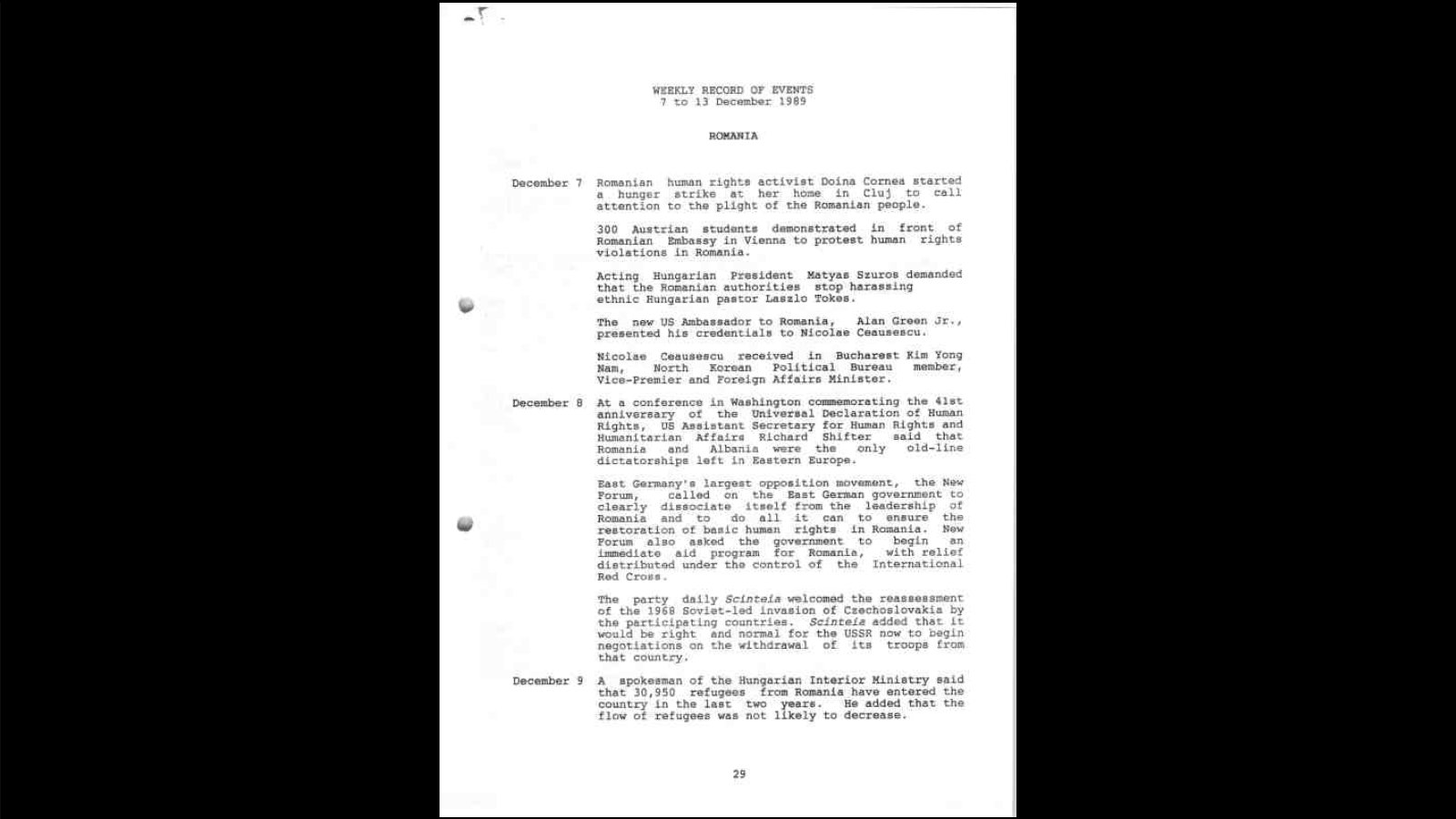
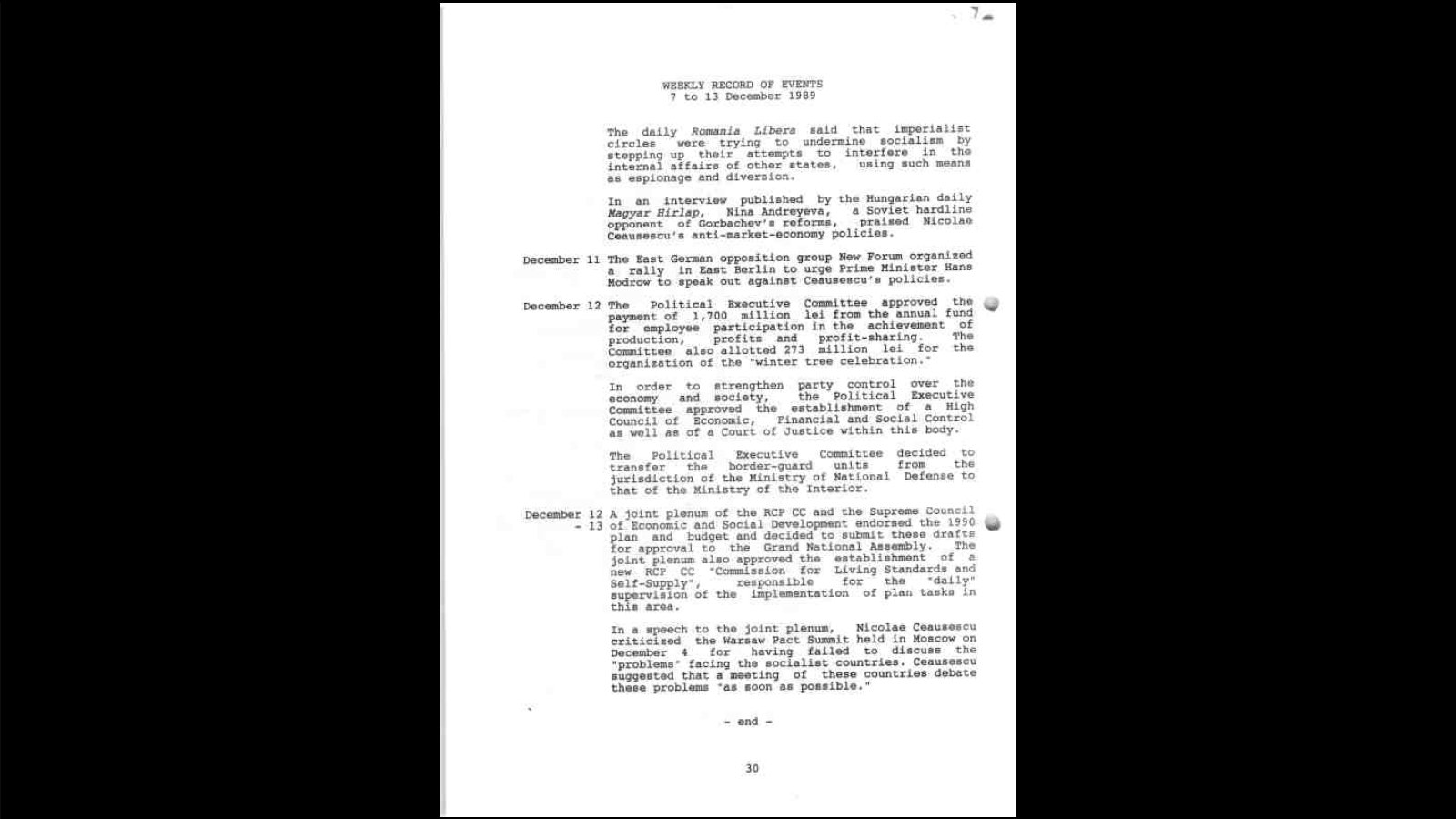
The Political Executive Committee [of the Romanian Communist Party] decided to transfer the border-guard units from the jurisdiction of the Ministry of National Defense to that of the Ministry of the Interior.
This is important, because it suggests that on the eve of the outbreak of the Romanian Revolution of December 1989 that toppled communist dictator Nicolae Ceausescu, Ceausescu and the leadership of the party clearly had more trust in the Ministry of the Interior (essentially interchangeable with the term Securitate) than in the Army.
Nicolae Ceauşescu a avut o zi plină. Sub “atenta sa supraveghere” s-a desfăşurat şedinţa Comitetului Politic Executiv al CC al PCR, în care s-au luat decizii importante pentru viitorul regimului. Izolat tot mai mult pe plan internaţional, preşedintele RSR începuse să se teamă serios de acţiunea “agenturilor străine” pe teritoriul României. Astfel că s-a trecut la măsuri radicale, şedinţa CPEx decizând “trecerea unităţilor de grăniceri din subordinea Ministerului Apărării Naţionale în subordinea Ministerului de Interne”.
Adică a Securităţii, care trebuia să monitorizeze şi mai atent evenimentele de la frontiera de Apus.










 The Archive of the Romanian Revolution of December 1989
