The Archive of the Romanian Revolution of December 1989

A Catch-22 December 1989, Groundhog-Day Production. Presenting the Personal Research & Scholarship of Richard Andrew Hall, Ph.D.

Posts Tagged ‘nicolae ceausescu’

Dosarele Revolutiei de la Timisoara si Alte Marturii v. Procurorul Romeo Balan (10 cazuri)

Posted by romanianrevolutionofdecember1989 on September 7, 2014

(purely personal views, based on two decades of prior research and publications, thank you)

Nu exista nici un dubiu serios ca in decembrie 1989 s-au folosit gloante explozive asa numite DUM-DUM

Lt. Gnl. Traian Oancea, chief of surgery in part of the Central Military Hospital in Bucharest, and Dr. Nicolae “Nae” Constantinescu, chief of surgery at the Coltea Hospital, discussed the use of dum-dum bullets (“balles dum dum”) at a meeting of the Society of Surgeons in Bucharest in early March 1990.
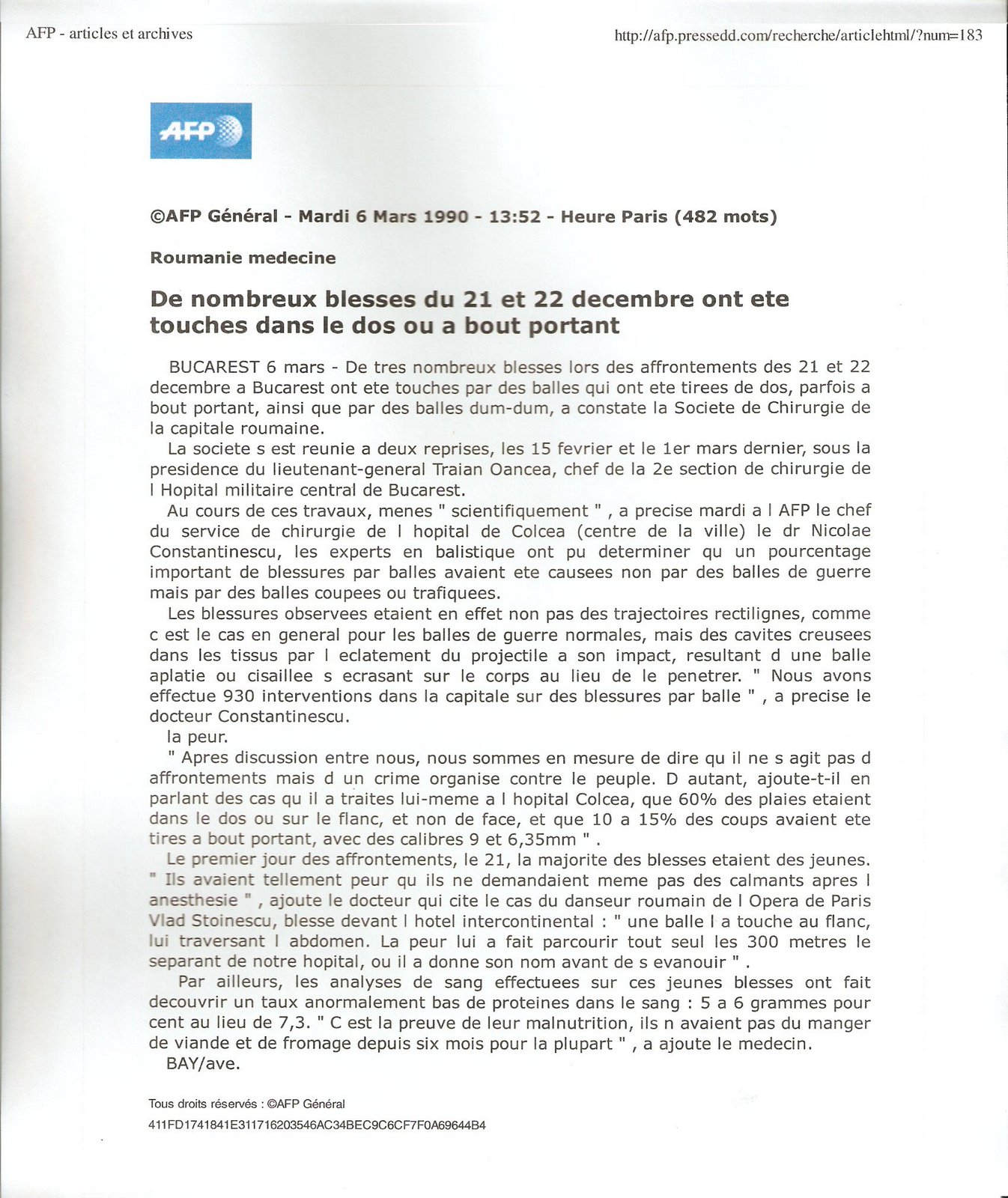
 

©AFP Général – Mardi 6 Mars 1990 – 13:52 – Heure Paris (482 mots)

Roumanie medecine
De nombreux blesses du 21 et 22 decembre ont ete touches dans le dos ou a bout portant
   BUCAREST 6 mars – De tres nombreux blesses lors des affrontements des 21 et 22 decembre a Bucarest ont ete touches par des balles qui ont ete tirees de dos, parfois a bout portant, ainsi que par des balles dum-dum, a constate la Societe de Chirurgie de la capitale roumaine.
   La societe s est reunie a deux reprises, les 15 fevrier et le 1er mars dernier, sous la presidence du lieutenant-general Traian Oancea, chef de la 2e section de chirurgie de l Hopital militaire central de Bucarest.
   Au cours de ces travaux, menes ” scientifiquement ” , a precise mardi a l AFP le chef du service de chirurgie de l hopital de Colcea (centre de la ville) le dr Nicolae Constantinescu, les experts en balistique ont pu determiner qu un pourcentage important de blessures par balles avaient ete causees non par des balles de guerre mais par des balles coupees ou trafiquees.
   Les blessures observees etaient en effet non pas des trajectoires rectilignes, comme c est le cas en general pour les balles de guerre normales, mais des cavites creusees dans les tissus par l eclatement du projectile a son impact, resultant d une balle aplatie ou cisaillee s ecrasant sur le corps au lieu de le penetrer. ” Nous avons effectue 930 interventions dans la capitale sur des blessures par balle ” , a precise le docteur Constantinescu.
   la peur.
   ” Apres discussion entre nous, nous sommes en mesure de dire qu il ne s agit pas d affrontements mais d un crime organise contre le peuple. D autant, ajoute-t-il en parlant des cas qu il a traites lui-meme a l hopital Colcea, que 60% des plaies etaient dans le dos ou sur le flanc, et non de face, et que 10 a 15% des coups avaient ete tires a bout portant, avec des calibres 9 et 6,35mm ” .
   Le premier jour des affrontements, le 21, la majorite des blesses etaient des jeunes. ” Ils avaient tellement peur qu ils ne demandaient meme pas des calmants apres l anesthesie ” , ajoute le docteur qui cite le cas du danseur roumain de l Opera de Paris Vlad Stoinescu, blesse devant l hotel intercontinental : ” une balle l a touche au flanc, lui traversant l abdomen. La peur lui a fait parcourir tout seul les 300 metres le separant de notre hopital, ou il a donne son nom avant de s evanouir ” .
   Par ailleurs, les analyses de sang effectuees sur ces jeunes blesses ont fait decouvrir un taux anormalement bas de proteines dans le sang : 5 a 6 grammes pour cent au lieu de 7,3. ” C est la preuve de leur malnutrition, ils n avaient pas du manger de viande et de fromage depuis six mois pour la plupart ” , a ajoute le medecin.
   BAY/ave.
Tous droits réservés : ©AFP Général
411FD1741841E311716203546AC34BEC9C6CF7F0A69644B4

http://atomic-temporary-3899751.wpcomstaging.com/2013/08/25/tvr-chirurgi-si-reportaje-despre-gloante-explozive-dum-dum/

http://atomic-temporary-3899751.wpcomstaging.com/2014/03/02/25-for-2014-25-things-you-should-know-about-the-romanian-revolution-on-the-25th-anniversary-of-the-fall-of-nicolae-ceausescus-communist-regime-4-timisoara-demonstrators-injured-and-killed/

SIX Doctors/Medical personnel from Timisoara alone have discussed the use of dum-dum bullets against demonstrators in Timisoara…:  Dr. Aurel Mogosanu, Dr. Atanasie Barzeanu, Rodica Novac, Dr. Fluture, Csaba Ungor, Goga Andras
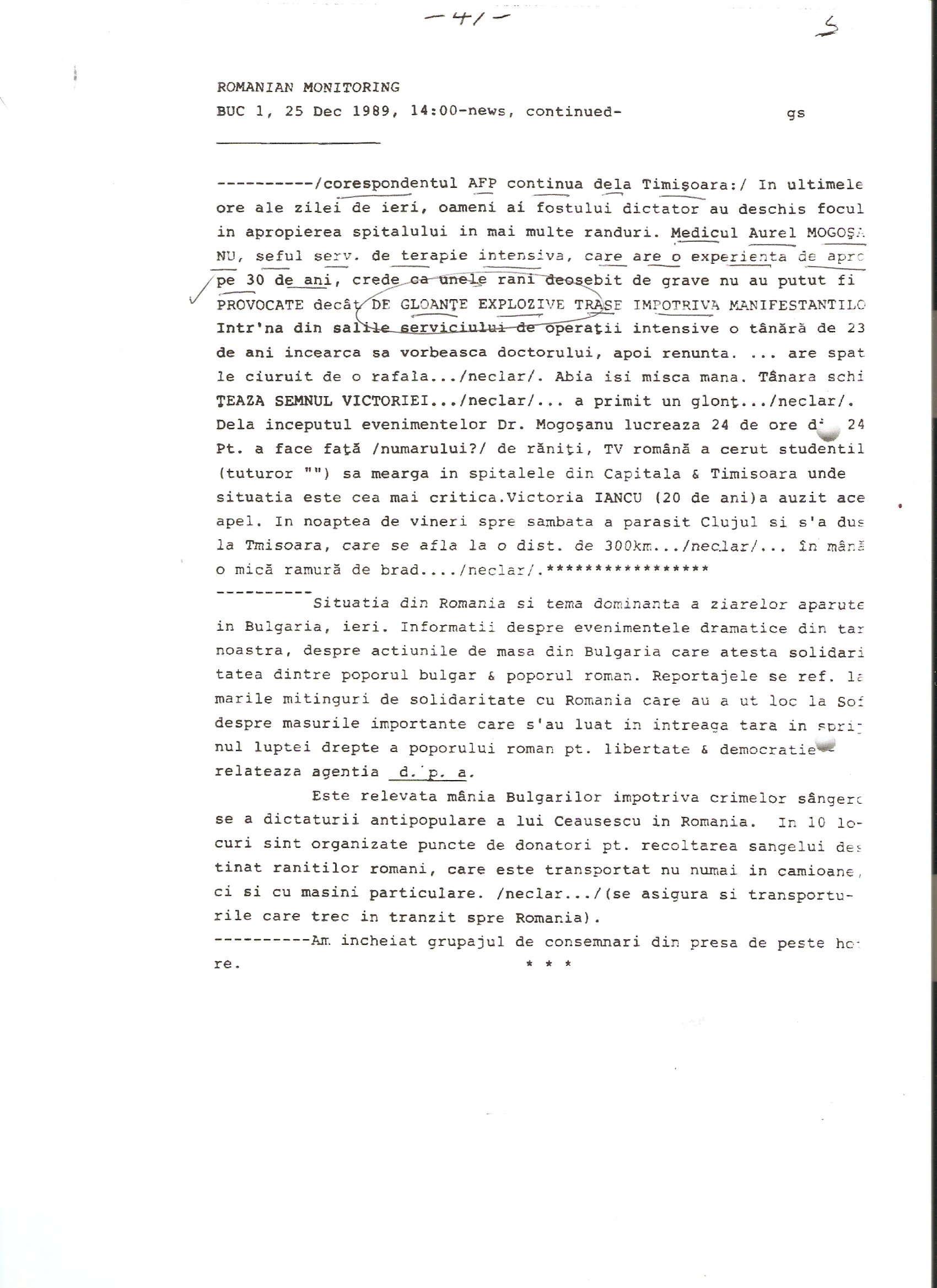
DOSARELE REVOLUTIEI DE LA TIMISOARA V. PROCURORUL ROMEO BALAN

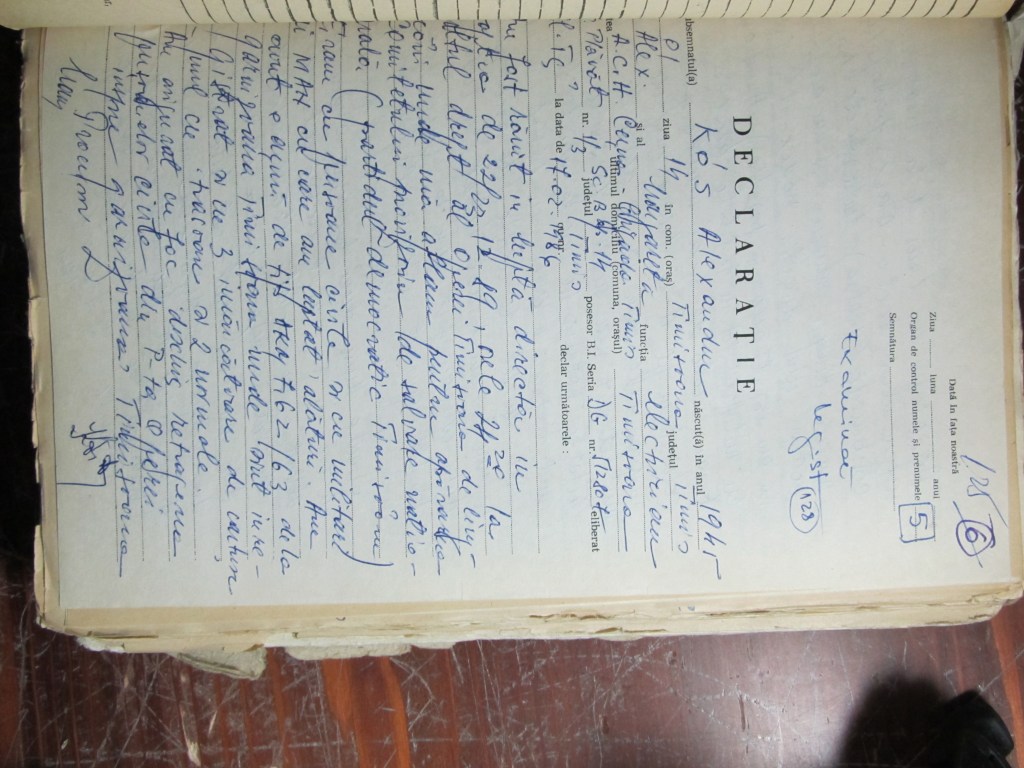
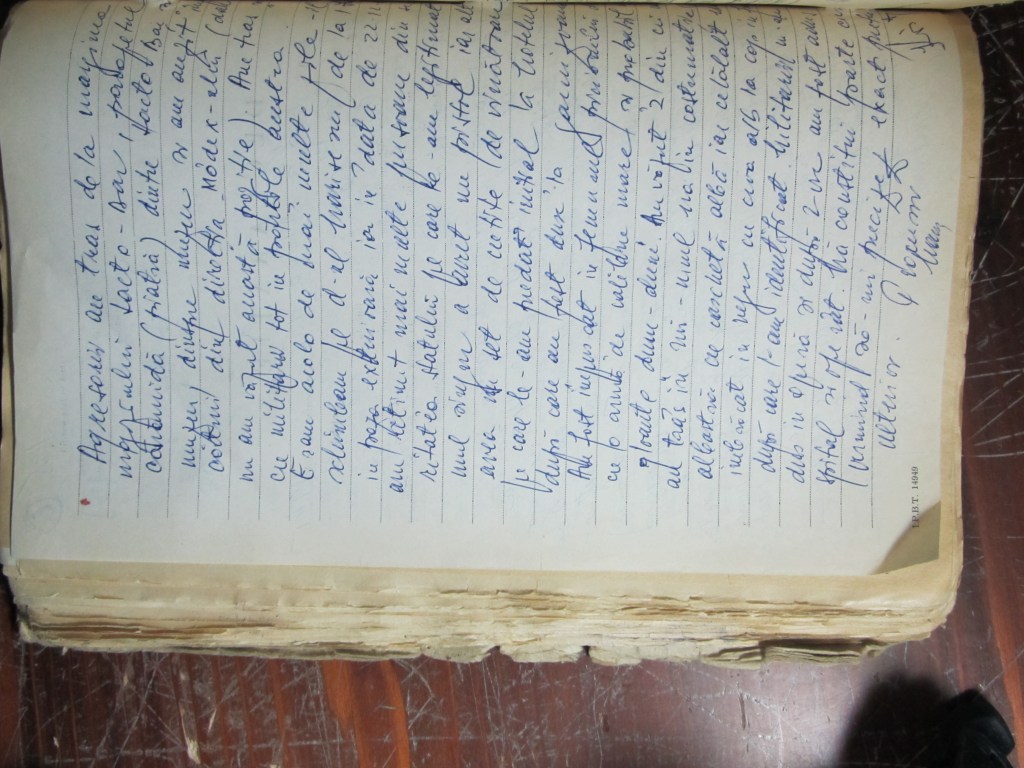
1) Kos Alexandru

Tot dinspre muzeu a fost împuşcat Kos Alexandru, civil înarmat de militari şi aflat în pază în exteriorul Operei, după colţul din dreapta al faţadei. Rănirea lui Kos Alexandru s-a produs în aceeaşi noapte în jurul orelor 0,15. Victima a fost rănită grav suferind fractură deschisă prin împuşcare femur drept, leziune ce a necesitat 3-4 luni de îngrijiri medicale. Actul medico-legal precizează că victima a fost împuşcată de la distanţă, ca şi în cazul lt. Dinu Daniel.[14] Kos Alexandru a susţinut constant că împotriva lui s-a deschis focul din spaţiul situat între Muzeul Banatului şi clădirea cu lacto-barul.[15] În momentul în care a fost rănit, Kos Alexandru avea asupra sa un pistol mitralieră şi 3 încărcătoare pline pe care le primise de la Comenduirea de garnizoană Timişoara:

„Înainte de a mi se da arma s-a discutat despre tactica pe care trebuia să o avem în dispozitivele de pază, şi eu am propus să mergem pe o tactică de apărare. Mai rețin că atunci când mi s-a dat arma, în registru mi-au trecut datele din buletin şi mi-a fost reţinut talonul din livretul militar pentru mobilizare. Nouă nu ni s-a spus cine este efectiv inamicul, astfel că nu am avut o reprezentare a acestuia, însă circulau zvonuri despre existenţa teroriştilor.”[16]

Dacă lt. Dinu Daniel şi Kos Alexandru au indicat direcţia din care s-a tras, respectiv Muzeul Banatului, loc în care se afla detaşamentul de paraşutişti, victima Vezendan Gheorghe a precizat că cei care l-au împuşcat au fost militarii paraşutişti:

http://mariusmioc.wordpress.com/2014/04/25/procuror-romeo-balan-teroristii-din-timisoara-dupa-22-decembrie-1989-1-piata-operei/

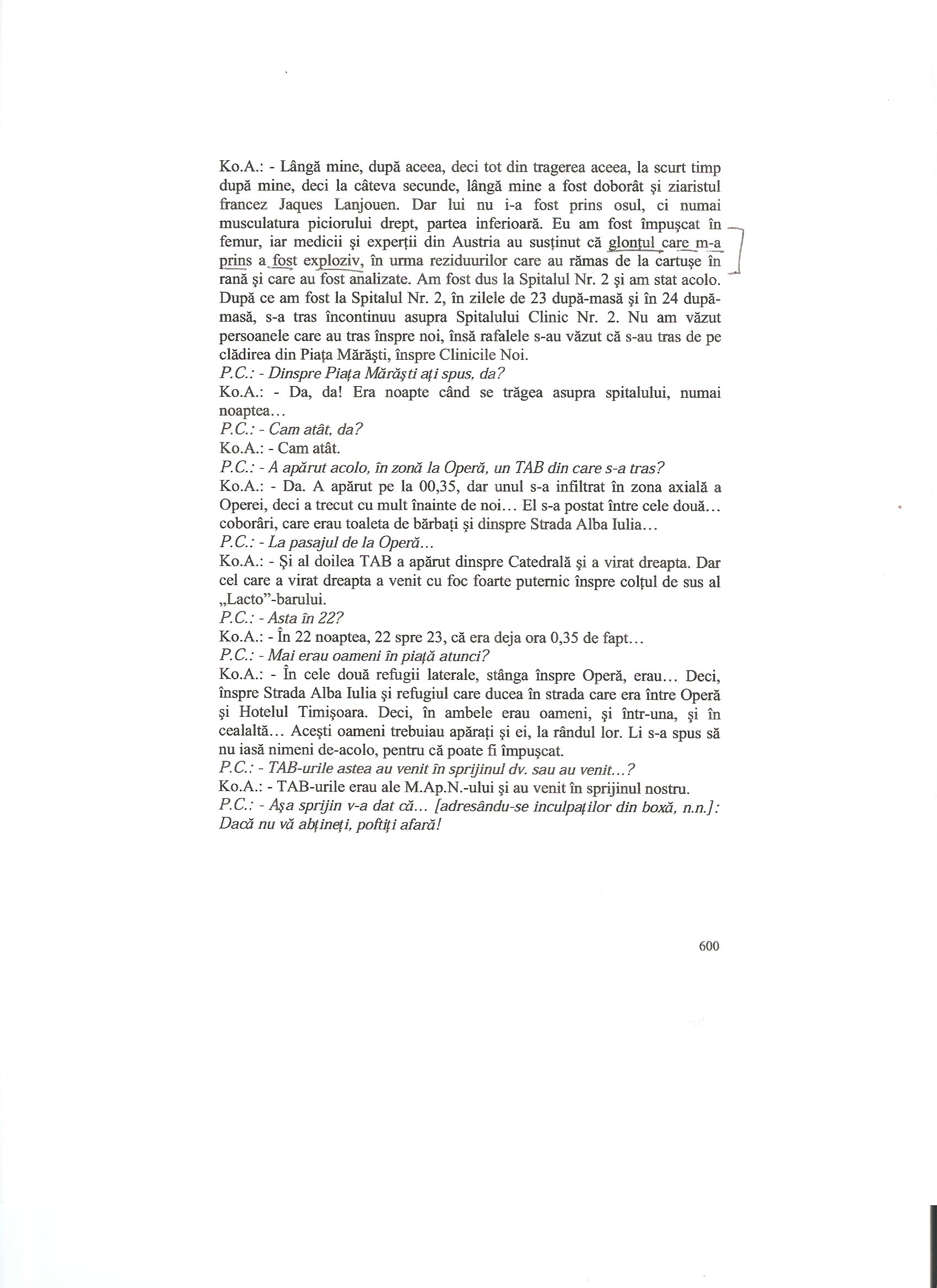
Alexandru Kos “[pe 23 decembrie 1989] am fost impuscat…cu o arma de calibru mare si probabil cu gloante dum-dum

imaginea 207
imaginea 208

IMG_0207

IMG_0208

http://atomic-temporary-3899751.wpcomstaging.com/2011/10/25/procesul-de-la-timisoara-xi-dupa-22-decembrie-teroristii-martorii-alexandru-koos-ion-flocioiu-si-herlea-floarea/

Alexandru Koos who was wounded on the night of 22-23 December 1989 also was treated in Austria however, where both doctors and experts confirmed that the bullet in question was a dum-dum bullet.
http://atomic-temporary-3899751.wpcomstaging.com/2011/10/02/procesul-de-la-timisoara-iv-martorii-adrian-kali-ioan-musca-traian-orban-si-alexandru-koos/

2) Bânciu Leontina and  3) Sava Angela-Elena

Raportul medico-legal nr. 982/A din 18.12.1989 a fost întocmit pentru cadavrul neidentificat de sex feminin, cu numărul de ordine 10. Ca semn de violenţă este consemnată o plagă orificială anfractuoasă cu marginile de 2/2 cm, orificiu de intrare pe faţa posterioară a hemitoracelui stâng în 1/2 inferioară, fără a se putea decela orificiul de ieşire. S-a concluzionat că moartea violentă s-a datorat hemoragiei interne şi externe consecutivă leziunii de organe interne, prin proiectil de armă de foc, tragerea fiind efectuată de la distanţă dinapoi înainte. În baza portretului vorbit, consemnat în raport, a obiectelor de îmbrăcăminte şi a leziunii de violenţă prin împuşcare, victima Bânciu Leontina a fost identificată de soţul ei. Acesta a fost martor ocular al împuşcării soţiei sale la Podul Decebal din Timişoara în seara zilei de 17 decembrie 1989, şi a putut da relaţii cu privire la faptul că soţia sa a fost împuşcată, în spate. Personal a transportat-o la Spitalul Judeţean Timiş. Bânciu Ioan a relatat:

Văzând că începe să se tragă, noi, eu cu soţia am intenţionat să ne salvăm şi să fugim spre gardul Parcului Tineretului. În acel moment, soţia mea a fost împuşcată în spate, mai sus de coapsa stângă. Am luat măsuri şi am transportat-o pe soţia mea cu un autoturism proprietate personală la Spitalul Judeţean, unde când am ajuns un medic mi-a spus că soţia a decedat. Am lăsat-o pe soţia mea decedată la spital şi apoi am plecat acasă la copii. A doua zi, când am revenit nu am mai fost lăsat nici să intru în spital şi nici să văd cadavrul soţiei. De atunci până în prezent nu am mai văzut cadavrul soţiei şi acesta nu mi-a fost eliberat.[10]

Pentru cadavrul neidentificat de sex feminin, cu numărul de ordine 42 a fost întocmit raportul medico-legal nr. 1014/A din 18.12.1989. Sunt prezentate leziunile de violenţă, respectiv frontal în stâng orificiu rotund pergamentat de circa 7 mm (orificiu intrare) şi plagă occipitală cu multiple eschile şi hernie de substanţă cerebrală (orificiu ieşire). S-a concluzionat că moartea s-a datorat unei plăgi împuşcate craniene. Plecând de la descrierea fizică şi a obiectelor de îmbrăcăminte precum şi a leziunilor de violenţă descrise de martorii oculari, Radu Daniela-Oxana a identificat cadavrul sorei sale Sava Angela-Elena. Aceasta a fost împuşcată mortal în aceleaşi împrejurări ca şi surorile Caceu, în seara de 17 decembrie 1989, în apropierea Catedralei.

https://mariusmioc.wordpress.com/2014/03/19/procuror-militar-general-r-romeo-balan-identificarea-victimelor-incinerate-ale-revolutiei-timisorene/

We know that at least four people and probably more were wounded or killed with exploding DUM-DUM bullets at Podul Decebal on 17 December 1989, including Ţînţaru Teodor Octavian (http://asociatia17decembrie1989timisoara.wordpress.com/in-memoriam/ “Octavian suferise o operaţie laborioasă condusă de Dr. Lazăr Fulger. Din cauza gloanţelor explozive i-au fost distruse un rinichi, jumătate din ficat şi artera femurală. Nu a supravieţuit pentru că nu erau rezerve de sânge pentru transfuzie.”) and  Banciu Leontina  http://www.memorialulrevolutiei.ro/index.php?page=revista-on-line/memorial-4/masacrul-de-la-pod-i 

“Pe certificatul medical de constatate a decesului soţiei scrie: plagă împuşcată torace, glonţ exploziv. Deci a explodat în inimă glonţul, iar Procuratura Militară, după declaraţiile care au fost, care le-am dat eu, mi-a dat alt certificat care zice că a fost în coloana de manifestanţi de la Podul Decebal din Timişoara şi a fost împuşcată în seara din 17 Decembrie.”)

http://atomic-temporary-3899751.wpcomstaging.com/2014/04/13/25-for-2014-25-things-you-should-know-about-the-romanian-revolution-on-the-25th-anniversary-of-the-fall-of-nicolae-ceausescus-communist-regime-5-timisoara-podul-decebal-evidence-suggests/

Sava Florica, 33 de ani, vinzatoare la Loto-pronosport in cartierul Fabric, impuscata din mers, in Piata Traian

Barzeanu Atanasie, 65 anit, medic primar, doctor in stiinte, chirurg, Spitalul Judetean Timisoara

“…sintem deci in 18 decembrie…Pe la orele doua si patruzeci, cind inchideam o operatie–Sava Florica, 33 de ani, vinzatoare la Loto-pronosport in cartierul Fabric, impuscata din mers, in Piata Traian, dintr-un ARO, pacienta prezentindu-se o echimoza cu distrugerea tesuturilor (plaga in diametru de 15 centimetri), a tesuturilor din regiunea epigastrica, inclusiv a muschilor drepti abdominali, cu ruptura a colonului ascendent transvers si a jejuno-ileonului, fiind in stare de soc grav traumatic, hemoragic–, fara sa-mi poti explica nici macar acum cu ce fel de gloante a putut fi lovita, pentru ca nu am identificat nici orificiul de iesire si nici pe cel de intrare, a venit o asistenta de la Chirurgie I, care mi-a spus sa merg la domnul Ignat.”

Titus Suciu, Reportaj cu Sufletul la Gura, (Editura Facla 1990), pp. 133-134.

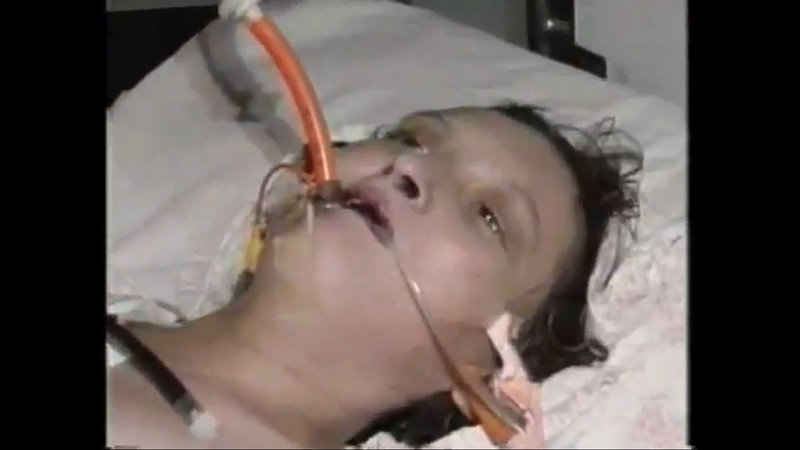
Irish Television (RTE) captured what were apparently the last hours of Florica Sava’s  tragic end.  Warning:  the scene from 11:00 to 11:30 is graphic and unsettling.

posted by mikenork

http://www.youtube.com/watch?v=c3A6IiaOWhs

Brendan O’Brien (reporter):  “Florica Sava, a 33 year old mother of two young sons, was shot from a car with a dum-dum bullet.  It caused massive internal injuries.  Doctors said she had just hours to live.”
http://atomic-temporary-3899751.wpcomstaging.com/2011/05/11/lets-go-to-the-videotape-i-to-the-army-its-confirmation-that-theyve-been-dealing-with-a-specially-trained-force-because-its-the-type-of-bullet-theyve-never-seen-before-itn-uk-telev/

4) Băran Georgian

Tot în dimineaţa zilei de 25 decembrie 1989, pe Calea Aradului din Timişoara a fost rănit prin împuşcare Băran Georgian. Fiind subofiţer în rezervă, în perioada 23-25 decembrie, a participat împreună cu foştii săi colegi de la U.M. 01185 Timişoara la mai multe operaţiuni militare de pe raza oraşului. Într-o primă declaraţie, dată în ianuarie 1990, Băran Georgian a relatat împrejurările în care a fost împuşcat:

„Din 23 decembrie 1989 am participat cu unităţile de armată, respectiv cu T.A.B.-ul condus de plutonier Diaconu de la U.M. 01185, cu care am fost coleg de muncă, la prinderea teroriştilor în Timişoara.

În ziua de 25 decembrie 1989, în jurul orelor 11,00 ni s-au semnalat doi terorişti vis-a-vis de I.T.T. Calea Aradului într-un bloc în construcţie. Ne-am deplasat cu T.A.B.-ul acolo. Civilii au spus că cei doi terorişti au coborât în subsol, unul fiind rănit. Eram înarmat, am coborât din T.A.B. Am somat prin voce să se predea. Nu era nimeni, n-a răspuns nimeni. În timp ce verificam s-a tras asupra mea din cabina macaralei turn. Am ripostat trăgând cu pistolul mitralieră. S-a tras asupra macaralei şi de pe TA.B. Am urcat pe macara pentru a ajunge la cabină, fiind convins că cel din cabină este mort. Ajungând sub cabină teroristul a tras asupra mea, cred că erau gloanţe dum-dum, mi-a lovit mâna dreaptă, piciorul drept, schijele m-au atins la faţă şi mâna stângă, una mi-a trecut razant prin apropierea zonei rinichilor. Militarii au acoperit cu foc, trăgând în cabina macaralei până am coborât şi am fost dus la spital.”[141]

În raportul medico-legal colectiv se menţionează că Băran Georgian a prezentat plagă împuşcată gamba stângă şi braţul drept, leziuni ce au necesitat 25 de zile de îngrijiri medicale. S-a precizat că tragerea s-a făcut de la distanţă.”[142]

Deşi existau elemente că Băran Georgian a fost rănit de militarii care îl însoţeau, acesta a susţinut constant că a fost împuşcat de persoane necunoscute, probabil terorişti.

După 5 ani de la evenimente, în 21.01.1994, Băran Georgian a decedat, moartea fiind patologică şi datorându-se unui infarct miocardic. Soţia sa a predat asociaţiei de revoluţionari o scrisoare adresată de soţul ei lui Ion Cristoiu la 21.06.1993 şi neexpediată. Băran Georgian recunoaşte practic că a ştiut de la început autorii rănirii sale. Am să redau în întregime conţinutul acestei scrisori:

„Mă numesc Băran Georgian, sunt timişorean şi locuiesc pe Calea Torontalului nr.25A sc.C ap.2. Sunt posesor al certificatului de luptător cu numărul 994, fiind rănit în revoluţie. Prin intermediul cotidianului dvs. aş dori să pun o întrebare Comisiei pentru aplicarea Legii nr.42 şi d-lui preşedinte Ion Iliescu:

În data de 22 decembrie 1989 TVR a început să transmită Revoluţia în direct. Se ştia bine în acea vreme că T.V.R. transmitea între orele 20,00-22,00. În majoritatea judeţelor ţării s-a aflat de revoluţie abia în seara zilei de 22 decembrie, ori la acea oră sforile erau trase. D-l Ion Iliescu, în mod conştient, a transmis pe postul de televiziune (seara)mesajul în care solicita grevă generală pe tot parcursul României. Şi acum întrebarea:

Pe ce criterii şi din ce motive, în acele judeţe s-au eliberat certificate de luptător cu merite deosebite, poate chiar mai multe decât în Timişoara, unde, practic s-a răbdat sub gloanţe şi teroare 7 zile, până când a început Bucureştiul şi încă 4 zile după aceea.

Inclusiv eu, iniţial, am primit certificat de rănit în legătură cu evenimentele din Decembrie 1989, certificat care practic nu-mi conferea nici un drept, dar pentru faptul că nu am ieşit în stradă pentru drepturi, timp de un an am tăcut. Abia la intervenţia colegilor care mi-au cunoscut activitatea şi a d-lui procuror Bălan, care avea dosarul meu şi-mi cunoştea aportul la evenimente am solicitat schimbarea certificatului. Şi l-am primit pe cel de luptător, dar nu am beneficiat de nici un drept care mi-l conferă certificatul, deoarece s-au epuizat resursele şi de spaţii comerciale şi de teren agricol şi numerele de telefon. S-au terminat pentru mine.

Sunt invalid de gradul II (pensionat), două infarcturi, cu recomandări de imobilizare la pat, iar la solicitarea montării unui post telefonic mi s-a cerut să-mi schimb domiciliul. Am făcut şi acest lucru, am făcut un schimb dezavantajos de locuinţă doar pentru a avea telefon dar tot nu-l am.

Mai presus de toate, cei care au tras în noi au avantaje, iar noi suferinzii avem hârtii, după care am alergat mult. Personal îmi cunosc agresorul, acel criminal odios care a vrut să mă scoată din circulaţie. Norocul meu este că s-a dovedit un slab trăgător. Dar asta nu i-a împiedicat pe superiorii lui să-l avanseze în grad.

Recunosc că sunt un laş, că peste tot (proces, procuratură) am declarat că nu ştiu cine a tras în mine. Dar cum puteam recunoaşte, când asasinul este liber, înarmat şi avansat?

Inclusiv prietenul meu care se afla lângă asasin, nu are curajul să vorbească deoarece a fost ameninţat şi el cu familia lui.

Dar de acum mi-e indiferent. Oricum, la gravitatea sănătăţii mele un glonţ este binevenit. (Dar să-mi fie adresat mie, nu membrilor familiei).

Şi ca un sfat! Să se retragă toate certificatele de luptător sau să se declare nule, să se facă altele, cu altă prezentare şi să se dea celor ce le merită. Este singura soluţie, astfel impostorii, „teroriştii” şi asasinii sunt alături, ţinându-se de mână cu victimele.”

http://mariusmioc.wordpress.com/2014/06/04/procuror-romeo-balan-teroristii-din-timisoara-dupa-22-decembrie-1989-7-calea-aradului/

Georgian Baran “[pe 25 decembrie 1989]…teroristul a tras asupra mea, cred ca erau gloante dum-dum, mi-a lovit…”
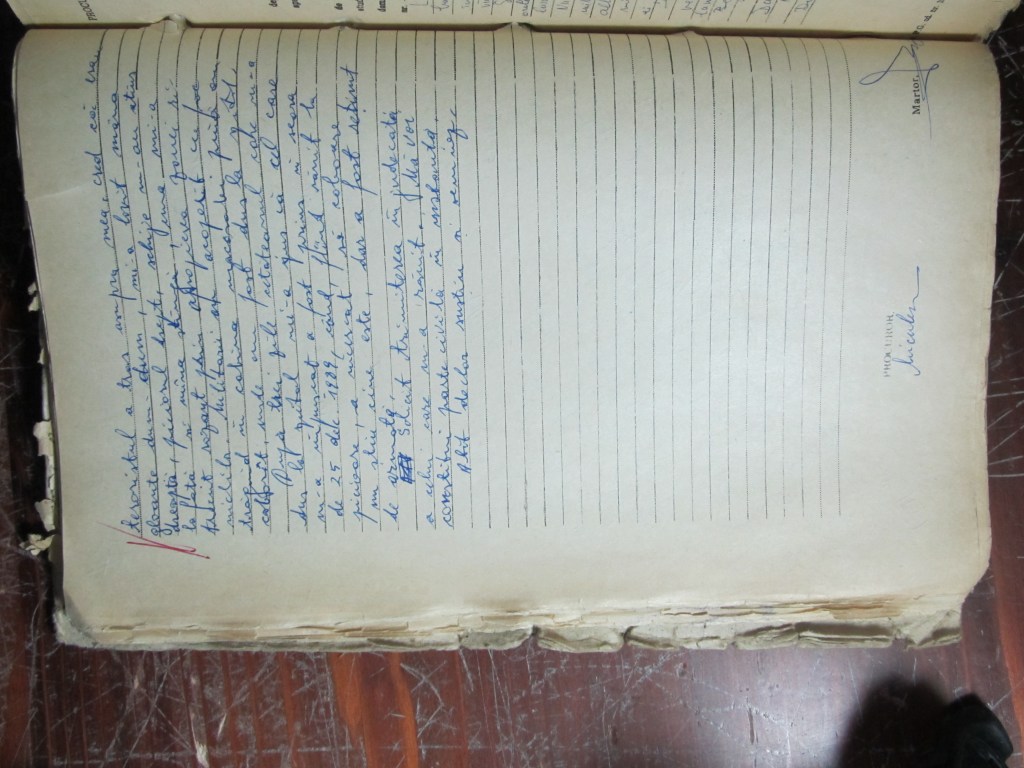
imaginea 61
imaginea 62

IMG_0062

5) Griga Ioan

În seara zilei de 23 decembrie plutonierul Griga Ioan din U.M. 01926 Timişoara, împreună cu doi militari în termen înarmaţi şi mai mulţi civili au organizat un filtru de control pe Calea Aradului, la ordinul comandantului direct maior Medrea Vasile. În jurul orelor 19,00, cei din filtru au fost anunţaţi că este atacat Depozitul de medicamente din Calea Lipovei. Din proprie iniţiativă, subofiţerul s-a hotărât să-i ajute pe colegii săi aflaţi în pază la depozit. Însoţit de cei doi militari şi de 8 civili s-a deplasat în Calea Lipovei cu o autoutilitară T.V. de culoare albastră cu numărul de înmatriculare 32-PH-1685, ce aparţinea de Schela de foraj petrolier Timişoara. Autovehiculul a fost condus de Husar Daniel, voluntar civil, care a pus la dispoziţie maşina de serviciu. Autoutilitara a parcurs traseul str. Câmpina, str. Ion Ionescu de la Brad dar s-a oprit la str. Pomiculturii, unde era un baraj. Cei din interior au hotărât să se întoarcă pe acelaşi traseu, fără să ştie că în urma lor s-a deplasat şi un autocamion militar de la U.M.01926 Timişoara, tot spre Depozitul de medicamente. Autocamionul condus de plt.maj. Şandor Neculai a transportat un detaşament de militari, care urma să întărească paza la depozit. Nu ştiau unii de alţii.

Autocamionul militar a oprit la intersecţia străzilor Borzeşti cu Ion Ionescu de la Brad din cauza schimburilor de focuri din zonă iar detaşamentul militar sub comanda cpt. Ştirb Aurel şi locotenent Neamţu Costel, şi-a continuat drumul pe jos spre depozit. La autocamion a rămas şoferul plt.maj. Şandor Neculai şi doi militari în termen. Aceştia au sesizat apropierea autoutilitarei T.V., cu viteză şi cu farurile pe faza lungă, şi i-au somat pe cei din interior să oprească. T.V.-ul nu a oprit, motiv pentru care cei de lângă autocamion au deschis focul spre pneuri. În acest incident au fost răniţi şoferul Husar David şi plt. Griga Ioan, aflaţi pe scaunele din faţă şi alţi doi civili Sur Ioan şi Bapţan Gheorghe, aflaţi pe banchetele din spate.

Husar David a declarat:

„Am mers prudent şi la un moment dat s-a tras asupra noastră din faţă. Cauciucurile au fost sparte şi maşina s-a oprit. Am simţit că sunt rănit în piciorul stâng iar subofiţerul la piciorul drept şi ceilalţi au fost împuşcaţi în mâini şi la picioare. A venit un plutonier care ne-a recunoscut şi ne-a spus că au fost în eroare de au tras. Era coleg cu subofiţerul şi erau buni prieteni.”[165]

Husar David a suferit plagă împuşcată cu fractură cominutivă pilon tibial stâng, leziune ce a necesitat 70 de zile de îngrijiri medicale.[166]

Plutonier Griga Ioan, care a suferit plagă împuşcată transfixiantă fesă dreaptă şi picior drept, leziune ce a necesitat 40-50 de zile de îngrijiri medicale,[167] a relatat:

„Nu pot preciza dacă am fost împuşcat de militari sau terorişti. Militarii care au tras iniţial au încercat să vină în ajutorul nostru dar nu s-au putut apropia datorită schimbului de focuri.”[168]

http://mariusmioc.wordpress.com/2014/07/02/procuror-romeo-balan-teroristii-din-timisoara-dupa-22-decembrie-1989-9-calea-lipovei/#more-16536 

Griga “civilii au fost impuscati cu gloante plate [?], care asa cum spuneau medicii cu rupt tesuturile”

imaginea 170
imaginea 171

IMG_0171

6) Andrei Jubea

Jubea Andrei tatăl a suferit plagă împuşcată braţ drept cu fractură cominutivă de humerus, leziune ce a necesitat iniţial 65 de zile de îngrijiri medicale, potrivit raportului medico-legal nr.1459 din 06.06.1990. Ulterior victima a rămas cu infirmitate permanentă.[130]

Jubea Andrei a declarat:

„N-am apucat să deschid uşa de la balcon când am auzit un foc de armă şi am fost împuşcat în braţul drept, m-am retras din faţa geamului şi am observat că fiul meu era căzut jos şi împuşcat în gât, în partea stângă. Am fost transportaţi la Spitalul clinic nr.2 iar după aproximativ o oră fiul meu a decedat pe masa de operaţie. Nu ştiu exact de unde s-a tras însă bănuiesc dinspre Poligrafie sau probabil dinspre pasajul de cale ferată.”[131]

În 01.04.1991 s-a efectuat un experiment judiciar pentru a se stabili locul de unde s-a executat foc iar în procesul-verbal s-a consemnat:

„Din bucătăria apartamentului, printr-o uşă dublă de lemn cu geam de sticlă, se face accesul pe balcon, cu o altă uşă de plasă de sârmă. În marginea uşii de lemn şi în plasa de sârmă se constată existenţa unui orificiu de intrare al glonţului cu diametru de aproximativ 0,8 centimetri. Făcând vizarea prin orificiul din uşă şi cel din plasa de sârmă, se constată că traseul glonţului este descendent. Vizând în continuare, se constată că locul de unde s-a efectuat tragerea este situat la colţul platformei de beton a staţiei PECO de pe Calea Aradului din Timişoara. Vizarea s-a făcut cu uşa din plasă de sârmă întredeschisă, aşa cum a fost în ziua de 24.12.1989.”[132]

http://mariusmioc.wordpress.com/2014/06/04/procuror-romeo-balan-teroristii-din-timisoara-dupa-22-decembrie-1989-7-calea-aradului/#more-16532

Andrei Jubea “glontul special de culoare alb”
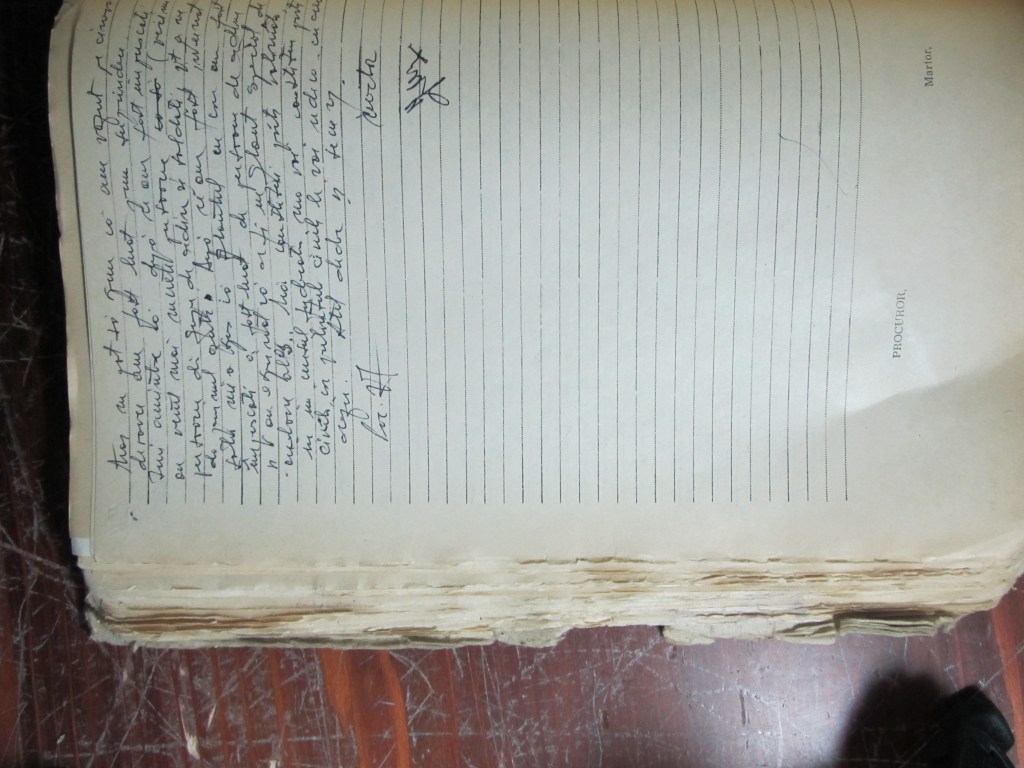
imaginea 204
imaginea 205

IMG_0205

7) Cota Iosif

Au fost răniţi Cota Iosif şi Teodorescu Ionel, care împreună cu alte persoane sosiseră din Topolovăţul Mare pentru a se alătura mişcării revoluţionare.

Cota Iosif a precizat:

„După poziţia leziunilor pe care le-am suferit, în degetul mare de la piciorul drept am fost lovit de gloanţe venite dinspre Restaurantul militar de la acele T.A.B.-uri, iar în fesa dreaptă, după poziţia leziunii şi după cum stăteam adăpostit, am fost lovit de gloanţe venite dinspre T.A.B.-ul care a circulat prin faţa Direcţiei agricole.”[58]

Leziunile suferite de Cota Iosif au necesitat 55 de zile de îngrijiri medicale, potrivit raportului medico-legal nr.789 din 09.07.1991.

http://mariusmioc.wordpress.com/2014/05/05/procuror-romeo-balan-teroristii-din-timisoara-dupa-22-decembrie-1989-3-piata-libertatii/

Iosif Cota “gloante crestati”

imaginea 90
imaginea 91

IMG_0091

8) Cacoceanu Iosif

PIAŢA TRAIAN

În dimineaţa zilei de 23 decembrie 1989, în jurul orelor 9,00, Cacoceanu Iosif, subofiţer de penitenciar pensionar, a plecat de la domiciliul său de pe strada Dacilor în Piaţa Traian, aflată în apropiere, pentru a face cumpărături. S-a oprit în colţul pieţei dinspre strada Dacilor, lângă un chioşc de ziare şi a stat de vorbă cu alţi pensionari despre evenimentele de la acea dată. La un moment dat Cacoceanu Iosif a fost împuşcat cu un singur glonţ în abdomen. Deşi a fost transportat de urgenţă la spital şi a fost operat, Cacoceanu Iosif a decedat în cursul zilei de 25.12.1989. Nu se cunosc niciun fel de date cu privire la cei care au tras şi au ucis victima.

Singurul martor ocular identificat şi audiat, respectiv Dumitru Ion, a declarat:

„În dimineaţa zilei de 23 decembrie 1989, întâmplător, în spatele chioşcului de ziare din Piaţa Traian, chioşc situat pe colţul din stânga al pieţei privind spre biserica sârbească, dinspre Prinţul Turcesc, am văzut că erau adunaţi mai mulţi bătrâni, care comentau evenimentele petrecute în oraş. Printre aceştia am recunoscut pe Cacoceanu Iosif. Pe ceilalţi nu i-am cunoscut. M-am oprit şi eu şi am participat la discuţii. La un moment dat, s-a auzit o pocnitură, zgomot de glonţ, l-am văzut pe Cacoceanu căzând. De teamă noi am fugit în primul moment. Poziţia lui Cacoceanu înainte de a fi împuşcat, a fost aceea cu faţa spre liniile de tramvai care vin dinspre Prinţul Turcesc spre Podul Decebal, puţin oblic dreapta. Nu cunosc locul din corpul victimei unde a intrat glonţul întrucât acesta nu a fost dezbrăcat acolo, întrucât imediat a oprit acolo o maşină şi a fost transportat aşa îmbrăcat cum era la spital. Nu pot preciza direcţia de tragere, eu mă aflam ca poziţie în spatele lui Cacoceanu în momentul împuşcării sale.”[196]

Martorul nu a putut de niciun fel de relaţii cu privire la cei care au deschis focul în Piaţa Traian.

http://mariusmioc.wordpress.com/2014/07/18/procuror-romeo-balan-teroristii-din-timisoara-dupa-22-decembrie-1989-11-piata-traian/

În raportul medico-legal nr.1050/A din 25.12.1989 sunt consemnate ca semne de violenţă orificiile de intrare şi de ieşire al glonţului:

„1. Plagă orificială de aproximativ 0,7 cm diametru în regiunea abdominală anterior.

2. Plagă de aproximativ 3 cm diametru în regiunea lombară stângă.”[197]

S-a precizat că moartea violentă s-a datorat plăgii împuşcate abdominale.

Un alt pensionar i-a povestit soţiei victimei că s-a deschis focul dintr-un autoturism. Acesta nu a putut fi audiat deoarece a decedat la scurt timp.

Cacoceanu Margareta, soţia victimei a relatat:

„Eu am aflat despre împuşcarea soţului meu imediat deoarece a venit cineva în curtea imobilul unde locuiam şi a întrebat unde locuieşte pensionarul care a lucrat la penitenciar şi vecinii au indicat adresa mea, iar respectivul mi-a spus că soţul meu a fost împuşcat. Acel bătrân care mi-a dat această veste despre soţul meu mi-a mai spus că a fost împuşcat dintr-o maşină care a venit în viteză de la Prinţul Turcesc spre Podul Decebal.”[198]

Aceasta ar putea explica de ce nu au fost văzuţi trăgătorii.

[196] Dosar nr.308/P/2000, vol.XV, fila 7

[197] Ibidem, fila 14

[198] Ibidem, fila 21
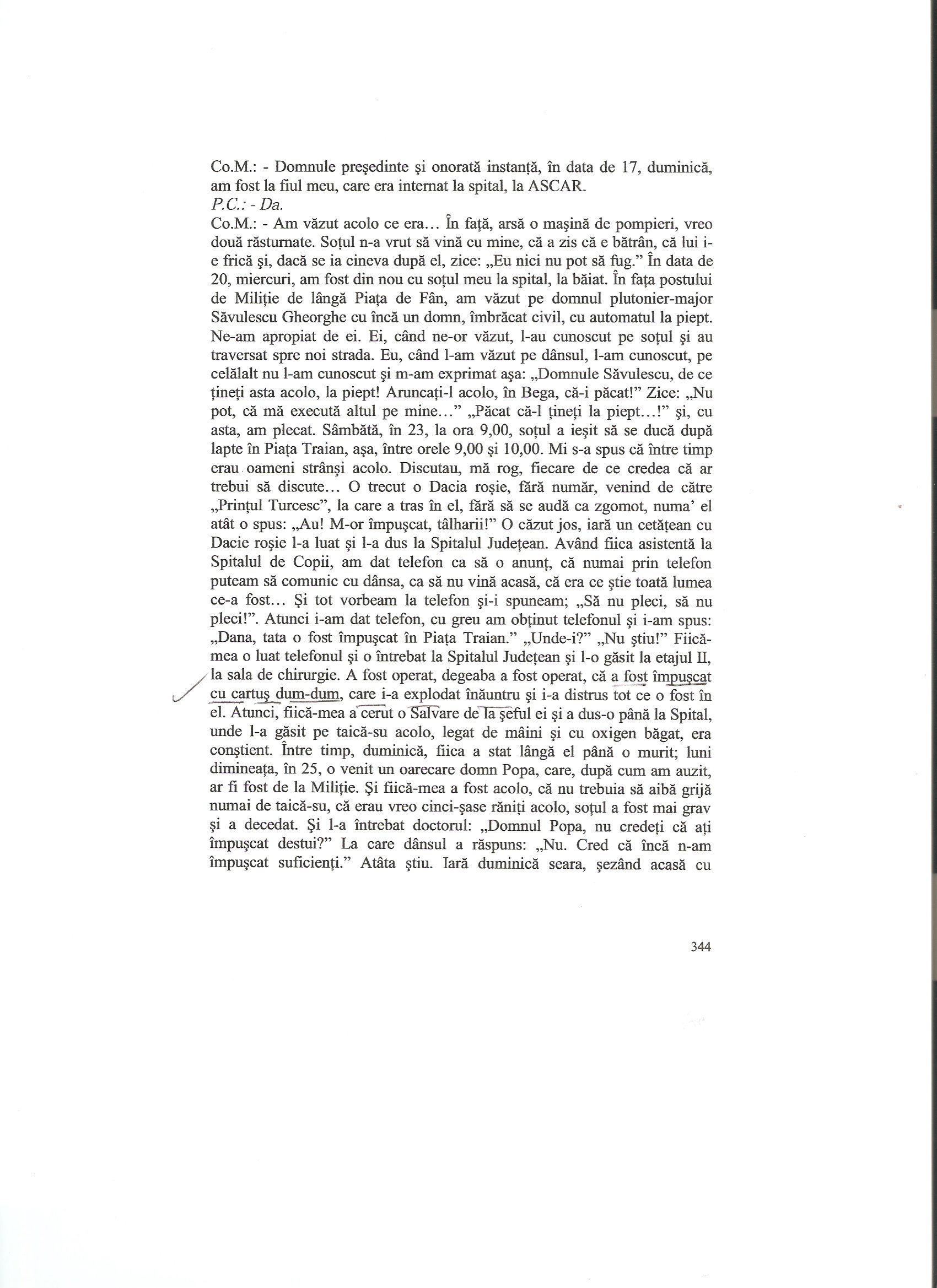
“Margareta Cacoceanu (59 de ani) a relatat ca sotul ei a fost impuscat, cu gloante dum-dum, dintr-o “Dacie” rosie fara numar de inmatriculare.”
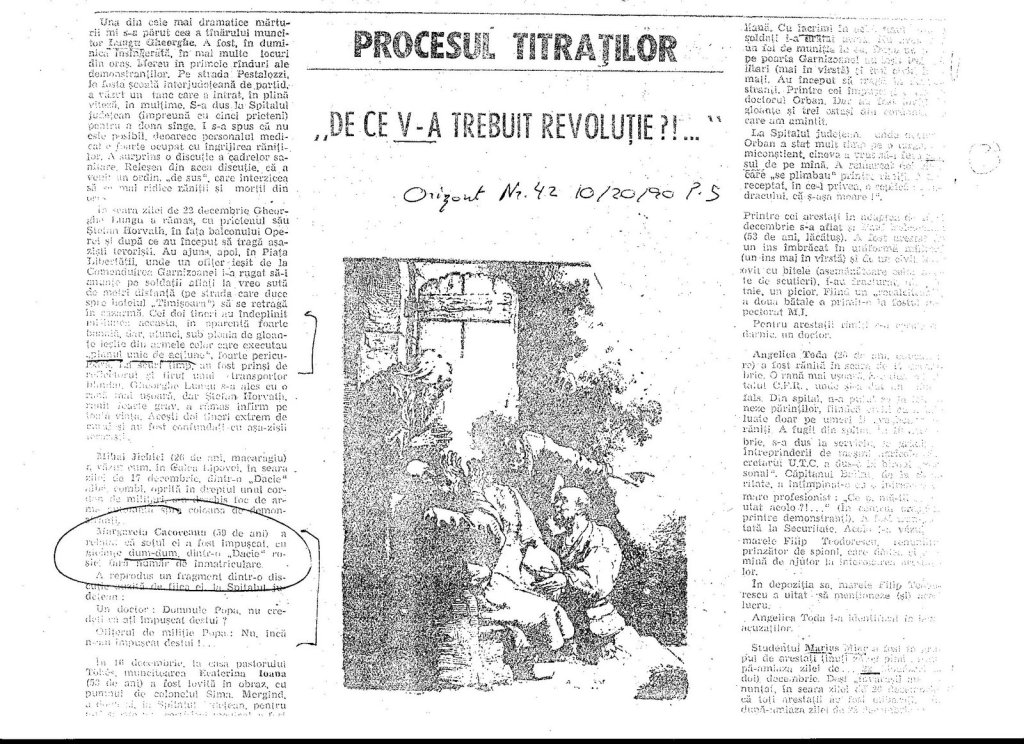
image-55

9) Alexandru Aciocoitei

În dimineaţa de 23 decembrie 1989, căpitan Aciocoiţei Alexandru, din U.M. 01864 Timişoara, împreună cu doi militari în termen, înarmaţi încerca să stabilească locurile de unde se executa foc. În jurul orelor 9,00, patrula a intrat în magazinul de pâine situat la colţul străzii Câmpina cu Calea Lipovei. Militarii s-au retras în acel spaţiu deoarece începuse să se tragă pe stradă. Un civil, respectiv Gheorghiu Constantin, refugiat şi el în magazin, a încercat să iasă pe uşa metalică din spate, care dădea spre strada Câmpina şi în acel moment a fost împuşcat. Gheorghiu Constantin a suferit o plagă împuşcată lombară, leziune ce a necesitat 30-40 zile de îngrijiri medicale.[155] În aceleaşi împrejurări şi în acelaşi loc a fost rănit şi cpt. Aciocoiţei Alexandru. Acesta a declarat:

„După ce am verificat interiorul, în momentul în care am vrut să ies în spatele magazinului am fost lovit de glonţ în antebraţul stâng, glontele ieşind din braţ. Cred că s-a tras din al doilea bloc, maxim etajul 2, după care m-am retras la unitate, de unde am fost dus la Spitalul Militar.”[156] Ofiţerul a prezentat o plagă împuşcată transfixiantă anterobranhială stângă, cu fractură deschisă de humerus, pentru care i s-au acordat 30 de zile de îngrijiri medicale.[157]

Trebuie menţionat că pe latura dinspre strada Câmpina era amplasat Batalionul de transmisiuni al diviziei, U.M. 01926 Timişoara.

http://mariusmioc.wordpress.com/2014/07/02/procuror-romeo-balan-teroristii-din-timisoara-dupa-22-decembrie-1989-9-calea-lipovei/#more-16536

Alexandru Aciocoitei:  “…de unde am fost dus la spitalul militar.  Mi s-au comunicat ca glontul era de 5,6 mm….”
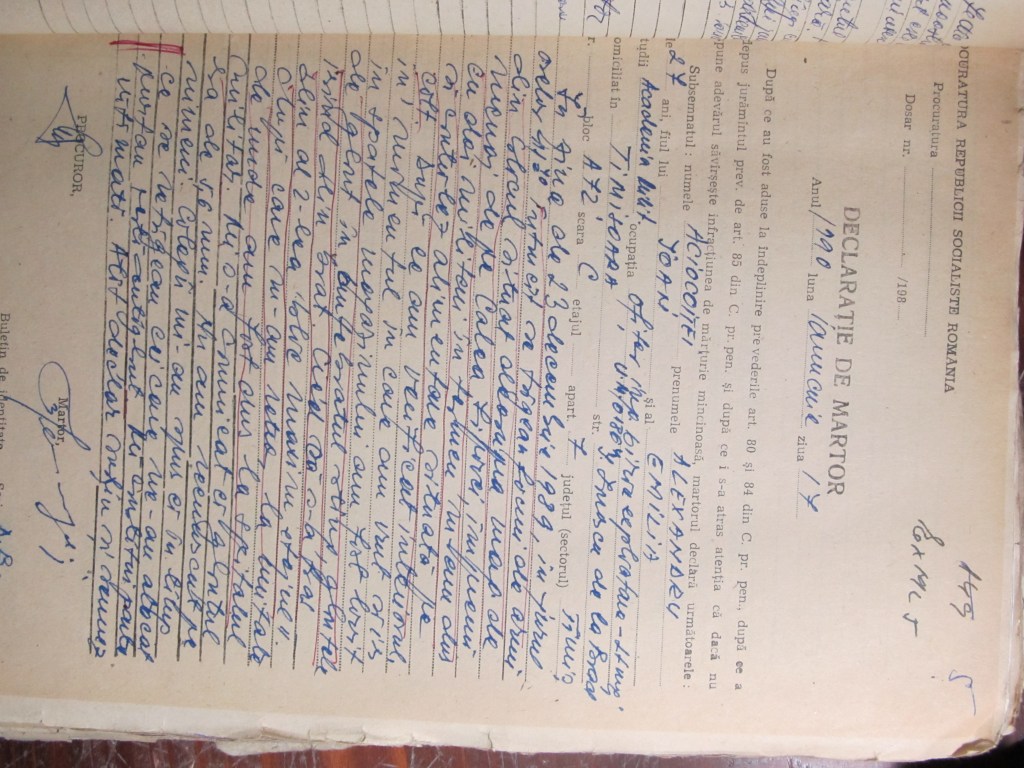
IMG_0010

10) Petru Ghinea

Lt.col. Ghinea Petre, din U.M. 01185 Timişoara, a asigurat paza Comandamentului diviziei cu un număr de 5 transportoare blindate, care au intrat în dispozitiv în Piaţa Libertăţii în noaptea de 22/23 decembrie 1989 în jurul orelor 22,00. Acest ofiţer a menţionat:

„După orele 22,15 – 22,30 şi până către orele 23,00 în Piaţa Libertăţii s-au auzit sporadic rafale şi împuşcături izolate. Toate încercările de a localiza aceste împuşcături au eşuat. Singurul aspect care le diferenţia de zgomotul normal al muniţiei utilizate de armamentul din dotarea unităţilor noastre era zgomotul, mult diminuat de parcă ar fi fost utilizate arme cu calibre mici… La un moment dat în Piaţa Libertăţii s-au auzit strigăte care semnalau apariţia unor elicoptere în zbor şi a unor paraşutişti care fuseseră lansaţi. Personal nu am văzut nimic şi consider că focul declanşat fără justificare de mijloacele dispuse în faţa comandamentului a impus o puternică stare de nelinişte şi nesiguranţă asupra evenimentelor care se derulau. Am fost trimis de col. Mancu Florin să merg la fiecare mijloc de foc şi să-i determin să înceteze focul. Am transmis că focul se va deschide numai la ordin. Cu toate acestea au fost destule situaţii în care acest foc a fost deschis fără nicio justificare concretă.”[53]

Lt.col. Ghinea Petre a menţionat:

„De după monumentul din centru pieţei s-au auzit strigăte şi solicitări de ajutor. Am fugit acolo şi am ajutat câțiva oameni să iasă la lumină, din care unul rănit, l-am trimis la spital. I-am cerut scuze pentru cele întâmplate rănitului. Cei doi subofiţeri din T.A.B.-ul care executase foc, mi-au raportat că fuseseră trimişi de comanda U.M. 01185 Timişoara. Nu după multă vreme a mai apărut un T.A.B. fantomă, care s-a oprit din viteză în Piaţa Libertăţii şi a executat focul pe două direcţii: în lungul străzii unde era consignaţia, către ceainărie şi spre Spitalul militar, ulterior am aflat că au fost răniţi grav oameni. În T.A.B. era lt. Rusu cred şi mr. Şerban din U.M..01185 Timişoara.”[60]

http://mariusmioc.wordpress.com/2014/05/05/procuror-romeo-balan-teroristii-din-timisoara-dupa-22-decembrie-1989-3-piata-libertatii/

http://atomic-temporary-3899751.wpcomstaging.com/2011/06/02/iosif-costinas-cu-locotenent-colonelul-petre-ghinea-o-lupta-cu-fortele-raului-orizont-timisoara-nr-5-221990-p-5/

“O lupta cu fortele raului,” Orizont (Timisoara), nr. 5 (2 februarie 1990), p. 5.

Lt. Col. Petre Ghinea:  Primele rafale de arma automata le-au tras fostii securisti chiar in Piata Libertatii, unde noi aveam amplasate transportoarele blindate care completau sistemul de foc al tancurilor, pentru apararea Comandamentului militar.  Au tras din multe locuri, din podurile cladirilor.  In seara zilei de 22 decembrie, intre orele 22,30 si 23….

Iosif Costinas:  Cu toate astea, in seara zilei de 22 decembrie s-a tras, de aproape, asupra Comandamentul militar.

Lt. Col. Petre Ghinea:  Da.  Am fost de fata.  Au tras dintr-o “Dacie” alba…Foloseau mai multe autoturisme, schimbindu-le din loc in loc.  Le schimbeau si numerele….Din hotelul Central s-a tras asupra noastra si ne-au gaurit citeva pneuri de la transporter…

Iosif Costinas:  Duminica, 24 decembrie, inainte de masa, te-am auzit vorbind, prin amplificare, in Piata Libertatii…

Lt. Col. Petre Ghinea: …[nea Ionescu de la Filarmonica] A venit cu o propunere demna de toata atentia.  Am adus de la Filarmonica statia de amplificare si am instalat-o pe tarasa Casei Armatei.  Statia functiona excelent.  M-am adresat securistilor ascunsi prin casele din apropriere:  “Securisti, predati-va!  Nu mai aveti nici o sansa!  Facem apel la ultimul dram de omenie pe care-i mai aveti in voi!  Cursul evenimentelor este ireversibil!  Nu veti putea fugi din oras, predati-va!  Ne-am adresat si oamenilor care locuiesc in cladirile din care se tragea, spre a ne semnala locurile de unde se trage.  Unii din ei au iesit la geamuri (cei de la etajele superioare) si aratau de unde vin rafalele de arme automate….Desi am facut apel la ultimul dram de omenie al securistilor, unii au tras asupra noastra.  Din fericire, nu ne-au nimerit….In timp ce vorbea nea Ionescu mi-a fost impuscat un subordonat:  soldatul Mihai Budugan,  unul dintre cei mai curajosi baieti ai mei.  A fost impuscat deasupra inimii.  Dus la spital, a scapat cu viata.  Dupa un timp, in urma apelurilor noastre, in zona Pietei Libertatii focul a scazut in intensitate.  Au actionat si cercetasii si militarii de la unitatile de parasutisti.  Tot in urma apelurilor noastre, mai multi cetateni ne-au comunicat numerele masinilor din care au tras securistii.

Iosif Costinas: Care este opinia ta despre felul cum au actionat securistii-teroristi?

Lt. Col. Petre Ghinea: Spre deosebire de militarii nostri, ei au fost foarte bine pregatiti pentru lupta in oras. Dispuneau de armament modern, special (inclusiv simulatoare de foc). De pilda, la automatele lor rabatabile, cu gloante videa [vidia] sau gloante explozive, nu se putea vedea flacara la gura tevii….Initial, dupa opinia mea, au intrat in lupta elemente extrem de bine instruite, apoi acestea au disparut, lasind in locul lor o seama de colaboratori ai fostei Securitatii (din diferite, ca sa zi asa, categorii, socio-profesionale).  A fost un plan diabolic, indeplinit, din nefericire, in buna masura….

Iosif Costinas:  Ce te-a nemultumit cel mai mult in acele zile atit de grele pentru noi, timisorenii?

Lt. Col. Petre Ghinea:  Armata nu a putut sa faca fata tuturor solicitarilor.  Sa nu mai vorbim de faptul ca nu am fost pregatiti pentru un asemenea tip de lupta.  Caci, dupa cum se stie, nu este suficient sa ai in mina un pistol-mitraliera si o cantitate de munitie pentru a interveni cu eficicatate, unde este nevoie.  M-a nemultumit, spre pilda, si inexistenta, alaturi de noi, a militienilor si chiar a unor elemente din fosta securitate, care, dupa cite am auzit, se considerau de bunacredinta.  Foarte putini au raspuns apelurilor Comandamentului militar de a se prezenta la fostul lor sediu si de a ne da o mina de ajutor…
Posted in decembrie 1989, raport final | Tagged: , , , , , , , , , , , , , , , , , , , | 4 Comments »

The Flight, Trial, and Execution of Nicolae and Elena Ceausescu

Posted by romanianrevolutionofdecember1989 on September 1, 2014

(purely personal views based on over two decades of research and publications)

http://www.youtube.com/watch?v=GIPZm_uFI2Q

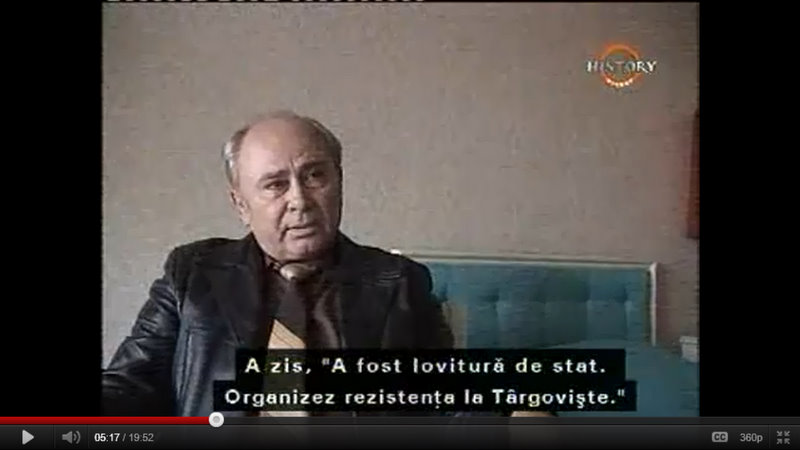
THE FLIGHT OF THE CEAUSESCUS, FROM MULTIPLE ANGLES, POSTED BY TheALK1970

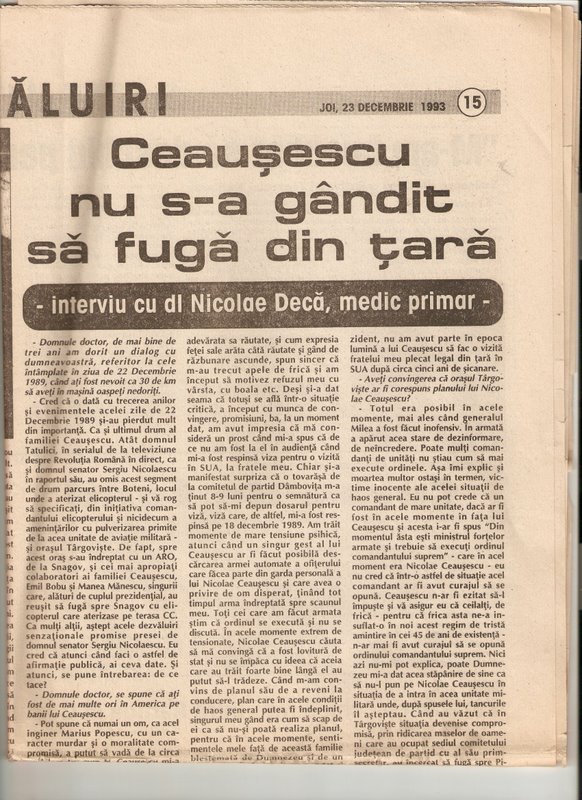
Nicolae Deca cu Petre Mihai Bacanu, “Ceausescu nu s-a gandit sa fuga din tara,” Romania Libera, 23 decembrie 1993, p. 15.

“Nicolae Ceausescu nu s-a gandit nici o clipa sa fuga din tara, pentru ca elicopterul avea suficient combustibil sa ajunga in Irak sau Iran, locuri care, cred eu, i-ar fi asigurat viata.”

from the 1993 documentary, The Last Day, by Arnaud Hamelin


Why did Ceausescu not intend to flee the country?  Why did he tell Nicolae Deca that he planned to “organize the resistance” in Tirgoviste?

What “organized resistance”  would Nicolae Ceausescu have had in mind?

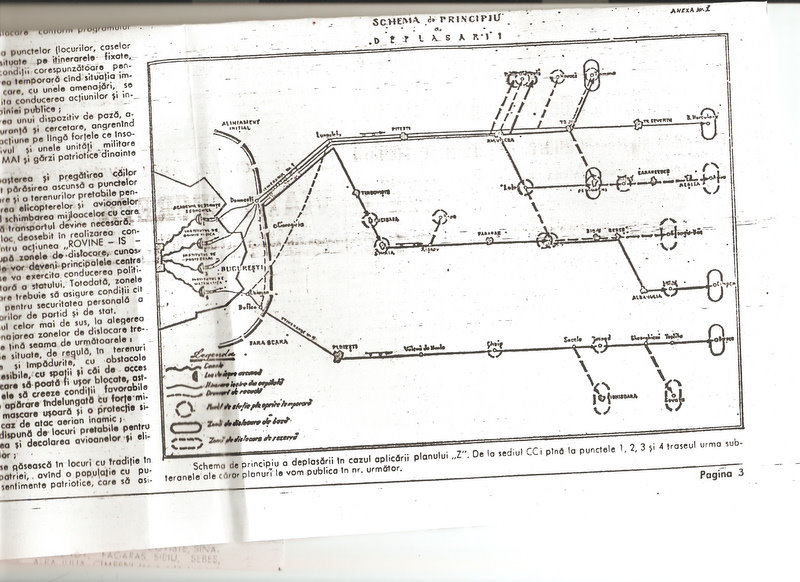
http://atomic-temporary-3899751.wpcomstaging.com/2014/01/19/what-would-it-have-looked-like-if-nicolae-ceausescus-securitate-executed-a-plan-to-counter-an-invasion-but-the-invaders-never-came-i/

http://atomic-temporary-3899751.wpcomstaging.com/2014/01/21/what-would-it-have-looked-like-if-nicolae-ceausescus-securitate-executed-a-plan-to-counter-an-invasionbut-the-invaders-never-came-ii/

http://atomic-temporary-3899751.wpcomstaging.com/2014/01/24/what-would-it-have-looked-like-if-nicolae-ceausescus-securitate-executed-a-plan-to-counter-an-invasionbut-the-invaders-never-came-iii/

http://atomic-temporary-3899751.wpcomstaging.com/2014/01/27/what-would-it-have-looked-like-if-nicolae-ceausescus-securitate-executed-a-plan-to-counter-an-invasionbut-the-invaders-never-came-iv/

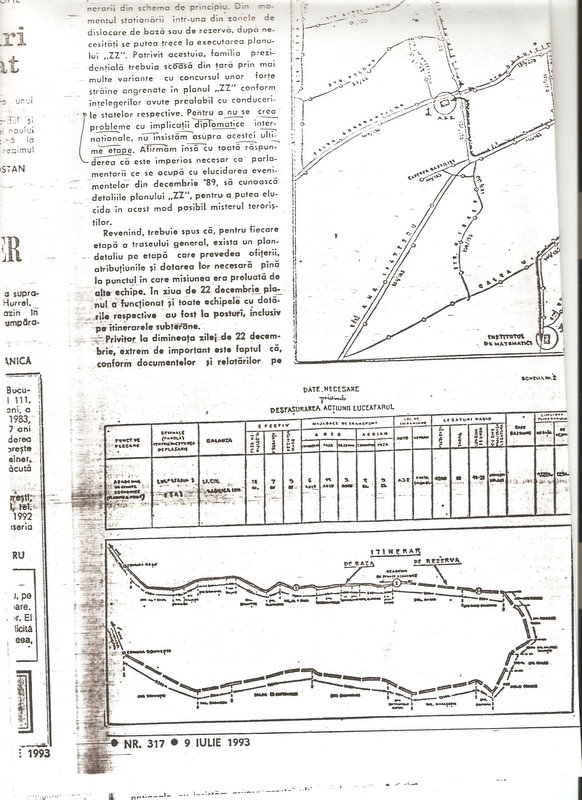
Tirgoviste was one alternate in a longstanding plan…
Mirel Curea, Evenimentul Zilei, nr. 317, 9 iulie 1993, p. 3

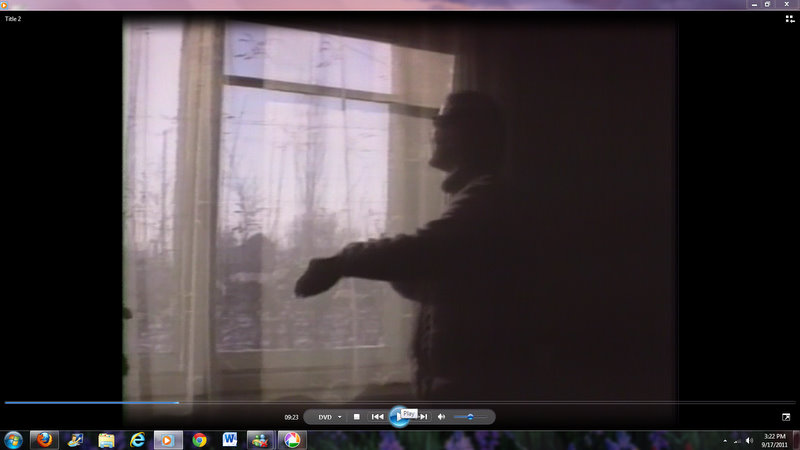
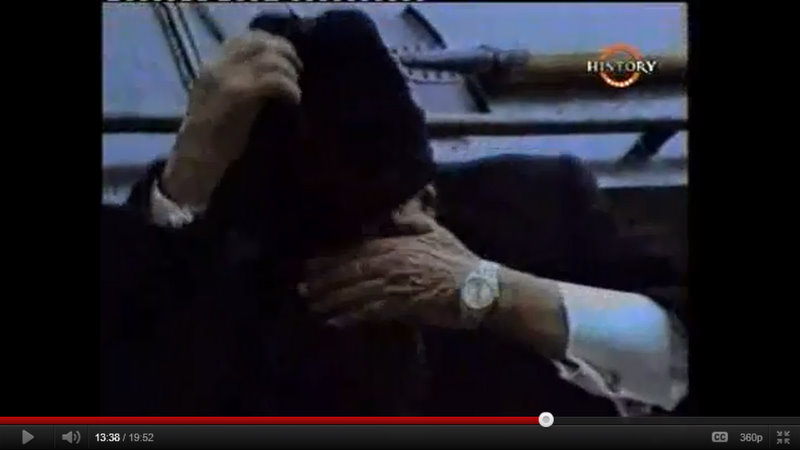
Ted Koppel’s ABC News special Death of a Dictator (April 1990) has a good deal of discussion of Nicolae Ceausescu’s famous watch (ceasul lui Ceausescu), which allegedly had a radio-transmitter beacon in it…hence his continuous checking of his watch (as the first speaker below explained, looking at his watch and looking at the sky and looking back again, as if he was waiting for someone or something)…it lasted all the way up through his trial.

The time turned out to be:  the final minutes of his dictatorial regime and life…

Let’s Go to the Videotape (IV) “Instead of denying access to the rest of the tunnels…the authorities now deny their very existence” (Ted Koppel, Bucharest, Romania, March 1990)

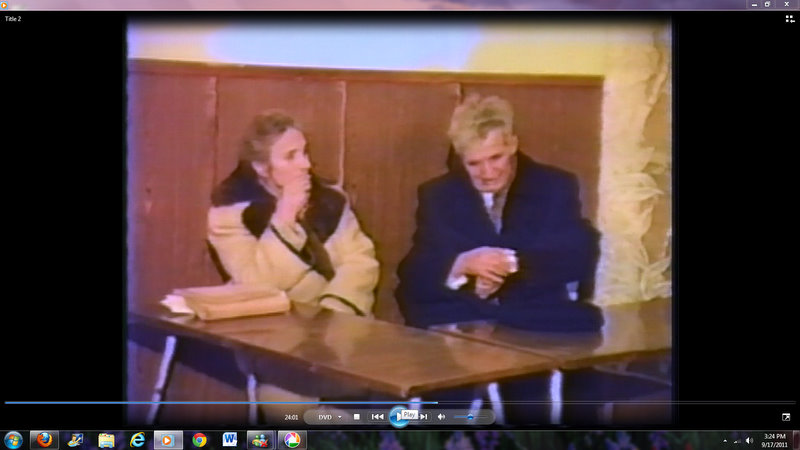
Important details of the Ceausescus’ capture, holding, trial, and execution can be found in the following:

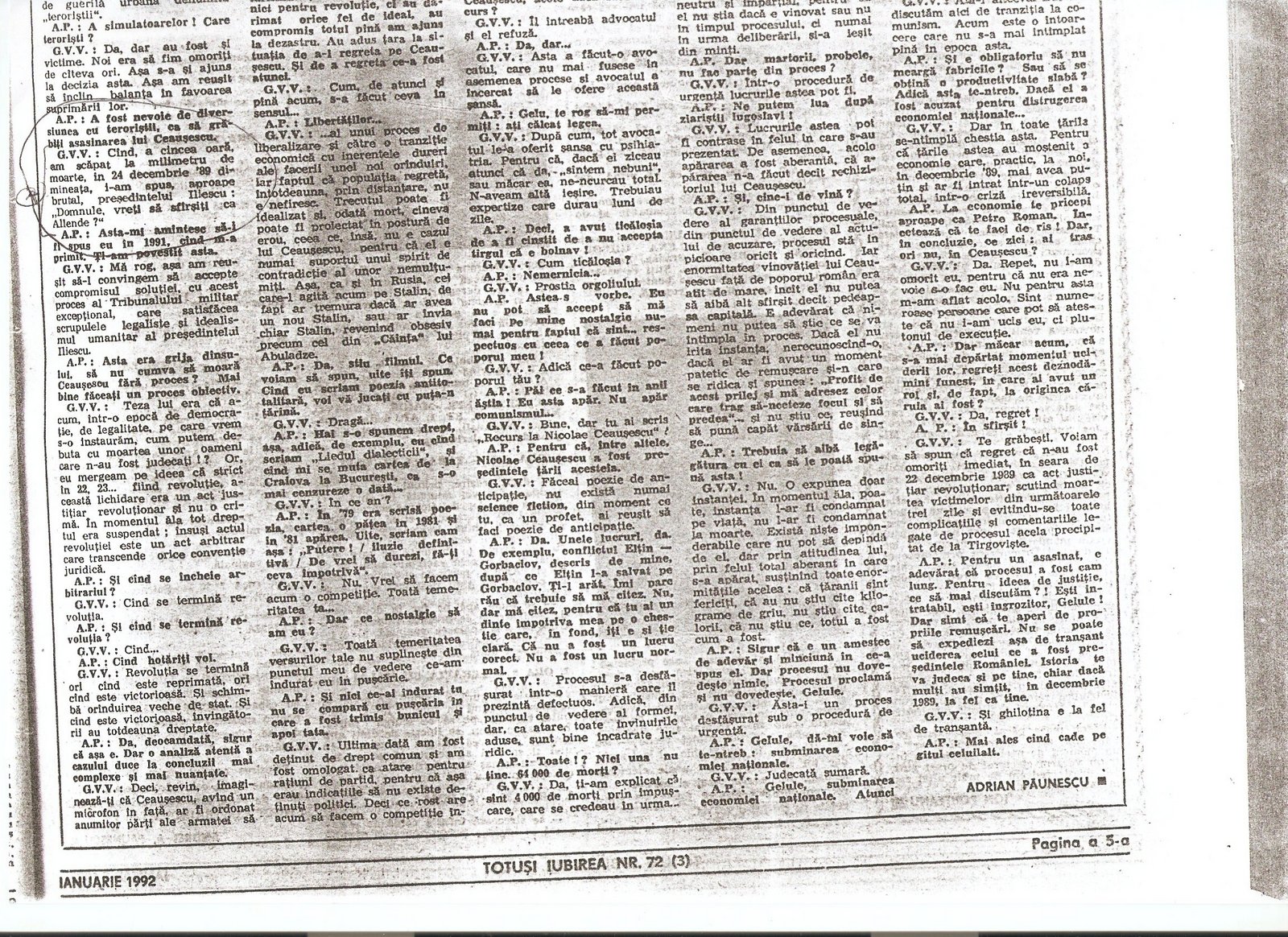
Gelu Voican Voiculescu claims that he prevailed upon Ion Iliescu to consider the immediate execution of Nicolae and Elena Ceausescu only after the attacks of 23/24 December 1989, with the memorable phrase:  “Sir, do you want to end up like Allende?”  (cited in this following article from 2000:  http://atomic-temporary-3899751.wpcomstaging.com/theories-of-collective-action-and-revolution-2000/  , see page 1088).

image0-001

image0-003

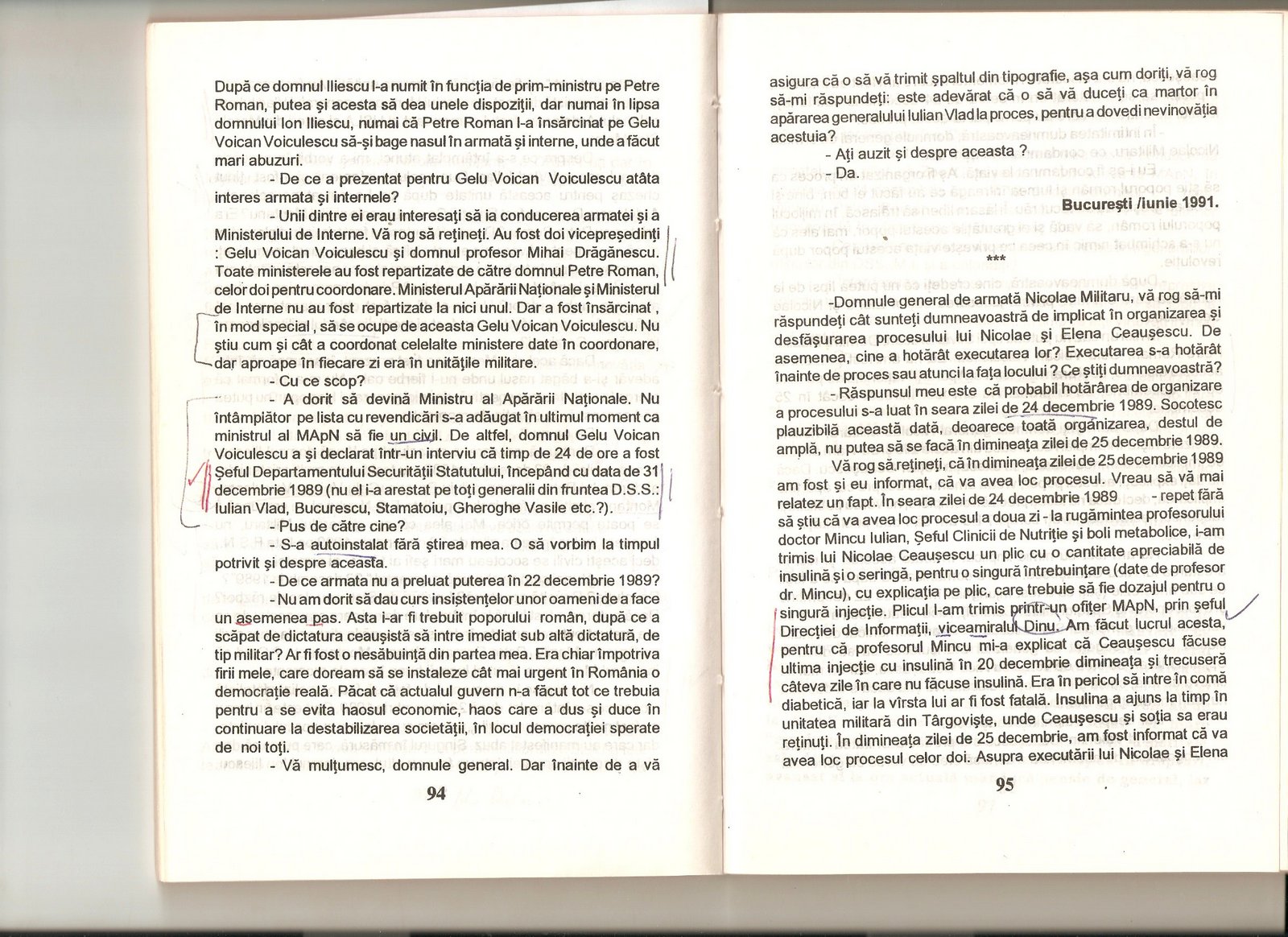
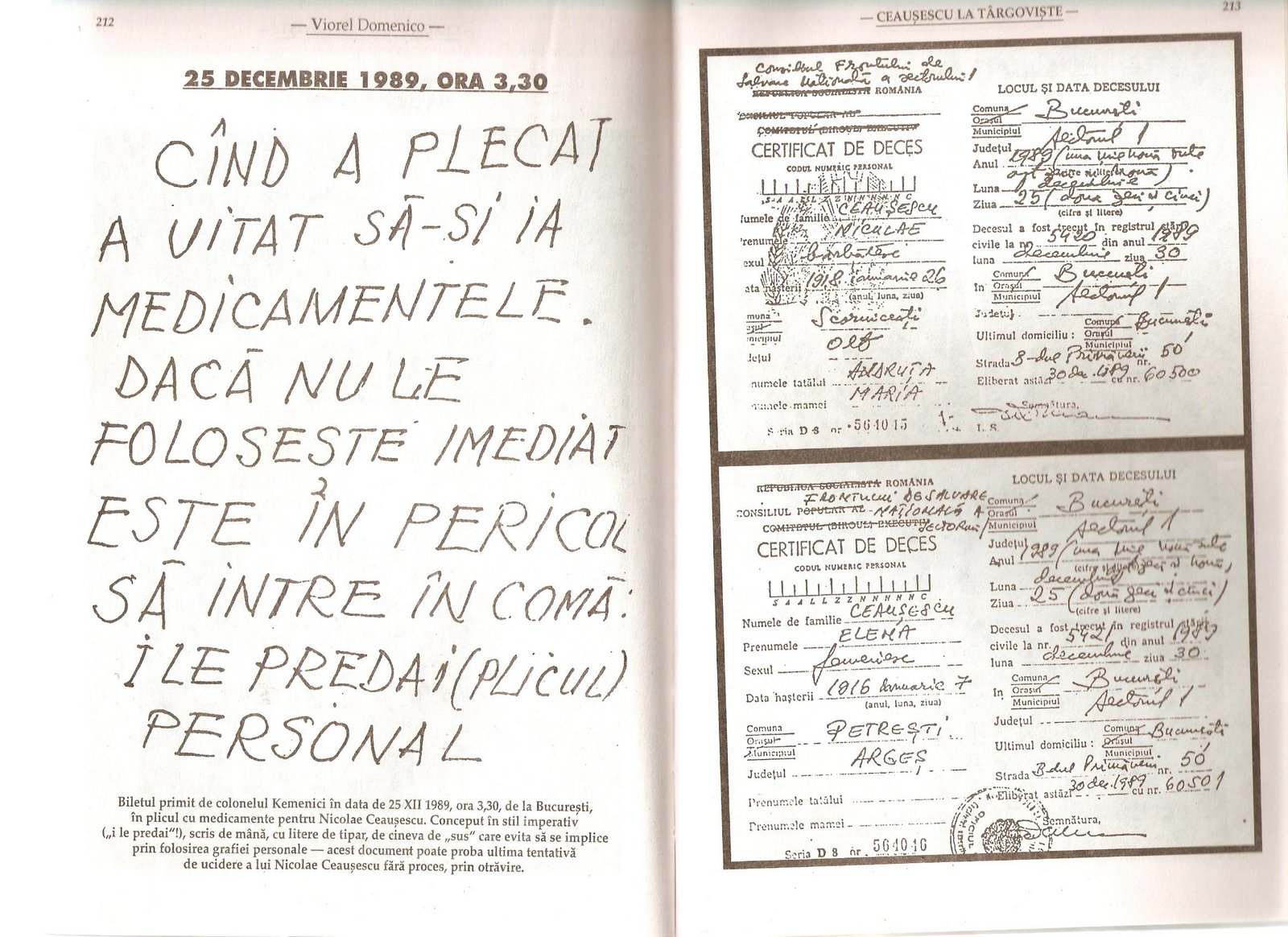
The effort on the night of 24/25 December 1989, to keep Nicolae Ceausescu alive, so that he could be tried and executed, continues to be a matter of dispute:

image0-007

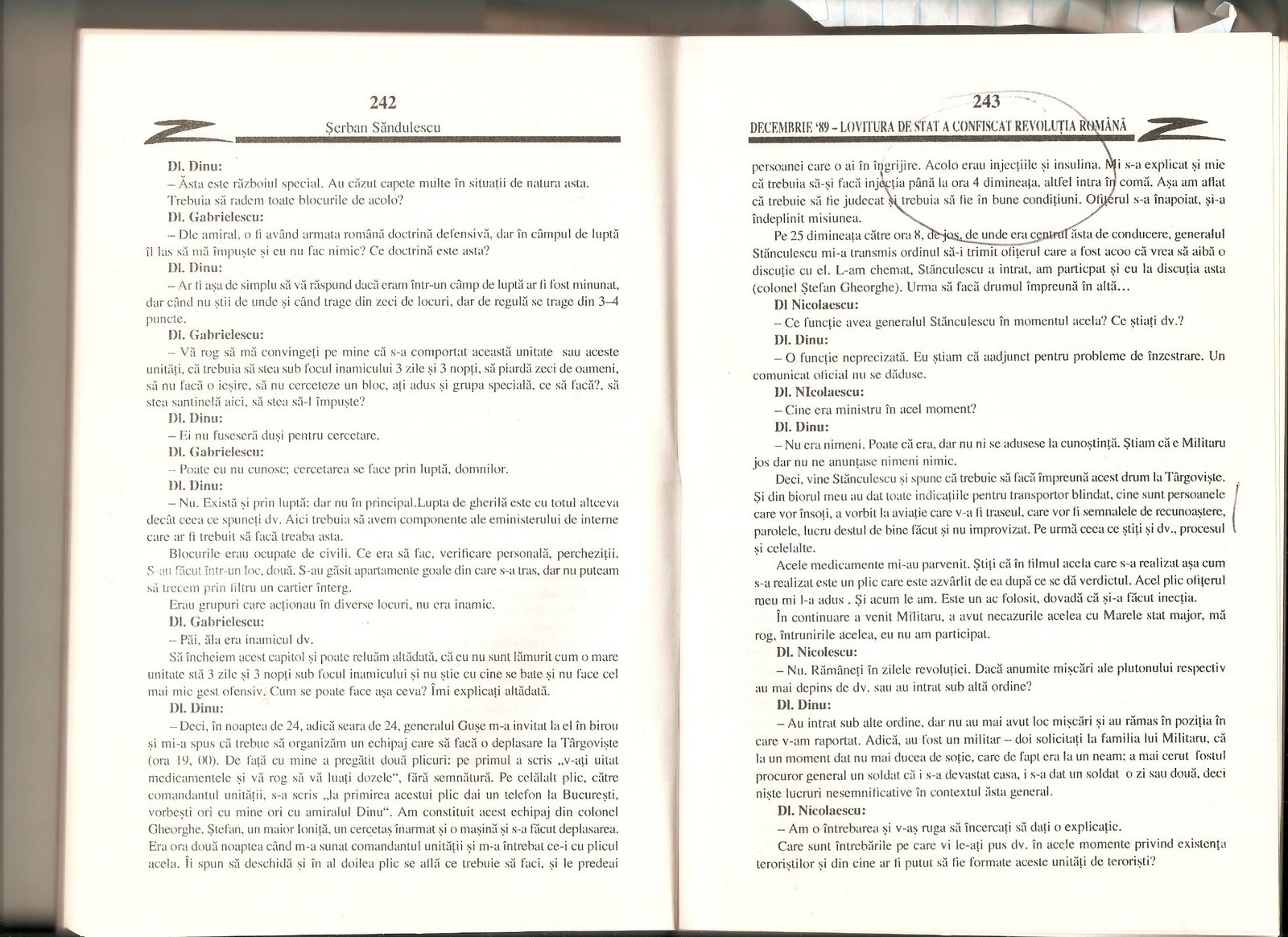
from Bacescu 1994 above, and Sandulescu 1996 below:

image0-009

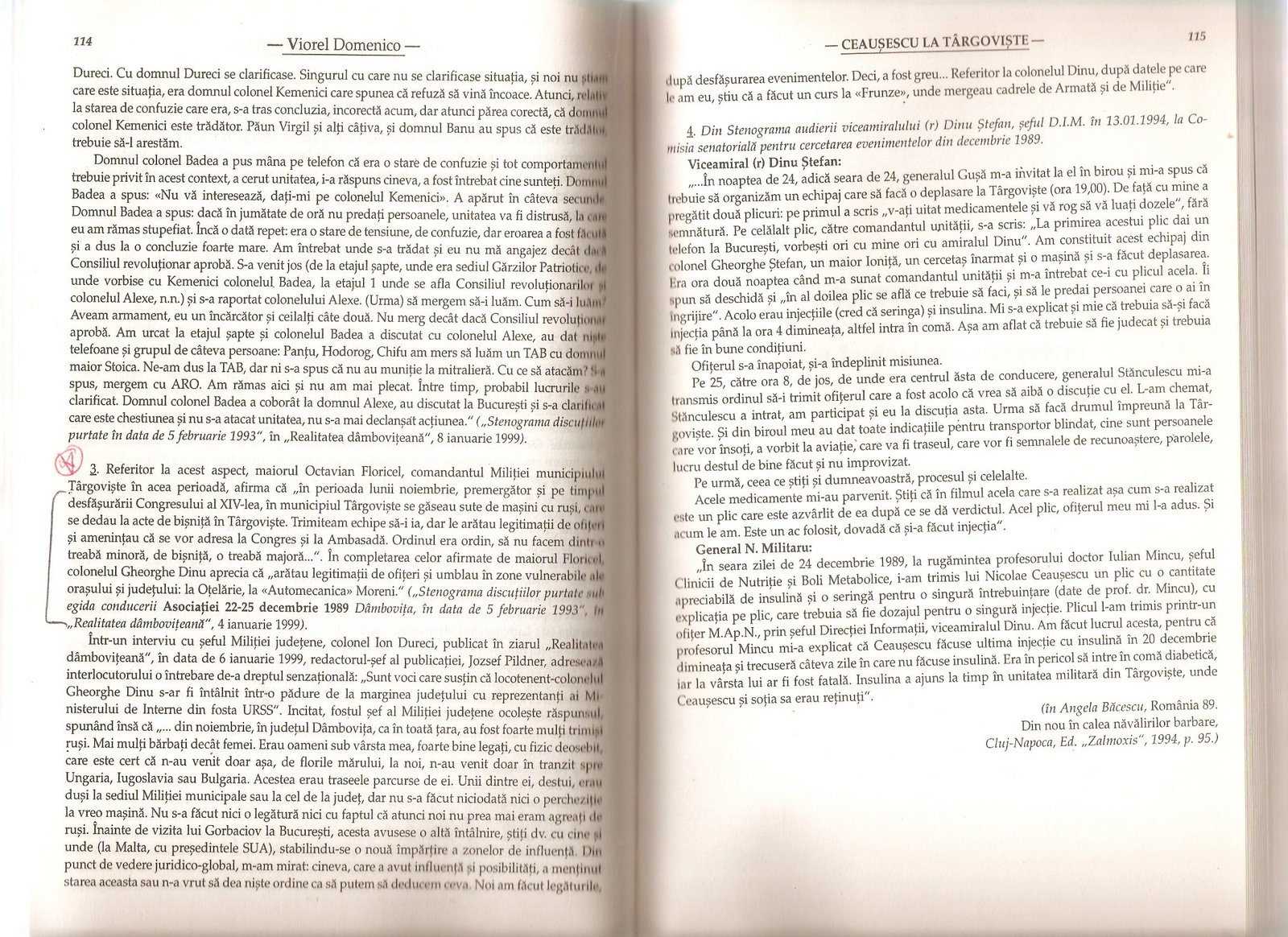
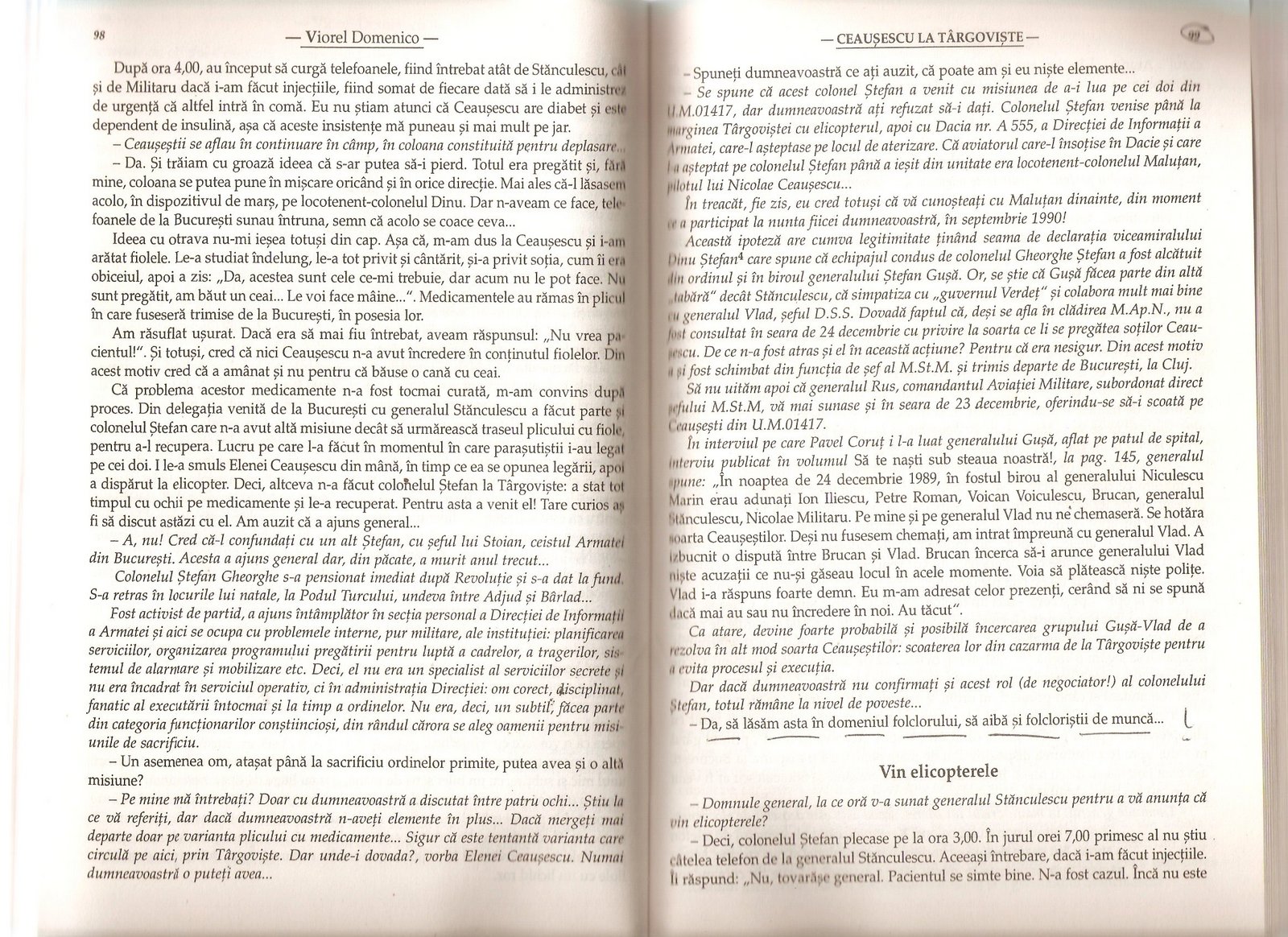
Viorel Domenico Ceausescu la Targoviste (1999) below

image0-019

image0-021

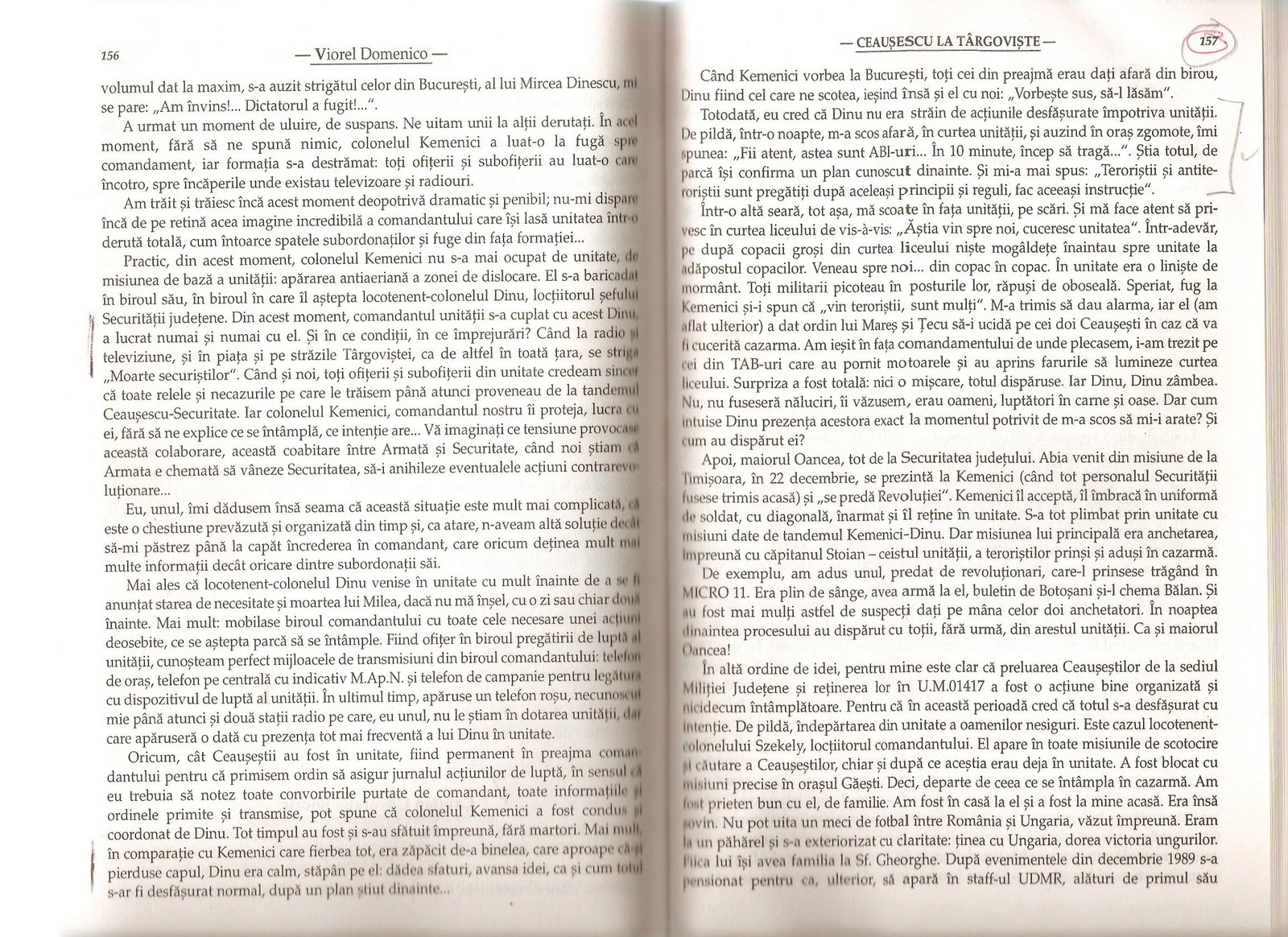
Captain Gheorge Bobric’s recounting of Securitate Col. Dinu’s comment, according to which “…notice, those are ABIs [Securitate USLA vehicles]…in ten minutes, firing will begin…The terrorists and anti-terrorists are trained  according to the same principles and rules, they go through the same training.” p. 157

image0-025

image0-023

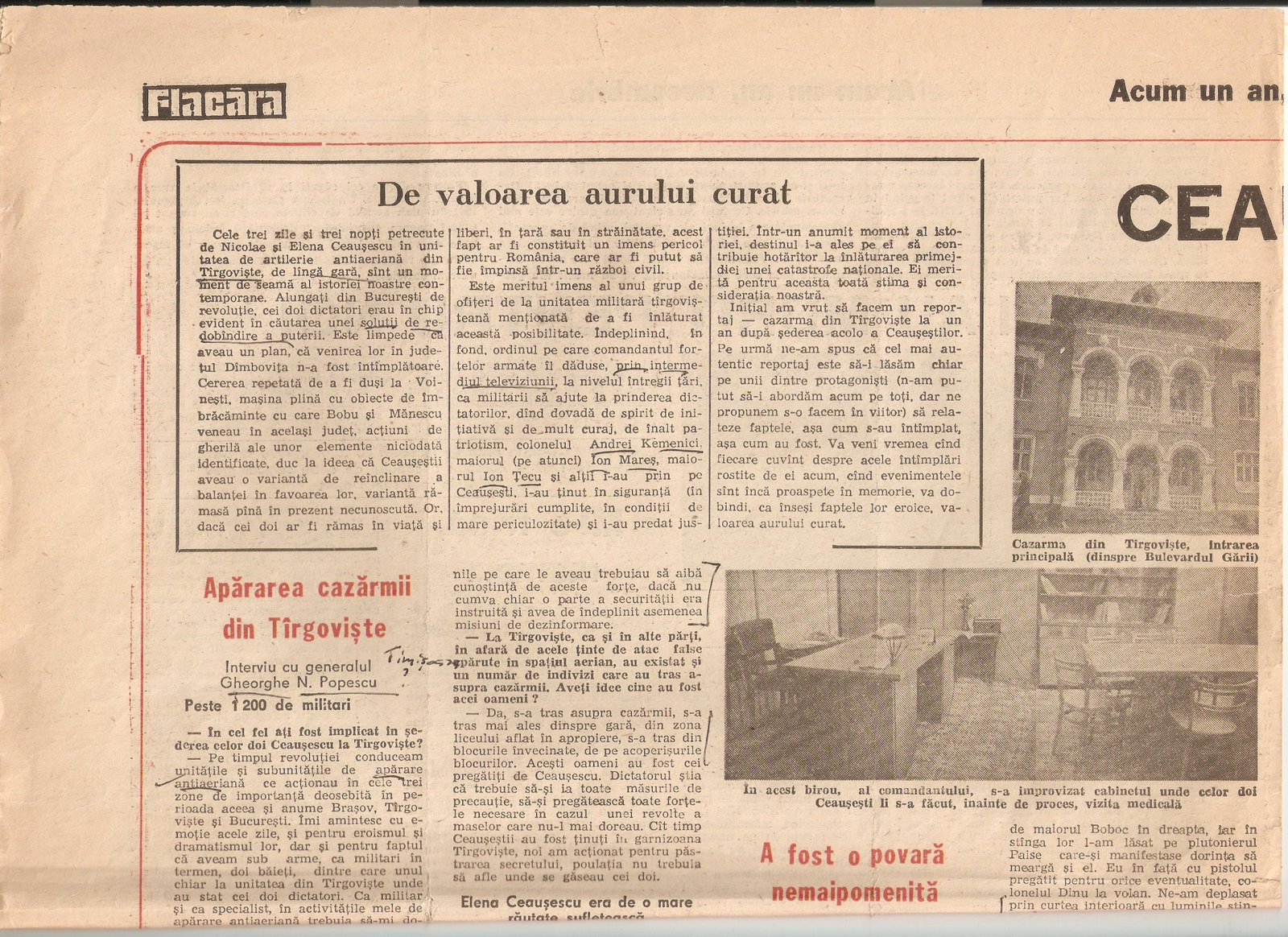
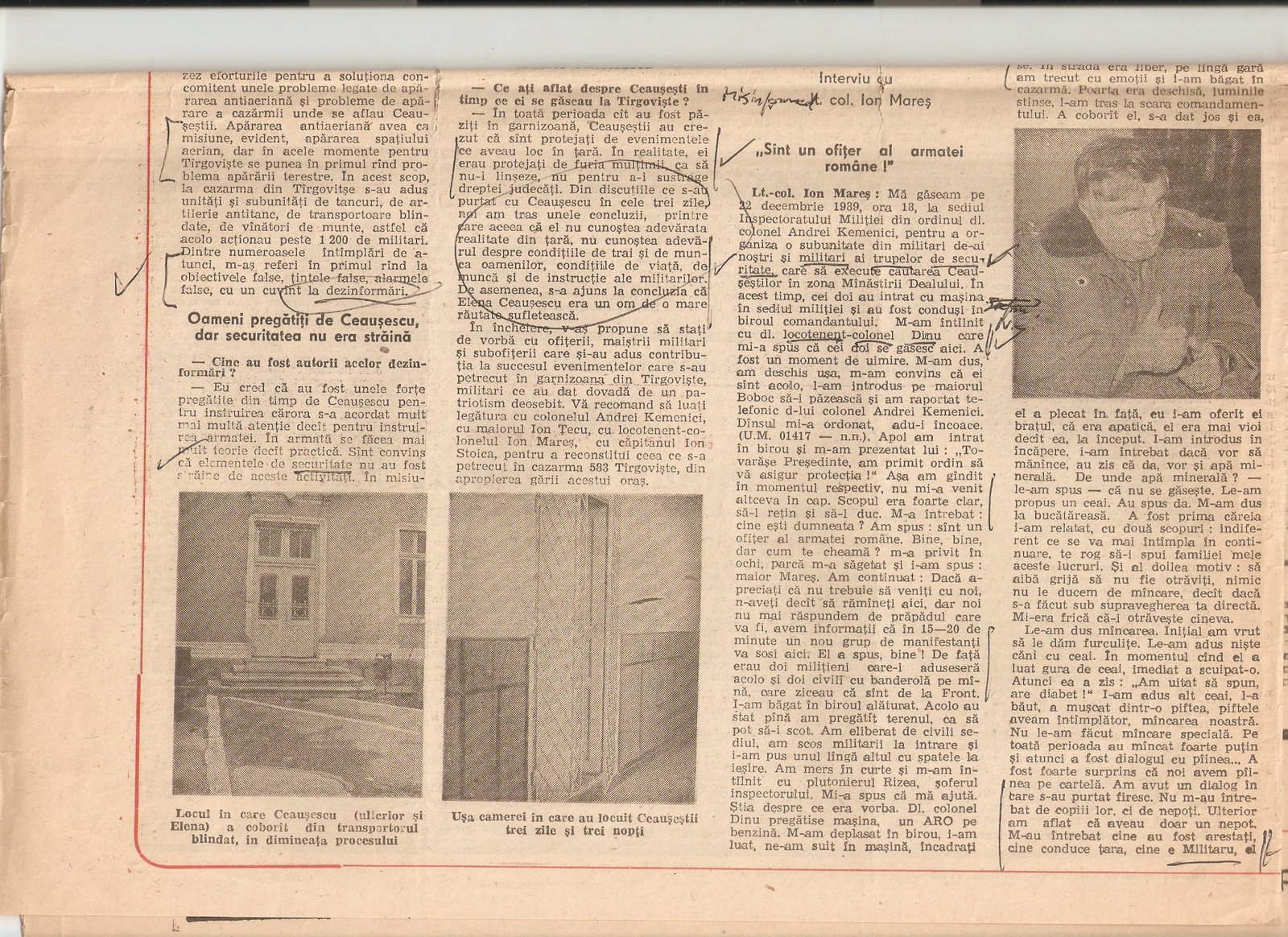
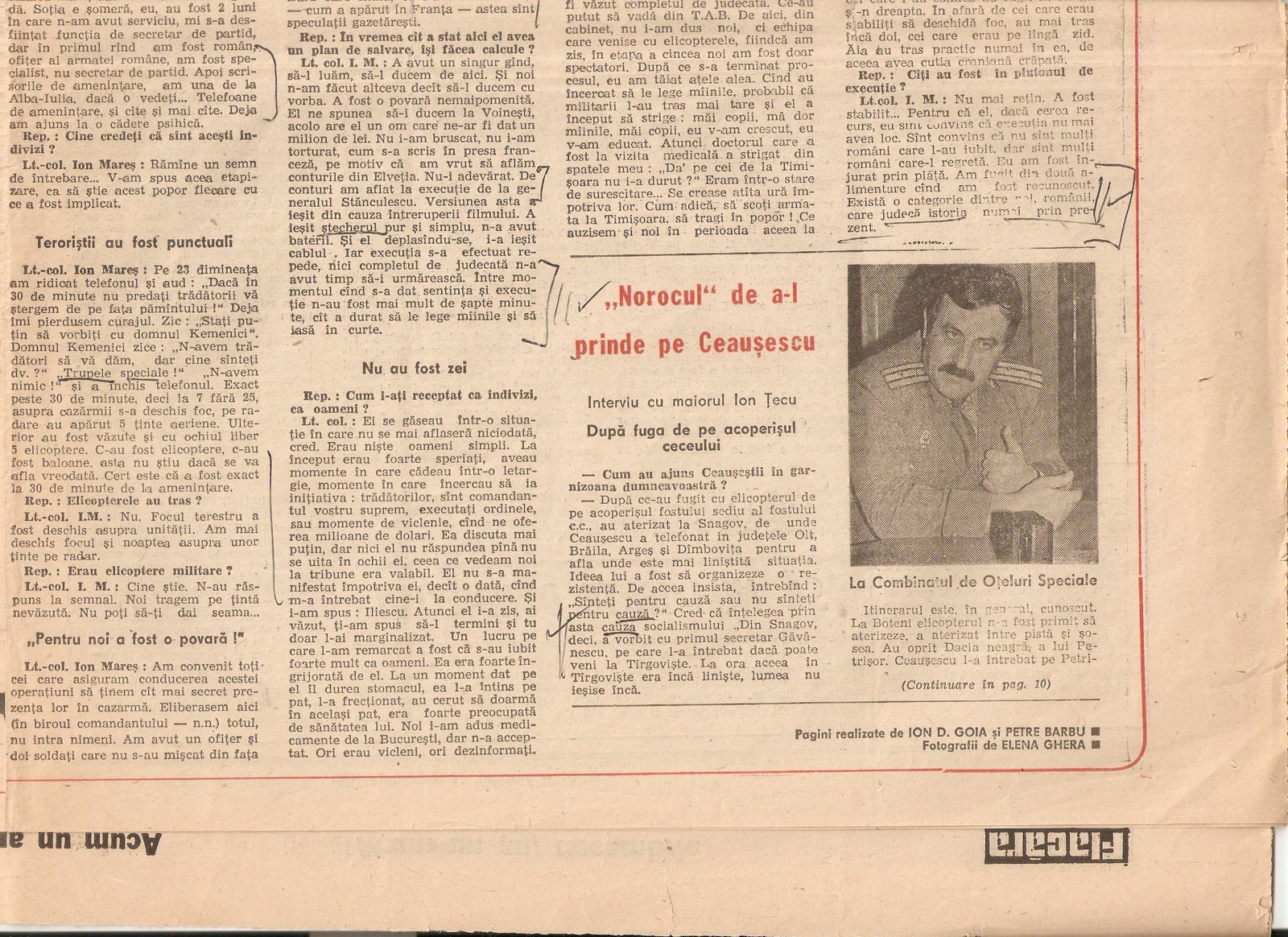
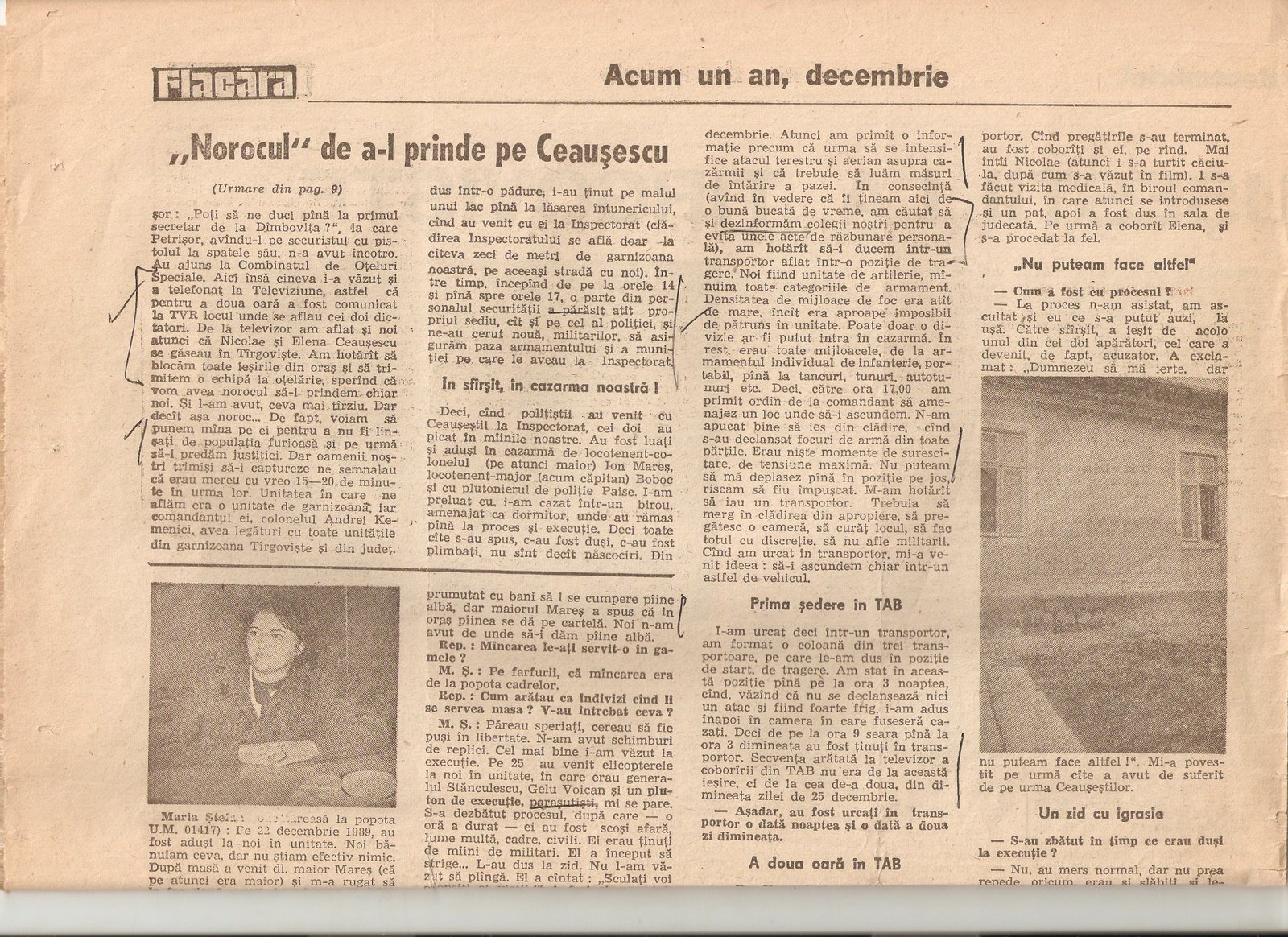
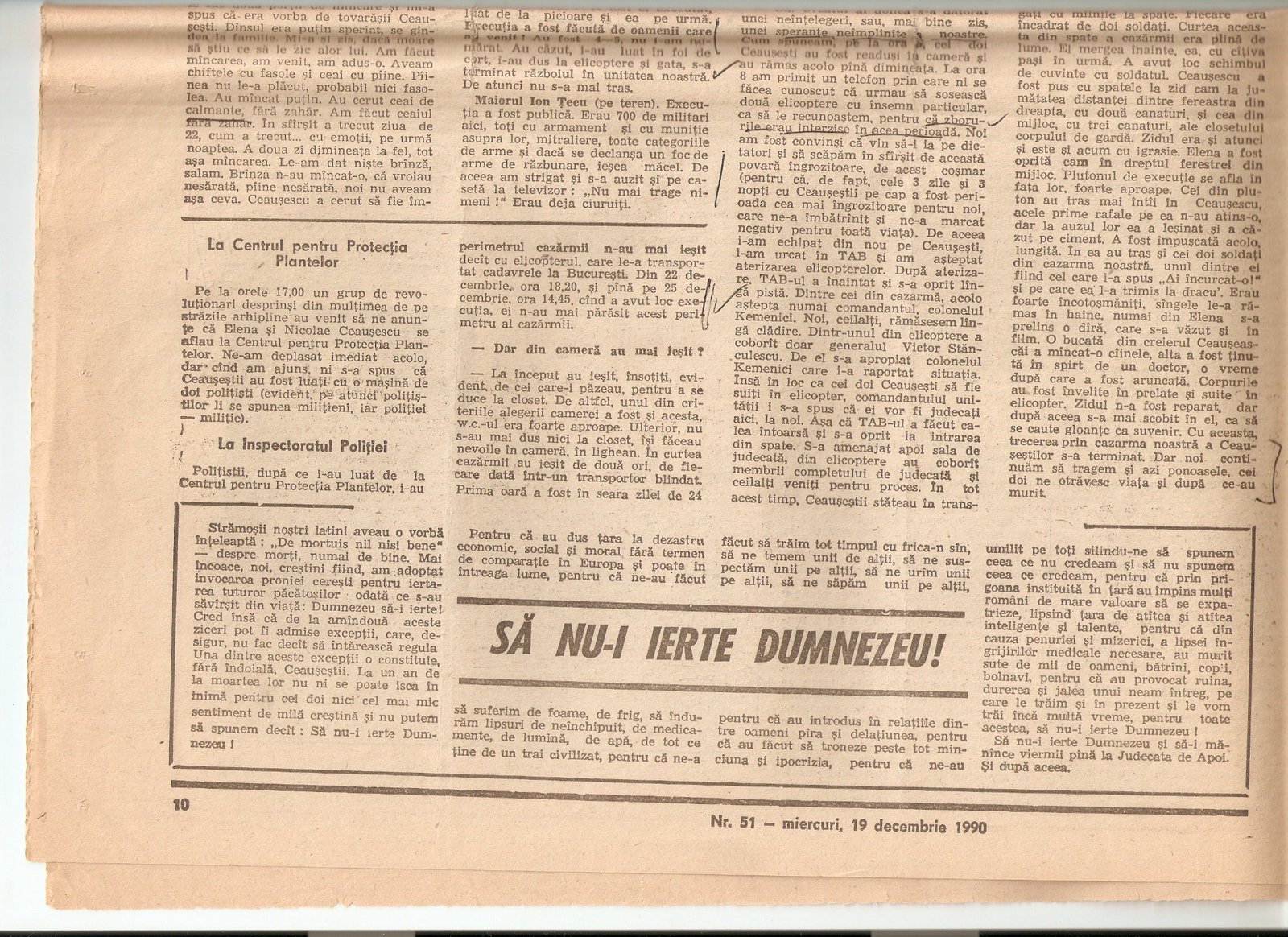
Ceausestii la Tirgoviste, Flacara no. 51 (19 decembrie 1990), pp. 8-10.

image0-017

image0-015

image0-013

image0-011

image0-008

image0-006

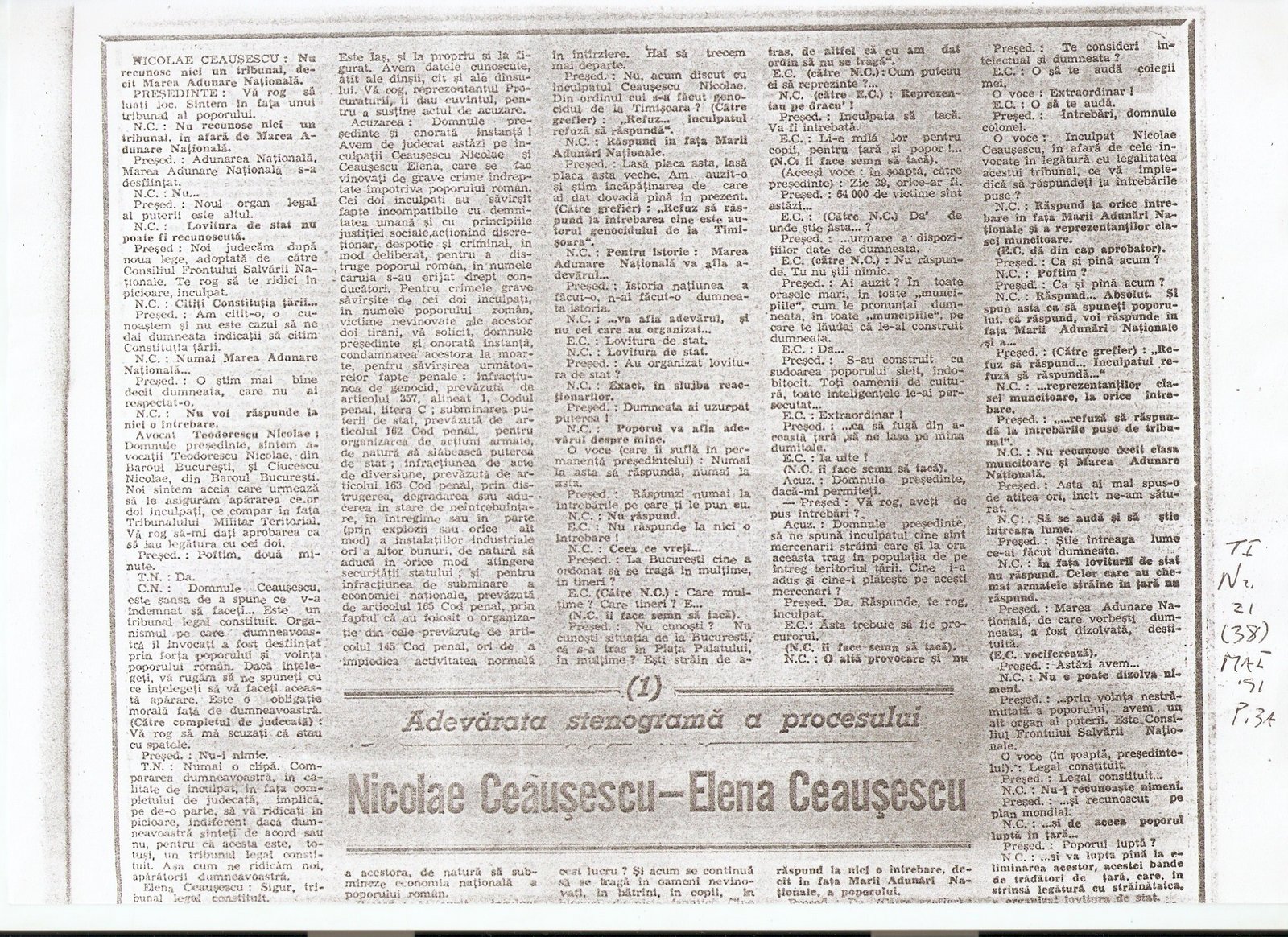
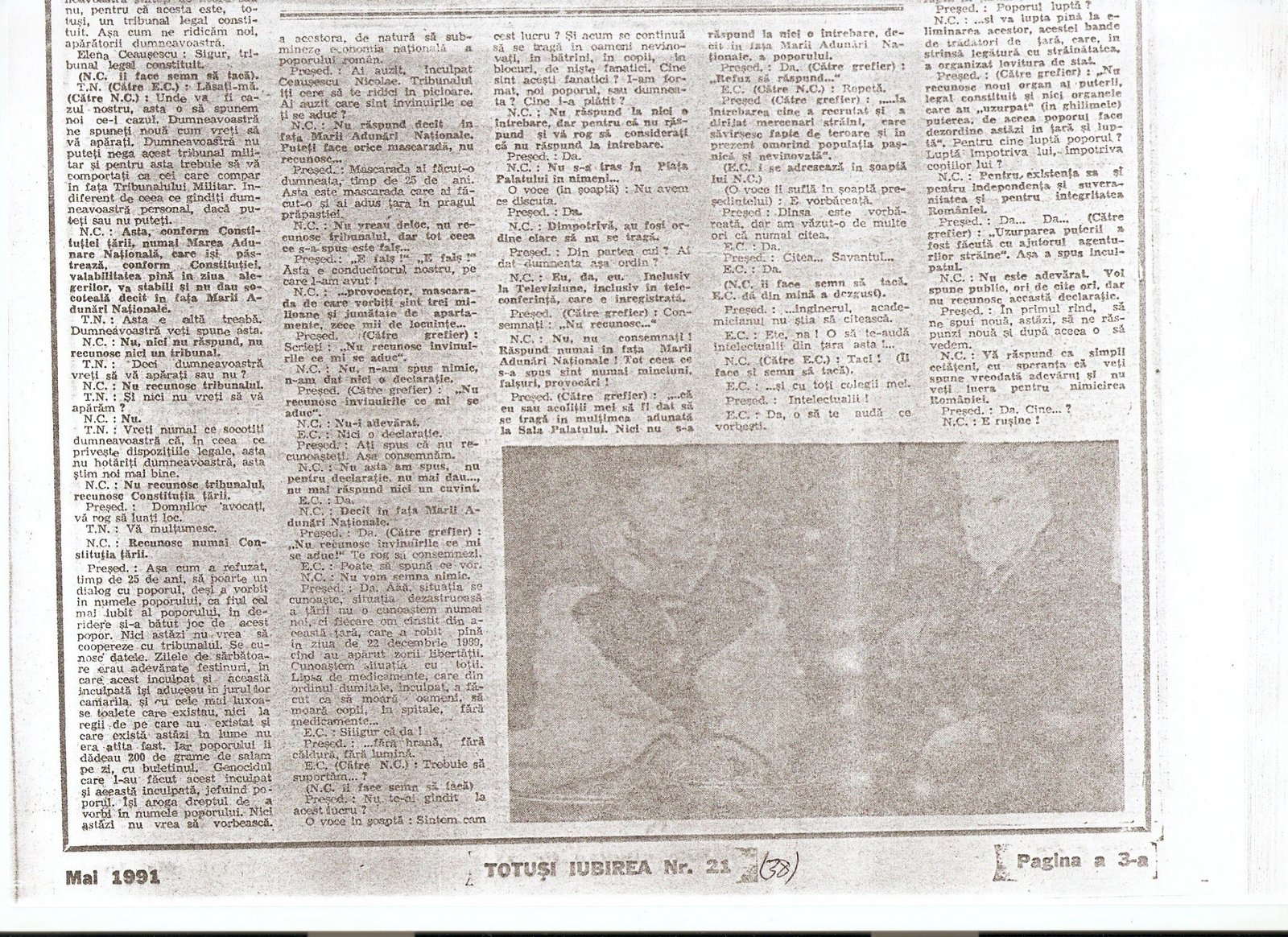
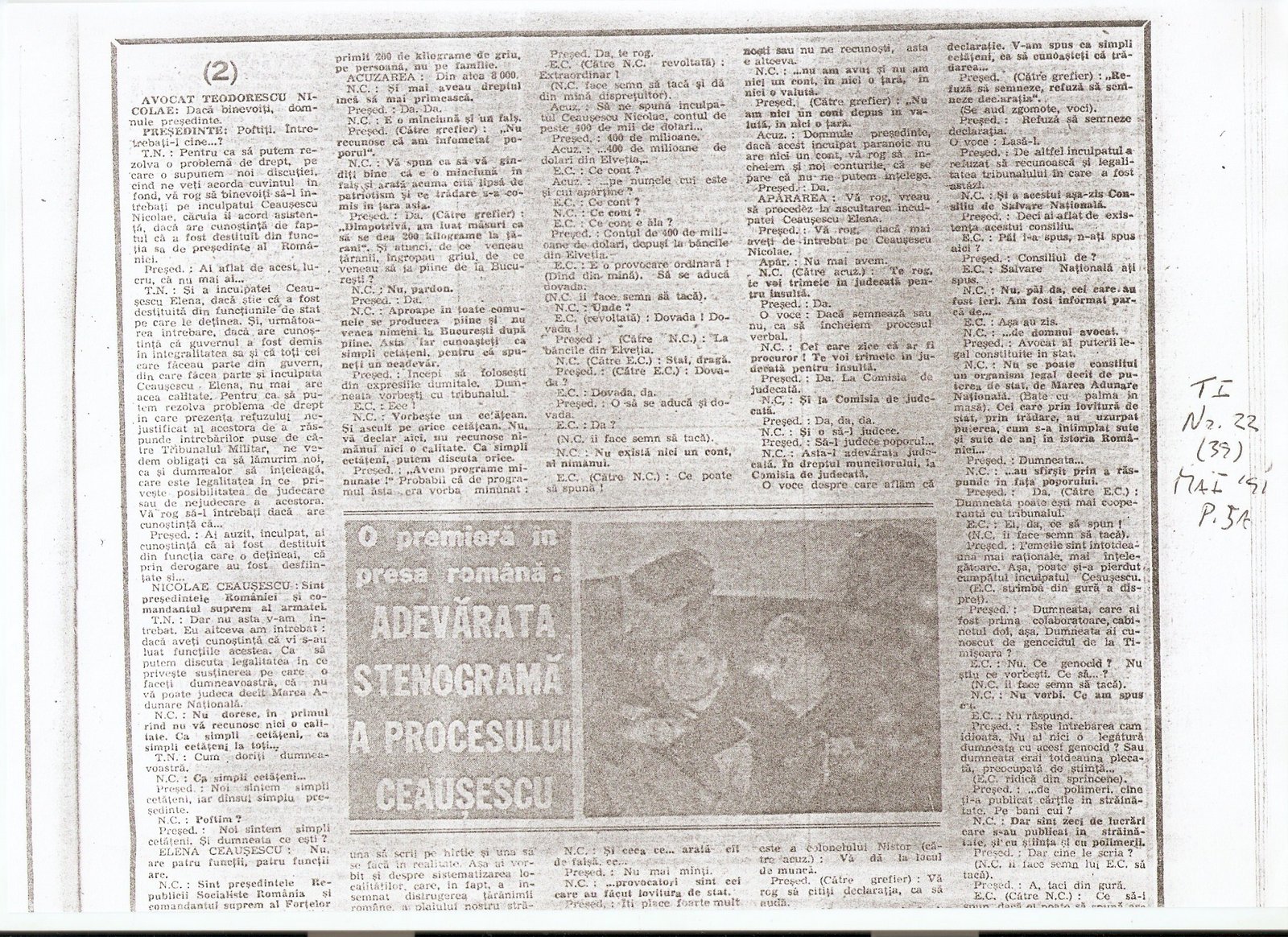
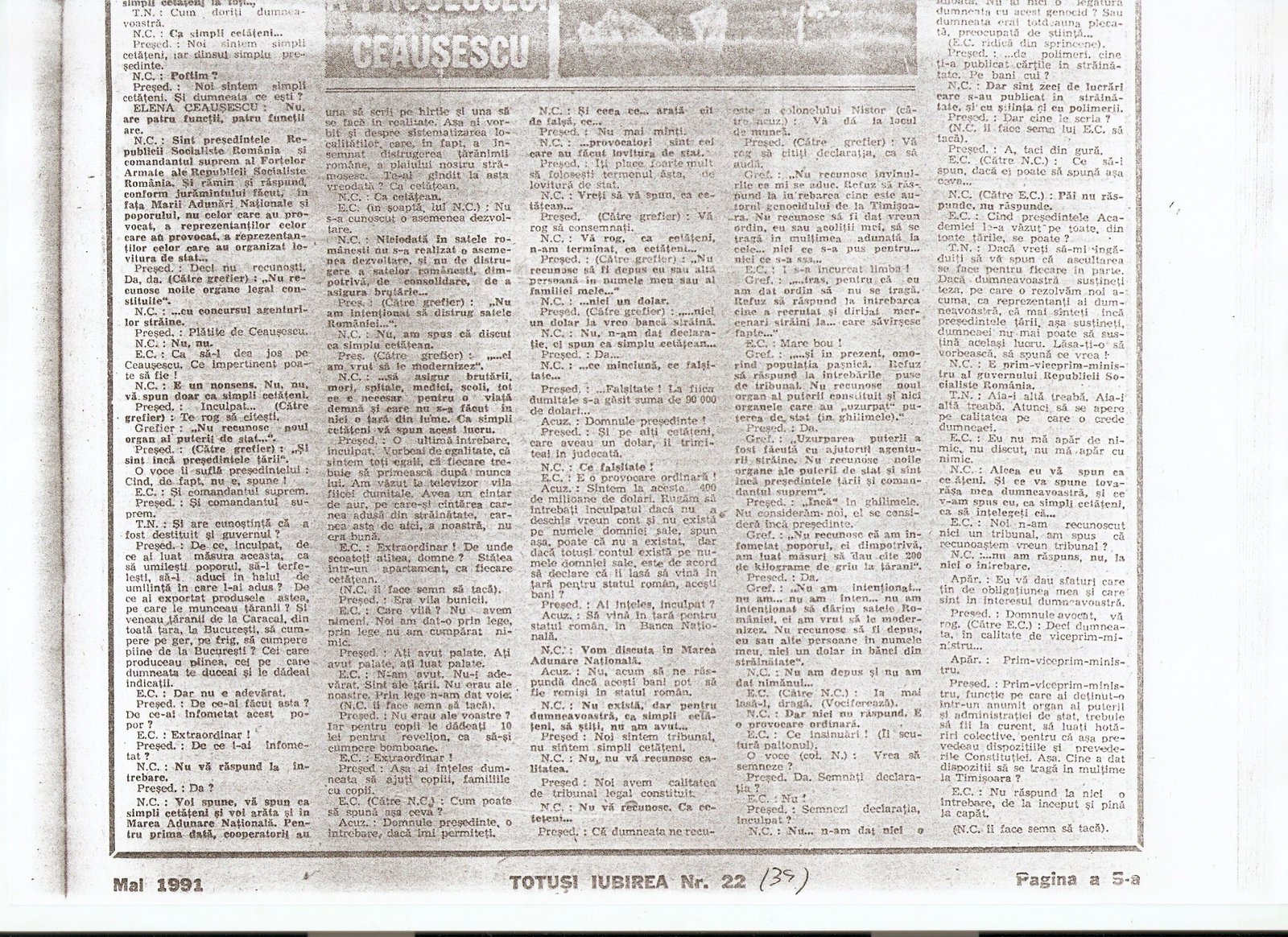
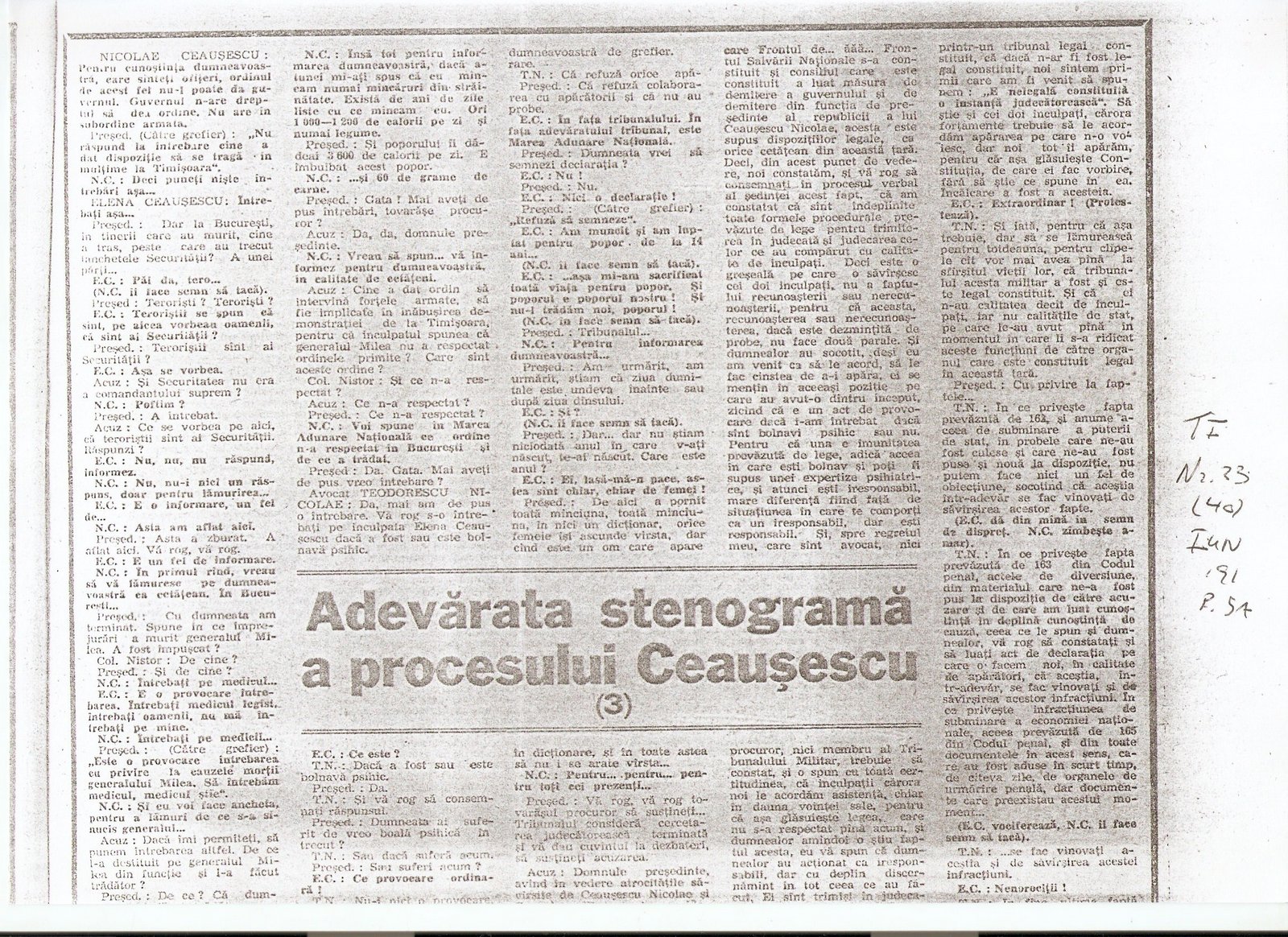
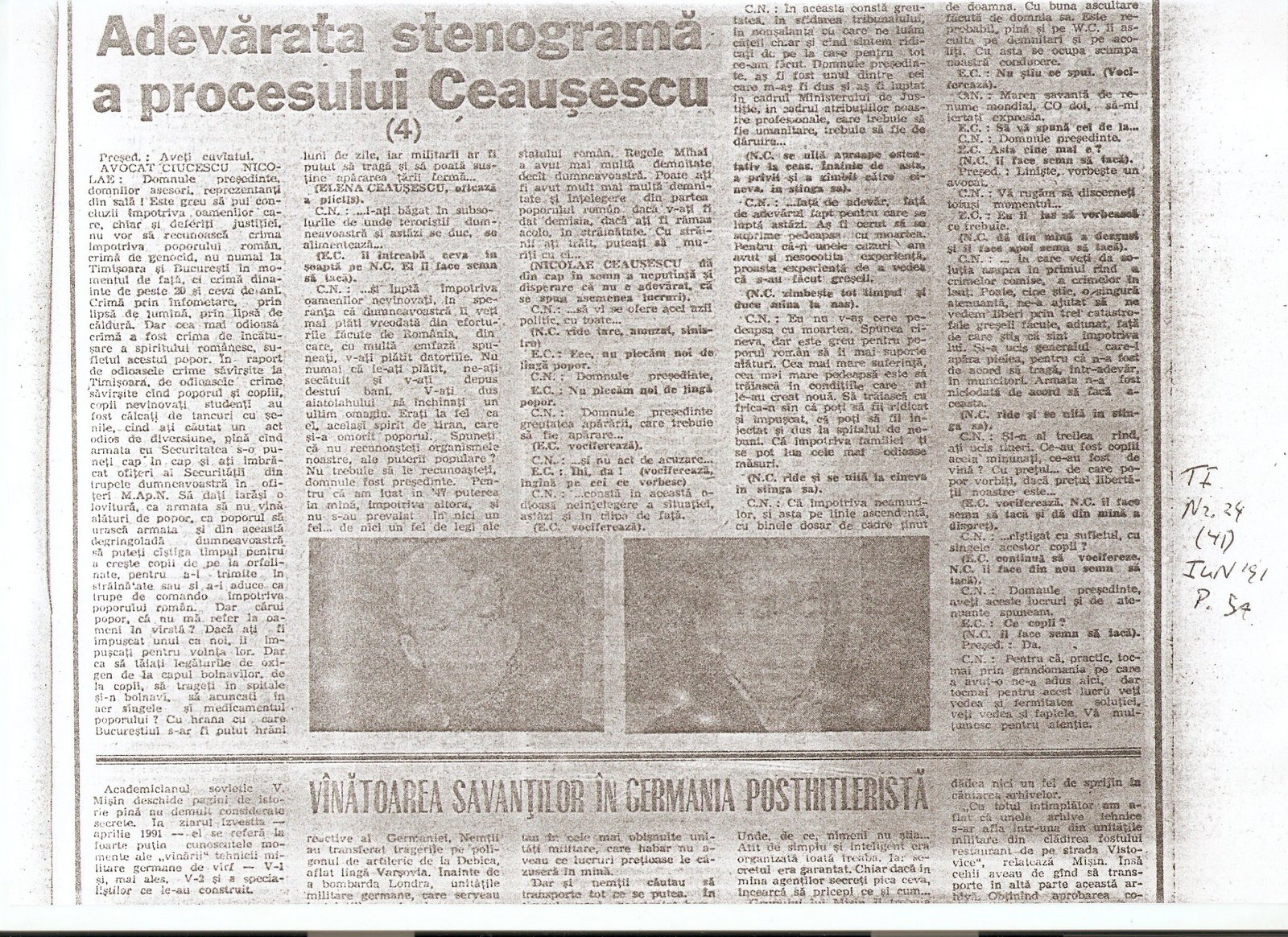
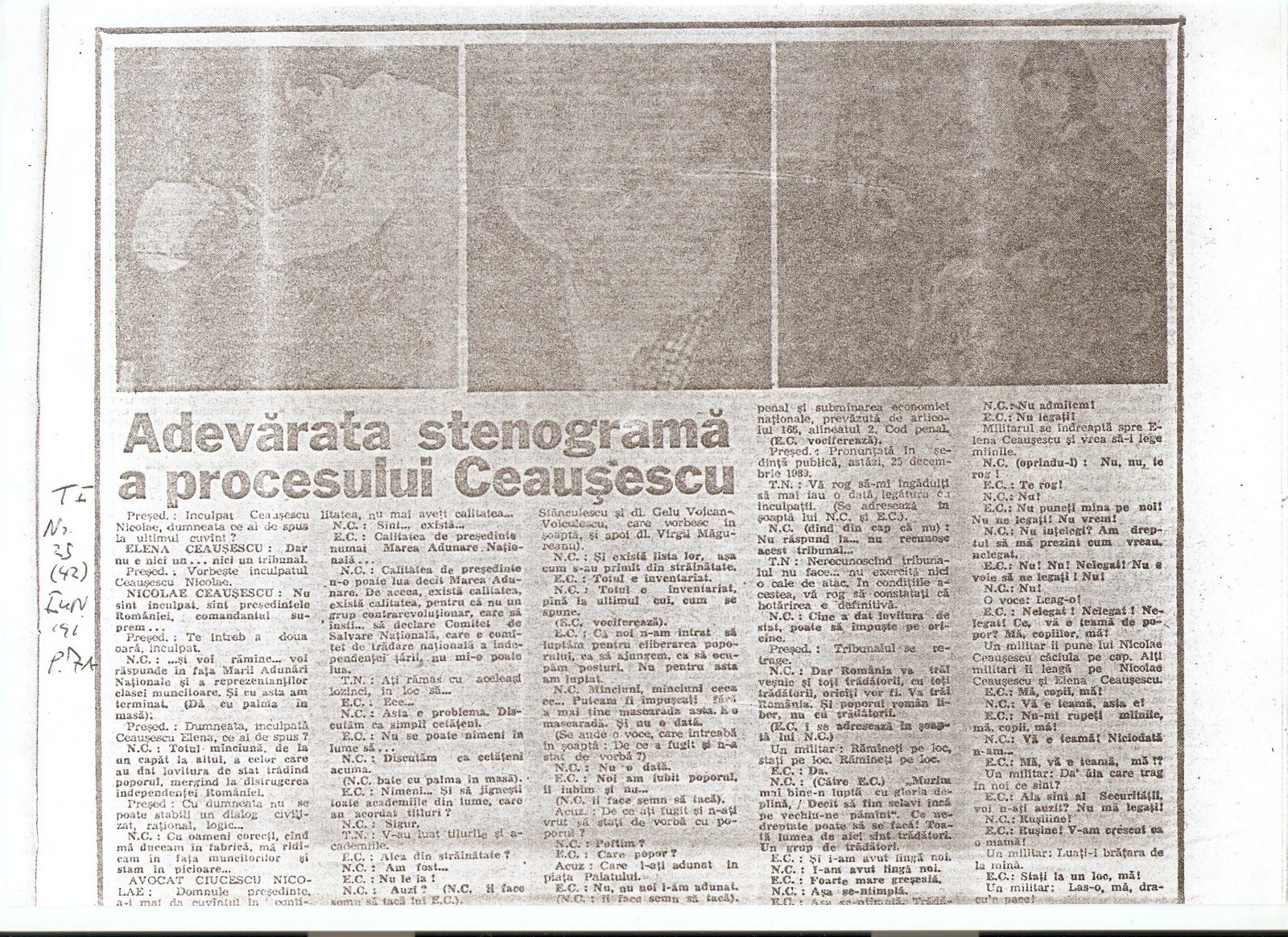
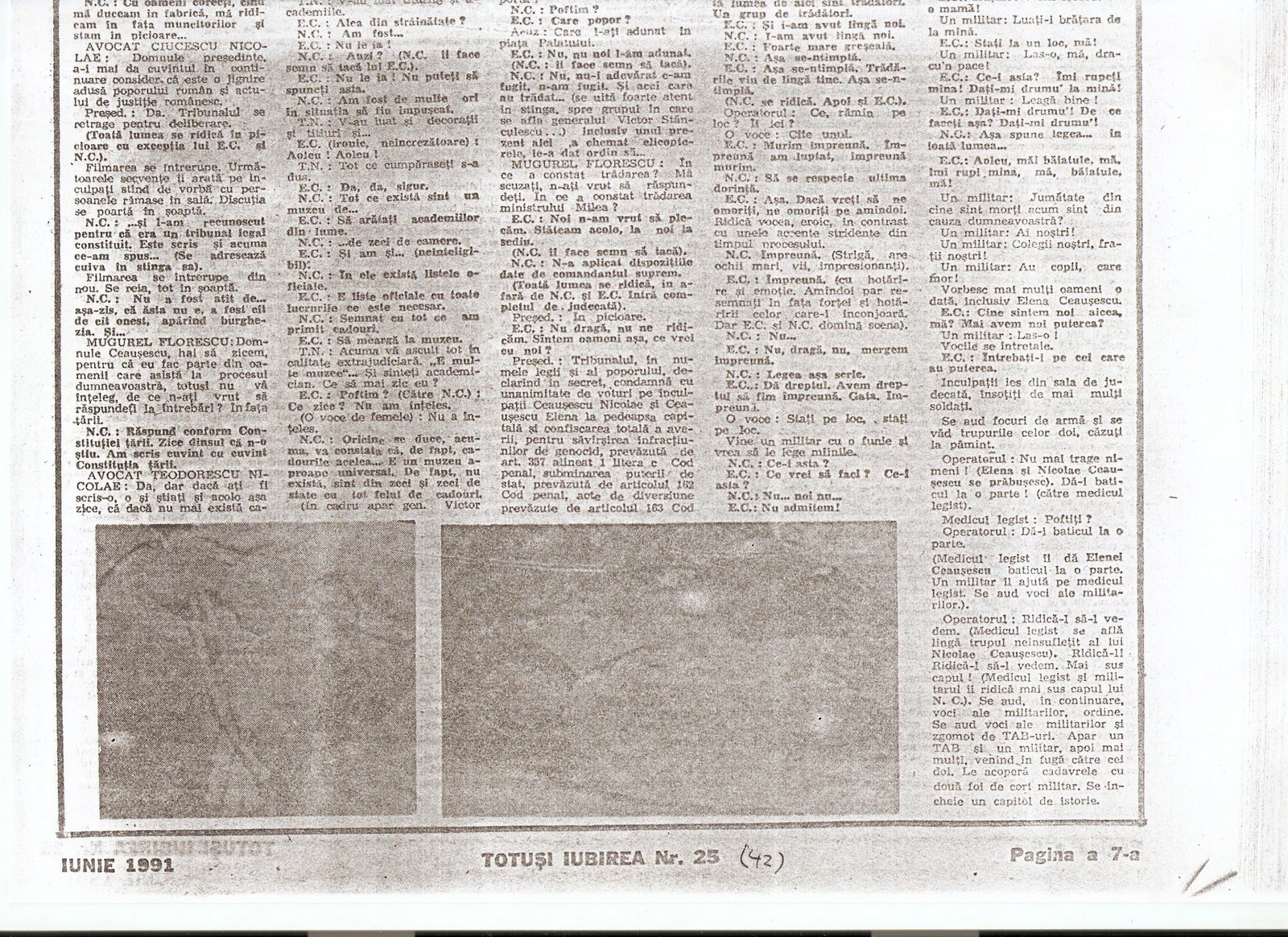
Below, a copy printed from a microfiche machine in late 1990/early 1991 at Indiana University (Bloomington)’s Main Library.  It contains an excerpt long since forgotten from the trail of Ceausescus, especially among those who deny the idea of Securitate terrorists and mercenaries loyal to Nicolae Ceausescu who fought on after 22 December 1989.  Below it, in Romanian, what Adrian Paunescu’s Totusi Iubirea in May 1991- June 1992 under the title “Adevarata stenograma a procesului Nicolae Ceausescu – Elena Ceausescu” (xeroxed spring 1997 Babes-Bolyai University Library, Cluj, Romania)

Prosecutor:  But those who shot at the young people were security men, the terrorists.

Elena Ceausescu:  The terrorists are from the Securitate.

Prosecutor:  The terrorists are from the Securitate?

Elena Ceausescu:  Yes.

image0-001

Adrian Paunescu’s Totusi Iubirea in May 1991- June 1992 under the title “Adevarata stenograma a procesului Nicolae Ceausescu – Elena Ceausescu.”

image0-003

image0-005

image0-007

image0-009

the actual conversation per this version is somewhat more nuanced than the translation above (which lacks the original Romanian)

Presed (Prosecutor):  Dar la Bucuresti, in tinerii care au murit, cine a tras, peste care au trecut tanchetele Securitatii? A unei parti… [“tanchetele Securitatii, a unei parti…” this may be a reference to the ABIs of the USLA and/or a mistake/intentional mischaracterization of the concomitant participation of Army tanks in the Bucharest repression of 21/22 December 1989]

E.C. (Elena Ceausescu):  Pai, da, tero…

(N.C. (Nicolae Ceausescu) il face semn sa taca) (Nicolae Ceausescu signals her to be quiet) [this is very revealing…clearly, Elena was stumbling into saying more than she should and Nicolae wanted to cut her off)

Presed:  Teroristi?  Teroristi?

E.C. Teroristii se spun ca sint, pe aicea vorbeau oamenii, ca sint al Securitatii?

Presed:  Teroristii sint ai Securitatii?

E.C. Asa se vorbea.

Acuz:  Si Securitatea nu era a comandamentului suprem?

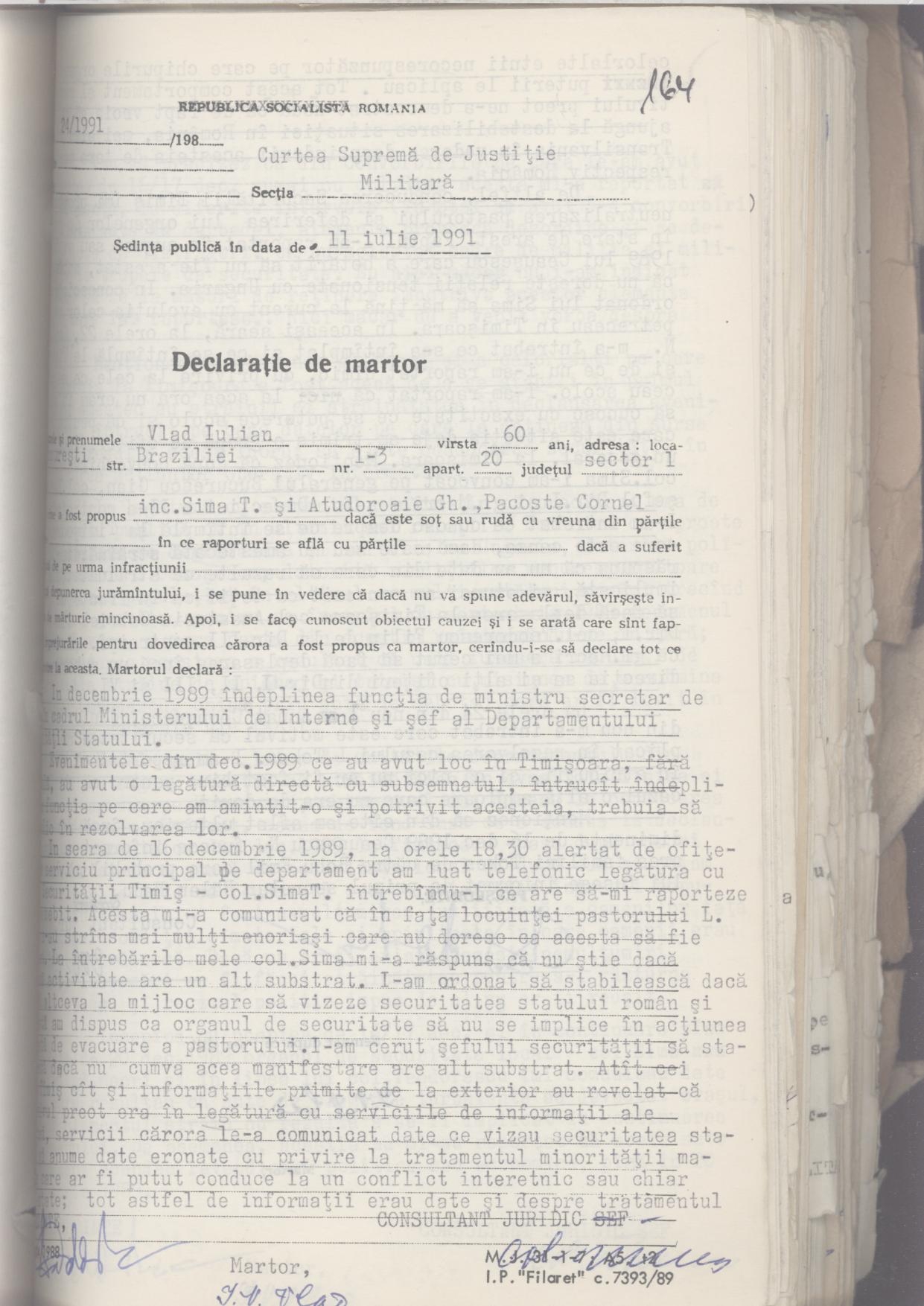
That the terrorists were affiliated with the Securitate was recognized by Securitate General Iulian Vlad in his declaration of 29 January 1990, which can be found here:

http://atomic-temporary-3899751.wpcomstaging.com/text-of-securitate-general-iulian-vlads-29-january-1990-declaration-identifying-the-terrorists/

image0-011

image0-014

image0-016

image0-018

image0-020

image0-001

Posted in decembrie 1989, raport final | Tagged: , , , , , , , , , , | Leave a Comment »

The Absurdity of the Allegation that the Romanian Military Was Responsible for the Radioelectronic War in December 1989

Posted by romanianrevolutionofdecember1989 on August 25, 2014

(purely personal views based on two decades of prior research and publications, thank you)

Ah, yes, the recurrent allegation that the Romanian Army–or rather elements of it–in December 1989 disinformed the Romanian Army!

http://romanian.ruvr.ru/2013_12_18/Revolutia-Romana-Diversiunea-radioelectronica-din-1989-opera-conducerii-Aviatiei-Si-a-Apararii-AA-3453/

http://www.gazetadecluj.ro/stiri-cluj-investigatii/in-decembrie-1989-dia-manipula-armata-romana/

Who, in 1990, was at the forefront of informing the Romanians about the details of the radio-electronic war?  Civilian journalists at the main dailies Romania Libera or Adevarul, etc.?  NO!!!

It was the Army itself!  Army officers in the pages in the pages of the official Army daily!!!  In March 1990! 

There are many reasons for why the suggestion that the Army intentionally disinformed itself in December 1989 is absurd:  this is one of them!

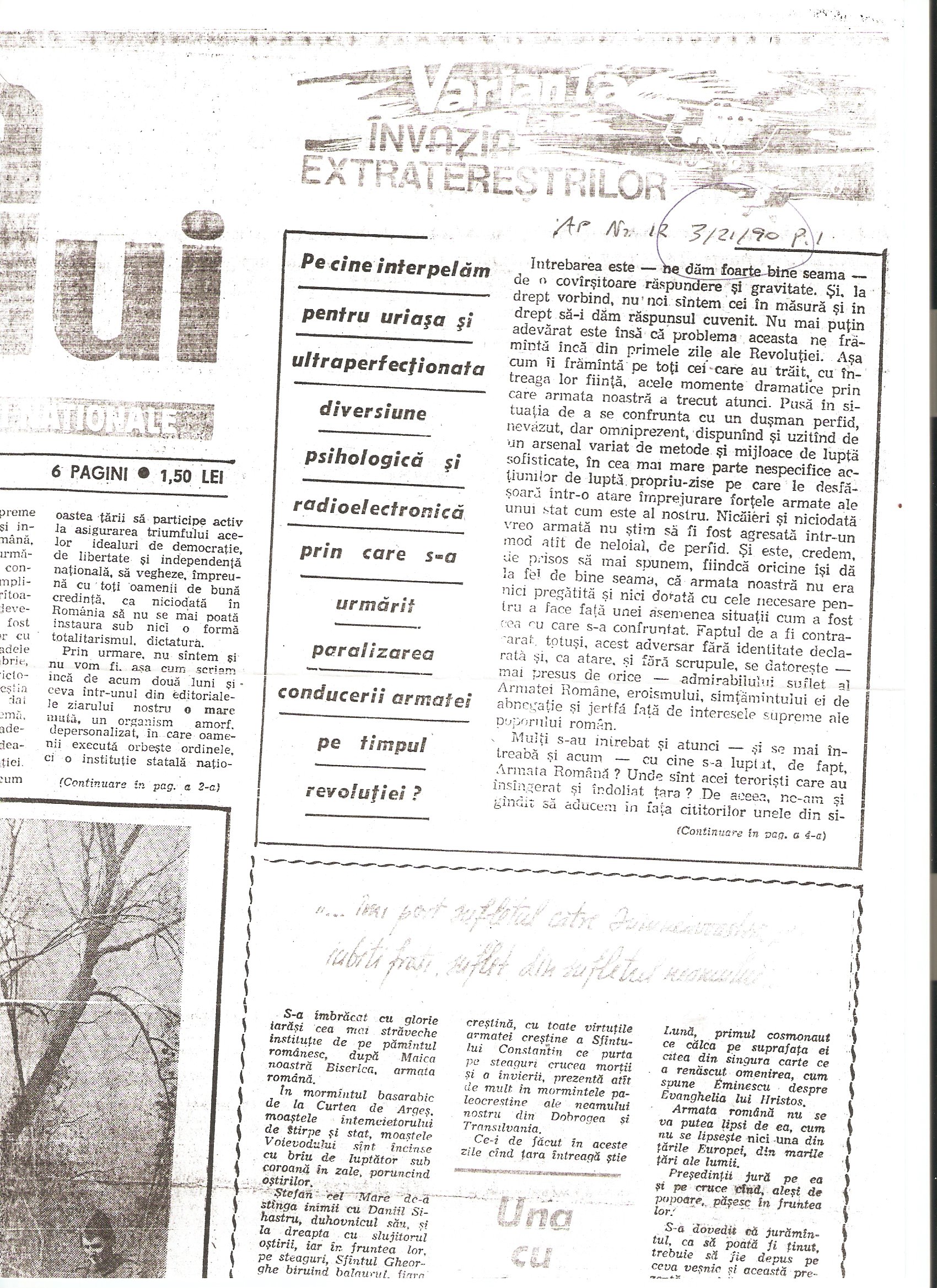
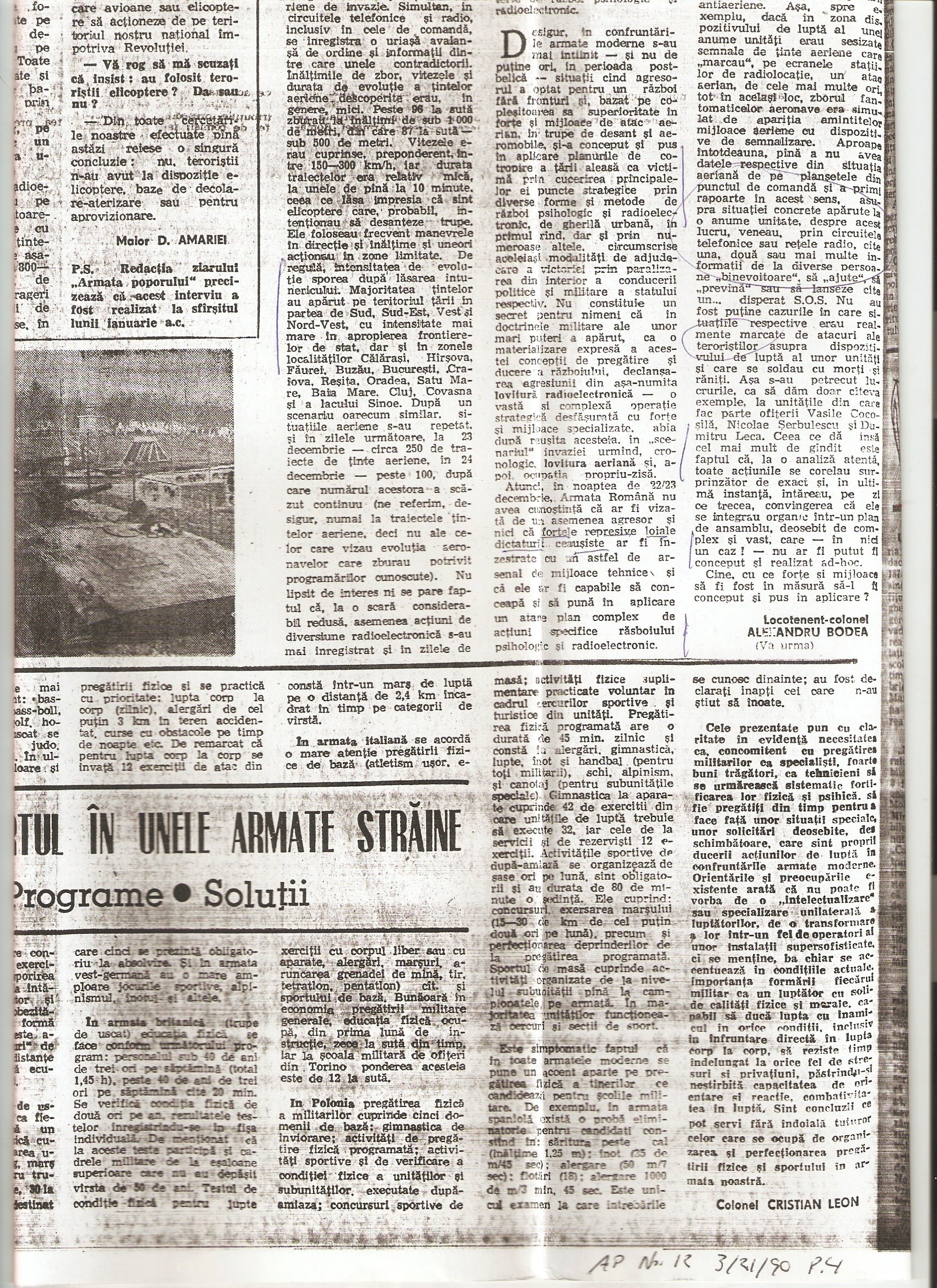
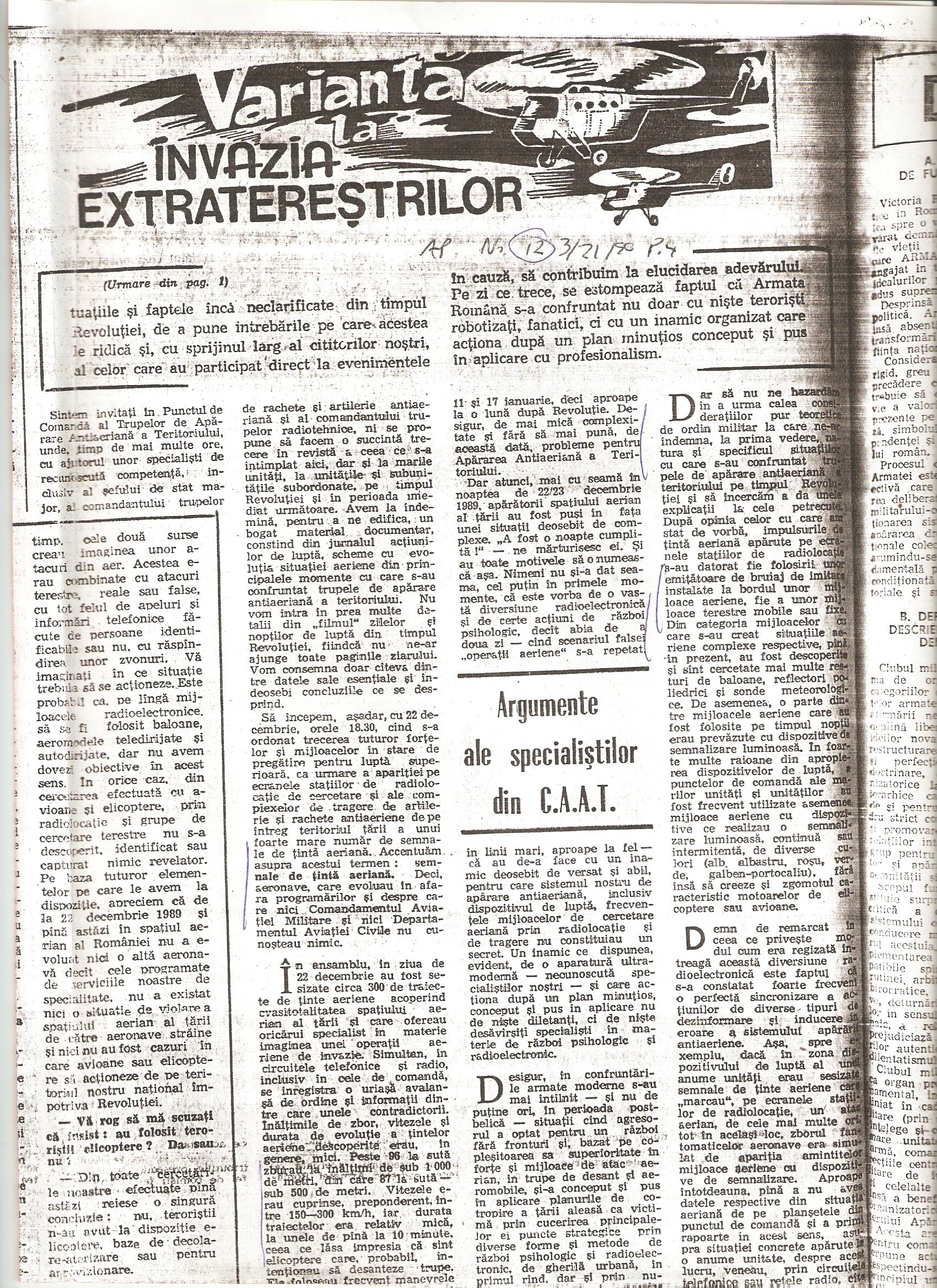
Locotenent-colonel Alexandru Bodea, “Varianta la Invazia Extraterestrilor,” Armata Poporului, nr. 12 (21 martie 1990), p. 4.


decembrie 1989 si diversiunea radioelectronica: “Varianta la Invazia Extraterestrilor” (I)

decembrie 1989 si diversiunea radioelectronica: “Varianta la Invazia Extraterestrilor” (II)

decembrie 1989 si diversiunea radioelectronica: “Varianta la Invazia Extraterestrilor” (III)

decembrie 1989 si diversiunea radioelectronica: “Varianta la Invazia Extraterestrilor” (IV)

decembrie 1989 si diversiunea radioelectronica: “Varianta la Invazia Extraterestrilor” (V)

decembrie 1989 si diversiunea radioelectronica: “Varianta la Invazia Extraterestrilor” (VI) plus BONUS: de ce a ocolit zona Moldovei razboiul radioelectornic?!!!


http://atomic-temporary-3899751.wpcomstaging.com/2011/06/02/iosif-costinas-cu-locotenent-colonelul-petre-ghinea-o-lupta-cu-fortele-raului-orizont-timisoara-nr-5-221990-p-5/

http://atomic-temporary-3899751.wpcomstaging.com/2011/06/04/decembrie-1989-si-diversiunea-radioelectronica-brindusa-armanca-recuperarea-azurului-orizont-timisoara-nr-12-23-martie-1990-p-3/

http://atomic-temporary-3899751.wpcomstaging.com/2014/01/19/what-would-it-have-looked-like-if-nicolae-ceausescus-securitate-executed-a-plan-to-counter-an-invasion-but-the-invaders-never-came-i/

http://atomic-temporary-3899751.wpcomstaging.com/2014/01/21/what-would-it-have-looked-like-if-nicolae-ceausescus-securitate-executed-a-plan-to-counter-an-invasionbut-the-invaders-never-came-ii/

Posted in decembrie 1989, raport final | Tagged: , , , , , , , , , , | 2 Comments »

Nicolae Ceausescu’s Paranoia as a Theory for Explaining December 1989?

Posted by romanianrevolutionofdecember1989 on August 23, 2014

(Purely personal views, based on two decades of prior research and publications, thank you)

http://www.youtube.com/watch?v=R6VzNMrQRbA

[Described by the poster, spartacvs dacicvs, as follows:  toate celelalte postari au in jur de 6 minute,semn ca sunt “taiate”,aceasta inregistrare este de aproape 21 minute si este UNICA pe youtube.com se poate auzi clar cum Ceausescu administreaza criza evenimentelor de la Timisoara si exista si stenograma.]

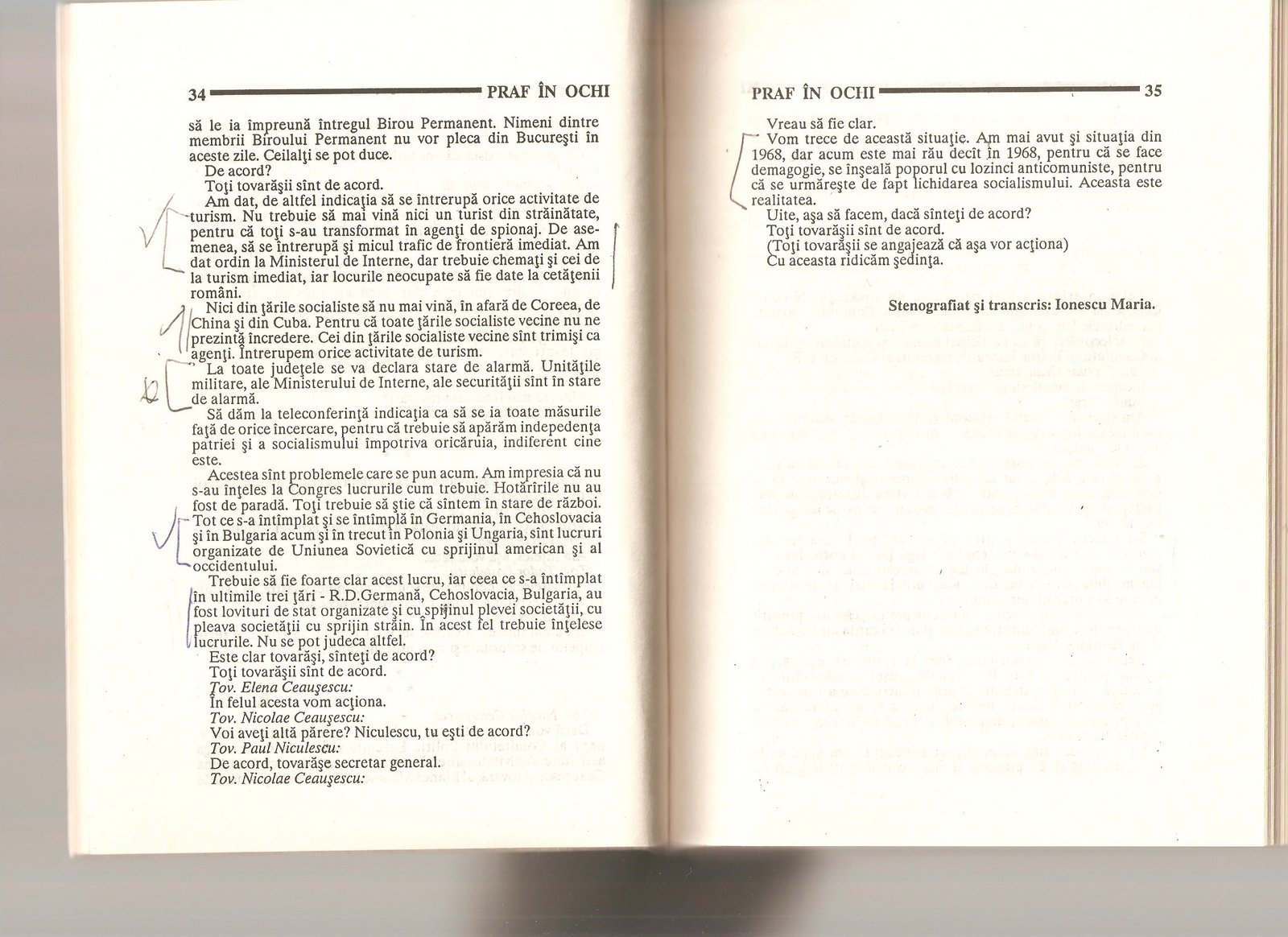
Tov. Nicolae Ceausescu:

Am dat, de altfel, indicatia sa se intrerupa orice activitate de turism. Nu trebuie sa mai vina niciun turist din strainatate, pentru ca toti s-au transformat in agenti de spionaj. De asemenea, sa se intrerupa micul trafic de frontiera imediat. Am dat ordin la Ministerul de Interne, dar trebuie chemati si cei de la turism imediat, iar locurile neocupate sa fie date la cetateni romani.  Nici din tarile socialiste sa nu mai vina, in afara de Coreea, de China si din Cuba. Pentru ca toate tarile socialiste vecine nu prezinta incredere. Cei din tarile socialiste vecine sunt trimisi ca agenti. Intrerupem orice activitate de turism. La toate judetele se va declara stare de alarma. Unitatile militare, ale Ministerului de Interne, ale Securitatii sunt in stare de alarma.  Sa dam la teleconferinta indicatia ca sa se ia toate masurile fata de orice incercare, pentru ca trebuie sa aparam independenta patriei si a socialismului impotriva oricaruia, indiferent cine este.  Acestea sunt problemele care se pun acum. Am impresia ca nu s-au inteles la Congres lucrurile care trebuie. Hotararile nu au fost de parada. Toti trebuie sa stie ca suntem in stare de razboi. Tot ce s-a intamplat si se intampla in Germania, Cehoslovacia si Bulgaria acum, si in trecut in Polonia si Ungaria, sunt lucruri organizate de Uniunea Sovietica, cu sprijinul american si al Occidentului.  Trebuie sa fie foarte clar acest lucru, iar ceea ce s-a intamplat in ultimile trei tari – R.D. Germana, Cehoslovacia, Bulgaria – au fost lovituri de stat organizate si cu sprijinul plevei societatii. Pleava societatii cu sprijin strain. In acest fel trebuie intelese lucrurile. Nu se pot judeca altfel. Este clar, tovarasi, sunteti de acord?

[xerox below from Mircea Bunea, Praf in ochi:  Procesul celor 24-1-2 (Editura Scripta, 1994), p. 34.]

image0-001

In other words, as of the evening of 17 December 1989, Nicolae Ceausescu had ordered not just that Soviet tourists, but that all tourists, from East and West–excluding, of course, the select group of reliable countries from his perspective, North Korea, China, and Cuba–be prevented from entering the country, because, in his view, they had all become espionage agents.  Such a blanket ban on foreign tourists speaks to Nicolae Ceausescu’s fears and even paranoia, rather than as an accurate reflection of reality.

Nevertheless, a series of Romanian and foreign analysts, including Alex Mihai Stoenescu, Cristian Troncota, and Larry L. Watts, somehow interpret the closure of Romanian borders to Soviet tourists as some sort of proof or verification of theories that Soviet agents posing as tourists were involved in the unrest of 15-17 December 1989 in Timisoara.

Larry L. Watt’s 2010 volume Fereşte-mă, Doamne, de prieteni (the English version entitled With Friends Like These) is invoked.  In the English version, Watts wrote on page 16, with a footnote on page 26:

“It is suggestive that more than 25,000 of the 37,000 “extra” Soviet tourists that deemed Romania a desirable place to visit or transit in the two weeks prior to its revolution in December 1989 chose not to leave until almost a year later, in October 1990, after the Romanian government formally insisted on their departure.90”

90. “Ceauşescu protested the sudden influx of Soviet ‘tourists’ to Moscow at the time, none of whom stayed in hotels. See e.g. Mircea Munteanu, New Evidence on the 1989 Crisis in Romania, e-Dossier no. 5, Washington D.C., Woodrow Wilson International Center for Scholars, December 2001, pp. 3-11, CWIHP. The Romanian Senate’s investigation into the events of December 1989 disclosed the extraordinary jump in Soviet ‘tourists’ from 30,000 in 1988 to 67,000 in 1989 as recorded in customs and border statistics, as well as the unexplained delay in their departure. Mention of this glaring anomaly was qualified as unwarranted “conspiracy theory.” See e.g. Depostion of Petre Roman, Transcript no. 90/8.03.1994, Romanian Senate Archive, Bucharest, pp. 44-45. According to ex-Prime Minister Roman, 30,000 Russians ‘tourists’ remained in Romania for almost a year, until officially requested to leave in October 1990. Allegedly, Caraman’s Foreign Intelligence Service (SIE) informed Roman about them only at that time. However, since at least March, Romanian TV had broadcast news stories of the Russian encampments.”]

Marius Mioc reproduced the Romanian version of the passages as follows (Răstălmăcirile lui Larry Watts şi răstălmăcirile altora despre Larry Watts):

Cel mai important fragment din cartea lui Larry Watts care se referă la revoluţie îl găsim la pagina 55, şi este următorul:

Este sugestiv faptul că peste 25000 din cei 37000 de turişti sovietici care au considerat România locul preferat pentru vizite sau tranzit, în cele două săptămînă anterioare revoluţiei din decembrie 1989, au ales să nu mai plece timp de aproape un an, pînă în octombrie 1990, după ce guvernul român le-a cerut oficial şi insistent să părăsească ţara.

Aici se face trimitere la o notă de subsol în care se scrie:

Ceauşescu a protestat împotriva afluxului brusc de turişti de la Moscova, din care nici unul nu stătea la vreun hotel. Vezi Mircea Munteanu, New Evidence on the 1989 Crisis in Romania, e-Dossier nr. 5, Washington D.C., Woodrow Wilson International Center for Scholars, decembrie 2001, pp. 3-11, CWIHP. Ancheta Senatului României asupra evenimentelor din 1989 menţionează un salt de la 30000 turişti sovietici în 1988 la 67000 în 1989, precum şi o întîrziere inexplicabilă în plecarea acestora. Vezi Depoziţia lui Petre Roman, transcript nr. 90/8.03.1994, Arhiva Senatului României, pp. 44-45. Conform prim-ministrului Petre Roman, 30000 de turişti ruşi au rămas în România peste un an, pînă cînd li s-a cerut oficial să plece, în octombrie 1990. Conform lui Roman, şeful SIE, Caraman, l-a informat numai la acea dată despre aceştia. Totuşi încă din martie televiziunea română relata despre taberele sovietice.

For additional discussion on the original sources upon which Watts’ claims are based and their credibility see the following:

http://atomic-temporary-3899751.wpcomstaging.com/2014/08/15/fara-indoiala-se-intimpla-ceva-securitatea-nu-spune-dar-sugereaza-lasa-sa-i-scape-mici-detalii/

The following declarations from  http://dosarelerevolutiei.ro/ suggest strongly the flow of information during these days:  it wasn’t officials or officers on the ground in Timisoara telling Bucharest that foreign, especially Soviet, tourists were involved in the Timisoara unrest, but rather Bucharest emitting Nicolae Ceausescu’s paranoia and directing those in the field to find proof to substantiate Ceausescu’s paranoia.  As the documents below make clear:  even though they were dispatched and tasked with this specific order, they still were unable to find evidence of a foreign hand in the events and reported back accordingly despite realizing how unwanted such an answer was.  In other words, the foreign tourist–Soviet tourist–theory has its roots not in the reality of the time, but in Nicolae Ceausescu’s mind!

http://atomic-temporary-3899751.wpcomstaging.com/2013/03/17/o-indicatie-pretioasa-de-pe-malurile-dimbovitei-implicarea-strainilor-in-evenimentele-de-la-timisoara-paranoia-lui-nicolae-ceausescu-sau-confirmarea-lui-iulian-vlad/

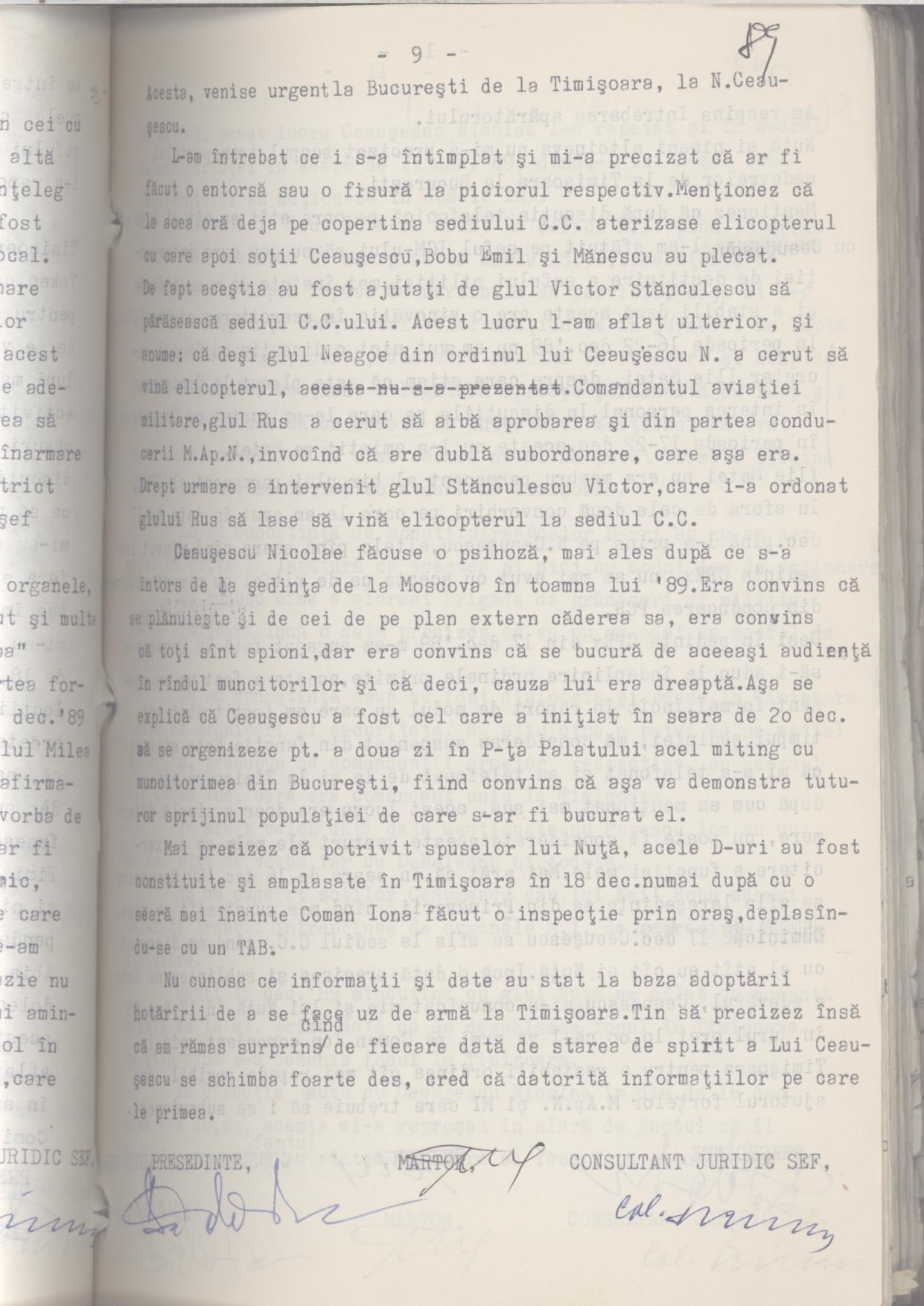
Tudor Postelnicu:  “Ceausescu Nicolae facuse o psihoza, mai ales dupa ce s-a intors de la sedinta de la Moscova in toamna lui ’89.  Era convins ca se planuieste si de cei de pe plan extern caderea sa, era convins ca toti sint spioni…”

0160

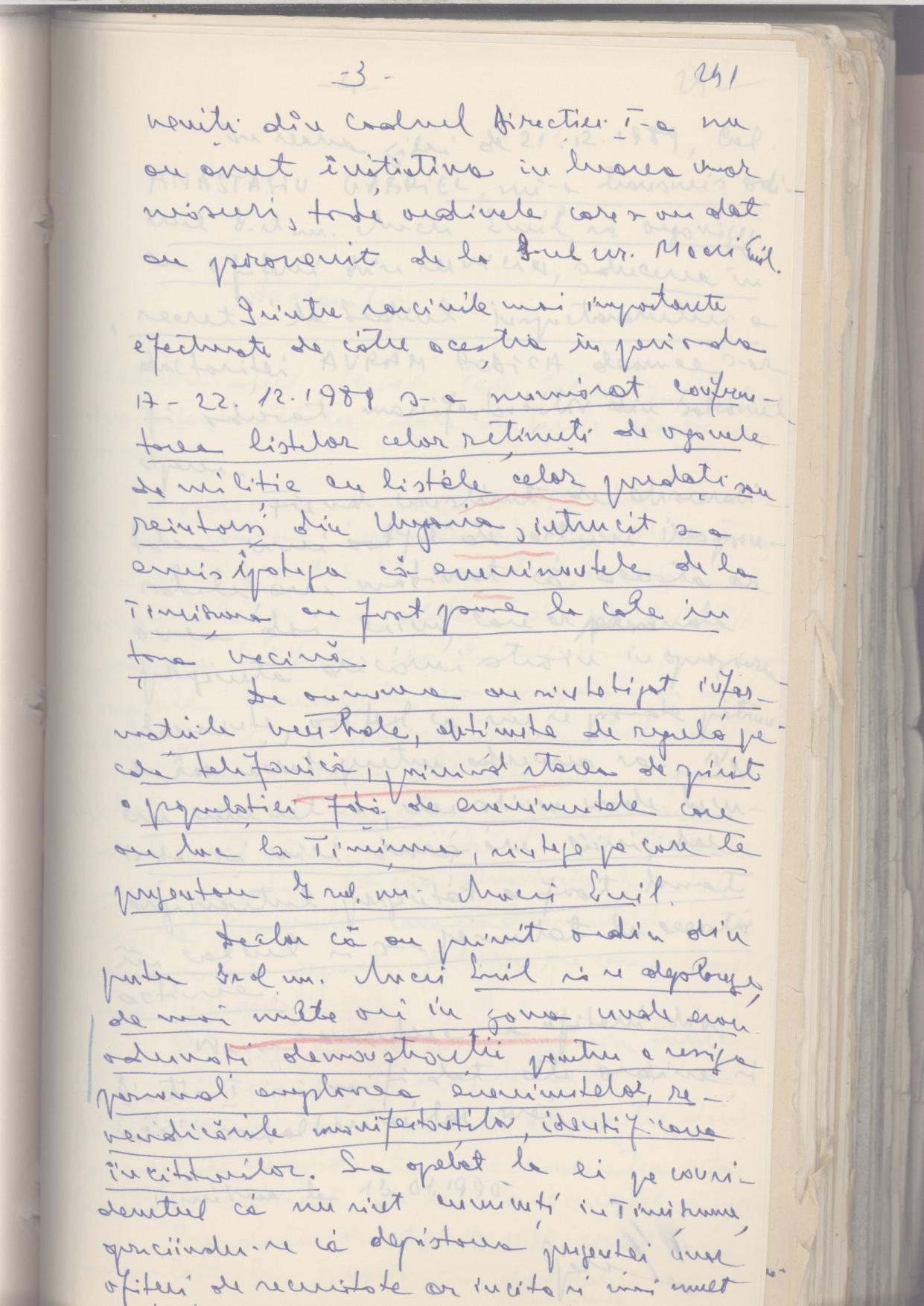
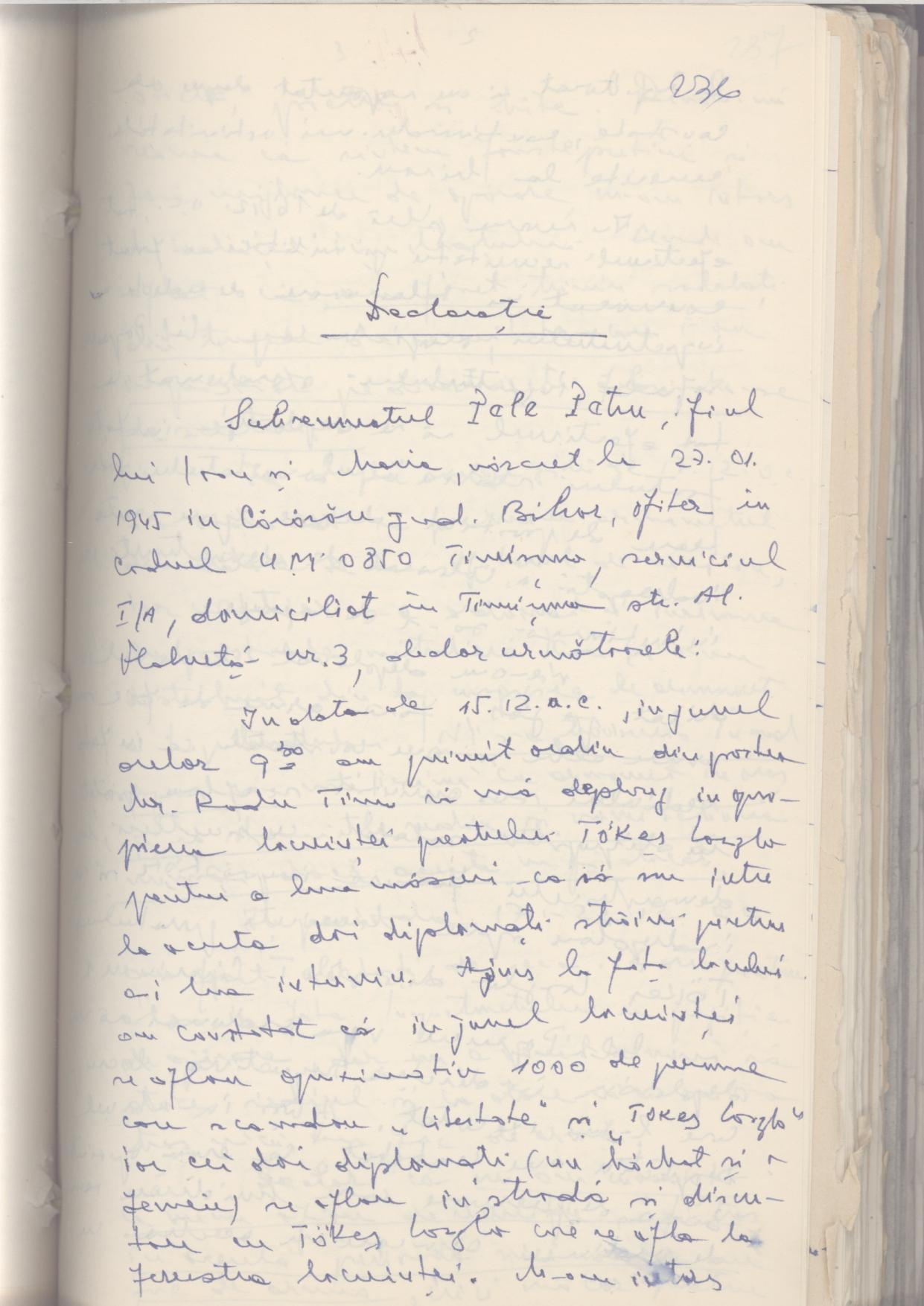
Petru Pele (Dir I, DSS). Declaratie, 16 ianuarie 1990:  “Printre sarciniile mai importante efectuate de catre acestia in  perioada 17-22.12.1989 s-a numerat (?) constituierea (?) listelor celor retinuti de organele militie cu listele celor predati sau reintorsi din Ungaria, intrucit s-a emis ipoteza ca evenimentele de la Timisoara au fost puse la cale in tara vecina…”

0299

0291

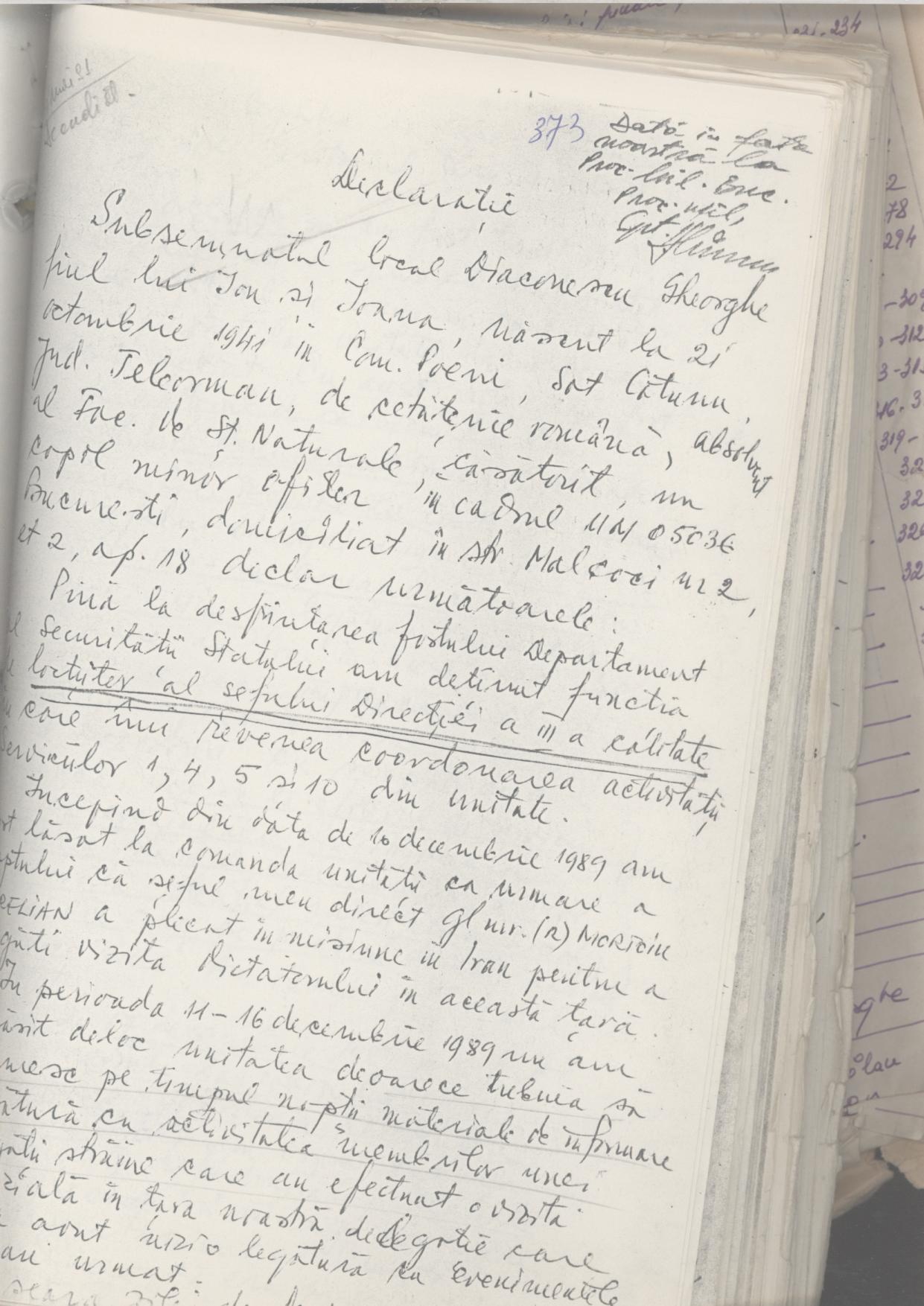
Gheorghe Diaconescu, Declaratie 31 decembrie 1989

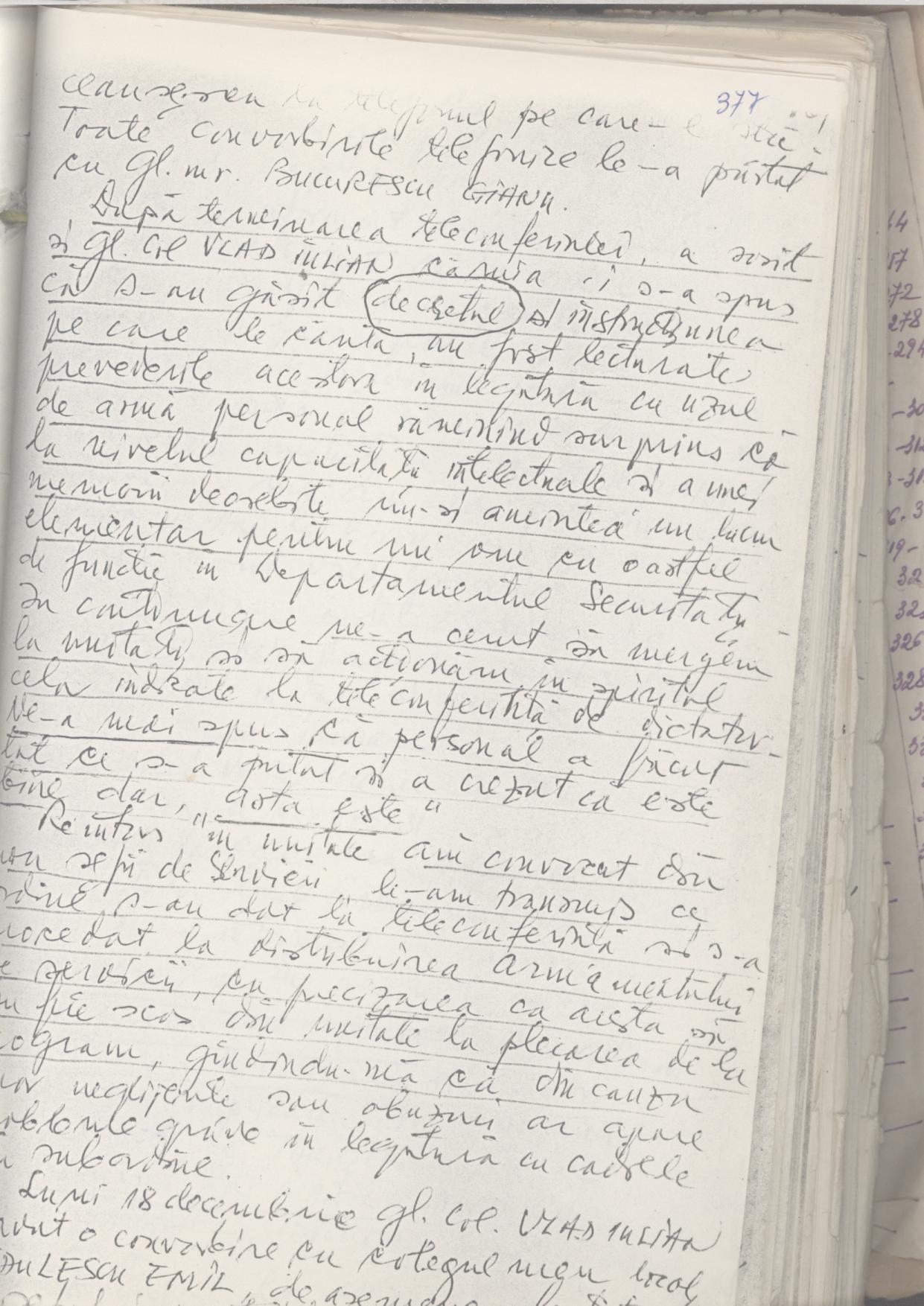
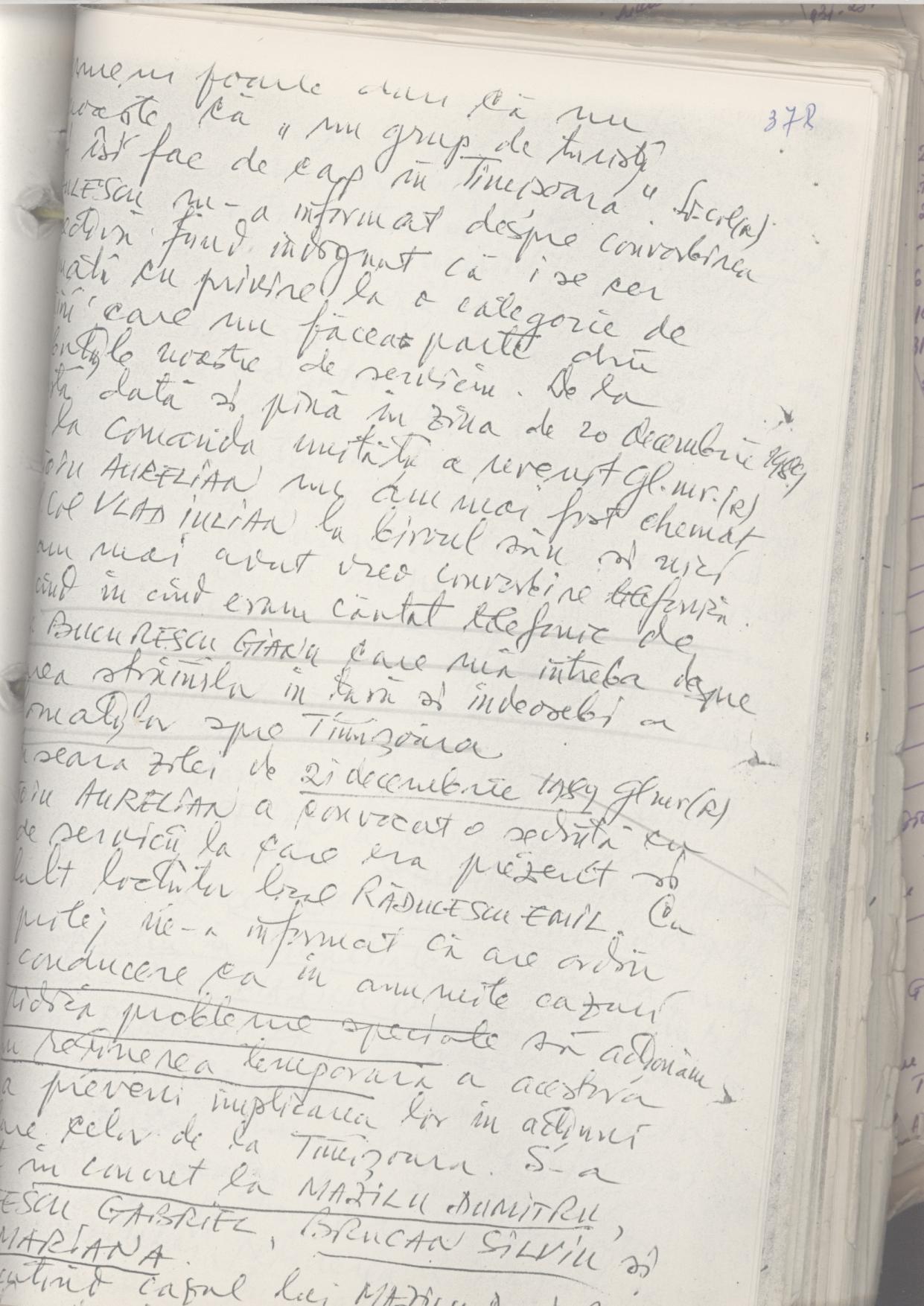
“Luni 18 decembrie gl. col.  VLAD IULIAN a avut o convorbire cu colegul meu (local?) RADULESCU EMIL …

0476

Vlad Iulian (continuarea, declaratia lui Gheorghe Diaconescu) “?… foarte dur (?) ca nu (?) ca ‘un grup de turisti isi fac de cap in Timisoara’”

0477

0472

Tocmai Iulian Vlad, el insusi, recunoaste ne-implicarea strainilor in evenimentele de la Timisoara, aici…

0289

0290

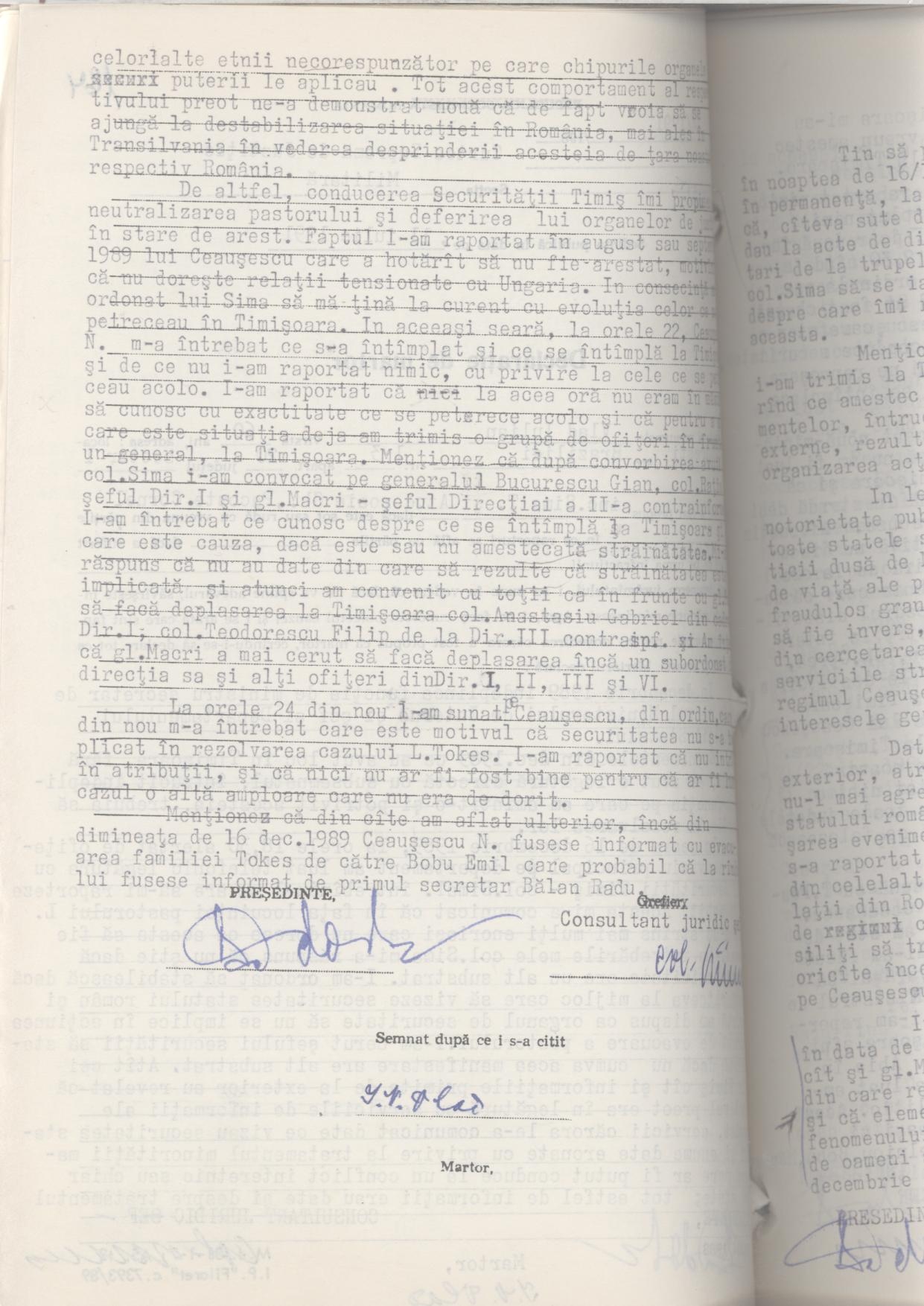
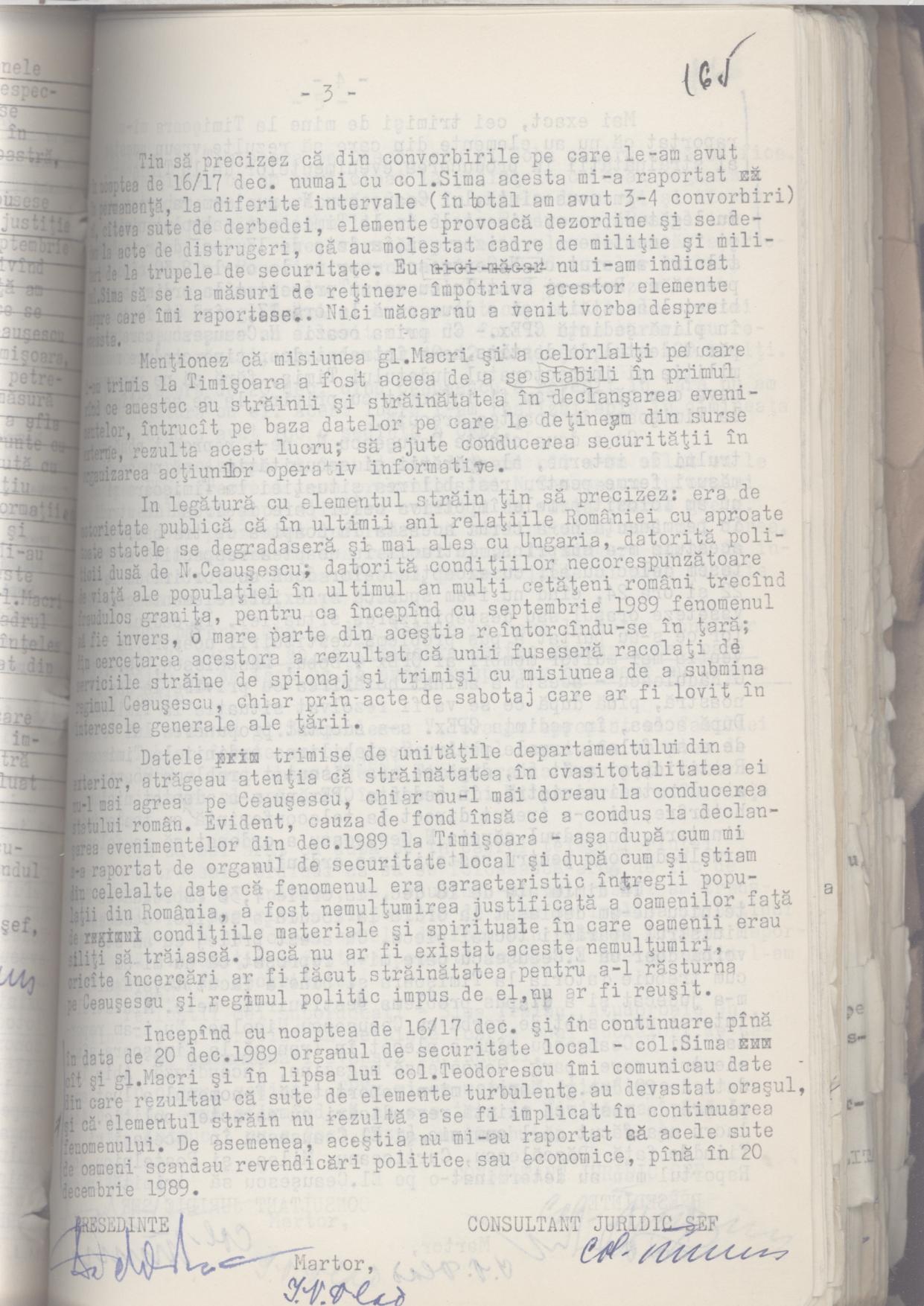
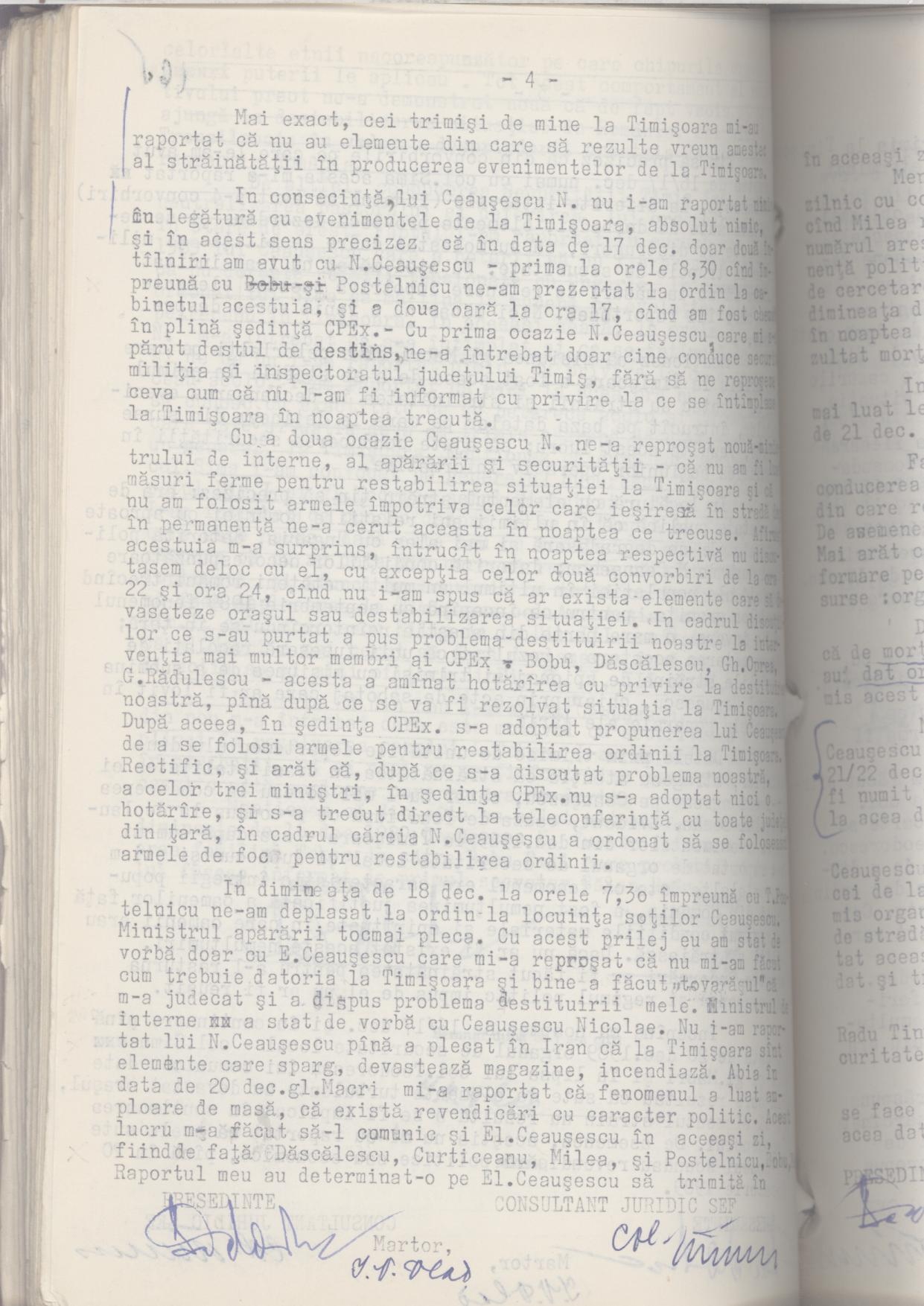
Incepind cu noaptea de 16/17 dec. si in continuare pina in data de 20 dec. 1989 organul de securitate local col. Sima cit si gl. Macri si in lipsa lui col. Teodorescu imi comunicau date din care rezulta ca sute de elemente turbulente au devastat orasul, si ca elementul strain nu rezulta a se fi implicate in continuarea fenomenului.”

0291

“Mai exact, cei trimis de mine la Timisoara mi-au raportat ca nu au elemente din care sa rezulte vreum amestec al strainatatii in producerea evenimentelor de la Timisoara.”

0292


—————————————————————————————————-

Reports back from the field, denying foreign involvement in the Timisoara unrest!

http://atomic-temporary-3899751.wpcomstaging.com/2014/02/02/25-for-2014-25-things-you-should-know-about-the-romanian-revolution-on-the-25th-anniversary-of-the-fall-of-nicolae-ceausescus-communist-regime-1-the-securitate-deny-foreign-instigation-of-the-ti/

The Timisoara files about December 1989 are now publicly available (when the link works!) on the Internet at http://dosarelerevolutiei.ro/.  What they show is that Securitate, Militia, and other regime officials from Timis County were asked by Bucharest–communicated via the person of Securitate Director, General Iulian Vlad–to investigate the role of foreign elements, specifically tourists, in the Timisoara protests of mid-December 1989.  But they were not the only ones.  General Vlad tasked senior Securitate officials from Bucharest sent to Timisoara to report back to him on this very topic alleging external involvement and manipulation of the Timisoara demonstrations.  What remains unclear is how much of this tasking was General Vlad communicating his own “hypothesis” or how much of it was he relaying Nicolae Ceausescu’s “theory” about what was going on.  This much is clear:  neither those stationed in Timis County, nor those officials sent from Bucharest could find evidence of a foreign hand in the Timisoara uprising, despite being asked to investigate exactly this aspect.  How do we know this?  From their own written confessions immediately after the December 1989 events.  (Below are four of them:  Nicolae Mavru, Liviu Dinulescu, Emil Macri, and Filip Teodorescu.)

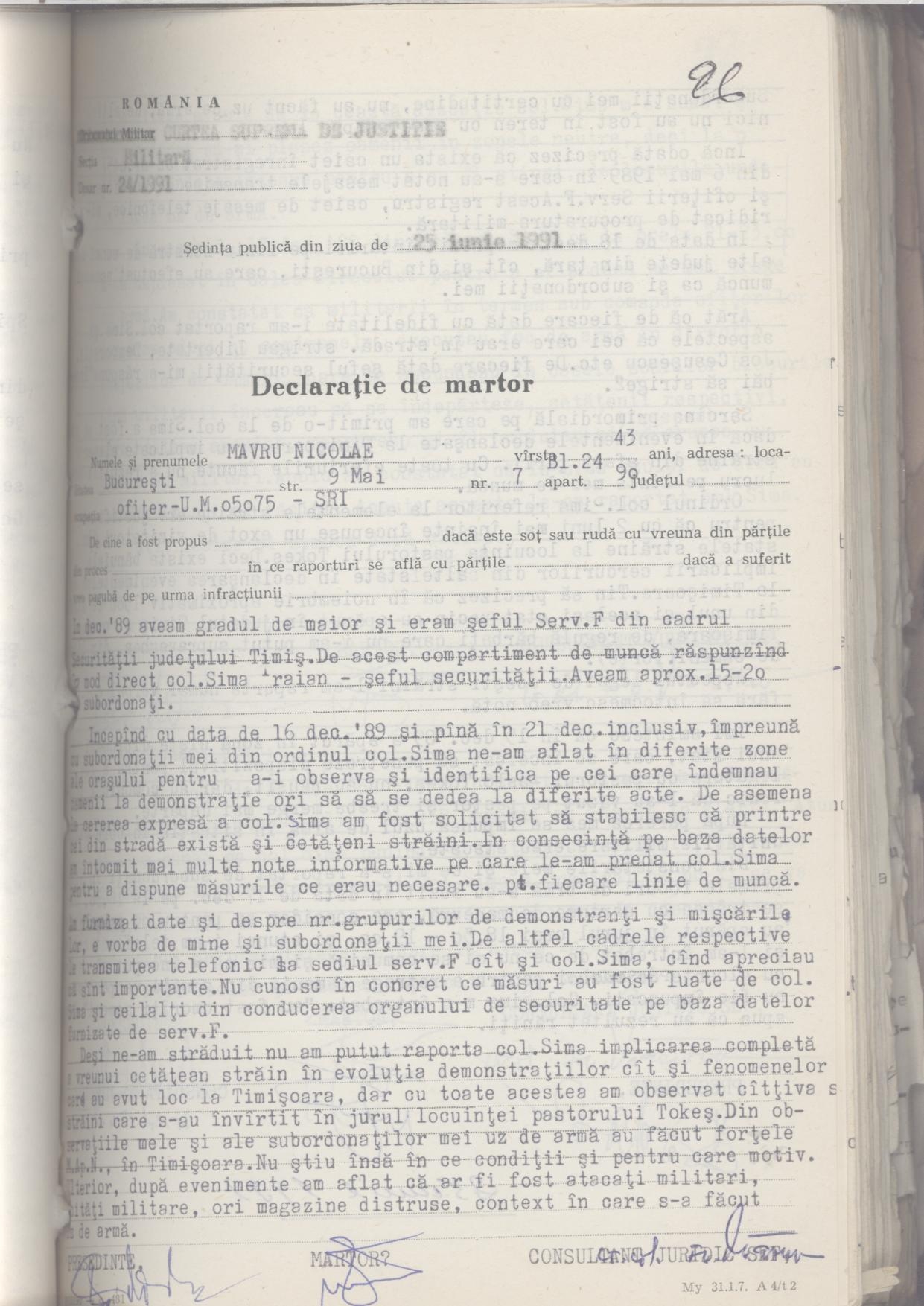
Niculae Mavru, fost sef al sectiei ‘Filaj si investigatie’ de la Securitatea Timis, declaratia din 13 ianuarie 1990:  …la ordinul col. Sima Traian, am primit…misiuni de a observa si sesiza aspecte din masa manifestantilor, din diferite zone ale orasului in sensul de a raporta daca sint straini (ceea ce nu prea au fost) care incita la dezordine, acte de violenta sau altfel de acte… 0331 25 iunie 1991 “Desi ne-am straduit nu am putut raporta col. Sima implicarea completa a vreunui cetatean strain in evolutia demonstratiilor cit si fenomenlor care au avut loc la Timisoara,..”

0173

“Sarcina primordiala pe care am primit-o de la col. Sima a fost daca in evenimentele declansate la Timisoara erau implicate elemente straine din afara tarii.  Cu toate eforturile facute nu a rezultat lucru pe linia mea de munca.” 0174

26 iunie 1991, Declaratia lui Liviu Dinulescu, cpt. la Serviciul de Pasapoarte al jud. Timis (in decembrie 1989, lt. maj. ofiter operativ Securitate judetean la Serv. III, care se ocupa de contraspionaj)

“Precizez ca anterior declansarii evenimentelor de la Timisoara din datele ce le detineam serviciul nostru nu rezulta vreun amestec din exterior in zona judetului Timis.”

0197

Generalul Emil Macri (seful Dir. II-a Securitatii, Contrainformatii Economice),

Declaratie 2 ianuarie 1990:

“Rezumind sintetic informatiile obtinute ele nu au pus in evidenta nici lideri si nici amestecul vreunei puteri straine in producerea evenimentelor de la Timisoara.  Raportarea acestor date la esalonul superior respectivi generalului I. Vlad a produs iritare si chiar suparare…”

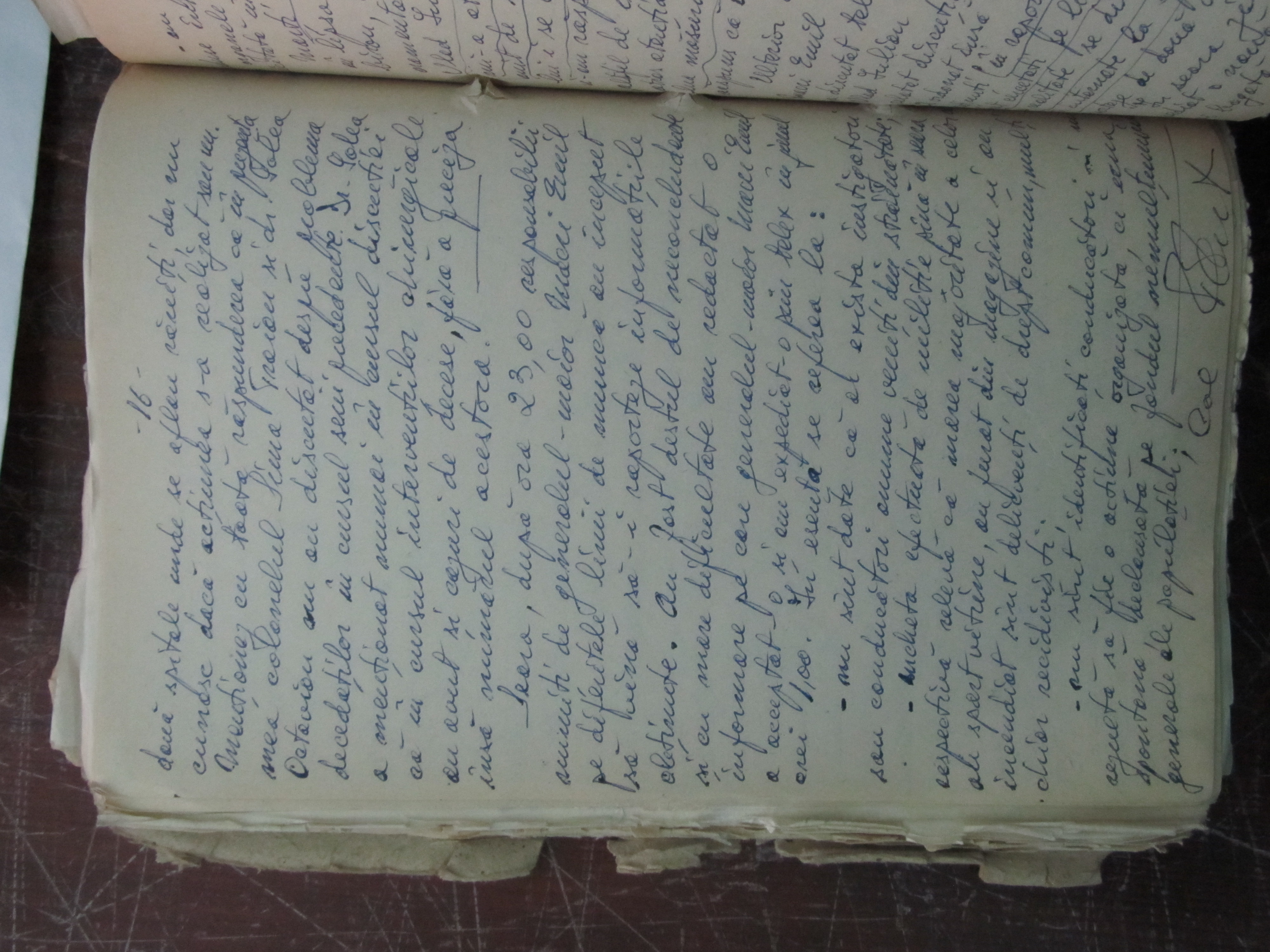
IMG_1219 IMG_1215 Filip Teodorescu (adj. sef. Dir III Contraspionaj D.S.S.), Declaratie, 12 ianaurie 1990:  Seara [luni, 18 decembrie 1989], dupa 23:00, responsabili (anumiti ?) de generalul-maior Macri Emil pe diferitele linii de munca au inceput sa vina sa-i raporteze informatiile obtinute.  Au fost destul de neconcludente si cu mare dificultate am redat o informare pe care generalul-maior Macri Emil a acceptat-o si am expediat-o prin telex in jurul orei 01:00 [marti, 19 decembrie 1989.  In esenta se refera la: –nu sint date ca ar exista instigatori sau conducatori anume veniti din strainatate… IMG_1453 IMG_1438

Posted in decembrie 1989, raport final | Tagged: , , , , , , , , , , , , , | 2 Comments »

23 August in “Epoca de Aur”: Partidul, Ceausescu, Romania (Youtube Video)

Posted by romanianrevolutionofdecember1989 on August 23, 2014

1983 [presented as first color broadcast of Romanian Television}

1986

1989


Posted in decembrie 1989, raport final | Tagged: , , , | Leave a Comment »

The Light and Guns of 19 August: Media Accounts and Video about an Important Day in the Fall of European Communism in 1989 (featuring Hungary, Poland, and Romania)

Posted by romanianrevolutionofdecember1989 on August 16, 2014

(purely personal views, as always)

Just as 3-4 June 1989 was a very crowded news-weekend–Solidarity’s overwhelming and dramatic victory in communist Poland’s first competitive parliamentary elections, the brutal crackdown by the Chinese military on student protesters in Tiananmen Square, and the death of Ayatollah Khomeini in Iran–so too the weekend of 19-20 August 1989 was full of, in retrospect, important events in the fall of communism in Europe in 1989, even if many of these events are less-well known than those from June:  the pan-European picnic of 19 August on the Hungarian-Austrian border which resulted in East Germans fleeing to the West; the designation of Solidarity’s Tadeusz Mazowiecki for the post of prime minister and the formation of a non-communist government; and panicked by the loss of communist control in Poland, Nicolae Ceausescu’s attempt to call for intervention by fellow Warsaw Pact members to prevent the Polish crisis from spreading elsewhere in the region.

Hungary:

West German TV,  Tagesschau vom 19.08.1989

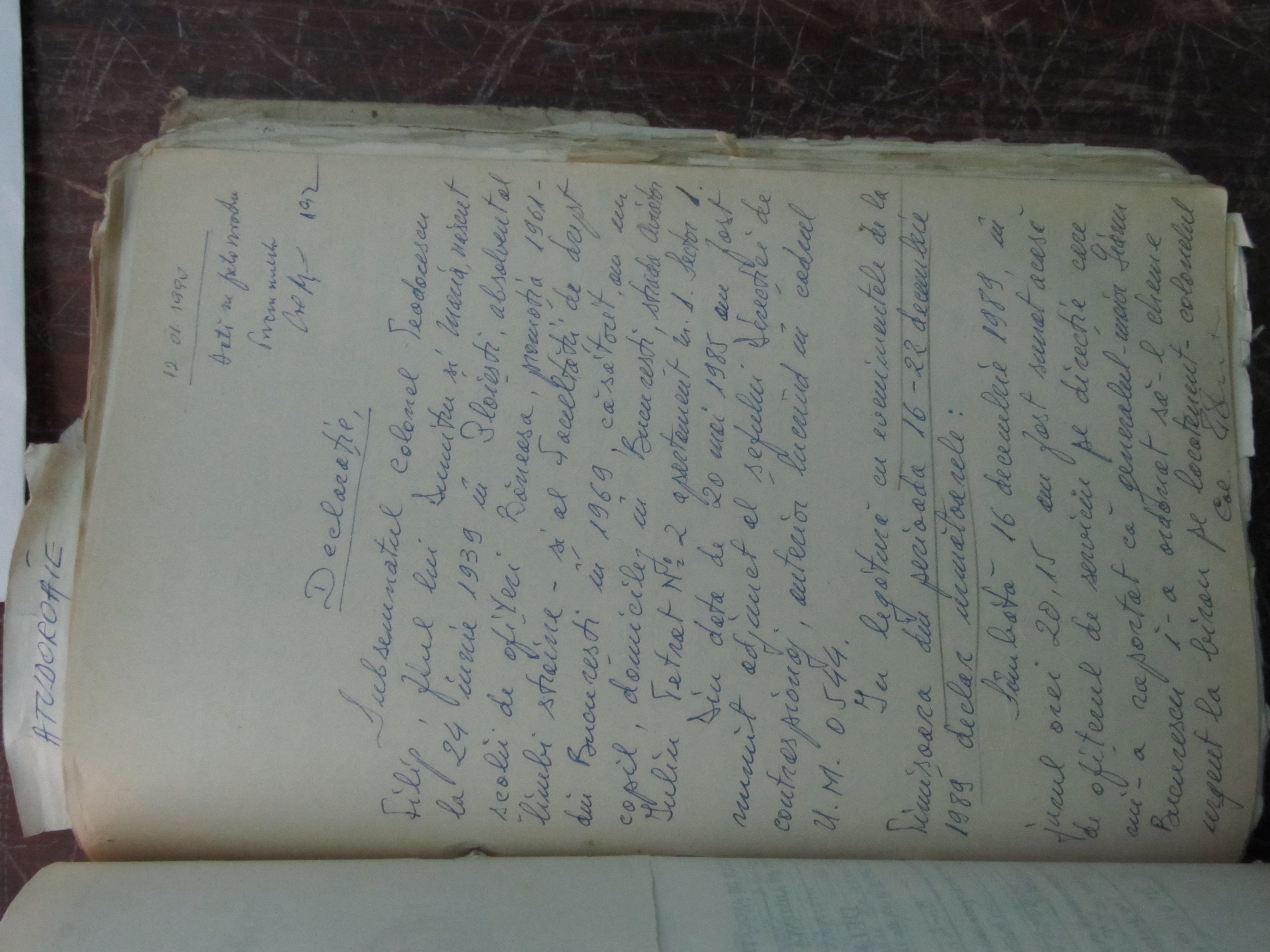
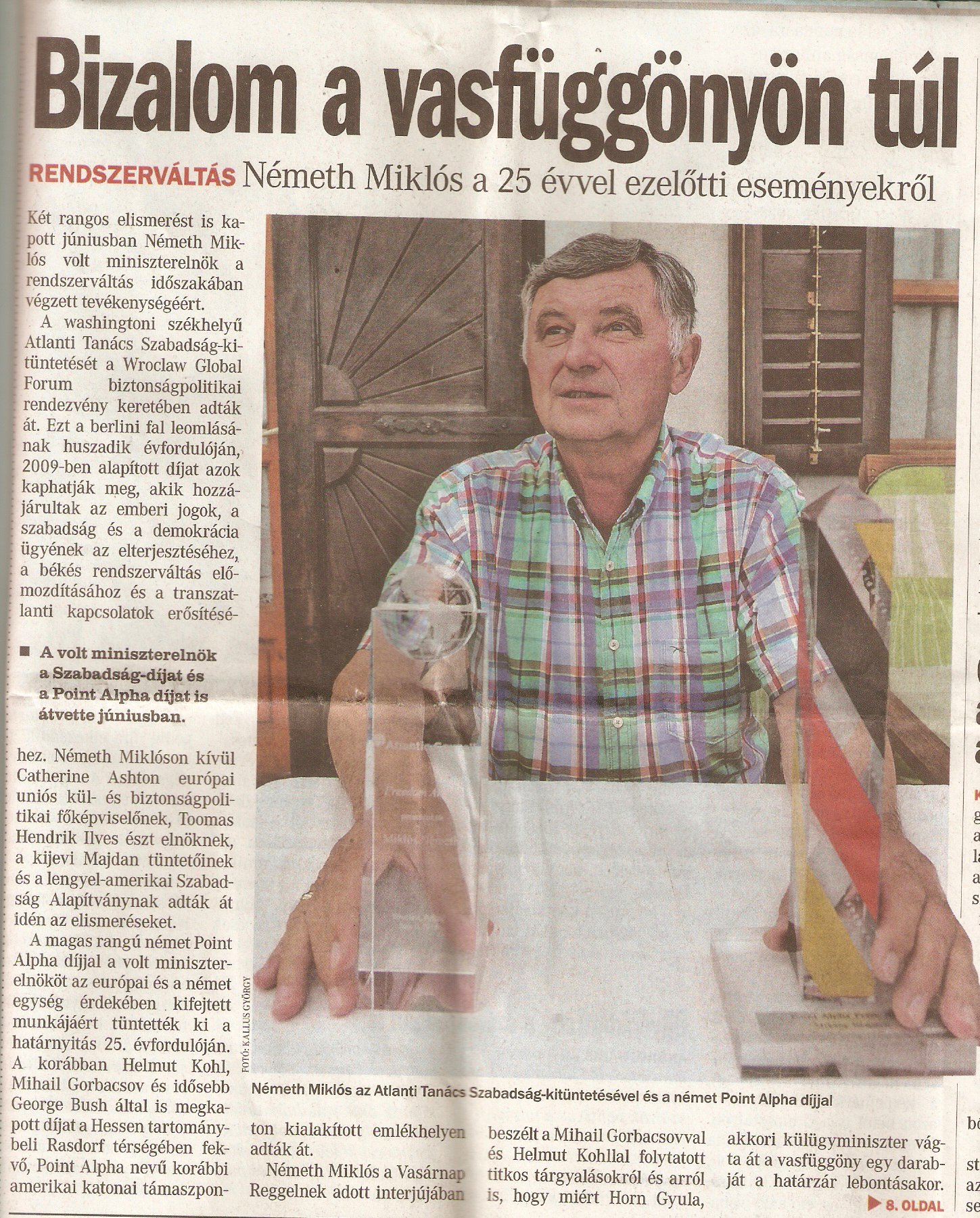
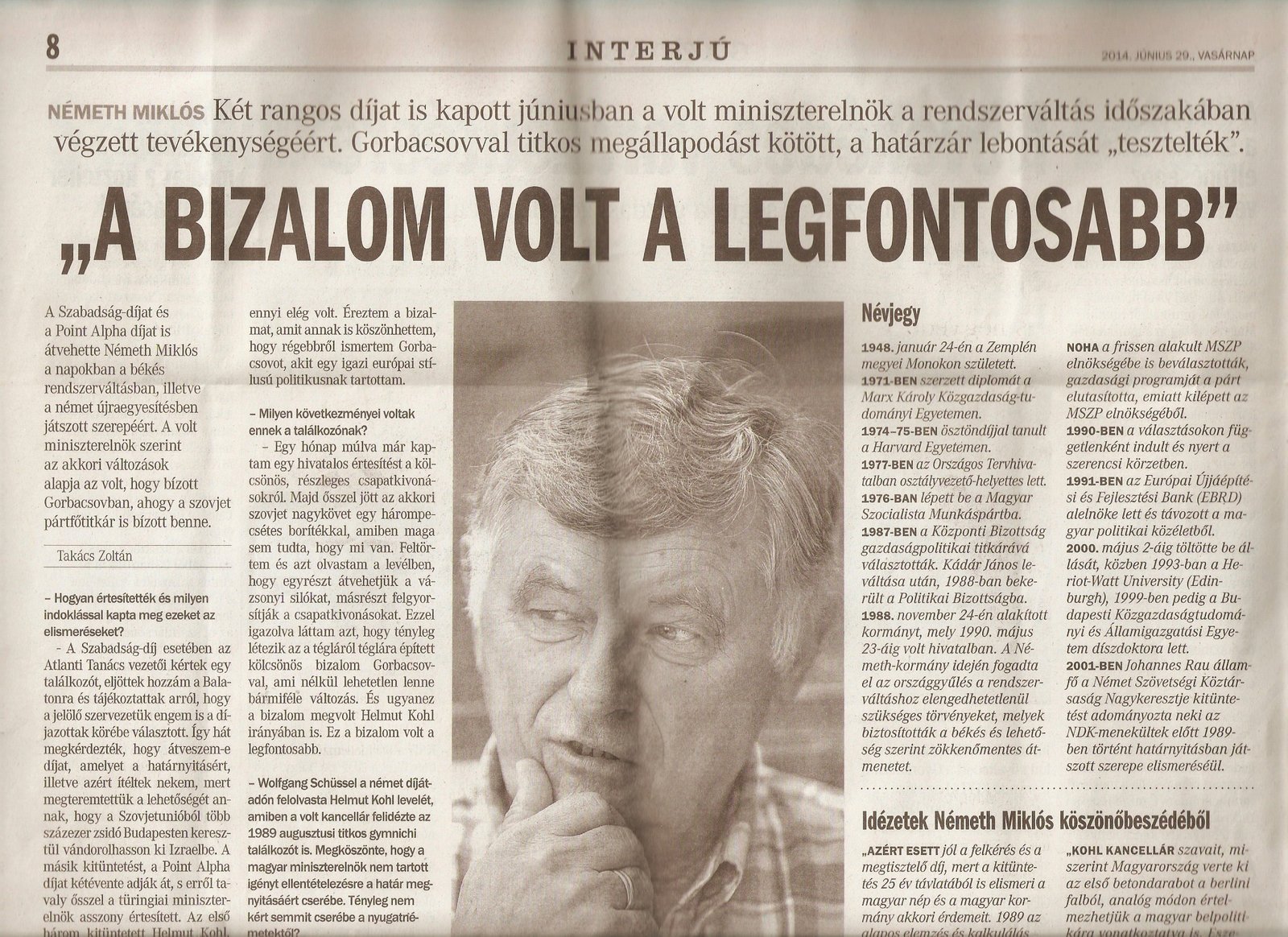
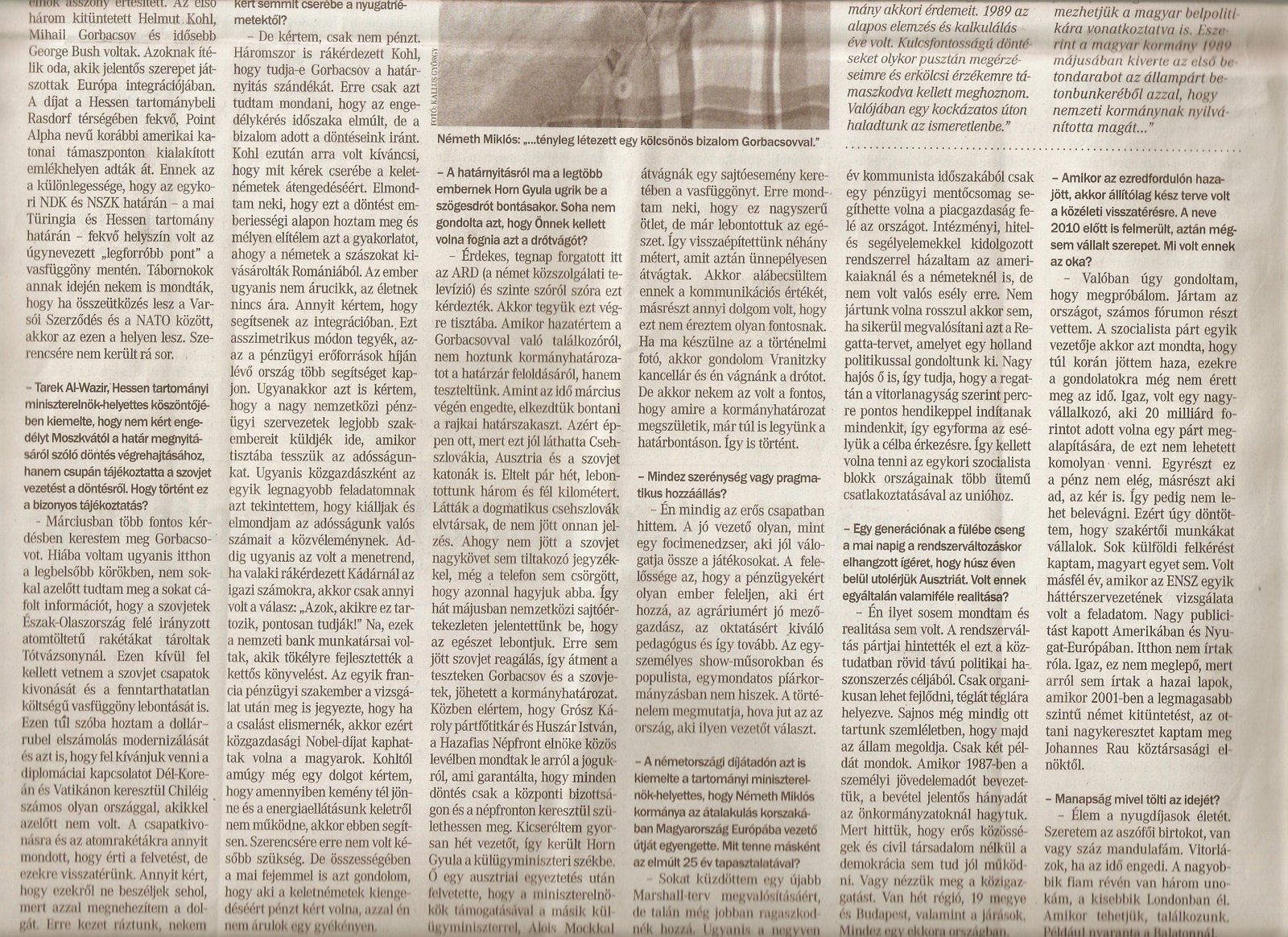
I was reminded of this in late June of this year when I found the following interview in the weekend Hungarian publication Vasarnapi Petofi Nepe.  Like Forrest Gump’s proverbial box of chocolates, you never know quite what you are going to get in a weekend publication.  In this case, an unexpected find:  Miklos Nemeth’s comments about discussions with the West Germans in the lead up to the pan-European picnic.


image0

image0-004

image0-008

http://www.telegraph.co.uk/travel/hubs/1989-revisited/6408378/Hungary-the-picnic-that-changed-the-world.html

http://www.nytimes.com/1989/08/20/world/picnic-becomes-chance-for-200-to-flee-west.html?module=Search&mabReward=relbias%3Ar%2C{%222%22%3A%22RI%3A17%22} 

Picnic Becomes Chance for 200 to Flee West

Published: August 20, 1989

ST. MARGARETHEN, Austria, Aug. 19— More than 200 East Germans used a symbolic picnic on the Austrian-Hungarian border today as a cover to flee to the West.

A group of about 100 East Germans pushed through a partly open gate leading to a muddy track at the border fence and walked into Austria. Smaller groups, estimated at more than 100 people, followed as Hungarian border guards turned a blind eye.

”They just marched straight through,” said an Austrian border guard near this northeastern border village. Mostly young people, some with children, they fled Hungary with just the clothes they were wearing.

More than 1,000 East Germans have escaped west through Hungary in the last two weeks. The exodus has soured relations between the Germanys and embarrassed reform-minded Hungary.

The picnic, called ”Tear It Down and Take It With You,” had been planned as a celebration of European unity.

Visitors from Austria and Hungary were encouraged to clip bits of barbed wire as souvenirs from the border fence Hungary is dismantling. Hundreds of Austrians arriving for the event stared in amazement at the East Germans coming toward them.


http://www.youtube.com/watch?v=dydb4DV4HPk


————————————————————————————————————————————————————————————————————————-

Poland:

(Note I do not know Polish; I would appreciate insights from those who know the language about anything posted here, thank you)

http://www.nytimes.com/1989/08/19/world/senior-solidarity-aide-says-he-is-being-named-premier-postwar-milestone-in-bloc.html?module=Search&mabReward=relbias%3Ar%2C{%222%22%3A%22RI%3A17%22}

SENIOR SOLIDARITY AIDE SAYS HE IS BEING NAMED PREMIER

SENIOR SOLIDARITY AIDE SAYS HE IS BEING NAMED PREMIER; POSTWAR MILESTONE IN BLOC

Published: August 19, 1989

WARSAW, Aug. 18— A senior Solidarity official said today that he would be nominated as Poland’s Prime Minister. He would be the first non-Communist head of government in Eastern Europe since the early postwar years.

Various reports in the capital said that the official, Tadeusz Mazowiecki, would be formally nominated by President Wojciech Jaruzelski on Saturday. The nomination would then face a vote in Parliament.

Mr. Mazowiecki, a close aide to the Solidarity founder Lech Walesa, met with General Jaruzelski today and said afterward that he expected to be nominated and that he would accept. Key Posts for Communists

If he is indeed chosen as the head of a non-Communist coalition government, it would mark a sea change in Eastern European politics, which have been controlled exclusively by Communist Parties since the aftermath of World War II. But in a gesture to Moscow and to the continued strength of the Communist Party in Poland, the new government would allow the Communists to control the army and security police, which can be activated upon the orders of the President.

The office of the Commmunist President, General Jaruzelski, did not officially confirm the choice, but a newscast on the national radio said the President had met with Mr. Mazowiecki, who was ”generally believed to be the candidate for Prime Minister.”

Asked how soon he thought a cabinet could be assembled, Mr. Mazowiecki replied: ”I would like to know that myself. There is a great social impatience. But it is a Government formed on a completely new principle, and I need some time.” ‘Somebody Has to Try It’

He added: ”I am afraid of many things, and if I were only afraid, I would be a total pessimist. But somebody has to try it.”

His meeting with the President today became necessary after the Communist Prime Minister, Czeslaw Kiszczak, announced his resignation on Thursday after failing to assemble a cabinet against the staunch opposition of Solidarity, and General Jaruzelski announced that he would urgently consider a proposal for a Solidarity-led Government.

The government crisis followed the Communist Party’s crushing defeat in elections in June. The elections, the first virtually free vote in the East bloc since the war, were a product of negotiations involving Solidarity and the Government that ended in April. Those talks, which also led to the restoration of legal status for Solidarity after eight years of suppression, came in reaction to two waves of labor unrest that swept Poland in 1988.

Entering the white stucco Parliament building after his talks with the President, Mr. Mazowiecki was asked by reporters whether he would accept the nomination. ”Yes,” he replied, ”but everything depends on Parliament.” The next scheduled session of Parliament, at which it could take up the Mazowiecki nomination, is set for Aug. 23. But a special session could be scheduled earlier. Confers With Solidarity Leaders

At Parliament, Mr. Mazowiecki met with the Solidarity floor leader, Bronislaw Geremek, and the leader of Rural Solidarity, Jozef Slisz. Mr. Mazowiecki was clad in a gray plaid suit and was accompanied by Jacek Ambroziak, the lawyer who went to the Jaruzelski meeting with him.

Solidarity officials said details of the cabinet formation remained to be negotiated. They said Communist politicians would most certainly fill the jobs of Minister of the Interior and of Defense, essentially responsible for the army, the police and the secret police, though it remained unclear whether the Communists would demand other ministries, including Foreign Affairs. The officials said the Communists might also demand the post of Deputy Prime Minister.

Such an arrangement, if accepted by Solidarity and its coalition partners, the United Peasant Alliance and the Democratic Alliance, would essentially leave political and military responsibility to the Communists, while awarding the care of the economy to Solidarity.

The President can appoint a Prime Minister, dissolve Parliament and call elections. He is also ultimately responsible for foreign relations and national defense and is the commander in chief of the armed forces. Church-Appointed Negotiator

The choice of Mr. Mazowiecki, a leading Catholic layman, underscored the role of the Roman Catholic Church as power broker.

Last year Mr. Mazowiecki was among the Catholic laymen asked by the Polish episcopate to negotiate an end to labor unrest that led to the sweeping talks between the Communists and Solidarity and yielded the present developments.

Mr. Ambroziak, a lawyer and Catholic writer, is legal adviser to the episcopate, and after the meeting with General Jaruzelski the two men drove across town to the red brick building of the episcopate to meet with Poland’s Primate, Jozef Cardinal Glemp, before going to Parliament.

Reflecting his devotion as a Catholic, Mr. Mazowiecki said while at the Parliament building, ”I think I am a believer, and I believe that Providence looks after me.”

”There have been several historic moments,” he said, ”that have demonstrated that Poles can strive for new solutions, unusual ones and truly innovative ones, and that we can get somewhere. I hope that such a moment even now, psychologically, is nearing, that people will feel that there is such a situation in which it depends on us.” Meetings With Other Parties

Mr. Mazowiecki appeared to be moving quickly to establish channels to the parties that will be represented in his cabinet. This evening the Polish press agency announced that he met in the afternoon with Mieczyslaw Rakowski, the new Communist Party leader, and with the leaders of the small Peasant and Democratic parties.

The prospect of Mr. Mazowiecki’s nomination loomed larger after leaders of the Peasant and Democratic parties, long loyal satellites of the Communists, voted on Thursday to desert their traditional allies and support a Solidarity-led cabinet.

This sudden threat to their political dominance prompted Communist leaders to call a session of their Central Committee on Saturday. The party leadership faces deep divisions in the rank and file.

On Thursday, 28 of the Communists’ 173 parliamentary deputies usually numbered among those most oriented toward change issued a resolution calling for the establishment of greater independence from party dictates and saying they would seek talks with Solidarity about greater cooperation.

At the same time, a meeting of 208 party secretaries from major national enterprises met with Mr. Rakowski and later adopted a resolution denouncing Solidarity for seeking power.

Mr. Mazowiecki, though facing an economy in collapse with serious problems of material supply, bare stores, soaring prices and the collapse of the currency, remains a reflective person. Asked by a reporter what his first steps as Prime Minister would be, he laughed and replied, ”I intend to take a trip to the woods and think about it.”

He paused and added, ”And then get to work.”

Tadeusz Mazowiecki, who said he had been asked to become Poland’s Prime Minister, visiting Parliament to meet with Solidarity members (Agence France-Presse) (pg. 1); after announcing that he would be named Poland’s Prime Minister, Tadeusz Mazowiecki, right, went to Parliament to meet with Solidarity members, including Jozef Slisz, the leader of Rural Solidarity. (The New York Times/Witold Jaroslaw Szulecki) (pg. 4)

—————————————————————————————————————————————————————————————————————————

Romania:

Romania’s Ceausescu Proposes Warsaw Pact Intervention in Poland

AP , Associated Press

Oct. 3, 1989 12:19 AM ET

BUDAPEST, Hungary (AP) _ President Nicolae Ceausescu of Romania proposed that forces of the Warsaw Pact military alliance intervene to stop Poland from forming a government headed by non-communists, a Hungarian official says.

The pro-Solidarity Polish newspaper Gazeta Wyborcza said Friday that Hungary’s Communist Party had received such a proposal from Romania’s Communist leaders, who staunchly oppose the wave of reform sweeping the East bloc.

Geza Kotai, secretary in charge of international affairs of the Hungarian party, said his party had rejected the proposal. His remark came in an interview with the party newspaper Nepszabadsag.

Gazeta Wyborcza said Ceausescu called in the Polish ambassador in August to complain about the planned formation of a Solidarity-led government in Poland.

It said Ceausescu decided to turn to the leaders of the Warsaw Pact to ”jointly act in favor of preventing a serious situation in Poland, in favor of defending socialism and the Polish nation.”

The article did not say if Ceausescu had appealed to other members of the seven-nation alliance led by the Soviet Union.

Kotai said, however, the Hungarian Communist Party received a call for intervention ”and we gave a definite rejection.”

Solidarity journalist Tadeusz Mazowiecki became leader of the Polish government last month, the first non-Communist prime minister in the Soviet bloc.

The Hungarian Communist Party is among the most liberal in the East bloc. It has agreed to hold free elections by June and says it will yield power and join the opposition if it loses.

© 2014  The Associated Press. All rights reserved. This material may not be published, broadcast, rewritten or redistributed. Learn more about our Privacy Policy and Terms of Use.

http://www.apnewsarchive.com/1989/Hungary-Rejects-Reported-Romanian-Proposal-to-Intervene-in-Poland/id-c1a992ed19733e36c92afbb4819bc30b

Hungary Rejects Reported Romanian Proposal to Intervene in Poland

AP , Associated Press

Oct. 2, 1989 9:34 PM ET

BUDAPEST, Hungary (AP) _ The Hungarian Communist Party has rejected a proposal by Romanian President Nicolae Ceausescu for Warsaw Pact intervention to prevent formation of Poland’s new government led by non-Communists, an official said Monday.

Geza Kotai, the Communist Party’s secretary in charge of international affairs, made the remark in an interview with the party newspaper Nepszabadsag. He was confirming reports published in a Polish newspaper that said the Hungarian Communist Party had received such a proposal from Romania’s Communist Party.

A pro-Solidarity Polish newspaper, Gazeta Wyborcza, published articles Friday saying Ceausescu had summoned the Polish ambassador in August to complain about the planned formation of a Solidarity-led government in Poland.

It said Ceausescu had decided to turn to the leaders of the Warsaw Pact to ”jointly act in favor of preventing a serious situation in Poland, in favor of defending socialism and the Polish nation.”

The report did not say if Ceausescu had made such an appeal to other members of the Warsaw Pact, a seven-nation military alliance led by the Soviet Union.

But Kotai said the Hungarian Communist Party had received a call for intervention ”and we gave a definite rejection.”

Nepszabadsag quoted Kotai as saying, ”In present day Europe, the fate of a nation is decided by the majority of the society in that country, and not by a single party”

Last month, Solidarity journalist Tadeusz Mazowiecki became the leader of the Polish government – the first non-Communist prime minister in the Soviet bloc.

Hungary’s Communist Party, among the most liberal in the East bloc, has agreed to hold free elections by June and has said it would surrender power if it loses and join the opposition.

”We categorically reject the idea of any interference here, and the Warsaw Treaty can give no grounds for such action,” Kotai told the newspaper.

At recent Warsaw Pact meetings, the members expressed the stand of non- interference in each others’ internal affairs.

© 2014  The Associated Press. All rights reserved. This material may not be published, broadcast, rewritten or redistributed. Learn more about our Privacy Policy and Terms of Use.

 http://www.nytimes.com/1989/09/30/world/chilly-days-for-east-germans-outside-embassy-in-prague.html

Chilly Days for East Germans Outside Embassy in Prague

Published: September 30, 1989

PRAGUE, Sept. 29— The rain has gone, giving way to crisp and cold weather, and there is no sign of a resolution to the case of 2,500 or so East Germans camped out on the grounds of the West German Embassy in Prague….

Evidence of the delicate position of the Warsaw Government of Prime Minister Tadeusz Mazowiecki emerged today when the Solidarity daily, Gazeta Wyborcza, published the text of a confidental document showing that the hard-line Rumanian Government called in August for Warsaw Pact intervention in Poland to prevent the passage of power to non-Communists.


DOKUMENTY POLSKA- RUMUNIA

Gazeta Wyborcza nr 103, wydanie z dnia 29/09/1989, str. 6

DOKUMENTY POLSKA- RUMUNIA

Dziewiętnastego sierpnia o północy ambasador PRL w Bukareszcie został wezwany do MSZ, gdzie’ sekretarz KC Stojan przekazał mu ustnie oświadczenie, w którym z upoważnienia władz Rumuńskiej Partii Komunistycznej i osobiście Nicolae Ceausescu wypowiedział uwagi dotyczące obecnej sytuacji w Polsce, która uważana jest za bardzo poważną.Władze RPK śledzą tę sytuację z dużym zainteresowaniem i zaniepokojeniem. Oświadczają, że nie chcą ingerować w wewnętrzne sprawy Polski, ale powaga wydarzeń wykracza p…

RP-DGW

ODPOWIEDŹ BIURA POLITYCZNEGO KC PZPR

Gazeta Wyborcza nr 103, wydanie z dnia 29/09/1989, str. 6

ODPOWIEDŹ BIURA POLITYCZNEGO KC PZPR

na stanowisko PKW KC RPK i prezydenta SRR. Nicolae Ceausescu w sprawie oceny aktualnej sytuacji w Polsce, w tym powołania rządu PRLW związku z oświadczeniem sekretarza KC RPK, tow. I. Stojana w obecności wiceministra spraw zagranicznych SRR, C. Oancea, przekazanym w dniu 19.08. br. ambasadorowi PRL w Bukareszcie, z upoważnienia Biura Politycznego KC PZPR stwierdzam co następuje:1. Z uwagą zapoznaliśmy się ze stanowiskiem PKW KC RPK, które wyraża troskę o losy socjalizmu w Polsce, o nasze zobowią…

RP-DGW

Comuniştii polonezi explicau celor români “calea socialismului”

22 Aug 2009 – 00:00

22 august 1989, ora 01:45
CC al PCR – tovarăşului secretar Ion Stoian,
MAE – tovarăşului ministru Ioan Totu, – tovarăşului adjunct al ministrului, Constantin Oancea, DR I,

În seara zilei de 21.08.1989 am fost convocat la CC al PMUP, unde am fost pri­mit de tovarăşul W. Natorf, secretar al CC cu probleme internaţionale, şi de B. Kulski, ministru adjunct la MAE polonez.

Tovarăşul Natorf mi-a făcut cunoscut că m-a convocat pentru a-mi comunica punctul de vedere al conducerii PMUP referitor la considerentele condu­cerii de partid şi de stat ale RS România, personal ale tovarăşului Nicolae Ceauşescu, secretar general al Partidului Comunist Român, preşedintele Repu­blicii Socia­liste România, transmise în seara zilei de 19-20 august a.c. conduce­rilor de partid şi de stat din toate ţările socialiste.

În cuvântul său a spus următoarele:
“Conducerea de partid a fost informată despre problemele respective şi nu ascunde faptul că nu a primit cu prea multă satisfacţie această declaraţie. Noi ne străduim să informăm despre situaţia din Polonia fără a ascunde ceva, dorim să fie clar pentru conducerea Partidului Comunist Român că nu vom ceda pu­terea, că nu vom renunţa la sistemul socialist şi la obligaţiile faţă de alţii, atât în ce priveşte Tratatul de la Varşovia, cât şi cele din CAER. Ne-am străduit să fim purtătorul de cuvânt al Tratatului de la Varşovia, iar între partidele noastre să fie o colaborare cât mai bună. De aceea, sutem surprinşi de unele reproşuri care sunt cuprinse în declaraţie. Cu atât mai mult cu cât aceasta a fost transmisă şi altor ţări din Pact. Noi ne aşteptăm la sprijin, în situaţia grea pe care o avem, şi nu la critici”.
A precizat că nota nu este un protest, ci este un răspuns la punctul de vedere român.
După această introducere, mi-a înmânat punctul de vedere scris al condu­cerii PMUP, cu rugămintea de a-l transmite conducerii noastre de partid şi de stat, şi cu precizarea că acest material va fi înaintat şi celorlalte conduceri de partid, cărora partea română le-a transmis punctul ei de vedere.
Vă transmitem alăturat conţinutul integral al notei înmânate, urmând ca, prin curierul TAROM din 23.08.1989, să transmitem originalul materialului.

Răspuns
La punctul de vedere al Comitetului Politic Executiv al Partidului Comunist Român şi al preşedintelui Nicolae Ceauşescu în legătură cu aprecierea actualei situaţii din Polonia, inclusiv cu formarea guvernului Republicii Populare Polone.

În legătură cu declaraţia secretarului central al Partidului Comunist Român, tovarăşul Ion Stoian, în prezenţa adjunctului ministrului Afacerilor Externe al Republicii Socialiste România, Constantin Oancea, transmisă în ziua de 19.08.1989 ambasadorul Republicii Populare Polone din Bucureşti. Din însărcinarea Biroului Politic al Comitetului Central al Partidului Muncitoresc Unit Plonez, afirm cele ce urmează:
1. Am luat cunoştinţă cu atenţie de punctul de vedere al Comitetului Politic Executiv al Comitetului Central al Partidului Comunist Român care exprimă îngrijorarea faţă de soarta socialismului în Polonia, faţă de obligaţiile noastre de aliat şi eventualele implicaţii ale dezvoltării evenimentelor în Polonia pentru interesele comunităţii statelor socialiste.
Încercăm să înţelegem intenţiile tovarăşilor români, nu putem să acceptăm şi să recunoaştem motivaţia nici a aprecierilor şi nici a concluziilor formulate în declaraţia conducerii Partidului Comunist Român.
Analiza actualei situaţii din Polonia, inclusiv poziţia partidului în legătură cu formarea noului guvern, a fost prezentată în hotărârea celei de-a XIV-a plenare a Comitetului Central al Partidului Muncitoresc Unit Polonez. În aceasta se afirmă, între altele, că “numai un guvern care se bucură de cea mai largă încredere şi sprijin social, cu participarea reprezentanţilor tuturor forţelor politice din Seimul Republicii Populare Polone poate scoate Polonia din criză pe calea reformelor evolutive şi consecvente”.
Partidul nostru, definindu-şi actuala linie politică, se conduce după interesele supreme ale poporului şi statului, luând ca bază realităţile existente.
Suntem convinşi că linia aceasta este singura justă în condiţiile concrete poloneze şi nu există o altă alternativă la ea. Nu pierdem din vedere, de asemenea, interesele generale ale socialismului ca formaţiune socială.
Acordul partidului nostru privind crearea guvernului, cu participarea tutu­ror forţelor reprezentate în Parlament, nu înseamnă renunţarea, de către Partidul Muncitoresc Unit Polonez, la influenţa asupra formării politicii statului care să corespundă intereselor socialismului şi aşteptărilor poporului.
În conformitate cu rolul partidului nostru în societate, în organele statului şi administraţiei locale, în forţele armate şi de ordine, vom face totul pentru a fi păstrată, de asemenea, poziţia puternică a partidului în guvernul care se va forma. Baza acţiunii lui o va constitui platforma politică, asupra căreia se va cădea de acord de către partenerii coaliţiei. Garantul continuităţii regimului statului polonez şi a caracterului evolutiv al schimbărilor socialiste este funcţia de preşedinte, cu prerogativele sale constituţionale largi, cunoscute.

2. Respingem afirmaţia tovarăşilor români că participarea în guvernul Repu­blicii Populare Polone a reprezentanţilor “Solidarităţii” serveşte “celor mai reacţionare cercuri imperialiste” şi că aceasta este “nu numai oprobelmă internă a Poloniei, ci se referă la toate ţările socialiste”.
Considerăm că tovarăşii români nu au avut nici un fel de motiv de a face astfel de aprecieri, componenţa guvernului polonez şi modul lui de creare constituie o problemă exclusiv internă a poporului nostru, orice încercări de subminare a acestui principiu din afară ar fi în contradicţie cu normele fundamentale de drept internaţional – neamestecul în treburile interne ale altor state.
Conducerea româna întodeauna a expus cu o desoebită forţă acest principiu referitor la propria ţară, un caz univoc în acest sens l-a constituit nepaticiparea României la intervenţia în Cehoslovacia în 1968.
Este indamisibilă imputaţia făcută a priori unui guvern al unui stat suveran că ar sluji vreunor forţe străine.

3. Considerăm absolut nefondat reproşul că transformările care au loc în Polonia constituie o lovitură serioasă pentru Tratatul de la Varşovia, creează pentru aceasta un mare pericol şi că constituie un sprijin puternic pentru NATO; vedem aceasta ca o încercare nefondată de subminare a loialităţii ca aliat al ţării noastre. Polonia, chiar şi din punct de vedere al intereselor propriei securităţi a fost şi va rămâne fidelă obligaţiilor sale de aliat în cadrul Tratatului de la Varşovia şi, ca şi până acum, va face totul pentru a întări legăturile între partenrii-părţi ai Tratatului de la Varşovia. În această operă, Polonia are un aport serios şi care nu poate fi contestat.
Am exprimat clar acest lucru în hotărârea celei de-a XIV-a plenară a Comitetului Central al Partidului Muncitoresc Unit Polonez afirmând: “Polonia trebuie să rămână un stat loial din punct de vedere economic şi militar al CAER şi Trata­tului de la Varşovia. Participarea noastră la Tratatul de la Varşovia este de câteva decenii garanţia securităţii naţionale”. Arătăm că ţelul partidului nostru este că schimbările care au loc în Polonia să ducă la stabilizarea internă, pe baza ameliorării situaţiei economice, la consolidarea poziţiei şi rolului Poloniei în Europa şi în lume. Şi, în acelaşi timp, la întărirea participării noastre la securitatea europeană şi creşterea importanţei Tratatului de la Varşovia în relaţiile internaţionale.
Dorim să amintim că şi forţele politice din afara Partidului Muncitoresc Unit Polonez, în declaraţiile lor publice precum şi în obligaţiile adoptate în cursul desfăşurării “Mesei rotunde”, stau la baza faptului că Polonia este membră a Tratatului de la Varşovia şi îşi va menţine obligaţiile de aliat, conducându-se, bineînţeles, nu de premisele ideologice ci de realismul politic normal.
Partidul Muncitoresc Unit Polonez va transpune, cu toată puterea, în practică, păstrând controlul – printre altele – asupra resorturilor Apărării Naţionale şi Afa­cerilor Interne.

4. Considerăm că statele participante la Tratatul de la Varşovia trebuie să respecte întocmai poziţia adoptată în comun. Declaraţia română prezentată ambsadorlui nostru este în contradicţie cu comunicatul de la ultima consfătuire a Consiliului Politic Consultativ de la Bucureşti, adoptată de asemenea şi de către partea română, unde s-a afirmat că “nu există nici un fel de modele universale ale socialismului şi că nimeni nu dispune de monopolul adevărului, construcţia societăţii noi este un proces creator, care se desfăşoară în fiecare ţară, în conformitate cu tradiţiile şi necesităţile sale”.
Aşteptăm respectarea de către toţi, inclusiv şi de partea română, a principiilor aoptate în documentele comune ale statelor participante la Tratatul de la Varşovia în ceea ce priveşte dezvoltarea relaţiilor dintre ele “pe baza egalităţii, independenţei şi dreptului fiecăreia dintre ele de a-şi elabora propria linie politică în mod independent, a propriei strategii şi tactici, fără amestec din afară”.
Dorim să subliniem că transofrmările care au avut loc în Polonia şi în alte ţări socialiste nu încalcă cu nimic interesele României, ci dimpotrivă, servesc întăririi socialismului în lume, revenirii la vitalitatea ideilor socialismului şi a forţei ei de atracţie, şi prin aceasta nu dă Partidului Comunist Român motive să vină, nici faţă de celalalte partide comunsite şi muncitoreşti, cu aprecieri şi concluzii de acest gen referitoare la situaţia din Polonia, prezentate în declaraţia dată.
În situaţia aceasta, suntem nevoiţi să facem cunocsut partidelor comuniste şi muncitoreşti ale statelor participante la Tratatul de la Varşovia răspunsul nostru la această declaraţie.
Partidul Muncitoresc Unit Polonez, fiind într-adevăr într-o situaţie dificilă, se aşteaptă la ajutor şi sprijin, dar, totuşi, nu de acest gen, cum o face Partidul Comunist Român. Din partea noastră, suntem gata, ca şi până acum, să împărtăşim cu Partidul Comunist Român, în mod deschis şi sincer, experineţele şi aprecierile noastre.
Exprimăm speranţa că aceasta va permite tovarăşilor români să înţeleagă mai bine condiţiile noastre şi să-şi reconsidere aprecierile de până acum în interesul suprem al colaborării celor două partide şi state.
Varşovia – 21 august 1989
Ion Teşu

Document din volumul: 1989 – Principiul dominoului. Prăbuşirea regimurilor comuniste europene, Ediţie de: Dumitru Preda şi Mihai Retegan, Bucureşti, Editura Fundaţiei Culturale Române, 2000, p 164-167


Petre Opris
27 Aug 2009 – 00:00

Nicolae Ceauşescu, despre Eric Feferberg/AFP/Mediafax

În perioada 26-27 august 1989, Eduard Şevardnadze, mi­nistrul sovietic al Afacerilor Externe, s-a aflat la Bucureşti pentru a discuta cu omologul său român, Ioan Totu, despre modul cum se putea rezolva criza politică din Polonia.

Vizita a fost solicitată oficial chiar de către Nicolae Ceauşescu, la 19 august 1989. Liderul suprem al PCR a aflat în ziua respectivă despre faptul că generalul Wojciech Jaruzelski, preşedintele Poloniei, a acceptat să-i încredinţeze lui Tadeusz Mazowiecki mandatul de prim-ministru, deşi era unul dintre liderii sindicatului anticomunist “Solidaritatea”.

Reacţia lui Nicolae Ceauşescu, după aflarea informaţiei respective, a fost rapidă. Potrivit propriei declaraţii, prezentată în şedinţa Comitetului Politic Executiv din 21 august 1989, “sâmbătă (19 august 1989 – n.r.) ne-am sfătuit cu câţiva tovarăşi care au putut fi găsiţi imediat şi am adresat un mesaj conducerii sovietice, apoi un mesaj tuturor ţărilor socialiste. (…)

În mod corespunzător, adresându-ne celorlalte state, în aceeaşi seară, până la ora 3:00 dimineaţa, au fost transmise mesaje şi ţărilor socialiste, prin ambasadori. Toţi au spus că vor transmite mesajul imediat. Unii au făcut şi comentarii proprii, dar toţi au spus că sunt îngrijoraţi”.

După primirea unui răspuns oficial de la liderul sovietic Mihail Gorbaciov, Nicolae Ceauşescu a trimis la Moscova un nou mesaj, în ziua de 21 august 1989. Printre altele, secretarul general al PCR a solicitat ca Eduard Şevardnadze să efectueze de urgenţă o vizită la Bucureşti pentru a prezenta opinia sovieticilor în legătură cu “actul de trădare” de care se făcea vinovat generalul Jaruzelski în faţă “mişcării muncitoreşti şi socialiste din întreaga lume”. În şedinţa din aceeaşi zi a Comitetului Politic Executiv, Nicolae Ceauşescu a declarat: “În orice caz, insistăm ca Şevardnadze să vină aici zilele acestea, independent de (sărbătorirea zilei naţionale de la – n.r.) 23 August. Poate să vină şi mâine, şi poimâine, pentru că aceasta poate va determina şi conducerea sovietică să mai reflecte puţin”.

Ministrul sovietic al Afacerilor Externe a ajuns la Bucureşti pe data de 26 august 1989. Rezumatul discuţiilor sale cu Ioan Totu şi opinia lui Nicolae Ceauşescu faţă de poziţia adoptată de sovietici în criza politică din Polonia au fost dezvăluite chiar de preşedintele României, în şedinţa Comitetului Politic Executiv din 22 septembrie 1989.

Din conţinutul stenogramei reuniunii respective, pe care o edităm în continuare sub forma unui extras, rezultă în mod clar faptul că Nicolae Ceauşescu nu a solicitat, în mesajele sale din 19 şi 21 august 1989, intervenţia în Polonia a trupelor statelor membre ale Organizaţiei Tratatului de la Varşovia.

De asemenea, se poate deduce reacţia lide­rilor comunişti polonezi, maghiari şi iugoslavi. Aceştia i-au reamintit lui Nicolae Ceauşescu, direct sau voalat, că încălcase unul din principiile afirmate de el însuşi, în repetate rânduri, amestecându-se în “treburile interne ale altor state”. La rândul său, Nicolae Ceauşescu a făcut tri­mitere la statele capi­taliste, la “planul şi programele acestora de amestec în treburile ţărilor socialiste, de destabilizare, de finanţare a politicii de renunţare la construirea socialismului”.
Stenograma şedinţei Comitetului Politic Executiv al CC al PCR din ziua de 22 septembrie 1989
Tov. Nicolae Ceauşescu: Şi, în fine, unele probleme in­ter­na­ţionale.
După cum ştiţi, în legătură cu evenimentele care au avut loc în Polonia, noi ne-am adresat ţărilor socialiste, inclusiv polonezilor, cu o scrisoare, am trimis-o şi altor partide comuniste.
Am primit, practic, răspunsul din toate ţările socialiste, aproape. Din ţările din CAER am primit de la toate şi din Pactul de la Varşovia de la multe partide comuniste şi muncitoreşti.
Sovieticii au spus că împărtăşesc complet punctul nostru de vedere, dar consideră că trebuie să-i înţelegem pe tovarăşii polonezi că au probleme serioase, să vedem cum vor acţiona.
Şi asta, pentru că, de fapt, într-un anumit fel, ei au încurajat şi sunt de fapt principalii vinovaţi de organizarea aşa-zisei “mese rotunde”, că fără ei nu avea loc “masa rotundă” şi nu se întâmpla ce se întâmplă în Polonia; de altfel, nici în Ungaria nu s-ar fi putut întâmpla. De fapt, ei au încurajat acest lucru şi, în ultimul timp, ei au o poziţie, nu mai sunt chiar aşa entuziasmaţi, pentru că văd unde duce acest lucru.
Polonezii ne-au spus că sunt complet de acord cu aprecierea noastră, dar consideră că nu este bine că le dăm o asemenea apreciere, dar că sigur, într-adevăr, că n-au altă ieşire.
Ungurii ne-au spus că ei nu împărtăşesc părerea noastră că, sigur, sunt probleme, dar e o pro­blemă a partidului polonez şi că, de fapt, noi încălcăm principiile pe care le-am spus şi ne amestecăm în treburile altora.
Iugoslavii împărtăşesc părerea, dar, sigur, sunt probleme care să le soluţioneze polonezii, aşa, nici o poziţie fermă, dar nici altfel.

Toate celelalte partide sunt complet de acord. Au subliniat şi mai mult că – germanii, cehoslovacii, foarte mult cubanezii, vietnamezii – de altfel am trimis la tovarăşi să vadă o hotărâre a tovarăşilor vietnamezi, cum privesc ei problemele privind evitarea la ei – mongolii, bulgarii. Adică, în general, unii au subliniat şi mai mult şi au spus că într-adevăr sunt foarte mult îngrijoraţi şi trebuie să vedem.

Dintre partidele comuniste, în afară de ita­lieni, care au spus tot cam aşa, că trebuie să vedem perspectivele, şi ceva francezii, dar totuşi ei sunt preocupaţi, dar restul, toate partidele, unii chiar au spus că consi­deră că trebuie neapărat să se acţioneze într-un fel sau altul, adică, în general, au împărtăşit pre­o­cu­pă­rile şi poziţia noastră, ceea ce înseamnă că noi am procedat just şi că aceasta corespunde intereselor ţărilor socialiste, a socialismului, a mişcării comuniste şi muncitoreşti în ge­neral.

Bazat, sigur, ceea ce se poate spune acuma, este că va trebui să ne gândim cum va trebui să acţionăm în viitor pentru a determina o poziţie mai fermă faţă de ma­ni­festările ţărilor imperialiste, pe pla­nul şi programele acestora de amestec în treburile ţărilor socia­liste, de destabilizare, de finanţare a politicii de renunţare la construirea socialismului.

Este adevărat că, concret până acu­ma, n-au dat decât promisiuni şi pro­babil că au plătit pe cei care sunt în slujba lor, asta fără nici o îndoială, că pe gratis nimeni nu lucrează, dar a ajuta ţările respective pentru a de­pă­şi situaţia economică (dificilă – n.r.)
n-au făcut-o.

De altfel, cu o sută de milioane (de dolari, oferiţi – n.r.) în trei ani în Polonia şi cu 25 de mi­lioane (de dolari – n.r.) în Ungaria nu se reface economia şi se ridică nivelul de trai al popoarelor din ţările respective. Dimpotrivă, îi împinge şi mai rău spre regres şi de altfel, după datele publicate recent în Ungaria, pe 8 luni producţia a scăzut cu câteva procente, venitul naţional a scăzut, inflaţia a crescut mult. În Polonia este aceeaşi situaţie şi nici nu se poate, mergând pe această cale, să se refacă economia.

Sigur, poziţia noastră este de a acţiona pentru a dezvolta relaţiile şi cu Polonia, şi cu Ungaria. Dorim să realizăm o asemenea zisă colaborare cât mai largă, însă, desigur, nu pentru dezvoltarea sectorului capitalist, cum a spus (preşedintele american George – n.r.) Bush, ci pentru în­tă­ri­rea sectorului socialist şi suntem gata să conlucrăm foarte larg cu ei, inclusiv în cooperarea în pro­duc­ţie, în realizarea diferitelor acţiuni care să ajute realmente la depăşirea situaţiei din Polonia.
În acest spirit, aş propune Comitetului Politic să fie de acord cu aceasta, să apreciem că am procedat just şi să continuăm în acest spirit, să acţionăm în toate direcţiile.
În celelalte probleme inter­na­ţi­o­na­le sunt cunoscute, poziţia noastră este cunoscută şi nu vreau să mă refer la ele.
Sunteţi de acord?
– Toţi tovarăşii sunt de acord.

Posted in decembrie 1989 | Tagged: , , , , , , , , , , , , , , , , | 3 Comments »

Redux: The Romanian Revolution as Geopolitical Parlor Game. (VIDEO) “Ceausescu – Friderikusz – A Szólás Szabadsága”

Posted by romanianrevolutionofdecember1989 on August 16, 2014

To my pleasant and true surprise!  The Hungarian Television program from 29 February 2004 I cited in my 2005 article, “The Romanian Revolution as Geopolitical Parlor Game” is now available on Youtube (in Hungarian):

Hungarian Television began scrutinizing the film in its “Thursday Evening” program, but the more important examination of the film was on Sunday, 29 February 2004, when MTV (Magyar Televizio) broadcast a program entitled “Secret Revolution (Titkos Forradalom)?” According to the host, Sandor Friderikusz, “days later [after the first showing of the documentary] the film was still enthralling Hungarians and foreigners.”  But it was clearly Nemeth’s claim that was driving everything—and ended up serving as the gateway to a more wideranging deconstruction of the film.

Brandstatter had been scheduled to appear on the progam, Friderikusz stated, but after having promised for a week to participate, at the last minute pulled out without giving a reason.  Friderikusz decided to contact those interviewed in the film to verify their statements on camera.  A pattern soon began to emerge:  Brandstatter had conducted long, in some cases hours-long, interviews, but had only placed short, frequently out-of-context clips in the final product.  Moreover, according to her interlocutors, she had come to the interviews with her mind firmly made up about what had happened in December 1989.

The first interviewee who was sought out, was Milton Bearden, who participated by phone from his home in New Hampshire.  Bearden, the former Chief of Operations for the Soviet Union and Eastern Europe, was not amused by Brandstatter’s documentary.  His admonition to Brandstatter, that she should be careful in her pursuit of the idea that the Romanian Revolution was the work of foreign security services, was the only excerpt of what he maintained was a two and a half hour interview.  [Romanian Army General Victor Stanculescu maintains that although in the film he only has a few words, the interview with Brandstatter lasted four hours (“Clipa,” 11 March 2004).]

Bearden was emphatic in declaring that “the CIA in no way directed or precipitated the revolution” and rejected Brandstatter’s contention that the Revolution was the work of foreign security services as “completely untrue.”  Asked if he thought Brandstatter had forced her case, Bearden responded:  “I don’t want to cause Brandstatter difficulty, but she [came] already convinced of the truth of her theory.”  His admonition for her to “be careful,” appears to have been a reference to how she was approaching the topic analytically—not that this pursuit was endangering her life or well-being.

Bearden considered the allegations of a central Hungarian role ridiculous.  He noted that in 1989, the Hungarian political scene was dominated by two principal issues:  the reburial of Imre Nagy and the opening of its western frontier with Austria.  To his credit as a journalist, Friderikusz challenged Bearden on two points:  1) perhaps other personnel within the CIA might have been involved in an operation against Romania of the variety alleged in the film of which Bearden was unaware, and 2) if there had been a CIA role, would it not be natural that Bearden should deny a CIA role?  Bearden claimed it was out of the question that an operation of this type could have taken place without his knowledge, and he acknowledged the suspicion with which his denials might be received but reiterated emphatically that Brandstatter’s claims were groundless.

Next, Friderikusz interviewed Ferenc Karpati, Hungarian Defense Minister at the time of the Revolution, and Laszlo Borsics, Hungarian Chief of Staff at the time.  Karpati and Borsics denied any preparation for, or provision of, arms during the Revolution, and stated that they did not believe something such as the alleged CIA training of agents provocateurs to overthrow Ceausescu could have been launched from Hungary.  Although there was some discussion in political circles of sending in Hungary’s anti-terrorist brigades and armed volunteers, Karpati opined, “luckily we rejected it.”  In fact, the officials claimed they only made offers of arms and munitions after Ceausescu’s overthrow and that these had been rejected by the Romanian military, who only accepted medical supplies.  Friderikusz pushed Karpati on the question of “which party or political faction” was advocating intervention, but Karpati declined to say, stating that he had already made it public years before in an article in the “Historia” magazine. [In the throes of the 1994 Hungarian parliamentary election campaign, however, the leader of the former communist party (MSzP), Gyula Horn, accused the deceased former Prime Minister Jozsef Antall and then current foreign minister Geza Jeszensky of the Hungarian Democratic Forum (MDF) as having asked in the days of the Revolution to be permitted to create volunteer detachments to intervene in Romania, but that the request was rejected.  Jeszensky denied Horn’s claim, saying that the MDF had asked Horn, who was foreign minister in December 1989, to request NATO intervention and had never proposed the idea of volunteer detachments. (see Dorin Suciu, “Si totusi in ’89 Ungaria pregatea o interventie armata in Romania,” Adevarul, 26 April 1994).]

In what was emerging as a clear pattern, Karpati claimed that a year earlier Brandstatter had conducted a two hour (unfilmed) “pre”-interview with him—none of which ever saw the light of day.  Thus, when she asked to send a film crew, he declined when she did not respond to his questions of the content of the film.  Challenged about Nemeth’s claim of Hungarian and CIA direct involvement in the Revolution, Borsics opined that Nemeth’s words “may have been taken out of context…and I certainly have no knowledge of such things.”  Borsics also highlighted some basic factual inaccuracies in the account purported in the Brandstatter film—such as the Bicske “training camp” being 40 km from the Austrian border, when in fact it is 40 km from Budapest and at least 150 km from the Austrian border.

Friderikusz followed up once again with Karpati, inquiring how it was possible that Nemeth’s account, at least as it appeared in the film, could be so different from his and Borsics’?  “Was it possible,” he asked, “that only he [Nemeth] was privy” to these secrets?  Karpati responded emphatically:

“All I can say, is that during those days, every hour we were updating the Prime Minister, frequently we sat a his desk, marking on a map every move that was taking place in Romania, we spoke about troop movements, we talked about everything, and I believe that he would have heard everything from us first.”

Finally, Friderikusz spoke to Sandor Aradi, the Hungarian military attache in Bucharest during the Revolution, who denied Brandstatter’s thesis, claimed the film was full of doubletalk, and affirmed that the Romanian Revolution was first and foremost the work of the Romanian people, especially the Romanian youth. “Without a doubt,” Aradi claimed, it was unthinkable that he could have held such a position and not had some information on the secret operations Nemeth had alleged.

https://romanianrevolutionofdecember1989.wordpress.com/2010/09/22/the-1989-romanian-revolution-as-geopolitical-parlor-game-brandstatter%E2%80%99s-%E2%80%9Ccheckmate%E2%80%9D-documentary-and-the-latest-wave-in-a-sea-of-revisionism-part-two/

THE 1989 ROMANIAN REVOLUTION AS GEOPOLITICAL PARLOR GAME:  BRANDSTATTER’S “CHECKMATE” DOCUMENTARY AND THE LATEST WAVE IN A SEA OF REVISIONISM

By Richard Andrew Hall

Disclaimer:  This material has been reviewed by CIA.  That review neither constitutes CIA authentification of information nor implies CIA endorsement of the author’s views.

Please Note:  This article is not to be cited, reproduced, translated, or used in any form without the acknowledgement and permission of the author.

Part 2: CHECKMATE:  “A thrilling documentary that may destroy your confidence in the mass media…”*

With much fanfare “Checkmate” finally debuted on the Franco-German TV Arte channel on Wednesday, 25 February 2004.  Brandstatter’s film is more formidable than many accounts alleging a primary foreign role in the December 1989 events.  Indeed, it is impressive in some ways:  Brandstatter obviously did a lot of leg-work and preparation for her documentary.  She filmed and conducted research in Romania, Hungary, Germany, Austria, France, and the United States, and spoke to other relevant figures in Great Britain, Bulgaria, and Norway.  Among those whose interviews appear in the film are:  former President Ion Iliescu, analyst Stelian Tanase, dissident Laszlo Tokes, Army General Victor Stanculescu, dissident Doina Cornea, Securitate Colonel Gheorghe Ratiu, Army General Dan Voinea, NSC official Robert Hutchings, Congressman Christopher Smith, and former CIA officers Milton Bearden, Charles Cogan, and Robert Baer (“Jurnalul National,” 24 February 2004).

Brandstatter’s thesis in the film is that Nicolae Ceausescu was overthrown in December 1989 by the CIA, in conjunction with the intelligence services of some of its NATO allies, and of the Hungarians in the East bloc.  To be sure, she says, the Soviets had their fingers in the pie, thanks to the presence of the ubiquitous Russian “tourists” (i.e. intelligence agents, more about this below), but theirs was not the decisive role.  Thankfully, Brandstatter does at least acknowledge the independent role played by the courage of the long-suffering average Romanian citizen—although not sufficiently in the view of critics—and does not suggest that all was merely smoke and mirrors in December 1989 (“Jurnalul National,” 24 February 2004).

What evidence does Brandstatter marshal in support of her theory?  A key sequence in the film begins with Miklos Nemeth, Hungarian Prime Minister in December 1989, who admits that Hungary supplied the Romanians with “a lot of important aid, including guns and ammunition,” and that Hungary attempted to recruit officials in key institutions of the Ceausescu regime who were “in a position to help the regime’s victims.”  Brandstatter believes that General Victor Stanculescu was one of those high-ranking Romanian officials who the Hungarians allegedly recruited—although Stanculescu denies this in the film and claims that although he sympathized with regime opponents, he had no ties to them (Magyar Televizio,“Titkos Forradalom?” 29 February 2004).

Next, a Securitate colonel in 1989, Gheorghe Ratiu—in fact, head of the First Directorate, the one most identified by Romanian citizens as the “political police”—declares the Securitate was in possession of information that in (West) Germany (Zehndorf), Austria (Traiskirchen), and Hungary (Bicske), there were training camps where guerilla warfare was being instructed by “American trainers.”  The trainees were taught how to “foment unrest and a national uprising.”  Then, in one of what is perhaps the film’s most unexpected moments, Nemeth appears to confirm the allegations from Ratiu’s interview:  “In the south of Germany and in Austria and in other countries, the Germans and Americans were training the required people” (Magyar Televizio, “Titkos Forradalom?” 29 February 2004).

Brandstatter asks, “Was this possible in Romania at that time?”  Dominique Fonveille, the former French intelligence officer who appeared in the February 2003 Durandin televison expose discussed in Part 1 of this series, reveals in the Brandstatter film:  “Yes, one could enter from neighboring countries, and there were also training camps in Hungary and Germany.  It is certain that these people had to be infiltrated in at the given moment.  You have to understand, however, that it was not possible to infiltrate hundreds of people, nor even for that matter dozens.”  Charles Cogan, described as “head of the CIA’s Paris Station in 1989” is seen stating:  “Either the CIA was active in these camps or was training the trainers.”  In his interview, Robert Baer, a former CIA officer, elaborates, “It is likely that they [the trainers] would have told these people, here is an M-16, here is how to load it, here is how to secure it, here is how you shoot with it and here is how you kill someone with it.  Here is how you activate a plastic explosive, etc.” (Magyar Televizio, “Titkos Forradalom?” 29 February 2004).

Finally, Brandstatter interviews Milton Bearden, presented as “Director of CIA’s East European [operations].”  Bearden declares:

“It is said that these were CIA camps.  We have to make a distinction here.  Almost everything is attributed to the CIA.  I don’t know what these people told you, [and] I don’t deny it in its entirety, but I would advise you to be careful…” (Magyar Televizio, “Titkos Forradalom?” 29 February 2004).

Of course, because Brandstatter’s thesis is that the Revolution was essentially “made in the USA,” sparked and manipulated by American-trained agents, it is not surprising that she promotes the ideas of her interlocutors that the bloodshed and victims of December were intentional—part of a plan to stoke popular outrage against the Ceausescu regime and then to legitimate the leadership that replaced him.  Once again she invokes the words of former Securitate Colonel Gheorghe Ratiu of the First Directorate.  According to Ratiu, the lesson learned by the “producers” of the December 1989 Revolution from the Brasov workers’ riots of November 1987 was that “if there aren’t any corpses, the people won’t revolt sufficiently [in order to overthrow the regime]” (Jurnalul National, 27 February 2004).  Therefore, he suggests that the bloodshed, in the week that preceded the Ceausescus’ flight from power on 22 December 1989, was intended to accomplish just this end.

The French security official, Dominique Fonveille, apparently speaking mostly in reference to the post-22 December bloodshed, argues that the gunfire and chaos that dominated the next few days was deliberate, designed to create a state of insecurity that would in turn create support for the new leaders.  Victims were thus necessary for the credibility of the Revolution, in his view.  Finally, Brandstatter presents an interview with the former Romanian Military Prosecutor, General Dan Voinea, who, on the 10th anniversary of the Revolution, had declared the findings of the investigation into the question of the so-called “terrorists”—the term used to describe those held responsible for 942 deaths (nearly 90% of the overall number of 1,104 people who died in the course of the Revolution) in the immediate hours and days following the flight of the Ceausescus.  According to Voinea—who, it is important to point out, was himself one of the people involved in the trial of the Ceausescus that was justified officially as having been necessary to put an end to the “terrorist” violence:

“After 22 December 1989, there existed a huge diversion, in the sense that the notion of terrorists who were attacking the population were invented.  After investigating the question, it was determined that these terrorists did not in reality exist.” (“Jurnalul National,” 27 February 2004).

DOMESTIC AND FOREIGN REACTIONS TO THE “CHECKMATE” DOCUMENTARY

Reviews of Brandstatter’s film were positive and it certainly fascinated its viewers.  A rare note of skepticism, but also acceptance of the film’s thesis on foreign involvement, was Dominique Dhombres’ review in “Le Monde” on 26 February 2004.  Yes, he wrote, the CIA, the KGB, and perhaps even the French secret services were involved, but Brandstatter still underplayed the role of Romania’s citizens “who were not [just] marionettes.”  He concluded, “Brandstatter’s display is sedcutive, but like the execution of the Ceausescus…[her conclusions are] a little hasty.”

Somewhat surprisingly perhaps, some Romanian commentators not known for their support of the Western-engineered variant of the conspiracy theory of December 1989 have argued that Brandstatter’s arguments deserve serious consideration.  Using the research strategy of “qui bono”—a strategy which Brandstatter admits also drove her analysis of the December 1989 events—Cornel Nistorescu, editor of the mass daily “Evenimentul Zilei [Event of the Day],” concludes:  Hungary was also interested in Ceausescu’s fall (it’s European integration would have been an unsolvable problem if Ceausescu had continued to exist across its Eastern border); also interested were France, Germany, and the United States” (“Evenimentul Zilei,” 28 February 2004).

Some of the other commentary on Brandstatter’s film is equally interesting.  In a statement published by “Jurnalul National [The National Journal]” on 25 February 2004, Radu Tinu declared:  “It is regrettable that the facts I presented, five years ago, have become interesting only now, when the West releases them…We Romanians did not make the Revolution, but rather danced to the music of other intelligence services.  Tap-dancing for the CIA and ‘kalinka’ for the KGB.”  Tinu differs with Brandstatter, however, over for whom Stanculescu was spying; according to Tinu, he was working for the English, not the Hungarians as Brandstatter insinuates.  The name Radu Tinu may be familiar to Romania watchers:  he was the Deputy Chief of the Timis County Securitate that was involved in the bloody repression of demonstrators in Timisoara in December 1989.**

In a 3 March 2004 editorial entitled “The Romanian Revolution at the Intersection of CIA and KGB Streets,” the senior editor of “Jurnalul National,” Marius Tuca, accepted the rejection of some of Brandstatter’s claims—relayed by journalists at his own paper—and then summarizing the contradiction and timeless conspiratorial view at the center of many Romanian responses wrote:  “…there exists one certainty in all this debate:  the Revolution was founded by the Romanian people.  What remains to be learned is if someone put it in train and especially WHO! (emphasis in original].”

One of the more interesting reactions to the film came from Sergiu Nicolaescu, a film director who found himself at the center of the December events and who chaired a parliamentary commission investigating those events in the early and mid-1990s.  Nicolaescu alleged that the film was “a dirty trick financed by the Hungarians, because they are the only ones interested in making people believe that the Romanian Revolution was made by someone other than Romanians…[and, furthermore] the interviews were conducted in Hungarian not Romanian” (“Jurnalul National,” 28 February 2004).

HUNGARIAN INTERVENTION…IN THE [HISTORIOGRAPHY OF THE] ROMANIAN REVOLUTION

Had it not been for the surprising claims of former Hungarian Prime Minister Miklos Nemeth in “Checkmate,” it is doubtful the Hungarians would have paid much attention to the film.  But Nemeth’s comments suddenly converted what otherwise would have been a “foreign story” into one that “hit home,” so-to-speak. Those who think that such narcissism is the province of individuals—or as a good number of American academics seem to think, a quintessentially American condition—have probably never witnessed media coverage in other countries of an overseas catastrophe or sporting event, in which co-nationals are the be-all and end-all of coverage.

Until investigations by Hungarian Television to substantiate Nemeth’s claims in “Checkmate,” the Hungarian population had been informed primarily by translated dispatches of “Jurnalul National,” related by Hungarian correspondents in Bucharest, that were not subject to further scrutiny.  The daily “Magyar Hirlap” presented on 26 February the revelations of Securitate officers Ratiu and Tinu as confirming the thesis that Ceausescu had been overthrown by foreign intelligence services—who had set up training centers, including in Hungary as Nemeth maintained.  That the statements by former Securitate officials—even if in support of the argument of a former top Hungarian official—could be taken at face-value is perhaps evidence of how far we have come even in Hungary from December 1989—such statements would have been subject to far more, almost knee-jerk scrutiny in the early 1990s.  The idea that the Hungarian media was just dying to deny Brandstatter’s allegations thus does not really wash.

Hungarian Television began scrutinizing the film in its “Thursday Evening” program, but the more important examination of the film was on Sunday, 29 February 2004, when MTV (Magyar Televizio) broadcast a program entitled “Secret Revolution (Titkos Forradalom)?” According to the host, Sandor Friderikusz, “days later [after the first showing of the documentary] the film was still enthralling Hungarians and foreigners.”  But it was clearly Nemeth’s claim that was driving everything—and ended up serving as the gateway to a more wideranging deconstruction of the film.

Brandstatter had been scheduled to appear on the progam, Friderikusz stated, but after having promised for a week to participate, at the last minute pulled out without giving a reason.  Friderikusz decided to contact those interviewed in the film to verify their statements on camera.  A pattern soon began to emerge:  Brandstatter had conducted long, in some cases hours-long, interviews, but had only placed short, frequently out-of-context clips in the final product.  Moreover, according to her interlocutors, she had come to the interviews with her mind firmly made up about what had happened in December 1989.

The first interviewee who was sought out, was Milton Bearden, who participated by phone from his home in New Hampshire.  Bearden, the former Chief of Operations for the Soviet Union and Eastern Europe, was not amused by Brandstatter’s documentary.  His admonition to Brandstatter, that she should be careful in her pursuit of the idea that the Romanian Revolution was the work of foreign security services, was the only excerpt of what he maintained was a two and a half hour interview.  [Romanian Army General Victor Stanculescu maintains that although in the film he only has a few words, the interview with Brandstatter lasted four hours (“Clipa,” 11 March 2004).]

Bearden was emphatic in declaring that “the CIA in no way directed or precipitated the revolution” and rejected Brandstatter’s contention that the Revolution was the work of foreign security services as “completely untrue.”  Asked if he thought Brandstatter had forced her case, Bearden responded:  “I don’t want to cause Brandstatter difficulty, but she [came] already convinced of the truth of her theory.”  His admonition for her to “be careful,” appears to have been a reference to how she was approaching the topic analytically—not that this pursuit was endangering her life or well-being.

Bearden considered the allegations of a central Hungarian role ridiculous.  He noted that in 1989, the Hungarian political scene was dominated by two principal issues:  the reburial of Imre Nagy and the opening of its western frontier with Austria.  To his credit as a journalist, Friderikusz challenged Bearden on two points:  1) perhaps other personnel within the CIA might have been involved in an operation against Romania of the variety alleged in the film of which Bearden was unaware, and 2) if there had been a CIA role, would it not be natural that Bearden should deny a CIA role?  Bearden claimed it was out of the question that an operation of this type could have taken place without his knowledge, and he acknowledged the suspicion with which his denials might be received but reiterated emphatically that Brandstatter’s claims were groundless.

Next, Friderikusz interviewed Ferenc Karpati, Hungarian Defense Minister at the time of the Revolution, and Laszlo Borsics, Hungarian Chief of Staff at the time.  Karpati and Borsics denied any preparation for, or provision of, arms during the Revolution, and stated that they did not believe something such as the alleged CIA training of agents provocateurs to overthrow Ceausescu could have been launched from Hungary.  Although there was some discussion in political circles of sending in Hungary’s anti-terrorist brigades and armed volunteers, Karpati opined, “luckily we rejected it.”  In fact, the officials claimed they only made offers of arms and munitions after Ceausescu’s overthrow and that these had been rejected by the Romanian military, who only accepted medical supplies.  Friderikusz pushed Karpati on the question of “which party or political faction” was advocating intervention, but Karpati declined to say, stating that he had already made it public years before in an article in the “Historia” magazine. [In the throes of the 1994 Hungarian parliamentary election campaign, however, the leader of the former communist party (MSzP), Gyula Horn, accused the deceased former Prime Minister Jozsef Antall and then current foreign minister Geza Jeszensky of the Hungarian Democratic Forum (MDF) as having asked in the days of the Revolution to be permitted to create volunteer detachments to intervene in Romania, but that the request was rejected.  Jeszensky denied Horn’s claim, saying that the MDF had asked Horn, who was foreign minister in December 1989, to request NATO intervention and had never proposed the idea of volunteer detachments. (see Dorin Suciu, “Si totusi in ’89 Ungaria pregatea o interventie armata in Romania,” Adevarul, 26 April 1994).]

In what was emerging as a clear pattern, Karpati claimed that a year earlier Brandstatter had conducted a two hour (unfilmed) “pre”-interview with him—none of which ever saw the light of day.  Thus, when she asked to send a film crew, he declined when she did not respond to his questions of the content of the film.  Challenged about Nemeth’s claim of Hungarian and CIA direct involvement in the Revolution, Borsics opined that Nemeth’s words “may have been taken out of context…and I certainly have no knowledge of such things.”  Borsics also highlighted some basic factual inaccuracies in the account purported in the Brandstatter film—such as the Bicske “training camp” being 40 km from the Austrian border, when in fact it is 40 km from Budapest and at least 150 km from the Austrian border.

Friderikusz followed up once again with Karpati, inquiring how it was possible that Nemeth’s account, at least as it appeared in the film, could be so different from his and Borsics’?  “Was it possible,” he asked, “that only he [Nemeth] was privy” to these secrets?  Karpati responded emphatically:

“All I can say, is that during those days, every hour we were updating the Prime Minister, frequently we sat a his desk, marking on a map every move that was taking place in Romania, we spoke about troop movements, we talked about everything, and I believe that he would have heard everything from us first.”

Finally, Friderikusz spoke to Sandor Aradi, the Hungarian military attache in Bucharest during the Revolution, who denied Brandstatter’s thesis, claimed the film was full of doubletalk, and affirmed that the Romanian Revolution was first and foremost the work of the Romanian people, especially the Romanian youth. “Without a doubt,” Aradi claimed, it was unthinkable that he could have held such a position and not had some information on the secret operations Nemeth had alleged.

Even at the political level, Nemeth’s claims were rejected by other senior politicians from the time.  A separate MTV 1 program conducted an interview with Imre Pozsgay, who claimed no knowledge of Nemeth’s allegations and that Nemeth had discussed nothing of the sort (Magyar Televizio b, 2004).  “If I didn’t know about [the secret operations], then that means very, very few could have known,” he stated,

“…sure the West and Moscow tried to apply pressure to Ceausescu, but a revolution, a societal uprising, a rebellion, that the security services could pull off such a thing…such a thing has never happened in the history of the world [!].”

Thus, besides Romanian figures who disputed their characterization and/or presentation in the film and the manner in which Brandstatter produced it, we have here at least five other key officials from the time, not only rejecting Brandstatter’s thesis, but expressing dismay and disgust at how Brandstatter put the Revolution in “Checkmate”—Bearden, Karpati, Borsics, Aradi, and Pozsgay.

WAIT A MINUTE!  HADN’T IT JUST BEEN AGREED THAT THE KGB DID IT?

Among those asked by “Jurnalul National” to comment on the Brandstatter documentary was former Soviet-era Russian dissident Vladimir Bukovski.  Bukovski did not challenge Brandstatter’s account, maintaining that he had not had access to the sources available to Brandstatter—thereby leaving open the possibility of a CIA role in Ceausescu’s overthrow.  At first glance, this was somewhat surprising, as Bukovski has long argued that the December 1989 events in Romania were the work of the US and CIA’s principal adversary, the KGB.  However, it is not so surprising when one realizes the primary role Bukovski gives to foreign forces in bringing about Ceausescu’s overthrow, and his corresponding neglect of the internal dynamics of the Revolution inside Romania.

Bukovski’s comments while visiting Romania in November 2003—that the KGB orchestrated the events of Ceausescu’s overthrow—meant that the Romanian press had a field day on the 14th anniversary of the Revolution.  As usual when it comes to the KGB thesis, it was Editor-in-Chief Sorin Rosca Stanescu’s daily “Ziua” that gave Bukovski’s comments publicity, although dailies such as “Evenimentul Zilei,” “Romania Libera,” and others soon chimed in. “Case closed,” many editorialists, intellectuals, and politicians hastened to pronounce. Bukovski’s comments were interpreted as gospel precisely by those who have for years accepted and promoted this theory and who recognize its utility in contemporary Romanian political debates.  Bukovski’s credibility is enhanced by his stature and integrity as a former Soviet dissident, and by his post-1991 access to Soviet archives and publication of the documents he was able to surreptitiously photocopy.  But two critical points have to be made with regard to Bukovski’s claim about Romania’s December 1989 events.  First, he alleges that the collapse of communist rule throughout Eastern Europe—including the fall of the Berlin Wall—were part of an elaborate KGB plot, hatched beginning from 1988.  Second, he first made such allegations well-before he got access to those Soviet archives.

In a study dating from the late 1990s, the Romanian author Vladimir Alexe, who endorses a similar viewpoint on Romania’s December 1989 events, quoted Bukovski’s comments in 1990 on the collapse of communism in Eastern Europe, as follows:

“Never has the role of the KGB inside the country [the USSR] or abroad been so important.  The Soviet secret services are the ones that watched the overthrow of Ceausescu in Romania, launched the ‘velvet revolution’ in Czechoslovakia, [and] that took measures to overthrow Erich Honecker in East Germany, producing especially favorable circumstances for the destruction of the Berlin Wall  (“L’Empire du moindre mal,” Libre Journal, Paris, nr. 1, sept-oct, 1990, p. 30).” (see Vladimir Alexe, “KGB si revolutiile din Europa de Est” in Ziua, 19 November 1999 and 20 December 1999)

In the wake of Bukovski’s “bombshell” in November 2003, at least one Romanian commentator attempted to legitimize the credibility of Bukovski’s  claims by appealing to the fact that the documents substantiating Bukovski’s claims are “on the Internet, anybody can access them.”  It is true that Bukovski has published Soviet archival documents on the Internet, including from the period 1988 to 1991—however, none of them are about the December 1989 events in Romania (http://psi.ece.jhu.edu/~kaplan/IRUSS/BUK/GBARC/pdfs/sovter75/sovter75-e.html).  Indeed, given the amazing antennae of the Romanian press for anything that substantiates their beliefs on this matter—and their deafness to anything that challenges those beliefs—one would expect that did such documents exist they would have been reproduced in the Romanian press by now.

Following Brandstatter’s film, Bukovski returned again to the Romanian press scene in the summer of 2004 in a series of interviews in “Ziua.”  Although the daily typically hyped Bukovski’s comments—one could click on a file on their internet site devoted exclusively to “The Bukovski Scandal”—to make it appear that Bukovski had made stunning, new, and unassailable revelations, and Bukovski offered to provide documentary evidence for his views, he provided neither documentary evidence nor any new details—already, virtually non-existent—to his account.

As mentioned above, in commenting on what he referred to as the “Checkmate documentary,” Bukovski stated that he did not challenge Brandstatter’s account, since he had not had access to the sources available to her.  However, he did seek to strengthen support for his own argument of the events as predominantly a KGB coup by invoking the writings of the BBC reporter, John Simpson (“Jurnalul National,” 2 March 2004?).  Simpson’s writings have been invoked by others who have sought to evaluate accounts of the Revolution.  For example, Krishna Kumar writes in his 2001 book reexamining 1989 in the region, that John Simpson had brought new, sensational revelations to the table in a 1994 “Independent (London)” article (Kumar, 2001).  But the basis of Simpson’s 1994 article is the report released by the Romanian Information Service (SRI) that alleges Russian and other East bloc “tourists” played a seminal role in sparking the Revolution.  (Despite questioning other aspects of the SRI’s contentions, Deletant unfortunately appears to accept this claim at face value—without recognizing how it contradicts and ultimately negates his other arguments on the events (see Deletant ,1999, pp. 171-172).)  That the SRI is the Securitate’s formal institutional successor, and incorporated many of the personnel, structures, and culture of the Securitate, hardly lends the argument credibility.  Moreover, one has to ask if Bukovski supposedly knows so much about the KGB role in the Romanian Revolution from his access to Soviet archival sources, how is it that he does not know about what would appear to be a key detail—the role of Russian and East bloc “tourists” in sparking Ceausescu’s overthrow?

*From the television guide description of Newsletter MARS 2004/1 on the Internet.

**Marius Mioc, a direct participant in the Timisoara uprising and a researcher who has written some of the most detailed and insightful analysis on the events of December 1989, was sufficiently incensed with “revelations” that suggest that the events of Timisoara were stage-managed by foreign forces and that defended or denied the role of regime forces in repressing demonstrators that he published a newspaper devoted to the subject (Mioc 2004).

SOURCES

“Clipa On-line,” 2004, web edition, http://www.clipa.com.

Deletant, D., 1999, Romania Under Communist Rule (Portland, OR:  Center for Romanian Studies).

“Evenimentul Zilei,” (Bucharest), 2004, web edition, http://www.evenimentulzilei.ro.

“The Independent,” (London), 1994.

“Jurnalul National,” (Bucharest), 2004, web edition, http://www.jurnalul.ro.

Kumar, K., 2001, 1989:  Revolutionary Ideas and Ideals (Minneapolis:  University of Minnesota Press).

“Le Monde,” 2004, web edition, http://www.lemonde.fr.

“Magyar Hirlap,” 2004, web edition, http://www.magyarhirlap.hu.

Mioc, M., 2004. “Revolutia din Timisoara si minciunile de Marius Tuca [The Timisoara Revolution and the Lies of Marius Tuca (editor of Jurnalul National),” (Timisoara), March.

MTV 1 (Magyar Televizio 1), 2004.  “Csutortok este [Thursday Evening],” 26 February at http://www.icenter.hu.

MTV 1 (Magyar Televizio 1), 2004.  “Titkos Forradalom?  [Secret Revolution?],” 29 February at http://www.asolasszabadsaga.hu.

“Ziua” (Bucharest), 1999, 2003, 2004, web edition, http://www.ziua.ro.


for the whole series see:  https://romanianrevolutionofdecember1989.wordpress.com/2009/07/25/the-1989-romanian-revolution-as-geopolitical-parlor-game-brandstatter%E2%80%99s-%E2%80%9Ccheckmate%E2%80%9D-documentary-and-the-latest-wave-in-a-sea-of-revisionism/

Posted in decembrie 1989, raport final | Tagged: , , , , , , , , | Leave a Comment »