The Archive of the Romanian Revolution of December 1989

A Catch-22 December 1989, Groundhog-Day Production. Presenting the Personal Research & Scholarship of Richard Andrew Hall, Ph.D.

Archive for August, 2013

Final Boarding Call for TAROM’s special ROMBAC service from Bucuresti to Sibiu: Would the large party of suspicious “Soviet tourists” please report to the gate immediately! (II)

Posted by romanianrevolutionofdecember1989 on August 11, 2013

[not for reproduction without prior author permission; based on multiple publications from earlier research]
Part I http://atomic-temporary-3899751.wpcomstaging.com/2013/08/10/final-boarding-call-for-taroms-special-rombac-service-from-bucuresti-to-sibiu-would-the-large-party-of-suspicious-soviet-tourists-please-report-to-the-gate-immediately-i/

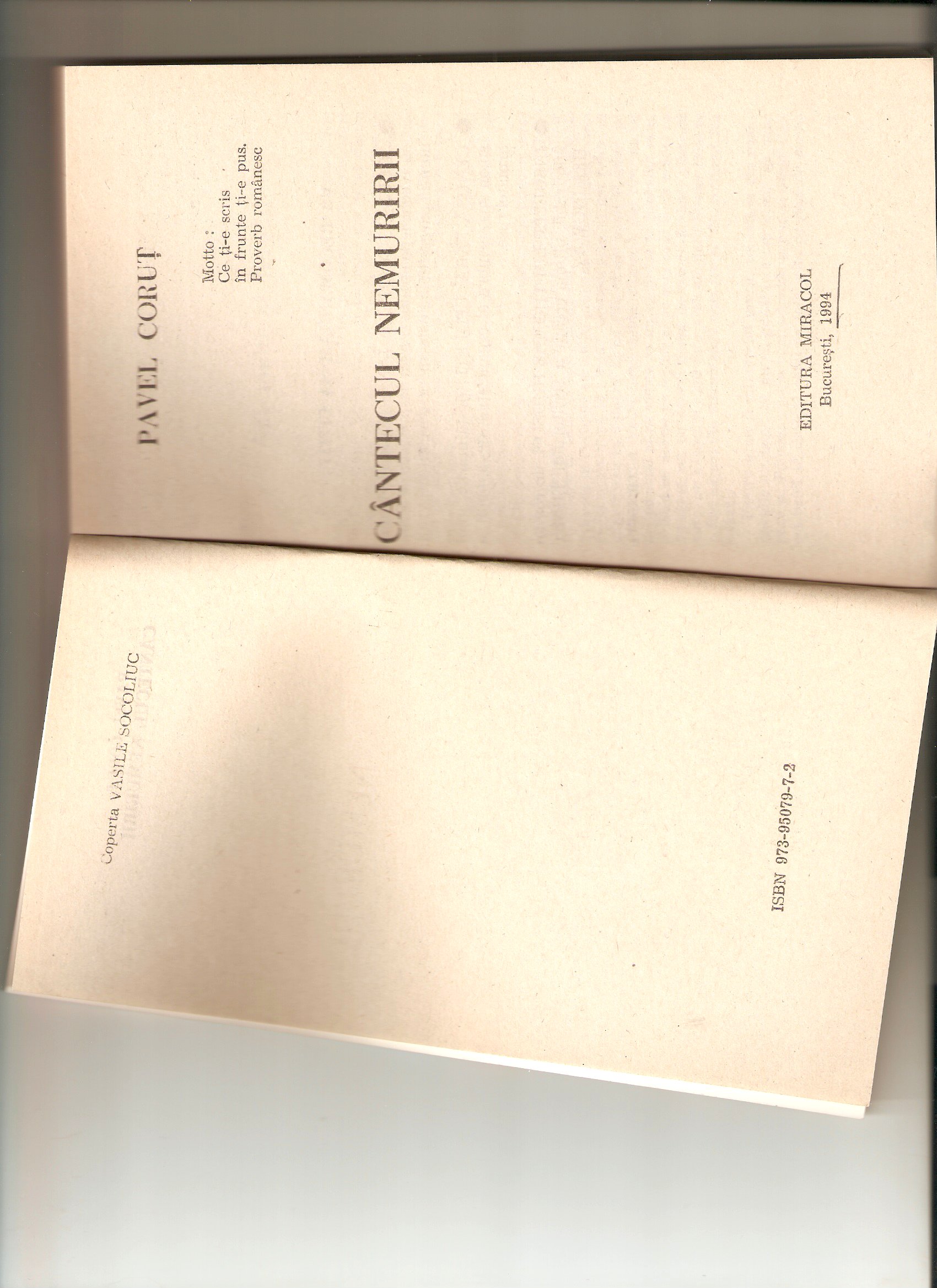
As I alluded to in Part I, the suggestion that dozens of Soviet agents posing as “Soviet tourists” flew unperturbed on a special TAROM ROMBAC flight from Bucuresti Otopeni to Sibiu, the fiefdom of Nicolae Ceausescu’s son, Nicu, on Wednesday 20 December 1989, begs even more basic questions:  how the heck did they get into the country, travel to the capital, and to the capital’s airport in the first place, let alone gain entrance to the airport, pass through security (supposedly with guns in their luggage!), and board the plane?

After all, those who posit a role for the Soviet tourists in the December 1989 events frequently claim that the Soviet tourists were present and involved in the Timisoara unrest of 15-19 December 1989.  A brief search just from just the past few years reveals the (Ro)mania about the “Soviet tourists” in December 1989 has hardly abated:

http://www.historia.ro/exclusiv_web/general/articol/invazia-sovietica-trebuia-sa-inceapa-constanta

http://www.libertatea.ro/detalii/articol/25-000-de-spioni-kgb-au-stapanit-romania-aproape-un-an-428106.html

(invokes Larry Watts claim, which recycles an older claim by Petre Roman from 1994, from With Friends Like These (English edition), p. 26 Footnote #90 )

http://www.exploziv-news.ro/lovitura-de-stat-1989/729-un-american-acuza-lovitura-de-stat-din-decembrie-1989-orchestrata-de-moscova-miza-impiedicarea-unirii-romaniei-cu-basarabia-cotropirea-ardealului-de-catre-ungaria-si-distrugerea-unitatilor-romanesti-anti-kgb.html

http://www.bookiseala.ro/grigore-cartianu-crimele-revolutiei/38586.html

http://www.adevarulshop.ro/crimele-revolutiei-sangeroasa-diversiune-a-kgb-istilor-din-fsn.html

(the last two are Grigore Cartianu’s writings; Cartianu was promoted by Vladimir Tismaneanu and IICCMER here ”).”http://tismaneanu.wordpress.com/2010/07/21/deshumarea-lui-ceausescu-un-pas-spre-adevar/ “ and  http://tismaneanu.wordpress.com/2010/12/15/joi-11-30h-dezbatere-publica-la-iiccmer-armand-gosu-raluca-grosescu-grigore-cartianu-mihail-neamtu/)

http://www.agero-stuttgart.de/REVISTA-AGERO/COMENTARII/Rolul%20turistilor%20straini%20in%20lovitura%20de%20stat%20de%20Brudascu.htm

http://www.evz.ro/detalii/stiri/operatiunea-kgb-decembrie-1989-423201.html

THE FOLLOWING SHOULD, IN A PERFECT WORLD, DEMOLISH THE THESIS ABOUT THE ALLEGED ROLE OF SOVIET TOURISTS IN SPARKING THE TIMISOARA UPRISING!

http://atomic-temporary-3899751.wpcomstaging.com/2013/04/29/high-time-to-unpack-already-why-the-restless-journey-of-the-soviet-tourists-of-the-romanian-revolution-should-come-to-an-end/

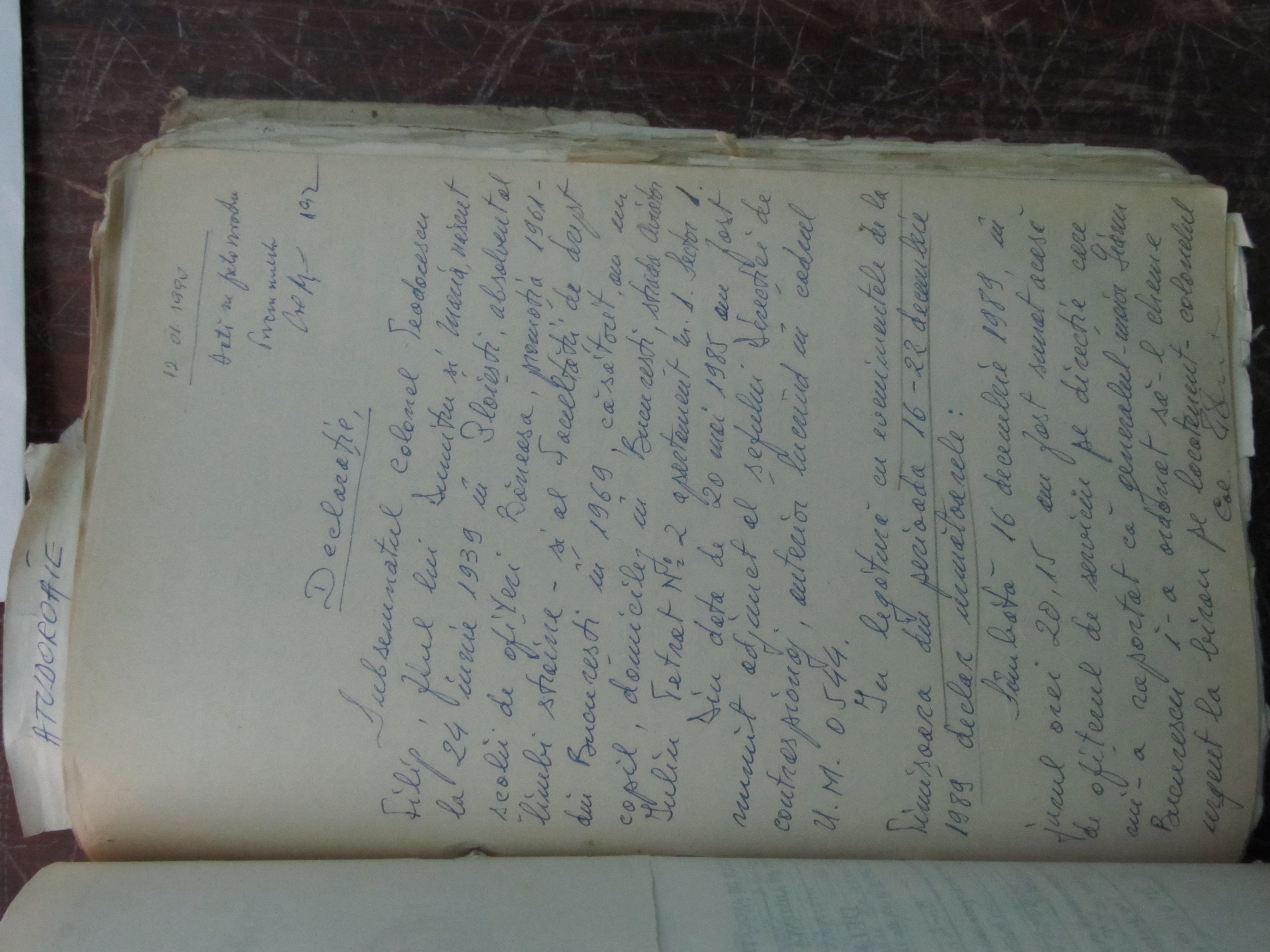
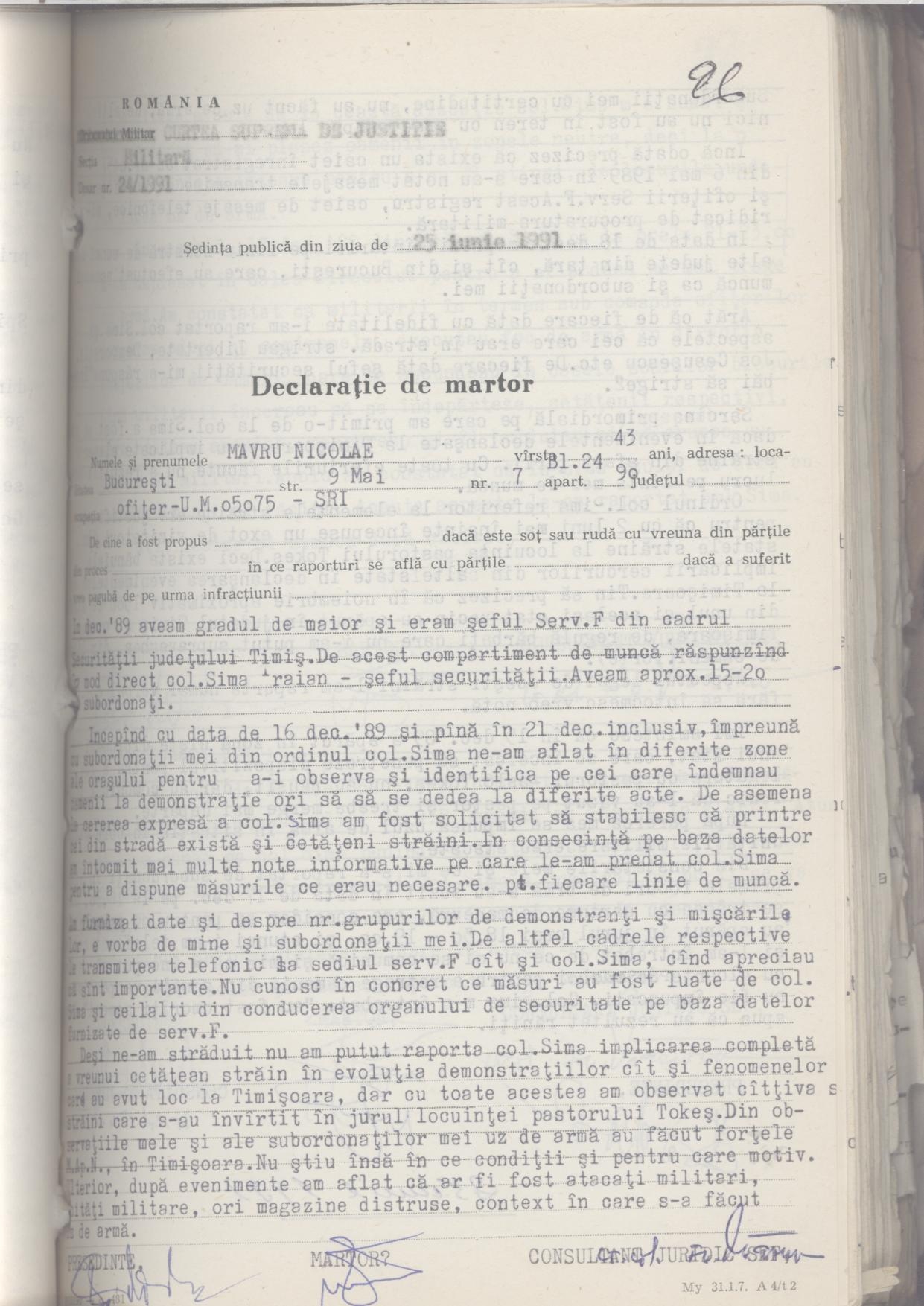
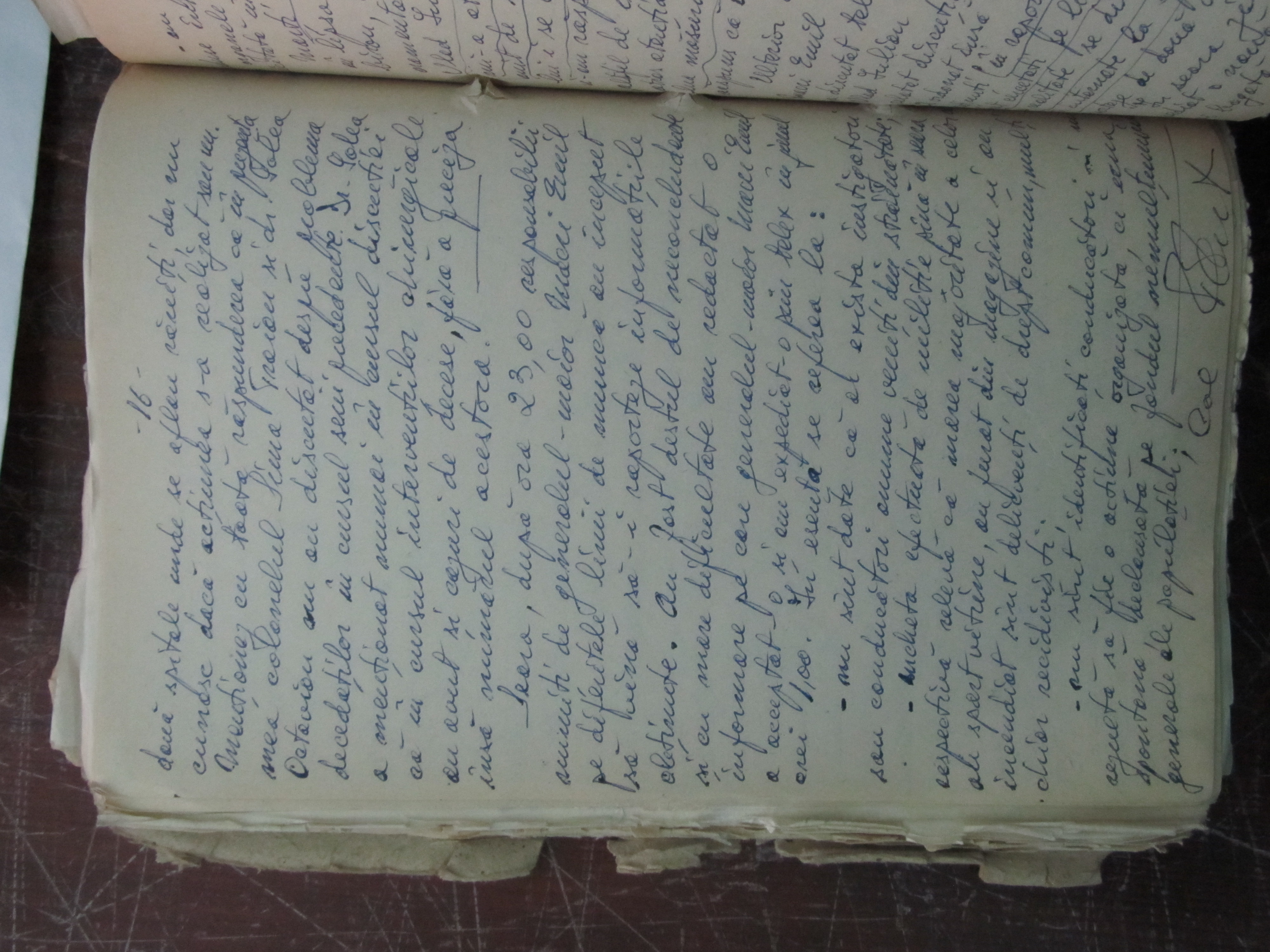
The Timisoara files about December 1989 are now publicly available (when the link works!) on the Internet at http://dosarelerevolutiei.ro/.  What they show is that Securitate, Militia, and other regime officials from Timis County were asked by Bucharest–communicated via the person of Securitate Director, General Iulian Vlad–to investigate the role of foreign elements, specifically tourists, in the Timisoara protests of mid-December 1989.  But they were not the only ones.  General Vlad tasked senior Securitate officials from Bucharest sent to Timisoara to report back to him on this very topic alleging external involvement and manipulation of the Timisoara demonstrations.  What remains unclear is how much of this tasking was General Vlad communicating his own “hypothesis” or how much of it was he relaying Nicolae Ceausescu’s “theory” about what was going on.  This much is clear:  neither those stationed in Timis County, nor those officials sent from Bucharest could find evidence of a foreign hand in the Timisoara uprising, despite being asked to investigate exactly this aspect.  How do we know this?  From their own written confessions immediately after the December 1989 events.  (Below are four of them:  Nicolae Mavru, Liviu Dinulescu, Emil Macri, and Filip Teodorescu.)

Niculae Mavru, fost sef al sectiei ‘Filaj si investigatie’ de la Securitatea Timis, declaratia din 13 ianuarie 1990:  …la ordinul col. Sima Traian, am primit…misiuni de a observa si sesiza aspecte din masa manifestantilor, din diferite zone ale orasului in sensul de a raporta daca sint straini (ceea ce nu prea au fost) care incita la dezordine, acte de violenta sau altfel de acte…

0331

25 iunie 1991

“Desi ne-am straduit nu am putut raporta col. Sima implicarea completa a vreunui cetatean strain in evolutia demonstratiilor cit si fenomenlor care au avut loc la Timisoara,..”
0173

“Sarcina primordiala pe care am primit-o de la col. Sima a fost daca in evenimentele declansate la Timisoara erau implicate elemente straine din afara tarii.  Cu toate eforturile facute nu a rezultat lucru pe linia mea de munca.”

0174

26 iunie 1991, Declaratia lui Liviu Dinulescu, cpt. la Serviciul de Pasapoarte al jud. Timis (in decembrie 1989, lt. maj. ofiter operativ Securitate judetean la Serv. III, care se ocupa de contraspionaj)

“Precizez ca anterior declansarii evenimentelor de la Timisoara din datele ce le detineam serviciul nostru nu rezulta vreun amestec din exterior in zona judetului Timis.”

0197

Generalul Emil Macri (seful Dir. II-a Securitatii, Contrainformatii Economice),

Declaratie 2 ianuarie 1990:

“Rezumind sintetic informatiile obtinute ele nu au pus in evidenta nici lideri si nici amestecul vreunei puteri straine in producerea evenimentelor de la Timisoara.  Raportarea acestor date la esalonul superior respectivi generalului I. Vlad a produs iritare si chiar suparare…”

IMG_1219

IMG_1215

Filip Teodorescu (adj. sef. Dir III Contraspionaj D.S.S.), Declaratie, 12 ianaurie 1990: 

Seara [luni, 18 decembrie 1989], dupa 23:00, responsabili (anumiti ?) de generalul-maior Macri Emil pe diferitele linii de munca au inceput sa vina sa-i raporteze informatiile obtinute.  Au fost destul de neconcludente si cu mare dificultate am redat o informare pe care generalul-maior Macri Emil a acceptat-o si am expediat-o prin telex in jurul orei 01:00 [marti, 19 decembrie 1989.  In esenta se refera la:

–nu sint date ca ar exista instigatori sau conducatori anume veniti din strainatate…
IMG_1453

IMG_1438

Posted in decembrie 1989 | Tagged: , , , , , , , , , , , , , | 4 Comments »

Final Boarding Call for TAROM’s special ROMBAC service from Bucuresti to Sibiu: Would the large party of suspicious “Soviet tourists” please report to the gate immediately! (I)

Posted by romanianrevolutionofdecember1989 on August 10, 2013

“Thus, as the “tourists” began to enter the historiography of the December 1989 events, so the Securitate — specifically the USLA — began to disappear.”

http://www.rferl.org/content/article/1342503.html

https://romanianrevolutionofdecember1989.wordpress.com/2010/09/22/the-1989-romanian-revolution-as-geopolitical-parlor-game-brandstatter%E2%80%99s-%E2%80%9Ccheckmate%E2%80%9D-documentary-and-the-latest-wave-in-a-sea-of-revisionism-part-iii/

From the outside, it might seem to be obvious disinformation or misinformation:

In the dead of winter, a dictatorship has closed its borders with its neighbors. The dictator believes that protests against his rule are the work of foreign agents.  Therefore, the dictator declares all citizens of surrounding countries to be spies and bans their entry into his country for the foreseeable future.
Yet several days later, with a serious uprising against the dictatorship underway in the country, what are described as, several dozen, conspicuous, tall, athletic young men from a large neighboring country arrive at the airport in the country’s capital with lots of bags of various sizes…and they board a plane, a larger one than is usually used, in order to assure they can fit on the flight (how thoughtful of the country’s national airline).  Their destination?  The city where the dictator’s son is in charge.
Nobody, not the airport staff, not the country’s national airline staff in this police state, thinks to make a phone call, to question the presence of this large number of foreign tourists.  Not when the tourists are going through airport security, not when the tourists are lining up to check their bags in and receive their boarding passes.   Nope, they get their boarding passes and when they get to the plane, nobody stops them from boarding.
No, the large group of suspicious tourists makes their flight.  And nobody at the receiving airport in the city controlled by the dictator’s son seems to have any questions when they land there.  It is then alleged that these athletic young men, with their bags of various sizes, containing presumably guns, participated in the violence in the city of the dictator’s son over the next few days, and when they were finished, they left the city and eventually the country, without anybody really noticing, let alone attempting to stop them.
And, of course, none of this even explains how did they get to the capital’s airport or even enter the country in the first place, without anybody in this police state detecting them or intervening?
For the outsider, it must sound like a bad joke then.  And yet the informational/narrative space about December 1989 in Romania is so amazingly confused and contaminated, that many people believe just the fantastical, magical scenario outlined above.  And many of these are reasonably smart people with good heads on their shoulders…

Posted in decembrie 1989 | Tagged: , , , , , , , , , | 4 Comments »

The Blues Brothers. Oh, we got both kinds of music here: Country AND Western!

Posted by romanianrevolutionofdecember1989 on August 3, 2013

The ideologues would have us believe that it is all about the post-Ceausescu world view and politics of individuals of the former communist regime.  Bureaucratic/Institutional interests across world views and politics are thus ignored.  For example, only protochronists, Ceausescu nostalgics would allege that December 1989 was a Soviet plot.  Back in 2005, I took a look at the supposedly diametrically opposed claims of Ion Mihai Pacepa and Pavel Corut on December 1989.  As, one can see, stripped of all the philosophical rhetoric, their views are completely different and should in no case be compared with or considered similar to one another…

image0

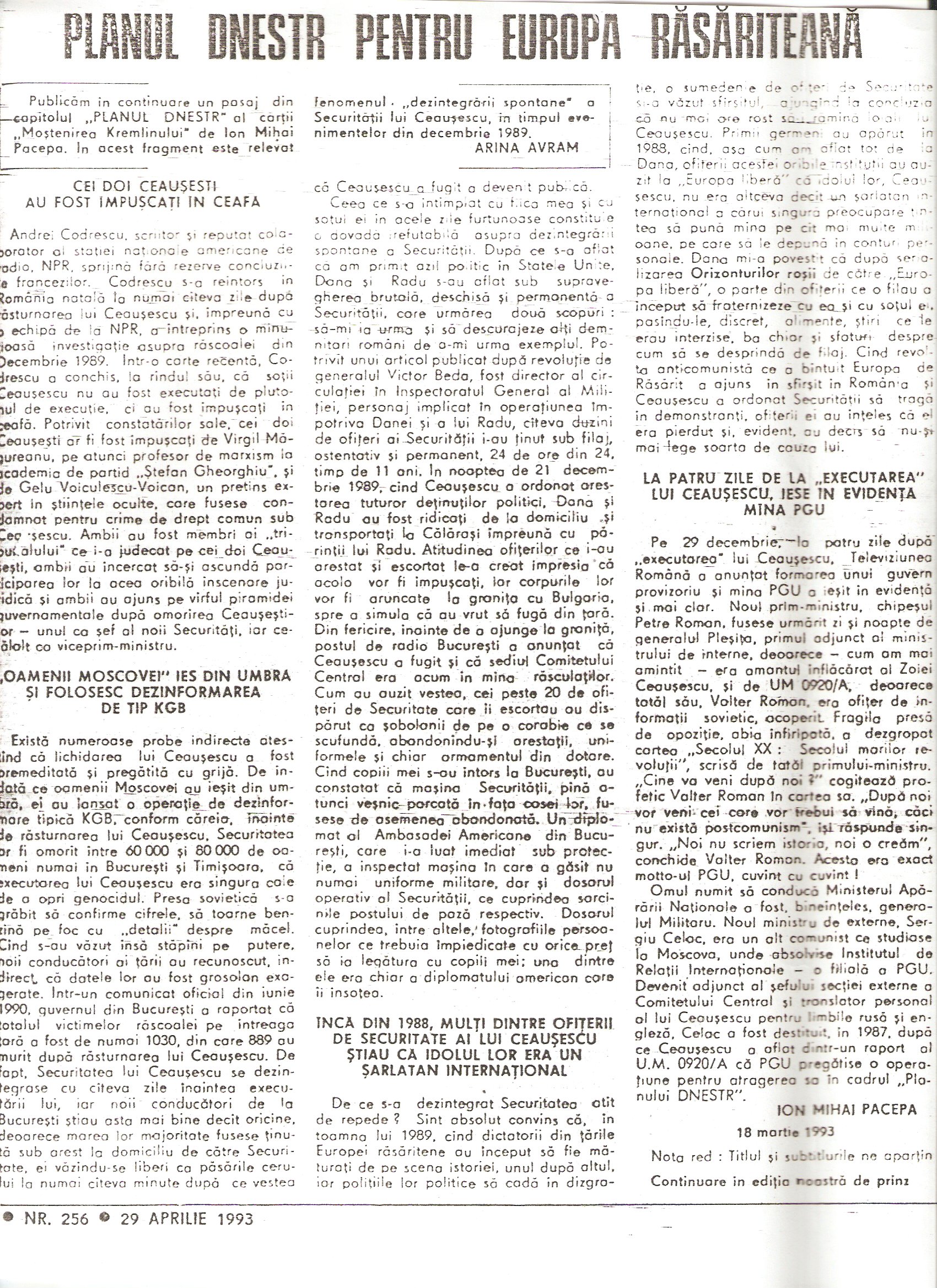
Ion Mihai Pacepa in Evenimentul Zilei, 29 aprilie 1993.

from http://atomic-temporary-3899751.wpcomstaging.com/2010/09/22/the-1989-romanian-revolution-as-geopolitical-parlor-game-brandstatter%E2%80%99s-%E2%80%9Ccheckmate%E2%80%9D-documentary-and-the-latest-wave-in-a-sea-of-revisionism-part-iii/

translated version in Romanian by Marius Mioc available at http://mariusmioc.wordpress.com/2009/11/07/rich-hall-brandstatter-15/

RED HERRINGS:  THE CHRONICLES OF A FORMER COMMUNIST SPY CHIEF’S VIEWS ON DECEMBER 1989

Inevitably, too, in the wake of the Brandstatter film the Romanian media dragged out its old warhorse for such occassions, the former Director of communist Romania’s Foreign Intelligence Service, General Ion Mihai Pacepa, the man whose defection in 1978 led to his being sentenced to death in abstentia and whose sensational revelations about Ceausescu’s repressive and profligate rule helped erode the myth of Ceausescu in the West.  Pacepa’s break from Ceausescu and the communist regime, and his stinging criticism of the administrations of President Ion Iliescu for their incorporation of and reliance upon former Securitate personnel, have led Pacepa to be lionized in the West and to be highly-respected and thoroughly-trusted among Romania’s intellectual and media elites.

In the wake of Brandstatter’s film, and, indirectly, in support of Bukovski’s allegations, Pacepa’s claims about December 1989 were once again invoked.  Thus, for example, excerpts of an August 2000 interview on the Hungarian Duna TV channel (rebroadcast on Duna TV two nights before the debut of the Brandstatter film) were published (“Jurnalul National,” 26 February 2004).  In the interview, Pacepa maintained that there were no so-called “terrorists” during the Revolution—that the “terrorist” phenomenon was all a pretext used by the party-state officials who ousted Ceausescu to legitimate a Soviet intervention:

“Interviewer:  What exactly was the essence of the the ‘Dnestr’ Plan?

Pacepa:  It was necessary to find a motive [to justify] the Soviet intervention, if the coup was to succeed by itself.  Therefore it is very easy to understand.  On 22 [sic. 23] December 1989, at 2 pm in the afternoon, Romanian Television announced:  “The National Salvation Front has requested Soviet help because unidentified foreign terrorists are attacking Romania.”  Already on this day, Iliescu declared that the Ceausescu couple had been arrested and a trial would be held, only for Television to announce [later] that their trial and execution had taken place.” (“Confessions of a Spy Chief” in “Jurnalul National,” 26 February 2004)

Since the early 1990s, Pacepa has maintained that the events of December 1989 were part of a well-scripted Soviet plan—the so-called “Dnestr Plan”—to remove Ceausescu (for a summary, see Deletant, 1995, pp. 89-90).  According to Pacepa, the Soviet plan was a response to the 1969 visit of US President Richard Nixon to Bucharest.  Pacepa claims that Iliescu had been designated Ceausescu’s replacement in accordance with this plan as early as 1971!  Dennis Deletant cautions with regard to Pacepa’s account:

“Pacepa’s use of the term ‘Front for National Salvation’ smacks too much of an attempt to compromise the more recent Front for National Salvation, set up after the 1989 revolution, by suggesting that the seeds of it had been sown some twenty years earlier by Moscow.  It is difficult to believe that such a name could have been chosen so many years earlier.” (Deletant, 1995, p. 90)

Pacepa’s claims are even more questionable than Deletant’s moderate skepticism suggests.  As I wrote in 1997:

“Moreover, it is intriguing to note that Pacepa revealed these details [i.e. those of the ‘Dnestr’ plan] only after the December 1989 events (in his 1993 book ‘The Inheritance of the Kremlin’).  Although in ‘Red Horizons’ (his 1988 detail-filled, “tell-all” book on the Ceausescus and the Securitate) he mentioned cases in which alleged Soviet agents (including Army General Nicolae Militaru…) were caught, he did not mention anything about the so-called ‘Operation Dnestr’.” (Hall, 1997, p. 117).

Pacepa had no problem in “Red Horizons” revealing alleged Soviet agents in Romania and alleged secret plans by which Ceausescu’s fabled “independence from Moscow” was all a Moscow-created ruse, yet he somehow did not feel the need or desire to outline Moscow’s plan for further increasing their control over Romania through “Operation Dnestr?”  This is hard to believe.

…By 1993—and as we have seen from the quote from the 2000 interview, continuing long after that, to the present day—Pacepa was claiming that there had been no “terrorists,” that it was all just a pretext by the KGB agents who seized power from Ceausescu (Iliescu, Militaru, Brucan, etc.) for justifying Soviet military intervention (see, for example, his comments in “Evenimentul Zilei,” 10 April 1993; 29 April 1993).  The Ceausescus had been shot KGB-style to prevent them from revealing to the Romanian people and the world that the coup-plotters were KGB agents, according to Pacepa.  One must ask:  if Pacepa possessed this knowledge prior to December 1989—and he claims that the plan originated in 1969—and therefore had suspicions that the “terrorist” phase was merely a diversion designed to serve as a pretext for Soviet intervention, then why did he say what he said, and why did he not reveal his knowledge and voice his concerns before, during, or immediately after December 1989?

Finally, there is the problem of the similarity of Pacepa’s arguments on the Revolution with those of other former Securitate officers.  True, they hate Pacepa and Pacepa hates them equally.  But take, for example, the following quote:

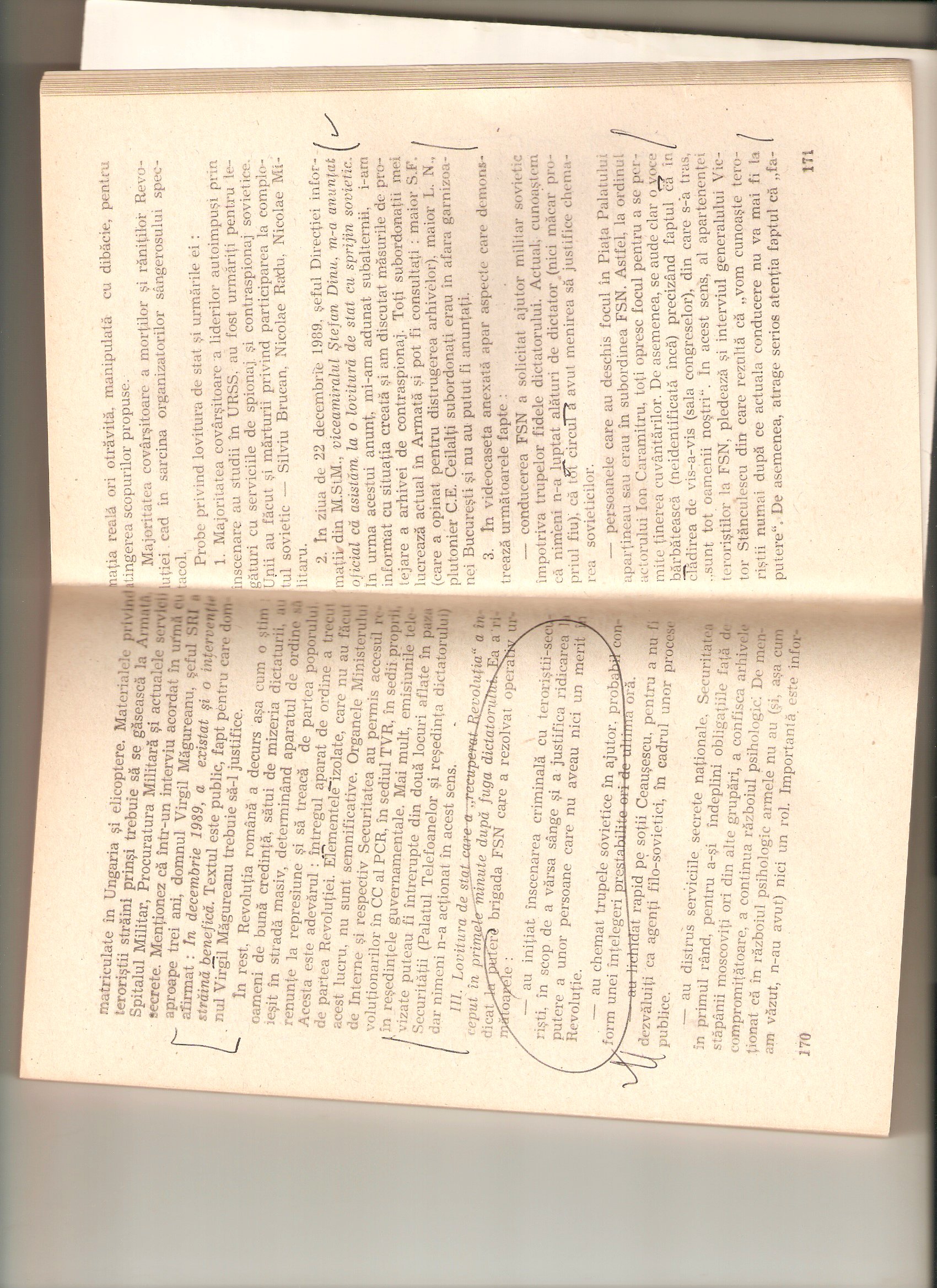
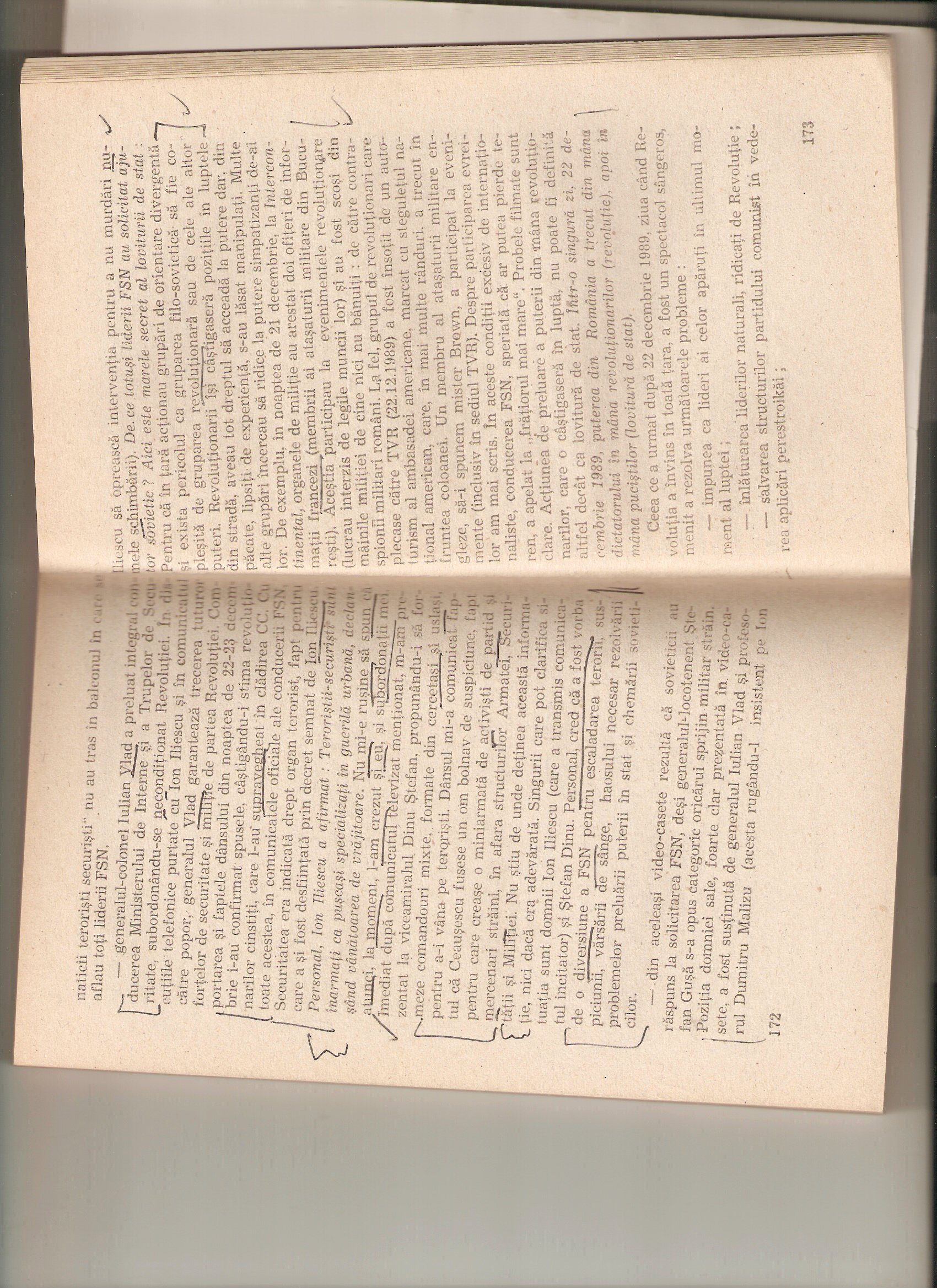
“The coup d’état which ‘recovered the Revolution’…brought to power the FSN [the National Salvation Front] crew…[which] initiated the criminal scenario with Securitate-terrorists in order to spill blood and justify the assumption of power by people who had no business proclaiming themselves to be revolutionaries…[I]t was a diversion of the FSN in order to escalate the terror, suspicion, blood-letting, [and] chaos necessary to resolve the problem of taking state power and calling the Soviets.”

The source of this quote is not Pacepa, but the well-known “protochronist,” “national communist” former Securitate officer Pavel Corut (Corut, 1994, “Cantecul Nemuririi [Song of the Undying]” (Bucharest:  Editura Miracol, 1994), pp. 170, 172, quoted in Hall, 1997, p. 257).  The point is, as the accusations of Pacepa discussed at the beginning of this section demonstrate, Pacepa’s claims are identical to what Corut’s alleges.  By forcing an analytical, but also partisan ideological distinction by dividing protoWesterners from protochronists, as if the two were night-and-day and so easily identifiable, critical similarities such as this one—which demands attention and analysis precisely because it is unexpected—are ignored.

03 Mar 2004 – 00:00

“M-am mirat cat de repede au reusit agentii serviciilor secrete sovietice sa preia puterea politica dupa Ceausescu”
Celebrul dezertor roman Ion Mihai Pacepa este convins de implicarea sovieticilor in Revolutia din Romania. Intr-un interviu pentru un post de televiziune ungar, el afirma ca Nicolae Ceausescu a fost impuscat in stil KGB.

Si eu m-am mirat cat de repede au reusit agentii serviciilor secrete sovietice sa preia puterea politica dupa Ceausescu. Indata ce s-au prezentat imaginile cu Ceausescu fugind cu elicopterul, la televiziune a aparut generalul pensionar Militaru si s-a autoproclamat comandat suprem al armatei. Acest general Militaru este acela caruia, in 1978, microfoanele UM 920A i-au inregistrat convorbirea avuta la intalnirea cu un informator sovietic, atunci cand Moscova ar fi dorit sa-l includa in asa-numitul program “Dnester”. La cateva luni dupa raportul privind cele inregistrate am parasit Romania si mult timp nu am stiut daca a fost racolat. Da, Mihai Lupoi, primarul Bucurestiului, care a emigrat in Elvetia, a facut o declaratie in 1990 potrivit careia Militaru a devenit agent sovietic. Ca dovada este documentul Corbu din dosarul Securitatii. La scurt timp am fost din nou consternat. A aparut Ion Ilici Iliescu, fost secretar de partid, lider comunist pregatit la Moscova. Tatal sau l-a idolatrizat pe Lenin, motiv pentru care i-a dat fiului sau numele Ilici. Acesta este acelasi Iliescu care, tot cu ajutorul microfoanelor UM 920A, a inceput sa fie supravegheat, in 1972, datorita unor legaturi secrete la Moscova. Iliescu si Gorbaciov au invatat impreuna la facultate.

Care este esenta proiectului “Dnester”?

Sa se gaseasca un motiv pentru implicarea sovieticilor, daca puciul nu reuseste de la sine. Asa este mult mai usor de inteles. In 22 decembrie 1989, la ora doua dupa-amiaza, TVR a informat: “FSN a cerut ajutorul URSS pe motivul ca teroristi straini neidentificati au atacat Romania”. Inca in aceea zi, Iliescu a declarat ca au fost arestati sotii Ceausescu si procesul va fi deschis, cu toate ca televiziunea a informat doar despre faptul ca procesul si executia lor au avut loc.

A fost impuscat in stil KGB

Nu vi s-au parut mult prea pripite?

Se poate. Noii lideri au dorit sa ingroape secrete. Am motive serioase sa cred ca Ceausescu a fost executat pentru ca el stia cel mai bine ca Ion Ilici Iliescu si generalul Nicolae Militaru, precum si alti noi lideri erau agenti de legatura cu servicul de informatii sovietic, cu KGB. Sunt destul de neclare imaginile pe caseta, doua cadavre culcate pe spate care nu au urme de rana nici la nivelul pieptului, nici la fata, dar ale caror tample sunt intr-o balta de sange. KGB obisnuia sa-i impuste in cap, din spate, pe condamnati. Acesta este stilul KGB. Acestea au fost primele ganduri care mi-au trecut prin minte cand am vazut corpurile neinsufletite ale celor doi lideri draconici, cei care, spre nenorocul meu, mi-au condus cea mai mare parte din viata.

image0

image0-001

image0-002

Posted in decembrie 1989 | Tagged: , , , , , , , , | 1 Comment »