The Archive of the Romanian Revolution of December 1989

A Catch-22 December 1989, Groundhog-Day Production. Presenting the Personal Research & Scholarship of Richard Andrew Hall, Ph.D.

Posts Tagged ‘securitate decembrie 1989’

25 for 2014: 25 Things You Should Know about the Romanian Revolution on the 25th Anniversary of the Fall of Nicolae Ceausescu’s Communist Regime: #7 Nicolae Ceausescu Leaves on a Less-than-spontaneous Trip to Iran (18 December 1989)

Posted by romanianrevolutionofdecember1989 on October 26, 2014

(Purely personal views as always, based on over two decades of research and publications inside and outside Romania)

2014 marks the 25th anniversary of the collapse of communism in central and eastern Europe–Poland, Hungary, East Germany, Czechoslovakia, Bulgaria, and Romania.  This (likely aperiodic) series looks at 25 things I have learned about the events of the Romanian Revolution of December 1989.  The numbering is not designed to assign importance, but rather–to the extent possible–to progress chronologically through those events.

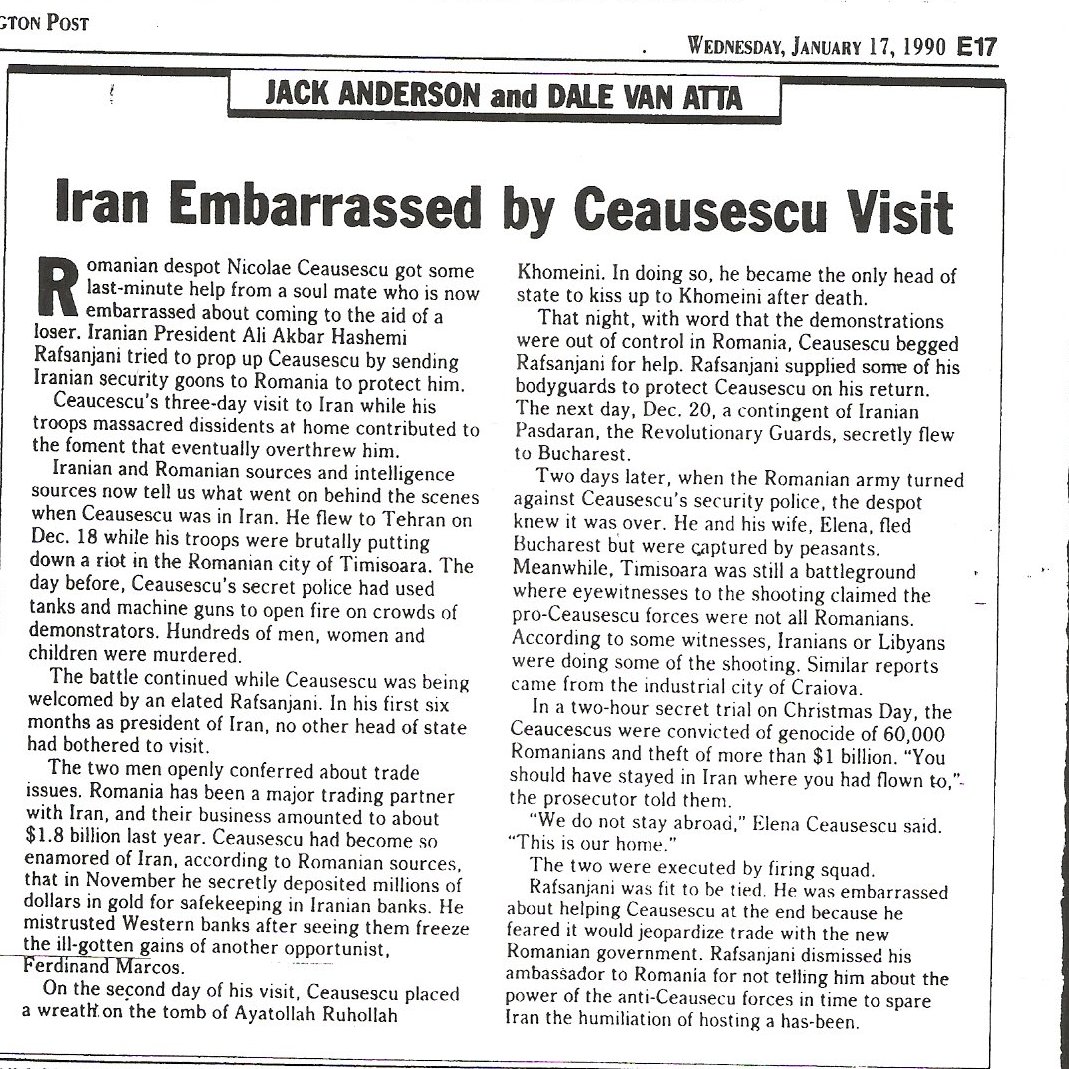
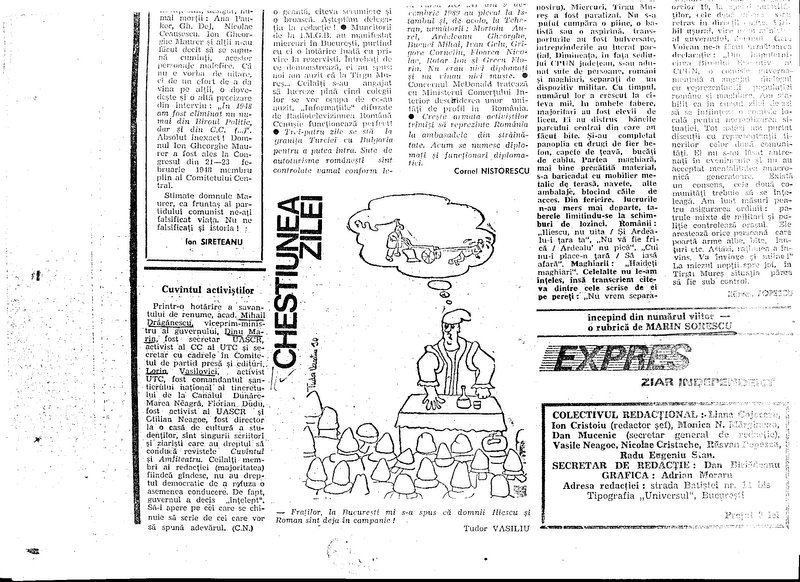
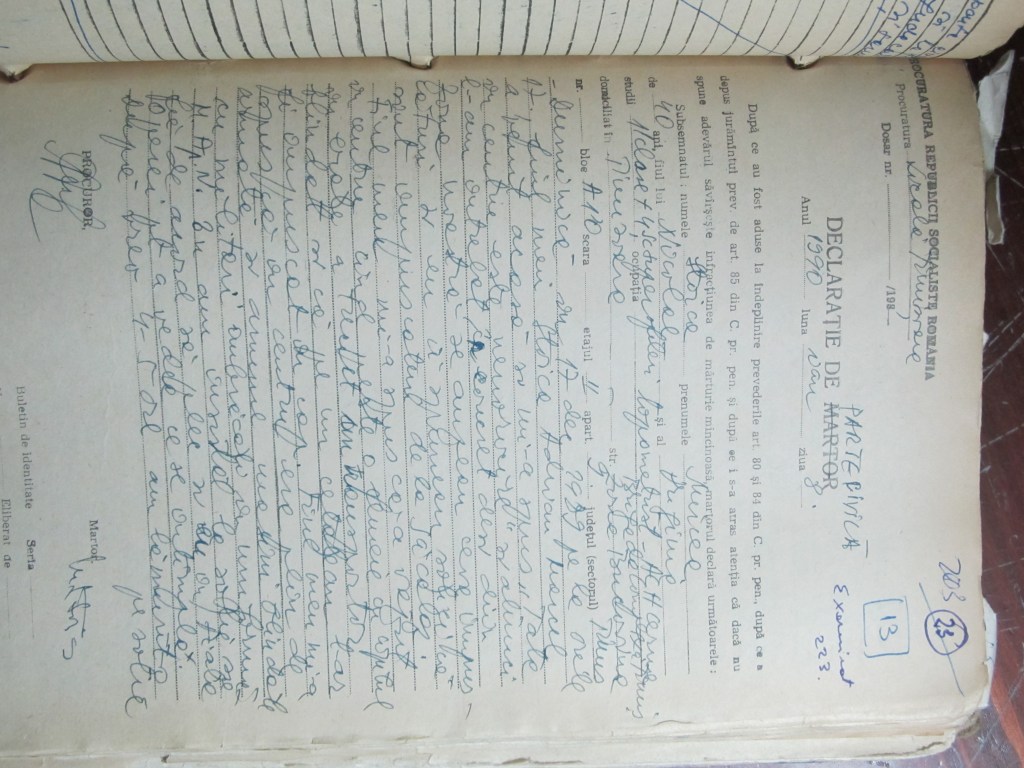
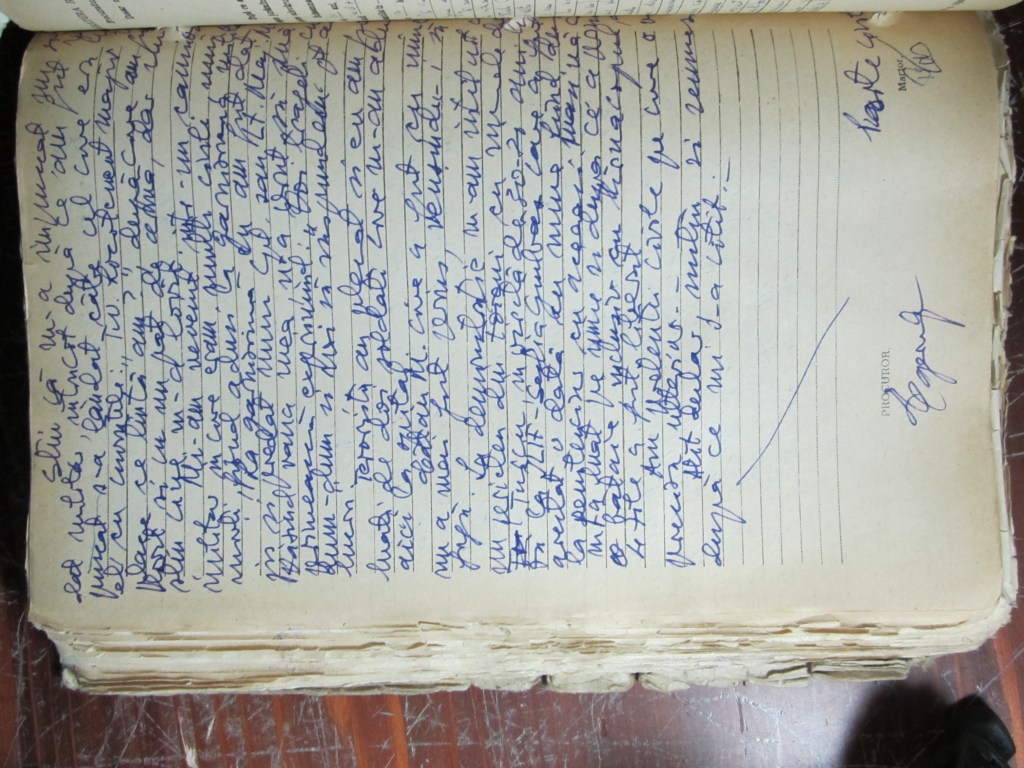
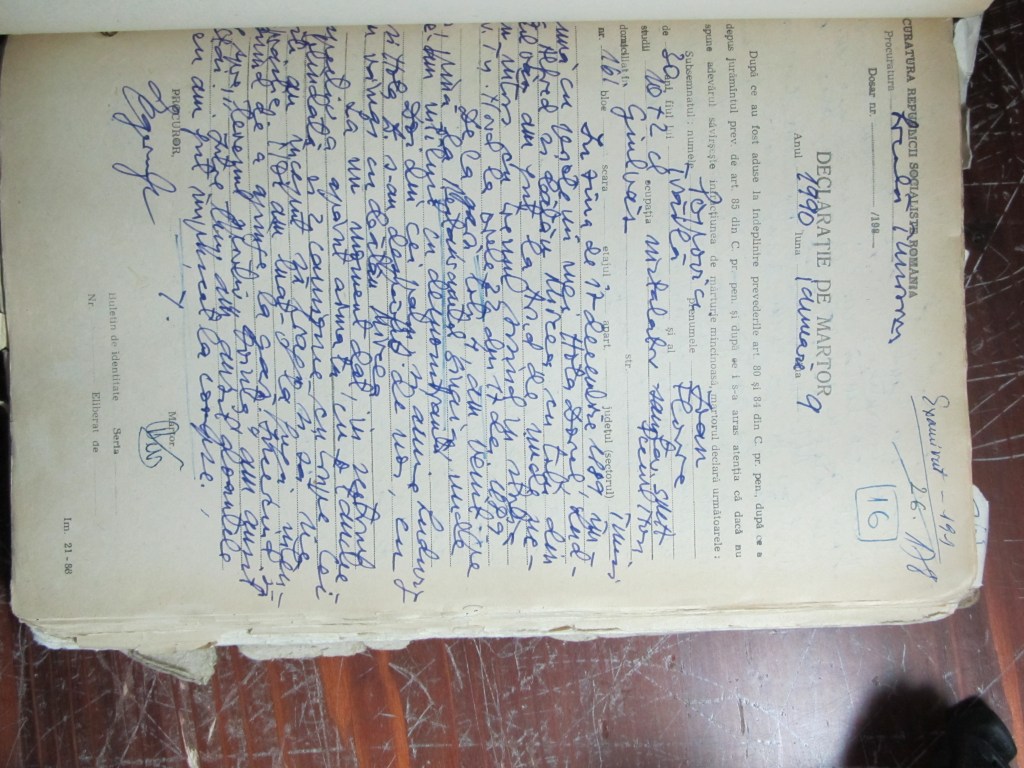
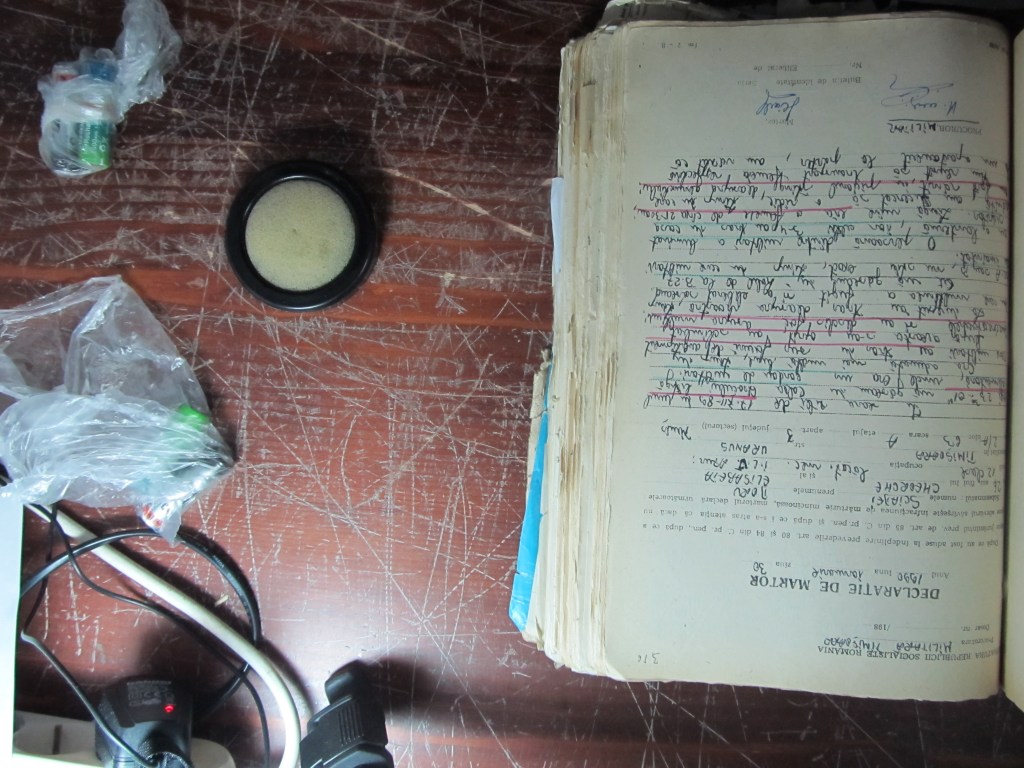
Significance:  On Monday 18 December 1989, the morning after the bloodbath in Timisoara, Nicolae Ceausescu left on a state visit to Iran.  On the one hand, some observers have jumped to the conclusion that this was a spontaneous, last-ditch effort by the dictator to seek the moral support of a friendly regime for the crackdown and perhaps to ask for military reinforcements or materiel.  As it turns out, Nicolae Ceausescu did not go to Iran as the result of a snap decision.  Instead, high-level Securitate and regime personnel had gone ahead to prepare for Ceausescu’s arrival, as early as 9 December 1989 (a fact we have known since March 1990, see article from Expres below)–therefore, a full week prior to the outbreak of the uprising against Ceausescu’s regime in Timisoara.  It is possible that Ceausescu brought gold for his hosts with him on this trip.

http://www.youtube.com/watch?v=pE14_P3Q9sA

http://www.ina.fr/video/CAG03010187

below a previously unposted article
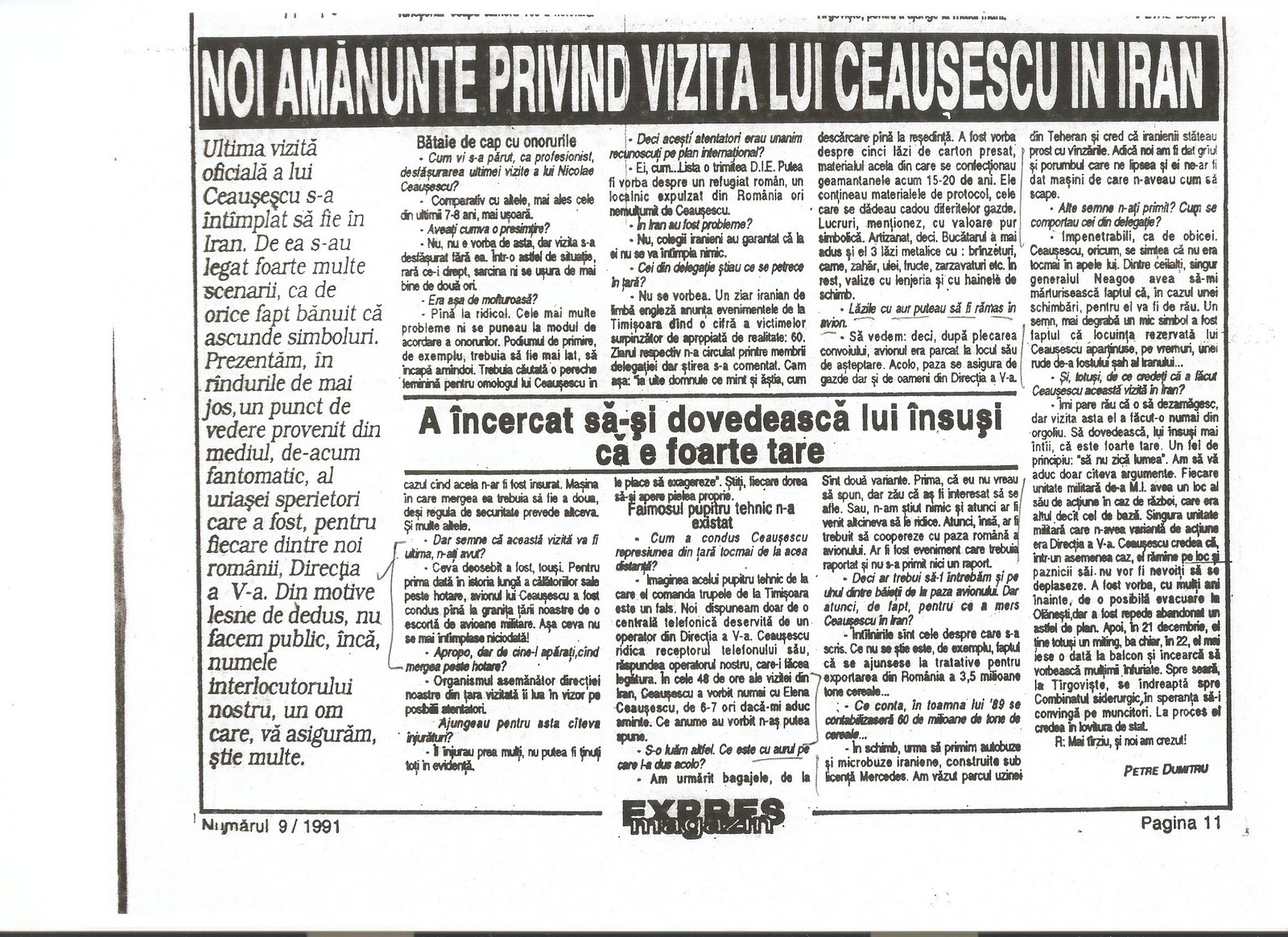
image0-001

An excerpt from

A chapter from my Ph.D. Dissertation at Indiana University: Richard Andrew Hall, Rewriting the Revolution: Authoritarian Regime-State Relations and the Triumph of Securitate Revisionism in Post-Ceausescu Romania (defended 16 December 1996). This is the original chapter as it appeared then and thus has not been revised in any form.  (traducere in limba romana:  http://mariusmioc.wordpress.com/2009/01/05/rich-andrew-hall-rescrierea-istoriei-revolutiei-triumful-revizionismului-securist-in-romania-1-ceausescu-pleaca-in-iran/ si traducerea de catre marius mioc)

Ceausescu Departs for Iran

On Monday morning 18 December 1989, President Nicolae Ceausescu departed on a previously-scheduled state visit to Iran. He was the first head of state to pay an official visit to Tehran since the death of the Ayatollah Khomeini in June 1989.[1] By the time the presidential jet took off for Iran, Timisoara was under virtual military occupation by units of the Army, Securitate, and Militia. Ceausescu was apparently sufficiently satisfied by the news he was receiving on the status of the crackdown, that he judged it safe to leave the country. In his absence, the “Permanent Bureau of the Political Executive Committee (CPEx)” was left in charge. In effect, this meant that power resided with the First Deputy Prime Minister, his wife Elena–hardly a stranger to such power–and the Vice President of the country, Manea Manescu, who was married to Nicolae’s sister Maria.[2]

On the one hand, the fact that Ceausescu would leave the country in the midst of the most serious challenge ever to communist rule in Romania–fully aware of what had happened to his fellow communist leaders in the region earlier that fall–was a testament to how supremely overconfident and detached from reality he had become. On the other hand, Ceausescu’s absence from the country between 18 and 20 December for a period in excess of forty-eight hours provided regime elites with the perfect opportunity to oust him from power had they wanted to. Ceausescu would likely have been granted asylum by the Iranian regime. In theory it seems, had Ceausescu’s ouster been premeditated, this was the ideal moment to strike.

Most regime elites had a vivid memory of how Ceausescu’s absence from the country during the devastating earthquake of March 1977 had paralyzed the regime apparatus.[3] Moreover, having been threatened by Ceausescu at the emergency CPEx meeting of 17 December with removal from their posts and possible execution–and Ceausescu had been persuaded merely to defer, rather than to cancel this decision–Ceausescu’s commanders had a strong incentive to act fast. Instead, Ceausescu’s henchmen faithfully executed his orders and patiently awaited his return. This is a powerful argument against any suggestion that Ceausescu’s subordinates were scheming to replace him and had intentionally allowed the Timisoara unrest to elude their control.

Theories which maintain that Ceausescu was overthrown by a foreign-engineered coup d’etat also have trouble explaining why the plotters did not attempt to seize power during the period while Ceausescu was out of the country and then prevent him from returning to Romania. The Timisoara events had already assured that Ceausescu’s ouster would contain the popular dimension which was reputedly so central to this coup d’etat scenario. Furthermore, if the Timisoara protests had been instigated by foreign agents, why were these agents unable to “spread the revolution” to Bucharest (which remained surprisingly quiet) during these days?

In support of his contention that the December events were a Soviet-backed coup d’etat, Cornel Ivanciuc has cited the March 1994 comments of Igor Toporovski (director of the Moscow-based Institute for Russian and International Political Studies) which allege that the Soviet Politburo “…chose the moment when Ceausescu was in Teheran [to oust him] because otherwise the action would have been difficult to initiate.”[4] Yet the facts tell another story. Ceausescu was not driven from power at the most opportune moment–while he was in Iran–and the uprising in Timisoara did not spread outside of Timisoara until after Ceausescu’s return. These points cast doubt upon Toporovski’s claims.

[mai mult despre Ivanciuc…http://atomic-temporary-3899751.wpcomstaging.com/2010/12/17/timisoara-si-mostenitorii-revizionismul-securist/]

[1].. Jack Anderson and Dale Van Atta, “Iran Embarrassed by Ceausescu Visit,” The Washington Post, 17 January 1990, E17.

[2].. Martyn Rady, Romania in Turmoil: A Contemporary History (New York: IB Tauris & Co Ltd., 1992), 94. For Manescu’s link to the Ceausescu family, see ibid., 52-53.

[3].. Indeed, the abortive military coup d’etat attempt planned for October 1984 while the Ceausescus were on a state visit to West Germany had been inspired by memories of the March 1977 experience. See Silviu Brucan, The Wasted Generation: Memories of the Romanian Journey from Capitalism to Socialism and Back (Boulder, CO: Westview Press, 1993), 131-134.

[4].. Cornel Ivanciuc, “Raporturile dintre Frontul Salvarii Nationale si KGB,” 22, no. 21 (24-30 May 1995), 11.

in relation to Ceausescu’s trip to Iran, from Orwellian…Positively Orwellian (2006) http://atomic-temporary-3899751.wpcomstaging.com/2010/10/03/%E2%80%9Corwellian%E2%80%A6positively-orwellian%E2%80%9D-prosecutor-voinea%E2%80%99s-campaign-to-sanitize-the-romanian-revolution-of-december-1989-part-seven-foreign-involvement/

[85] …In no.8 (23-30 March 1990) Expres p. 8, Cornel Nistorescu wrote in “Tot Felul,”

“Our compatriots tried and are trying to sell a lie:  that the USLA had no role in guarding the dictator.  Mr. General Stanculescu, we communicate publicly to you something you know:  that every time Ceausescu went out in Bucharest, in each convoy there was an USLA team.  And for Ceausescu’s visit to Iran on flight RO 247 of 9 December to Istanbul and on to Teheran were the following:  Mortoriu Aurel, Ardeleanu Gheorghe, Bucuci Mihai, Ivan Gelu, Grigore Corneliu, Floarea Nicolae, Rotar Ion and Grecu Florin.  These weren’t diplomats and they weren’t going for a snack.”
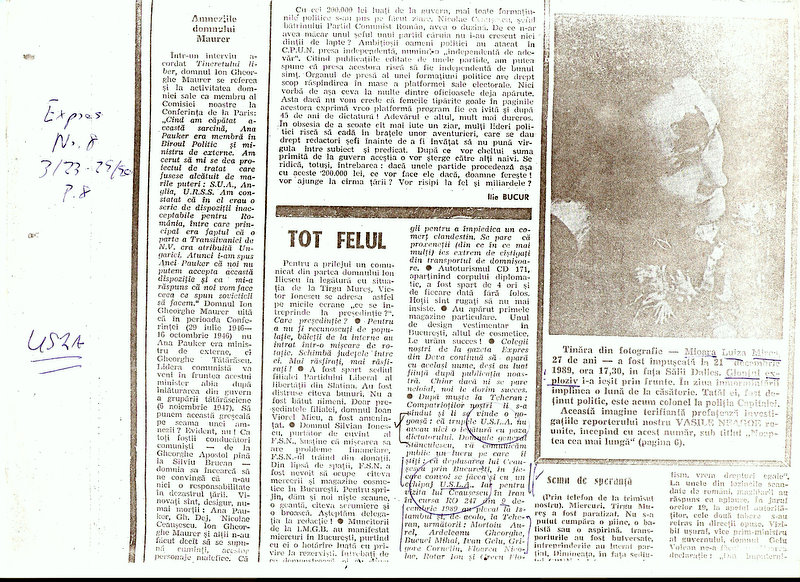
Revista “Expres,” nr. 8 23-29 martie 1990, p. 8.

for further details on UM 0666 Directia V-a of the Securitate and some of the personalities listed above and below (Mihai Bucuci et. al.) see

http://www.procesulcomunismului.com/marturii/fonduri/rev89/simionica/manuscris/

Atentie, in special, la USLA, Stetikin/Stecikin, si “seviciu 150 Directia V-a a Securitatii”…

http://www.procesulcomunismului.com/marturii/fonduri/rev89/simionica/manuscris/docs/cap2.htm

http://www.procesulcomunismului.com/marturii/fonduri/rev89/simionica/manuscris/docs/cap3_1.htm

http://www.procesulcomunismului.com/marturii/fonduri/rev89/simionica/manuscris/docs/cap3_4.htm

http://www.jurnalul.ro/campaniile-jurnalul/jurnalul-national/ultima-excursie-in-iran-a-lui-nicolae-ceausescu-527641.html (Vasile Surcel)

PLECAŢI CU MULT ÎNAINTE
Contrar majorităţii “excursiilor” externe ale lui Ceauşescu, cea din Iran a fost foarte scurtă: a început la 18 decembrie 1989 şi s-a încheiat la 20. “Antemergătorii” au pornit însă la drum pe rând, cu mult înainte. Securiştii şi angajaţii MAE au plecat cu avionul, în primul “val”, la 9 decembrie, iar specialiştii în comerţ exterior la 12. Au făcut escală la Istanbul, de unde au ajuns la Teheran, tot pe calea aerului. Doar traseul ziaristului de la Agerpres a fost mai complicat. Plecat la 13 decembrie, el a trecut mai întâi pe la Moscova, unde a fost găzduit peste noapte la Ambasada României. La Teheran a ajuns abia a doua zi, la 14. În declaraţia sa, Ivanici nu a pomenit despre ciudatul ocol făcut pe la Moscova, într-o perioadă extrem de delicată pentru regimul comunist. Este drept că nici anchetatorii nu s-au arătat prea curioşi în privinţa acelui episod, despre care nu l-au întrebat absolut nimic.

VIAŢA DE SECURIST
Mihai Bucuci, Ioan Rotar şi Nicolae Florea, trei dintre “antemergătorii” delegaţiei oficiale, erau ofiţeri superiori de Securitate. Incluse în dosarul “T-Iran”, declaraţiile lor sunt interesante chiar şi acum, după atâţia ani de la prăbuşirea regimului comunist. Din ele aflăm, în premieră, cu ce se ocupau securiştii care pregăteau detaliile “tehnice” ale vizitelor externe la nivel înalt. Mihai Bucuci era colonel la UM 0666, iar de la el aflăm: “În toate cazurile am făcut parte din grupele pregătitoare care plecau în avans faţă de delegaţiile oficiale. Aceste grupe erau conduse de cadre cu funcţii importante: miniştri adjuncţi, secretari de stat sau şefi de unităţi. Activitatea grupei se baza pe un mandat scris, compus din 8-10 puncte. Concret, erau avute în vedere stabilirea şi organizarea măsurilor de pază la aeroport, la sosire şi la plecare, traseele de deplasare, reşedinţa şi obiectivele din program, dar şi asigurarea securităţii membrilor delegaţiei când se depuneau coroane de flori ori la vizitele în fabrici, uzine şi muzee”. Bucuci a plecat la 9 decembrie 1989 şi a ajuns la Teheran la 11, după o escală de o zi la Istanbul. Timp de o săptămână a pus la punct, cu organele de specialitate iraniene, paza delegaţiei oficiale. Pentru a evita orice manifestări ostile la adresa lui Ceauşescu, securiştii români au predat organelor locale de poliţie şi de siguranţă liste cu persoanele “periculoase”, de origine română sau străină, aflate în Iran ori în ţările vecine, liste întocmite “de unităţile centrale de Securitate”. Încercând poate să convingă că nu era un apropiat al Ceauşeştilor, Bucuci s-a plâns procurorilor: “Deşi am lucrat mult timp în UM 0666, care asigura paza fostului dictator, nu am fost agreat în reşedinţe, în apartamente sau birouri. Sarcinile «de intimitate» erau rezervate cadrelor din Serviciul 1″. În acelaşi timp, Bucuci a încercat să-i convingă pe procurori că nici nu prea era mare lucru să fii în slujba directă a lui Ceauşescu: “Serviciul 1 de la UM 0666 Bucureşti, care a asigurat securitatea lui N.C. şi a soţiei sale, era compus din 20 de ofiţeri cu vârste între 25 şi 55 de ani, care lucrau în ture, 24 cu 24. Salariile nu erau mult mai mari decât ale celorlalţi militari”. El a ţinut să menţioneze special că acei ofiţeri “trebuiau să aibă o condiţie fizică foarte bună, dar şi să joace bine volei, sport foarte agreat de Ceauşescu”. Aproape că îţi vine să le plângi de milă.

COMUNICAŢII “LA LIBER”
Securiştii care pregăteau vizitele oficiale răspundeau şi de legăturile telefonice cu ţara. În Iran această sarcină i-a revenit maiorului DSS Nicolae Florea, de la UM0695, specialist în telecomunicaţii. A ajuns la Teheran la 11 decembrie şi în câteva zile a pus pe roate întregul sistem de comunicaţii cu ţara. Era vorba despre telefon şi telex, precum releul tele-foto pentru Agerpres. Principalul “beneficiar” al muncii lui a fost chiar Ceauşescu. Cei care au stat în preajma preşedintelui afirmă că acesta a vorbit foarte mult cu Elena, pe care, în anumite perioade, a sunat-o şi din jumătate în jumătate de oră. În mod ciudat, convorbirile lui telefonice, la fel ca şi restul legăturilor cu ţara, nu au fost secretizate, fapt menţionat clar de fostul maior DSS Florea. Anchetatorii din 1990 nu au fost însă curioşi să afle de ce şi cine a avut interesul să nu codifice convorbirile lui Ceauşescu, făcând astfel accesibile toate ordinele date de el de la distanţă în acele zile tulburi.

DE CINE SE TEMEA CEAUŞESCU?
Această ciudăţenie tehnică nu a fost singura. În decembrie 1989, Ion Tâlpeanu era locotenent colonel în Serviciul l în Direcţia a V-a a Securităţii şi aghiotant prezidenţial. El relatează că delegaţia propriu-zisă, cea condusă de Ceauşescu, a plecat în Iran la 18 decembrie la ora 9:05 şi a ajuns la Teheran la ora 12:00. Ciudăţenia de care vorbeam a constat într-o adevărată premieră: în spaţiul aerian naţional şi al apelor teritoriale din Marea Neagră, avionul prezidenţial a fost escortat de patru avioane de vânătoare MIG 21, aparţinând flotei aeriene române. Aceleaşi măsuri de siguranţă neobişnuite s-au luat şi la 20 decembrie ’89, când, în jurul orei 15:00, aeronava prezidenţială a revenit acasă. De ce s-o fi considerat Ceauşescu vulnerabil atât timp cât a zburat “pe cerul patriei”? Nu vom şti niciodată.

TOVARĂŞI DE DRUM
Planificată cu mult înainte, această ultimă vizită oficială s-a înscris în tiparul celorlalte. Încă sigur pe el şi pe poziţia lui politică, probabil că lui Ceauşescu nici nu i-a trecut prin cap că, la 18 decembrie 1989, când pleca la Teheran, intrase în ultima lui săptămână de viaţă. Şi că peste doar câteva zile regimul comunist din România, pe care îl condusese 24 de ani, avea să se prăbuşească. În dimineaţa plecării, Ceauşescu a vorbit la reşedinţa din Primăverii cu generalii Iulian Vlad, Vasile Milea şi cu ministrul Tudor Postelnicu, veniţi la el rând pe rând. La întâlnirile cu ei, părea calm şi foarte liniştit. La ducere, Ceauşescu a discutat, în avion, în compartimentul de lucru, cu membrii delegaţiei: Ion Stoian, fost ministru de Externe, Constantin Mitea, consilier prezidenţial pe probleme de presă, secretarul personal Mihai Hârjeu, precum şi generalii Neagoe şi Iosif Rus.

Jack Anderson and Dale Van Atta reported in mid-January 1990–in article that referenced “Iranian and Romanian sources and intelligence sources,”–that “Ceausescu had become so enamored of Iran, according to Romanian sources, that in November he secretly deposited millions of dollars in gold for safekeeping in Iranian banks.”
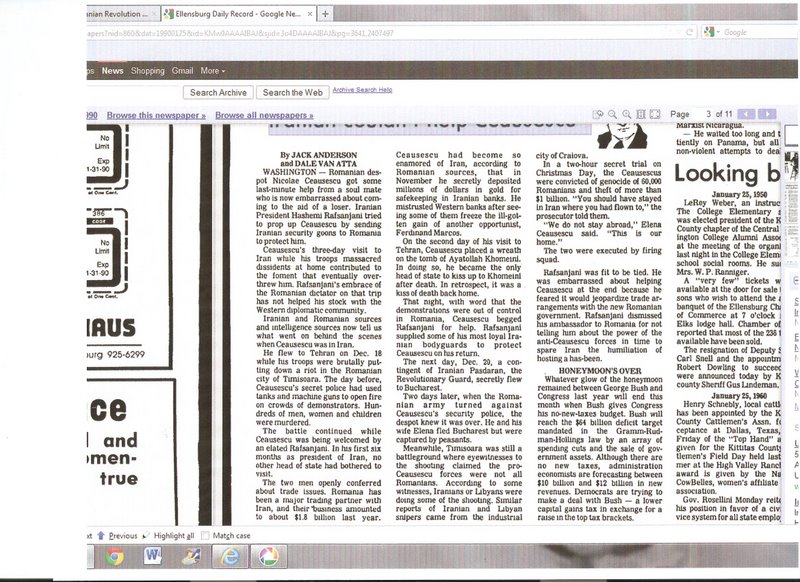
Jack Anderson and Dale Van Atta, “Iran Embarrassed by Ceausescu Visit,” The Washington Post, 17 January 1990, E17. (syndicated copy above) WASHINGTON — Romanian despot Nicolae Ceausescu got some help last-minute help from a soul mate who is now embarrassed about coming to the aid of a loser.  Iranian President Hashemi Rafsanjani tried to prop up Ceausescu by sending Iranian security goons to Romania to protect him.  Ceausescu’s three-day visit to Iran while his troops massacred dissidents at home contributed to the foment that eventually overthrew him.  Rafsanjani’s embrace of the Romanian dictator on that trip has not helped his stock with the Western diplomatic community. Iranian and Romanian sources and intelligence sources now tell us what went on behind the scenes when Ceausescu was in Iran. He flew to Tehran on Dec 18 while his troops were brutally putting down a riot in the Romanian city of Timisoara. The day before, Ceausescu’s secret police had used tanks and machine guns to open fire on crowds of demonstrators. Hundreds of men women and children were murdered. The battle continued while Ceausescu was being welcomed by an elated Rafsanjani. In his first six months as president of Iran, no other head of state had bothered to visit. The two men openly conferred about trade issues. Romania has been a major trading partner with Iran, and their business amounted to about $1.8 billion last year.  Ceausescu had become so enamored of Iran, according to Romanian sources, that in November he secretly deposited millions of dollars in gold for safekeeping in Iranian banks. He mistrusted Western banks after seeing some of them freeze the ill-gotten gain of another opportunist Ferdinand Marcos. On the second day of his visit to Tehran, Ceausescu placed a wreath on the tomb of Ayatollah Khomeini. In doing so, he became the only head of state to kiss up to Khomeini after death.  In retrospect, it was a kiss of death back home.  That night, with word that the demonstrations were out of control in Romania, Ceausescu begged Rajsanjani for help.  Rafsanjani supplied some of his most loyal Iranian bodyguards to protect Ceausescu on his return.  The next day, Dec 20, a contingent of Iranian Pasdaran, the Revolutionary Guard, secretly flew to Bucharest. Two days later, when the Romanian army turned against Ceausescu’s security police. the despot knew it was over.  He and his wife Elena fled Bucharest but were captured by peasants. Meanwhile, Timisoara was still a battleground where eyewitnesses to the shooting claimed the forces were not all Romanians.  According to some witnesses, Iranians or Libyans were doing some of the shooting. Similar reports of Iranian and Libyan snipers came from the industrial city of Craiova. In a two-hour secret trial on Christmas Day, the Ceausescus were convicted of genocide of 60,000 Romanians and theft of more than billion. “You should have stayed in Iran where you had flown to, the prosecutor told them. “We do not stay abroad,” Elena Ceausescu said. “This is our home.” The two were executed by firing squad. Rafsanjani was fit to be tied. He was embarrassed about helping Ceausescu at the end because he feared it would jeopardize trade arrangements with the new Romanian government. Rafsanjani dismissed his ambassador to Romania for not telling him about the power of the anti-Ceausescu forces in time to spare Iran the humiliation of hosting a has-been.

Petre Dumitru (cu un ofiter din Directia V-a), “Noi amanunte privind vizita lui Ceausescu in Iran,” Expres Magazin, nr. 9 (1991), p. 11.
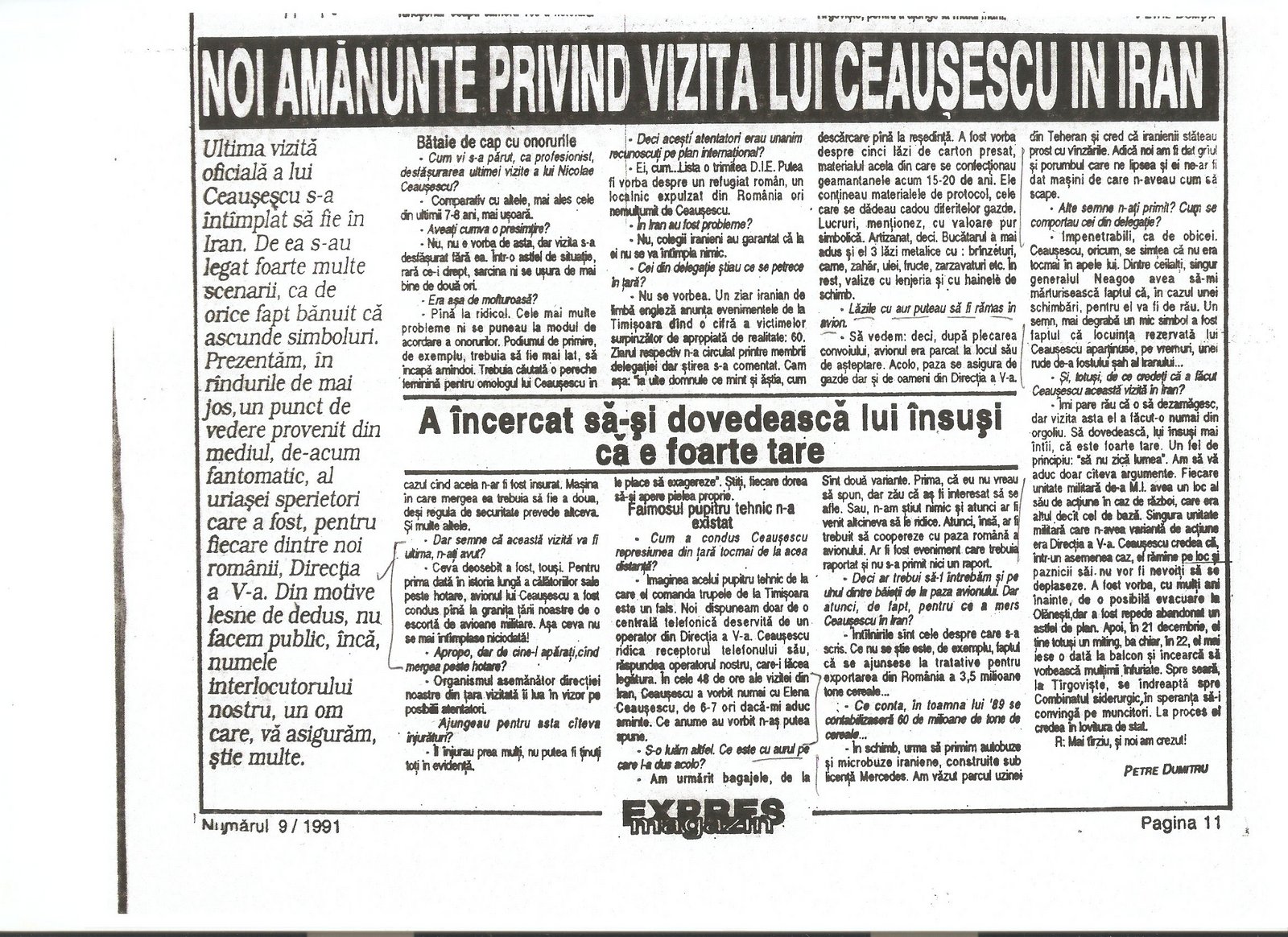
image0-001

Articles suggesting that Ceausescu had been sending gold to Switzerland for safekeeping, prior to the outbreak of the December 1989 events.
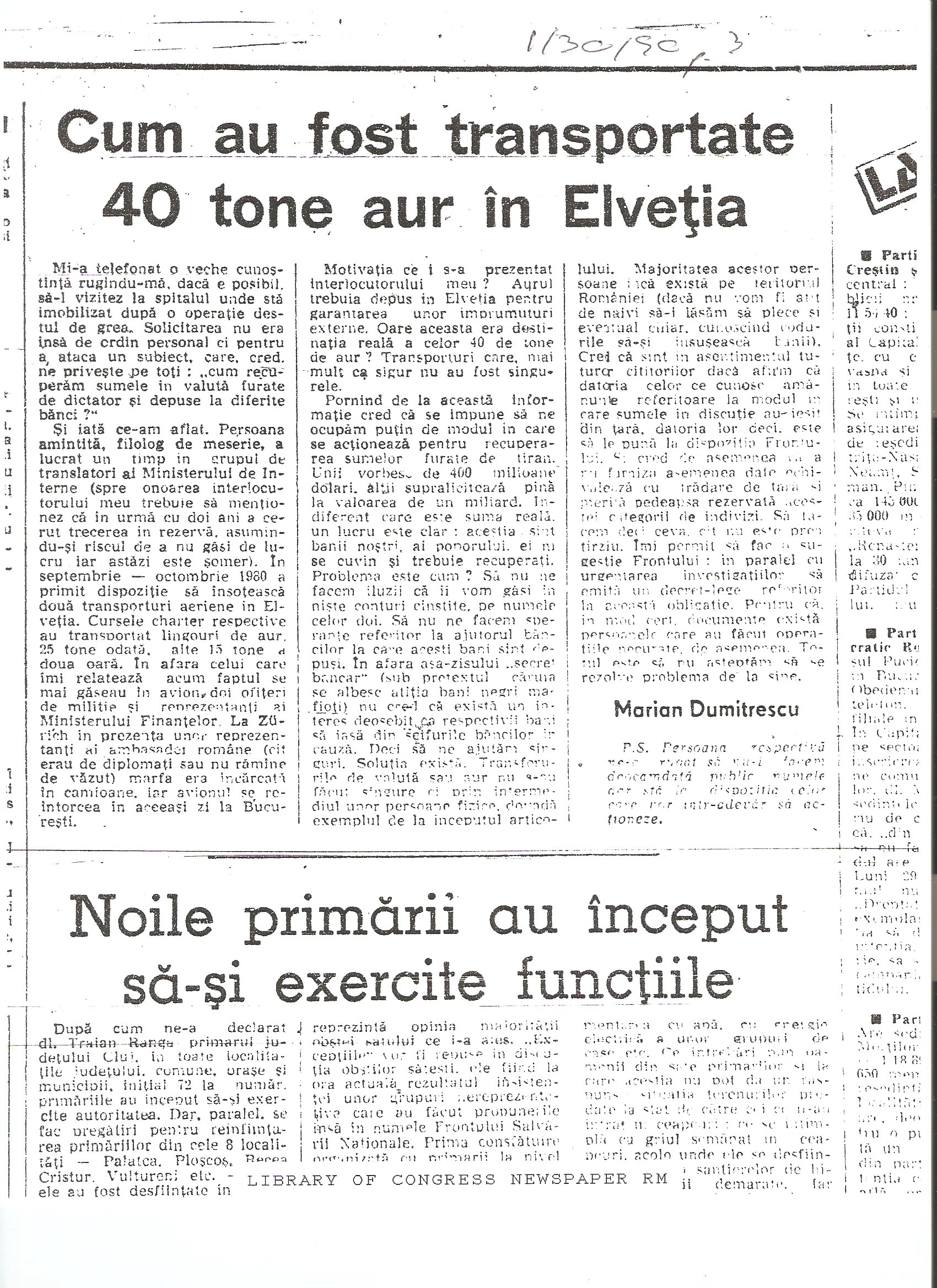
 

image0

Marian Dumitrescu, “Cum au fost transportate 40 tone aur in Elvetia,” Romania Libera (?), 30 ianuarie 1990, p. 3.

Dan Badea reported later in the summer of 1991 about Ceausescu’s efforts in the summer of 1989 to have the USLA move some of his gold to Switzerland.
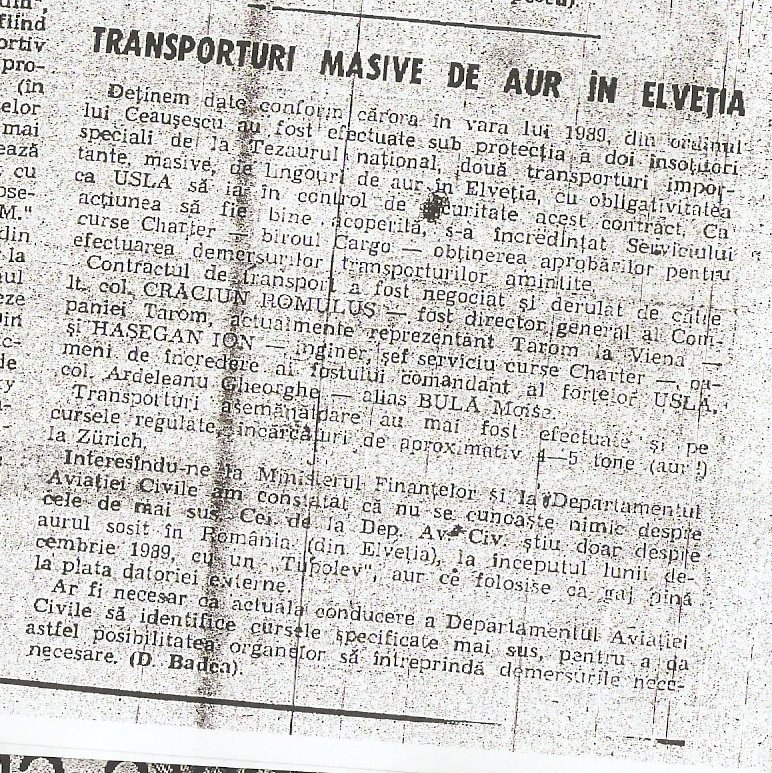
Dan Badea, “Transporturi Masive de Aur in Elvetia,” Expres nr. 23 (72) 11-17 June 1991, p. 16.
 

25 for 2014: 25 Things You Should Know about the Romanian Revolution on the 25th Anniversary of the Fall of Nicolae Ceausescu’s Communist Regime: #1 The Securitate Deny Foreign Instigation of the Timisoara Uprising

25 for 2014: 25 Things You Should Know about the Romanian Revolution on the 25th Anniversary of the Fall of Nicolae Ceausescu’s Communist Regime: #2 Shattered Glass: Securitate Vandalism to Justify Timisoara Crackdown

25 for 2014: 25 Things You Should Know about the Romanian Revolution on the 25th Anniversary of the Fall of Nicolae Ceausescu’s Communist Regime: #3 “Anti-terrorism” and Regime Repression

25 for 2014: 25 Things You Should Know about the Romanian Revolution on the 25th Anniversary of the Fall of Nicolae Ceausescu’s Communist Regime: #4 Timisoara Demonstrators Injured and Killed by Dum-Dum Bullets

25 for 2014: 25 Things You Should Know about the Romanian Revolution on the 25th Anniversary of the Fall of Nicolae Ceausescu’s Communist Regime: #5 Timisoara (Podul Decebal) Evidence Suggests only the Securitate Had Dum-Dum Bullets

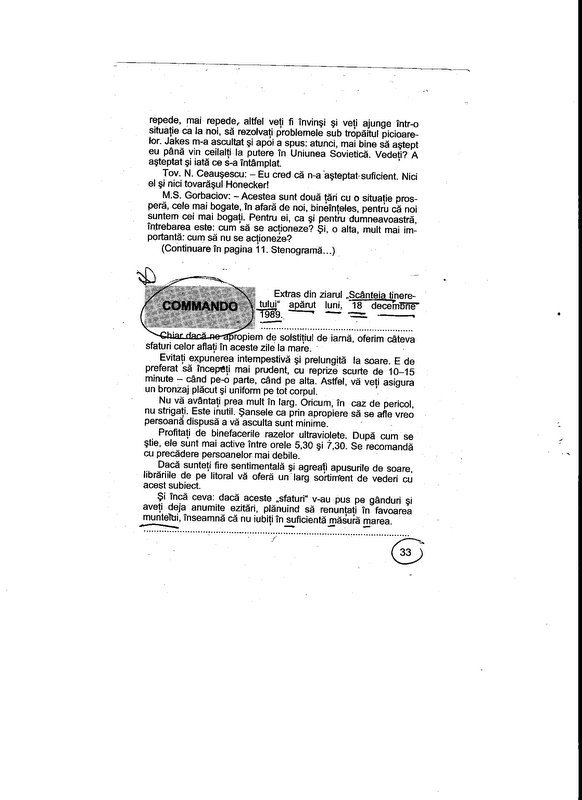
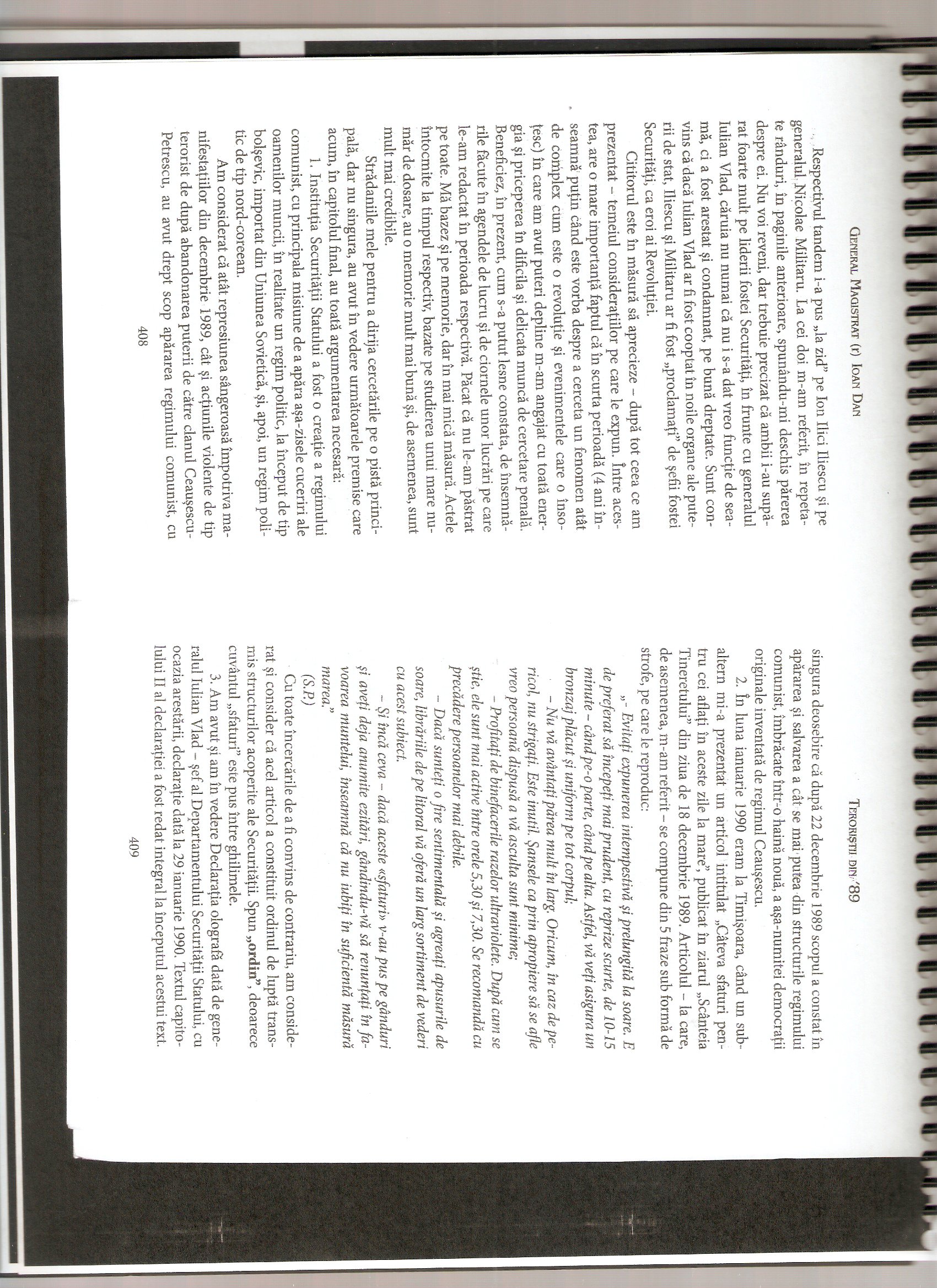
25 for 2014: 25 Things You Should Know about the Romanian Revolution on the 25th Anniversary of the Fall of Nicolae Ceausescu’s Communist Regime: #6 The Securitate Sends a Coded-Message to Its Undercovers in the Field (“Citeva sfaturi pentru cei aflati in aceste zile la mare,” Scinteia Tineretului, 18 December 1989)

Posted in decembrie 1989, raport final | Tagged: , , , , , , , , , , , , , | 2 Comments »

Hungarian and Romanian Defense Officials on the Violation of Hungarian Airspace by Securitate Helicopters in December 1989

Posted by romanianrevolutionofdecember1989 on September 16, 2014

(purely personal views, based on two decades of prior research and publications)

Hungarian Defense Minister Colonel General Ferenc Karpati and Romanian Defense Attache to Hungary Colonel Ioan Todericiu (see videos below) confirm below the violation of Hungarian airspace by Romanian helicopters during the Romanian Revolution of December 1989 that overthrew communist dictator Nicolae Ceausescu 25 years ago.  The context makes clear these were Securitate helicopters in the service of the Romanian secret police, the Securitate, and Nicolae Ceausescu.

Both at the time (Foreign Broadcast Information Service of the United States Government, FBIS-EEU-89-246, 26 December 1989) and 10 years later in 2000, Karpati acknowledged the violation of Hungarian airspace by Securitate helicopters.  He didn’t have any doubt, these were not just the alleged suppositions of Hungarian journalists, and more than a decade after the events–in other words, after a tsunami of Securitate-inspired revisionism in Romania–he continued to maintain they belonged to the Securitate…not to the Romanian military as the timeless deniers would have us believe…

related see: http://atomic-temporary-3899751.wpcomstaging.com/2013/10/15/ill-take-the-field-or-how-securitate-general-vlads-disinformation-illuminates-the-truth-the-uses-of-hungarians-revolutionaries-with-criminal-records-and-foreign-agents/

https://romanianrevolutionofdecember1989.com/wp-content/uploads/2012/01/image0-22.jpg

http://atomic-temporary-3899751.wpcomstaging.com/securitate-helicopters-transmitters-per-hungarian-defense-officials/

http://atomic-temporary-3899751.wpcomstaging.com/2013/09/14/lying-in-wait-securitate-director-general-vlad-in-the-cc-building-i/

Former USLA Captain Marian Romanescu admitted to journalist Dan Badea in 1991 that the USLA (special anti-terrorist unit) had its own helicopter force, thereby substantiating the suspicion of the unidentified revolutionary that the helicopters in question were “special”/”from a special unit.”  Thus, it is abundantly clear that Vlad’s claim that the Securitate had “just three helicopters” was a bald-faced lie.

image-12

A román forradalom és Magyarország, 1989. KÁRPÁTI Ferenc.  A román forradalom és Magyarország, 1989. Egy volt miniszter emlékezése. http://www.tankonyvtar.hu/en/tartalom/historia/00-04/ch10.html

Komoly gondot okozott a december végi sűrű ködös időben az alacsonyan repülő Securitate-csapatok helikoptereinek lokátorokkal történő bemérése. Ezek jelentették a magyar határvédelemre a legnagyobb veszélyt. Összesen öt alkalommal sértették meg az ilyen helikopterek a Magyar Köztársaság légterét.
The locational identification of low-flying Securitate unit helicopters caused real problems in the thick fog of late December.  These represented the greatest threat to the Hungarian border defense.  In total on five occasions such helicopters violated the airspace of the Hungarian Republic.
 
Other information from 2009 reinforces this claim:

Öt helikopter berepült Magyarországra

Ha a hadseregek közti fegyveres konfliktus esélyét minimálisnak is tekintette a magyar honvédség vezetése, a román belső feszültségekről a figyelmet elterelő provokációval továbbra is komolyan számoltak. Számos lakossági bejelentés érkezett, hogy hol láttak landoló román helikoptereket. Összesen öt légtérsértés valóban történt ezekben a napokban, helikopterek repültek át Romániából, de leszállás nélkül gyorsan vissza is tértek, ezért a magyar légierő állandó készültségben lévő MiG-21-esei nem is emelkedtek fel a betonról. Hogy csak tesztelték a rendszert, vagy besódródtak, az nem derült ki. De egy, a két évvel későbbi barcsi esethez hasonló ügynek – amikor a délszláv háború idején egy szerb gép kazettás bombát dobott le egy házra – a pattanásig feszült helyzetben komolyabb következményei lehettek volna.

Nem könnyítette meg a magyar honvédség dolgát, hogy 89 december közepén, végén szinte végig taknyos, ködös idő volt. Ezért Keleti György visszaemlékezése szerint külön őröket állítottak a laktanyákba, hogy füleljenek és ha különös zajra lesznek figyelmesek, azonnal jelentsék.

http://index.hu/belfold/1989/2009/12/22/megoldani_erdely_ugyet_ugyes-okosan/

The Romanian Defense Attache to Budapest at the time, Col. Ioan Todericiu, confirms here (in Romanian) that the Hungarian Chief of Staff notified him of the penetration of Hungarian airspace of the same number of helicopters–five–and that they were within range of anti-aircraft missile defense at Szolnok.  Todericiu was asked what the Hungarians should do.  His answer is revealing:  he left it up to the Hungarians.  Would he have done that if there were even the slightest chance that these had been helicopters of the Romanian military?  NO!  His answer–politically incorrect and dangerous after 1990 in Romania–confirms Karpati’s claim above, as clear as day.
Todericiu supported his answers in the above videos here:

Posted in decembrie 1989, raport final | Tagged: , , , , , , , , , | 1 Comment »

Nicolae Ghircoiaș, Colonel de Miliție, Director al Institutului de Criminalistică din Inspectoratul General al Miliției (IGM), decembrie 1989 – ianuarie 1990

Posted by romanianrevolutionofdecember1989 on July 26, 2014

(strictly personal view, as always, based on over two decades or prior research and publications, thank you)

image0-001

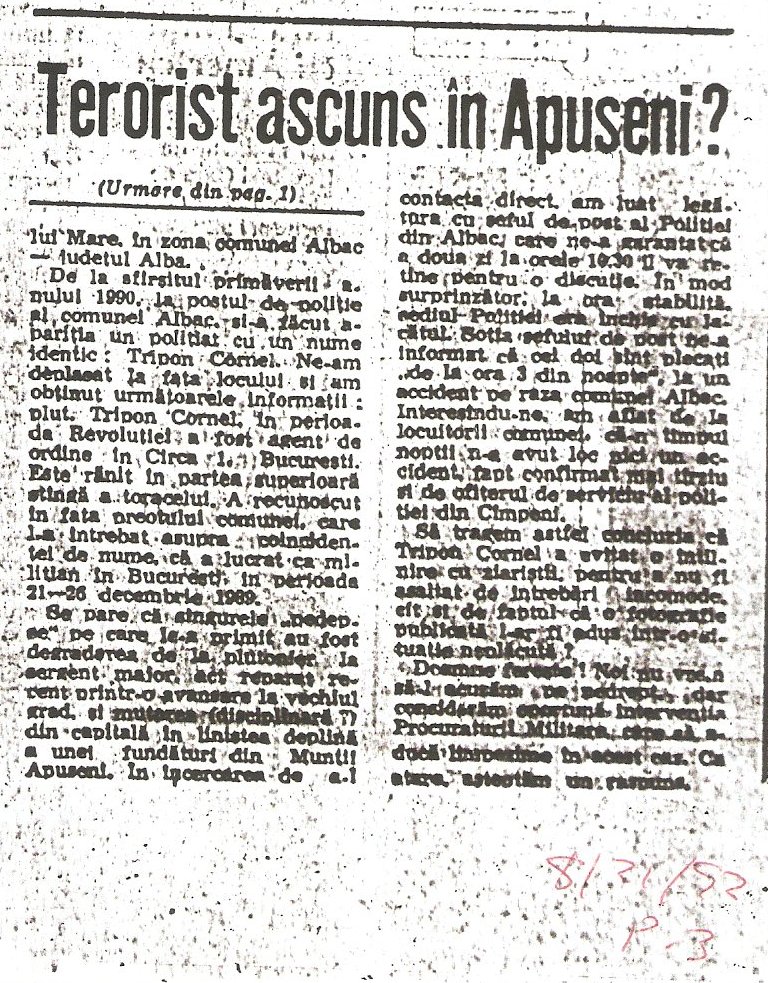
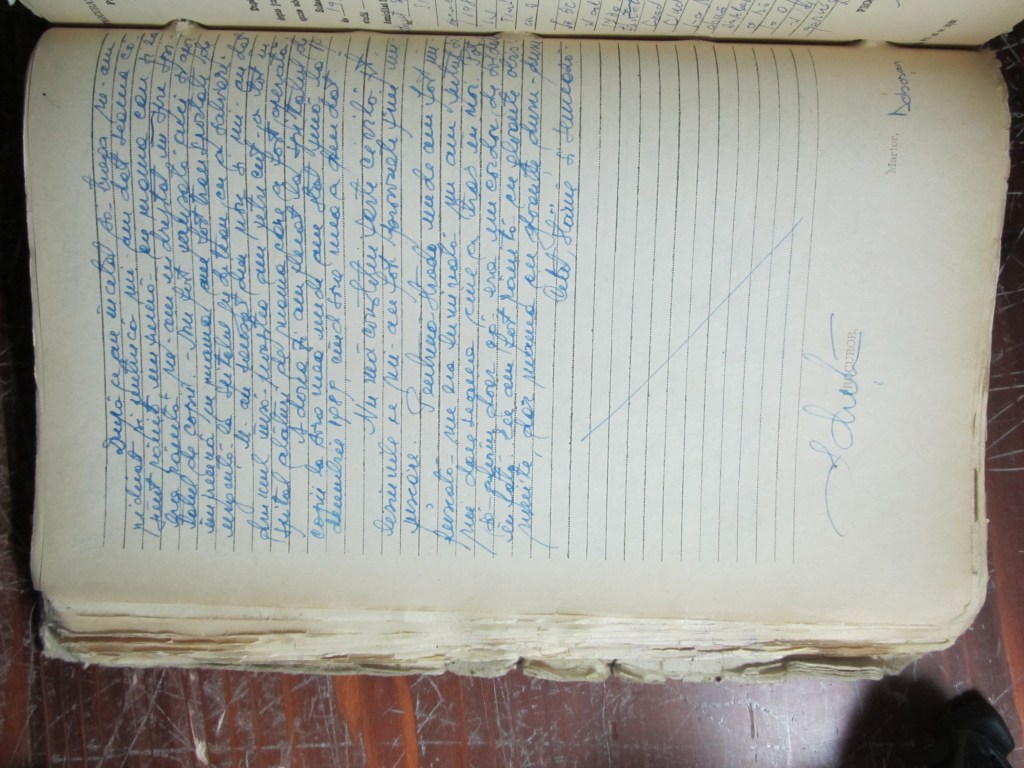
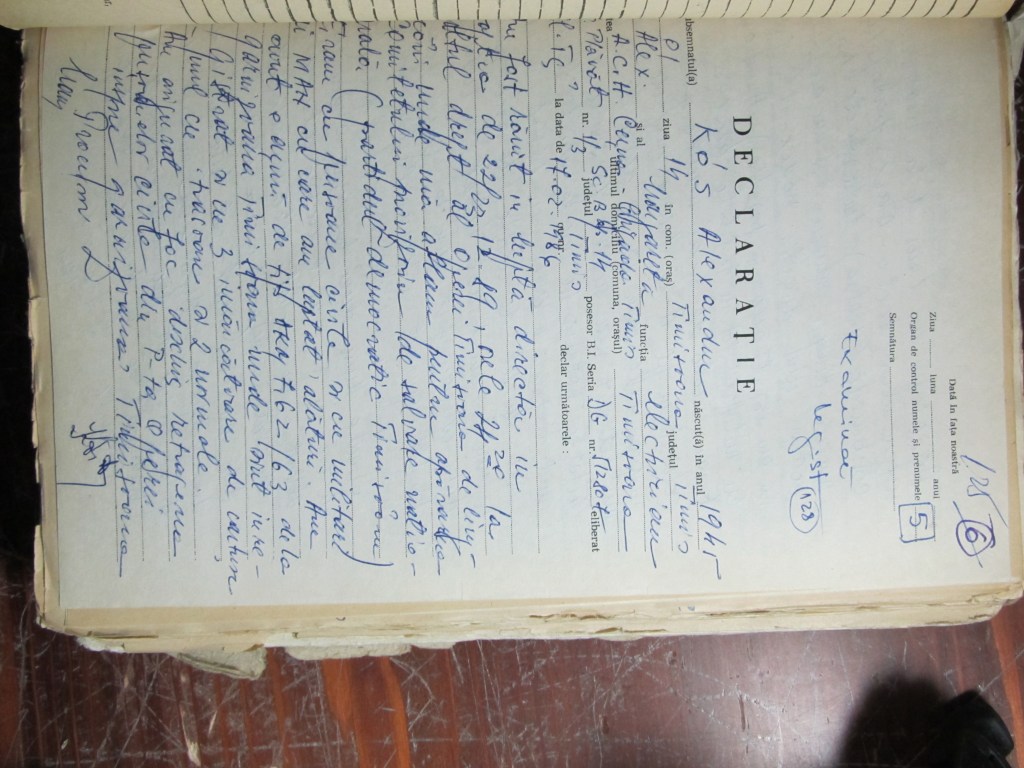
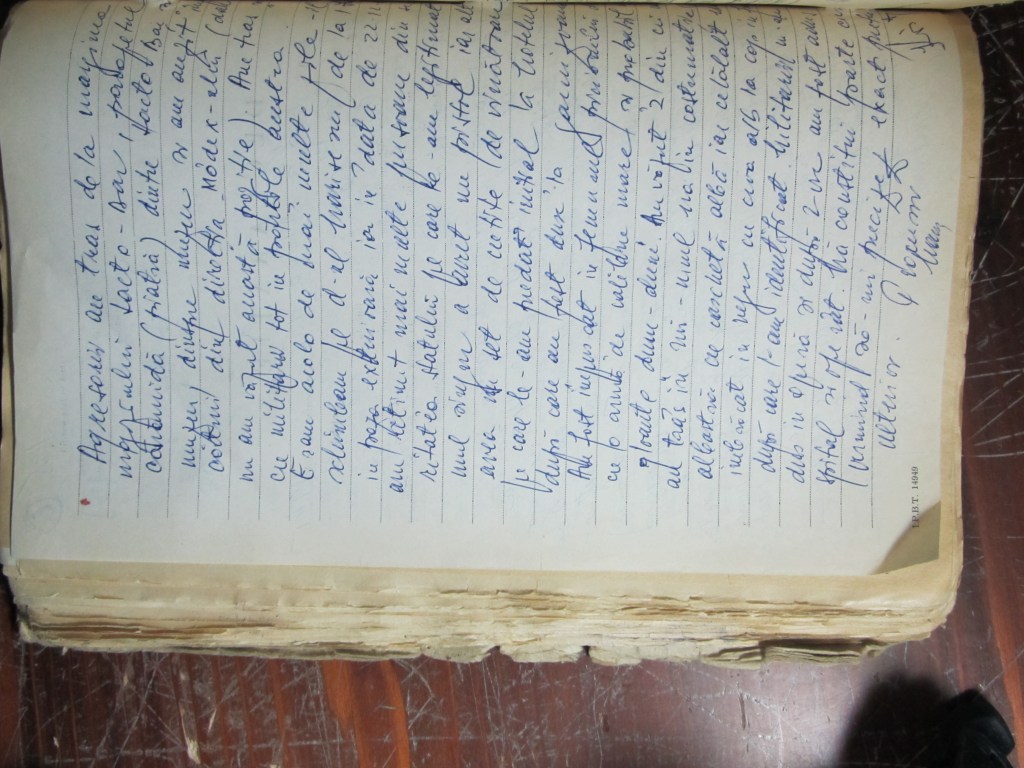
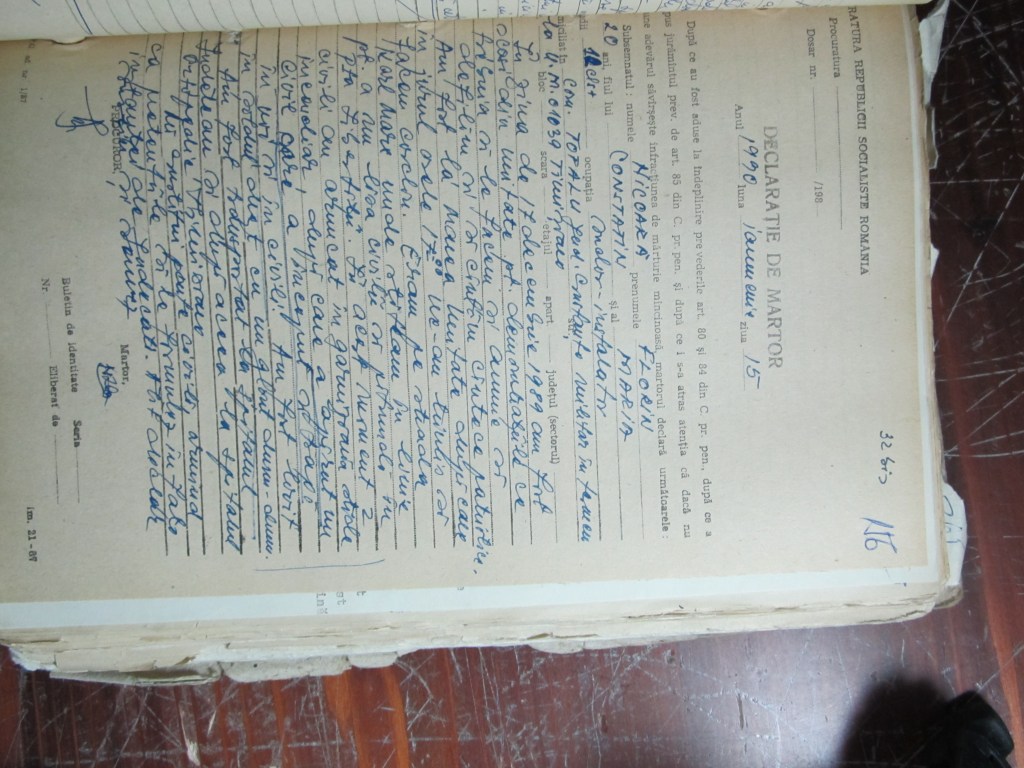
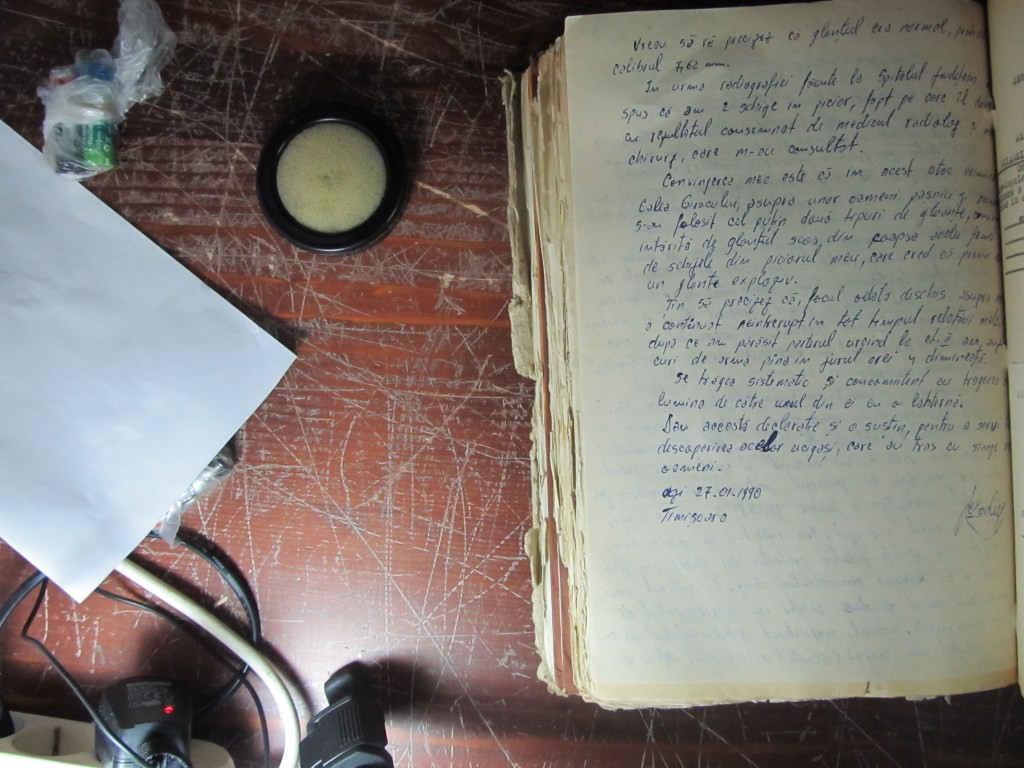
Confirm afirmatiilor medicului chirurg Nicolae Constantinescu, sus-numitul Tripon Cornel a fost ranit prin impuscare in zona hotel Negoiu din Bucuresti.  Medicii de spitalul Coltea au solicitat Procuraturii instrumentarea acestor cazuri.  Colonel Ghircoias, fost sef al directiei cercetari penale a Securitatii, i-a adunat pe toti indivizii care erau acuzati ca sint teroristii, facindu-i disparuti.

image0-003

Florin Mircea Corcoz si Mircea Aries, “Terorist ascuns in Apuseni?” Romania Libera , 21 august 1992, p. 1, p. 3.

for confirmation suggesting Cornel Tripon’s arrest under suspicion of being a “terrorist” (28 December 1989, Hotel Negoiu, Bucuresti) during the December 1989 events, see http://www.danbadea.net/wp-content/uploads/2009/12/img036.jpg ; for confirmation that Ghircoias himself was (later) (re-) arrested, see http://www.danbadea.net/wp-content/uploads/2009/12/img043.jpg .

for the suggestion that Tripon’s status as a member of the Militie was merely a cover mechanism see,

“La internarea in spital, militianul Cornel Tripon a prezentat un buletin pe care avea trecuta ca adresa de domiciliu str. Academiei 24. Aceeasi adresa de domiciliu (fictiv) era trecuta in buletinul mai multor ofiteri de la UM 0666. Militianul ranit a fost ridicat chiar a doua zi din spital si transportat, se pare, la o unitate spitaliceasca a Ministerului de Interne.”

from Romulus Cristea, 20 decembrie 2006, http://www.romanialibera.ro/special/reportaje/salvarile-nu-erau-pentru-raniti–80867

——————————————-

 elsewhere Dr. Nicolae Nae Constantinescu, chief surgeon at the Coltea Hospital, recounted Chircoias (sic Ghircoias)’s arrival and actions on 1-2 January 1990.

(English) Cited in The Romanian Revolution for Dum-Dums

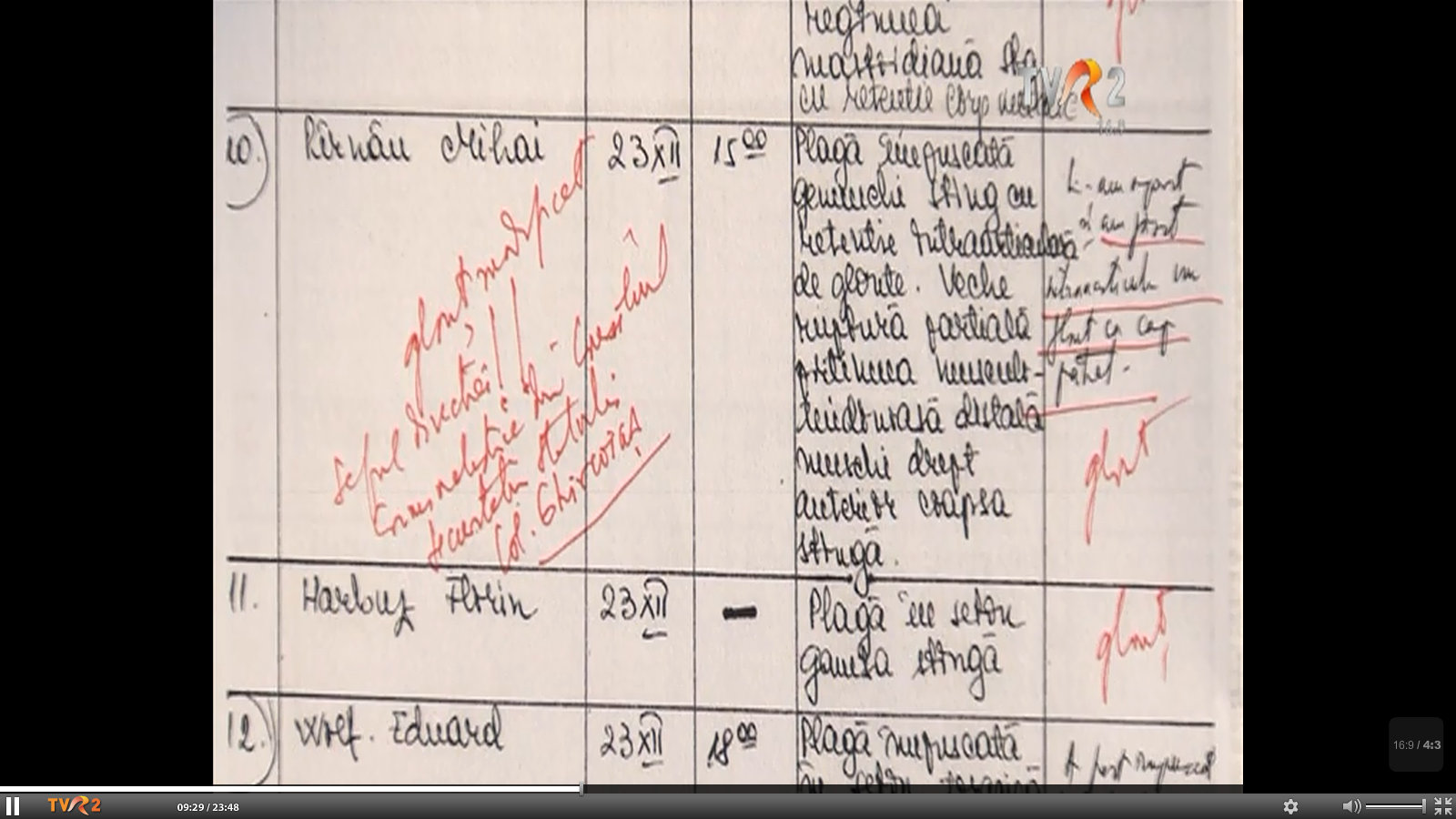
Dr. Nicolae Constantinescu, surgeon at Coltea Hospital: “I remember that on 1 or 2 January ’90 there appeared at the [Coltea] hospital a colonel from the Interior Ministry, who presented himself as Chircoias. He maintained in violent enough language that he was the chief of a department from the Directorate of State Security [ie. Securitate]. He asked that all of the extracted bullets be turned over to him. Thus were turned over to him 40 bullets of diverse forms and dimensions, as well as munition fragments. I didn’t hear anything back from Chircoias or any expert. Those who made the evidence disappear neglected the fact that there still exist x-rays and other military documents that I put at the disposition of the [Military] Prosecutor.”

( http://www.romanialibera.ro/a113826/revolutia-5-000-de-victime-nici-un-vinovat.html)

Screen Capture of a registry presented by Dr. Nicolae Nae Constantinescu in TVR documentary by Toma Roman Jr. mentioning an atypical bullet with cap (varf) retezat extracted from a patient on 23 December 1989 and later “collected” by Ghircoias.

Origin 7272014 112744 AM


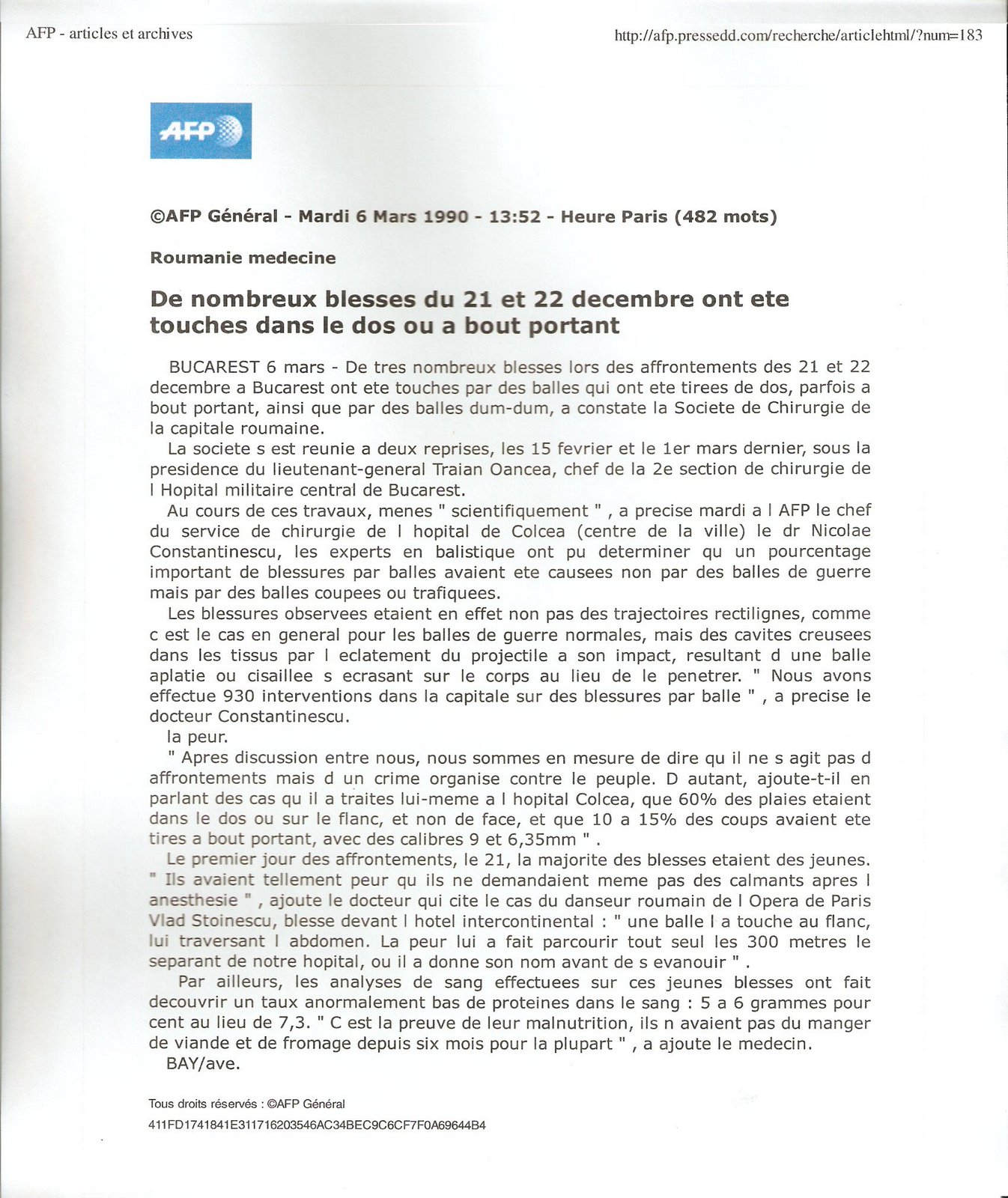
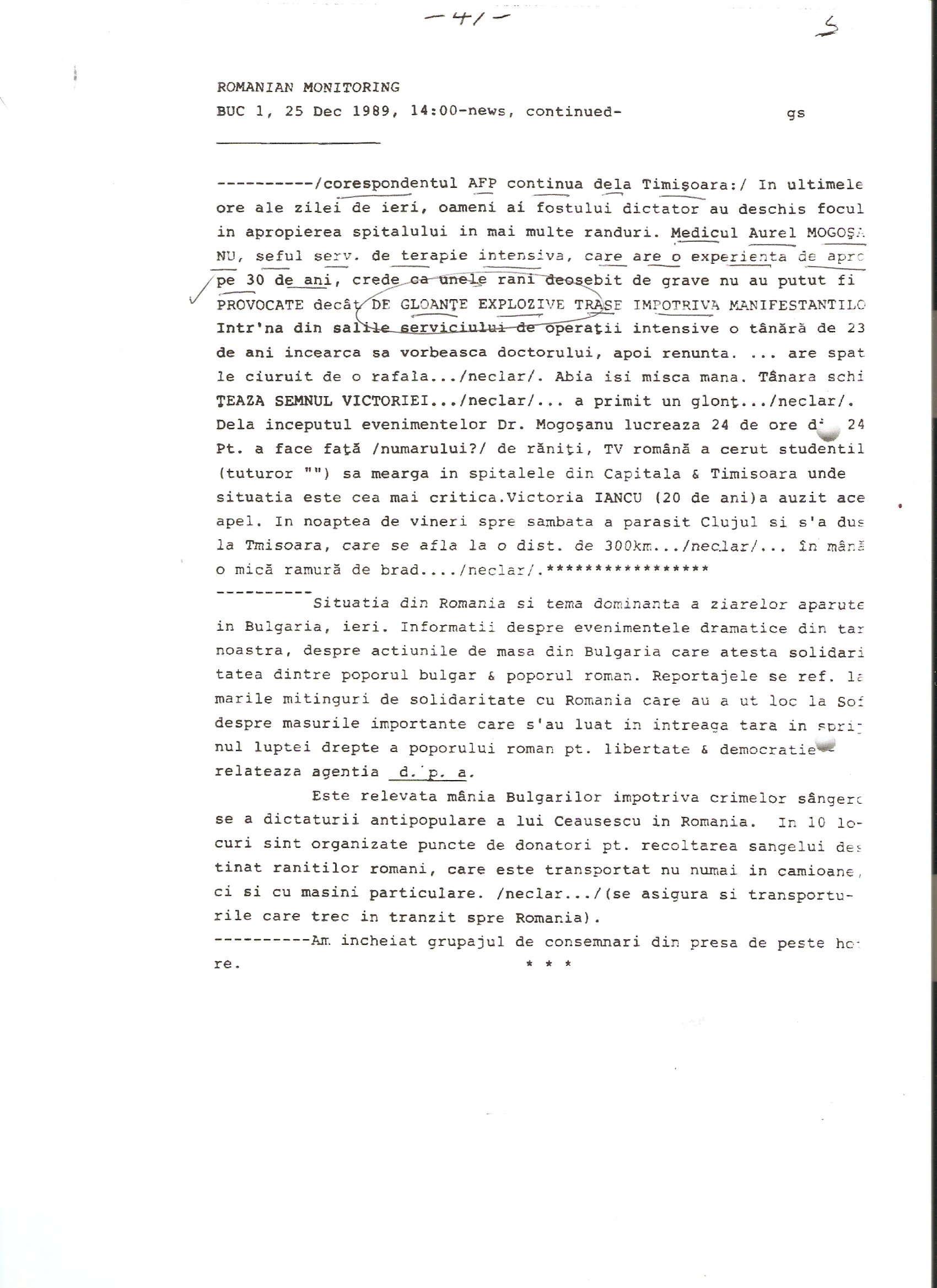
In early March 1990, Agence France Presse reported the declared findings of surgeons in Bucharest, attesting to the fact that many of those wounded on 21-22 December 1989 in Bucharest had been shot with exploding bullets, DUM-DUM bullets.  [Significantly, a slew of military prosecutors, among them General Dan Voinea, General Romeo Balan, and General Teodor Ungureanu have attempted to deceive Romanians in the years since by denying or avoiding mention of the existence and use of DUM-DUM munitions in December 1989.]

Lt. Gnl. Traian Oancea, chief of surgery in part of the Central Military Hospital in Bucharest, and Dr. Nicolae “Nae” Constantinescu, chief of surgery at the Coltea Hospital, discussed this at a meeting of the Society of Surgeons in Bucharest.


©AFP Général – Mardi 6 Mars 1990 – 13:52 – Heure Paris (482 mots)

Roumanie medecine
De nombreux blesses du 21 et 22 decembre ont ete touches dans le dos ou a bout portant
   BUCAREST 6 mars – De tres nombreux blesses lors des affrontements des 21 et 22 decembre a Bucarest ont ete touches par des balles qui ont ete tirees de dos, parfois a bout portant, ainsi que par des balles dum-dum, a constate la Societe de Chirurgie de la capitale roumaine.
   La societe s est reunie a deux reprises, les 15 fevrier et le 1er mars dernier, sous la presidence du lieutenant-general Traian Oancea, chef de la 2e section de chirurgie de l Hopital militaire central de Bucarest.
   Au cours de ces travaux, menes ” scientifiquement ” , a precise mardi a l AFP le chef du service de chirurgie de l hopital de Colcea (centre de la ville) le dr Nicolae Constantinescu, les experts en balistique ont pu determiner qu un pourcentage important de blessures par balles avaient ete causees non par des balles de guerre mais par des balles coupees ou trafiquees.
   Les blessures observees etaient en effet non pas des trajectoires rectilignes, comme c est le cas en general pour les balles de guerre normales, mais des cavites creusees dans les tissus par l eclatement du projectile a son impact, resultant d une balle aplatie ou cisaillee s ecrasant sur le corps au lieu de le penetrer. ” Nous avons effectue 930 interventions dans la capitale sur des blessures par balle ” , a precise le docteur Constantinescu.
   la peur.
   ” Apres discussion entre nous, nous sommes en mesure de dire qu il ne s agit pas d affrontements mais d un crime organise contre le peuple. D autant, ajoute-t-il en parlant des cas qu il a traites lui-meme a l hopital Colcea, que 60% des plaies etaient dans le dos ou sur le flanc, et non de face, et que 10 a 15% des coups avaient ete tires a bout portant, avec des calibres 9 et 6,35mm ” .
   Le premier jour des affrontements, le 21, la majorite des blesses etaient des jeunes. ” Ils avaient tellement peur qu ils ne demandaient meme pas des calmants apres l anesthesie ” , ajoute le docteur qui cite le cas du danseur roumain de l Opera de Paris Vlad Stoinescu, blesse devant l hotel intercontinental : ” une balle l a touche au flanc, lui traversant l abdomen. La peur lui a fait parcourir tout seul les 300 metres le separant de notre hopital, ou il a donne son nom avant de s evanouir ” .
   Par ailleurs, les analyses de sang effectuees sur ces jeunes blesses ont fait decouvrir un taux anormalement bas de proteines dans le sang : 5 a 6 grammes pour cent au lieu de 7,3. ” C est la preuve de leur malnutrition, ils n avaient pas du manger de viande et de fromage depuis six mois pour la plupart ” , a ajoute le medecin.
   BAY/ave.
Tous droits réservés : ©AFP Général
411FD1741841E311716203546AC34BEC9C6CF7F0A69644B4

Bucuresti, Spitalul Coltea:  “Pe data de 1 sau 2 ianuarie 1990 a aparut la spital un colonel Chircoias, de la Interne cred”

Prof. univ. dr. Nicolae (Nae) Constantinescu, membru al Academiei de Medicina si al Academiei Oamenilor de Stiinta. Medic chirug la Spitalul Coltea.Dosarele revolutiei -  "Nici acum nu-mi dau seama cum am putut sa operez nonstop timp de trei zile"

– Ce s-a intamplat cu cartusele extrase chirurgical din ranile pacientilor? Erau niste probe care ar fi putut lamuri anumite aspecte…
Pe data de 1 sau 2 ianuarie 1990 a aparut la spital un colonel Chircoias, de la Interne cred. Acest Chircoias a fost judecat si condamnat mai tarziu intr-un proces la Timisoara in legatura cu revolutia.

Chircoias, care sustinea sus si tare ca ar conduce nu stiu ce sectie criminalistica din Directia Securitatii Statului, a cerut gloantele extrase. Acestea, vreo 40 la numar, i-au fost date de un medic care era secretar de partid la IMF. Tin minte ca erau gloante de diverse forme, de diferite dimensiuni.

Procurori timorati

– Ati sesizat Parchetul Militar? Ati cerut sa se faca o ancheta in legatura cu cei impuscati la revolutie?
– Bineinteles, am anuntat Parchetul, am cerut o ancheta. De exemplu, cand le-am aratat apartamentul de unde s-a tras la revolutie, de la etajul 4, de la cinematograful “Luceafarul”, procurorii mi-au zis ca au facut verificarile si au depistat ca acolo era o locuinta conspirativa a Securitatii si atat. In anul 1992 am semnat alaturi de alti medici, profesori universitari, chirurgi de renume, un memoriu pe care l-am adresat Parchetului General si prin care am solicitat sa se faca o ancheta cu privire la ranitii si mortii prin impuscare. Neprimind nici un raspuns, dupa sase luni m-am dus la Parchet sa intreb ce se intampla. Mi s-a raspuns ca se lucreaza, mi-au aratat doua-trei avize puse pe colturile cererii si atat. Unul dintre procurori m-a luat cu el pe un coridor si mi-a spus ca “are copil, are nevasta, e foarte complicat…”. Ma intreba pe mine ce sa mai faca… Am izbucnit, le-am spus ca nu sunt un om care sa fie, asa, aburit cu una, cu doua. Le-am aratat radiografiile celor impuscati, le-am aratat gloante in ficat. Radiografiile existau, nu erau inventiile mele, nu mi se nazarise asa, dintr-o data sa cer ancheta! Le-am spus ca niste oameni doresc sa afle adevarul si ca cei care au semnat memoriul catre Parchet nu sunt niste persoane oarecare, ci medici cu experienta, somitati in materie. Degeaba am solicitat expertize balistice sau alte cercetari, degeaba am prezentat acte, documente, radiografii, lucrari. Nu se dorea sa se faca o ancheta serioasa.

extras din articolul lui Romulus Cristea
Miercuri, 20 Decembrie 2006 Romania Libera

Nici acum nu-mi dau seama cum am putut sa operez nonstop timp de trei zile

http://www.romanialibera.ro/special/reportaje/–nici-acum-nu-mi-dau-seama-cum-am-putut-sa-operez-nonstop-timp-de-trei-zile—80869

http://www.romanialibera.ro/aldine/history/dosarul-revolutia-1989-142100

—————————————————-

For a discussion of Ghircoias’s activities in Timisoara before 22 December, please see the following:

and in the journal Mortality, no. 15 (1) 2010, Marius Rotar, “The Red Mask of Death:  The Evil Politics of Cremation in Romania in December 1989.”  pp. 1- 17.

—————————————————-

discussion in one of my previous publications:

Bullets, Lies, and Videotape:

The Amazing, Disappearing Romanian Counter-Revolution of December 1989[1]

by Richard Andrew Hall, Ph.D.

Standard Disclaimer:  All statements of fact, opinion, or analysis expressed are those of the author and do not reflect the official positions or views of the Central Intelligence Agency (CIA) or any other U.S. Government agency.  Nothing in the contents should be construed as asserting or implying U.S. Government authentication of information or CIA endorsement of the author’s views.  This material has been reviewed by CIA to prevent the disclosure of classified information. [Submitted 19 November 2009; PRB approved 15 December 2009]

I am an intelligence analyst for the Central Intelligence Agency.  I have been a CIA analyst since 2000.  Prior to that time, I had no association with CIA outside of the application process.

Part I

His name was Ghircoias…Nicolae Ghircoias.

And in Romania in December 1989 and January 1990, Nicolae Ghircoias was a very busy man.

We know, officially, of Nicolae Ghircoias’ actions in the last days leading up to the fall of the regime of communist dictator Nicolae Ceausescu on 22 December 1989, as a result of what he and others said at a trial later in January 1990.  In bureaucratic parlance, Colonel Nicolae Ghircoias, was the Director of the Criminalistic Institute of the Militia’s [Police’s] General Inspectorate.   In colloquial terms, in December 1989 it appears that this amounted to being something of a “cleaner,” or “fixer,” the kind of guy who could make unpleasant things—such as corpses—go away, without leaving a trace.

After regime forces opened fire on anti-regime protesters in the western city of Timisoara on 17 and 18 December 1989, Colonel Ghircoias was dispatched to recover the corpses of those with gunshot wounds from the city’s morgue.  The unautopsied cadavers of 43 demonstrators were stolen from the morgue in the dead of night and then transported to the outskirts of the capital Bucharest by refrigerated truck, where they were cremated.[2] Ghircoias was also in charge of collecting and destroying the hospital records and any other incriminating material that might indicate not just the death, but also the life of those who had perished—the official explanation for the disappearance of these citizens was to be that they had fled the country, thus taking their documents with them.  In other words, Colonel Nicolae Ghircoias’ job was primarily, it seems, the destruction of evidence.[3]

COLONEL GHIRCOIAS MAKES THE ROUNDS OF BUCHAREST’S HOSPITALS

Unofficially, we also know of Colonel Ghircoias’ exploits after the Ceausescu regime collapsed on 22 December 1989, exploits for which he was not charged at his trial and for which he has never been charged.  Of the 1,104 people killed and 3,352 people injured during the December 1989 bloodshed, 942 of them were killed and 2,251 wounded after Nicolae and Elena Ceausescu fled power on 22 December 1989.  At the time, personnel of the communist regime’s secret police—known as the Securitate—and allied foreign mercenaries fighting to restore the Ceausescu regime—collectively christened “the terrorists”—were thought to be the primary source behind the post-22 December bloodshed.

It was in this context, that doctors from Bucharest’s various main hospitals recall Colonel Ghircoias’ sudden, unannounced appearances during the last days of December 1989 and first days of January 1990.  Professor Andrei Firica of the Bucharest “Emergency Hospital” recounted in a 2004 media interview largely the same details he had conveyed to the press in the summer of 1990.  According to Firica, some 15 to 20 suspected terrorists had been interned at the “Emergency Hospital” in varying states of medical distress.  He says he made a small file of the medical situations of these patients.  A Militia colonel, whom he later was to see in [prisoner] stripes on TV as a defendant in the Timisoara trial—i.e. fairly clearly Ghircoias—came one day and counseled him to keep nosy foreign reporters away from the beds of the “terrorists,” stating ominously that “these were just terrorist suspects and he [Dr. Firica] didn’t want to wake up one day on trial for having defamed someone”!   The colonel later came and loaded the wounded terrorist suspects onto a bus and off they went.  Firica maintains the files he kept on the terrorist suspects “of course, disappeared.”  He noted, however, that he asked his son, who had studied theater and film at university, to film the terrorists tied down to the hospital beds, and he claims he gave copies of this cassette to the Procuracy.[4]

[5]

[In viewing these photos, witness what Constantin Fugasin recounted in “Unde ne sint teroristii?” Zig-Zag, in 1990, based in part on an interview with Dr. Andrei Firica:

At the Emergency Hospital 13 suspected of being what we call terrorists were interned.  Among these a few were definitely foreign, even though all had Romanian papers.  Two clearly had ‘Mongoloid’ (‘Asiatic’) features (one stated that his mother was Romanian, while his father was from Laos), while four others were Arabs.  Nevertheless, they spoke Romanian very well.  Doctor Nicolae Staicovici, who worked a time in Egypt and who treated them for a time spoke with them.  At a moment, he formed a question in Arabic.  One of the injured responded to him perfectly.  All were well-built, one was a ‘mountain of a man.’  He said nothing, although he probably had terrible pains.  There were also two terrorists who were not wounded.  One arrived at night, under some pretext.  Those on guard suspecting him, immobilized him.  He had on three layers of clothing and several ids.  They tied him to the stretcher, but although he appeared rather frail, at a given moment he ripped the restraints off.[6]]

[7]

[Dr. Andrei Firica, 2004:  From a diagnostic perspective, those who maintain that the terrorists didn’t exist are telling an outrageous lie…In the Emergency Hospital, people were brought who were shot with precision in the forehead, from behind, just a few yards in the crowd of demonstrators, such people who did this can only be called terrorists…[8]]


Dr. Nicolae Constantinescu, chief surgeon at the Coltea Hospital, also was paid the honor of a visit by Colonel Ghircoias during these days:

I remember that on 1 or 2 January ’90 there appeared at the [Coltea] hospital a colonel from the Interior Ministry, who presented himself as Chircoias.  He maintained in violent enough language that he was the chief of I-don’t-know-what “criminalistic” department from the Directorate of State Security [ie. Securitate].  He asked that all of the extracted bullets be turned over to him.  Thus were turned over to him 40 bullets of diverse forms and dimensions, as well as munition fragments.

To the question of whether he informed the Military Procuracy?

Of course, I announced the Prosecutor’s Office, and requested an investigation [of those shot in the revolution].  For example, when I showed them the apartment from where there were was shooting during the revolution, on the fourth floor of the ‘Luceafarul’ cinema, the prosecutors told me that they sought to verify it and uncovered that there was a Securitate ‘safehouse’ there and that was it.

In 1992, I signed along with other doctors, university professors, renowned surgeons, a memorandum [see page 5 (below) for an article apparently linked to the memorandum] addressed to the Prosecutor General in which we requested an investigation regarding the wounded and dead by gunfire.  Not having received any response, after six months I went there to ask what was going on.  They told me they were working on it, and they showed me two or three requests and that was it.  One of the prosecutors took me into the hallway and told me “I have a child, a wife, it is very complicated.”  He asked me what I thought I was doing…I lit back into him, I told him I wasn’t just any kind of person to be blown off.

I showed him the x-rays of those who were shot, I showed him the bullets in the liver.  The x-rays exist, they weren’t my invention, I didn’t just dream all this up to demand an investigation!  I told them that there are some people who wish to find out the truth and they signed a memo to the Procuracy and they aren’t just anybody, but doctors with experience, experts in the field.  In vain, we requested ballistics tests and other research, in vain we presented forms, documents, x-rays, studies.  They did not want to undertake a serious investigation.[9]

[1]For some of my previous publications on this topic, see Richard Andrew Hall:

Hall 2008 http://homepage.mac.com/khallbobo/RichardHall/pubs/romrevfordumdums042108tk.html,

Hall 2006 http://homepage.mac.com/khallbobo/RichardHall/pubs/Voineaswar091706.html,

Hall 2005 http://homepage.mac.com/khallbobo/RichardHall/pubs/checkmate040405.html,

Hall 2004 http://homepage.mac.com/khallbobo/RichardHall/pubs/doublespeak%20romania%203-2004.html,

Hall 2002 http://homepage.mac.com/khallbobo/RichardHall/pubs/romania%20securitate%205-2002.html,

Richard Andrew Hall, “Theories of Collective Action and Revolution:  Evidence from the Romanian Transition of December 1989,” Europe-Asia Studies 2000, no. 6 (September 2000).

Richard Andrew Hall, “The Uses of Absurdity:  The ‘Staged-War’ Theory and the Romanian Revolution of December 1989,” East European Politics and Societies vol 13, no. 3 (Fall 1999) (University of California Berkeley Press).

[2] For a good discussion of this in English, which explains how cremation practices were  at odds with Romanian burial traditions, see the article entitled “The Red Mask of Death:  The Evil Politics of Cremation in Romania 1989,” in the journal Mortality, no. 15 (1).

[3]For more information online, see, for example, http://ro.wikipedia.org/wiki/Nicolae_Ghircoia%C5%9F, http://ro.wikipedia.org/wiki/Opera%C5%A3iunea_Trandafirul, http://www.romanialibera.ro/a51078/cine-a-organizat-furtul-cadavrelor-din-morga-spitalului-judetean.html, http://www.timisoara.com/newmioc/53.htm, http://www.timisoara.com/newmioc/67.htm. Even the 1994 SRI report admits that confusion surrounding the identity of those who were cremated stems from Ghircoias’ burning—after the flight of the Ceausescus on 22 December—of all relevant documents he had seized from the Timisoara county hospital http://www.ceausescu.org/ceausescu_texts/revolution/raportul_sri11.htm.  Thus, it seems appropriate to say Ghircoias’ job involved making things disappear…

[4]Professor Andrei Firica, interview by Florin Condurateanu, “Teroristii din Spitalul de Urgenta,” Jurnalul National, 9 March 2004, online edition, cited in Hall, “Orwellian…Positively Orwellian” http://homepage.mac.com/khallbobo/RichardHall/pubs/Voineaswar091706.html. For similar accounts, see Florin Mircea Corcoz si Mircea Aries, “Terorist ascuns in Apuseni?” Romania Libera, 21 August 1992, p. 1–“Colonelul Ghircoias, former director of the Securitate’s penal investigative unit, brought together the individuals accused of being terrorists and made them disappear”; Andreea Hasnas, “Reportajul unui film cu TERORISTI,” Expres, no. 10 (6-12 aprilie 1990), p. 5; Constantin Fugasin, “Unde ne sint teroristii?” Zig-Zag, 1990.

[5] Screen capture from http://www.dailymotion.com/video/x7rp6b_revolutia-romana-2225-dec1989-part_shortfilms posted by Alexandru2006.

[6] Significantly this video is in direct contradiction and contests the claims of the Sorin Iliesiu who maintains that “General Dan Voinea has said clearly:  The terrorists did not exist.  Those who seized power lied to protect the real criminals….The diversion of the ‘terrorists’ has been demonstrated by [the] Justice [System], not a single terrorist being found among the dead, wounded or arrested  (Sorin Iliesiu, “18 ani de la masacrul care a deturnat revoluţia anticomunistă,” 21 December 2007, http://www.romanialibera.com/articole/articol.php?step=articol&id=6709).  For a discussion, see Hall 2008.

[7] Screen capture from http://www.dailymotion.com/video/x7rp6b_revolutia-romana-2225-dec1989-part_shortfilms posted by Alexandru2006.

[8] Professor Andrei Firica, interview by Florin Condurateanu, “Teroristii din Spitalul de Urgenta,” Jurnalul National, 9 March 2004, online edition.
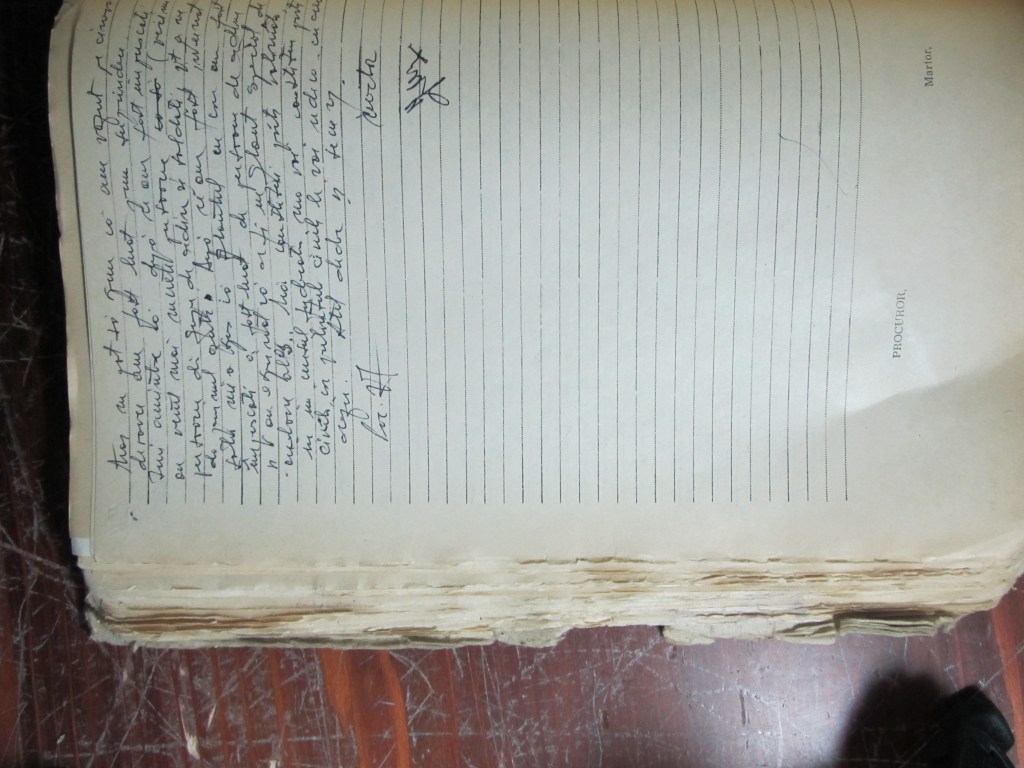
[9] Dr. Professor Nicolae Constantinescu, interview by Romulus Cristea, “”Nici acum nu-mi dau seama cum am putut sa operez nonstop timp de trei zile,” Romania Libera, 20 December 2006, online edition.


Posted in decembrie 1989, raport final | Tagged: , , , , , , , | 2 Comments »
What would it have looked like if Nicolae Ceausescu’s Securitate executed a plan to counter an invasion…but the invaders never came? (III)

Posted by romanianrevolutionofdecember1989 on January 24, 2014

Answer:  Well, you would have something that looked suspiciously similar to what actually happened in December 1989 in Romania…

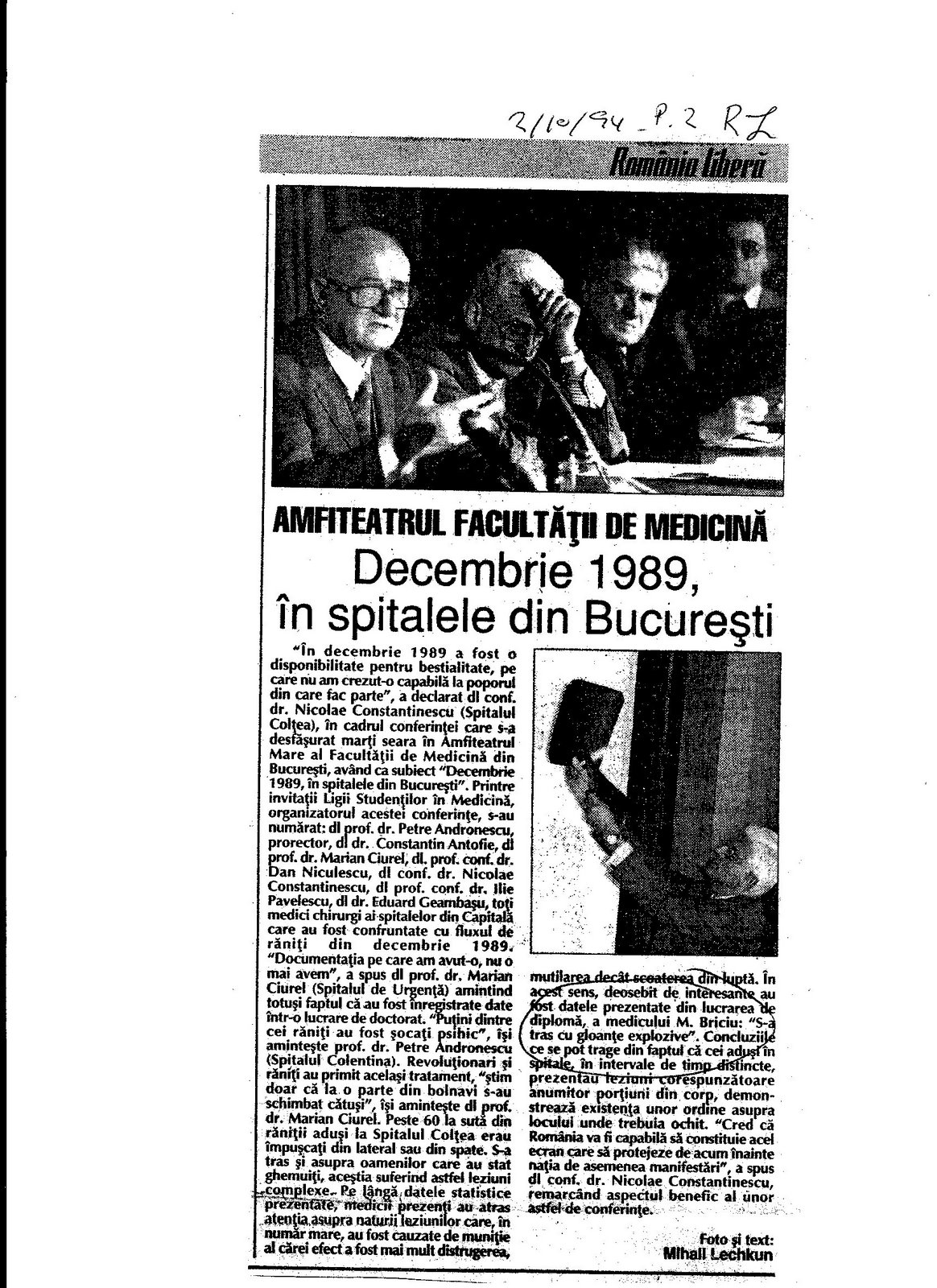
(strictly personal viewpoint as always; I began my analysis of what have been characterized as the “strange,” “counter-intuitive,” and “irrational” character of the “terrorist” actions in December 1989 in Chapter 8 my Ph.D. dissertation (defended December 1996), which can be found here:  http://atomic-temporary-3899751.wpcomstaging.com/rewriting-the-revolution-1997-chapter-8-unsolving-december/ and continued it in articles such as the following in Europe-Asia Studies from 2000, which can be found here, http://atomic-temporary-3899751.wpcomstaging.com/theories-of-collective-action-and-revolution-2000/ ; xeroxes below are from 1994 and 1997, Bucharest and Cluj)

http://atomic-temporary-3899751.wpcomstaging.com/2014/01/19/what-would-it-have-looked-like-if-nicolae-ceausescus-securitate-executed-a-plan-to-counter-an-invasion-but-the-invaders-never-came-i/

http://atomic-temporary-3899751.wpcomstaging.com/2014/01/21/what-would-it-have-looked-like-if-nicolae-ceausescus-securitate-executed-a-plan-to-counter-an-invasionbut-the-invaders-never-came-ii/

ALL THE RUSSIAN TOURISTS, WHERE DO THEY ALL COME FROM?…WHERE DO THEY ALL BELONG?

A modest proposal:  In order to operate in a country under foreign occupation and to confuse the foreign occupier, the “nuclee de rezistenta” would need equipment that could pass for that of the occupier.  In the previous episode, we saw this possibility with the weather balloon, with Russian writing, but a fictitious address in Budapest.  Since Nicolae Ceausescu was afraid most of all of a Soviet invasion, the “resistance fighters” would need to be able to appear or pass themselves off as Soviets/Russians themselves.  Is it then possible that the former Securitate’s insistence upon mentioning the presence of convoys of male Soviet tourists in Russian cars with Soviet plates is an admission–stripped out of context–that these cars and their occupants were part of the “resistance war” so long planned for and which we have seen awarded a critical, though until now not publicized, role to the Securitate?

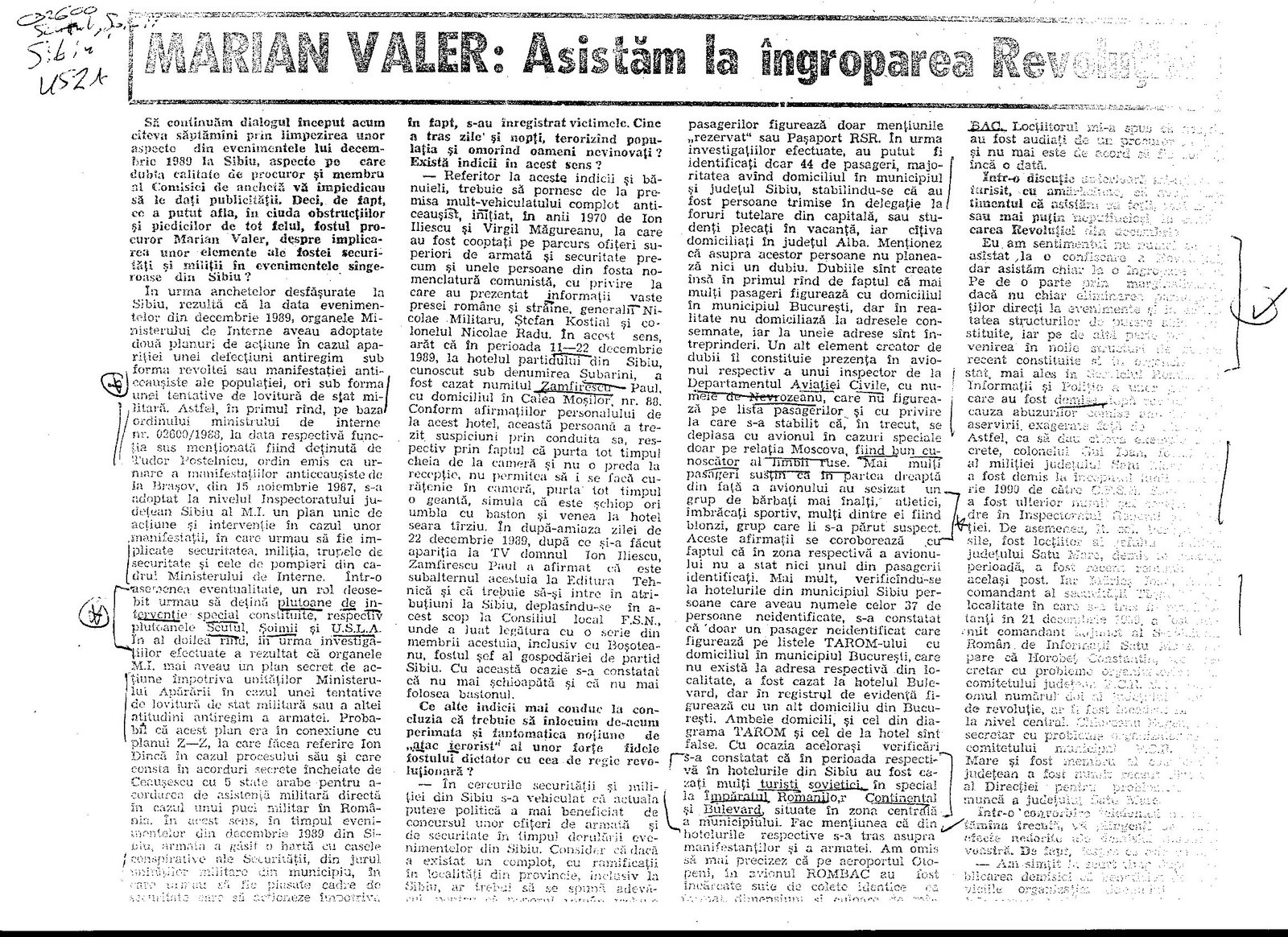
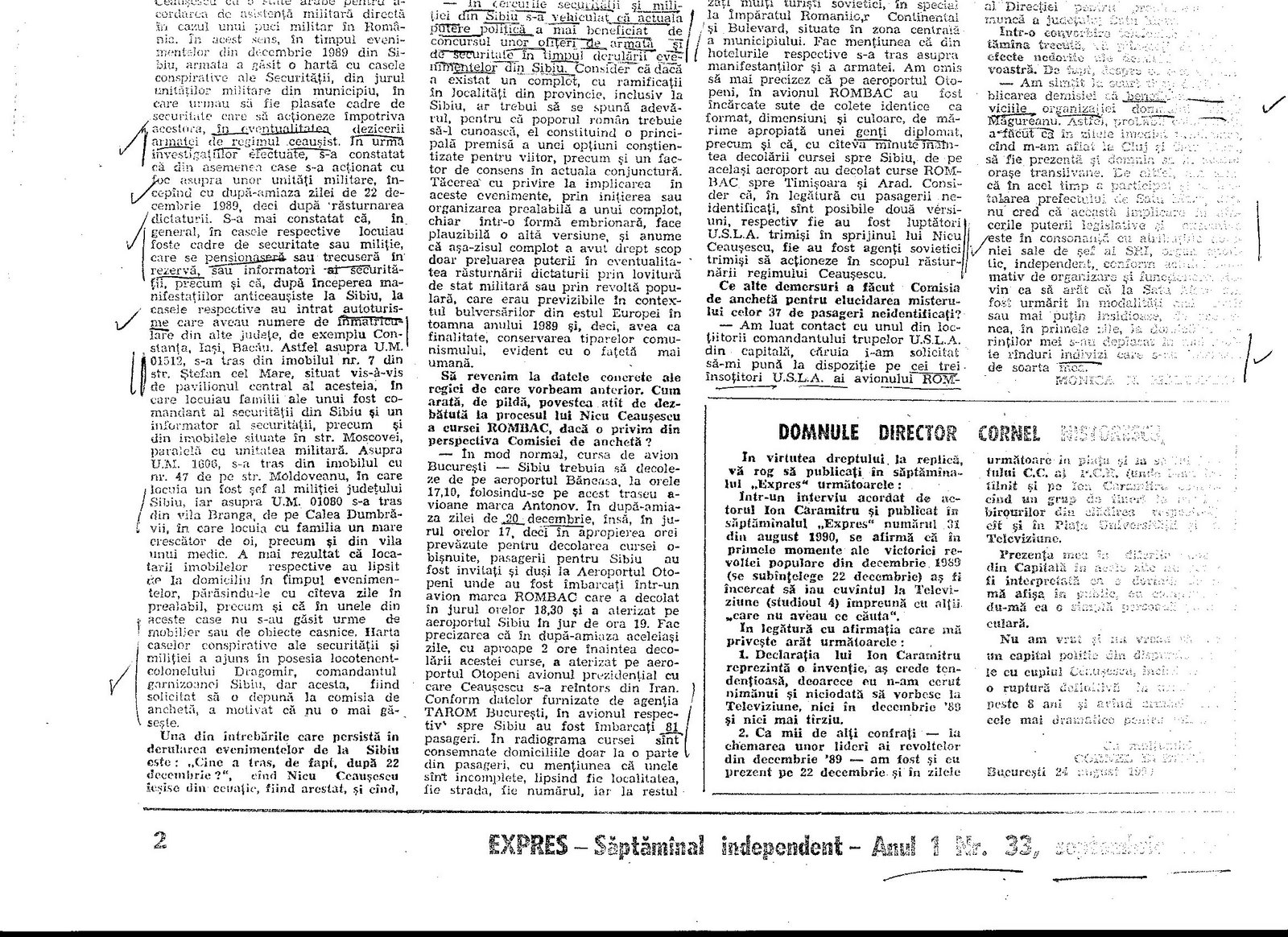
Valer Marian’s revelations in September 1990 are VERY interesting in this regard…

Monica N. Marginean:  Sa revenim la datele concrete ale regiei de care vorbeam anterior.  Cum arata, de pilda, povestea atit de dezbatuta la procesul lui Nicu Ceausescu a cursei ROMBAC, daca o privim din perspectiva Comisiei de ancheta?

fostul procuror Marian Valer:  In mod normal, cursa de avion Bucuresti-Sibiu trebuia sa decoleze de pe aeroportul Baneasa, la orele 17,10 folosindu-se pe acest traseu avioane marca Antonov.  In dupa-amiaza zilei de 20 decembrie, insa, in jurul orelor 17, deci in apropierea orei prevazute pentru decolarea cursei obisnuite, pasagerii pentru Sibiu au fost invitati si dusi la Aeroportul Otopeni unde au fost imbarcati intr-un avion marca ROMBAC care a decolat in jurul orelor 18,30 si a aterizat pe aeroportul Sibiu in jur de ora 19.  Fac precizarea ca in dupa-amiaza aceleiasi zile, cu aproape 2 ore inaintea decolarii acestei curse, a aterizat pe aeroportul Otopeni avionul prezidential cu care Ceausescu s-a reintors din Iran. Conform datelor furnizate de agentia TAROM Bucuresti, in avionul respectiv spre Sibiu au fost imbarcati 81 pasageri.  In radiograma cursei sint consemnate domiciile doar la o parte din pasageri, cu mentiunea ca unele sint incomplete, lipsind fie localitatea, fie strada, fie numarul, iar la restul pasagerilor figureaza doar mentiunile ,rezervat’ sau Pasaport RSR.  In urma investigatiilor efectuate, au putut fi identificati doar 44 de pasageri, majoritatea avind domiciliul in municipul si judetul Sibiu, stabilindu-se ca au fost persoane trimise in delegatie la foruri tutelare din capitala, sau studenti plecati in vacanta, iar citiva domiciliati in judetul Alba.  Mentionez ca asupra acestor persoane nu planeaza nici un dubiu.  Dubiile sint create insa in primul rind de faptul ca mai multi pasageri figureaza cu domiciliul in municipiul Bucuresti, dar in realitate nu domiciliaza la adresele consemnate, iar la unele adrese sint intreprinderi.  Un alt element creator de dubii il constituie prezenta in avionul respectiv a unui inspector de la Departmentul Aviatiei Civile, cu numele de Nevrozeanu, care nu figureaza pe lista pasagerilor si cu privire la care s-a stabilit ca, in trecut, se deplasa cu avionul in cazuri speciale doar pe relatia Moscova, fiind un bun cunoscator al limbii ruse.  Mai multi pasageri sustin ca in partea dreapta din fata a avionului au sesizat un grup de barbati, mai inalti, atletici, imbracati sportiv, multi dintre ei fiind blonzi, grup care li s-a parut suspect.  Aceste afirmatii se coroboreaza cu faptul ca in zona respectiva a avionului nu a stat nici unul din pasagerii identificati.  Mai mult, verificindu-se la hotelurile din municipiul Sibiu persoane care aveau numele celor 37 de persoane neidentificate, s-a constatat ca doar un pasager neidentificat care figureaza pe listele TAROM-ului cu domiciliul in municipiul Bucuresti, care nu exista la adresa respectiva din localitate, a fost cazat la hotelul Bulevard, dar in registrul de evidenta figureaza cu un alt domiciliu din Bucuresti.  Ambele domicilii, si cei din diagrama TAROM si cel de la hotel sint false.  Cu ocazia acelorasi verificari s-a constatat ca in perioada respectiva in hotelurile din Sibiu au fost cazati multi turisti sovietici, in special la Imparatul Romanilor, Continental, si Bulevard, situate in zona centrala a municipiului.  Fac mentiunea ca din hotelurile respective s-a tras asupra manifestantilor si a armatei. Am omis sa precizez ca pe aeroportul Otopeni, in avionul ROMBAC au fost incarcate sute de colete identice ca format, dimensiuni si culoare, de marime apropriata unei genti diplomat, precum si ca, cu citeva minute inaintea decolarii cursei spre Sibiu, de pe acelasi aeroport au decolat curse ROMBAC spre Timisoara si Arad.  Consider ca, in legatura cu pasagerii neidentificati, sint posibile doua versiuni, respectiv sa fie au fost luptatorii U.S.L.A. trimisi in sprijinul lui Nicu Ceausescu, fie au fost agenti sovietici trimisi sa actioneze in scopul rasturnarii regimului Ceausescu.

Monica N. Marginean:  Ce alte demersuri a facut Comisia de ancheta pentru elucidarea misterului celor 37 de pasageri neidentificati?

Marian Valer:  Am luat contact cu unul din loctiitorii comandamentului trupelor U.S.L.A. din capitala, caruia i-am solicitat sa-mi puna la dispozitie pe cei trei insotitori U.S.L.A. ai avionului ROMBAC.  Loctiitorul mi-a spus ca acestia au fost audiati de un procuror militar si nu mai este de acord sa fie audiati inca o data.

Monica M. Maginean:  “MARIAN VALER:  Asistam la ingroparea Revolutiei,” Expres nr. 33, septembrie 1990, p. 2.

http://www.rferl.org/content/article/1342503.html (Submitted via the CIA publication review process January 2002, cleared without changes March 2002)

Reports Archive

East European Perspectives: April 17, 2002

17 April 2002, Volume  4, Number  8

THE SECURITATE ROOTS OF A MODERN ROMANIAN FAIRY TALE: THE PRESS, THE FORMER SECURITATE, AND THE HISTORIOGRAPHY OF DECEMBER 1989

By Richard Andrew Hall

Part 2: ‘Tourists Are Terrorists and Terrorists are Tourists with Guns…’ *

HOW THE ‘TOURISTS’ ENTRY INTO THE HISTORIOGRAPHY OF DECEMBER 1989 PARALLELS THE EXIT OF THE SECURITATE
In commenting in August 1990 upon how the details of the state’s case against him had changed since early in the year, Nicolae Ceausescu’s son, Nicu, ironically highlighted how Securitate forces had begun to fade away from the historiography of the December 1989 events. In the August 1990 interview from his prison cell with Ion Cristoiu’s “Zig-Zag” (mentioned above), Nicu discusses the “tourists” for which he was asked to find accommodations in the context of a group of mysterious passengers who had arrived by plane from Bucharest on the evening of 20 December 1989. We know that in the period immediately following these events, the then-military prosecutor, Anton Socaciu, had alleged that these passengers from Bucharest were members of the Securitate’s elite USLA unit (Special Unit for Antiterrorist Warfare) and were responsible for much of the bloodshed that occurred in Sibiu during the December events (for a discussion, see Hall, 1996). In August 1990, however, Nicu wryly observed:

“…[T]he Military Prosecutor gave me two variants. In the first part of the inquest, they [the flight’s passengers] were from the Interior Ministry. Later, however, in the second half of the investigation, when the USLA and those from the Interior Ministry began, so-to-speak, to pass ‘into the shadows,’ — after which one no longer heard anything of them — they [the passengers] turned out to be simple citizens…” (interview with Nicu Ceausescu in “Zig-Zag,” no. 20, 21-27 August 1990).

The impact of this “reconsideration” by the authorities could be seen in the comments of Socaciu’s successor as military prosecutor in charge of the Sibiu case, Marian Valer (see Hall 1997a, pp. 314-315). Valer commented in September 1990 that investigations yielded the fact that there were 37 unidentified passengers on board the 20 December flight from Bucharest and that many of the other passengers maintained that “on the right side of the plane there had been a group of tall, athletic men, dressed in sporting attire, many of them blond, who had raised their suspicions.” While investigations revealed that during this time there “were many Soviet tourists staying in Sibiu’s hotels,” they also established that “military units were fired upon from Securitate safehouses located around these units as of the afternoon of 22 December, after the overturning of the Ceausescu regime.” He thus carefully concludes:

“As far as the unidentified passengers are concerned, there are two possible variants: Either they were USLA fighters sent to defend Nicu Ceausescu, or they were Soviet agents sent to act with the intent of overthrowing the Ceausescu regime” (“Expres,” no. 33, September 1990).

Thus, as the “tourists” began to enter the historiography of the December 1989 events, so the Securitate — specifically the USLA — began to disappear.

http://portalulrevolutiei.ro/forum/index.php?topic=3.615

Re: @ REVOLUTIA SIBIU 1989 @
« Reply #615 on: March 08, 2010, 15:31:24 PM »

Fac apel la oricine care a fost in seara de 21 spre 22 (ora 11,30-11,50) pe strada(actuala)Revolutiei, sau a vazut autoturismele parcate vis-sa vis de fosta Brutarie Nesciuc trei albe si una rosu inchis “Lada”. Va intreb daca cele 11 persoane imbracate cu scurta albastre tip jeans,  pantaloni deschisi la culoare, doi cu caciula de blana, trei cu caciula de lana impletita de culoare inchisa, si restul cu capul gol care au intors autoturismele parcate din capatul strazii si incendierea acestora? Statura lor era atletica? Cine a mai vazut apoi aceste persoane (acest gen) in afara de Piatza Mare din 21 decembrie ora 11,30 cand l-au protejat pe domnul care a iesit in fatza scutierilor cu copilul ridicat pe maini? (in dreptul Casei Albastre)
Aceleasi persoane au fost si in data de 21 decembrie la ora 9 in fata intrarii in magazinul Dumbrava, cand au “jenat” fara nici o teama scutierii si politistii care incercau sa prinda persoanele care fugeau prin magazin…Mai apelez la locatarii Blocului de garsoniere “turn” din coltul Calea Dumbravii-Milea, sa ne trimita o informatie cu intamplarile din 23-25 de la etajul 7-8, cu persoanele in combinezon de culoare inchisa care au coborat pe partea dinspre magazin din balcon in balcon, inclusiv despre persoana decedata, daca are legatura cu acel incident.O alta intrebare extrem de importanta: stie cineva cine a organizat “filtrele” de pe strazile Sibiului?Va multumesc
O precizare: Autoturismele erau parcate pe str Dobrun inspre str. Berariei Era pe trotoarul brutariei particulare (Nescuc sau Cibu, nu mai stiu cum se chema)

Re: @ REVOLUTIA SIBIU 1989 @
« Reply #623 on: March 11, 2010, 14:16:55 PM »

Acesti emanati, aceste lichele, nu-si puteau face jocurile, acapararea puterii totale, precum si inaintasii lor Dej si Ceausescu, decat prin forta represiunii armate. Parte din armata a reactionat pasnic, datorita onor ofitzeri care au dovedit mai multa logica, parte din armata a jucat rolul de dusman al romanilor. La Sibiu, avem tot mai multe date care intaresc teoria ca Dragomir a fost teroristul Nr. 1 in acele zile, ajutat si de grupul USLA trimis de la Bucuresti la Sibiu, pentru protectia lui NC, si care s-au reantors la “locul faptei” dupa ce l-a pus pe Nicu in siguranta. Ei au fost aceia care au comis executiile din Piatza Mare in ziua de 21 decembrie ora 11,45 cu primele victime ucise sau ranite. Au fost repartizati in patru puncte ale pietii: In podul Casei Albastre, in podul actualei Primarii, in podul de deasupra Tunelului Generalului si in podul de deasupra magazinului Moda. De aici, au deschis foc inspre demonstranti. Au deschis foc si pe data de 22 decembrie inspre hotelul Imparatul Romanilor din acelasi pod de deasupra Tunelului Generalului care avea corespondent cu celelalte poduri dinspre magazinul Covorul. Aceste grupe ale USLA nu aveau insemne de grad sau arma, nu purtau boneta militara si aveau la dispozitie doua microbuze ale unitatii 01512 care i-a transportat in tot acest timp. Un grup al USLA era incepand din ziua de 21 decembrie ora 07 la sediul Judetenei de partid, ocupand garajul din curtea din sapate cu munitie si armament special. Se poate descoperi foarte repede, numele persoanelor care au fost trimise la SIBIU cu Rombacul in dupa-amiaza zilei de 20 decembrie, ca urmare a convorbirilor indelungate purtate de Nicu si Bucuresti, despre demonstratia anuntata pentru dimineata zilei de 21 decembrie de la Mag Dumbrava. In timpul convorbirii telefonice, in biroul lui Nicu se afla Traian Popsa, fostul director de la IJIM Sibiu, maiorul Dragomir, seful Garzilor judetene Pescaru, secretar al CJPCR Sibiu si Niculae Hurubean, prim secretar la Alba care se afla in trecere prin Sibiu. Aceste trupe USLA au purtat alternativ, combinezoane negre, uniforma militara sau haine civile…

————————————————————————————————————————————

Perhaps it should thus no be so surprising, that of all the people to talk with a former “KGB agent” in Romania, it was Sorin Rosca Stanescu, former USLA collaborator:

HOW THE ‘TOURIST’ MYTH NEVERTHELESS GAINED MAINSTREAM CREDIBILITY AND ACCEPTANCE
How, then, did the “tourist” myth gain credibility and acceptance in the Romanian press, given its rather obvious pedigree in the remnants of the Ceausescu regime, especially among former high-ranking Securitate officers and others most in need of an alibi/diversion to save their careers and avoid the possibility of going to jail? Although the reference to “tourists” during the December events probably entered the lexicon of mainstream reporting on the Revolution as early as April 1990 — not insignificantly, first in the pages of Ion Cristoiu’s weekly “Zig-Zag,” it appears — it was in particular journalist Sorin Rosca Stanescu who gave the theme legitimacy in the mainstream press.

Without specifying the term “tourists” — but clearly speaking in the same vein — Stanescu was probably the first to articulate the thesis most precisely and to tie the Soviet angle to it. In June 1990 in a piece entitled “Is The Conspiracy of Silence Breaking Down?” in the sharply anti-government daily “Romania libera,” Stanescu wrote:

“And still in connection with the breaking down of the conspiracy of silence, in the army there is more and more insistent talk about the over 4,000 Lada cars with two men per car that traveled many different roads in the days before the Revolution and then disappeared” (“Romania libera,” 14 June 1990).

Stanescu’s article was vigorously anti-FSN and anti-Iliescu and left little doubt that this thesis was part of the “unofficial” history of the December events, injurious to the new leaders, and something they did not wish to see published or wish to clarify.

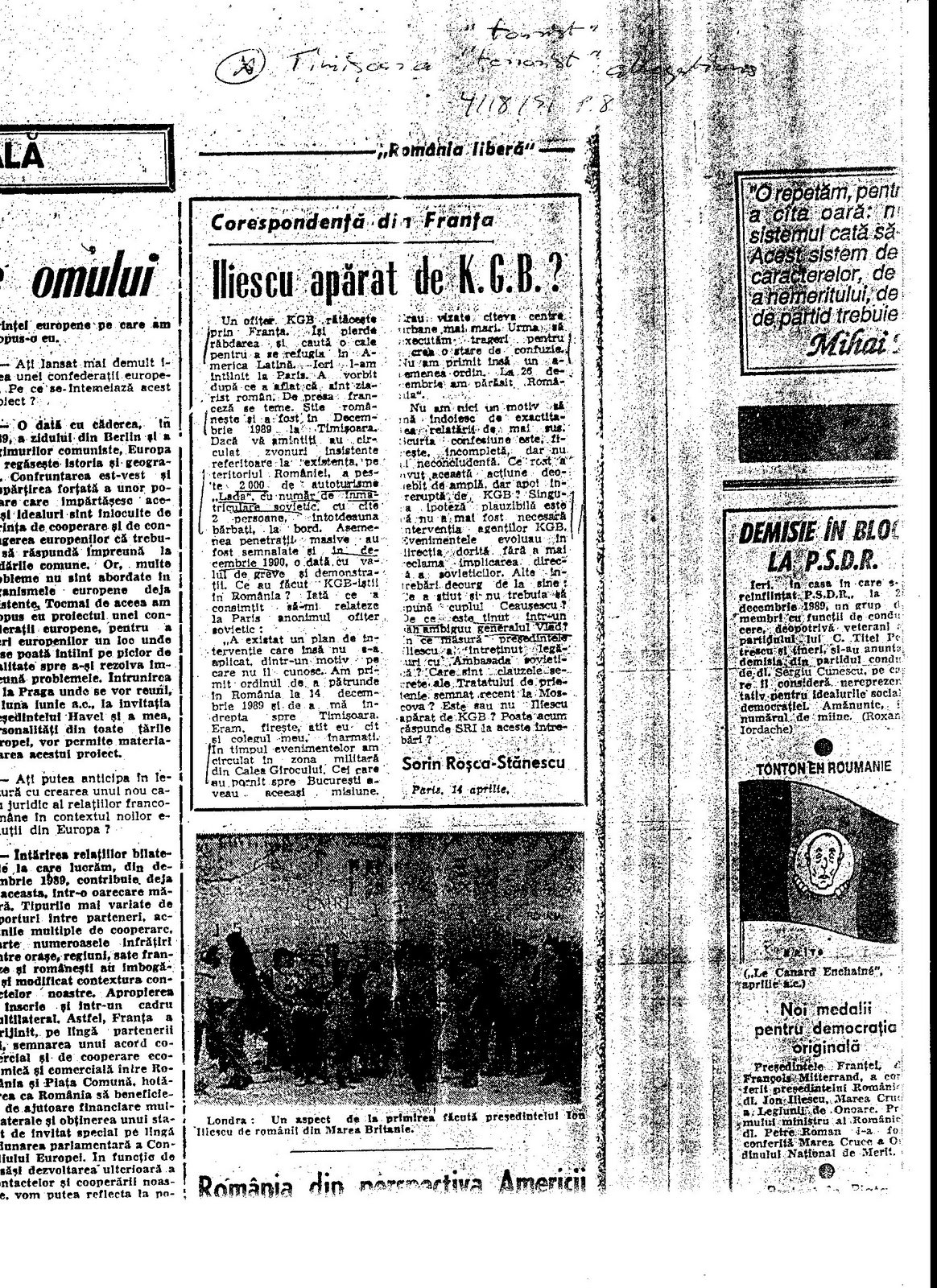
But it was Stanescu’s April 1991 article in “Romania libera,” entitled “Is Iliescu Being Protected By The KGB?,” that truly gave impetus to the “tourist” thesis. Stanescu wrote:

“A KGB officer wanders in France. He is losing his patience and searching for a way to get to Latin America. Yesterday I met him in Paris. He talked to me after finding out that I was a Romanian journalist. He fears the French press. He knows Romanian and was in Timisoara in December 1989. As you will recall, persistent rumors have circulated about the existence on Romanian soil of over 2,000 Lada automobiles with Soviet tags and two men in each car. Similar massive infiltrations were witnessed in December 1990, too, with the outbreak of a wave of strikes and demonstrations. What were the KGB doing in Romania? Witness what the anonymous Soviet officer related to me in Paris:

‘There existed an intervention plan that for whatever reason was not activated. I received the order to enter Romania on 14 December and to head for Timisoara. Myself and my colleague were armed. During the events, we circulated in the military zone around Calea Girocului [Giriocul Road]. Those who headed toward Bucharest had the same mission. Several larger cities were targeted. We were to open fire in order to create a state of confusion. I never, however, received such an order. I left Romania on 26 December.’

I don’t have any reason to suspect the validity of these revelations. This short confession is naturally incomplete, but not inconclusive. What purpose would this elaborate, but aborted, KGB plan have had? The only plausible explanation is that it wasn’t necessary for KGB agents to intervene. The events were unfolding in the desired direction without need for the direct intervention of the Soviets. But this leads to other questions: What did the Ceausescu couple know, but were not allowed to say [prior to their hurried execution]? Why is Securitate General Vlad being held in limbo? To what degree has President Iliescu maintained ties to the Soviets? What are the secret clauses of the Friendship Treaty recently signed in Moscow? Is Iliescu being protected by the KGB or not? Perhaps the SRI [the Securitate’s institutional successor, the Romanian Information Service] would like to respond to these questions?”

Stanescu’s April 1991 article did not go unnoticed — despite its nondescript placement on page eight — and has since received recognition and praise from what might seem unexpected corners. For example, previously-discussed former Securitate Colonel Filip Teodorescu cited extensive excerpts from Stanescu’s article in his 1992 book on the December events, and he added cryptically:

“Moreover, I don’t have any reason to suspect that the journalist Sorin Rosca Stanescu would have invented a story in order to come to the aid of those accused, by the courts or by public opinion, for the results of the tragic events of December 1989” (Teodorescu, 1992, pp. 92-94).

Radu Balan, former Timis County party secretary, imprisoned for his role in the December events, has also invoked Stanescu’s April 1991 article as proof of his revisionist view that “tourists” rather than “non-existent ‘terrorists'” were to blame for the December 1989 bloodshed:

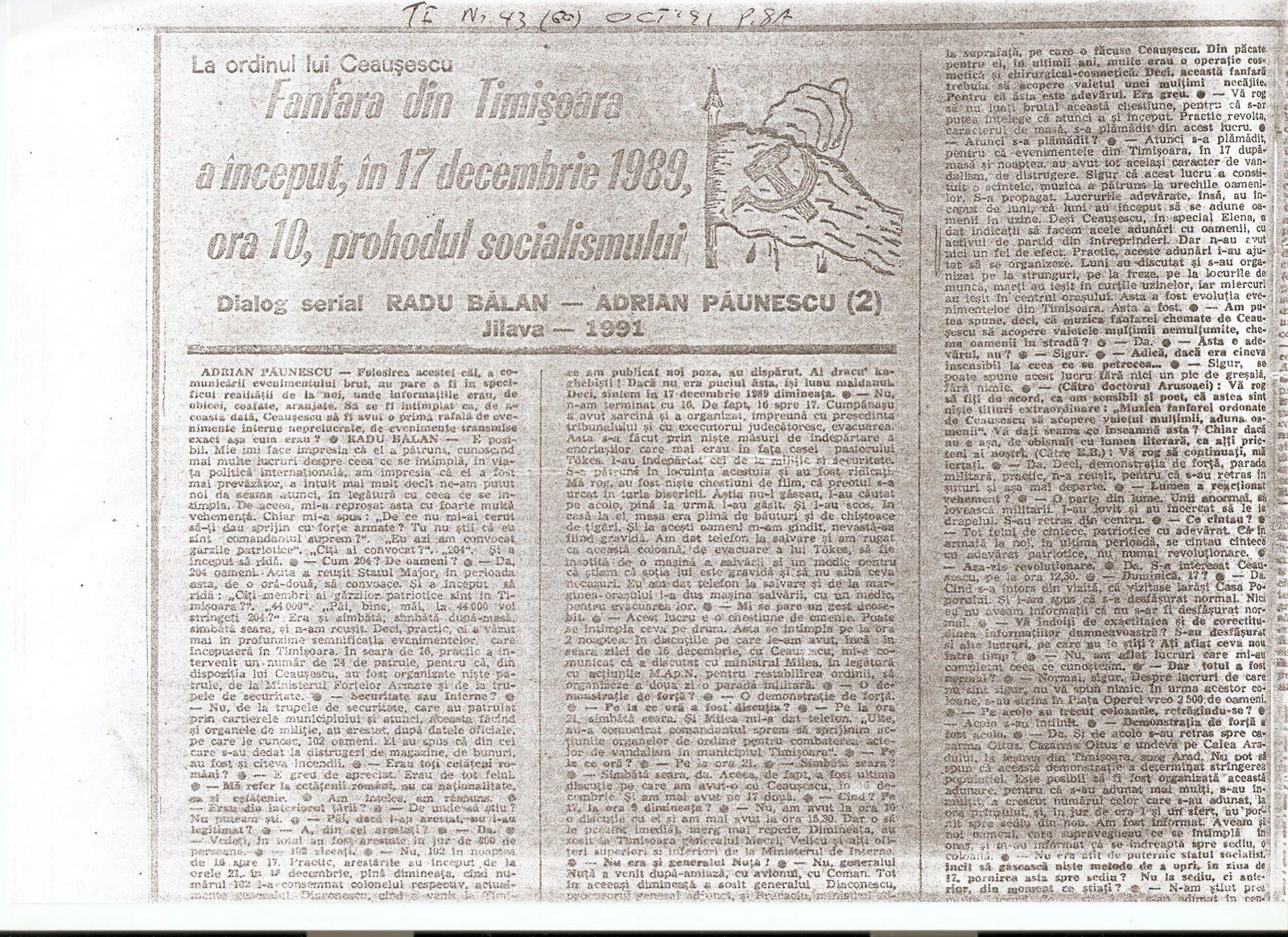
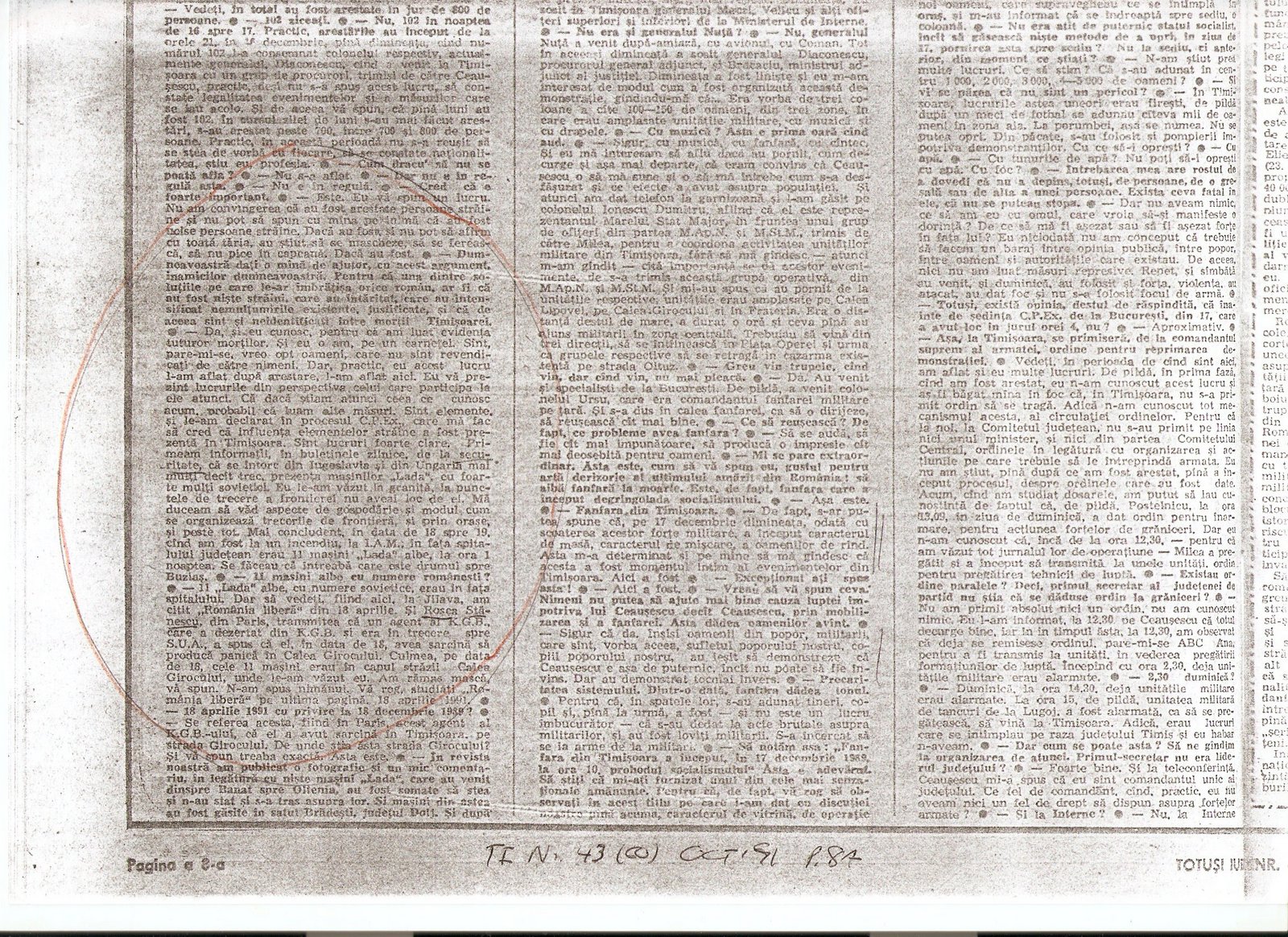
“…[W]hile at Jilava [the jail where he was imprisoned at the time of the interview, in October 1991], I read ‘Romania libera’ from 18 April. And Rosca Stanescu writes from Paris that a KGB agent who deserted the KGB and is in transit to the U.S. stated that on 18 December [1989] he had the mission to create panic on Calea Girocului [a thoroughfare in Timisoara]. What is more, on the 18th, these 11 cars were at the top of Calea Girocului, where I saw them. I was dumbfounded, I tell you. I didn’t tell anybody. Please study ‘Romania libera,’ the last page, from 18 April 1991” (“Totusi iubirea,” no. 43, 24-31 October1991).

In this regard, it would be irresponsible to totally discount the relevance of Rosca Stanescu’s past. Since December 1989, Stanescu has undeniably been a vigorous critic of, and made damaging revelations about, the Securitate’s institutional heir, the SRI, and the Iliescu regime, and he has frequently written ill of the former Securitate and the Ceausescu regime. Nevertheless, in 1992 it was leaked to the press — and Rosca Stanescu himself confirmed — that from the mid-1970s to the mid-1980s he was an informer for the Securitate (for a discussion, see Hall, 1997b, pp. 111-113). What was significant, however, was precisely for which branch of the Securitate Rosca Stanescu had been an informer: the USLA.

http://www.rferl.org/content/article/1342503.html

BUT WAIT, THERE’S MORE…A “SOVIET TOURIST” ENCORE IN 1990

Add to all of this (!), the allegations that the “Soviet tourists” were seen again on the streets during major crises in 1990, such as the ethnic clashes between Romanians and Hungarians in Tirgu Mures in March 1990 (for evidence of the reach of the allegation of KGB manipulation via the “tourist” mechanism both in December 1989 AND in March 1990, see Emil Hurezeanu, “Cotidianul,” 23 December 1999; according to Hurezeanu, “It appears they didn’t leave the country until 1991, following a visit by [SRI Director] Virgil Magureanu to Moscow”!).  Then there is the famous April 1991 interview of an alleged KGB officer—who spoke flawless Romania and was in Romania during the December 1989 events—who the interviewer, the vigorous anti-Iliescu foe, Sorin Rosca Stanescu, claimed to have just stumbled into in Paris.  Of all the reporters who could have stumbled into a KGB officer present in Romania during the Revolution—the only such case I know of—it was Rosca Stanescu, who, it turned out later, had been an informer for the Securitate until the mid-1980s—but not just for anybody, but for the USLA.  Intererstingly, although the article appeared on the non-descript page 8 of the primary opposition daily at the time (“Romania Libera”), the aforementioned Filip Teodorescu and Radu Balan invoked it in support of their contentions regarding the the “tourists” (for a discussion of this, see Hall 2002).  Even more suprising, or not, depending on your point of view, in his April 1991 article, Stanescu attempted to tie together December 1989 with December 1990 (!):

“As you will recall, persistent rumors have circulated about the existence on Romanian soil [in December 1989] of over 2,000 Lada automobiles with Soviet tags and two men in each car. Similar massive infiltrations were witnessed in December 1990, too, with the outbreak of a wave of strikes and demonstrations. What were the KGB doing in Romania?” (emphasis added) (“Romania Libera,” 18 April 1991)

(This points again to the idea that, to the extent the claim has any truth to it–and clearly, as always, there is an exaggeration of numbers–these “Soviet tourists” were of domestic manufacture.)

http://atomic-temporary-3899751.wpcomstaging.com/2010/09/22/the-1989-romanian-revolution-as-geopolitical-parlor-game-brandstatter%E2%80%99s-%E2%80%9Ccheckmate%E2%80%9D-documentary-and-the-latest-wave-in-a-sea-of-revisionism-part-iii/

In addition, it is interesting to note that senior former Securitate officials like to point out that the cars being used were…”brand-new”…suggesting that they had not been used before…something you might expect for equipment to be used in a contingency plan.

THE SECURITATE ROOTS OF A MODERN ROMANIAN FAIRY TALE: THE PRESS, THE FORMER SECURITATE, AND THE HISTORIOGRAPHY OF DECEMBER 1989

By Richard Andrew Hall

Part 2: ‘Tourists Are Terrorists and Terrorists are Tourists with Guns…’ *

http://www.rferl.org/content/article/1342503.html

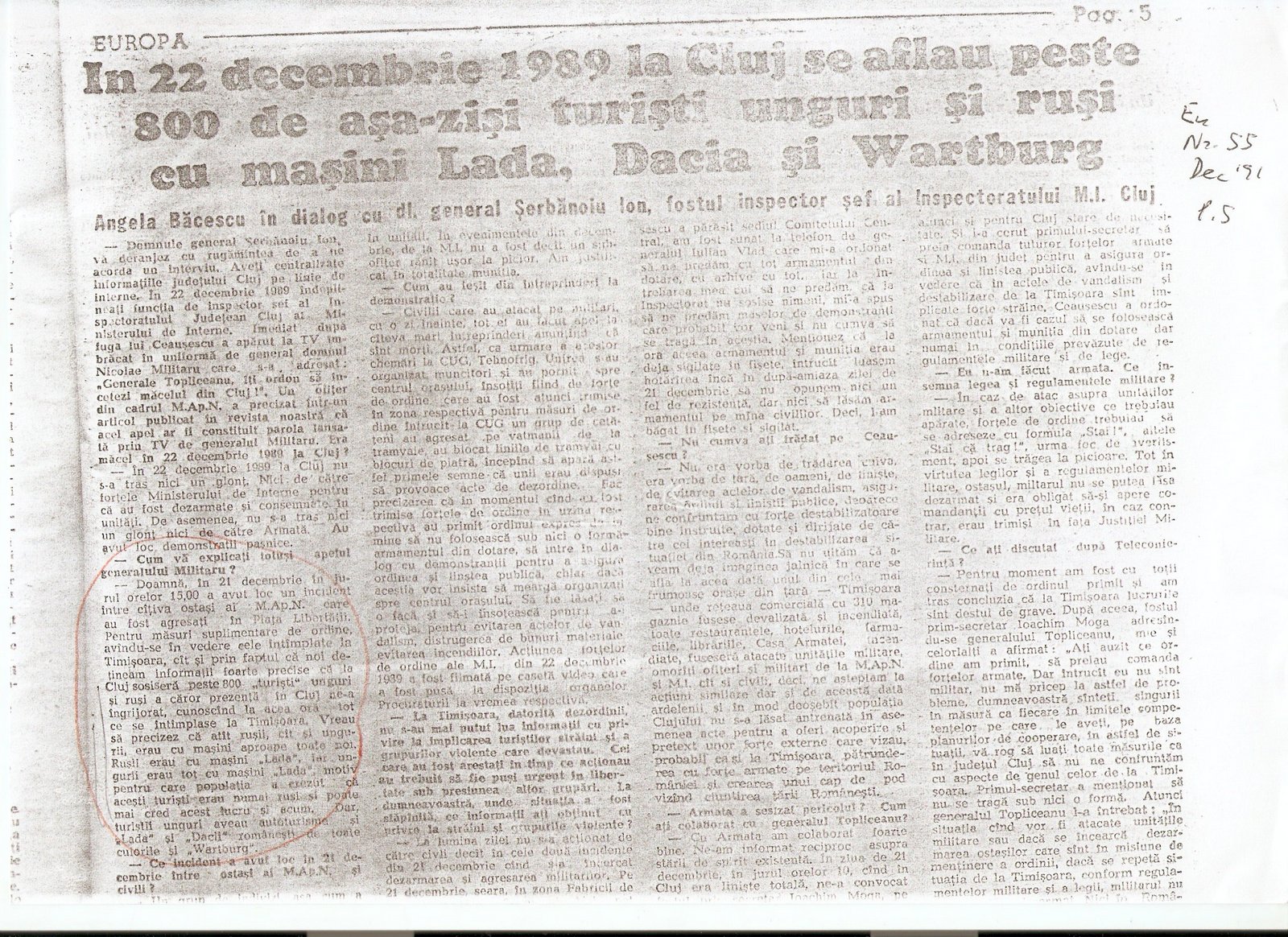
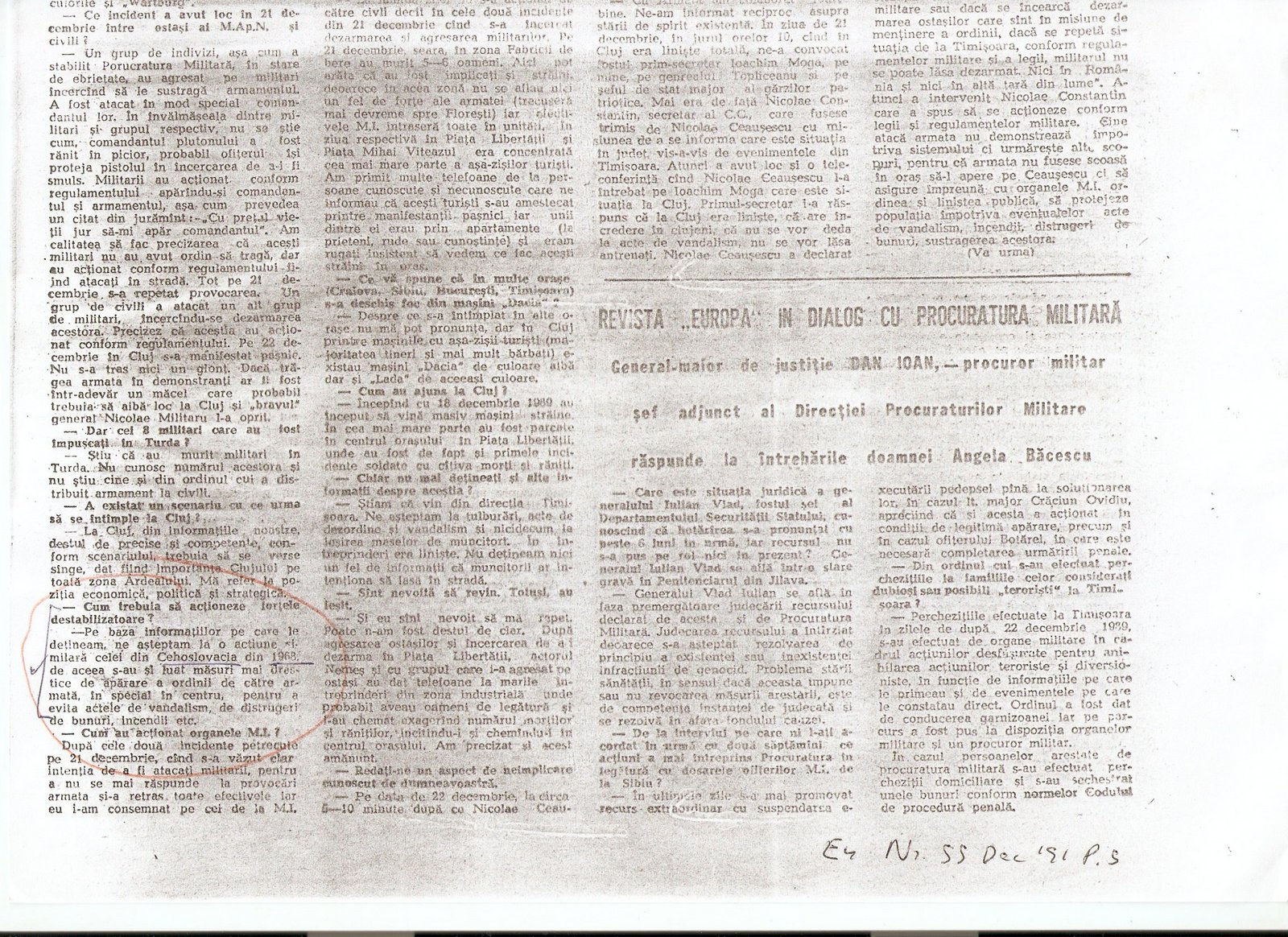
Not to be out-done, Cluj Securitate chief Ion Serbanoiu claimed in a 1991 interview that, as of 21 December 1989, there were over 800 Russian and Hungarian tourists, mostly driving almost brand-new Lada automobiles (but also Dacia and Wartburg cars), in the city (interview with Angela Bacescu in “Europa,” no. 55, December 1991).

image0-001

image0-003

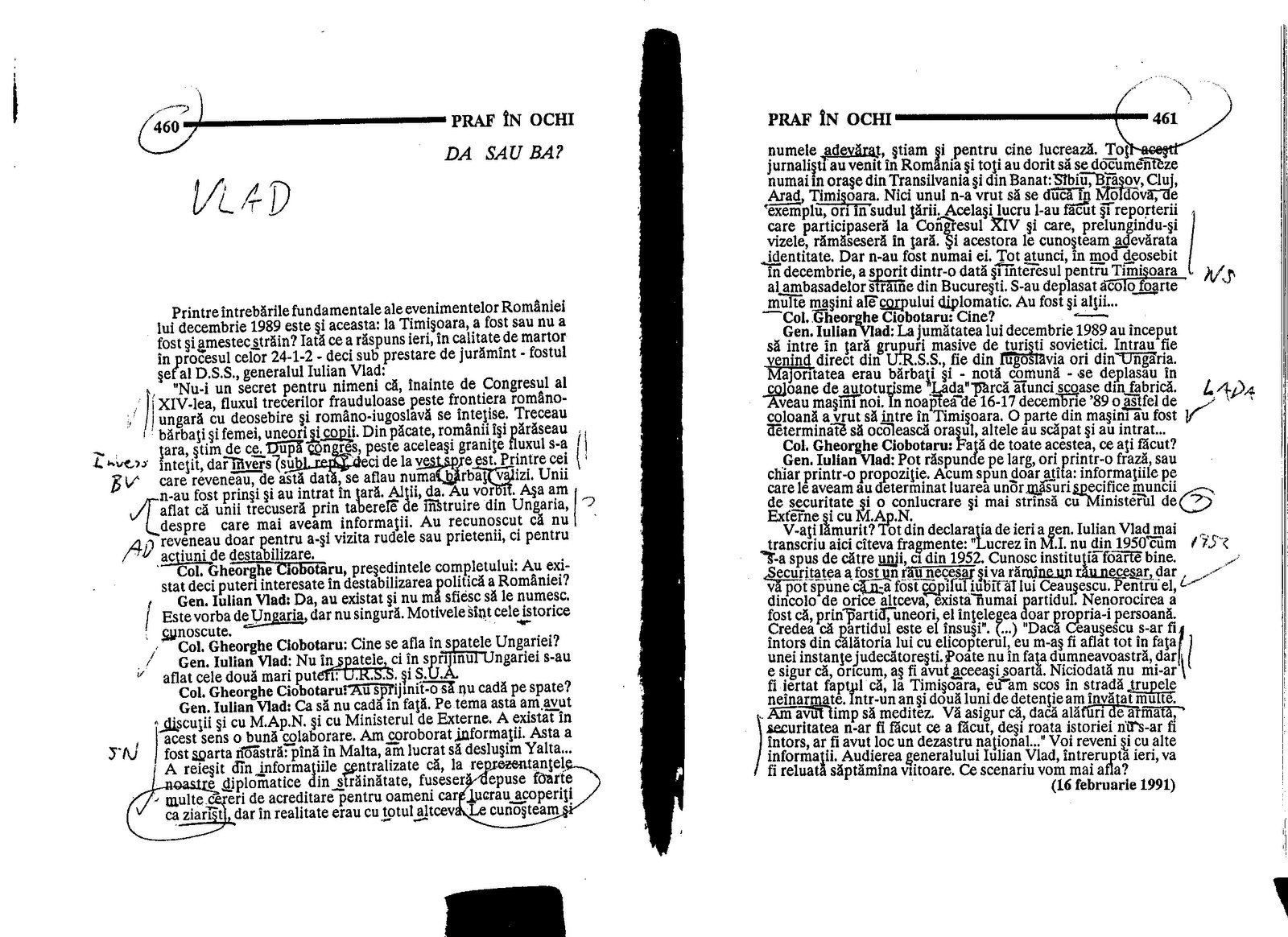
In February 1991 during his trial, former Securitate Director General Iulian Vlad, not surprisingly, also spoke of “massive groups of Soviet tourists…the majority were men…deploy[ing] in a coordinated manner in a convoy of brand-new Lada automobiles” (see Bunea, 1994, pp. 460-461),

Radu Balan, former Timis County party boss, picks up the story from there. While serving a prison sentence for his complicity in the Timisoara repression, in 1991 Balan told one of Ceausescu’s most famous “court poets,” Adrian Paunescu, that on the night of 18-19 December — during which in reality some 40 cadavers were secretly transported from Timisoara’s main hospital to Bucharest for cremation (reputedly on Elena Ceausescu’s personal order) — he too witnessed the role of these “foreign agents”:

“We had been receiving information, in daily bulletins, from the Securitate, that far more people were returning from Yugoslavia and Hungary than were going there and about the presence of Lada automobiles filled with Soviets. I saw them at the border and the border posts, and the cars were full. I wanted to know where and what they were eating and how they were crossing the border and going through cities and everywhere. More telling, on the night of 18-19 December, when I was at a fire at the I.A.M. factory, in front of the county hospital, I spotted 11 white ‘Lada’ automobiles at 1 a.m. in the morning. They pretended to ask me the road to Buzias�.The 11 white Ladas had Soviet plates, not Romanian ones, and were in front of the hospital” (“Totusi iubirea,” no. 43, 24-31 October 1991).

image0-005

image0-007

http://atomic-temporary-3899751.wpcomstaging.com/2010/09/22/the-1989-romanian-revolution-as-geopolitical-parlor-game-brandstatter%E2%80%99s-%E2%80%9Ccheckmate%E2%80%9D-documentary-and-the-latest-wave-in-a-sea-of-revisionism-part-iii/

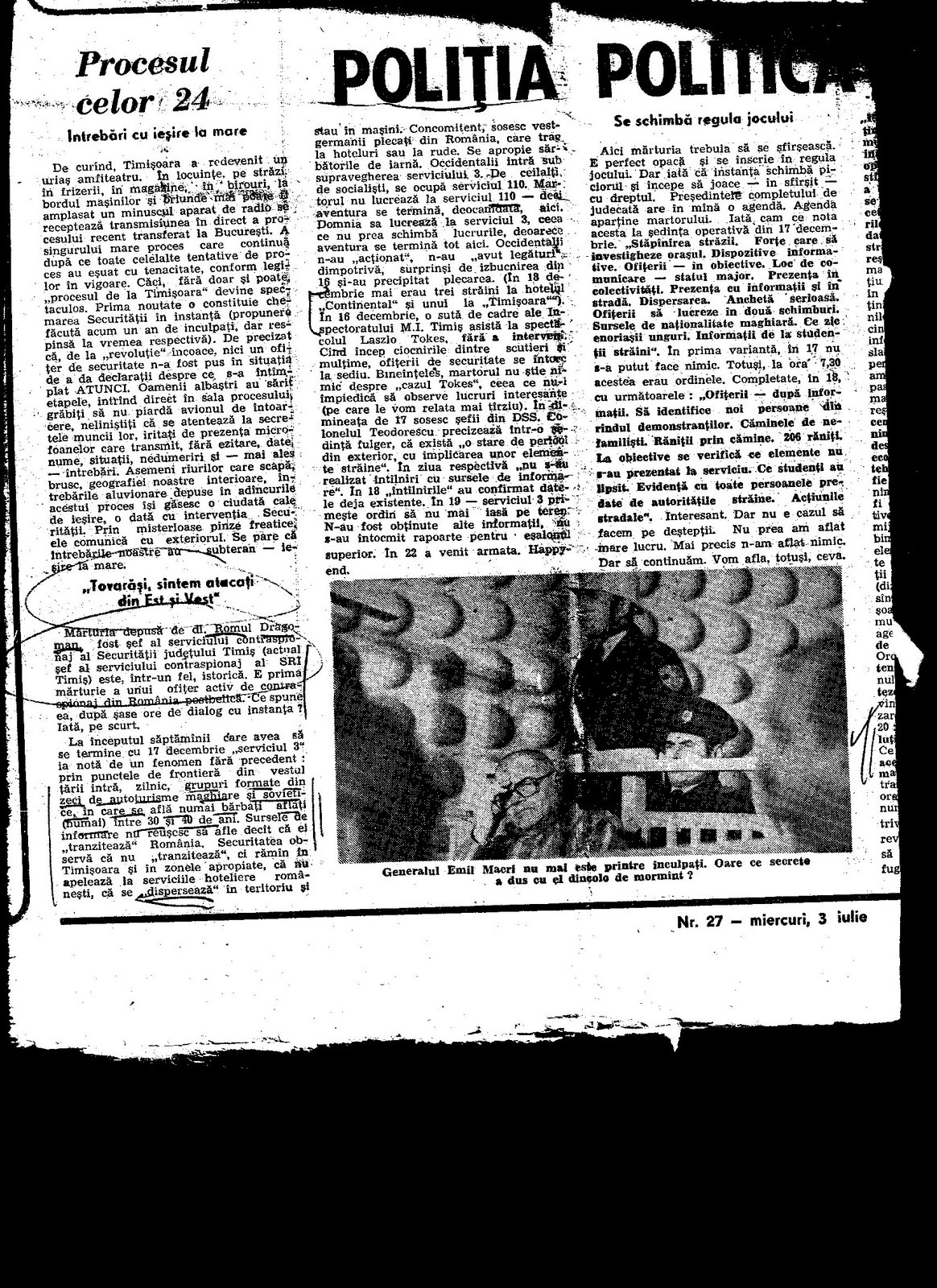
[Timis County party boss] Radu Balan ‘remembers’ that on 18 December at midnight when he was heading toward IAEM, he passed a group of ten soviet cars stopped 100 meters from the county hospital. (It turns out that in this night, in the sight of the Soviets, the corpses were loaded!).” [emphasis in the original] (Flacara, no. 27, 1991, p. 9).

Posted in decembrie 1989, raport final | Tagged: , , , , , , , , , , , , , , , | 10 Comments »

Revizionism securist despre spargerea vitrinelor la Timisoara si cateva adevaruri incomode pentru securisti-revizionisti

Posted by romanianrevolutionofdecember1989 on December 27, 2013

(as always, a strictly personal point of view, based on research dating back to the 1990s and my dissertation defended at Indiana University in December 1996…not for nothing did I include in the title of my dissertation “the Triumph of Securitate Revisionism”!!!; punct de vedere strict personal, ca intotdeauna)

Iata, ce scrie Evenimentul Zilei, un ziar, despre care se spune, ca este mai putin influentat de interesele fostilor securisti…

Marian Ştef, fost securist din Timișoara

”Nu m-au lăsat, la Proces, să vorbesc despre agenții KGB”

Când a început Procesul Revoluţiei, Ştef a ajuns martor al apărării. “Am încercat să povestesc despre “combinezoanele negre” , adică despre agenţii KGB care au făcut atmosferă la Revoluţie. Nu m-au lăsat. În seara de 16 decembrie, aproape de biserica lui Tokes, undeva între orele 19 şi 20, i-am văzut 
prima dată pe agenţi. Erau opt, îmbrăcaţi în negru. Spărgeau vitrinele la Librăria Mihail Sadoveanu şi îi îndemnau şi pe puştanii de stradă să facă la fel. Mi-a sărit în faţă vocea lor: vorbeau româneşte, dar suna diferit. Aveau accent străin. Peste trei zile, am reîntâlnit  combinezoanele negre  pe podul de la Elba, când a fost incendiat un tractor. Erau 12. Instigau oamenii. Au introdus elemente de teroare în rândul oamenilor”, îşi aminteşte fostul ofiţer de contraspionaj economic. A condus singur, jumătate de an, SRI. Dacă la Revoluţie a fost trecut în rezervă, odată cu toate cadrele din fosta Securitate, la scurt timp după înfiinţarea SRI, în august 1990, s-a angajat în structură. Avea gradul de locotenent major. A avut o evoluţie interesantă. Patru ani mai târziu a fost numai prim adjunct al şefului SRI, funcţie pe care a deţinut-o opt ani. Şase luni din această perioadă a condus singur serviciul. S-a pensionat în 2006. 

Citiţi mai mult: Destăinuirile unui fost SECURIST din Timișoara: Revoluția a fost animată cu agenți KGB – EVZ Special > EVZ.ro http://www.evz.ro/detalii/stiri/povestea-securistului-de-bine-revolutia-a-fost-animata-cu-agenti-kgb-1073612.html#ixzz2odWHnsHx 
EVZ.ro

De ce nu cred in ceea ce spune fostul securist

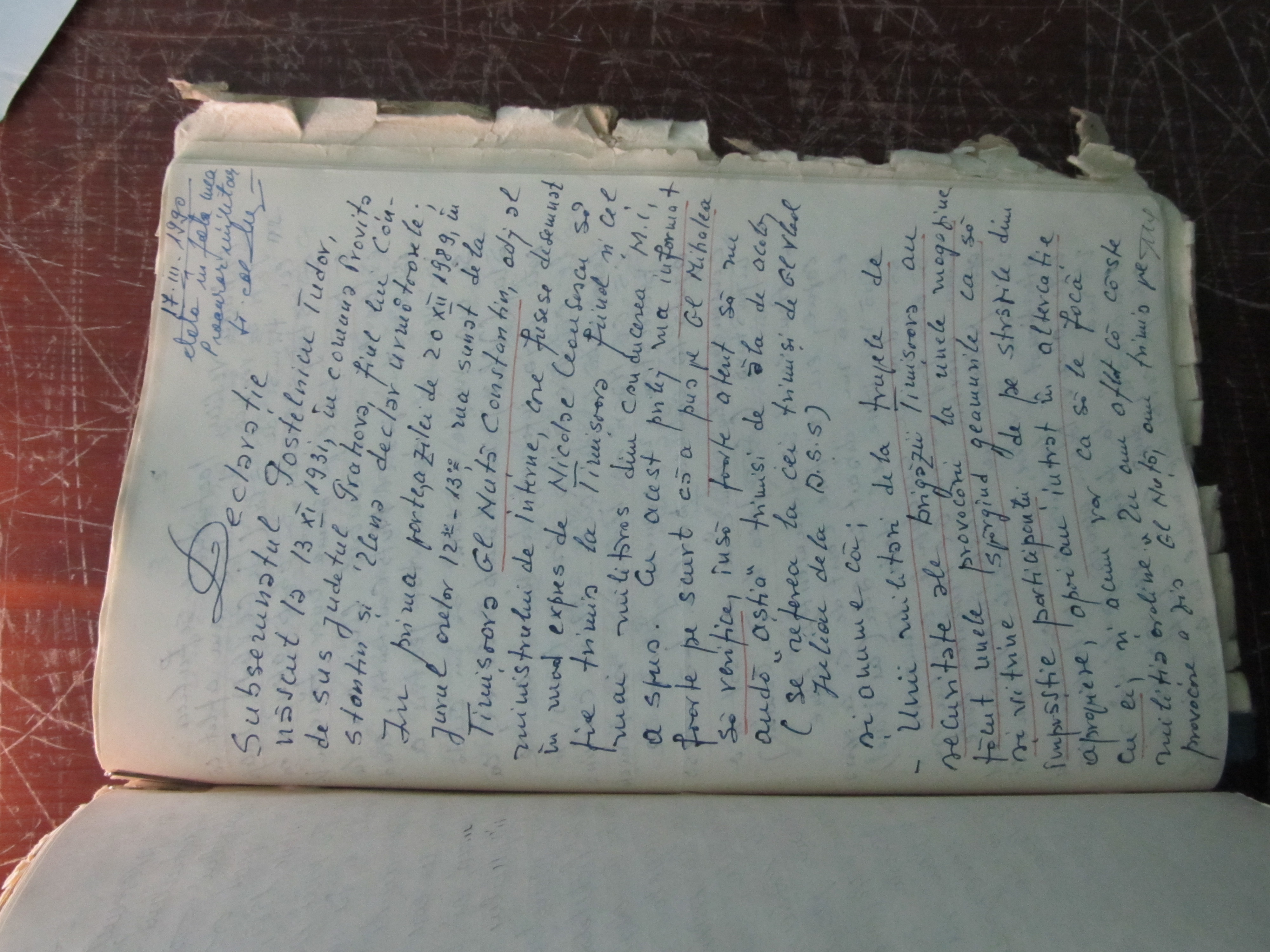
1) Marturia olografica lui Tudor Postelnicu din 17 martie 1990

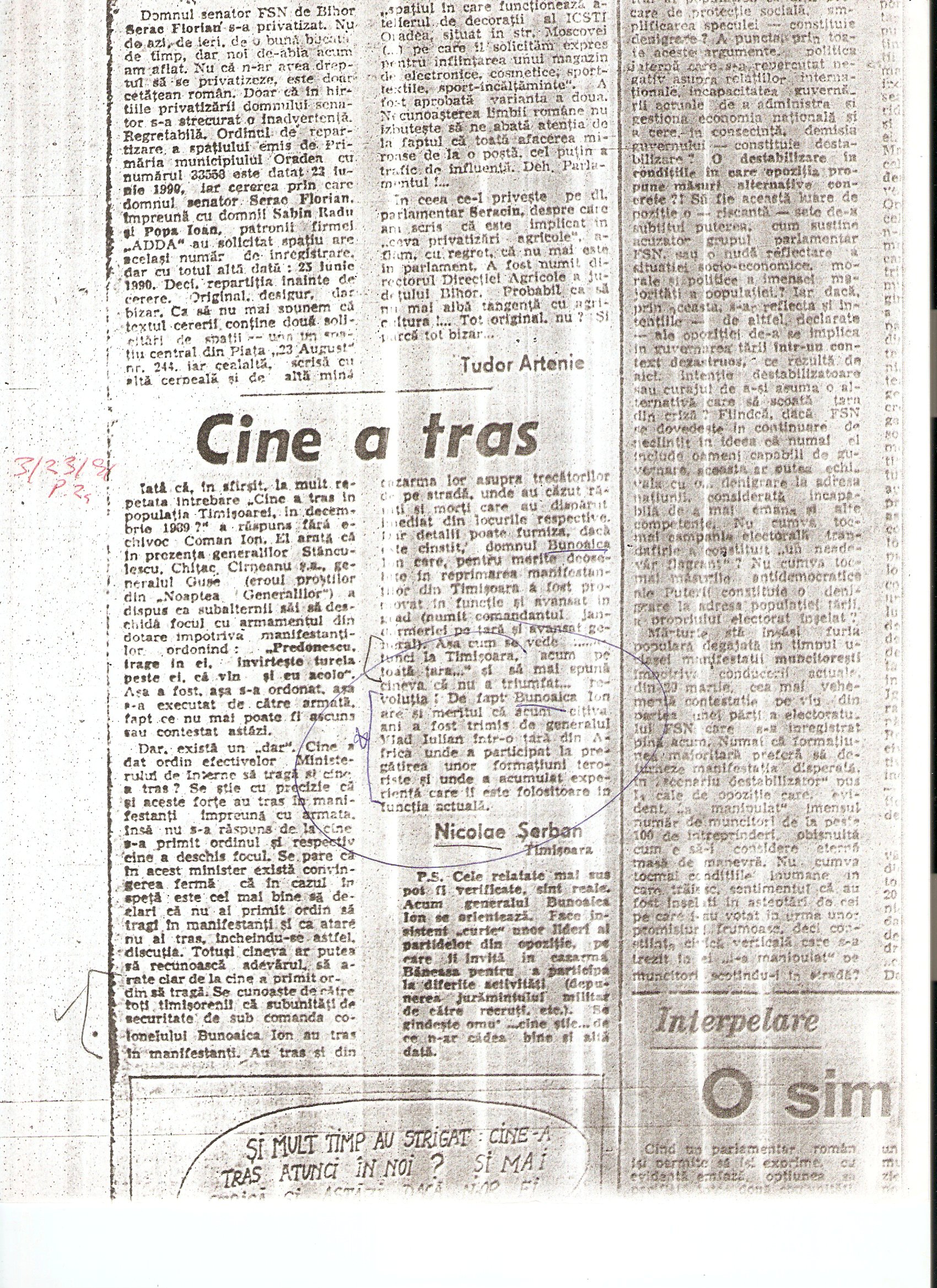
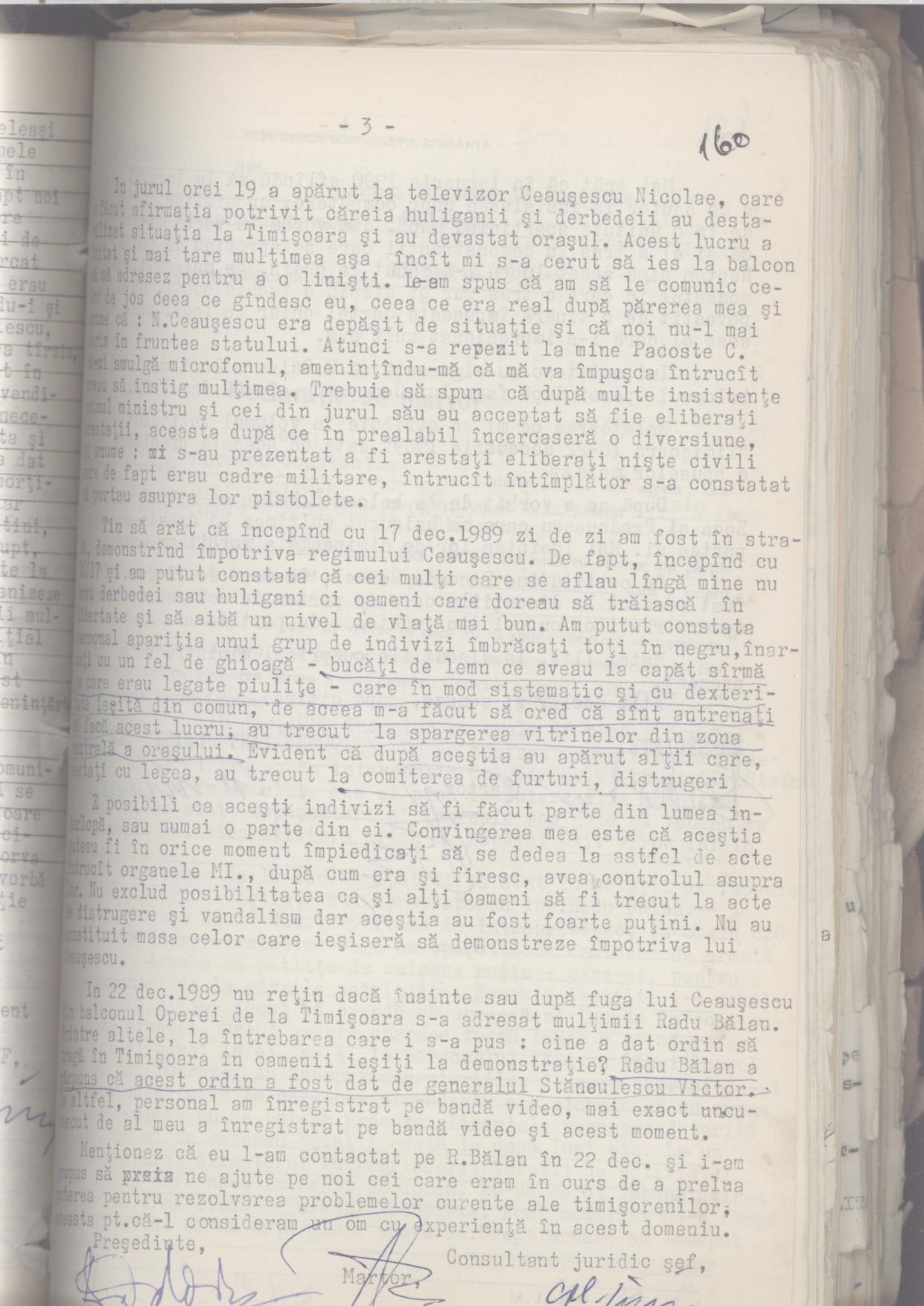
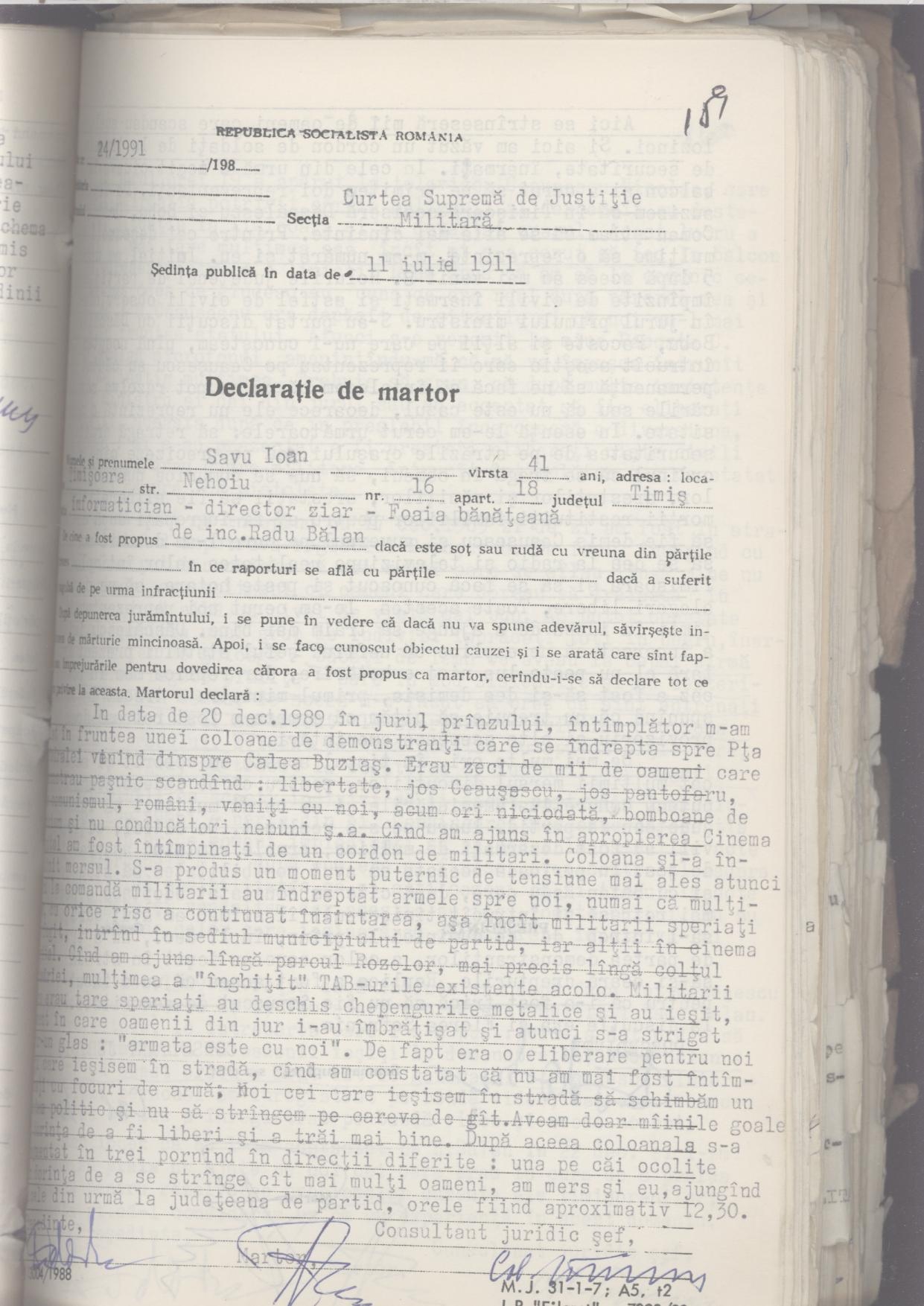
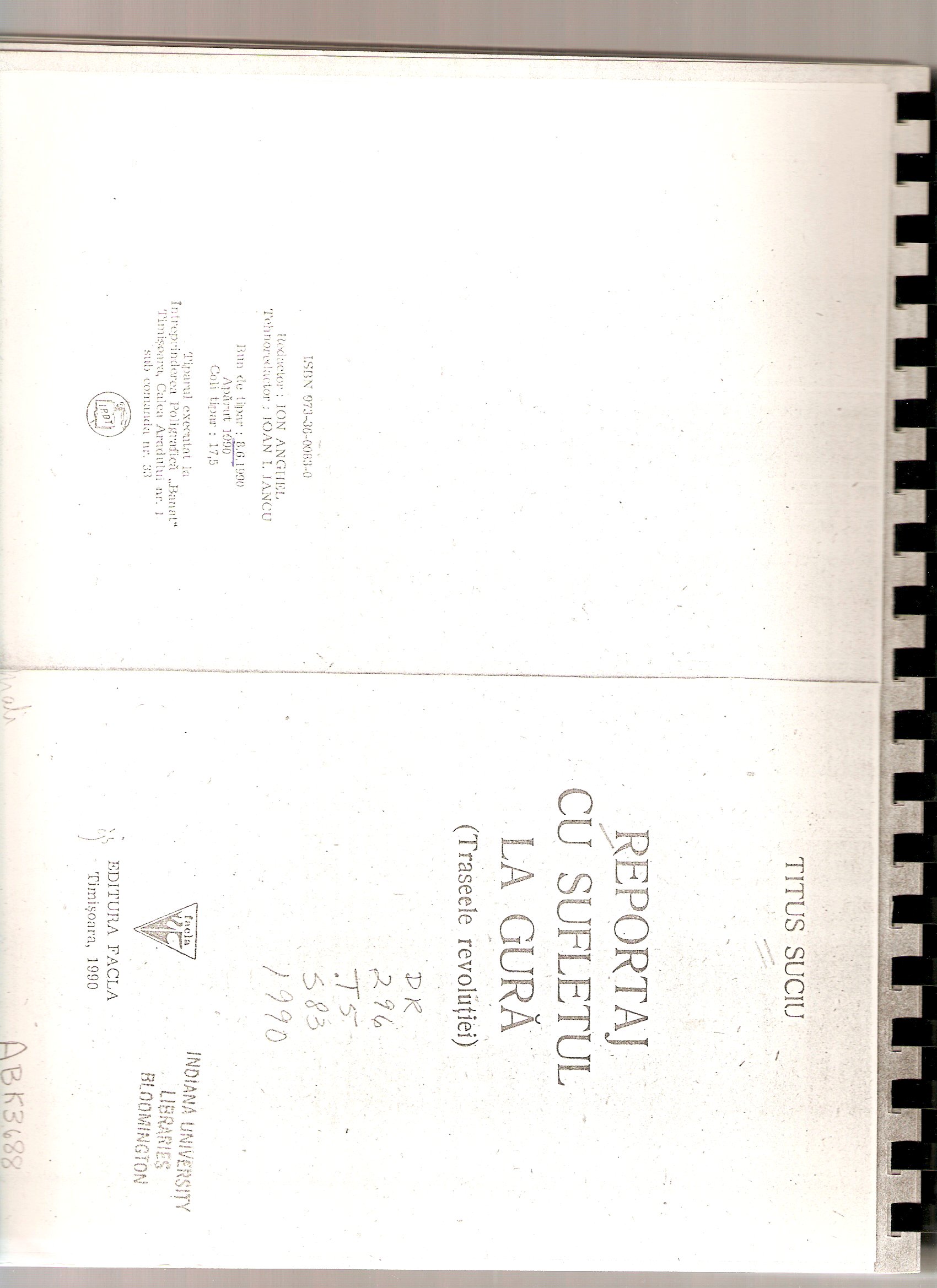
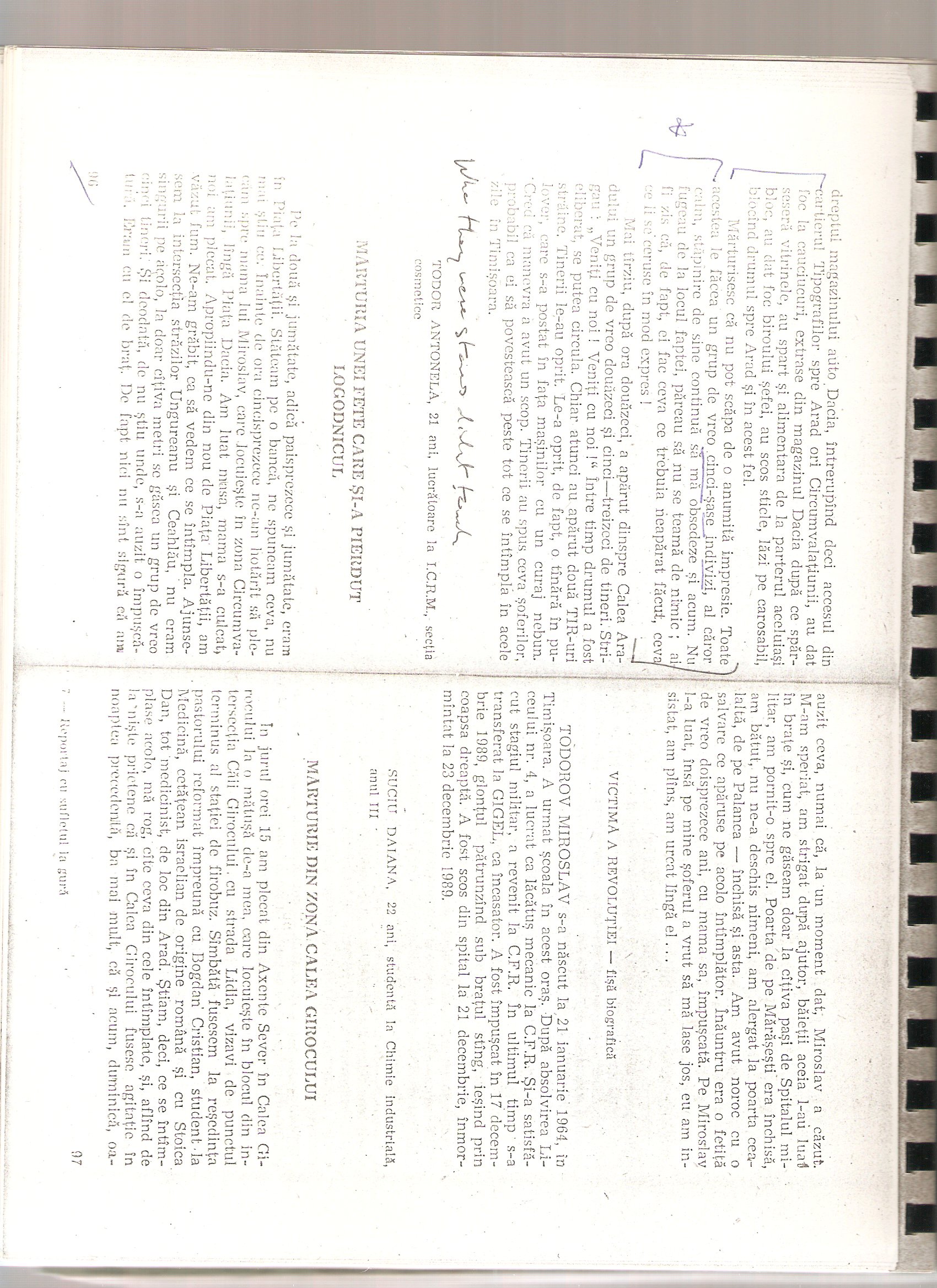
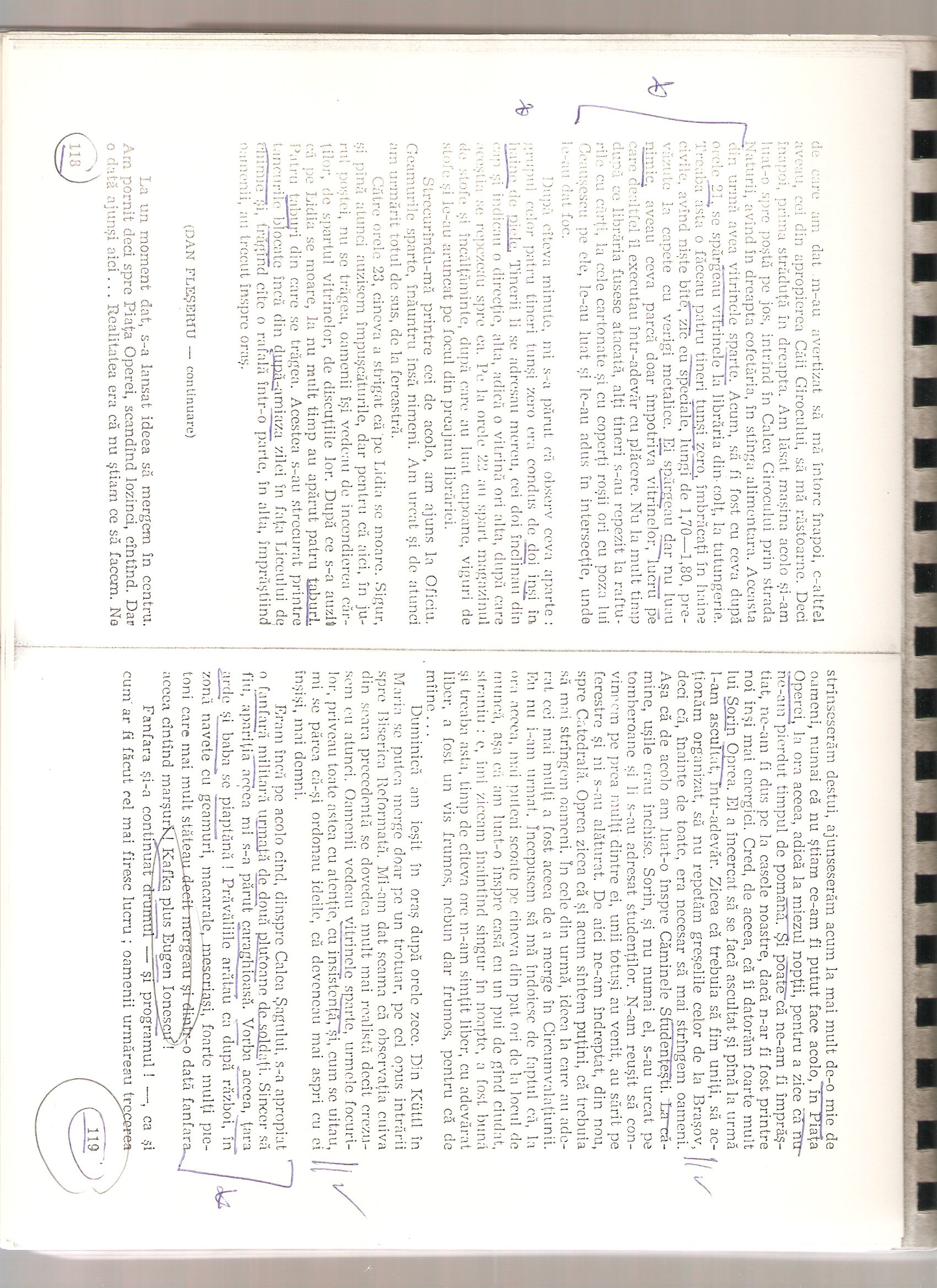
2) Martori oculari din cartea lui Titus Suciu, Reportaj cu sufletul la Gura (Timisoara, 1990)

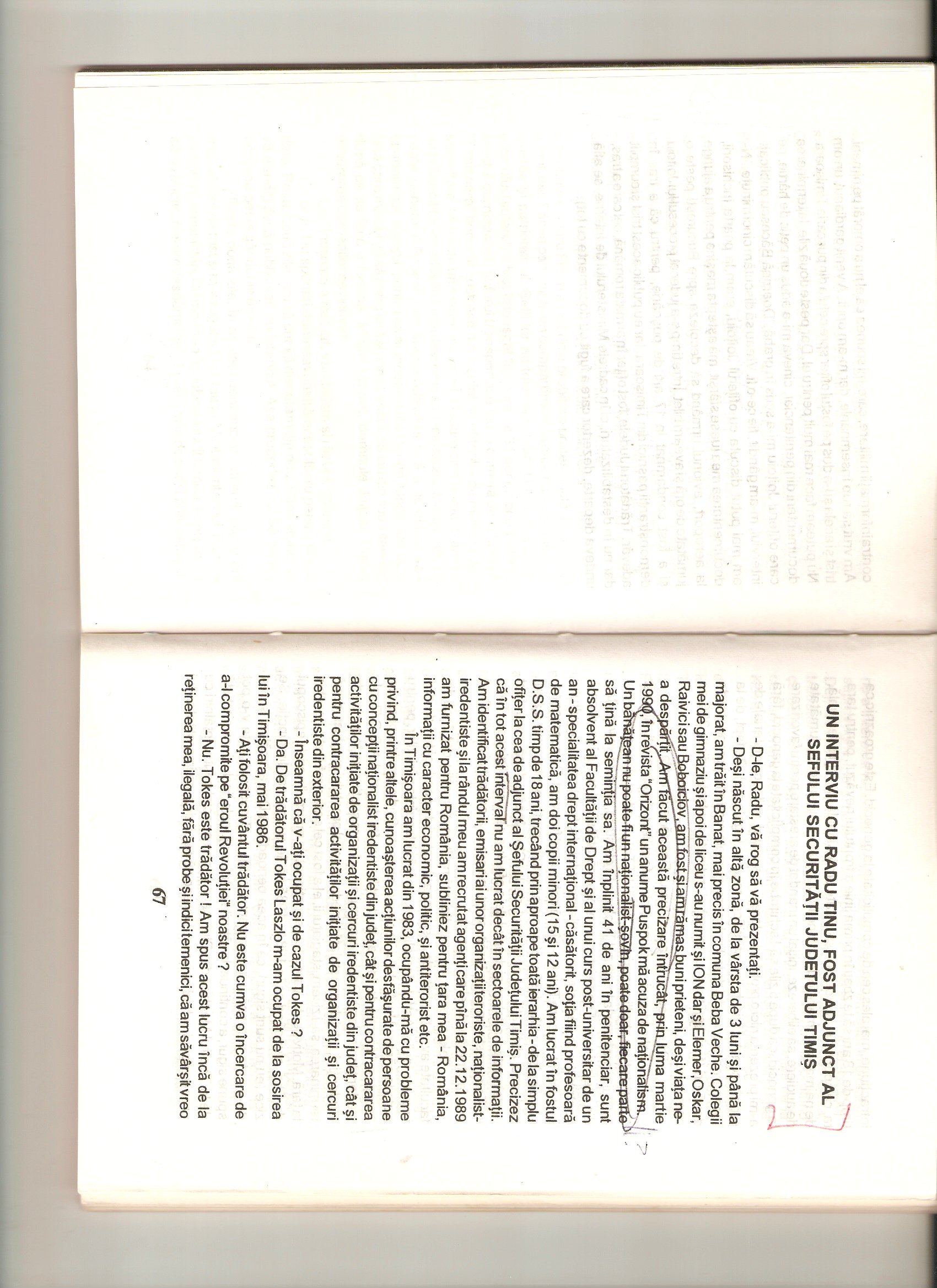
3) Un detaliu “scapat” dintr-un interviu intre Radu Tinu, fost securist din Timisoara, si Angela Bacescu in 1991

1)

IMG_2576

Tudor Postelnicu (Ministerul de Interne in decembrie 1989):  “Unii militari de la trupele de securitate ale brigazii Timisoara au facut unele provocari la unele magazine si vitrine spargind geamurile sa imprastie participantii de pe straziile din apropriere, apoi au intrat in altercatie cu ei, si acum (?) vor sa le faca militia ordine.  ‘Nu am aflat ca costa provocare a zis Gl. Nuta, am trimis pe …” (17.III.1990)  http://sensidev.com/fc/dosare%20de%20urmarire%20penala/dosar%20%20de%20urmarire%20penala%20volumul%2011/IMG_2576.JPG (Dosarul de Urmarire Penala, Vol. 11, IMG 2576)

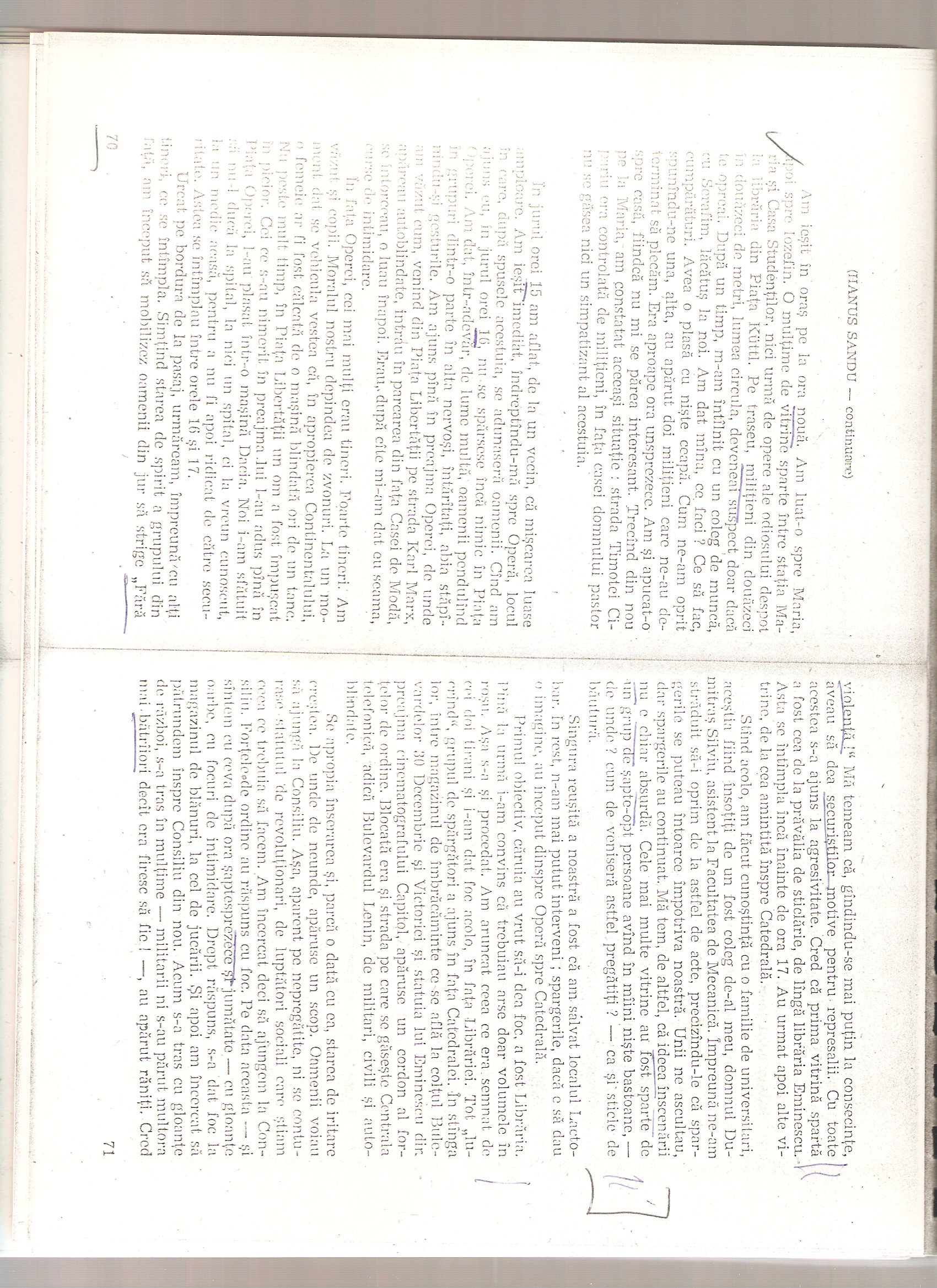
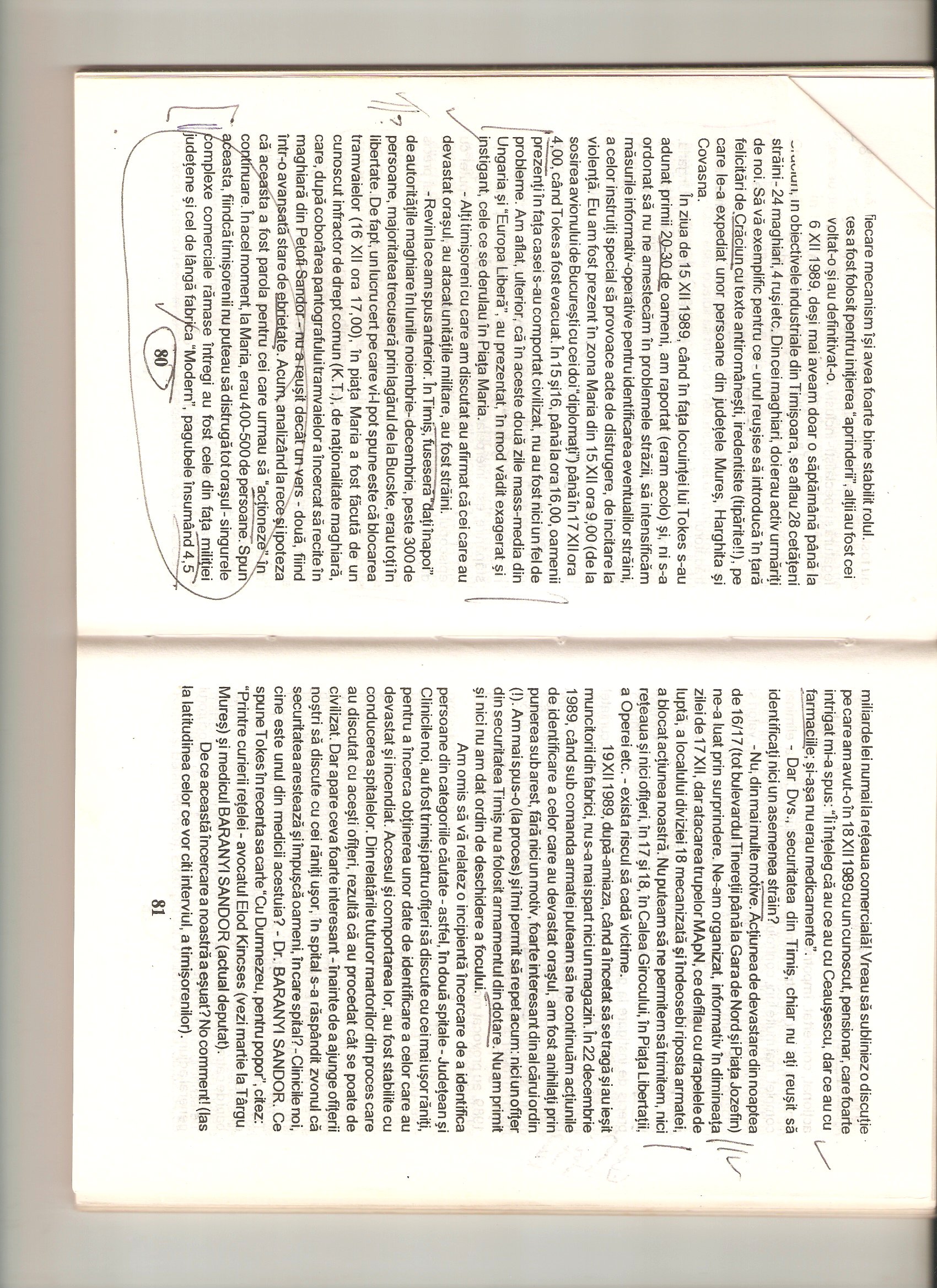
Cateva observatii:

a) Postelnicu nu spune nimic despre asa-zisii “turisti sovietici” sau “turisti rusi” (o tema revizionista foarte populara) …nu spune ca ei au facut distrugerea…

b) In schimb, Postelnicu spune ca securistii au facut provocarile…dar atentie:  nu spune ca ei le-au facut sa intareasca demonstrantii, ci “sa imprastie participantii de pe straziile din apropriere…”

deci nu intr-un scop ca detonatorii a unei revolutii (alta tema revizionista foarte populara), ci ca o tactica din arsenalul represiunii!

Nicolae Serban, “Cine a tras?” Romania Libera, 23 martie 1991, p. 2a.

image0

2) Ioan Savu, declaratie, 11 iulie 1991

Ioan Savu discussed the windowbreakers as follows:

0282

0280

An excerpt from Chapter 5 of my Ph.D. Dissertation at Indiana University: Richard Andrew Hall, Rewriting the Revolution: Authoritarian Regime-State Relations and the Triumph of Securitate Revisionism in Post-Ceausescu Romania (defended 16 December 1996). This is the original chapter as it appeared then and thus has not been revised in any form.

Chapter Five.  The Beginning of the End: Timisoara, 15-17 December 1989

The “Window Breakers”

The reportedly unusual scope of physical destruction which occurred in Timisoara, particularly on the afternoon and evening of 17 December 1989, has fueled revisionist arguments. Estimates of the damage during the Timisoara unrest are in the neighborhood of four to five billion lei (approximately forty to fifty million dollars at the time), a reasonably large sum given Romania’s standard of living at the time. A huge number of windows was broken and as many as 300 to 400 stores suffered some sort of damage, although relatively few were actually looted. On the evening of 17 December, stores, vehicles, and kiosks were burning in at least ten different areas of the city.[65]

Former Securitate officers clearly wish to link this destruction to the “foreign tourists” who were supposedly so ubiquitous in Timisoara during these days.[66] Perhaps somewhat surprisingly, former Securitate Director Iulian Vlad argued at his trial that

…the acts of vandalism, theft, destruction, arson… acts without precedent…could not have been the work [“opera”] of the faithful [apparently referring sarcastically to Tokes’ parishioners], nor the revolutionaries. They were produced by elements which wished to create a certain atmosphere of tension.[67]

Eyewitness accounts recorded soon after the events–therefore at a time before the various plots and scenarios had permeated the popular imagination–support the hypothesis that the vandalism was organized. Moldovan Fica remarks:

I admit that I cannot escape a certain conclusion. All of this [destruction] was done by a group of about five or six individuals, whose calm demeanor and self-control continues to stay with me to this day. They did not run from the scene, they appeared as if they did not fear anything; I would say that, in fact, they were doing what was required of them, something which had been ordered directly of them![75]

Describing destruction in a different part of the city, Andras Vasile observed that

…four young men with shaved heads and wearing civilian clothes had sticks–I would term them special sticks–1.7 to 1.8 meters long, equipped with metal rings on the top of them. They were breaking the windows, but not taking anything, as if they only had something against the windows, something which they thus went about with great enjoyment…they were led by two individuals in leather jackets.[76]

Other eyewitnesses supply details which confirm the widespread character of the vandalism; its undeniably organized quality; the disinterest of its perpetrators in looting the stores; and the almost “drugged” nature of the perpetrators, who seemed unperturbed by the chaos and repression going on around them.[77]

http://atomic-temporary-3899751.wpcomstaging.com/rewriting-the-revolution-1997/

image0-005

Moldovan Fica (martor ocular)

image0-001

image0

Andras Vasile (martor ocular)

image0-003

image0-002

image0-004

3) Radu Tinu cu Angela Bacescu…

The reportedly unusual scope of physical destruction which occurred in Timisoara, particularly on the afternoon and evening of 17 December 1989, has fueled revisionist arguments. Estimates of the damage during the Timisoara unrest are in the neighborhood of four to five billion lei (approximately forty to fifty million dollars at the time), a reasonably large sum given Romania’s standard of living at the time. A huge number of windows was broken and as many as 300 to 400 stores suffered some sort of damage, although relatively few were actually looted. On the evening of 17 December, stores, vehicles, and kiosks were burning in at least ten different areas of the city.[65]

Former Securitate officers clearly wish to link this destruction to the “foreign tourists” who were supposedly so ubiquitous in Timisoara during these days.[66] Perhaps somewhat surprisingly, former Securitate Director Iulian Vlad argued at his trial that

…the acts of vandalism, theft, destruction, arson… acts without precedent…could not have been the work [“opera”] of the faithful [apparently referring sarcastically to Tokes’ parishioners], nor the revolutionaries. They were produced by elements which wished to create a certain atmosphere of tension.[67]

image0-006

RADU TINU:…SINGURLE COMPLEXE COMERCIALE RAMASE INTREGI AU FOST CELE DIN FATA MILITIEI JUDETENE SI CEL DE LANGA FABRICA “MODERN”…

image0-007

image0-008

Posted in decembrie 1989 | Tagged: , , , , , , , , , , , | 1 Comment »

Scinteia Tineretului (18 decembrie): “Citeva sfaturi pentru cei aflati in aceste zile la mare”

Posted by romanianrevolutionofdecember1989 on December 18, 2013

(Purely personal views as always; punct de vedere strict personal, va multumesc)

Securitate General Iulian Vlad’s Declaration of 29 January 1990 identifying the “terrorists”:  http://atomic-temporary-3899751.wpcomstaging.com/2013/11/20/when-a-truth-commission-misses-crucial-evidence-the-romanian-cpadcr-final-report-and-securitate-general-iulian-vlads-declaration/

Photo from http://www.agentia.org/anchete/decriptarea-textului-din-scanteia-tineretului-321.html
“Citeva sfaturi pentru cei aflati in aceste zile la mare,” Scinteia Tineretului, 18 decembrie 1989
Photo from “Decriptarea textului din Scanteia Tineretului,” Luni, 28 decembrie 2009 11:51 by Mihaela G.

http://www.agentia.org/anchete/decriptarea-textului-din-scanteia-tineretului-321.html

Ion Costin Grigore, Cucuveaua cu pene rosii (1994, Editura Miracol)

General Magistrat (r) Ioan Dan, Teroristii din ’89 (Lucman, 2012):

2.  In luna ianuarie 1990 eram la Timisoara, cand un subaltern mi-a prezentat un articol intitulat “Cateva sfaturi pentru cei aflati in aceste zile la mare,” publicat in ziarul ‘Scanteia Tineretului’ din ziua de 18 decembrie 1989.  Articolul–la care, de asemenea, m-a referit–se compune din 5  fraze sub forma de strofe, pe care le reproduc:

image0-001

Cu toate incercarile de a fi convins de contrariu, am considerat si consider ca acest articol a constituit ordinul de lupta transmis structurilor acoperite ale Securitatii.  Spun “ordin”, deoarece cuvantul “sfaturi” este pus intre ghilimele.

image0

“Avem inca o declaratie, din atatea altele, care ne duce cu gandul la acel faimos articol din ziua de 18 decembrie 1989, publicat in “Scanteia Tineretului”, prin care se dadeau sfaturi la cei aflati in acele zile de decembrie la mare si faceau plaja, sa inceapa cu reprize scurte, de 10-15 minute, cand pe-o parte, cand pe alta.”

Iata mai jos:

Textul din Scateia Tineretului:”Citeva sfaturi pentru cei aflati in aceste zile la mare”*Evitati expunerea intempestiva si prelungita la soare. E de preferat sa incepeti mai prudent, cu reprize scurte de 10-15 minute – cand pe-o parte, cand pe alta. Astfel, va veti asigura un bronzaj placut si uniform.* Nu va avantati prea mult in larg. Oricum, in caz de pericol, nu strigati. Este inutil. Sansele ca prin apropuiere sa se afle vreo persoana dispusa a va asculta sunt minime.* Profitati de binefacerile razelor ultraviolete. Dupa cum se stie, ele sunt mai active intre orele 5,30 si 7,30. Se recomanda cu precadere persoanelor mai debile.* Daca sunteti o fire sentimentala si agreati apusurile soarelui, librariile de pe litoral va ofera un larg sortiment de vederi cu acest subiect.* Si inca ceva – daca aceste <sfaturi> v-au pus pe ganduri si aveti deja anumite ezitari, gandindu-va sa renuntati in favoarea muntelui, inseamna ca nu iubiti in suficienta masura marea. (S.P.)”Aceasta este decriptarea trimisa CSAT in 20071 – Declansati, pe neasteptate, planul ”Soare”. Incepeti prudent, cu operatiuni scurte, de 10-15 minute, simultan in mai multe zone, pana la acoperirea intregii tari.2 – Nu depasiti obiectivele. Altfel sunteti in mare pericol si nu va va ajuta nimeni.3 – Bazati-va pe sprijinul trupelor speciale care au rol activ intre orele 5,30 si 7,30 in scopul recuperarii ranitilor.4 – Devastati librariile si distrugeti ”operele alese” (cartile lui Ceausescu – n.r.) pentrui instigare si intimidare.

5 – Pentru nehotarati: nu tradati scopul, daca va iubiti tara.

—————————————
“Acel articol a fost un cosmar pentru mine. In 22 decembrie au aparut fluturasi in Bucuresti cu “sfaturile ” din “Scinteia Tineretului “. Cine avea xeroxuri in acea vreme?”, se intreaba Sorin Preda. Am fost anchetat de Ministerul Apararii Nationale pentru ca generalul Militaru a considerat sau i s-a sugerat ca articolul meu era un semnal si pentru teroristi. Articolul il scrisesem cu patru zile inainte de aparitie si avea o introducere in care explicam caracterul lui umoristic. Nu stiu de ce acea introducere a disparut.”
…Buna ziua. Imi pare rau sa spun asta dar nu cred nici cat negru sub unghie ceea ce declara dl. Sorin Preda legat de articolul referitor la “sfaturile” pentru cei aflati pe litoral “la plaja” pe 18 Decembrie 1989. Este absurd. Ar fi prea multe coincidente. Eu detin ziarul respectiv in intregime. La vremea aceea eram ofiter activ in Brasov si vreau sa va spun ca dupa aparitia articolului, imediat dupa teleconferinta tinuta de Ceausescu in 17.12.1989, evenimentele au inceput sa se desfasoare intocmai cum era “ordonat” in “sfaturile” aparute in Scinteia Tineretului din 18.12.1989. Daca doriti sa va dau si decodificarea articolului o fac bucuros.Cu stima,Mircea
——————————————————————————
Mircea Ferestrăuariu avea 25 de ani în decembrie 1989 şi era locotenent în cadrul Şcolii Militare de Ofiţeri Activi şi Artilerie Antiaeriană şi Radiolocaţii „Leontin Sălăjan” din Braşov. Îşi aminteşte clar cum s-a răspândit în unitatea militară zvonul că „e ceva” cu articolul din „Scînteia tineretului”, că ar fi un articol codat şi cum, după câteva zile, a apărut şi o decodare pe care mai toată lumea din unitate şi-o copia de pe o fiţuică.  Mircea Ferestrăuariu are şi-acum decodarea, într-o cutie cu documente din casă. „Nu ştiu cum a intrat în şcoală decodarea, cine a adus-o, de unde, dar ea părea veridică. Iar la sfârşitul decodării scria că ea fusese făcută de un maior şi de un căpitan, maiorul Ioan Ardelean şi căpitanul Ioan Hendre. Numele nu-mi erau cunoscute, nu erau din unitatea noastră.  Oricum, eu sunt absolut convins că articolul a fost un ordin codat către forţele de represiune care nu făceau parte din structurile militare. Cine se duce la mare în decembrie să facă plajă şi baie? E de neconceput ca la vremea respectivă să apară un astfel de articol şi nimeni să nu sesizeze că e ceva aberant”.
—————————————————————-
Photo from “Decriptarea textului din Scanteia Tineretului,” Luni, 28 decembrie 2009 11:51 by Mihaela G.
Photo from http://www.agentia.org/anchete/decriptarea-textului-din-scanteia-tineretului-321.html

Decriptarea textului din Scanteia Tineretului

  • Luni, 28 decembrie 2009 11:51
  • |
  • 2309 vizualizari
  • |
  • Anchete
Sfaturi catre securisti in decembrie ’89Pe Ceausescu l-a doborat “o gluma” * In ziarul UTC, in plina iarna apare textul “Sfaturi pentru cei aflati in aceste zile la mare” * La Timisoara era razboi civil, Armata tragea in populatie * Dupa 12 ani, un general din contraspionaj a trimis decriptarea textului la CSAT * Autorul sustine ca a scris un text umoristicIn data de 18 decembrie 1989, in timp ce in Timisoara era razboi civil, “Scanteia Tineretului” a publicat, in pagina 5, un text straniu, care nu avea nicio logica. Textul a facut valva la acea vreme, ca si in anii imediat urmatori Revolutiei. Erau sfaturi pentru cei ce se bronzau in acel moment, adica in mijlocul lunii decembrie, la mare. Textul a atras atentia imediat, in sensul ca semana cu un semnal incifrat pentru a se declansa ceva – dar pana azi contextul aparitiei sale nu a fost elucidat. A ramas ”o gluma”. In decembrie 2007, un general activ din contraspionajul romanesc a trimis decriptarea textului pentru a fi citita intr-o sedinta a Consiliului Suprem de Aparare a Tarii (CSAT). El era consilier in cadrul CSAT la acea vreme.Textul din Scateia Tineretului:”Citeva sfaturi pentru cei aflati in aceste zile la mare”*Evitati expunerea intempestiva si prelungita la soare. E de preferat sa incepeti mai prudent, cu reprize scurte de 10-15 minute – cand pe-o parte, cand pe alta. Astfel, va veti asigura un bronzaj placut si uniform.* Nu va avantati prea mult in larg. Oricum, in caz de pericol, nu strigati. Este inutil. Sansele ca prin apropuiere sa se afle vreo persoana dispusa a va asculta sunt minime.* Profitati de binefacerile razelor ultraviolete. Dupa cum se stie, ele sunt mai active intre orele 5,30 si 7,30. Se recomanda cu precadere persoanelor mai debile.* Daca sunteti o fire sentimentala si agreati apusurile soarelui, librariile de pe litoral va ofera un larg sortiment de vederi cu acest subiect.* Si inca ceva – daca aceste <sfaturi> v-au pus pe ganduri si aveti deja anumite ezitari, gandindu-va sa renuntati in favoarea muntelui, inseamna ca nu iubiti in suficienta masura marea. (S.P.)”Aceasta este decriptarea trimisa CSAT in 20071 – Declansati, pe neasteptate, planul ”Soare”. Incepeti prudent, cu operatiuni scurte, de 10-15 minute, simultan in mai multe zone, pana la acoperirea intregii tari.2 – Nu depasiti obiectivele. Altfel sunteti in mare pericol si nu va va ajuta nimeni.3 – Bazati-va pe sprijinul trupelor speciale care au rol activ intre orele 5,30 si 7,30 in scopul recuperarii ranitilor.4 – Devastati librariile si distrugeti ”operele alese” (cartile lui Ceausescu – n.r.) pentrui instigare si intimidare.

5 – Pentru nehotarati: nu tradati scopul, daca va iubiti tara.

Autorul spune ca a fost o gluma

Autorul articolului, Sorin Preda, a declarat atat in fata anchetatorilor Ministerului Apararii cat si in presa, ca el a scris un text umoristic si atat. Adica cele cinci paragrafe, care au avut trimitere pe prima pagina, nu aveau nicio legatura cu Revolutia si a fost o simpla intamplare faptul ca au sunat atat de straniu in acele zile. Trebuie mentionat aici ca fisetul in care se pastrau manuscrisul si spaltul acestor ”sfaturi” a fost spart iar obiectele mai sus mentionate au disparut in timpul evenimentelor de dupa 22 decembrie 1989.

Mihaela G.

Posted in decembrie 1989, raport final | Tagged: , , , , , , , , , , , | 1 Comment »

Vina de neiertat a TVR: a contribuit decisiv la victoria Revolutiei (III)

Posted by romanianrevolutionofdecember1989 on December 6, 2013

Uzina Sadu-Gorj, august-septembrie 1989,

comanda de fabricatie a gloantelor explozive DUM-DUM

Referitor la existenta cartuselor explozive si perforante, dupa unele informatii rezulta ca in perioada august-septembrie 1989 la uzinele Sadu-Gorj s-a primit o comanda de executare a unor asemenea cartuse explozive.  Comanda a fost ordonata de Conducerea Superioara de partid si executata sub supravegherea stricta a unor ofiteri din fosta Securitate.

Asa cum s-a mai spus, asupra populatiei, dar si asupra militarilor MApN teroristii au folosit cartuse cu glont exploziv.  Cartusele respective de fabricarea carora fostul director al uzinei Constantin Hoara–actualmente deputat PSM Gorj–si ing. Constantin Filip nu sunt straini, au fost realizate sub legenda, potrivit careia, acestea urmai a fi folosite de Nicolae Ceausescu in cadrul partidelor de vanatoare.

Consider ca lt. col. Gridan fost ofiter de Contrainformatii pentru Uzina Sadu–actualmente pensionar ar putea confirma fabricarea unor asemenea cartuse si probabil si unele indicii cu privire la beneficiar.  Daca intr-adevar aceste cartuse au fost fabricate in Romania atunci este limpede ca o mare parte din teroristii din decembrie 1989 au fost autohtoni, iar organele de securitate nu sunt straine de acest lucru.

http://atomic-temporary-3899751.wpcomstaging.com/2013/12/01/vina-de-neiertat-a-tvr-a-contribui-decisiv-la-victoria-revolutiei-i/

http://atomic-temporary-3899751.wpcomstaging.com/2013/12/04/vina-de-neiertat-a-tvr-a-contribuit-decisiv-la-victoria-revolutiei-ii/

image0-001

image0

http://atomic-temporary-3899751.wpcomstaging.com/2013/08/25/tvr-chirurgi-si-reportaje-despre-gloante-explozive-dum-dum/

http://atomic-temporary-3899751.wpcomstaging.com/2013/05/16/dosarele-revolutiei-si-expertize-balistice-cine-a-tras-in-voi-cu-gloante-explozive/

Romulus Cristea (ziarist, Romania Libera, 22 decembrie 2005):  – Munitia speciala, gloantele cu cap vidia sau dum-dum, a provocat victime? Presa de la acea vreme a fost plina cu astfel de relatari…

General-magistrat Dan Voinea – Nu exista victime (persoane impuscate) nici de la gloantele cu cap vidia, nici de la dum-dum. Pe durata evenimentelor s-a folosit munitie de razboi, munitie normala care se gasea la vremea respectiva in dotarea Ministerului de Interne si a Ministerului Apararii Nationale. Confuzia si informatiile false au aparut de la faptul ca se foloseau calibre diferite si, deci, zgomotul produs era altfel perceput.  http://www.romanialibera.ro/opinii/interviuri/toti-alergau-dupa-un-inamic-invizibil-58783.html

Robert Buzatu “a fost lovit de un glont exploziv”

IMG_0045

imaginea 43
imaginea 44
imaginea 45
imaginea 46

Georgian Baran “[pe 25 decembrie 1989]…teroristul a tras asupra mea, cred ca erau gloante dum-dum, mi-a lovit…”

imaginea 61
imaginea 62

IMG_0062

Csikos I[?] “Cred dupa rana [?]  ca au fost gloante dum-dum”

IMG_0088

Dobosan “am fost ranit…cu gloante dum-dum”

imaginea 127
imaginea 128

IMG_0128

Alexandru Kos “[pe 23 decembrie 1989] am fost impuscat…cu o arma de calibru mare si probabil cu gloante dum-dum”

imaginea 207
imaginea 208

IMG_0207

IMG_0208

Florin Nicoara “Am fost lovit in soldul drept cu un glont dum-dum”

IMG_0257

Griga “civilii au fost impuscati cu gloante plate [?], care asa cum spuneau medicii cu rupt tesuturile”

imaginea 170
imaginea 171

IMG_0171

Andrei Jubea “glontul special de culoare alb”

imaginea 204
imaginea 205

IMG_0205

Iosif Cota “gloante crestati”

imaginea 90
imaginea 91

IMG_0091

http://atomic-temporary-3899751.wpcomstaging.com/2012/12/30/dosarele-revolutiei-de-la-timisoara-declaratia-lui-mircea-stoica-8-ianuarie-1990-40-ani-topometrist-impuscat-patru-luni-spitalizat-decedat/

Mircea Stoica (declaratie, 8 ian 1990):  “Cind am ajuns aici, la poarta o voce de militar din garnizoana s-a exprimat:  “Ce faceti mai — voi toti cu BUM-BUM sau DUM-DUM si ni-i trimiteti noua sa ne spalam pe cap cu ei.”


Mircea Stoica (declaration, 8 January 1990):  “When I got there, I heard a soldier’s voice from the garrison exclaim:  “What are you guys doing? You all with your BUM-BUM or DUM-DUM and then you send`em to us to solve the problem [almost impossible to solve]” <very angry, pissed off>

(my sincere thanks to Gigga Adrian Tudor for this transcription and translation of the quote!)

Popovici:  “Mi-am revenit intr-un camion militar in care eram multi civili unii morti fiind adusi la garnizoana militara.  La garnizoana eu am fost dat jos si predat unui cpt (capitan) sau unui lt.major (locotenent major). vazand rana mea n-a vrut sa ma primeasca exprimand: Voi trageti cu dum dum si noi sa raspundem pentru acest lucru.”  (my thanks to A.K. for this transcription)

Popovici:  “I came to in a military truck in which there were lots of civilians some dead being brought to the military garrison.  At the garrison I was taken down and surrendered to a captain or lt. major, who looking at my wound did not want to receive me, exclaiming:  You shoot with dum-dum bullets and we are held responsible for it.”

It doesn’t take a genius to recognize the important similarity between the testimonies of Mircea Stoica and Ioan Popovici:  both are party to/overhear military personnel referring to the 1) use of DUM-DUM bullets, 2) that those who are using them are clearly not fellow soldiers and instead likely M.I./Securitate personnel, and 3) the Army personnel are resentful of essentially being left to “hold the bag” for the results of the DUM-DUM munitions!

———————————————————————————————————————————

Stoica Mircea, 40 ani, topometrist, Bd. Republicii, impuscat mina si picior http://www.timisoara.com/mioc/REVT06~1.HTM

197. Partea vătămată Stoica Maria cere 500000 lei, lunar, contribuţie de întreţinere, motivînd că, în decembrie 1989, soţul ei, Mircea Stoica a fost împuşcat, patru luni spitalizat, a rămas handicapat (gradul II de invaliditate), apoi a decedat.  În dovedirea cererii, depune acte de spitalizare şi de stabilire a capacităţii de muncă, care atestă vătămarea, cauzele şi consecinţele ei. Mai depune: declaraţia împuşcatului, actul lui de deces, actul de căsătorie şi carnetul de muncă (vol. 6 p. 304; vol. 10 p. 58-60, 170, 245-250; vol. 14 p. 54-61; vol. 27 p. 179-207).

http://www.procesulcomunismului.com/marturii/fonduri/mmioc/curteasup/docs/0307pciv.htm

IMG_0335

“Cind am ajuns aici, la poarta o voce de militar din garnizoana s-a exprimat:  “Ce faceti mai — voi toti cu BUM-BUM sau DUM-DUM si ni-i trimiteti noua sa ne spalam pe cap cu ei.”

IMG_0330

intreaga declaratie e aici:

imaginea 330
imaginea 331
imaginea 332
imaginea 333
imaginea 334
imaginea 335
imaginea 336

in legatura cu declaratia aceasta, vezi si http://atomic-temporary-3899751.wpcomstaging.com/2012/12/02/dosarele-revolutiei-de-la-timisoara/ ,

Procesul de la Timisoara (II). Audierea partii civile Popovici Ion: “…Atata retin foarte bine minte, ca ofiterul a spus, cica: ‘Nu, voi trageti cu dum-dum-uri si dupa aia Armata raspunde.’”

Popovici:  “Mi-am revenit intr-un camion militar in care eram multi civili unii morti fiind adusi la garnizoana militara.  La garnizoana eu am fost dat jos si predat unui cpt (capitan) sau unui lt.major (locotenent major). vazand rana mea n-a vrut sa ma primeasca exprimand: Voi trageti cu dum dum si noi sa raspundem pentru acest lucru.”  (my thanks to A.K. for this transcription)

Popovici:  “I came to in a military truck in which there were lots of civilians some dead being brought to the military garrison.  At the garrison I was taken down and surrendered to a captain or lt. major, who looking at my wound did not want to receive me, exclaiming:  You shoot with dum-dum bullets and we are held responsible for it.”

available on this site http://www.banaterra.eu/romana/procesul-de-la-timisoara-1990-1991-vol-v ].  The following is from Volume V.]

Some excerpts: P.C.:  Ati dat o declaratie?   Po. I. :  Da  P.C.:  O mentineti?  Po. I. Da (p. 827) P.C.:  “Inteleg sa fiu audiat in cauza ca parte civila”, da?  V-as ruga sa faceti putin liniste!  “Mentin declaratia de la Procuratura si…” (p. 833)

Po. I.:  …Da [am fost ranit].  Si dupa aceea a venit unul dintre trei [civili mai in varsta] dupa mine, m-a tarat pana la masina si la masina, acolo, am luat o bataie…ca n-am putut doua saptamani nici sa mananc nimica.  M-a lovit cu patul de arma in falca si cu bocancii in cap.  Si m-au dus, m-au dus la Garnizoana.  La Garnizoana m-au aruncat din masina si a venit ofiterul de serviciu.  Au venit si acestia trei a spus lu’ ofiterul de serviciu, cica:  “Luati-l si duceti-l  la arest.”  Atata retin foarte bine minte, ca ofiterul a spus, cica:  “Nu, voi trageti cu dum-dum-uri si dupa aia Armata raspunde.  Voi omorati oameni si raspunde Armata dupa aceea.”  Asta tin minte precis.  Si de acolo mi-am dat seama ca nu poate sa fie soldati aceia. (p. 830)

IMG_0291

IMG_0290

Doru Sciadei

IMG_0932

“In urma radiografiei facute la Spitalul Judetean au spus ca am 2 schije in picior…consemnat de medicul radiolog si chirurg, care m-au consultat.

Convingerea mea este ca in acest atac (pe ?) Calea Girocului, asupra unor oameni pasnici si (?) s-au folosit cel putin doua tipuri de gloante, convingerea intirita de glontul scos din coapsa (?) si schijele din piciorul meu, care cred ca provin de un glonte exploziv.

IMG_0929

Doina Gherasim glonte dum dum

IMG_0175

Cristian Rusu “S-a tras cu gloante dum-dum”

IMG_0305

SIX Doctors/Medical personnel from Timisoara alone have discussed the use of dum-dum bullets against demonstrators in Timisoara…

Doctors also reported on the wounds caused by explosive bullets (i.e. dum-dum bullets):  In this dispatch from Agence France Presse, relayed by Radio Free Europe on 25 December 1989, Dr. Aurel Mogosanu, a medic in the intensive care unit of a Timisoara hospital, says based on his thirty years of experience, some of the wounds could only have been CAUSED by EXPLOSIVE BULLETS SHOT AT THE PROTESTERS”

sursa (documentele Europa Libera disponsibile la):  http://media.hotnews.ro/media_server1/generic_file-2009-12-22-6754154-0-radio-bucuresti-25-dec-pdf.pdf (p. 49 of 82)

©AFP Général – Lundi 25 Décembre 1989 – 08:33 – Heure Paris (386 mots)
Roumanie, prev Nuit de Noel a l hopital central de Timisoara De l un des envoyes speciaux de l AFP, NICOLAS MILETITCH
   TIMISOARA (Roumanie) 25 dec – Devant l hopital central de Timisoara, dimanche soir, une quarantaine de camions remplis de medicaments et de produits alimentaires tout juste arrives, attendaient d etre decharges.
   ” L aide nous vient d un peu partout. Hongrie, RFA, Tchecoslovaquie, France, Yougoslavie, URSS, Bulgarie, Italie… ” , indique a l AFP l un des soldats qui gardent l hopital. Les militaires sont partout autour de l hopital, sur les toits, dans les cours et meme a l interieur.
   ” Des hommes de la Securitate ont tire pres de l hopital a plusieurs reprises, ces dernieres heures ” , explique le docteur Aurel Mogosianu, chef du service de soins intensifs, en donnant des ordres a un soldat qui passe, la mitraillette a l epaule, dans un couloir, entre les malades.
   Le Dr Mogosianu, qui a une trentaine d annees d experience, pense que certaines blessures particulierement horribles, n ont pu etre provoquees que par des balles explosives tirees contre les manifestants.
   Dans une salle de soins intensifs, une femme de 23 ans essaie de parler au docteur, puis renonce. ” C est un cas difficile. Elle a eu le dos transperce par une rafale ” , precise le Dr Mogosianu.
   En bougeant a peine la main, la jeune femme esquisse le ” V ” de la victoire pour dire ” au revoir ” . Un effort irrealisable pour son voisin qui a recu une balle dans le cou, impossible a extraire.
   Comme la plupart de ses collegues, le docteur travaille, a peu de choses pres, 24 heures sur 24 depuis le debut des evenements. Dans un coin, une infirmiere dort, ecroulee sur une chaise.
   Pour faire face a l afflux de blesses, la television de Bucarest a demande a tous les etudiants en medecine du pays de se rendre dans les hopitaux de la capitale et de Timisoara, ou la situation est la plus critique.
   Victor Jancu, 20 ans, a entendu cet appel. Dans la nuit de vendredi a samedi, il a quitte Cluj et reussi a rejoindre Timisoara, a plus de 300 kms de la, en arretant des camions.
   Quelques visiteurs arrivent a l hopital, portant a la main une petite branche de sapin : a Timisoara aussi, on voudrait feter Noel.
   nm/jga/vr.
Tous droits réservés : ©AFP Général
021851451DC1ED1D715E06849EA4C6E0F37C0C25ECE8D503

mai mult despre Dr. Aurel Mogosanu in decembrie 1989:  http://www.sorinbogdan.ro/2009/12/timisoara-18-decembrie-1989/.

http://atomic-temporary-3899751.wpcomstaging.com/2011/09/30/procesul-de-la-timisoara-iii-audierea-martorului-rodica-novac-directorul-directiei-sanitare-timis-13-iunie-1990/

Rodica Novac’s claim is corroborated elsewhere by four other medical officials on call during the Timisoara repression.  First, in Romanian, by Dr. Atanasie Barzeanu, then in Hungarian by three doctors (Vladimir Fluture, Csaba Ungor, and Andras Goga) present and performing surgery in Timisoara hospitals from 17-19 december 1989 who recount separately their discovery of dum-dum exploding bullets among the bullets with which demonstrators arriving at the hospital had been shot.  december 1989: temesvari orvosok, dum-dum golyok, es a roman forradalom

Sava Florica, 33 de ani, vinzatoare la Loto-pronosport in cartierul Fabric, impuscata din mers, in Piata Traian

Barzeanu Atanasie, 65 anit, medic primar, doctor in stiinte, chirurg, Spitalul Judetean Timisoara

“…sintem deci in 18 decembrie…Pe la orele doua si patruzeci, cind inchideam o operatie–Sava Florica, 33 de ani, vinzatoare la Loto-pronosport in cartierul Fabric, impuscata din mers, in Piata Traian, dintr-un ARO, pacienta prezentindu-se o echimoza cu distrugerea tesuturilor (plaga in diametru de 15 centimetri), a tesuturilor din regiunea epigastrica, inclusiv a muschilor drepti abdominali, cu ruptura a colonului ascendent transvers si a jejuno-ileonului, fiind in stare de soc grav traumatic, hemoragic–, fara sa-mi poti explica nici macar acum cu ce fel de gloante a putut fi lovita, pentru ca nu am identificat nici orificiul de iesire si nici pe cel de intrare, a venit o asistenta de la Chirurgie I, care mi-a spus sa merg la domnul Ignat.”

Titus Suciu, Reportaj cu Sufletul la Gura, (Editura Facla 1990), pp. 133-134.

The following first appeared in Gyorgy Mandics’s Temesvari golgota (1991) pp. 348-349 and is reprinted in his A Manipulalt Forradalom (2009).  [My guess is this is also the source for the reference to dum dum bullets in the German language wikipedia entry for http://de.wikipedia.org/wiki/Rum%C3%A4nische_Revolution_1989 — Hans Vastag, György Mandics, Manfred Engelmann: Temeswar. Symbol der Freiheit. Wien 1992. ]

pp. 348-349

Ket esetuk volt az elejen.  Ezert is hivtak be oket.  Egy 14 eves gyermeket a haz elott lottek le, szinte a szomszedban, egy golyoszoros ARO-rol talaltak el; egy oreg nenit a ter tuloldalon, az erkelyen ertek a golyok.  A zarja ment ki, kicsit nagyott hallott mar, amire is csoda, 64 evesen, azt hirtelen ugy erezte, hogy labaibol kimegy minden ero es lecsusott az erholya.  Na milyen gyonge lettem egyszeruen–mondotta maganak. de ahogyan fel akart tapaszkodni meg lepve tapasztalt, hogy vertocsa gyult alatta.  Bekialtolt a vegenek aki egy szomszed segitsegevel athozta a nenit a legkozelebbi korhazba, itt a Marasti ter tuloldalan, az uj Klinikakba, avagy hivatalos neven a 2 szamu korhazba, ahol rogton osszecodult mindenki csodat latni.  Ekkor hivtak be Baranziekat es minden mozgositato orvost, hiszen a fegyverek ropogatak.  Azota is kisebb nagyobb megszakitasokkal, felfelecsapolt a gepfegyverek, golyoszorok, geppisztolyok langzivatarja, remulettel telitva az ejszaki eget.

p. 349

De azt a ket elso esett nem kovettek ujabbok.  Igz aztan volt ido alaposan szemugyre venni a nenit akinek combjan elol egz akkora lyuk tatongott mint egy egy lejes, a comba hatso felen ahol eltavotott a golyo, ott viszont mar akkora mint egy otlejes.  Fluture doktor, az egzik sebesz erosen kototte az ebet a korohoz, hogy ez egz specialis dum-dum robbanogolyo okozta seb, hiszen a szakirodalomban azt irjak, hogy csak ez a robbannolovedek-fajta-amelyet ugyan az ENSZ eltitott, am a nemzetkozi terrorizmusban kulonesen divatos ma is–okoz az izomszovetbol kijovet sokkal nagyobb roncsolasokat mint a bemenetnel.  Az orvosok odazarandokoltak a sebesulthoz, mivel egzik sem latott semhogy dum-dum golyo utotte sebet, de egyaltalan lott sebet sem soha eleteben.  Igz aztan csak szivtak a rangeletrahoz igazodva a sebesz foorvosok az amerikai Kentet, a foamnesztezialogus a holland pipadohanyt, az asztalyos orovosok a bolgar BT-t, a fonoverek a jugoslav Vikend-et, a noverek es helyapolok a roman Snagov-t, Golfot.  Es vartak.

(Note: it is unclear who the 64 yr. old described was…there are several individuals without ages listed as injured or dead during the events, but I think it more likely the age of the woman is incorrect)

Jozsef Gazda Megvalto karacsonyErdelyi magyar tulelok emlekeznek. (1990)

Ungor Csaba:  Ket ora utan senkit be nem hoztak, senkit be nem engedtek, egyetlen sebesult sem.  A korhazbol kikanyarado  mentoautokra is lottek.  Ket ora utan mindre, ami mozgott, jarokelo, auto, mindenre lottek, csak hogy ok tudjak begyujteni a sebesulteket s a halottakat.  Kiderult az elso golyok utan, amiket a sebekbol gyujottek ossze, szedtek ki, hogy nem eles katonai toltenyekkel lottek, hanem dum-dum golyokkal, amik nagy rombolasokat okoztak.  Egy 16 eves, ketszer sebesult gyermek meselte el, ok azt hittek, hogy hosok, azt hittek, hogy meg fogjak menteni a forradalmat, mert biztosra vettek, ha a felnottek sorfala ele allnak, nem fognak belejuk loni.  Lottek rajuk is.

Goga Andras:  A masodik izgalomkelto esemeny volt kedden delelott, hogy az osszes regiszterunk–mind a surgossegen, mind az osztalyon–, melyekre felirtuk a muteteinket, eltuntek, a mai napig sem talaltuk meg.  Bennuk voltak az ev osszes mutetei[***]…En aznap kettot operaltam.  Egy tuntetonek a bore alol vettem ki egy nagyon kulonleges golyok, nem is golyot, egy ilyen repeszdarabot, melyet a katonasag aztan megvizsgalt, s azt mondtak, nekik nincs tudmasuk, hogy ez mi lehet.  Egy masiknak pedig fejserulese volt, persze abban nem talaltam golyot, atment rajta.

In early March 1990, AFP reported the declared findings of surgeons in Bucharest, attesting to the fact that many of those wounded on 21-22 December 1989 in Bucharest had been shot with exploding bullets, DUM-DUM bullets.  This is a critical article (and description of an event that I believe has gotten almost no coverage inside or outside Romania).  Lt. Gnl. Traian Oancea, chief of surgery in part of the Central Military Hospital in Bucharest, and Dr. Nicolae “Nae” Constantinescu, chief of surgery at the Coltea Hospital, discussed this at a meeting of the Society of Surgeons in Bucharest.

This was also discussed by Bucharest medical personnel at a 1994 conference:

AMFITEATRUL FACULTATII DE MEDICINA

“Decembrie 1989, in spitalele din Bucuresti”

Mihail Lechkun, Romania Libera, 10 februarie 1994, p. 2

“In decembrie 1989 a fost o disponsibilitate pentru bestialitate, pe care nu am crezut-o capabila la poporul care fac parte, ” a declarat dl. conf. dr. Nicolae Constantinescu (Spitalul Coltea), in cadrul conferintei care s-a desfasurat marti seara in Amfiteatrul Mare al Facultatii de Medicina din Bucurest, avand ca subiect “Decembrie 1989, in spitalele din Bucuresti”.  Printre invitatii Ligii Studentilor in Medicina, organizatorul acestei conferinte, s-au numarat:  dl. prof. dr. Petre Andronescu, prorector, dl. dr. Constantin Antofie, dl. prof. dr. Marian Ciurel, dl. prof. conf. dr. Dan Niculescu, dl. conf. dr. Nicolae Constantinescu, dl. prof. conf. dr. Ilie Pavelescu, dl. dr. Eduard Geambasu, toti medici chirurgi din Capitala care au fost confruntate cu fluxul de raniti din decembrie 1989.  “Documentatia pe care am avut-o, nu o mai avem,” a spus dl. prof. dr. Marian Ciurel (Spitalul de Urgenta) amintind totusi faptul ca au fost inregistrate date intr-o lucrare de doctorat.  “Putini dintre cei raniti au fost socati psihic,” isi aminteste prof. dr. Petre Andronescu (Spitalul Colentina).  Revolutionari si raniti au primit acelasi tratament, “stim doar ca la o parte din bolnavi s-au schimbat catusi” isi aminteste dl. prof. dr. Marian Ciurel.  Peste 60 la suta din ranitii adusi la Spitalul Coltea erau impuscati lateral sau din spate.  S-a tras si asupra oamenilor care au stat ghemuiti, acestia suferind astfel leziuni complexe.  Pe langa datele statistice prezentate, medicii prezenti au atras atentia asupra naturii leziunilor care, in numar mare, au fost cazate de munitie al carie efect a fost mai mult distrugerea, mutilarea decat scoaterea din lupta.  In acest sens, deosebit de interesante au fost datele prezentate din lucrarea de diploma, a medicului M. Briciu:  “S-a tras cu gloante explozive”. Concluziile ce se pot trage din faptul ca cei adusi in spitale, in intervale de timp distincte, prezentau leziuni corespunzatoare anumitor portiuni din corp, demonstreaza existenta unor ordine asupra locului unde trebuia ochit.  “Cred ca Romania va fi capabila sa constituie acel ecran care sa protejeze de acum inainte natia de asemenea manifestari,” a spus dl. conf. dr. Nicolae Constantinescu, remarcand aspectul benefic al unor astfel de conferinte.

NOR WERE THESE THE ONLY DOCTORS AND MEDICAL PERSONNEL–FOREIGN OR DOMESTIC–WHO ATTESTED TO THE USE OF DUM-DUM EXPLODING AND OTHER ATYPICAL, UNUSUAL MUNITIONS USED DURING THE EVENTS OF DECEMBER 1989

http://atomic-temporary-3899751.wpcomstaging.com/2011/08/08/doctors-and-dum-dum-bullets-in-romania-in-december-1989-i-dr-manuel-burzaco-medecins-sans-frontieres/

http://atomic-temporary-3899751.wpcomstaging.com/2011/08/10/doctors-and-dum-dum-bullets-in-romania-in-december-1989-ii-trimisi-in-strainatate-italia-franta-austria-anglia-si-germania-pentru-tratament/

http://atomic-temporary-3899751.wpcomstaging.com/2011/08/11/doctors-and-dum-dum-bullets-in-romania-in-december-1989-iii-ce-spun-medici-romani/

Other posts with documents from dosarele revolutiei…

http://atomic-temporary-3899751.wpcomstaging.com/2012/12/16/what-can-we-learn-from-dosarele-revolutiei-de-la-timisoara-i/

http://atomic-temporary-3899751.wpcomstaging.com/2012/12/19/what-can-we-learn-from-dosarele-revolutiei-de-la-timisoara-ii/

http://atomic-temporary-3899751.wpcomstaging.com/2012/12/20/what-can-we-learn-from-dosarele-revolutie-de-la-timisoara-iii/

http://atomic-temporary-3899751.wpcomstaging.com/2012/12/21/what-can-we-learn-from-dosarele-revolutiei-de-la-timisoara-iv/

http://atomic-temporary-3899751.wpcomstaging.com/2012/12/27/what-can-we-learn-from-dosarele-revolutiei-de-la-timisoara-v/

http://atomic-temporary-3899751.wpcomstaging.com/2012/12/28/what-can-we-learn-from-dosarele-revolutiei-de-la-timisoara-vi/

About these ads

Occasionally, some of your visitors may see an advertisement here.

Posted in decembrie 1989, raport final | Tagged: , , , , , , , , | 3 Comments »