2014 marks the 25th anniversary of the collapse of communism in central and eastern Europe–Poland, Hungary, East Germany, Czechoslovakia, Bulgaria, and Romania. This (likely aperiodic) series looks at 25 things I have learned about the events of the Romanian Revolution of December 1989. The numbering is not designed to assign importance, but rather–to the extent possible–to progress chronologically through those events.
Posted by romanianrevolutionofdecember1989 on November 20, 2013
(purely personal views as always)
It is virtually certain that the authors of the Chapter on the Romanian Revolution of December 1989 (pp. 620-627, especially p. 625 http://www.presidency.ro/static/ordine/RAPORT_FINAL_CPADCR.pdf ) had no knowledge of Securitate General Iulian Vlad’s Declaration of 29 January 1990 … with predictable negative consequences for their understanding of what happened in December 1989.
General Magistrat (r) Ioan Dan
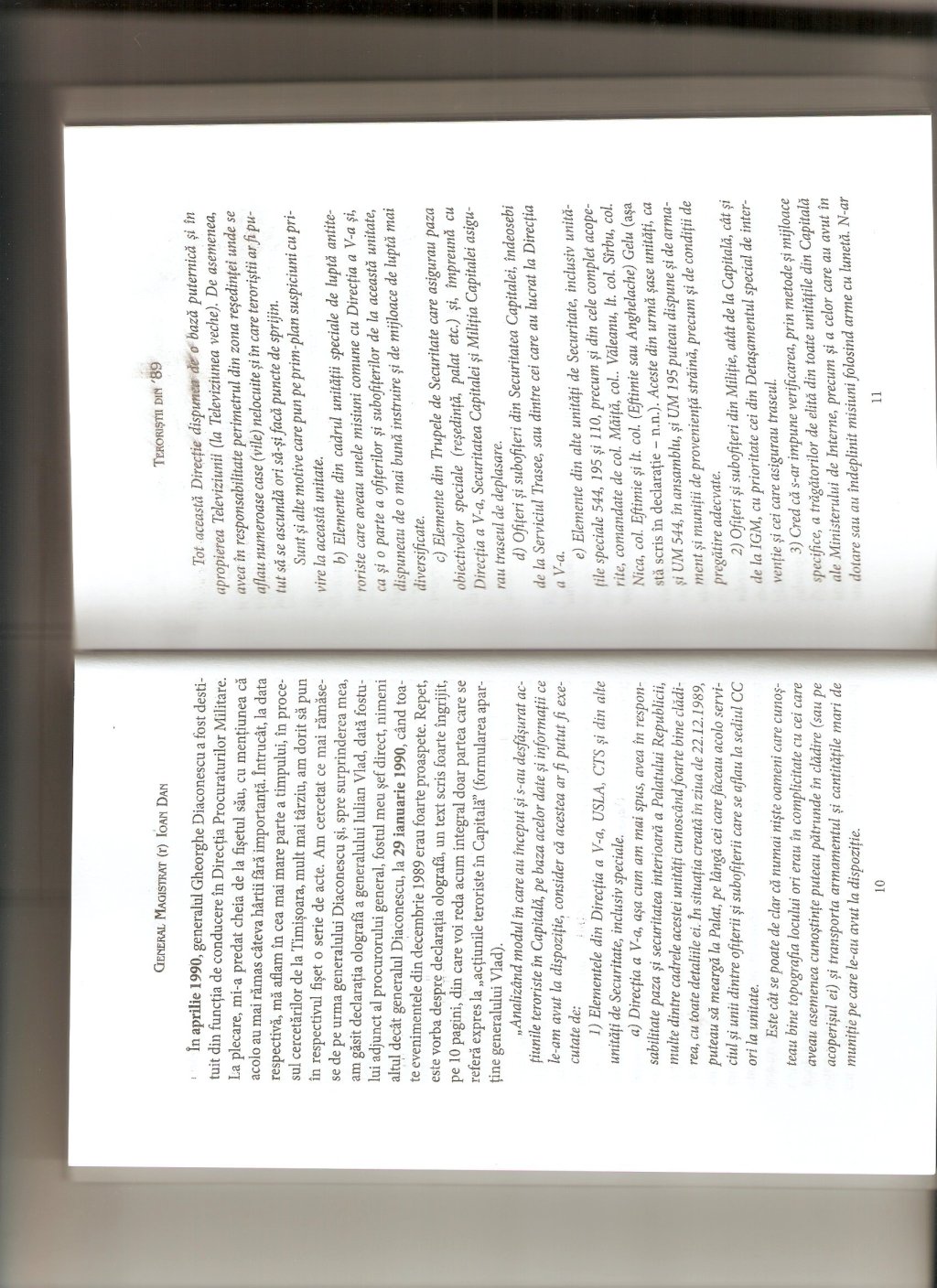
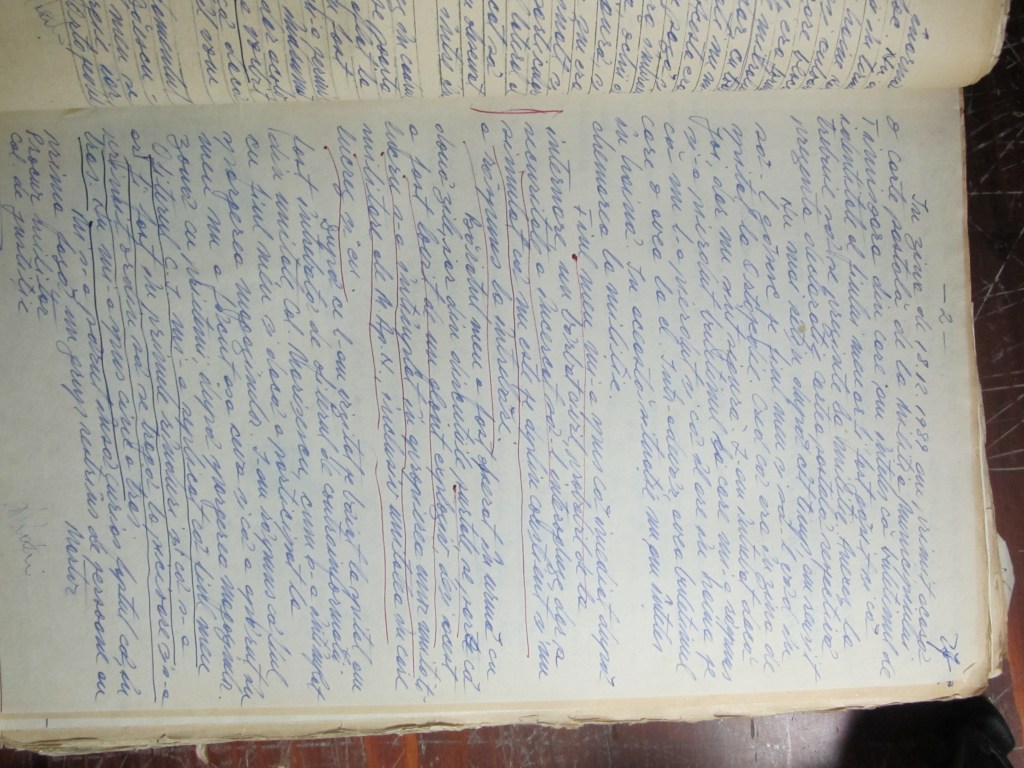
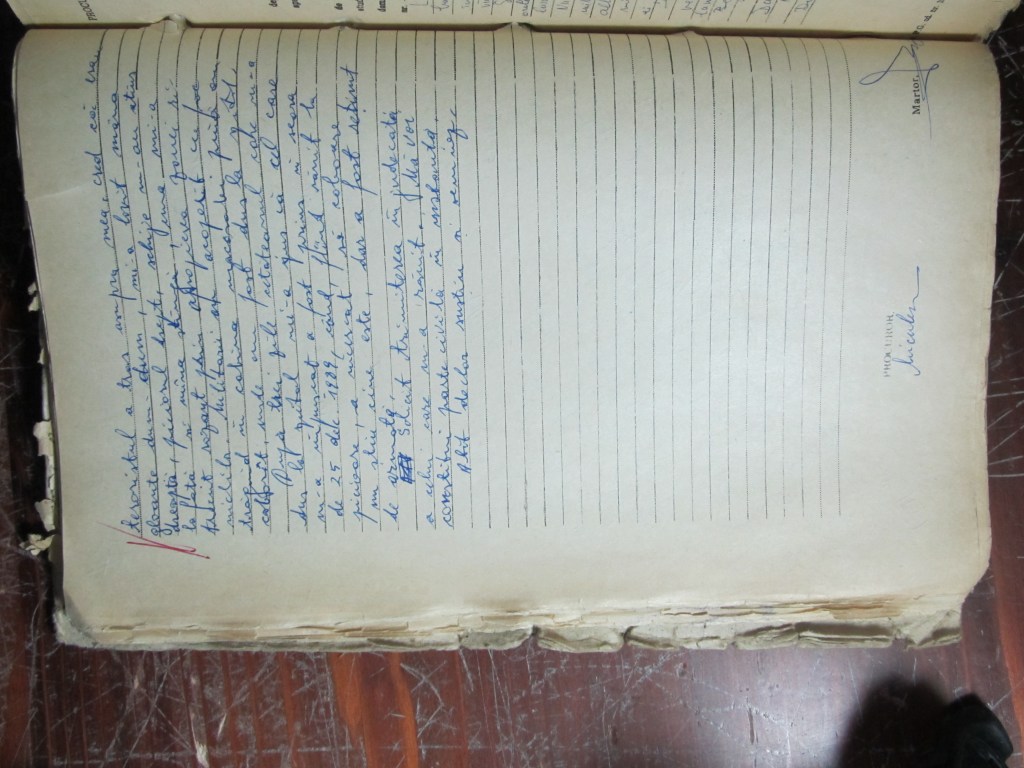
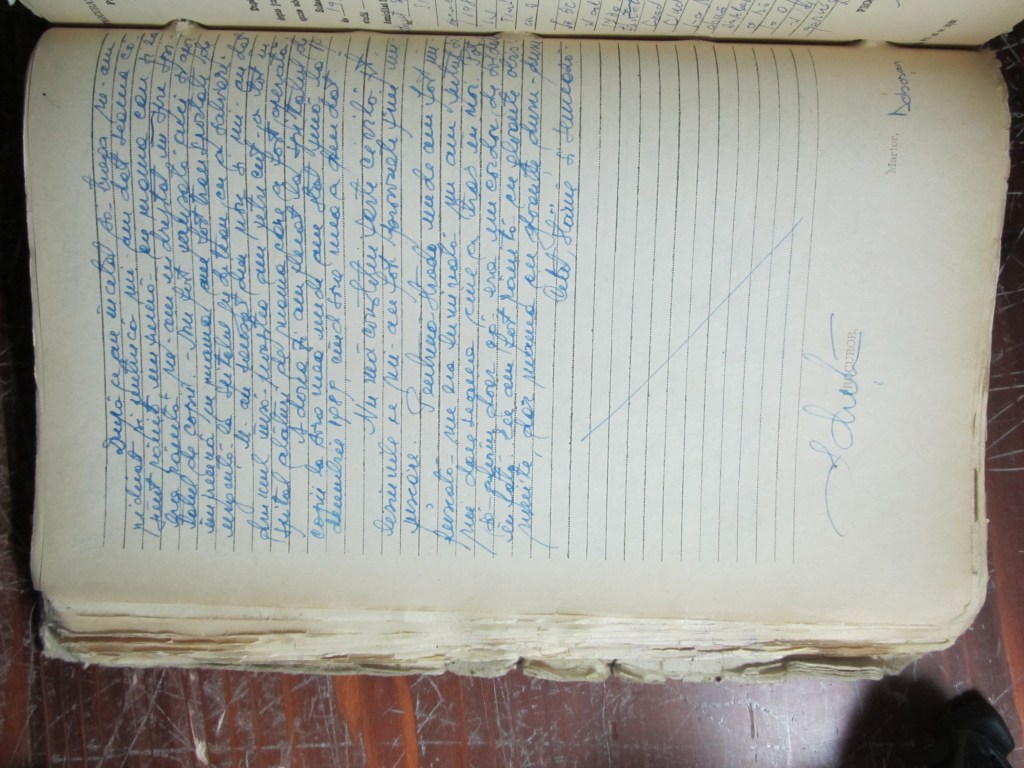
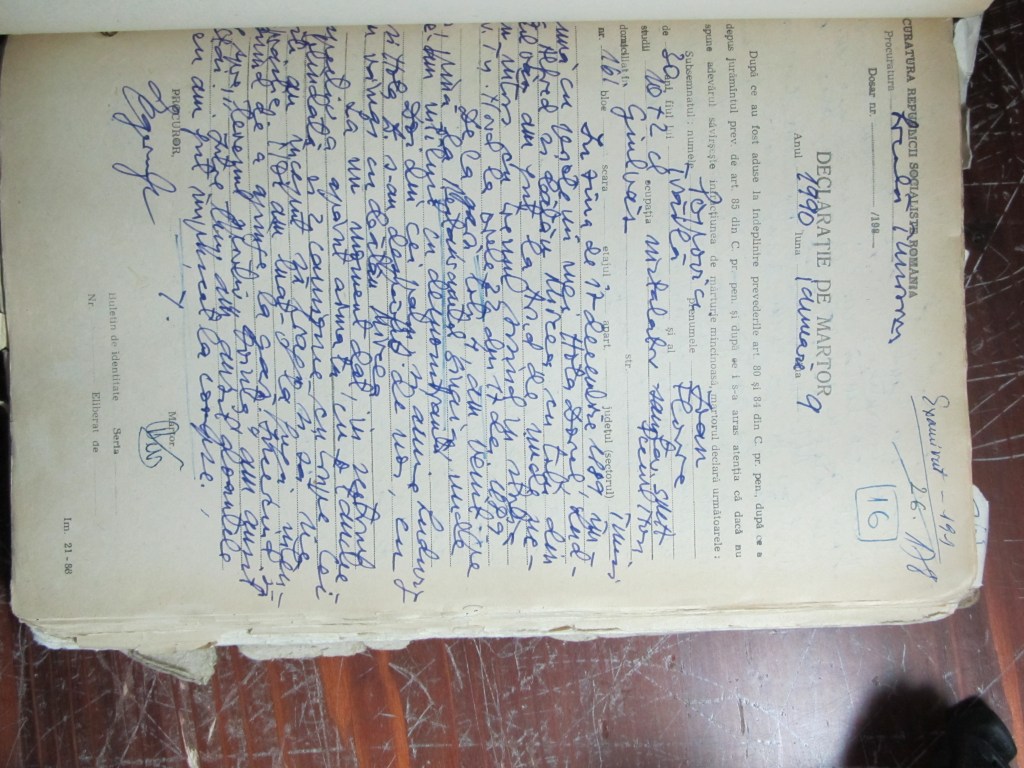
In aprilie 1990, generalul Ghoerghe Diaconescu a fost destituit din functia de conducere in Directia Procuraturilor Militare. La plecare, mi-a predat cheia de la fisteul sau, cu mentiunea ca acolo au mai ramas cateva hartii fara importanta. Intrucat, la data respectiva, ma aflam in cea mai mare parte a timpului, in procesul cercetarilor de la Timisoara, mult mai tarziu, am dorit sa pun in respectivul fiset o serie de acte. Am cercetat ce mai ramasese de pe urma generalului Diaconescu si, spre surprinderea mea, am gasit declaratia olografa a generalului Iulian Vlad, data fostului adjunct al procurorului general, fostul meu sef direct, nimeni altul decat generalul Diaconescu, la 29 ianuarie 1990, cand toate evenimentele din decembrie 1989 erau foarte proaspete. Repet, este vorba despre declaratia olografa, un text scris foarte ingrijit, pe 10 pagini, din care voi reda acum integral doar partea care se refera expres la “actiunile teroriste in Capitala” (formularea apartine generalului Vlad).
“Analizand modul in care au inceput si s-au desfasurat actiunile teroriste in Capitala, pe baza acelor date si informatii ce le-am avut la dispozitie, consider ca acestea ar fi putut fi executate de:
1) Elementele din Directia a V-a, USLA, CTS si din alte unitati de Securitate, inclusiv speciale.
a) Directia a V-a, asa cum am mai spus, avea in responsabilitate paza si securitatea interioara a Palatului Republicii, multe dintre cadrele acestei unitati cunoscand foarte bine cladirea, cu toate detaliile ei. In situatia creata in ziua de 22.12.1989, puteau sa mearga la Palat, pe langa cei care faceau acolo serviciul si unii dintre ofiterii si subofiterii care se aflau la sediul CC ori la unitate.
Este ca se poate de clar ca numai niste oameni care cunosteanu bine topografia locului ori erau in complicitate cu cei care aveau asemenea cunostinte puteau patrunde in cladire (sau pe acoperisul ei) si transporta armamentul si cantitatile mari de munitie pe care le-au avut la dispozitie.
Tot aceasta Directie dispunea de o baza puternica si in apropierea Televiziunii (la Televiziunea veche). De asemenea, avea in responsabilitate perimetrul din zona resedintei unde se aflau numeroase case (vile) nelocuite si in care teroristii ar fi putut sa se ascunda ori sa-si faca puncte de sprijin.
Sunt si alte motive care pun pe prim-plan suspiciuni cu privire la aceasta unitate.
b) Elemente din cadrul unitatii speciale de lupta antiterroriste care aveau unele misiuni comune cu Directia a V-a si, ca si o parte a ofiterilor si subofiterilor de la aceasta unitate, dispuneau de o mai buna instruire si de mijloace de lupta mai diversificate.
c) Elemente din Trupele de Securitate care asigurau paza obiectivilor speciale (resedinta, palat etc.) si, impreuna cu Directia a-V-a, Securitatea Capitalei si Militia Capitalei asigurau traseul de deplasare.
d) Ofiteri si subofiteri din Securitatea Capitalei, indeosebi de la Serviciul Trasee, sau dintre cei care au lucrat la Directia a V-a.
e) Elemente din alte unitati de Securitate, inclusiv unitatile speciale 544, 195 si 110, precum si din cele complet acoperite, comandate de col. Maita, col. Valeanu, lt. col. Sirbu, col. Nica, col. Eftimie si lt. col. (Eftimie sau Anghelache) Gelu (asa sta scris in declaratie–n.n.). Aceste din urma sase unitati, ca si UM 544, in ansamblu, si UM 195 puteau dispune si de armament si munitii de provenienta straina, precum si de conditii de pregatire adecvate.
2) Ofiteri si subofiteri din Militie, atat de la Capitala, cat si de la IGM, cu prioritate cei din Detasamentul special de interventie si cei care asigurau traseul.
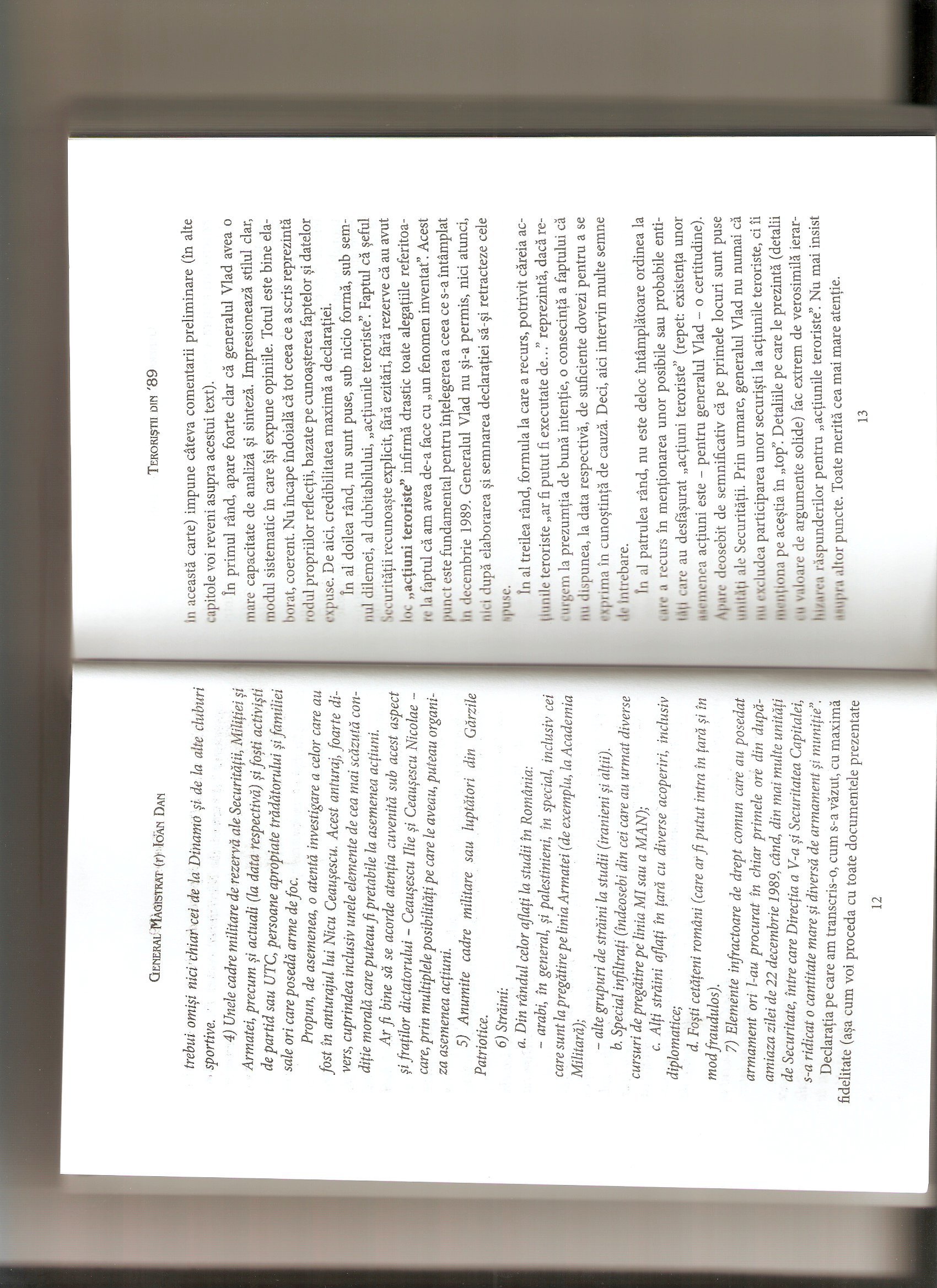
3) Cred ca s-ar impune verificarea, prin metode si mijloace specifice, a tragatorilor de elita din toate unitatile din Capitala ale Ministerului de Interne, precum si a celor care au avut in dotare sau au indeplinit misiuni folosind arme cu luneta. N-ar trebui omisi nici chiar cei de la Dinamo si de la alte cluburi sportive.
4) Unele cadre militare de rezerva ale Securitatii, Militiei si Armatei, precum si actuali (la data respectiva) si fosti activisti de partid sau UTC, persoane apropriate tradatorului si familiei sale ori care poseda arme de foc.
Propun, de asemenea, o atenta investigare a celor care au fost in anturajul lui Nicu Ceausescu. Acest anturaj, foarte divers, cuprindea inclusive unele elemente de cea mai scazuta conditie morala care puteau fi pretabile la asemenea actiuni.
Ar fi bine sa se acorde atentia cuvenita sub acest aspect si fratilor dictatorului–Ceausescu Ilie si Ceausescu Nicolae–care, prin multiplele posibilitati pe care le aveau, puteau organiza asemenea actiuni.
5) Anumite cadre militare sau luptatori din Garzile Patriotice.
6) Straini:
a. Din randul celor aflati la studii in Romania:
— arabi, in general, si palestinieni, in special, inclusiv cei care sunt la pregatire pe linia Armatei (de exemplu, la Academia Militara);
— alte grupuri de straini la studii (iranieni si altii).
b. Special infiltrati (indeosebi din cei care au urmat diverse cursuri de pregatire pe linia MI sau a MAN);
c. Alti straini aflati in tara cu diverse acoperiri, inclusiv diplomatice;
d. Fosti cetateni romani (care ar fi putut intra in tara si in mod fraudulos).
7) Elemente infractoare de drept comun care au posedat armament ori l-au procurat in chiar primele ore din dupa-amiaza zilei de 22 decembrie 1989, cand, din mai multe unitati de Securitate, intre care Directia a V-a si Securitatea Capitalei, s-a ridicat o cantitate mare si diversa de armament si munitie.”
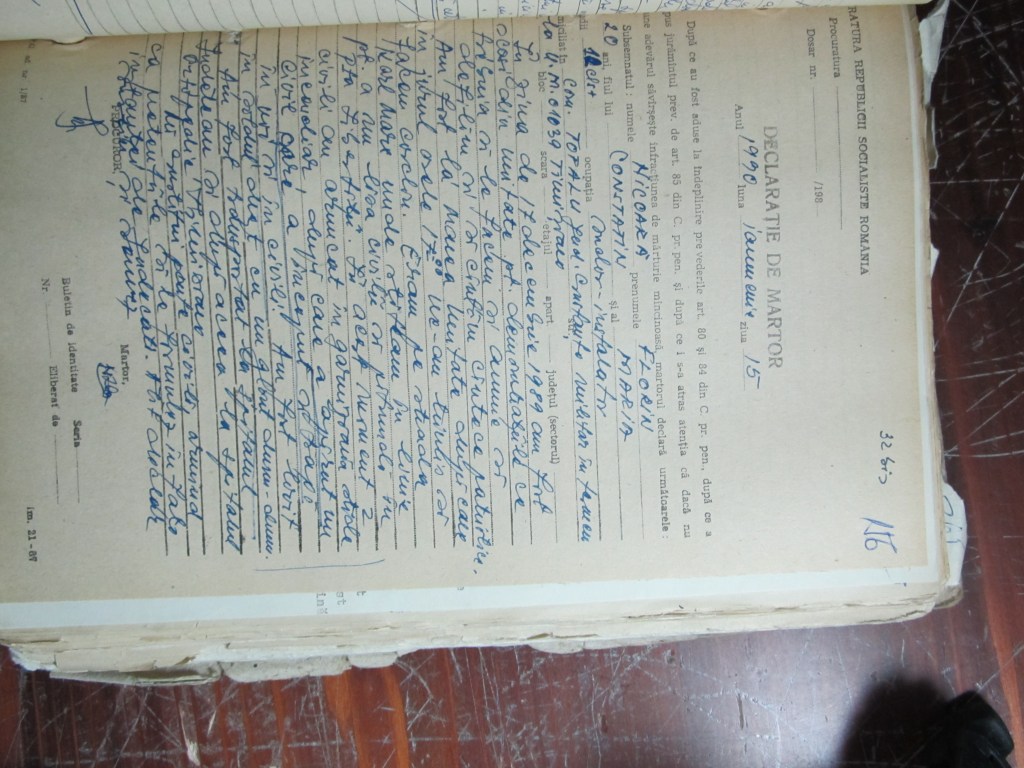
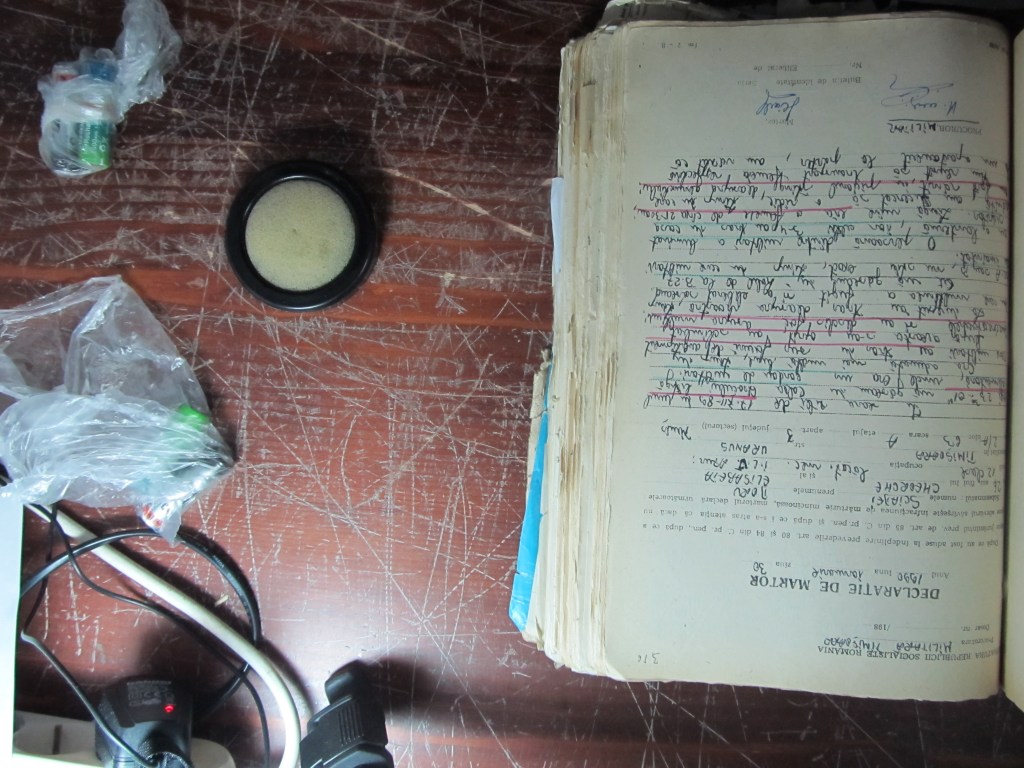
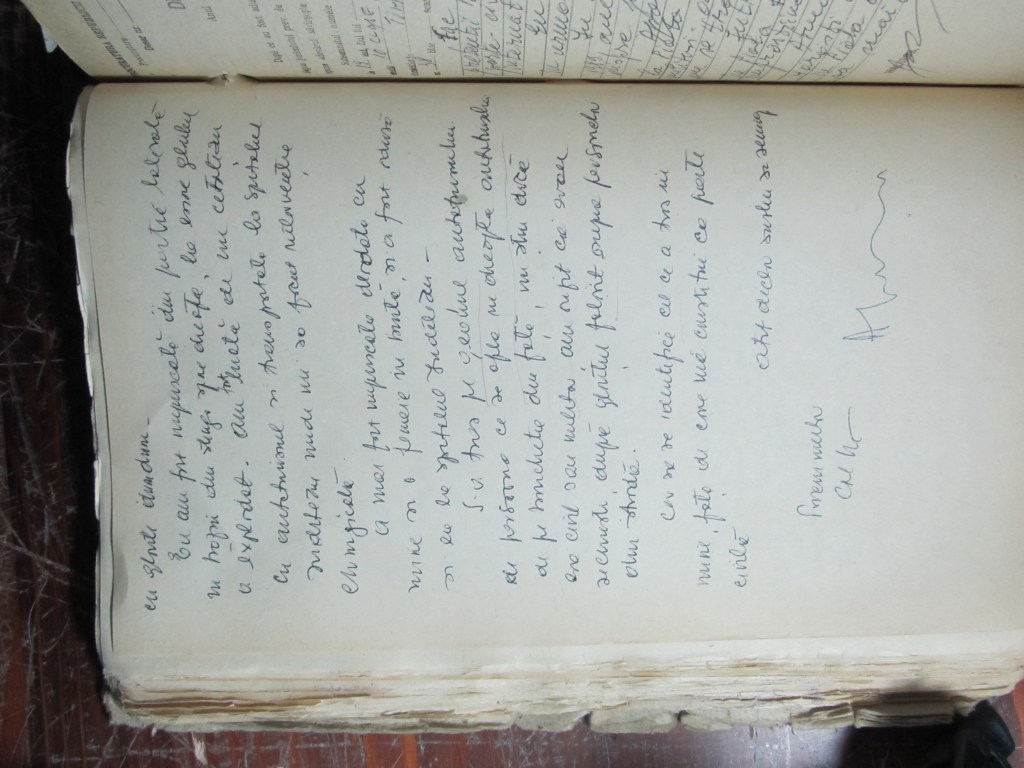
On 1 December 2012, Doru Teodor Maries and Asociatia 21 decembrie 1989 made images of many of the official files investigating the events of December 1989 in Timisoara available on the Internet at http://dosarelerevolutiei.ro/ . Among the copies available are testimonies from victims of the repression of the communist regime of Nicolae Ceausescu, witnesses of the repression, relatives of the victims of the repression, and members of regime forces that either participated in the repression or were witnesses to it. These documents allow researchers the ability to confirm or infirm claims made in the Romanian media or accounts published since December 1989.
[VA ROG, DACA VRETI, AJUTATI-MA CU TRANSCIERILE ILIZIBILE! VA MULTUMESC!!!]
Romulus Cristea (ziarist, Romania Libera, 22 decembrie 2005): – Munitia speciala, gloantele cu cap vidia sau dum-dum, a provocat victime? Presa de la acea vreme a fost plina cu astfel de relatari…
General-magistrat Dan Voinea – Nu exista victime (persoane impuscate) nici de la gloantele cu cap vidia, nici de la dum-dum.Pe durata evenimentelor s-a folosit munitie de razboi, munitie normala care se gasea la vremea respectiva in dotarea Ministerului de Interne si a Ministerului Apararii Nationale. Confuzia si informatiile false au aparut de la faptul ca se foloseau calibre diferite si, deci, zgomotul produs era altfel perceput. http://www.romanialibera.ro/opinii/interviuri/toti-alergau-dupa-un-inamic-invizibil-58783.html
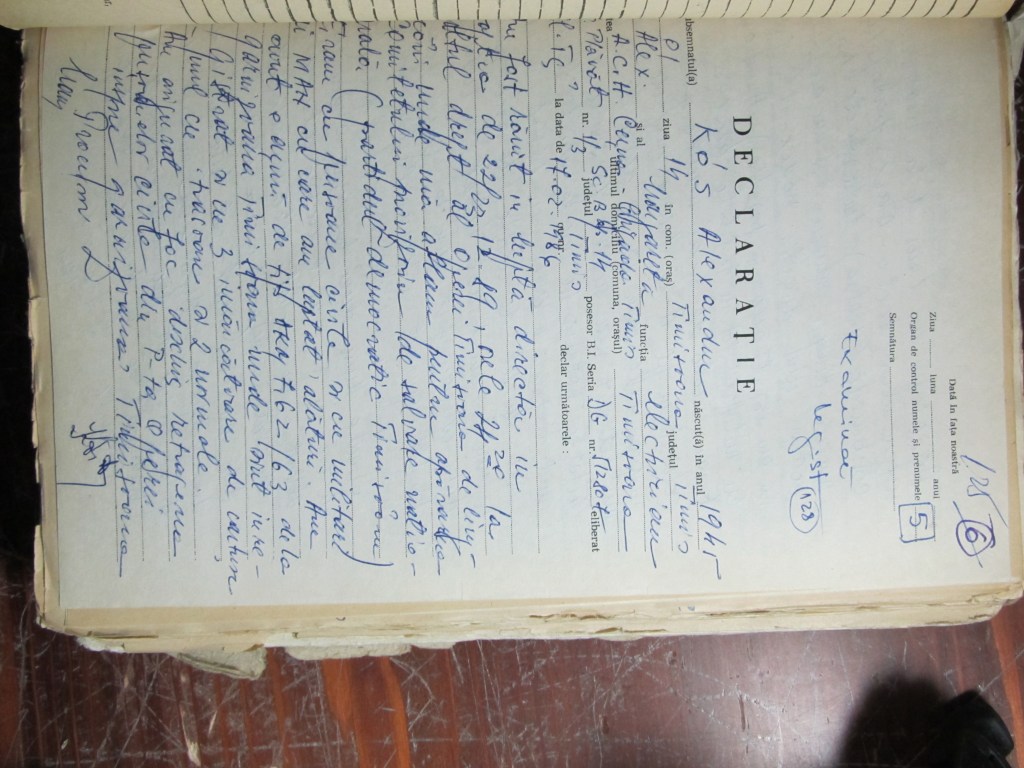
Mircea Stoica (declaratie, 8 ian 1990): “Cind am ajuns aici, la poarta o voce de militar din garnizoana s-a exprimat: “Ce faceti mai — voi toti cu BUM-BUM sau DUM-DUM si ni-i trimiteti noua sa ne spalam pe cap cu ei.”
Mircea Stoica (declaration, 8 January 1990): “When I got there, I heard a soldier’s voice from the garrison exclaim: “What are you guys doing? You all with your BUM-BUM or DUM-DUM and then you send`em to us to solve the problem [almost impossible to solve]” <very angry, pissed off>
(my sincere thanks to Gigga Adrian Tudor for this transcription and translation of the quote!)
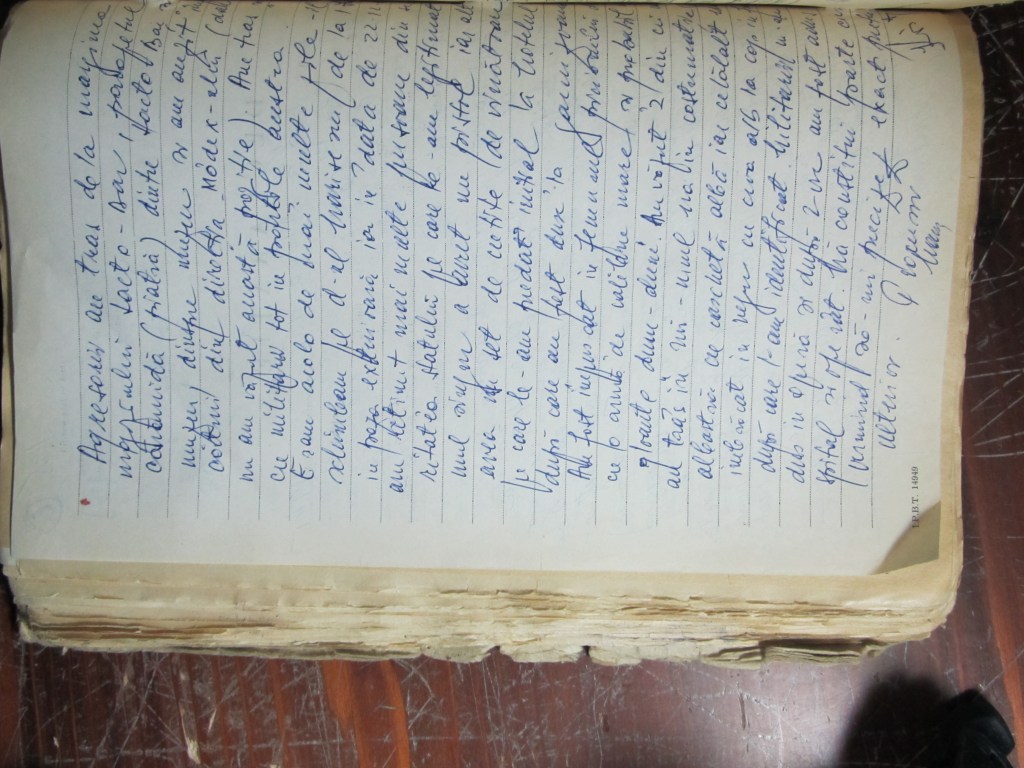
Popovici: “Mi-am revenit intr-un camion militar in care eram multi civili unii morti fiind adusi la garnizoana militara. La garnizoana eu am fost dat jos si predat unui cpt (capitan) sau unui lt.major (locotenent major). vazand rana mea n-a vrut sa ma primeasca exprimand: Voi trageti cu dum dum si noi sa raspundem pentru acest lucru.” (my thanks to A.K. for this transcription)
Popovici: “I came to in a military truck in which there were lots of civilians some dead being brought to the military garrison. At the garrison I was taken down and surrendered to a captain or lt. major, who looking at my wound did not want to receive me, exclaiming: You shoot with dum-dum bullets and we are held responsible for it.”
It doesn’t take a genius to recognize the important similarity between the testimonies of Mircea Stoica and Ioan Popovici: both are party to/overhear military personnel referring to the 1) use of DUM-DUM bullets, 2) that those who are using them are clearly not fellow soldiers and instead likely M.I./Securitate personnel, and 3) the Army personnel are resentful of essentially being left to “hold the bag” for the results of the DUM-DUM munitions!
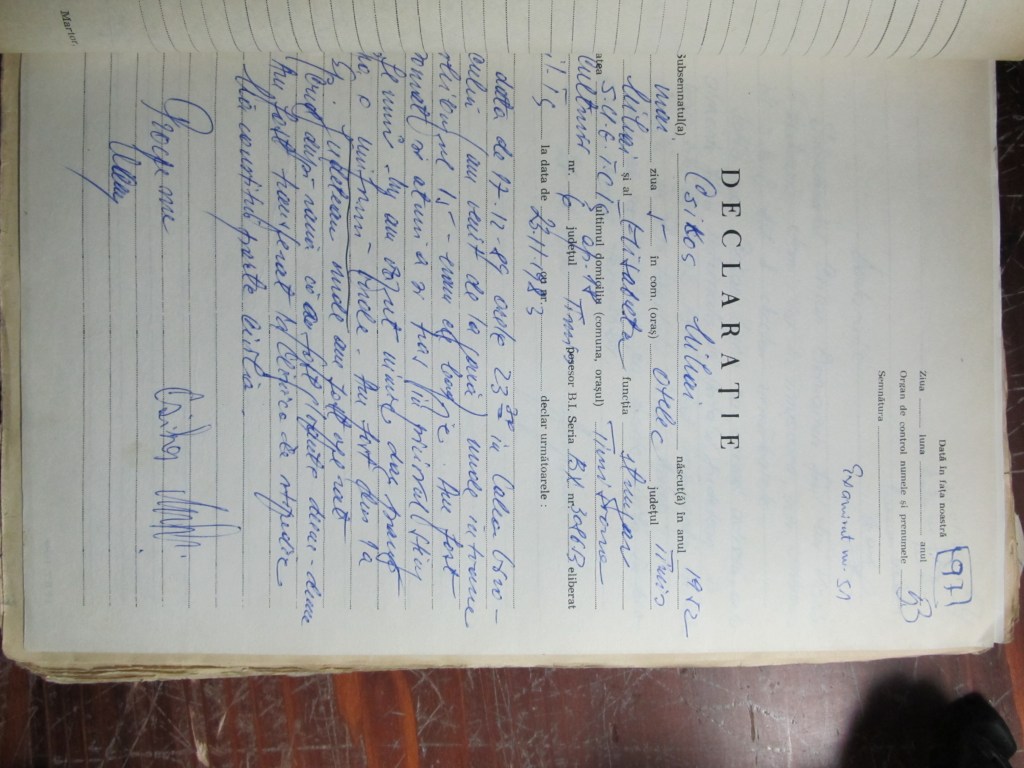
197. Partea vătămată Stoica Maria cere 500000 lei, lunar, contribuţie de întreţinere, motivînd că, în decembrie 1989, soţul ei, Mircea Stoica a fost împuşcat, patru luni spitalizat, a rămas handicapat (gradul II de invaliditate), apoi a decedat. În dovedirea cererii, depune acte de spitalizare şi de stabilire a capacităţii de muncă, care atestă vătămarea, cauzele şi consecinţele ei. Mai depune: declaraţia împuşcatului, actul lui de deces, actul de căsătorie şi carnetul de muncă (vol. 6 p. 304; vol. 10 p. 58-60, 170, 245-250; vol. 14 p. 54-61; vol. 27 p. 179-207).
“Cind am ajuns aici, la poarta o voce de militar din garnizoana s-a exprimat: “Ce faceti mai — voi toti cu BUM-BUM sau DUM-DUM si ni-i trimiteti noua sa ne spalam pe cap cu ei.”
Popovici: “Mi-am revenit intr-un camion militar in care eram multi civili unii morti fiind adusi la garnizoana militara. La garnizoana eu am fost dat jos si predat unui cpt (capitan) sau unui lt.major (locotenent major). vazand rana mea n-a vrut sa ma primeasca exprimand: Voi trageti cu dum dum si noi sa raspundem pentru acest lucru.” (my thanks to A.K. for this transcription)
Popovici: “I came to in a military truck in which there were lots of civilians some dead being brought to the military garrison. At the garrison I was taken down and surrendered to a captain or lt. major, who looking at my wound did not want to receive me, exclaiming: You shoot with dum-dum bullets and we are held responsible for it.”
Some excerpts: P.C.: Ati dat o declaratie? Po. I. : Da P.C.: O mentineti? Po. I. Da (p. 827) P.C.: “Inteleg sa fiu audiat in cauza ca parte civila”, da? V-as ruga sa faceti putin liniste! “Mentin declaratia de la Procuratura si…” (p. 833)
Po. I.: …Da [am fost ranit]. Si dupa aceea a venit unul dintre trei [civili mai in varsta] dupa mine, m-a tarat pana la masina si la masina, acolo, am luat o bataie…ca n-am putut doua saptamani nici sa mananc nimica. M-a lovit cu patul de arma in falca si cu bocancii in cap. Si m-au dus, m-au dus la Garnizoana. La Garnizoana m-au aruncat din masina si a venit ofiterul de serviciu. Au venit si acestia trei a spus lu’ ofiterul de serviciu, cica: “Luati-l si duceti-l la arest.” Atata retin foarte bine minte, ca ofiterul a spus, cica: “Nu, voi trageti cu dum-dum-uri si dupa aia Armata raspunde. Voi omorati oameni si raspunde Armata dupa aceea.” Asta tin minte precis. Si de acolo mi-am dat seama ca nu poate sa fie soldati aceia. (p. 830)
Doru Sciadei
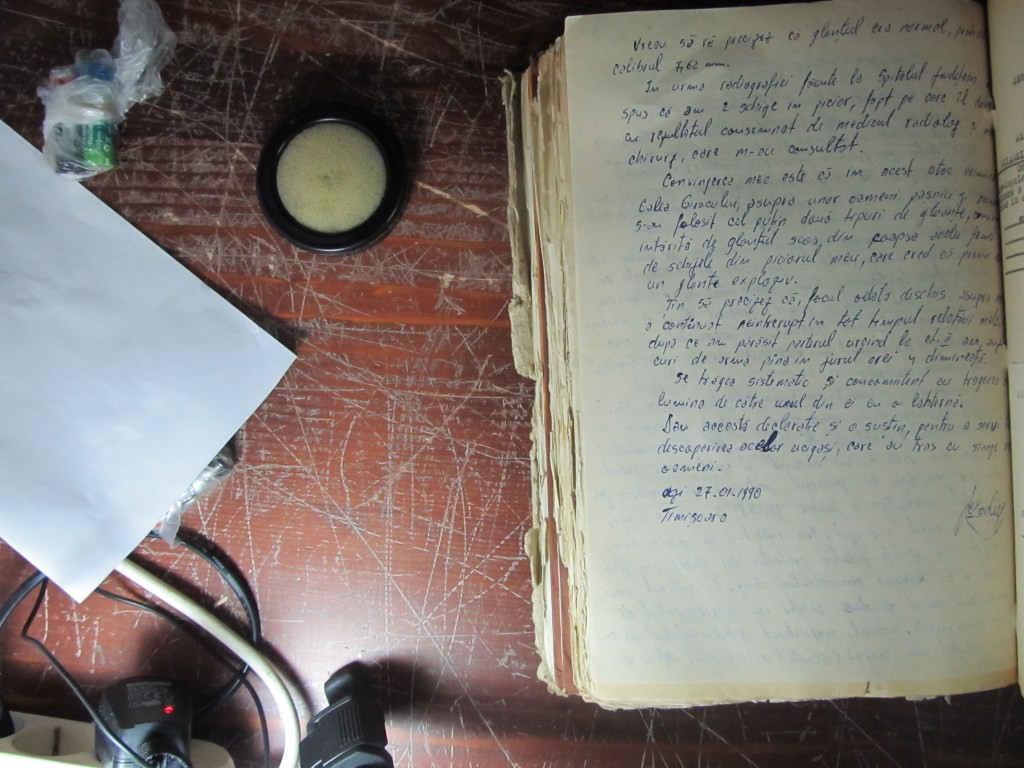
“In urma radiografiei facute la Spitalul Judetean au spus ca am 2 schije in picior…consemnat de medicul radiolog si chirurg, care m-au consultat.
Convingerea mea este ca in acest atac (pe ?) Calea Girocului, asupra unor oameni pasnici si (?) s-au folosit cel putin doua tipuri de gloante, convingerea intirita de glontul scos din coapsa (?) si schijele din piciorul meu, care cred ca provin de un glonte exploziv.
Doina Gherasim glonte dum dum
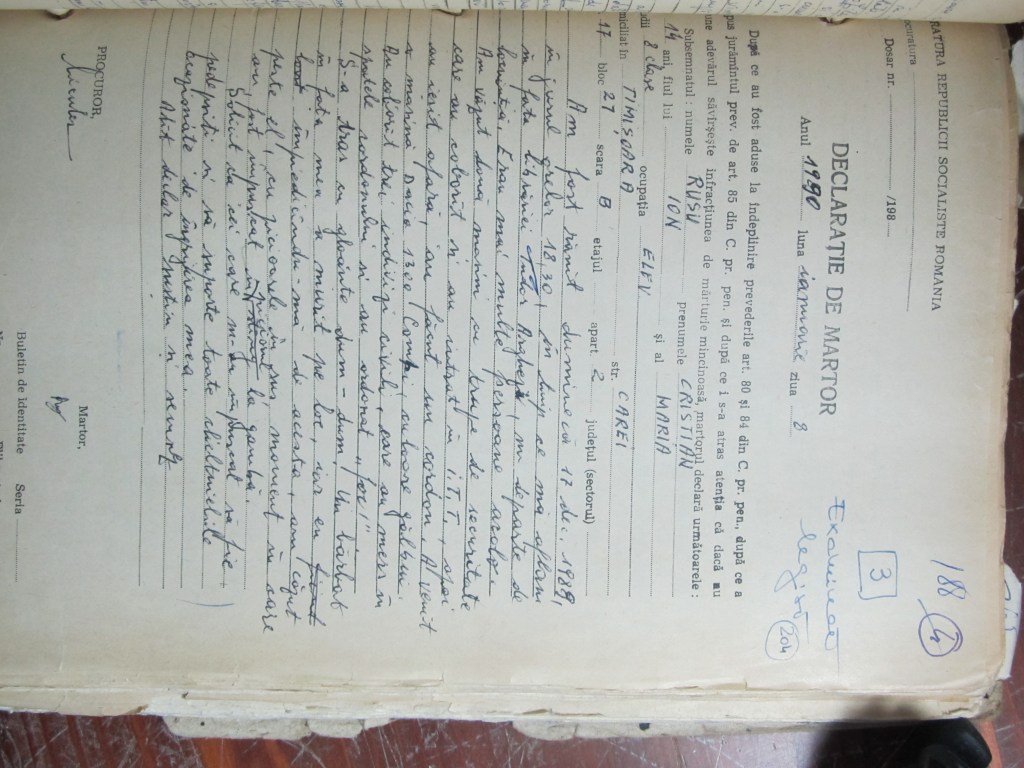
Cristian Rusu “S-a tras cu gloante dum-dum”
SIX Doctors/Medical personnel from Timisoara alone have discussed the use of dum-dum bullets against demonstrators in Timisoara…
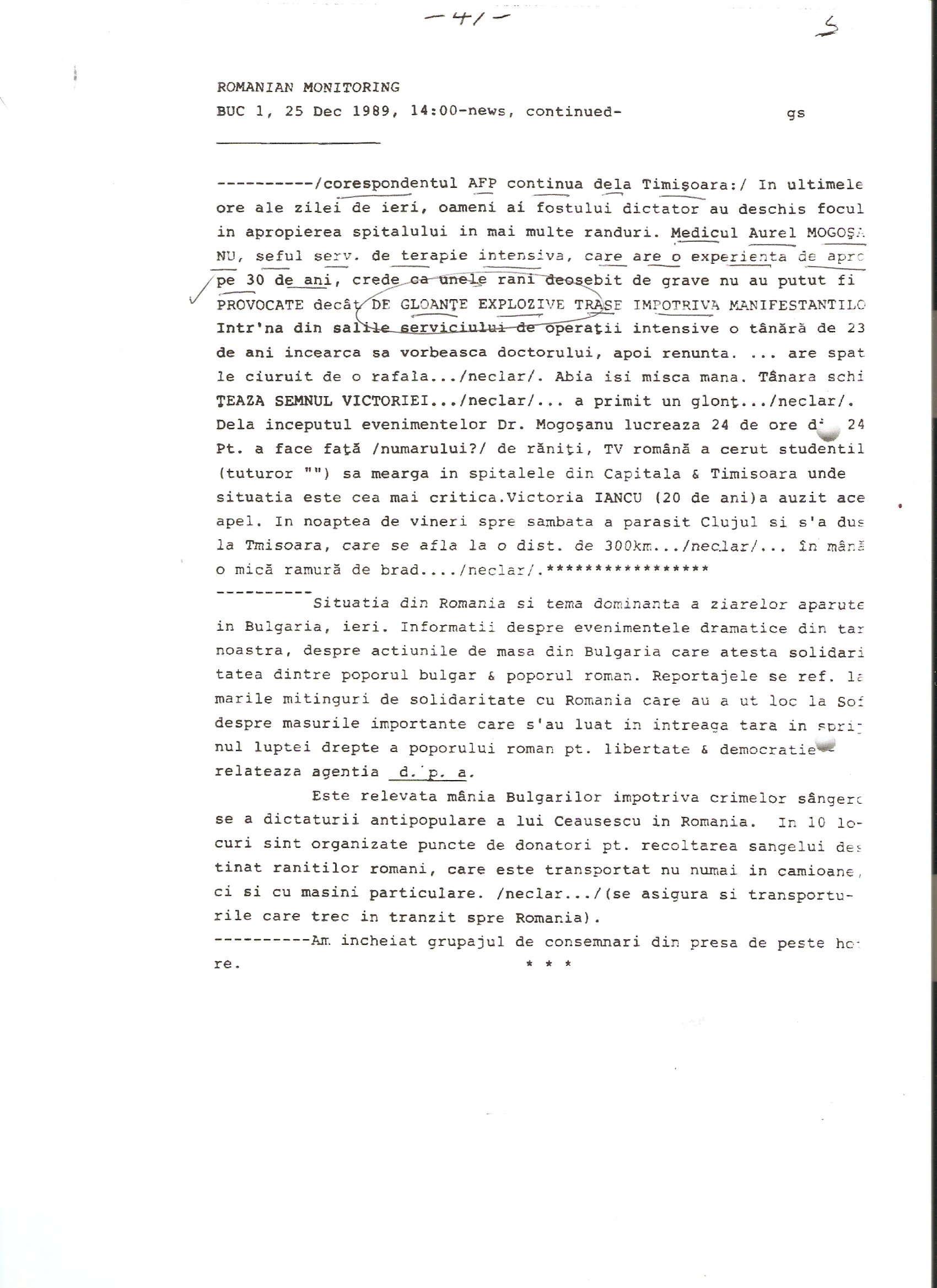
Doctors also reported on the wounds caused by explosive bullets (i.e. dum-dum bullets): In this dispatch from Agence France Presse, relayed by Radio Free Europe on 25 December 1989, Dr. Aurel Mogosanu, a medic in the intensive care unit of a Timisoara hospital, says based on his thirty years of experience, some of the wounds could only have been CAUSED by EXPLOSIVE BULLETS SHOT AT THE PROTESTERS”
Roumanie, prev Nuit de Noel a l hopital central de Timisoara De l un des envoyes speciaux de l AFP, NICOLAS MILETITCH
TIMISOARA (Roumanie) 25 dec – Devant l hopital central de Timisoara, dimanche soir, une quarantaine de camions remplis de medicaments et de produits alimentaires tout juste arrives, attendaient d etre decharges.
” L aide nous vient d un peu partout. Hongrie, RFA, Tchecoslovaquie, France, Yougoslavie, URSS, Bulgarie, Italie… ” , indique a l AFP l un des soldats qui gardent l hopital. Les militaires sont partout autour de l hopital, sur les toits, dans les cours et meme a l interieur.
” Des hommes de la Securitate ont tire pres de l hopital a plusieurs reprises, ces dernieres heures ” , explique le docteur Aurel Mogosianu, chef du service de soins intensifs, en donnant des ordres a un soldat qui passe, la mitraillette a l epaule, dans un couloir, entre les malades.
Le Dr Mogosianu, qui a une trentaine d annees d experience, pense que certaines blessures particulierement horribles, n ont pu etre provoquees que par des balles explosives tirees contre les manifestants.
Dans une salle de soins intensifs, une femme de 23 ans essaie de parler au docteur, puis renonce. ” C est un cas difficile. Elle a eu le dos transperce par une rafale ” , precise le Dr Mogosianu.
En bougeant a peine la main, la jeune femme esquisse le ” V ” de la victoire pour dire ” au revoir ” . Un effort irrealisable pour son voisin qui a recu une balle dans le cou, impossible a extraire.
Comme la plupart de ses collegues, le docteur travaille, a peu de choses pres, 24 heures sur 24 depuis le debut des evenements. Dans un coin, une infirmiere dort, ecroulee sur une chaise.
Pour faire face a l afflux de blesses, la television de Bucarest a demande a tous les etudiants en medecine du pays de se rendre dans les hopitaux de la capitale et de Timisoara, ou la situation est la plus critique.
Victor Jancu, 20 ans, a entendu cet appel. Dans la nuit de vendredi a samedi, il a quitte Cluj et reussi a rejoindre Timisoara, a plus de 300 kms de la, en arretant des camions.
Quelques visiteurs arrivent a l hopital, portant a la main une petite branche de sapin : a Timisoara aussi, on voudrait feter Noel.
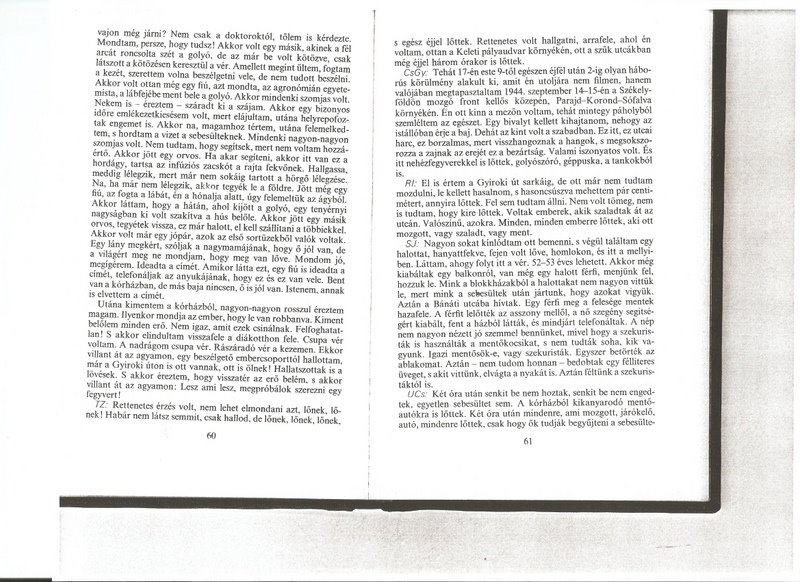
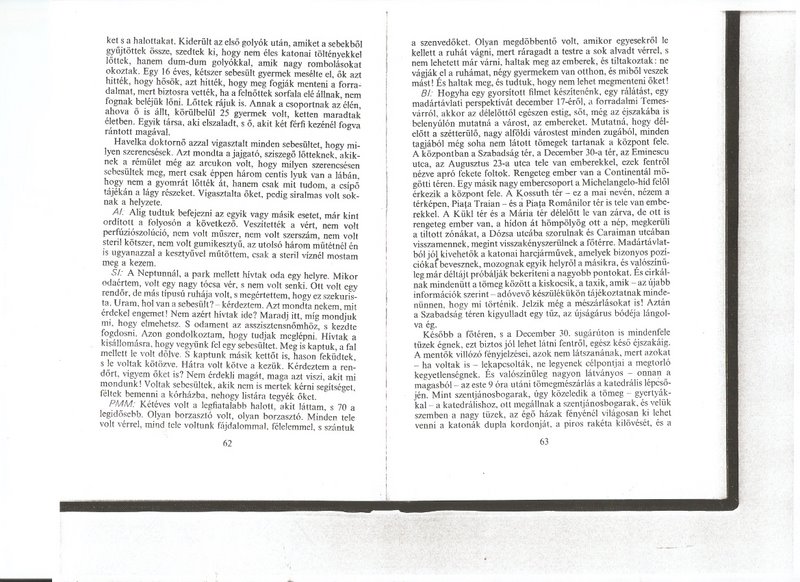
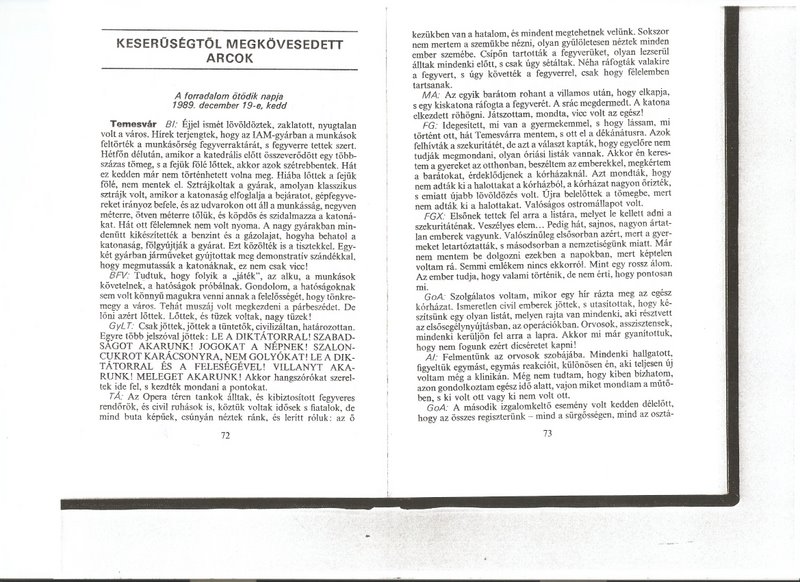
Rodica Novac’s claim is corroborated elsewhere by four other medical officials on call during the Timisoara repression. First, in Romanian, by Dr. Atanasie Barzeanu, then in Hungarian by three doctors (Vladimir Fluture, Csaba Ungor, and Andras Goga) present and performing surgery in Timisoara hospitals from 17-19 december 1989 who recount separately their discovery of dum-dum exploding bullets among the bullets with which demonstrators arriving at the hospital had been shot. december 1989: temesvari orvosok, dum-dum golyok, es a roman forradalom
Sava Florica, 33 de ani, vinzatoare la Loto-pronosport in cartierul Fabric, impuscata din mers, in Piata Traian
Barzeanu Atanasie, 65 anit, medic primar, doctor in stiinte, chirurg, Spitalul Judetean Timisoara
“…sintem deci in 18 decembrie…Pe la orele doua si patruzeci, cind inchideam o operatie–Sava Florica, 33 de ani, vinzatoare la Loto-pronosport in cartierul Fabric, impuscata din mers, in Piata Traian, dintr-un ARO, pacienta prezentindu-se o echimoza cu distrugerea tesuturilor (plaga in diametru de 15 centimetri), a tesuturilor din regiunea epigastrica, inclusiv a muschilor drepti abdominali, cu ruptura a colonului ascendent transvers si a jejuno-ileonului, fiind in stare de soc grav traumatic, hemoragic–, fara sa-mi poti explica nici macar acum cu ce fel de gloante a putut fi lovita, pentru ca nu am identificat nici orificiul de iesire si nici pe cel de intrare, a venit o asistenta de la Chirurgie I, care mi-a spus sa merg la domnul Ignat.”
Titus Suciu, Reportaj cu Sufletul la Gura, (Editura Facla 1990), pp. 133-134.
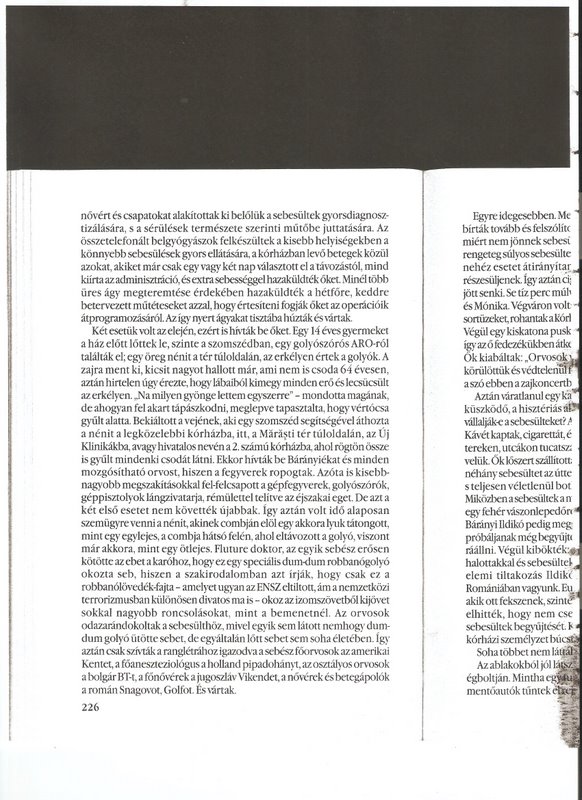
The following first appeared in Gyorgy Mandics’s Temesvari golgota (1991) pp. 348-349 and is reprinted in his A Manipulalt Forradalom (2009). [My guess is this is also the source for the reference to dum dum bullets in the German language wikipedia entry for http://de.wikipedia.org/wiki/Rum%C3%A4nische_Revolution_1989 — Hans Vastag, György Mandics, Manfred Engelmann: Temeswar. Symbol der Freiheit. Wien 1992. ]
pp. 348-349
Ket esetuk volt az elejen. Ezert is hivtak be oket. Egy 14 eves gyermeket a haz elott lottek le, szinte a szomszedban, egy golyoszoros ARO-rol talaltak el; egy oreg nenit a ter tuloldalon, az erkelyen ertek a golyok. A zarja ment ki, kicsit nagyott hallott mar, amire is csoda, 64 evesen, azt hirtelen ugy erezte, hogy labaibol kimegy minden ero es lecsusott az erholya. Na milyen gyonge lettem egyszeruen–mondotta maganak. de ahogyan fel akart tapaszkodni meg lepve tapasztalt, hogy vertocsa gyult alatta. Bekialtolt a vegenek aki egy szomszed segitsegevel athozta a nenit a legkozelebbi korhazba, itt a Marasti ter tuloldalan, az uj Klinikakba, avagy hivatalos neven a 2 szamu korhazba, ahol rogton osszecodult mindenki csodat latni. Ekkor hivtak be Baranziekat es minden mozgositato orvost, hiszen a fegyverek ropogatak. Azota is kisebb nagyobb megszakitasokkal, felfelecsapolt a gepfegyverek, golyoszorok, geppisztolyok langzivatarja, remulettel telitva az ejszaki eget.
p. 349
De azt a ket elso esett nem kovettek ujabbok. Igz aztan volt ido alaposan szemugyre venni a nenit akinek combjan elol egz akkora lyuk tatongott mint egy egy lejes, a comba hatso felen ahol eltavotott a golyo, ott viszont mar akkora mint egy otlejes. Fluture doktor, az egzik sebesz erosen kototte az ebet a korohoz, hogy ez egz specialis dum-dum robbanogolyo okozta seb, hiszen a szakirodalomban azt irjak, hogy csak ez a robbannolovedek-fajta-amelyet ugyan az ENSZ eltitott, am a nemzetkozi terrorizmusban kulonesen divatos ma is–okoz az izomszovetbol kijovet sokkal nagyobb roncsolasokat mint a bemenetnel. Az orvosok odazarandokoltak a sebesulthoz, mivel egzik sem latott semhogy dum-dum golyo utotte sebet, de egyaltalan lott sebet sem soha eleteben. Igz aztan csak szivtak a rangeletrahoz igazodva a sebesz foorvosok az amerikai Kentet, a foamnesztezialogus a holland pipadohanyt, az asztalyos orovosok a bolgar BT-t, a fonoverek a jugoslav Vikend-et, a noverek es helyapolok a roman Snagov-t, Golfot. Es vartak.
(Note: it is unclear who the 64 yr. old described was…there are several individuals without ages listed as injured or dead during the events, but I think it more likely the age of the woman is incorrect)
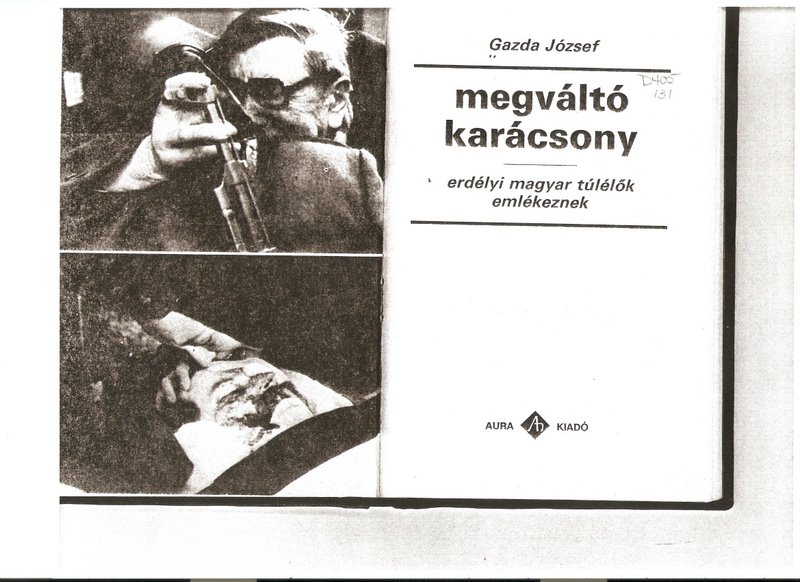
Jozsef Gazda Megvalto karacsony. Erdelyi magyar tulelok emlekeznek. (1990)
Ungor Csaba: Ket ora utan senkit be nem hoztak, senkit be nem engedtek, egyetlen sebesult sem. A korhazbol kikanyarado mentoautokra is lottek. Ket ora utan mindre, ami mozgott, jarokelo, auto, mindenre lottek, csak hogy ok tudjak begyujteni a sebesulteket s a halottakat. Kiderult az elso golyok utan, amiket a sebekbol gyujottek ossze, szedtek ki, hogy nem eles katonai toltenyekkel lottek, hanem dum-dum golyokkal, amik nagy rombolasokat okoztak. Egy 16 eves, ketszer sebesult gyermek meselte el, ok azt hittek, hogy hosok, azt hittek, hogy meg fogjak menteni a forradalmat, mert biztosra vettek, ha a felnottek sorfala ele allnak, nem fognak belejuk loni. Lottek rajuk is.
Goga Andras: A masodik izgalomkelto esemeny volt kedden delelott, hogy az osszes regiszterunk–mind a surgossegen, mind az osztalyon–, melyekre felirtuk a muteteinket, eltuntek, a mai napig sem talaltuk meg. Bennuk voltak az ev osszes mutetei[***]…En aznap kettot operaltam. Egy tuntetonek a bore alol vettem ki egy nagyon kulonleges golyok, nem is golyot, egy ilyen repeszdarabot, melyet a katonasag aztan megvizsgalt, s azt mondtak, nekik nincs tudmasuk, hogy ez mi lehet. Egy masiknak pedig fejserulese volt, persze abban nem talaltam golyot, atment rajta.
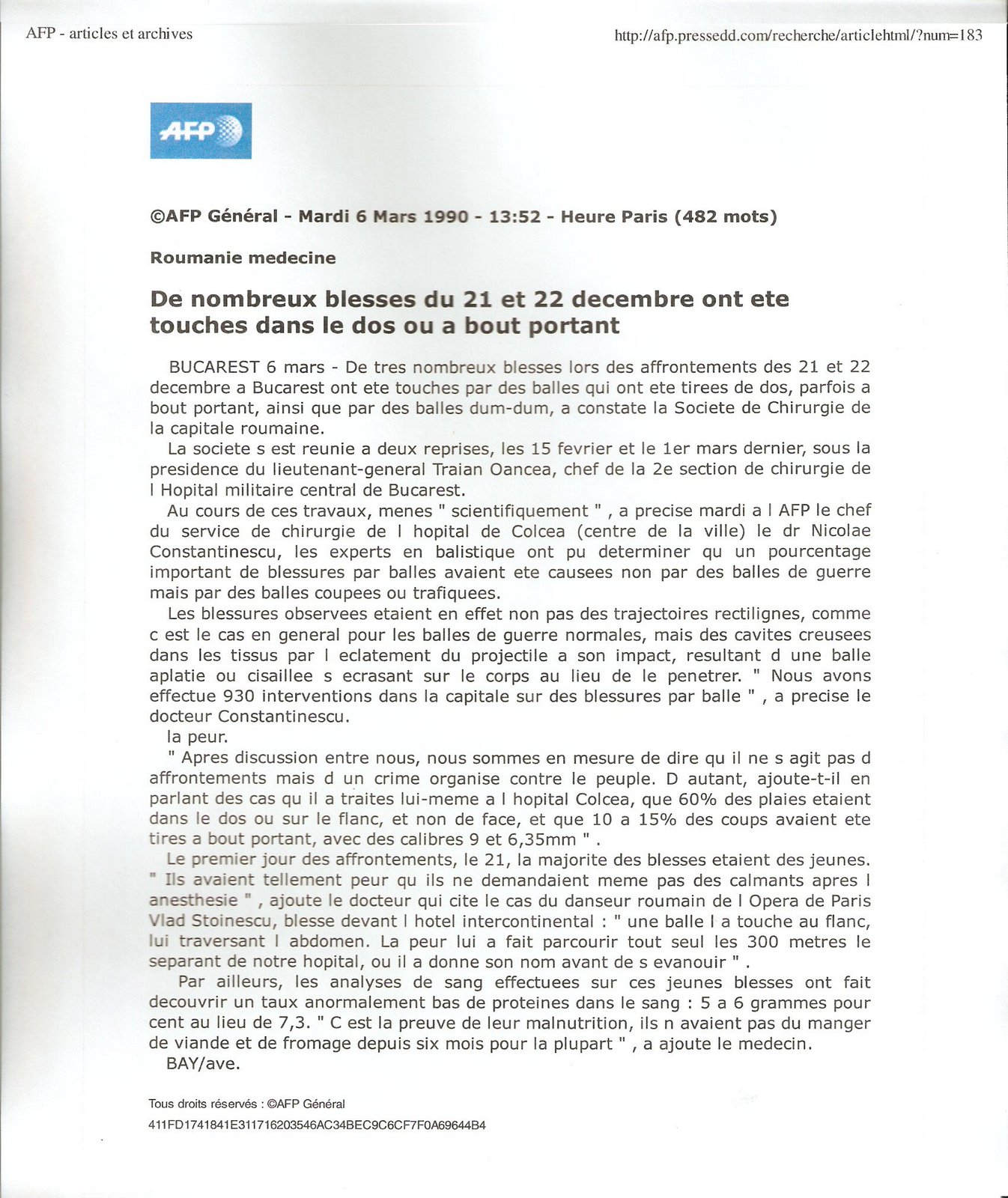
In early March 1990, AFP reported the declared findings of surgeons in Bucharest, attesting to the fact that many of those wounded on 21-22 December 1989 in Bucharest had been shot with exploding bullets, DUM-DUM bullets. This is a critical article (and description of an event that I believe has gotten almost no coverage inside or outside Romania). Lt. Gnl. Traian Oancea, chief of surgery in part of the Central Military Hospital in Bucharest, and Dr. Nicolae “Nae” Constantinescu, chief of surgery at the Coltea Hospital, discussed this at a meeting of the Society of Surgeons in Bucharest.
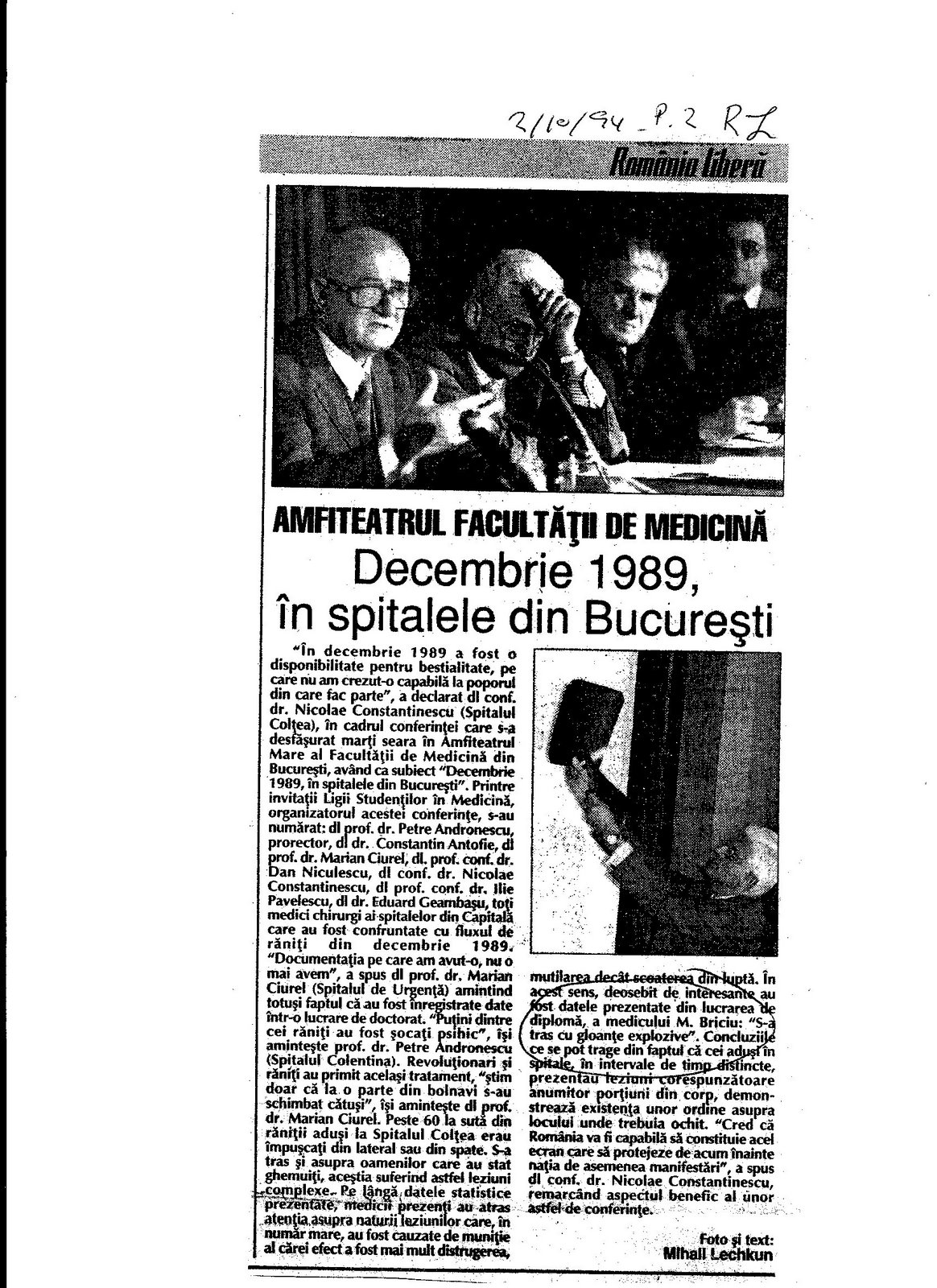
This was also discussed by Bucharest medical personnel at a 1994 conference:
AMFITEATRUL FACULTATII DE MEDICINA
“Decembrie 1989, in spitalele din Bucuresti”
Mihail Lechkun, Romania Libera, 10 februarie 1994, p. 2
“In decembrie 1989 a fost o disponsibilitate pentru bestialitate, pe care nu am crezut-o capabila la poporul care fac parte, ” a declarat dl. conf. dr. Nicolae Constantinescu (Spitalul Coltea), in cadrul conferintei care s-a desfasurat marti seara in Amfiteatrul Mare al Facultatii de Medicina din Bucurest, avand ca subiect “Decembrie 1989, in spitalele din Bucuresti”. Printre invitatii Ligii Studentilor in Medicina, organizatorul acestei conferinte, s-au numarat: dl. prof. dr. Petre Andronescu, prorector, dl. dr. Constantin Antofie, dl. prof. dr. Marian Ciurel, dl. prof. conf. dr. Dan Niculescu, dl. conf. dr. Nicolae Constantinescu, dl. prof. conf. dr. Ilie Pavelescu, dl. dr. Eduard Geambasu, toti medici chirurgi din Capitala care au fost confruntate cu fluxul de raniti din decembrie 1989. “Documentatia pe care am avut-o, nu o mai avem,” a spus dl. prof. dr. Marian Ciurel (Spitalul de Urgenta) amintind totusi faptul ca au fost inregistrate date intr-o lucrare de doctorat. “Putini dintre cei raniti au fost socati psihic,” isi aminteste prof. dr. Petre Andronescu (Spitalul Colentina). Revolutionari si raniti au primit acelasi tratament, “stim doar ca la o parte din bolnavi s-au schimbat catusi” isi aminteste dl. prof. dr. Marian Ciurel. Peste 60 la suta din ranitii adusi la Spitalul Coltea erau impuscati lateral sau din spate. S-a tras si asupra oamenilor care au stat ghemuiti, acestia suferind astfel leziuni complexe. Pe langa datele statistice prezentate, medicii prezenti au atras atentia asupra naturii leziunilor care, in numar mare, au fost cazate de munitie al carie efect a fost mai mult distrugerea, mutilarea decat scoaterea din lupta. In acest sens, deosebit de interesante au fost datele prezentate din lucrarea de diploma, a medicului M. Briciu: “S-a tras cu gloante explozive”. Concluziile ce se pot trage din faptul ca cei adusi in spitale, in intervale de timp distincte, prezentau leziuni corespunzatoare anumitor portiuni din corp, demonstreaza existenta unor ordine asupra locului unde trebuia ochit. “Cred ca Romania va fi capabila sa constituie acel ecran care sa protejeze de acum inainte natia de asemenea manifestari,” a spus dl. conf. dr. Nicolae Constantinescu, remarcand aspectul benefic al unor astfel de conferinte.
NOR WERE THESE THE ONLY DOCTORS AND MEDICAL PERSONNEL–FOREIGN OR DOMESTIC–WHO ATTESTED TO THE USE OF DUM-DUM EXPLODING AND OTHER ATYPICAL, UNUSUAL MUNITIONS USED DURING THE EVENTS OF DECEMBER 1989
Posted by romanianrevolutionofdecember1989 on March 12, 2013
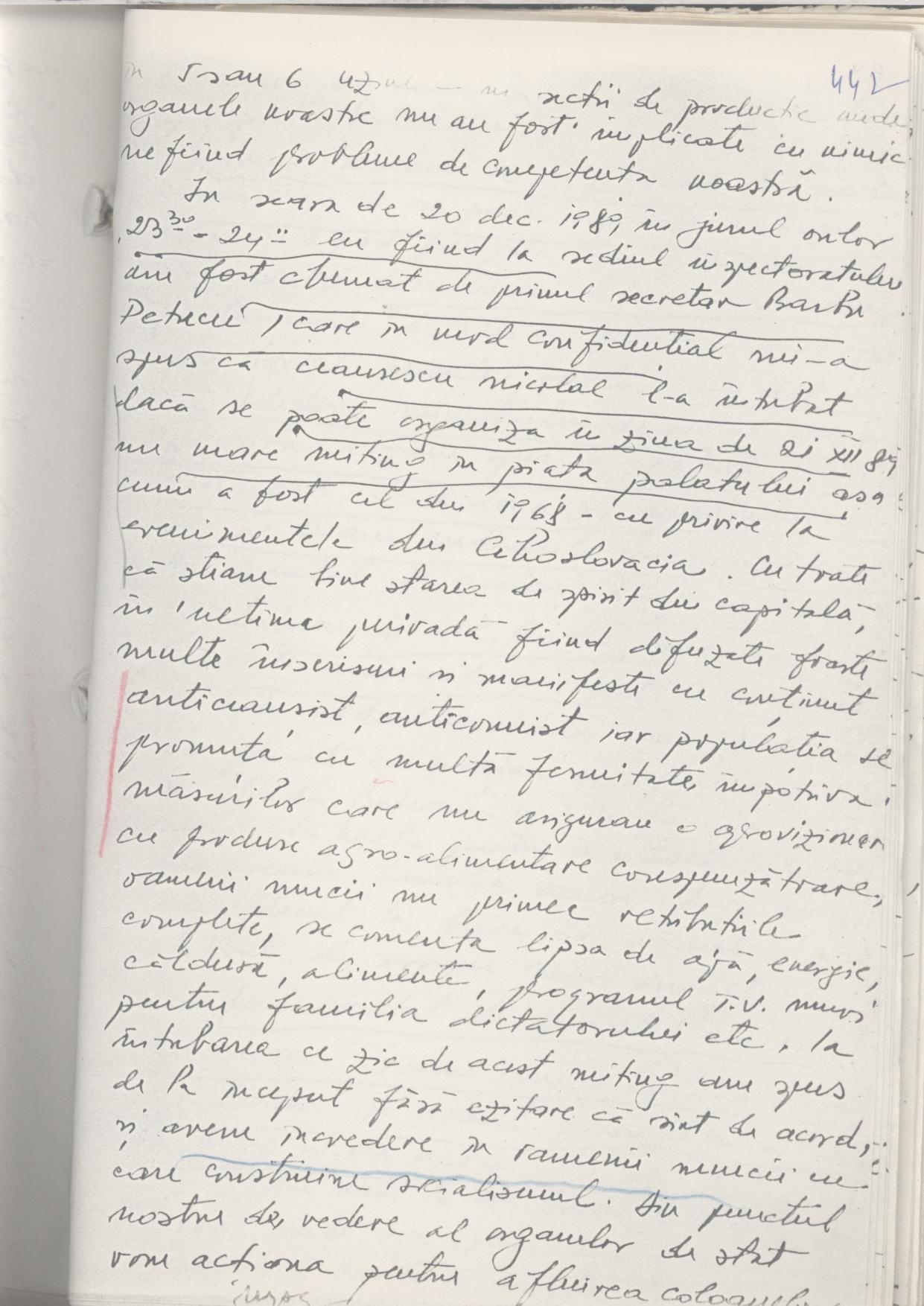
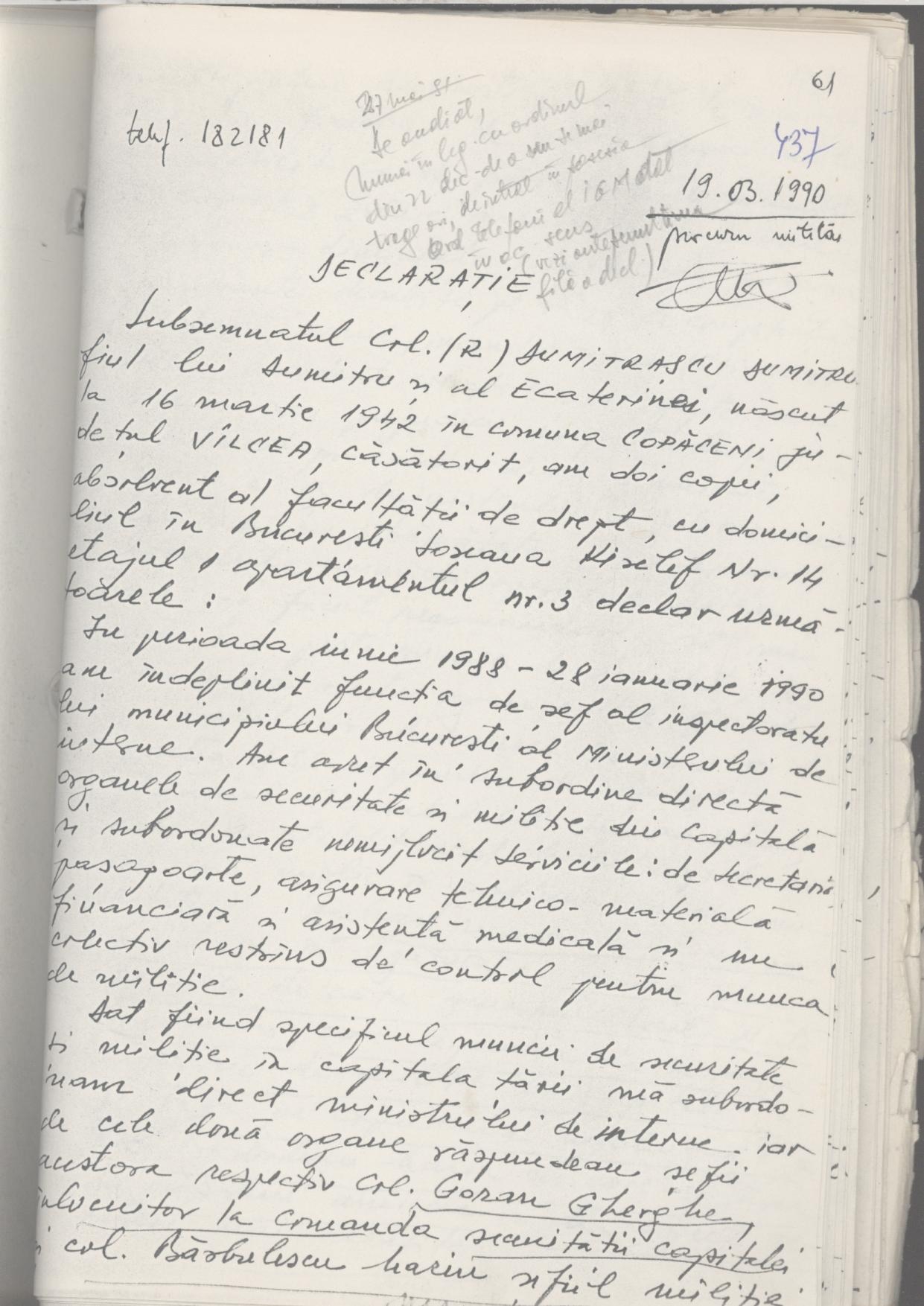
Col. Dumitru Dumitrascu, sef al Inspectoratului Muncipiului Bucuresti al Ministerului de Interne, Declaratie, 19 martie 1990
“In seara de 20 dec. 1989 in jurul orelor 23:30-24:00 eu fiind la inspectoratului am fost informat de primul secretar Barbu Petrescu, care in mod confidential mi-a spus ca ceausescu nicolae l-a intrebat daca se poate organiza in ziua de 21 XII 89 un mare miting in piata palatului asa cum a fost cel din 1968–cu privire la evenimentele din Cehoslovacia.”
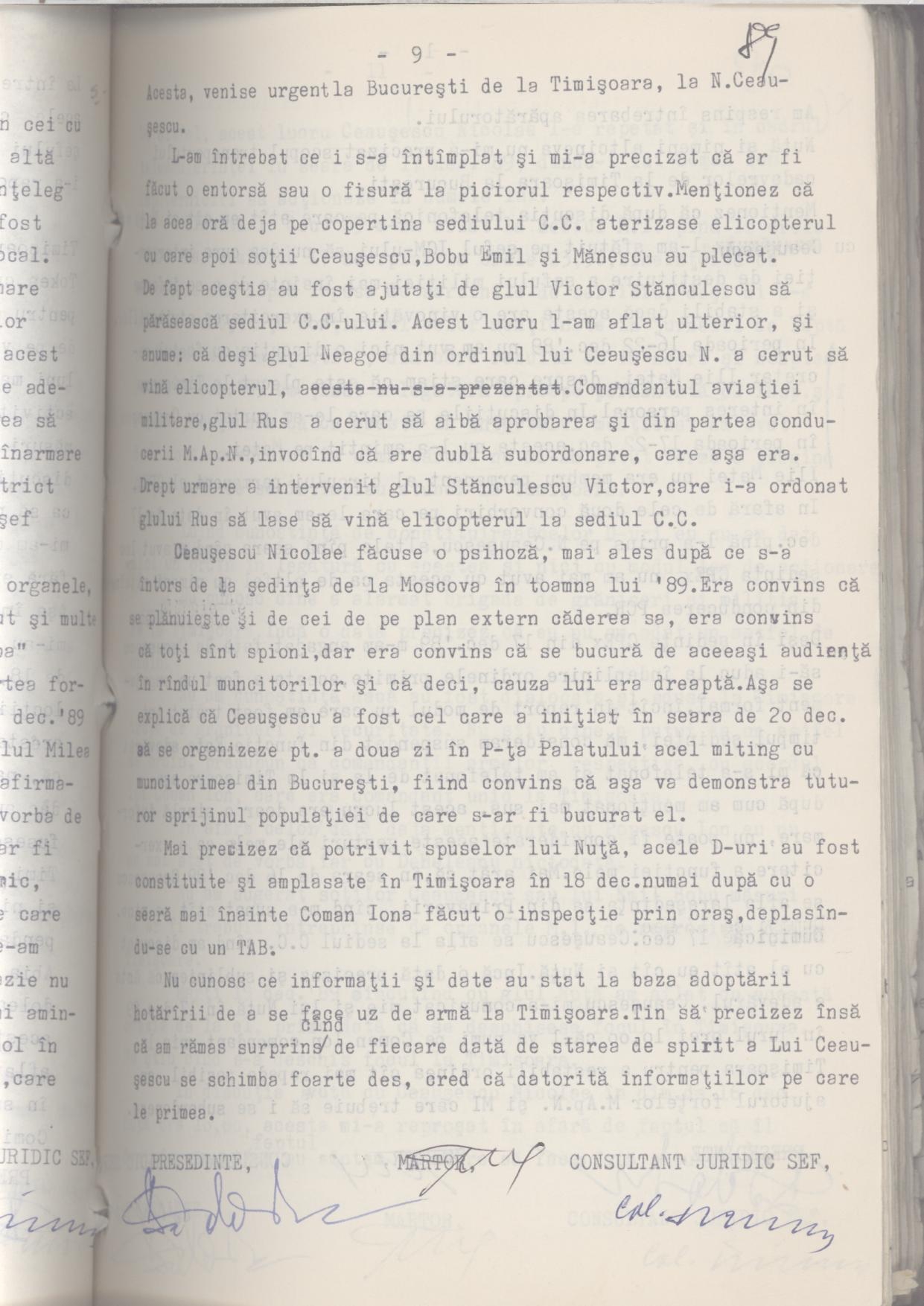
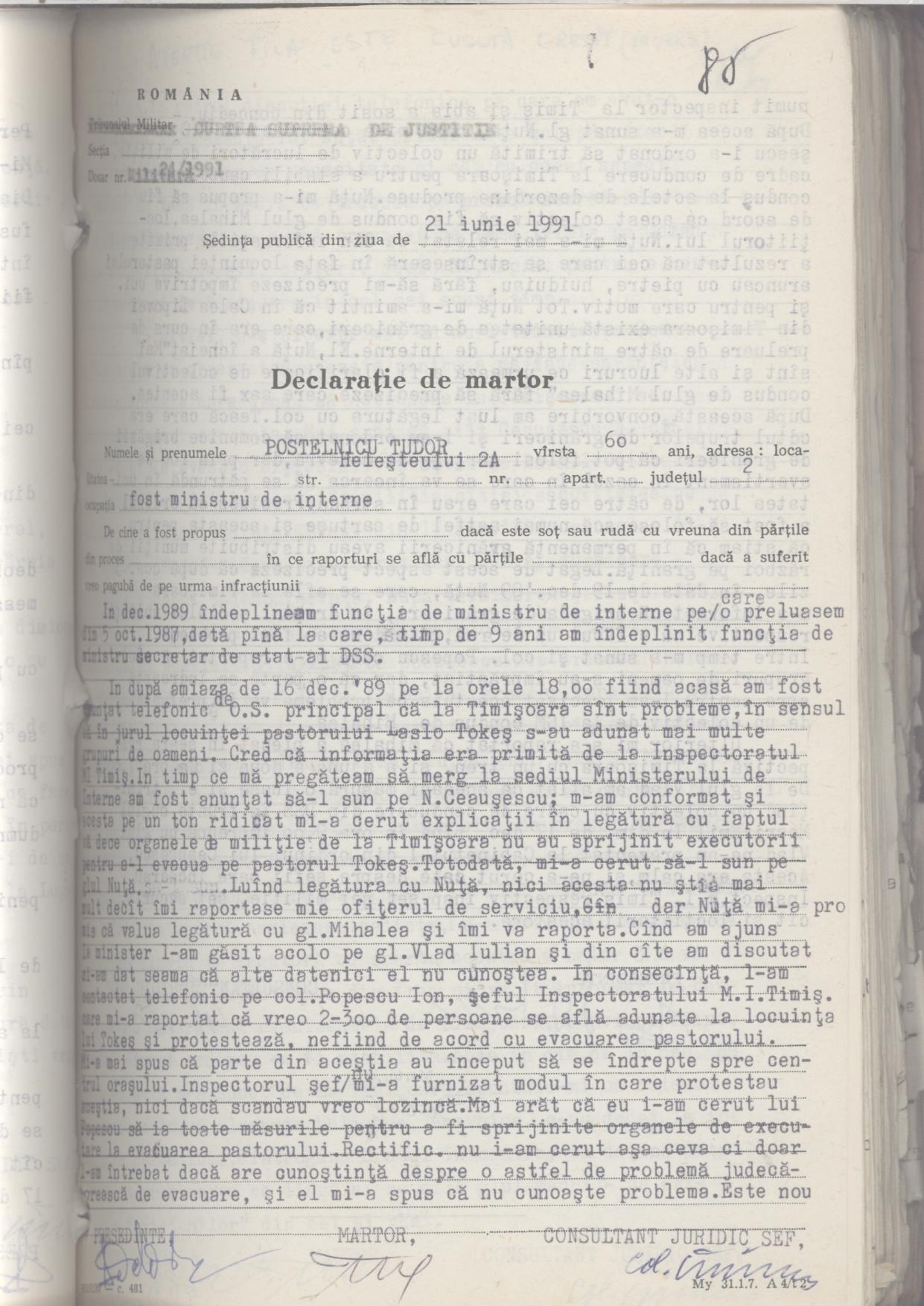
Tudor Postelnicu, Ministrul de Interne, Declaratie, 21 iunie 1991
“Asa se explica ca Ceausescu a fost cel care a initiat in seara de 20 dec. sa se organizeze pt. a doua zi in P-ta Palatului acel miting cu muncitorimea din Bucuresti, fiind convins ca asa va demonstra tuturor sprijinul populatiei de care s-ar fi bucurat el.”
An excerpt from
A chapter from my Ph.D. Dissertation at Indiana University: Richard Andrew Hall, Rewriting the Revolution: Authoritarian Regime-State Relations and the Triumph of Securitate Revisionism in Post-Ceausescu Romania (defended 16 December 1996). This is the original chapter as it appeared then and thus has not been revised in any form.
Ceausescu’s Fatal Mistake: The Pro-Regime Rally of 21 December
By the morning of Thursday, 21 December 1989, the regime was no longer master of the situation in Timisoara. Moreover, it was rapidly losing control in several nearby cities: Lugoj and Cugir. Nevertheless, the regime might have withstood these challenges had it not been for Nicolae Ceausescu’s insistence on convoking a mass rally and addressing his “adoring” subjects in person. It was Nicolae Ceausescu’s delusion of his own invincibility which ensured that the regime would be unable to reestablish control. Ceausescu’s inflammatory, rambling tirade on national television on Wednesday evening had signalled panic to those who watched it. If Ceausescu was so worked up, they concluded, something serious must have occurred in Timisoara. Following his televised address, Ceausescu decided to hold an open-air, pro-regime rally the following day in the sprawling square in front of the Central Committee building in the center of Bucharest. The event was to be carried live over Romanian radio and television.
Precisely because this mass rally turned out to be the deathknell for the Ceausescu regime speculation has surrounded who “goaded” Ceausescu into making such a colossally-misguided decision. In January 1993, the opposition daily Romania Libera suggested that “the meeting was organized at the suggestion of [CPEx member] Gogu Radulescu.”[31] The same article maintained that Radulescu had been followed during these days and was “observed transmitting something abroad,” thereby once again insinuating the role of foreign powers in the Romanian events.[32]
Yet it is doubtful that Nicolae Ceausescu required Radulescu’s encouragement to convoke such a rally. It seems highly likely that the idea was Ceausescu’s own brainchild and that as usual the docile members of the CPEx did not dare contradict him. It was a typically instinctive, rash, and overconfident reaction to crisis on Ceausescu’s part. Moreover, as we have seen, for Nicolae Ceausescu the events confronting him in December 1989 were a replay of August 1968: not only was socialism at stake, but Romania’s national sovereignty and independence. Thus, in this crucial moment, he would appeal not primarily to the party’s political interests, but to what were the core institutional interests of the Securitate. And he would rely on a trusted totalitarian, mobilizational technique: the “spontaneous” mass rally of support for the regime.
[31].. R.M., “Dezvaluiri [Revelations],” Romania Libera, 19 January 1993, 1. Radulescu died in 1994.
[32].. Ibid. Presumably that foreign power would have been the Soviet Union.
Posted by romanianrevolutionofdecember1989 on September 30, 2011
[as always, purely personal views based on purely personal research and publications over the past two decades]
Thanks to Miodrag Milin (and ASOCIAŢIA MEMORIALUL REVOLUŢIEI 16-22 DECEMBRIE 1989, TIMIŞOARA), the tapes of the Timisoara trials of 1990-1991 have been transcribed and made available to the public. These transcripts are highly valuable for the researcher of the December 1989 Romanian Revolution. To my knowledge, much of this information has never made it into the public domain, and much of the most important information has definitely not.
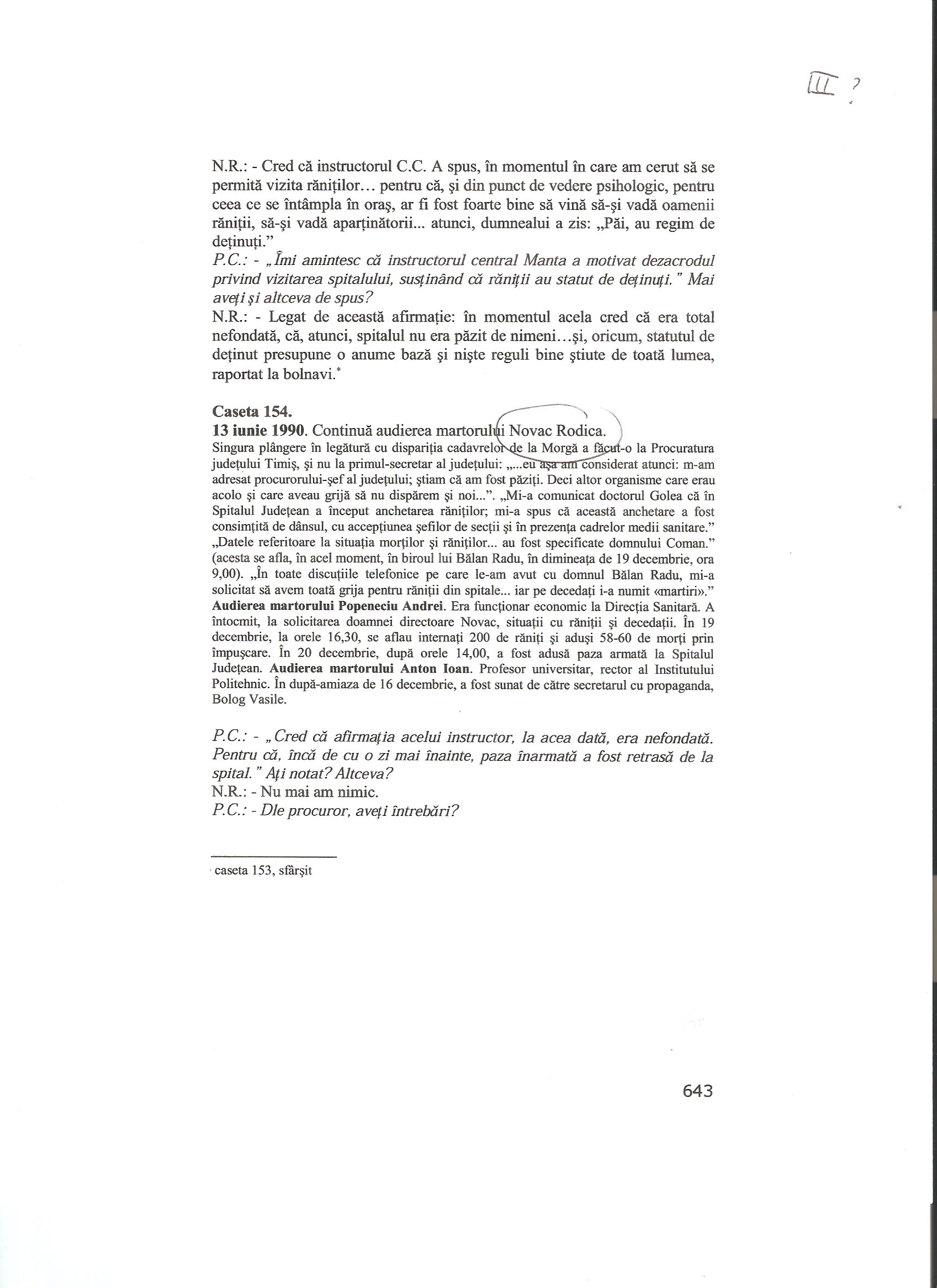
Below, the witness Rodica Novac states that in the Morgue “there were several horror scenes, even for a medic such as myself…it will remain a nightmarish memory, the wounds of these explosive bullets [gloante explozive] have remained with me in particular…” (p. 653)
When reading the courtroom testimony below, keep in mind here the unambiguous rejection by military prosecutor Dan Voinea of the use of dum-dum bullets in December 1989:
Dan Voinea: There were no victims (people who were shot) from either vidia bullets or dum-dum bullets. During the entire period of the events war munitions were used, normal munitions that were found at the time in the arsenal of the Interior Ministry and the Defense Ministry. The confusion and false information were the product of the fact that different caliber weapons were used, and therefore, the resulting sound was perceived differently. (General Dan Voinea, interview by Romulus Cristea, “Toti alergau dupa un inamic invizibil,” Romania Libera, 22 December 2005, online edition.)
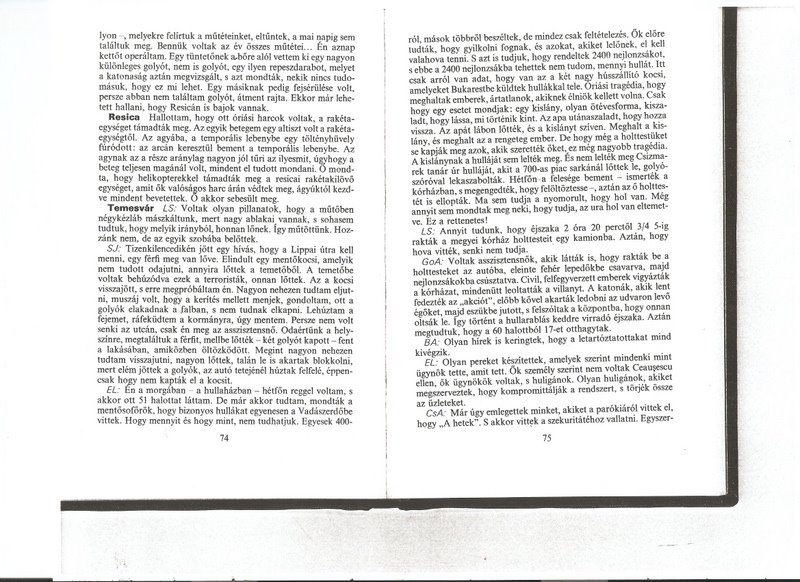
Rodica Novac’s claim is corroborated elsewhere by four other medical officials on call during the Timisoara repression. First, in Romanian, by Dr. Atanasie Barzeanu, then in Hungarian by three doctors (Vladimir Fluture, Csaba Ungor, and Andras Goga) present and performing surgery in Timisoara hospitals from 17-19 december 1989 who recount separately their discovery of dum-dum exploding bullets among the bullets with which demonstrators arriving at the hospital had been shot. december 1989: temesvari orvosok, dum-dum golyok, es a roman forradalom
Sava Florica, 33 de ani, vinzatoare la Loto-pronosport in cartierul Fabric, impuscata din mers, in Piata Traian
Barzeanu Atanasie, 65 anit, medic primar, doctor in stiinte, chirurg, Spitalul Judetean Timisoara
“…sintem deci in 18 decembrie…Pe la orele doua si patruzeci, cind inchideam o operatie–Sava Florica, 33 de ani, vinzatoare la Loto-pronosport in cartierul Fabric, impuscata din mers, in Piata Traian, dintr-un ARO, pacienta prezentindu-se o echimoza cu distrugerea tesuturilor (plaga in diametru de 15 centimetri), a tesuturilor din regiunea epigastrica, inclusiv a muschilor drepti abdominali, cu ruptura a colonului ascendent transvers si a jejuno-ileonului, fiind in stare de soc grav traumatic, hemoragic–, fara sa-mi poti explica nici macar acum cu ce fel de gloante a putut fi lovita, pentru ca nu am identificat nici orificiul de iesire si nici pe cel de intrare, a venit o asistenta de la Chirurgie I, care mi-a spus sa merg la domnul Ignat.”
Titus Suciu, Reportaj cu Sufletul la Gura, (Editura Facla 1990), pp. 133-134.
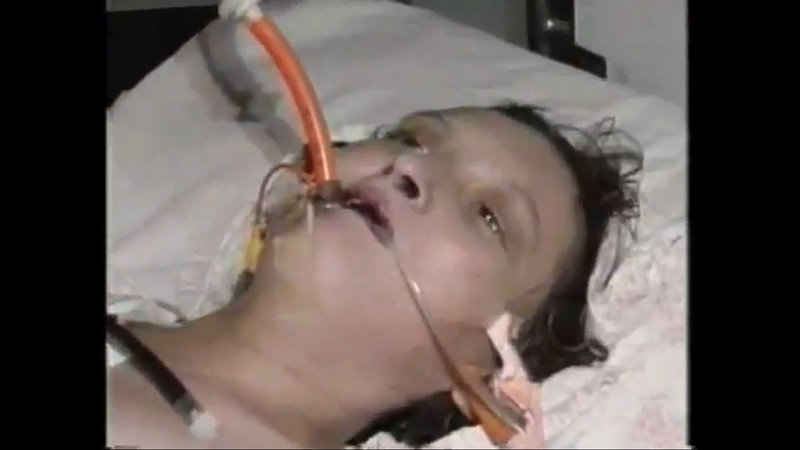
Irish Television (RTE) captured what were apparently the last hours of Florica Sava’s tragic end. Warning: the scene from 11:00 to 11:30 is graphic and unsettling.
Brendan O’Brien (reporter): “Florica Sava, a 33 year old mother of two young sons, was shot from a car with a dum-dum bullet. It caused massive internal injuries. Doctors said she had just hours to live.”
The following first appeared in Gyorgy Mandics’s Temesvari golgota (1991) pp. 348-349 and is reprinted in his A Manipulalt Forradalom (2009). [My guess is this is also the source for the reference to dum dum bullets in the German language wikipedia entry for http://de.wikipedia.org/wiki/Rum%C3%A4nische_Revolution_1989 — Hans Vastag, György Mandics, Manfred Engelmann: Temeswar. Symbol der Freiheit. Wien 1992. ]
pp. 348-349
Ket esetuk volt az elejen. Ezert is hivtak be oket. Egy 14 eves gyermeket a haz elott lottek le, szinte a szomszedban, egy golyoszoros ARO-rol talaltak el; egy oreg nenit a ter tuloldalon, az erkelyen ertek a golyok. A zarja ment ki, kicsit nagyott hallott mar, amire is csoda, 64 evesen, azt hirtelen ugy erezte, hogy labaibol kimegy minden ero es lecsusott az erholya. Na milyen gyonge lettem egyszeruen–mondotta maganak. de ahogyan fel akart tapaszkodni meg lepve tapasztalt, hogy vertocsa gyult alatta. Bekialtolt a vegenek aki egy szomszed segitsegevel athozta a nenit a legkozelebbi korhazba, itt a Marasti ter tuloldalan, az uj Klinikakba, avagy hivatalos neven a 2 szamu korhazba, ahol rogton osszecodult mindenki csodat latni. Ekkor hivtak be Baranziekat es minden mozgositato orvost, hiszen a fegyverek ropogatak. Azota is kisebb nagyobb megszakitasokkal, felfelecsapolt a gepfegyverek, golyoszorok, geppisztolyok langzivatarja, remulettel telitva az ejszaki eget.
p. 349
De azt a ket elso esett nem kovettek ujabbok. Igz aztan volt ido alaposan szemugyre venni a nenit akinek combjan elol egz akkora lyuk tatongott mint egy egy lejes, a comba hatso felen ahol eltavotott a golyo, ott viszont mar akkora mint egy otlejes. Fluture doktor, az egzik sebesz erosen kototte az ebet a korohoz, hogy ez egz specialis dum-dum robbanogolyo okozta seb, hiszen a szakirodalomban azt irjak, hogy csak ez a robbannolovedek-fajta-amelyet ugyan az ENSZ eltitott, am a nemzetkozi terrorizmusban kulonesen divatos ma is–okoz az izomszovetbol kijovet sokkal nagyobb roncsolasokat mint a bemenetnel. Az orvosok odazarandokoltak a sebesulthoz, mivel egzik sem latott semhogy dum-dum golyo utotte sebet, de egyaltalan lott sebet sem soha eleteben. Igz aztan csak szivtak a rangeletrahoz igazodva a sebesz foorvosok az amerikai Kentet, a foamnesztezialogus a holland pipadohanyt, az asztalyos orovosok a bolgar BT-t, a fonoverek a jugoslav Vikend-et, a noverek es helyapolok a roman Snagov-t, Golfot. Es vartak.
(Note: it is unclear who the 64 yr. old described was…there are several individuals without ages listed as injured or dead during the events, but I think it more likely the age of the woman is incorrect)
Jozsef Gazda Megvalto karacsony. Erdelyi magyar tulelok emlekeznek. (1990)
Ungor Csaba: Ket ora utan senkit be nem hoztak, senkit be nem engedtek, egyetlen sebesult sem. A korhazbol kikanyarado mentoautokra is lottek. Ket ora utan mindre, ami mozgott, jarokelo, auto, mindenre lottek, csak hogy ok tudjak begyujteni a sebesulteket s a halottakat. Kiderult az elso golyok utan, amiket a sebekbol gyujottek ossze, szedtek ki, hogy nem eles katonai toltenyekkel lottek, hanem dum-dum golyokkal, amik nagy rombolasokat okoztak. Egy 16 eves, ketszer sebesult gyermek meselte el, ok azt hittek, hogy hosok, azt hittek, hogy meg fogjak menteni a forradalmat, mert biztosra vettek, ha a felnottek sorfala ele allnak, nem fognak belejuk loni. Lottek rajuk is.
Goga Andras: A masodik izgalomkelto esemeny volt kedden delelott, hogy az osszes regiszterunk–mind a surgossegen, mind az osztalyon–, melyekre felirtuk a muteteinket, eltuntek, a mai napig sem talaltuk meg. Bennuk voltak az ev osszes mutetei[***]…En aznap kettot operaltam. Egy tuntetonek a bore alol vettem ki egy nagyon kulonleges golyok, nem is golyot, egy ilyen repeszdarabot, melyet a katonasag aztan megvizsgalt, s azt mondtak, nekik nincs tudmasuk, hogy ez mi lehet. Egy masiknak pedig fejserulese volt, persze abban nem talaltam golyot, amtent rajta.
Posted by romanianrevolutionofdecember1989 on October 5, 2010
“ORWELLIAN…POSITIVELY ORWELLIAN:”
PROSECUTOR VOINEA’S CAMPAIGN TO SANITIZE
THE ROMANIAN REVOLUTION OF DECEMBER 1989
by Richard Andrew Hall
Disclaimer: All statements of fact, opinion, or analysis expressed are those of the author and do not reflect the official positions or views of the Central Intelligence Agency (CIA) or any other U.S. Government agency. Nothing in the contents should be construed as asserting or implying U.S. Government authentication of information or CIA endorsement of the author’s views. This material has been reviewed by CIA to prevent the disclosure of classified information.
This paper MAY be cited when accompanied by a full, proper citation. Thank you.
Orwellian Sanity
Prosecutor Voinea’s campaign to “sanitize” the Revolution—to simplify the story to make it more “sane” and digestible for the outsider…by cleansing it of the “terrorists”—has generally succeeded to date. Of course, the credit is hardly his alone: he has had almost seventeen years of word-of-mouth, print, broadcast, and electronic revisionism to help him out, and he has, as we saw in the introduction, repeated the same accusations almost like clockwork upon the anniversary of the Revolution for the past decade.
But my use of the term “Orwellian” in the title of this paper is not only designed to capture Voinea’s uncanny ability to make definitive statements that are demonstrably wrong, to argue that black is white and white is black—from his denial of the use of gunfire simulators in December 1989, to his claim that the only “lunetisti” who acted after 22 December were from the Army, to his denial of the existence of weapons and (especially “vidia”) bullets not in the arsenal of the Army, to his denial of the existence of “terrorists,” to his denial that any military unit was attacked during the events, to his denial of the role of foreigners in the events….
I use the term “Orwellian” here as much to describe the ease with which he has gotten and gets away with errors, misunderstandings, and falsehoods that could easily be challenged, if not combated by his interlocutors in the Romanian media and intelligentsia. For it is the fact that he has been able and is able to get away with all this that is truly “Orwellian” and that is indeed a tragedy for Romania’s citizens. The tragedy is thus less the predictable “supply side” of the post-authoritarian lie, than the enthusiastic consumption and appetite for it. This is why I believe, accurately I would argue, that “December 1989” long ago became more about post-Ceausescu Romania than about what happened in December 1989.
Still, there are those who will respond to the information presented here—in part, in tacit admission that it is pretty hard to challenge what I have presented here—with the argument that Prosecutor Voinea is doing his best, that he has done and is doing more than his predecessors, that at least those senior Army officers who were responsible for the repression of demonstrators in Timisoara, Bucharest, and elsewhere before the Ceausescus’ flight on 22 December 1989 will finally be brought to account. Indeed, I don’t discount that in the trials of Stanculescu, Chitac, and others this can and will perhaps happen—but even then as I will show below, this will be partial justice for those events, as key elements of the context (including other guilty parties) will remain expunged from the story, and there is likely a heavy element of post-December 1989 political and personal payback in their trials and sentences.
Moreover, I should add, I do not necessarily doubt Prosecutor Voinea when he says that there is no “juridical basis” or that his investigations have not revealed the existence of “terrorists” in December 1989. As multiple quotes above should make clear, already in 1990 and 1991, maps of Securitate safehouses, bullets, weapons, and video entered as evidence in files on the Revolution had disappeared or been lost. And, of course, the question of investigations is a tricky one: someone who lived their formative years and much of their adult life in a totalitarian regime such as Ceausescu’s communist Romania knows well the questions not to ask, the places where not to look, the people not to interview. A military prosecutor since 1982, Voinea likely knows that doubly-well. Certainly, the wealth of detail provided above suggests that Voinea has hardly turned up every stone in searching for the truth.
Others may respond with an understandable question: how could so many people have gotten things so wrong? This is the numbers game and it is powerful where as we saw earlier already a decade after the events 90% of those polled rejected “the lie with the terrorists.” I will demonstrate that it is indeed possible, by showing the about-face that occurred in the media regarding the role of the USLA in the repression prior to 22 December 1989. One could argue that this change in treatment of this question does not necessarily have implications for the treatment of the “terrorist” question after 22 December, and the role of the USLA. In all probability it does have implications, however, and it is unlikely that it was just happenstance that the unit involved in this change in understanding was precisely the USLA. Certainly, one would have hoped that a realization that they had gotten things so wrong with the USLA before 22 December would have translated into a more skeptical and critical reassessment of USLA actions after 22 December, but that did not—and has not—happened.
One of the interesting and unexpected elements of Romulus Cristea’s late 2005-early 2006 Romania Libera series on the Revolution, is what it communicates—mainly through the selected quotations of participants in the events—about the role of the USLA prior to Ceausescu’s flight from power on 22 December, namely their direct involvement in repression, particularly in University Square in Bucharest on the night of 21-22 December 1989. For example, the title of Cristea’s article in the 22 March 2006 (online) edition of Romania Libera could not be more direct: “The Militia and the USLA tortured demonstrators.”
Readers unfamiliar with the Romanian press of the early 1990s might be surprised to learn that what Cristea reports almost prosaically—as if it were uncontroversial—was vigorously and repeatedly contested back then…but perhaps nowhere more so than in the pages of the same Romania Libera daily. After the then freshly-appointed Defense Minister, Victor Athanasie Stanculescu, had declared in late February 1990 that not only had the USLA not had any connection to the post-22 December “terrorism” but that they had not been involved in the repression of demonstrators in Timisoara, Bucharest, or elsewhere during the week preceding the 22nd[141], Petre Mihai Bacanu had gone out of his way to assure readers of his series on the demonstrations in University Square in Bucharest on the night of 21-22 December 1989, that “We must clarify that the USLA detachments did not fire a single shot, nor arrest a single person among the columns of demonstrators” (16 March 1990), and “…we have incontrovertible proof that the USLA officers had only one mission, to defend the American Embassy and the El Al Israel Airlines ticket office” (17 March 1990).
Won’t Get Fooled Again…
Unintentionally indicative of the coverage of the USLA’s pre-22nd role that has predominated since February 1990 is that when it comes to the role of the USLA in Bucharest from the afternoon of 21 December to the early morning hours of 22 December 1989, Siani-Davies chooses to shunt this issue to a footnote and suddenly whereas the issue for other forces is the role they played, for the USLA it is the role they “may have played [emphasis added].”[142] According to Siani-Davies, Horia Alexandrescu’s March 1990 “Heroes in Action” series in Tineretul Liber, “undoubtedly painted a rosy picture of the [USLA] unit, [but] they do seem to hold a kernel of truth.”[143] To say that this is a charitable interpretation of Alexandrescu’s articles is to say the least: it certainly places the bar incredibly low. A “kernel of truth”…yes, but on a cob or core of falsehood.
Alexandrescu denies any responsibility by the USLA for either repression of demonstrators before 22 December or the terrorism after! Alexandrescu’s comments are just plain weird at points: “Without pusti cu lunete, without vidia bullets, without sophisticated simulators,” he says the USLA operated in December.[144] If they didn’t have these things, then why mention them, and why be so specific? But as we have seen, specifically, with the revelations of USLA officer Alexandru Cristescu earlier in the discussion of “lunetisti,” the USLA clearly did have these PSLs and were posted with them on rooftops at least on 21 December. Moreover, to raise the issues of vidia bullets and sophisticated simulators is to almost admit their presence in December—which as we have seen was the case. Finally, as we have seen, somehow out of nowhere, the otherwise bizarre interest in the fate of a TAROM flight to Warsaw in late January 1990, filled with Libyans, found its way into Alexandrescu’s series on his USLA “Heroes in Action.”
Alexandrescu, it should be noted, was not the first journalist to whitewash the role of the USLA in December 1989. That distinction goes, it appears, to Octavian Andronic, senior editor of Libertatea who wrote on 6 January 1990 that, “The USLA was one of the first units belonging to the Interior Ministry that declined any participation in the repressive actions against demonstrators on 21 and 22 December [emphasis added].”[145] Like Alexandrescu, who had been editor of the chief sports daily in the late Ceausescu era, Andronic had been editor of Libertatea’s immediate Ceausist predecessor, Informatia Bucurestiului—in other words, intimately and almost unavoidably entangled in the politics and the blind spots of the old regime. The difference when Alexandrescu was writing was that, as he notes in his article introducing the series, after two months of suspicions, the new Defense Minister Stanculescu had, as one of his first acts in late February 1990 “lifted the haze that had enveloped” the unit during the interim.
Timisoara, Iasi, and Cluj, 14-21 December 1989
To support his argument, in the “Heroes in Action” series Alexandrescu wrote that Colonel Popescu, “director of the USLA service in Timisoara” had four times refused to obey orders to engage in repressive actions against the demonstrators. In point of fact, in accordance with Order No. 2600 Colonel Ion Popescu as head of the General Inspectorate of the Militia had ordered into action the “intervention platoon” (that included USLA personnel) that violently dispersed protesters from Piata Maria on the evening of 16 December 1989 in Timisoara.[146] Vasilevici and the anonymous USLA recruit quoted earlier have both maintained the USLA played a repressive role in Timisoara, with the latter claiming directly they opened fire.[147] Weapons inspections immediately after December 1989 revealed that the USLA had been armed and had indeed fired their weapons:
“The witness Constantin Gheorghe, former junior officer in the Timis USLA Service, declares that, on the afternoon of 17.12.1989, upon the order of Lt. Col. Atudoroaie Gheorghe (editor’s note: deputy of the Timis County Securitate), 43 machine guns and ammunition were distributed, some to USLA cadre and others to Securitate cadre who reported. The witness specifies that he distributed arms and ammunition without any documentation and that when he ran out of arms from the stockade, he sent some other personnel to…The witness M.M. Pantea Ambrozie, supervisor of the Militia Inspectorate’s armory, who acknowledged that he signed out 272 machine guns and ammunition…Upon examining the table drawn up by M.M. Pantea Ambrozie, it follows that the first to be armed were 114 officers and junior officers of the Securitate, out of which 29 were from the USLA….It is worth mentioning in this regard that a part of the Securitate personnel repeatedly collected new ammunition, for example Captain Bratosin Tudor from Service I, Lt. Dragomir Florin PCTF, and Lt. Iaru Florin and Plutonier Timbula-Cojocaru Gheorghe, both from the USLA Service. And, not accidentally, upon the investigation of mixed Defense and Interior Ministry teams, it was established that the arms of these personnel showed gunpowder marks, denoting the fact that these had been fired (see the exchange S.201/12.01/1990 copied in the charges). Moreover, gunpowder marks were found on the weapons of 28 Securitate cadre.”[148]
Does this sound like the USLA in Timisoara were “reluctant to intervene?” Did Horia Alexandrescu, barely two and a half months after the Revolution, just “happen” to give Colonel Popescu and the USLA in Timisoara the benefit of the doubt?
Nor was it, of course, simply “incidental” that the USLA were included among the forces of “crowd control” and repression. The abortive 14 December 1989 demonstration in Iasi, saw in the words of Dan Emilian Stoica, “the city fill up with securisti and policemen to which was added an USLA company.”[149] In 2001, the deputy Militia chief for Cluj county, Vasile Pintea, admitted at a trial concerning the killing of demonstrators on 21 December 1989 in Cluj, that “…amid the street clashes in Piata Libertatii a special antiterrorist brigade of the Securitate was dispatched, although he didn’t specify if the soldiers from this platoon used their weapons.”[150] This then led the former commander of “Brigade 60” of the Securitate, Vasile Mihalache, who had moments earlier affirmed that the only people to fire in demonstrators in Cluj in December 1989 had been soldiers of the Defense Ministry, to suddenly recall that “…indeed, among the soldiers there had been these Securitate men, who were dressed in uniforms similar to those of the Defense Ministry cadre, although he denied they shot demonstrators.”
So, in other words, both General Stanculescu and Horia Alexandrescu were “incorrect” when they denied any repressive role for the USLA during the week of 16-22 December 1989. Forgive me, but this seems a little more than just a “rosy” picture.
Sibiu, 19-22 December 1989
In Sibiu, Siani-Davies tells us:
Controversy also continues to surround a commercial TAROM flight, which is alleged to have brought up to eighty USLA troops from Bucharest to Sibiu on December 20, 1989. It is not clear if the USLA forces were actually on the airplane, or, even if they were, what they actually did in Sibiu…[Serban] Sandulescu (c1996), 57-58…suggests they were not members of USLA but the DIA [Army’s Intelligence Unit].[151]
From the standpoint of Siani-Davies’ unsuspecting reader such a conclusion may seem not only credible, but judicious. But one of Siani-Davies’ habits—identified negatively by even those who praise the book—is his tendency to draw negative equivalencies: i.e. there is about as much evidence to support x as there is to support y, in order to disprove or discount both propositions. In a review, Doris Mironescu writes:
“Very common are claims such as the following: ‘Finding the proof to sustain such an explanation of the events [that the Army’s Intelligence arm, the DIA simulated the “terrorist diversion,” to permit the Front’s takeover and a possible Warsaw Pact invasion of the country] is as difficult as proving that special units of the securitate took up arms against the revolution’ (p. 154). Mutually contradictory hypotheses are invoked in order to negate each other, not so much because of the weight of the claims, but through the ideological similarity of both.”[152]
This tendency definitely affects Siani-Davies’ analysis of the “terrorists” and its accuracy. To begin with, in the very book (Sandulescu) invoked by Siani-Davies, the head of the DIA (Battalion 404 Buzau), Rear Admiral Stefan Dinu, is quoted as having told the Gabrielescu commission investigating the December events (of which Sandulescu was a member) that “we hardly had 80 fighters in this battalion.”[153] It is known that 41 of them were in Timisoara from the morning of 18 December and only returned to their home base in Buzau on 22 December.[154] This makes it highly unlikely that they were on the 20 December TAROM flight to Sibiu that is in question.[155]
Contrast this with the signs that exist pointing to the mystery passengers as having been from the Securitate/Interior Ministry, in particular the USLA. Nicu Silvestru, chief of the Sibiu County Militia, admitted in passing in a letter from prison that on the afternoon of 19 December 1989, in a crisis meeting, Nicolae Ceausescu’s son, Nicu, party head of Sibiu County, announced that he was going to “call [his] specialists from Bucharest” to take care of any protests.[156] Ceausescu’s Interior Minister, Tudor Postelnicu, admitted at his trial in January 1990 that Nicu had called him requesting “some troops” and he had informed Securitate Director General Iulian Vlad of the request.[157] If they were, indeed, DIA personnel, why would Nicu have called Postelnicu, and Postelnicu informed Vlad of the request—would such a request not have been relayed through the Defense Minister?
The first two military prosecutors for Sibiu, Anton Socaciu and Marian Valer, identified the passengers as USLA. Even Nicu Ceausescu admits that this was the accusation when he stated in August 1990:
“…[T]he Military Prosecutor gave me two variants. In the first part of the inquest, they [the flight’s passengers] were from the Interior Ministry. Later, however, in the second half of the investigation, when the USLA and those from the Interior Ministry began, so-to-speak, to pass ‘into the shadows,’ – after which one no longer heard anything of them – they [the passengers] turned out to be simple citizens…”[158]
Beginning, at least as early as August 1990, with the allusions of Major Mihai Floca, and later seemingly indirectly confirmed by former USLA officer Marian Romanescu, it was suggested that when USLA Commander Ardeleanu was confronted at the Defense Ministry on the night of 23/24 December 1989, Ardeleanu reportedly admitted that “30 were on guard at [various] embassies, and 80 had been dispatched to Sibiu with a Rombac [aircraft] from 20 December 1989 upon ‘orders from on-high’.”[159] Finally, and along these lines, we bring things full circle—and recall our “phantoms in black” again in the process—with the testimony of Army officer Hortopan to the same Serban Sandulescu at the Gabrielescu Commission hearings:
Sandulescu: About those dressed in black jumpsuits do you know anything, do you have any information about whom they belonged to?
Hortopan: On the contrary. These were the 80 uslasi sent by the MI [Interior Ministry], by General Vlad and Postelnicu to guard Nicolae Ceausescu [i.e. Nicu]. I make this claim because Colonel Ardelean[u] in front of General Militaru, and he probably told you about this problem, at which I was present when he reported, when General Militaru asked him how many men he had in total and how many were now present, where each of them was: out of which he said that 80 were in Sibiu based on an order from his commanders. Thus, it is natural that these are who they were.[160]
Bringing us up to the morning of 22 December 1989, and setting the stage for what was to come, Lt. Col. Aurel Dragomir told the Army daily in November 1990:
Dragomir: Events began to develop quickly on 22 December. In the morning some of the students posted in different parts of the town began to observe some suspect individuals in black jumpsuits on the roofs in the lights of the attics of several buildings.
Reporter: The same equipment as the USLAsi killed out front of the Defense Ministry…
Dragomir: And on the roof of the Militia building there were three or four similar individuals…[161]
Of course, the fact that these individuals were posted on the top of the Militia building on this morning, speaks volumes in itself about their affiliation. Indeed, in a written statement dated 28 January 1990, Ioan Scarlatescu, (Dir. Comm. Jud. Sibiu), admitted that he was asked by the Army on that morning if the unknown individuals “could be from the USLA?”[162]
Bucharest and Tirgoviste, 21-22 December 1989
As for the events in Bucharest on 21-22 December 1989—the events about which Siani-Davies refers to the role the USLA may have played—Romulus Cristea appears to have finally clarified the source of a transcript of communications among the Securitate, Militia, and senior political figures on the afternoon and evening of 21 December 1989 and from the morning of 22 December. According to Cristea, the intercepts and transcripts were made on the personal initiative of some of the radiotelegraph operators and others employees of the Central Control [Office] of Radio[tele]communications at Strada Oltenitei no. 103 “at great risk to themselves, as recording the frequencies of the Securitate and Militie was illegal.”[163] That explains in part the incomplete nature of the transcripts—in particular, the gap of key hours in the middle of the night when regime forces opened fire on the demonstrators in University Square and brutally carted those who weren’t killed off to jail (48 people were killed, 604 wounded, and 684 arrested).
Cristea does not note—and may not know—that the text of the transcripts appears to be the same as what was published in Libertatea between 27 January and 15 February 1990 under the heading “Dintre sute de…catarge! [From hundreds of “masts!” (the radio identification for USLA officers conducting surveillance)].” When they appeared at the time, it was not clear from where the transcripts had come, although the absence of exchanges from the period of bloodiest repression overnight was obvious even then. Still, the truncated transcripts nevertheless revealed clear USLA involvement in the repression in Bucharest. According to the transcript, upon the orders of Securitate Director General Vlad, the USLA launched tear gas grenades at demonstrators. They also show USLA “intervention units” claiming to have “restored order” and one USLA member communicating in reference to protesters, “These hooligans must be annihilated at once. They are not determined. They must be taken quickly. The rest are hesitating.”
That more than a decade and a half would pass before these transcripts were reproduced is telling in itself. For what appeared in the Romanian press in January and February 1990 concerning the USLA’s culpability was to melt away beginning with Army General Stanculescu’s exoneration of them on 26 and 28 February 1990 in an interview with the very same Libertatea. The USLA had already been trying to “correct” the memories of citizens, prior to Stanculescu’s “clarification” of their role. When a participant in the demonstrations at Piata Romana in central Bucharest related on 12 January 1990 in Libertatea the role of the USLA in beating demonstrators there on the 21st and later the presence of the USLA among the gunmen who killed demonstrators in University Square in the early hours of 22 December, USLA chief Ardeleanu rushed to issue a public denial in the paper several days later. But it was, as I have noted, Stanculescu’s official sanction of the revisionist history of the USLA’s actions that opened the floodgates.
It took almost four years—following Horia Alexandrescu’s “Heroes in Action” series and Petre Mihai Bacanu’s impassioned postscripts in his “Intercon 21/22” series protesting the USLA’s innocence—before Bacanu returned in Romania Libera and declared that, on the basis of what he claimed was “new” information from Army soldiers who had been in the square that bloody “longest night of the year,” he had changed his mind about the USLA’s role:
“Very many officers talk about these ‘civilians’ in long raincoats and sheepskin coats, who arrested demonstrators from within the crowd and then beat them brutally…No one has been interested until now in these dozens of ‘civilians’ with hats who shot through the pockets of their clothes…For a time we gave credence to the claims of the USLA troops that they were not present in University Square. We have now entered into the possession of information which shows that 20 USLA officers, under the command of Colonel Florin Bejan, were located…among the demonstrators.”[164]
In March 2006, Cristea quoted Nicolae Victor Gheorghe, 38, as saying:
“…Around 23:30 I was arrested with a group that had fled toward the History Museum. We were surrounded by USLA. I was surprised to observe that among us several individuals dressed in fur-lined coats stepped forward and pointed out to the ones with the shields who to arrest….We were beaten. I lost consciousness and when I woke up I was face-down in a van. I was full of blood. On top of me had been thrown a pile of other demonstrators. We were taken directly to Jilava [jail].”[165]
Significantly, USLA Commander Gheorghe Ardeleanu admitted in passing in court testimony that USLA personnel operated in civilian clothes on this evening.[166] At the very least, it is clear that uniformed USLA personnel participated in the repression. An official at the National Theater—located next to the Hotel Intercontinental in University Square—claims USLA troops beat demonstrators and policed the building to see if any were hiding there.[167] According to the Military Prosecutor’s 4 June 1990 charges: “The witness [Spiru Radet] specified that one of the soldiers from the USLA troops, who had a machine gun in his hand, fired warning shots and then shot at the demonstrators. At that point, the witness was wounded in the hand by bullets and transported to Coltea Hospital.”[168]
Certainly, USLA who were involved in the events of 21-22 December 1989 or who came in contact with the demonstrators who were involved were merciless, and behaved as if they had something to hide. In summer 1990, Expres reported on two young men recovering in an Italian hospital from wounds inflicted during the December events.[169] They recalled how, at the Intercontinental on 21-22 December, “those in kaki [i.e. Securitate, likely USLA] shot us. The first two rows of troops [Army] shot tracers, while those behind them opened live fire.” The two, one injured on the 21st, the other on the 23rd, claimed that after they arrived in Italy, a certain 40 year old Iordan Cristian, who admitted to them he had been USLA, visited the hospital—he had been shot in the hand at an earlier time and recovered (!)—snatched any reading material showing photos of the 13-15 June rampage against the opposition in Bucharest, and kept them in a general state of fear. In addition, he asked them to surrender their passports, something which “made even the Italians realize something was not quite right in all of this.”
Similarly, in an article that captures in a microcosm the complexity and fluidity of the first years of the post-Ceausescu era, one-time leader of the small “Liberal Democratic Party,” Elena Serban, maintains she was blackmailed in 1990 by Radu Grigore (a name that was to crop up again in some of the more underhanded political affairs of 1991-1992) who threatened her that “…if I betrayed him, he would kill me, and that I only needed to remember he had been an USLA officer…who had been in charge of the USLA machine-gun detachments on the night of 21 December in University Square.”[170]
It is noteworthy that eyewitnesses who reached the top of the CC building in Bucharest at noon on 22 December 1989 report that they were prevented from arresting the Ceausescus by two armed individuals in “dark jumpsuits”—i.e. likely either V-a or USLA/C.[171] In Tirgoviste, where the Ceausescus were later to meet their end, shortly after 12:30 PM on 22 December 1989, Army Colonel Gheorghe Badea relates the following:
“At a given moment, after spirits had calmed a bit, I heard a voice: ‘Colonel, get out of here or we’ll shoot you!’ I turned in the direction from which the voice had come and, behind me, I saw a detachment of USLA troops, with shields, arms, the whole nine yards…I don’t know who addressed me, but I said to them: ‘Don’t shoot boys…We are your brothers…’ At that point, the crowd surrounded them and they retreated.”[172]
Constantin Paisie, one of the Militia officers involved in the transport and custody of the Ceausescus later that afternoon of 22 December, makes clear upon whom the Ceausescus were placing their bets to rescue them:
“Sir, they didn’t know what was going on. Indeed, they gave indications that they were waiting for someone to come and take them away to some place in which they would be more secure, for, you see, first and foremost they were banking on the Securitate. I know that at a moment, Nicolae Ceausescu told me to take him to a unit of the Securitate, a special unit at Baneasa, but from the Militia and the Army he didn’t expect any immediate help.”[173]
Here’s betting that the “special unit” at Baneasa in question was the one Marian Romanescu departed from above (page 39)—using a cover ID—the “Special Unit for Antiterrorist Warfare,” based at Baneasa…
One thing should be abundantly clear here: notwithstanding the overwhelming consensus that prevailed for years in the Romanian media denying USLA involvement in the pre-22 December repression, it turns out the USLA were, after all, deeply implicated. This fact should be kept in mind when one considers the reluctance of Romanian journalists and intellectuals to reassess the question of the USLA and the “terrorists” after the realization of the USLA’s pre-22nd role, and the current and continuing overwhelming consensus that denies the “lie with the terrorists.”[174]
[142] Siani-Davies, The Romanian Revolution of December 1989, p. 87, fn. 107: “For a detailed discussion of the part USLA may have played see Hall (1997), 219-224.”
[143] Ibid., p. 151. I may in part have myself to blame for Siani-Davies some inappropriate choice of language here: i.e. the term “rosy image.” Siani-Davies highlights my use of the phrase “less-than-pure intentions” in describing the actions of the USLA unit at the Defense Ministry on 23-24 December (p. 152, fn. 31)—perhaps to suggest that even I had my doubts about their actions (see discussion of this episode earlier in article). My phrasing was inspired by the description of the event by Captain Victor Stoica who witnessed the incident: “Anyhow, based on how these two vehicles behaved, it is clear that they did not come with friendly intentions (‘intentii prietenesti’)” (Major Mihai Floca, “Crima?!, Armata Poporului, no. 23, 6 June 1990, p. 3.)
[144] Horia Alexandrescu, “Eroi Cazuti la Datorie: Adevarul despre U.S.L.A.,” Tineretul Liber, 4 March 1990, p. 3.
[145] Octavian Andronic, “Combaterea terorismului—o chestiune la ordinea zilei,” Libertatea, 6 January 1990, p. 3. After the waters had subsided, and he had been “vindicated” in his beliefs about the USLA, he published a response to that article by people who asked “does the author have a vested interest in the rehabilitation of the USLA,” leaving off their names since ,as they wrote, they did not want the USLA to “come defend [them]”, “Din Nou Despre U.S.L.A.: teroristi sau antiteroristi?” Libertatea, 9 May 1990, p. 2. As Libertatea was to remain in the Iliescu-Front camp in the initial years, allegations appeared against Andronic in Evenimentul Zilei that his house was rented from the SRI, the Securitate’s institutional successor, and had formerly been a safehouse of the Securitate, 14 May 1993, p. 3. If memory serves correct, years later in Curierul National, Andronic was to refer to finding out about the collapsing of the Ceausescu regime from USLA officer, Alexandru Ioan Kilin. These are circumstantial allegations but they suggest the possibility of at least close relations with former Securitate people—not unheard of for the former editor of a Ceausescu era paper.
[146] See Hall, 1997, pp. 183-184. It seems worth pointing out that the doctor who treated Dorneanu, the head of the USLA intervention brigade, at Piata Maria, and was involved in altercations with protesters, appeared to the doctor as “having been drugged.”
[147] As we saw, the anonymous USLA recruit referred to “the masked ones” shooting in Timisoara. Although the Army clearly did fire on and kill many demonstrators in Timisoara, and the notion of unknown “phantoms in black” being responsible for the carnage is a useful alibi, I don’t believe things are so simple—given the actions of those in “combinezoane negre” across the country, as discussed in detail earlier. In early 2006 at the “Timisoara trial” against most notably generals Stanculescu and Chitac, former Army Colonel Dumitru Daescu could not identify those who fired in December 1989, but declared “fire was opened by some men dressed in combinezoane negre” (“Noi martori in procesul Revolutiei de la Timisoara,” Romania Libera, 16 March 2006, online edition), while Army officer Gheorghe Ciubotariu stated “they fired shoulder strapped machine guns in front of the Cathedral, first toward the roof then in the demonstrators…those who fired were civilians and people in combinezoane negre from the Interior Ministry.” (I.D., “General Stanculescu se apara cu amanari si absente,” Gandul, 19 January 2006, online edition).
[148] Laurian Ieremeiov, “Lista securistilor si militienilor care au tras la Timisoara,” Ziua, 20 July 1998, online edition. To this, it is interesting and pertinent to add the following information. In 1991, Grid Modorcea went to interview the priests of Timisoara’s Orthodox Cathedral. Sorin Leia, age 22, was shot during a demonstration on the steps of the Cathedral on the evening of 18 December 1989. Father Ioan Botau related the following: “…Sorin Leia pulled a flag out and began singing ‘Awake Romanians!’ At 5:15 pm he was shot by a lunetist and killed. The crowd then fled and scattered and there was no more shooting. They brought this young person who had been shot inside the church and put a candle in his hand. He had been hit by the bullet in his upper torso and had not died on the spot. Father Mituga came out and called the ambulance. But the youngster was already dead. There was a pool of blood around him….Who shot people in Timisoara?…The Army didn’t shoot. Camouflaged securisti shot and today they have made them into heroes!…Until when did they shoot?…They shot on Christmas day, all the way up until 29 December” (Grid Modorcea, “Dumnezeu citat ca martor in procesul de la Timisoara,” Expres Magazin, 1991.) The late Iosif Costinas wrote in that same year that “a former Securitate officer, currently employed by the SRI, recently called two neighbors to repair a pipe in the bathroom. He got drunk and told them: ‘on 17 December I shot from the Cathedral’s [bell-]tower. I also shot later. And now, if I wish, I can shoot.’ The two told the story but didn’t want their names published.” (related in Laura Ganea, “La Timisoara se mai trage inca,” Tinerama, no. 77 (July 1991), p. 3.)
[149] Quoted in M.P., “‘Revolutia de la Iasi trebuie legitimata’,” Evenimentul, 15 December 2003, online edition. “Lunetisti” were spotted on the first and second floors of hotels surrounding the square where the demonstration was to take place—those rooms apparently occupied by participants of the “Dinamoviada” martial arts festival from the Interior Ministry, see Vasile Iancu, “Sa nu uitam!,” Romania Libera, 14 December 1990, p. 1.
[150] A.A., “Un fost ofiter de Securitate acuza Armata de crimele din decembrie ’89,” Ziua, 16 January 2001, online edition. A soldier from the Someseni unit, Gheorghe Timis, spoke about what happened in a different square in Cluj, Piata Marasti, as follows: “…it was not possible that no one would die, because there was shooting from the balconies and blocs by Securitate cadre. When I heard the first use of a weapon, I recognized, from the whistle, that it wasn’t a caliber that we had in our arsenal. After this I saw a man on the asphalt, who had a hole in the top of his head, a sign that he had been shot from above, from the buildings, and not by the soldiers, as is always maintained,” A.A., “In procesul Cluj ’89, militarii pun mortii pe seama Securitatii,” Ziua, 2001, online edition.
[153] Serban Sandulescu, Lovitura de Stat a Confiscat Revolutia Romana (Bucharest: Omega, 1996), p. 214. Sandulescu’s book was marketed and printed by Sorin Rosca Stanescu’s Ziua press. Rosca Stanescu was a former USLA informer between the mid-1970s and mid-1980s. Who was Sandulescu’s chief counselor on these matters? Stefan Radoi, a former USLA officer in the early 1980s! These are the type of people who, of course, believe the passengers were DIA and not USLA! See my discussion of this whole fiasco in “The Securitate Roots of a Modern Romanian Fairy Tale,” RFE “East European Perspectives” 4-6/2002, online.
[154] See Dinu’s testimony in Sandulescu, Lovitura de Stat, p. 220. Also see the claims of another senior DIA officer Remus Ghergulescu in Jurnalul National, March 2004, online edition.
[155] Speaking even more broadly, Army parachutists (whether from Buzau, Caracal, Campia Turzii, or Boteni) were in Timisoara, Caransebes, and Television, Piata Palatului and the Otopeni Airport in Bucharest during the December events, but that clearly leaves many places where there were “terrorist actions”—including Sibiu—without them, decreasing their likelihood as plausible suspects. See Catalin Tintareanu, “Sarbatoare la Scoala de Aplicatie pentru Parasutisti ‘General Grigore Bastan,” Opinia (Buzau), 10 June 2005, online edition.
[156] Nicu Silvestru, “Cine a ordonat sa se traga la Sibiu?” Baricada, no. 45, 1990, p.5.
[157] Emil Munteanu, “Postelnicu a vorbit neintrebat,” Romania Libera, 30 January 1990, p. 1
[158] Interview with Nicu Ceausescu in Zig-Zag, no. 20, 21-27 August 1990.
[159]Adevarul, 29 August 1990. Also, Romanescu with Badea “U.S.L.A, Bula Moise…” 1991.
[160] “Virgil Magureanu sustine ca revolta din 1989 a fost sprijinita din interiorul sistemului,” Gardianul, 12 November 2005, online edition.
[161] Lt. Col. Aurel Dragomir, interview by Colonel Dragos Dragoi, “Sub tirul incrucisat al acuzatiilor (II),” Armata Poporului, no. 46 (November 1990), p. 3. Remus Ghergulescu specified USLA appearance as follows: “Over their black jumpsuits (‘combinezoanele negre’) in which they were dressed they had kaki vests. This was normal. They were equipped with the jumpsuits as “war gear,” while the vests were “city wear.’” (Colonel Remus Ghergulescu, interview with Razvan Belciuganu, “Teroristii au iesit din haos,” Jurnalul National, 29 November 2004, online edition.)
[162] See Evenimentul Zilei, 25 November 1992, p. 3.
[163] Romulus Cristea, “Huliganii astia trebuie anihilati,” Romania Libera, 28 March 2006, online edition.
[164] Petre Mihai Bacanu, “Au evacuat materiale…stropite cu sange,” Romania Libera, 28 December 1993, p. 10. As I have noted elsewhere, the revelations were not “new” and what they describe is remarkably similar to what Army recruits had described to Armata Poporului in the 17 January 1990 issue.
[165] Quoted in Romulus Cristescu, “Astia ne impusca, ca la Timisoara,” Romania Libera, 29 March 2006, online edition.
[166] Paul Stefanescu, Istoria Serviciilor Secrete Romanesti (Bucharest: Editura Divers Press, 1994), p. 288.
[167] Vasile Neagoe, Expres, 30 March-5 April 1990, p. 6.
[168] The Military Prosecutor’s report dated 4 June 1990 is reproduced in Mircea Bunea, Praf in Ochi: Procesul celor 24-1-2 (Bucharest: Editura Scripta, 1994), quote found on p. 88.
[169] Victor Radulescu, “Excursii prin Contul Libertatea,” Expres, no. 11 (August 1990), p. 5.
[170] Dan Badea, “Securitatea—un joc in numele trandafirului,” Expres, 8-14 September 1992, p. 9.
[171] In Simion Buia, jr. “Justitia ‘cocheteaza’ cu Puterea Politica?” Romania Libera, 13 June 1991, p. 2a, quoting Ioan Itu. The aforementioned Liviu Viorel-Craciun claimed he was told by a Securitate officer who claimed to have been on the roof when the helicopter departed that “they could not do anything against Ceausescu there because on the roof were ‘lunetisti.’” (Liviu Viorel-Craciun, “Ex-ministrul de interne CRACIUN LIVIU-VIOREL isi continua destainiurile,” Expres, no. 14-15 (1990).)
[172] Colonel Gheorghe Badea, quoted in Domenico, p. 164, from an interview 3 June 1997.
[173] Constantin Paisie, interview by Marius Tuca, “Ceausestii au crezut ca o sa-I salveze cineva,” Jurnalul National, 18 March 2004, online edition. USLA training in the Baneasa area is mentioned in Stoian, 1993, pp. 85-85.
[174] I fully expect that when the “house of cards” about post-22 December finally crumbles—with the same sudden, thunderous crash of the Ceausescu regime itself—that as with the about-face on the USLA’s role in the pre-December 22 repression, it shall occur with little reference to the vats of ink spilled in years before denying such accusations—as if the previous articles had never been written…Winston Smith would recognize the method…
What about the use of “vidia” tip bullets Prosecutor Voinea also flatly dismisses?
In March 1991, Spiroiu’s predecessor as Defense Minister, General Victor Athanasie Stanculescu, was asked by two journalists if the “terrorists used a particular type of ammunition…against the armed forces.”[42] Stanculescu responded:
Yes, as I have already said, I have here two bullets with vidia [grooves]. Our Army does not use this type of ammunition. It is of caliber 5.56. As you can see, the bullet has a jacket that got deformed, while its core remained intact.
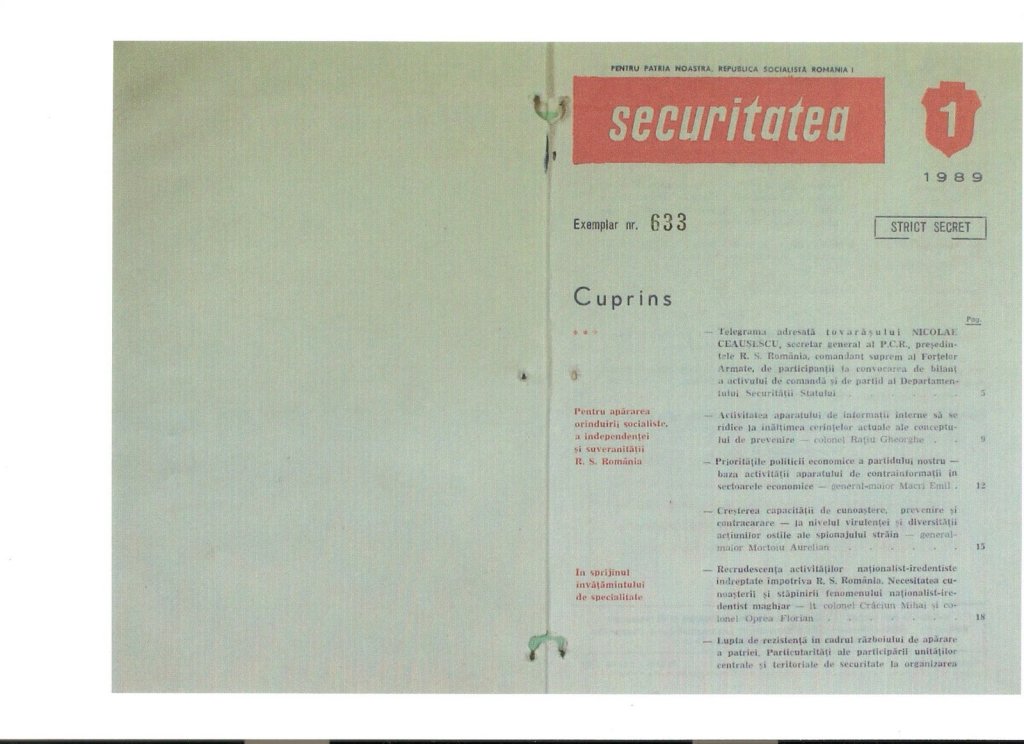
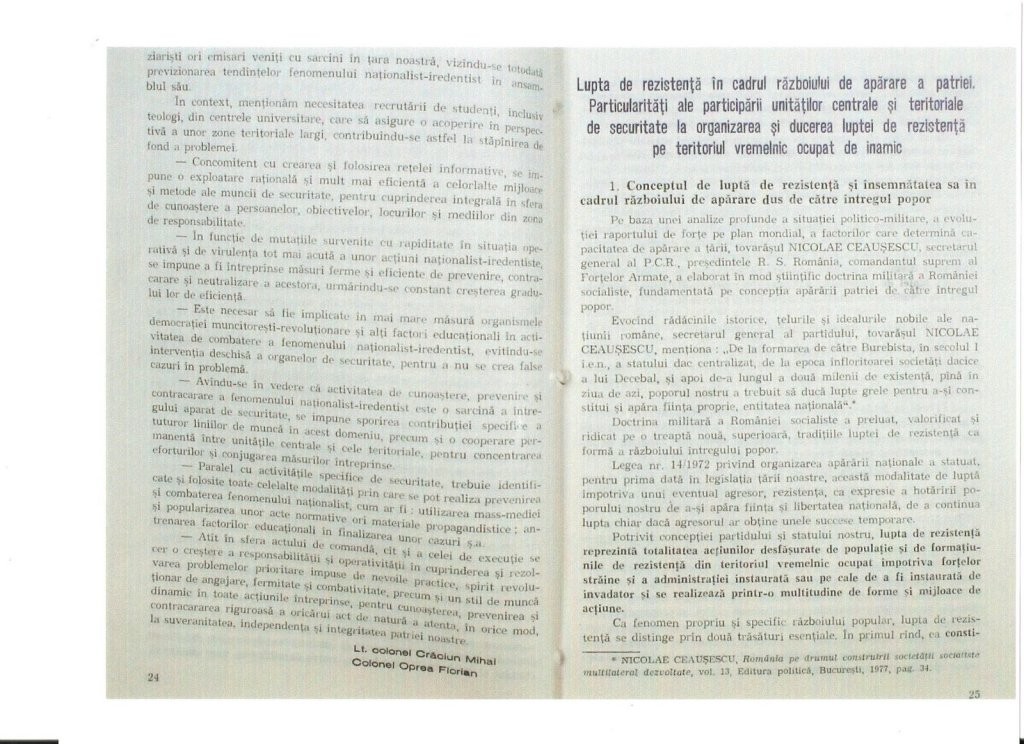


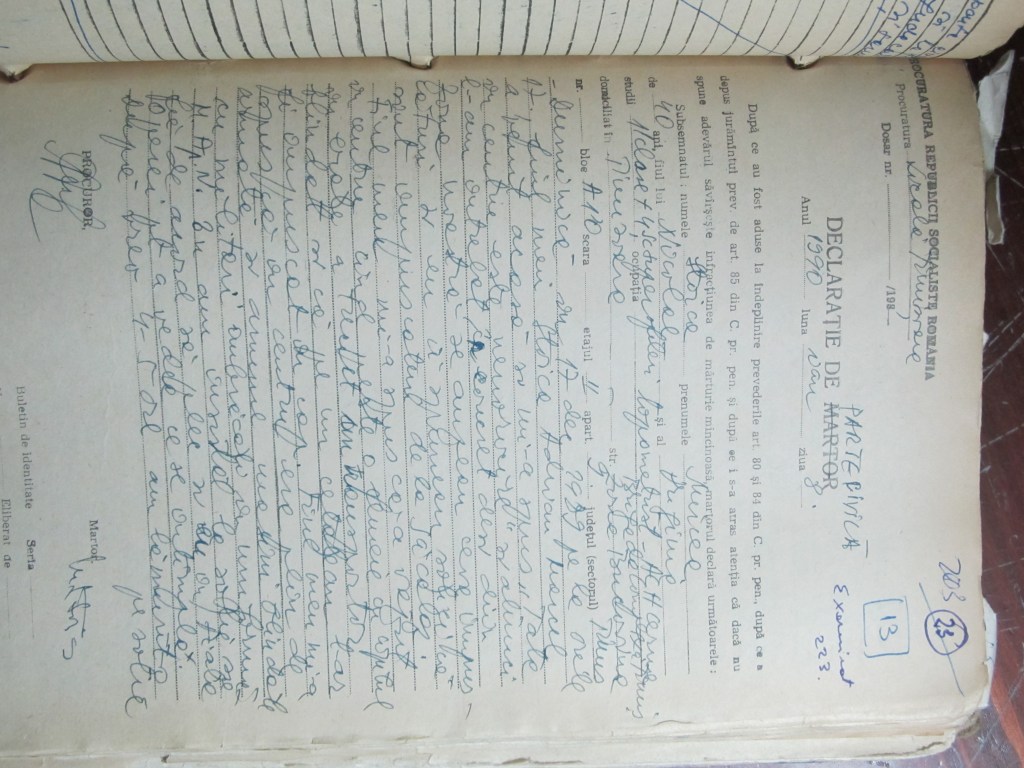





 The Archive of the Romanian Revolution of December 1989