Posted by romanianrevolutionofdecember1989 on February 21, 2014
(Purely personal views as always, based on over two decades of research and publications inside and outside Romania)
2014 marks the 25th anniversary of the collapse of communism in central and eastern Europe–Poland, Hungary, East Germany, Czechoslovakia, Bulgaria, and Romania. This (likely aperiodic) series looks at 25 things I have learned about the events of the Romanian Revolution of December 1989. The numbering is not designed to assign importance, but rather–to the extent possible–to progress chronologically through those events.
In Miodrag Milin’s compendium of the transcripts of the Timisoara trials http://www.banaterra.eu/romana/files/procesul_de_la_timisoara_volumul_I.pdf , on 5 March 1990 defendant Ion Popescu (former chief inspector of the Militia) acknowledged the implementation of Order 2600 beginning on 16 December 1989 as follows.
Acţiunile forţelor de represiune din Ministerul de Interne | 16-20 Decembrie 1989 |
16 Decembrie 1989
Activitatea pastorului László Tőkés era atent supravegheată de o echipă a Securităţii Timiş, condusă de maiorul Radu Tinu. Lucrătorii Securităţii urmăreau cu atenţie evenimentele care se derulau în faţa Bisericii Reformate. După ce tramvaiele din Piaţa Maria au fost oprite de către manifestanţi, protestul celor aflaţi acolo s-a transformat radical. Dacă iniţial timişorenii s-au adunat la Biserica Reformată pentru a se împotrivi evacuării pastorului László Tőkés, din acest moment protestul s-a radicalizat, cerându-se, pentru prima dată, schimbarea lui Ceauşescu, exprimată prin scandarea primei lozinci: „Jos Ceauşescu!”. În acel moment a avut loc şi prima altercaţie între manifestanţi şi efectivele Ministerului de Interne şi s-au făcut primele arestări.
Colonelul Popescu Ion, inspectorul-şef al Inspectoratului de Interne Timiş, în baza Ordinului 02600 din 1 iulie 1988, pune în aplicare planul unic de acţiune, desfăşurând în Timişoara trupele de intervenţie avute la dispoziţie. Astfel, au intrat în dispozitiv: 2 plutoane de intervenţie dotate cu căşti, scuturi şi bastoane, trei subunităţi de la Brigada de Securitate şi două subunităţi de la Trupele de Grăniceri. La Consiliul Judeţean au intervenit în forţă, bătând şi arestând o mare parte din manifestanţii aflaţi în zonă.
Posted by romanianrevolutionofdecember1989 on February 13, 2014
(Purely personal views as always, based on over two decades of research and publications inside and outside Romania)
2014 marks the 25th anniversary of the collapse of communism in central and eastern Europe–Poland, Hungary, East Germany, Czechoslovakia, Bulgaria, and Romania. This (likely aperiodic) series looks at 25 things I have learned about the events of the Romanian Revolution of December 1989. The numbering is not designed to assign importance, but rather–to the extent possible–to progress chronologically through those events.
Significance: I have essentially been the only researcher who has consistently advocated this understanding. Most others–including Peter Siani-Davies–tended to dismiss it. Now we have documentary evidence that it took place.
An excellent documentary from 1991 posted to the internet by Florin Iepan only recently and seen rarely if at all since its showing in 1991. There is much interesting information in this film. (The film seems to start at min. 19:00 and has to be rewound to its beginning.) Here, I will focus on the claim beginning at approximately min. 17:40 that the destruction of Timisoara shops and storefronts was organized and a pretext to justify–including legally–the repression by the Ceausescu regime of Timisoara demonstrators. Interior Minister Tudor Postelnicu’s declaration of 17 March 1990 confirms this claim and the observations of eyewitnesses.
Timisoara Decembrie 1989 / Timisoara December 1989,
regia/directed by – Ovidiu Bose Pastina
imaginea/camera – Doru Segal
Sahiafilm 1991
Tudor Postelnicu (Ministerul de Interne in decembrie 1989): “Unii militari de la trupele de securitate ale brigazii Timisoara au facut unele provocari la unele magazine si vitrine spargind geamurile sa imprastie participantii de pe straziile din apropriere, apoi au intrat in altercatie cu ei, si acum (?) vor sa le faca militia ordine. ‘Nu am aflat ca costa provocare a zis Gl. Nuta, am trimis pe …” (17.III.1990)
Before we move on here, it is worth noting how this destruction was covered in Peter Siani-Davies’ 2005 volume The Romanian Revolution of December 1989. As I have written on many occasions, Siani-Davies’ volume is wonderfully-written and is excellent, but the claim by Daniel Chirot that is a “near-definitive” account is far off the mark. One of the negative characteristics of Siani-Davies’ work is the use of “filler” rational choice, cui bono arguments where he concludes there is not enough information to make a valid judgment. The problem is the question is never one of “what was possible?” “what makes ‘sense’?” but rather what did happen?
Thus, for example in the case of the destruction of Timisoara Siani-Davies argues that there was already enough of a basis for the regime to crackdown, therefore why would they need to create a pretext for cracking down: “Given the seriousness of the situation and the fact that shots had already been fired elsewhere, the security forces hardly needed to produce a further ‘excuse’ for the massacre which was to follow.” (p. 68)
Back to exploring more of the evidence…
An excerpt from Chapter 5 of my Ph.D. Dissertation at Indiana University: Richard Andrew Hall, Rewriting the Revolution: Authoritarian Regime-State Relations and the Triumph of Securitate Revisionism in Post-Ceausescu Romania (defended 16 December 1996). This is the original chapter as it appeared then and thus has not been revised in any form.
Chapter Five. The Beginning of the End: Timisoara, 15-17 December 1989
…
The “Window Breakers”
The reportedly unusual scope of physical destruction which occurred in Timisoara, particularly on the afternoon and evening of 17 December 1989, has fueled revisionist arguments. Estimates of the damage during the Timisoara unrest are in the neighborhood of four to five billion lei (approximately forty to fifty million dollars at the time), a reasonably large sum given Romania’s standard of living at the time. A huge number of windows was broken and as many as 300 to 400 stores suffered some sort of damage, although relatively few were actually looted. On the evening of 17 December, stores, vehicles, and kiosks were burning in at least ten different areas of the city.[65]
Former Securitate officers clearly wish to link this destruction to the “foreign tourists” who were supposedly so ubiquitous in Timisoara during these days.[66] Perhaps somewhat surprisingly, former Securitate Director Iulian Vlad argued at his trial that
…the acts of vandalism, theft, destruction, arson… acts without precedent…could not have been the work [“opera”] of the faithful [apparently referring sarcastically to Tokes’ parishioners], nor the revolutionaries. They were produced by elements which wished to create a certain atmosphere of tension.[67]
Eyewitness accounts recorded soon after the events–therefore at a time before the various plots and scenarios had permeated the popular imagination–support the hypothesis that the vandalism was organized. Moldovan Fica remarks:
I admit that I cannot escape a certain conclusion. All of this [destruction] was done by a group of about five or six individuals, whose calm demeanor and self-control continues to stay with me to this day. They did not run from the scene, they appeared as if they did not fear anything; I would say that, in fact, they were doing what was required of them, something which had been ordered directly of them![75]
Describing destruction in a different part of the city, Andras Vasile observed that
…four young men with shaved heads and wearing civilian clothes had sticks–I would term them special sticks–1.7 to 1.8 meters long, equipped with metal rings on the top of them. They were breaking the windows, but not taking anything, as if they only had something against the windows, something which they thus went about with great enjoyment…they were led by two individuals in leather jackets.[76]
Other eyewitnesses supply details which confirm the widespread character of the vandalism; its undeniably organized quality; the disinterest of its perpetrators in looting the stores; and the almost “drugged” nature of the perpetrators, who seemed unperturbed by the chaos and repression going on around them.[77]
Ioan Savu discussed the windowbreakers as follows:
———————————-
Other depictions of this event available online:
Conducerea partidului, alarmată, a trimis în Piaţa Maria, conform Ordinului 02600, numeroşi miliţieni şi trupe speciale, pentru a lichida manifestaţia care luase amploare. Circulaţia în zonă se întrerupsese. În Piaţa Maria au fost trimişi aproximativ 200 de activişti de partid, miliţieni şi numeroşi ofiţeri de securitate, îmbrăcaţi în haine civile. Au urmat ciocniri violente, mai ales după ce manifestanţii s-au încolonat şi au pornit spre sediul CJ PCR, strigând “Libertate”, “Vrem pâine”, “Vrem căldură”, “Azi la Timişoara, mâine în toată ţara”.
În acea seară echipe de miliţie dinainte pregătite au spart vitrinele magazinelor din centrul oraşului, pentru a avea argumente pentru o intervenţie în forţă. Desigur, multe vitrine au fost sparte şi de derbedei, asupra cărora s-au găsit bunuri furate. În acea noapte au fost arestate aproape 5-600 de cetăţeni. Ei au fost duşi la Penitenciarul oraşului, unde au fost bătuţi în mod bestial. În zilele care au urmat arestării au fost anchetaţi în vederea trimiterii lor în judecată. Bineînţeles, dacă Revoluţia n-ar fi reuşit.
Totuşi, se ştie că în acele zile fierbinţi din Timişoara au existat „personaje neidentificate” care au acţionat în mai multe zone ale oraşului. Am să amintesc aici doar două aspecte concrete cu privire la implicarea acestora în evenimentele din Timişoara. În zilele de 16 şi 17 decembrie au fost sparte aproape toate vitrinele magazinelor din zona centrală a oraşului. Sunt zeci de declaraţii ale revoluţionarilor care fac o descriere clară a celor care au spart acele geamuri. Au fost oameni bine îmbrăcaţi, robuşti şi tunşi scurt. Aceştia erau dotaţi cu nişte beţe speciale cu care printr-un gest scurt şi foarte bine exersat loveau vitrinele, după care plecau fără a încerca să sustragă ceva din magazine. Aceste persoane au fost văzute chiar şi de forţele de ordine desfăşurate în acea zonă, care în mod ciudat nu au luat măsuri împotriva lor, ci au acţionat împotriva manifestanţilor ce demonstrau împotriva regimului ceauşist. Un alt aspect relatat de mulţi timişoreni se referă mai ales la zilele de 17-19 decembrie, când, în rândul cordoanelor militare din diferite dispozitive amplasate în zonele importante ale oraşului, între soldaţi, erau intercalate persoane mai în vârstă, nebărbierite îmbrăcate doar parţial în uniforme militare, care nu făceau parte din acele unităţi militare.
Cine au fost acele „persoane neidentificate”? De ce s-a dorit în unele cercuri, cu insistenţă chiar, acreditarea ideii că oamenii au fost scoşi în stradă de agenţi străini? De ce, chiar şi după 20 de ani, se fac afirmaţii de genul: cadavrele celor arşi la Crematoriul „Cenuşa” erau ale unor agenţi străini? Nu voi căuta acum răspunsuri la aceste întrebări, dar, cu siguranţă, ele există.
nascut in 30 iulie 1968 la Timisoara, muncitor la IJPIPS (1989), profesor de istorie la Liceul de informatica (1998), impuscat in spate
La Bijuterii concetatenii nostri tigani carau ce puteau. Numai la “Modex” nu era spart. Un grup de oameni se uitau cum niste indivizi bine instruiti spargeau geamurile de linga restaurantul Bulevard. Am rugat oamenii sa apere Modexul, pentru ca era clar ca spargatorii n-aveau nimic comun cu revolta. 30 septembrie 1995http://timisoara.com/newmioc/4.htm
“În data de 14 decembrie, securitatea a spart toate gemurile din partea străzii principale, iar clădirea arăta ca o cetate asediată. Fostul primar al Timişorei, Petre Moţ l-a vizitat pe Tokes şi a ieşit la geam pentru a vorbi mulţimii. Moţ a cerut să se pună geamuri noi. Erau foarte multe maşini ale securiştilor. Întreaga stradă era ocupată. Se făcea filaj. Eu locuiam acolo, ba intram, ba ieşeam. Nu se vorbea încă revoluţie. Era o solidaritatea faţă de pastor”, declarat Iosif Kabai (foto), care locuieşte şi acum în clădirea bisericii reformate.Citeste mai mult: adevarul.ro/locale/timisoara/16-decembrie-1989-ziua-timisoara-s-a-strigat-data-democratie-jos-comunismul-1_50bd3d887c42d5a663c8e01f/index.html
Radu Tinu cu Angela Bacescu…
The reportedly unusual scope of physical destruction which occurred in Timisoara, particularly on the afternoon and evening of 17 December 1989, has fueled revisionist arguments. Estimates of the damage during the Timisoara unrest are in the neighborhood of four to five billion lei (approximately forty to fifty million dollars at the time), a reasonably large sum given Romania’s standard of living at the time. A huge number of windows was broken and as many as 300 to 400 stores suffered some sort of damage, although relatively few were actually looted. On the evening of 17 December, stores, vehicles, and kiosks were burning in at least ten different areas of the city.[65]
Former Securitate officers clearly wish to link this destruction to the “foreign tourists” who were supposedly so ubiquitous in Timisoara during these days.[66] Perhaps somewhat surprisingly, former Securitate Director Iulian Vlad argued at his trial that
…the acts of vandalism, theft, destruction, arson… acts without precedent…could not have been the work [“opera”] of the faithful [apparently referring sarcastically to Tokes’ parishioners], nor the revolutionaries. They were produced by elements which wished to create a certain atmosphere of tension.[67]
RADU TINU:…SINGURLE COMPLEXE COMERCIALE RAMASE INTREGI AU FOST CELE DIN FATA MILITIEI JUDETENE SI CEL DE LANGA FABRICA “MODERN”…
The significance of window-breaking as a justification for repression–something the Securitate would have realized–was outlined by Nicolae Ceausescu in his teleconference of 17 December 1989 as follows:
“Oricine intra intr-un Consiliu Popular, intr-un sediu de partid sau sparge un geam la un magazin trebuie sa primeasca riposta imediat.
Col. Ion Popescu (sef IGM)’s defense lawyer appealed to Legea 21 and Decretul 121 specifically as obligating Interior Ministry (M.I.–Militia and Securitate) forces to intervene in response to the breaking of windows of commercial units…
Thus, the breaking of windows, which according to Interior Minister was instigated and carried out in part by Securitate Brigade 30 under the command of Ion Bunoaica served a bureaucratic and legalistic function–a tactic not unknown in the annals of other totalitarian or authoritarian regimes…
———————————–
An excerpt from Chapter 5 of my Ph.D. Dissertation at Indiana University: Richard Andrew Hall, Rewriting the Revolution: Authoritarian Regime-State Relations and the Triumph of Securitate Revisionism in Post-Ceausescu Romania (defended 16 December 1996). This is the original chapter as it appeared then and thus has not been revised in any form.
Chapter Five. The Beginning of the End: Timisoara, 15-17 December 1989
…
The “Window Breakers”
The reportedly unusual scope of physical destruction which occurred in Timisoara, particularly on the afternoon and evening of 17 December 1989, has fueled revisionist arguments. Estimates of the damage during the Timisoara unrest are in the neighborhood of four to five billion lei (approximately forty to fifty million dollars at the time), a reasonably large sum given Romania’s standard of living at the time. A huge number of windows was broken and as many as 300 to 400 stores suffered some sort of damage, although relatively few were actually looted. On the evening of 17 December, stores, vehicles, and kiosks were burning in at least ten different areas of the city.[65]
Former Securitate officers clearly wish to link this destruction to the “foreign tourists” who were supposedly so ubiquitous in Timisoara during these days.[66] Perhaps somewhat surprisingly, former Securitate Director Iulian Vlad argued at his trial that
…the acts of vandalism, theft, destruction, arson… acts without precedent…could not have been the work [“opera”] of the faithful [apparently referring sarcastically to Tokes’ parishioners], nor the revolutionaries. They were produced by elements which wished to create a certain atmosphere of tension.[67]
“A group of former Securitate officers” wrote to the Ceausist Democratia in September 1990 that after the Militia and Securitate refused to respond to the demonstrations provoked by the “foreign tourists”: “they advance[d] to the next stage: the massive destruction of public property designed to provoke forcible interventions–human victims were needed.”[68]
Nevertheless, here is how one opposition journalist, Grid Modorcea, has described the strange character of Timisoara destruction:
For the first time in history, a revolution…was announced in a previously unknown and absolutely original manner, both literally and figuratively speaking: through the methodical breakage of thousands of windows. On 16 and 17 December 1989, Timisoara was the city of [glass] shards. Well-trained groups of athletes spread throughout the town, tactically, but energetically smashing to pieces hundreds of huge windows without apparently being interested in stealing from these stores…they were like mythical Magis coming to announce the end of one world and the beginning of another. And they gave it an apocalyptic quality: the sound produced by the breaking glass was infernal. The panic this caused was indescribable….Those who “executed” the windows did so with karate-like kicks while yelling “Liberty and Justice”!…The crowds of people who came out into the streets transformed spontaneously into columns of demonstrators, of authentic revolutionaries. The effect was therefore monumental: the breaking of the windows unleashed the popular revolt against the dictator.[69]
Modorcea is convinced that the Tokes case was “merely a pretext” and that “someone–perhaps those who planned the vandalizing of the windows–has an interest in preventing it from being known who broke the windows.” Although Modorcea maintains he is unsure who was responsible, he insists on observing that:
Only the Customs people know how many tourists there were. All were men and long-haired. Inside their cars they had canisters. This fits with the method of the breaking of the windows, with the Molotov cocktails, and the drums used as barricades–they were exactly of the same type….To what extent the new regime which came to power was implicated, we cannot say![70]
Many Timisoara protesters appear torn between wishing to rationalize the extensive destruction as the courageous response of an enraged, long-suffering population, and denying that the perpetrators could have come from among their ranks. Even those investigators attuned to the retroactive psychology of the protesters cannot help but admit that widespread destruction occurred and that it could not have been wholly spontaneous.[71] Furthermore, as Laszlo Tokes has observed in discussing the events at Piata Maria, manipulation and attempts to instigate the crowd to violence were constant features during these days.
Tokes maintains that Securitate provocateurs had tried to agitate the crowd by shouting things like, “Let’s break into the house. The Securitate are in there; they’re trying to kidnap Laszlo Tokes! Let’s rush them!” and by appealing for him to “Come down into the street and lead us!”[72] According to Tokes:
I was alarmed at the obvious provocation from individuals in the crowd clearly intent on making the situation uncontrollable….Later, thinking about the events of those two days, I realized that the authorities would have had a great deal to gain if the situation had become a riot.[73]
Mircea Balan questions whether the protesters would have set stores on fire which were located on the ground floor of the buildings in which the protesters themselves lived.[74] Moreover, he wonders how even the revolutionary fury of the crowd could drive protesters to break so many windows, particularly given the presence of repressive forces on the streets. It is what Balan has termed the “systematic devastation” of property which raises questions.
Eyewitness accounts recorded soon after the events–therefore at a time before the various plots and scenarios had permeated the popular imagination–support the hypothesis that the vandalism was organized. Moldovan Fica remarks:
I admit that I cannot escape a certain conclusion. All of this [destruction] was done by a group of about five or six individuals, whose calm demeanor and self-control continues to stay with me to this day. They did not run from the scene, they appeared as if they did not fear anything; I would say that, in fact, they were doing what was required of them, something which had been ordered directly of them![75]
Describing destruction in a different part of the city, Andras Vasile observed that
…four young men with shaved heads and wearing civilian clothes had sticks–I would term them special sticks–1.7 to 1.8 meters long, equipped with metal rings on the top of them. They were breaking the windows, but not taking anything, as if they only had something against the windows, something which they thus went about with great enjoyment…they were led by two individuals in leather jackets.[76]
Other eyewitnesses supply details which confirm the widespread character of the vandalism; its undeniably organized quality; the disinterest of its perpetrators in looting the stores; and the almost “drugged” nature of the perpetrators, who seemed unperturbed by the chaos and repression going on around them.[77]
Mircea Balan has little doubt who committed this “systematic destruction”:
Demonstrators might have thrown rocks in windows, but the destruction of the entire store was not their work…Nobody need believe that for such a thing foreign intervention was necessary, seeing as there were enough first-class specialists in destruction and demolition right here at home. The Securitate could not have been foreign to what happened, no matter how much it fiercely attempts to deny this today. They were professionals in the art of destruction. They needed a justification for the bloody repression.[78]
In March 1990, Puspoki had been willing to identify the culprits more specifically. According to Puspoki, as the demonstrators began to gather to prevent Tokes’ eviction:
The USLA’s Sabotage and Diversion team was readied to break store windows, to devastate and set fires–to create the conditions necessary for mass repression: the existence of disorder in the streets and theft on the part of the demonstrators.[79]
Securitate Major Radu Tinu’s observation that the commercial complex “in front of the county Militia building” (i.e. the Inspectorate in which both the Securitate and Militia offices were located) was one of only two such complexes in the whole city to remain intact during these days may also be an indication of the source of the destruction.[80]
It is possible then that to the extent that this destruction did indeed contain an organized component, it was designed by the regime to subvert and cast suspicion upon the intentions of the protesters and to create a pretext for repression. To the extent that an organized component did contribute to the destruction, it was far more likely to have been regime forces attempting to undermine the protests than foreign agents attempting to provoke an uprising against the regime.
[65].. See, for example, Grid Modorcea, “Spargerea Geamurilor [The Breaking of the Windows],” Expres Magazin, no. 49 (1991), 8-9; Mircea Bunea, “Eroii noi si vechi [New and old heroes],” Adevarul, 2 February 1991, in Bunea, Praf in Ochi, 448-449; Suciu, Reportaj cu Sufletul, 57-58.
[66].. See, for example, the comments of Radu Tinu, the deputy director of the Timis County Securitate, in Bacescu, Din Nou in Calea, 67-85.
[67].. Mircea Bunea, “Ipse Dixit,” Adevarul, 21 February 1991, in Bunea, Praf in Ochi, 463. Vlad’s determination to emphasize that these were “acts without precedent” makes one wonder if they were indeed without precedent.
[68].. A group of former Securitate officers, “Asa va place revolutia? Asa a fost! [You like the revolution? Here is how it was!],” Democratia, no. 36 (24-30 September 1990), 4. The lengthy defense by these officers of the Fifth Directorate in this letter suggests that they were members of this directorate.
[76].. Ibid, 118. The fact that the two persons supervising the destruction are described as having worn “leather jackets” strongly suggests they may have been Securitate men. Mihai Decean claims that on a train headed for Bucharest on 25 December (therefore after Ceausescu’s flight), he helped in the arrest of two USLA officers whom he describes as “athletic, with shaved heads, and wearing leather jackets.” See Laura Ganea, “La Timisoara se mai trage inca” Tinerama, no. 77 (July 1991), 3.
[77].. Ibid., 71, 122. Some of the eyewitnesses cited in Modorcea, “Spargerea Geamurilor,” say similar things; Modorcea, however, gives them a very different interpretation.
The following was added some years later as a footnote to the section above in republications of this chapter. Badea says here “many years later” Postelnicu admitted this, but as we can now see from the Timisoara files, he wrote it in his declaration/statement dated 17 March 1990.
(In connection with the “window breakers” we do know a little more today than we did then back in 1996. Dan Badea wrote in 1999 Bunoaica and the Window Breakers that “Tudor Postelnicu, the Interior Minister at the time, was to declare many years later that the “breaking of the windows” was a mission executed by personnel from the 30th Securitate Brigade led by col. Ion Bunoaica). Orele 20.00 – 21.00: Sint sparte toate vitrinele magazinelor de pe Bulevardul 6 Martie (Tudor Postelnicu, ministru de interne la acea vreme, avea sa declare multi ani mai tirziu ca “spargerea vitrinelor” a fost o misiune executata de militari ai Brigazii 30 Securitate condusa de col. Ion Bunoaica).
What do previous studies tell us about the Soviets sending in agents posing as “tourists” prior to or during a military action or invasion against another country?
Mark Kramer has detailed Soviet use of “tourist” cover in the following CWIHP Bulletin article (Fall 1993, “The Prague Spring and the Soviet Invasion of Czechoslovakia: New Interpretations (Second of two parts),. What is important to take away from this? The Soviets posed as WESTERN tourists. They did not pose as…”Soviet tourists”!!!…
Indeed, what Larry Watts seems to miss in his exposition of claimed incidents of Soviet use of “tourist” cover in the context of planned/actual invasion is that in none of the examples do Soviet agents pose as…”Soviet tourists”…Why? Because it is a relatively poor cover story that doesn’t give much deniability that they were Soviets. If you are trying to conceal your Soviet links, you would most likely pose as some kind of other tourist, not as a Soviet tourist…
Why then, in December 1989, in Romania, are we to believe, that the Soviets would have abandoned precedent and posed as…”Soviet tourists”…driving around in Soviet automobiles (more easily identifiable in Romania than other Soviet bloc states because of the domestic production of and dominance of the market by Dacia vehicles) with Soviet tags/license plates, and apparently carrying Soviet passports? Doesn’t sound particularly intelligent, does it? Instead, such things would draw attention to you and would mint you as…Soviets!
2014 marks the 25th anniversary of the collapse of communism in central and eastern Europe–Poland, Hungary, East Germany, Czechoslovakia, Bulgaria, and Romania. This (likely aperiodic) series looks at 25 things I have learned about the events of the Romanian Revolution of December 1989. The numbering is not designed to assign importance, but rather–to the extent possible–to progress chronologically through those events.
Significance: Until the documents below were made publicly available and I unearthed the following, we had to rely primarily on arguments emphasizing the Securitate roots of these claims and/or about the implausibility and often absurdity of these claims. We now have documentary evidence that in the immediate wake of December 1989 not even the Securitate believed in the claims they would make so frequently later on.
The Timisoara files about December 1989 are now publicly available (when the link works!) on the Internet at http://dosarelerevolutiei.ro/. What they show is that Securitate, Militia, and other regime officials from Timis County were asked by Bucharest–communicated via the person of Securitate Director, General Iulian Vlad–to investigate the role of foreign elements, specifically tourists, in the Timisoara protests of mid-December 1989. But they were not the only ones. General Vlad tasked senior Securitate officials from Bucharest sent to Timisoara to report back to him on this very topic alleging external involvement and manipulation of the Timisoara demonstrations. What remains unclear is how much of this tasking was General Vlad communicating his own “hypothesis” or how much of it was he relaying Nicolae Ceausescu’s “theory” about what was going on. This much is clear: neither those stationed in Timis County, nor those officials sent from Bucharest could find evidence of a foreign hand in the Timisoara uprising, despite being asked to investigate exactly this aspect. How do we know this? From their own written confessions immediately after the December 1989 events. (Below are four of them: Nicolae Mavru, Liviu Dinulescu, Emil Macri, and Filip Teodorescu.)
Niculae Mavru, fost sef al sectiei ‘Filaj si investigatie’ de la Securitatea Timis, declaratia din 13 ianuarie 1990: …la ordinul col. Sima Traian, am primit…misiuni de a observa si sesiza aspecte din masa manifestantilor, din diferite zone ale orasului in sensul de a raporta daca sint straini (ceea ce nu prea au fost) care incita la dezordine, acte de violenta sau altfel de acte… 25 iunie 1991 “Desi ne-am straduit nu am putut raporta col. Sima implicarea completa a vreunui cetatean strain in evolutia demonstratiilor cit si fenomenlor care au avut loc la Timisoara,..”
“Sarcina primordiala pe care am primit-o de la col. Sima a fost daca in evenimentele declansate la Timisoara erau implicate elemente straine din afara tarii. Cu toate eforturile facute nu a rezultat lucru pe linia mea de munca.”
26 iunie 1991, Declaratia lui Liviu Dinulescu, cpt. la Serviciul de Pasapoarte al jud. Timis (in decembrie 1989, lt. maj. ofiter operativ Securitate judetean la Serv. III, care se ocupa de contraspionaj)
“Precizez ca anterior declansarii evenimentelor de la Timisoara din datele ce le detineam serviciul nostru nu rezulta vreun amestec din exterior in zona judetului Timis.”
Generalul Emil Macri (seful Dir. II-a Securitatii, Contrainformatii Economice),
Declaratie 2 ianuarie 1990:
“Rezumind sintetic informatiile obtinute ele nu au pus in evidenta nici lideri si nici amestecul vreunei puteri straine in producerea evenimentelor de la Timisoara. Raportarea acestor date la esalonul superior respectivi generalului I. Vlad a produs iritare si chiar suparare…”
Filip Teodorescu (adj. sef. Dir III Contraspionaj D.S.S.), Declaratie, 12 ianaurie 1990: Seara [luni, 18 decembrie 1989], dupa 23:00, responsabili (anumiti ?) de generalul-maior Macri Emil pe diferitele linii de munca au inceput sa vina sa-i raporteze informatiile obtinute. Au fost destul de neconcludente si cu mare dificultate am redat o informare pe care generalul-maior Macri Emil a acceptat-o si am expediat-o prin telex in jurul orei 01:00 [marti, 19 decembrie 1989. In esenta se refera la:–nu sint date ca ar exista instigatori sau conducatori anume veniti din strainatate…http://atomic-temporary-3899751.wpcomstaging.com/2013/04/29/high-time-to-unpack-already-why-the-restless-journey-of-the-soviet-tourists-of-the-romanian-revolution-should-come-to-an-end/
Mai jos, declaratiile lui Petre Pele, Tudor Postelnicu, Gheorghe Diaconescu, si Iulian Vlad Excerpt from Chapter 5 of my Ph.D. Dissertation at Indiana University: Richard Andrew Hall, Rewriting the Revolution: Authoritarian Regime-State Relations and the Triumph of Securitate Revisionism in Post-Ceausescu Romania (defended 16 December 1996). This is the original chapter as it appeared then and thus have not been revised in any form. http://atomic-temporary-3899751.wpcomstaging.com/rewriting-the-revolution-1997/
A Review of the Evidence
Although at first glance the regime’s treatment of Pastor Tokes seems strange and even illogical, within the context of the workings of the Ceausescu regime and the regime’s strategy for dealing with dissent it makes perfect sense. There is simply no convincing evidence to believe that the Securitate–or a faction within it–purposely dragged its feet in enforcing Pastor Tokes’ eviction, or was attempting to spark a demonstration in the hopes of precipitating Ceausescu’s fall. The regime’s decision to evict Tokes was not a last-minute decision. Moreover, the regime exerted tremendous and sometimes brutal pressure to silence Tokes in the months preceding this deadline. Interestingly, according to high-ranking members of the former Securitate, Nicolae Ceausescu’s unwillingness to approve the more definitive measures requested by the Securitate allowed the Tokes case to drag on without resolution (see below). The Tokes case suggests the bureaucratic and byzantine mentalities of the Ceausescu regime, and the clash between a dictator’s instructions and how the institutions charged with defending him interpret their mission. … The suggestion that the Securitate treated Tokes gently prior to his eviction is simply incorrect. On 2 November 1989, four masked men burst through the locked doors of the parochial residence, wielding knives and screaming in a fury. Tokes was slashed on the forehead before his church bodyguards could come to his rescue, causing the four to flee. The numerous Securitate men posted out front of the building had done nothing to intervene in spite of calls for help. Puspoki suggests that these “Mafia-like thugs,” who attacked as if from “an Incan tribe,” were some of Colonel Sima’s “gorillas,” sent to deliver a clear message to Tokes that he should leave immediately.[40] The view of the former Securitate–as expounded by Colonel Sima’s senior deputy, Major Radu Tinu–insinuates a “tourist”-like scenario. According to Tinu, the incident was clearly a “set-up” designed to draw sympathy to Tokes’ cause since the assailants fled away in a car with West German tags.[41] Not for the last time, the Securitate thus appears to attempt to attribute its own actions to foreign agents. A week after the mysterious attack by the masked intruders, all of the windows of the parochial residence and nearby buildings were smashed. Interestingly, the report drawn up for Bucharest by the Timisoara Securitate attempted to argue that “workers” from the Timisoara Mechanical Enterprise, offended by pastor Tokes’ behavior, had broken the windows. According to Puspoki, the use of a propaganda-like description was not accidental: the local Securitate was trying to present the incident as evidence of “the dissatisfaction of the working people of Timisoara” in the hope that it would finally prompt Ceausescu into approving definitive measures against Tokes.[42] Was Ceausescu responsible for the fact that the Tokes case dragged on without resolution? Support for such a conclusion comes from the comments of Securitate officers Colonel Filip Teodorescu and Major Radu Tinu. Teodorescu was dispatched to Timisoara with sixty other Securitate information officers in order to “verify” the request of the local Securitate that proceedings for treason be initiated against Tokes.[43] Teodorescu laments: Unfortunately, as in other situations…Nicolae Ceausescu did not agree because he didn’t want to further muddy relations with Hungary. Moreover, groundlessly, he hoped to avoid the criticisms of “Western democracies” by taking administrative measures against the pastor through the Reformed Church to which [Tokes] belonged.[44] Major Radu Tinu suggests that Ceausescu’s approval was necessary in the case of Securitate arrests and that the local Securitate remained “stupefied” that after having worked so long and hard in gathering information with which to charge Tokes with the crime of treason, Ceausescu rejected the request.[45] Tinu speculates that Ceausescu “did not want to create problems at the international level.” Because former Securitate officers rarely pass up the opportunity to absolve themselves of blame, and it would appear both easier and more advantageous to blame the deceased Ceausescu for being too unyielding in the Tokes affair, these allegations seem plausible. Thus, it would appear that because Nicolae Ceausescu was skittish of further damaging Romania’s already deteriorating relations with the international community, and the Tokes case was a high-profile one, he refrained from approving visible, definitive action against the pastor. The Securitate‘s attempt to goad Ceausescu to bolder action would appear to confirm Ghita Ionescu’s suggestion that where the security apparatus comes to dominate regime affairs it attempts to impose its institutional prerogatives upon political superiors. Ceausescu and the Securitate appear then to have had sometimes conflicting views over how to resolve the Tokes affair in the quickest and most efficient fashion. By December 1989, a huge group of Securitate officers were working on the Tokes case: the entire branch of the First Directorate for Timis county, the special division charged with combatting Hungarian espionage, high-ranking members of the First Directorate and Independent Service “D” (responsible for disinformation) from Bucharest, and members of the division charged with “Surveillance and Investigation.”[46] Puspoki describes Timisoara at this late hour as follows: Day and night, the telex machines on the top floor of the [County Militia] “Inspectorate” incessantly banged out communications, while the telephones never stopped ringing. Minister Postelnicu yelled on the phone, Colonel Sima yelled through the offices and the hallways. The officers ran, as if out of their minds, after information, besieged neighbors of the pastor, and dispatched in his direction–what they call–”informers with possibilities.”[47] Yet the case lingered on. On Sunday, 10 December 1989, Pastor Tokes announced to his congregation that he had received a rejection of his most recent appeal: the regime would make good on its threat to evict him on Friday, 15 December. He termed this an “illegal act” and suggested that the authorities would probably use force since he would not go willingly. He appealed for people to come and attend as “peaceful witnesses.”[48] They came.
[48].. Tokes, With God, for the People, 1-4. ————————————————————————————————
Tudor Postelnicu: “Ceausescu Nicolae facuse o psihoza, mai ales dupa ce s-a intors de la sedinta de la Moscova in toamna lui ’89. Era convins ca se planuieste si de cei de pe plan extern caderea sa, era convins ca toti sint spioni…” Petru Pele (Dir I, DSS). Declaratie, 16 ianuarie 1990: “Printre sarciniile mai importante efectuate de catre acestia in perioada 17-22.12.1989 s-a numerat (?) constituierea (?) listelor celor retinuti de organele militie cu listele celor predati sau reintorsi din Ungaria, intrucit s-a emis ipoteza ca evenimentele de la Timisoara au fost puse la cale in tara vecina…” Gheorghe Diaconescu, Declaratie 31 decembrie 1989 “Luni 18 decembrie gl. col. VLAD IULIAN a avut o convorbire cu colegul meu (local?) RADULESCU EMIL … Vlad Iulian (continuarea, declaratia lui Gheorghe Diaconescu) “?… foarte dur (?) ca nu (?) ca ‘un grup de turisti isi fac de cap in Timisoara’” Tocmai Iulian Vlad, el insusi, recunoaste ne-implicarea strainilor in evenimentele de la Timisoara, aici… “Incepind cu noaptea de 16/17 dec. si in continuare pina in data de 20 dec. 1989 organul de securitate local col. Sima cit si gl. Macri si in lipsa lui col. Teodorescu imi comunicau date din care rezulta ca sute de elemente turbulente au devastat orasul, si ca elementul strain nu rezulta a se fi implicate in continuarea fenomenului.” “Mai exact, cei trimis de mine la Timisoara mi-au raportat ca nu au elemente din care sa rezulte vreum amestec al strainatatii in producerea evenimentelor de la Timisoara.”http://atomic-temporary-3899751.wpcomstaging.com/2013/03/17/o-indicatie-pretioasa-de-pe-malurile-dimbovitei-implicarea-strainilor-in-evenimentele-de-la-timisoara-paranoia-lui-nicolae-ceausescu-sau-confirmarea-lui-iulian-vlad/
All this is important to keep in mind when coming across claims about the alleged role of these tourists in the overthrow of the communist regime of Nicolae Ceausescu: none of the authors purporting such claims have addressed the documents above. Among the authors who allege such a role and whose work is available on the Internet are the following:
Efectivele care desfasoara actiuni in cadrul lupte de rezistenta se vor dota corespunzator misiunilor incredintate. Materialele necesare vor fi realizate din cele aflate in dotarea unitatilor sau din depozitele special create in locuri ascunse, din capturi de la inamic, trimitere pe calea aerului sau alte surse…
The Securitate, in recounting their version of what happened in December 1989, love to point out how their official stockpiles of arms were sealed when the Ceausescus fled by helicopter at approximately 12:00 on 22 December 1989. (Even this is only partially true.) Military Prosecutor General Dan Voinea, and many researchers of December 1989–including some of the best among them, such as Peter Siani-Davies, repeat claims similar to this–or to the extent that they acknowledge Securitate weapons might have been used, they suggest, as does Siani-Davies, that we cannot just assume that the Securitate used them, but that they may have fallen into the hands of civilians, the Patriotic Guards, the Army, etc. None of this, however, accounts for the fact that from injured civilians, to domestic and foreign doctors who operated on them, to military officers, have attested to the existence, use, and discovery of atypical munitions not in the Army’s arsenal–namely the use of exploding Dum-Dum bullets and/or “vidia” bullets. The Securitate appear to be generally correct: these weren’t in their normal stockpiles. But they didn’t use those. Naturally, in the context of an assumed foreign invasion and occupation, they could not bank on access to such stockpiles, which would probably have fallen into the hands of the enemy. Instead, they would have to rely on hidden stockpiles, secret deposits strategically placed in major cities and outside of them, that only they knew about, and that could be accessed in the case of foreign occupation. Also, one can assume the scruples that they might have had with regard to the use of such munitions against their own unarmed people–although given what happened, it turns out they didn’t have many scruples after all–did not apply to an invading and occupying foreign force–hence the preparation of such munitions. Moreover, after the Ceausescus fled on 22 December, the character of the terrorist actions were very much in keeping with what we might expect from a “resistance war” (lupta de rezistenta): as some have noted in recounting what happened, if they were unarmed they seemed to be able to move with reasonable ease and not great fear of being shot…however, if they were armed they became a target, and could receive a sniper shot to the head or chest (something of which a civilian with little familiarity with arms or access to them before 22 December 1989 would have been unlikely to be able to pull off).
“Saptamina trecuta am incheiat un ciclu de 2 saptamini de pregatire si examinare, la Baneasa, pentru obtinerea gradului de subofiter. Acest ciclu l-am efectuat la Baneasa, deoarece stagiul militar de 9 luni, l-am satisfacut intr-o unitate apartinind Securitatii Statului.
–Ce specific a avut pregatirea?
–Am fost antrenati pentru lupta de gherila urbana, in caz de agresiune externa. Eram organizati in grupuri mici care actionau pentru destabilizarea inamicului, pe teritoriul ocupat de el.
–S-au facut afirmatii in perioada revolutiei, ca nu exista trupe specializate in gherila urbana! Este adevarat?
–Nu! In cazul in care se face exceptie de notiunea de inamic strain sau agresiune externa, pregatire multor generatii de militari au acest specific.
–Ati fi activat doar in termenul celor 9 luni?
–Nu! Noi sintem la dispozitia lor in permanenta. Putem fi convocati telefonic sau printr-o alta modalitate conspirativa. Existe case conspirative si depozite de munitie in plin Bucuresti, de unde ne-am fi aprovizionat cu armament si munitie pentru a efectua ambuscade, aruncari in aer si altele.
–Considerati ca dupa revolutie lucrurile s-au schimbat, cum apreciati ca ati fost chemat tot la o unitate fosta a Securitatii?
–Am fost indignati si chiar ne-am manifestat in sensul acesta! La toate intrebarile noastre n-am primit raspuns. De abia la sfirsitul stagiului am aflat ca ne-am pregatit, de fapt, la trupele de jandarmi.
–Si pina atunci?
–Col. Porumbelu ne-a tacut un mic istoric din care am sa citez: “Din 22 dec. in 28 am fost teroristi! Din 28 pina in martie am fost M.Ap.N.-isti. Pina pe 5 iulie sintem trupe de jandarmi….
Stiu ca in zilele de 23-25 XII 1989, din circa 150 sesizari facute de cetateni 48 s-au dovedit intemeiate in sensul ca, in punctele indicate, s-au gasit depozite de arme. Deci nu exista “taina absoluta.” Depozitul de arme gasit in blocul Scala, prabusit la cutremur, era tot al USLA, deci de mult a fost pregatita actiunea. Avem de a face cu o organizatie criminala pregatita de un stat impotriva populatiei sale. — N.F., pensionar, Bucuresti. “Voi ati tras in noi, noi va salvam viata!” 22, nr. 5 (16 februarie 1990), p. 10. Now available online at http://www.revista22.ro/nou/arhivapdf/5_1990.pdf .
from Gardianul 16 December 2005
(Virgil Magureanu before the Parliamentary Commission investigating the events of December 1989):
Vreau sa va spun ca tot atunci a venit tot un subordonat de-al meu, locotenent-colonel Chilin, si era seful informatiilor la brigada antiterorista
Nicolaescu: Ati stat de vorba cu un general de Securitate, ati luat niste securisti cu dv., ati plecat la televiziune sa aparati televiziunea, impotriva cui? Cu cine credeati dv. ca luptati?
Magureanu: Dl, noi am presupus ca insurgentii erau cei care nu doreau prabusirea regimului; indiferent cine erau aceia; dar noi am vazut ca televiziunea era in primejdie de a scapa din mana celor care dadusera anatema regimului Ceausescu si erau vadit impotriva. Acolo taberele erau cei pro si impotriva regimului Ceausescu.
Asa am apreciat atunci.
Si asa imi mentin aprecierea si azi. De principiu.
Ma rog, aflasem mai multe lucruri. Despre niste depozite de armament (Chilin mi-a zis) de pe traseul de la Piata Palatului spre iesirea din Bucuresti de unde se aproviziona Securitatea atunci cand pazea traseul, despre niste subterane in care ar exista, de asemenea, armament si munitie, subterane care trebuiau luate in posesie si sa fie vazut ce e acolo. (In other words, an USLA official confirmed that the Securitate had deposits of arms and munitions along routes in Bucharest.)
Magureanu: Si am ajuns. Oamenii de acolo, cand am aparut eu, sigur ca s-au strans in jurul meu. Vreau sa va spun ca tot atunci a venit tot un subordonat de-al meu, locotenent-colonel Chilin, si era seful informatiilor la brigada antiterorista. S-au grupat pur si simplu in jurul meu ca nici ei nu aveau cu cine sta de vorba acolo. Militarii aveau sarcinile lor in dispozitiv, ceilalti, politicienii erau cu preocuparile lor si ingrijorarile lor, iar eu disponibil.
Nicolaescu: Ati plecat de la Eforie, cam la ce ora si cati insi?
Magureanu: Dl Nicolaescu deci toate acestea s-au petrecut pana in dupa-amiaza; ora nu o stiu cu precizie si traseul a fost dificil. Ca sa nu fim opriti, deci a fost o dubita si cateva masini cu toti astia. Cred ca nu erau in civili, cred ca erau totusi in kaki, dar trebuie sa-i intrebam chiar pe ei. Oamenii au venit cu automatele, s-au asezat in dispozitiv, in partea dinspre Dorobanti.
Nicolaescu: La cine v-ati prezentat cu ei la televiziune? La ce poarta?
Magureanu: Daca nu ma insel, era generalul Tudor care-i repartiza in dispozitiv de aparare. I-am dus acolo, i-am lasat si oamenii si-au vazut de treaba lor in continuare.
Nicolaescu: Si dv. ati plecat mai departe?
Magureanu: Pe urma ce-a fost? A venit, ca iarasi ma cunosteau, se lipise de mine un inginer de la un institut de cercetari, care a si ramas cu mine, a aparut acolo a fost o cunostinta de-a mea, altul care a incercat sa-l contactez, fara succes, fostul general la politie generalul Penciuc. A fost trecut in rezerva. Prin 1983-1984 i-am facut o vizita la Baneasa. Nu a percutat in nici un fel. Si el stie o multime de lucruri despre ce s-a intamplat in decembrie. Dumitru Penciuc. Nu mai stiu ce functie a avut. Dar a venit la mine in 23 la amiaza. Chilin a venit si au mai venit inca si ne-au spus o serie de lucruri pe care noi am socotit ca e bine sa le transmitem in forma aceea celor de la aparare si dlui Iliescu.
Nicolaescu: Ati stat de vorba cu un general de Securitate, ati luat niste securisti cu dv., ati plecat la televiziune sa aparati televiziunea, impotriva cui? Cu cine credeati dv. ca luptati?
Magureanu: Dl, noi am presupus ca insurgentii erau cei care nu doreau prabusirea regimului; indiferent cine erau aceia; dar noi am vazut ca televiziunea era in primejdie de a scapa din mana celor care dadusera anatema regimului Ceausescu si erau vadit impotriva. Acolo taberele erau cei pro si impotriva regimului Ceausescu.
Asa am apreciat atunci.
Si asa imi mentin aprecierea si azi. De principiu.
Ma rog, aflasem mai multe lucruri. Despre niste depozite de armament (Chilin mi-a zis) de pe traseul de la Piata Palatului spre iesirea din Bucuresti de unde se aproviziona Securitatea atunci cand pazea traseul, despre niste subterane in care ar exista, de asemenea, armament si munitie, subterane care trebuiau luate in posesie si sa fie vazut ce e acolo.
Nicolaescu: De cine sa fie luate in posesie?
Magureanu: De catre cei care-si asumasera noua putere. Totusi se infiripase acolo. Nu era la televiziune intr-un dispozitiv care se raliasera evenimentelor? Si intr-un fel sau altul cei care luptau pentru apararea televiziunii trebuiau sa stie si unde sunt punctele de rezistenta ale celor care se opuneau.
Nicolaescu: Nu va suparati pe mine pentru ca vreau sa lamuresc.
Magureanu: Dle Nicolaescu nu cred ca sunt aici pentru sentimente precum suparare sau altceva.
Deci, sa stiti, treaba cu depozitele s-a dovedit nereala ulterior. Era Penciuc, inginerul asta de care va spun.
A, era sa-mi scape un amanunt. Cand am ajuns acolo si am stat de vorba cu Mortoiu, mi-a zis: “Toti isi iau arme automate. Luati-va si dv. macar un pistol, un pistolet”. Eu nu am purtat in viata mea arma. Nici acum nu o port. Este o chestie de psihologie personala.
Insa atunci s-a insistat “ia-l ca nu se stie ce se poate intampla”. Nu-mi dadeam seama ce se poate intampla si nici ce as face eu cu o arma pentru ca nu sunt capabil sa traga cineva.
In fine, daca a insistat si ca sa scap de gura lui am zis “bine domnule”. S-a nimerit ca nu a fost magazionerul acolo si am plecat fara, mai tarziu.
Nicolaescu: Ceilalti cum au luat arme daca nu era magazionerul acolo?”
Magureanu: Automatele mari erau intr-un loc anume. Oamenii nu aveau arme asupra lor, dar atunci li s-au distribuit arme si munitie din dotarea unitatii.
Pistoletele aveau probabil un alt regim. In orice caz, omul care trebuia sa-mi dea nu era.
Ca sa nu fim banuiti de altceva s-a scris pe pancarte: “Noua securitate a poporului”. Pe la Universitate am fost oprit si inca in vreo doua locuri. Si oamenii bombaneau “bine, bine numai sa fie noua”.
Mergem cu masini. Am ajuns fara incidente la TV. S-au repartizat in dispozitiv, tirul era “in draci”.
Reconstituirea traseului, daca are vreo importanta pot s-o fac dupa ce stau de vorba cu cei care au fost acolo.
In sfarsit, ce vroia sa spun. Doua ore mai tarziu hotarasem sa ne ducem la armata sa le spunem alora de depozit, de subterane, imi facusera capul calendar. Dl Chilin poate sa vina sa depuna aici. Acum s-a privatizat.
Si aceasta problema este un capitol separat (cu privatizarea).
Cand am iesit din TV ca sa mergem la armata (eram Peciuc si altii, nu-mi aduc aminte, eram cu o masina. Erau doua grupuri; unul mai mare si unul mai mic in stari diferite de luciditate. In Piata Aviatorilor – grupuri care stateau pe margini in partea dinspre Arcul de Triumf. Primul grup era de 15-20, curios este ca desi nu aveau imbracaminte neobisnuita, toti au trecut, pe mine m-au oprit. Am trecut de primul grup la al doilea mi s-a infundat. M-au buzunarit, au confruntat actele; daca gasea si pistolul, eram terminat. Cred ca cu ala ma impuscau. Nu am mai putut trece de ei. S-a produs o busculada. Era o dunga de la caciula si au zis “asta avea cascheta aici, e securist, e terorist, puneti mana pe el. Mai aveam inca in buzunar si biletele de tren. M-au tot inghesuit ca nu puteau sa gaseasca ceva. Toti cu care eram plecasera, singurul care ramasese cu mine era inginerasul acela de la institutul de cercetari. Unul din grupul acela, mai lucid, mi-a zis: “Dle uite astia vor sa-ti faca ceva, mai bine te legam, te punem intr-o Raba si te ducem la militie sa te indentifice. Eu aveam acte la mine, dar actele alea nu le spuneau nimic. Ne-am dus la postul de militie din dreapta statuii Aviatorilor si am stat vreo trei orei. Deci legat la maini pe mine si pe inginerul de care v-am spus.
Raposatul Stark a dat telefon de la TV sa-mi dea drumul. Numai asa mi-au dat drumul. M-am intors la TV.
Hossu: De unde stiau sa sune la TV?
Magureanu: Eu le-am dat sugestia. Le-am spus: Sunati la TV” ca de acolo am venit, nu am venit din alta parte.
Sabin Ivan: Din tot grupul cum de v-a luat tocmai pe dv.?
Magureanu: Nici eu nu-mi pot explica. Probabil ca au intuit ce o sa ajung eu.
Sabin Ivan: Pai asta era ideea. Nu-i tineti minte pe aia?
Magureanu: Nu.
Nicolaescu: Nu cumva totusi cineva din aia v-a recunoscut?
Magureanu: Nu. In mod sigur, nu.
Daca incidentul prezinta importanta, in nume personal eu oricum puteam sa fiu terminat acolo. Daca as fi avut ceva de ascuns va dati seama ca nu-l reproduceam.
Ivan Sabin: De ce l-ati reprodus totusi, ca nu e asa important?
Magureanu: Ar trebui sa va decideti dl. Am remarcat ca nu aveti decat intepaturi pentru mine.
Deci dlor ne-am intors la televiziune.
In 23 seara la circa o ora-doua a venit dl Iliescu, abia atunci am putut sa stam de vorba si am plecat impreuna cu niste TAB-uri la Aparare. Era cu noi Voican. Motanu, Babone – care a si produs un incident in noaptea aceea, cred ca era securist, dar de proasta calitate. Dl Iliescu nu-i cunostea.
Vreau sa va spun un lucru, care cred ca ma disocia fata de ceilalti. Multi s-au bagat acolo, in grupul acela cam fara nici o legatura cu ceea ce se intamplase. Si multi au avut grija sa apara pe urma in umbra actualului presedinte (eventual barba, sa li se vada).
Sabin Ivan: Astia au ramas in continuare langa presedinte?
Magureanu: Dar dv. stiti aceste lucruri. In orice caz de aceea am intrebat pe dl Iliescu daca-i cunoaste pentru ca anturajul devenise incert, dupa parerea mea. Prea multa lume civila si intamplatoare in sediul Apararii. Si orice ar fi cand e vorba de armata si de militarie in actiuni de acest gen, multi incurca “batatura”.
Acolo erau perdelele trase, o canonada in draci. Se discuta “cam la podea”. Cand am intrat acolo, proaspatul numit ministru Militaru s-a apropiat de dl Iliescu si i-a spus ca situatia tinde sa scape de sub control. Si a inceput sa insire escadrile de elicoptere dinspre mare, desant aerian, coloane de blindate pe Oltenitei si inca vreo doua din astea.
Platica: Ati amintit adineauri de proaspat numitul ministru. Deci in seara de 23?
Magureanu: Deci Militaru era acolo in calitatea de care eu va vorbesc acum.
Platica: Din discutiile avute cu ceilalti, aceasta numire a fost plasata in ziua de 24 din punct de vedere sa-i spunem formal, iar de drept, din 25 sau 26.
Magureanu: E posibil ca semnarea acestei numiri sa fi fost ulterioara, insa Militaru era in tinuta militara. Oricum el a fost primul care s-a apropiat de Ion Iliescu si i-a prezentat ceea ce v-am spus. Nu stiu cata insemnatate are data, s-ar putea de vreme ce m-ati intrebat, dar efectiv eu asa tin minte; ca in seara de 23 el era deja ministrul apararii. Dar bineinteles se poate reconstitui. Poate fi intrebat si dl Iliescu, Stanculescu. Dragos Munteanu actual ambasador la Washington. M-as fi mirat sa nu fie asa pentru ca de un ministru al apararii in acel moment este evident ca era nevoie.
Platica: Este evident ca era, dar tocmai de atunci incolo se mai pun niste intrebari. Stiti cumva la sugestia cui s-a facut aceasta numire? Pentru ca era inca o situatie de provizorat. Chiar dv. mai adineauri ati spus ca ati ramas oarecum mirat de configuratia formulei care exista in cadrul ministerului. Cum de s-a ajuns la aceasta numire a dlui Militaru?
Magureanu: Nu sunt in masura sa va raspund eu. Eu v-am relatat situatia care am vazut-o acolo. Poate ca intrebati chiar pe impricinat.
Va rog permiteti sa derulez noaptea acea de 23-24, dupa care va rog foarte mult programati-ma la o data care o considerati dv. convenabila ca sa revin sa reluam amanuntit.
Deci in 23-24, lucrurile au mers ca asa. Pe un fond de razboi psihologic foarte dens, Militaru a spus atunci ceea ce v-am spus. Poate s-o confirme, poate ca a si comunicat-o. In acel moment, generalul Stanculescu, care era de fata, a zis ca “nu crede ca 95% pot fi adevarate”. Este mai degraba o alarma falsa. Deci cel care a incercat sa dea o imagine mai moderata a fost Stanculescu. Cu mai mult realism, mai multa luciditate.
Canonada era in toi. Si atunci s-a presupus ca MAN era inconjurat de profesionistii in terorism care intentioneau sa distruga creierul apararii militare. Si pe acest fond a aparut acolo un personaj, defunctul Ardeleanu, fostul sef al USLA, cu care regret ca nu am stat mai mult de vorba cu el.
Nu-mi aduc aminte daca Vlad era, in orice caz era in alta incapere daca era.
Mai era si cu cineva din fostii mai-marelui regim, un personaj de prim-rang langa Ardeleanu, pentru ca ei pe urma au fost izolati. In orice caz, incerc sa-mi aduc aminte pana data viitoare.
– Gloantele Vidia erau marca secreta a Romaniei impotriva unui atac sovietic de care Ceausescu se tot ferea inca de la invadarea Cehoslovaciei in 1968.
(Sergiu Nicolaescu, Cartea revolutiei romane. Decembrie ’89, 1999, p. 217.)
Uzina Sadu-Gorj, august-septembrie 1989,
comanda de fabricatie a gloantelor explozive DUM-DUM
Referitor la existenta cartuselor explozive si perforante, dupa unele informatii rezulta ca in perioada august-septembrie 1989 la uzinele Sadu-Gorj s-a primit o comanda de executare a unor asemenea cartuse explozive. Comanda a fost ordonata de Conducerea Superioara de partid si executata sub supravegherea stricta a unor ofiteri din fosta Securitate.
Asa cum s-a mai spus, asupra populatiei, dar si asupra militarilor MApN teroristii au folosit cartuse cu glont exploziv. Cartusele respective de fabricarea carora fostul director al uzinei Constantin Hoara–actualmente deputat PSM Gorj–si ing. Constantin Filip nu sunt straini, au fost realizate sub legenda, potrivit careia, acestea urmai a fi folosite de Nicolae Ceausescu in cadrul partidelor de vanatoare.
Consider ca lt. col. Gridan fost ofiter de Contrainformatii pentru Uzina Sadu–actualmente pensionar ar putea confirma fabricarea unor asemenea cartuse si probabil si unele indicii cu privire la beneficiar. Daca intr-adevar aceste cartuse au fost fabricate in Romania atunci este limpede ca o mare parte din teroristii din decembrie 1989 au fost autohtoni, iar organele de securitate nu sunt straine de acest lucru.
It took 22 years for the text of Securitate Director General Iulian Vlad’s handwritten declaration of 29 January 1990 to become public knowledge–thanks to former military prosecutor General Ioan Dan. (Inevitably, there will no doubt be those who will allege that General Vlad was “forced” to write this declaration to save his skin, etc., that this was the “propaganda of the moment” and all a huge lie. If that were the case, one would have expected Iliescu, Brucan, Militaru, Voican Voiculescu, etc. to have made every effort for Vlad’s declaration to leak to the media. Instead, for 22 years it was hidden from public knowledge!)
Of Note: No “Soviet tourists,” no DIA (Batallion 404) troops of the army’s intelligence wing, no “there were no terrorists: the Army shot into everyone else and into itself”–in other words, none of the spurious claims that have littered the narrative landscape, fueled by the former Securitate over the past two decades plus. No, Vlad knew who the terrorists of the Romanian Revolution of December 1989 were, because they reported to him!
General Magistrat (r) Ioan Dan
In aprilie 1990, generalul Ghoerghe Diaconescu a fost destituit din functia de conducere in Directia Procuraturilor Militare. La plecare, mi-a predat cheia de la fisteul sau, cu mentiunea ca acolo au mai ramas cateva hartii fara importanta. Intrucat, la data respectiva, ma aflam in cea mai mare parte a timpului, in procesul cercetarilor de la Timisoara, mult mai tarziu, am dorit sa pun in respectivul fiset o serie de acte. Am cercetat ce mai ramasese de pe urma generalului Diaconescu si, spre surprinderea mea, am gasit declaratia olografa a generalului Iulian Vlad, data fostului adjunct al procurorului general, fostul meu sef direct, nimeni altul decat generalul Diaconescu, la 29 ianuarie 1990, cand toate evenimentele din decembrie 1989 erau foarte proaspete. Repet, este vorba despre declaratia olografa, un text scris foarte ingrijit, pe 10 pagini, din care voi reda acum integral doar partea care se refera expres la “actiunile teroriste in Capitala” (formularea apartine generalului Vlad).
“Analizand modul in care au inceput si s-au desfasurat actiunile teroriste in Capitala, pe baza acelor date si informatii ce le-am avut la dispozitie, consider ca acestea ar fi putut fi executate de:
1) Elementele din Directia a V-a, USLA, CTS si din alte unitati de Securitate, inclusiv speciale.
a) Directia a V-a, asa cum am mai spus, avea in responsabilitate paza si securitatea interioara a Palatului Republicii, multe dintre cadrele acestei unitati cunoscand foarte bine cladirea, cu toate detaliile ei. In situatia creata in ziua de 22.12.1989, puteau sa mearga la Palat, pe langa cei care faceau acolo serviciul si unii dintre ofiterii si subofiterii care se aflau la sediul CC ori la unitate.
Este ca se poate de clar ca numai niste oameni care cunosteanu bine topografia locului ori erau in complicitate cu cei care aveau asemenea cunostinte puteau patrunde in cladire (sau pe acoperisul ei) si transporta armamentul si cantitatile mari de munitie pe care le-au avut la dispozitie.
Tot aceasta Directie dispunea de o baza puternica si in apropierea Televiziunii (la Televiziunea veche). De asemenea, avea in responsabilitate perimetrul din zona resedintei unde se aflau numeroase case (vile) nelocuite si in care teroristii ar fi putut sa se ascunda ori sa-si faca puncte de sprijin.
Sunt si alte motive care pun pe prim-plan suspiciuni cu privire la aceasta unitate.
b) Elemente din cadrul unitatii speciale de lupta antiterroriste care aveau unele misiuni comune cu Directia a V-a si, ca si o parte a ofiterilor si subofiterilor de la aceasta unitate, dispuneau de o mai buna instruire si de mijloace de lupta mai diversificate.
c) Elemente din Trupele de Securitate care asigurau paza obiectivilor speciale (resedinta, palat etc.) si, impreuna cu Directia a-V-a, Securitatea Capitalei si Militia Capitalei asigurau traseul de deplasare.
d) Ofiteri si subofiteri din Securitatea Capitalei, indeosebi de la Serviciul Trasee, sau dintre cei care au lucrat la Directia a V-a.
e) Elemente din alte unitati de Securitate, inclusiv unitatile speciale 544, 195 si 110, precum si din cele complet acoperite, comandate de col. Maita, col. Valeanu, lt. col. Sirbu, col. Nica, col. Eftimie si lt. col. (Eftimie sau Anghelache) Gelu (asa sta scris in declaratie–n.n.). Aceste din urma sase unitati, ca si UM 544, in ansamblu, si UM 195 puteau dispune si de armament si munitii de provenienta straina, precum si de conditii de pregatire adecvate.
2) Ofiteri si subofiteri din Militie, atat de la Capitala, cat si de la IGM, cu prioritate cei din Detasamentul special de interventie si cei care asigurau traseul.
3) Cred ca s-ar impune verificarea, prin metode si mijloace specifice, a tragatorilor de elita din toate unitatile din Capitala ale Ministerului de Interne, precum si a celor care au avut in dotare sau au indeplinit misiuni folosind arme cu luneta. N-ar trebui omisi nici chiar cei de la Dinamo si de la alte cluburi sportive.
4) Unele cadre militare de rezerva ale Securitatii, Militiei si Armatei, precum si actuali (la data respectiva) si fosti activisti de partid sau UTC, persoane apropriate tradatorului si familiei sale ori care poseda arme de foc.
Propun, de asemenea, o atenta investigare a celor care au fost in anturajul lui Nicu Ceausescu. Acest anturaj, foarte divers, cuprindea inclusive unele elemente de cea mai scazuta conditie morala care puteau fi pretabile la asemenea actiuni.
Ar fi bine sa se acorde atentia cuvenita sub acest aspect si fratilor dictatorului–Ceausescu Ilie si Ceausescu Nicolae–care, prin multiplele posibilitati pe care le aveau, puteau organiza asemenea actiuni.
5) Anumite cadre militare sau luptatori din Garzile Patriotice.
6) Straini:
a. Din randul celor aflati la studii in Romania:
– arabi, in general, si palestinieni, in special, inclusiv cei care sunt la pregatire pe linia Armatei (de exemplu, la Academia Militara);
– alte grupuri de straini la studii (iranieni si altii).
b. Special infiltrati (indeosebi din cei care au urmat diverse cursuri de pregatire pe linia MI sau a MAN);
c. Alti straini aflati in tara cu diverse acoperiri, inclusiv diplomatice;
d. Fosti cetateni romani (care ar fi putut intra in tara si in mod fraudulos).
7) Elemente infractoare de drept comun care au posedat armament ori l-au procurat in chiar primele ore din dupa-amiaza zilei de 22 decembrie 1989, cand, din mai multe unitati de Securitate, intre care Directia a V-a si Securitatea Capitalei, s-a ridicat o cantitate mare si diversa de armament si munitie.”
ALL THE RUSSIAN TOURISTS, WHERE DO THEY ALL COME FROM?…WHERE DO THEY ALL BELONG?
A modest proposal: In order to operate in a country under foreign occupation and to confuse the foreign occupier, the “nuclee de rezistenta” would need equipment that could pass for that of the occupier. In the previous episode, we saw this possibility with the weather balloon, with Russian writing, but a fictitious address in Budapest. Since Nicolae Ceausescu was afraid most of all of a Soviet invasion, the “resistance fighters” would need to be able to appear or pass themselves off as Soviets/Russians themselves. Is it then possible that the former Securitate’s insistence upon mentioning the presence of convoys of male Soviet tourists in Russian cars with Soviet plates is an admission–stripped out of context–that these cars and their occupants were part of the “resistance war” so long planned for and which we have seen awarded a critical, though until now not publicized, role to the Securitate?
Valer Marian’s revelations in September 1990 are VERY interesting in this regard…
Monica N. Marginean: Sa revenim la datele concrete ale regiei de care vorbeam anterior. Cum arata, de pilda, povestea atit de dezbatuta la procesul lui Nicu Ceausescu a cursei ROMBAC, daca o privim din perspectiva Comisiei de ancheta?
fostul procuror Marian Valer: In mod normal, cursa de avion Bucuresti-Sibiu trebuia sa decoleze de pe aeroportul Baneasa, la orele 17,10 folosindu-se pe acest traseu avioane marca Antonov. In dupa-amiaza zilei de 20 decembrie, insa, in jurul orelor 17, deci in apropierea orei prevazute pentru decolarea cursei obisnuite, pasagerii pentru Sibiu au fost invitati si dusi la Aeroportul Otopeni unde au fost imbarcati intr-un avion marca ROMBAC care a decolat in jurul orelor 18,30 si a aterizat pe aeroportul Sibiu in jur de ora 19. Fac precizarea ca in dupa-amiaza aceleiasi zile, cu aproape 2 ore inaintea decolarii acestei curse, a aterizat pe aeroportul Otopeni avionul prezidential cu care Ceausescu s-a reintors din Iran. Conform datelor furnizate de agentia TAROM Bucuresti, in avionul respectiv spre Sibiu au fost imbarcati 81 pasageri. In radiograma cursei sint consemnate domiciile doar la o parte din pasageri, cu mentiunea ca unele sint incomplete, lipsind fie localitatea, fie strada, fie numarul, iar la restul pasagerilor figureaza doar mentiunile ,rezervat’ sau Pasaport RSR. In urma investigatiilor efectuate, au putut fi identificati doar 44 de pasageri, majoritatea avind domiciliul in municipul si judetul Sibiu, stabilindu-se ca au fost persoane trimise in delegatie la foruri tutelare din capitala, sau studenti plecati in vacanta, iar citiva domiciliati in judetul Alba. Mentionez ca asupra acestor persoane nu planeaza nici un dubiu. Dubiile sint create insa in primul rind de faptul ca mai multi pasageri figureaza cu domiciliul in municipiul Bucuresti, dar in realitate nu domiciliaza la adresele consemnate, iar la unele adrese sint intreprinderi. Un alt element creator de dubii il constituie prezenta in avionul respectiv a unui inspector de la Departmentul Aviatiei Civile, cu numele de Nevrozeanu, care nu figureaza pe lista pasagerilor si cu privire la care s-a stabilit ca, in trecut, se deplasa cu avionul in cazuri speciale doar pe relatia Moscova, fiind un bun cunoscator al limbii ruse. Mai multi pasageri sustin ca in partea dreapta din fata a avionului au sesizat un grup de barbati, mai inalti, atletici, imbracati sportiv, multi dintre ei fiind blonzi, grup care li s-a parut suspect. Aceste afirmatii se coroboreaza cu faptul ca in zona respectiva a avionului nu a stat nici unul din pasagerii identificati. Mai mult, verificindu-se la hotelurile din municipiul Sibiu persoane care aveau numele celor 37 de persoane neidentificate, s-a constatat ca doar un pasager neidentificat care figureaza pe listele TAROM-ului cu domiciliul in municipiul Bucuresti, care nu exista la adresa respectiva din localitate, a fost cazat la hotelul Bulevard, dar in registrul de evidenta figureaza cu un alt domiciliu din Bucuresti. Ambele domicilii, si cei din diagrama TAROM si cel de la hotel sint false. Cu ocazia acelorasi verificari s-a constatat ca in perioada respectiva in hotelurile din Sibiu au fost cazati multi turisti sovietici, in special la Imparatul Romanilor, Continental, si Bulevard, situate in zona centrala a municipiului. Fac mentiunea ca din hotelurile respective s-a tras asupra manifestantilor si a armatei. Am omis sa precizez ca pe aeroportul Otopeni, in avionul ROMBAC au fost incarcate sute de colete identice ca format, dimensiuni si culoare, de marime apropriata unei genti diplomat, precum si ca, cu citeva minute inaintea decolarii cursei spre Sibiu, de pe acelasi aeroport au decolat curse ROMBAC spre Timisoara si Arad. Consider ca, in legatura cu pasagerii neidentificati, sint posibile doua versiuni, respectiv sa fie au fost luptatorii U.S.L.A. trimisi in sprijinul lui Nicu Ceausescu, fie au fost agenti sovietici trimisi sa actioneze in scopul rasturnarii regimului Ceausescu.
Monica N. Marginean: Ce alte demersuri a facut Comisia de ancheta pentru elucidarea misterului celor 37 de pasageri neidentificati?
Marian Valer: Am luat contact cu unul din loctiitorii comandamentului trupelor U.S.L.A. din capitala, caruia i-am solicitat sa-mi puna la dispozitie pe cei trei insotitori U.S.L.A. ai avionului ROMBAC. Loctiitorul mi-a spus ca acestia au fost audiati de un procuror militar si nu mai este de acord sa fie audiati inca o data.
Monica M. Maginean: “MARIAN VALER: Asistam la ingroparea Revolutiei,” Expres nr. 33, septembrie 1990, p. 2.
THE SECURITATE ROOTS OF A MODERN ROMANIAN FAIRY TALE: THE PRESS, THE FORMER SECURITATE, AND THE HISTORIOGRAPHY OF DECEMBER 1989
By Richard Andrew Hall
Part 2: ‘Tourists Are Terrorists and Terrorists are Tourists with Guns…’ *
HOW THE ‘TOURISTS’ ENTRY INTO THE HISTORIOGRAPHY OF DECEMBER 1989 PARALLELS THE EXIT OF THE SECURITATE In commenting in August 1990 upon how the details of the state’s case against him had changed since early in the year, Nicolae Ceausescu’s son, Nicu, ironically highlighted how Securitate forces had begun to fade away from the historiography of the December 1989 events. In the August 1990 interview from his prison cell with Ion Cristoiu’s “Zig-Zag” (mentioned above), Nicu discusses the “tourists” for which he was asked to find accommodations in the context of a group of mysterious passengers who had arrived by plane from Bucharest on the evening of 20 December 1989. We know that in the period immediately following these events, the then-military prosecutor, Anton Socaciu, had alleged that these passengers from Bucharest were members of the Securitate’s elite USLA unit (Special Unit for Antiterrorist Warfare) and were responsible for much of the bloodshed that occurred in Sibiu during the December events (for a discussion, see Hall, 1996). In August 1990, however, Nicu wryly observed:
“…[T]he Military Prosecutor gave me two variants. In the first part of the inquest, they [the flight’s passengers] were from the Interior Ministry. Later, however, in the second half of the investigation, when the USLA and those from the Interior Ministry began, so-to-speak, to pass ‘into the shadows,’ — after which one no longer heard anything of them — they [the passengers] turned out to be simple citizens…” (interview with Nicu Ceausescu in “Zig-Zag,” no. 20, 21-27 August 1990).
The impact of this “reconsideration” by the authorities could be seen in the comments of Socaciu’s successor as military prosecutor in charge of the Sibiu case, Marian Valer (see Hall 1997a, pp. 314-315). Valer commented in September 1990 that investigations yielded the fact that there were 37 unidentified passengers on board the 20 December flight from Bucharest and that many of the other passengers maintained that “on the right side of the plane there had been a group of tall, athletic men, dressed in sporting attire, many of them blond, who had raised their suspicions.” While investigations revealed that during this time there “were many Soviet tourists staying in Sibiu’s hotels,” they also established that “military units were fired upon from Securitate safehouses located around these units as of the afternoon of 22 December, after the overturning of the Ceausescu regime.” He thus carefully concludes:
“As far as the unidentified passengers are concerned, there are two possible variants: Either they were USLA fighters sent to defend Nicu Ceausescu, or they were Soviet agents sent to act with the intent of overthrowing the Ceausescu regime” (“Expres,” no. 33, September 1990).
Thus, as the “tourists” began to enter the historiography of the December 1989 events, so the Securitate — specifically the USLA — began to disappear.
Fac apel la oricine care a fost in seara de 21 spre 22 (ora 11,30-11,50) pe strada(actuala)Revolutiei, sau a vazut autoturismele parcate vis-sa vis de fosta Brutarie Nesciuc trei albe si una rosu inchis “Lada”. Va intreb daca cele 11 persoane imbracate cu scurta albastre tip jeans, pantaloni deschisi la culoare, doi cu caciula de blana, trei cu caciula de lana impletita de culoare inchisa, si restul cu capul gol care au intors autoturismele parcate din capatul strazii si incendierea acestora? Statura lor era atletica? Cine a mai vazut apoi aceste persoane (acest gen) in afara de Piatza Mare din 21 decembrie ora 11,30 cand l-au protejat pe domnul care a iesit in fatza scutierilor cu copilul ridicat pe maini? (in dreptul Casei Albastre)
Aceleasi persoane au fost si in data de 21 decembrie la ora 9 in fata intrarii in magazinul Dumbrava, cand au “jenat” fara nici o teama scutierii si politistii care incercau sa prinda persoanele care fugeau prin magazin…Mai apelez la locatarii Blocului de garsoniere “turn” din coltul Calea Dumbravii-Milea, sa ne trimita o informatie cu intamplarile din 23-25 de la etajul 7-8, cu persoanele in combinezon de culoare inchisa care au coborat pe partea dinspre magazin din balcon in balcon, inclusiv despre persoana decedata, daca are legatura cu acel incident.O alta intrebare extrem de importanta: stie cineva cine a organizat “filtrele” de pe strazile Sibiului?Va multumesc
O precizare: Autoturismele erau parcate pe str Dobrun inspre str. Berariei Era pe trotoarul brutariei particulare (Nescuc sau Cibu, nu mai stiu cum se chema)
Acesti emanati, aceste lichele, nu-si puteau face jocurile, acapararea puterii totale, precum si inaintasii lor Dej si Ceausescu, decat prin forta represiunii armate. Parte din armata a reactionat pasnic, datorita onor ofitzeri care au dovedit mai multa logica, parte din armata a jucat rolul de dusman al romanilor. La Sibiu, avem tot mai multe date care intaresc teoria ca Dragomir a fost teroristul Nr. 1 in acele zile, ajutat si de grupul USLA trimis de la Bucuresti la Sibiu, pentru protectia lui NC, si care s-au reantors la “locul faptei” dupa ce l-a pus pe Nicu in siguranta. Ei au fost aceia care au comis executiile din Piatza Mare in ziua de 21 decembrie ora 11,45 cu primele victime ucise sau ranite. Au fost repartizati in patru puncte ale pietii: In podul Casei Albastre, in podul actualei Primarii, in podul de deasupra Tunelului Generalului si in podul de deasupra magazinului Moda. De aici, au deschis foc inspre demonstranti. Au deschis foc si pe data de 22 decembrie inspre hotelul Imparatul Romanilor din acelasi pod de deasupra Tunelului Generalului care avea corespondent cu celelalte poduri dinspre magazinul Covorul. Aceste grupe ale USLA nu aveau insemne de grad sau arma, nu purtau boneta militara si aveau la dispozitie doua microbuze ale unitatii 01512 care i-a transportat in tot acest timp. Un grup al USLA era incepand din ziua de 21 decembrie ora 07 la sediul Judetenei de partid, ocupand garajul din curtea din sapate cu munitie si armament special. Se poate descoperi foarte repede, numele persoanelor care au fost trimise la SIBIU cu Rombacul in dupa-amiaza zilei de 20 decembrie, ca urmare a convorbirilor indelungate purtate de Nicu si Bucuresti, despre demonstratia anuntata pentru dimineata zilei de 21 decembrie de la Mag Dumbrava. In timpul convorbirii telefonice, in biroul lui Nicu se afla Traian Popsa, fostul director de la IJIM Sibiu, maiorul Dragomir, seful Garzilor judetene Pescaru, secretar al CJPCR Sibiu si Niculae Hurubean, prim secretar la Alba care se afla in trecere prin Sibiu. Aceste trupe USLA au purtat alternativ, combinezoane negre, uniforma militara sau haine civile…
————————————————————————————————————————————
Perhaps it should thus no be so surprising, that of all the people to talk with a former “KGB agent” in Romania, it was Sorin Rosca Stanescu, former USLA collaborator:
HOW THE ‘TOURIST’ MYTH NEVERTHELESS GAINED MAINSTREAM CREDIBILITY AND ACCEPTANCE How, then, did the “tourist” myth gain credibility and acceptance in the Romanian press, given its rather obvious pedigree in the remnants of the Ceausescu regime, especially among former high-ranking Securitate officers and others most in need of an alibi/diversion to save their careers and avoid the possibility of going to jail? Although the reference to “tourists” during the December events probably entered the lexicon of mainstream reporting on the Revolution as early as April 1990 — not insignificantly, first in the pages of Ion Cristoiu’s weekly “Zig-Zag,” it appears — it was in particular journalist Sorin Rosca Stanescu who gave the theme legitimacy in the mainstream press.
Without specifying the term “tourists” — but clearly speaking in the same vein — Stanescu was probably the first to articulate the thesis most precisely and to tie the Soviet angle to it. In June 1990 in a piece entitled “Is The Conspiracy of Silence Breaking Down?” in the sharply anti-government daily “Romania libera,” Stanescu wrote:
“And still in connection with the breaking down of the conspiracy of silence, in the army there is more and more insistent talk about the over 4,000 Lada cars with two men per car that traveled many different roads in the days before the Revolution and then disappeared” (“Romania libera,” 14 June 1990).
Stanescu’s article was vigorously anti-FSN and anti-Iliescu and left little doubt that this thesis was part of the “unofficial” history of the December events, injurious to the new leaders, and something they did not wish to see published or wish to clarify.
But it was Stanescu’s April 1991 article in “Romania libera,” entitled “Is Iliescu Being Protected By The KGB?,” that truly gave impetus to the “tourist” thesis. Stanescu wrote:
“A KGB officer wanders in France. He is losing his patience and searching for a way to get to Latin America. Yesterday I met him in Paris. He talked to me after finding out that I was a Romanian journalist. He fears the French press. He knows Romanian and was in Timisoara in December 1989. As you will recall, persistent rumors have circulated about the existence on Romanian soil of over 2,000 Lada automobiles with Soviet tags and two men in each car. Similar massive infiltrations were witnessed in December 1990, too, with the outbreak of a wave of strikes and demonstrations. What were the KGB doing in Romania? Witness what the anonymous Soviet officer related to me in Paris:
‘There existed an intervention plan that for whatever reason was not activated. I received the order to enter Romania on 14 December and to head for Timisoara. Myself and my colleague were armed. During the events, we circulated in the military zone around Calea Girocului [Giriocul Road]. Those who headed toward Bucharest had the same mission. Several larger cities were targeted. We were to open fire in order to create a state of confusion. I never, however, received such an order. I left Romania on 26 December.’
I don’t have any reason to suspect the validity of these revelations. This short confession is naturally incomplete, but not inconclusive. What purpose would this elaborate, but aborted, KGB plan have had? The only plausible explanation is that it wasn’t necessary for KGB agents to intervene. The events were unfolding in the desired direction without need for the direct intervention of the Soviets. But this leads to other questions: What did the Ceausescu couple know, but were not allowed to say [prior to their hurried execution]? Why is Securitate General Vlad being held in limbo? To what degree has President Iliescu maintained ties to the Soviets? What are the secret clauses of the Friendship Treaty recently signed in Moscow? Is Iliescu being protected by the KGB or not? Perhaps the SRI [the Securitate’s institutional successor, the Romanian Information Service] would like to respond to these questions?”
Stanescu’s April 1991 article did not go unnoticed — despite its nondescript placement on page eight — and has since received recognition and praise from what might seem unexpected corners. For example, previously-discussed former Securitate Colonel Filip Teodorescu cited extensive excerpts from Stanescu’s article in his 1992 book on the December events, and he added cryptically:
“Moreover, I don’t have any reason to suspect that the journalist Sorin Rosca Stanescu would have invented a story in order to come to the aid of those accused, by the courts or by public opinion, for the results of the tragic events of December 1989” (Teodorescu, 1992, pp. 92-94).
Radu Balan, former Timis County party secretary, imprisoned for his role in the December events, has also invoked Stanescu’s April 1991 article as proof of his revisionist view that “tourists” rather than “non-existent ‘terrorists'” were to blame for the December 1989 bloodshed:
“…[W]hile at Jilava [the jail where he was imprisoned at the time of the interview, in October 1991], I read ‘Romania libera’ from 18 April. And Rosca Stanescu writes from Paris that a KGB agent who deserted the KGB and is in transit to the U.S. stated that on 18 December [1989] he had the mission to create panic on Calea Girocului [a thoroughfare in Timisoara]. What is more, on the 18th, these 11 cars were at the top of Calea Girocului, where I saw them. I was dumbfounded, I tell you. I didn’t tell anybody. Please study ‘Romania libera,’ the last page, from 18 April 1991” (“Totusi iubirea,” no. 43, 24-31 October1991).
In this regard, it would be irresponsible to totally discount the relevance of Rosca Stanescu’s past. Since December 1989, Stanescu has undeniably been a vigorous critic of, and made damaging revelations about, the Securitate’s institutional heir, the SRI, and the Iliescu regime, and he has frequently written ill of the former Securitate and the Ceausescu regime. Nevertheless, in 1992 it was leaked to the press — and Rosca Stanescu himself confirmed — that from the mid-1970s to the mid-1980s he was an informer for the Securitate (for a discussion, see Hall, 1997b, pp. 111-113). What was significant, however, was precisely for which branch of the Securitate Rosca Stanescu had been an informer: the USLA.
BUT WAIT, THERE’S MORE…A “SOVIET TOURIST” ENCORE IN 1990
Add to all of this (!), the allegations that the “Soviet tourists” were seen again on the streets during major crises in 1990, such as the ethnic clashes between Romanians and Hungarians in Tirgu Mures in March 1990 (for evidence of the reach of the allegation of KGB manipulation via the “tourist” mechanism both in December 1989 AND in March 1990, see Emil Hurezeanu, “Cotidianul,” 23 December 1999; according to Hurezeanu, “It appears they didn’t leave the country until 1991, following a visit by [SRI Director] Virgil Magureanu to Moscow”!). Then there is the famous April 1991 interview of an alleged KGB officer—who spoke flawless Romania and was in Romania during the December 1989 events—who the interviewer, the vigorous anti-Iliescu foe, Sorin Rosca Stanescu, claimed to have just stumbled into in Paris. Of all the reporters who could have stumbled into a KGB officer present in Romania during the Revolution—the only such case I know of—it was Rosca Stanescu, who, it turned out later, had been an informer for the Securitate until the mid-1980s—but not just for anybody, but for the USLA. Intererstingly, although the article appeared on the non-descript page 8 of the primary opposition daily at the time (“Romania Libera”), the aforementioned Filip Teodorescu and Radu Balan invoked it in support of their contentions regarding the the “tourists” (for a discussion of this, see Hall 2002). Even more suprising, or not, depending on your point of view, in his April 1991 article, Stanescu attempted to tie together December 1989 with December 1990 (!):
“As you will recall, persistent rumors have circulated about the existence on Romanian soil [in December 1989] of over 2,000 Lada automobiles with Soviet tags and two men in each car. Similar massive infiltrations were witnessed in December 1990, too, with the outbreak of a wave of strikes and demonstrations. What were the KGB doing in Romania?” (emphasis added) (“Romania Libera,” 18 April 1991)
(This points again to the idea that, to the extent the claim has any truth to it–and clearly, as always, there is an exaggeration of numbers–these “Soviet tourists” were of domestic manufacture.)
In addition, it is interesting to note that senior former Securitate officials like to point out that the cars being used were…”brand-new”…suggesting that they had not been used before…something you might expect for equipment to be used in a contingency plan.
THE SECURITATE ROOTS OF A MODERN ROMANIAN FAIRY TALE: THE PRESS, THE FORMER SECURITATE, AND THE HISTORIOGRAPHY OF DECEMBER 1989
By Richard Andrew Hall
Part 2: ‘Tourists Are Terrorists and Terrorists are Tourists with Guns…’ *
Not to be out-done, Cluj Securitate chief Ion Serbanoiu claimed in a 1991 interview that, as of 21 December 1989, there were over 800 Russian and Hungarian tourists, mostly driving almost brand-new Lada automobiles (but also Dacia and Wartburg cars), in the city (interview with Angela Bacescu in “Europa,” no. 55, December 1991).
In February 1991 during his trial, former Securitate Director General Iulian Vlad, not surprisingly, also spoke of “massive groups of Soviet tourists…the majority were men…deploy[ing] in a coordinated manner in a convoy of brand-new Lada automobiles” (see Bunea, 1994, pp. 460-461),
Radu Balan, former Timis County party boss, picks up the story from there. While serving a prison sentence for his complicity in the Timisoara repression, in 1991 Balan told one of Ceausescu’s most famous “court poets,” Adrian Paunescu, that on the night of 18-19 December — during which in reality some 40 cadavers were secretly transported from Timisoara’s main hospital to Bucharest for cremation (reputedly on Elena Ceausescu’s personal order) — he too witnessed the role of these “foreign agents”:
“We had been receiving information, in daily bulletins, from the Securitate, that far more people were returning from Yugoslavia and Hungary than were going there and about the presence of Lada automobiles filled with Soviets. I saw them at the border and the border posts, and the cars were full. I wanted to know where and what they were eating and how they were crossing the border and going through cities and everywhere. More telling, on the night of 18-19 December, when I was at a fire at the I.A.M. factory, in front of the county hospital, I spotted 11 white ‘Lada’ automobiles at 1 a.m. in the morning. They pretended to ask me the road to Buzias�.The 11 white Ladas had Soviet plates, not Romanian ones, and were in front of the hospital” (“Totusi iubirea,” no. 43, 24-31 October 1991).
[Timis County party boss] Radu Balan ‘remembers’ that on 18 December at midnight when he was heading toward IAEM, he passed a group of ten soviet cars stopped 100 meters from the county hospital. (It turns out that in this night, in the sight of the Soviets, the corpses were loaded!).” [emphasis in the original] (Flacara, no. 27, 1991, p. 9).
In fact, the tactics of the “terrorists” in December 1989 are strikingly similar to what was described in the journal of the Securitate (available on the CNSAS.ro site):
— desfasurarea unor activitati de dezinformare a inamicului cu privire la actiunile fortelor proprii…
Let’s take a look at some of the claims made about the character and content of the disinformation–especially as pertains to the so-called “radioelectronic war”–as it transpired in December 1989:
volumul Armata romana in revolutia din decembrie 1989 (Editura Militara)
Apreciem că, în acelaşi context, prezintă o oarecare importanţă şi aspectul semnalat în NOTA S.R.I. transmisă comisiei cu nr. S/9.022/1992 şi anume: „… În ziua de 2 ianuarie 1990 a fost reţinut la Unitatea militară 01929 Reşiţa, alături de alte cadre de securitate fostul şef al Serviciului „T”, cpt.(r.) Berinde Florin. Cu ocazia anchetelor la care a fost supus de către unele cadre militare ale M.Ap.N. şi organe ale procuraturii militare, acesta a relatat că, în ziua de 23 decembrie 1989, în jurul orelor 1500, pe când se efectuau acordurile pe scala staţiei R-105, pentru menţinerea legăturii, conform celor convenite anterior, s-au auzit convorbiri în limba rusă, ce aveau intonaţii puternice, de ordin. La auzul acestor mesaje lt.col. Măriuţa Gheorghe de la fostul organ de miliţie, cel mai mare în grad dintre cei prezenţi, a dat ordin să se închidă staţia pentru a nu afla şi alte cadre şi a nu crea o stare de panică în rândul efectivelor. Din cele relatate rezultă că aceste convorbiri se auzeau deosebit de clar se transmiteau de aproape, fără zgomot de fond fâsâit sau bruiaj. Acelaşi ofiţer a mai relatat că, în împrejurările de mai sus a discutat şi cu cpt.ing. Brencea Constantin, care i-a spus că începând cu 23 decembrie 1989 şi ei au fost bruiaţi pe sistemul de transmisiuni radioreleu pe unde scurte, pe toate canalele posibile cu semnale care emit fie convorbiri în limba rusă, fie un fel de triluri muzicale, iar pe radiolocatoare au fost bruiaţi prin generarea unui semnal care imita ţinte reale…”.
Generalul Mircea Mocanu, comandantul CAAT în 1989, declara în faţa Comisiei Senatoriale pentru Cercetarea Evenimentelor din Decembrie 1989 că România s-a confruntat în mod cert, în timpul Revoluţiei, cu ceea ce se numeşte „război electronic”. El explică câteva dintre metodele unei astfel de operaţiuni. „Ulterior au fost găsite pe teritoriul ţării mai multe baloane tip meteo, cu materialul din plastic sfâşiat de schije; de baloane atârnau reflectoare poliedrice, adică un schelet de lemn cu foiţă de staniol în măsură să reflecte undele electromagnetice emise de staţiile de radiolocaţie. Pe cutie – o brumă de aparatură, pe care scria în limba rusă «fabricat în URSS»; aveau şi o etichetă pe care scria în limba maghiară: «Cine aduce la organele locale un asemenea obiect primeşte 50 de forinţi»”.
Reflectori poliedrici cu marca “Fabricat in URSS”
Faptul ca pe langa tintele false au existat si tinte reale este sustinut in cadrul raportului MApN de gasirea, in diferite locuri, a unor baloane asemanatoare cu cele utilizate in meteorologie. Neobisnuit insa, aceste baloane aveau acrosati reflectori poliedrici care puteau induce pe ecranele de radiolocatie semnale similare celor provenind de la o aeronava reala. Pe cutia aparaturii acrosata baloanelor distruse s-au gasit inscriptii in limba rusa sau engleza cu “Fabricat in URSS”. Raportul militar mai mentioneaza un aspect greu de crezut, un fel de fantezie, si care pare mai degraba o influenta a curentului antimaghiar dezvoltat preponderent in randurile cadrelor armatei, indoctrinate sub comunism, din acea perioada, si anume ca mai existau “atasate biletele in limba maghiara prin care se promiteau aducatorilor acestor obiecte recompense de 150 forinti”. Era si o perioada in care teoria conspiratiei incerca sa justifice evenimentele din perioada Revolutiei. Sa nu uitam ca si Ceausescu, la fel ca si cadrele Armatei si Securitatii, avea aceasta obsesie a “cetatenilor straini care vor sa destabilizeze tara si sa fure Transilvania”. Ceea ce militarii specializati si procurorii militari au denumit, la inceputul anilor ’90, razboiul radio-electronic a amplificat starea emotiva a unei parti din participantii la Revolutie, care faceau periodic trimiteri la eventuale forte straine, solicitand implicit interventii din partea Armatei si a grupurilor de civili inarmati.
Elicopterul rusesc a ramas in urma
Mai multi tanchisti din batalionul de tancuri de la Targoviste, dislocat pentru apararea Ministerului Apararii Nationale si pentru intarirea dispozitivelor de paza din zona, au sustinut ca, incercand sa-si racordeze frecventele radio, au surprins fragmente din conversatii in limba rusa identificate ca avand drept sursa o formatiune de elicoptere. Din convorbirile interceptate, traduse de inginerul Simion Barbu, rezulta ca era vorba de o formatiune de zbor careia ii ramasese in urma un elicopter, aparat ce ar fi fost pilotat de o femeie. In transmisiunea radio, pilotul isi justifica ramanerea in urma si desprinderea de formatie prin defectiuni survenite la aparat, iar comandantul formatiunii i-a transmis ordinul sa pastreze aceeasi altitudine si acelasi itinerar pana in momentul in care va reusi sa realizeze contactul cu formatiunea de care apartinea.
Amiralul (r) Gheorghe Anghelescu*** rememorează la rândul său: „Acţiunile noastre au început să se desfăşoare atunci când ne aşteptăm mai puţin. În noaptea de 22-23 decembrie, pe ecranele
radiolocatoarelor sistemului de observare electronic al Marinei şi Apărării Antiaeriene a teritoriului au apărut nenumărate nave, avioane şi
elicoptere, care toate se îndreptau spre litoralul nostru. Prin reţelele radio se primeau cele mai diverse informaţii care confirmau această mare acţiune aeronavală ostilă. Totul părea incredibil. În portul Constanţa navele comerciale aveau indicii că sunt minate de scafandri inamici, de pe litoral, posturile de observare ne semnalau elicoptere, navele civile şi platformele petroliere marine descopereau şi informau despre ţinte aeriene, în reţelele radio se intensifica frecvenţa convorbirilor în limba rusă, arabă şi engleză; toate acestea ne-au făcut să percepem ca reală o agresiune aeronavală”.
Ţintele se îndreptau către plajele Mamaia, Mangalia, Sf. Gheorghe şi Sulina, zone propice efectuării de desantări de trupe. Rapoartele primite înştiinţau prezenţa elicopterelor în largul Mării Negre, în zona platformelor de foraj marin.
Cine sunt agresorii din decembrie? Îi vom cunoaşte vreodată pe cei care au bântuit cerul în acele zile? Uimirea miltarilor a atins apogeul, când s-a constatat corelarea perfectă a evenimentelor din teren cu cele aeriene şi convorbirile radio: “04 către 34 … Staţia S, defectă … mergem numai 18 … unitatea de lângă noi a tras cu mitraliere, tunuri şi rachete”. Toate aceste convorbiri radio, se refereau la probleme concrete, la acţiuni reale; sau un alt caz: “se poate decola pentru că S.R.C. (staţia radiolocaţie cercetare) nu lucrează … aruncarea în aer a containerului …”Asemenea convorbiri se amestecau cu altele în limba rusă, arabă, engleză.
După data de 28 decembrie, atât numărul ţintelor reperate cât şi traficul radio, au căzut, ajungând la zero. Dealtfel şi fragmentele de conversaţii interceptate sugerau o retragere spre “bazele proprii”. (Carol Roman, “Enigmele ale Revolutiei Romane din ’89”)
Simultan in circuitile telefonice, radio, si chiar de comanda (da, nu este o exagerare!) se inregistreaza o avalansa de ordine si informatii, atit in limba romana, cit si in engleza, araba, si turca.
Locotenent-colonel Alexandru Bordea, “Varianta la Invazia Extraterestrilor,” Armata Poporului, nr. 19 (9 mai 1990), p.2.
Convorbirile erau purtate in mai multe limbi, preponderent in engleza (cu un pronuntat accent arab), dar si in italiana, turca, bulgara, sirba, si romana…
Revolutia ne-au furat-o altii. Noi generatia in blugi si adidasi am inceput aceasta revolutie impotriva tiranului am invins si am fost dati la o parte de altii. Unde sunt teroristii libieni? Eu personal am vazut doi prinsi dezarmati de arme necunoscute noua si arestati de militarii romani. Vorbeau stricat romaneste cu accent arab. Cui i-au fost predati? Am fost la televiziune… Cine a tras asupra noastra si cine vroia sa cucereasca postul national de televiziune? De ce se spune acum ca nu au existat ofiteri de securitate fanatici care au luptat si au fost loiali dictatorului? De ce se spune acum ca nu au existat teroristi? Nu contest ca au fost si situatii nefericite cand datorita dezinformarii militarii au tras unii in altii… Dar astea au fost cazuri izolate. Am avut noroc ca Armata Romana ni s-a alaturat la indemnul nostru “ARMATA E CU NOI”, altfel varsarea de sange ar fi fost mai mare. Si acum dupa 20 de ani se ascunde adevarul despre REVOLUTIA ROMANA… Am fost acolo… am vazut tot… pe mine nu ma poate prosti nimeni… DUMNEZEU SA-I ODIHNEASCA IN PACE PE TOTI EROII NOSTRII DIN 89…
Stefan : Cateva intrebari: 1. Care a fost primul diplomat strain care a aparut la TVR, nu cumva ambasadorul libian….dupa aceasta interventie au disparut din spitale, etc toate persoanele care trebuiau sa dispara (au fost transportati cu masini utilizate pentru transportul painii) si dusi la Otopeni. Dupa aceasta data au incetat si luptele….O parte din teroristi ( in special libieni, palestinieni, etc.)erau din taberele de antrenament de la Cincu unde erau coordonati si antrenati de ofiteri romani contra cost in special pentru lupte de comando si in schimbul unoor tratate speciale cu tarile arabe.
“AM DAT NAS IN NAS CU ARABII” “Si inainte de 1989 am fost un mare pasionat al muntelui. Asa i-am cunoscut pe cei de la statia meteo de pe Tarcu. Ei mi-au dat caseta cu inregistrarile acelea din zilele revolutiei. Am incercat o traducere cu studentii mei de la Facultatea de Medicina. In mare parte, am reusit sa dezleg misterul, dar, din pacate, mai exista pasaje pe care inca nu am reusit sa le deslusesc. Pot doar sa va spun, cu toata convingerea, ca teroristi arabi au existat, in Timisoara, in perioada decembrie 1989. I-am vazut cu ochii mei langa fosta Policlinica cu plata. In plus, imediat dupa evenimentele de atunci, in pasul Sercaia, in timp ce faceam fotografii, am dat nas in nas cu indivizi ce aveau alura de arabi, imbracati in haine militare romanesti. Cred ca acolo era o tabara de antrenament” dr. Adrian Siniteanu
02:23 Pompiliu Alămorean: …Teroriştii libieni. Teroriştii libieni au plecat cu 2 avioane de pe Otopeni, în 27 decembrie 1989, ă, ’90. Teroriştii sirieni şi alţi arabi erau printre noi şi majoritatea au rămas printre noi. Erau studenţi, cum spunem noi, cu acoperire. Conserva. Teroriştii interni. Teroriştii interni au fost în primul rînd trupele speciale ale lui Ceauşescu, care îl şi purtau pe Ceauşescu la gît. Unul dintre ei este celebrul mort în revoluţie, care acuma îmi scapă numele, care pe masa de operaţie, sub narcoză spunea: “Unde-i tătucul să-mi dea gloanţe să trag?” Da, mă rog, acuma…
V.P. Spune:
august 5, 2010 at 1:33 pm Interesant ca langa cadavrul lui Iosif Costinas au gasit ambalaj de la diazepam, asa cum s-au gasit si in cazul enoriasului lui Tokes, a carui cadavru a fost descoperit intr-o padure de langa Timisoara, cu cateva luni inainte de decembrie 1989. Oare cu adevarat s-au sinucis amandoi, sau mai degraba au fost ‘sinucisi’? Iar despre teroristii libieni sau arabi care au plecat de la Otopeni, mai multi martori sustin ca asa a fost….Normal ca ambasadorul Siriei sau Libiei, sau al nu stiu carei tara a avut pe-acolo teroristi ar da in judecata Romania daca s-ar spune ceva oficial in legatura cu asta…Ca doar n-o fi prost ca sa sustina ca oamenii lor au fost implicati atat de bine in ‘evenimentele’ din Romania… http://mariusmioc.wordpress.com/2010/07/07/culisele-revolutiei-6/
————————————————————————–
26 – In decembrie 1989, la Revolutie, in Brasov, unii dintre acesti libieni s-au aflat printre cei care au tras de la ultimele doua etaje ale hotelului Capitol in brasovenii manifestanti;
27 – Desi prinsi de catre Armata, acei tragatori libieni au fost uterior eliberati;
teroristi in combinezon negru au fost retinuti inclusiv in arestul unuitatilor militare din Focsani. ne cereau tigari de dupa gratii si erau calmi si nu stiau limba romana. noi, simpli soldati le aratam cartusele din incarcator in locul tigarilor. asta e adevarul. apoi s-au volatilizat la ordin “de sus”.
M-am uitat la ei – da, erau… terorişti! Aveau tenul foarte măsliniu, nu vorbeau româneşte. Erau libieni – eu aşa cred. Şi îi legasem fedeleş şi îi păzeam cu coada de mătură. Le ziceam: „Dacă mişti, îţi dau cu asta în cap!” Ăia cu mătura… au dispărut a doua zi. I-a luat colonelul Oană pe toţi şi i-a dus, asta se ştie. Probabil că Gaddafi din Libia a zis că dacă mi-i împuşcaţi, vă împuşc şi eu vreo 300 de români în Libia, la mine! De-aia nici nu se putea spune nimic. Dar oamenii aceia au existat! Asta este teoria mea! Dacă lucrurile ar fi decurs altfel, dacă oamenii care aveau puterea ar fi decis să fie de partea lui Ceauşescu, eram oale şi ulcele, bătrâne! Păi, când a tras colonelul Oană salva de tun, am simţit că genunchii s-au tăiat şi am căzut la pământ imediat. Am ieşit în curte, era soare, frumos, şi deasupra – cu ochii mei, ţi-o spun, Andrei – am văzut, la o înălţime cam de o mie de metri, un elicopter şi unii cu o puşcă-mitralieră trăgeau în noi. Cum mă vezi şi cum te văd! Stupefiant! Cine era ăla? De ce trăgea în Televiziune? Incredibil! Erau atâtea evenimente că nu se poate spune, pe care să le ţii minte mai abitir?
Căderea lui Gadaffi arputea lămuri unele mistere din 1989
Întrebat ce părere are despre revoluționarii care cer indemnizații mai mari, Dinescu a spus tranșant că sunt niște profitori, la fel ca Grigore Cartianu. ”Acest individ trăiește din sângele Revoluției, ceea ce este tot o formă de a profita de sacrificiul unor oameni. Este o rușine pentru istorici, că nu s-a găsit altul care să lămurească lucrurile. Știm câte țiitoare a avut Ștefan cel Mare și nu știm ce s-a întâmplat în 21-22 decembrie 1989… De pildă, s-a spus că au fost libieni, îmbrăcați în salopete. După căderea lui Gadaffi ar trebui să se solicite date din arhive. Erau sute de militari libieni la antrenament în România, exact cum s-au folosit, acum, mercenari străini în Libia. Și au fost răniți, există mărturii din spitalele de urgență. Gadaffi a amenințat că dacă nu le dă drumul, îi arestează pe cei 10.000 de români care lucrau în Libia, în acel moment. Așa că un avion cu soldați libieni a plecat în decembrie la Tripoli. Aștept ca istoricii să afle adevărul, să nu mai vină toți amatorii cu scorneli despre Revoluție”.
Dar despre împuşcarea în halul ăla a lui Ceauşescu, ce spuneţi?
Mircea Dinescu:
Păi cum!? O împuşcare mai suavă? (râsete ) Trebuia proces de-a adevăratelea, da, dar, s-a crezut, s-a spus că „n-o să mai tragă teroriştii” Şi italienii l-au spânzurat rapid pe Musolinni… Ce să cred? Din pricina lui Ceauşescu au murit mulţi, ei nu mai pot vorbi. Femei gravide, pe masa de operaţie, bătrâni care nu erau luaţi de salvare, că erau ca pe moarte, bestial, nu? Limita pentru asta era cea de 7o de ani, cea biblică, ce vreţi mai mare cinism? Au murit foarte-foarte mulţi oameni cu zile. Şi acum e aproape tot aşa. Dispreţul faţă de om, de semeni.
Altă voce din sală:
Dar terorişti au existat?
Mircea Dinescu:
Au existat, da! Există! Eu am văzut şi simulatoare electronice, astea erau împânzite în tot Bucureştiul, erau planuri vechi, pentru eventualitatea unor invazii, atacuri, etc.
Eugen Evu:
Acelaşi scenariu, peste tot unde s-a tras în oameni. Şi la Hunedoara, jur că s-a tras asupra mea, eram în faţa Poştei, cu o doamnă de la sindicate… Urma, gaura de glonţ vidia, alături de una normală, a stat mult timp în geamul intrării poştei, s-a tras asupra mea, eram de mult urmărit de securişti şi de unii de la miliţie, care mă arestau periodic, m-au anchetat şi penal, căci îi scrisesem lui Ceauşescu şi nu am vrut să recunosc! (ibidem,n.2006) În actuala Hunedoară, o biserică cu hramul martirilor prin împuşcare (şase la număr), stagnează de ani buni fără fonduri a se isprăvi. Pare un stigmat. Predicile se aud în oraş unele sunt de-a dreptul patetice, cu apeluri disperate, dar enoriaşii n-au bani, iar cei ce au nu prea se-apleacă. (ibid).
Mircea Dinescu:
De când erau în Cehoslovacia… Simulatoarele imitau mitralierele, soldaţii trăgeau uşurel, cu gloanţe în infraroşu, eu am văzut, erau împuşcaţi numai în frunte, aşa: în C.C., în întuneric! Numai acolo-ntr-o oră au fost împuşcaţi şaişpe inşi. Numai pe lumină stinsă, în frunte, doar erau profesionişti, erau băieţi care… aveau arme speciale cu lunetă! A existat şi o echipă specială care-l păzea pe Ceauşescu şi erau Arabi. Erau de-ai lui Araffat. Erau libieni, care au fost arestaţi de ai noştri, dar în acea vreme lucrau în Libia lui Gadaffi vreo zece mii de români. Ăla, terorist de rang mondial, a ameninţat că dacă nu li-se dă drumul imediat, ne împuşcă compatrioţii! A apărut şi la televiziunea lor, se ştie… Vă daşi seama ce ieşea? Şi le-a dat drumul înapoi, şi gata.
revolutia mea (2)(Miercuri, 21 decembrie 2011, 21:09)
gigi marga [anonim]
(continuare)2 – Cred ca era pe 23… “teroristii straini activau”; Cineva m-a rugat sa merg sa-l intalnesc undeva in centru Brasovului, dincolo de primarie. Cand am ajuns langa un mic cimitir acolo (langa cimitirul actual al eroilor) soldatii tocmai reusisera sa prinda un individ care semanase panica in zona cu un PSL (pusca luneta) si se ascundea in cimitir. L-au scos de acolo si ii trageau bocanci peste tot pana cand a venit un ofiter/locotenent parca, moment in care eram si eu aproape. M-am uitat bine la “prizonier” – avea figura de arab, nu vorbea deloc desi cred ca stia/intelegea romaneste, era bine echipat, camuflaj, bine facut parea un mercenar. Ofiterul in cauza a incercat sa-l interogheze fara succes, dupa ce a anuntatse captura la superiori, dar in scurt timp a venit un camion in care s-au suit si l-au dus la “cazarma”; ei stiu unde.
In zilele urmatoare am tot asteptat sa vad/aud/citesc cine era individul/teroristul in cauza!? Am asteptat eu mult si bine pana mi s-au lungit urechile ca la iepuri si atunci m-am hotarat relativ subit ca e momentul sa trag cortina, sa ma duc si sa-mi traiesc viata in pace pe meleaguri mai “normale” (asa am visat eu mereu si visul nu ti-l poate lua nimeni!)Un Craciun Fericit!
la toata lumea (exclus teroristii, ucigasii, hotzii, pungashii si probabil politicienii)http://www.hotnews.ro/stiri-10999290-.htm?nomobile
———————————————————————————-
5. Arabii- teroristii din crama cetate
Inainte de revolutie, se sarbatorea Sf Nicolae si erau mese organizate la crama cetate. La una din mese erau si niste arabi, mai multi care se antrenau la Cincu. La un moment dat a izbucnit un scandal intre unii dintre romanii de la o masa si arabii respectivi. Pentru asta puteti sa-i cereti detalii tot consilierului Contiu care a fost si implicat in scandal fiind invitat la ziua d-nului Tibi Popa. Acolo la cheful respectiv erau mai multe mese organizate si se aflau si alte persoane, inclusiv politisti. Din cauza scandalului, arabilor li s-a ordonat de catre securitate sa se retraga la cincu.
Ca garzile patriotice au primit si armament de la unitatea militara ESTE O MINCIUNA SFRUNTATA!
Multi fac doar presupuneri sau bazandu-se pe niste informatii eronate sau partiale, vin acum si fac pe eroii. Ca povestea in care teroristul arab se cinstea in crama de la cetate. :)) Pai daca era terorist se ducea sa bea ca tampitul si sa faca scandal sa-l ia toti in vizor?
Sau ca militarul in termen care asculta convorbirile! :))
Adevarul il detin insa oameni care au fost implicati direct atunci si inca mai traiesc!
Pentru cei ce mint cu atata nerusinare, sa va fie rusine!
Liviu Valenas, “Lovitura de Palat: Capii Complotului Se Dezvlauie,” Baricada, nr. 32, p. 3 Unii “teroristi” au fost evident straini. Nu este intimplator ca pe 25 decembrie 1989, primul avion sosit cu ajutoare a venit din Libia. El insa a plecat plin inapoi, incarcat cu persoane. In haosul aproape total care domnea atunci, Noua Putere nu a stiut de incarcatura, spre Libia a avionului respectiv (care a decolat de pe Otopeni, cind inca aeroportul era inchis pentru trafic).”
Constantin Vranceanu, “Planul Z-Z si telefonul rosu,” Romania Libera, 28 septembrie 1990. Dupa citeva saptamini presedintele unei tari direct implicate a amenintat guvernul roman ca va recurge la represalii impotriva celor citeva mii de cetateni romani aflati cu contract de munca in tara respectiva daca nu vor fi returnati teroristii straini, vii sau morti. Santajul respectiv si-a facut efectul si un avion romanesc a efectuat o cursa mai putin obisnuita catre un aeroport polonez, de unde o “incarcatura” mai putin obisnuita constind in persoane valide, raniti si cosciuge a fost transferata pe un alt avion, plecand intr-o directie necunoscuta. In ziua aceea se stergeau orice urme ale planului “Z-Z
More details emerged about this flight late in 1994.
Robert Cullen, “Report from Romania: Down with the Tyrant,” The New Yorker, 2 April 1990. Late the next night, Romanian television showed Ceausescu’s corpse, lying in a pool of blood. After that, the Securitate resistance wilted, although sporadic sniping continued for a week or so. It turned out that not all of the Securitate fighters were Romanian. A ranking member of the National Salvation Front told me that about a hundred of them, including some who fought the longest, were from Syria, Iraq, Libya, and other countries with histories of involvement in terrorism. They had come to Romania ostensibly as exchange students, but had in fact received commando training. In return, they agreed to serve the Securitate for several years. As these foreigners were captured, and rumors–accurate ones–about their origins began to spread, the Front publicly denied that any Arabs had been involved with the Securitate. It did so because it wished to avoid any trouble in relations with the Arab world, the Front official explained. I asked what would become of the captured Arab commandos, and he responded by silently drawing his index finger across his throat.
pasaport libian…
Romanian Army Rankled by Interference;Defector Cites Long-Standing Friction Between Military and State Security Forces
The violence that has erupted in Romania between the army and state security forces loyal to deposed president Nicolae Ceausescu is rooted in long-standing friction between the two institutions that has sharpened dramatically recently, a high-level Romanian defector said yesterday.
Lidiu Turcu, who worked with the foreign intelligence branch of the Department of State Security, known as the Securitate, until his defection in Austria last January, said a special directorate monitored the loyalty of top army officers. As Ceausescu’s paranoia increased, he appointed his brother Ilia as first deputy minister of defense and chief of the political directorate in the army.
The military deeply resented that interference, he said. Also angering the military was the removal several years ago of two high-ranking generals denounced by Securitate informers for cultivating connections at the Soviet Embassy in Bucharest, he said. There have been reports that the two were killed and dumped into the Black Sea from a helicopter, but Turcu said he could not confirm the story.
The well-equipped and dreaded security forces appear to number about 45,000 to 50,000 men, including 25,000 troops who live in barracks on the outskirts of major cities and 20,000 officers, technical personnel, and specialists, he said. That figure is far less than the up to 700,000 reported in recent days in other accounts from the region.
The officers and specialists were drawn from universities until several years ago. But in the 1980s, Turcu said, Ceausescu’s wife, Elena, ordered that recruitment of university students be stopped and that less-educated factory personnel be selected instead.
The uniformed force of fighters includes many young men who were taken from orphanages at an early age. These security soldiers, educated and trained at special schools, have no family loyalties and were indoctrinated to view Ceausescu as a father figure, Turcu said.
As Ceausescu’s fear of an internal threat to his security grew, he reportedly turned to a new “Directorate 5″ in the Securitate that had the responsibility for “defense of the leadership of the party.” Presumably this is the force involved in some of the recent fighting.
Growing evidence of atrocities perpetrated by the security forces against unarmed demonstrators-shooting into crowds in Timisoara and Bucharest-has raised questions about whether foreign mercenaries may be involved. Turcu said the massacres go against Ceausescu’s dictum of “no martyrs,” which was often repeated to his inner circle.
Turcu said he talked yesterday with a friend in Bucharest who reported being forced to evacuate his apartment complex by armed Arab commandos.
The former intelligence official said he was aware of a secret agreement between Ceausescu and Palestine Liberation Organization chairman Yasser Arafat that allowed PLO groups to use Romanian territory for “logistical support.” He said Interior Minister Tudor Postelnicu, who oversaw the security forces, was present at a recent meeting between Ceausescu and Arafat.
Romanian cooperation with the PLO began in the late 1960s, Turcu said, but intensified in the past three years. He said rival PLO groups coexist within Romanian territory, but the agreement forbade clashes between these groups and prohibited their possession of arms. One job of the Securitate was to ensure that the PLO factions were obeying the agreement, Turcu said.
In addition to the PLO factions, he said, Syrian, Libyan, Iraqi and Iranian military or special operations units have been trained at a camp near Buzau, in the Carpathian foothills.
Contrary to reports that the security forces lived lavishly, Turcu said that except for higher salaries, most ordinary officials did not have access to special restaurants and stores stocked with Western electronic goods. He suggested that security officials resorted to corruption and abuse of office to satisfy their needs, which exacerbated the public’s hatred and fanned the fury that burst over the past week.
CONTACT WITH QADDAFI Tripoli Voice of Greater Arab Homeland – A telephone contact took place between the brother leader of the revolution (Qaddafi) and Ion Iliescu, President of the People’s Committee for National Salvation in Rumania in order to set his mind at rest with regard to the progress of the popular revolution there. The President of the People’s Committee for National Salvation reassured the brother leader of the revolution regarding the successful progress of the popular revolution in Rumania. The President of the People’s Committee for National Salvation saluted the attitudes of the great Al-Fatih revolution and the Libyan Arab people to the people of Rumania and its revolution. President Iliescu informed the brother leader of the revolution that the popular revolutionary leadership does not believe the rumors about the participation of Arabs in the fighting against the popular revolution and said that those rumors were spread by enemies in order to influence our morale, the progress of the popular revolution, and our friendship with the Arabs. President Iliescu confirmed to the brother leader of the revolution that authority will be that of the people because the popular revolution was carried out by the whole Rumanian people. President Iliescu expressed his thanks for and appreciation of the Libyan Arab people for the urgent humanitarian assistance provided by air to the Rumanian people. http://www.nytimes.com/1989/12/29/world/upheaval-in-the-east-news-reports-excerpts-from-broadcasts-and-a-press-dispatch.html Angela Bacescu with the Libyan ambassador to Romania Abu Ghula, Europa (Est/Vest), no. 94, September 1992, pp. 14-15 The Libyan ambassador discusses how on 25 or 26 December 1989 the then Libyan ambassador went on Romanian television to deny the rumors of Libyans fighting. “What is more, he called for the delivery of any Libyan terrorirsts [!]“ On 29 or 30 December, Colonel Khadaffi addressed the Romanian people by satellite. “Libya sent 4 planes with humanitarian aid (food, beds, medicine) that landed at Otopeni airport, were unloaded and then returned empty to Libya [interesting that he should have to specify that they returned empty to Libya].”
Former Securitate member and head of its successor agency, the Romanian Information Service (SRI) from 1990 to 1997 not only admits in this French documentary that Libyans and other “Arab insurgents,” including Palestinians, were trained at bases in Romania, but admits specifically that they were trained by the Securitate’s anti-terrorist unit, the USLA–just as former Securitate whistleblowers (including Roland Vasilevici and Marian Romanescu among others had told us)
“Operatiunea ‘Deghizarea’ (IV),” Romania Libera, 19 martie 1992, p. 5a. Generalul Militaru: “Va sfatuiesc sa cercetati un detaliu privind vizita lui Ceausescu in Iran: colonelul Ardeleanu, seful de la USLA, i-a insotit la plecare. La intoarcere a venit cu o zi mai tirziu, aterizind cu un avion, incarcat cu persoane pe aeroportul Kogalniceanu. Pe de alta parte, in ziua de 29-30 decembrie, de pe aeroportul Baneasa s-au luat zborul mai multe avioane libiene. Cu oameni imbarcati.!
We also know from Romanescu and a second source that USLA commander Gheorghe Ardeleanu (Bula Moise) addressed his troops as follows:
“On 25 December at around 8 pm, after the execution of the dictators, Colonel Ardeleanu gathered the unit’s members into an improvised room and said to them:
‘The Dictatorship has fallen! The Unit’s members are in the service of the people. The Romanian Communist Party [PCR] is not disbanding! It is necessary for us to regroup in the democratic circles of the PCR—the inheritor of the noble ideas of the people of which we are a part!…Corpses were found, individuals with USLAC (Special Unit for Antiterrorist and Commando Warfare) identity cards and identifications with the 0620 stamp of the USLA, identity cards that they had no right to be in possession of when they were found…’ He instructed that the identity cards [of members of the unit] had to be turned in within 24 hours, at which time all of them would receive new ones with Defense Ministry markings.” [7][8]
In other words, a cover-up of a now failed attempt at counter-revolution—having been cut short by the execution of the Ceausescus, the object of their struggle—had begun. In the days and weeks that were to follow, the Securitate, including people such as the seemingly ubiquitous Colonel Ghircoias discussed in the opening of this article would go about recovering those “terrorists” who were unlucky enough to be captured, injured, or killed. By 24 January 1990, the “terrorists” of the Romanian Counter-Revolution of December 1989, no longer existed, so-to-speak, and the chances for justice and truth about what had happened in December 1989 would never recover.[9]
Sediul U.S.L.A , pe 25 decembrie 1989 in jurul orelor 18…
Pe 25 decembrie in jurul orelor 18, dupa executarea dictatorilor, col. Ardeleanu Gh. a adunat cadrele unitatii intr-o sala
improvizata si le-a spus: “Dictatura a cazut! Cadrele unitatii se afla in slujba
poporului. Partidul Comunist Roman nu se desfiinteaza! Trebuie sa ne regrupam in
rindul fortelor democratice din P.C.R.–continuatorul idealurilor nobile ale
poporului ai carui fii sintem ! (…) Au fost gasite cadavre, indivizi avind
asupra lor legitimatii de acoperire USLAC (Unitatea Speciala de Lupta
Antiterorista si Comando) si legitimatii cu antetul 0620–USLA, legitimatii care
nu se justifica in posesia celor asupra carora au fost gasite…” A ordonat apoi
sa fie predate in termen de 24 de ore legitmatiile de serviciu, urmind ca
tuturor sa le fie eliberate altele cu antetul M.Ap.N.
(capitanul Romanescu Marian, cu Dan Badea, “USLA, Bula Moise, teroristii si
‘Fratii Musulmani’,” Expres nr. 26 (75), 2-8 iulie 1991, 8-9)
(Capitanul Romanescu Marian (fost cadru USLA) si Dan Badea, “USLA, Bula Moise, teroristii, si ‘Fratii Musulmani’,” Expres nr. 26 (75), 2-8 iulie 1991, pp. 8-9)
COMANDOURILE USLAC
Cei care au avut si au cunostinta despre existenta si activitatea fortelor de soc subordonate direct lui Ceausescu, au tacut si tac in continuare de frica, sau din calcul. S-au spus multe despre indivizii imbracati in combinezoane negre, tatuati pe mina stinga si pe piept, fanaticii mercenari care actionau noaptea ucigind cu precizie si retragindu-se cind erau incoltiti in canalele subterane ale Bucurestiului. S-au spus multe, iar apoi au tacut ca si cind nimic nu s-ar fi intimplat.
Suprapuse Directiei a V-a si USLA comandourile USLAC erau constituite din indivizi care “lucrau” acoperiti in diferite posturi. Erau studenti straini, doctoranzi si bastinasi devotati trup si suflet dictatorului. Foarte multi erau arabi si cunosteau cu precizie cotloanele Bucurestiului, Brasovului si ale altor orase din Romania. Pentru antrenament aveau la dispozitie citeva centre de instruire subterane: unul era in zona Brasovului, iar altul–se pare–chiar sub sediul fostului CC-PCR, poligon care au dat–din intimplare citiva revolutionari in timpul evenimentelor din Decembrie.
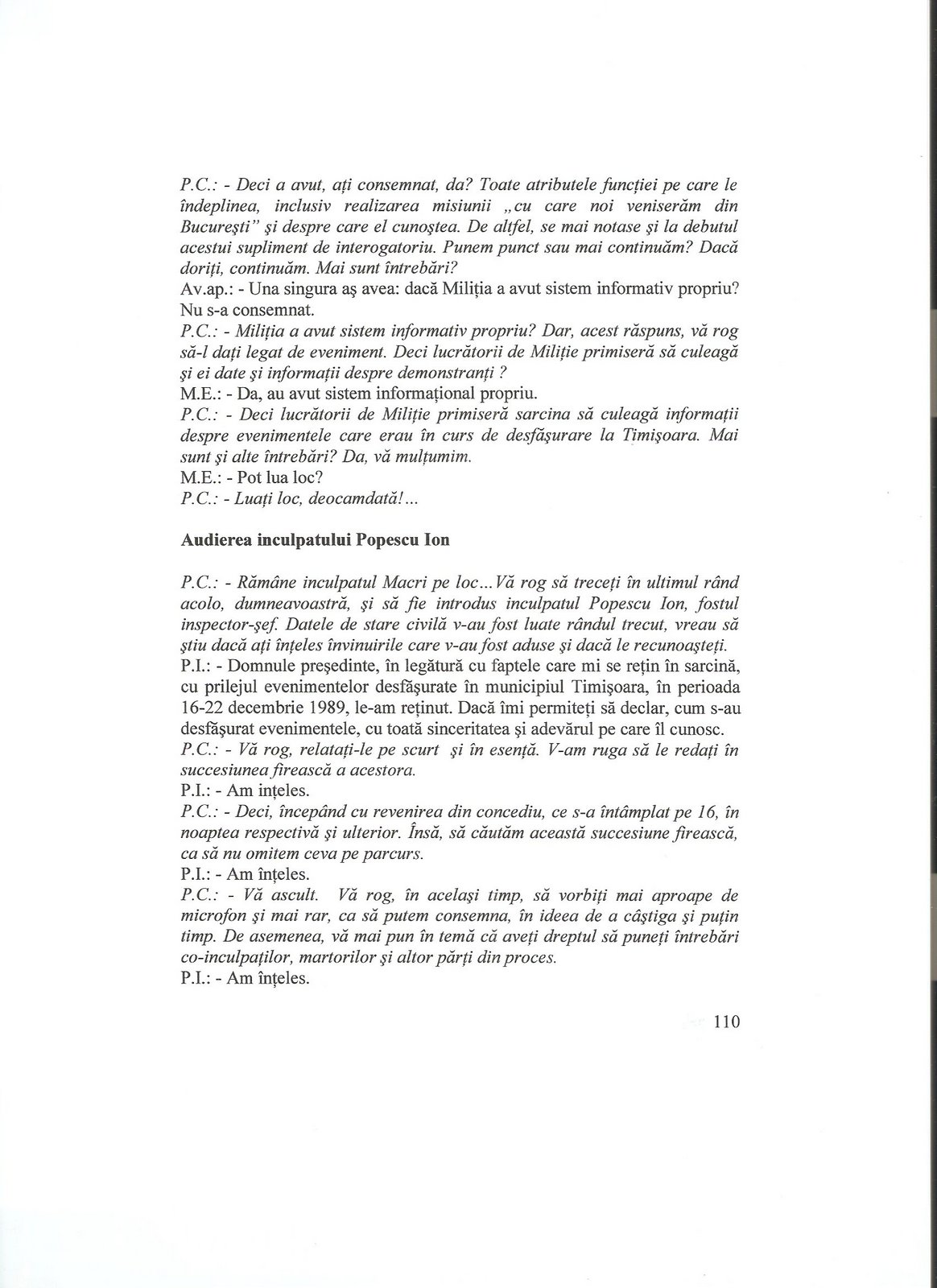
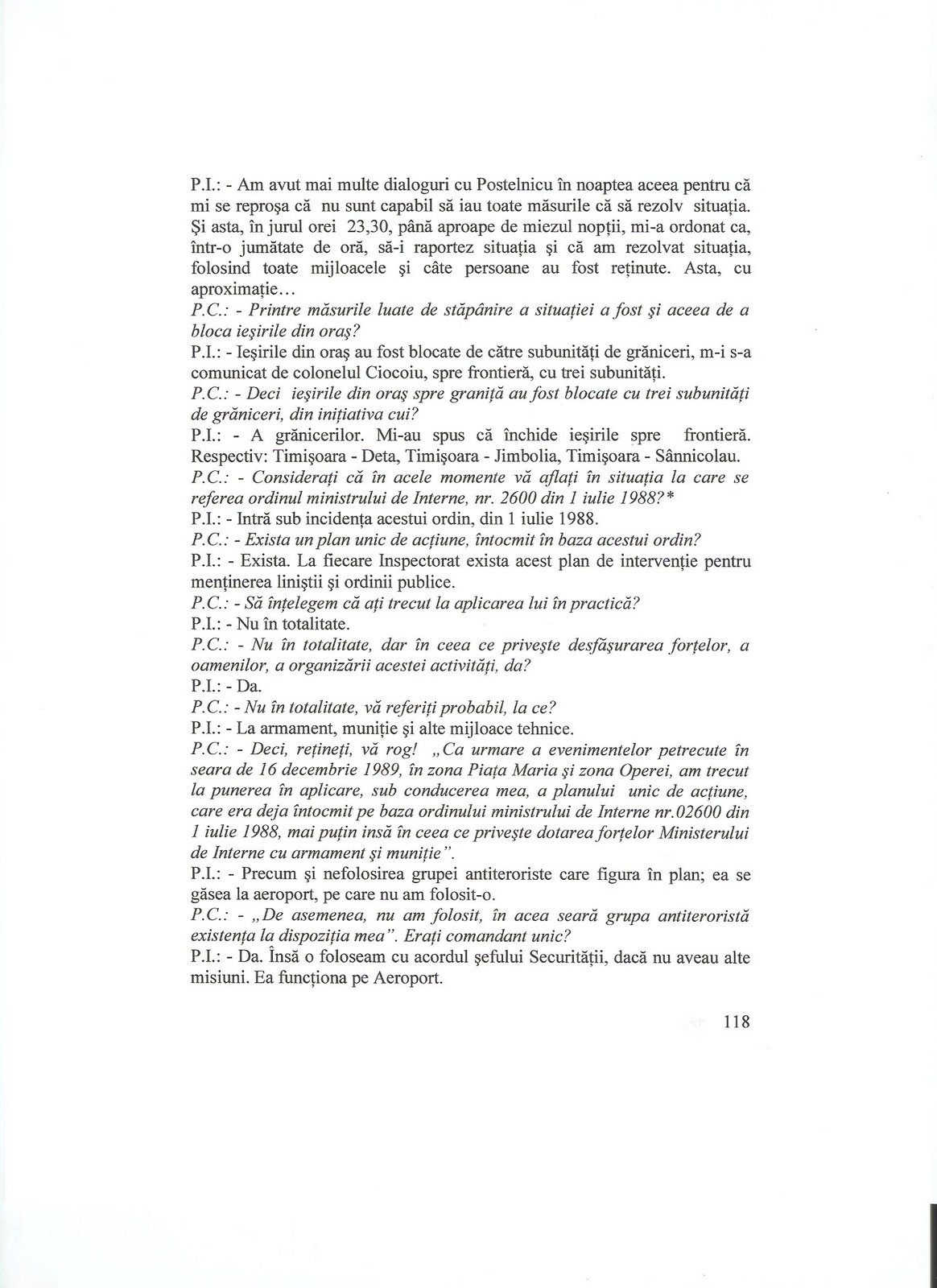
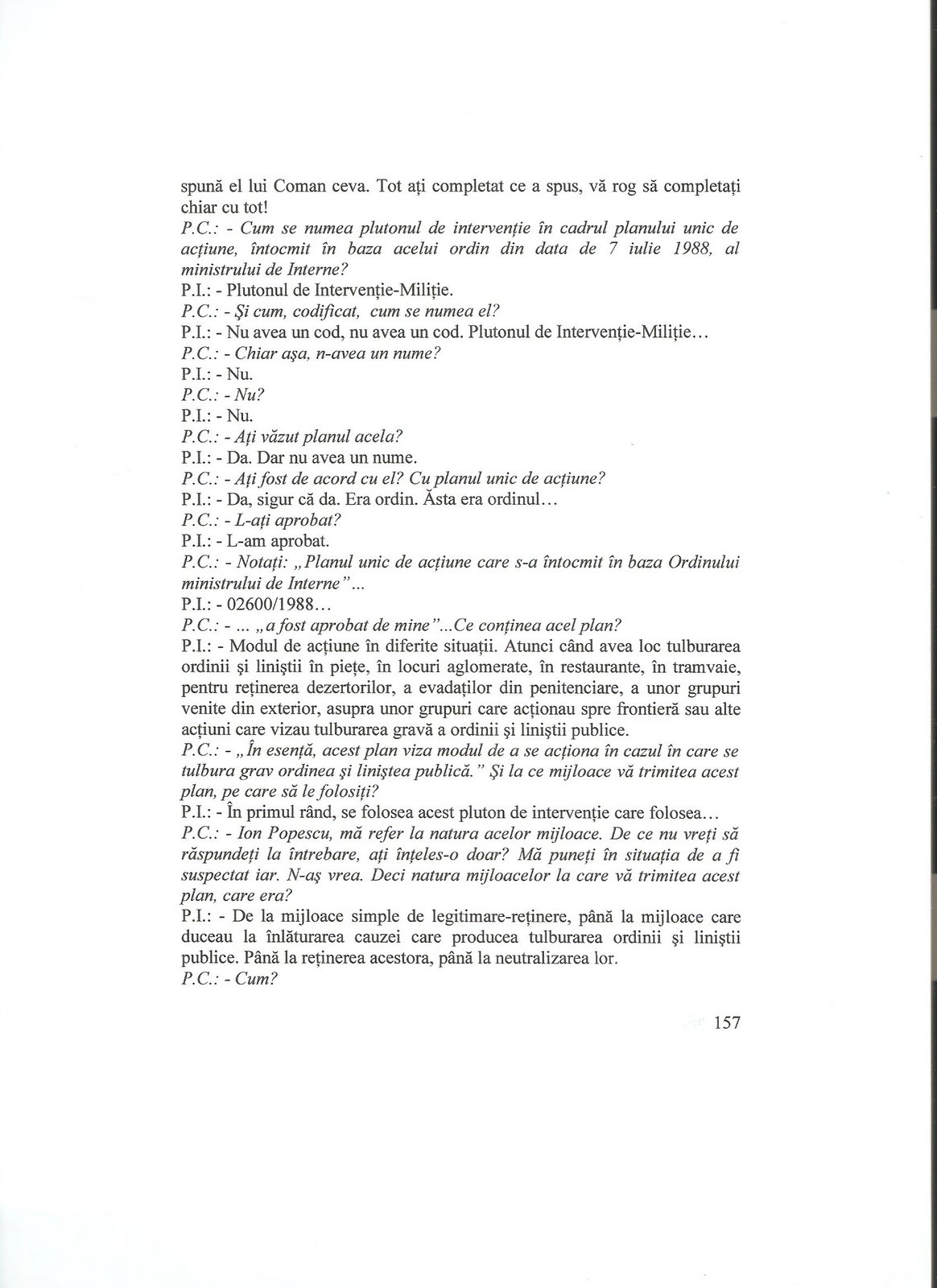


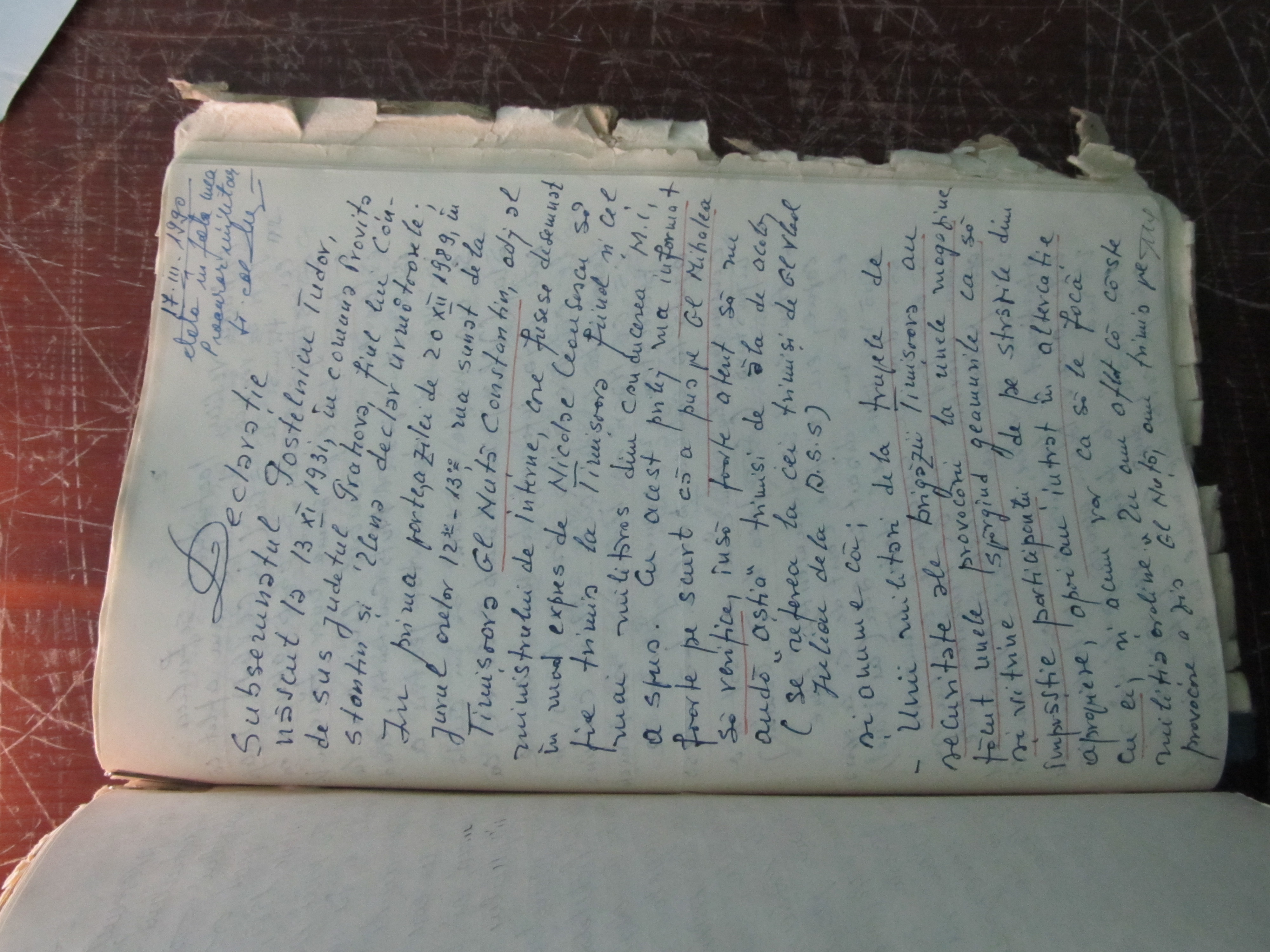
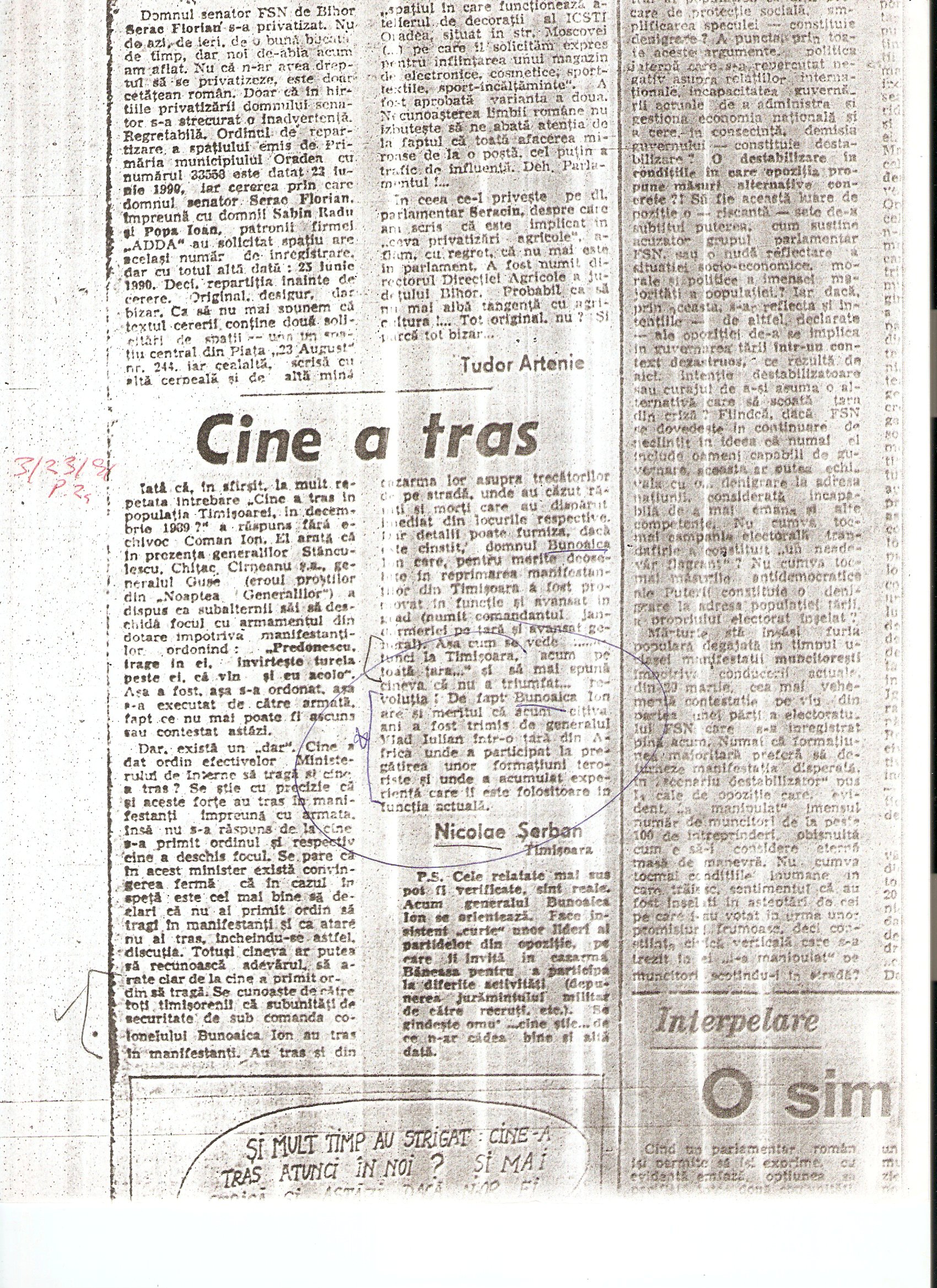
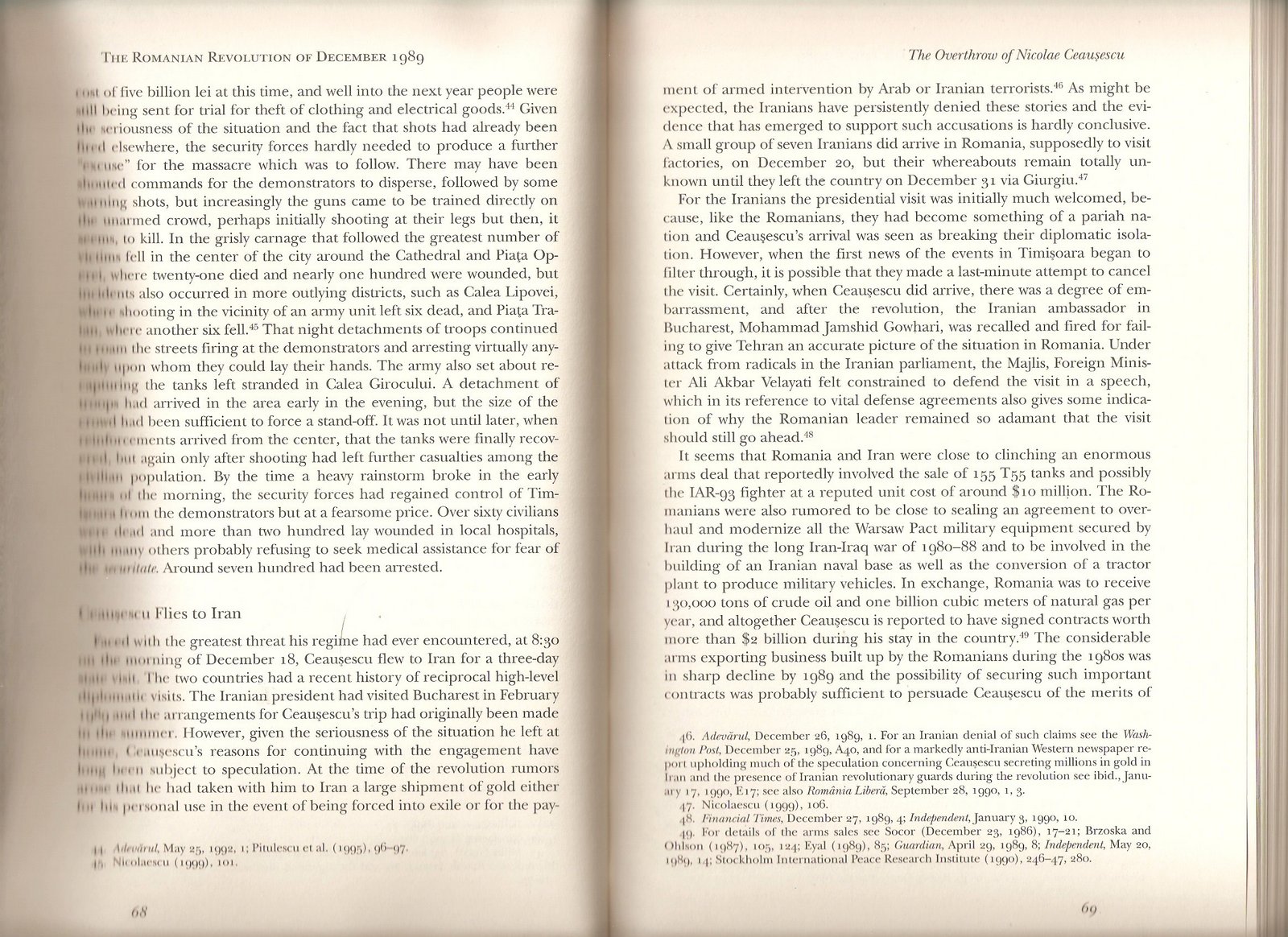
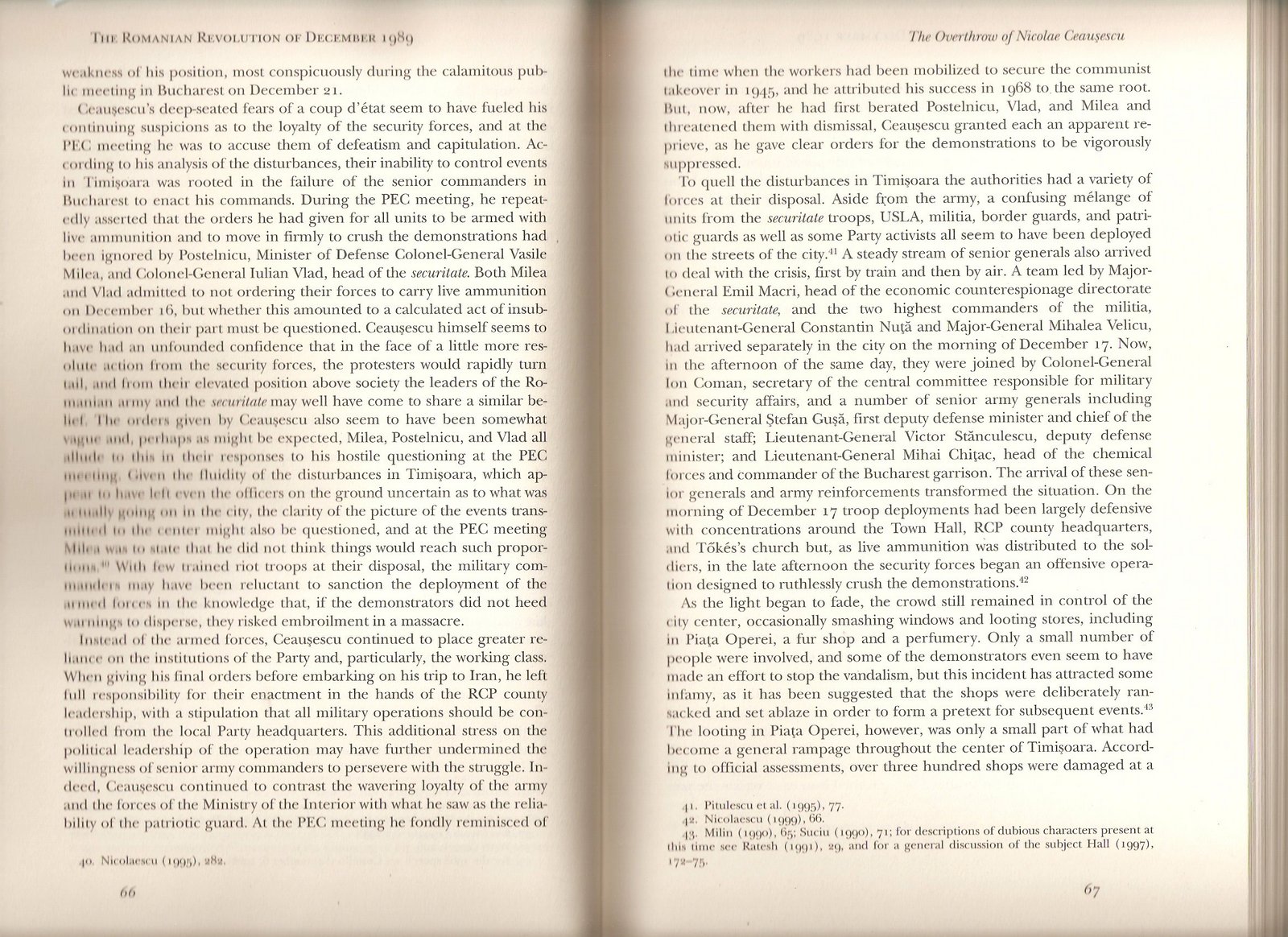
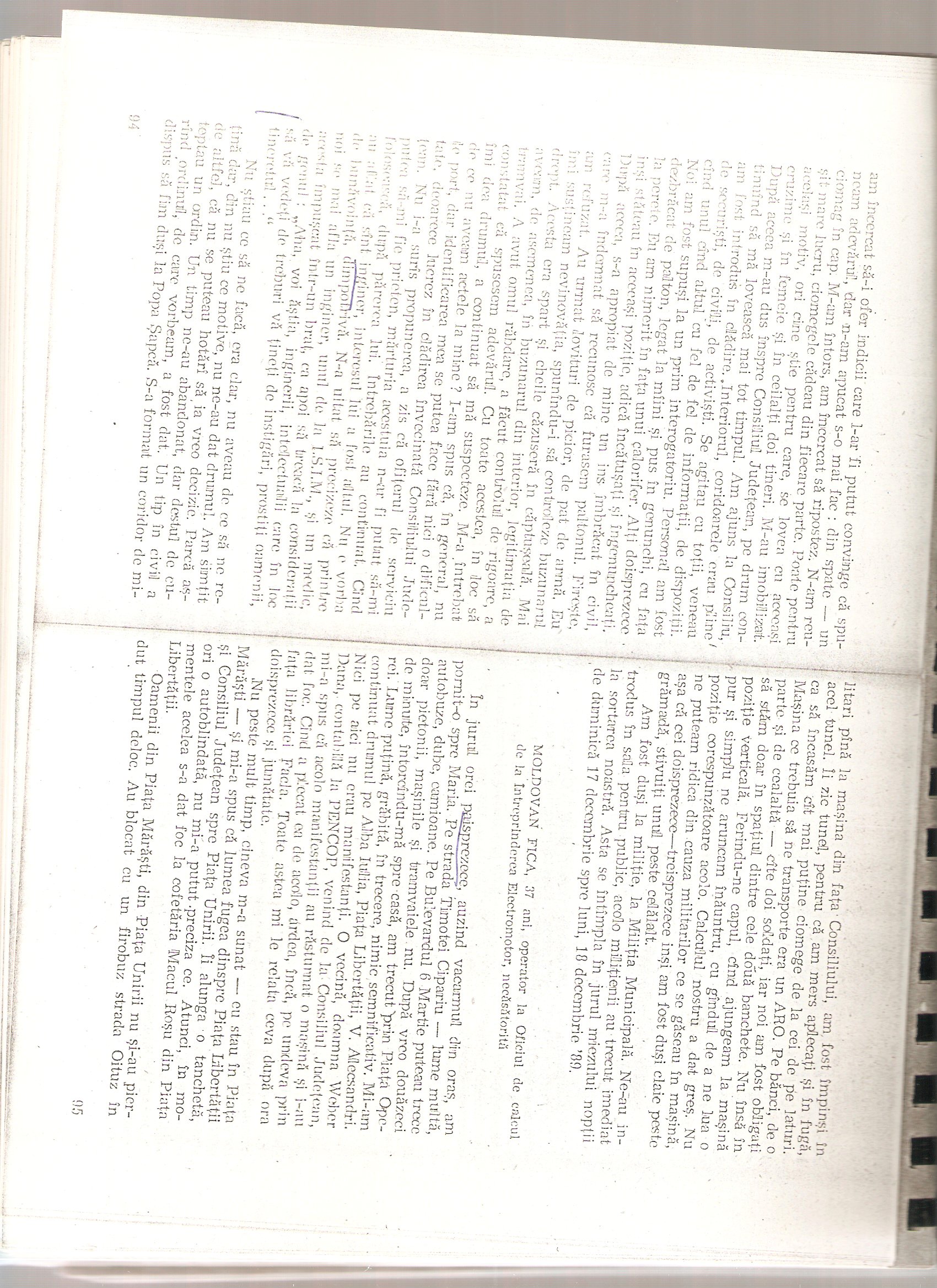
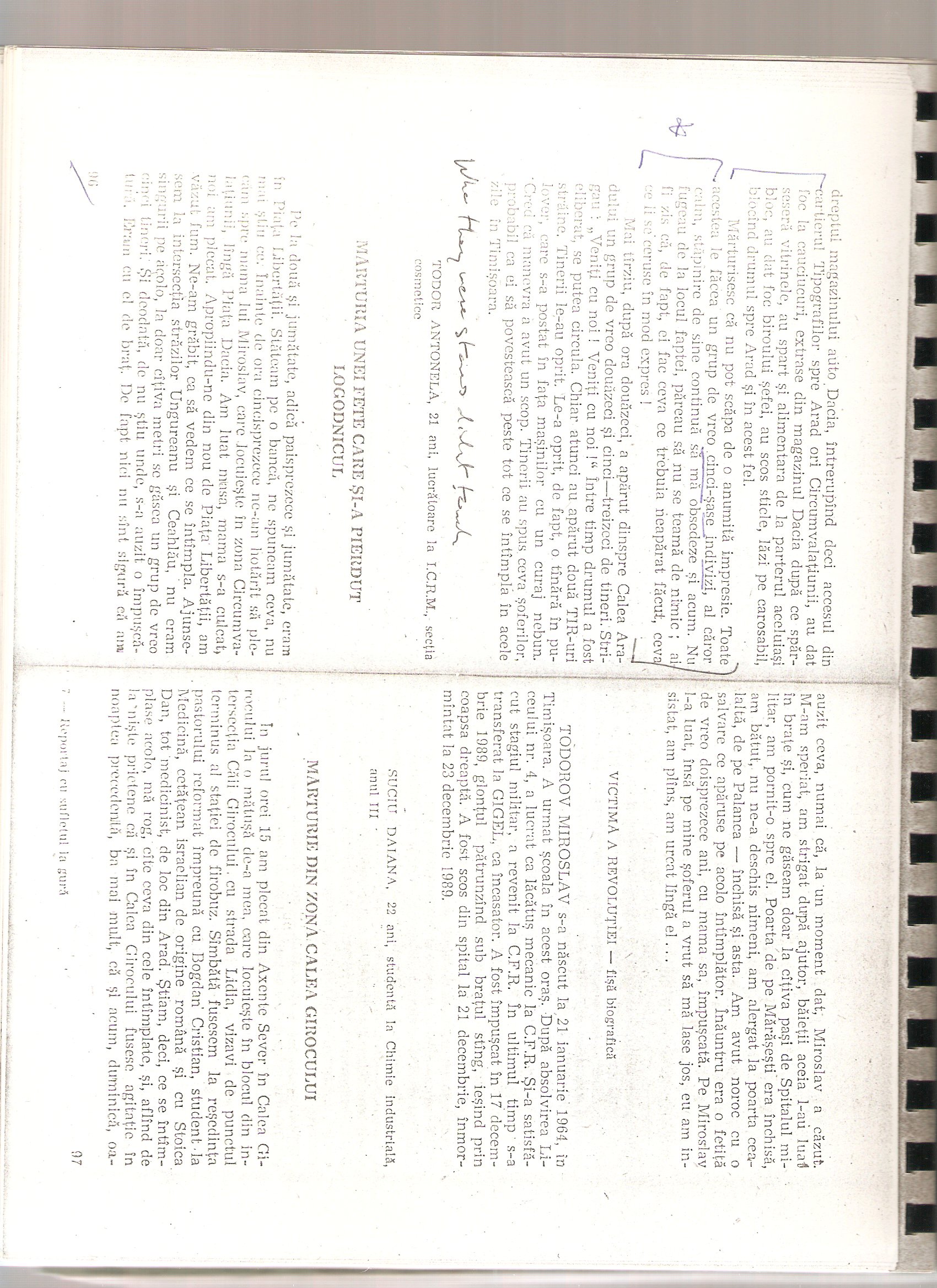
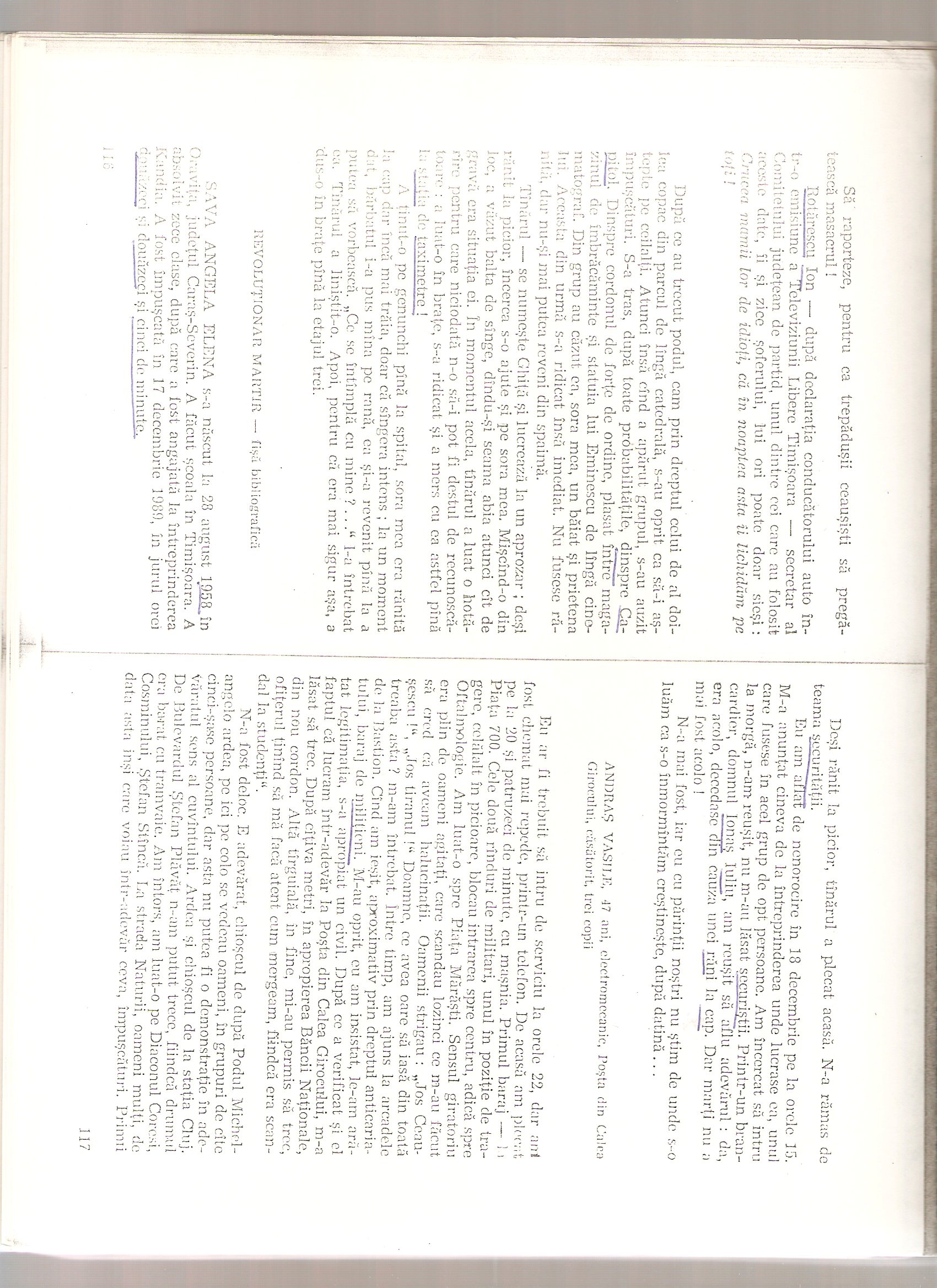
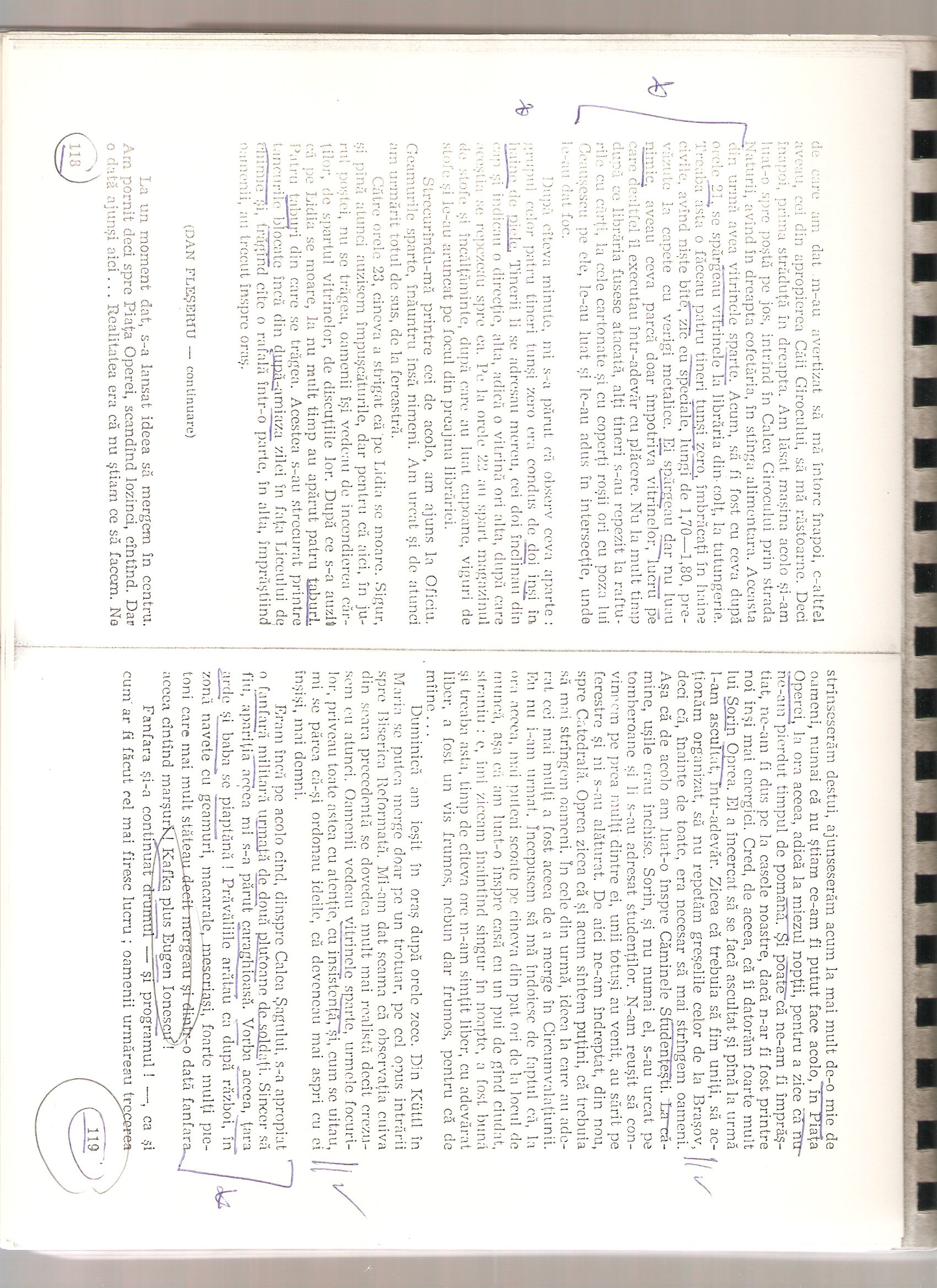
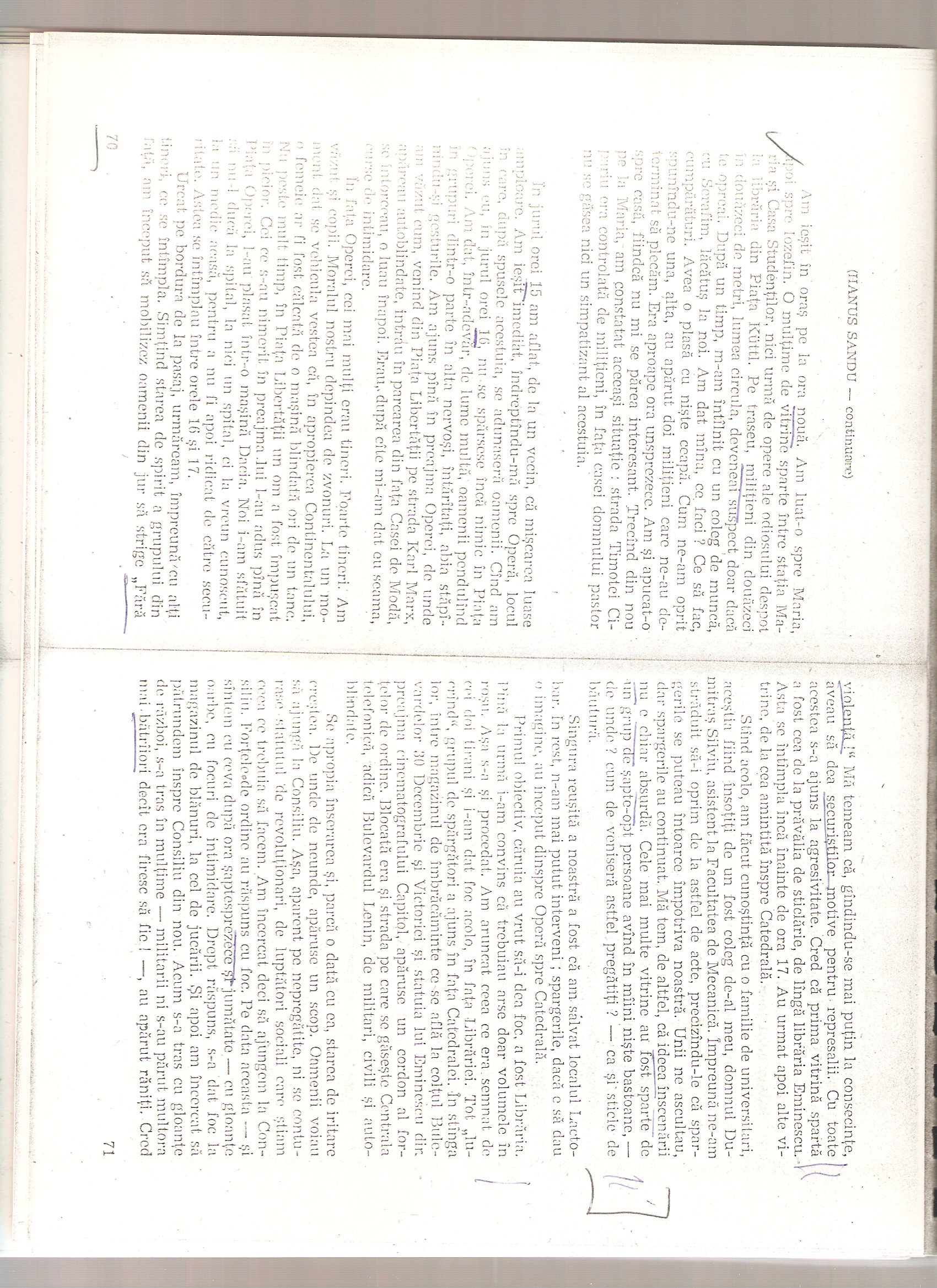
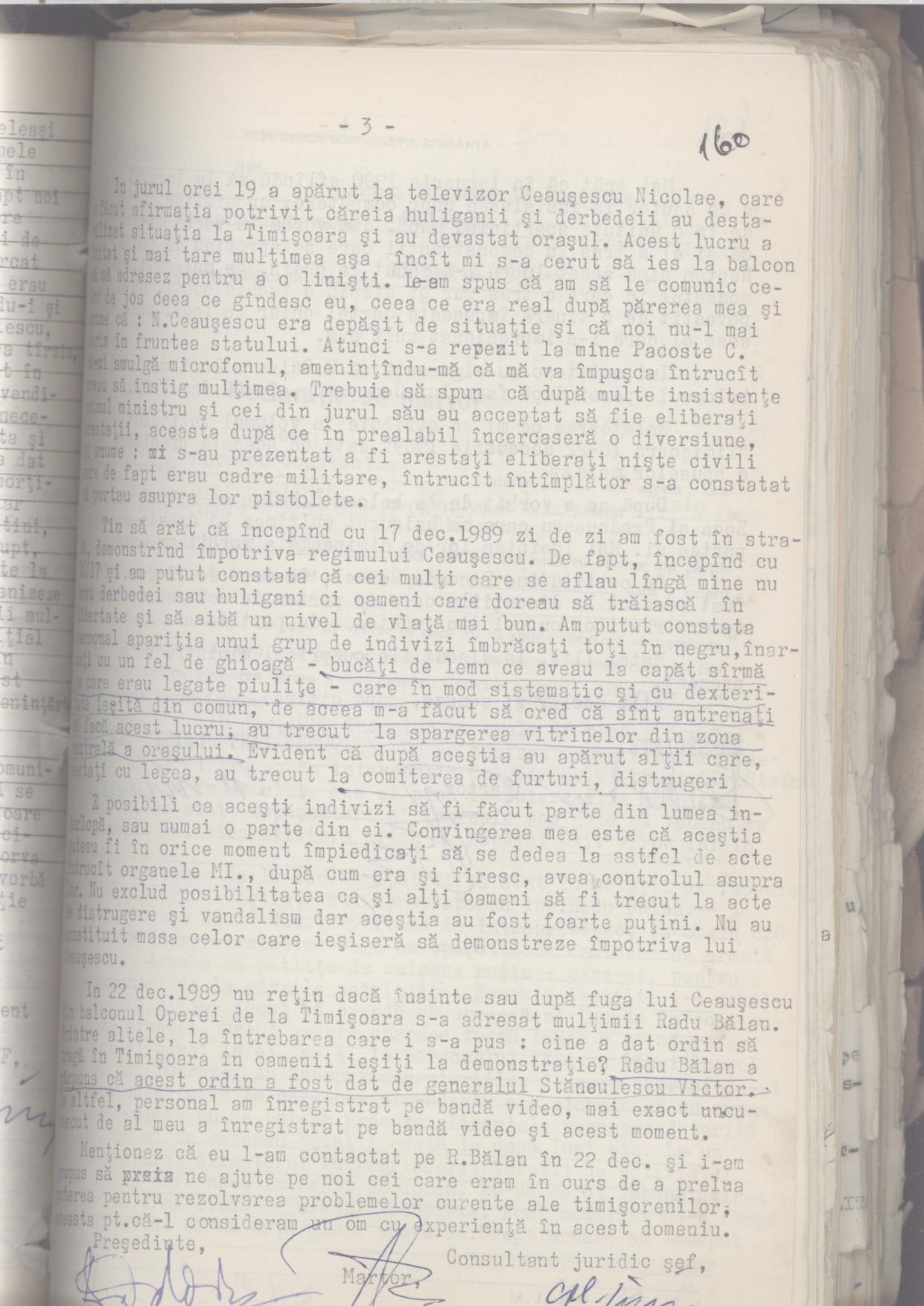
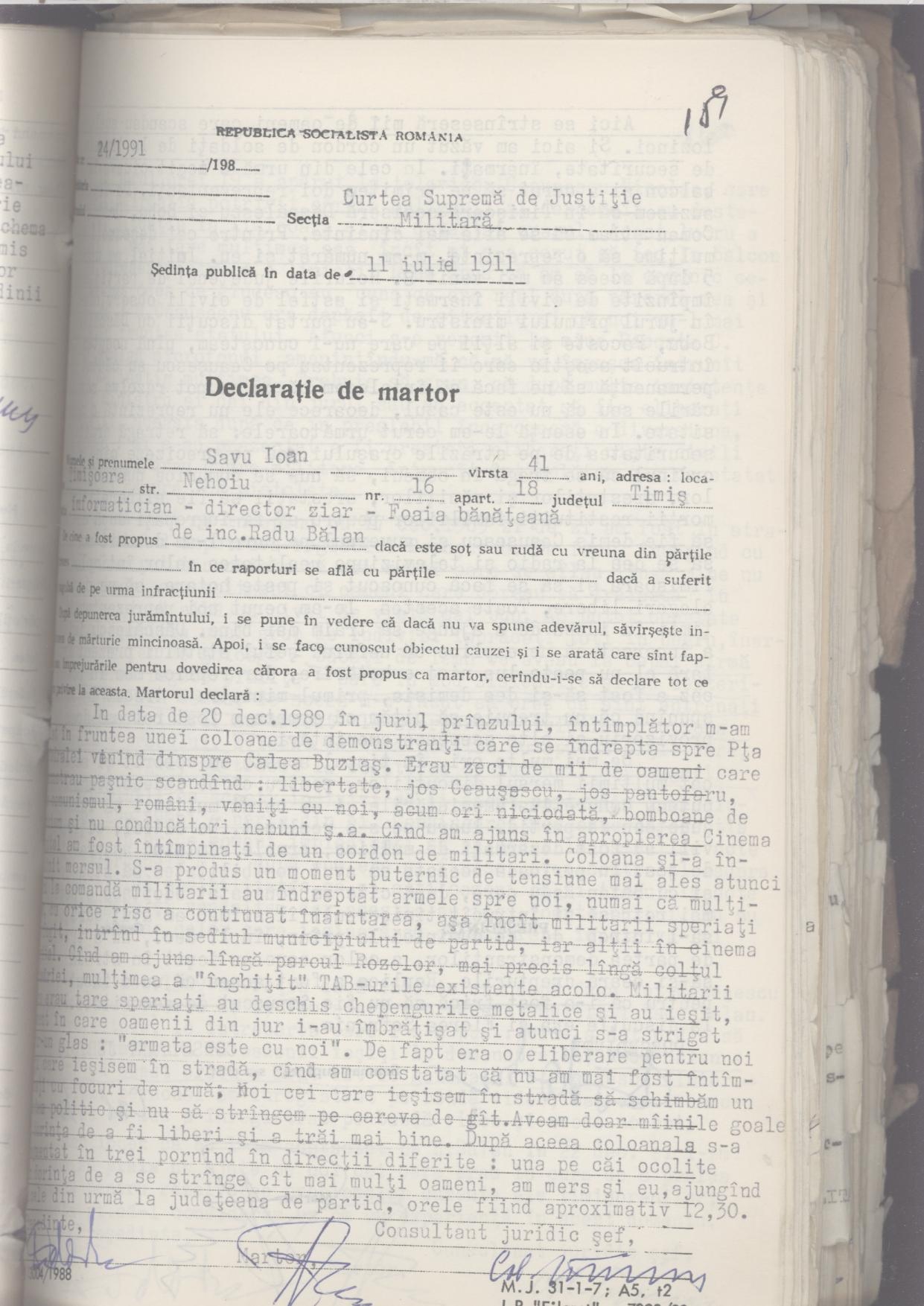
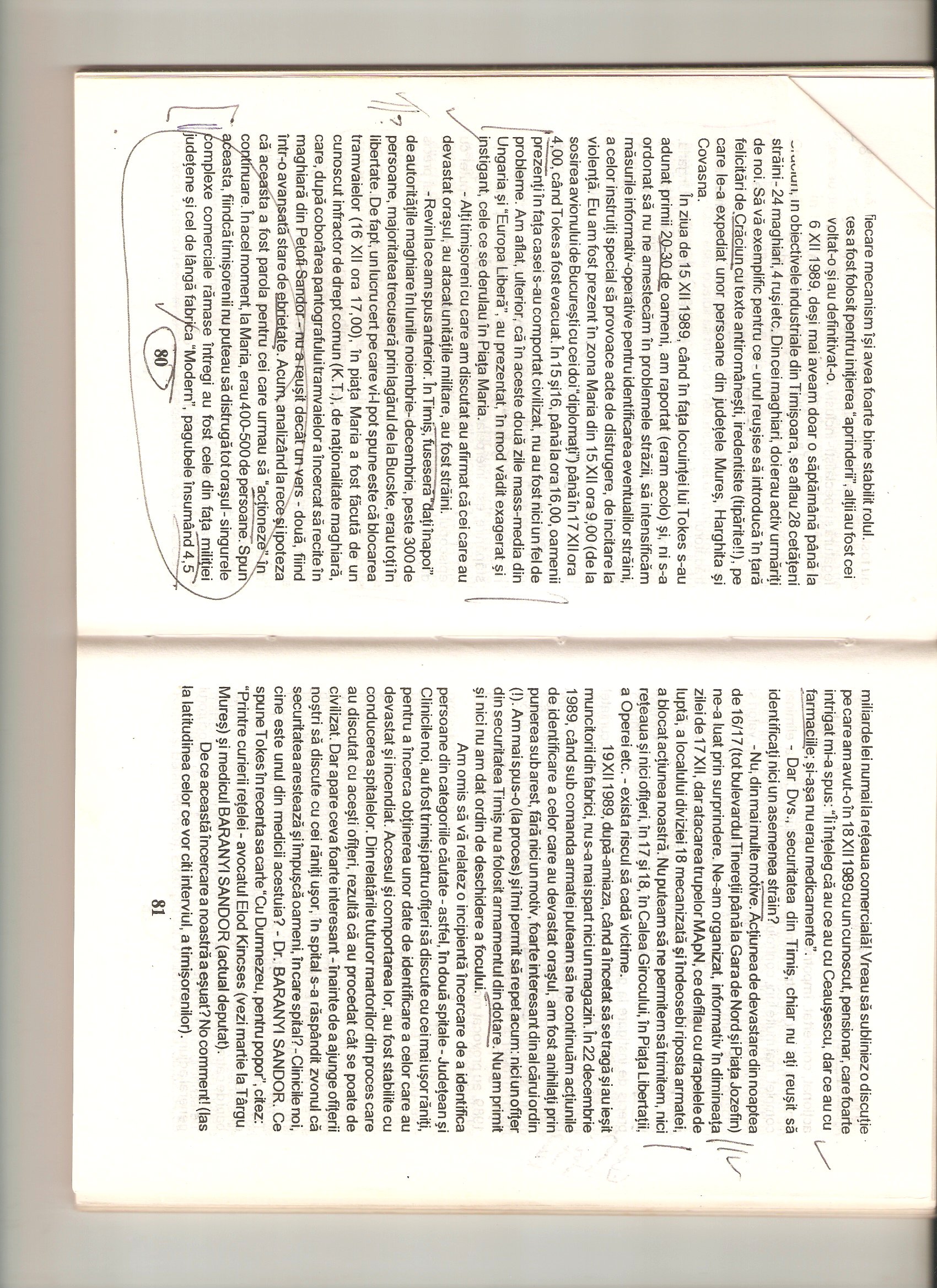
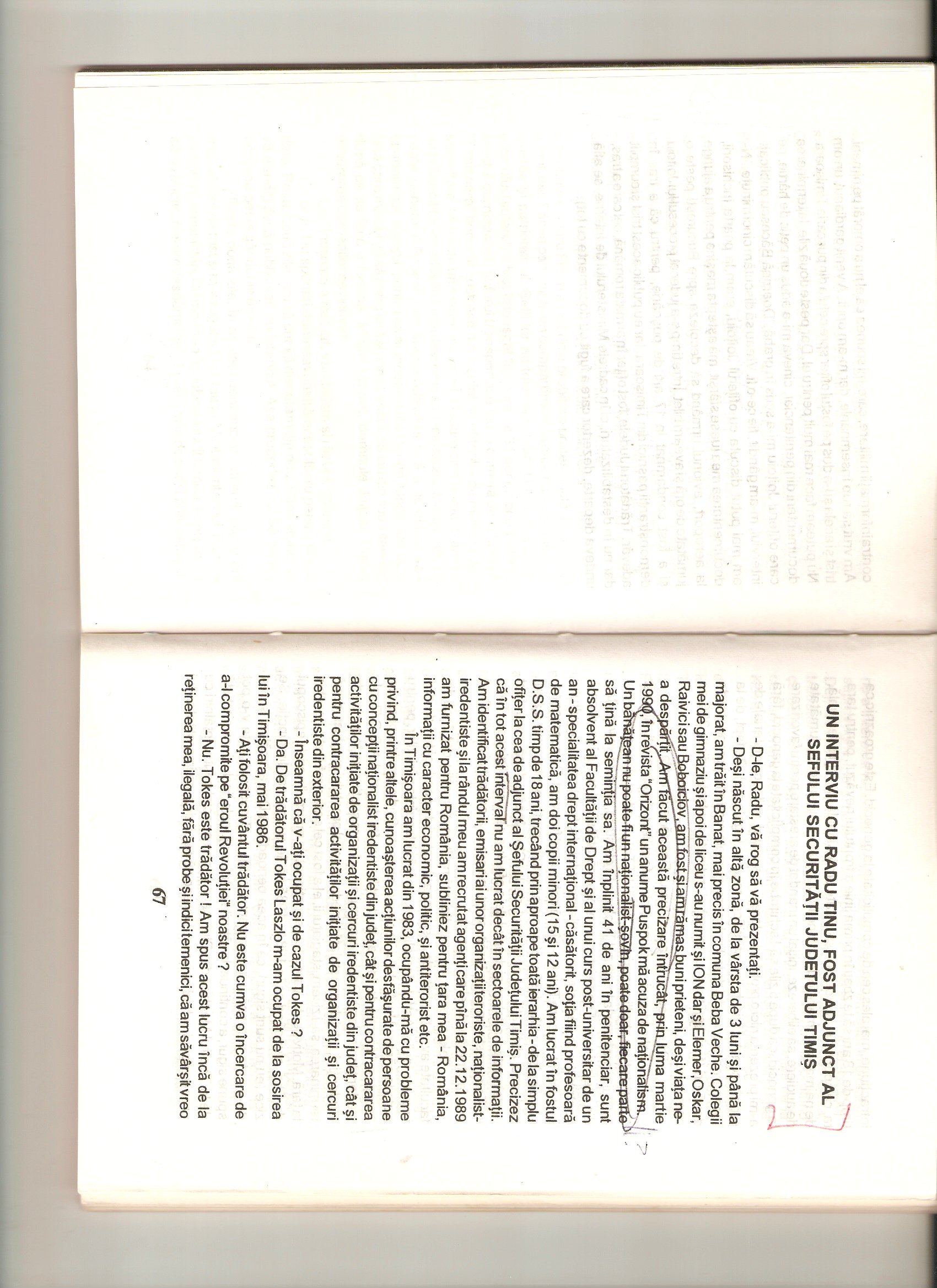
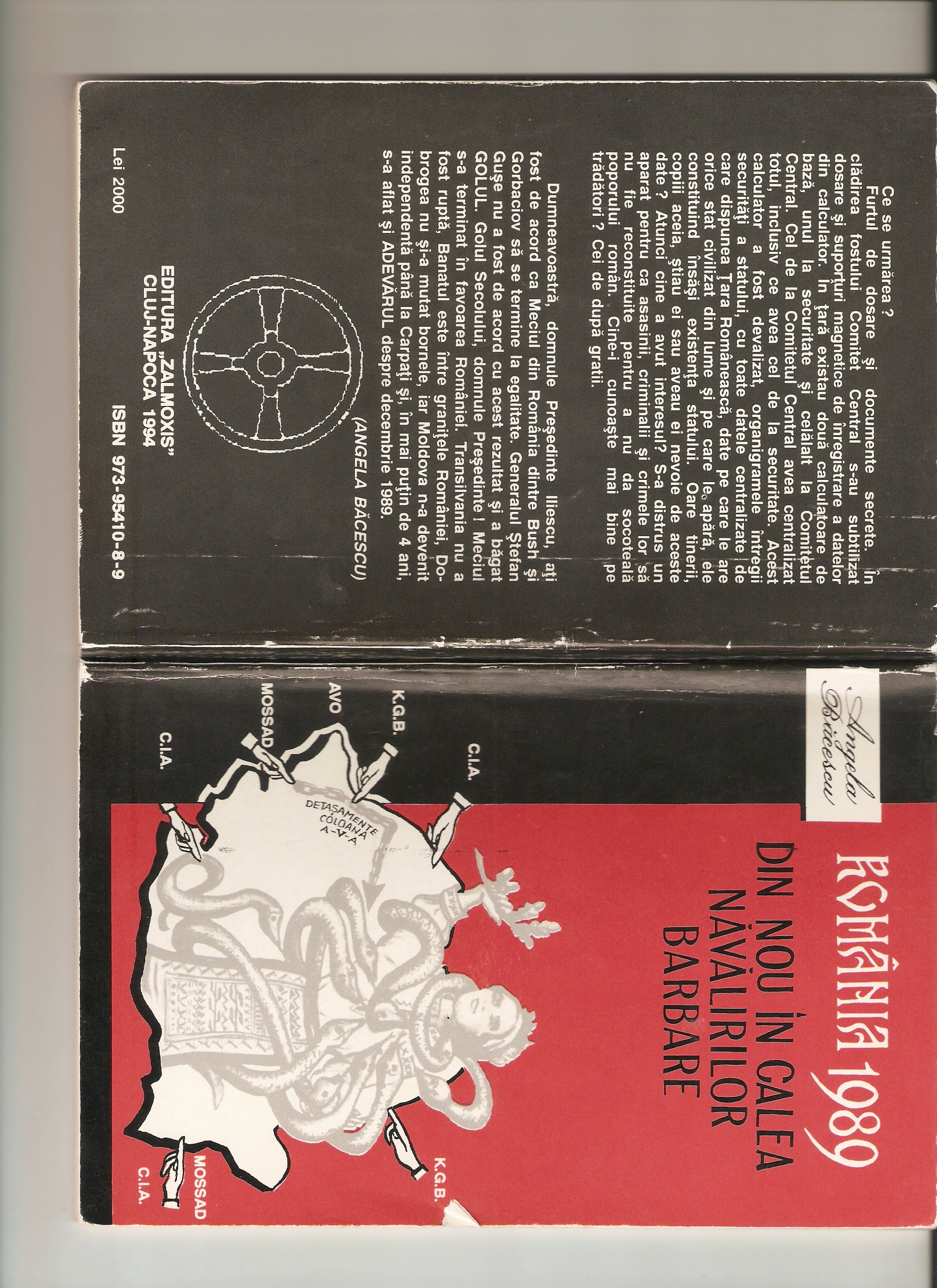
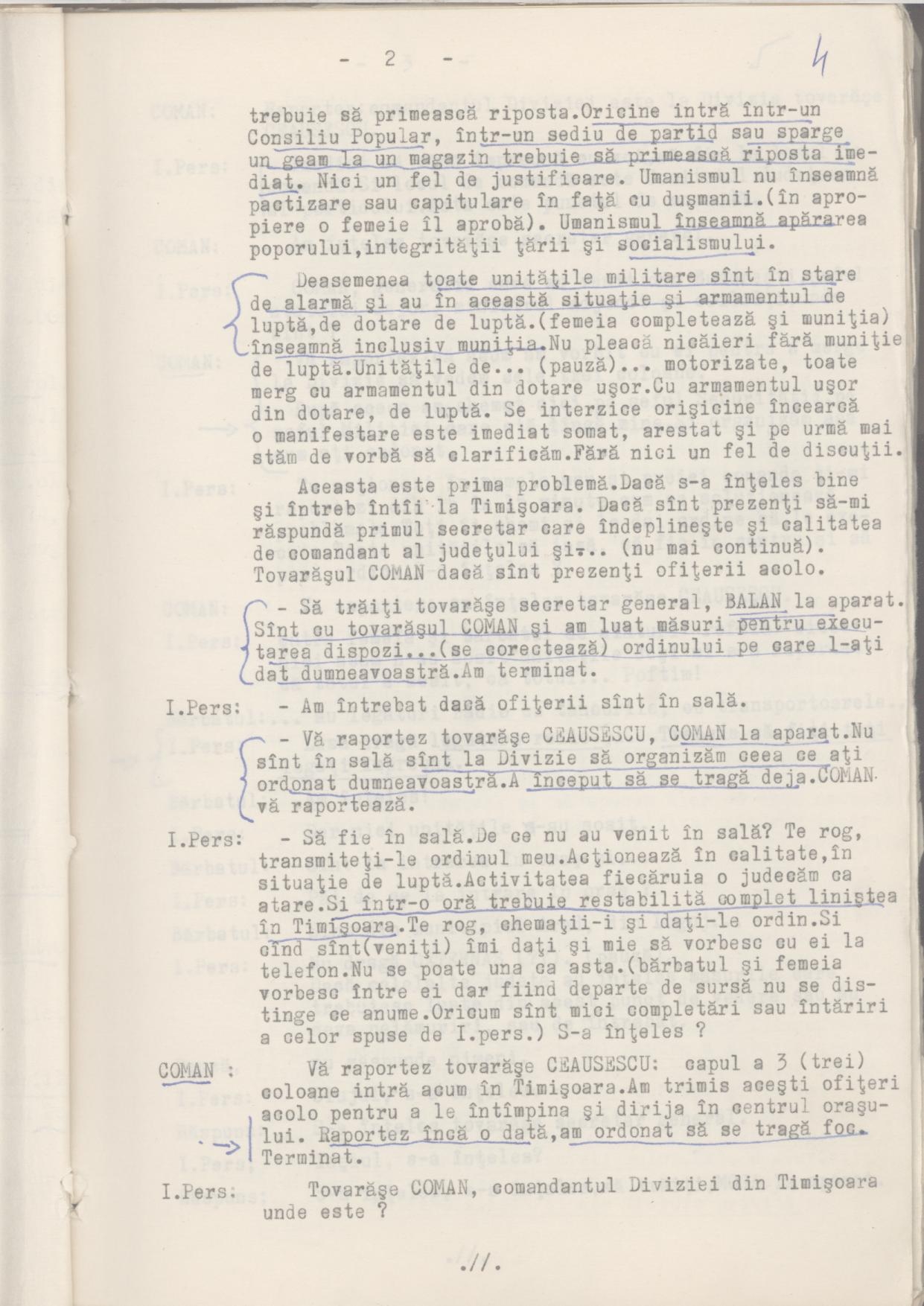
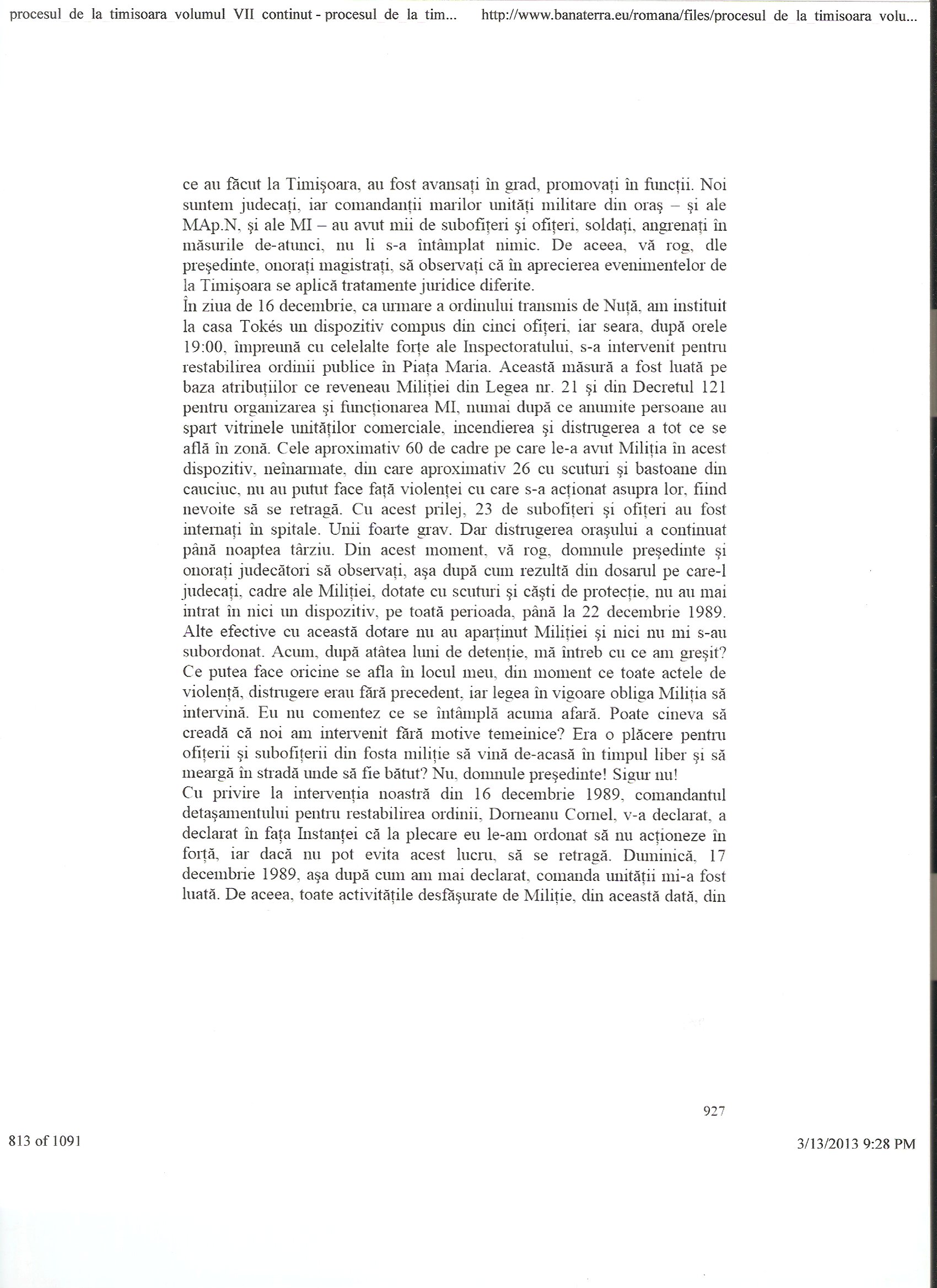
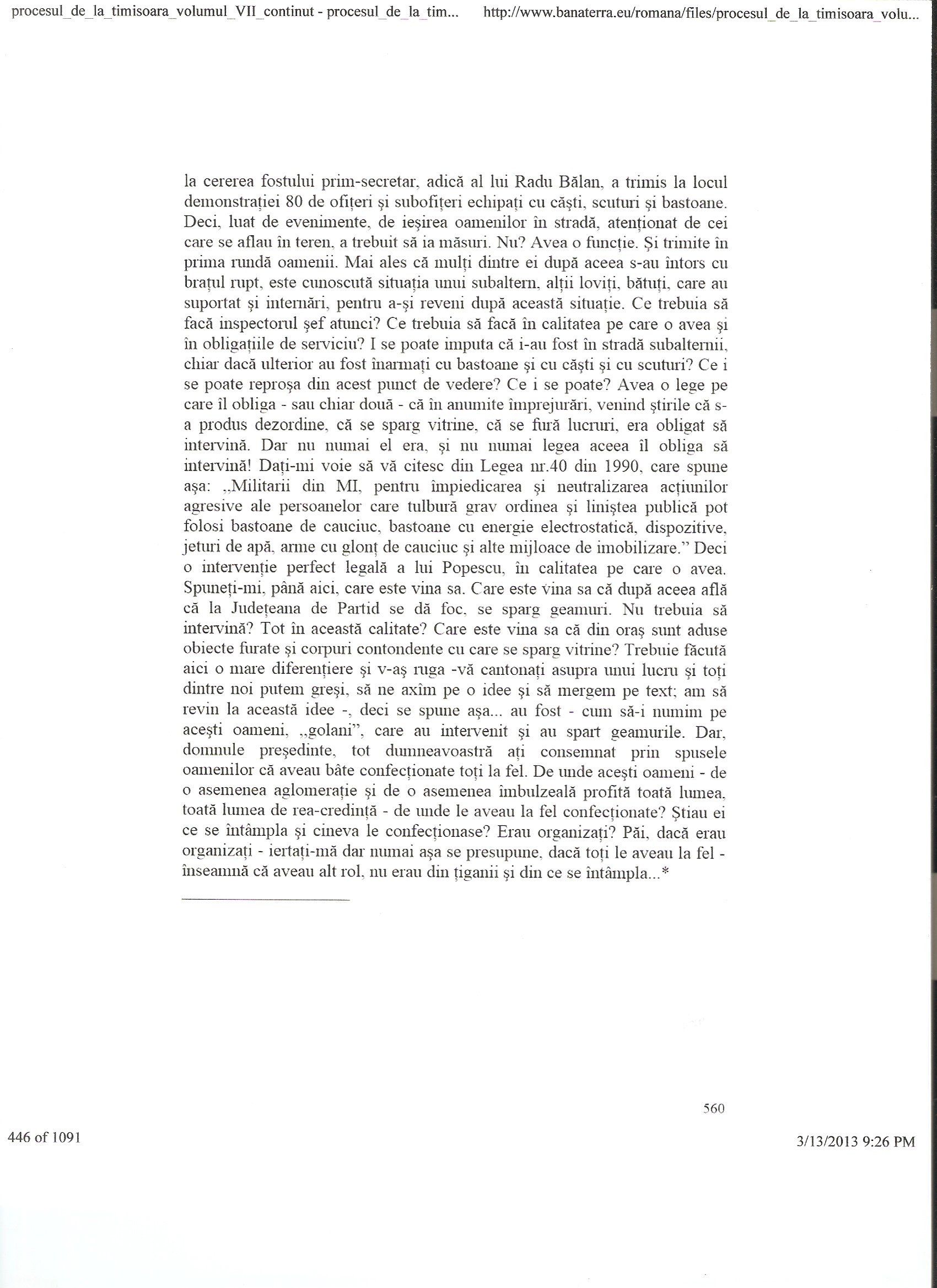



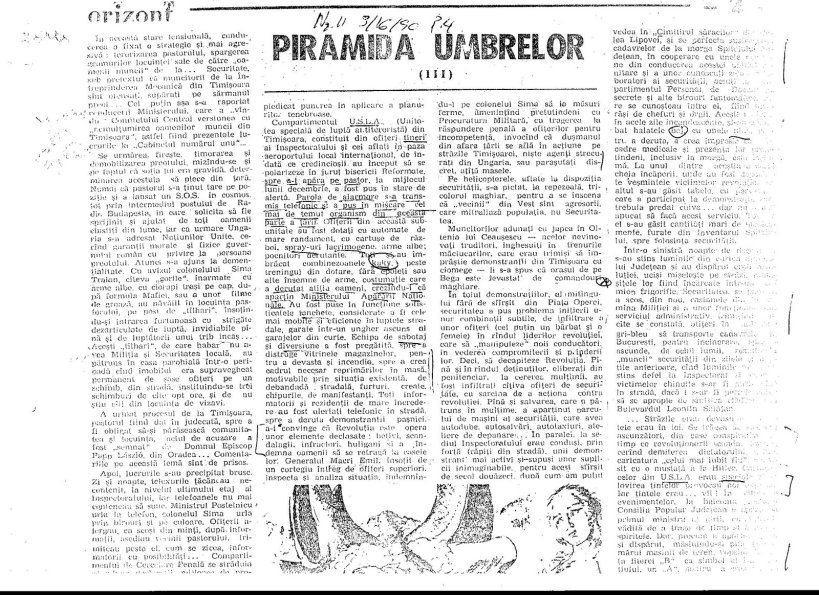

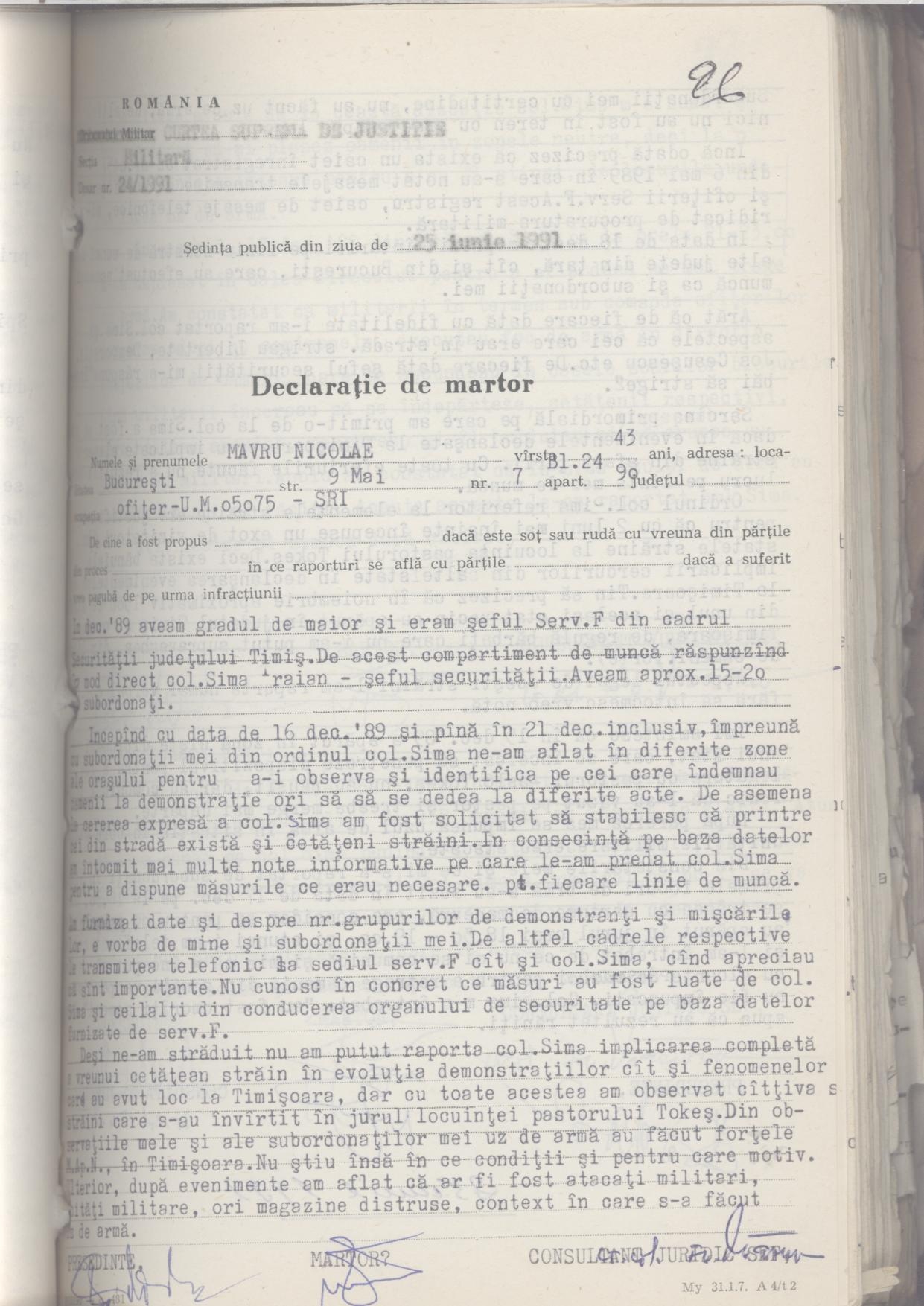


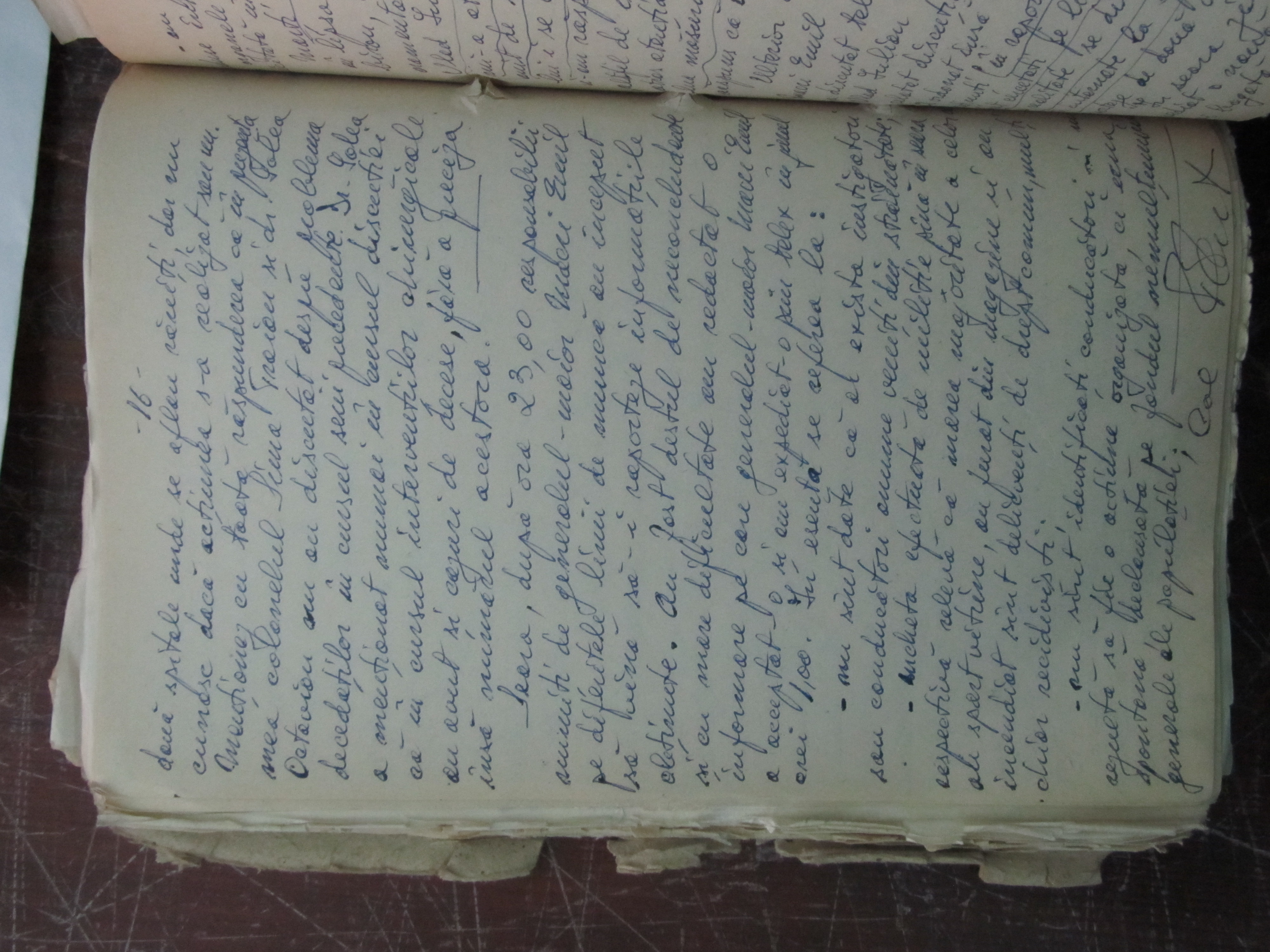
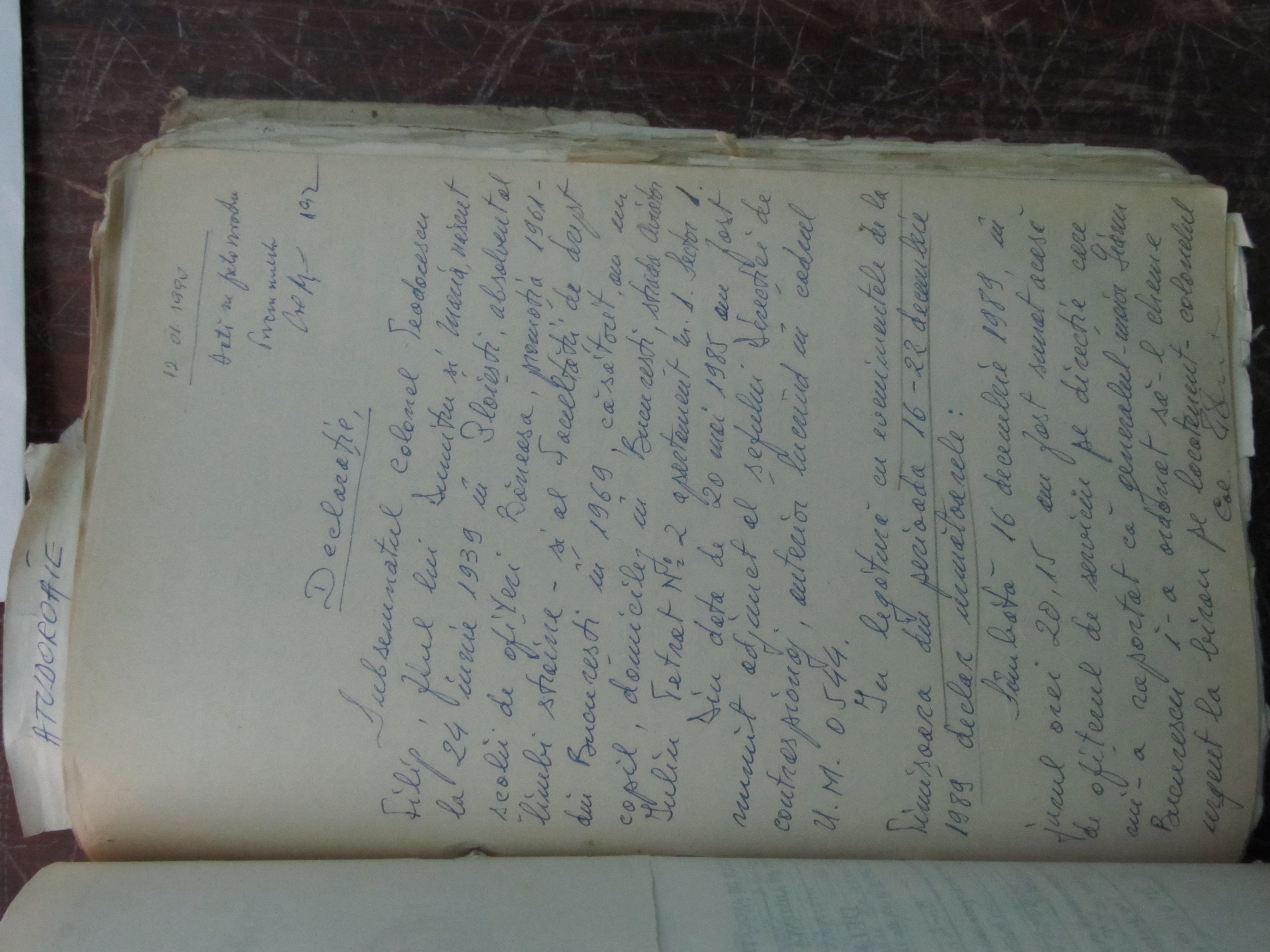
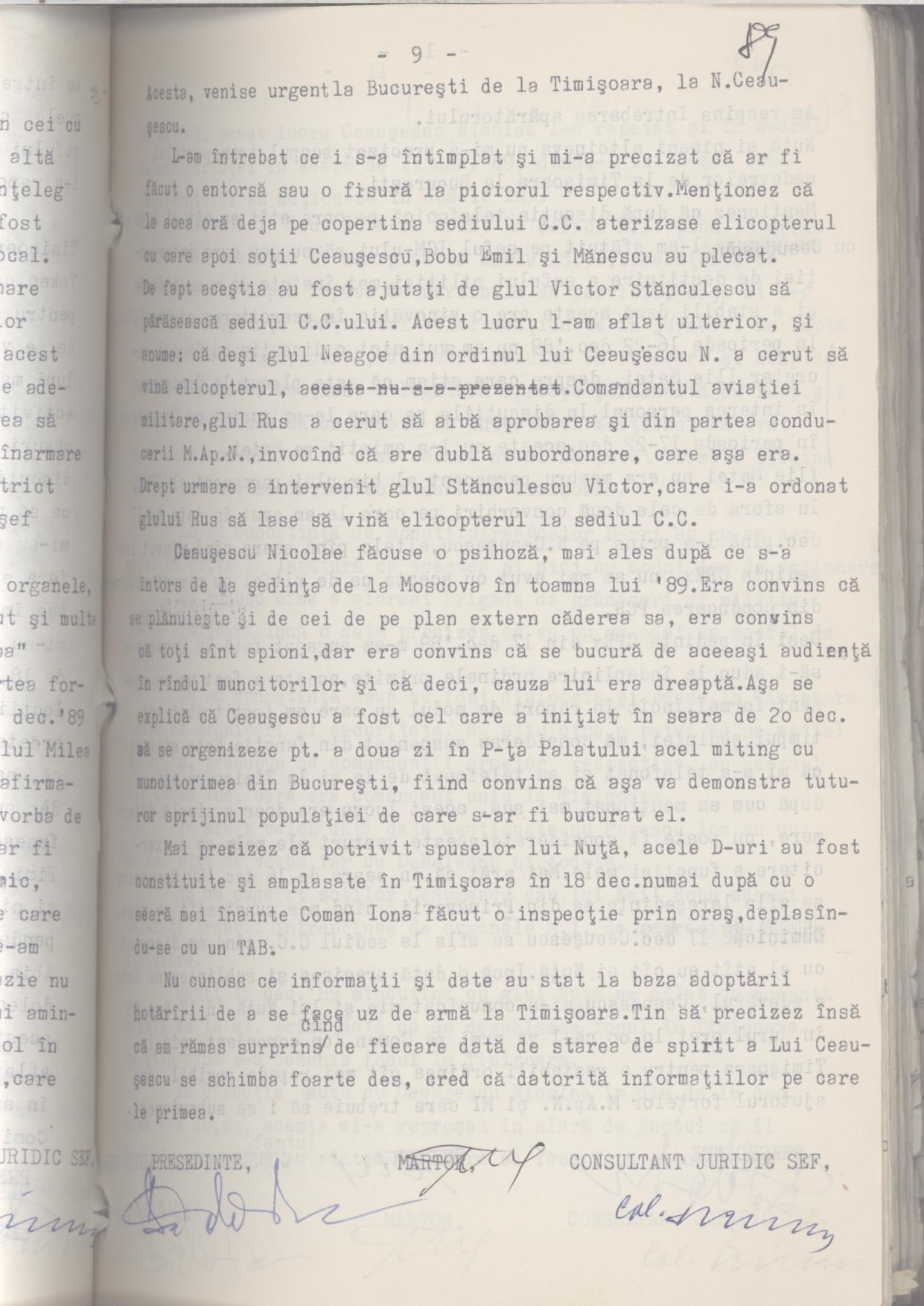
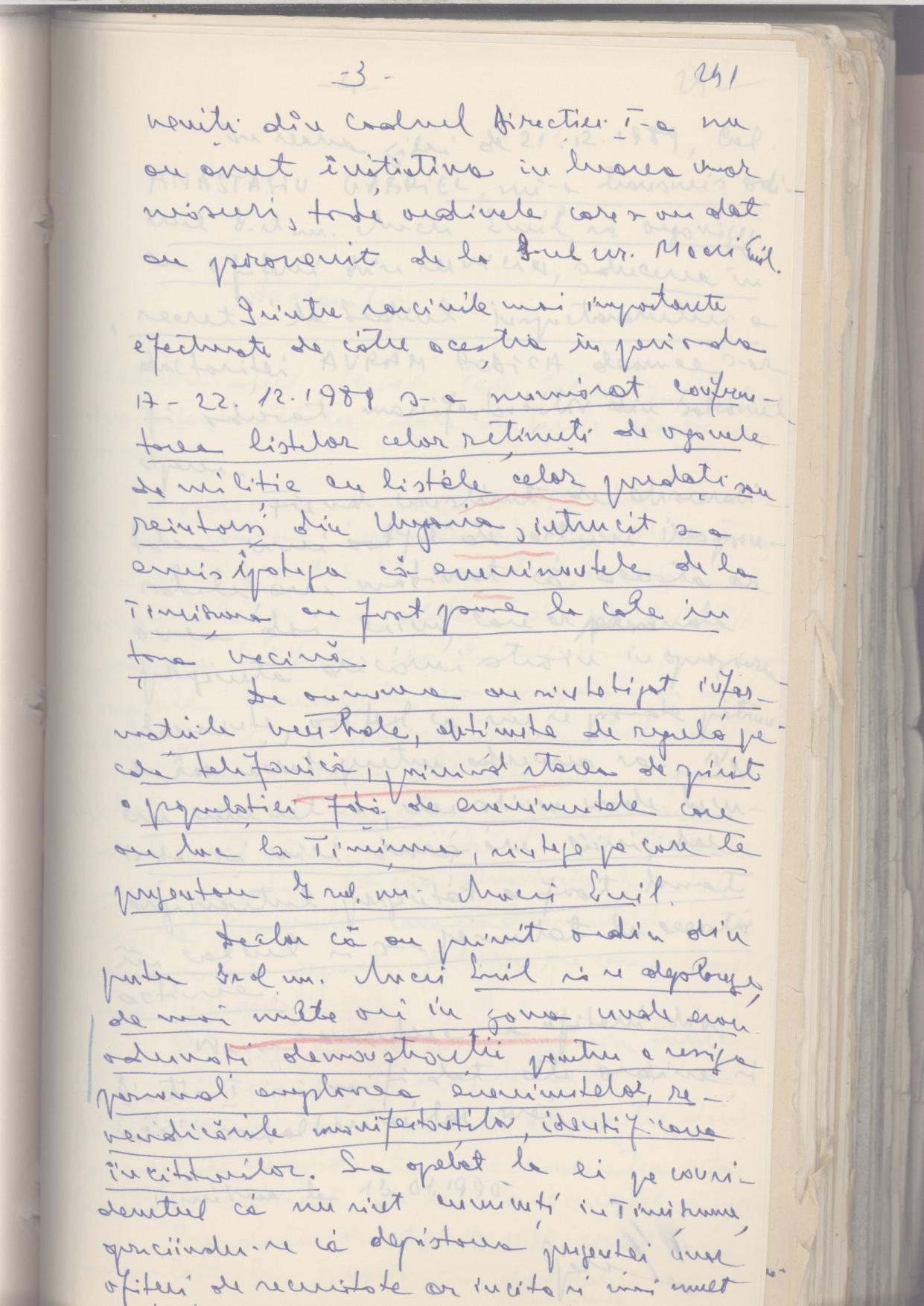
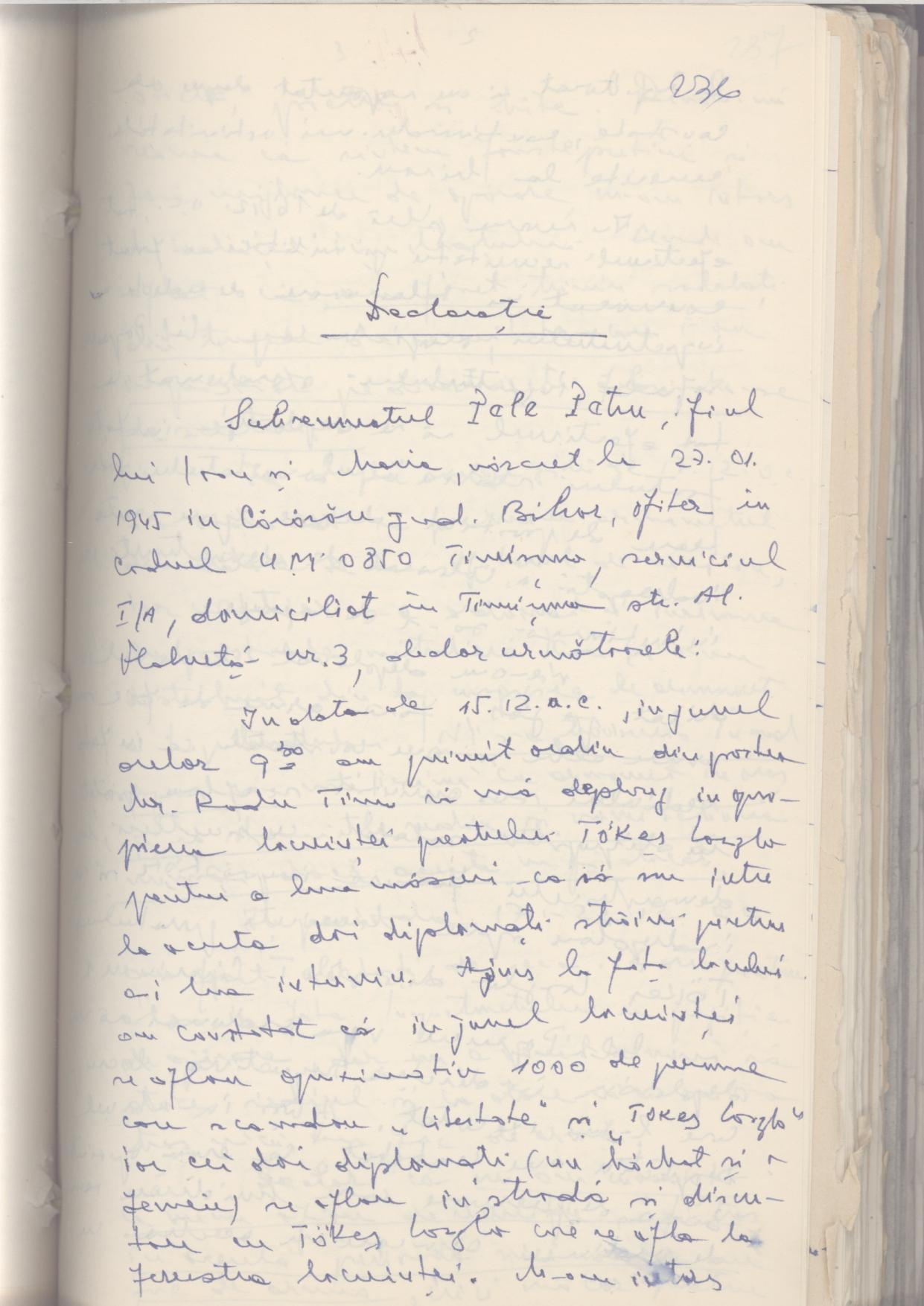
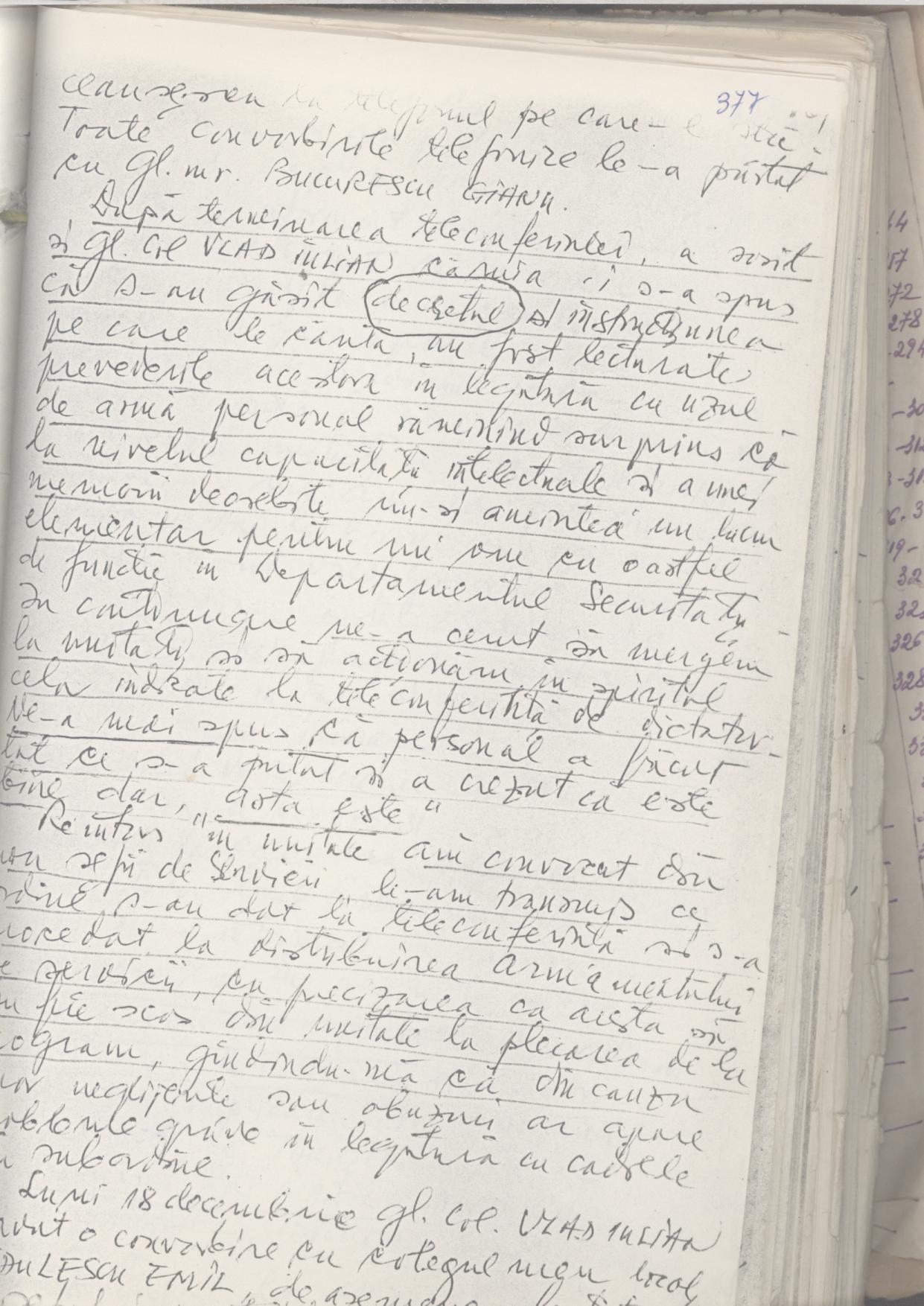
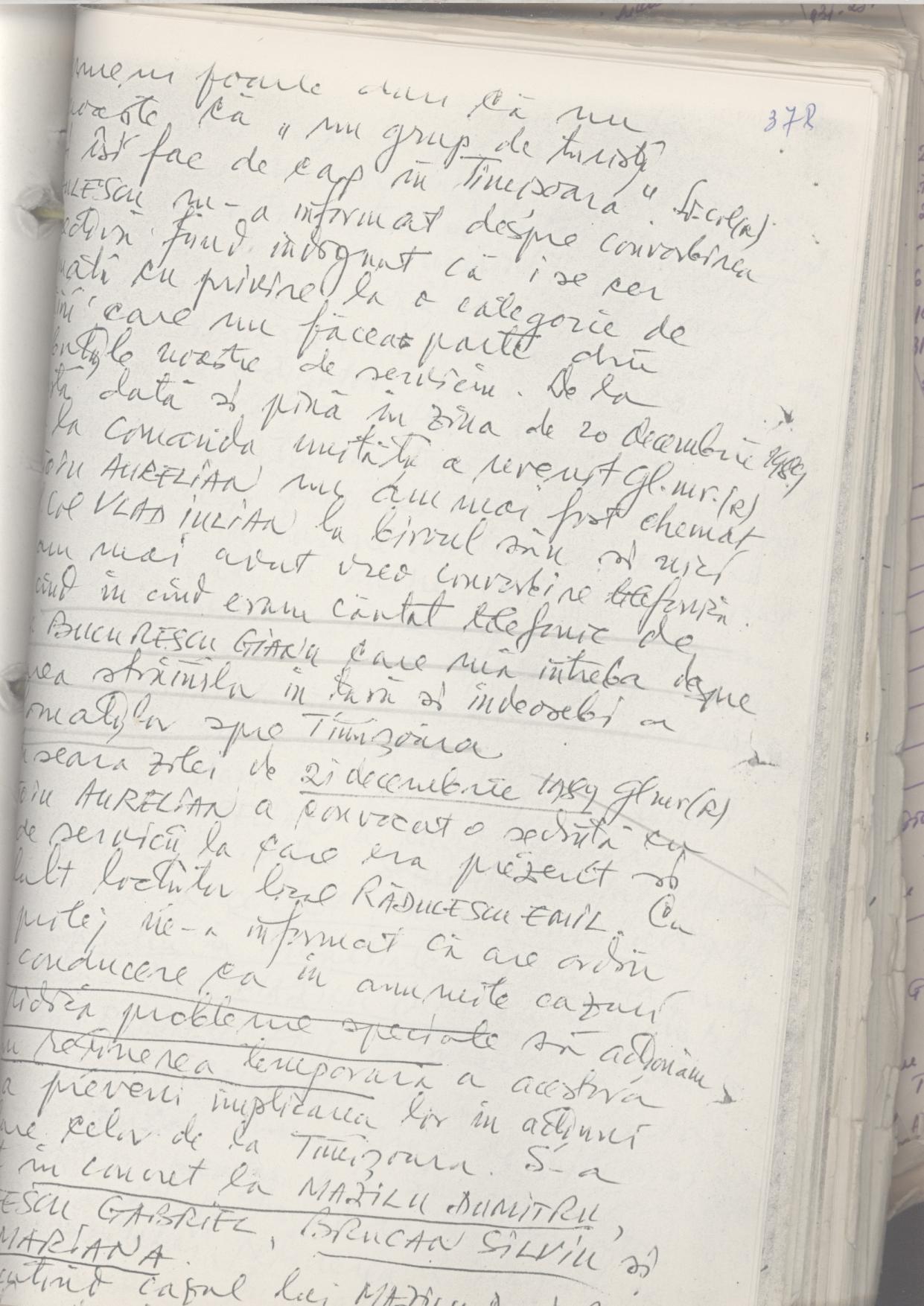
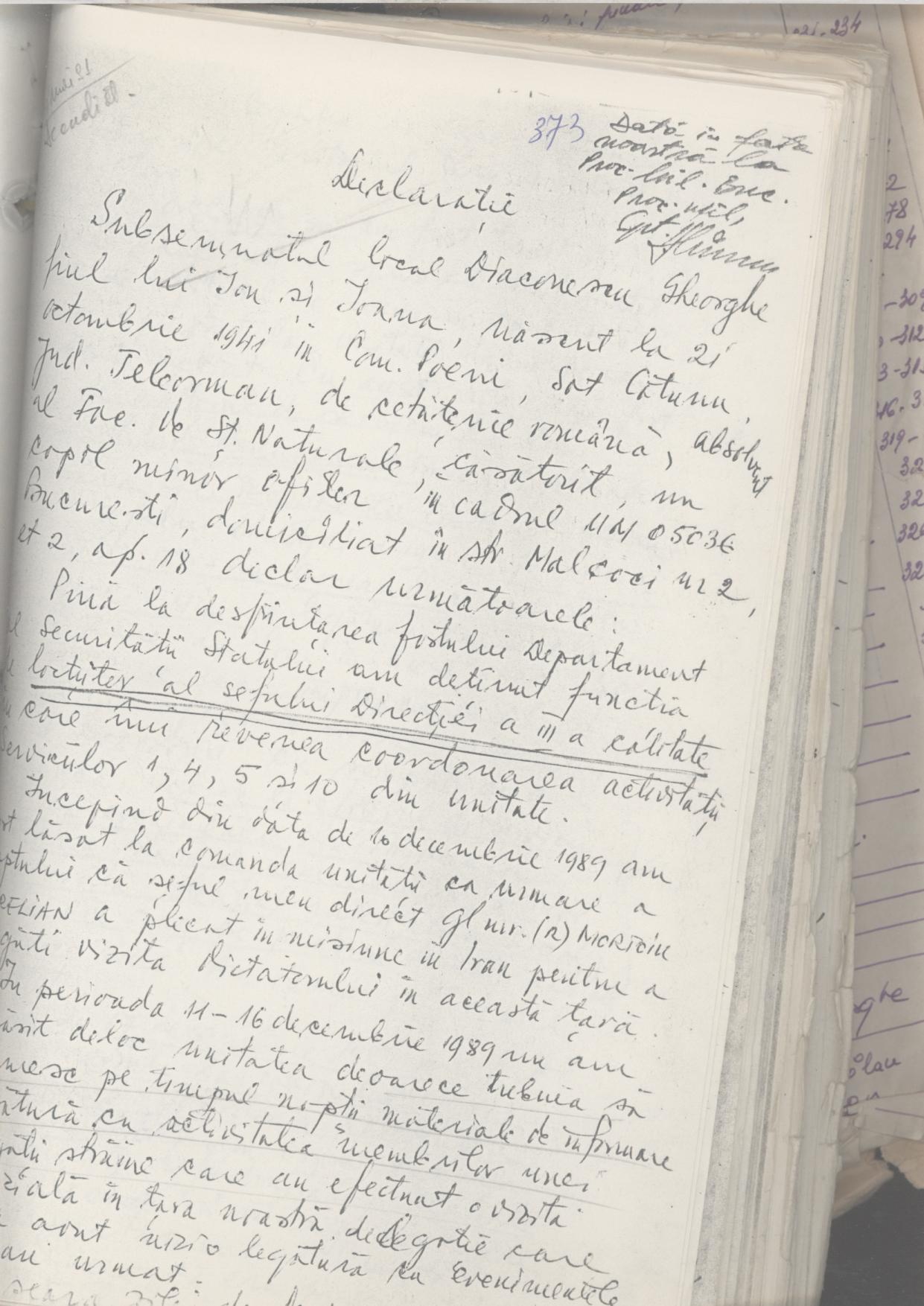
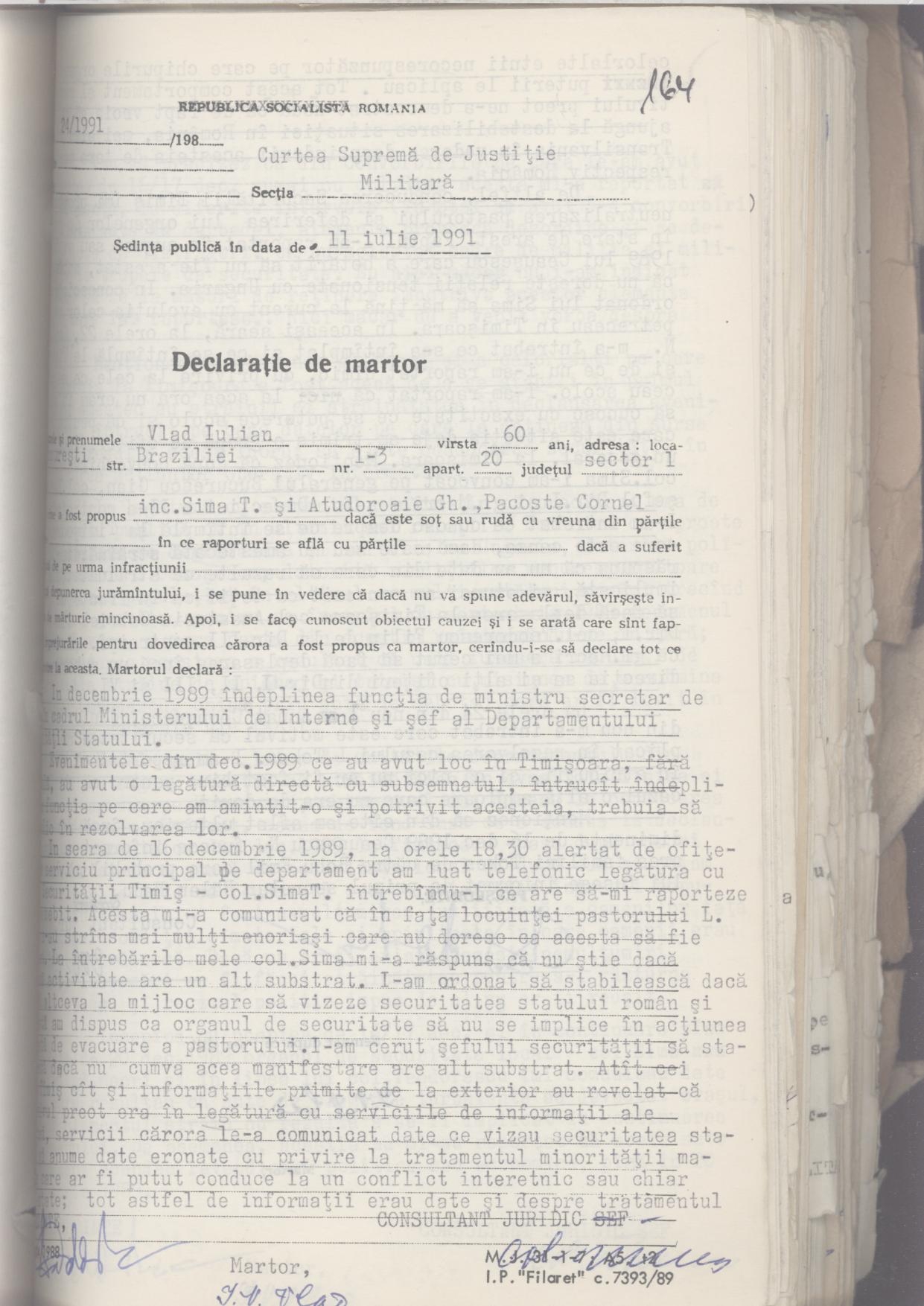
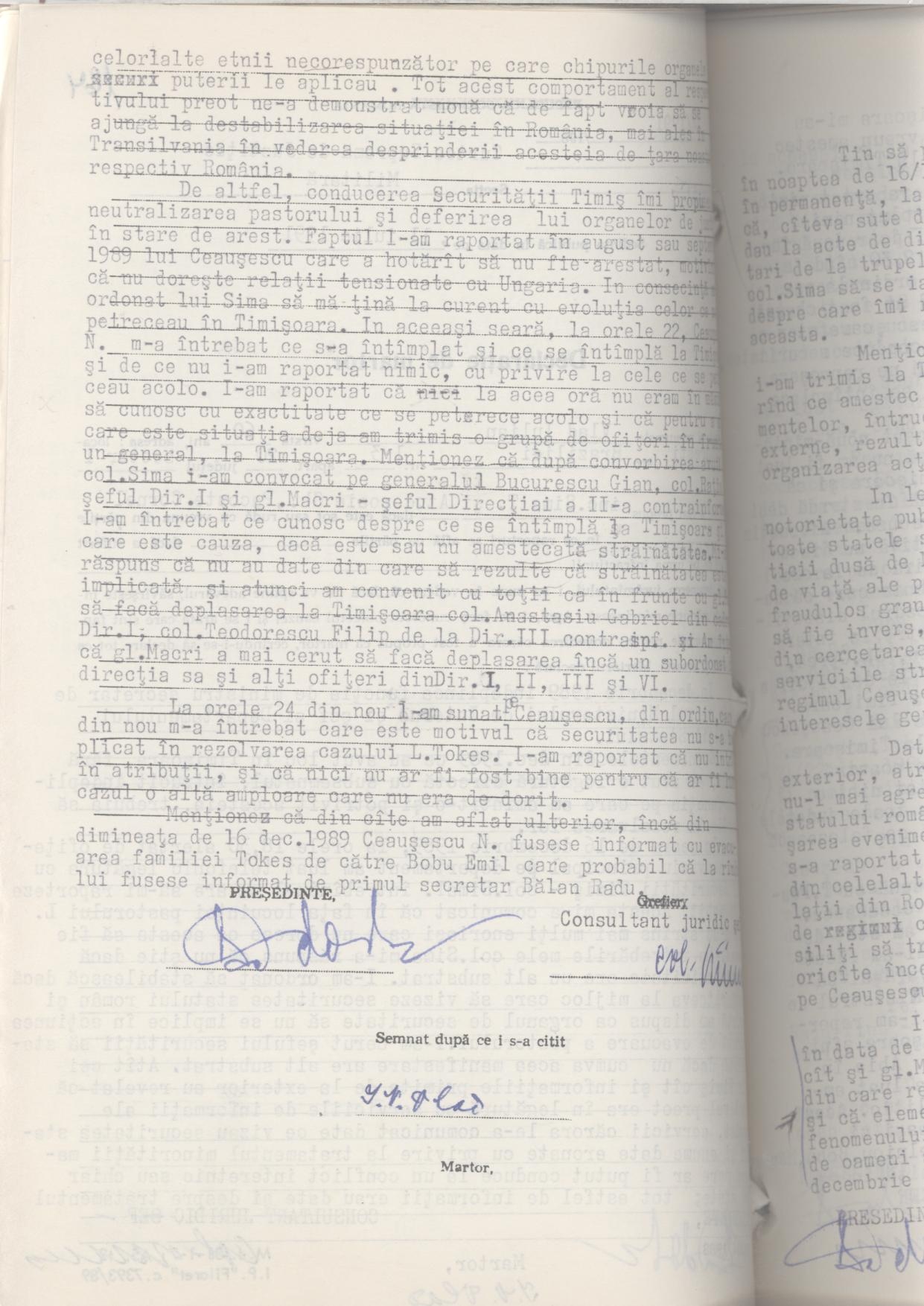
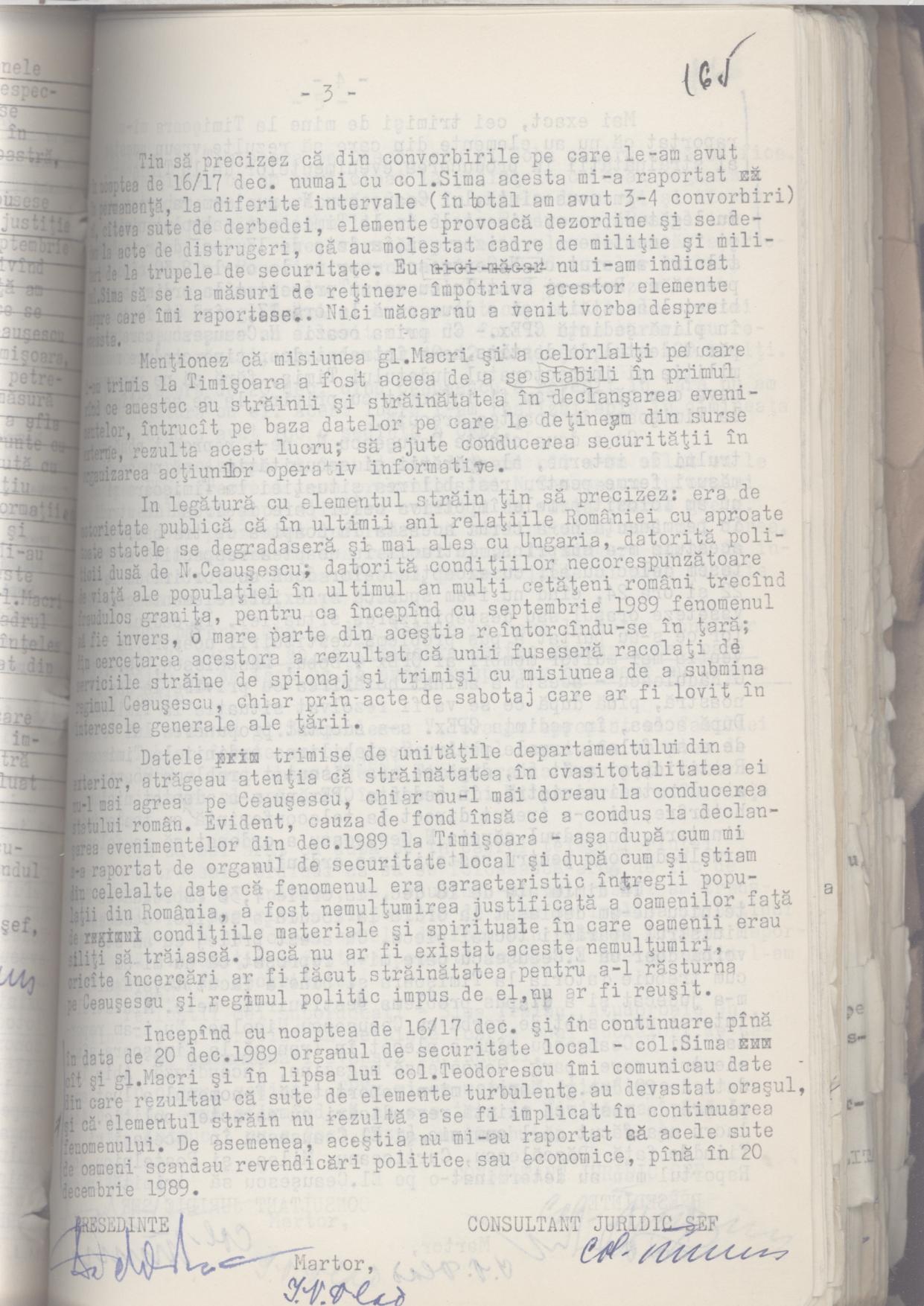
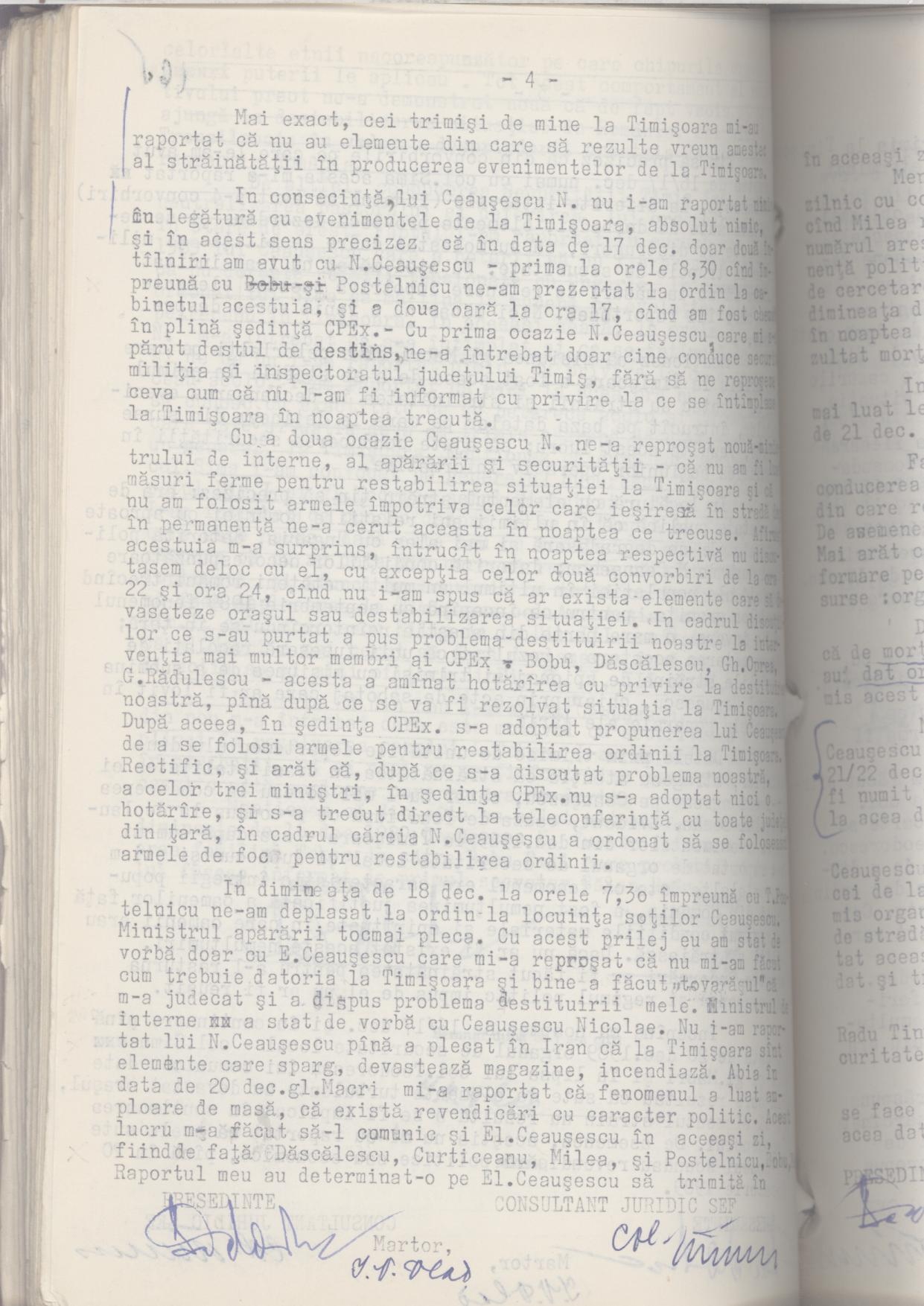
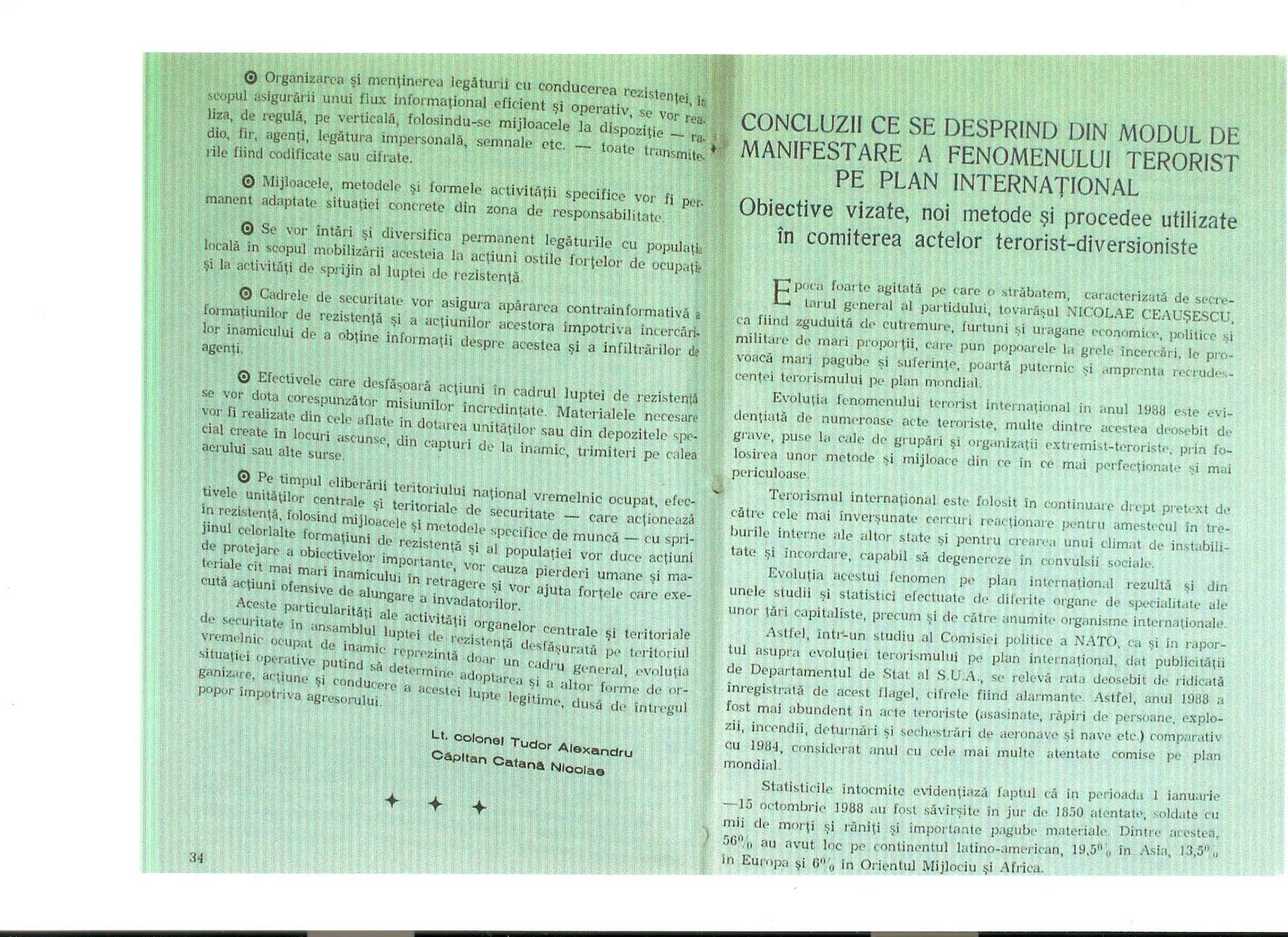
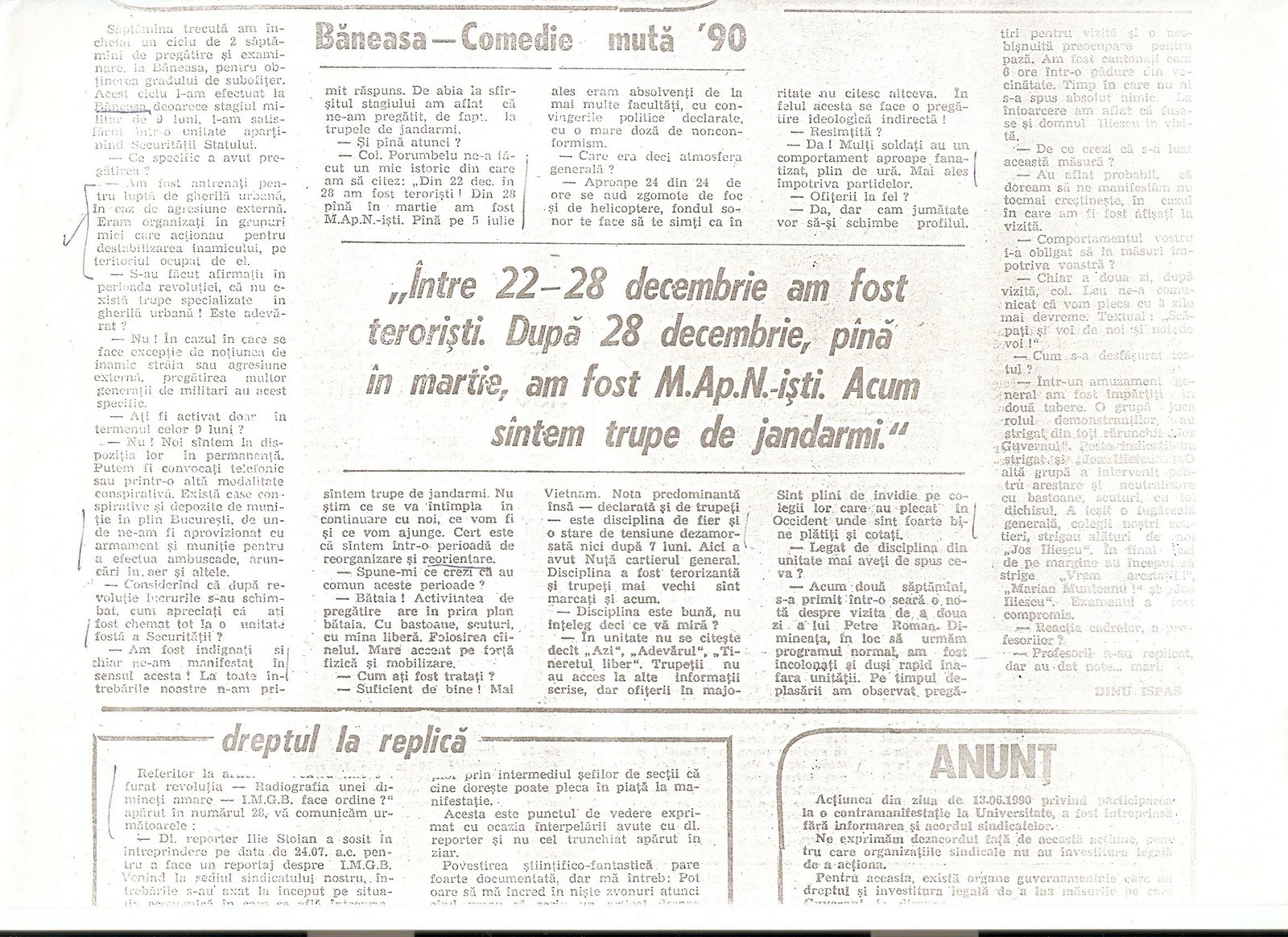
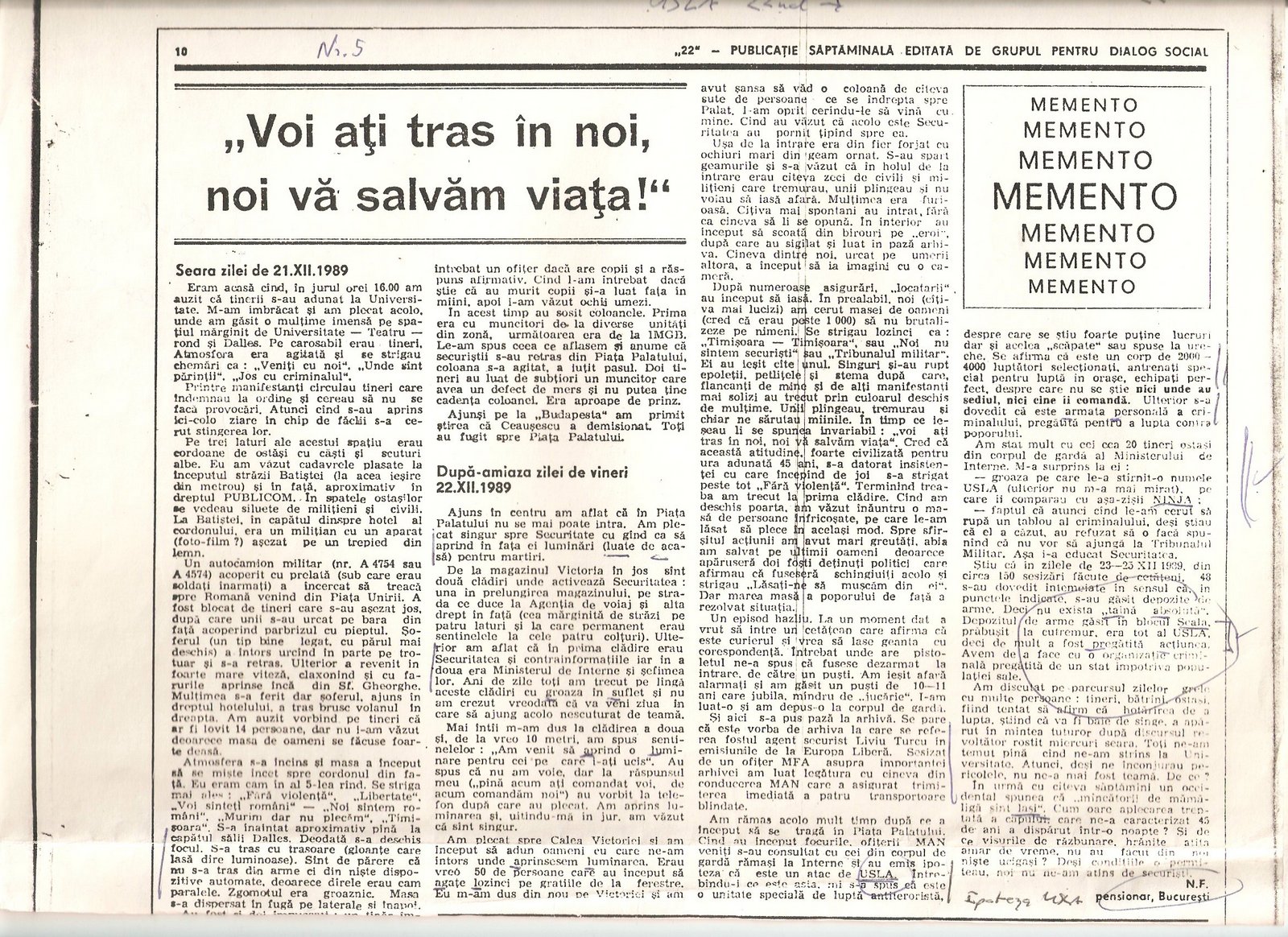
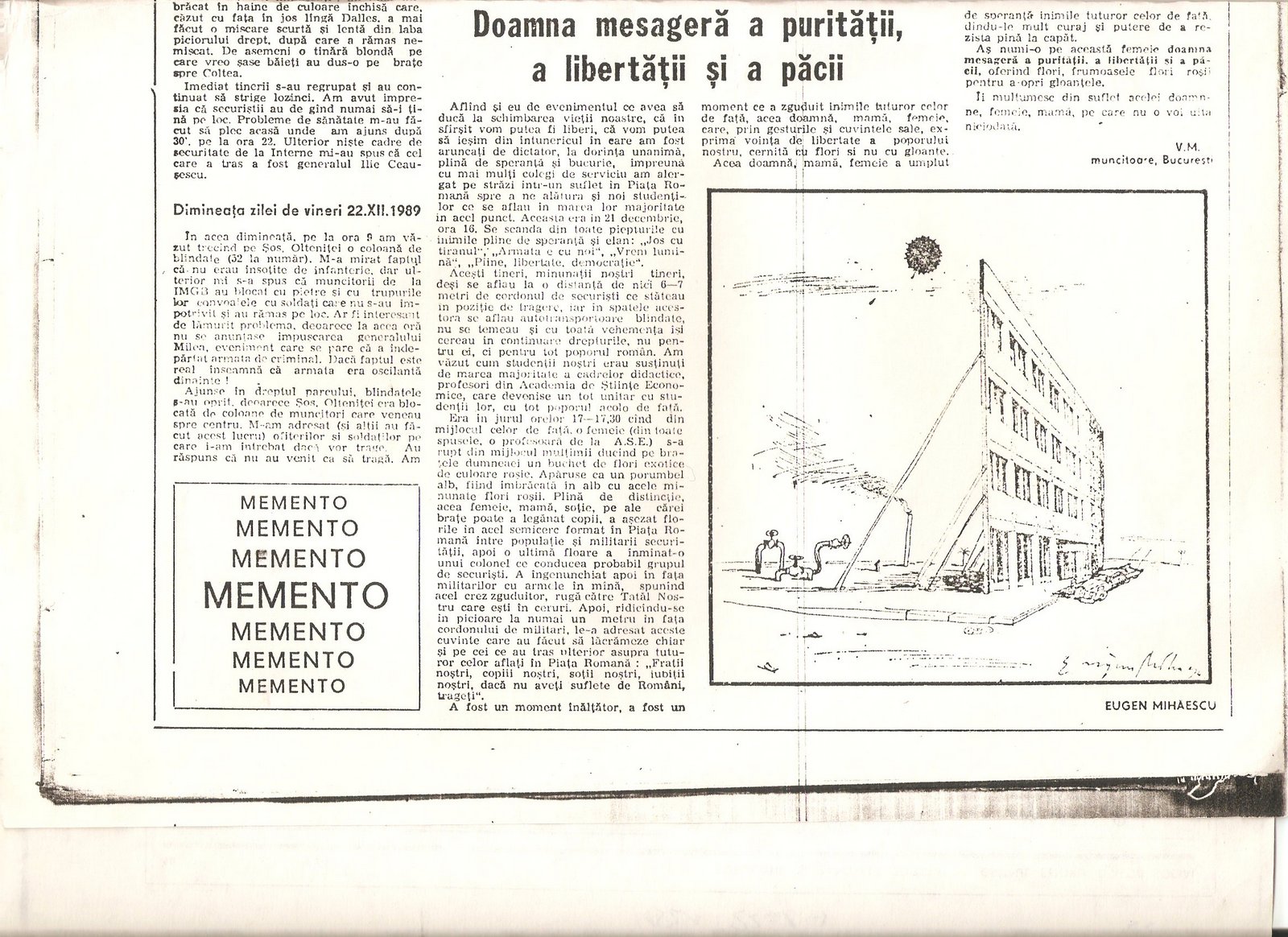


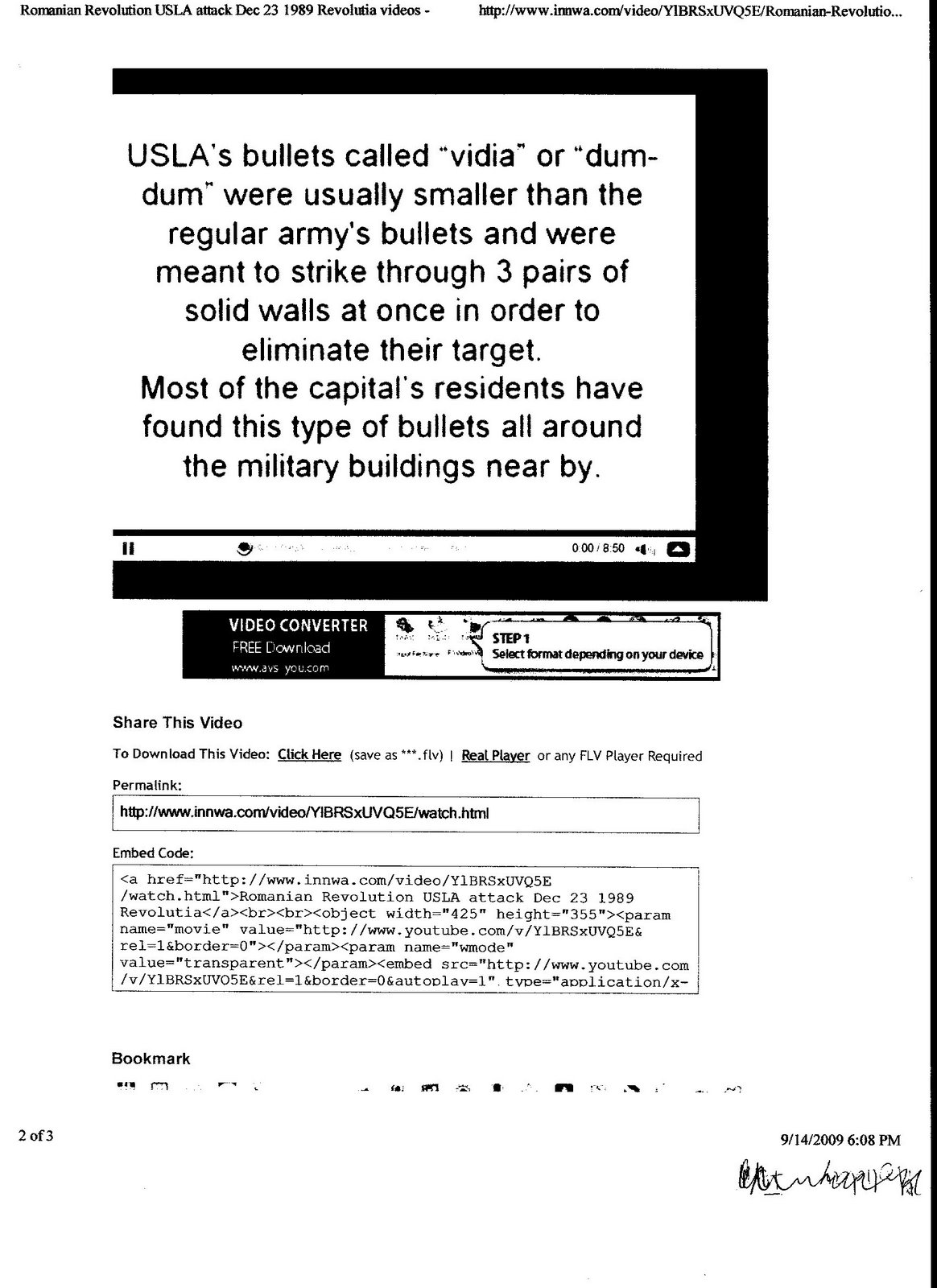
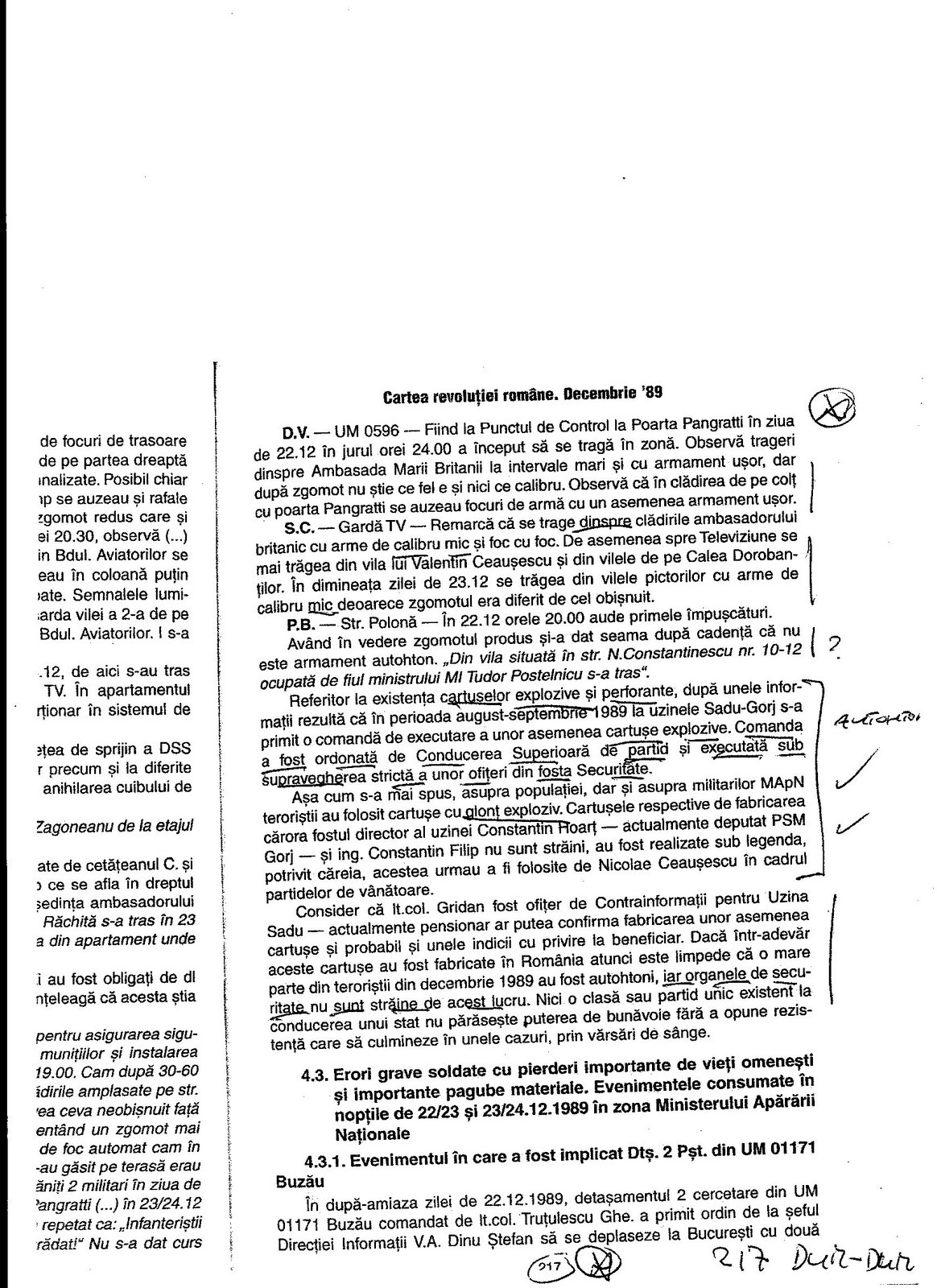
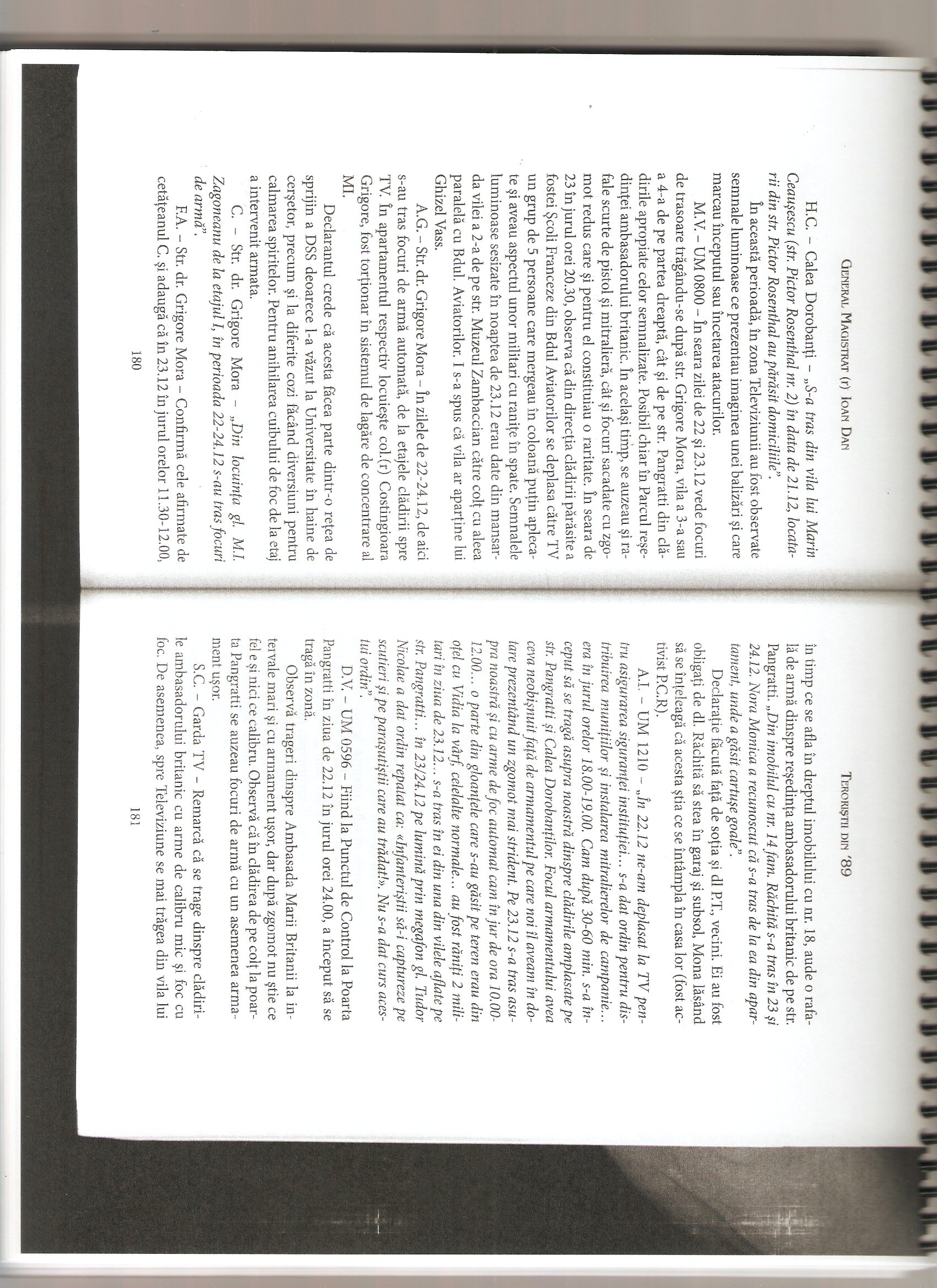
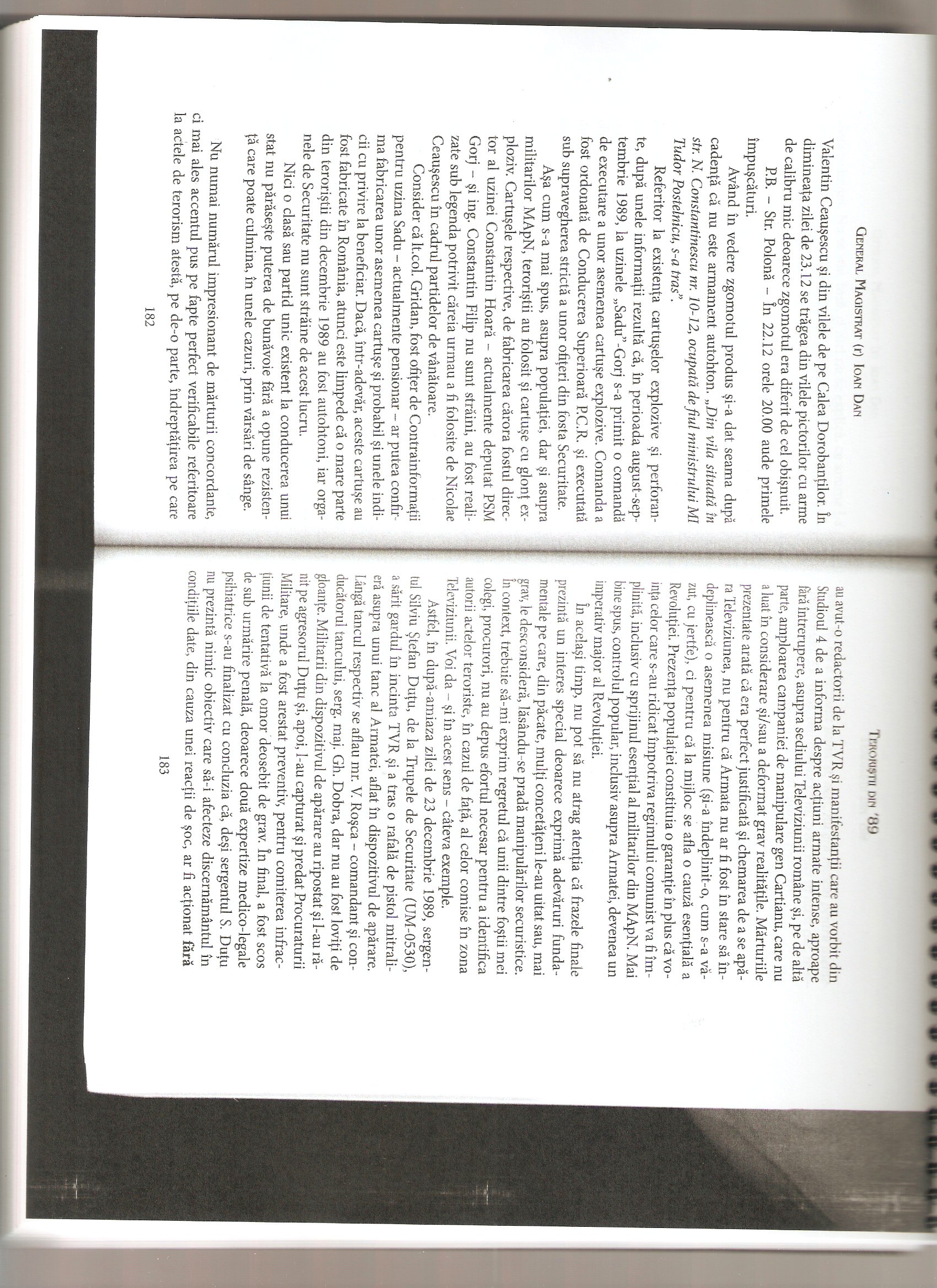
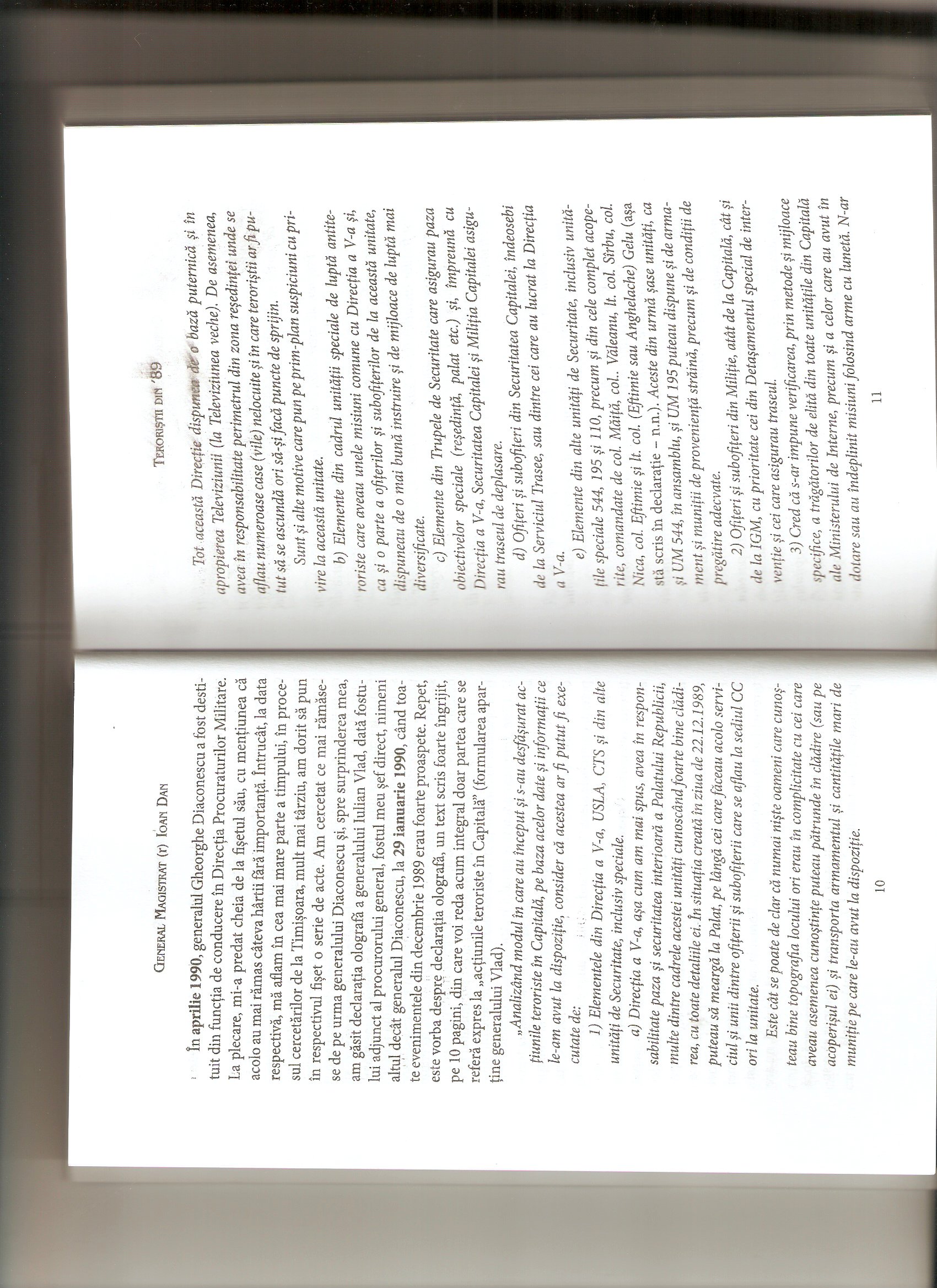
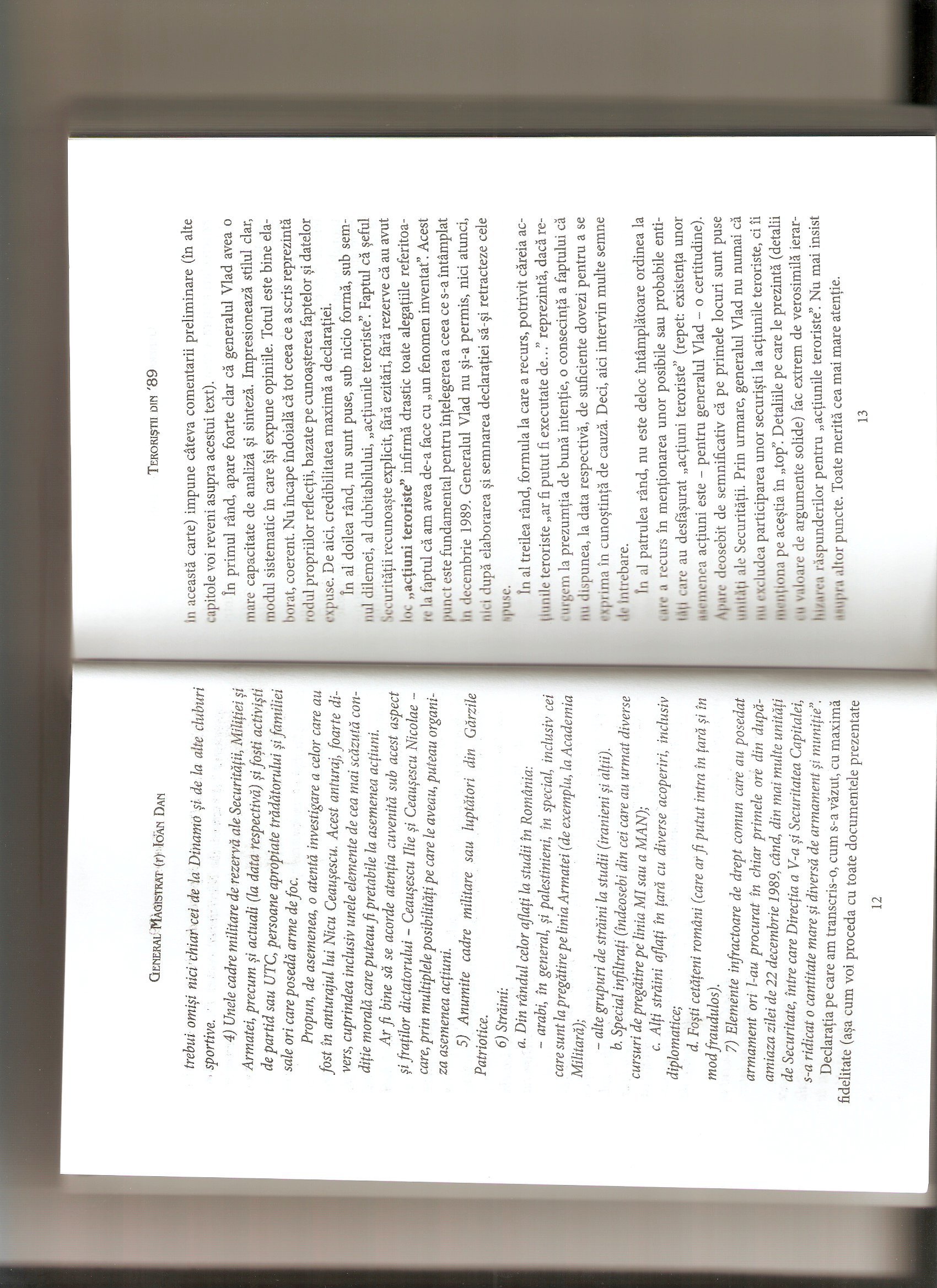
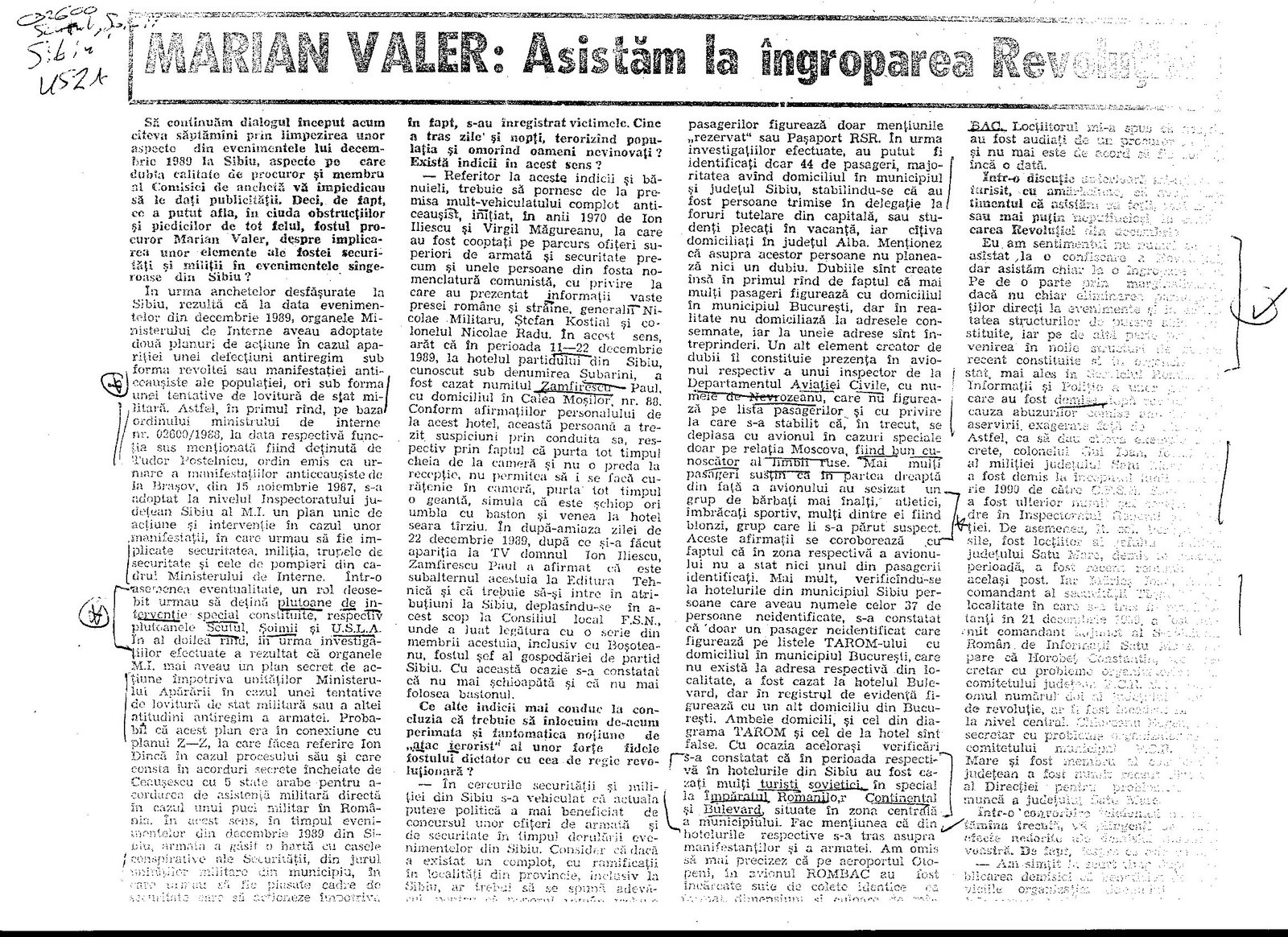
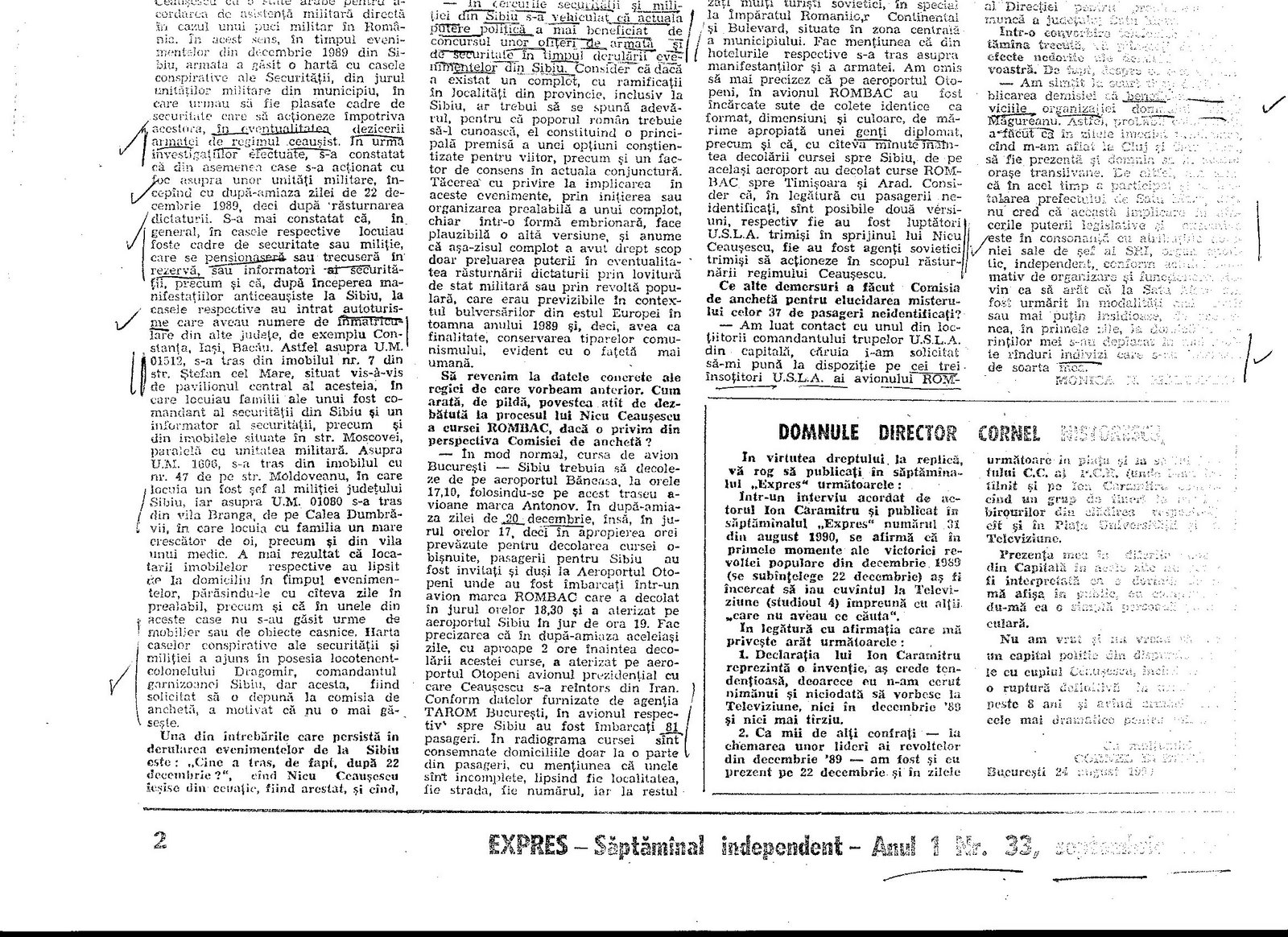

 Offline

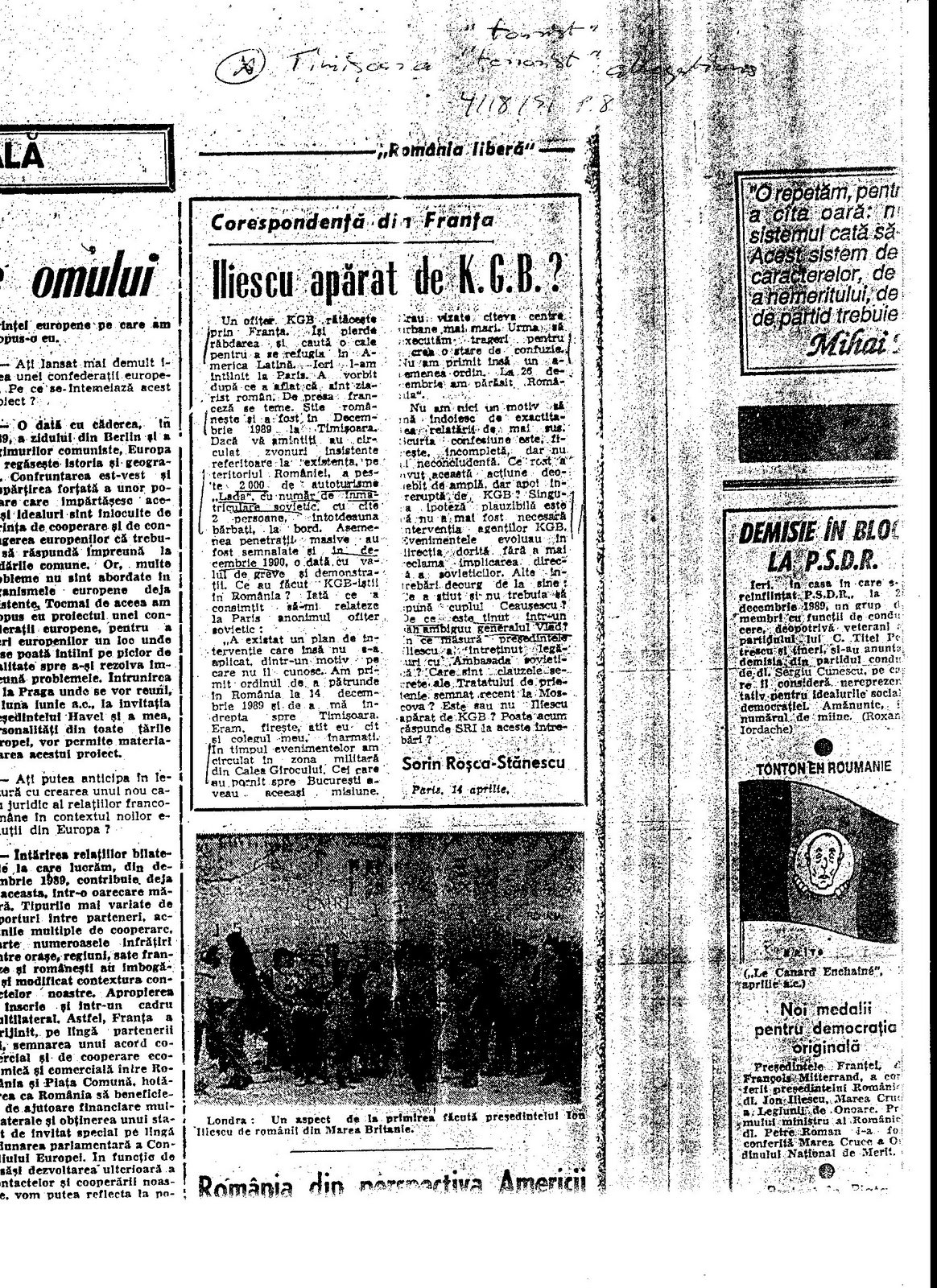
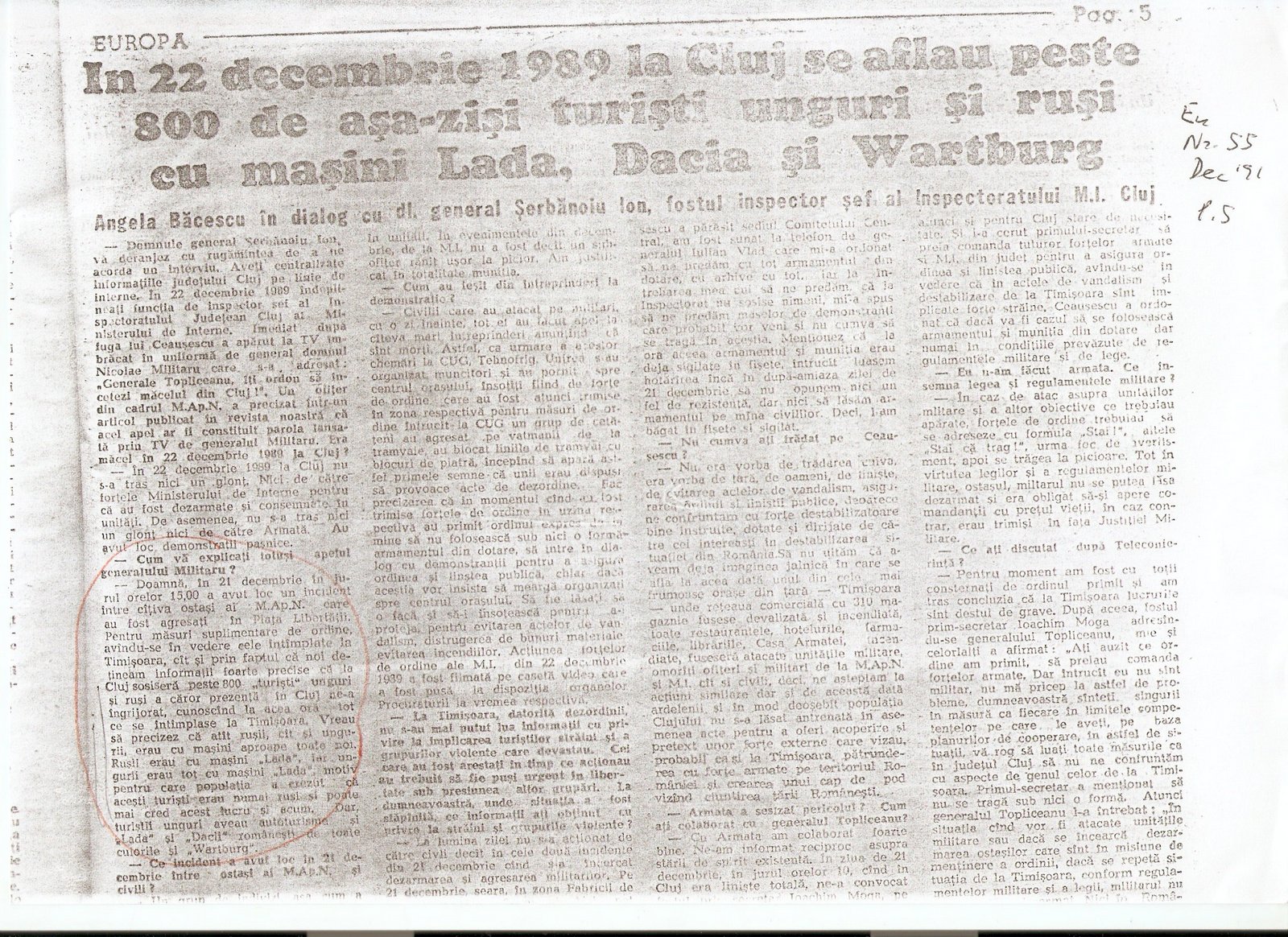
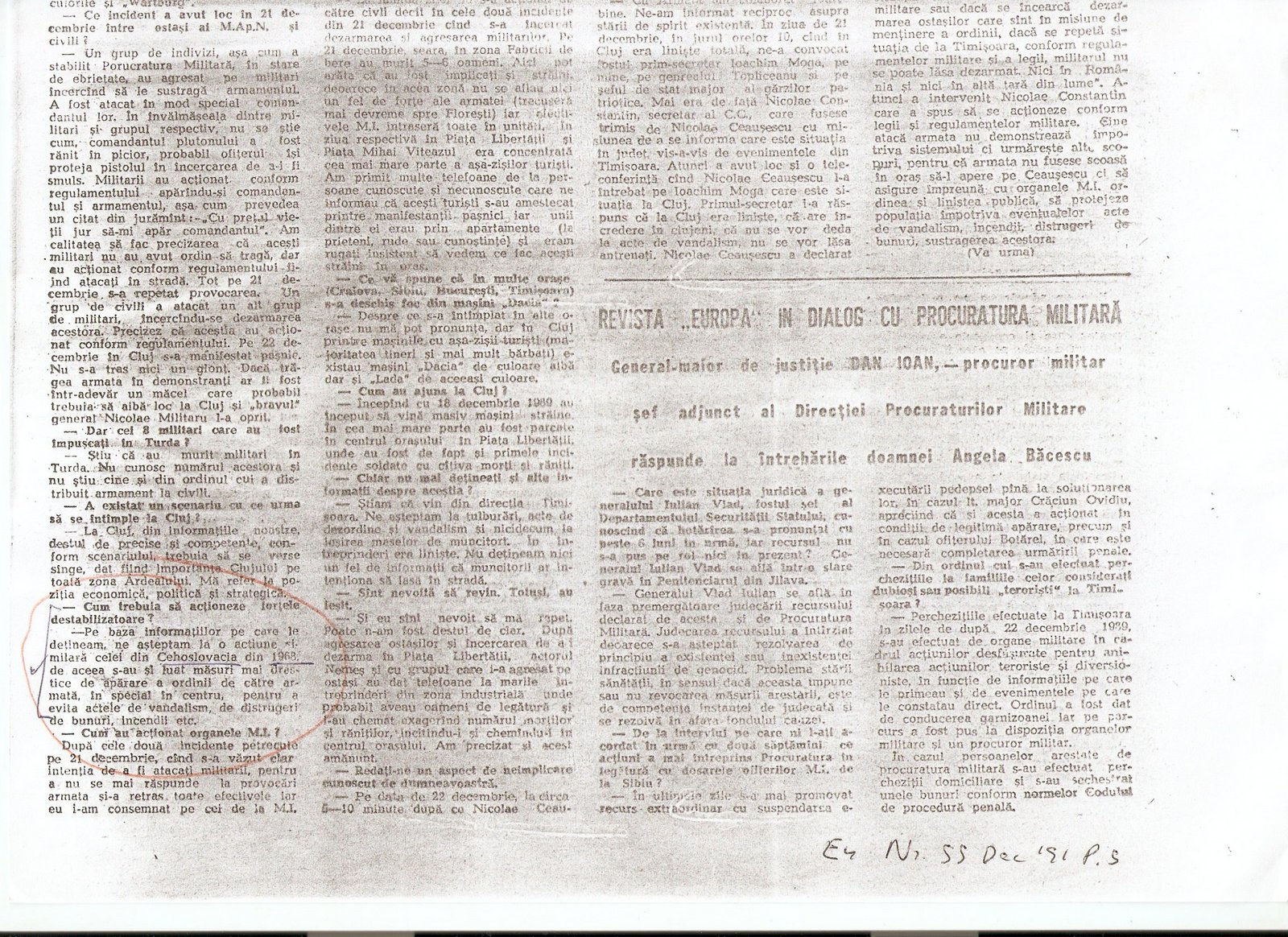
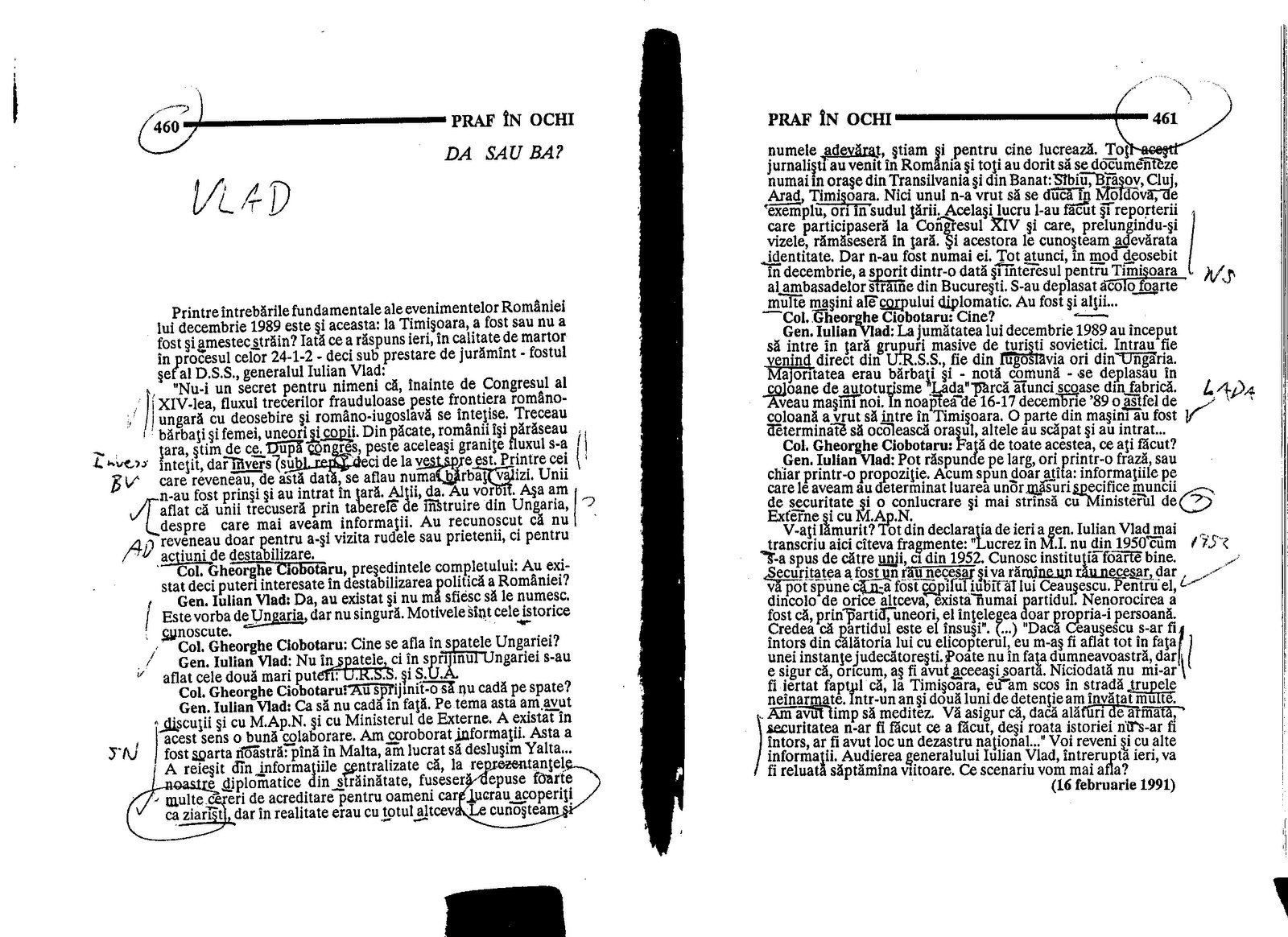
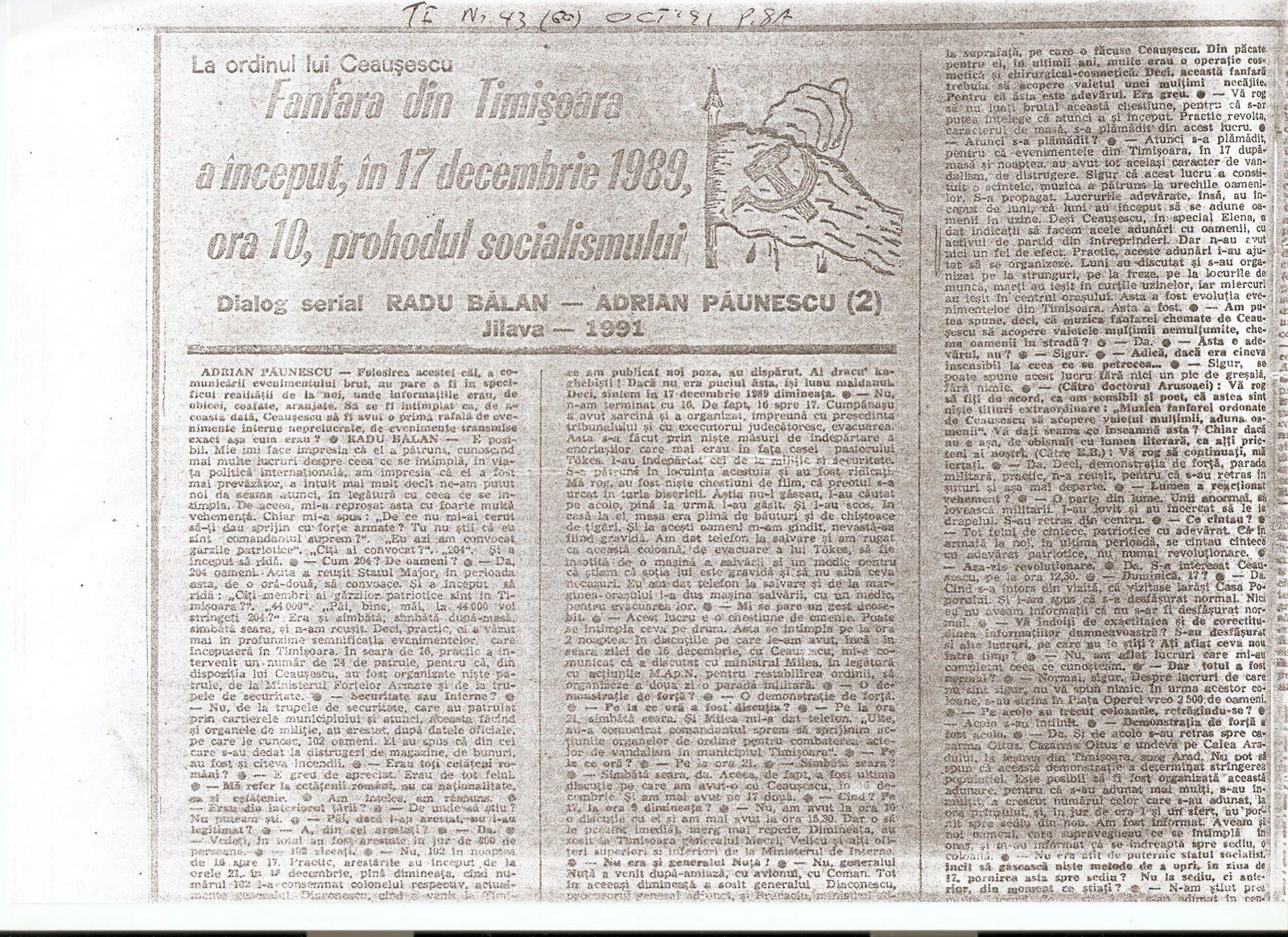
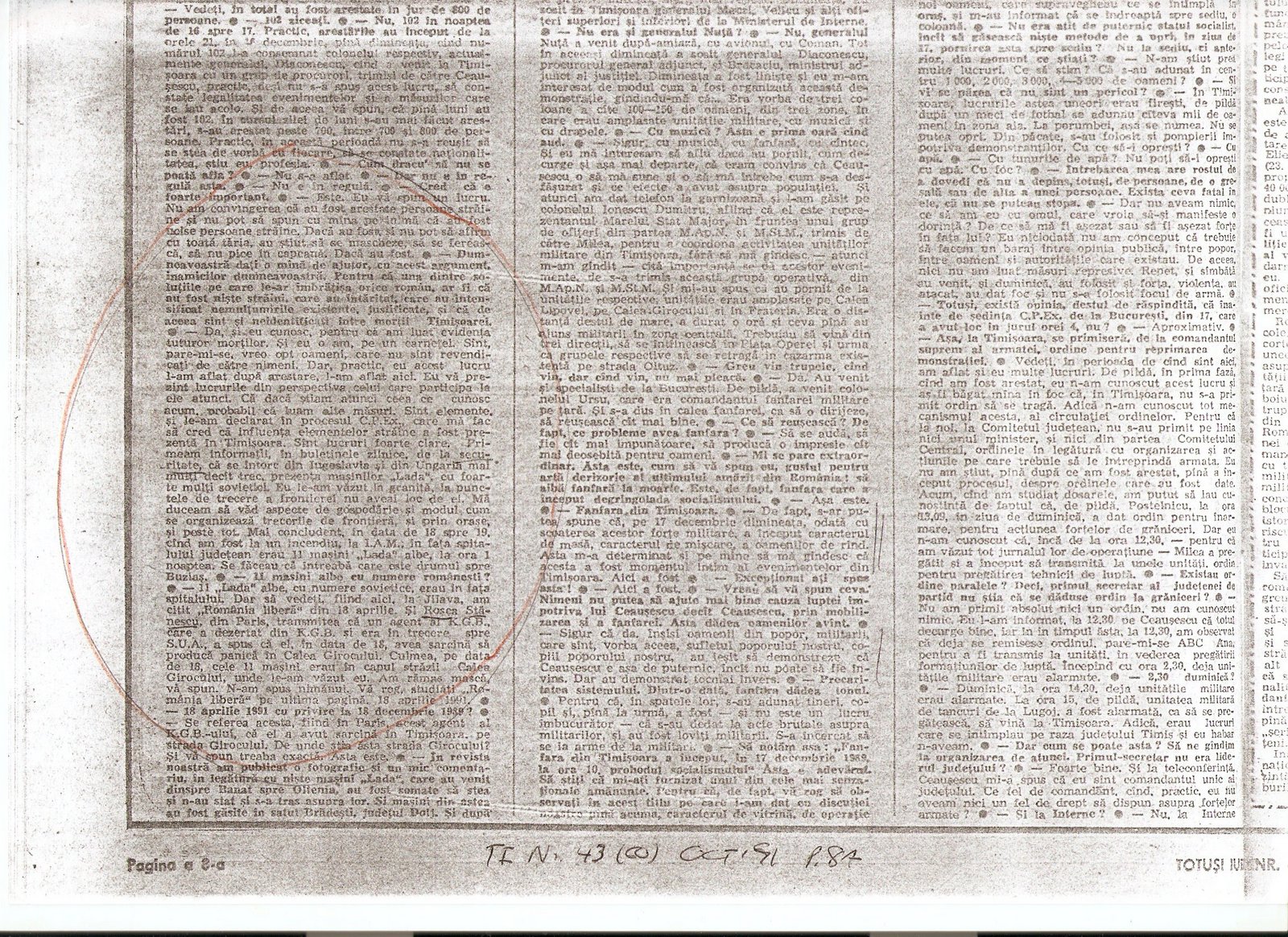
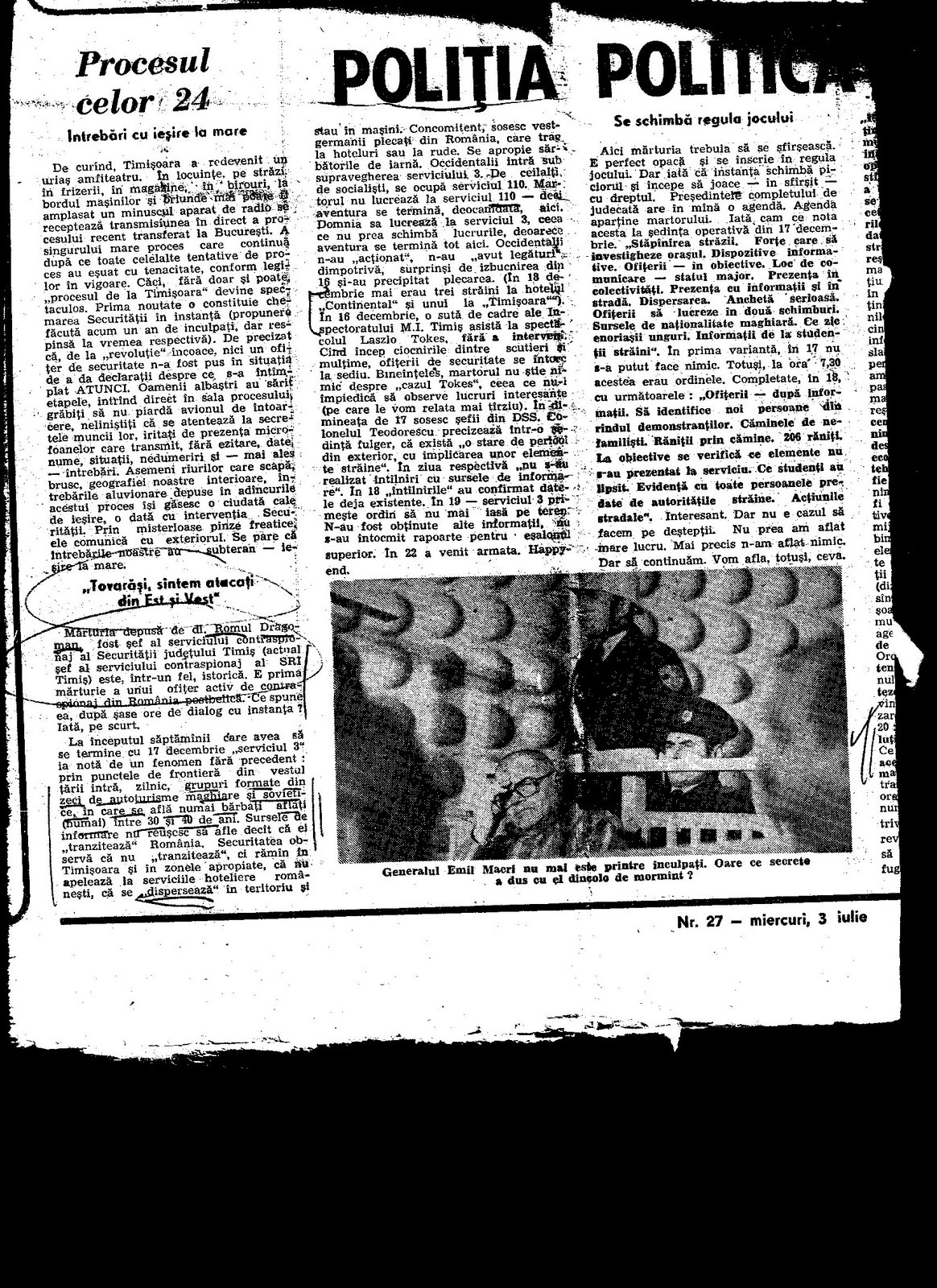

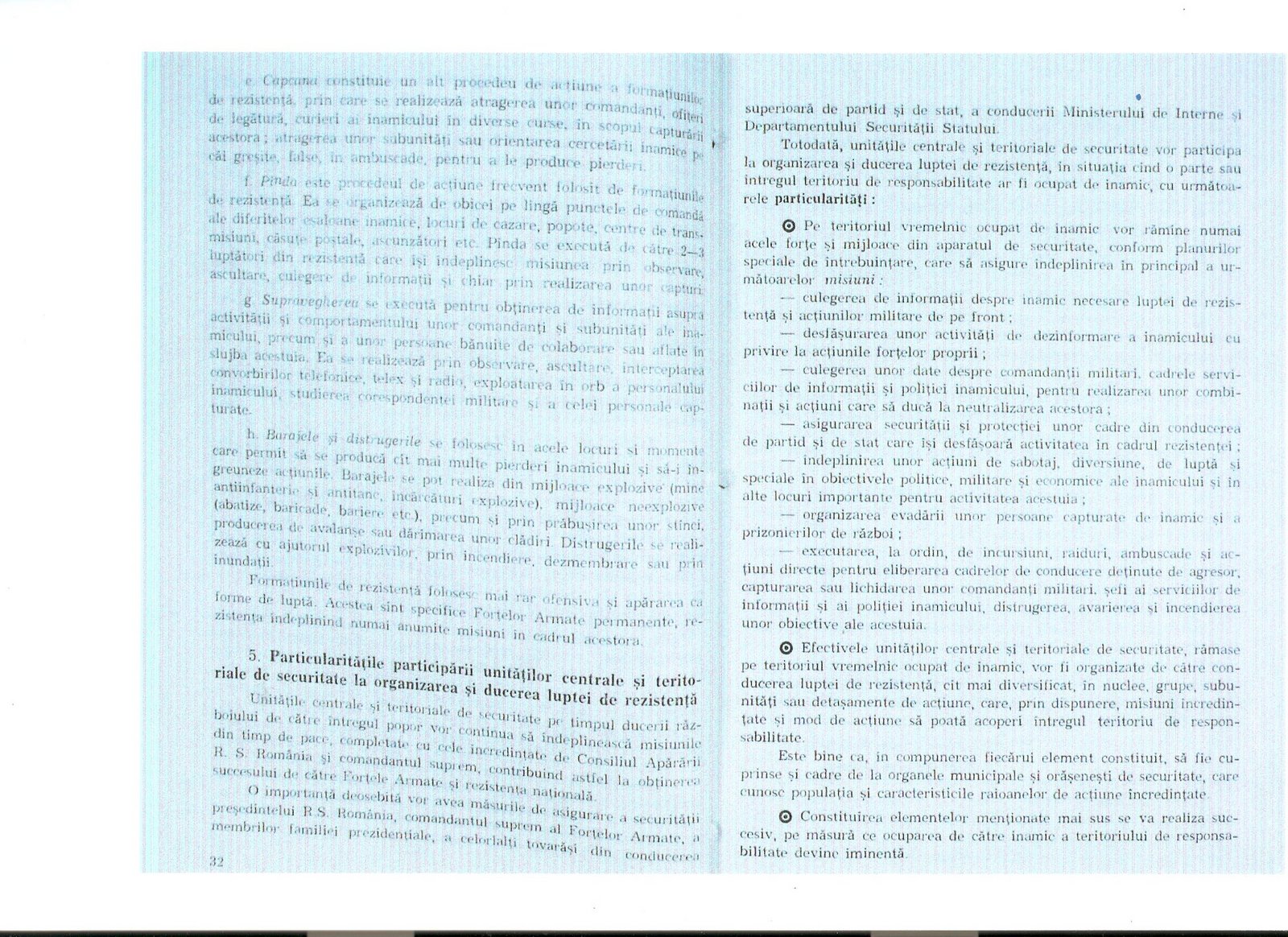
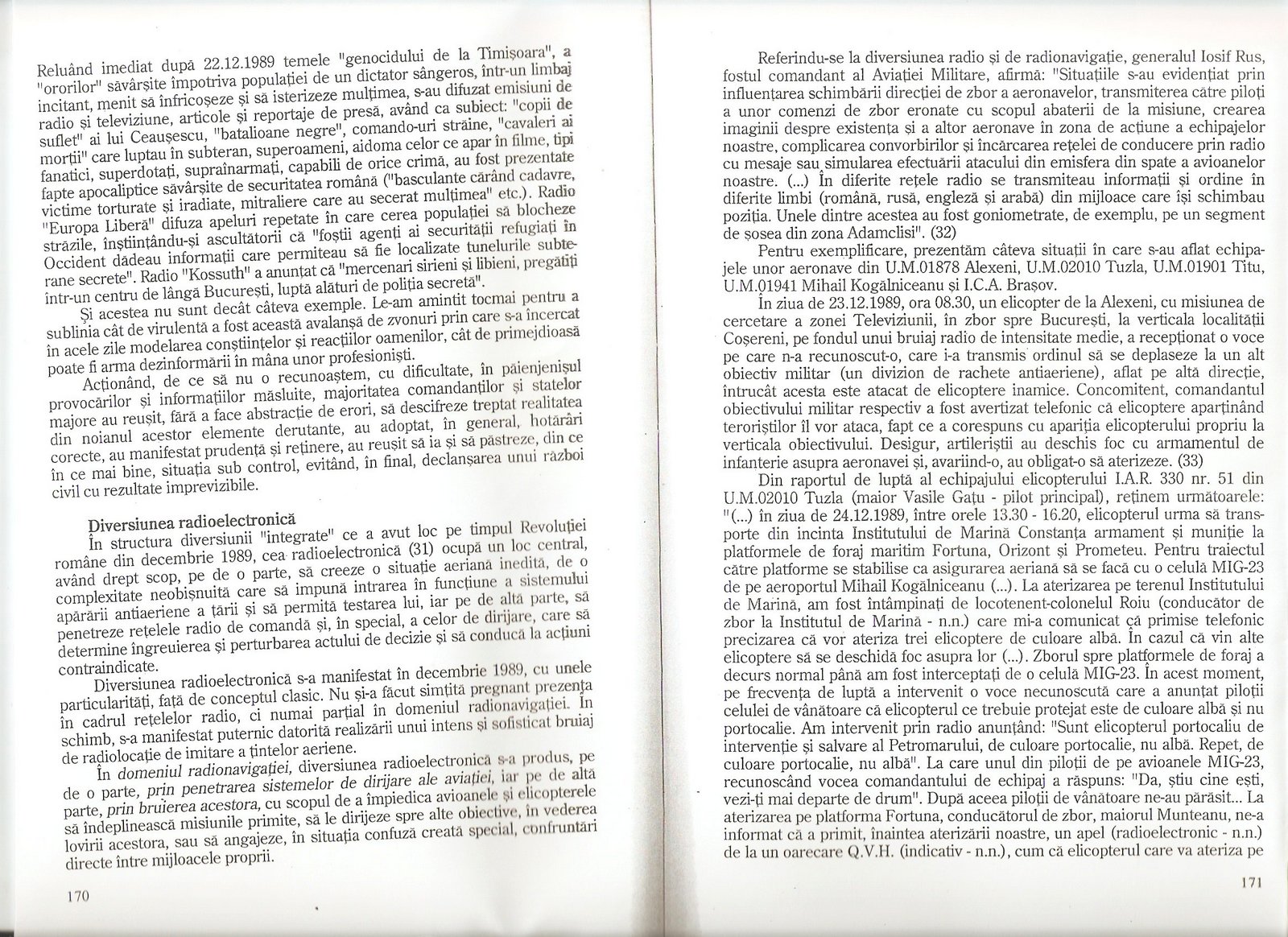
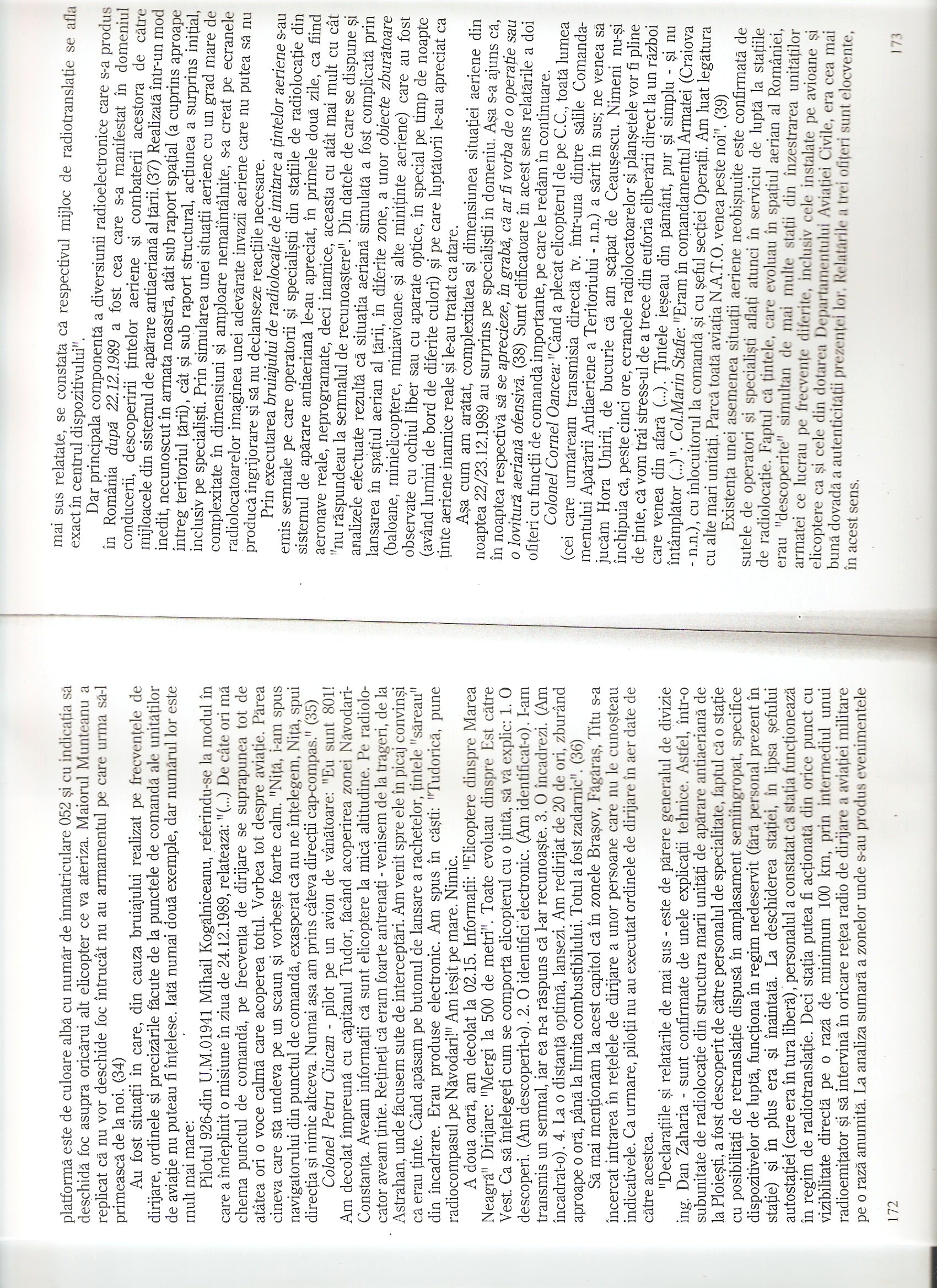
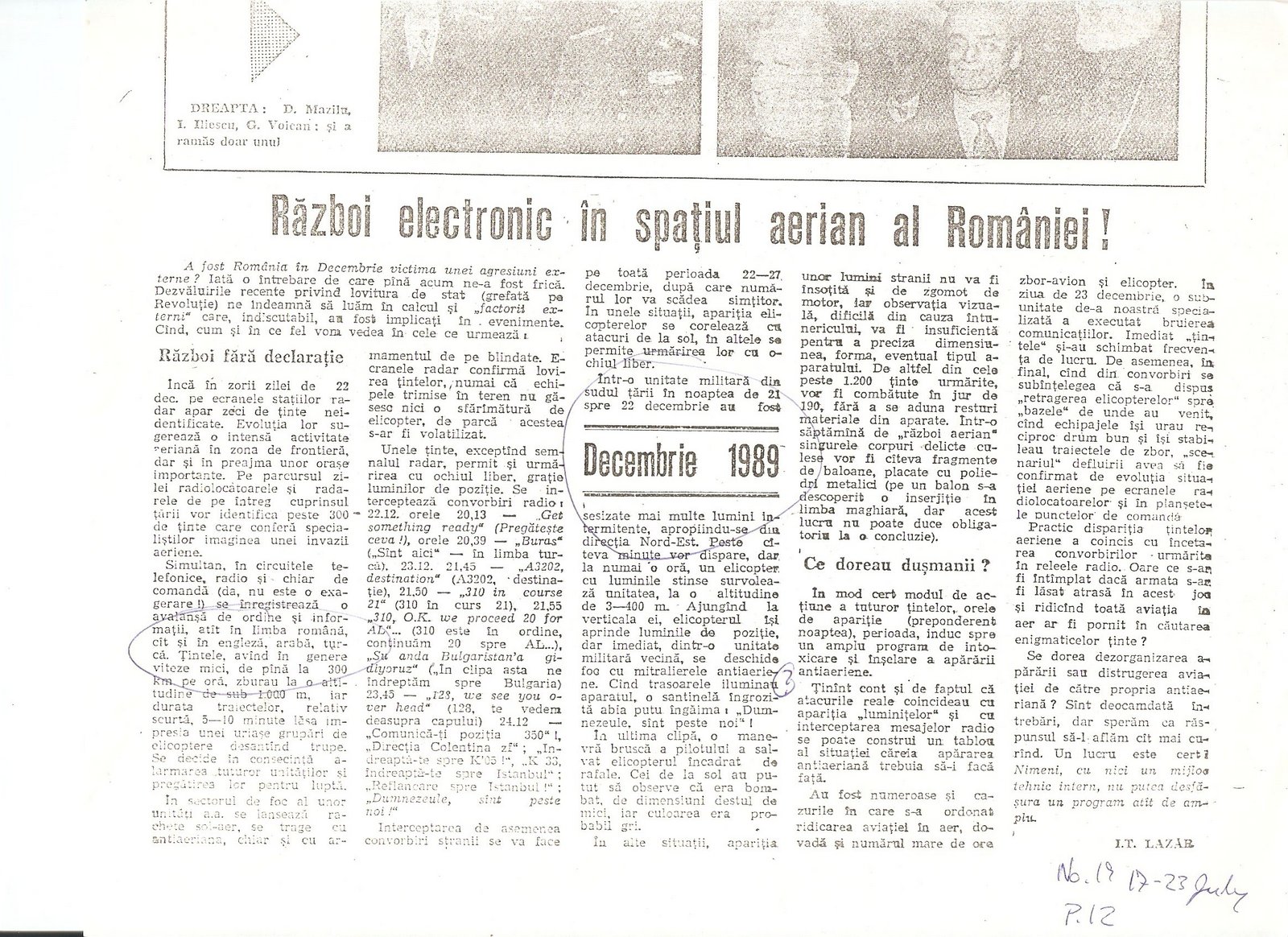

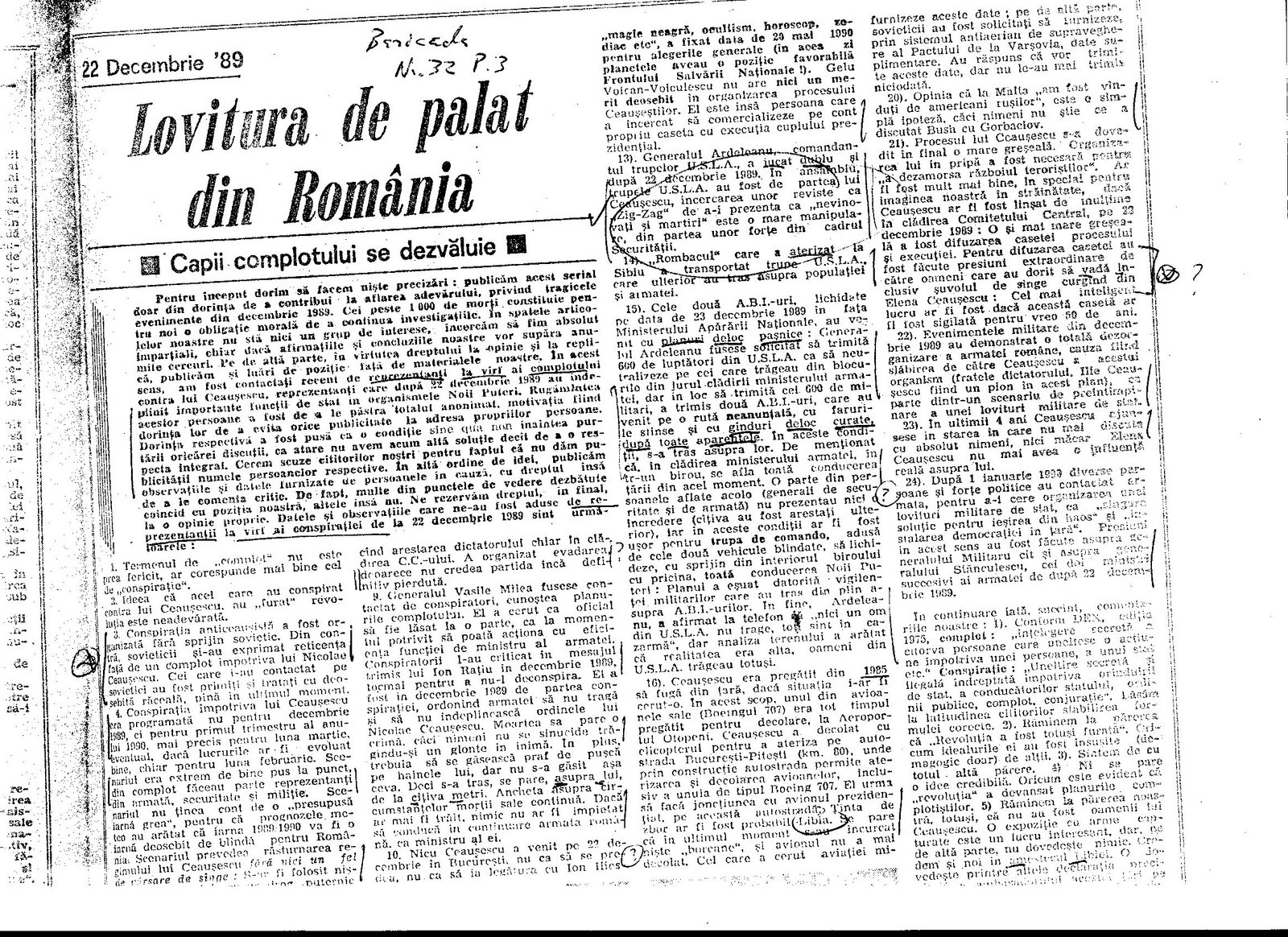
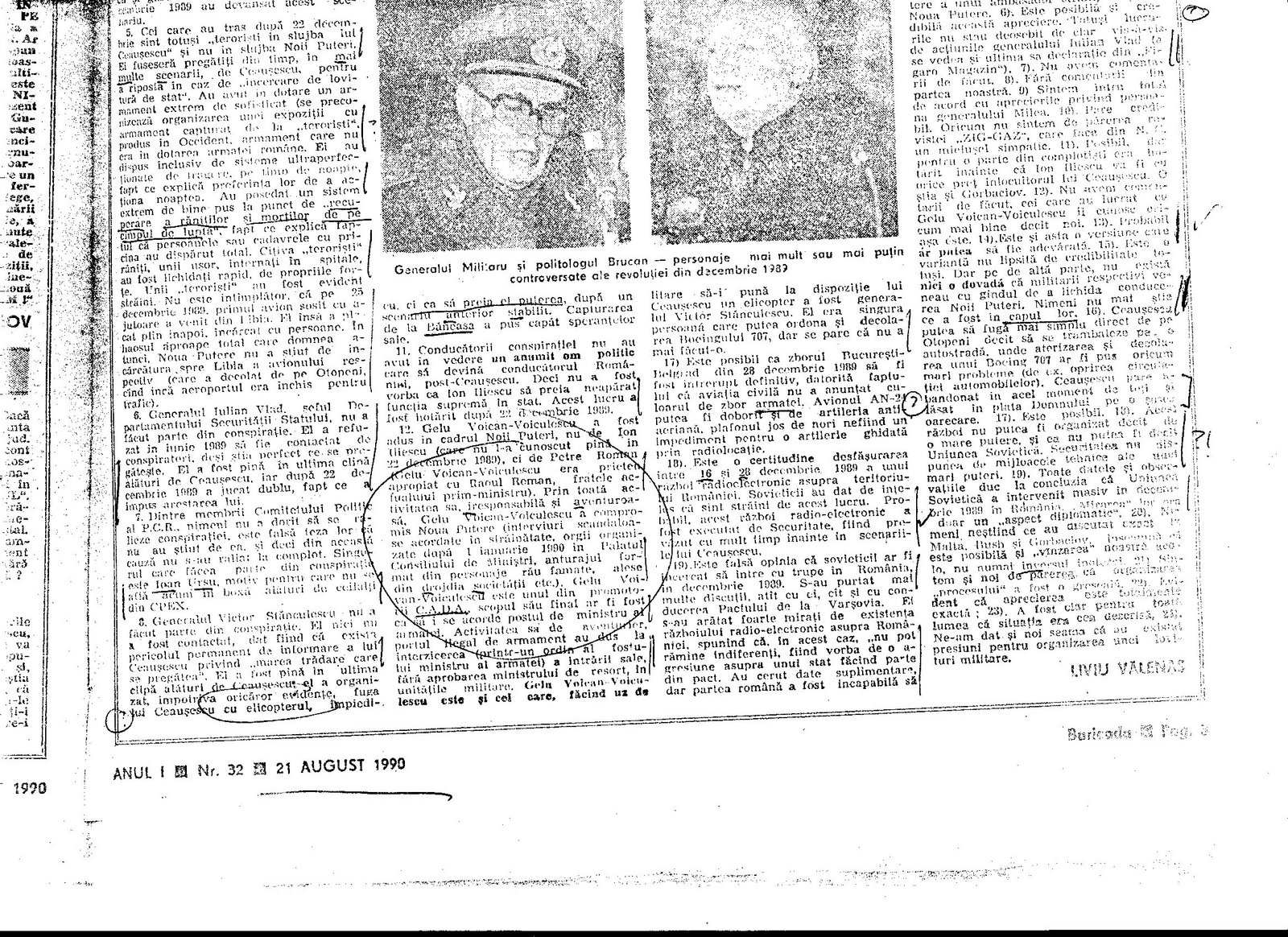

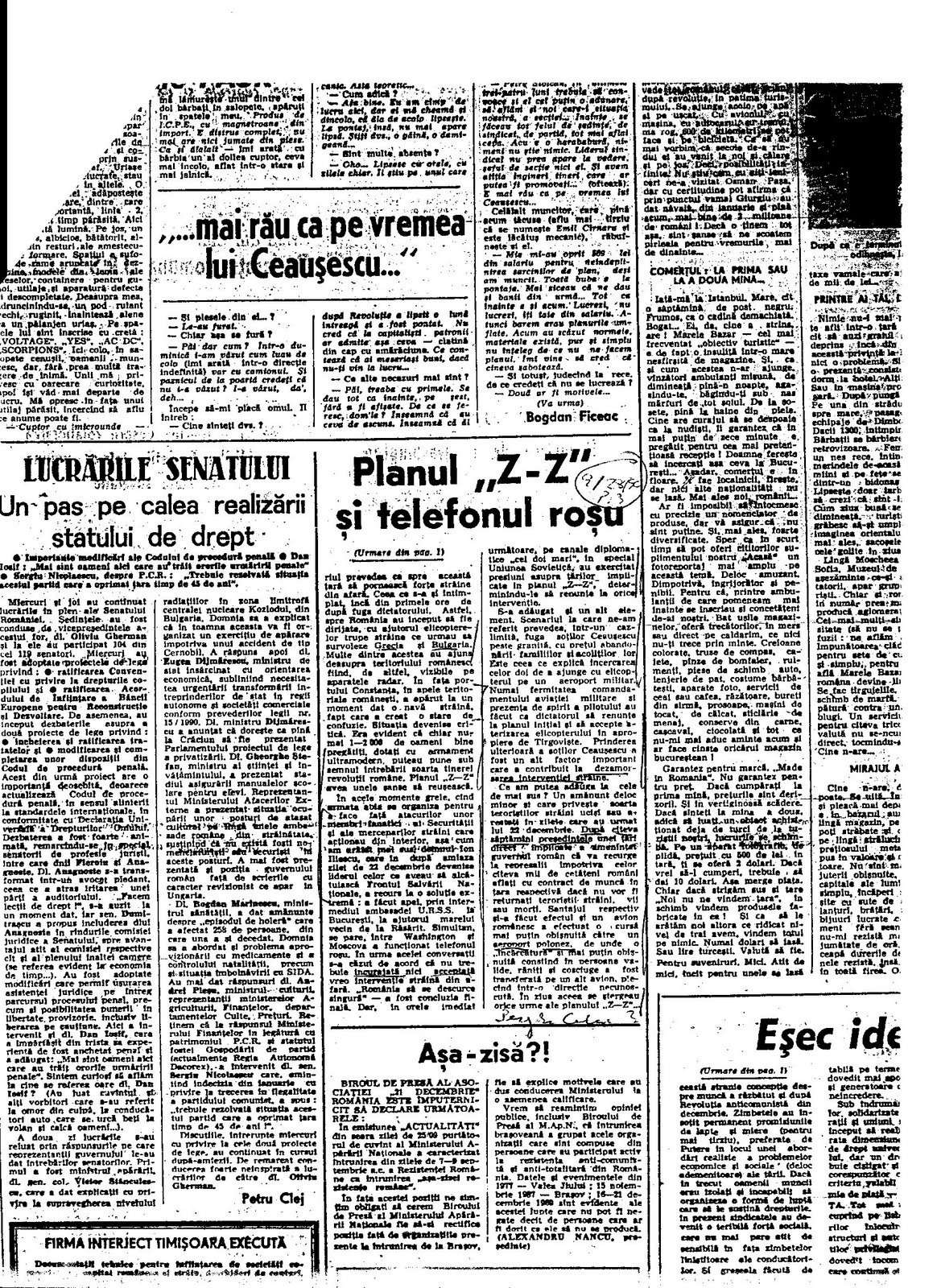
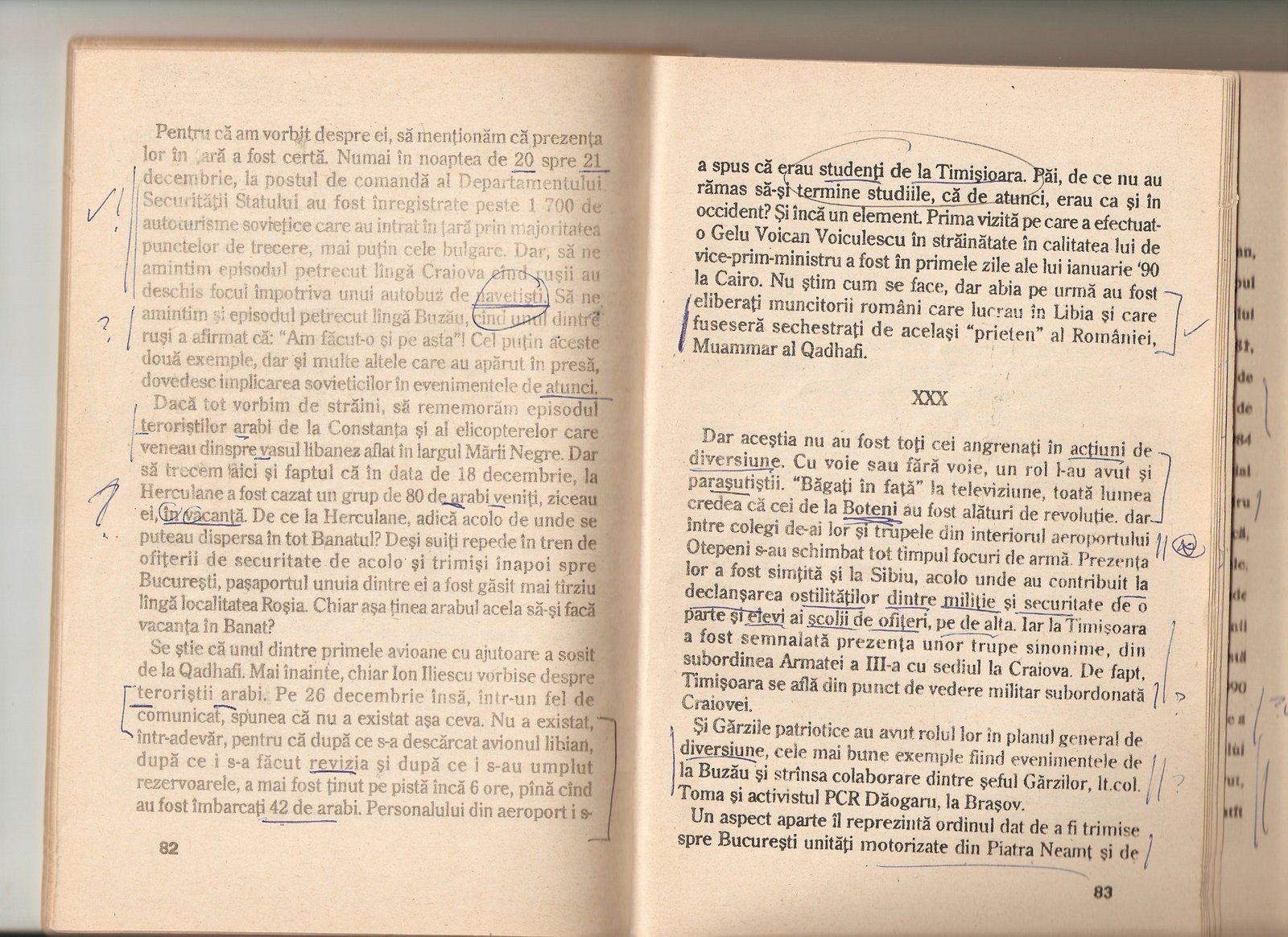


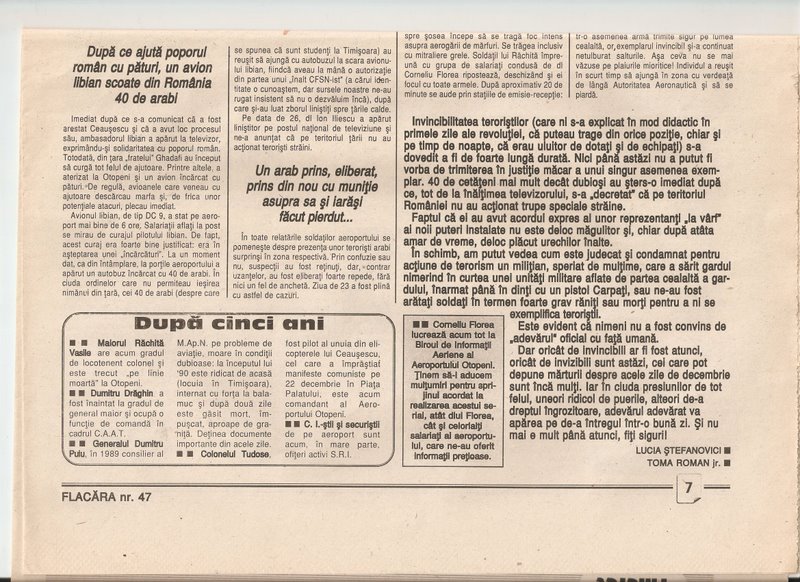
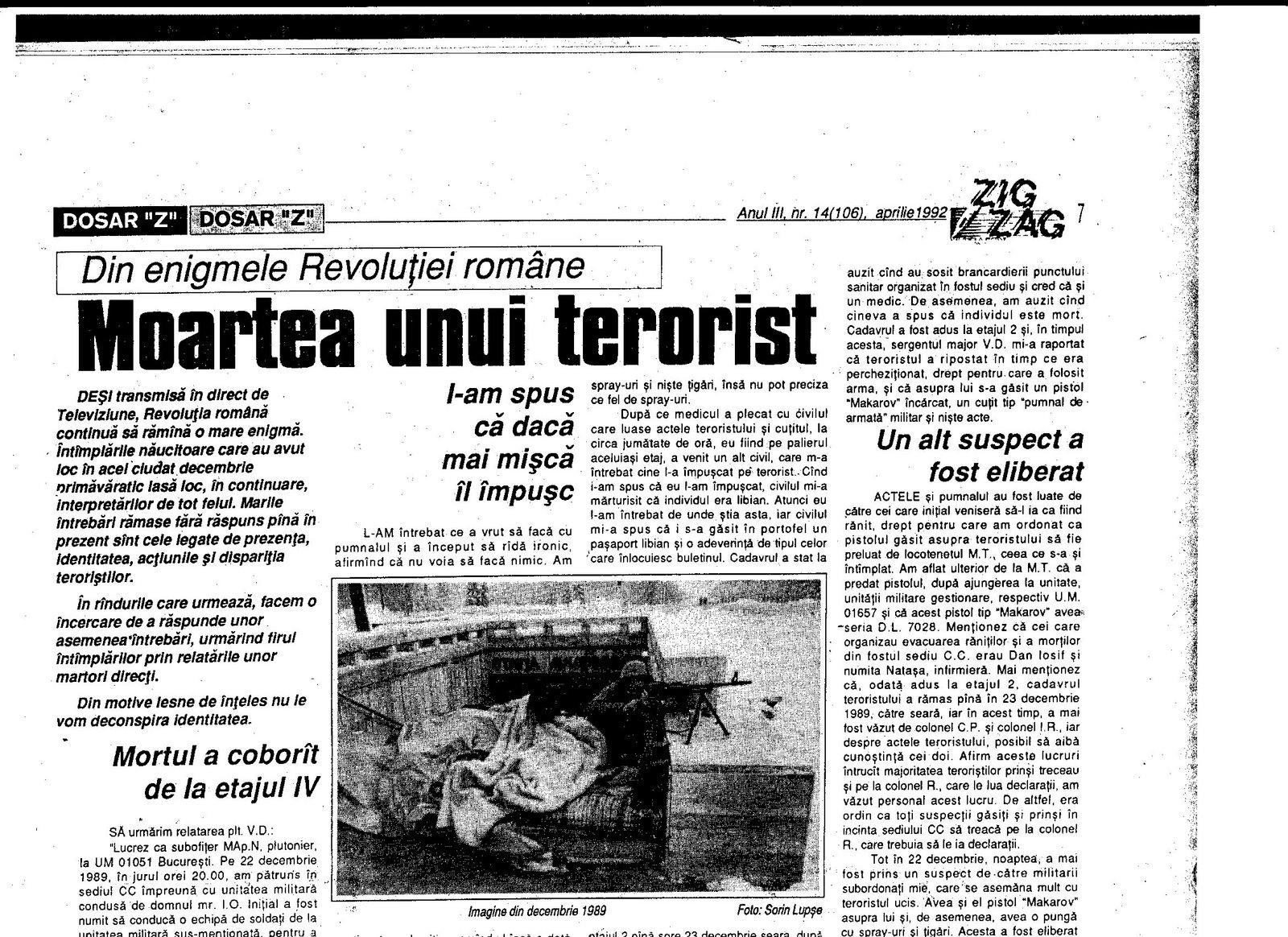

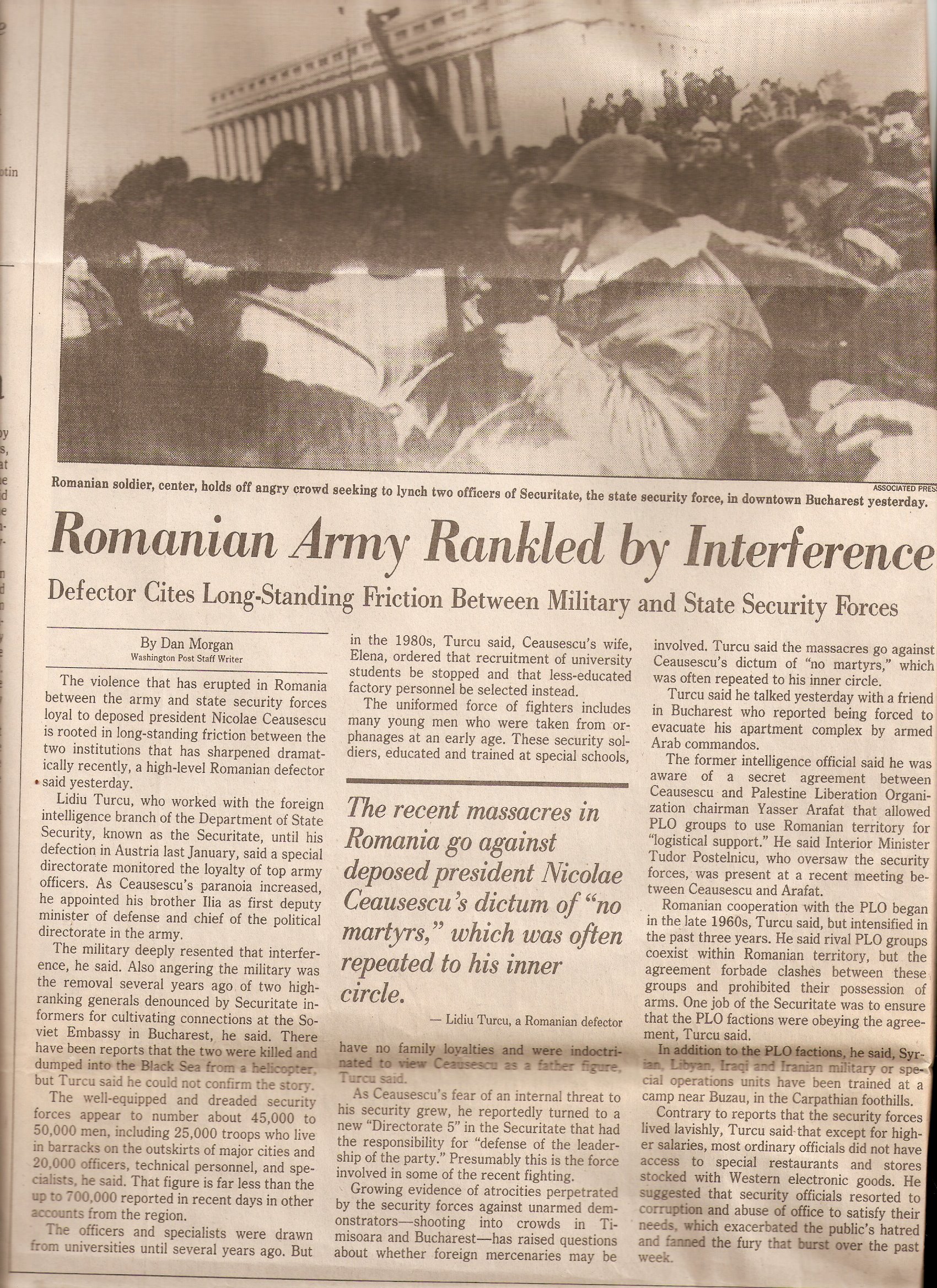

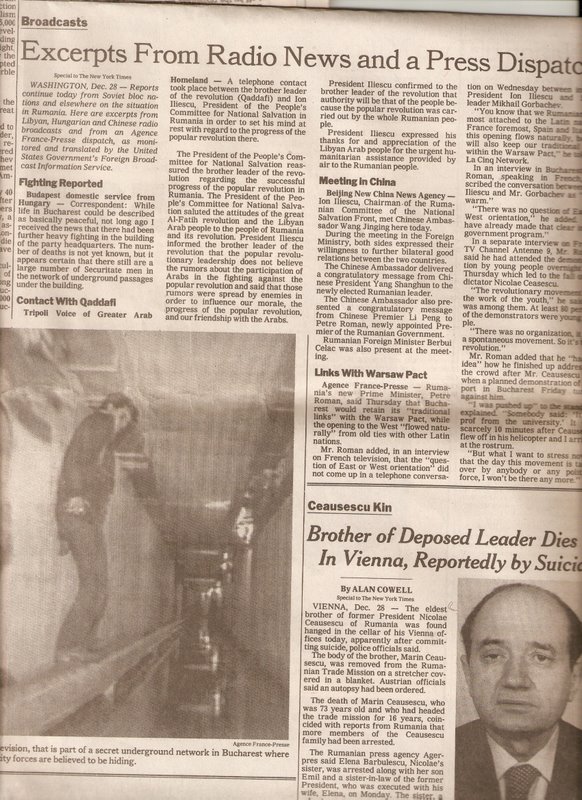


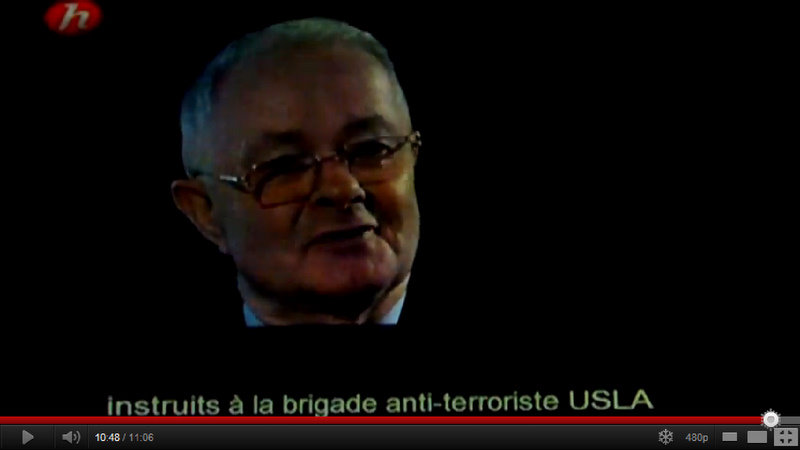
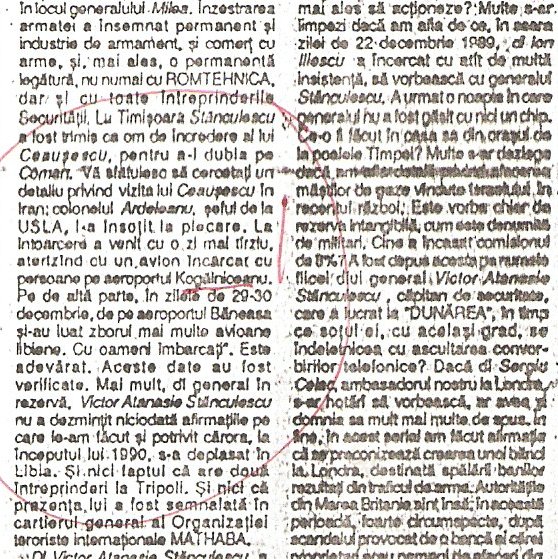


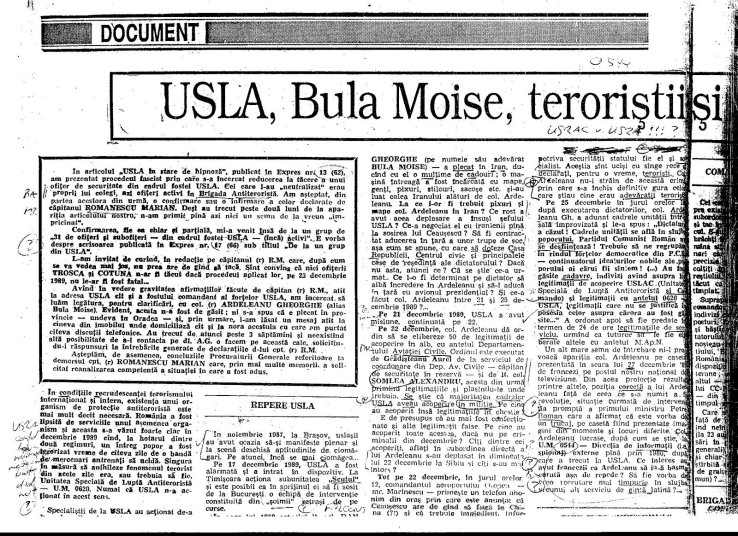
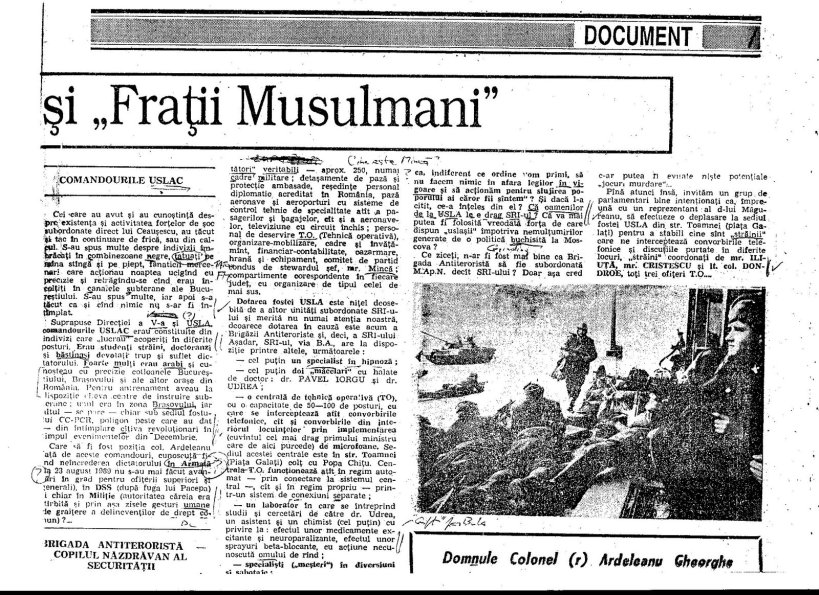
 The Archive of the Romanian Revolution of December 1989
