Posted by romanianrevolutionofdecember1989 on May 10, 2014
(purely personal views, based on two decades of prior research and publications; please do not cite without prior author approval, thank you)
Despite Ion Iliescu’s fervent and repeated denials to the contrary, leaders of the National Salvation Front, including apparently Ion Iliescu and Silviu Brucan, panicked on 23 December 1989 and requested Soviet military assistance. The reporting from the time seems pretty clear on this point, and what is significant is that it was the Soviets themselves who acknowledged the existence of the request. Here, for example, is a Los Angeles Times report (available on the Internet) by Michael Parks from Sunday 24 December 1989 reporting from Moscow, the previous day’s statements by Soviet officials on Saturday 23 December 1989:
Upheaval In Romania : Moscow Pledges Aid but Rejects Troop Request : Soviet Union: Gorbachev says Romania’s new government can expect humanitarian help from the Warsaw Pact.
MOSCOW — The Soviet Union, affirming its support for the popular uprising that overthrew Romanian President Nicolae Ceausescu, pledged Saturday to provide “immediate and effective humanitarian aid” to the country but drew the line at military assistance….
Gorbachev told the deputies that the Kremlin had considered a request for military assistance by leaders of the Front of National Salvation, the provisional government established by former Communist Party and government officials, military commanders and intellectuals in Bucharest. But he said Moscow had decided against sending in forces as the fighting appeared to abate….
Gorbachev said the request for military assistance had come overnight when Romanian army units, apparently loyal to Ceausescu, “turned against the people” and were threatening to retake strategic positions in Bucharest–including the Communist Party’s headquarters, where the provisional government’s leaders were meeting. But the loyalists’ counterattack was “suppressed,” Gorbachev said, when more troops were brought in….
Nestor Ratesh noted in his 1991 The Entangled Revolution, notes the broadcast of this appeal as follows (commenters on online articles often express exasperation to denials of the appeal because personally they recall seeing or hearing it):
In any case, on December 23, 1989, between 10:00 and 11:00 A.M., Romanian television and Radio Bucharest in a joint broadcast carried the following announcement:
“We are informed that the help of the Soviet army was requested through the Embassy of the USSR, due to the fact that the terrorists have resorted to helicopters through foreign interventionists.”
As further confirmation, the Polish researcher Adam Burakowski unearthed a document from the Polish Ministry of Foreign Affairs that is translated below by Tomasz Kluz:
După utilizare, mesajul cifrat trebuie distrus conform prevederilor referitoare la utilizarea documentelor secrete
SECRET
Exemplar 12
Mesaj cifrat nr. …
din Bucureşti 23.12.89
URGENT
Către dir. J. Mąkosa
Însărcinat cu afaceri, Bauer informează prin depeşa nr. 189 din data de 23 luna curentă:
Ora 15.00.
1. De la sovietici: În numele Frontului Salvării Naţionale, I. Iliescu şi S. Brucan au solicitat ajutor militar Ambasadei URSS, pentru că singuri nu se vor descurca. Fără să aştepte răspunsul, FSN a anunţat la TV că Ambasada a promis ajutorul. Răspunsul URSS: sunt gata să acorde orice fel de ajutor cu excepţia intervenţiei trupelor.
2. Polonezii de la aeroport sunt deocamdată în siguranţă. Ne sună. Noi nu putem [să-i sunăm]. Au primit pături şi hrană. Nu există nicio posibilitate de a ajunge la aeroport şi
de a-i lua de acolo.
3. Sovieticii au probleme cu cetăţenii lor, care s-au adăpostit în ambasadă după distrugerea Biroului Consilierului Comercial şi a locuinţelor.
4. La radio s-a anunţat că trupe arabe atacă Televiziunea.
La ora 15.00 auzim de acolo împuşcături care devin din ce în ce mai intense.
Spre ştiinţă:
(nume fiecare primeşte câte un exemplar, în ordinea dată)
Întocmit în 15 exemplare a câte o pagină.
Bătut la maşina de scris nr. 7157 de Kowalczyk
Pe 24 decembrie 1989, fotograful Andrei Iliescu abia scapase de la Jilava, unde-l bagase militia pentru ca poza protestele, si umbla uimit pe strazile Bucurestiului revolutionar. Nu mai avea buletin, singurul lui act era camera video. El a filmat aceste secvente.
I draw attention to the sequence from approximately min. 3:37 to 3:53 in which the young soldier is asked about and discusses those whom they are fighting (this is in the vicinity of the TVR Television station). (My thanks to Gigga Adrian Tudor, in particular, and Corneliu N. Vaida for clarifying the exchange for me.)
Soldier: “Au mitraliere, care sunt micute…Cum au astia…americanii” (They have small machine guns…like the Americans.)
Voice off camera: “Sunt mai bune ca ale voastre?” (Are they better than yours?)
Soldier: “Da, bine-nteles.” (Yes, of course.)
Soldier: “Sunt mai eficiente; consuma mai putin si distrug mai mult, in general asa” (They’re more efficient; they consume less and destroy more, generally speaking.)
That the “terrorists” had weapons different from and in addition to the standard ones the Army rank-and-file were equipped with is and should be beyond dispute by now, and yet another proof of their existence. We have, of course, multiple similar claims in the same Bucharest neighborhood, elsewhere in Bucharest, and indeed throughout the rest of the country.
From approximately min 0:45 to 1:10, also from the same day, 24 December 1989
Video No. 2: Bucharest, Piata Aviatorilor, near TVR (Romanian state Television) headquarters, “Vidia” Bullets
In the second video (posted by Alexandru2006 (Alexandru Stepanian) at http://www.dailymotion.com/video/x7rob0_revolutia-romana-22-dec1989-cd4_shortfilms), a civilian shows how the bullets shot by “the enemy”—i.e. “the terrorists”—are different than the standard ammunition (7.62 mm) he and the others are using. Based on other video, photos, and accounts, these appear to be “vidia” bullets—there are many testimonies from those who fought in the area near the TV station regarding these bullets.
Those who were in the CC building of the PCR during these days also know such weapons:
In aceea camera am inceput sa stringem toate obietele de valoare gasite prin celelalte incaperi. Asa a luat nastere primul “tezaur” din C.C. Inauntru s-a incuiat nea Tarchila cu un pistol mitraliera si sint sigur ca ar fi fost in stare sa impuste pe oricine ar fi incercat sa deschida usa daca n-ar fi fost insotit de noi. Noroc ca nu a fost cazul. Intre timp ni se aduceau de peste tot arme si munitii.
Armele erau de toate felurile: pistolete Carpati, Beretta, Makarov, T.T., Stecikin, unele mici si plate cum nu mai vazusem niciodata, in tocuri de piele special construite cu compartimente aparte pentru box si cutit cu buton, adevarate pumnale cu lama foarte subtire si fina, lunga de 15-20 ce tisnea din miner (nu erau in nici un caz destinate pentru curatatul cartofilor la popota); pistoale mitraliera AKM cu pat de lemn sau cu pat rabatabil…mitraliera, pusti semiautomate cu luneta de tipul celei cu care ma fuduleam eu; mitraliere de campanie, un aruncator de grenade antitanc; grenade de mina, munitie de toate tipurile si calibrele, ce mai nu ne lipsea decit un tun, in rest aveam de toate.
Venit din cabinetul 1, Doru Haraga isi da cu parerea ca ar trebui sa le transportam intr-un colt al incaperii si pentru a le separa de restul camerei incercam sa delimitam spatiul cu o canapea. Lunga de 2 m nu se lasa umita din loc, parca era batuta in cuie, inciduati, am inceput sa mesterim ia ea. Am desfacut-o si am ramas perplecsi. In cabinetul 2, in camera de lucru a tovarasei de viata a celui mai iubit fiu, in lada unei canapele era un adevarat arsenal: 24 pistoale mitraliera cu pat rabatabil si teava scurta, 22 pistolete Carpati, 2 Stecikin, 4 carabine cu luneta, semiautomate, doua pusti mitraliera, grenade de mina si la fund lazi metalice cu munitie de lupta–gloante incendiare, trasoare, perforante, explozive, numai din cele normale–nu. Si deasupra trona ca o culme a ridicolului o prastie cu cracan si linga ea o cutie cu bile de rulment. Pe capacul interior al canapelei era o list cu denumirea “lada de armament si munitii nr. 2″. Urma inventarul si continua cu–raspunde plt. adj.–cutare, nu am retinut numele. Deci lada nr. 2. Dar unde este nr. 1? Citiva metri mai incolo–o canapea asemanatoare. Ne-am repezit asupra ei si am deschis-o. Continutul era identic, mai putin prastia. Puteam inarma un regiment. Oare de ce tinea “savanta” in cabinetul ei atita armament si munitie? Dar prastia? Asta chiar ca punea capac la toate!
Mircea Boaba, “Gloante, nestemate si singe. Ziua I: Comoara lui Ali Baba,” Strict Secret, nr. 48 26 martie – 1 aprilie 1991, pp. 4-5.
In timp ce urcam scara, vrind sa incarc carabinaa, am avut surpriza sa descopar ca gloantele din cele doua incarcatoare erau cu virful bont.
Lt. mr. APOSTOL M. ANTON, fost ofiter in serviciul 1 declara:
In ziua de 29 decembrie 1989 a aflat de la vecinul PIPOI REMUS, care locuieste la etajul 2, sub apartamentul lui, ca a vazut mai multe persoane tragand spre Ministerul Apararii Nationale, despre care era convins ca nu erau romani. I s-a parut ca ar fi arabi. Trageau cu niste pistoale automate mici.
Fiecare pluton din aceasta scoala de ofiteri de rezerva, avea alocata cate o sala de clasa, care era ca o sala de laborator-expozitie dotata cu o anumita baza materiala de instructie (in zilele de azi, se cheama training) aferenta unei anumite tematici. De exemplu, sala noastra continea materiale si planse despre armamentul individual de infanterie si balistica aferenta. Exact ca intr-un muzeu, aveam acolo vitrine cu exemplare sectionate de automat Kalashnikov, pusca mitraliera cu incarcator sector si tambur, pusca semiautomata cu luneta, pistolul TT model ’33 aflat in dotarea ofiterilor armatei si pistolul Carpati din dotarea militiei. De asemenea, imi amintesc ca era si un aruncator de grenade antitanc AG7 cu lovitura aferenta, si parca si un model imbunatatit de Kalasnikov cu teava scurta si pat rabatabil aflat in dotarea trupelor de securitate USLA (Unitati Specializate de Lupta Antiterorista)… si bineinteles toata gama de munitie, adica toate calibrele de cartuse complete, mai putin praful de pusca din tub. Era sa uit mitraliera de companie…
Toate armele erau sectionate in asa maniera incat sa se poata intelege principiul complet de functionare… daca puneai un cartus in incarcator si armai, se putea vedea traseul complet al sau din incarcator pana la expulzarea tubului dupa percutare. http://calinhera.wordpress.com/2010/10/24/servesc-patria-la-multi-ani/
–In afara de modul –interpretat ca suspect–, in care au patruns in dispozitivul dumneavoastra, ce dovezi mai aveti?
–Faptul ca, la teava unuia dintre tancuri, tabla de protectie a fost rupta in doua locuri, trei din pistoalele mitraliera pe care le-am “capturat” (cu teava scurta si incarcator de 20 cartuse) aveau tevile afumate, turela tancului de comandat de locotenentul maior Vasile Barbu a fost blocata, iar dimineata plutonierul Butoi a gasit pe tancul sau un pistol mitraliera si o lanterna de semnalizare…Cit despre dotare, sa nu-mi zica mie cum am citit intr-un ziar de mare tiraj– ca era jalnica, in nivelul armatei. A doua zi, am recuperat, din cele doua autoblindate, radiotelefoane Telefunken, veste antiglont, pistoale de 9 mm, pumnale, binoclu cu infrarosu — care pentru noi constituiau noutatii absolute. Si, pentru ca tot am fost provocati, sa va mai spun ceva. Dimineata, cind l-am intrebat “de ce ai tras, ma?” unul dintre cei trei supravietuitori, pe care i-am gasit in blocul de vizavi mi-a raspuns: “Ce p. mati, si eu execut acelasi ordin ca si tine!!!” E clar ca nu au venit ca prieteni!
Even some military prosecutors have been willing to admit the obvious:
CINE A TRAS ÎN NOI… DUPĂ 22?!
Interviu cu colonelul magistrat Ilina Radu – prim-procuror al Parchetului Militar Timişoara… la 20 de ani de la evenimente
A consemnat Liza Kratochwill
R.I.: – Nu. Ziua eram la serviciu. Ziua – program normal, seara cu familia, cu prietenii… ne reuneam trei, patru familii de vecini şi stăteam pe jos, pe covoare, pentru că se trăgea formidabil, uneori chiar la nivelul ferestrelor noastre, şi nu-ţi ardea să faci balet prin casă.
L.K.: – În blocuri?
R.I.: – În blocuri, da. În blocurile din, relativ, zona centrală a oraşului. A fost urât…
L.K.: – Asta în ce zi ?
R.I.: – Mi-amintesc de acea noapte cruntă de 23 spre 24 când s-a tras, ne găseam câţiva colegi într-un bloc din zona centrală şi s-a tras formidabil. De la nouă seara până la şase dimineaţa, continuu, cred că au fost zeci de mii de cartuşe şi am fost speriat. Şi chiar atunci am spus: dacă Dumnezeu ne iubeşte, vom prinde Ajunul serii următoare, ca să colindăm. Era Ajunul Crăciunului, însă, noaptea aia a fost furibundă. Şi nu eram de competenţă, de aia nu ne-am implicat profesional. Ca procuror civil nu puteai atunci să cercetezi faptele cu arme ale militarilor şi se ştiu foarte puţine lucruri. S-au găsit foarte puţine tuburi de cartuşe din cele care trebuiau să fie. S-au găsit, în schimb, repet, unele dispozitive care, ulterior, ar fi fost analizate şi ar fi putut constitui simulatoare de tragere sau ţinte false.
L.K.: – Dar dumneavoastră, acum, cred că sunteţi cel mai în măsură să-mi spuneţi care au fost tipurile, în afară de calibrul ăla obişnuit, 7,62, care au fost toate tipurile de gloanţe care au fost identificate, folosite în 1989 şi care au cauzat decese şi răni. Deci au fost o dată aceste 7,62, au fost acele dum-dum exploziveşi-n afară de…
R.I.: – 7,65-ul a fost, pistoale-mitraliere scurte…
L.K.: – Kalaşnikov, da, din acestea au fost folosite şi la… cred că şi la cazul Jubea…
R.I.: – …un tip care, atunci, erau doar în dotarea forţelor speciale, la acel moment. Pistoale cu pat scurt şi cu ţeavă scurtă.Mai erau pistoale-mitralieră, AKAEM-uri obişnuite. Au fost apoi, s-a tras chiar şi cu aruncător de grenade, cu AG 7 şi cu diverse tipuri de pistoale.s
L.K.: – Pistoale ale forţelor armate sau…?
R.I.: – Pistoale din dotare. E foarte greu de spus.
L.K.: – Păi, ce pistoale avea România, la acea oră?
R.I.: – TT şi Carpaţi-ul.
L.K.: – Carpaţi-ul, care era în dotarea Miliţiei, nu?
R.I.: – De regulă, era la Miliţie, forţe de Securitate… şi TT-urile, care erau, deopotrivă, şi aici şi acolo. La ofiţeri sau la…
L.K.: – Şi aici ce tipuri de calibru de gloanţe erau folosite, la tipurile astea de pistoale?
R.I.: – Păi, discutăm şi de calibru de 9 milimetri, cu tuburi specifice, cam de nouă milimetri.
L.K.: – Dar cele care se foloseau la lunetă, deci ţintă fixă?
Posted by romanianrevolutionofdecember1989 on May 3, 2014
(purely personal views as always, based on two decades of prior research and publications)
As I previously wrote here: it appears the Securitate was accorded a critical, if rarely discussed role in contingency plans for a possible invasion and occupation of Romanian territory, the so-called lupta de rezistenta (“resistance war”) or lupta pe teritoriul vremelnic ocupat (“war on temporarily occupied territory”)–which explains the “strange” and “anonmalous” characteristics of the “terrorists” after 22 December 1989. (It is this which I believe also in part explains the refusal and reluctance of Romanian authorities to clarify the identity, intentions, and actions of the “terrorists” of December 1989.)
– In 1989 USLA a avut mai multe interventii efectuate cu profesionalism, intre care una intr-un bloc dintr-un cartier bucurestean, interventie in urma careia au fost lichidati trei “teroristi” (dupa dotare -pistoale Makarov- probabil tot colegi de-ai lor, din alt compartiment, destinat luptei pe teritoriul vremelnic ocupat).
This appears to be a reference to an incident that transpired at the Hotel Ambasador in Bucuresti, which was mentioned in the following interview with Army Col. Ilie Stoleru by Mihail Galatanu in Flacara in July 1992 (see bottom of column 3 second xerox).
Indeed, the very clearly knowledgeable author of the above page(s) and information, came upon and used information from the internal “strict secret” Securitatea journal found on the site of the CNSAS (Consiliul Național pentru Studierea Arhivelor Securității (C.N.S.A.S.)) a year and a half before I did independently (thanks to a tip to its existence).
5. Lupta in conditii de clandestinitate/ teritoriu vremelnic ocupat a constituit o preocupare deosebita a Securitatii dupa 1968, cu doua varfuri de activitate: 1969 si 1987. S-au creat structuri destinate acestei misiuni, o parte dintre ele constituind asa numita retea de rezerva- in Directia I, cunoscuta sub diverse denumiri (Reteaua S- confundata de altfel foarte competentul istoric Alex Mihai Stoenescu cu Unitatea Speciala S).
In afra de luptatorii din reteaua de rezistenta, toate unitatile si cadrele Securitatii erau pregatite pentru actiuni clandestine in teritoriul vremelnic ocupat (un fel de a doua specialitate).
6. Prin actiuni in adancimea strategica a teritoriului inamic intelegem o parte dintre misiunile paramilitare executate pe teritoriul unor state.
In aceasta categorie intra si UM o544/R din cadrul CIE, care se ocupa cu antiterorismul pe plan extern (“antiterorism” fiind un eufemism), dar si Brigada U (“Fantome”, “Ilegali” etc) unii dintre ofiterii infiltrati ar fi avut in caz de razboi printre misiuni si executarea unor sabotaje/diversiuni.
Este relevant ca o buna perioada de vreme toti ofiterii securitatii erau brevetati parasutisti, parasutarea fiind unul dintre mijloacele clasice de infiltrare, intre timp inlocuit de alte procedee mai putin romantice, dar mai eficiente.
NOTA * sursa CNSAS
Other interesting tidbits from this post, echo information found elsewhere:
– In afara de colaborarea cu GSG9, ofiteri ai USLA au fost trimisi in Liban unde au fost instruiti de membri Al Fatah. Au circulat si zvonuri legate de colaborari cu Israelul si de cadre USLA trimise la centrul sovietic de instructie spetsnaz de la Odesa, insa deocamdata n-au fost confirmate.
– Dotarea USLA era unica la nivelul Romaniei: casti balistice sovietice K6-3 (din titan), pistoale mitraliera cu teava scurta, pistoale automate Stechkin, autovehicule blindate de interventie (ABI), carabine cu luneta model 44 cu amortizor de zgomot etc.
We have had other information suggesting precisely the involvement and role of the USLA in such a contingency:
– Gloantele Vidia erau marca secreta a Romaniei impotriva unui atac sovietic de care Ceausescu se tot ferea inca de la invadarea Cehoslovaciei in 1968.
Added: 3 years ago
From: destituirea
Views: 16,343
It took 22 years for the text of Securitate Director General Iulian Vlad’s handwritten declaration of 29 January 1990 to become public knowledge–thanks to former military prosecutor General Ioan Dan. (Inevitably, there will no doubt be those who will allege that General Vlad was “forced” to write this declaration to save his skin, etc., that this was the “propaganda of the moment” and all a huge lie. If that were the case, one would have expected Iliescu, Brucan, Militaru, Voican Voiculescu, etc. to have made every effort for Vlad’s declaration to leak to the media. Instead, for 22 years it was hidden from public knowledge!)
Of Note: No “Soviet tourists,” no DIA (Batallion 404) troops of the army’s intelligence wing, no “there were no terrorists: the Army shot into everyone else and into itself”–in other words, none of the spurious claims that have littered the narrative landscape, fueled by the former Securitate over the past two decades plus. No, Vlad knew who the terrorists of the Romanian Revolution of December 1989 were, because they reported to him!
General Magistrat (r) Ioan Dan
In aprilie 1990, generalul Ghoerghe Diaconescu a fost destituit din functia de conducere in Directia Procuraturilor Militare. La plecare, mi-a predat cheia de la fisteul sau, cu mentiunea ca acolo au mai ramas cateva hartii fara importanta. Intrucat, la data respectiva, ma aflam in cea mai mare parte a timpului, in procesul cercetarilor de la Timisoara, mult mai tarziu, am dorit sa pun in respectivul fiset o serie de acte. Am cercetat ce mai ramasese de pe urma generalului Diaconescu si, spre surprinderea mea, am gasit declaratia olografa a generalului Iulian Vlad, data fostului adjunct al procurorului general, fostul meu sef direct, nimeni altul decat generalul Diaconescu, la 29 ianuarie 1990, cand toate evenimentele din decembrie 1989 erau foarte proaspete. Repet, este vorba despre declaratia olografa, un text scris foarte ingrijit, pe 10 pagini, din care voi reda acum integral doar partea care se refera expres la “actiunile teroriste in Capitala” (formularea apartine generalului Vlad).
“Analizand modul in care au inceput si s-au desfasurat actiunile teroriste in Capitala, pe baza acelor date si informatii ce le-am avut la dispozitie, consider ca acestea ar fi putut fi executate de:
1) Elementele din Directia a V-a, USLA, CTS si din alte unitati de Securitate, inclusiv speciale.
a) Directia a V-a, asa cum am mai spus, avea in responsabilitate paza si securitatea interioara a Palatului Republicii, multe dintre cadrele acestei unitati cunoscand foarte bine cladirea, cu toate detaliile ei. In situatia creata in ziua de 22.12.1989, puteau sa mearga la Palat, pe langa cei care faceau acolo serviciul si unii dintre ofiterii si subofiterii care se aflau la sediul CC ori la unitate.
Este ca se poate de clar ca numai niste oameni care cunosteanu bine topografia locului ori erau in complicitate cu cei care aveau asemenea cunostinte puteau patrunde in cladire (sau pe acoperisul ei) si transporta armamentul si cantitatile mari de munitie pe care le-au avut la dispozitie.
Tot aceasta Directie dispunea de o baza puternica si in apropierea Televiziunii (la Televiziunea veche). De asemenea, avea in responsabilitate perimetrul din zona resedintei unde se aflau numeroase case (vile) nelocuite si in care teroristii ar fi putut sa se ascunda ori sa-si faca puncte de sprijin.
Sunt si alte motive care pun pe prim-plan suspiciuni cu privire la aceasta unitate.
b) Elemente din cadrul unitatii speciale de lupta antiterroriste care aveau unele misiuni comune cu Directia a V-a si, ca si o parte a ofiterilor si subofiterilor de la aceasta unitate, dispuneau de o mai buna instruire si de mijloace de lupta mai diversificate.
c) Elemente din Trupele de Securitate care asigurau paza obiectivilor speciale (resedinta, palat etc.) si, impreuna cu Directia a-V-a, Securitatea Capitalei si Militia Capitalei asigurau traseul de deplasare.
d) Ofiteri si subofiteri din Securitatea Capitalei, indeosebi de la Serviciul Trasee, sau dintre cei care au lucrat la Directia a V-a.
e) Elemente din alte unitati de Securitate, inclusiv unitatile speciale 544, 195 si 110, precum si din cele complet acoperite, comandate de col. Maita, col. Valeanu, lt. col. Sirbu, col. Nica, col. Eftimie si lt. col. (Eftimie sau Anghelache) Gelu (asa sta scris in declaratie–n.n.). Aceste din urma sase unitati, ca si UM 544, in ansamblu, si UM 195 puteau dispune si de armament si munitii de provenienta straina, precum si de conditii de pregatire adecvate.
2) Ofiteri si subofiteri din Militie, atat de la Capitala, cat si de la IGM, cu prioritate cei din Detasamentul special de interventie si cei care asigurau traseul.
3) Cred ca s-ar impune verificarea, prin metode si mijloace specifice, a tragatorilor de elita din toate unitatile din Capitala ale Ministerului de Interne, precum si a celor care au avut in dotare sau au indeplinit misiuni folosind arme cu luneta. N-ar trebui omisi nici chiar cei de la Dinamo si de la alte cluburi sportive.
4) Unele cadre militare de rezerva ale Securitatii, Militiei si Armatei, precum si actuali (la data respectiva) si fosti activisti de partid sau UTC, persoane apropriate tradatorului si familiei sale ori care poseda arme de foc.
Propun, de asemenea, o atenta investigare a celor care au fost in anturajul lui Nicu Ceausescu. Acest anturaj, foarte divers, cuprindea inclusive unele elemente de cea mai scazuta conditie morala care puteau fi pretabile la asemenea actiuni.
Ar fi bine sa se acorde atentia cuvenita sub acest aspect si fratilor dictatorului–Ceausescu Ilie si Ceausescu Nicolae–care, prin multiplele posibilitati pe care le aveau, puteau organiza asemenea actiuni.
5) Anumite cadre militare sau luptatori din Garzile Patriotice.
6) Straini:
a. Din randul celor aflati la studii in Romania:
– arabi, in general, si palestinieni, in special, inclusiv cei care sunt la pregatire pe linia Armatei (de exemplu, la Academia Militara);
– alte grupuri de straini la studii (iranieni si altii).
b. Special infiltrati (indeosebi din cei care au urmat diverse cursuri de pregatire pe linia MI sau a MAN);
c. Alti straini aflati in tara cu diverse acoperiri, inclusiv diplomatice;
d. Fosti cetateni romani (care ar fi putut intra in tara si in mod fraudulos).
7) Elemente infractoare de drept comun care au posedat armament ori l-au procurat in chiar primele ore din dupa-amiaza zilei de 22 decembrie 1989, cand, din mai multe unitati de Securitate, intre care Directia a V-a si Securitatea Capitalei, s-a ridicat o cantitate mare si diversa de armament si munitie.”
It shouldn’t be necessary to have to revisit this issue repeatedly but, in part because Romanians and Romanianists have either avoided confronting the details of the topic or have done so ineffectively, it remains necessary. The latest in the current wave–tsunami–of former Securitate disinformation is Cristian Troncota’s article „Specialiştii” din decembrie 1989 in VITRALII-LUMINI ŞI UMBRE, an V, nr. 18, martie-mai 2014, pp. 39-47 http://www.acmrr-sri.ro/upload/Vitraliino18.pdf.
Unfortunately for Troncota and the former Securitate, high-ranking Securitate officials dispatched to Timisoara found nothing of the sort at the time.
Generalul Emil Macri (seful Dir. II-a Securitatii, Contrainformatii Economice),
Declaratie 2 ianuarie 1990:
“Rezumind sintetic informatiile obtinute ele nu au pus in evidenta nici lideri si nici amestecul vreunei puteri straine in producerea evenimentelor de la Timisoara. Raportarea acestor date la esalonul superior respectivi generalului I. Vlad a produs iritare si chiar suparare…”
Filip Teodorescu (adj. sef. Dir III Contraspionaj D.S.S.), Declaratie, 12 ianaurie 1990: Seara [luni, 18 decembrie 1989], dupa 23:00, responsabili (anumiti ?) de generalul-maior Macri Emil pe diferitele linii de munca au inceput sa vina sa-i raporteze informatiile obtinute. Au fost destul de neconcludente si cu mare dificultate am redat o informare pe care generalul-maior Macri Emil a acceptat-o si am expediat-o prin telex in jurul orei 01:00 [marti, 19 decembrie 1989. In esenta se refera la:–nu sint date ca ar exista instigatori sau conducatori anume veniti din strainatate…
Troncota claims above that Securitate Director General Iulian Vlad reported “clearly and unequivocally” about the involvement of the Soviets in Timisoara as of 20/21 December. Curious, since there appears to be no mention of such in the following final report to Nicolae Ceausescu:
published in Evenimentul Zilei, 28 iulie 1992, p. 3.
Posted by romanianrevolutionofdecember1989 on April 19, 2014
(purely personal views as always, based on more than two decades of prior research and publications cited below; please do not cite or use without prior author permission, thank you)
There are any manner of methods for debunking the idea of an invasion of Soviet special forces/agents posing as “Soviet tourists” in December 1989. The stakes of this debate should be rather clear. The primary stake is for the former senior state and party officials of the communist regime of Nicolae Ceausescu who through this piece of disinformation–or perhaps, better put, misinformation based on the reporting of partial details sanitized of their critical context–aim to undermine the spontaneous and popular characteristics of anti-regime demonstrations in Timisoara, Cugir, Lugoj, Sibiu, Brasov, Cluj, Bucuresti and other cities during the week of 15-22 December 1989. Foolishly, many Romanians and foreign observers, including journalists and academics, have an ahistorical or amnesiac grasp of this fact and instead think the primary stake in this debate is undermining the “revolutionary” narrative of Ion Iliescu, Petre Roman, Silviu Brucan, Gelu Voican Voiculescu, and the other leaders of the National Salvation Front used to legitimate their seizure of power beginning on 22 December 1989.
To begin with: Even after Nicolae Ceausescu declared at the CPEx meeting on the evening of 17 December 1989 that most tourists from East and West were a den of spies, the Romanians were still permitting entrance to Soviet tourists in transit from Yugoslavia as the following foreign press correspondent discovered:
FBIS-EEU-89-242 (19 December 1989), p. 85. Paris AFP in English 1430 GMT 19 December 1989.
Vatin, Yugoslavia, Dec. 19 (AFP)
Romania’s borders are now closed to all but Soviet travellers, who pass through Romania to return home after shopping trips to Yugoslavia….
An AGENCE FRANCE PRESSE reporter was curtly told to “go back home, only Russians can get through,” after two Romanian border guards–one armed with a Kalashnikov rifle with an Alsatian guard dog at his side–carried out a detailed inspection of the license plates on some 15 cars waiting to cross.
I have been using this source since back in the 1990s when I wrote my dissertation (defended December 1996) at Indiana University (Bloomington), but I still get a kick out of it when I come across it–particularly in light of the seemingly never-ending, snowballing revisionism which alleges that the Timisoara uprising was sparked by “Soviet tourists” or “Russian tourists,” etc.
18-19 December 1989: The Timisoara Crackdown in Ceausescu’s Absence
Considering the centrality of the “foreign tourist” scenario to Securitate-inspired accounts of the December events, it is interesting to note the actions taken by the Ceausescu regime on 18 December 1989. At the close of the emergency CPEx meeting on Sunday afternoon, Nicolae Ceausescu had announced:
I have ordered that all tourist activity be interrupted at once. Not one more foreign tourist will be allowed in, because they have all turned into agents of espionage….Not even those from the socialist countries will be allowed in, outside of [North] Korea, China, and Cuba. Because all the neighboring socialist countries are untrustworthy. Those sent from the neighboring socialist countries are sent as agents.[5]
On Monday, 18 December 1989, in typical Ceausist-style it was therefore announced that Romania would not accept any more tourists because of a “shortage of hotel rooms” and because “weather conditions” were “not suitable for tourism.”[6] Ironically, the only ones exempted from this ban were: “Soviet travellers coming home from shopping trips to Yugoslavia”(!)[7]
Most damning for the proponents of the “Soviet tourist” theory of December 1989 are the declarations of senior Securitate members right after the December 1989 events:
The Timisoara files about December 1989 are now publicly available (when the link works!) on the Internet at http://dosarelerevolutiei.ro/. What they show is that Securitate, Militia, and other regime officials from Timis County were asked by Bucharest–communicated via the person of Securitate Director, General Iulian Vlad–to investigate the role of foreign elements, specifically tourists, in the Timisoara protests of mid-December 1989. But they were not the only ones. General Vlad tasked senior Securitate officials from Bucharest sent to Timisoara to report back to him on this very topic alleging external involvement and manipulation of the Timisoara demonstrations. What remains unclear is how much of this tasking was General Vlad communicating his own “hypothesis” or how much of it was he relaying Nicolae Ceausescu’s “theory” about what was going on. This much is clear: neither those stationed in Timis County, nor those officials sent from Bucharest could find evidence of a foreign hand in the Timisoara uprising, despite being asked to investigate exactly this aspect. How do we know this? From their own written confessions immediately after the December 1989 events. (Below are four of them: Nicolae Mavru, Liviu Dinulescu, Emil Macri, and Filip Teodorescu.)
Niculae Mavru, fost sef al sectiei ‘Filaj si investigatie’ de la Securitatea Timis, declaratia din 13 ianuarie 1990: …la ordinul col. Sima Traian, am primit…misiuni de a observa si sesiza aspecte din masa manifestantilor, din diferite zone ale orasului in sensul de a raporta daca sint straini (ceea ce nu prea au fost) care incita la dezordine, acte de violenta sau altfel de acte… 25 iunie 1991 “Desi ne-am straduit nu am putut raporta col. Sima implicarea completa a vreunui cetatean strain in evolutia demonstratiilor cit si fenomenlor care au avut loc la Timisoara,..”
“Sarcina primordiala pe care am primit-o de la col. Sima a fost daca in evenimentele declansate la Timisoara erau implicate elemente straine din afara tarii. Cu toate eforturile facute nu a rezultat lucru pe linia mea de munca.”
26 iunie 1991, Declaratia lui Liviu Dinulescu, cpt. la Serviciul de Pasapoarte al jud. Timis (in decembrie 1989, lt. maj. ofiter operativ Securitate judetean la Serv. III, care se ocupa de contraspionaj)
“Precizez ca anterior declansarii evenimentelor de la Timisoara din datele ce le detineam serviciul nostru nu rezulta vreun amestec din exterior in zona judetului Timis.”
Generalul Emil Macri (seful Dir. II-a Securitatii, Contrainformatii Economice),
Declaratie 2 ianuarie 1990:
“Rezumind sintetic informatiile obtinute ele nu au pus in evidenta nici lideri si nici amestecul vreunei puteri straine in producerea evenimentelor de la Timisoara. Raportarea acestor date la esalonul superior respectivi generalului I. Vlad a produs iritare si chiar suparare…”
Filip Teodorescu (adj. sef. Dir III Contraspionaj D.S.S.), Declaratie, 12 ianaurie 1990: Seara [luni, 18 decembrie 1989], dupa 23:00, responsabili (anumiti ?) de generalul-maior Macri Emil pe diferitele linii de munca au inceput sa vina sa-i raporteze informatiile obtinute. Au fost destul de neconcludente si cu mare dificultate am redat o informare pe care generalul-maior Macri Emil a acceptat-o si am expediat-o prin telex in jurul orei 01:00 [marti, 19 decembrie 1989. In esenta se refera la:–nu sint date ca ar exista instigatori sau conducatori anume veniti din strainatate…http://atomic-temporary-3899751.wpcomstaging.com/2013/04/29/high-time-to-unpack-already-why-the-restless-journey-of-the-soviet-tourists-of-the-romanian-revolution-should-come-to-an-end/
Mai jos, declaratiile lui Petre Pele, Tudor Postelnicu, Gheorghe Diaconescu, si Iulian Vlad Excerpt from Chapter 5 of my Ph.D. Dissertation at Indiana University: Richard Andrew Hall, Rewriting the Revolution: Authoritarian Regime-State Relations and the Triumph of Securitate Revisionism in Post-Ceausescu Romania (defended 16 December 1996). This is the original chapter as it appeared then and thus have not been revised in any form. http://atomic-temporary-3899751.wpcomstaging.com/rewriting-the-revolution-1997/
A Review of the Evidence
Although at first glance the regime’s treatment of Pastor Tokes seems strange and even illogical, within the context of the workings of the Ceausescu regime and the regime’s strategy for dealing with dissent it makes perfect sense. There is simply no convincing evidence to believe that the Securitate–or a faction within it–purposely dragged its feet in enforcing Pastor Tokes’ eviction, or was attempting to spark a demonstration in the hopes of precipitating Ceausescu’s fall. The regime’s decision to evict Tokes was not a last-minute decision. Moreover, the regime exerted tremendous and sometimes brutal pressure to silence Tokes in the months preceding this deadline. Interestingly, according to high-ranking members of the former Securitate, Nicolae Ceausescu’s unwillingness to approve the more definitive measures requested by the Securitate allowed the Tokes case to drag on without resolution (see below). The Tokes case suggests the bureaucratic and byzantine mentalities of the Ceausescu regime, and the clash between a dictator’s instructions and how the institutions charged with defending him interpret their mission. … The suggestion that the Securitate treated Tokes gently prior to his eviction is simply incorrect. On 2 November 1989, four masked men burst through the locked doors of the parochial residence, wielding knives and screaming in a fury. Tokes was slashed on the forehead before his church bodyguards could come to his rescue, causing the four to flee. The numerous Securitate men posted out front of the building had done nothing to intervene in spite of calls for help. Puspoki suggests that these “Mafia-like thugs,” who attacked as if from “an Incan tribe,” were some of Colonel Sima’s “gorillas,” sent to deliver a clear message to Tokes that he should leave immediately.[40] The view of the former Securitate–as expounded by Colonel Sima’s senior deputy, Major Radu Tinu–insinuates a “tourist”-like scenario. According to Tinu, the incident was clearly a “set-up” designed to draw sympathy to Tokes’ cause since the assailants fled away in a car with West German tags.[41] Not for the last time, the Securitate thus appears to attempt to attribute its own actions to foreign agents. A week after the mysterious attack by the masked intruders, all of the windows of the parochial residence and nearby buildings were smashed. Interestingly, the report drawn up for Bucharest by the Timisoara Securitate attempted to argue that “workers” from the Timisoara Mechanical Enterprise, offended by pastor Tokes’ behavior, had broken the windows. According to Puspoki, the use of a propaganda-like description was not accidental: the local Securitate was trying to present the incident as evidence of “the dissatisfaction of the working people of Timisoara” in the hope that it would finally prompt Ceausescu into approving definitive measures against Tokes.[42] Was Ceausescu responsible for the fact that the Tokes case dragged on without resolution? Support for such a conclusion comes from the comments of Securitate officers Colonel Filip Teodorescu and Major Radu Tinu. Teodorescu was dispatched to Timisoara with sixty other Securitate information officers in order to “verify” the request of the local Securitate that proceedings for treason be initiated against Tokes.[43] Teodorescu laments: Unfortunately, as in other situations…Nicolae Ceausescu did not agree because he didn’t want to further muddy relations with Hungary. Moreover, groundlessly, he hoped to avoid the criticisms of “Western democracies” by taking administrative measures against the pastor through the Reformed Church to which [Tokes] belonged.[44] Major Radu Tinu suggests that Ceausescu’s approval was necessary in the case of Securitate arrests and that the local Securitate remained “stupefied” that after having worked so long and hard in gathering information with which to charge Tokes with the crime of treason, Ceausescu rejected the request.[45] Tinu speculates that Ceausescu “did not want to create problems at the international level.” Because former Securitate officers rarely pass up the opportunity to absolve themselves of blame, and it would appear both easier and more advantageous to blame the deceased Ceausescu for being too unyielding in the Tokes affair, these allegations seem plausible. Thus, it would appear that because Nicolae Ceausescu was skittish of further damaging Romania’s already deteriorating relations with the international community, and the Tokes case was a high-profile one, he refrained from approving visible, definitive action against the pastor. The Securitate‘s attempt to goad Ceausescu to bolder action would appear to confirm Ghita Ionescu’s suggestion that where the security apparatus comes to dominate regime affairs it attempts to impose its institutional prerogatives upon political superiors. Ceausescu and the Securitate appear then to have had sometimes conflicting views over how to resolve the Tokes affair in the quickest and most efficient fashion. By December 1989, a huge group of Securitate officers were working on the Tokes case: the entire branch of the First Directorate for Timis county, the special division charged with combatting Hungarian espionage, high-ranking members of the First Directorate and Independent Service “D” (responsible for disinformation) from Bucharest, and members of the division charged with “Surveillance and Investigation.”[46] Puspoki describes Timisoara at this late hour as follows: Day and night, the telex machines on the top floor of the [County Militia] “Inspectorate” incessantly banged out communications, while the telephones never stopped ringing. Minister Postelnicu yelled on the phone, Colonel Sima yelled through the offices and the hallways. The officers ran, as if out of their minds, after information, besieged neighbors of the pastor, and dispatched in his direction–what they call–”informers with possibilities.”[47] Yet the case lingered on. On Sunday, 10 December 1989, Pastor Tokes announced to his congregation that he had received a rejection of his most recent appeal: the regime would make good on its threat to evict him on Friday, 15 December. He termed this an “illegal act” and suggested that the authorities would probably use force since he would not go willingly. He appealed for people to come and attend as “peaceful witnesses.”[48] They came.
[48].. Tokes, With God, for the People, 1-4. ————————————————————————————————
Tudor Postelnicu: “Ceausescu Nicolae facuse o psihoza, mai ales dupa ce s-a intors de la sedinta de la Moscova in toamna lui ’89. Era convins ca se planuieste si de cei de pe plan extern caderea sa, era convins ca toti sint spioni…” Petru Pele (Dir I, DSS). Declaratie, 16 ianuarie 1990: “Printre sarciniile mai importante efectuate de catre acestia in perioada 17-22.12.1989 s-a numerat (?) constituierea (?) listelor celor retinuti de organele militie cu listele celor predati sau reintorsi din Ungaria, intrucit s-a emis ipoteza ca evenimentele de la Timisoara au fost puse la cale in tara vecina…” Gheorghe Diaconescu, Declaratie 31 decembrie 1989 “Luni 18 decembrie gl. col. VLAD IULIAN a avut o convorbire cu colegul meu (local?) RADULESCU EMIL … Vlad Iulian (continuarea, declaratia lui Gheorghe Diaconescu) “?… foarte dur (?) ca nu (?) ca ‘un grup de turisti isi fac de cap in Timisoara’” Tocmai Iulian Vlad, el insusi, recunoaste ne-implicarea strainilor in evenimentele de la Timisoara, aici… “Incepind cu noaptea de 16/17 dec. si in continuare pina in data de 20 dec. 1989 organul de securitate local col. Sima cit si gl. Macri si in lipsa lui col. Teodorescu imi comunicau date din care rezulta ca sute de elemente turbulente au devastat orasul, si ca elementul strain nu rezulta a se fi implicate in continuarea fenomenului.” “Mai exact, cei trimis de mine la Timisoara mi-au raportat ca nu au elemente din care sa rezulte vreum amestec al strainatatii in producerea evenimentelor de la Timisoara.”http://atomic-temporary-3899751.wpcomstaging.com/2013/03/17/o-indicatie-pretioasa-de-pe-malurile-dimbovitei-implicarea-strainilor-in-evenimentele-de-la-timisoara-paranoia-lui-nicolae-ceausescu-sau-confirmarea-lui-iulian-vlad/
“Eu nu cred că turiştii au jucat vreun rol în căderea lui Ceuşescu. Gorbaciov a susţinut tot timpul anului ’89 că nu se va implica. În octombrie 1990 a venit la mine Mihai Caraman, la acea vreme director al SIE, şi mi-a spus că trebuie să facem ceva în privinţa celor 20.000 de agenţi sovietici. Eu i-am zis să ia legătura cu omologul său căruia să-i spună că preşedintele lor a spus că nu se bagă. Caraman a facut asta şi în trei săptămâni toţi aceşti agenţi au fost retraşi”, şi-a amintit Petre Roman.Citeste mai mult: adevarul.ro/news/eveniment/petre-roman-ceausescu-acceptat-controlul-psihiatric-proces-putea-scape-1_50ad124a7c42d5a6638e48ab/index.html
Posted by romanianrevolutionofdecember1989 on March 2, 2014
(Purely personal views as always, based on over two decades of research and publications inside and outside Romania)
2014 marks the 25th anniversary of the collapse of communism in central and eastern Europe–Poland, Hungary, East Germany, Czechoslovakia, Bulgaria, and Romania. This (likely aperiodic) series looks at 25 things I have learned about the events of the Romanian Revolution of December 1989. The numbering is not designed to assign importance, but rather–to the extent possible–to progress chronologically through those events.
Significance: No researcher has previously attempted to track and aggregate the discussion of atypical ammunition, to include exploding dum-dum bullets, that were used in the maiming and killing of demonstrators in Romania in December 1989. Here we talk about their use prior to the flight from power of Nicolae and Elena Ceausescu at 12:09 on 22 December 1989. Romanian prosecutors, mostly notably former military prosecutor General Dan Voinea, have refused to acknowledge the existence and use of dum-dum bullets in December 1989–and yet the documents of the military procuracy itself contradict them. (Voinea’s “findings” are invoked as the basis for the chapter about December 1989 in the so-called Tismaneanu Commission Final Report). Below, evidence from the testimonies of demonstrators, next of kin, and doctors in Timisoara.
An excellent documentary from 1991 posted to the internet by Florin Iepan only recently and seen rarely if at all since its showing in 1991. There is much interesting information in this film. (The film may have to be rewound to its beginning.) The sequence beginning at 50:20 has doctors/medical staff talking about the destruction of internal organs among the wounded brought to the hospital and at 51:02-51:06 the doctor mentions the use of “explosive bullets.” (Scroll down for testimonies by doctors and medical staff about the use of explosive bullets by the repressive forces.)
Timisoara Decembrie 1989 / Timisoara December 1989,
regia/directed by – Ovidiu Bose Pastina
imaginea/camera – Doru Segal
Sahiafilm 1991
—————————————————————————————————————-
This post has four sections, as follows:
1) The testimonies of the demonstrators Ion Popovici (9 January 1990) and Marin Stoica (8 January 1990) show that they overheard the discussion of the use of Dum-Dum bullets between soldiers and Interior Ministry personnel.
2) 7 Declarations and/or courtroom testimony about demonstrators injured or killed by dum-dum bullets: Doina Gherasim, Cristian Rusu, Robert Buzatu, M. Csikos, Dobosan, Florin Nicoara, and Doru Sciadei.
3) 10 other testimonies from Victims or Relatives of Victims of Dum-Dum Bullets on 17-18 December 1989: Valentin Aparashivei, Ioan Musca, Danut Gavra, Octavian Tintaru, Adrian Kali, Mariana Rodica Farcau, Leontina Banciu, Vasile Avram, Marius Ciopec, and Florica Sava.
4) 6 Doctors/Medical personnel from Timisoara alone have discussed the use of dum-dum bullets against demonstrators in Timisoara…: Dr. Aurel Mogosanu, Dr. Atanasie Barzeanu, Rodica Novac, Dr. Fluture, Csaba Ungor, Goga Andras.
After reading these four sections, it should be pretty clear that anyone who denies the use of exploding dum-dum bullets in Timisoara is either uninformed, lying, or so in denial that they cannot bring themselves to admit reality. This many people are simply not wrong…
————————————————————————————————————-
1) The testimonies of the demonstrators Ion Popovici (9 January 1990) and Marin Stoica (8 January 1990) show that they overheard the discussion of the use of Dum-Dum bullets between soldiers and Interior Ministry personnel.
Popovici: “Mi-am revenit intr-un camion militar in care eram multi civili unii morti fiind adusi la garnizoana militara. La garnizoana eu am fost dat jos si predat unui cpt (capitan) sau unui lt.major (locotenent major). vazand rana mea n-a vrut sa ma primeasca exprimand: Voi trageti cu dum dum si noi sa raspundem pentru acest lucru.” (my thanks to A.K. for this transcription)
Popovici: “I came to in a military truck in which there were lots of civilians some dead being brought to the military garrison. At the garrison I was taken down and surrendered to a captain or lt. major, who looking at my wound did not want to receive me, exclaiming: You shoot with dum-dum bullets and we are held responsible for it.”
Mircea Stoica (declaratie, 8 ian 1990): “Cind am ajuns aici, la poarta o voce de militar din garnizoana s-a exprimat: “Ce faceti mai — voi toti cu BUM-BUM sau DUM-DUM si ni-i trimiteti noua sa ne spalam pe cap cu ei.”
Mircea Stoica (declaration, 8 January 1990): “When I got there, I heard a soldier’s voice from the garrison exclaim: “What are you guys doing? You all with your BUM-BUM or DUM-DUM and then you send`em to us to solve the problem [almost impossible to solve]” <very angry, pissed off> (my sincere thanks to Gigga Adrian Tudor for this transcription and translation of the quote!)
Some excerpts: P.C.: Ati dat o declaratie? Po. I. : Da P.C.: O mentineti? Po. I. Da (p. 827) P.C.: “Inteleg sa fiu audiat in cauza ca parte civila”, da? V-as ruga sa faceti putin liniste! “Mentin declaratia de la Procuratura si…” (p. 833)
Po. I.: …Da [am fost ranit]. Si dupa aceea a venit unul dintre trei [civili mai in varsta] dupa mine, m-a tarat pana la masina si la masina, acolo, am luat o bataie…ca n-am putut doua saptamani nici sa mananc nimica. M-a lovit cu patul de arma in falca si cu bocancii in cap. Si m-au dus, m-au dus la Garnizoana. La Garnizoana m-au aruncat din masina si a venit ofiterul de serviciu. Au venit si acestia trei a spus lu’ ofiterul de serviciu, cica: “Luati-l si duceti-l la arest.” Atata retin foarte bine minte, ca ofiterul a spus, cica: “Nu, voi trageti cu dum-dum-uri si dupa aia Armata raspunde. Voi omorati oameni si raspunde Armata dupa aceea.” Asta tin minte precis. Si de acolo mi-am dat seama ca nu poate sa fie soldati aceia. (p. 830)
Mircea Stoica (declaratie, 8 ian 1990): “Cind am ajuns aici, la poarta o voce de militar din garnizoana s-a exprimat: “Ce faceti mai — voi toti cu BUM-BUM sau DUM-DUM si ni-i trimiteti noua sa ne spalam pe cap cu ei.”
Mircea Stoica (declaration, 8 January 1990): “When I got there, I heard a soldier’s voice from the garrison exclaim: “What are you guys doing? You all with your BUM-BUM or DUM-DUM and then you send`em to us to solve the problem [almost impossible to solve]” <very angry, pissed off>
(my sincere thanks to Gigga Adrian Tudor for this transcription and translation of the quote!)
197. Partea vătămată Stoica Maria cere 500000 lei, lunar, contribuţie de întreţinere, motivînd că, în decembrie 1989, soţul ei, Mircea Stoica a fost împuşcat, patru luni spitalizat, a rămas handicapat (gradul II de invaliditate), apoi a decedat. În dovedirea cererii, depune acte de spitalizare şi de stabilire a capacităţii de muncă, care atestă vătămarea, cauzele şi consecinţele ei. Mai depune: declaraţia împuşcatului, actul lui de deces, actul de căsătorie şi carnetul de muncă (vol. 6 p. 304; vol. 10 p. 58-60, 170, 245-250; vol. 14 p. 54-61; vol. 27 p. 179-207).
“Cind am ajuns aici, la poarta o voce de militar din garnizoana s-a exprimat: “Ce faceti mai — voi toti cu BUM-BUM sau DUM-DUM si ni-i trimiteti noua sa ne spalam pe cap cu ei.”
It doesn’t take a genius to recognize the important similarity between the testimonies of Mircea Stoica and Ioan Popovici: both are party to/overhear military personnel referring to the 1) use of DUM-DUM bullets, 2) that those who are using them are clearly not fellow soldiers and instead likely M.I./Securitate personnel, and 3) the Army personnel are resentful of essentially being left to “hold the bag” for the results of the DUM-DUM munitions!
———————————————————————————————————————————
2) Declarations and/or courtroom testimony about demonstrators injured or killed by dum-dum bullets: Doina Gherasim, Cristian Rusu, Robert Buzatu, M. Csikos, Dobosan, Florin Nicoara, Doru Sciadei, and Valentin Aparaschivei.
Doina Gherasim
Cristian Rusu: Pe 8 ianuarie audiat de procuror: …A venit o masina Dacia 1300 combi, culoare glabui, au coborat trei indivizi in civil, care au mers in spatele cordonului si au ordonat foc. S-a tras cu gloante “dum-dum.”
“In urma radiografiei facute la Spitalul Judetean au spus ca am 2 schije in picior…consemnat de medicul radiolog si chirurg, care m-au consultat.
Convingerea mea este ca in acest atac (pe ?) Calea Girocului, asupra unor oameni pasnici si (?) s-au folosit cel putin doua tipuri de gloante, convingerea intirita de glontul scos din coapsa (?) si schijele din piciorul meu, care cred ca provin de un glonte exploziv.
…Se trage sistematic si concomitent cu tragerea de lumina de catre unul din ei cu o lanterna.”
3) Other testimonies from Victims or Relatives of Victims of Dum-Dum Bullets on 17-18 December 1989: Valentin Aparashivei, Ioan Musca, Danut Gavra, Octavian Tintaru, Adrian Kali, Mariana Rodica Farcau, Leontina Banciu, Vasile Avram, Marius Ciopec, and Florica Sava.
Followed by 6 Medical Personnel Who Treated the Victims Attest to the Use of Dum-Dum Bullets
Cases available on the Internet mentioning the wounding or killing of demonstrators with dum-dum explosive bullets on 17-18 December 1989. There are more than a dozen in all, many of whom we have seen were testified about during the Timisoara trials.
Doru Sciadei’s recollections are similar to those of Dorina Aparaschivei, whose husband, Valentin, was shot at the same location on Calea Girocului in Timisoara on 17 December 1989:
Pe 17 decembrie 1989, duminică seara, toată Calea Girocului a fost cuprinsă de febra revoltei. Mii de locuitori au ieşit pe stradă să îşi arate nemulţumirea faţă de sistem. Pe fondul izbucnirii conflictelor între manifestanţi şi soldaţi, s-a format un grup de 40 de militari sub comanda lt.col. Constantin Caraivan, care aveau misiunea de a restabili ordinea. „În jurul orei 23, când au început să tragă, am decis să ne retragem spre casă. Am fost şi noi la baricade. Soţul meu spunea că se trage cu gloanţe de cauciuc, voia să mă liniştească”, a spus Dorina Aparaschivei.
Ca în filmele de acţiune
Cordoanele de militari înaintau pe de o parte şi de alta a trotuarului, iar în mijloc se deplasa un tanc. „Noi ne-am băgat în scara de bloc unde erau peste 20 de persoane. Valentin era de mână cu cei doi copii, care aveau 12 şi 15 ani. La un moment dat am văzut o lumină puternică, moment în care au început să tragă”, a mai adăugat femeia. Au fost cinci gloanţe trimise către casa scării, iar unul dintre ele a trecut prin geam şi l-a nimerit în piept pe Valentin Aparaschivei. În acel moment, un bătrân a ieşit în genunchi şi a strigat „Măi militarilor, de ce aţi împuşcat un om nevinovat?”. I s-a răspuns: „Bagă capul că te împuşc şi pe tine!”.
Salvarea a sosit în scurt timp, însă medicii nu au putut să mai facă nimic. „Avea o gaură mare în piept, cât o gură de pahar. Se spunea că erau gloanţe explozibile. L-am dus în casă cu pătura şi l-am pregătit pentru înmormântare. A doua zi au venit patru oameni în albastru, cu un sicriu şi l-au luat”, a mai povestit Dorina Aparaschivei. [my emphasis inserted in this sentence]
Criminali cu lanterne
În aceea seară şi în noaptea care a urmat, în zonă au acţionat pe lângă militari persoane necunoscute, care aveau în dotare lanterne foarte puternice. Îndreptau fasciculul luminos către balcoane şi scări, după care trăgeau. Au acţionat de asemenea, şi securişti şi miliţieni în civil. Pe toată Calea Girocului, de la intersecţia cu strada Albac până la intersecţia cu Liviu Rebreanu au fost 11 victime prin împuşcare şi 26 de răniţi.
Danut Gavra with his two daughters in the Heroes’ Cemetery in December 2009
Irish Television (RTE) captured what were apparently the last hours of Florica Sava’s tragic end. Warning: the scene from 11:00 to 11:30 is graphic and unsettling.
Brendan O’Brien (reporter): “Florica Sava, a 33 year old mother of two young sons, was shot from a car with a dum-dum bullet. It caused massive internal injuries. Doctors said she had just hours to live.”
4) SIX Doctors/Medical personnel from Timisoara alone have discussed the use of dum-dum bullets against demonstrators in Timisoara…: Dr. Aurel Mogosanu, Dr. Atanasie Barzeanu, Rodica Novac, Dr. Fluture, Csaba Ungor, Goga Andras
Doctors also reported on the wounds caused by explosive bullets (i.e. dum-dum bullets): In this dispatch from Agence France Presse, relayed by Radio Free Europe on 25 December 1989, Dr. Aurel Mogosanu, a medic in the intensive care unit of a Timisoara hospital, says based on his thirty years of experience, some of the wounds could only have been CAUSED by EXPLOSIVE BULLETS SHOT AT THE PROTESTERS”
Roumanie, prev Nuit de Noel a l hopital central de Timisoara De l un des envoyes speciaux de l AFP, NICOLAS MILETITCH
TIMISOARA (Roumanie) 25 dec – Devant l hopital central de Timisoara, dimanche soir, une quarantaine de camions remplis de medicaments et de produits alimentaires tout juste arrives, attendaient d etre decharges.
” L aide nous vient d un peu partout. Hongrie, RFA, Tchecoslovaquie, France, Yougoslavie, URSS, Bulgarie, Italie… ” , indique a l AFP l un des soldats qui gardent l hopital. Les militaires sont partout autour de l hopital, sur les toits, dans les cours et meme a l interieur.
” Des hommes de la Securitate ont tire pres de l hopital a plusieurs reprises, ces dernieres heures ” , explique le docteur Aurel Mogosianu, chef du service de soins intensifs, en donnant des ordres a un soldat qui passe, la mitraillette a l epaule, dans un couloir, entre les malades.
Le Dr Mogosianu, qui a une trentaine d annees d experience, pense que certaines blessures particulierement horribles, n ont pu etre provoquees que par des balles explosives tirees contre les manifestants.
Dans une salle de soins intensifs, une femme de 23 ans essaie de parler au docteur, puis renonce. ” C est un cas difficile. Elle a eu le dos transperce par une rafale ” , precise le Dr Mogosianu.
En bougeant a peine la main, la jeune femme esquisse le ” V ” de la victoire pour dire ” au revoir ” . Un effort irrealisable pour son voisin qui a recu une balle dans le cou, impossible a extraire.
Comme la plupart de ses collegues, le docteur travaille, a peu de choses pres, 24 heures sur 24 depuis le debut des evenements. Dans un coin, une infirmiere dort, ecroulee sur une chaise.
Pour faire face a l afflux de blesses, la television de Bucarest a demande a tous les etudiants en medecine du pays de se rendre dans les hopitaux de la capitale et de Timisoara, ou la situation est la plus critique.
Victor Jancu, 20 ans, a entendu cet appel. Dans la nuit de vendredi a samedi, il a quitte Cluj et reussi a rejoindre Timisoara, a plus de 300 kms de la, en arretant des camions.
Quelques visiteurs arrivent a l hopital, portant a la main une petite branche de sapin : a Timisoara aussi, on voudrait feter Noel.
Rodica Novac’s claim is corroborated elsewhere by four other medical officials on call during the Timisoara repression. First, in Romanian, by Dr. Atanasie Barzeanu, then in Hungarian by three doctors (Vladimir Fluture, Csaba Ungor, and Andras Goga) present and performing surgery in Timisoara hospitals from 17-19 december 1989 who recount separately their discovery of dum-dum exploding bullets among the bullets with which demonstrators arriving at the hospital had been shot. december 1989: temesvari orvosok, dum-dum golyok, es a roman forradalom
Sava Florica, 33 de ani, vinzatoare la Loto-pronosport in cartierul Fabric, impuscata din mers, in Piata Traian
Barzeanu Atanasie, 65 anit, medic primar, doctor in stiinte, chirurg, Spitalul Judetean Timisoara
“…sintem deci in 18 decembrie…Pe la orele doua si patruzeci, cind inchideam o operatie–Sava Florica, 33 de ani, vinzatoare la Loto-pronosport in cartierul Fabric, impuscata din mers, in Piata Traian, dintr-un ARO, pacienta prezentindu-se o echimoza cu distrugerea tesuturilor (plaga in diametru de 15 centimetri), a tesuturilor din regiunea epigastrica, inclusiv a muschilor drepti abdominali, cu ruptura a colonului ascendent transvers si a jejuno-ileonului, fiind in stare de soc grav traumatic, hemoragic–, fara sa-mi poti explica nici macar acum cu ce fel de gloante a putut fi lovita, pentru ca nu am identificat nici orificiul de iesire si nici pe cel de intrare, a venit o asistenta de la Chirurgie I, care mi-a spus sa merg la domnul Ignat.”
Titus Suciu, Reportaj cu Sufletul la Gura, (Editura Facla 1990), pp. 133-134.
The following first appeared in Gyorgy Mandics’s Temesvari golgota (1991) pp. 348-349 and is reprinted in his A Manipulalt Forradalom (2009). [My guess is this is also the source for the reference to dum dum bullets in the German language wikipedia entry for http://de.wikipedia.org/wiki/Rum%C3%A4nische_Revolution_1989 — Hans Vastag, György Mandics, Manfred Engelmann: Temeswar. Symbol der Freiheit. Wien 1992. ]
pp. 348-349
Ket esetuk volt az elejen. Ezert is hivtak be oket. Egy 14 eves gyermeket a haz elott lottek le, szinte a szomszedban, egy golyoszoros ARO-rol talaltak el; egy oreg nenit a ter tuloldalon, az erkelyen ertek a golyok. A zarja ment ki, kicsit nagyott hallott mar, amire is csoda, 64 evesen, azt hirtelen ugy erezte, hogy labaibol kimegy minden ero es lecsusott az erholya. Na milyen gyonge lettem egyszeruen–mondotta maganak. de ahogyan fel akart tapaszkodni meg lepve tapasztalt, hogy vertocsa gyult alatta. Bekialtolt a vegenek aki egy szomszed segitsegevel athozta a nenit a legkozelebbi korhazba, itt a Marasti ter tuloldalan, az uj Klinikakba, avagy hivatalos neven a 2 szamu korhazba, ahol rogton osszecodult mindenki csodat latni. Ekkor hivtak be Baranziekat es minden mozgositato orvost, hiszen a fegyverek ropogatak. Azota is kisebb nagyobb megszakitasokkal, felfelecsapolt a gepfegyverek, golyoszorok, geppisztolyok langzivatarja, remulettel telitva az ejszaki eget.
p. 349
De azt a ket elso esett nem kovettek ujabbok. Igz aztan volt ido alaposan szemugyre venni a nenit akinek combjan elol egz akkora lyuk tatongott mint egy egy lejes, a comba hatso felen ahol eltavotott a golyo, ott viszont mar akkora mint egy otlejes. Fluture doktor, az egzik sebesz erosen kototte az ebet a korohoz, hogy ez egz specialis dum-dum robbanogolyo okozta seb, hiszen a szakirodalomban azt irjak, hogy csak ez a robbannolovedek-fajta-amelyet ugyan az ENSZ eltitott, am a nemzetkozi terrorizmusban kulonesen divatos ma is–okoz az izomszovetbol kijovet sokkal nagyobb roncsolasokat mint a bemenetnel. Az orvosok odazarandokoltak a sebesulthoz, mivel egzik sem latott semhogy dum-dum golyo utotte sebet, de egyaltalan lott sebet sem soha eleteben. Igz aztan csak szivtak a rangeletrahoz igazodva a sebesz foorvosok az amerikai Kentet, a foamnesztezialogus a holland pipadohanyt, az asztalyos orovosok a bolgar BT-t, a fonoverek a jugoslav Vikend-et, a noverek es helyapolok a roman Snagov-t, Golfot. Es vartak.
(Note: it is unclear who the 64 yr. old described was…there are several individuals without ages listed as injured or dead during the events, but I think it more likely the age of the woman is incorrect)
Jozsef Gazda Megvalto karacsony. Erdelyi magyar tulelok emlekeznek. (1990)
Ungor Csaba: Ket ora utan senkit be nem hoztak, senkit be nem engedtek, egyetlen sebesult sem. A korhazbol kikanyarado mentoautokra is lottek. Ket ora utan mindre, ami mozgott, jarokelo, auto, mindenre lottek, csak hogy ok tudjak begyujteni a sebesulteket s a halottakat. Kiderult az elso golyok utan, amiket a sebekbol gyujottek ossze, szedtek ki, hogy nem eles katonai toltenyekkel lottek, hanem dum-dum golyokkal, amik nagy rombolasokat okoztak. Egy 16 eves, ketszer sebesult gyermek meselte el, ok azt hittek, hogy hosok, azt hittek, hogy meg fogjak menteni a forradalmat, mert biztosra vettek, ha a felnottek sorfala ele allnak, nem fognak belejuk loni. Lottek rajuk is.
Goga Andras: A masodik izgalomkelto esemeny volt kedden delelott, hogy az osszes regiszterunk–mind a surgossegen, mind az osztalyon–, melyekre felirtuk a muteteinket, eltuntek, a mai napig sem talaltuk meg. Bennuk voltak az ev osszes mutetei[***]…En aznap kettot operaltam. Egy tuntetonek a bore alol vettem ki egy nagyon kulonleges golyok, nem is golyot, egy ilyen repeszdarabot, melyet a katonasag aztan megvizsgalt, s azt mondtak, nekik nincs tudmasuk, hogy ez mi lehet. Egy masiknak pedig fejserulese volt, persze abban nem talaltam golyot, atment rajta.
What do previous studies tell us about the Soviets sending in agents posing as “tourists” prior to or during a military action or invasion against another country?
Mark Kramer has detailed Soviet use of “tourist” cover in the following CWIHP Bulletin article (Fall 1993, “The Prague Spring and the Soviet Invasion of Czechoslovakia: New Interpretations (Second of two parts),. What is important to take away from this? The Soviets posed as WESTERN tourists. They did not pose as…”Soviet tourists”!!!…
Indeed, what Larry Watts seems to miss in his exposition of claimed incidents of Soviet use of “tourist” cover in the context of planned/actual invasion is that in none of the examples do Soviet agents pose as…”Soviet tourists”…Why? Because it is a relatively poor cover story that doesn’t give much deniability that they were Soviets. If you are trying to conceal your Soviet links, you would most likely pose as some kind of other tourist, not as a Soviet tourist…
Why then, in December 1989, in Romania, are we to believe, that the Soviets would have abandoned precedent and posed as…”Soviet tourists”…driving around in Soviet automobiles (more easily identifiable in Romania than other Soviet bloc states because of the domestic production of and dominance of the market by Dacia vehicles) with Soviet tags/license plates, and apparently carrying Soviet passports? Doesn’t sound particularly intelligent, does it? Instead, such things would draw attention to you and would mint you as…Soviets!
2014 marks the 25th anniversary of the collapse of communism in central and eastern Europe–Poland, Hungary, East Germany, Czechoslovakia, Bulgaria, and Romania. This (likely aperiodic) series looks at 25 things I have learned about the events of the Romanian Revolution of December 1989. The numbering is not designed to assign importance, but rather–to the extent possible–to progress chronologically through those events.
Significance: Until the documents below were made publicly available and I unearthed the following, we had to rely primarily on arguments emphasizing the Securitate roots of these claims and/or about the implausibility and often absurdity of these claims. We now have documentary evidence that in the immediate wake of December 1989 not even the Securitate believed in the claims they would make so frequently later on.
The Timisoara files about December 1989 are now publicly available (when the link works!) on the Internet at http://dosarelerevolutiei.ro/. What they show is that Securitate, Militia, and other regime officials from Timis County were asked by Bucharest–communicated via the person of Securitate Director, General Iulian Vlad–to investigate the role of foreign elements, specifically tourists, in the Timisoara protests of mid-December 1989. But they were not the only ones. General Vlad tasked senior Securitate officials from Bucharest sent to Timisoara to report back to him on this very topic alleging external involvement and manipulation of the Timisoara demonstrations. What remains unclear is how much of this tasking was General Vlad communicating his own “hypothesis” or how much of it was he relaying Nicolae Ceausescu’s “theory” about what was going on. This much is clear: neither those stationed in Timis County, nor those officials sent from Bucharest could find evidence of a foreign hand in the Timisoara uprising, despite being asked to investigate exactly this aspect. How do we know this? From their own written confessions immediately after the December 1989 events. (Below are four of them: Nicolae Mavru, Liviu Dinulescu, Emil Macri, and Filip Teodorescu.)
Niculae Mavru, fost sef al sectiei ‘Filaj si investigatie’ de la Securitatea Timis, declaratia din 13 ianuarie 1990: …la ordinul col. Sima Traian, am primit…misiuni de a observa si sesiza aspecte din masa manifestantilor, din diferite zone ale orasului in sensul de a raporta daca sint straini (ceea ce nu prea au fost) care incita la dezordine, acte de violenta sau altfel de acte… 25 iunie 1991 “Desi ne-am straduit nu am putut raporta col. Sima implicarea completa a vreunui cetatean strain in evolutia demonstratiilor cit si fenomenlor care au avut loc la Timisoara,..”
“Sarcina primordiala pe care am primit-o de la col. Sima a fost daca in evenimentele declansate la Timisoara erau implicate elemente straine din afara tarii. Cu toate eforturile facute nu a rezultat lucru pe linia mea de munca.”
26 iunie 1991, Declaratia lui Liviu Dinulescu, cpt. la Serviciul de Pasapoarte al jud. Timis (in decembrie 1989, lt. maj. ofiter operativ Securitate judetean la Serv. III, care se ocupa de contraspionaj)
“Precizez ca anterior declansarii evenimentelor de la Timisoara din datele ce le detineam serviciul nostru nu rezulta vreun amestec din exterior in zona judetului Timis.”
Generalul Emil Macri (seful Dir. II-a Securitatii, Contrainformatii Economice),
Declaratie 2 ianuarie 1990:
“Rezumind sintetic informatiile obtinute ele nu au pus in evidenta nici lideri si nici amestecul vreunei puteri straine in producerea evenimentelor de la Timisoara. Raportarea acestor date la esalonul superior respectivi generalului I. Vlad a produs iritare si chiar suparare…”
Filip Teodorescu (adj. sef. Dir III Contraspionaj D.S.S.), Declaratie, 12 ianaurie 1990: Seara [luni, 18 decembrie 1989], dupa 23:00, responsabili (anumiti ?) de generalul-maior Macri Emil pe diferitele linii de munca au inceput sa vina sa-i raporteze informatiile obtinute. Au fost destul de neconcludente si cu mare dificultate am redat o informare pe care generalul-maior Macri Emil a acceptat-o si am expediat-o prin telex in jurul orei 01:00 [marti, 19 decembrie 1989. In esenta se refera la:–nu sint date ca ar exista instigatori sau conducatori anume veniti din strainatate…http://atomic-temporary-3899751.wpcomstaging.com/2013/04/29/high-time-to-unpack-already-why-the-restless-journey-of-the-soviet-tourists-of-the-romanian-revolution-should-come-to-an-end/
Mai jos, declaratiile lui Petre Pele, Tudor Postelnicu, Gheorghe Diaconescu, si Iulian Vlad Excerpt from Chapter 5 of my Ph.D. Dissertation at Indiana University: Richard Andrew Hall, Rewriting the Revolution: Authoritarian Regime-State Relations and the Triumph of Securitate Revisionism in Post-Ceausescu Romania (defended 16 December 1996). This is the original chapter as it appeared then and thus have not been revised in any form. http://atomic-temporary-3899751.wpcomstaging.com/rewriting-the-revolution-1997/
A Review of the Evidence
Although at first glance the regime’s treatment of Pastor Tokes seems strange and even illogical, within the context of the workings of the Ceausescu regime and the regime’s strategy for dealing with dissent it makes perfect sense. There is simply no convincing evidence to believe that the Securitate–or a faction within it–purposely dragged its feet in enforcing Pastor Tokes’ eviction, or was attempting to spark a demonstration in the hopes of precipitating Ceausescu’s fall. The regime’s decision to evict Tokes was not a last-minute decision. Moreover, the regime exerted tremendous and sometimes brutal pressure to silence Tokes in the months preceding this deadline. Interestingly, according to high-ranking members of the former Securitate, Nicolae Ceausescu’s unwillingness to approve the more definitive measures requested by the Securitate allowed the Tokes case to drag on without resolution (see below). The Tokes case suggests the bureaucratic and byzantine mentalities of the Ceausescu regime, and the clash between a dictator’s instructions and how the institutions charged with defending him interpret their mission. … The suggestion that the Securitate treated Tokes gently prior to his eviction is simply incorrect. On 2 November 1989, four masked men burst through the locked doors of the parochial residence, wielding knives and screaming in a fury. Tokes was slashed on the forehead before his church bodyguards could come to his rescue, causing the four to flee. The numerous Securitate men posted out front of the building had done nothing to intervene in spite of calls for help. Puspoki suggests that these “Mafia-like thugs,” who attacked as if from “an Incan tribe,” were some of Colonel Sima’s “gorillas,” sent to deliver a clear message to Tokes that he should leave immediately.[40] The view of the former Securitate–as expounded by Colonel Sima’s senior deputy, Major Radu Tinu–insinuates a “tourist”-like scenario. According to Tinu, the incident was clearly a “set-up” designed to draw sympathy to Tokes’ cause since the assailants fled away in a car with West German tags.[41] Not for the last time, the Securitate thus appears to attempt to attribute its own actions to foreign agents. A week after the mysterious attack by the masked intruders, all of the windows of the parochial residence and nearby buildings were smashed. Interestingly, the report drawn up for Bucharest by the Timisoara Securitate attempted to argue that “workers” from the Timisoara Mechanical Enterprise, offended by pastor Tokes’ behavior, had broken the windows. According to Puspoki, the use of a propaganda-like description was not accidental: the local Securitate was trying to present the incident as evidence of “the dissatisfaction of the working people of Timisoara” in the hope that it would finally prompt Ceausescu into approving definitive measures against Tokes.[42] Was Ceausescu responsible for the fact that the Tokes case dragged on without resolution? Support for such a conclusion comes from the comments of Securitate officers Colonel Filip Teodorescu and Major Radu Tinu. Teodorescu was dispatched to Timisoara with sixty other Securitate information officers in order to “verify” the request of the local Securitate that proceedings for treason be initiated against Tokes.[43] Teodorescu laments: Unfortunately, as in other situations…Nicolae Ceausescu did not agree because he didn’t want to further muddy relations with Hungary. Moreover, groundlessly, he hoped to avoid the criticisms of “Western democracies” by taking administrative measures against the pastor through the Reformed Church to which [Tokes] belonged.[44] Major Radu Tinu suggests that Ceausescu’s approval was necessary in the case of Securitate arrests and that the local Securitate remained “stupefied” that after having worked so long and hard in gathering information with which to charge Tokes with the crime of treason, Ceausescu rejected the request.[45] Tinu speculates that Ceausescu “did not want to create problems at the international level.” Because former Securitate officers rarely pass up the opportunity to absolve themselves of blame, and it would appear both easier and more advantageous to blame the deceased Ceausescu for being too unyielding in the Tokes affair, these allegations seem plausible. Thus, it would appear that because Nicolae Ceausescu was skittish of further damaging Romania’s already deteriorating relations with the international community, and the Tokes case was a high-profile one, he refrained from approving visible, definitive action against the pastor. The Securitate‘s attempt to goad Ceausescu to bolder action would appear to confirm Ghita Ionescu’s suggestion that where the security apparatus comes to dominate regime affairs it attempts to impose its institutional prerogatives upon political superiors. Ceausescu and the Securitate appear then to have had sometimes conflicting views over how to resolve the Tokes affair in the quickest and most efficient fashion. By December 1989, a huge group of Securitate officers were working on the Tokes case: the entire branch of the First Directorate for Timis county, the special division charged with combatting Hungarian espionage, high-ranking members of the First Directorate and Independent Service “D” (responsible for disinformation) from Bucharest, and members of the division charged with “Surveillance and Investigation.”[46] Puspoki describes Timisoara at this late hour as follows: Day and night, the telex machines on the top floor of the [County Militia] “Inspectorate” incessantly banged out communications, while the telephones never stopped ringing. Minister Postelnicu yelled on the phone, Colonel Sima yelled through the offices and the hallways. The officers ran, as if out of their minds, after information, besieged neighbors of the pastor, and dispatched in his direction–what they call–”informers with possibilities.”[47] Yet the case lingered on. On Sunday, 10 December 1989, Pastor Tokes announced to his congregation that he had received a rejection of his most recent appeal: the regime would make good on its threat to evict him on Friday, 15 December. He termed this an “illegal act” and suggested that the authorities would probably use force since he would not go willingly. He appealed for people to come and attend as “peaceful witnesses.”[48] They came.
[48].. Tokes, With God, for the People, 1-4. ————————————————————————————————
Tudor Postelnicu: “Ceausescu Nicolae facuse o psihoza, mai ales dupa ce s-a intors de la sedinta de la Moscova in toamna lui ’89. Era convins ca se planuieste si de cei de pe plan extern caderea sa, era convins ca toti sint spioni…” Petru Pele (Dir I, DSS). Declaratie, 16 ianuarie 1990: “Printre sarciniile mai importante efectuate de catre acestia in perioada 17-22.12.1989 s-a numerat (?) constituierea (?) listelor celor retinuti de organele militie cu listele celor predati sau reintorsi din Ungaria, intrucit s-a emis ipoteza ca evenimentele de la Timisoara au fost puse la cale in tara vecina…” Gheorghe Diaconescu, Declaratie 31 decembrie 1989 “Luni 18 decembrie gl. col. VLAD IULIAN a avut o convorbire cu colegul meu (local?) RADULESCU EMIL … Vlad Iulian (continuarea, declaratia lui Gheorghe Diaconescu) “?… foarte dur (?) ca nu (?) ca ‘un grup de turisti isi fac de cap in Timisoara’” Tocmai Iulian Vlad, el insusi, recunoaste ne-implicarea strainilor in evenimentele de la Timisoara, aici… “Incepind cu noaptea de 16/17 dec. si in continuare pina in data de 20 dec. 1989 organul de securitate local col. Sima cit si gl. Macri si in lipsa lui col. Teodorescu imi comunicau date din care rezulta ca sute de elemente turbulente au devastat orasul, si ca elementul strain nu rezulta a se fi implicate in continuarea fenomenului.” “Mai exact, cei trimis de mine la Timisoara mi-au raportat ca nu au elemente din care sa rezulte vreum amestec al strainatatii in producerea evenimentelor de la Timisoara.”http://atomic-temporary-3899751.wpcomstaging.com/2013/03/17/o-indicatie-pretioasa-de-pe-malurile-dimbovitei-implicarea-strainilor-in-evenimentele-de-la-timisoara-paranoia-lui-nicolae-ceausescu-sau-confirmarea-lui-iulian-vlad/
All this is important to keep in mind when coming across claims about the alleged role of these tourists in the overthrow of the communist regime of Nicolae Ceausescu: none of the authors purporting such claims have addressed the documents above. Among the authors who allege such a role and whose work is available on the Internet are the following:
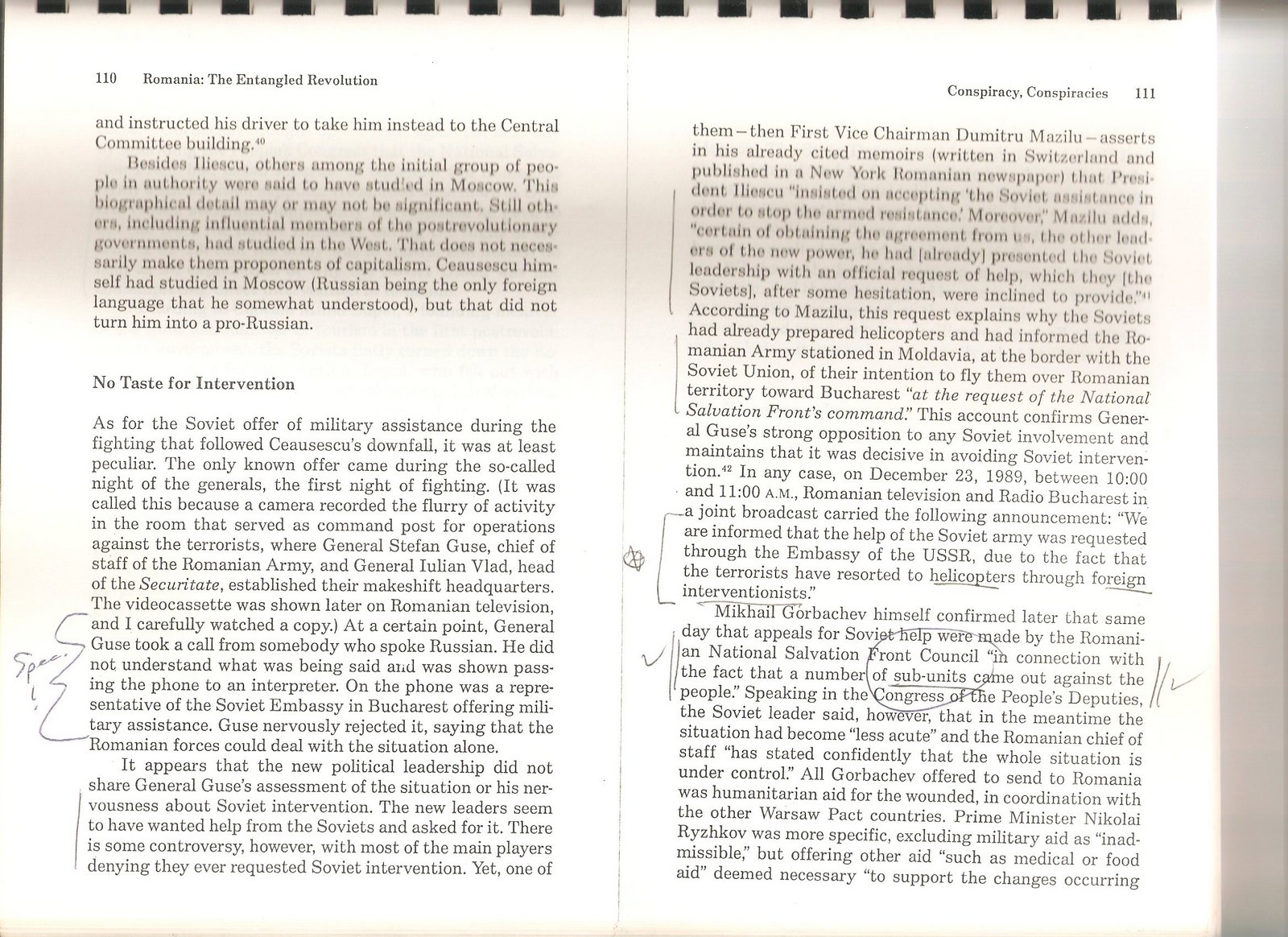


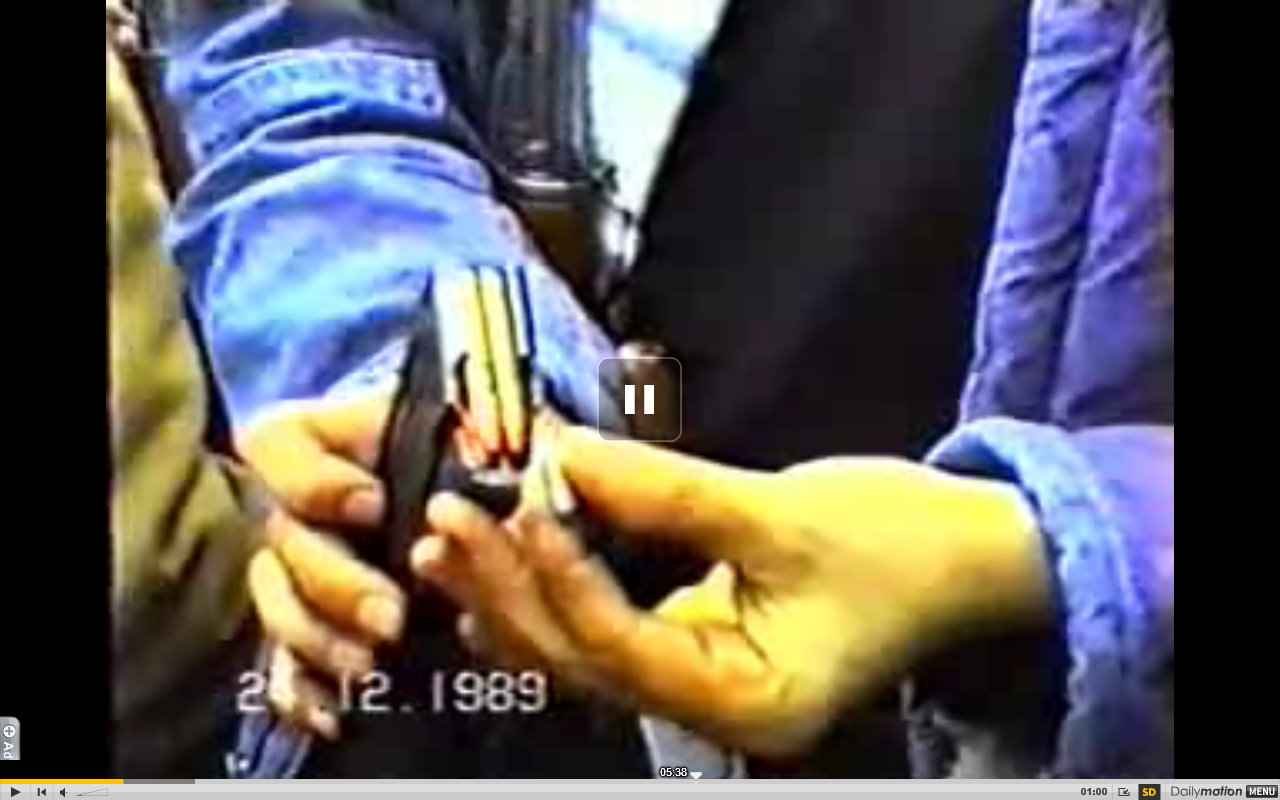
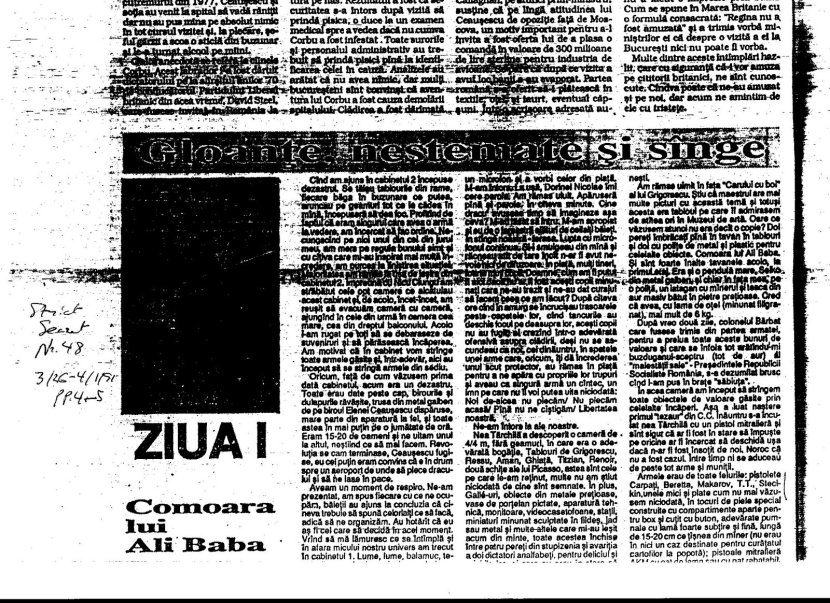
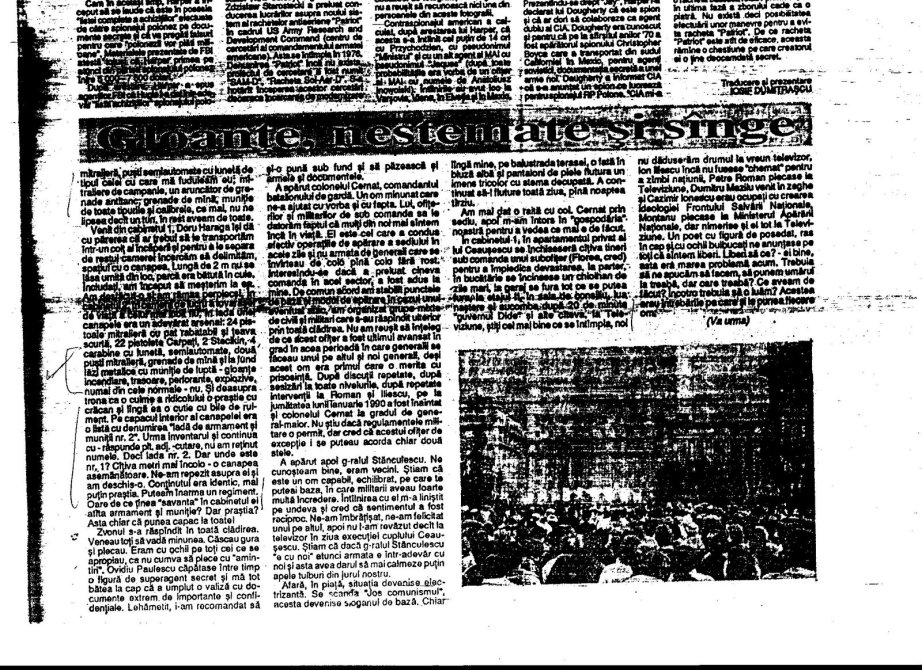

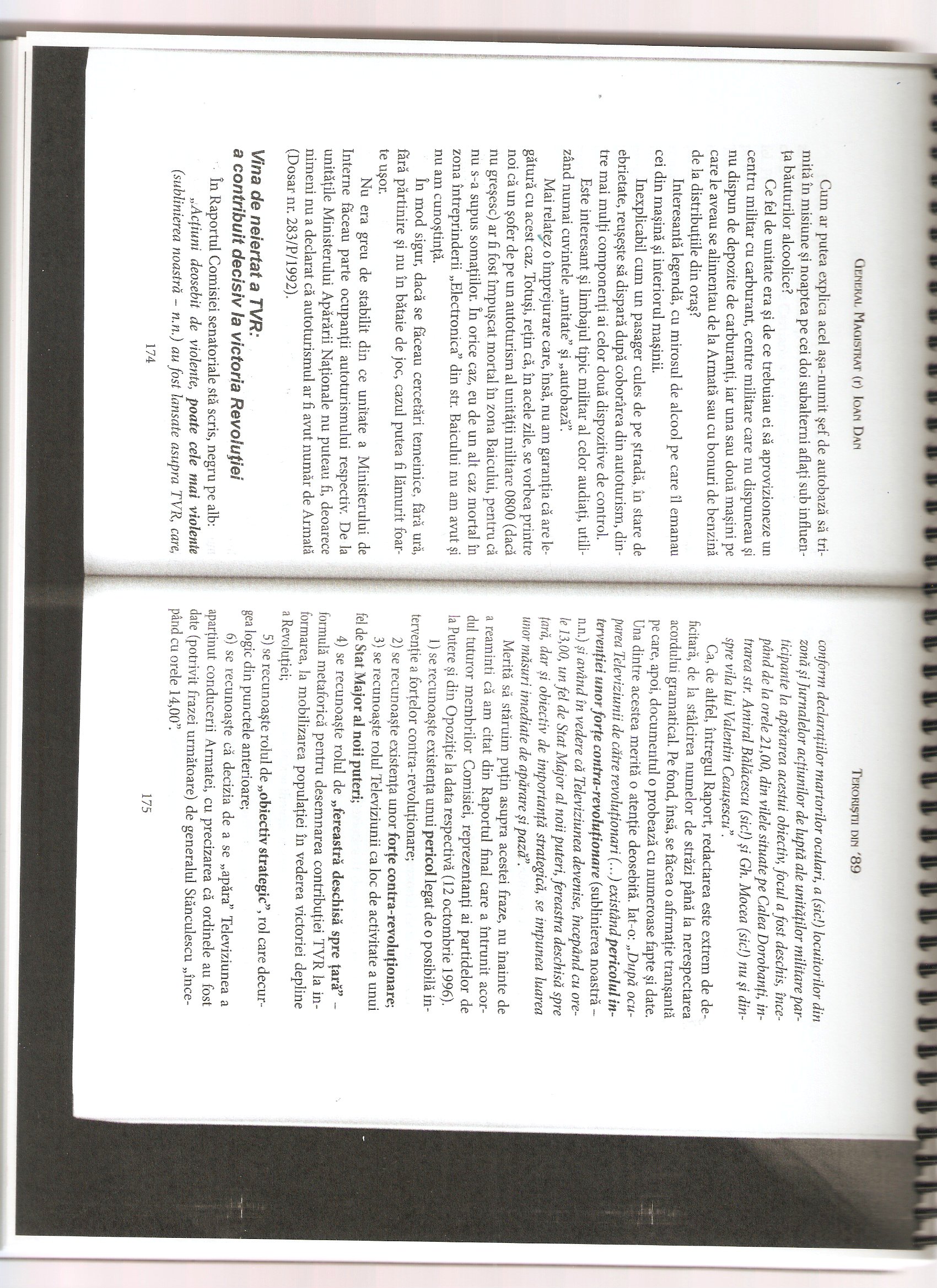
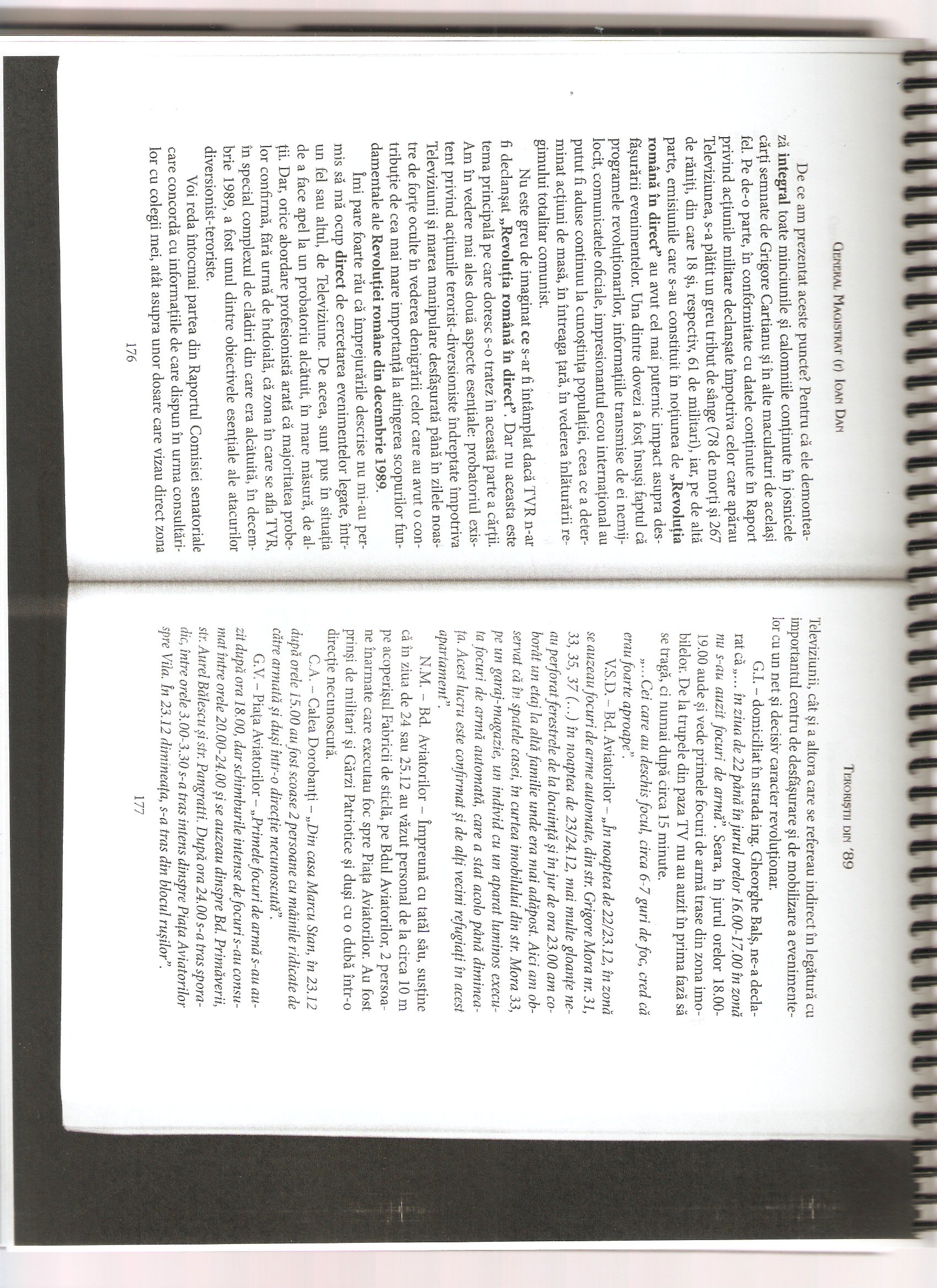
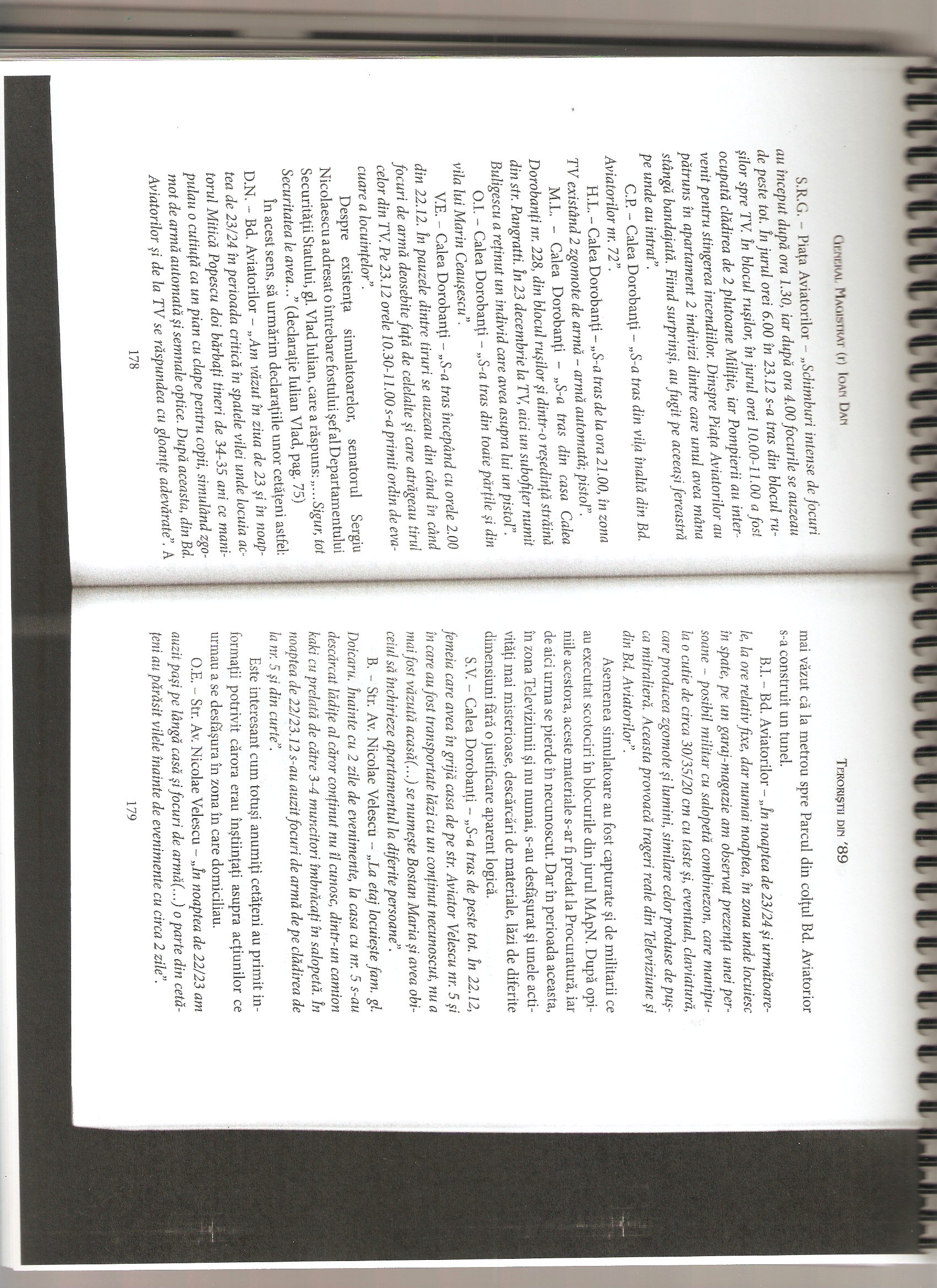
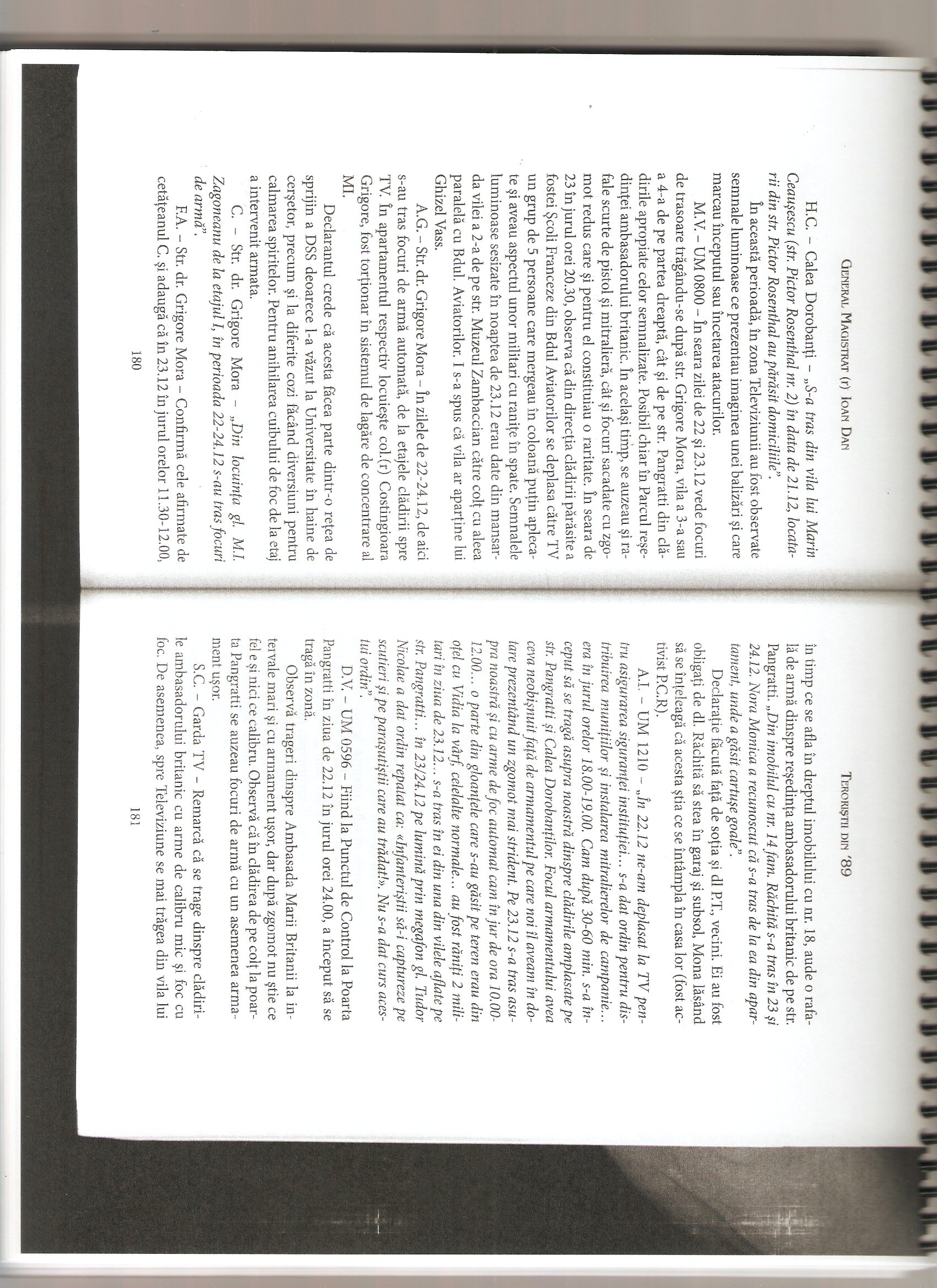
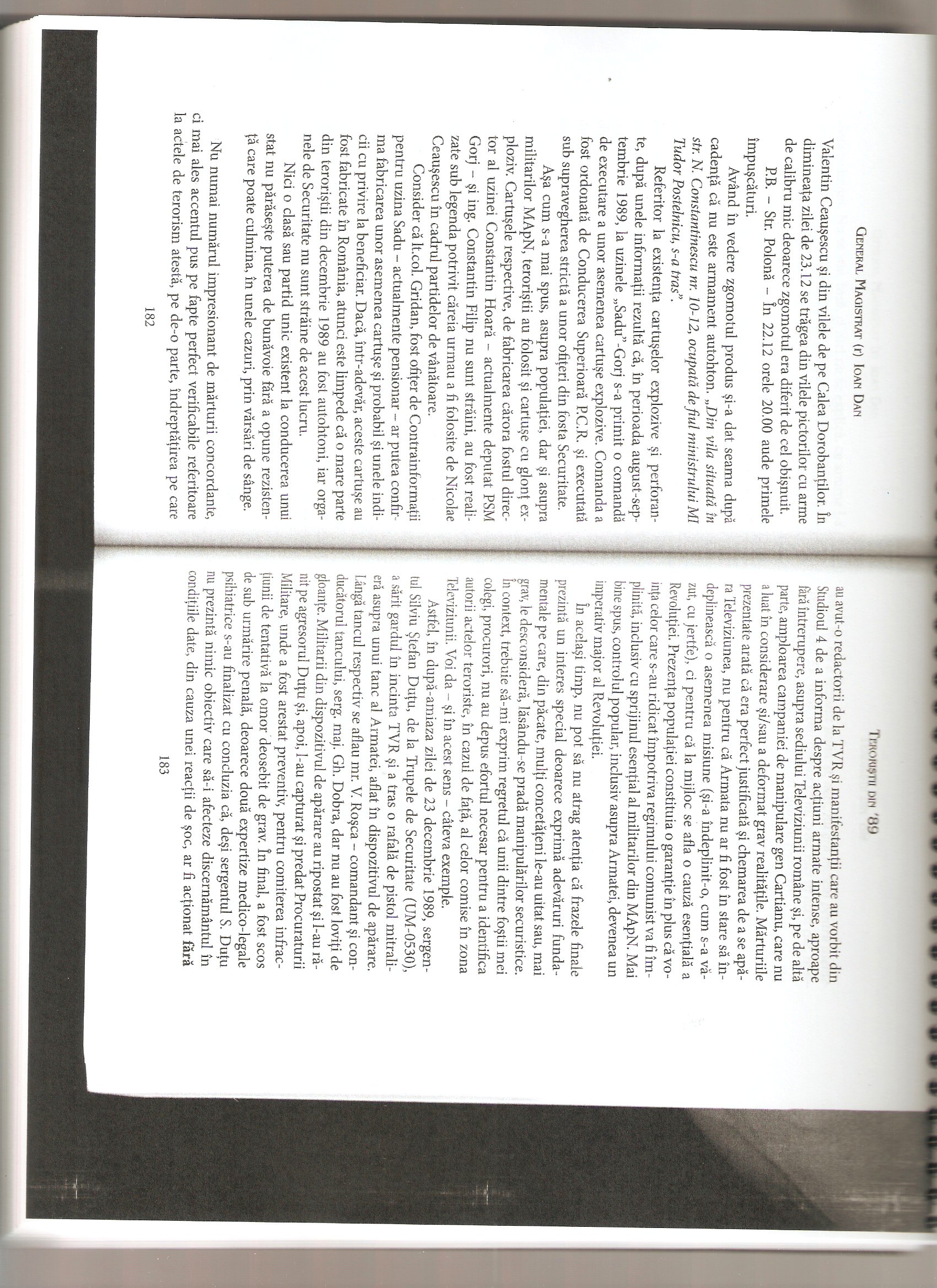
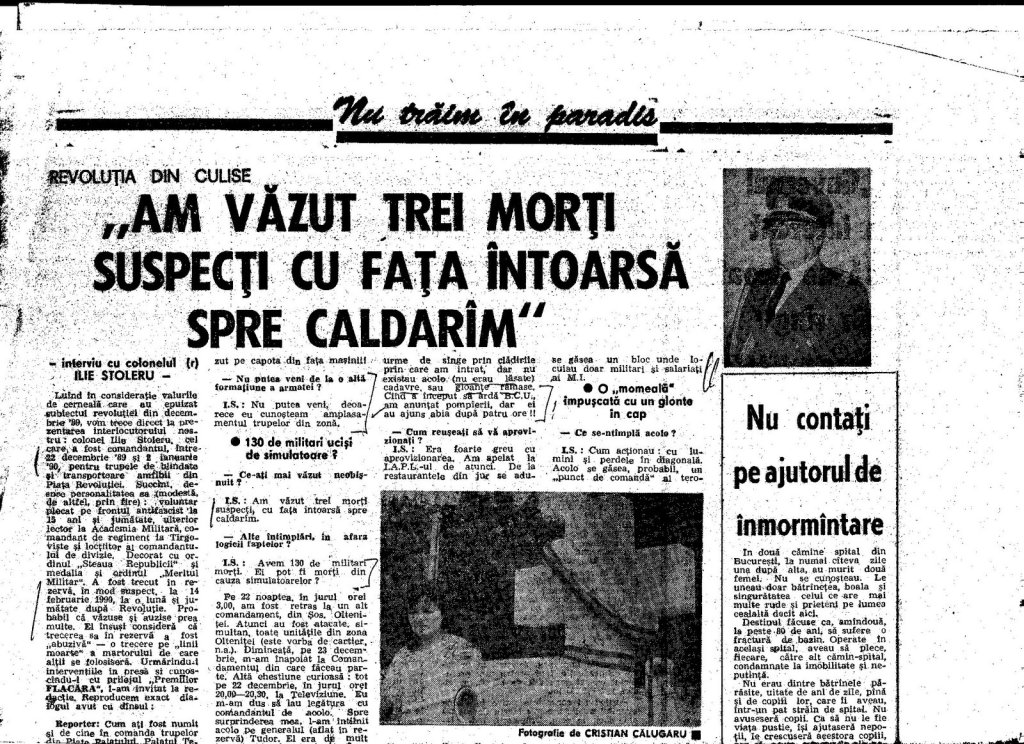
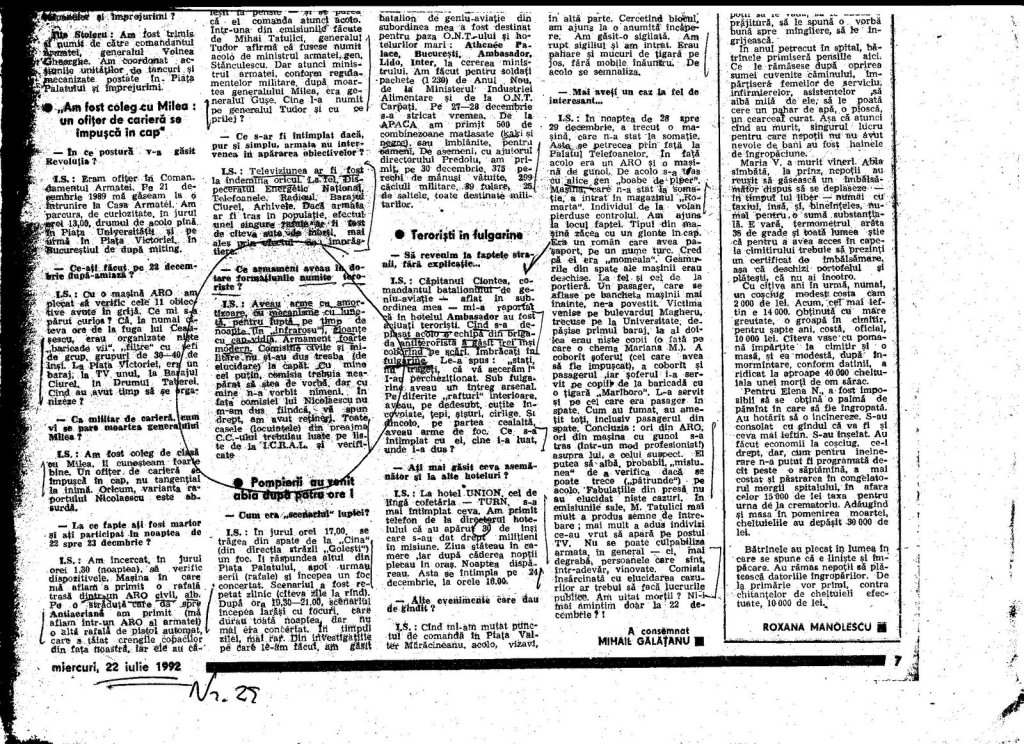


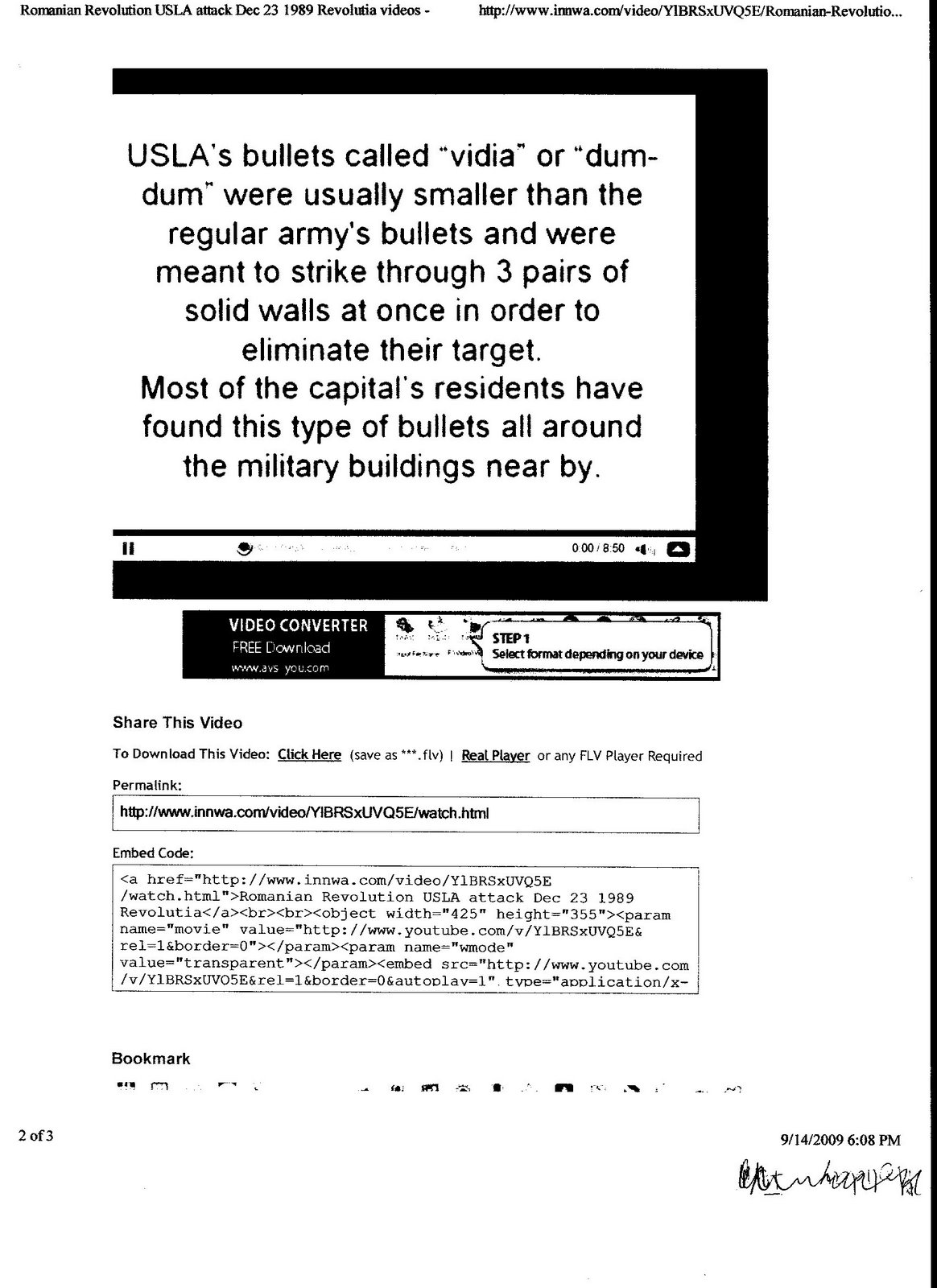
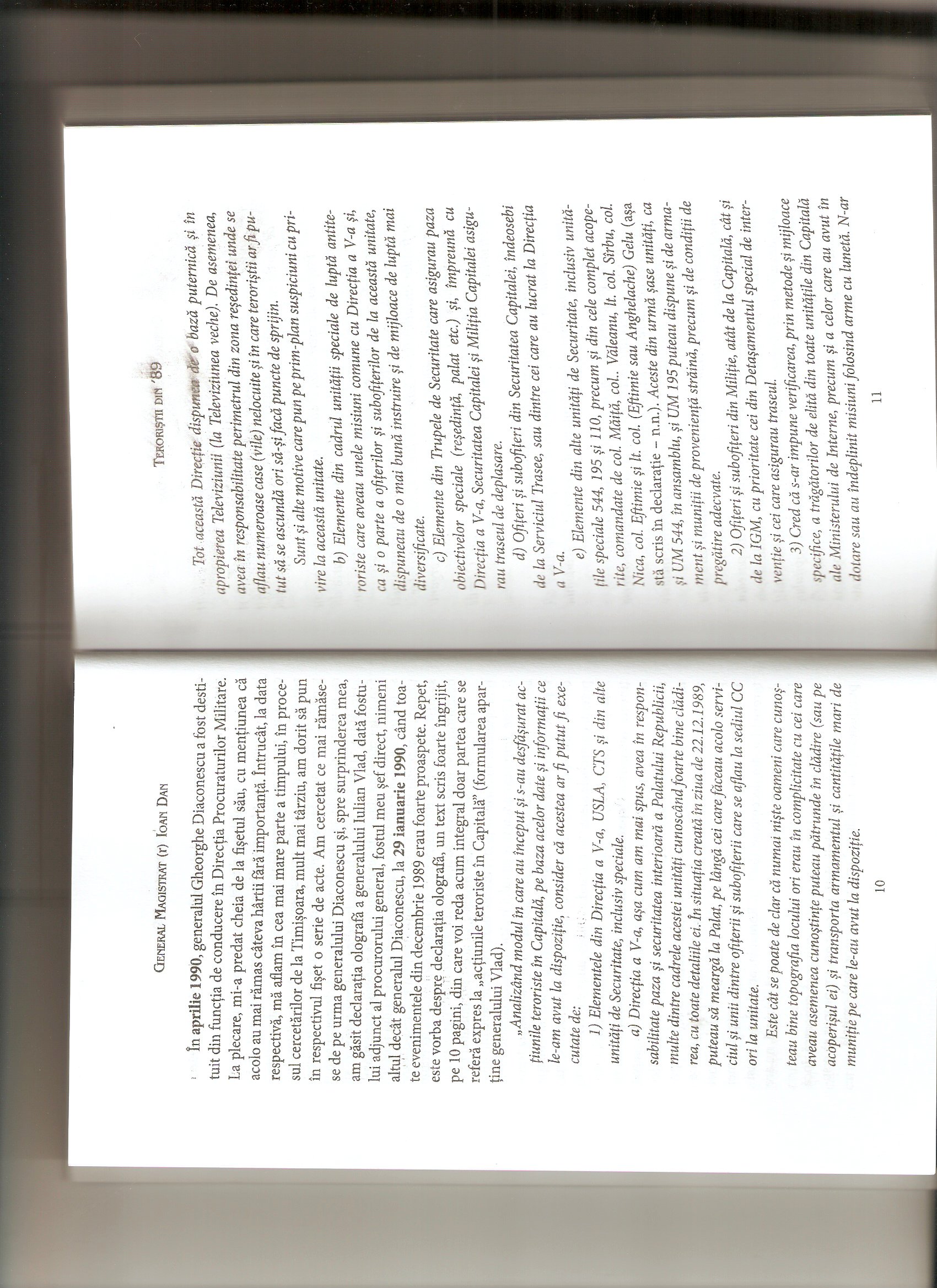
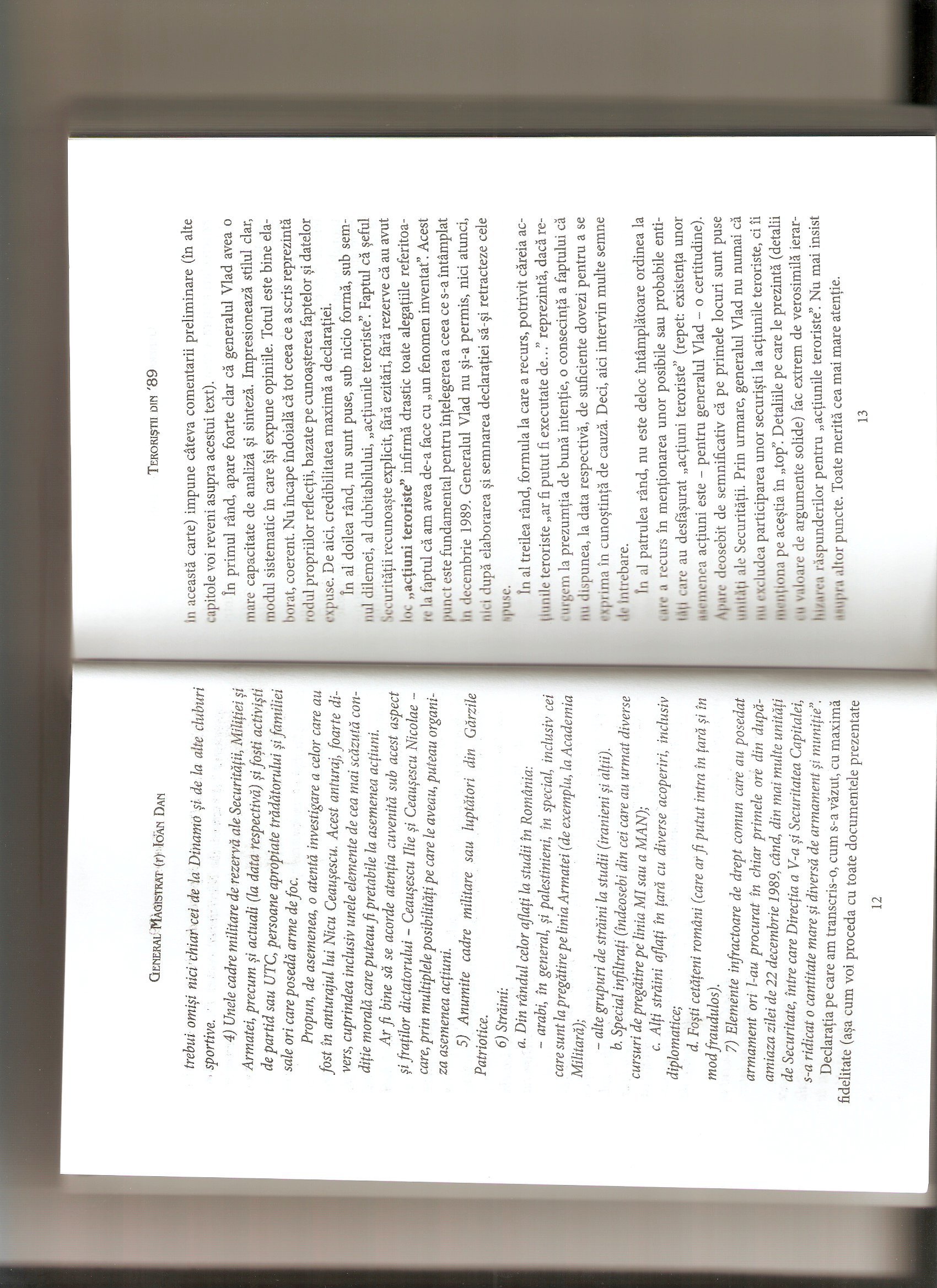
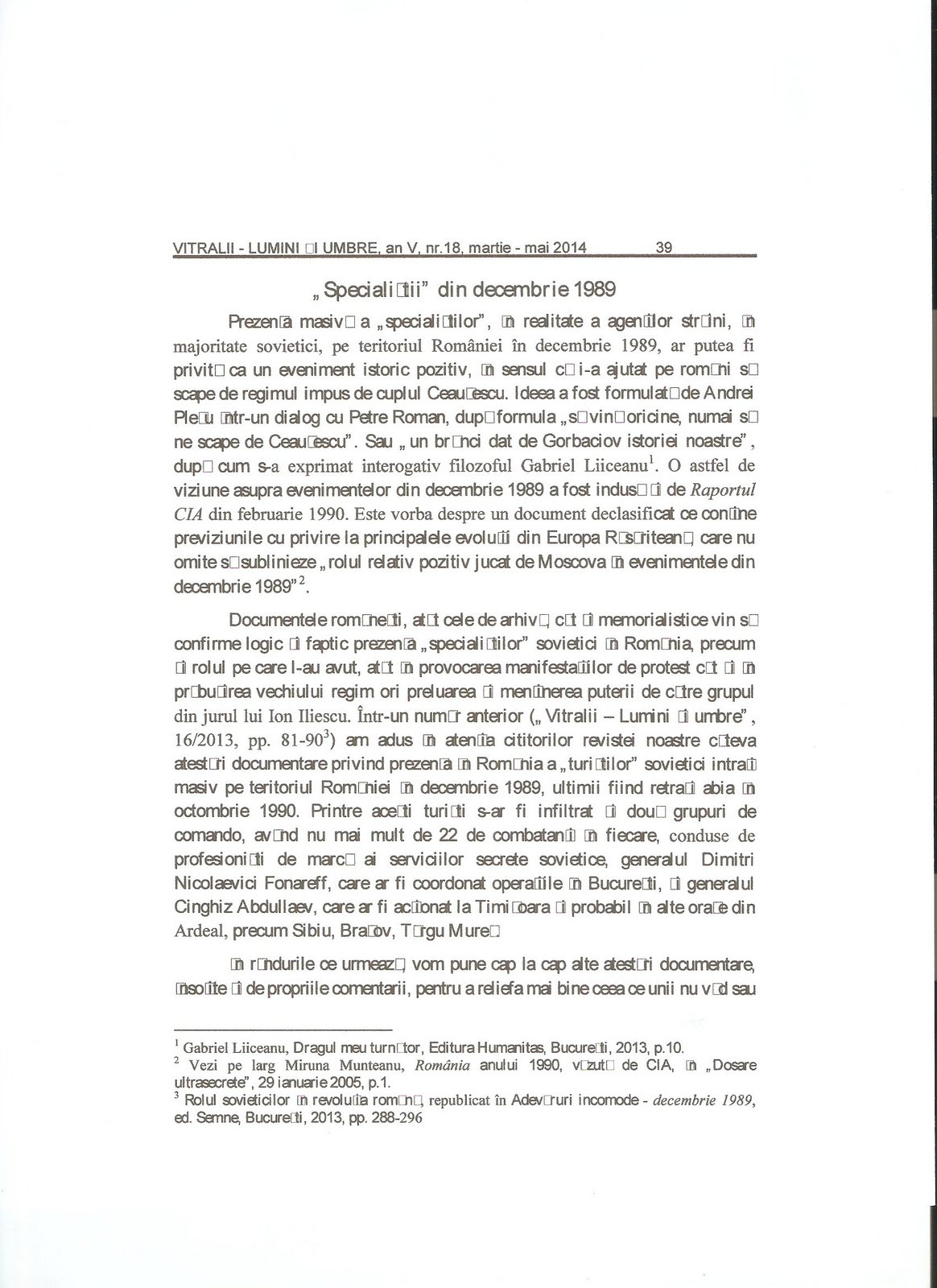
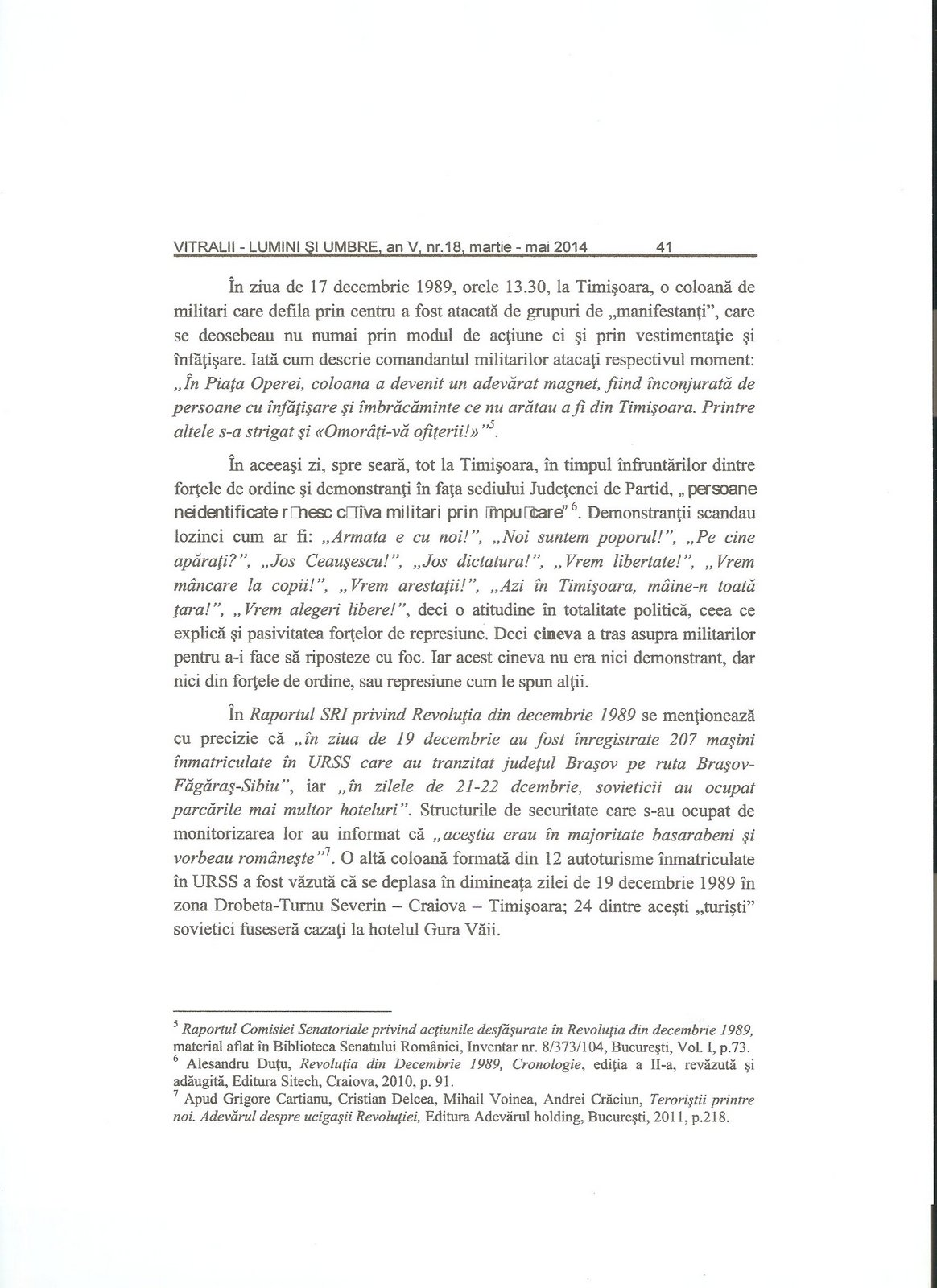

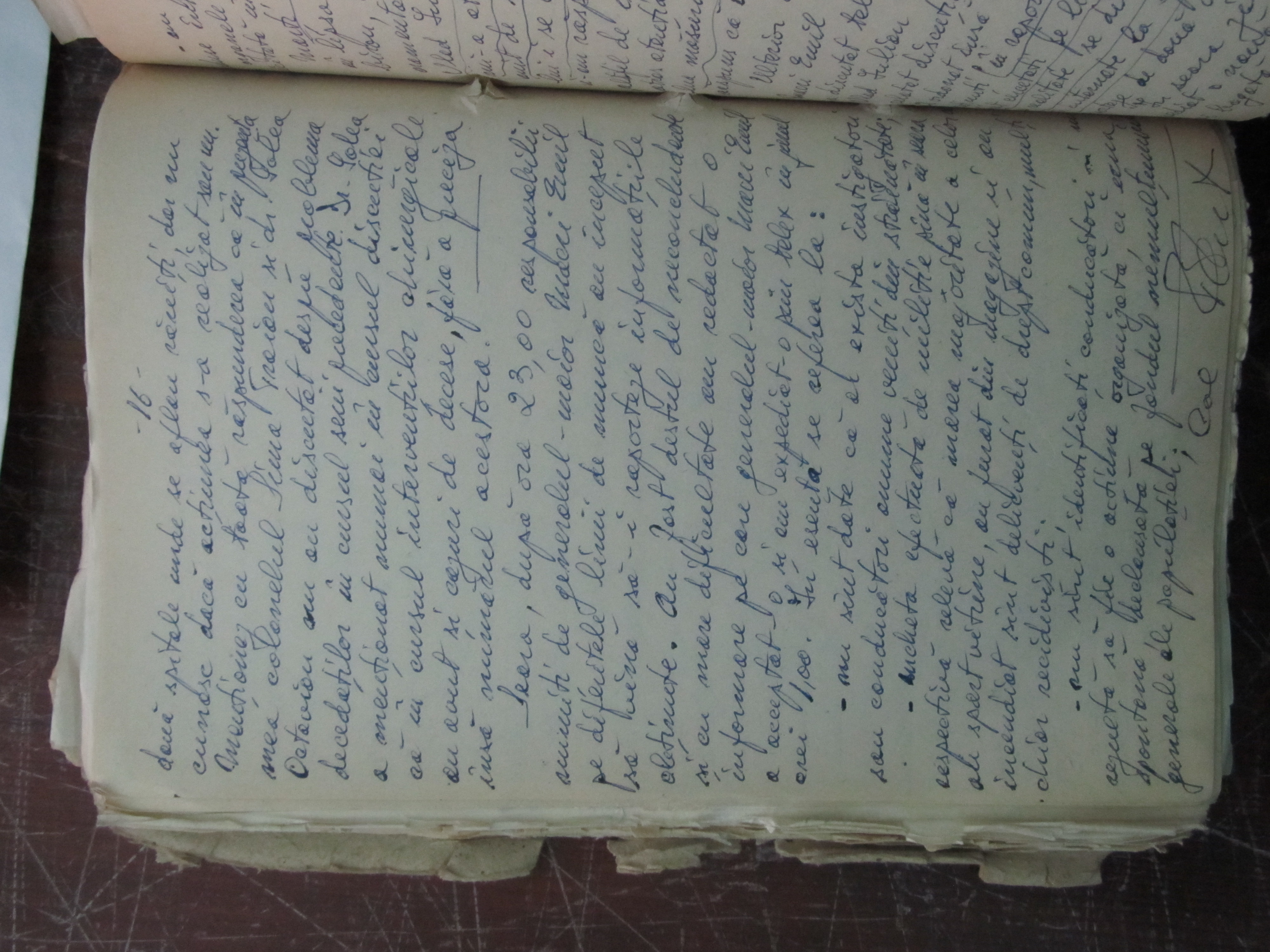
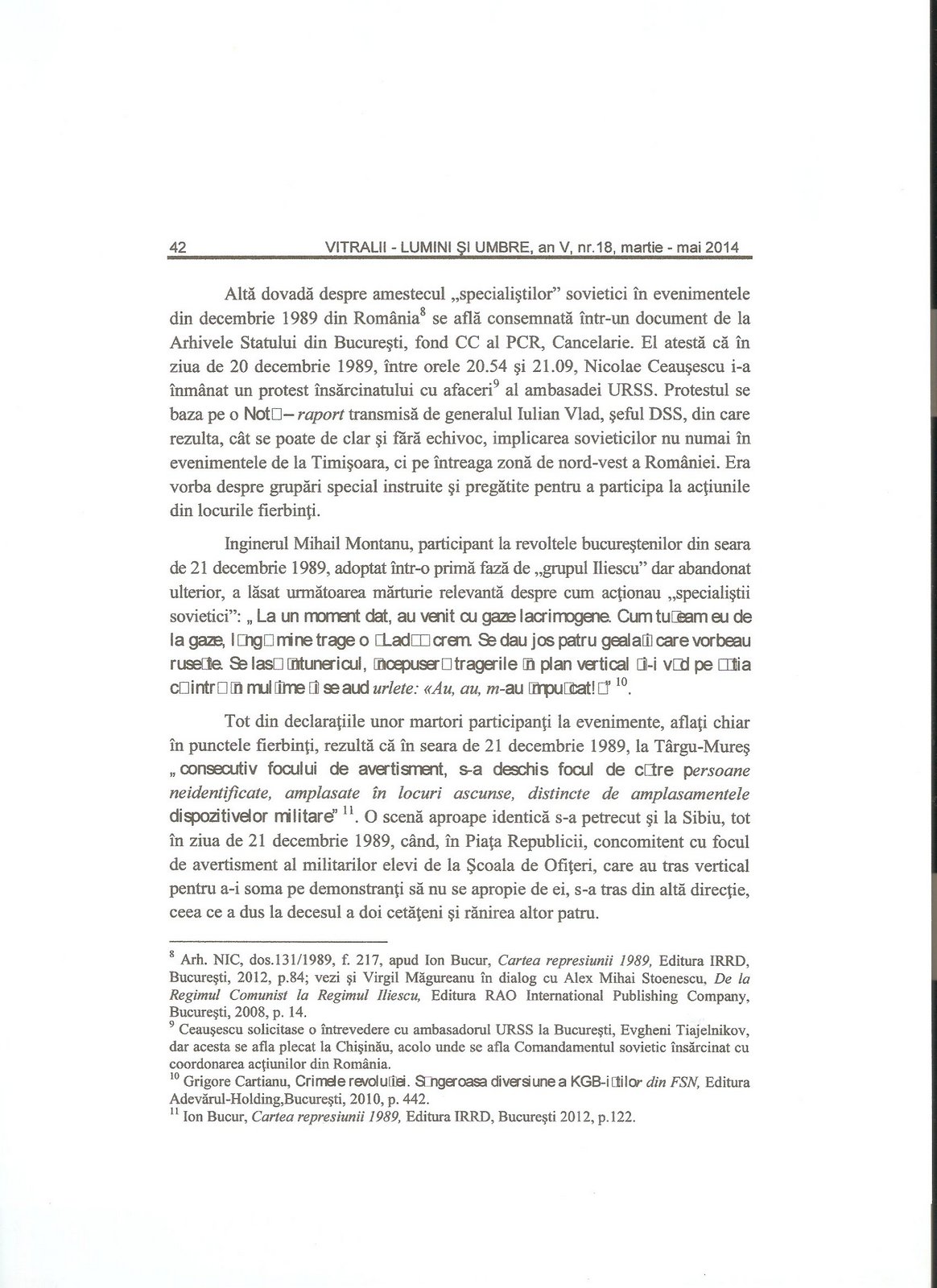
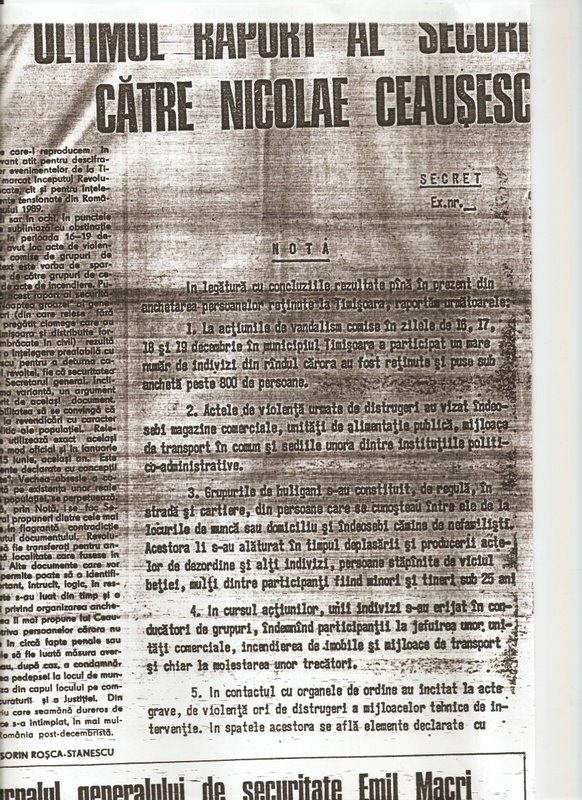
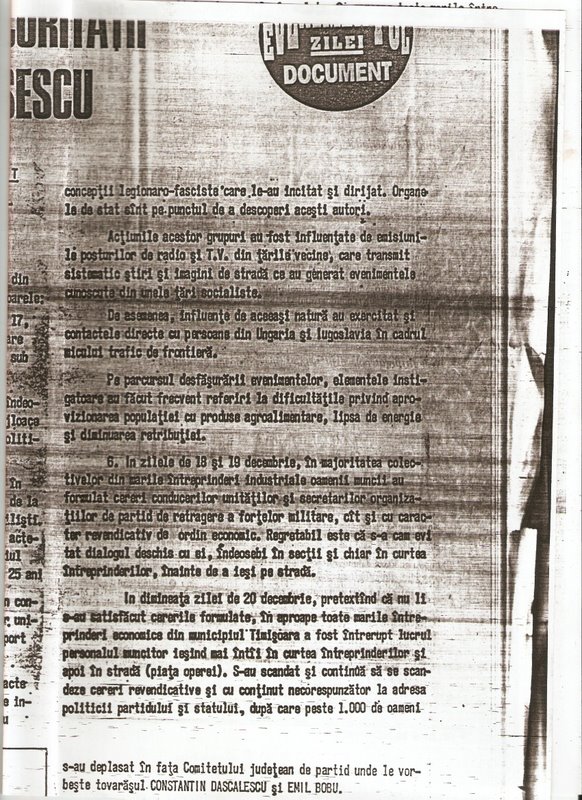

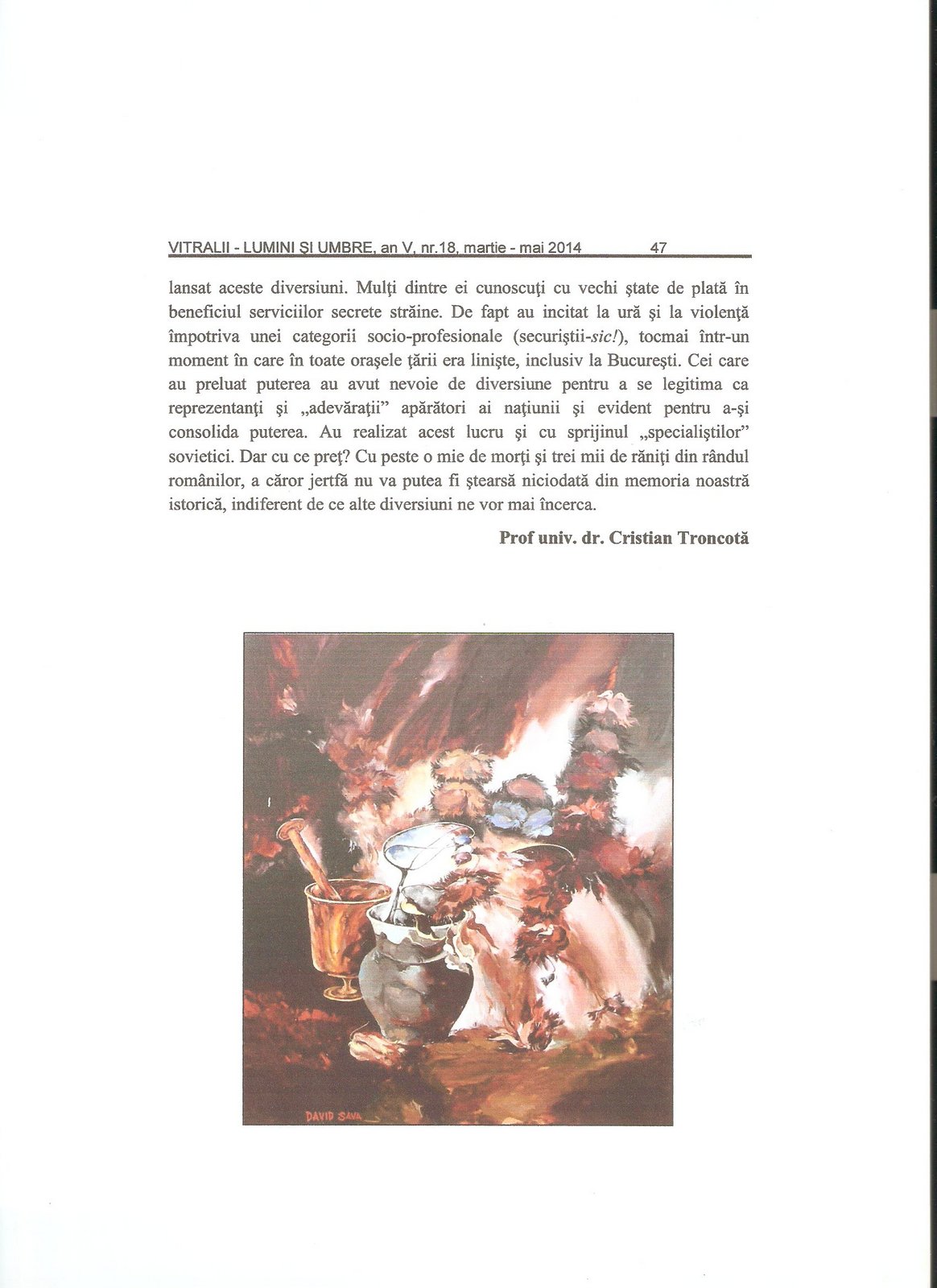

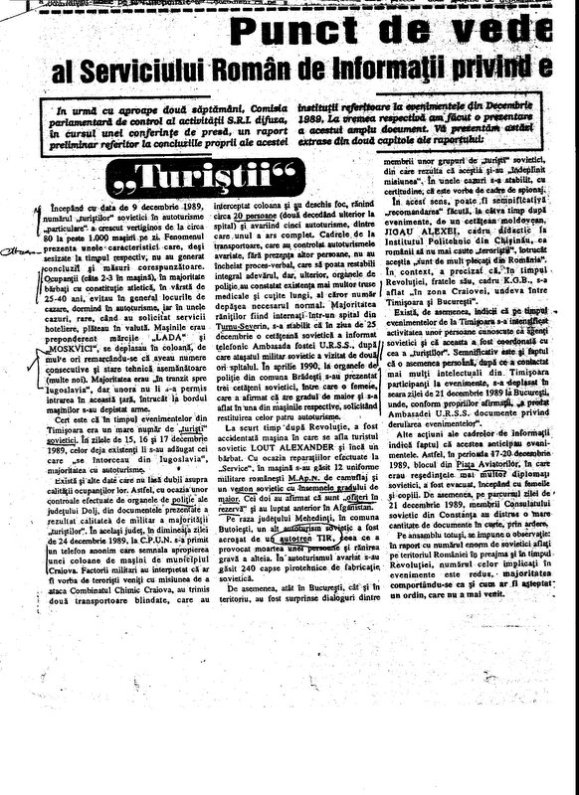
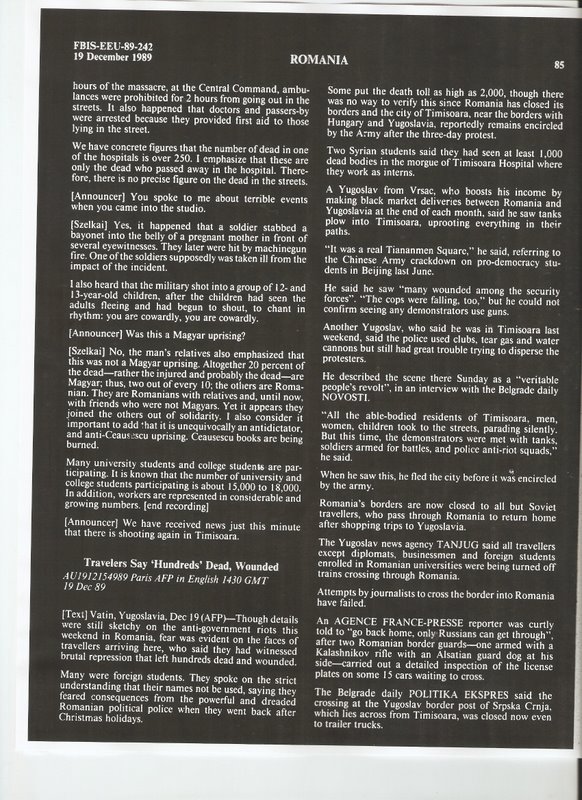

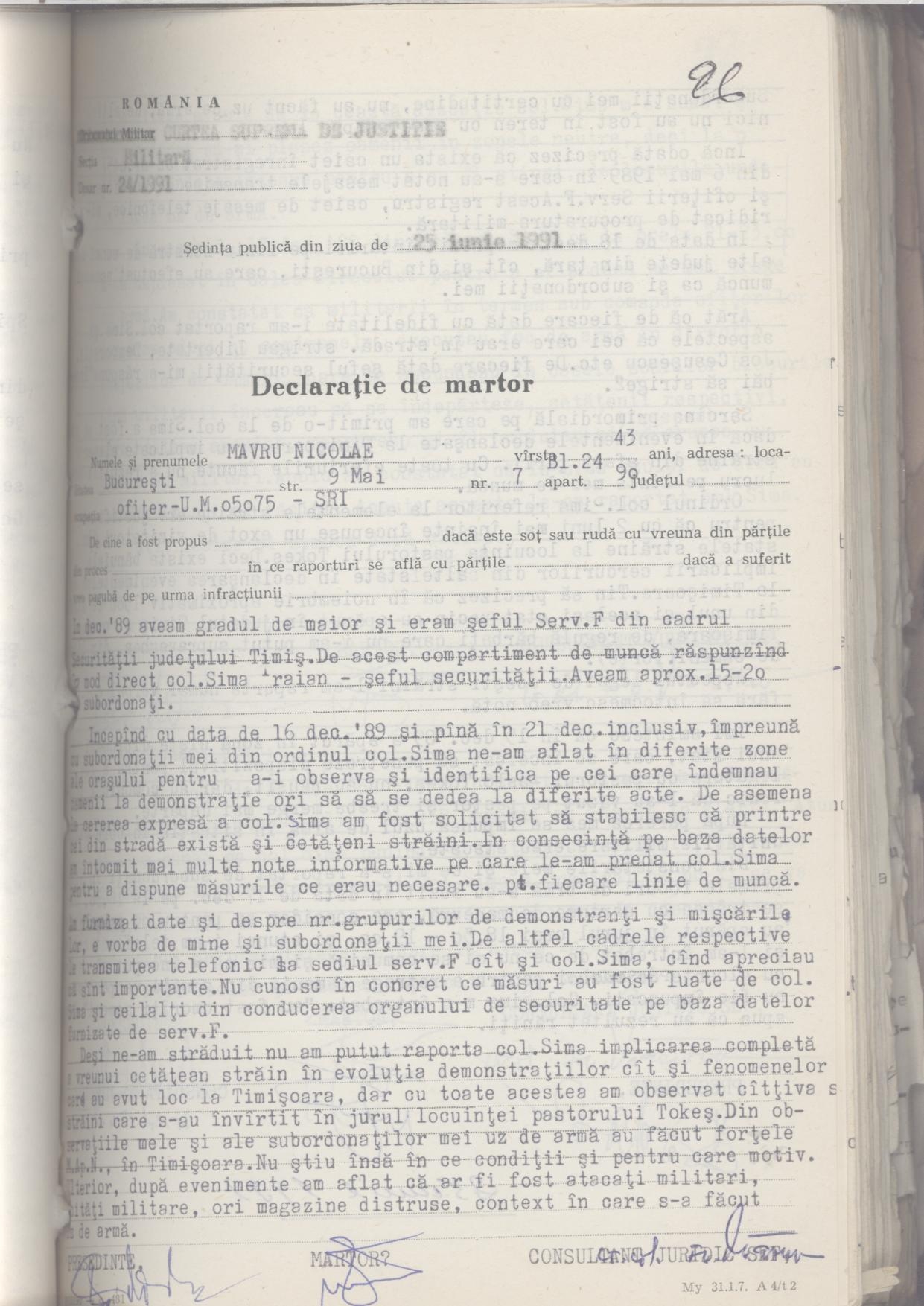


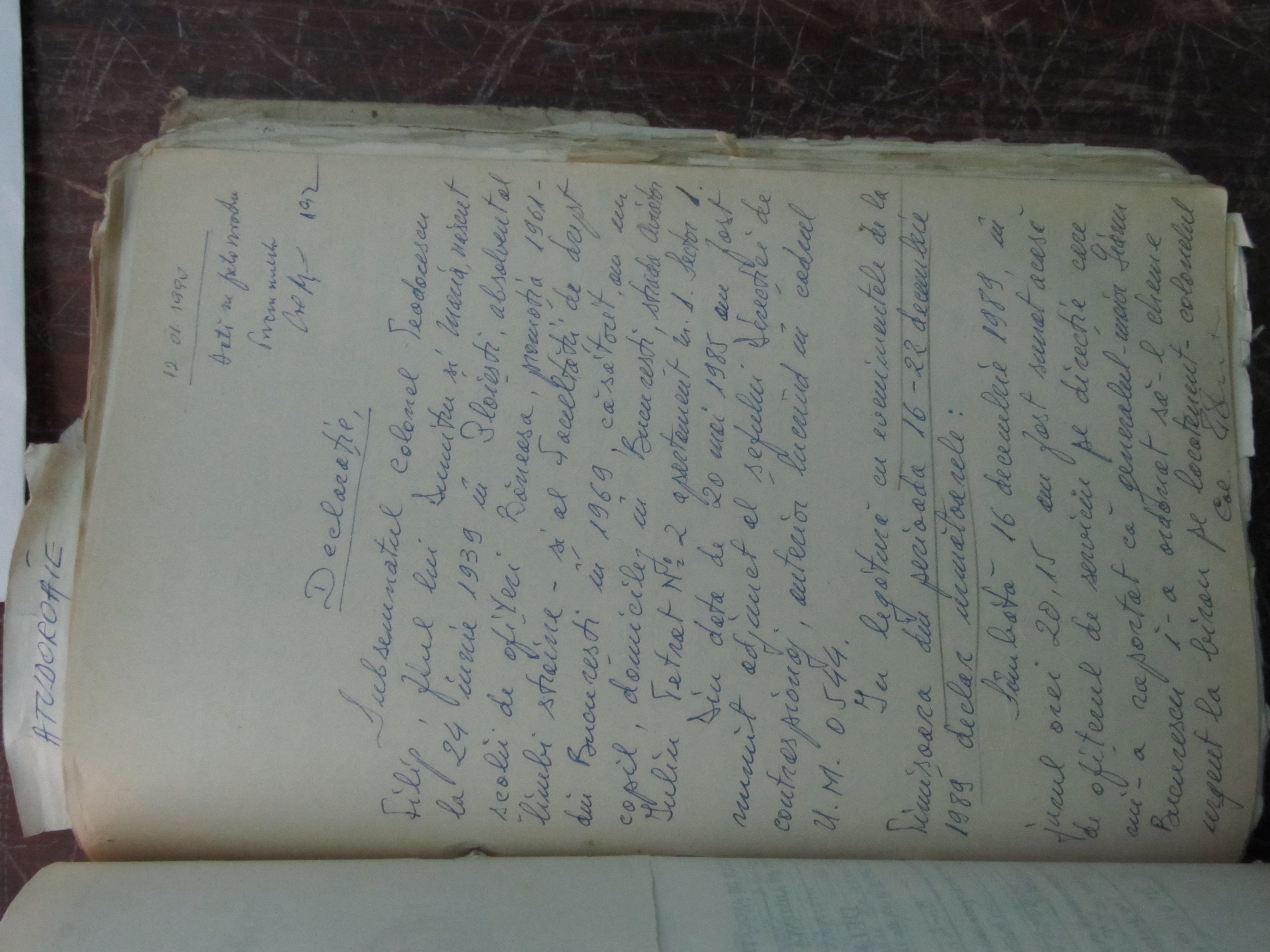
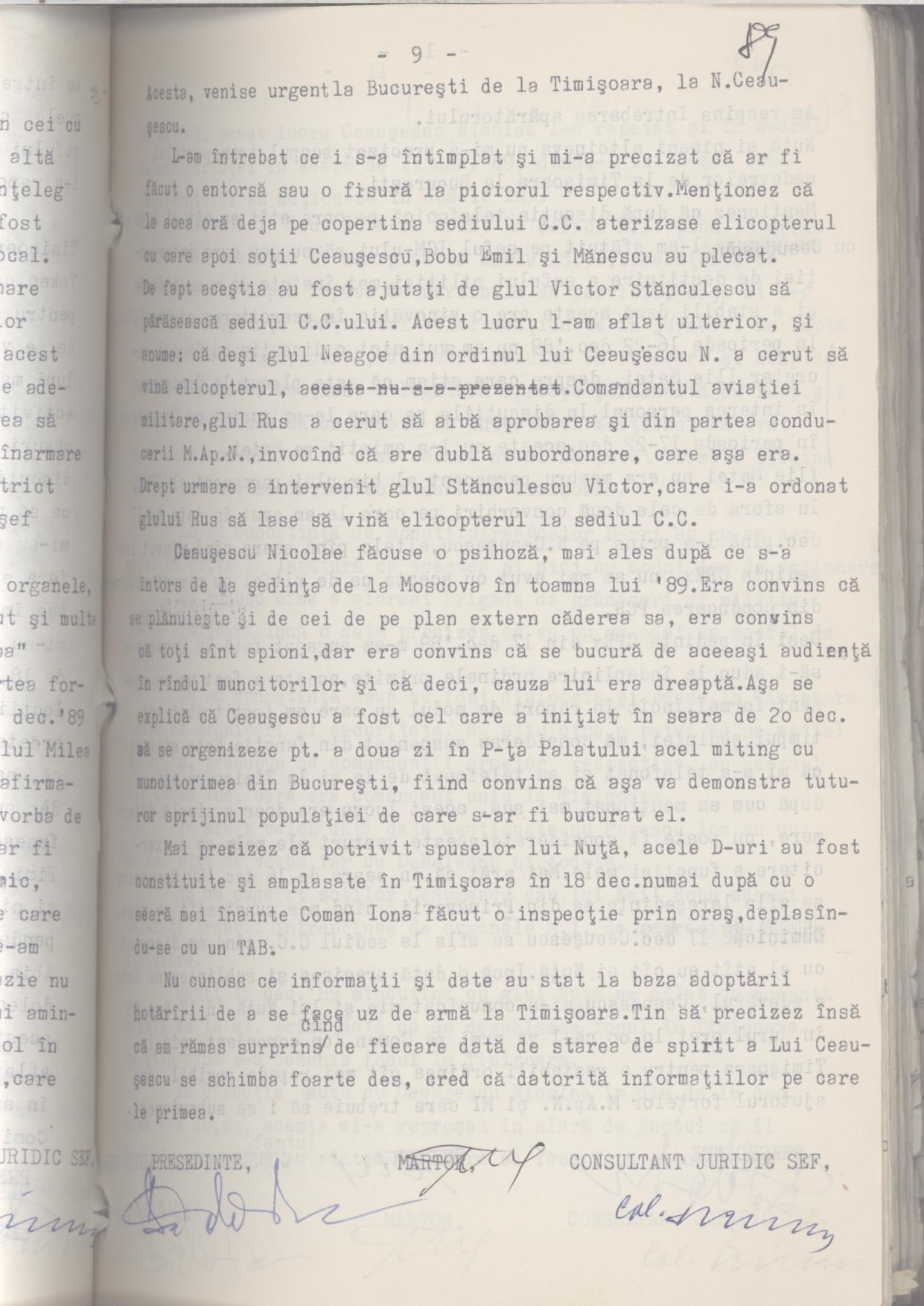
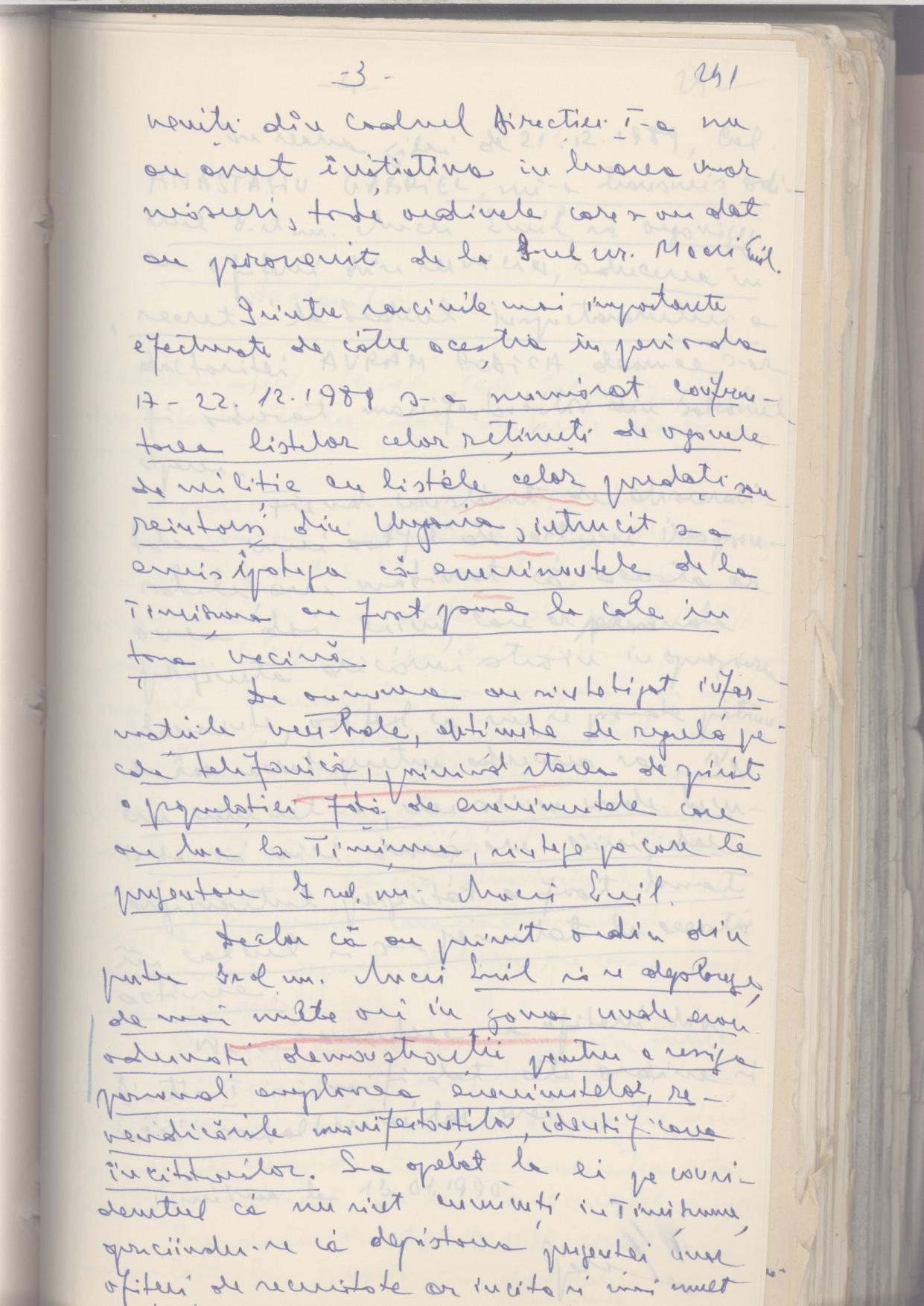
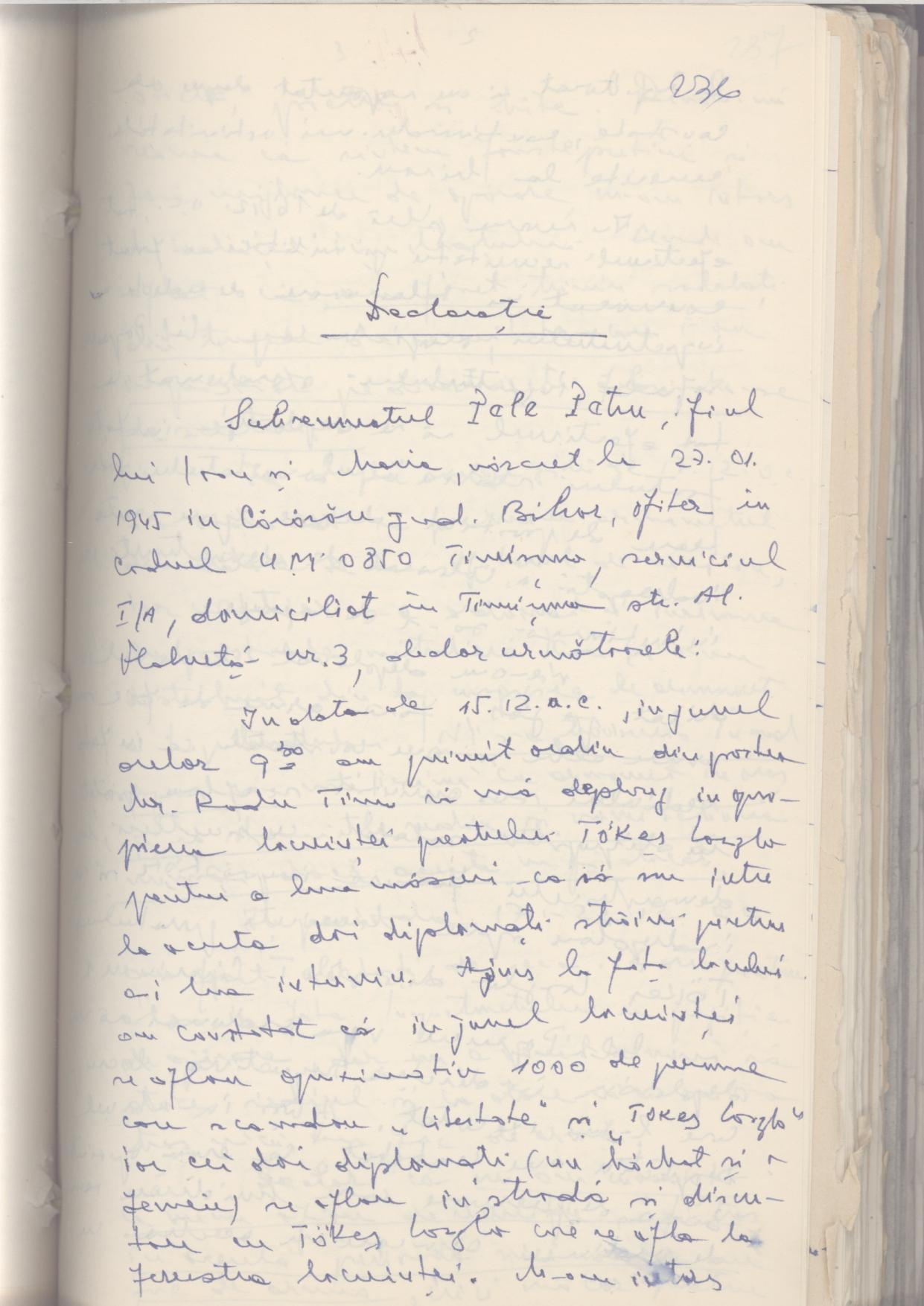
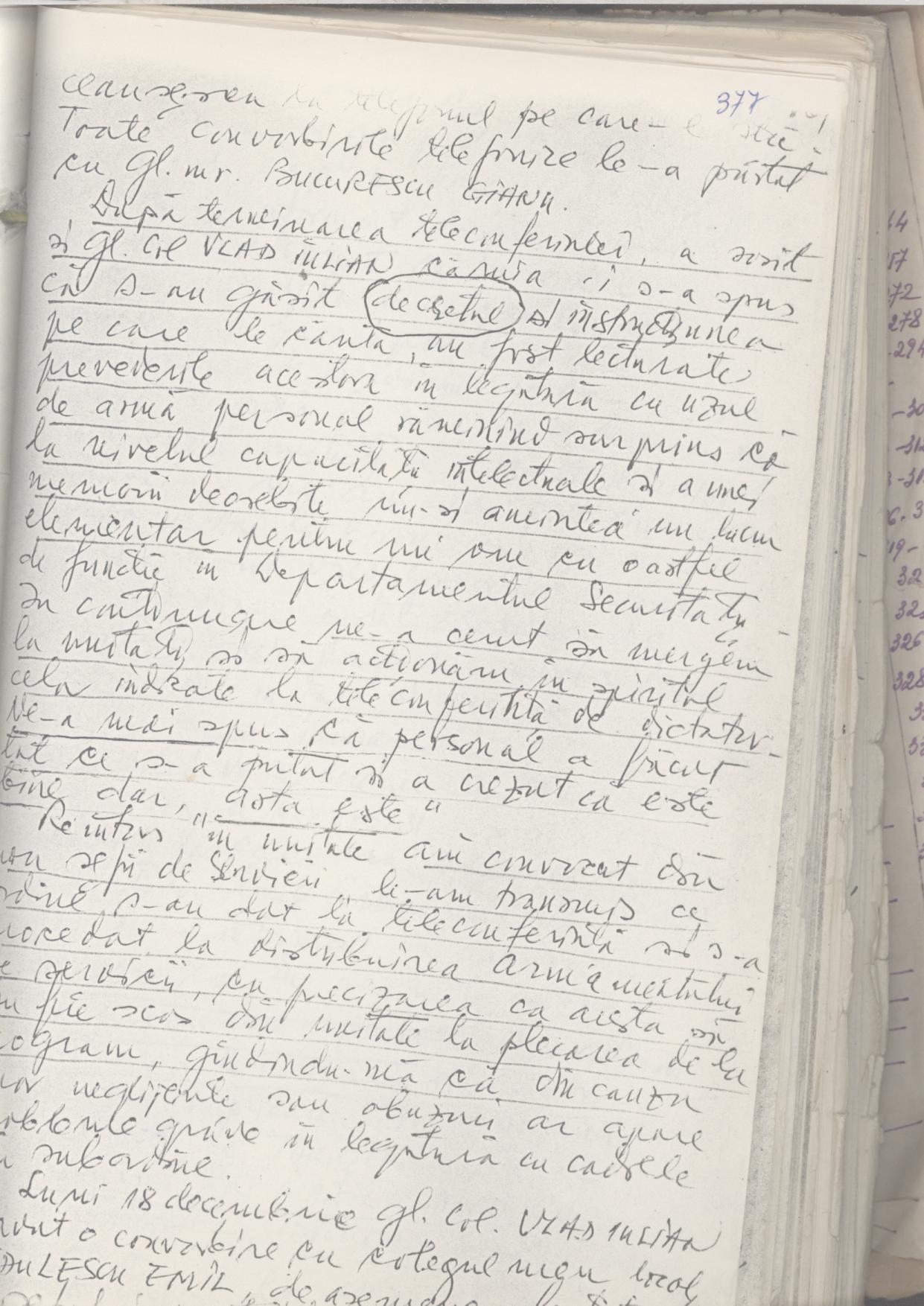
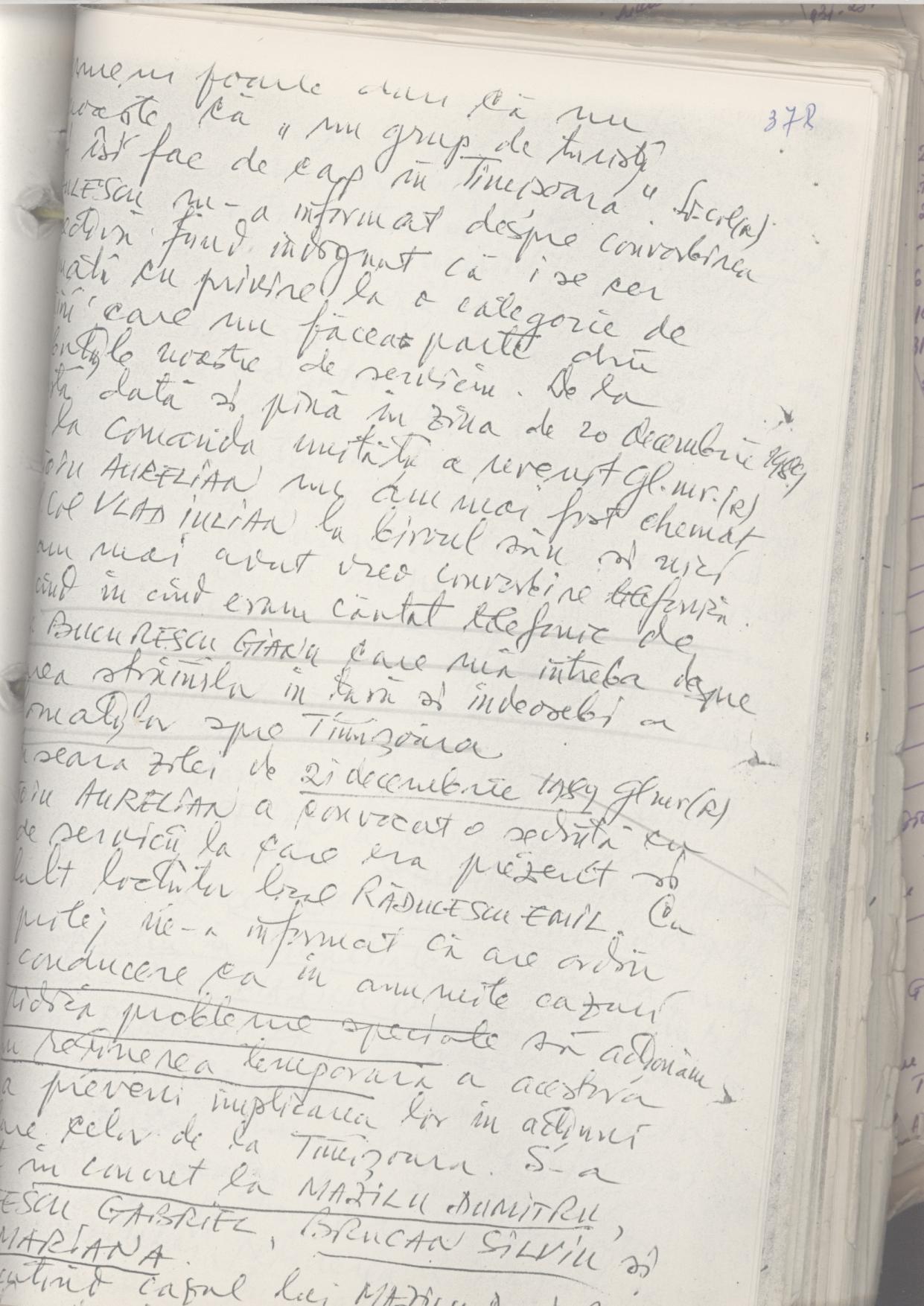
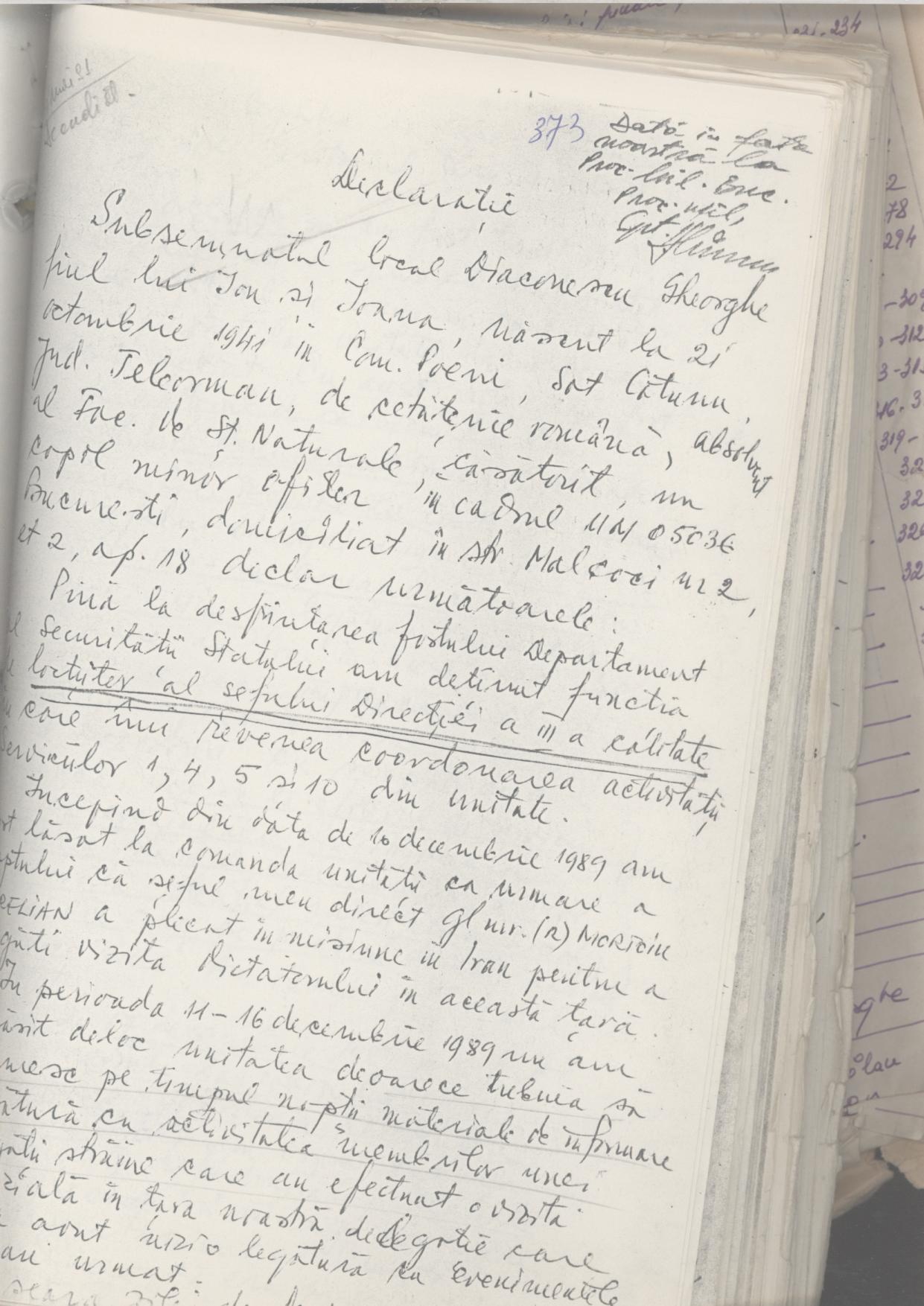
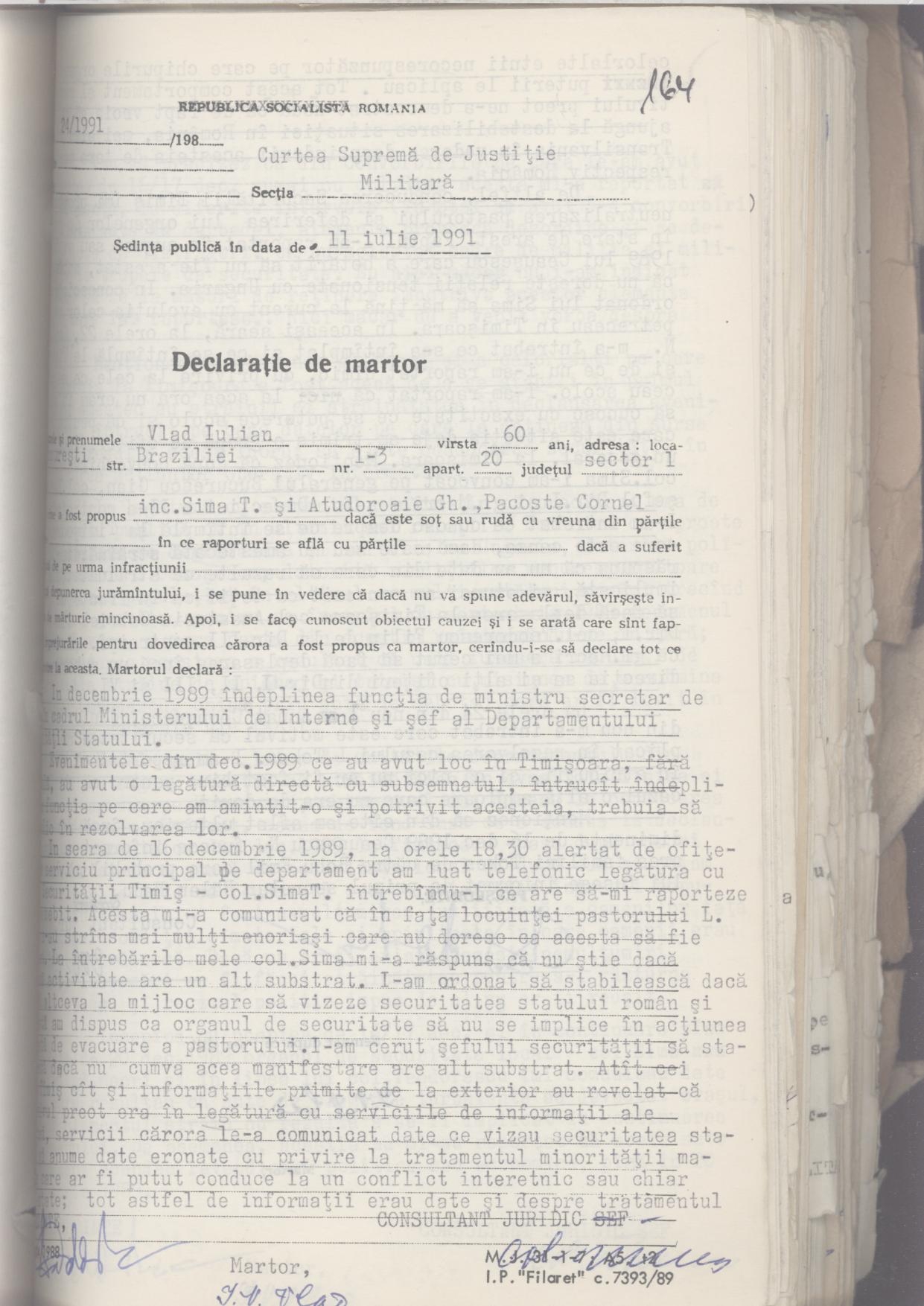
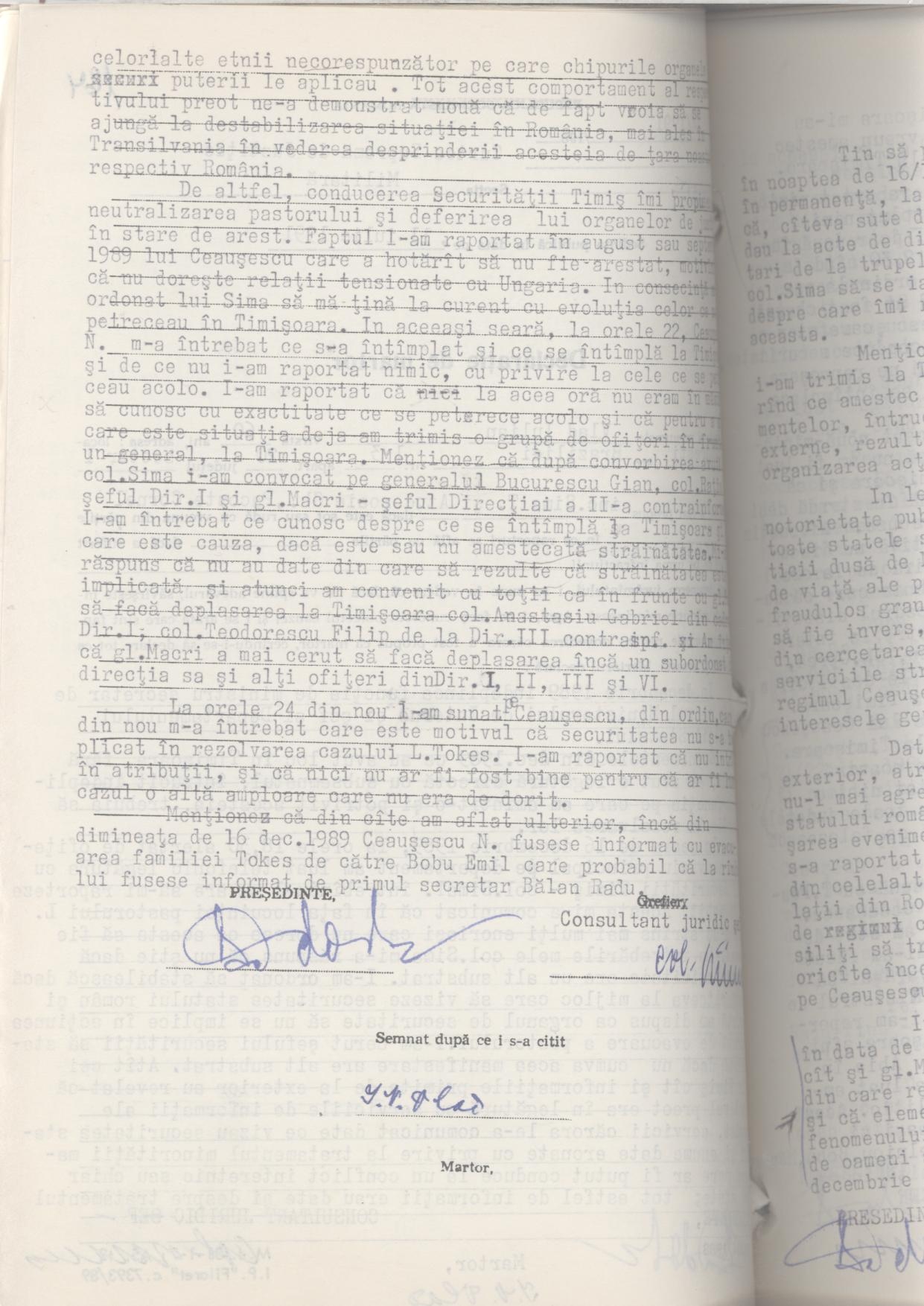
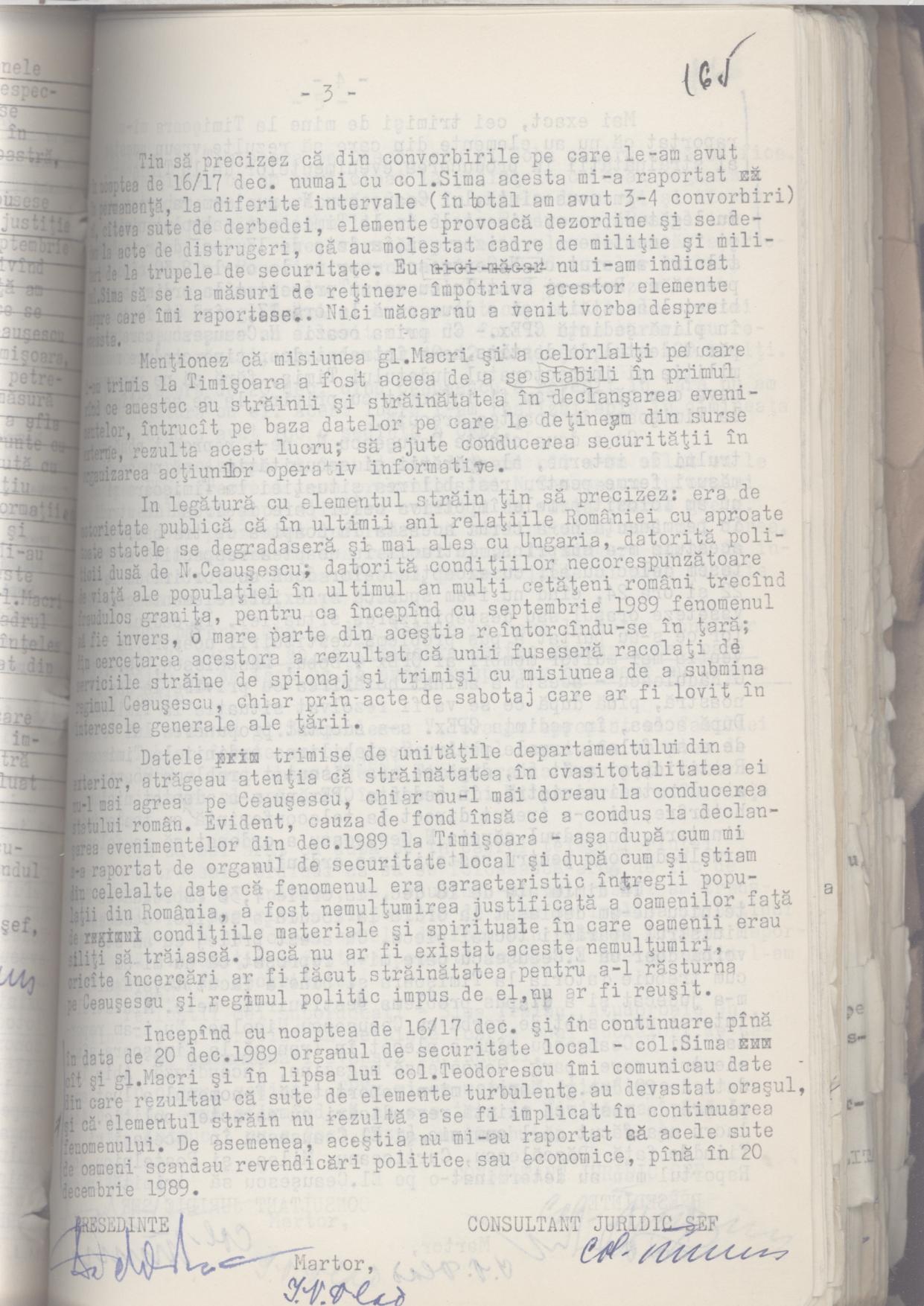
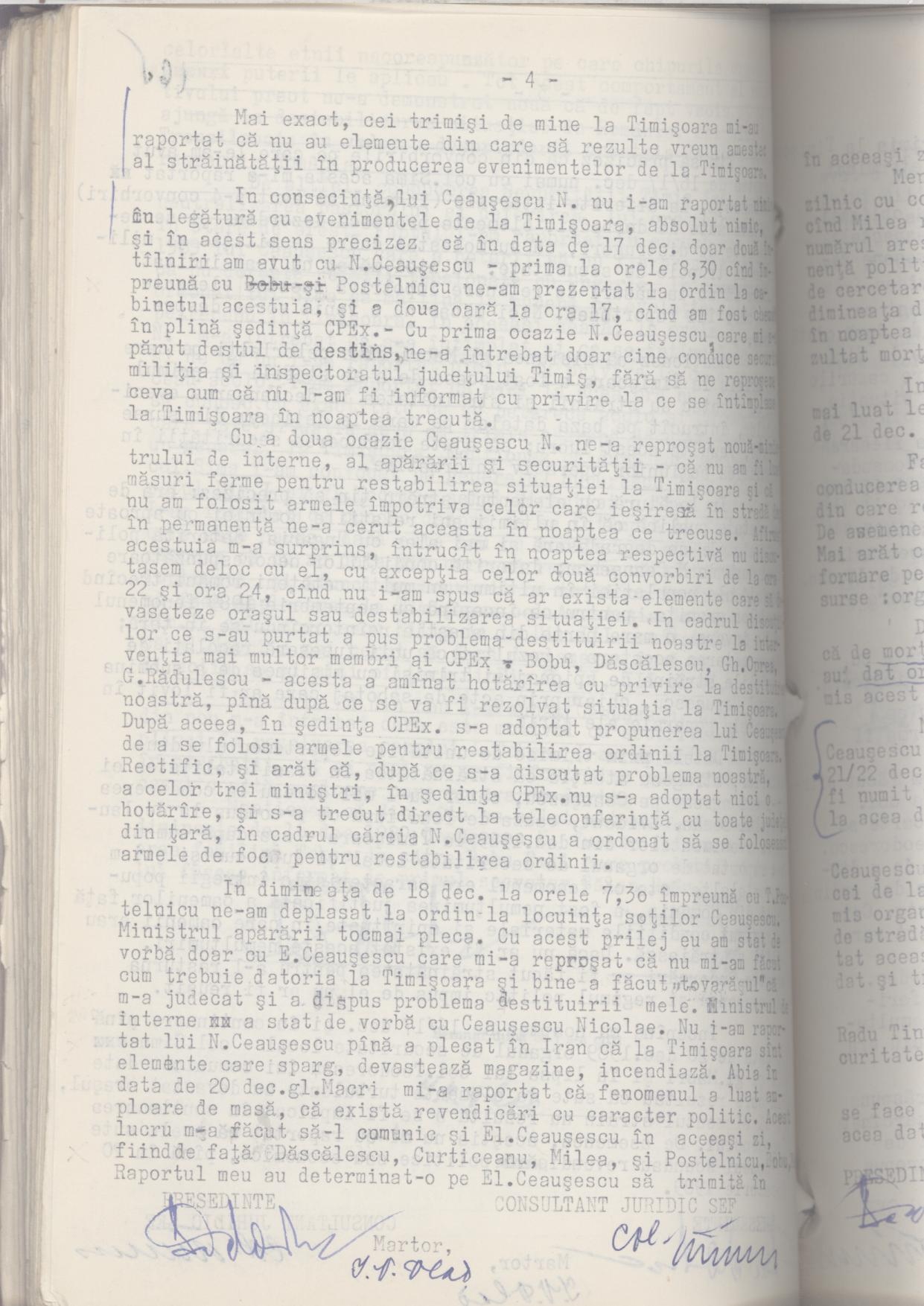
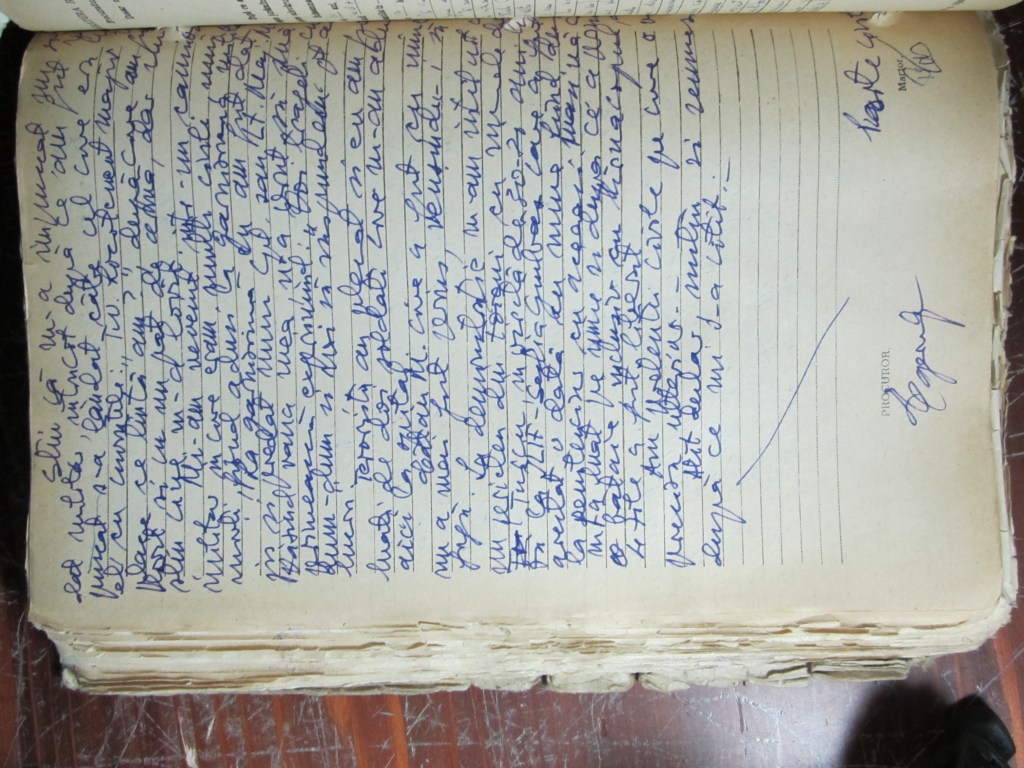
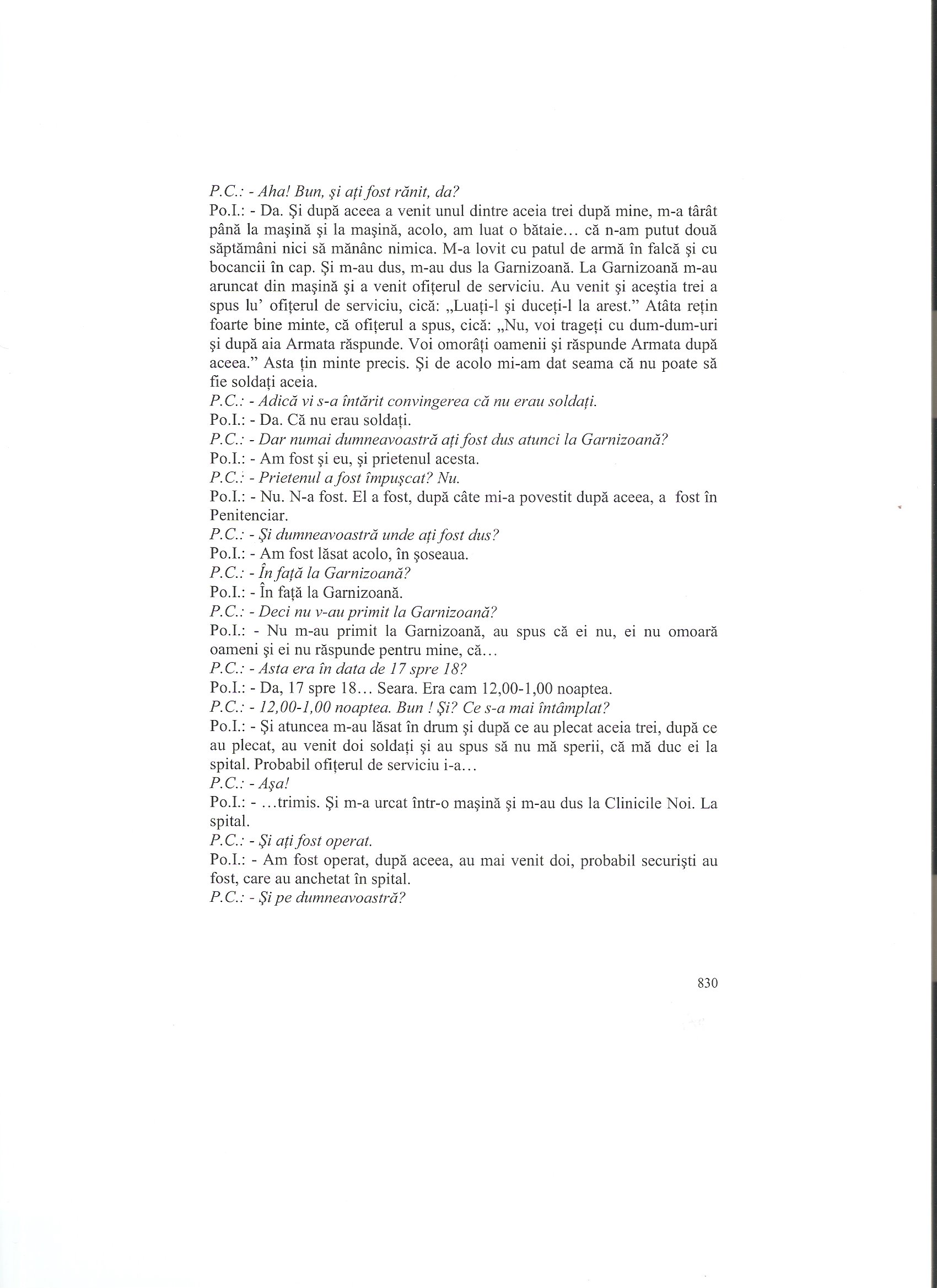
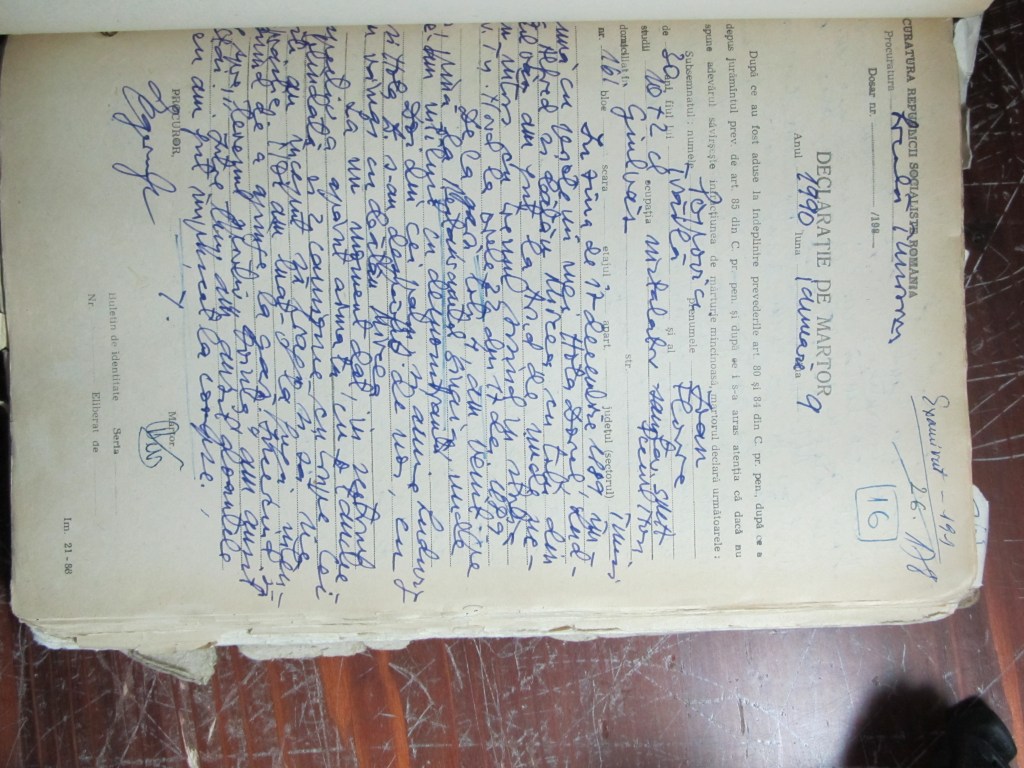
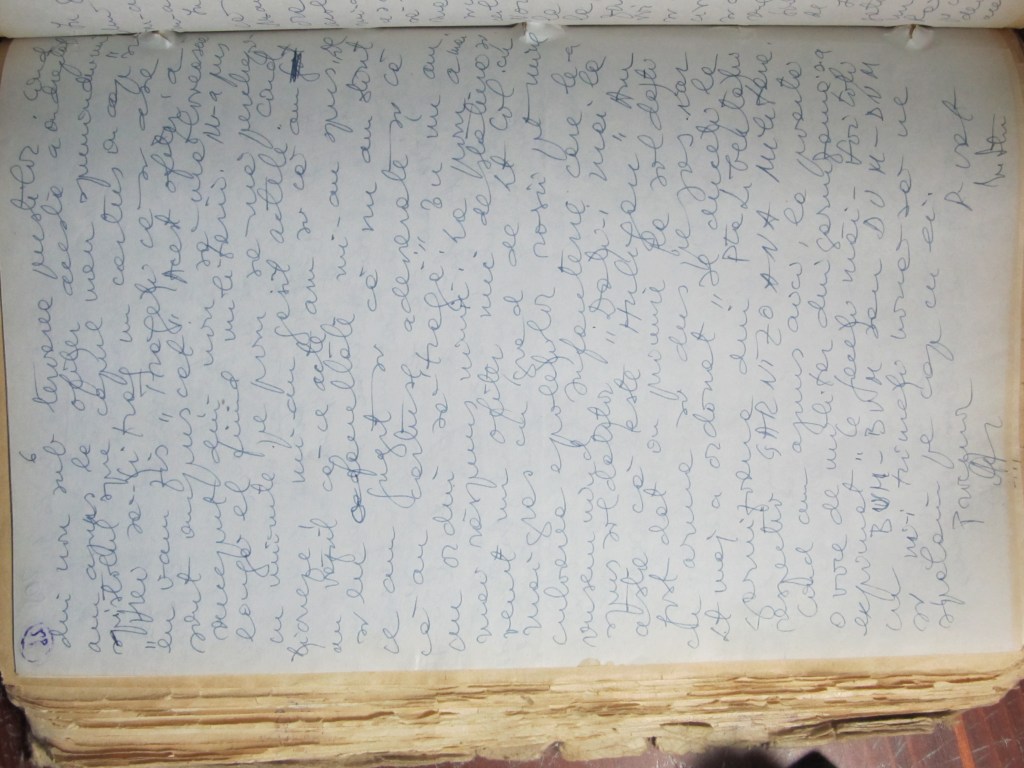
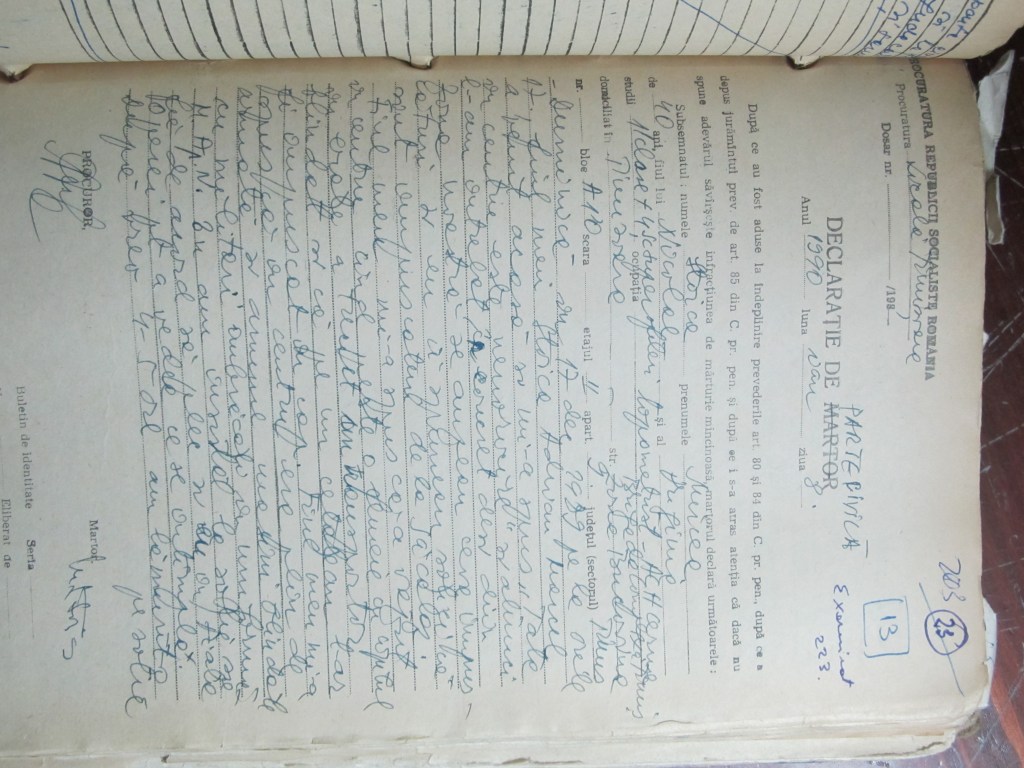
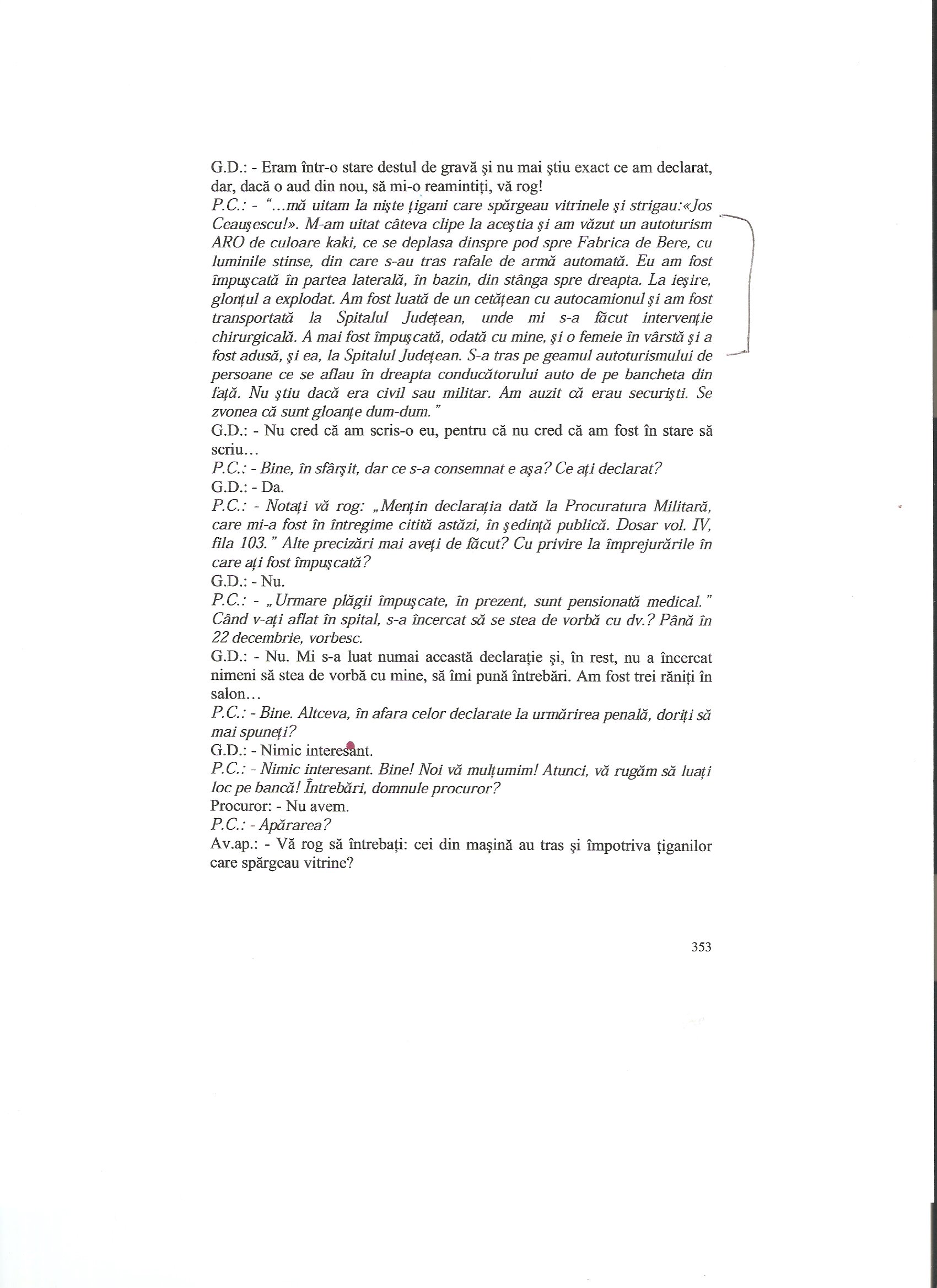
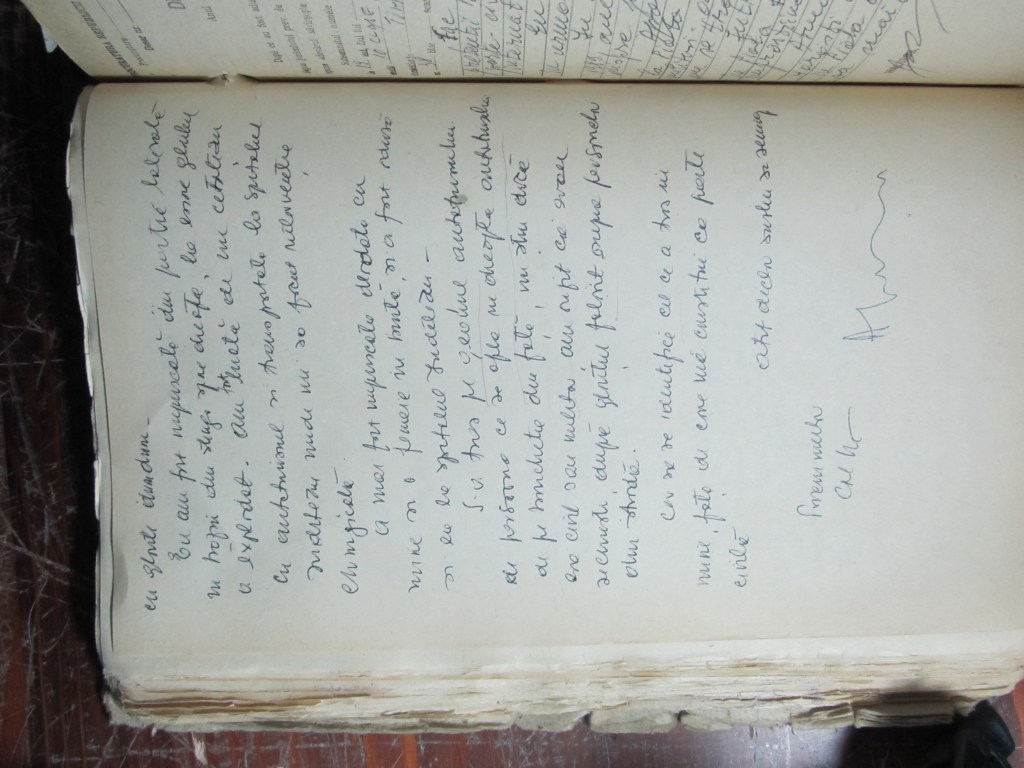
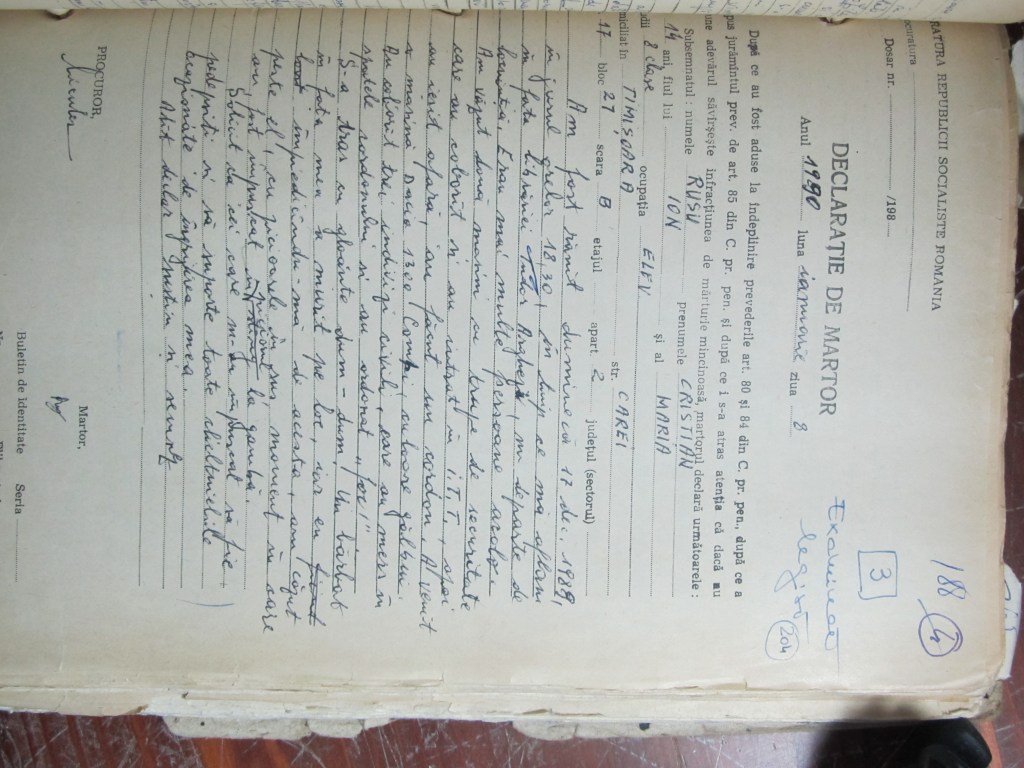
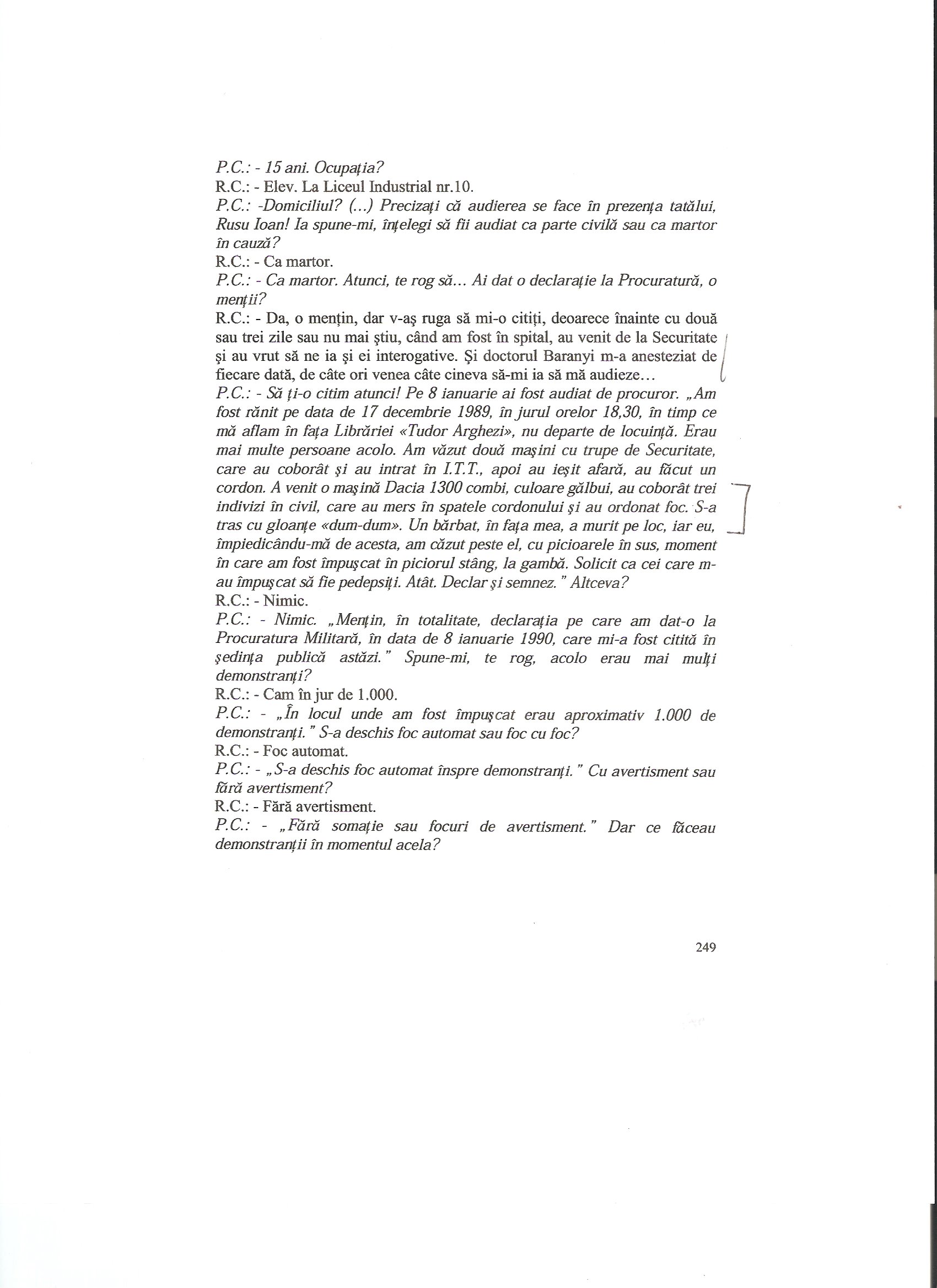
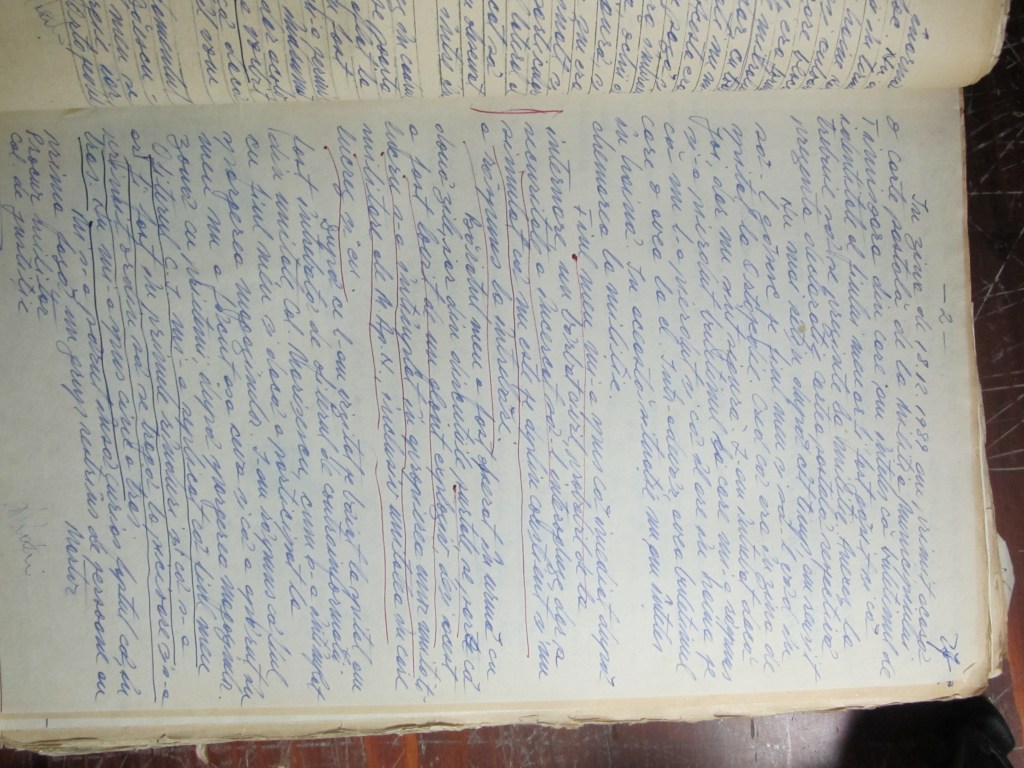
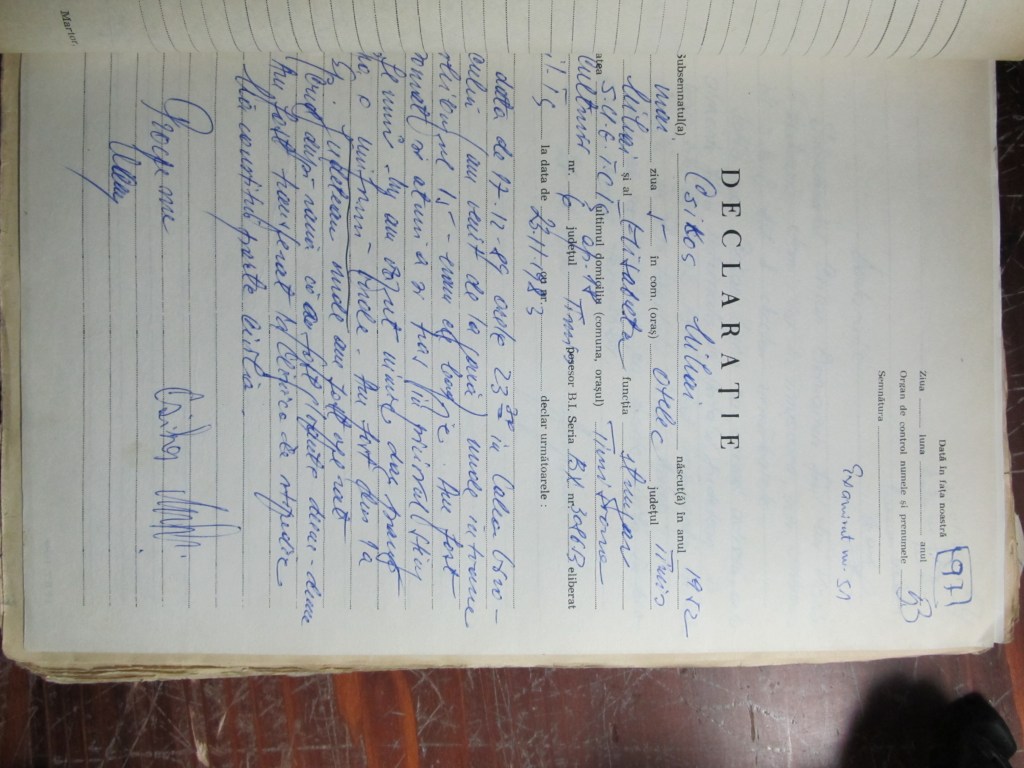
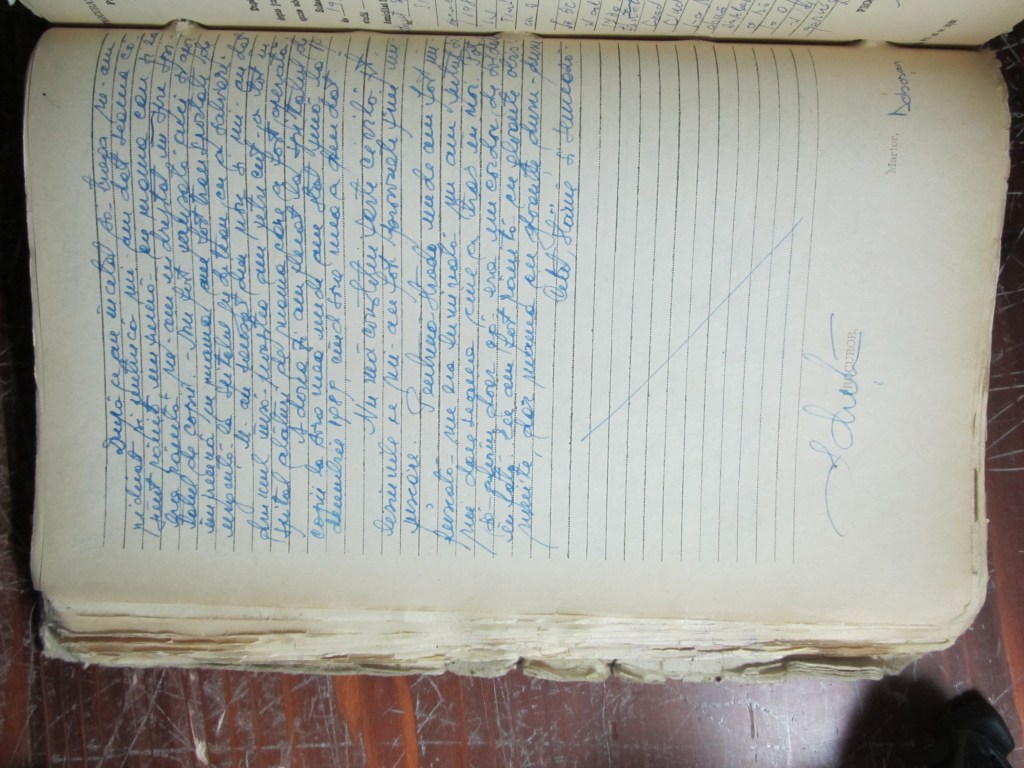
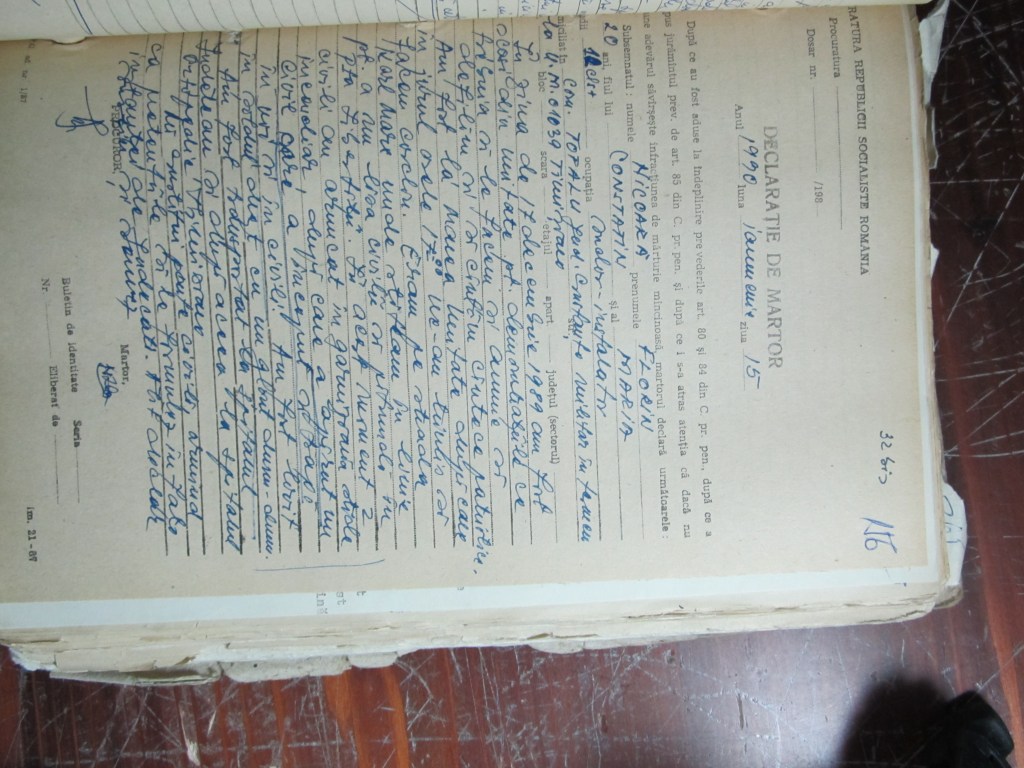
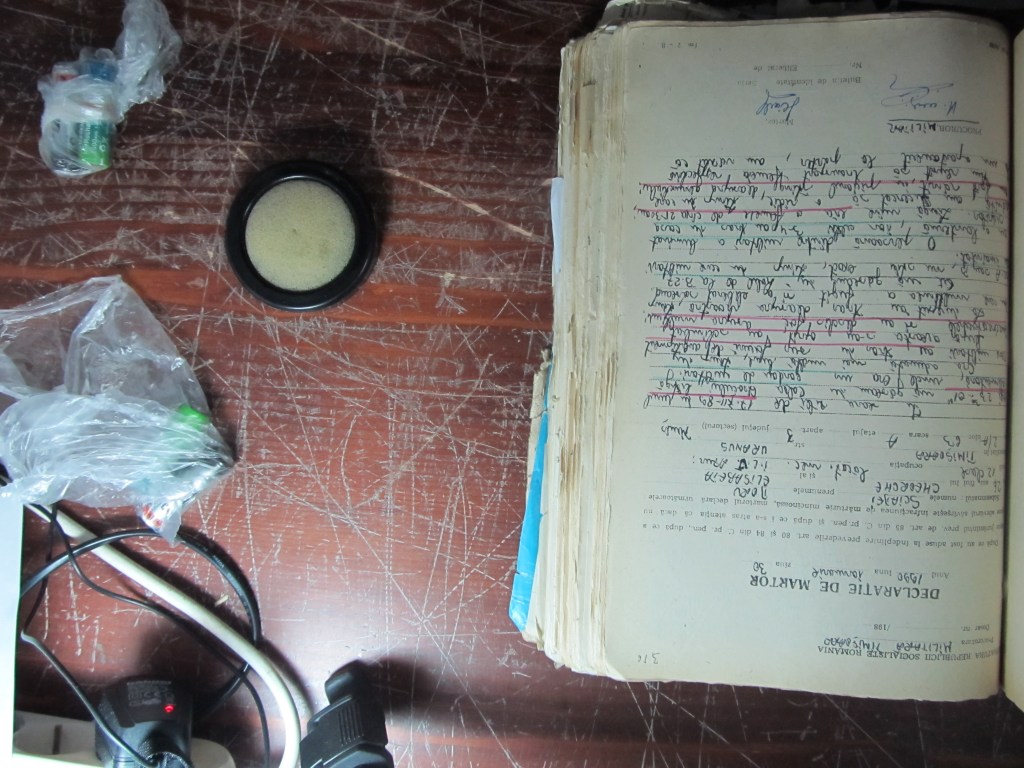
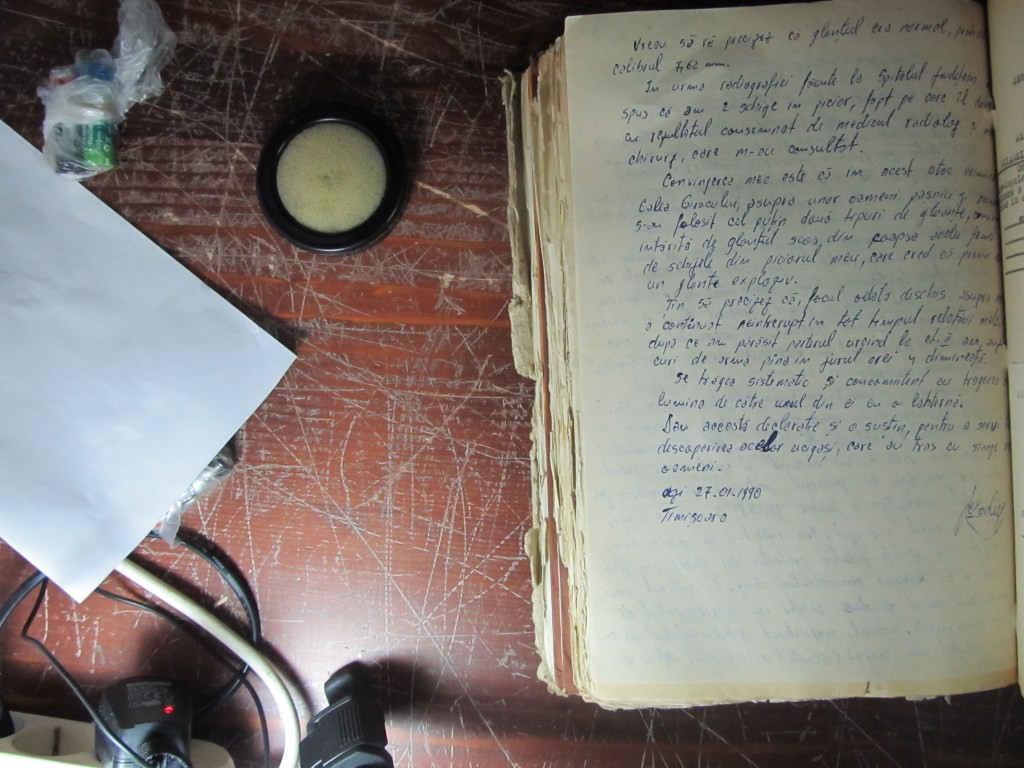


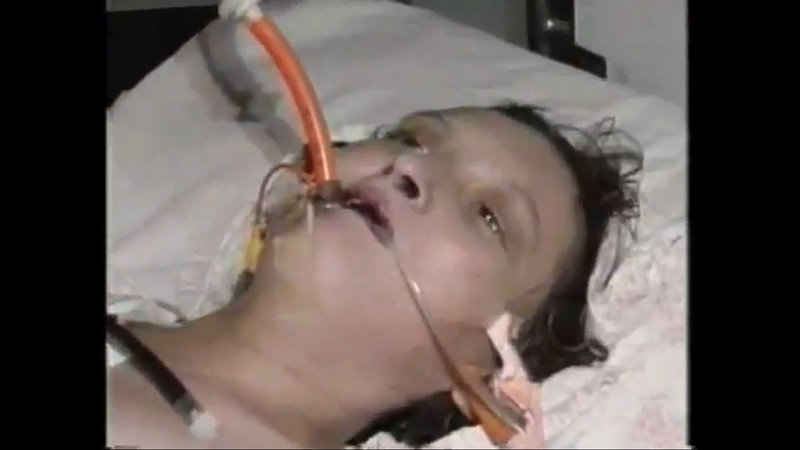
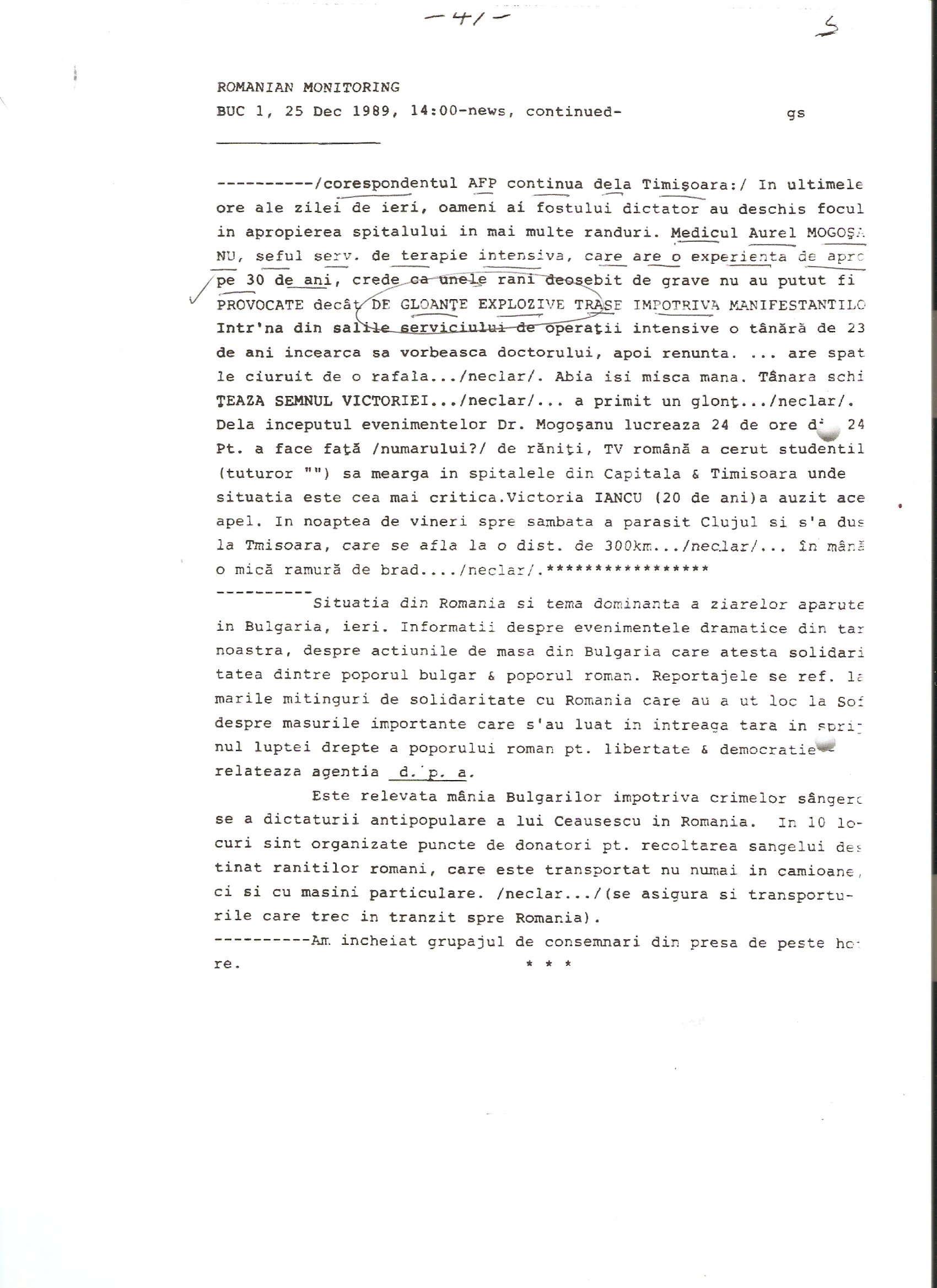

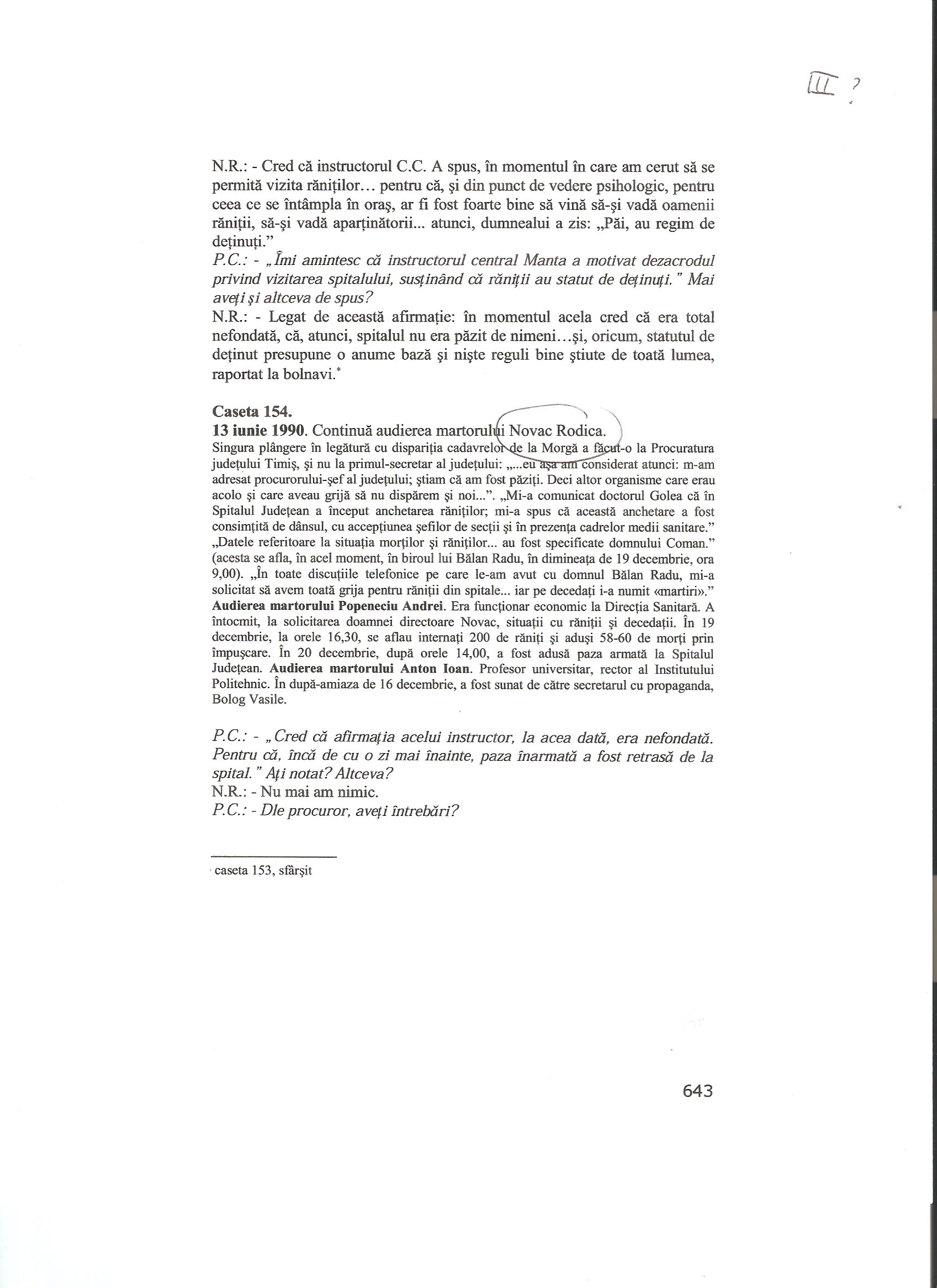


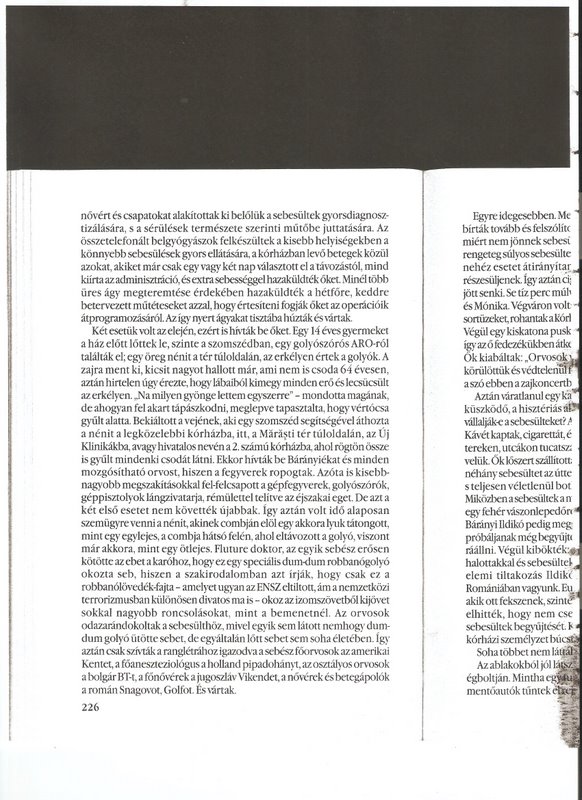
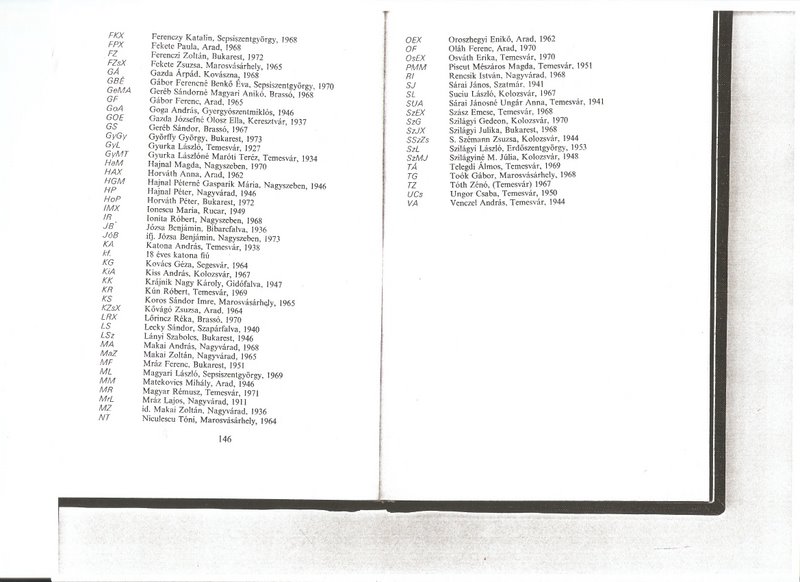
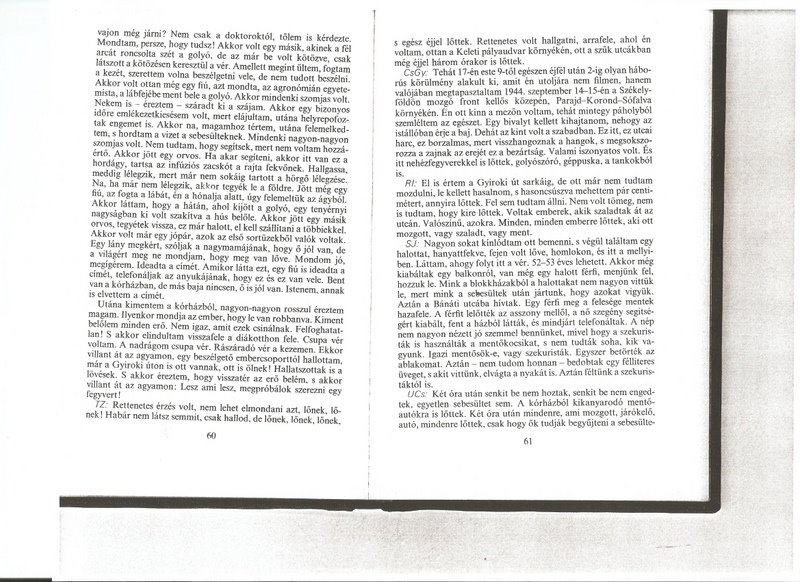
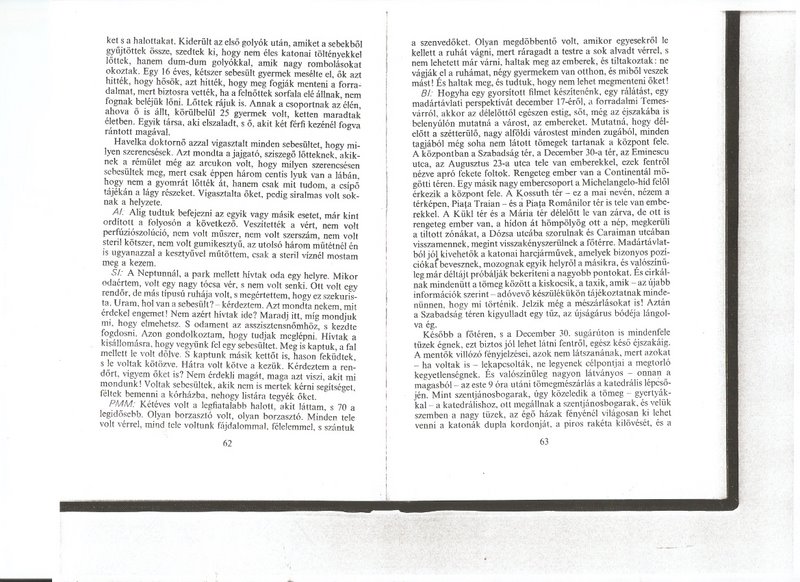
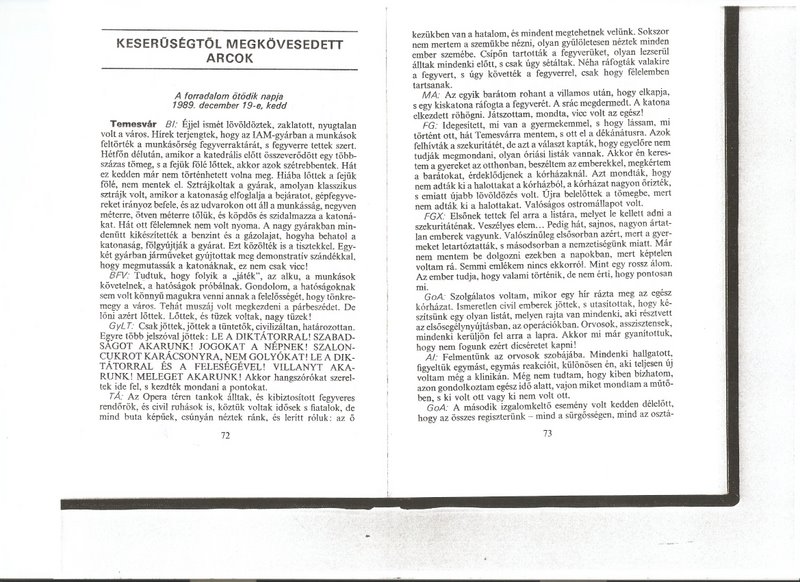
 The Archive of the Romanian Revolution of December 1989

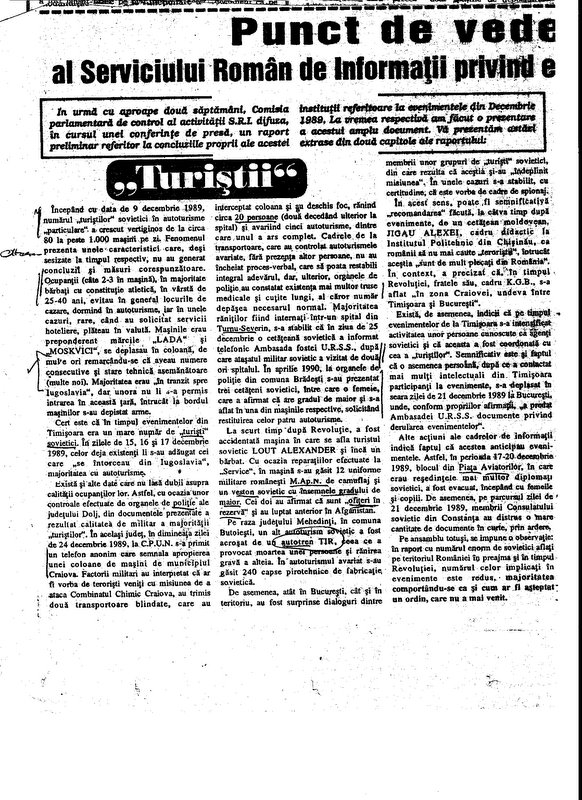
22/02/2013 la 15:45