Posted by romanianrevolutionofdecember1989 on May 20, 2025
After he retired in March 2023, military prosecutor General Catalin Ranco Pitu began an extensive media tour. Among his first and most important stops was a 16 May 2023 interview by journalist Ion Cristoiu (alias “Coroiu,” his alleged codename as an informer for the communist era secret police, Securitate, of Nicolae Ceausescu; I have detailed on this site how Cristoiu launched the journalistic careers of former Securitate influencers–Angela Bacescu, Pavel Corut (aka Paul Cernescu), G.I. Olbojan, etc.). [Cristoiu supported and promoted the “suveranist,” far right, Trumpist cause of AUR Presidential Candidate George Simion in the 2025 Romanian Presidential Election.]
Asked by Cristoiu about the new documents Pitu had studied, Pitu references a series of documents declassified/”desecretized” and delivered to the Military Procuracy in 2017/2018. Because of how Pitu discusses and presents these documents, it is quite clear which file in the so called Dosarul Revolutiei (File of the Revolution) Pitu is talking about. Pitu could say that the documents prepared by various “Army structures”–which he identifies as military aviation, anti-aircraft defense, tank regiments, infantry, the marines–say one thing, but the military prosecutors determined through additional depositions and study that their claims and allegations did not hold up to closer scrutiny. But, no! Pitu instead makes the bombastic claim that “every Army structure…structures…prepared their own very thorough analyses after January 1990 about what happened hour by hour during the Revolution…their conclusions are phenomenal…EACH AND EVERY MATERIAL SHOWS THAT THE TERRORISTS [COUNTERREVOLUTIONARY CEAUSESCU LOYALISTS] DID NOT EXIST…” (from approximately min. 25:30-26:00 in the link below)
It is a brazen, childish and almost child-like claim. The documents in fact argue completely the opposite of what Pitu claims. Pitu seems to assume no one will ever see or read or study the documents he is referencing. He is wrong. Pitu and his believers and supporters are able to continue their media campaign because of access to personalities and platforms, where they never face anything even approaching challenging questions.
Were Pitu to admit that the military concluded exactly the opposite, as they did, then he could be forced to explain the discrepancy. What caused military prosecutors to claim differently? What changed over time and when did it change? It is simply easier to lie and to assume that no one will ever see what these “Army structures” argued.
Significantly, these military after-action reports were not prepared for public dissemination and debate; they were not designed to influence public opinion. Moreover, they were drafted after the heat and confusion of December 1989 had died down, months after the events, when cooler heads and analysis could prevail. Arguments thus that the military was trying to redeem itself in the eyes of the population because of its participation in the bloody repression prior to 22 December 1989 fall by the wayside when one understands that these analyses were for restricted, internal consumption and study alone [such an argument is common, even among Western academics, see, for example, Peter Siani-Davies, The Romanian Revolution of December 1989 (2005), p. 286].
This is the first of the documents “referenced” by Pitu. My thanks to Costinel Mirea Venus for his painstaking transcription of the document. For the present time at least, I will have to ask those who cannot read Romanian to cut, paste, and use google translate or AI to understand. Thank you.
C1
MINISTERUL APĂRĂRII NAȚIONALE
ARMATA 1 37 127
~SECRET DE SERVICIU~
Exemplar nr. 2
Septembrie 1990
S/RI-932
București
S/2 08.02.2007
DECLASIFICAT
Data 01.04.2010
12-02-2007
La dos. 97/P/1990.
MODUL DE PARTICIPARE LA ACȚIUNILE DIN GARNIZOANA BUCUREȘTI AL M.U. (marilor unități) ȘI U. (unităților) SUBORDONATE ARMATEI 1, LA REVOLUȚIA DIN DECEMBRIE.
*1. Forțele antirevoluționare împotriva cărora s-a acționat*
Caracteristica principală a acțiunilor forțelor antirevoluționare a constat în faptul că acestea nu au urmărit scopuri decisive în mod direct, ci au vizat crearea unor stări de tensiune permanentă, nesiguranță, dezordine, alternând hărțuirea armată cu [diversiunea] psihologică.
Pentru îndeplinirea acestor scopuri, elementele antirevoluționare au început, din seara zilei de 22 decembrie, să atace atît obiectivele civile din Capitală și din alte orașe din țară (sediul fostului c.c. al p.c.r., Radiodifuziunea, Televiziunea, stațiile de pompare, sediile comitetelor județene, municipale, orășenești, etc.), cît și cazărimile, depozitele de muniții și alte obiective militare.
La început acțiunile au fost haotice, dar pe parcursul desfășurării evenimentelor, acestea au devenit organizate, lăsînd impresia aplicării unui plan bine conceput și a unei conduceri centralizate.
Compunerea eterogenă a forțelor antirevoluționare a generat derută și confuzie în rîndurile militarilor care au participat la paza și apărea diferitelor obiective și din această cauză multe persoane reținute ca suspecte, după verificări sumare au fost eliberate.
. /.
Page 60 / 81
(Ștampila, în centru dreapta)
ROMÂNIA
Ministerul Apărării Naționale Unitatea Militară 02490 S-
(cu mențiunea)
Pentru conformitate
Lt. col. s.i.
C2
– 2 – 128 38
În principal aceste forțe au acționat din clădirile aflate în jurul obiectivelor, cimitire, biserici, case parohiale, camere de vizitare ale canalelor, precum și din autoturisme proprietate personală, autofurgonete, autocamioane de mare tonaj.
Frecvența atacurilor la obiective pe timp de zi a fost de […] acțiuni pe oră, de regulă de mijloace auto, crescînd în intensitate, pe timp de noapte cînd se executa foc din locuri diferite, [la] intervale neregulate, dînd impresia unor atacuri executate pe direcții convergente.
Acțiune forțelor antirevoluționare – teroriste au avut o intensitate maximă în perioada 22-26.12, după care frecvența atacurilor executate asupra obiectivelor civile și militare să se reducă treptat, pentru ca începînd cu data de 30.12. să înceteze complet.
Din modul de desfășurare a acțiunilor se desprinde concluzia că forțele antirevoluționare au acționat în grupuri mici de [2]-5 persoane, sau uneori în mod izolat, folosind pe scară largă mijloacele de imitare a focului.
Procesul de bază al acestora a fost de hărțuire, aplicînd principiul “LOVEȘTE ȘI DISPARI” urmărind să creze panică, derută și nesiguranță în rîndul populației și al forțelor de apărare.
Un alt procedeu folosit pe scară largă de către elementele teroriste a constat în interceptarea căilor telefonice de comunicații și transmiterea unor ordine și informații false, cu scopul de a induce în eroare factorii de decizie.
De asemenea, s-a folosit intens bruiajul radio pe unde scurte și ultrascurte, îngreunînd conducerea unităților și subunităților.
Dotarea lor cu armament a fost foarte diversificată, dispunînd de arme de calibre diferite (5,6; 7,62; 7,92; 9; 11 mm), care foloseau muniții cu glonț obișnuit, exploziv, etc. De asemenea, dispuneau de aparate de vedere pe timp de noapte, lunete cu infraroșu, aparate de ochire pe timp de noapte, iar caracteristicile tehnico-
Page 61 / 81
(Ștampila, în dreapta-sus)
ROMÂNIA
Ministerul Apărării Naționale Unitatea Militară 02490 S-
(cu mențiunea)
Pentru conformitate
Lt. col. s.i.
C3
[- 3 -] 129 39
tactice ale acestora le-a permis executarea unui foc precis asupra organelor vitale, ceea ce a produs numeroase pierderi în rîndul militarilor.
Echiparea forțelor antirevoluționare a fost foarte diferită, dispunînd de haine civile, uniforme militare sau ale gărzilor naționale, ținută sportivă, veste antiglonț, fapt ce a făcut ca forțele armate angajate în luptă cu acestea să fie derutate.
Astfel, din totalul de 66 de persoane reținute de unitățile Armatei 1 în perioada participării acestora la revoluție, 25 au fost [predate] asociațiilor de locatari sau rudelor, iar 14 la unitățile militare din care făceau parte, fiind militari în termeni sau salariați civili. Celelalte persoane reținute au fost predate la circa […] Poliție, Inspectoratului Poliției Capitalei, Procuraturii sectorului 5, U.M. 02515 “c” și U.M. 0800.
*2. Modul de participare a M.U. și U. din garnizoana București la Revoluția din* *decembrie*
Momentul politic intern și trecerea imediată, profund justificată, a armatei de partea forțelor revoluționare, a determinat participarea marilor unități și unităților subordonate Armatei 1, din primele momente, la lupta împotriva elementelor antirevoluționare – teroriste rămase fidele vechiului regim.
Armata 1 a participat la pază și apărarea principalelor obiective, de important vitală, din Capitală cu unități mecanizate, de tancuri, artilerie, geniu, subunități de cercetare și cercetare în dispozitivul inamicului, dislocate în București, Mihai Bravu, Tîrgoviște, Ploiești și Slobozia, totalizînd un efectiv de 2903 militari, 97 tancuri, 60 T.A.B., T.A.B.C.și M.L.I. și 37 autocamioane.
Principalele obiective din Capitală încredințate marilor unități și unităților pentru apărare au fost: Televiziunea, Radiodifuziunea, Palatul Telefoanelor, fostul sediu al c.c. al p.c.r., M.Ap.N.,Sala Palatului, spitalul Budimex, aeroporturile Otopeni și Băneasa,
. /.
Page 62 / 81
(Ștampila, în centru dreapta)
ROMÂNIA
Ministerul Apărării Naționale Unitatea Militară 02490 S-
( cu mențiunea)
Pentru conformitate
Lt. col. s.i.
C4
– 4 – 130 40
Banca Națională, Telegraful Central, Poștele Drumul Taberei și Moghioroș, Dispeceratul energetic, stăvilarul Ciurel, Ministerul de Interne, Intreprinderile Acumulatorul și Neferal și stațiile de epurare a apei.
La acest obiective s-au adăugat cele militare cum sînt: cazărmile, depozitele de muniții, carburanți – lubrifianți dispuse în garnizoană și pe linia de centură.
Ca urmare a necesității intervenției rapide cu efective și tehnică de luptă în diferite locuri din Capitală, precum și a necunoașterii reale a elementelor teroriste care au acționat, statul major al armatei a fost determinat să transmită ordine și dispoziții de luptă incomplete, fără să conțină elementele principale prevăzute de regulamentele de luptă.
Acest lucru a generat situația că atît comandanții de mari unități cît și cei de unități și subunități să nu poată organiza în detaliu lupta, să nu stabilească din timp dispozitivul cel mai adecvat situației concrete, iar recunoașterile și precizia misiunilor de luptă la subordonați să se facă concomitent cu ocuparea dispozitivului de luptă.
Complexitatea situației create pe timpul desfășurării Revoluției din decembrie și multitudinea obiectivelor ce au trebuit apărate, a determinat, ca în faza inițială, forțele repartizate pentru paza și apărarea acestora, să fie eterogene, constituite din subunități din mai multe unități, de diferite arme, fără o conducere unică, fapt ce a îngreunat în mod simțitor atît stabilirea misiunilor de luptă, cît și organizarea cooperării și conducerii și totodată, favorizând producerea de aglomerări nejustificate de trupe. Acest lucru a produs dereglări în organizarea sistemului de foc, în stabilirea unor reguli elementare de siguranță în executarea focului prin intervale, pe deasupra trupelor proprii și a populației civile.
Deplasarea la obiectivele destinate pentru pază și apărare s-a făcut cu multă greutate, deoarece arterele principale erau
– / –
Page 63 / 81
(Ștampila, în centru dreapta) ROMÂNIA
Ministerul Apărării Naționale Unitatea Militară 02490 S-
Pentru conformitate
Lt. col. s.i.
C5
– 5 – 131 41
ocupate de masele de demonstranți, care, în faza inițială nu au înțeles că este necesar să sprijine acțiunile de luptă desfășurate de forțele armate.
De asemenea, unele unități (R.7 și 10 Mc., R1 și 28 Tc., R16 și 43 A., B. 340 Ge. și 204 Po.) au ocupat dispozitivele de luptă, după executarea unui marș de 60-150 km din garnizoanele dislocate la pace, de regulă pe timp de noapte, pe o singură coloană.
Unitățile din provincie, care au fost aduse în București, au primit misiunile de luptă pe timpul deplasării, fără a cuprinde principalele elemente de cooperare ca: semnale și parole de recunoaștere, cu cine ia legătura la ajungerea la obiectiv, ce dispozitiv de luptă trebuie să realizeze.
De asemenea, acestea nu au avut posibilitatea să execute recunoașteri la obiective.
Toate greutățile întîmpinate în special în primele două zile, au determinat mărirea timpului necesar subunităților pentru realizarea dispozitivelor de apărare.
Caracterul acțiunilor de luptă desfășurate de marile unități și unitățile subordonate Armatei 1, a fost pur defensiv, fie îmbrăcînd forma luptelor de stradă pentru apărarea clădirilor, fie a organizării apărării acestora din interior.
Concomitent cu organizarea apărării obiectivelor civile din București, s-au luat măsuri de întărire a pazei cazărmilor și depozitelor din apropierea Capitalei, ceea ce a necesitat din partea comandanților și statelor majore de la toate eșaloanele o analiză amplă a forțelor avute la dispoziție și repartizarea acestora în raport de necesități.
Desfășurarea forțelor și mijloacelor angajate în procesul revoluționar din decembrie precum și realizarea dispozitivelor de luptă s-a făcut în mod succesiv pe măsura creării necesității de a interveni la noi obiective sau ajungerii unităților din gar-
Page 64 / 81
(Ștampila, în centru dreapta) – ROMÂNIA
Ministerul Apărării Naționale Unitatea Militară 02490 S-
Pentru conformitate
Lt. col. s.i.
C6
– 6 – 132 42
nizoanele [garnizoanele] de dislocarea.
Rapiditatea desfășurării evenimentelor, dinamica acțiunilor de luptă, precum și ordinele primite de la eșalonul superior au [impus] marilor unități și unităților participante la Revoluție să [execute] o permanentă manevră de forțe și mijloace, fie din cazări [și] obiective, fie de la un obiectiv la altul.
Astfel R.7 Mc. după ce a participat la paza și apărarea Televiziunii, în data de 24.12 a primit ordin să se deplaseze la Aeroportul Otopeni.
Dispozitivele de luptă adoptate pentru apărarea obiectivelor încredințate au corespuns caracteristicilor impuse de ducerea luptei în localitate.
Astfel, apărarea unor obiective importante ca: Radiodifuziunea, Televiziunea și altele s-a realizat pe arterele care conduceau spre acestea, pe perimetrul exterior, precum și în interiorul clădirilor.
La alte obiective cum sînt: Telegraful central, Poșta Drumul Taberei, Arhivele statului etc., apărarea a fost organizată în interiorul clădirilor, folosind pe scară largă focul etajat.
De asemenea, s-a acordat o mare atenție organizării măsurilor de asigurare de luptă, în mod deosebit a siguranței prin instalarea la punctele importante ale obiectivelor a unor posturi de control, posturi și pichete de pază, fapt ce a contribuit în mod substanțial la împiedicarea pătrunderii în obiective a forțelor antirevoluționare.
Necesitatea de a acționa cu efective și tehnică de luptă, concomitent, la un număr foarte mare de obiective (52), fiecare dintre acestea cu particularități distincte și grade de importanță diferite, au impus dispersarea unităților și subunităților și organizarea acțiunilor de luptă pe detașamente mici.
În aceste condiții, un rol important l-au avut comandanții de subunități, care dînd dovadă de inițiativă, hotărîre, curaj și responsabilitate, au eliminat, în bună măsură, lipsa de experiență
Page 65 / 81
(Ștampila, în centru dreapta) ROMÂNIA
Ministerul Apărării Naționale Unitatea Militară 02490 S-
Pentru conformitate
Lt. col. s.i.
C7
[ – 7 – 133 43]
[în ducerea] luptei în localitate, s-au adaptat din mers la particularitățile și specificul luptei, ceea ce a permis ocuparea dispozitivelor de apărare, luarea măsurilor de asigurare de luptă și realizarea legăturii cu unitatea.
Odată cu trecerea timpului și stabilirea, la obiectivele unde [acționau] forțe din unități diferite, a unor comandanți unici, s-a trecut la organizarea cooperării în mod amănunțit, delimitînd responsabilități precise pentru fiecare subunitate, ceea ce a dus la independență în zona de acțiune, la acoperirea eficientă cu foc a intervalelor dintre acestea și o bună conlucrare la joncțiuni.
Deși datorită greutăților prezentate nu s-au putut parcurge [procesele] pregătirii luptei, hotărîrea, inițiativa și fermitatea comandanților de subunități au dus la luarea unor decizii corespunzătoare situației de luptă, care s-au materializat prin respingerea tuturor atacurilor, concomitent cu luarea măsurilor de prevenire a [panicii] și menținerii unor stări psihologice corespunzătoare.
Conducerea s-a realizat pe scară ierarhică, de la eșaloanele superioare către cele inferioare. Astfel, pe baza ordinelor primite [de] la conducerea M.Ap.N., după o analiză temeinică a efectivelor disponibile, comandamentul armatei transmitea misiunile comandanților de mari unități, la rîndul lor treceau la executare, [stabilind] de detaliu ce unități vor trimite militarii și tehnica de luptă [la] obiective.
Pentru realizarea actului de comandă s-au folosit în principal circuitele telefonice ale Ministerului Apărării Naționale și cele aparținând M.P.T.Tc.
După realizarea dispozitivelor de apărare, legătura cu comandanții de unități și subunități s-a realizat prin rețelele permanente din sistemul de telecomunicații teritorial deoarece caracteristice tehnico-tactice ale stațiilor de radio din dotare nu au asigurat folosirea acestora în localitate.
Pentru realizarea controlului și îndrumării subunităților care
. /.
Page 66 / 81
(Ștampila, în centru dreapta jos)
ROMÂNIA
Ministerul Apărării Naționale Unitatea Militară 02490 S-
Pentru conformitate
Lt. col. s.i.
C8
– 8 – 134 44
[acționau] în dispozitiv, atît comandantul armatei, cît și cele de [mari unități] au folosit grupe de ofițeri din statul major de la [aceleași] servicii, care cu mijloace blindate (T.A.B. și T.A.B.C.) s-au [deplasat] la obiective și au stabilit problemele de detaliu privind [paza] și apărarea acestora.
În perioada 23-31.12 marile unități și unitățile subordonate [Armatei 1] au suferit următoarele pierderi: 20 morți, din care 6 ofițeri, 2 subofițeri și 12 militari în termen și 62 răniți (16 ofițeri, [6 subofițeri] și 40 militari în termen).
Asigurarea materială a efectivelor și tehnicii de luptă din dispozitiv s-a făcut, de regulă, zilnic, prin transportul din cazărmi [la obiective] a tuturor materialelor necesare (hrană, muniție, [echipament], carburanți – lubrifianți).
3. Propuneri pentru îmbunătățirea statelor de organizare și [a procesului] de instruire a militarilor în termen
Avînd în vedere complexitatea acțiunilor de luptă desfășurate [și greutățile] întîmpinate pe timpul luptei vă supunem spre analiză următoarele propuneri:
– introducerea în programele de pregătire de luptă pentru [trupele] de uscat a unor teme referitoare la lupta împotriva elementelor teroriste și a grupurilor de cercetare – diversiune;
– revederea regulamentelor de luptă privind modul de ducere a acțiunilor de luptă în localități;
– revederea și completarea regulamentelor de luptă referitor la modul cum se procedează cu prizonierii și capturile de război;
– revederea statelor de organizare a plutonului și companiei referitor la lunetiști. În acest sens considerăm necesar ca aceștia să fie constituiți
într-o grupă separată care să fie la dispoziția comandantului;
(Tc.) a unei companii antiteroriste, care se execută un program de pregătire de luptă special, iar dotarea acestora să cuprindă căști cu vizor de plastic, scuturi transpa-
. /.
Page 67 / 81
(Ștampila, în centru dreapta)
ROMÂNIA
Ministerul Apărării Naționale Unitatea Militară 02490 S-
Pentru conformitate
Lt. col. s.i.
C9
[ – 9 – 135 45]
rente [transparente] și mijloace specifice de luptă împotriva teroriștilor;
– după elaborarea și aprobarea legii privind apărarea țării, să se stabilească încă din timp de pace, planuri operative și strategice de apărare a obiectivelor principale din localități la nivel [centralizat], repartizarea acestora pe mari unități și unități, executarea [de] recunoașteri la acestea și stabilirea planului de apărare la nivelul la nivel de comandant de armată, mare unitate, unitate;
Perfecționarea și modernizarea bazei materiale a instrucției, [prin] construcția în toate unitățile a unor poligoane de luptă în [localitate]; dotarea cu poligoane de pregătire psihologică a militarilor etc.;
– revederea normelor de înzestrare cu muniție, hrană, [utilizarea] unor concentrate alimentare, ușor de preparat de către fiecare militar;
– dotarea unităților cu mijloace de vedere pe timp de noapte [moderne], stații de radio cu posibilități de întrebuințare în [localități] și veste antiglonț;
– dotarea unităților de toate armele cu mijloace blindate [ușoare], mijloace mobile de legătură necesare executării unor recunoașteri și a altor misiuni urgente.
COMANDANTUL ARMATEI 1
General-maior Dumitru Polivanov
S/Rd. – 6664 /13.09.1990 (3) P.A. (…)
. /.
Page 68 / 81
(Ștampila, în centru dreapta)
ROMÂNIA
Ministerul Apărării Naționale Unitatea Militară 02490 S-
Posted by romanianrevolutionofdecember1989 on December 26, 2014
(purely personal views, based on two decades of prior research and publications)
Bullets, Lies, and Videotape:
The Amazing, Disappearing Romanian Counter-Revolution of December 1989
by Richard Andrew Hall, Ph.D.
Standard Disclaimer: All statements of fact, opinion, or analysis expressed are those of the author and do not reflect the official positions or views of the Central Intelligence Agency (CIA) or any other U.S. Government agency. Nothing in the contents should be construed as asserting or implying U.S. Government authentication of information or CIA endorsement of the author’s views. This material has been reviewed by CIA to prevent the disclosure of classified information.
[Submitted to CIA’s Publications Review Board (PRB) 19 November 2009; cleared without changes by PRB 15 December 2009]
I am an intelligence analyst for the Central Intelligence Agency. I have been a CIA analyst since 2000. Prior to that time, I had no association with CIA outside of the application process.
COLONEL GHIRCOIAS MAKES THE ROUNDS OF BUCHAREST’S HOSPITALS
Unofficially, we also know of Colonel Ghircoias’ exploits after the Ceausescu regime collapsed on 22 December 1989, exploits for which he was not charged at his trial and for which he has never been charged. Of the 1,104 people killed and 3,352 people injured during the December 1989 bloodshed, 942 of them were killed and 2,251 wounded afterNicolae and Elena Ceausescu fled power on 22 December 1989. At the time, personnel of the communist regime’s secret police—known as the Securitate—and allied foreign mercenaries fighting to restore the Ceausescu regime—collectively christened “the terrorists”—were thought to be the primary source behind the post-22 December bloodshed.
It was in this context, that doctors from Bucharest’s various main hospitals recall Colonel Ghircoias’ sudden, unannounced appearances during the last days of December 1989 and first days of January 1990. Professor Andrei Firica of the Bucharest “Emergency Hospital” recounted in a 2004 media interview largely the same details he had conveyed to the press in the summer of 1990. According to Firica, some 15 to 20 suspected terrorists had been interned at the “Emergency Hospital” in varying states of medical distress. He says he made a small file of the medical situations of these patients. A Militia colonel, whom he later was to see in [prisoner] stripes on TV as a defendant in the Timisoara trial—i.e. fairly clearly Ghircoias—came one day and counseled him to keep nosy foreign reporters away from the beds of the “terrorists,” stating ominously that “these were just terrorist suspects and he [Dr. Firica] didn’t want to wake up one day on trial for having defamed someone”! The colonel later came and loaded the wounded terrorist suspects onto a bus and off they went. Firica maintains the files he kept on the terrorist suspects “of course, disappeared.” He noted, however, that he asked his son, who had studied theater and film at university, to film the terrorists tied down to the hospital beds, and he claims he gave copies of this cassette to the Procuracy.[4]
[In viewing these photos, witness what Constantin Fugasin recounted in “Unde ne sint teroristii?” Zig-Zag, in 1990, based in part on an interview with Dr. Andrei Firica:
At the Emergency Hospital 13 suspected of being what we call terrorists were interned. Among these a few were definitely foreign, even though all had Romanian papers. Two clearly had ‘Mongoloid’ (‘Asiatic’) features (one stated that his mother was Romanian, while his father was from Laos), while four others were Arabs. Nevertheless, they spoke Romanian very well. Doctor Nicolae Staicovici, who worked a time in Egypt and who treated them for a time spoke with them. At a moment, he formed a question in Arabic. One of the injured responded to him perfectly. All were well-built, one was a ‘mountain of a man.’ He said nothing, although he probably had terrible pains. There were also two terrorists who were not wounded. One arrived at night, under some pretext. Those on guard suspecting him, immobilized him. He had on three layers of clothing and several ids. They tied him to the stretcher, but although he appeared rather frail, at a given moment he ripped the restraints off.[6]]
[Dr. Andrei Firica, 2004: From a diagnostic perspective, those who maintain that the terrorists didn’t exist are telling an outrageous lie…In the Emergency Hospital, people were brought who were shot with precision in the forehead, from behind, just a few yards in the crowd of demonstrators, such people who did this can only be called terrorists…[8]]
–
Dr. Nicolae Constantinescu, chief surgeon at the Coltea Hospital, also was paid the honor of a visit by Colonel Ghircoias during these days:
I remember that on 1 or 2 January ’90 there appeared at the [Coltea] hospital a colonel from the Interior Ministry, who presented himself as Chircoias. He maintained in violent enough language that he was the chief of I-don’t-know-what “criminalistic” department from the Directorate of State Security [ie. Securitate]. He asked that all of the extracted bullets be turned over to him. Thus were turned over to him 40 bullets of diverse forms and dimensions, as well as munition fragments.
To the question of whether he informed the Military Procuracy?
Of course, I announced the Prosecutor’s Office, and requested an investigation [of those shot in the revolution]. For example, when I showed them the apartment from where there were was shooting during the revolution, on the fourth floor of the ‘Luceafarul’ cinema, the prosecutors told me that they sought to verify it and uncovered that there was a Securitate ‘safehouse’ there and that was it.
In 1992, I signed along with other doctors, university professors, renowned surgeons, a memorandum [see page 5 (below) for an article apparently linked to the memorandum] addressed to the Prosecutor General in which we requested an investigation regarding the wounded and dead by gunfire. Not having received any response, after six months I went there to ask what was going on. They told me they were working on it, and they showed me two or three requests and that was it. One of the prosecutors took me into the hallway and told me “I have a child, a wife, it is very complicated.” He asked me what I thought I was doing…I lit back into him, I told him I wasn’t just any kind of person to be blown off.
I showed him the x-rays of those who were shot, I showed him the bullets in the liver. The x-rays exist, they weren’t my invention, I didn’t just dream all this up to demand an investigation! I told them that there are some people who wish to find out the truth and they signed a memo to the Procuracy and they aren’t just anybody, but doctors with experience, experts in the field. In vain, we requested ballistics tests and other research, in vain we presented forms, documents, x-rays, studies. They did not want to undertake a serious investigation.[9]
[4]Professor Andrei Firica, interview by Florin Condurateanu, “Teroristii din Spitalul de Urgenta,” Jurnalul National, 9 March 2004, online edition, cited in Hall, “Orwellian…Positively Orwellian” http://homepage.mac.com/khallbobo/RichardHall/pubs/Voineaswar091706.html. For similar accounts, see Florin Mircea Corcoz si Mircea Aries, “Terorist ascuns in Apuseni?” Romania Libera, 21 August 1992, p. 1–“Colonelul Ghircoias, former director of the Securitate’s penal investigative unit, brought together the individuals accused of being terrorists and made them disappear”; Andreea Hasnas, “Reportajul unui film cu TERORISTI,” Expres, no. 10 (6-12 aprilie 1990), p. 5; Constantin Fugasin, “Unde ne sint teroristii?” Zig-Zag, 1990.
[6] Significantly this video is in direct contradiction and contests the claims of the Sorin Iliesiu who maintains that “General Dan Voinea has said clearly: The terrorists did not exist. Those who seized power lied to protect the real criminals….The diversion of the ‘terrorists’ has been demonstrated by [the] Justice [System], not a single terrorist being found among the dead, wounded or arrested (Sorin Iliesiu, “18 ani de la masacrul care a deturnat revoluţia anticomunistă,” 21 December 2007, http://www.romanialibera.com/articole/articol.php?step=articol&id=6709). For a discussion, see Hall 2008.
[8] Professor Andrei Firica, interview by Florin Condurateanu, “Teroristii din Spitalul de Urgenta,” Jurnalul National, 9 March 2004, online edition.
[9] Dr. Professor Nicolae Constantinescu, interview by Romulus Cristea, “”Nici acum nu-mi dau seama cum am putut sa operez nonstop timp de trei zile,” Romania Libera, 20 December 2006, online edition.
It is virtually certain that the authors of the Chapter on the Romanian Revolution of December 1989 (pp. 620-627, especially p. 625 http://www.presidency.ro/static/ordine/RAPORT_FINAL_CPADCR.pdf ) had no knowledge of Securitate General Iulian Vlad’s Declaration of 29 January 1990 … with predictable negative consequences for their understanding of what happened in December 1989.
And one wonders why I found (find) mainstream Romanian studies so unhelpful in trying to understand Nicolae Ceausescu’s overthrow and the Romanian Revolution of December 1989? Read Vladimir Tismaneanu or Tom Gallagher (or in its 2014 variation, see Grigore Pop-Eleches in Bernhard and Kubik) on Romania in the early 1990s and one is presented with a world of good and evil, of angels and demons, with distance from former nomenklaturist and high-ranking communist Ion Iliescu and the core of the National Salvation Front being as being the simple formula for explaining and understanding any event or policy. As opposed to this highly–one might say blatantly–politically partisan [and bureaucratically ignorant] approach, on the other side stand functional or deconstructionist explanations–the kind favored by Peter Gross, Katherine Verdery, Peter Siani-Davies, or Ruxandra Cesereanu–which would explain the press of the time as the function of market pressures, sensationalist appetites, an anomic readership, poor journalistic training and professionalism, etc.
How then does one explain the following conundrum: the selective treatment of the letters and declarations of former Securitate Director General Iulian Vlad? Oh, yes, the text of General Vlad’s letters which allege he was a stooge and victim of Ion Iliescu, etc. can be found in the Romanian press. No problem! But what about his declaration of 29 January 1990, where he deftly admits the responsibility of his institution for the bloodshed of December? What, that not sensationalist enough, different enough to sell papers? That’s not “anti-communist” enough for publication? Is it somehow less credible than the other letters whose text has been published without problem? 24 plus years later, the Romanian media has yet to publish this document! Could it be that the problem with this declaration is that it does not fit with and undermines the other popular narratives of December 1989 that minimize and even absolve the former Securitate of responsibility for the bloodshed of December 1989?
Ion Cristoiu’s Evenimentul Zilei debuted in June 1992 and was the flagship of opposition to the regime of Ion Iliescu. In the fall of 1992 it ran a zealous campaign opposed to Iliescu’s reelection. Here is the exculpatory letter from former Securitate General Iulian Vlad (dated 20 March 1990) that was published on 19 September 1992:
“Generalul IULIAN VLAD se adreseaza dlui Ion Iliescu: Am fost arestat pe nedrept (20 March 1990),” Evenimentul Zilei, 19 septembrie 1992, p. 3. “Intr-adevar pe dictatorul Ceausescu l-am tradat” “M-am integrat total Revolutiei” “Sint convins ca datele nu va erau cunoscute” I.V. Vlad 20 martie 1990
And, yet, what of General Iulian Vlad’s declaration of 29 January 1990. As far as I know, in 24 plus years, only this brief allusive mention on the 15th anniversary of the letter (although not mentioned or acknowledged in the article, and possibly accidental) has made its way into the Romanian press. Below it: the text of the statement of 29 January 1990!
It took 22 years for the text of Securitate Director General Iulian Vlad’s handwritten declaration of 29 January 1990 to become public knowledge–thanks to former military prosecutor General Ioan Dan. (Inevitably, there will no doubt be those who will allege that General Vlad was “forced” to write this declaration to save his skin, etc., that this was the “propaganda of the moment” and all a huge lie. If that were the case, one would have expected Iliescu, Brucan, Militaru, Voican Voiculescu, etc. to have made every effort for Vlad’s declaration to leak to the media. Instead, for 22 years it was hidden from public knowledge!)
Of Note: No “Soviet tourists,” no DIA (Batallion 404) troops of the army’s intelligence wing, no “there were no terrorists: the Army shot into everyone else and into itself”–in other words, none of the spurious claims that have littered the narrative landscape, fueled by the former Securitate over the past two decades plus. No, Vlad knew who the terrorists of the Romanian Revolution of December 1989 were, because they reported to him!
General Magistrat (r) Ioan Dan
In aprilie 1990, generalul Gheorghe Diaconescu a fost destituit din functia de conducere in Directia Procuraturilor Militare. La plecare, mi-a predat cheia de la fisteul sau, cu mentiunea ca acolo au mai ramas cateva hartii fara importanta. Intrucat, la data respectiva, ma aflam in cea mai mare parte a timpului, in procesul cercetarilor de la Timisoara, mult mai tarziu, am dorit sa pun in respectivul fiset o serie de acte. Am cercetat ce mai ramasese de pe urma generalului Diaconescu si, spre surprinderea mea, am gasit declaratia olografa a generalului Iulian Vlad, data fostului adjunct al procurorului general, fostul meu sef direct, nimeni altul decat generalul Diaconescu, la 29 ianuarie 1990, cand toate evenimentele din decembrie 1989 erau foarte proaspete. Repet, este vorba despre declaratia olografa, un text scris foarte ingrijit, pe 10 pagini, din care voi reda acum integral doar partea care se refera expres la “actiunile teroriste in Capitala” (formularea apartine generalului Vlad).
“Analizand modul in care au inceput si s-au desfasurat actiunile teroriste in Capitala, pe baza acelor date si informatii ce le-am avut la dispozitie, consider ca acestea ar fi putut fi executate de:
1) Elementele din Directia a V-a, USLA, CTS si din alte unitati de Securitate, inclusiv speciale.
a) Directia a V-a, asa cum am mai spus, avea in responsabilitate paza si securitatea interioara a Palatului Republicii, multe dintre cadrele acestei unitati cunoscand foarte bine cladirea, cu toate detaliile ei. In situatia creata in ziua de 22.12.1989, puteau sa mearga la Palat, pe langa cei care faceau acolo serviciul si unii dintre ofiterii si subofiterii care se aflau la sediul CC ori la unitate.
Este ca se poate de clar ca numai niste oameni care cunosteanu bine topografia locului ori erau in complicitate cu cei care aveau asemenea cunostinte puteau patrunde in cladire (sau pe acoperisul ei) si transporta armamentul si cantitatile mari de munitie pe care le-au avut la dispozitie.
Tot aceasta Directie dispunea de o baza puternica si in apropierea Televiziunii (la Televiziunea veche). De asemenea, avea in responsabilitate perimetrul din zona resedintei unde se aflau numeroase case (vile) nelocuite si in care teroristii ar fi putut sa se ascunda ori sa-si faca puncte de sprijin.
Sunt si alte motive care pun pe prim-plan suspiciuni cu privire la aceasta unitate.
b) Elemente din cadrul unitatii speciale de lupta antiterroriste care aveau unele misiuni comune cu Directia a V-a si, ca si o parte a ofiterilor si subofiterilor de la aceasta unitate, dispuneau de o mai buna instruire si de mijloace de lupta mai diversificate.
c) Elemente din Trupele de Securitate care asigurau paza obiectivilor speciale (resedinta, palat etc.) si, impreuna cu Directia a-V-a, Securitatea Capitalei si Militia Capitalei asigurau traseul de deplasare.
d) Ofiteri si subofiteri din Securitatea Capitalei, indeosebi de la Serviciul Trasee, sau dintre cei care au lucrat la Directia a V-a.
e) Elemente din alte unitati de Securitate, inclusiv unitatile speciale 544, 195 si 110, precum si din cele complet acoperite, comandate de col. Maita, col. Valeanu, lt. col. Sirbu, col. Nica, col. Eftimie si lt. col. (Eftimie sau Anghelache) Gelu (asa sta scris in declaratie–n.n.). Aceste din urma sase unitati, ca si UM 544, in ansamblu, si UM 195 puteau dispune si de armament si munitii de provenienta straina, precum si de conditii de pregatire adecvate.
2) Ofiteri si subofiteri din Militie, atat de la Capitala, cat si de la IGM, cu prioritate cei din Detasamentul special de interventie si cei care asigurau traseul.
3) Cred ca s-ar impune verificarea, prin metode si mijloace specifice, a tragatorilor de elita din toate unitatile din Capitala ale Ministerului de Interne, precum si a celor care au avut in dotare sau au indeplinit misiuni folosind arme cu luneta. N-ar trebui omisi nici chiar cei de la Dinamo si de la alte cluburi sportive.
4) Unele cadre militare de rezerva ale Securitatii, Militiei si Armatei, precum si actuali (la data respectiva) si fosti activisti de partid sau UTC, persoane apropriate tradatorului si familiei sale ori care poseda arme de foc.
Propun, de asemenea, o atenta investigare a celor care au fost in anturajul lui Nicu Ceausescu. Acest anturaj, foarte divers, cuprindea inclusive unele elemente de cea mai scazuta conditie morala care puteau fi pretabile la asemenea actiuni.
Ar fi bine sa se acorde atentia cuvenita sub acest aspect si fratilor dictatorului–Ceausescu Ilie si Ceausescu Nicolae–care, prin multiplele posibilitati pe care le aveau, puteau organiza asemenea actiuni.
5) Anumite cadre militare sau luptatori din Garzile Patriotice.
6) Straini:
a. Din randul celor aflati la studii in Romania:
– arabi, in general, si palestinieni, in special, inclusiv cei care sunt la pregatire pe linia Armatei (de exemplu, la Academia Militara);
– alte grupuri de straini la studii (iranieni si altii).
b. Special infiltrati (indeosebi din cei care au urmat diverse cursuri de pregatire pe linia MI sau a MAN);
c. Alti straini aflati in tara cu diverse acoperiri, inclusiv diplomatice;
d. Fosti cetateni romani (care ar fi putut intra in tara si in mod fraudulos).
7) Elemente infractoare de drept comun care au posedat armament ori l-au procurat in chiar primele ore din dupa-amiaza zilei de 22 decembrie 1989, cand, din mai multe unitati de Securitate, intre care Directia a V-a si Securitatea Capitalei, s-a ridicat o cantitate mare si diversa de armament si munitie.”
Declaratia generalului colonel I. Hortopan, 16.02.1990 (din cate cunosc, pana publicarea cartii lui Dan Ioan, timp de 22 de ani, aceasta declaratie n-a aparut in presa romana)
“Actiunile teroristilor au crescut in intensitate in ziua de 23 decembrie si in seara zilei, la o analiza a Consilului Frontului Salvarii Nationale, Vlad a fost intrebat cine sunt cei care trag asupra Armatei si populatiei, la care acesta — in scopul de ne induce in eroare — a raspuns ca manifestantii patrunzand in anumite obiective importante, printre ei fiind si elemente rauvoitoare, fosti puscariasi de drept comun, au pus mana pe arme, s-au constituit in grupuri si trag asupra noastra. In timpul actiunii, trupele noastre au prins un numar de teroristi care faceau din unitatile de Securitate, au cerut cuvantul si au prezentat numarul unitatilor din care faceau parte (UM-0672F, UM-0639, UM-0106, UM-0620), la care Vlad, tot pentru inducere in eroare, a afirmat ca acestia s-ar putea sa fie fanatici, care, chipurile, ar actiona pe cont propriu.”
I have attempted to trace Pacepa’s public discussion of Plan Z-Z to verify claims made by other actors (see below, Gheorghe Diaconescu, Giani Bucurescu/Virgil Lovescu) in the Romanian Revolution of December 1989. All of these actors refer to Pacepa’s discussion on Radio Free Europe/Radio Europa Libera sometime apparently between 24 and 26 December 1989. Unfortunately, although there are a series of audio clips and transcripts from these days on the Europa Libera site http://www.europalibera.org/archive/1989/latest/452/982.html, there is no mention of the Pacepa intervention in question and no indication of record of its existence on the Internet.
La data de 28 sau 29 decembrie 1989, col. Lovescu [?] Virgil seful U.M. 0650 mi-a raportat ca…
Col. Lovescu [?] Virgil avea un subordonat a carui sotie-medic a participat la acordarea ajutorului ranitilor in luptele de la Aeroport Otopeni si la transportarea cadavrelor la I.M.L. Acestea ii relatase sotului ca in buzunarul unui terorist ucis la Otopeni, care era imbracat in trei costume de haine, unul peste altul, s-au gasit cartile de vizita ale lui Emil Bobu si Ion Dinca.
Col. L Virgil mi-a spus ca l-a frapat aceasta informatie si legat de faptul ca la postul de Radio Europa Libera se facuse afirmatie cu Pacepa ar fi precizat ca Ion Dinca se ocupase de pregatirea unor grupuri de teroristi. Alte date nu pot da intrucit informatia era in curs de clarificare ori la Col. Ratiu [DSS Dir I] ori la Col. Goran [SMB]…
Cunosc [?] faptul ca col. Ardeleanu [sef USLA] era in relatii apropriate cu familia lui Ion Dinca…
Din conducerea USLA atit col. Ardeleanu cit si col Blortz [Bleort] erau apropriatii lui T. Postelnicu
This also seems to confirm the following (when adjusted for the corrected dates):
Nestor Ratesh quotes one of Ceausescu’s senior party henchman, Ion Dinca, as having stated at his trial in early February 1990:
“During the night of 27-28 [of January 1990] at 12:30 A.M., I was called by several people from the Prosecutor’s Office to tell what I knew about the agreement entitled Z.Z. between Romania and five other states providing for the dispatching of terrorist forces to Romania in order to intervene in case of a military Putsch. This agreement Z.Z. is entitled ‘the End of the End.’ I stated then, and I am stating now to you, that I have never been involved in this agreement, neither I nor other people. And I was told: Only you and two other people know this. I stated that and a detailed check was made in order to prove that I was not involved in such acts.”[95]
[95] Ratesh, Romania: The Entangled Revolution, pp. 66-67, quoting Radio Bucharest, 2 February 1990. I don’t think from the context given it is clear that this alleged incident took place in January 1990, as Ratesh assumes; the reference to 27-28 might have been a reference to December 1989.
But it almost doesn’t matter when Pacepa first discussed this…because almost identical details were disclosed by Liviu Turcu, a DIE officer who had defected earlier in 1989 (thereby being far more knowledgeable of current plans/realities inside the Romanian security state), only without reference to a named plan, such as Plan Z-Z. It was thus Turcu on 23 December 1989 (within 24 hours of the outbreak of terrorist hostilities in Romania; the interview would have taken place on Saturday the 23rd) who first informed Western media of the existence of such a plan–although it appears Turcu’s disclosures were never relayed by Romanian media or by Radio Europa Libera.
Romanian Army Rankled by Interference;Defector Cites Long-Standing Friction Between Military and State Security Forces
The violence that has erupted in Romania between the army and state security forces loyal to deposed president Nicolae Ceausescu is rooted in long-standing friction between the two institutions that has sharpened dramatically recently, a high-level Romanian defector said yesterday.
Lidiu Turcu, who worked with the foreign intelligence branch of the Department of State Security, known as the Securitate, until his defection in Austria last January, said a special directorate monitored the loyalty of top army officers. As Ceausescu’s paranoia increased, he appointed his brother Ilia as first deputy minister of defense and chief of the political directorate in the army.
The military deeply resented that interference, he said. Also angering the military was the removal several years ago of two high-ranking generals denounced by Securitate informers for cultivating connections at the Soviet Embassy in Bucharest, he said. There have been reports that the two were killed and dumped into the Black Sea from a helicopter, but Turcu said he could not confirm the story.
The well-equipped and dreaded security forces appear to number about 45,000 to 50,000 men, including 25,000 troops who live in barracks on the outskirts of major cities and 20,000 officers, technical personnel, and specialists, he said. That figure is far less than the up to 700,000 reported in recent days in other accounts from the region.
The officers and specialists were drawn from universities until several years ago. But in the 1980s, Turcu said, Ceausescu’s wife, Elena, ordered that recruitment of university students be stopped and that less-educated factory personnel be selected instead.
The uniformed force of fighters includes many young men who were taken from orphanages at an early age. These security soldiers, educated and trained at special schools, have no family loyalties and were indoctrinated to view Ceausescu as a father figure, Turcu said.
As Ceausescu’s fear of an internal threat to his security grew, he reportedly turned to a new “Directorate 5″ in the Securitate that had the responsibility for “defense of the leadership of the party.” Presumably this is the force involved in some of the recent fighting.
Growing evidence of atrocities perpetrated by the security forces against unarmed demonstrators-shooting into crowds in Timisoara and Bucharest-has raised questions about whether foreign mercenaries may be involved. Turcu said the massacres go against Ceausescu’s dictum of “no martyrs,” which was often repeated to his inner circle.
Turcu said he talked yesterday with a friend in Bucharest who reported being forced to evacuate his apartment complex by armed Arab commandos.
The former intelligence official said he was aware of a secret agreement between Ceausescu and Palestine Liberation Organization chairman Yasser Arafat that allowed PLO groups to use Romanian territory for “logistical support.” He said Interior Minister Tudor Postelnicu, who oversaw the security forces, was present at a recent meeting between Ceausescu and Arafat.
Romanian cooperation with the PLO began in the late 1960s, Turcu said, but intensified in the past three years. He said rival PLO groups coexist within Romanian territory, but the agreement forbade clashes between these groups and prohibited their possession of arms. One job of the Securitate was to ensure that the PLO factions were obeying the agreement, Turcu said.
In addition to the PLO factions, he said, Syrian, Libyan, Iraqi and Iranian military or special operations units have been trained at a camp near Buzau, in the Carpathian foothills.
Contrary to reports that the security forces lived lavishly, Turcu said that except for higher salaries, most ordinary officials did not have access to special restaurants and stores stocked with Western electronic goods. He suggested that security officials resorted to corruption and abuse of office to satisfy their needs, which exacerbated the public’s hatred and fanned the fury that burst over the past week.
“They dress in black berets and black jumpsuits [combinezoane negre, salopete negre] with red silk stripes on their sleeves. They carry small two-way radios and speak into them in coded language. They are equipped with automatic rifles with infrared nightscopes for sniping.”
Sediul U.S.L.A , pe 25 decembrie 1989 in jurul orelor 18…
Pe 25 decembrie in jurul orelor 18, dupa executarea dictatorilor, col. Ardeleanu Gh. a adunat cadrele unitatii intr-o sala
improvizata si le-a spus: “Dictatura a cazut! Cadrele unitatii se afla in slujba
poporului. Partidul Comunist Roman nu se desfiinteaza! Trebuie sa ne regrupam in
rindul fortelor democratice din P.C.R.–continuatorul idealurilor nobile ale
poporului ai carui fii sintem ! (…) Au fost gasite cadavre, indivizi avind
asupra lor legitimatii de acoperire USLAC (Unitatea Speciala de Lupta
Antiterorista si Comando) si legitimatii cu antetul 0620–USLA, legitimatii care
nu se justifica in posesia celor asupra carora au fost gasite…” A ordonat apoi
sa fie predate in termen de 24 de ore legitmatiile de serviciu, urmind ca
tuturor sa le fie eliberate altele cu antetul M.Ap.N.
(capitanul Romanescu Marian, cu Dan Badea, “USLA, Bula Moise, teroristii si
‘Fratii Musulmani’,” Expres nr. 26 (75), 2-8 iulie 1991, 8-9)
(Capitanul Romanescu Marian (fost cadru USLA) si Dan Badea, “USLA, Bula Moise, teroristii, si ‘Fratii Musulmani’,” Expres nr. 26 (75), 2-8 iulie 1991, pp. 8-9)
COMANDOURILE USLAC
Cei care au avut si au cunostinta despre existenta si activitatea fortelor de soc subordonate direct lui Ceausescu, au tacut si tac in continuare de frica, sau din calcul. S-au spus multe despre indivizii imbracati in combinezoane negre, tatuati pe mina stinga si pe piept, fanaticii mercenari care actionau noaptea ucigind cu precizie si retragindu-se cind erau incoltiti in canalele subterane ale Bucurestiului. S-au spus multe, iar apoi au tacut ca si cind nimic nu s-ar fi intimplat.
Suprapuse Directiei a V-a si USLA comandourile USLAC erau constituite din indivizi care “lucrau” acoperiti in diferite posturi. Erau studenti straini, doctoranzi si bastinasi devotati trup si suflet dictatorului. Foarte multi erau arabi si cunosteau cu precizie cotloanele Bucurestiului, Brasovului si ale altor orase din Romania. Pentru antrenament aveau la dispozitie citeva centre de instruire subterane: unul era in zona Brasovului, iar altul–se pare–chiar sub sediul fostului CC-PCR, poligon care au dat–din intimplare citiva revolutionari in timpul evenimentelor din Decembrie.
Dezvaluiri despre implicarea USLA in evenimentele din Decembrie ‘89
Un tanar care si-a facut stagiul militar in trupele USLA a declarat
corespondentului A.M. PRESS din Dolj: “Am fost la Timisoara si la Bucuresti in Decembrie ‘89. Odata cu noi, militarii in termen, au fost dislocati si profesionistii reangajati, care purau costume negre de camuflaj. Dispozitivele antitero de militari in termen si profesionisti au primit munitie de razboi. La
Timisoara s-a tras in manifestanti de la distanta mica. Am vazut cum sareau creierii celor ciuruiti de gloante. Cred ca mascatii, folosind armamentul lor special, au tras cu
gloante explozive. In ianuarie 1990, toti militarii in termen din trupele USLA
au fost internati pentru dezintoxicare. Fusesaram drogati. Am fost lasati la
vatra cu cinci luni inainte de termen pentru a ne pierde urma. Nu-mi publicati
numele. Ma tem pentru mine si parintii mei. La antranamente si aplicatii eram
impartiti in “amici” si “inamici.” Mascatii erau “inamicii” pe care trebuia sa-i
descoperim si sa-i neutralizam. Cred ca mascatii au
fost acei teroristi.”
Oh, how Romanians and Romanianists love to invoke or allude to the televised claim in December 1989 that the water had been posioned in Sibiu!
It precipitates laughter: ah, the crude manipulation and naivete!
Predictably, this is a favorite of foreign sources on December 1989.
Romanian emigre Andrei Codrescu tells us in his November 1990 article in Harper’s (“Big Chills”) about the wild rumors of December 1989, that the water in Sibiu had allegedly been poisoned, but as he found out at his 25th anniversary high school reunion, he learned how all the rumors had been false: and the water in Sibiu, it was just fine! http://alina_stefanescu.typepad.com/files/big-chills-my-high-school-reunion-in-romania-by-andrei-codrescu-1.pdf
John Feffer in Shock Waves (1992) invokes Codrescu’s claims that, “Contrary to earlier reports, there were no mass killings, no poisoned water in Sibiu, no terrorists–only the manufacturing of a revolutionary smokescreen to conceal pre-planned machinations that resulted in the creation of the National Salvation Front.” (p. 207)
Peter Siani-Davies quotes BBC journalist John Simpson, who had heard similar stories concerning poisoned water during the Iranian revolution of 1979, as noting that “certain ideas appeal forcibly to the self-dramatizing mind of the revolutionary,” to which Siani-Davies adds:
“Indeed, in Romania the wild storytelling to a certain extent was just another consequence of the tumult of the revolution. However, the imagery may have served another purpose….Now, through the tales of horror, they [Romanians] were able to place the evil forces of that [Ceausescu] regime so far beyond the bounds of ‘normal’ society that they were effectively able to distance themselves from the demons of the past. There was also a sense in which it was necessary for the securitate to be so terrible: How else could the years of mute suffering under an enfeebled old tyrant such as Ceausescu be explained and condoned?” (Siani-Davies, The Romanian Revolution of December 1989, p. 160.)
Underlying all of these interpretations and explanations is the assumption that the water never was poisoned, that it was all a baseless rumor.
Surely, one assumes, the rumor has been run to ground…but the truth is, as with so many things about December 1989, it hasn’t…
report from Sibiu starts at approximately 2:20 (Tagesschau 27.12.1989)
In fact, there was a basis in reality for what Teodor Brates was saying on TV on the afternoon of 22 December 1989 as the following toxicology report by the Belgian Dr. Aubin Heyndrickx makes clear:
Romania
On December 21, 1989, people drinking from water tank #4 in Sibiu experienced headache, visual disturbances, loss of consciousness, vomiting, etc. These symptoms are all compatible with organophosphate poisoning. The analysis of the water (by gas chromatography) and the determination of the cholinesterase activity of the blood was done in the University of Cluj. The conclusion was that an organophosphate had been used. Atropine sulfate and toxogonin were advised.
As soon as the symptoms appeared among the population, water tank #4 was shut off, rinsed, and cleaned. The people received water from army trucks.
A few days later, there was a fight in Timisoara between the army and Securitate over the water tanks. Poisoning was feared, as had occurred in Sibiu. According to witnesses, the Securitate possesses “all possible chemical warfare agents.”
Toxicologist Aubin Heyndrickx supervised the chemical tests and interviewed the physicians at Central Hospital who treated the patients. From the tests and from the very high dose of atropine required to produce a response, he concluded that the tank was poisoned with sarin or VX (Report on the Humanitarian Mission to Romania, December 23-29, 1989, Laboratoria voor Toxicologie Criminalistiek, State University of Ghent).
Indeed, one can watch a brief discussion of the incident with Dr. Heyndrickx beginning at approximately the 40 second mark from an ITN broadcast of 27 December 1989
}T27128901   ROMANIA: SIBIU AFTER THE REVOLUTION: United Nations medical
27.12.89     relief team arrives in Sibiu with medical supplies and blood
TX           to treat the people who were injured during the fight against
             Securitate (secret police). Toxicologists have found evidence
             that the security police poisoned the water supply. Injured
             Securitate are being treated in hospitals alongside the people
             they shot.
}T27128901   ROMANIA: SIBIU AFTER THE REVOLUTION: United Nations medical
27.12.89     relief team arrives in Sibiu with medical supplies and blood
TX           to treat the ...
Duration: 00:01:44 |
Timecode – In: 00:00:00:00 Out: 00:01:44:00 |
Copyright: ITN / 3rd Party Copyright
I have found evidence of discussion of Heyndrickx and his toxicology report in the Hungarian press of the time, but significantly, to date, I have been unable to find discussion of it in the Romanian press!
Nepszabadsag, 30 December 1989, p. 3 citing a UPI dispatch, apparently P. Green, “French team confirms poison in water supply,” UPI, 29 December 1989.
Nagyszeben – ideggáz
Bukarest, 1989. december 29. péntek (UPI) – A Ceausescu-párti terrorosztagok ideggázt vegyítettek a romániai Nagyszeben víztárólóiba a forradalom első napjaiban – ezt egy francia-belga orvoscsoport egyik tagja mondotta el a UPI hírügynökség tudósítójának. Auvin Heyndrickx szerint a szennyezett ivóvíztól öten súlyos mérgezést szenvedtek.Mikor a felkelés vezetői felfedezték a szabotázst, azonnal
leengedték a mérgezett vizet a tárolóból – mondta a belga orvos, aki
az ,,Orvosok – határok nélkül,, nevű francia segélyszervezet
tagjaként utazott a városba. A toxikológus Heyndrickx
megállapította, hogy a vízkészletbe két súlyosan mérgező, folyékony
állapotú ideggázvegyületet öntöttek még december 20-án. Az orvos
elmondta azt is, hogy az eddig ismert öt sérült agykárosodást is
szenvedett a mérgektől. A megbetegedések ilyen viszonylag alacsony
számát a belga szakértő annnak tulajdonítja, hogy a víztárolóban a
mérgező anyagok szerencsére rendkívüli mértékben felhígultak.+++1989. december 29., péntek 07:57
It is thus with justification that in my dissertation in 1997 and in a reiteration of the dissertation views in 2007, I defended TVR personnel by pointing out the extent to which they went to intervene and inform the population when it was safe to drink the water again. (for a glimpse into the eternal “appreciation” I received for pointing out the latter, see http://atomic-temporary-3899751.wpcomstaging.com/raport-final-cpadcr-iiccmer-si-revolutia-din-1989/)
In their discussion of the Romanian transition, Linz and Stepan note the “[r]umors of deliberately poisoned water supplies, of 10,000, 60,000, even 100,000 dead, filled the news channels and streets” and conclude that “disinformation played an important role in the events.”[45] They have in mind, however, the idea that this disinformation was disseminated in order to help the Front seize power. This, of course, echoes the dominant view on this theme. As we saw in the preceding chapter, both Securitate and opposition sources maintain that disinformation pervaded the December events, and they uniformly attribute it to the Front and the Front’s supporters at television, and, in some cases, to foreign actors such as the Soviet Union.
Yet there has been very little effort to investigate the context in which particular rumors originated and the relationship between actual events and those rumors. Take, for example, this rumor alleging the poisoning of the water supply which is so frequently invoked by both domestic and foreigner observers. To what are they referring? Around 3 p.m. on the afternoon of 22 December–therefore approximately three hours after the Ceausescus had fled Bucharest–television commentator Teodor Brates began to issue periodic, sometimes frantic reports about fighting between the Army and the Securitate in the city of Sibiu and about rumors that the water supply had been poisoned by the Securitate. Here are some excerpts of what Brates said on television on that afternoon:
One moment, please…from Sibiu it has been communicated to us that the army no longer has ammunition and the Securitate troops continue to attack military units….We want to inform you that in Sibiu, military units are urgently requesting help…We are constantly receiving communications…of course, we do not have the possibility to verify their authenticity…but we ask for your attention…It is said that these enemy elements, the securisti, have poisoned the water in Sibiu, in Timisoara,…the water must be boiled before being consumed.[46]
[45].. Linz and Stepan, “The Effects of Totalitarianism-cum-Sultanism,” 345-346.
[46].. See the text of the transcript, Revolutia Romana in Direct (Bucharest: Televiziunea Romana, 1990), 47, 48, 51.
2007: Linked to the allegations of supposedly intentionally hyping the threat posed by the “terrorists” is the certitude with which many Romanians and Romanianists assert that TV personnel (especially Teodor Brates) intentionally spread rumors about the water being poisioned and the army running out of ammunition in Sibiu etc.–rumors that proved to be unsubstantiated. Here is what they likely remember:
“One moment, please…from Sibiu it has been communicated that the army no longer has ammunition and the Securitate troops continue to attack mili tary units….We want to inform you that in Sibiu, military units are urgently requesting help…We are constantly receiving communications…of course, we do not have the possibility to verify their authenticity…but we ask for your attention…It is said that the enemy elements, the securisti, have poisoned the water in Sibiu, in Timisoara…the water must be boiled before being consumed.” (from the transcript of 22 December 1989 in “Revolutia Romana in Direct” (Bucharest: 1990), pp. 47, 48, 51, quoted p. 324, Richard Andrew Hall, 1997, Ph.D. Dissertation, “Rewriting the Revolution: Authoritarian Regime-State Relations and the Triumph of Securitate Revisionism in Post-Ceausescu Romania”)
What they don’t remember is that Brates returned later to inform the audience a) when the fighting had ceased in Sibiu, b) when supplies of bottled water were on their way to Sibiu, and c) when the competent authorities verified that the water in Bucharest was safe to drink (“Revolutia Romana in Direct,” pp. 71, 72, 75, discussed p. 327 Hall, “Rewriting the Revolution”) This is there…in the transcript of what was said on Television…it is not a matter of a “difference of opinion” as the likes of Tismanenau and others in denial would have us believe. It is the old saw from American baseball: as the famous manager Casey Stengel used to say “You can look it up!” Once again: if your goal is “diversion,” intentional panic and manipulation, is it likely that you would return to the same subjects and say things designed to calm fears? Of course, not.
This has apparently been around for a few months, but I only discovered it recently:
Pe 24 decembrie 1989, fotograful Andrei Iliescu abia scapase de la Jilava, unde-l bagase militia pentru ca poza protestele, si umbla uimit pe strazile Bucurestiului revolutionar. Nu mai avea buletin, singurul lui act era camera video. El a filmat aceste secvente.
I draw attention to the sequence from approximately min. 3:37 to 3:53 in which the young soldier is asked about and discusses those whom they are fighting (this is in the vicinity of the TVR Television station). (My thanks to Gigga Adrian Tudor, in particular, and Corneliu N. Vaida for clarifying the exchange for me.)
Soldier: “Au mitraliere, care sunt micute…Cum au astia…americanii” (They have small machine guns…like the Americans.)
Voice off camera: “Sunt mai bune ca ale voastre?” (Are they better than yours?)
Soldier: “Da, bine-nteles.” (Yes, of course.)
Soldier: “Sunt mai eficiente; consuma mai putin si distrug mai mult, in general asa” (They’re more efficient; they consume less and destroy more, generally speaking.)
That the “terrorists” had weapons different from and in addition to the standard ones the Army rank-and-file were equipped with is and should be beyond dispute by now, and yet another proof of their existence. We have, of course, multiple similar claims in the same Bucharest neighborhood, elsewhere in Bucharest, and indeed throughout the rest of the country.
From approximately min 0:45 to 1:10, also from the same day, 24 December 1989
Video No. 2: Bucharest, Piata Aviatorilor, near TVR (Romanian state Television) headquarters, “Vidia” Bullets
In the second video (posted by Alexandru2006 (Alexandru Stepanian) at http://www.dailymotion.com/video/x7rob0_revolutia-romana-22-dec1989-cd4_shortfilms), a civilian shows how the bullets shot by “the enemy”—i.e. “the terrorists”—are different than the standard ammunition (7.62 mm) he and the others are using. Based on other video, photos, and accounts, these appear to be “vidia” bullets—there are many testimonies from those who fought in the area near the TV station regarding these bullets.
Those who were in the CC building of the PCR during these days also know such weapons:
In aceea camera am inceput sa stringem toate obietele de valoare gasite prin celelalte incaperi. Asa a luat nastere primul “tezaur” din C.C. Inauntru s-a incuiat nea Tarchila cu un pistol mitraliera si sint sigur ca ar fi fost in stare sa impuste pe oricine ar fi incercat sa deschida usa daca n-ar fi fost insotit de noi. Noroc ca nu a fost cazul. Intre timp ni se aduceau de peste tot arme si munitii.
Armele erau de toate felurile: pistolete Carpati, Beretta, Makarov, T.T., Stecikin, unele mici si plate cum nu mai vazusem niciodata, in tocuri de piele special construite cu compartimente aparte pentru box si cutit cu buton, adevarate pumnale cu lama foarte subtire si fina, lunga de 15-20 ce tisnea din miner (nu erau in nici un caz destinate pentru curatatul cartofilor la popota); pistoale mitraliera AKM cu pat de lemn sau cu pat rabatabil…mitraliera, pusti semiautomate cu luneta de tipul celei cu care ma fuduleam eu; mitraliere de campanie, un aruncator de grenade antitanc; grenade de mina, munitie de toate tipurile si calibrele, ce mai nu ne lipsea decit un tun, in rest aveam de toate.
Venit din cabinetul 1, Doru Haraga isi da cu parerea ca ar trebui sa le transportam intr-un colt al incaperii si pentru a le separa de restul camerei incercam sa delimitam spatiul cu o canapea. Lunga de 2 m nu se lasa umita din loc, parca era batuta in cuie, inciduati, am inceput sa mesterim ia ea. Am desfacut-o si am ramas perplecsi. In cabinetul 2, in camera de lucru a tovarasei de viata a celui mai iubit fiu, in lada unei canapele era un adevarat arsenal: 24 pistoale mitraliera cu pat rabatabil si teava scurta, 22 pistolete Carpati, 2 Stecikin, 4 carabine cu luneta, semiautomate, doua pusti mitraliera, grenade de mina si la fund lazi metalice cu munitie de lupta–gloante incendiare, trasoare, perforante, explozive, numai din cele normale–nu. Si deasupra trona ca o culme a ridicolului o prastie cu cracan si linga ea o cutie cu bile de rulment. Pe capacul interior al canapelei era o list cu denumirea “lada de armament si munitii nr. 2″. Urma inventarul si continua cu–raspunde plt. adj.–cutare, nu am retinut numele. Deci lada nr. 2. Dar unde este nr. 1? Citiva metri mai incolo–o canapea asemanatoare. Ne-am repezit asupra ei si am deschis-o. Continutul era identic, mai putin prastia. Puteam inarma un regiment. Oare de ce tinea “savanta” in cabinetul ei atita armament si munitie? Dar prastia? Asta chiar ca punea capac la toate!
Mircea Boaba, “Gloante, nestemate si singe. Ziua I: Comoara lui Ali Baba,” Strict Secret, nr. 48 26 martie – 1 aprilie 1991, pp. 4-5.
In timp ce urcam scara, vrind sa incarc carabinaa, am avut surpriza sa descopar ca gloantele din cele doua incarcatoare erau cu virful bont.
Lt. mr. APOSTOL M. ANTON, fost ofiter in serviciul 1 declara:
In ziua de 29 decembrie 1989 a aflat de la vecinul PIPOI REMUS, care locuieste la etajul 2, sub apartamentul lui, ca a vazut mai multe persoane tragand spre Ministerul Apararii Nationale, despre care era convins ca nu erau romani. I s-a parut ca ar fi arabi. Trageau cu niste pistoale automate mici.
Fiecare pluton din aceasta scoala de ofiteri de rezerva, avea alocata cate o sala de clasa, care era ca o sala de laborator-expozitie dotata cu o anumita baza materiala de instructie (in zilele de azi, se cheama training) aferenta unei anumite tematici. De exemplu, sala noastra continea materiale si planse despre armamentul individual de infanterie si balistica aferenta. Exact ca intr-un muzeu, aveam acolo vitrine cu exemplare sectionate de automat Kalashnikov, pusca mitraliera cu incarcator sector si tambur, pusca semiautomata cu luneta, pistolul TT model ’33 aflat in dotarea ofiterilor armatei si pistolul Carpati din dotarea militiei. De asemenea, imi amintesc ca era si un aruncator de grenade antitanc AG7 cu lovitura aferenta, si parca si un model imbunatatit de Kalasnikov cu teava scurta si pat rabatabil aflat in dotarea trupelor de securitate USLA (Unitati Specializate de Lupta Antiterorista)… si bineinteles toata gama de munitie, adica toate calibrele de cartuse complete, mai putin praful de pusca din tub. Era sa uit mitraliera de companie…
Toate armele erau sectionate in asa maniera incat sa se poata intelege principiul complet de functionare… daca puneai un cartus in incarcator si armai, se putea vedea traseul complet al sau din incarcator pana la expulzarea tubului dupa percutare. http://calinhera.wordpress.com/2010/10/24/servesc-patria-la-multi-ani/
–In afara de modul –interpretat ca suspect–, in care au patruns in dispozitivul dumneavoastra, ce dovezi mai aveti?
–Faptul ca, la teava unuia dintre tancuri, tabla de protectie a fost rupta in doua locuri, trei din pistoalele mitraliera pe care le-am “capturat” (cu teava scurta si incarcator de 20 cartuse) aveau tevile afumate, turela tancului de comandat de locotenentul maior Vasile Barbu a fost blocata, iar dimineata plutonierul Butoi a gasit pe tancul sau un pistol mitraliera si o lanterna de semnalizare…Cit despre dotare, sa nu-mi zica mie cum am citit intr-un ziar de mare tiraj– ca era jalnica, in nivelul armatei. A doua zi, am recuperat, din cele doua autoblindate, radiotelefoane Telefunken, veste antiglont, pistoale de 9 mm, pumnale, binoclu cu infrarosu — care pentru noi constituiau noutatii absolute. Si, pentru ca tot am fost provocati, sa va mai spun ceva. Dimineata, cind l-am intrebat “de ce ai tras, ma?” unul dintre cei trei supravietuitori, pe care i-am gasit in blocul de vizavi mi-a raspuns: “Ce p. mati, si eu execut acelasi ordin ca si tine!!!” E clar ca nu au venit ca prieteni!
Even some military prosecutors have been willing to admit the obvious:
CINE A TRAS ÎN NOI… DUPĂ 22?!
Interviu cu colonelul magistrat Ilina Radu – prim-procuror al Parchetului Militar Timişoara… la 20 de ani de la evenimente
A consemnat Liza Kratochwill
R.I.: – Nu. Ziua eram la serviciu. Ziua – program normal, seara cu familia, cu prietenii… ne reuneam trei, patru familii de vecini şi stăteam pe jos, pe covoare, pentru că se trăgea formidabil, uneori chiar la nivelul ferestrelor noastre, şi nu-ţi ardea să faci balet prin casă.
L.K.: – În blocuri?
R.I.: – În blocuri, da. În blocurile din, relativ, zona centrală a oraşului. A fost urât…
L.K.: – Asta în ce zi ?
R.I.: – Mi-amintesc de acea noapte cruntă de 23 spre 24 când s-a tras, ne găseam câţiva colegi într-un bloc din zona centrală şi s-a tras formidabil. De la nouă seara până la şase dimineaţa, continuu, cred că au fost zeci de mii de cartuşe şi am fost speriat. Şi chiar atunci am spus: dacă Dumnezeu ne iubeşte, vom prinde Ajunul serii următoare, ca să colindăm. Era Ajunul Crăciunului, însă, noaptea aia a fost furibundă. Şi nu eram de competenţă, de aia nu ne-am implicat profesional. Ca procuror civil nu puteai atunci să cercetezi faptele cu arme ale militarilor şi se ştiu foarte puţine lucruri. S-au găsit foarte puţine tuburi de cartuşe din cele care trebuiau să fie. S-au găsit, în schimb, repet, unele dispozitive care, ulterior, ar fi fost analizate şi ar fi putut constitui simulatoare de tragere sau ţinte false.
L.K.: – Dar dumneavoastră, acum, cred că sunteţi cel mai în măsură să-mi spuneţi care au fost tipurile, în afară de calibrul ăla obişnuit, 7,62, care au fost toate tipurile de gloanţe care au fost identificate, folosite în 1989 şi care au cauzat decese şi răni. Deci au fost o dată aceste 7,62, au fost acele dum-dum exploziveşi-n afară de…
R.I.: – 7,65-ul a fost, pistoale-mitraliere scurte…
L.K.: – Kalaşnikov, da, din acestea au fost folosite şi la… cred că şi la cazul Jubea…
R.I.: – …un tip care, atunci, erau doar în dotarea forţelor speciale, la acel moment. Pistoale cu pat scurt şi cu ţeavă scurtă.Mai erau pistoale-mitralieră, AKAEM-uri obişnuite. Au fost apoi, s-a tras chiar şi cu aruncător de grenade, cu AG 7 şi cu diverse tipuri de pistoale.s
L.K.: – Pistoale ale forţelor armate sau…?
R.I.: – Pistoale din dotare. E foarte greu de spus.
L.K.: – Păi, ce pistoale avea România, la acea oră?
R.I.: – TT şi Carpaţi-ul.
L.K.: – Carpaţi-ul, care era în dotarea Miliţiei, nu?
R.I.: – De regulă, era la Miliţie, forţe de Securitate… şi TT-urile, care erau, deopotrivă, şi aici şi acolo. La ofiţeri sau la…
L.K.: – Şi aici ce tipuri de calibru de gloanţe erau folosite, la tipurile astea de pistoale?
R.I.: – Păi, discutăm şi de calibru de 9 milimetri, cu tuburi specifice, cam de nouă milimetri.
L.K.: – Dar cele care se foloseau la lunetă, deci ţintă fixă?
(posted by Alexandru2006 at http://www.dailymotion.com/video/x7rob0_revolutia-romana-22-dec1989-cd4_shortfilms), a civilian shows how the bullets shot by “the enemy”—i.e. “the terrorists”—are different than the standard ammunition (7.62 mm) he and the others are using. Based on other video, photos, and accounts, these appear to be “vidia” bullets—there are many testimonies from those who fought in the area near the TV station regarding these bullets.
“Despre existenta simulatoarele, senatorul Sergiu Nicolaescu a adresat o intrebare fostului sef al Departmamentului Securitatii Statului, gl. Vlad Iulian, care a raspuns…”Sigur, tot Securitatea le avea…” (declaratie Iulian Vlad, pag. 75).
In aceasta perioada, in zona Televiziunii au fost observate semnale luminoase ce prezentau imaginea unei balizari si care marcau inceputul sau incetarea atacurilor.
comanda de fabricatie a gloantelor explozive DUM-DUM
Referitor la existenta cartuselor explozive si perforante, dupa unele informatii rezulta ca in perioada august-septembrie 1989 la uzinele Sadu-Gorj s-a primit o comanda de executare a unor asemenea cartuse explozive. Comanda a fost ordonata de Conducerea Superioara de partid si executata sub supravegherea stricta a unor ofiteri din fosta Securitate.
Asa cum s-a mai spus, asupra populatiei, dar si asupra militarilor MApN teroristii au folosit cartuse cu glont exploziv. Cartusele respective de fabricarea carora fostul director al uzinei Constantin Hoara–actualmente deputat PSM Gorj–si ing. Constantin Filip nu sunt straini, au fost realizate sub legenda, potrivit careia, acestea urmai a fi folosite de Nicolae Ceausescu in cadrul partidelor de vanatoare.
Consider ca lt. col. Gridan fost ofiter de Contrainformatii pentru Uzina Sadu–actualmente pensionar ar putea confirma fabricarea unor asemenea cartuse si probabil si unele indicii cu privire la beneficiar. Daca intr-adevar aceste cartuse au fost fabricate in Romania atunci este limpede ca o mare parte din teroristii din decembrie 1989 au fost autohtoni, iar organele de securitate nu sunt straine de acest lucru.
Romulus Cristea (ziarist, Romania Libera, 22 decembrie 2005): – Munitia speciala, gloantele cu cap vidia sau dum-dum, a provocat victime? Presa de la acea vreme a fost plina cu astfel de relatari…
General-magistrat Dan Voinea – Nu exista victime (persoane impuscate) nici de la gloantele cu cap vidia, nici de la dum-dum.Pe durata evenimentelor s-a folosit munitie de razboi, munitie normala care se gasea la vremea respectiva in dotarea Ministerului de Interne si a Ministerului Apararii Nationale. Confuzia si informatiile false au aparut de la faptul ca se foloseau calibre diferite si, deci, zgomotul produs era altfel perceput. http://www.romanialibera.ro/opinii/interviuri/toti-alergau-dupa-un-inamic-invizibil-58783.html
publicat pe internetul pana acum, in schimb apare Lt. Col. Vasiliu Constantin:
Valentin Gora: Au fost arestati oameni ai securitatii, teroristi. Astazi, nimeni nu stie ce s-a intimplat sa ce se intimpla in continuare cu ei. Dumneavoastra i-ati vazut? Ii cunoasteti?
Petre Constantin: Au fost arestati multi oameni, am mai spus-o, care aveau asupra lor arme de toate felurile, pe toti i-a preluat armata si nu stiu ce s-a intimplat mai departe cu ei. Adjunctul meu, Traian Puscasu, a fost injunghiat in noaptea de 23 spre 24 decembrie, pe hol, la etajul 11. Agresorul, locotenent-colonelul Vasiliu, il viza pe generalul Tudor sau pe mine. Eu am lipsit citeva miunte, generalul Tudor s-a ferit in momentul atacului si a fost lovit Puscasu. Totul se intimpla in usa biroului. Militarii au sarit si l-au imobilizat imediat.
Valentin Gora cu Petre Constantin, “Petre Constantin: Cind a dictat decretul de instalare ? de asediu pe intreg teritoriul tarii, in biroul lui Ceausescu se afla si Eugen Florescu,” Cuvintul, nr. 12, 18 aprilie 1990, pp. 4-5.
425. Parte vătămată Puşcaşu Traian (Televiziune-Vol. 110)
Numitul Puşcaşu Traian, fiul lui Gheorghe şi Maria, născut la data de 01.03.1927, în Iaşi, domiciliat în Bucureşti (…) în noaptea de 22/23.12.1989, în timp ce se afla în incinta televiziunii, unde-şi desfăşura activitatea ca director adjunct al TVR, a fost înjunghiat în abdomen cu un cuţit de către lt. col. Vasiliu Cornel, care se afla în dispozitivul de pază al instituţiei respective.
Conform raportului medico-legal nr. A1/3409/1990, numitul Puşcaşu Traian a prezentat la data de 24.12.1989 o plagă abdominală penetrantă cu interesarea splinei şi arterei epigastrice. Leziunea a putut fi produsă prin lovire cu corp tăietor-înţepător (posibil cuţit). A necesitat circa 25 zile de îngrijiri medicale. Leziunea i-a pus viaţa în pericol.
Prin rezoluţia nr. 1411/P/1990, din data de 15.11.1990, Procuratura Militară Bucureşti a dispus neînceperea urmăririi penale faţă de lt. col. Vasiliu Constantin, sub aspectul infr. prev. de art. 20 rap. la art. 174 C.p., reţinându-se că, în urma expertizării sale psihiatrice, s-a stabilit că a acţionat fără discernământ.
Trying to reconstruct the timeline of reporting on the use of exploding dum-dum bullets and other unusual munitions used solely by the Securitate “terrorists” during the Romanian Revolution of December 1989 is not easy. Unfortunately, we must rely in the public domain on transcripts and diaries from the time, as demonstrated below. Clearly, it is emerging: there was discussion at the beginning. A watershed event that should have then and should now spark great interest and further investigation–a press conference by surgeons (including military doctors) in early March 1990 that as far as I can tell was only ever reported on in depth in French by AFP (see below)–has all but been ignored and forgotten as if it had never taken place. Highly damning too is the documentary evidence by the wounded themselves, relatives, army officers, and doctors in Timisoara (attesting to the use of these munitions both before and after 22 December 1989). The overall evidence is overwhelming as to the use of exploding dum-dum bullets and other unusual munitions in December 1989; the alibis and mechanisms of denial are transparent: just because they existed doesn’t mean they were used; perhaps the army had them too; perhaps the bullets ricocheted and split apart; doctors and army officers (even military doctors) what would they know about dum-dum bullets?; on and on, etc. etc.
Reportaj la Spitalul Militar Central: se relateaza despre modul dramatic în care au fost efectuate operatiile (chirurgicale) din ziua de 22 decembrie 1989. „Noapte alba sau zi neagra” spune doctorul pe buna dreptate. Armele teroristilor, a securistilor au împroscat multimea cu gloante explozive, care au avut ca efect plagi si leziuni gigantice.
Emotionant! Dramatic! Dureros!
luni, 24 iunie 2013
SORIN M. RĂDULESCU – REVOLUŢIA CA SPECTACOL, Miercuri 27 decembrie, 1989 – Revolutia -3 –
REVOLUŢIA CA SPECTACOL
(ÎNSEMNARILE UNUI SOCIOLOG ÎN PERIOADA SEPTEMBRIE 1988-IULIE 1992) Miercuri 27 decembrie 1989
Primesc telefon de la Vasilica P., care îmi descrie cu lux de amanunte atmosfera din Centrul de Sociologie, care a devenit un fel de ,,dipecerat” al sociologilor bucuresteni. Ma deplasez imediat acolo ca sa fiu prezent la desfasurarea evenimentelor.
/ Teroriştii .Mărturii (22 27dec.’89 )
22 apr. Notez cu R –revoluţionarii, al căror nume nu-l pot şti
– R 1: Generalul Tudor, pe care aş vrea să nu-l mai văd!
El a eliberat teroriştii suspecţi prinşi de noi!
– R 2: Asupra lor am găsit agende, bancnote însemnate.
Ce a făcut g-ral Tudor cu ei, noi nu ştim!
– R 3 :Eu am păzit camera suspecţilor .Erau 9. Din ordinul g-ralului Tudor li s-a dat drumul
– R 4. Dorobanţu Marin: Un terorist trăgea dintr-o vilă vecină; o maşină cu copertină
din care cca 15 persoane au fugit din vila din faţă; am prins o salvare cu un terorist ;
era şi o maşină inflamabilă pe care am aprins-o; în spatele ei au ieşit 3 terorişti .
A fost un foc foarte puternic.
– Ofiţer paraşutist: aici se lupta, cum s-a spus …
– R 5: Teroriştii au atacat mult TVR. Pe 24 decembrie, din două taburi, cu steag,
au coborît mulţi militari şi au deschis foc asupra noastră .
S-au retras apoi pe străzi, în spatele maşinilor.
– R 6: Pe 24 decembrie s-a zvonit că mîncarea adusă este otrăvită. Am aruncat-o.
Nu aveam nici lumină şi apă .
– R 7: Parola noastră – ” Cine eşti ?”
– Reporter: Cine a tras în voi?
– Ofiţer: G-ral Tudor a eliberat mulţi suspecţi. Nici atunci, nici pe urmă, n-am înţeles
de ce a făcut-o
– R 2: Arestaţii terorişti aveau dolari, staţie de emisie, unul era chiar străin;
au fost eliberaţi – nu ştiu de ce!
– R 6: Au fost şi zvonuri pentru a face panică. Unele au fost false. Altele reale .
Pe 26 sau 27 decembrie a fost prins un civil ( ing. electronist la Tg. Mureş ). La control cpt. Epure i-a găsit o schiţă cu centrul Bucureştiului, pe care era marcat hotelul Modern. Aş vrea să ştiu ce este cu acest terorist?
– Reporter: Da, am vrea să ştim cine a tras în noi?
– Alt reporter ( arătînd la o uşă ): Cum a fost?
– Lct X: teroriştii trăgeau în balamale şi broaşte cu gloanţe cu cap vidia.
. Asemenea arme nu sunt în dotarea armatei.
– Lct mj. Diţiu: invită la sediul clubului “TV’22 “, ca să mai afle cum a fost.
In early March 1990, AFP reported the declared findings of surgeons in Bucharest, attesting to the fact that many of those wounded on 21-22 December 1989 in Bucharest had been shot with exploding bullets, DUM-DUM bullets. This is a critical article (and description of an event that I believe has gotten almost no coverage inside or outside Romania). Lt. Gnl. Traian Oancea, chief of surgery in part of the Central Military Hospital in Bucharest, and Dr. Nicolae “Nae” Constantinescu, chief of surgery at the Coltea Hospital, discussed this at a meeting of the Society of Surgeons in Bucharest.
This was also discussed by Bucharest medical personnel at a 1994 conference:
AMFITEATRUL FACULTATII DE MEDICINA
“Decembrie 1989, in spitalele din Bucuresti”
Mihail Lechkun, Romania Libera, 10 februarie 1994, p. 2
“In decembrie 1989 a fost o disponsibilitate pentru bestialitate, pe care nu am crezut-o capabila la poporul care fac parte, ” a declarat dl. conf. dr. Nicolae Constantinescu (Spitalul Coltea), in cadrul conferintei care s-a desfasurat marti seara in Amfiteatrul Mare al Facultatii de Medicina din Bucurest, avand ca subiect “Decembrie 1989, in spitalele din Bucuresti”. Printre invitatii Ligii Studentilor in Medicina, organizatorul acestei conferinte, s-au numarat: dl. prof. dr. Petre Andronescu, prorector, dl. dr. Constantin Antofie, dl. prof. dr. Marian Ciurel, dl. prof. conf. dr. Dan Niculescu, dl. conf. dr. Nicolae Constantinescu, dl. prof. conf. dr. Ilie Pavelescu, dl. dr. Eduard Geambasu, toti medici chirurgi din Capitala care au fost confruntate cu fluxul de raniti din decembrie 1989. “Documentatia pe care am avut-o, nu o mai avem,” a spus dl. prof. dr. Marian Ciurel (Spitalul de Urgenta) amintind totusi faptul ca au fost inregistrate date intr-o lucrare de doctorat. “Putini dintre cei raniti au fost socati psihic,” isi aminteste prof. dr. Petre Andronescu (Spitalul Colentina). Revolutionari si raniti au primit acelasi tratament, “stim doar ca la o parte din bolnavi s-au schimbat catusi” isi aminteste dl. prof. dr. Marian Ciurel. Peste 60 la suta din ranitii adusi la Spitalul Coltea erau impuscati lateral sau din spate. S-a tras si asupra oamenilor care au stat ghemuiti, acestia suferind astfel leziuni complexe. Pe langa datele statistice prezentate, medicii prezenti au atras atentia asupra naturii leziunilor care, in numar mare, au fost cazate de munitie al carie efect a fost mai mult distrugerea, mutilarea decat scoaterea din lupta. In acest sens, deosebit de interesante au fost datele prezentate din lucrarea de diploma, a medicului M. Briciu: “S-a tras cu gloante explozive”. Concluziile ce se pot trage din faptul ca cei adusi in spitale, in intervale de timp distincte, prezentau leziuni corespunzatoare anumitor portiuni din corp, demonstreaza existenta unor ordine asupra locului unde trebuia ochit. “Cred ca Romania va fi capabila sa constituie acel ecran care sa protejeze de acum inainte natia de asemenea manifestari,” a spus dl. conf. dr. Nicolae Constantinescu, remarcand aspectul benefic al unor astfel de conferinte.
NOR WERE THESE THE ONLY DOCTORS AND MEDICAL PERSONNEL–FOREIGN OR DOMESTIC–WHO ATTESTED TO THE USE OF DUM-DUM EXPLODING AND OTHER ATYPICAL, UNUSUAL MUNITIONS USED DURING THE EVENTS OF DECEMBER 1989
Dr. Manuel Burzaco from “Doctors without Borders” was part of a team of doctors from that group who visited hospitals in Bucharest, Ploiesti, Brasov, Buzau and Braila in late December 1989 and early January 1990. This report from the Madrid daily El Pais touches upon the women and children gravely injured by the exploding “dum dum bullets used by the Securitate.”
Other reports from Bucharest and Timisoara hospitals during the events:
“At Bucharest’s main emergency hospital, doctors said that Securitate snipers, apparently using infra-red telescopic sights and exploding dum-dum bullets, had been firing throughout Saturday night and they shot many civilians, with bullets striking foreheads and hearts. The morgue at the hospital was stacked with 90 bodies at noon today, almost all of them civilians dead of gunshot wounds.”
Blaine Harden, “In Bucharest, Tears and Prayers for the Fallen,” The Washington Post, 25 December 1989, p. A1; A40.
Other posts with documents from dosarele revolutiei…
Like the “water is poisoned” episode discussed in part III of this series, the claims of TV announcers regarding the threat posed to the Television building is a favorite for Romanians and Romanianists to lampoon:
Once again, Andrei Codrescu captures a widely and wildly popular view of TVR’s alleged role during the December 1989 events:
The Romanian revolution was a complex affair. It was a dramatic triumph that had the whole world for its audience, a world that keeps wondering long after the final curtain how much of what it saw was real. If I hadn’t lost my normally skeptical head to the euphoria of December, I would have questioned the single most evident source of news about the revolution: television. But it was precisely television that seduced me during my visit and made me lose sight of things I already knew….Imagine the shock and dismay of our newsmakers and our idealists–including myself–when most of these horrible events we saw with our own eyes on television turned out not to have happened at all. How could the grizzled, experienced Western journalists who are sworn to hard facts have missed the many clues and glaring contradictions that pointed to artifice? The astounding truth of the matter is that much of the glorious Romanian “revolution” was, in fact, a staged play, a revolution between quotation marks….But it couldn’t have been long after, however, the young revolutionaries (if that’s who they were) started becoming “responsible,” and the “spontaneous” provisional government showed up with its own TV script. The television station then became the headquarters of the new government, which, as far as most people were concerned, was born out of video like Venus out of the seashell. And hats must be off to the producers of the exceedingly realistic docu-drama of the strategic military center from where, in a charged atmosphere reminiscent of Reds or Dr. Zhivago, generals with telephones on both ears shouted orders at troops on vast invisible battlefields in every part of the country. Today I stand abashed by my naivete. Much of that Romanian “spontaneity” was as slick and scripted as a Hollywood movie. If I were in charge of the Emmys, I’d give one to the Romanian directors of December 1989.
As with the “poisoned water” episode, so too with the claimed threats against Television, including the idea that a bomb had been found and disarmed in the basement of the Television building (as can be seen in the above video)…no researcher has attempted to verify the veracity of the claim, until now!
Recently, however, several sources have been unearthed/come to light that clarify what happened. Here, Corneliu N. Vaida of Timisoara recounts how a Securitate member from Timisoara was convinced to call the Television Station in Bucharest to inform them that, as with many other highly strategic buildings in the country, TVR had been mined and an explosion could be set off. It appears that the announcement above about a bomb having been disarmed in the basement of the TVR building, was as a result of this information from Timisoara:
Securistul trădat pentru binele TVR
În seara zilei de 22 decembrie şi-a vizitat mama, care locuia pe bulevardul 6 Martie, unde a găsit în apartament un vecin. Era vorba de Gheorghe Toader, un căpitan în rezervă la Securitate, care se refugiase de frică sa nu fie asasinat.
Urmărind programul “Revoluţiei în direct”, de la TVR, au observat la un moment dat o persoana care ţinea în mână un obiect care semăna cu o tastatură.
“Văzând tastatura, securistul a scos o exclamaţie de teamă: <Vor sări toţi în aer acolo! TVR e obiectiv strategic şi este minat, ca în cazuri extreme să poată fi aruncat în aer, tastând un cod pe aşa un detonator!>. A spus că a lucrat la aşa ceva în Bucureşti într-o intreprindere specială. La isistenţele mele a acceptat până la urmă să scrie o declaraţie anonimă pe care am dus-o personal la armată”, a mai declarat Corneliu Vaida.
Ajuns la Garnizoana Timişoara, Vaida a arătat scrisoarea colonelului Zeca, comandantul garnizoanei. “Acesta a pus mâna pe un telefon şi a sunat imediat la Bucureşti la o structură a armatei căreia i-a relatat continutul declaraţiei, dupa care mi-a cerut sa dezvalui identitatea semnatarului argumentând că acesta mai cunoaşte informaţii care ar ajuta la evitarea de victime”, a adaugat Vaida.
Neavând ce face, a trebuit să meargă cu armata să îl predea pe secursitul din casa mamei. “Înspre dimineaţă am văzut la televizor cum a venit cineva şi a declarat că explozibilul cu care era minată televiziunea a fost dezamorsat”, a mai spus timişoreanul.
The event is also recounted by parachutists in this TVR video from 31 December 1989 that only recently appeared on the internet.
Parasutisti de la R. 64 Pst. Boteni la Televiziunea Romana in 31 decembrie 1989:
Lt. col. Ilie Croitoru, Mr. Chiranescu Ion, Cpt. Radulescu Aurelian, Cpt. Constantin Vlasceanu
Corneliu Vaida has been kind enough to share with me, the following additional confirmation of his actions in the document below:
For more about Corneliu Vaida during the Revolution in Timisoara in December 1989, see his interview with ITN correspondent Penny Marshall on 27 December 1989:
Ioan Itu, “Si ei au luptat in Revolutie. De partea cui?,” Tinerama, 10-16 septembrie 1993, p. 8.
Maior Tudor Petrescu, “Unde ne sint teroristii?” Armata Poporului, nr. 22, 30 mai 1990, p. 3. (S.D. = Silviu Dutu)
Aura Alexa Ioan (cu Adrian Popescu-Necsesti), “Teroristii Revolutiei au certificat de psihopati!” Tinerama, 8-14 octombrie 1996, p. 8
Valentin Gora: Au fost arestati oameni ai securitatii, teroristi. Astazi, nimeni nu stie ce s-a intimplat sa ce se intimpla in continuare cu ei. Dumneavoastra i-ati vazut? Ii cunoasteti?
Petre Constantin: Au fost arestati multi oameni, am mai spus-o, care aveau asupra lor arme de toate felurile, pe toti i-a preluat armata si nu stiu ce s-a intimplat mai departe cu ei. Adjunctul meu, Traian Puscasu, a fost injunghiat in noaptea de 23 spre 24 decembrie, pe hol, la etajul 11. Agresorul, locotenent-colonelul Vasiliu, il viza pe generalul Tudor sau pe mine. Eu am lipsit citeva miunte, generalul Tudor s-a ferit in momentul atacului si a fost lovit Puscasu. Totul se intimpla in usa biroului. Militarii au sarit si l-au imobilizat imediat.
Valentin Gora cu Petre Constantin, “Petre Constantin: Cind a dictat decretul de instalare ? de asediu pe intreg teritoriul tarii, in biroul lui Ceausescu se afla si Eugen Florescu,” Cuvintul, nr. 12, 18 aprilie 1990, pp. 4-5.
425. Parte vătămată Puşcaşu Traian (Televiziune-Vol. 110) Numitul Puşcaşu Traian, fiul lui Gheorghe şi Maria, născut la data de 01.03.1927, în Iaşi, domiciliat în Bucureşti (…) în noaptea de 22/23.12.1989, în timp ce se afla în incinta televiziunii, unde-şi desfăşura activitatea ca director adjunct al TVR, a fost înjunghiat în abdomen cu un cuţit de către lt. col. Vasiliu Cornel, care se afla în dispozitivul de pază al instituţiei respective. Conform raportului medico-legal nr. A1/3409/1990, numitul Puşcaşu Traian a prezentat la data de 24.12.1989 o plagă abdominală penetrantă cu interesarea splinei şi arterei epigastrice. Leziunea a putut fi produsă prin lovire cu corp tăietor-înţepător (posibil cuţit). A necesitat circa 25 zile de îngrijiri medicale. Leziunea i-a pus viaţa în pericol. Prin rezoluţia nr. 1411/P/1990, din data de 15.11.1990, Procuratura Militară Bucureşti a dispus neînceperea urmăririi penale faţă de lt. col. Vasiliu Constantin, sub aspectul infr. prev. de art. 20 rap. la art. 174 C.p., reţinându-se că, în urma expertizării sale psihiatrice, s-a stabilit că a acţionat fără discernământ.
Posted by romanianrevolutionofdecember1989 on December 16, 2014
(Purely personal views as always, based on over two decades of research and publications inside and outside Romania)
2014 marks the 25th anniversary of the collapse of communism in central and eastern Europe–Poland, Hungary, East Germany, Czechoslovakia, Bulgaria, and Romania. This series looks at 25 things I have learned about the events of the Romanian Revolution of December 1989. The numbering is not designed to assign importance, but rather–to the extent possible–to progress chronologically through those events.
Significance: I have essentially been the only researcher who has consistently advocated this understanding. Most others–including Peter Siani-Davies–tended to dismiss it. Now we have documentary evidence that it took place.
An excellent documentary from 1991 posted to the internet by Florin Iepan only recently and seen rarely if at all since its showing in 1991. There is much interesting information in this film. (The film seems to start at min. 19:00 and has to be rewound to its beginning.) Here, I will focus on the claim beginning at approximately min. 17:40 that the destruction of Timisoara shops and storefronts was organized and a pretext to justify–including legally–the repression by the Ceausescu regime of Timisoara demonstrators. Interior Minister Tudor Postelnicu’s declaration of 17 March 1990 confirms this claim and the observations of eyewitnesses.
Timisoara Decembrie 1989 / Timisoara December 1989,
regia/directed by – Ovidiu Bose Pastina
imaginea/camera – Doru Segal
Sahiafilm 1991
Tudor Postelnicu (Ministerul de Interne in decembrie 1989): “Unii militari de la trupele de securitate ale brigazii Timisoara au facut unele provocari la unele magazine si vitrine spargind geamurile sa imprastie participantii de pe straziile din apropriere, apoi au intrat in altercatie cu ei, si acum (?) vor sa le faca militia ordine. ‘Nu am aflat ca costa provocare a zis Gl. Nuta, am trimis pe …” (17.III.1990)
Before we move on here, it is worth noting how this destruction was covered in Peter Siani-Davies’ 2005 volume The Romanian Revolution of December 1989. As I have written on many occasions, Siani-Davies’ volume is wonderfully-written and is excellent, but the claim by Daniel Chirot that is a “near-definitive” account is far off the mark. One of the negative characteristics of Siani-Davies’ work is the use of “filler” rational choice, cui bono arguments where he concludes there is not enough information to make a valid judgment. The problem is the question is never one of “what was possible?” “what makes ‘sense’?” but rather what did happen?
Thus, for example in the case of the destruction of Timisoara Siani-Davies argues that there was already enough of a basis for the regime to crackdown, therefore why would they need to create a pretext for cracking down: “Given the seriousness of the situation and the fact that shots had already been fired elsewhere, the security forces hardly needed to produce a further ‘excuse’ for the massacre which was to follow.” (p. 68)
Back to exploring more of the evidence…
An excerpt from Chapter 5 of my Ph.D. Dissertation at Indiana University: Richard Andrew Hall, Rewriting the Revolution: Authoritarian Regime-State Relations and the Triumph of Securitate Revisionism in Post-Ceausescu Romania (defended 16 December 1996). This is the original chapter as it appeared then and thus has not been revised in any form.
Chapter Five. The Beginning of the End: Timisoara, 15-17 December 1989
…
The “Window Breakers”
The reportedly unusual scope of physical destruction which occurred in Timisoara, particularly on the afternoon and evening of 17 December 1989, has fueled revisionist arguments. Estimates of the damage during the Timisoara unrest are in the neighborhood of four to five billion lei (approximately forty to fifty million dollars at the time), a reasonably large sum given Romania’s standard of living at the time. A huge number of windows was broken and as many as 300 to 400 stores suffered some sort of damage, although relatively few were actually looted. On the evening of 17 December, stores, vehicles, and kiosks were burning in at least ten different areas of the city.[65]
Former Securitate officers clearly wish to link this destruction to the “foreign tourists” who were supposedly so ubiquitous in Timisoara during these days.[66] Perhaps somewhat surprisingly, former Securitate Director Iulian Vlad argued at his trial that
…the acts of vandalism, theft, destruction, arson… acts without precedent…could not have been the work [“opera”] of the faithful [apparently referring sarcastically to Tokes’ parishioners], nor the revolutionaries. They were produced by elements which wished to create a certain atmosphere of tension.[67]
Eyewitness accounts recorded soon after the events–therefore at a time before the various plots and scenarios had permeated the popular imagination–support the hypothesis that the vandalism was organized. Moldovan Fica remarks:
I admit that I cannot escape a certain conclusion. All of this [destruction] was done by a group of about five or six individuals, whose calm demeanor and self-control continues to stay with me to this day. They did not run from the scene, they appeared as if they did not fear anything; I would say that, in fact, they were doing what was required of them, something which had been ordered directly of them![75]
Describing destruction in a different part of the city, Andras Vasile observed that
…four young men with shaved heads and wearing civilian clothes had sticks–I would term them special sticks–1.7 to 1.8 meters long, equipped with metal rings on the top of them. They were breaking the windows, but not taking anything, as if they only had something against the windows, something which they thus went about with great enjoyment…they were led by two individuals in leather jackets.[76]
Other eyewitnesses supply details which confirm the widespread character of the vandalism; its undeniably organized quality; the disinterest of its perpetrators in looting the stores; and the almost “drugged” nature of the perpetrators, who seemed unperturbed by the chaos and repression going on around them.[77]
Ioan Savu discussed the windowbreakers as follows:
———————————-
Other depictions of this event available online:
Conducerea partidului, alarmată, a trimis în Piaţa Maria, conform Ordinului 02600, numeroşi miliţieni şi trupe speciale, pentru a lichida manifestaţia care luase amploare. Circulaţia în zonă se întrerupsese. În Piaţa Maria au fost trimişi aproximativ 200 de activişti de partid, miliţieni şi numeroşi ofiţeri de securitate, îmbrăcaţi în haine civile. Au urmat ciocniri violente, mai ales după ce manifestanţii s-au încolonat şi au pornit spre sediul CJ PCR, strigând “Libertate”, “Vrem pâine”, “Vrem căldură”, “Azi la Timişoara, mâine în toată ţara”.
În acea seară echipe de miliţie dinainte pregătite au spart vitrinele magazinelor din centrul oraşului, pentru a avea argumente pentru o intervenţie în forţă. Desigur, multe vitrine au fost sparte şi de derbedei, asupra cărora s-au găsit bunuri furate. În acea noapte au fost arestate aproape 5-600 de cetăţeni. Ei au fost duşi la Penitenciarul oraşului, unde au fost bătuţi în mod bestial. În zilele care au urmat arestării au fost anchetaţi în vederea trimiterii lor în judecată. Bineînţeles, dacă Revoluţia n-ar fi reuşit.
Totuşi, se ştie că în acele zile fierbinţi din Timişoara au existat „personaje neidentificate” care au acţionat în mai multe zone ale oraşului. Am să amintesc aici doar două aspecte concrete cu privire la implicarea acestora în evenimentele din Timişoara. În zilele de 16 şi 17 decembrie au fost sparte aproape toate vitrinele magazinelor din zona centrală a oraşului. Sunt zeci de declaraţii ale revoluţionarilor care fac o descriere clară a celor care au spart acele geamuri. Au fost oameni bine îmbrăcaţi, robuşti şi tunşi scurt. Aceştia erau dotaţi cu nişte beţe speciale cu care printr-un gest scurt şi foarte bine exersat loveau vitrinele, după care plecau fără a încerca să sustragă ceva din magazine. Aceste persoane au fost văzute chiar şi de forţele de ordine desfăşurate în acea zonă, care în mod ciudat nu au luat măsuri împotriva lor, ci au acţionat împotriva manifestanţilor ce demonstrau împotriva regimului ceauşist. Un alt aspect relatat de mulţi timişoreni se referă mai ales la zilele de 17-19 decembrie, când, în rândul cordoanelor militare din diferite dispozitive amplasate în zonele importante ale oraşului, între soldaţi, erau intercalate persoane mai în vârstă, nebărbierite îmbrăcate doar parţial în uniforme militare, care nu făceau parte din acele unităţi militare.
Cine au fost acele „persoane neidentificate”? De ce s-a dorit în unele cercuri, cu insistenţă chiar, acreditarea ideii că oamenii au fost scoşi în stradă de agenţi străini? De ce, chiar şi după 20 de ani, se fac afirmaţii de genul: cadavrele celor arşi la Crematoriul „Cenuşa” erau ale unor agenţi străini? Nu voi căuta acum răspunsuri la aceste întrebări, dar, cu siguranţă, ele există.
nascut in 30 iulie 1968 la Timisoara, muncitor la IJPIPS (1989), profesor de istorie la Liceul de informatica (1998), impuscat in spate
La Bijuterii concetatenii nostri tigani carau ce puteau. Numai la “Modex” nu era spart. Un grup de oameni se uitau cum niste indivizi bine instruiti spargeau geamurile de linga restaurantul Bulevard. Am rugat oamenii sa apere Modexul, pentru ca era clar ca spargatorii n-aveau nimic comun cu revolta. 30 septembrie 1995http://timisoara.com/newmioc/4.htm
“În data de 14 decembrie, securitatea a spart toate gemurile din partea străzii principale, iar clădirea arăta ca o cetate asediată. Fostul primar al Timişorei, Petre Moţ l-a vizitat pe Tokes şi a ieşit la geam pentru a vorbi mulţimii. Moţ a cerut să se pună geamuri noi. Erau foarte multe maşini ale securiştilor. Întreaga stradă era ocupată. Se făcea filaj. Eu locuiam acolo, ba intram, ba ieşeam. Nu se vorbea încă revoluţie. Era o solidaritatea faţă de pastor”, declarat Iosif Kabai (foto), care locuieşte şi acum în clădirea bisericii reformate.Citeste mai mult: adevarul.ro/locale/timisoara/16-decembrie-1989-ziua-timisoara-s-a-strigat-data-democratie-jos-comunismul-1_50bd3d887c42d5a663c8e01f/index.html
Radu Tinu cu Angela Bacescu…
The reportedly unusual scope of physical destruction which occurred in Timisoara, particularly on the afternoon and evening of 17 December 1989, has fueled revisionist arguments. Estimates of the damage during the Timisoara unrest are in the neighborhood of four to five billion lei (approximately forty to fifty million dollars at the time), a reasonably large sum given Romania’s standard of living at the time. A huge number of windows was broken and as many as 300 to 400 stores suffered some sort of damage, although relatively few were actually looted. On the evening of 17 December, stores, vehicles, and kiosks were burning in at least ten different areas of the city.[65]
Former Securitate officers clearly wish to link this destruction to the “foreign tourists” who were supposedly so ubiquitous in Timisoara during these days.[66] Perhaps somewhat surprisingly, former Securitate Director Iulian Vlad argued at his trial that
…the acts of vandalism, theft, destruction, arson… acts without precedent…could not have been the work [“opera”] of the faithful [apparently referring sarcastically to Tokes’ parishioners], nor the revolutionaries. They were produced by elements which wished to create a certain atmosphere of tension.[67]
RADU TINU:…SINGURLE COMPLEXE COMERCIALE RAMASE INTREGI AU FOST CELE DIN FATA MILITIEI JUDETENE SI CEL DE LANGA FABRICA “MODERN”…
The significance of window-breaking as a justification for repression–something the Securitate would have realized–was outlined by Nicolae Ceausescu in his teleconference of 17 December 1989 as follows:
“Oricine intra intr-un Consiliu Popular, intr-un sediu de partid sau sparge un geam la un magazin trebuie sa primeasca riposta imediat.
Col. Ion Popescu (sef IGM)’s defense lawyer appealed to Legea 21 and Decretul 121 specifically as obligating Interior Ministry (M.I.–Militia and Securitate) forces to intervene in response to the breaking of windows of commercial units…
Thus, the breaking of windows, which according to Interior Minister was instigated and carried out in part by Securitate Brigade 30 under the command of Ion Bunoaica served a bureaucratic and legalistic function–a tactic not unknown in the annals of other totalitarian or authoritarian regimes…
———————————–
An excerpt from Chapter 5 of my Ph.D. Dissertation at Indiana University: Richard Andrew Hall, Rewriting the Revolution: Authoritarian Regime-State Relations and the Triumph of Securitate Revisionism in Post-Ceausescu Romania (defended 16 December 1996). This is the original chapter as it appeared then and thus has not been revised in any form.
Chapter Five. The Beginning of the End: Timisoara, 15-17 December 1989
…
The “Window Breakers”
The reportedly unusual scope of physical destruction which occurred in Timisoara, particularly on the afternoon and evening of 17 December 1989, has fueled revisionist arguments. Estimates of the damage during the Timisoara unrest are in the neighborhood of four to five billion lei (approximately forty to fifty million dollars at the time), a reasonably large sum given Romania’s standard of living at the time. A huge number of windows was broken and as many as 300 to 400 stores suffered some sort of damage, although relatively few were actually looted. On the evening of 17 December, stores, vehicles, and kiosks were burning in at least ten different areas of the city.[65]
Former Securitate officers clearly wish to link this destruction to the “foreign tourists” who were supposedly so ubiquitous in Timisoara during these days.[66] Perhaps somewhat surprisingly, former Securitate Director Iulian Vlad argued at his trial that
…the acts of vandalism, theft, destruction, arson… acts without precedent…could not have been the work [“opera”] of the faithful [apparently referring sarcastically to Tokes’ parishioners], nor the revolutionaries. They were produced by elements which wished to create a certain atmosphere of tension.[67]
“A group of former Securitate officers” wrote to the Ceausist Democratia in September 1990 that after the Militia and Securitate refused to respond to the demonstrations provoked by the “foreign tourists”: “they advance[d] to the next stage: the massive destruction of public property designed to provoke forcible interventions–human victims were needed.”[68]
Nevertheless, here is how one opposition journalist, Grid Modorcea, has described the strange character of Timisoara destruction:
For the first time in history, a revolution…was announced in a previously unknown and absolutely original manner, both literally and figuratively speaking: through the methodical breakage of thousands of windows. On 16 and 17 December 1989, Timisoara was the city of [glass] shards. Well-trained groups of athletes spread throughout the town, tactically, but energetically smashing to pieces hundreds of huge windows without apparently being interested in stealing from these stores…they were like mythical Magis coming to announce the end of one world and the beginning of another. And they gave it an apocalyptic quality: the sound produced by the breaking glass was infernal. The panic this caused was indescribable….Those who “executed” the windows did so with karate-like kicks while yelling “Liberty and Justice”!…The crowds of people who came out into the streets transformed spontaneously into columns of demonstrators, of authentic revolutionaries. The effect was therefore monumental: the breaking of the windows unleashed the popular revolt against the dictator.[69]
Modorcea is convinced that the Tokes case was “merely a pretext” and that “someone–perhaps those who planned the vandalizing of the windows–has an interest in preventing it from being known who broke the windows.” Although Modorcea maintains he is unsure who was responsible, he insists on observing that:
Only the Customs people know how many tourists there were. All were men and long-haired. Inside their cars they had canisters. This fits with the method of the breaking of the windows, with the Molotov cocktails, and the drums used as barricades–they were exactly of the same type….To what extent the new regime which came to power was implicated, we cannot say![70]
Many Timisoara protesters appear torn between wishing to rationalize the extensive destruction as the courageous response of an enraged, long-suffering population, and denying that the perpetrators could have come from among their ranks. Even those investigators attuned to the retroactive psychology of the protesters cannot help but admit that widespread destruction occurred and that it could not have been wholly spontaneous.[71] Furthermore, as Laszlo Tokes has observed in discussing the events at Piata Maria, manipulation and attempts to instigate the crowd to violence were constant features during these days.
Tokes maintains that Securitate provocateurs had tried to agitate the crowd by shouting things like, “Let’s break into the house. The Securitate are in there; they’re trying to kidnap Laszlo Tokes! Let’s rush them!” and by appealing for him to “Come down into the street and lead us!”[72] According to Tokes:
I was alarmed at the obvious provocation from individuals in the crowd clearly intent on making the situation uncontrollable….Later, thinking about the events of those two days, I realized that the authorities would have had a great deal to gain if the situation had become a riot.[73]
Mircea Balan questions whether the protesters would have set stores on fire which were located on the ground floor of the buildings in which the protesters themselves lived.[74] Moreover, he wonders how even the revolutionary fury of the crowd could drive protesters to break so many windows, particularly given the presence of repressive forces on the streets. It is what Balan has termed the “systematic devastation” of property which raises questions.
Eyewitness accounts recorded soon after the events–therefore at a time before the various plots and scenarios had permeated the popular imagination–support the hypothesis that the vandalism was organized. Moldovan Fica remarks:
I admit that I cannot escape a certain conclusion. All of this [destruction] was done by a group of about five or six individuals, whose calm demeanor and self-control continues to stay with me to this day. They did not run from the scene, they appeared as if they did not fear anything; I would say that, in fact, they were doing what was required of them, something which had been ordered directly of them![75]
Describing destruction in a different part of the city, Andras Vasile observed that
…four young men with shaved heads and wearing civilian clothes had sticks–I would term them special sticks–1.7 to 1.8 meters long, equipped with metal rings on the top of them. They were breaking the windows, but not taking anything, as if they only had something against the windows, something which they thus went about with great enjoyment…they were led by two individuals in leather jackets.[76]
Other eyewitnesses supply details which confirm the widespread character of the vandalism; its undeniably organized quality; the disinterest of its perpetrators in looting the stores; and the almost “drugged” nature of the perpetrators, who seemed unperturbed by the chaos and repression going on around them.[77]
Mircea Balan has little doubt who committed this “systematic destruction”:
Demonstrators might have thrown rocks in windows, but the destruction of the entire store was not their work…Nobody need believe that for such a thing foreign intervention was necessary, seeing as there were enough first-class specialists in destruction and demolition right here at home. The Securitate could not have been foreign to what happened, no matter how much it fiercely attempts to deny this today. They were professionals in the art of destruction. They needed a justification for the bloody repression.[78]
In March 1990, Puspoki had been willing to identify the culprits more specifically. According to Puspoki, as the demonstrators began to gather to prevent Tokes’ eviction:
The USLA’s Sabotage and Diversion team was readied to break store windows, to devastate and set fires–to create the conditions necessary for mass repression: the existence of disorder in the streets and theft on the part of the demonstrators.[79]
Securitate Major Radu Tinu’s observation that the commercial complex “in front of the county Militia building” (i.e. the Inspectorate in which both the Securitate and Militia offices were located) was one of only two such complexes in the whole city to remain intact during these days may also be an indication of the source of the destruction.[80]
It is possible then that to the extent that this destruction did indeed contain an organized component, it was designed by the regime to subvert and cast suspicion upon the intentions of the protesters and to create a pretext for repression. To the extent that an organized component did contribute to the destruction, it was far more likely to have been regime forces attempting to undermine the protests than foreign agents attempting to provoke an uprising against the regime.
[65].. See, for example, Grid Modorcea, “Spargerea Geamurilor [The Breaking of the Windows],” Expres Magazin, no. 49 (1991), 8-9; Mircea Bunea, “Eroii noi si vechi [New and old heroes],” Adevarul, 2 February 1991, in Bunea, Praf in Ochi, 448-449; Suciu, Reportaj cu Sufletul, 57-58.
[66].. See, for example, the comments of Radu Tinu, the deputy director of the Timis County Securitate, in Bacescu, Din Nou in Calea, 67-85.
[67].. Mircea Bunea, “Ipse Dixit,” Adevarul, 21 February 1991, in Bunea, Praf in Ochi, 463. Vlad’s determination to emphasize that these were “acts without precedent” makes one wonder if they were indeed without precedent.
[68].. A group of former Securitate officers, “Asa va place revolutia? Asa a fost! [You like the revolution? Here is how it was!],” Democratia, no. 36 (24-30 September 1990), 4. The lengthy defense by these officers of the Fifth Directorate in this letter suggests that they were members of this directorate.
[76].. Ibid, 118. The fact that the two persons supervising the destruction are described as having worn “leather jackets” strongly suggests they may have been Securitate men. Mihai Decean claims that on a train headed for Bucharest on 25 December (therefore after Ceausescu’s flight), he helped in the arrest of two USLA officers whom he describes as “athletic, with shaved heads, and wearing leather jackets.” See Laura Ganea, “La Timisoara se mai trage inca” Tinerama, no. 77 (July 1991), 3.
[77].. Ibid., 71, 122. Some of the eyewitnesses cited in Modorcea, “Spargerea Geamurilor,” say similar things; Modorcea, however, gives them a very different interpretation.
The following was added some years later as a footnote to the section above in republications of this chapter. Badea says here “many years later” Postelnicu admitted this, but as we can now see from the Timisoara files, he wrote it in his declaration/statement dated 17 March 1990.
(In connection with the “window breakers” we do know a little more today than we did then back in 1996. Dan Badea wrote in 1999 Bunoaica and the Window Breakers that “Tudor Postelnicu, the Interior Minister at the time, was to declare many years later that the “breaking of the windows” was a mission executed by personnel from the 30th Securitate Brigade led by col. Ion Bunoaica). Orele 20.00 – 21.00: Sint sparte toate vitrinele magazinelor de pe Bulevardul 6 Martie (Tudor Postelnicu, ministru de interne la acea vreme, avea sa declare multi ani mai tirziu ca “spargerea vitrinelor” a fost o misiune executata de militari ai Brigazii 30 Securitate condusa de col. Ion Bunoaica).
2014 marks the 25th anniversary of the collapse of communism in central and eastern Europe–Poland, Hungary, East Germany, Czechoslovakia, Bulgaria, and Romania. This series looks at 25 things I have learned about the events of the Romanian Revolution of December 1989. The numbering is not designed to assign importance, but rather–to the extent possible–to progress chronologically through those events.
Looking through the Romanian media’s articles devoted to the 25th anniversary of the Romanian Revolution of December 1989 that overthrew the communist dictator Nicolae Ceausescu, one cannot help but be reminded of Valentin Ceausescu’s 1997 claim according to which (paraphrased),
–“Have you noticed? All the heroes…now are the militia and the Securitate.” “The villains are now the heroes…and the heroes are now the villains!”
Until the documents [screen captures] below were made publicly available and I unearthed the following, we had to rely primarily on arguments emphasizing the Securitate roots of these claims and/or about the implausibility and often absurdity of these claims. We now have documentary evidence that in the immediate wake of December 1989 not even the Securitate believed in the claims they would make so frequently later on according to which foreign agents were allegedly responsible for the Timisoara uprising.
Back in 1997, the American novelist and Pulitzer Prize Winner William McPherson wrote of what Valentin Ceausescu, communist dictator Nicolae Ceausescu’s eldest son, told him about the events of the Romanian Revolution of December 1989. Here are some excerpts:
Valentin and I were having coffee in the Vox Maris, the same grand casino where the funeral feast was held. It was morning, two days after the funeral [of Nicu Ceausescu], and the crowds had not yet arrived.
“Nicu was never groomed to be the successor. That was [only] the rumor.” He paused for a moment. “But rumors even become the reality.”
“Yes. Especially in Romania.”
“Maybe others in the party thought it would be a good idea. He could command a lot of sympathy. He always wanted to look tough and act strong, but he wasn’t. He was more like a child than anything else.”
“What about the 90 people killed in Sibiu?”
“He did not order the shooting. I know when he’s trying to lie, and he wasn’t lying. I knew immediately. That’s why I defended him so strongly.”
He paused and lit another Pall Mall. “Have you noticed? All the heroes in Sibiu now are the militia and the Securitate – all the dead people, and now they are the heroes of the revolution.”
“So the villains are now the heroes?”
“Yes.”
And the heroes are now the villains.
The official toll of the dead, revised frequently with a final version released three years after the events, is 1,104; only 160 were killed before the dictator fled.
Curious – if the figures are accurate – that the majority of them were killed in Sibiu. “A lot of effort,” Valentin once said, “to kill these two old people.”
William McPherson, “A Balkan Comedy,” The Wilson Quarterly, Volume 21, Issue 3 (Summer 1997)
Thus it is that at Evenimentul Zilei, long hailed by Romania’s westward leaning intelligentsia and Romanianists in North America as the most authentically anti-communist and credible of Romania’s dailies, articles continue their reliance–very selectively–of recent years on the claims of senior former Securitate officers, Iulian Vlad, Emil Macri, Filip Teodorescu, Nicolae Mavru, etc., or on the research of Alex Mihai Stoenescu, whose work is detailed and meticulous and thus deserves to be read, but, who, it turns out, not accidentally, is also an acknowledged former Securitate collaborator. (Not for nothing, the Evenimentul Zilei series is entitled “25 de ani de la evenimentele din decembrie ’89. Lumini si umbre” thus intentionally or unintentionally conjuring up the name, appropriately enough, of the current preferred vehicle of the former Securitate for discussing December 1989, http://www.acmrr-sri.ro/categorii/19/revista-vitralii–lumini-si-umbre.html)
The Timisoara files about December 1989 are now publicly available (when the link works!) on the Internet at http://dosarelerevolutiei.ro/. What they show is that Securitate, Militia, and other regime officials from Timis County were asked by Bucharest–communicated via the person of Securitate Director, General Iulian Vlad–to investigate the role of foreign elements, specifically tourists, in the Timisoara protests of mid-December 1989. But they were not the only ones. General Vlad tasked senior Securitate officials from Bucharest sent to Timisoara to report back to him on this very topic alleging external involvement and manipulation of the Timisoara demonstrations. What remains unclear is how much of this tasking was General Vlad communicating his own “hypothesis” or how much of it was he relaying Nicolae Ceausescu’s “theory” about what was going on. This much is clear: neither those stationed in Timis County, nor those officials sent from Bucharest could find evidence of a foreign hand in the Timisoara uprising, despite being asked to investigate exactly this aspect. How do we know this? From their own written confessions immediately after the December 1989 events. (Below are four of them: Nicolae Mavru, Liviu Dinulescu, Emil Macri, and Filip Teodorescu.)
Niculae Mavru, fost sef al sectiei ‘Filaj si investigatie’ de la Securitatea Timis, declaratia din 13 ianuarie 1990: …la ordinul col. Sima Traian, am primit…misiuni de a observa si sesiza aspecte din masa manifestantilor, din diferite zone ale orasului in sensul de a raporta daca sint straini (ceea ce nu prea au fost) care incita la dezordine, acte de violenta sau altfel de acte… 25 iunie 1991 “Desi ne-am straduit nu am putut raporta col. Sima implicarea completa a vreunui cetatean strain in evolutia demonstratiilor cit si fenomenlor care au avut loc la Timisoara,..”
“Sarcina primordiala pe care am primit-o de la col. Sima a fost daca in evenimentele declansate la Timisoara erau implicate elemente straine din afara tarii. Cu toate eforturile facute nu a rezultat lucru pe linia mea de munca.”
26 iunie 1991, Declaratia lui Liviu Dinulescu, cpt. la Serviciul de Pasapoarte al jud. Timis (in decembrie 1989, lt. maj. ofiter operativ Securitate judetean la Serv. III, care se ocupa de contraspionaj)
“Precizez ca anterior declansarii evenimentelor de la Timisoara din datele ce le detineam serviciul nostru nu rezulta vreun amestec din exterior in zona judetului Timis.”
Generalul Emil Macri (seful Dir. II-a Securitatii, Contrainformatii Economice),
Declaratie 2 ianuarie 1990:
“Rezumind sintetic informatiile obtinute ele nu au pus in evidenta nici lideri si nici amestecul vreunei puteri straine in producerea evenimentelor de la Timisoara. Raportarea acestor date la esalonul superior respectivi generalului I. Vlad a produs iritare si chiar suparare…”
Filip Teodorescu (adj. sef. Dir III Contraspionaj D.S.S.), Declaratie, 12 ianaurie 1990: Seara [luni, 18 decembrie 1989], dupa 23:00, responsabili (anumiti ?) de generalul-maior Macri Emil pe diferitele linii de munca au inceput sa vina sa-i raporteze informatiile obtinute. Au fost destul de neconcludente si cu mare dificultate am redat o informare pe care generalul-maior Macri Emil a acceptat-o si am expediat-o prin telex in jurul orei 01:00 [marti, 19 decembrie 1989. In esenta se refera la:–nu sint date ca ar exista instigatori sau conducatori anume veniti din strainatate…http://atomic-temporary-3899751.wpcomstaging.com/2013/04/29/high-time-to-unpack-already-why-the-restless-journey-of-the-soviet-tourists-of-the-romanian-revolution-should-come-to-an-end/
Mai jos, declaratiile lui Petre Pele, Tudor Postelnicu, Gheorghe Diaconescu, si Iulian Vlad Excerpt from Chapter 5 of my Ph.D. Dissertation at Indiana University: Richard Andrew Hall, Rewriting the Revolution: Authoritarian Regime-State Relations and the Triumph of Securitate Revisionism in Post-Ceausescu Romania (defended 16 December 1996). This is the original chapter as it appeared then and thus have not been revised in any form. http://atomic-temporary-3899751.wpcomstaging.com/rewriting-the-revolution-1997/
A Review of the Evidence
Although at first glance the regime’s treatment of Pastor Tokes seems strange and even illogical, within the context of the workings of the Ceausescu regime and the regime’s strategy for dealing with dissent it makes perfect sense. There is simply no convincing evidence to believe that the Securitate–or a faction within it–purposely dragged its feet in enforcing Pastor Tokes’ eviction, or was attempting to spark a demonstration in the hopes of precipitating Ceausescu’s fall. The regime’s decision to evict Tokes was not a last-minute decision. Moreover, the regime exerted tremendous and sometimes brutal pressure to silence Tokes in the months preceding this deadline. Interestingly, according to high-ranking members of the former Securitate, Nicolae Ceausescu’s unwillingness to approve the more definitive measures requested by the Securitate allowed the Tokes case to drag on without resolution (see below). The Tokes case suggests the bureaucratic and byzantine mentalities of the Ceausescu regime, and the clash between a dictator’s instructions and how the institutions charged with defending him interpret their mission. … The suggestion that the Securitate treated Tokes gently prior to his eviction is simply incorrect. On 2 November 1989, four masked men burst through the locked doors of the parochial residence, wielding knives and screaming in a fury. Tokes was slashed on the forehead before his church bodyguards could come to his rescue, causing the four to flee. The numerous Securitate men posted out front of the building had done nothing to intervene in spite of calls for help. Puspoki suggests that these “Mafia-like thugs,” who attacked as if from “an Incan tribe,” were some of Colonel Sima’s “gorillas,” sent to deliver a clear message to Tokes that he should leave immediately.[40] The view of the former Securitate–as expounded by Colonel Sima’s senior deputy, Major Radu Tinu–insinuates a “tourist”-like scenario. According to Tinu, the incident was clearly a “set-up” designed to draw sympathy to Tokes’ cause since the assailants fled away in a car with West German tags.[41] Not for the last time, the Securitate thus appears to attempt to attribute its own actions to foreign agents. A week after the mysterious attack by the masked intruders, all of the windows of the parochial residence and nearby buildings were smashed. Interestingly, the report drawn up for Bucharest by the Timisoara Securitate attempted to argue that “workers” from the Timisoara Mechanical Enterprise, offended by pastor Tokes’ behavior, had broken the windows. According to Puspoki, the use of a propaganda-like description was not accidental: the local Securitate was trying to present the incident as evidence of “the dissatisfaction of the working people of Timisoara” in the hope that it would finally prompt Ceausescu into approving definitive measures against Tokes.[42] Was Ceausescu responsible for the fact that the Tokes case dragged on without resolution? Support for such a conclusion comes from the comments of Securitate officers Colonel Filip Teodorescu and Major Radu Tinu. Teodorescu was dispatched to Timisoara with sixty other Securitate information officers in order to “verify” the request of the local Securitate that proceedings for treason be initiated against Tokes.[43] Teodorescu laments: Unfortunately, as in other situations…Nicolae Ceausescu did not agree because he didn’t want to further muddy relations with Hungary. Moreover, groundlessly, he hoped to avoid the criticisms of “Western democracies” by taking administrative measures against the pastor through the Reformed Church to which [Tokes] belonged.[44] Major Radu Tinu suggests that Ceausescu’s approval was necessary in the case of Securitate arrests and that the local Securitate remained “stupefied” that after having worked so long and hard in gathering information with which to charge Tokes with the crime of treason, Ceausescu rejected the request.[45] Tinu speculates that Ceausescu “did not want to create problems at the international level.” Because former Securitate officers rarely pass up the opportunity to absolve themselves of blame, and it would appear both easier and more advantageous to blame the deceased Ceausescu for being too unyielding in the Tokes affair, these allegations seem plausible. Thus, it would appear that because Nicolae Ceausescu was skittish of further damaging Romania’s already deteriorating relations with the international community, and the Tokes case was a high-profile one, he refrained from approving visible, definitive action against the pastor. The Securitate‘s attempt to goad Ceausescu to bolder action would appear to confirm Ghita Ionescu’s suggestion that where the security apparatus comes to dominate regime affairs it attempts to impose its institutional prerogatives upon political superiors. Ceausescu and the Securitate appear then to have had sometimes conflicting views over how to resolve the Tokes affair in the quickest and most efficient fashion. By December 1989, a huge group of Securitate officers were working on the Tokes case: the entire branch of the First Directorate for Timis county, the special division charged with combatting Hungarian espionage, high-ranking members of the First Directorate and Independent Service “D” (responsible for disinformation) from Bucharest, and members of the division charged with “Surveillance and Investigation.”[46] Puspoki describes Timisoara at this late hour as follows: Day and night, the telex machines on the top floor of the [County Militia] “Inspectorate” incessantly banged out communications, while the telephones never stopped ringing. Minister Postelnicu yelled on the phone, Colonel Sima yelled through the offices and the hallways. The officers ran, as if out of their minds, after information, besieged neighbors of the pastor, and dispatched in his direction–what they call–”informers with possibilities.”[47] Yet the case lingered on. On Sunday, 10 December 1989, Pastor Tokes announced to his congregation that he had received a rejection of his most recent appeal: the regime would make good on its threat to evict him on Friday, 15 December. He termed this an “illegal act” and suggested that the authorities would probably use force since he would not go willingly. He appealed for people to come and attend as “peaceful witnesses.”[48] They came.
[48].. Tokes, With God, for the People, 1-4. ————————————————————————————————
Tudor Postelnicu: “Ceausescu Nicolae facuse o psihoza, mai ales dupa ce s-a intors de la sedinta de la Moscova in toamna lui ’89. Era convins ca se planuieste si de cei de pe plan extern caderea sa, era convins ca toti sint spioni…” Petru Pele (Dir I, DSS). Declaratie, 16 ianuarie 1990: “Printre sarciniile mai importante efectuate de catre acestia in perioada 17-22.12.1989 s-a numerat (?) constituierea (?) listelor celor retinuti de organele militie cu listele celor predati sau reintorsi din Ungaria, intrucit s-a emis ipoteza ca evenimentele de la Timisoara au fost puse la cale in tara vecina…” Gheorghe Diaconescu, Declaratie 31 decembrie 1989 “Luni 18 decembrie gl. col. VLAD IULIAN a avut o convorbire cu colegul meu (local?) RADULESCU EMIL … Vlad Iulian (continuarea, declaratia lui Gheorghe Diaconescu) “?… foarte dur (?) ca nu (?) ca ‘un grup de turisti isi fac de cap in Timisoara’” Tocmai Iulian Vlad, el insusi, recunoaste ne-implicarea strainilor in evenimentele de la Timisoara, aici… “Incepind cu noaptea de 16/17 dec. si in continuare pina in data de 20 dec. 1989 organul de securitate local col. Sima cit si gl. Macri si in lipsa lui col. Teodorescu imi comunicau date din care rezulta ca sute de elemente turbulente au devastat orasul, si ca elementul strain nu rezulta a se fi implicate in continuarea fenomenului.” “Mai exact, cei trimis de mine la Timisoara mi-au raportat ca nu au elemente din care sa rezulte vreum amestec al strainatatii in producerea evenimentelor de la Timisoara.”http://atomic-temporary-3899751.wpcomstaging.com/2013/03/17/o-indicatie-pretioasa-de-pe-malurile-dimbovitei-implicarea-strainilor-in-evenimentele-de-la-timisoara-paranoia-lui-nicolae-ceausescu-sau-confirmarea-lui-iulian-vlad/
All this is important to keep in mind when coming across claims about the alleged role of these tourists in the overthrow of the communist regime of Nicolae Ceausescu: none of the authors purporting such claims have addressed the documents above. Among the authors who allege such a role and whose work is available on the Internet are the following:
It shouldn’t be necessary to have to revisit this issue repeatedly but, in part because Romanians and Romanianists have either avoided confronting the details of the topic or have done so ineffectively, it remains necessary. The latest in the current wave–tsunami–of former Securitate disinformation is Cristian Troncota’s article „Specialiştii” din decembrie 1989 in VITRALII-LUMINI ŞI UMBRE, an V, nr. 18, martie-mai 2014, pp. 39-47 http://www.acmrr-sri.ro/upload/Vitraliino18.pdf.
Unfortunately for Troncota and the former Securitate, high-ranking Securitate officials dispatched to Timisoara found nothing of the sort at the time.
Generalul Emil Macri (seful Dir. II-a Securitatii, Contrainformatii Economice),
Declaratie 2 ianuarie 1990:
“Rezumind sintetic informatiile obtinute ele nu au pus in evidenta nici lideri si nici amestecul vreunei puteri straine in producerea evenimentelor de la Timisoara. Raportarea acestor date la esalonul superior respectivi generalului I. Vlad a produs iritare si chiar suparare…”
Filip Teodorescu (adj. sef. Dir III Contraspionaj D.S.S.), Declaratie, 12 ianaurie 1990: Seara [luni, 18 decembrie 1989], dupa 23:00, responsabili (anumiti ?) de generalul-maior Macri Emil pe diferitele linii de munca au inceput sa vina sa-i raporteze informatiile obtinute. Au fost destul de neconcludente si cu mare dificultate am redat o informare pe care generalul-maior Macri Emil a acceptat-o si am expediat-o prin telex in jurul orei 01:00 [marti, 19 decembrie 1989. In esenta se refera la:–nu sint date ca ar exista instigatori sau conducatori anume veniti din strainatate…
Troncota claims above that Securitate Director General Iulian Vlad reported “clearly and unequivocally” about the involvement of the Soviets in Timisoara as of 20/21 December. Curious, since there appears to be no mention of such in the following final report to Nicolae Ceausescu:
published in Evenimentul Zilei, 28 iulie 1992, p. 3.
Posted by romanianrevolutionofdecember1989 on February 13, 2014
(Purely personal views as always, based on over two decades of research and publications inside and outside Romania)
2014 marks the 25th anniversary of the collapse of communism in central and eastern Europe–Poland, Hungary, East Germany, Czechoslovakia, Bulgaria, and Romania. This (likely aperiodic) series looks at 25 things I have learned about the events of the Romanian Revolution of December 1989. The numbering is not designed to assign importance, but rather–to the extent possible–to progress chronologically through those events.
Significance: I have essentially been the only researcher who has consistently advocated this understanding. Most others–including Peter Siani-Davies–tended to dismiss it. Now we have documentary evidence that it took place.
An excellent documentary from 1991 posted to the internet by Florin Iepan only recently and seen rarely if at all since its showing in 1991. There is much interesting information in this film. (The film seems to start at min. 19:00 and has to be rewound to its beginning.) Here, I will focus on the claim beginning at approximately min. 17:40 that the destruction of Timisoara shops and storefronts was organized and a pretext to justify–including legally–the repression by the Ceausescu regime of Timisoara demonstrators. Interior Minister Tudor Postelnicu’s declaration of 17 March 1990 confirms this claim and the observations of eyewitnesses.
Timisoara Decembrie 1989 / Timisoara December 1989,
regia/directed by – Ovidiu Bose Pastina
imaginea/camera – Doru Segal
Sahiafilm 1991
Tudor Postelnicu (Ministerul de Interne in decembrie 1989): “Unii militari de la trupele de securitate ale brigazii Timisoara au facut unele provocari la unele magazine si vitrine spargind geamurile sa imprastie participantii de pe straziile din apropriere, apoi au intrat in altercatie cu ei, si acum (?) vor sa le faca militia ordine. ‘Nu am aflat ca costa provocare a zis Gl. Nuta, am trimis pe …” (17.III.1990)
Before we move on here, it is worth noting how this destruction was covered in Peter Siani-Davies’ 2005 volume The Romanian Revolution of December 1989. As I have written on many occasions, Siani-Davies’ volume is wonderfully-written and is excellent, but the claim by Daniel Chirot that is a “near-definitive” account is far off the mark. One of the negative characteristics of Siani-Davies’ work is the use of “filler” rational choice, cui bono arguments where he concludes there is not enough information to make a valid judgment. The problem is the question is never one of “what was possible?” “what makes ‘sense’?” but rather what did happen?
Thus, for example in the case of the destruction of Timisoara Siani-Davies argues that there was already enough of a basis for the regime to crackdown, therefore why would they need to create a pretext for cracking down: “Given the seriousness of the situation and the fact that shots had already been fired elsewhere, the security forces hardly needed to produce a further ‘excuse’ for the massacre which was to follow.” (p. 68)
Back to exploring more of the evidence…
An excerpt from Chapter 5 of my Ph.D. Dissertation at Indiana University: Richard Andrew Hall, Rewriting the Revolution: Authoritarian Regime-State Relations and the Triumph of Securitate Revisionism in Post-Ceausescu Romania (defended 16 December 1996). This is the original chapter as it appeared then and thus has not been revised in any form.
Chapter Five. The Beginning of the End: Timisoara, 15-17 December 1989
…
The “Window Breakers”
The reportedly unusual scope of physical destruction which occurred in Timisoara, particularly on the afternoon and evening of 17 December 1989, has fueled revisionist arguments. Estimates of the damage during the Timisoara unrest are in the neighborhood of four to five billion lei (approximately forty to fifty million dollars at the time), a reasonably large sum given Romania’s standard of living at the time. A huge number of windows was broken and as many as 300 to 400 stores suffered some sort of damage, although relatively few were actually looted. On the evening of 17 December, stores, vehicles, and kiosks were burning in at least ten different areas of the city.[65]
Former Securitate officers clearly wish to link this destruction to the “foreign tourists” who were supposedly so ubiquitous in Timisoara during these days.[66] Perhaps somewhat surprisingly, former Securitate Director Iulian Vlad argued at his trial that
…the acts of vandalism, theft, destruction, arson… acts without precedent…could not have been the work [“opera”] of the faithful [apparently referring sarcastically to Tokes’ parishioners], nor the revolutionaries. They were produced by elements which wished to create a certain atmosphere of tension.[67]
Eyewitness accounts recorded soon after the events–therefore at a time before the various plots and scenarios had permeated the popular imagination–support the hypothesis that the vandalism was organized. Moldovan Fica remarks:
I admit that I cannot escape a certain conclusion. All of this [destruction] was done by a group of about five or six individuals, whose calm demeanor and self-control continues to stay with me to this day. They did not run from the scene, they appeared as if they did not fear anything; I would say that, in fact, they were doing what was required of them, something which had been ordered directly of them![75]
Describing destruction in a different part of the city, Andras Vasile observed that
…four young men with shaved heads and wearing civilian clothes had sticks–I would term them special sticks–1.7 to 1.8 meters long, equipped with metal rings on the top of them. They were breaking the windows, but not taking anything, as if they only had something against the windows, something which they thus went about with great enjoyment…they were led by two individuals in leather jackets.[76]
Other eyewitnesses supply details which confirm the widespread character of the vandalism; its undeniably organized quality; the disinterest of its perpetrators in looting the stores; and the almost “drugged” nature of the perpetrators, who seemed unperturbed by the chaos and repression going on around them.[77]
Ioan Savu discussed the windowbreakers as follows:
———————————-
Other depictions of this event available online:
Conducerea partidului, alarmată, a trimis în Piaţa Maria, conform Ordinului 02600, numeroşi miliţieni şi trupe speciale, pentru a lichida manifestaţia care luase amploare. Circulaţia în zonă se întrerupsese. În Piaţa Maria au fost trimişi aproximativ 200 de activişti de partid, miliţieni şi numeroşi ofiţeri de securitate, îmbrăcaţi în haine civile. Au urmat ciocniri violente, mai ales după ce manifestanţii s-au încolonat şi au pornit spre sediul CJ PCR, strigând “Libertate”, “Vrem pâine”, “Vrem căldură”, “Azi la Timişoara, mâine în toată ţara”.
În acea seară echipe de miliţie dinainte pregătite au spart vitrinele magazinelor din centrul oraşului, pentru a avea argumente pentru o intervenţie în forţă. Desigur, multe vitrine au fost sparte şi de derbedei, asupra cărora s-au găsit bunuri furate. În acea noapte au fost arestate aproape 5-600 de cetăţeni. Ei au fost duşi la Penitenciarul oraşului, unde au fost bătuţi în mod bestial. În zilele care au urmat arestării au fost anchetaţi în vederea trimiterii lor în judecată. Bineînţeles, dacă Revoluţia n-ar fi reuşit.
Totuşi, se ştie că în acele zile fierbinţi din Timişoara au existat „personaje neidentificate” care au acţionat în mai multe zone ale oraşului. Am să amintesc aici doar două aspecte concrete cu privire la implicarea acestora în evenimentele din Timişoara. În zilele de 16 şi 17 decembrie au fost sparte aproape toate vitrinele magazinelor din zona centrală a oraşului. Sunt zeci de declaraţii ale revoluţionarilor care fac o descriere clară a celor care au spart acele geamuri. Au fost oameni bine îmbrăcaţi, robuşti şi tunşi scurt. Aceştia erau dotaţi cu nişte beţe speciale cu care printr-un gest scurt şi foarte bine exersat loveau vitrinele, după care plecau fără a încerca să sustragă ceva din magazine. Aceste persoane au fost văzute chiar şi de forţele de ordine desfăşurate în acea zonă, care în mod ciudat nu au luat măsuri împotriva lor, ci au acţionat împotriva manifestanţilor ce demonstrau împotriva regimului ceauşist. Un alt aspect relatat de mulţi timişoreni se referă mai ales la zilele de 17-19 decembrie, când, în rândul cordoanelor militare din diferite dispozitive amplasate în zonele importante ale oraşului, între soldaţi, erau intercalate persoane mai în vârstă, nebărbierite îmbrăcate doar parţial în uniforme militare, care nu făceau parte din acele unităţi militare.
Cine au fost acele „persoane neidentificate”? De ce s-a dorit în unele cercuri, cu insistenţă chiar, acreditarea ideii că oamenii au fost scoşi în stradă de agenţi străini? De ce, chiar şi după 20 de ani, se fac afirmaţii de genul: cadavrele celor arşi la Crematoriul „Cenuşa” erau ale unor agenţi străini? Nu voi căuta acum răspunsuri la aceste întrebări, dar, cu siguranţă, ele există.
nascut in 30 iulie 1968 la Timisoara, muncitor la IJPIPS (1989), profesor de istorie la Liceul de informatica (1998), impuscat in spate
La Bijuterii concetatenii nostri tigani carau ce puteau. Numai la “Modex” nu era spart. Un grup de oameni se uitau cum niste indivizi bine instruiti spargeau geamurile de linga restaurantul Bulevard. Am rugat oamenii sa apere Modexul, pentru ca era clar ca spargatorii n-aveau nimic comun cu revolta. 30 septembrie 1995http://timisoara.com/newmioc/4.htm
“În data de 14 decembrie, securitatea a spart toate gemurile din partea străzii principale, iar clădirea arăta ca o cetate asediată. Fostul primar al Timişorei, Petre Moţ l-a vizitat pe Tokes şi a ieşit la geam pentru a vorbi mulţimii. Moţ a cerut să se pună geamuri noi. Erau foarte multe maşini ale securiştilor. Întreaga stradă era ocupată. Se făcea filaj. Eu locuiam acolo, ba intram, ba ieşeam. Nu se vorbea încă revoluţie. Era o solidaritatea faţă de pastor”, declarat Iosif Kabai (foto), care locuieşte şi acum în clădirea bisericii reformate.Citeste mai mult: adevarul.ro/locale/timisoara/16-decembrie-1989-ziua-timisoara-s-a-strigat-data-democratie-jos-comunismul-1_50bd3d887c42d5a663c8e01f/index.html
Radu Tinu cu Angela Bacescu…
The reportedly unusual scope of physical destruction which occurred in Timisoara, particularly on the afternoon and evening of 17 December 1989, has fueled revisionist arguments. Estimates of the damage during the Timisoara unrest are in the neighborhood of four to five billion lei (approximately forty to fifty million dollars at the time), a reasonably large sum given Romania’s standard of living at the time. A huge number of windows was broken and as many as 300 to 400 stores suffered some sort of damage, although relatively few were actually looted. On the evening of 17 December, stores, vehicles, and kiosks were burning in at least ten different areas of the city.[65]
Former Securitate officers clearly wish to link this destruction to the “foreign tourists” who were supposedly so ubiquitous in Timisoara during these days.[66] Perhaps somewhat surprisingly, former Securitate Director Iulian Vlad argued at his trial that
…the acts of vandalism, theft, destruction, arson… acts without precedent…could not have been the work [“opera”] of the faithful [apparently referring sarcastically to Tokes’ parishioners], nor the revolutionaries. They were produced by elements which wished to create a certain atmosphere of tension.[67]
RADU TINU:…SINGURLE COMPLEXE COMERCIALE RAMASE INTREGI AU FOST CELE DIN FATA MILITIEI JUDETENE SI CEL DE LANGA FABRICA “MODERN”…
The significance of window-breaking as a justification for repression–something the Securitate would have realized–was outlined by Nicolae Ceausescu in his teleconference of 17 December 1989 as follows:
“Oricine intra intr-un Consiliu Popular, intr-un sediu de partid sau sparge un geam la un magazin trebuie sa primeasca riposta imediat.
Col. Ion Popescu (sef IGM)’s defense lawyer appealed to Legea 21 and Decretul 121 specifically as obligating Interior Ministry (M.I.–Militia and Securitate) forces to intervene in response to the breaking of windows of commercial units…
Thus, the breaking of windows, which according to Interior Minister was instigated and carried out in part by Securitate Brigade 30 under the command of Ion Bunoaica served a bureaucratic and legalistic function–a tactic not unknown in the annals of other totalitarian or authoritarian regimes…
———————————–
An excerpt from Chapter 5 of my Ph.D. Dissertation at Indiana University: Richard Andrew Hall, Rewriting the Revolution: Authoritarian Regime-State Relations and the Triumph of Securitate Revisionism in Post-Ceausescu Romania (defended 16 December 1996). This is the original chapter as it appeared then and thus has not been revised in any form.
Chapter Five. The Beginning of the End: Timisoara, 15-17 December 1989
…
The “Window Breakers”
The reportedly unusual scope of physical destruction which occurred in Timisoara, particularly on the afternoon and evening of 17 December 1989, has fueled revisionist arguments. Estimates of the damage during the Timisoara unrest are in the neighborhood of four to five billion lei (approximately forty to fifty million dollars at the time), a reasonably large sum given Romania’s standard of living at the time. A huge number of windows was broken and as many as 300 to 400 stores suffered some sort of damage, although relatively few were actually looted. On the evening of 17 December, stores, vehicles, and kiosks were burning in at least ten different areas of the city.[65]
Former Securitate officers clearly wish to link this destruction to the “foreign tourists” who were supposedly so ubiquitous in Timisoara during these days.[66] Perhaps somewhat surprisingly, former Securitate Director Iulian Vlad argued at his trial that
…the acts of vandalism, theft, destruction, arson… acts without precedent…could not have been the work [“opera”] of the faithful [apparently referring sarcastically to Tokes’ parishioners], nor the revolutionaries. They were produced by elements which wished to create a certain atmosphere of tension.[67]
“A group of former Securitate officers” wrote to the Ceausist Democratia in September 1990 that after the Militia and Securitate refused to respond to the demonstrations provoked by the “foreign tourists”: “they advance[d] to the next stage: the massive destruction of public property designed to provoke forcible interventions–human victims were needed.”[68]
Nevertheless, here is how one opposition journalist, Grid Modorcea, has described the strange character of Timisoara destruction:
For the first time in history, a revolution…was announced in a previously unknown and absolutely original manner, both literally and figuratively speaking: through the methodical breakage of thousands of windows. On 16 and 17 December 1989, Timisoara was the city of [glass] shards. Well-trained groups of athletes spread throughout the town, tactically, but energetically smashing to pieces hundreds of huge windows without apparently being interested in stealing from these stores…they were like mythical Magis coming to announce the end of one world and the beginning of another. And they gave it an apocalyptic quality: the sound produced by the breaking glass was infernal. The panic this caused was indescribable….Those who “executed” the windows did so with karate-like kicks while yelling “Liberty and Justice”!…The crowds of people who came out into the streets transformed spontaneously into columns of demonstrators, of authentic revolutionaries. The effect was therefore monumental: the breaking of the windows unleashed the popular revolt against the dictator.[69]
Modorcea is convinced that the Tokes case was “merely a pretext” and that “someone–perhaps those who planned the vandalizing of the windows–has an interest in preventing it from being known who broke the windows.” Although Modorcea maintains he is unsure who was responsible, he insists on observing that:
Only the Customs people know how many tourists there were. All were men and long-haired. Inside their cars they had canisters. This fits with the method of the breaking of the windows, with the Molotov cocktails, and the drums used as barricades–they were exactly of the same type….To what extent the new regime which came to power was implicated, we cannot say![70]
Many Timisoara protesters appear torn between wishing to rationalize the extensive destruction as the courageous response of an enraged, long-suffering population, and denying that the perpetrators could have come from among their ranks. Even those investigators attuned to the retroactive psychology of the protesters cannot help but admit that widespread destruction occurred and that it could not have been wholly spontaneous.[71] Furthermore, as Laszlo Tokes has observed in discussing the events at Piata Maria, manipulation and attempts to instigate the crowd to violence were constant features during these days.
Tokes maintains that Securitate provocateurs had tried to agitate the crowd by shouting things like, “Let’s break into the house. The Securitate are in there; they’re trying to kidnap Laszlo Tokes! Let’s rush them!” and by appealing for him to “Come down into the street and lead us!”[72] According to Tokes:
I was alarmed at the obvious provocation from individuals in the crowd clearly intent on making the situation uncontrollable….Later, thinking about the events of those two days, I realized that the authorities would have had a great deal to gain if the situation had become a riot.[73]
Mircea Balan questions whether the protesters would have set stores on fire which were located on the ground floor of the buildings in which the protesters themselves lived.[74] Moreover, he wonders how even the revolutionary fury of the crowd could drive protesters to break so many windows, particularly given the presence of repressive forces on the streets. It is what Balan has termed the “systematic devastation” of property which raises questions.
Eyewitness accounts recorded soon after the events–therefore at a time before the various plots and scenarios had permeated the popular imagination–support the hypothesis that the vandalism was organized. Moldovan Fica remarks:
I admit that I cannot escape a certain conclusion. All of this [destruction] was done by a group of about five or six individuals, whose calm demeanor and self-control continues to stay with me to this day. They did not run from the scene, they appeared as if they did not fear anything; I would say that, in fact, they were doing what was required of them, something which had been ordered directly of them![75]
Describing destruction in a different part of the city, Andras Vasile observed that
…four young men with shaved heads and wearing civilian clothes had sticks–I would term them special sticks–1.7 to 1.8 meters long, equipped with metal rings on the top of them. They were breaking the windows, but not taking anything, as if they only had something against the windows, something which they thus went about with great enjoyment…they were led by two individuals in leather jackets.[76]
Other eyewitnesses supply details which confirm the widespread character of the vandalism; its undeniably organized quality; the disinterest of its perpetrators in looting the stores; and the almost “drugged” nature of the perpetrators, who seemed unperturbed by the chaos and repression going on around them.[77]
Mircea Balan has little doubt who committed this “systematic destruction”:
Demonstrators might have thrown rocks in windows, but the destruction of the entire store was not their work…Nobody need believe that for such a thing foreign intervention was necessary, seeing as there were enough first-class specialists in destruction and demolition right here at home. The Securitate could not have been foreign to what happened, no matter how much it fiercely attempts to deny this today. They were professionals in the art of destruction. They needed a justification for the bloody repression.[78]
In March 1990, Puspoki had been willing to identify the culprits more specifically. According to Puspoki, as the demonstrators began to gather to prevent Tokes’ eviction:
The USLA’s Sabotage and Diversion team was readied to break store windows, to devastate and set fires–to create the conditions necessary for mass repression: the existence of disorder in the streets and theft on the part of the demonstrators.[79]
Securitate Major Radu Tinu’s observation that the commercial complex “in front of the county Militia building” (i.e. the Inspectorate in which both the Securitate and Militia offices were located) was one of only two such complexes in the whole city to remain intact during these days may also be an indication of the source of the destruction.[80]
It is possible then that to the extent that this destruction did indeed contain an organized component, it was designed by the regime to subvert and cast suspicion upon the intentions of the protesters and to create a pretext for repression. To the extent that an organized component did contribute to the destruction, it was far more likely to have been regime forces attempting to undermine the protests than foreign agents attempting to provoke an uprising against the regime.
[65].. See, for example, Grid Modorcea, “Spargerea Geamurilor [The Breaking of the Windows],” Expres Magazin, no. 49 (1991), 8-9; Mircea Bunea, “Eroii noi si vechi [New and old heroes],” Adevarul, 2 February 1991, in Bunea, Praf in Ochi, 448-449; Suciu, Reportaj cu Sufletul, 57-58.
[66].. See, for example, the comments of Radu Tinu, the deputy director of the Timis County Securitate, in Bacescu, Din Nou in Calea, 67-85.
[67].. Mircea Bunea, “Ipse Dixit,” Adevarul, 21 February 1991, in Bunea, Praf in Ochi, 463. Vlad’s determination to emphasize that these were “acts without precedent” makes one wonder if they were indeed without precedent.
[68].. A group of former Securitate officers, “Asa va place revolutia? Asa a fost! [You like the revolution? Here is how it was!],” Democratia, no. 36 (24-30 September 1990), 4. The lengthy defense by these officers of the Fifth Directorate in this letter suggests that they were members of this directorate.
[76].. Ibid, 118. The fact that the two persons supervising the destruction are described as having worn “leather jackets” strongly suggests they may have been Securitate men. Mihai Decean claims that on a train headed for Bucharest on 25 December (therefore after Ceausescu’s flight), he helped in the arrest of two USLA officers whom he describes as “athletic, with shaved heads, and wearing leather jackets.” See Laura Ganea, “La Timisoara se mai trage inca” Tinerama, no. 77 (July 1991), 3.
[77].. Ibid., 71, 122. Some of the eyewitnesses cited in Modorcea, “Spargerea Geamurilor,” say similar things; Modorcea, however, gives them a very different interpretation.
The following was added some years later as a footnote to the section above in republications of this chapter. Badea says here “many years later” Postelnicu admitted this, but as we can now see from the Timisoara files, he wrote it in his declaration/statement dated 17 March 1990.
(In connection with the “window breakers” we do know a little more today than we did then back in 1996. Dan Badea wrote in 1999 Bunoaica and the Window Breakers that “Tudor Postelnicu, the Interior Minister at the time, was to declare many years later that the “breaking of the windows” was a mission executed by personnel from the 30th Securitate Brigade led by col. Ion Bunoaica). Orele 20.00 – 21.00: Sint sparte toate vitrinele magazinelor de pe Bulevardul 6 Martie (Tudor Postelnicu, ministru de interne la acea vreme, avea sa declare multi ani mai tirziu ca “spargerea vitrinelor” a fost o misiune executata de militari ai Brigazii 30 Securitate condusa de col. Ion Bunoaica).
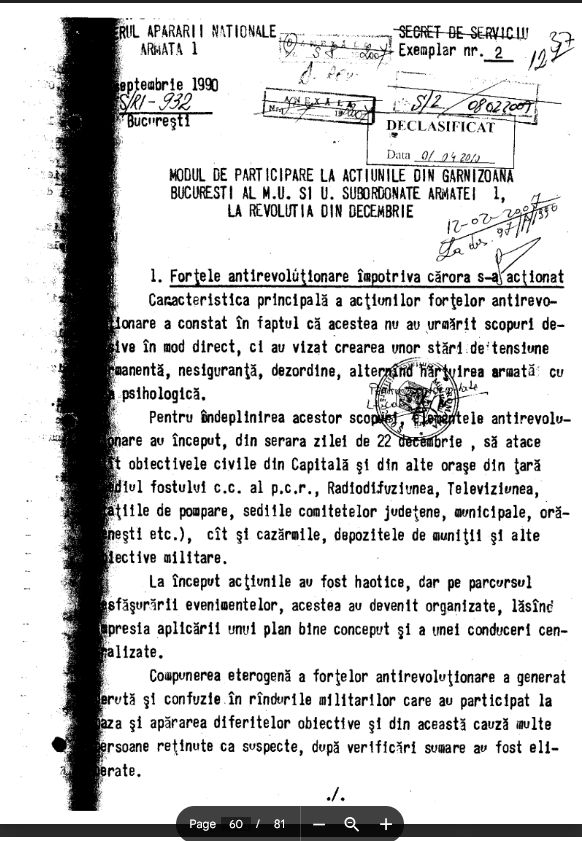
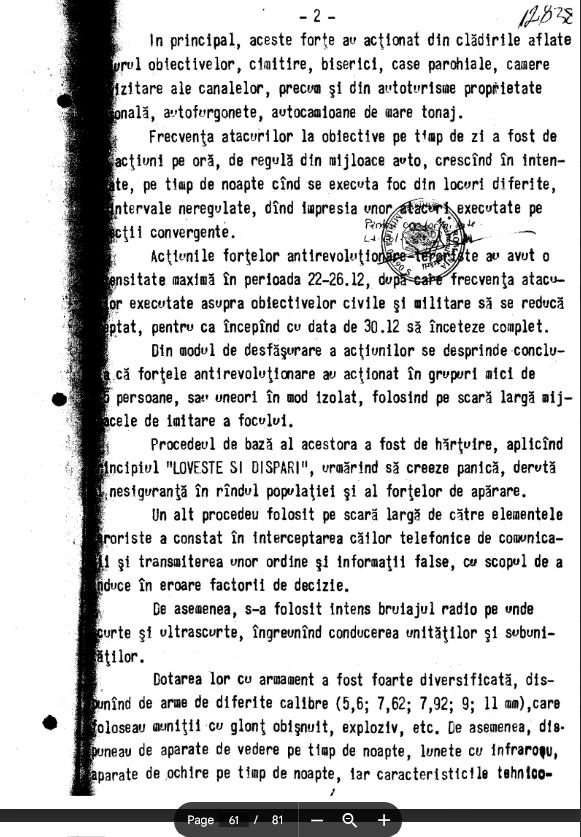
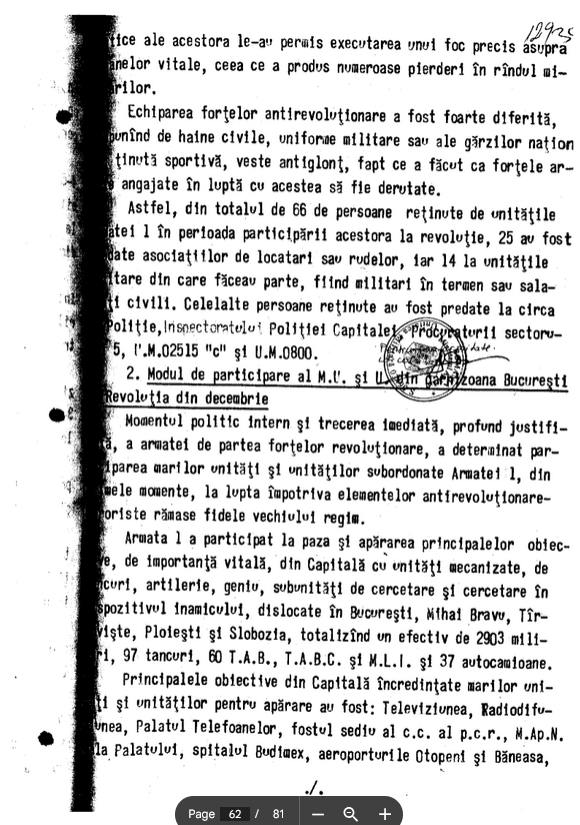
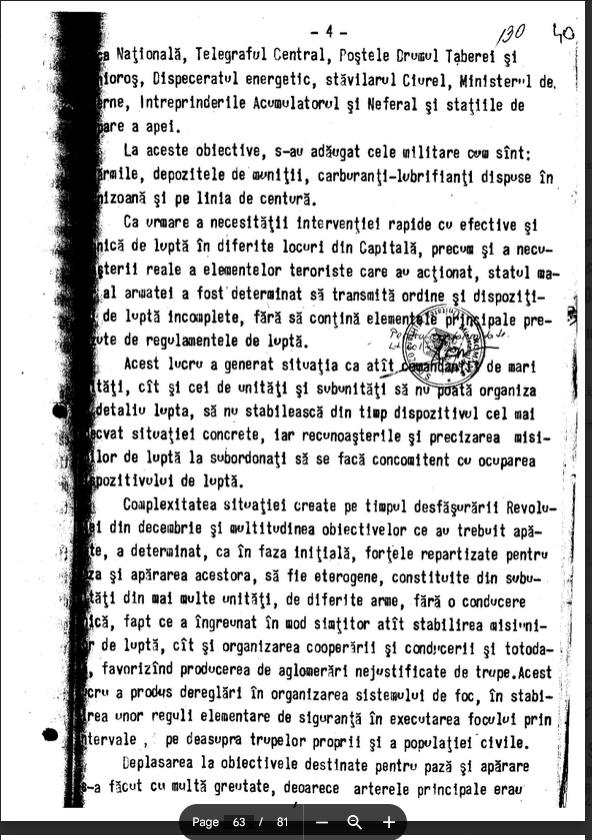
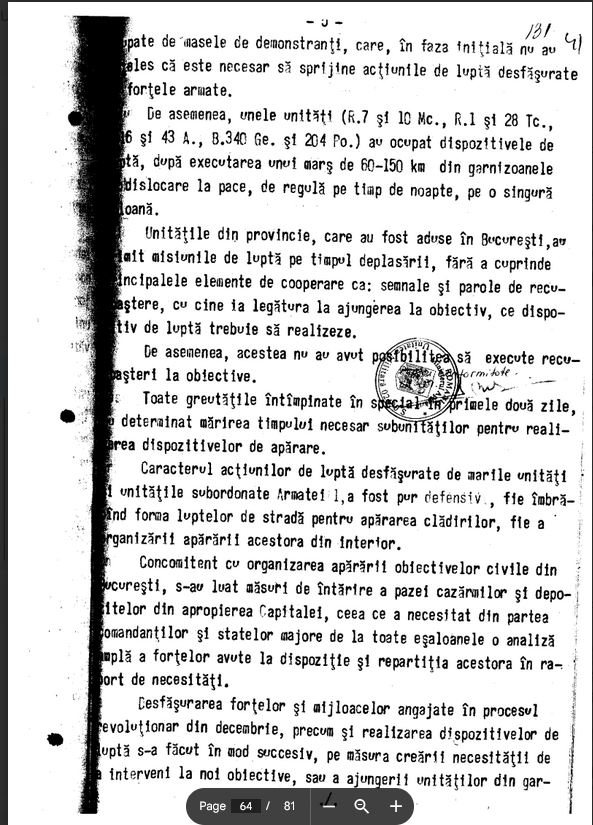
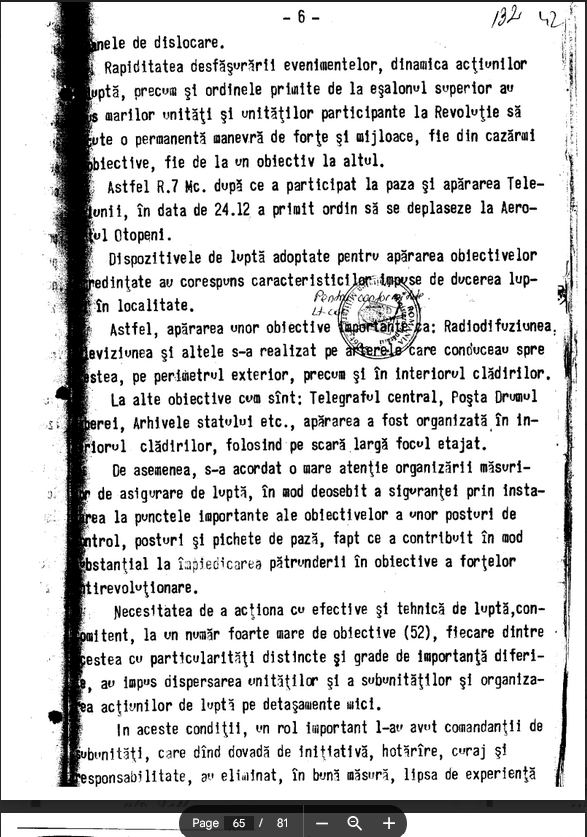
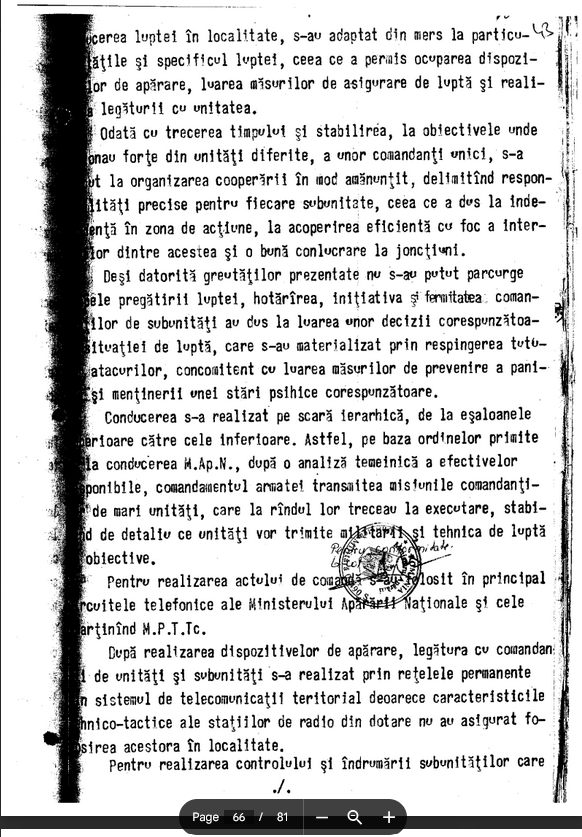
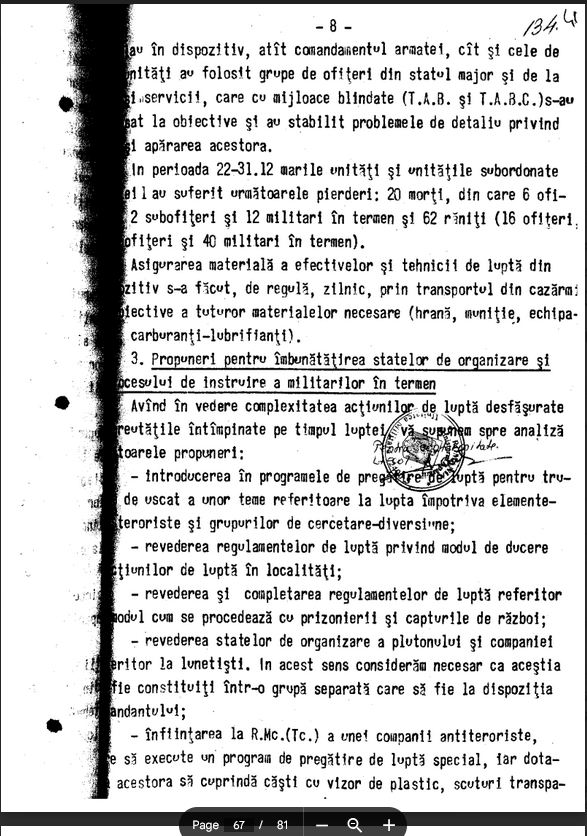
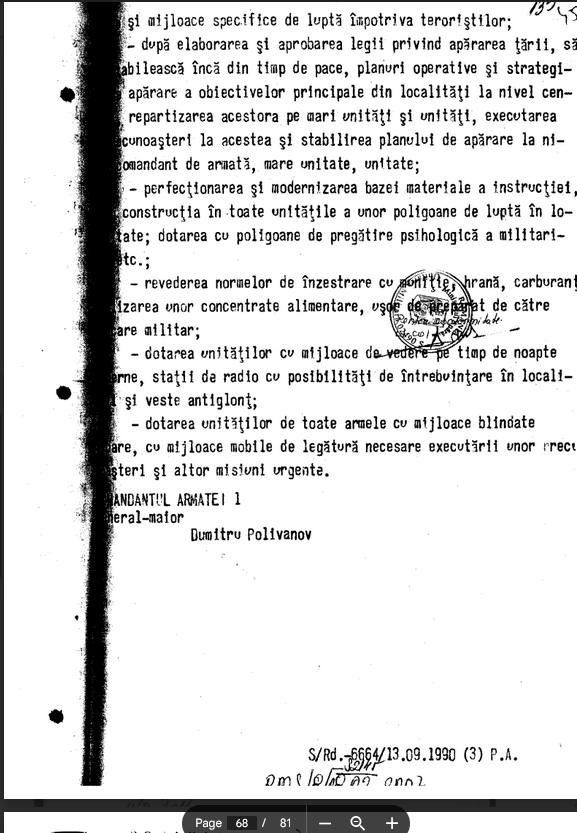


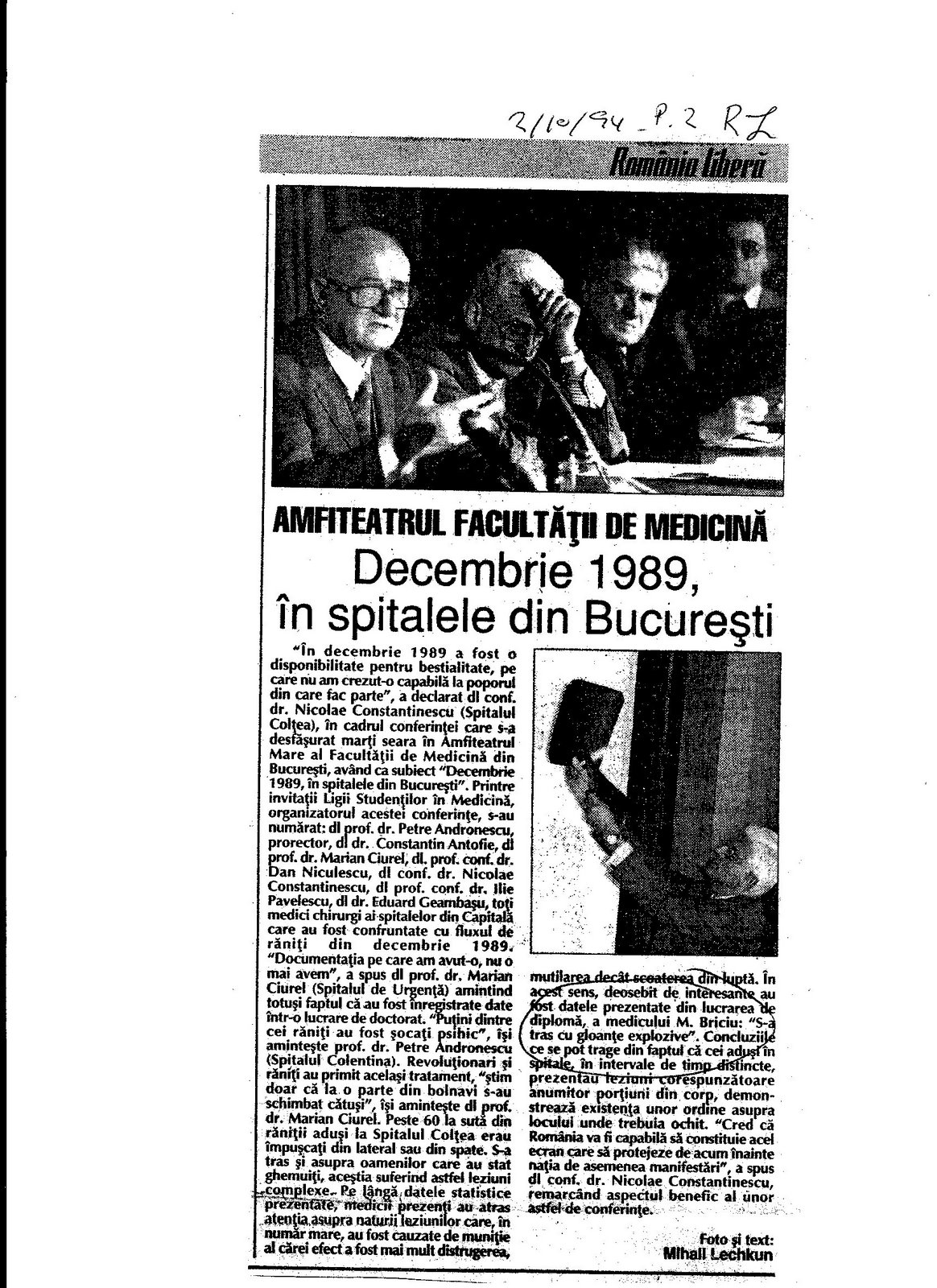
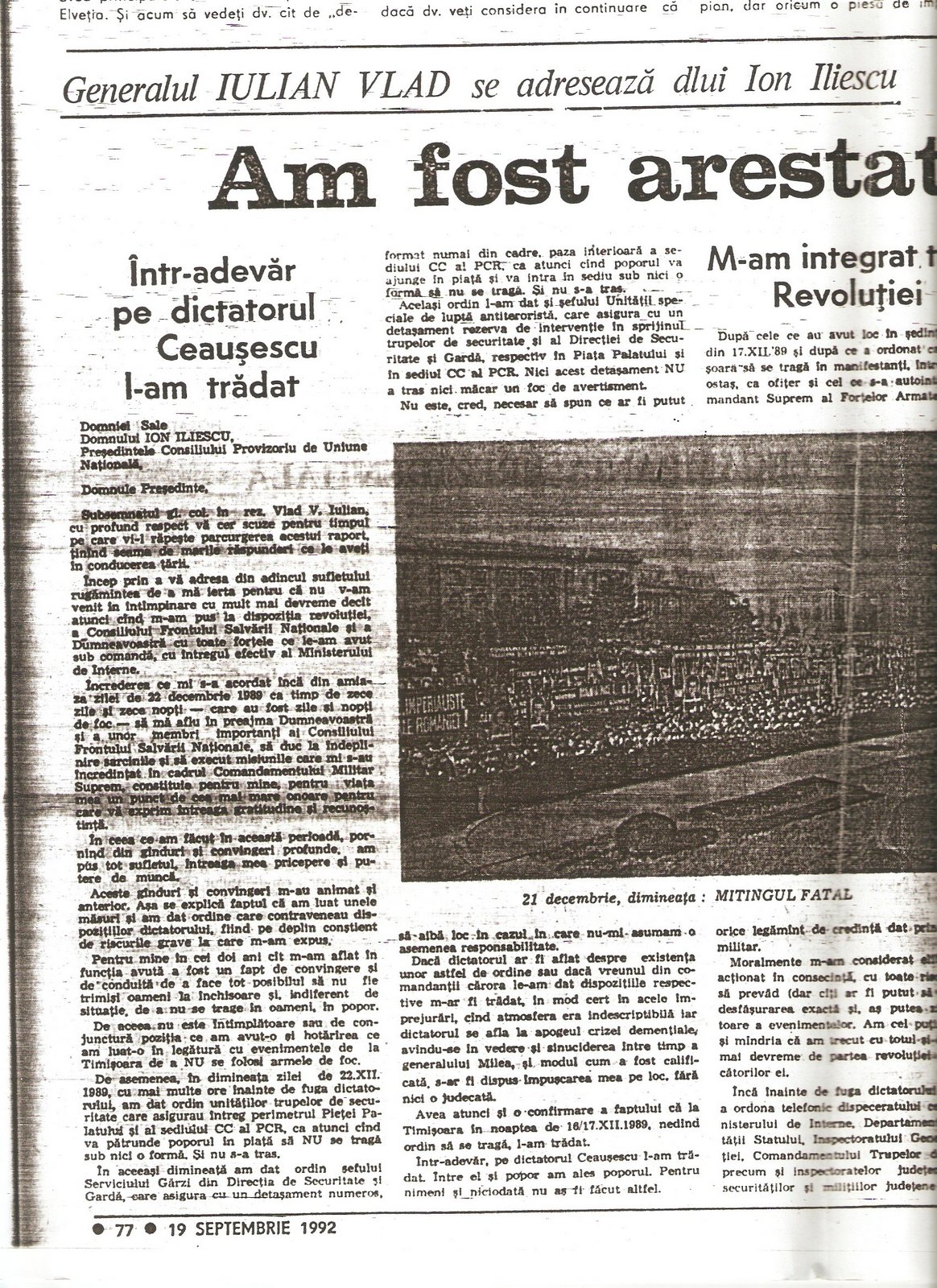
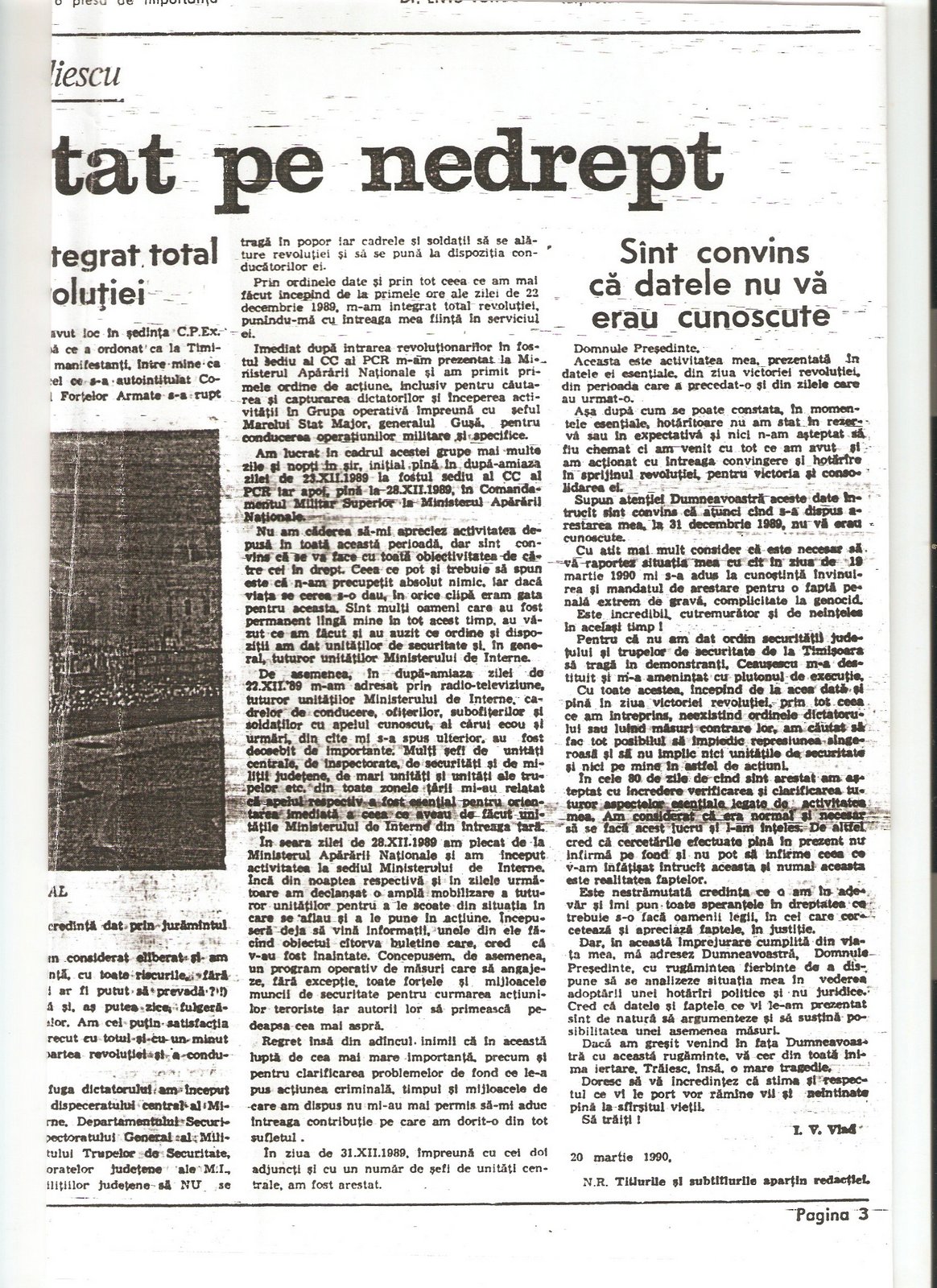
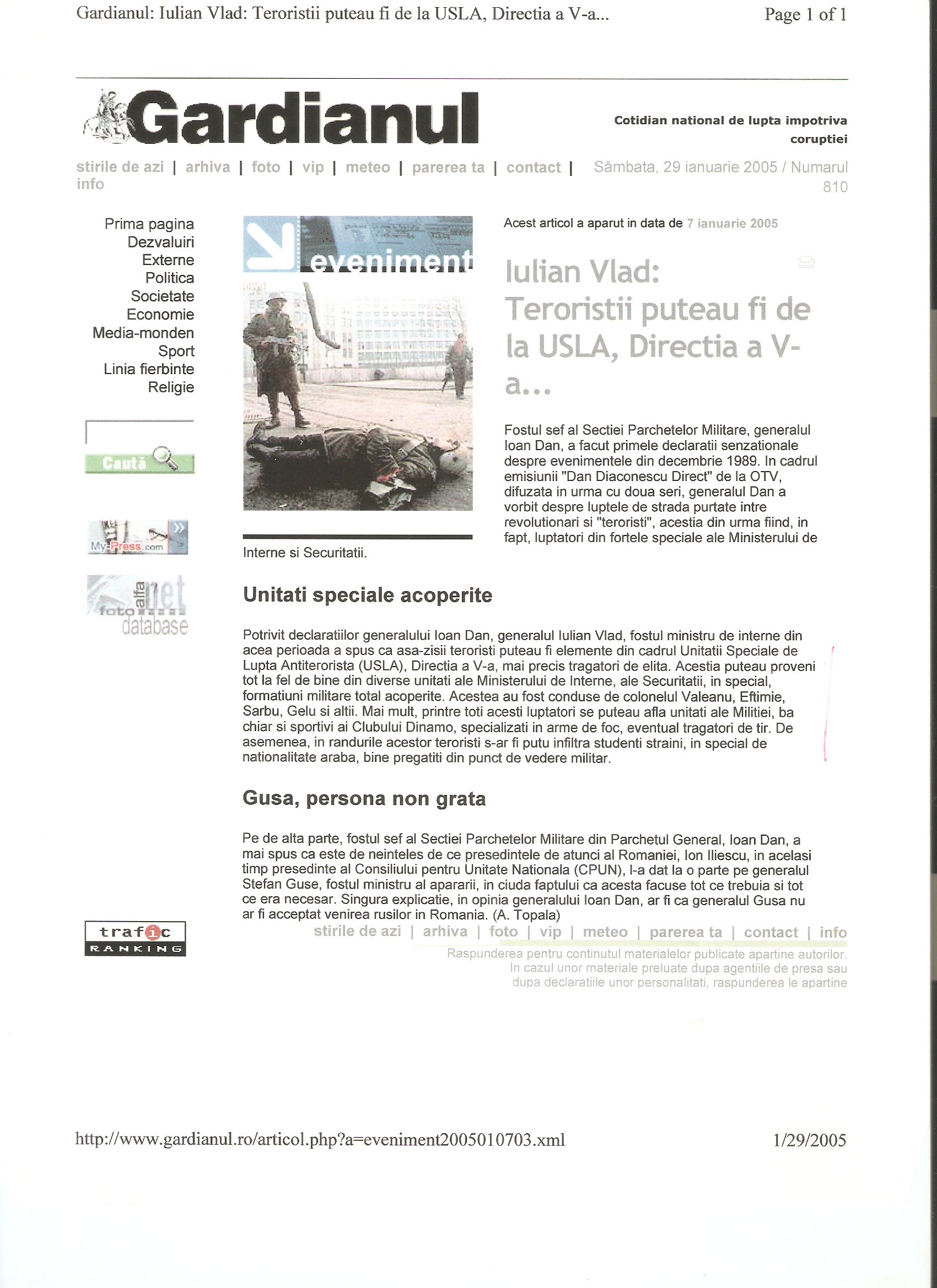
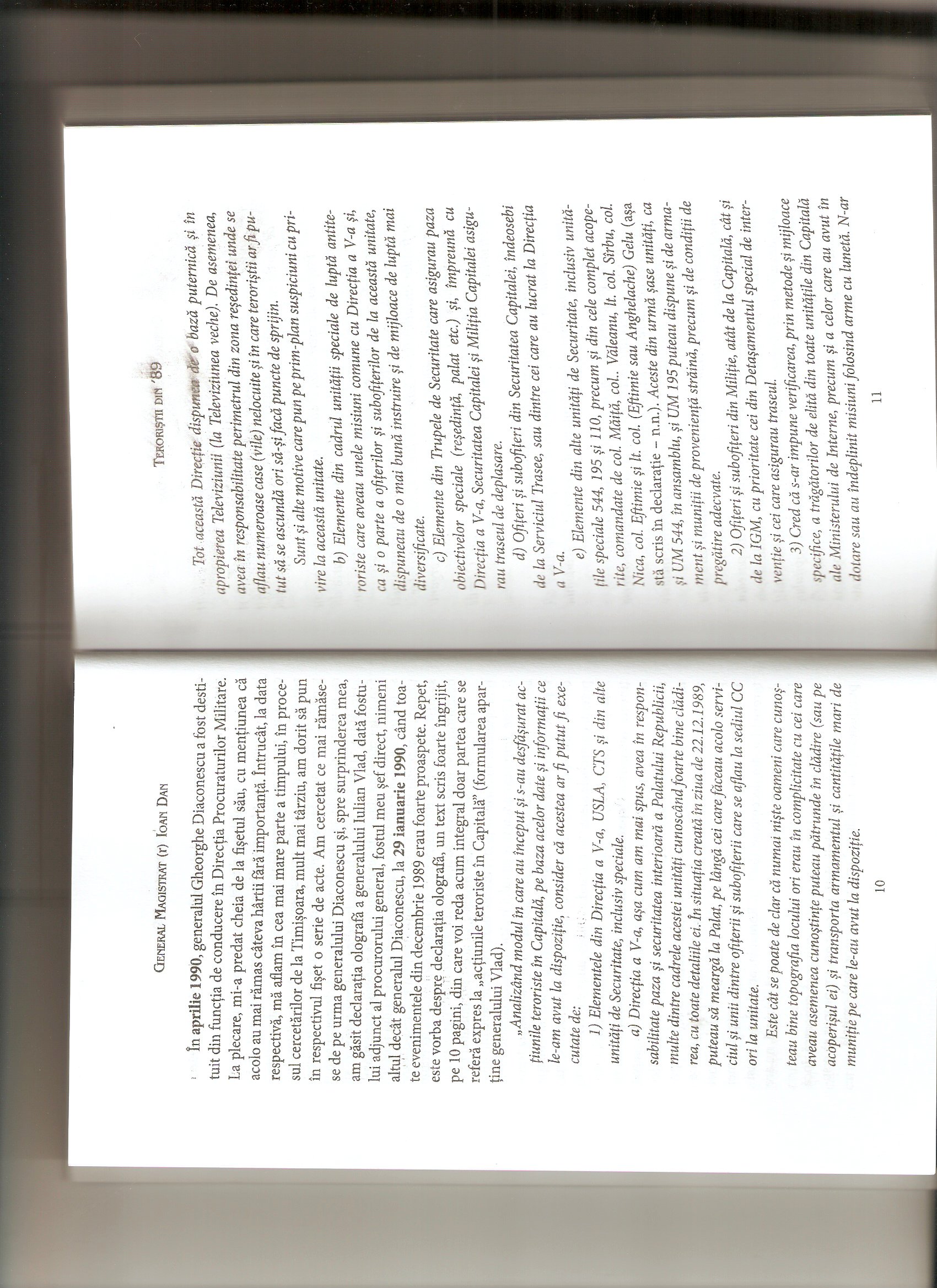
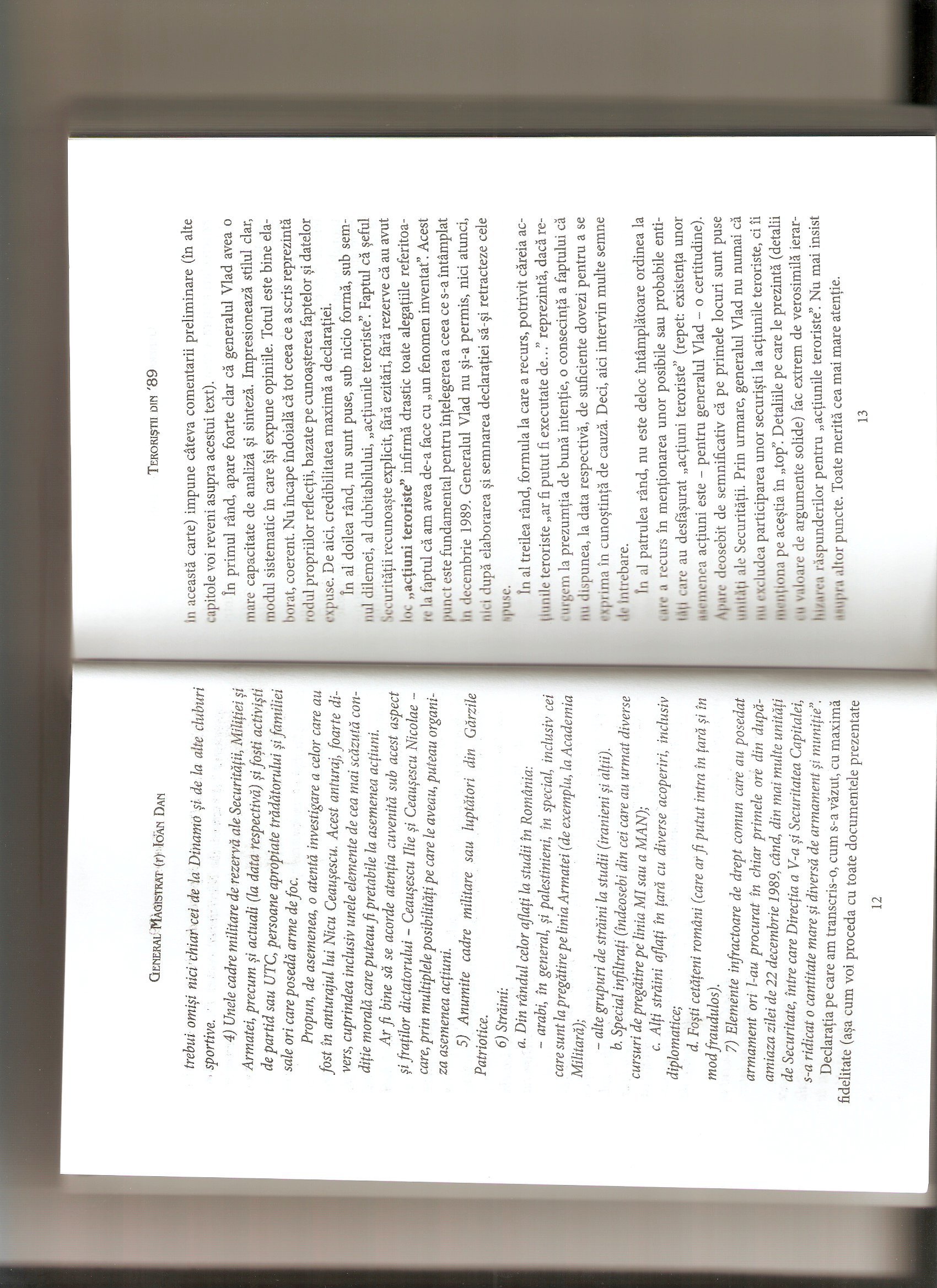
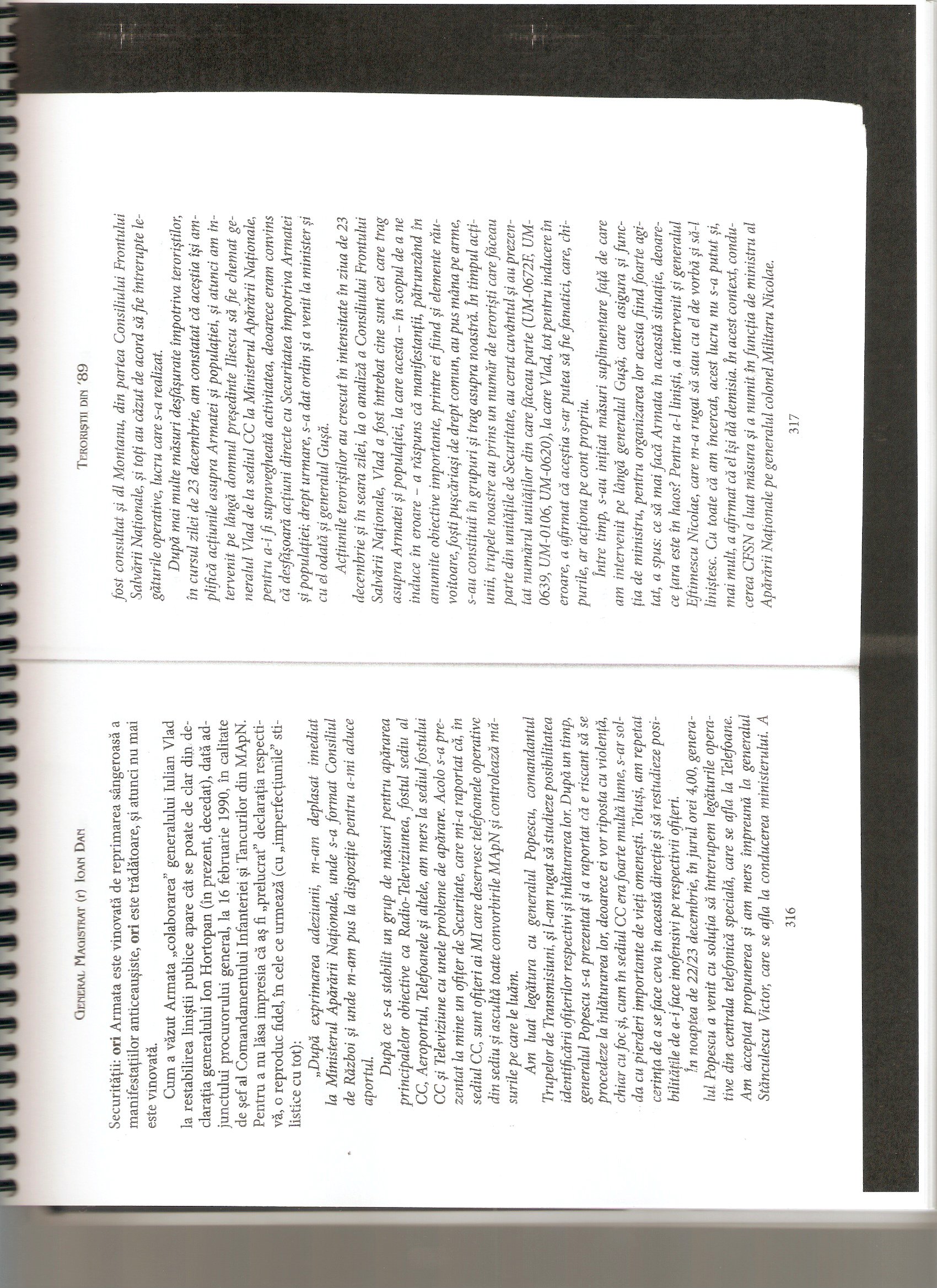
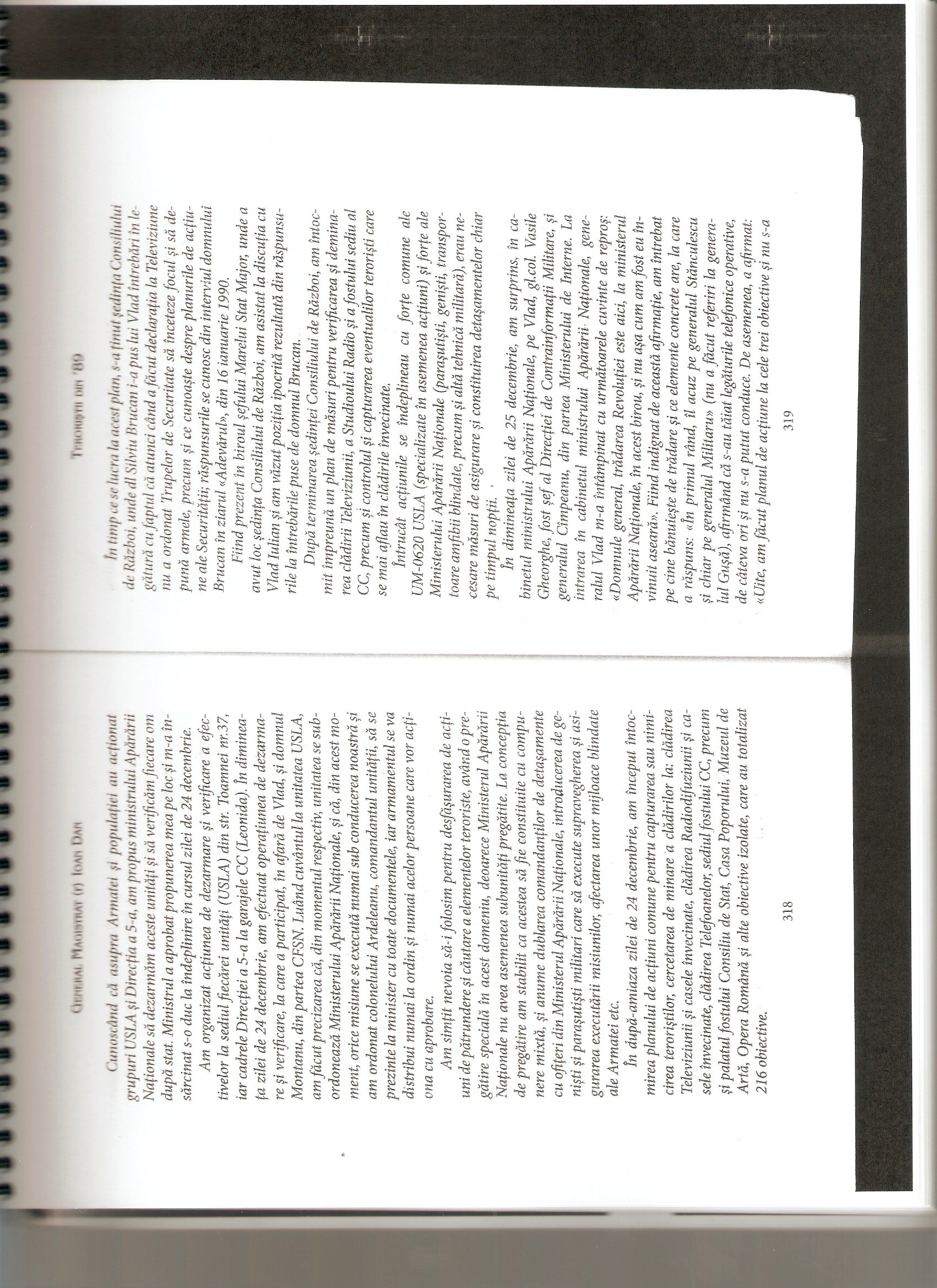
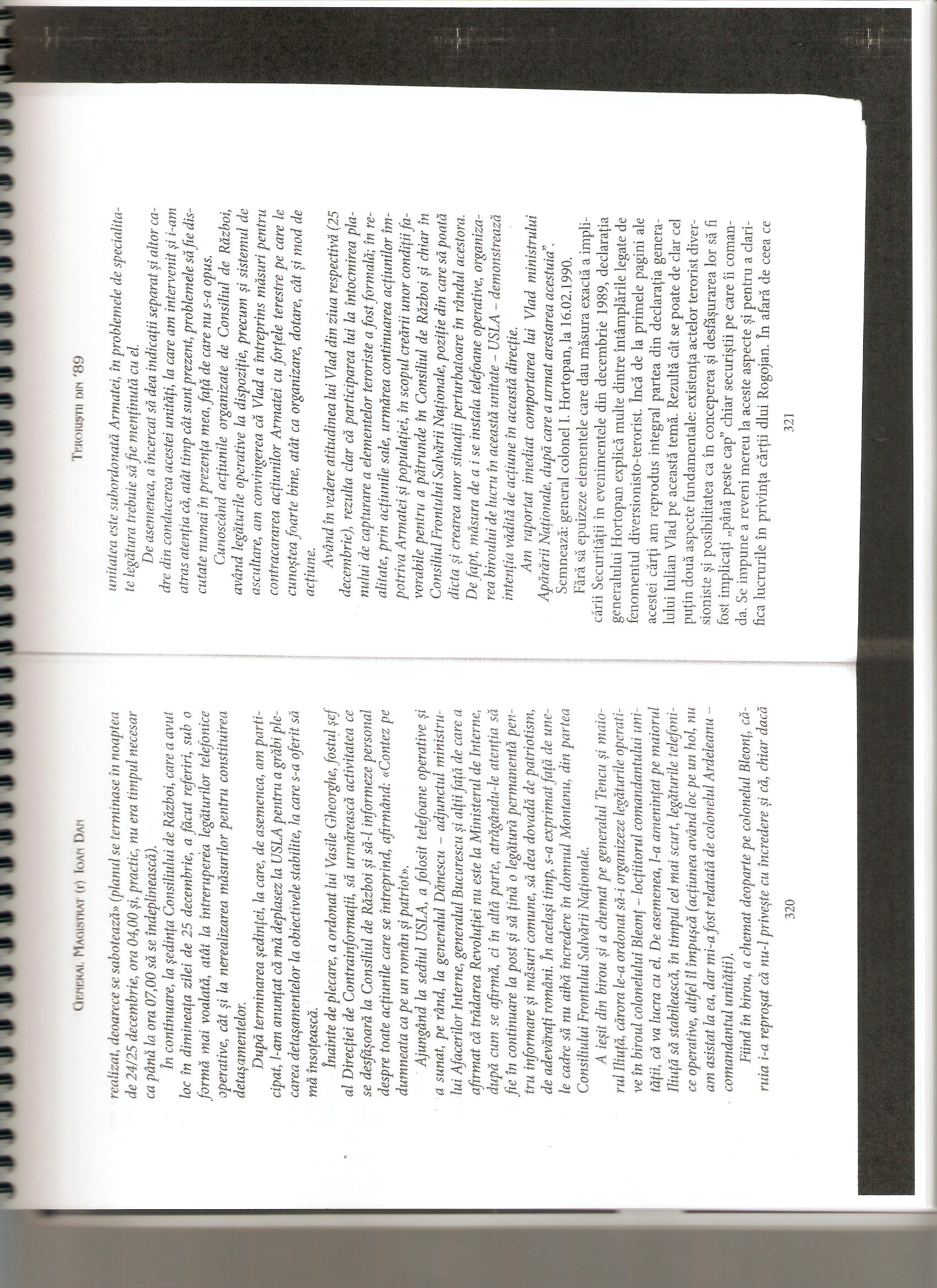
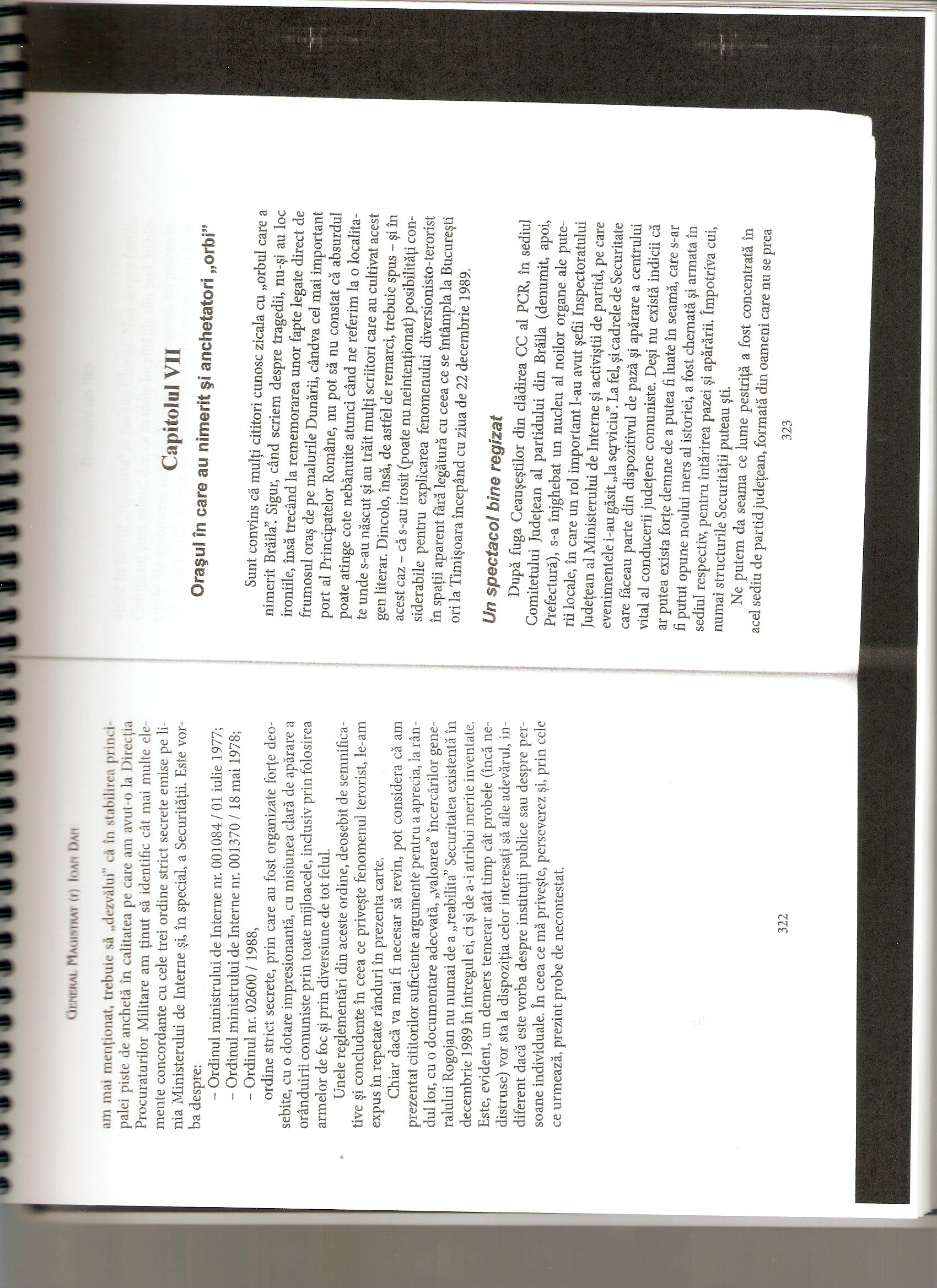
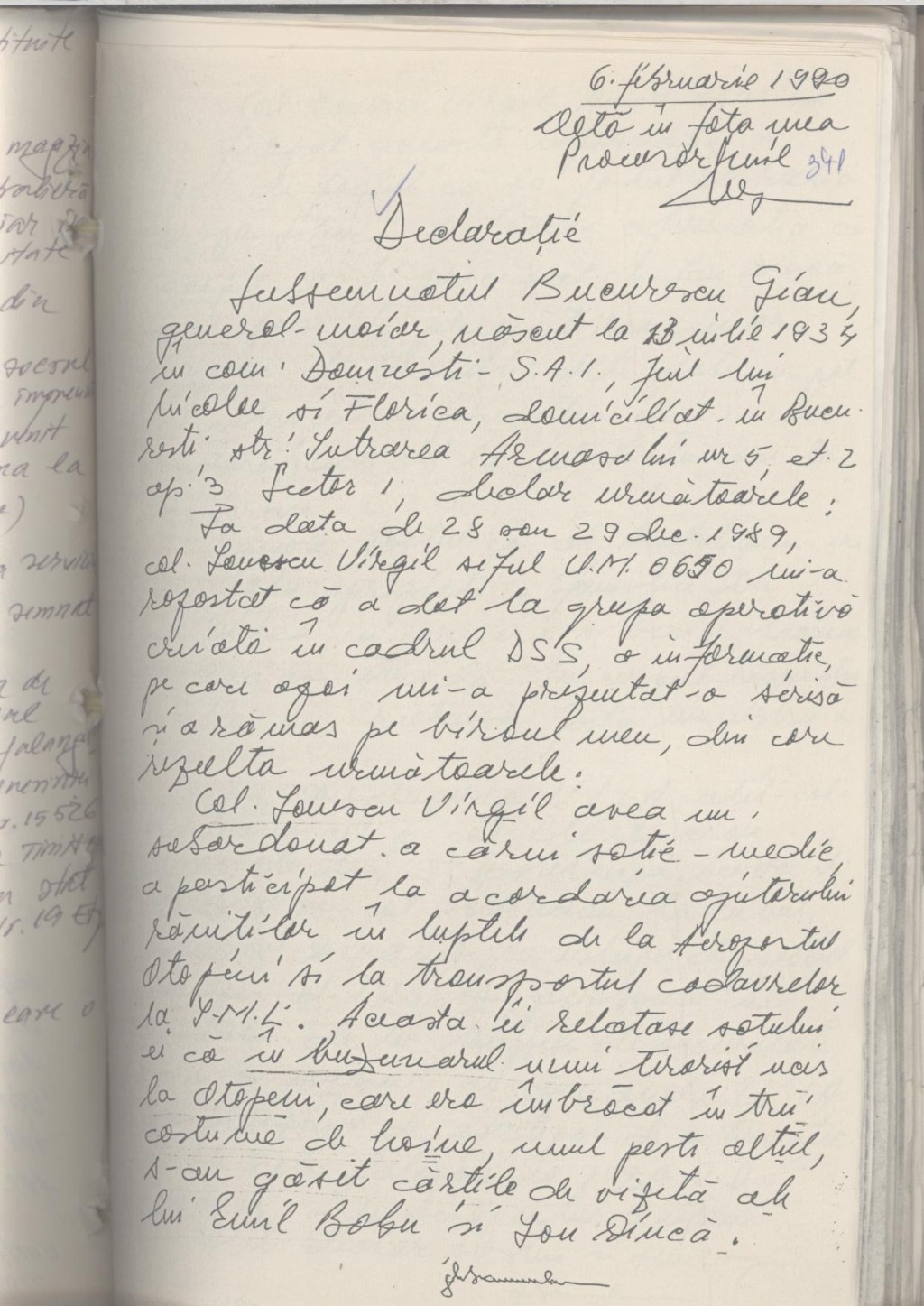
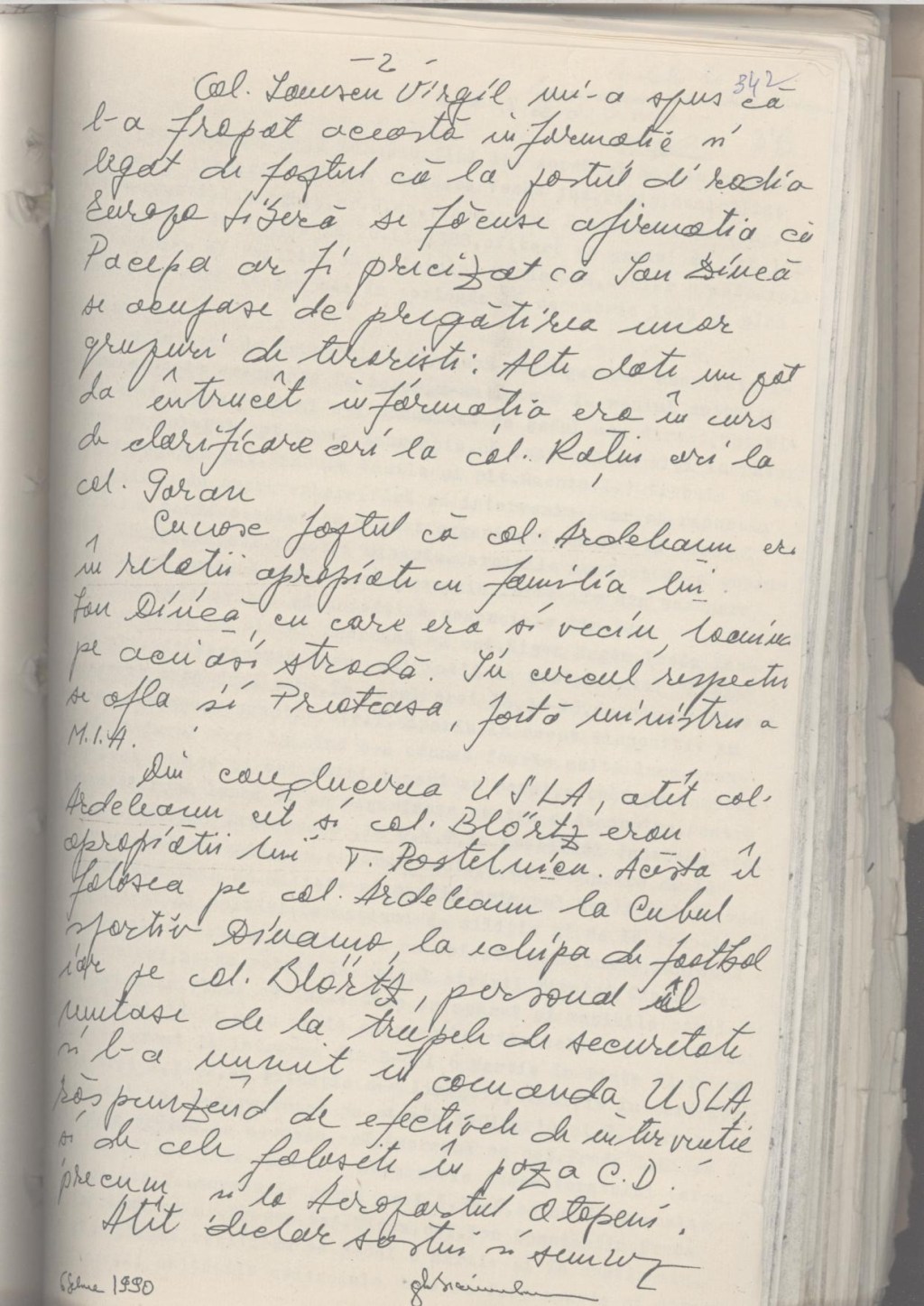
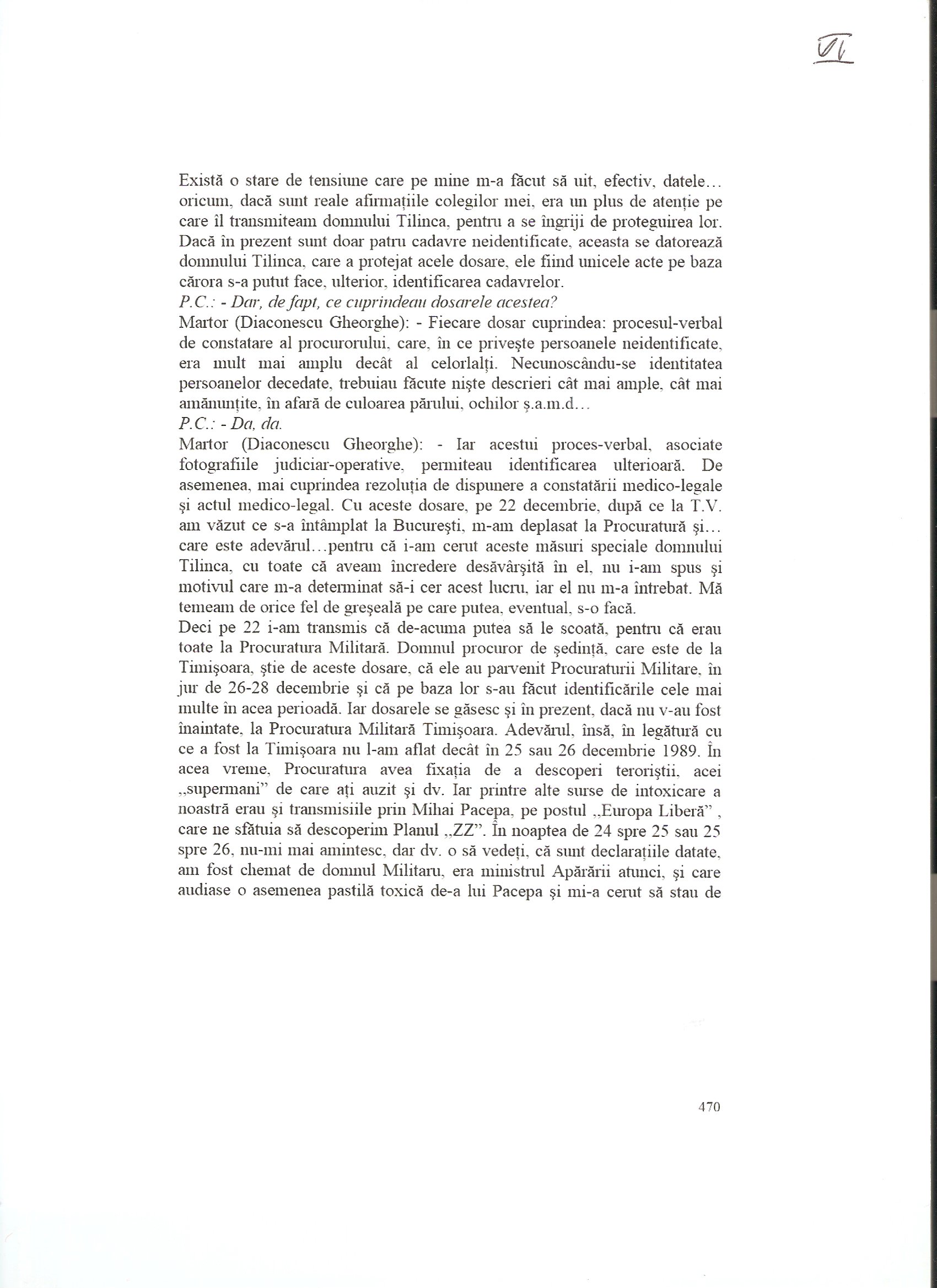
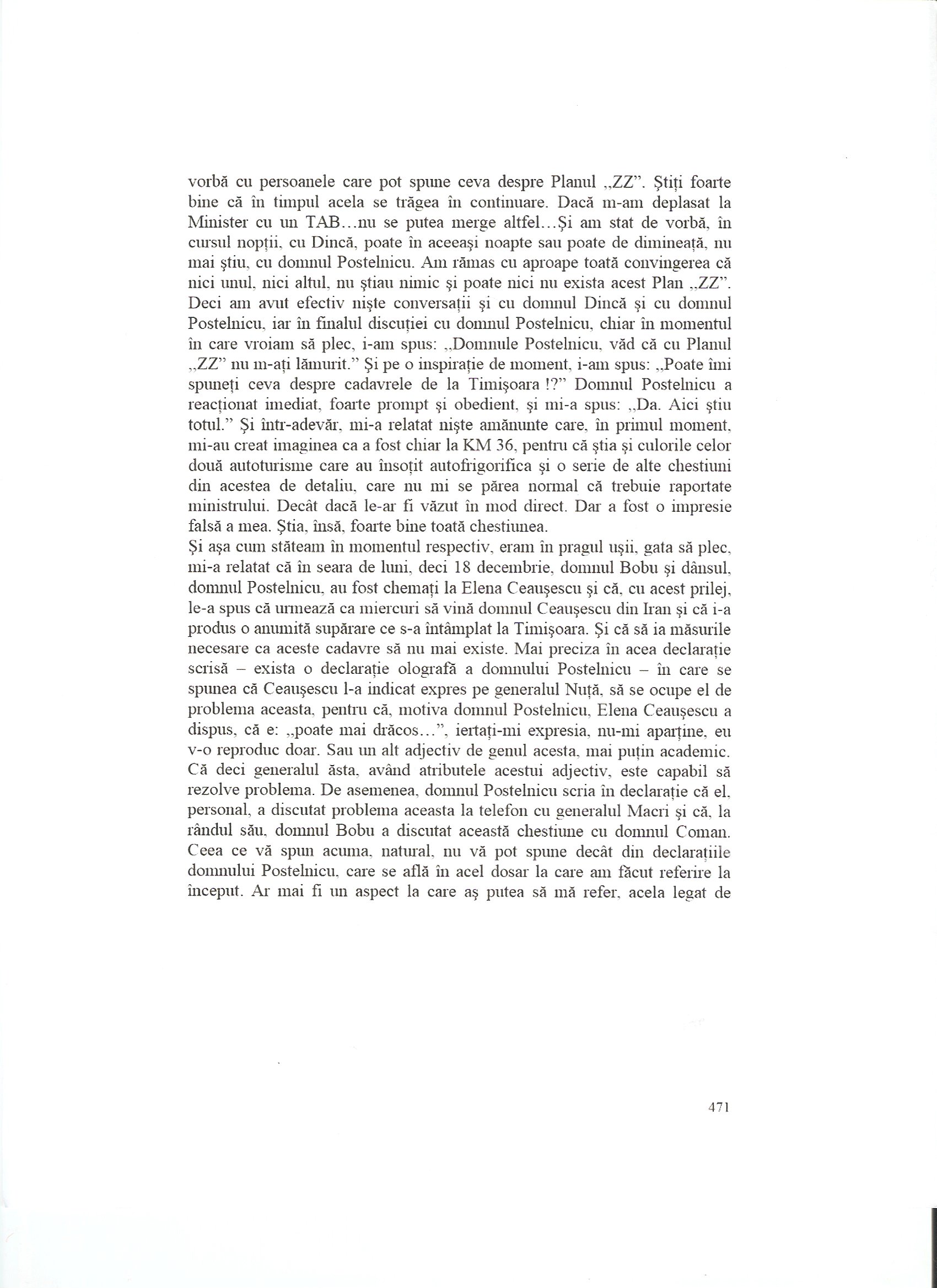
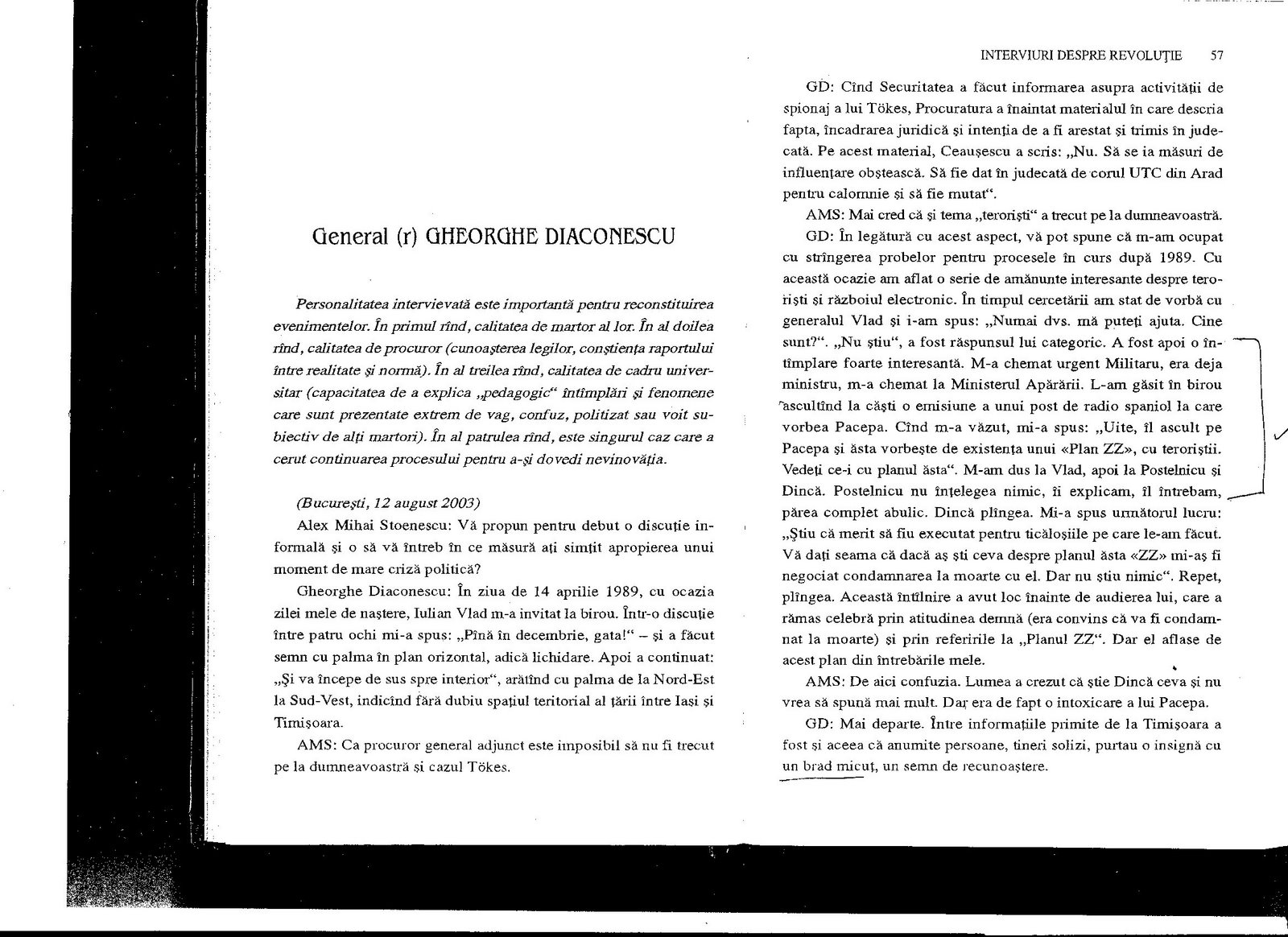
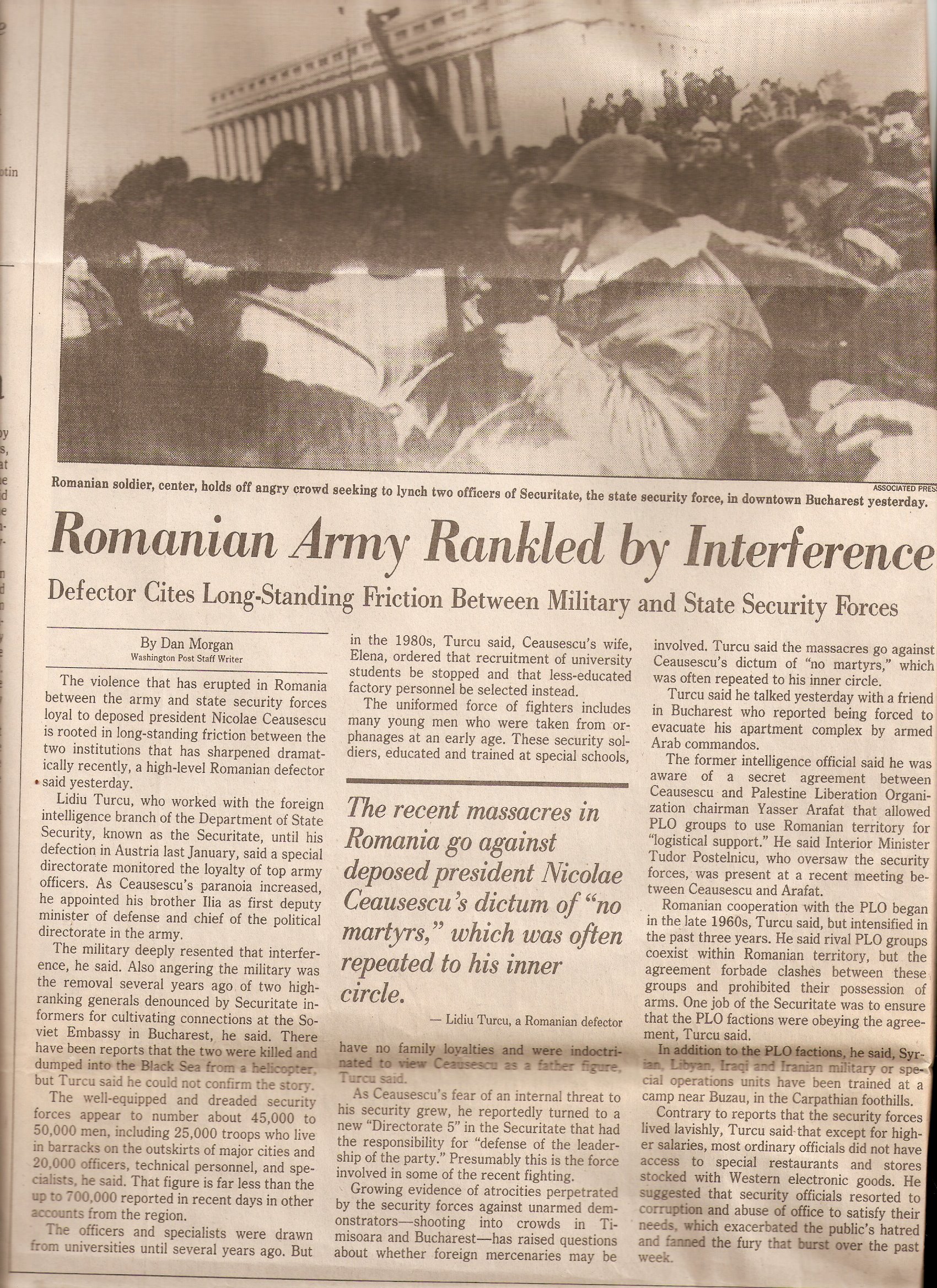

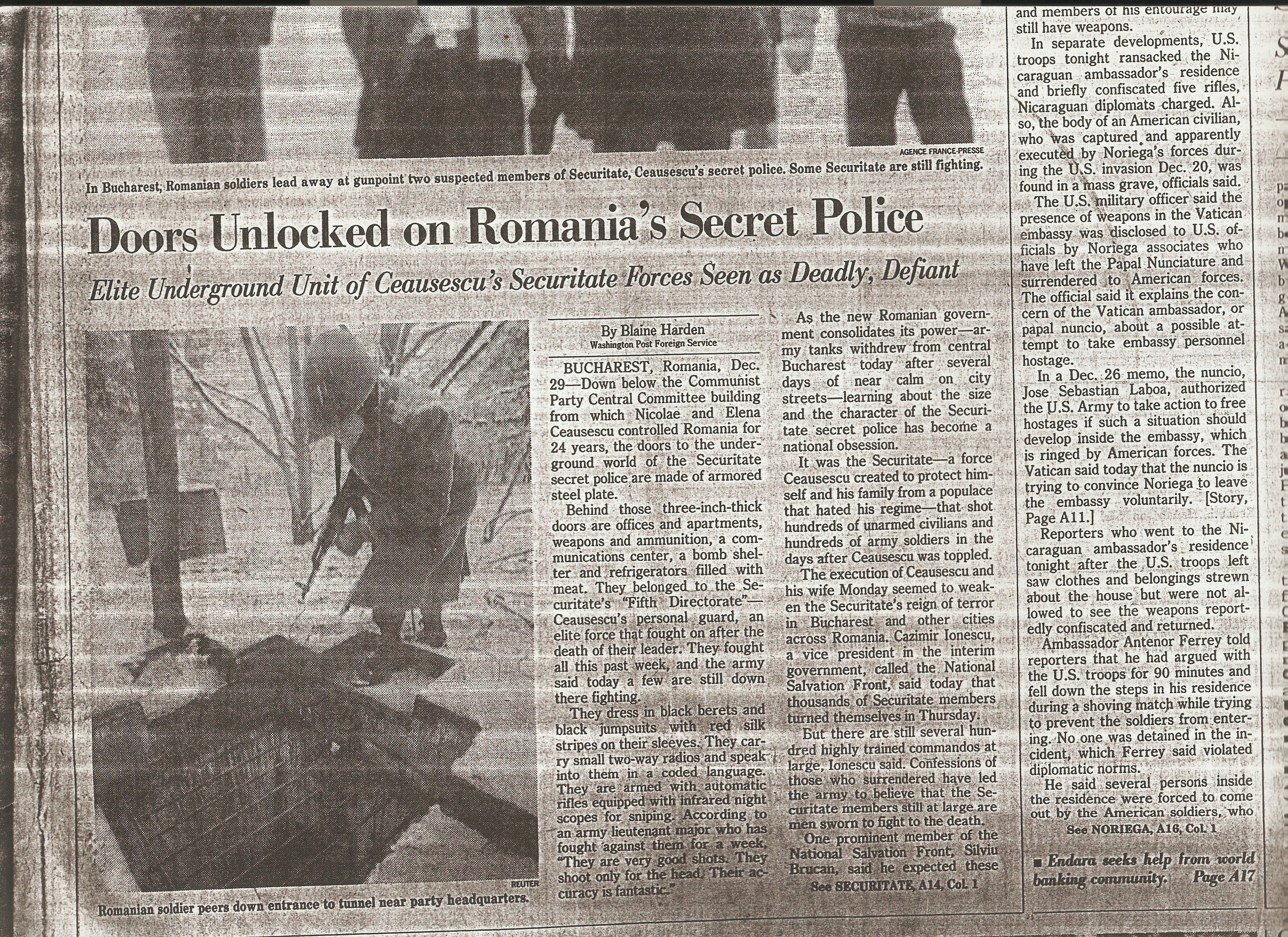
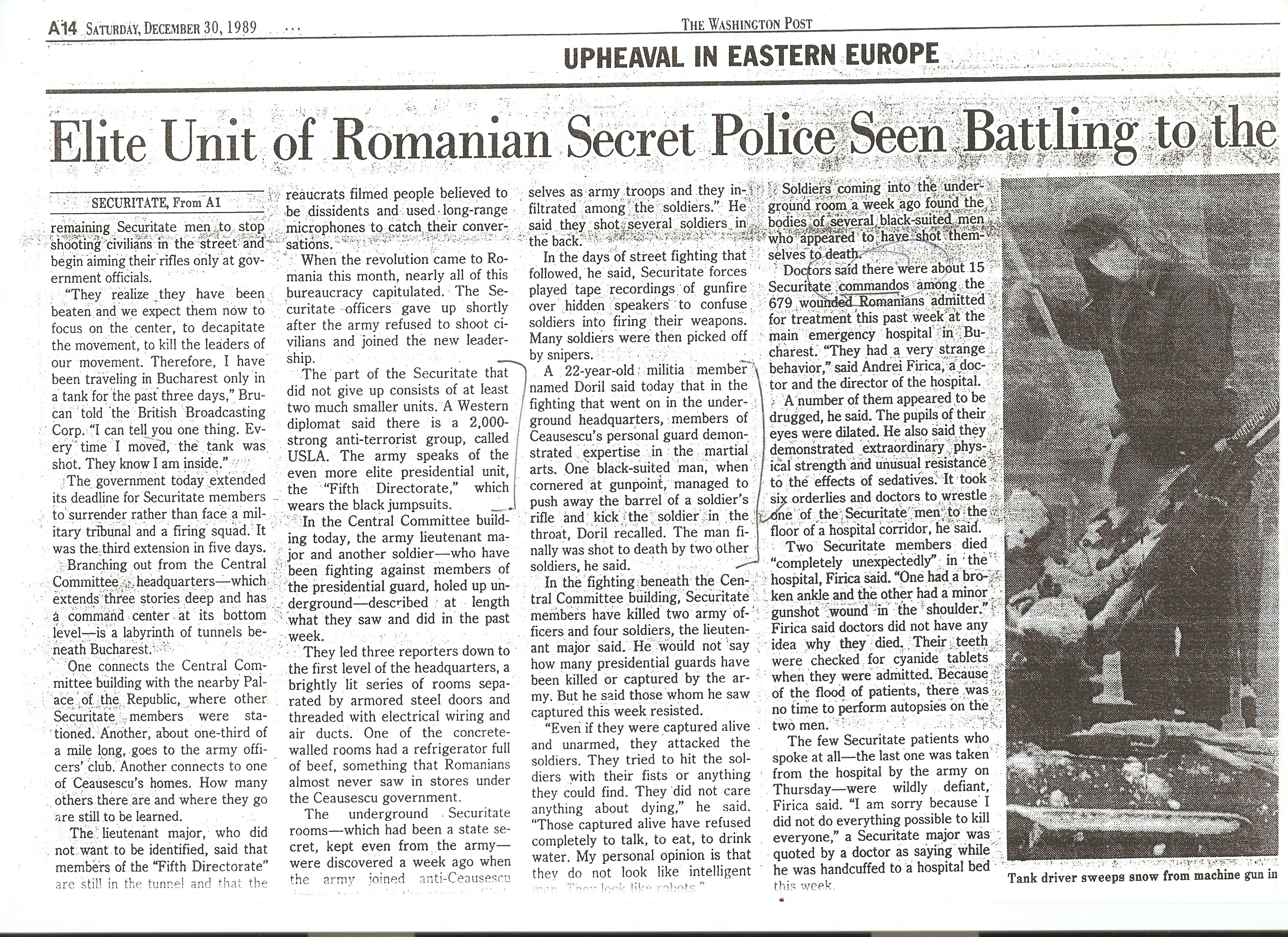

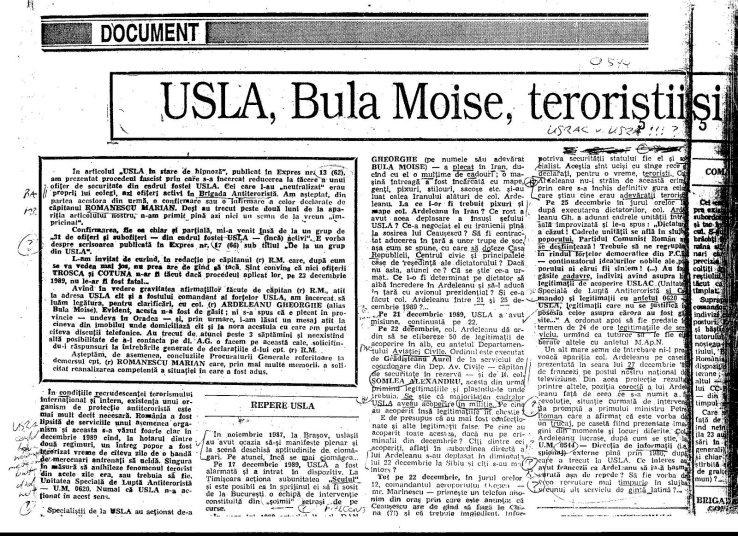
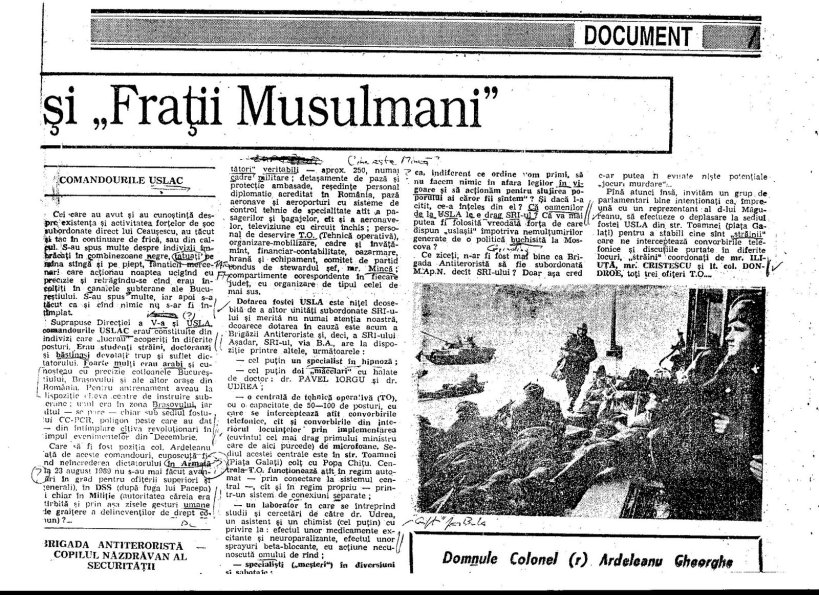
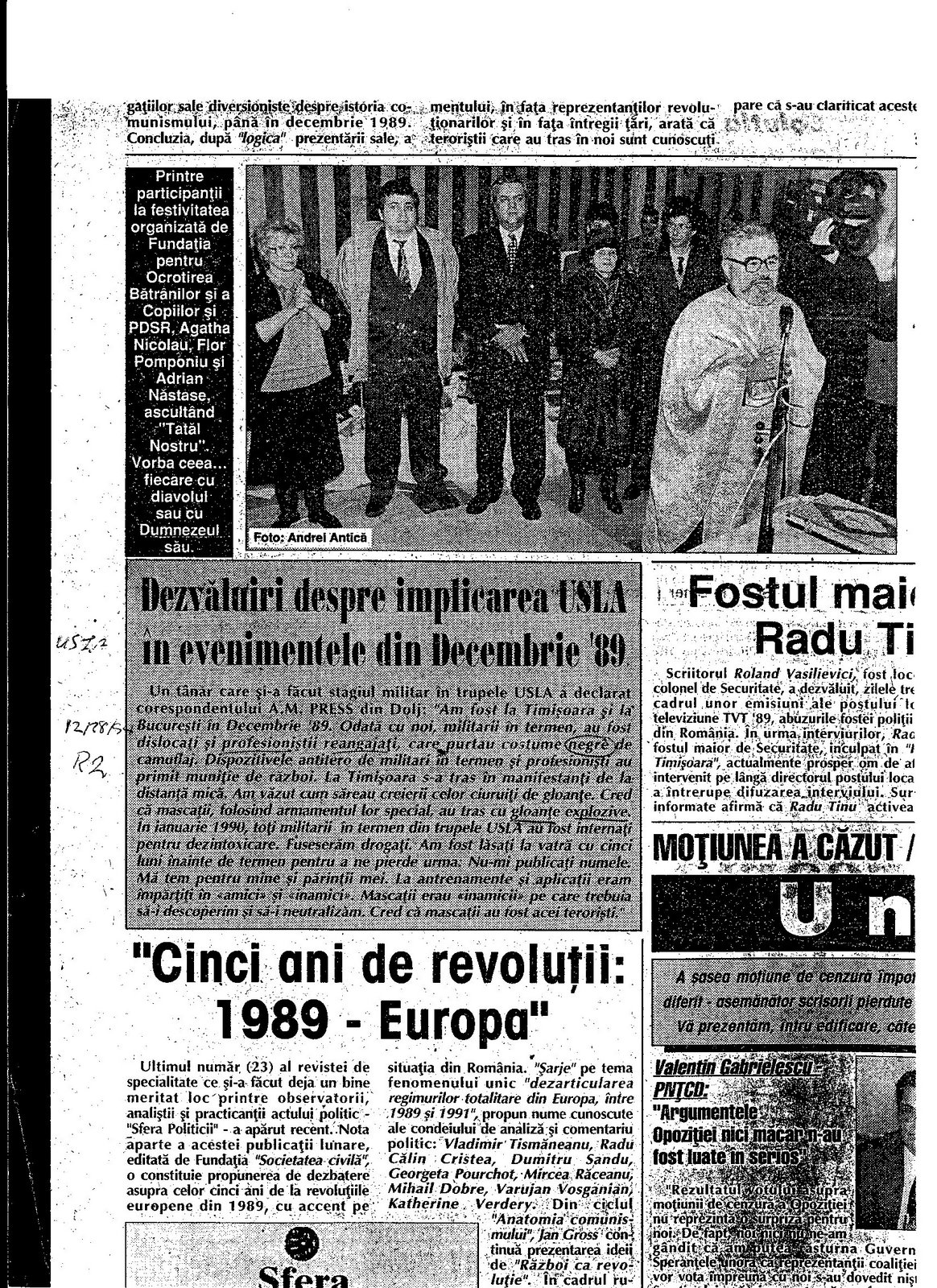


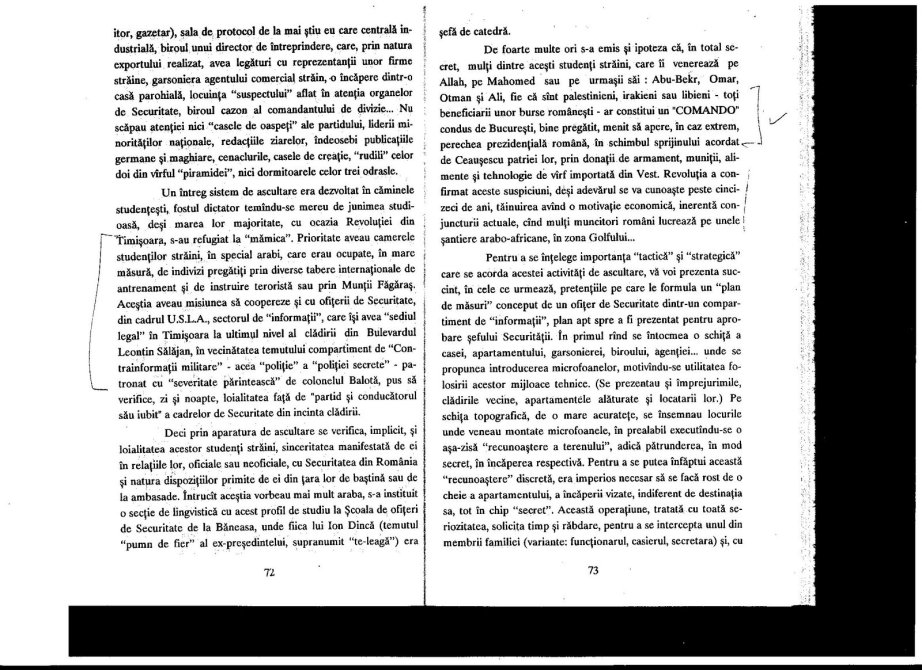


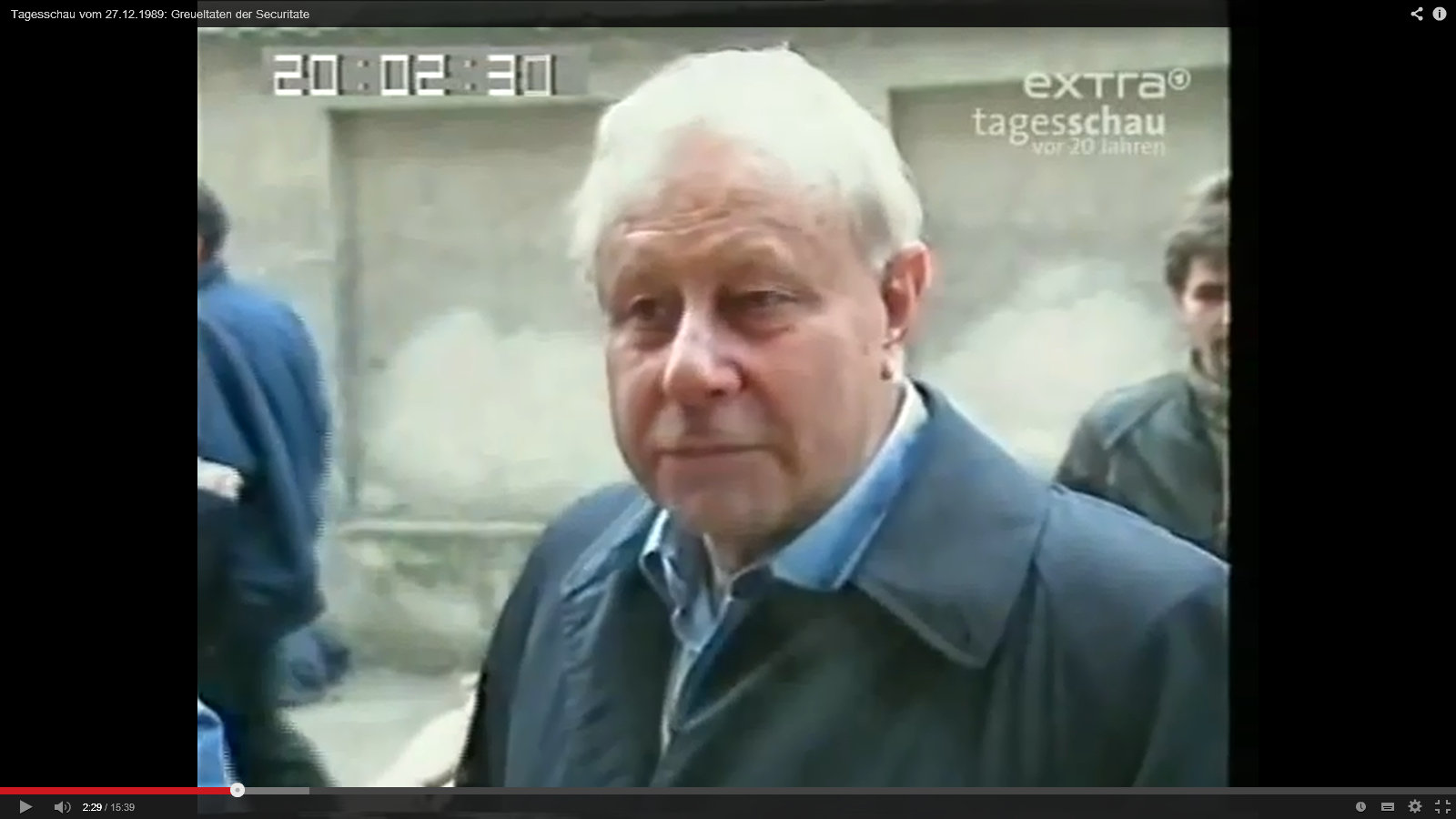
 Clip Ref: BSP271289002 0
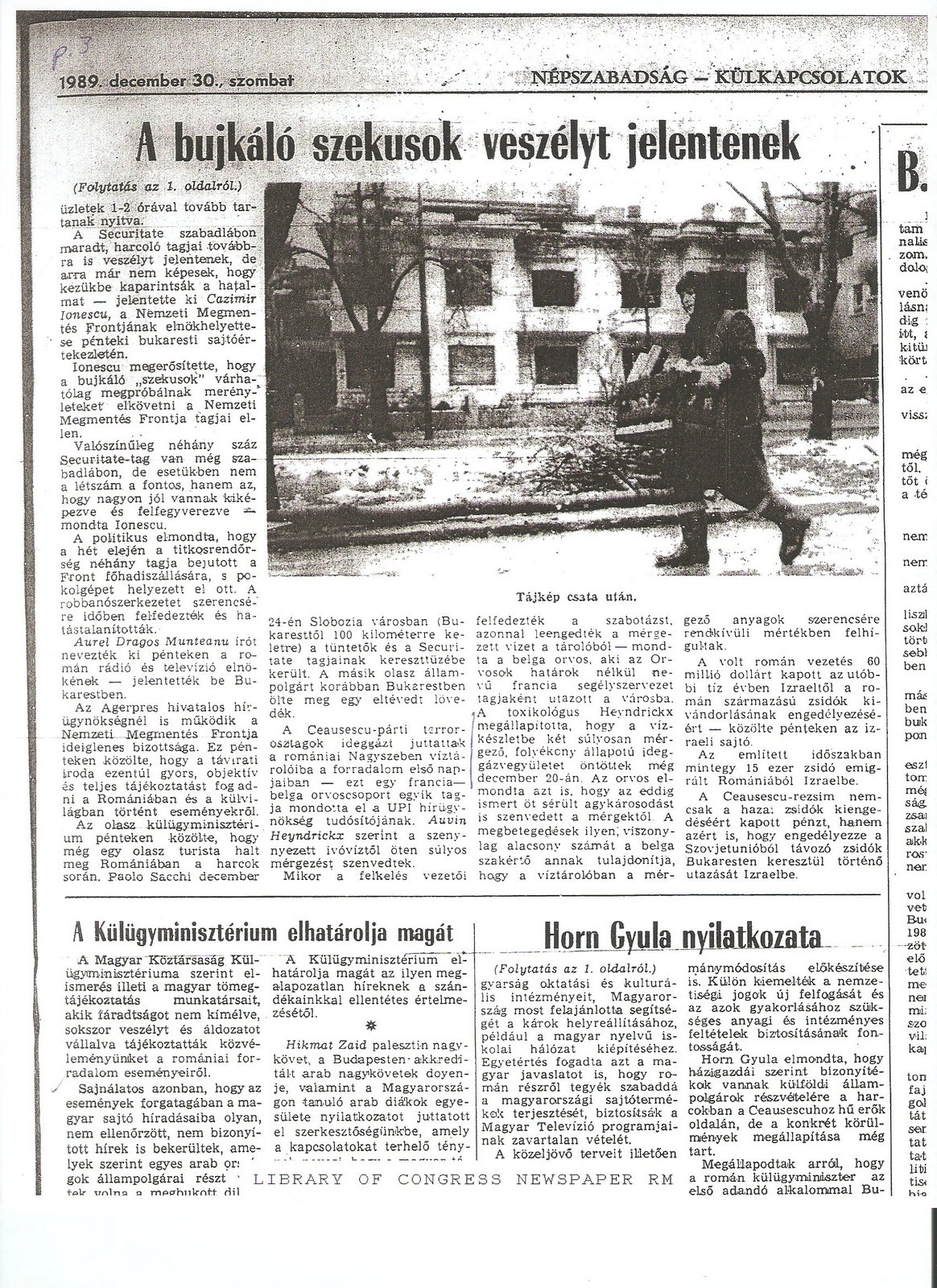


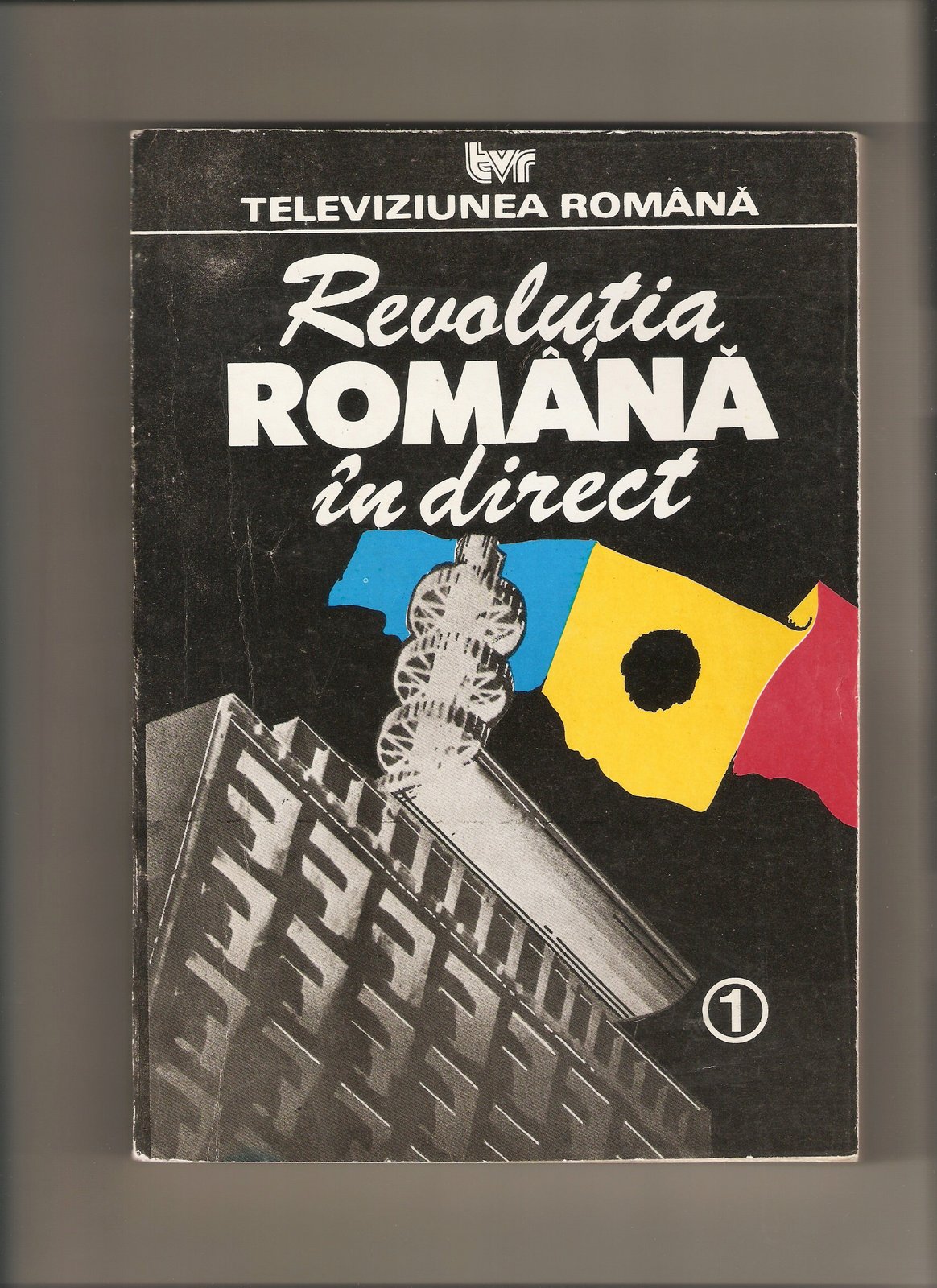
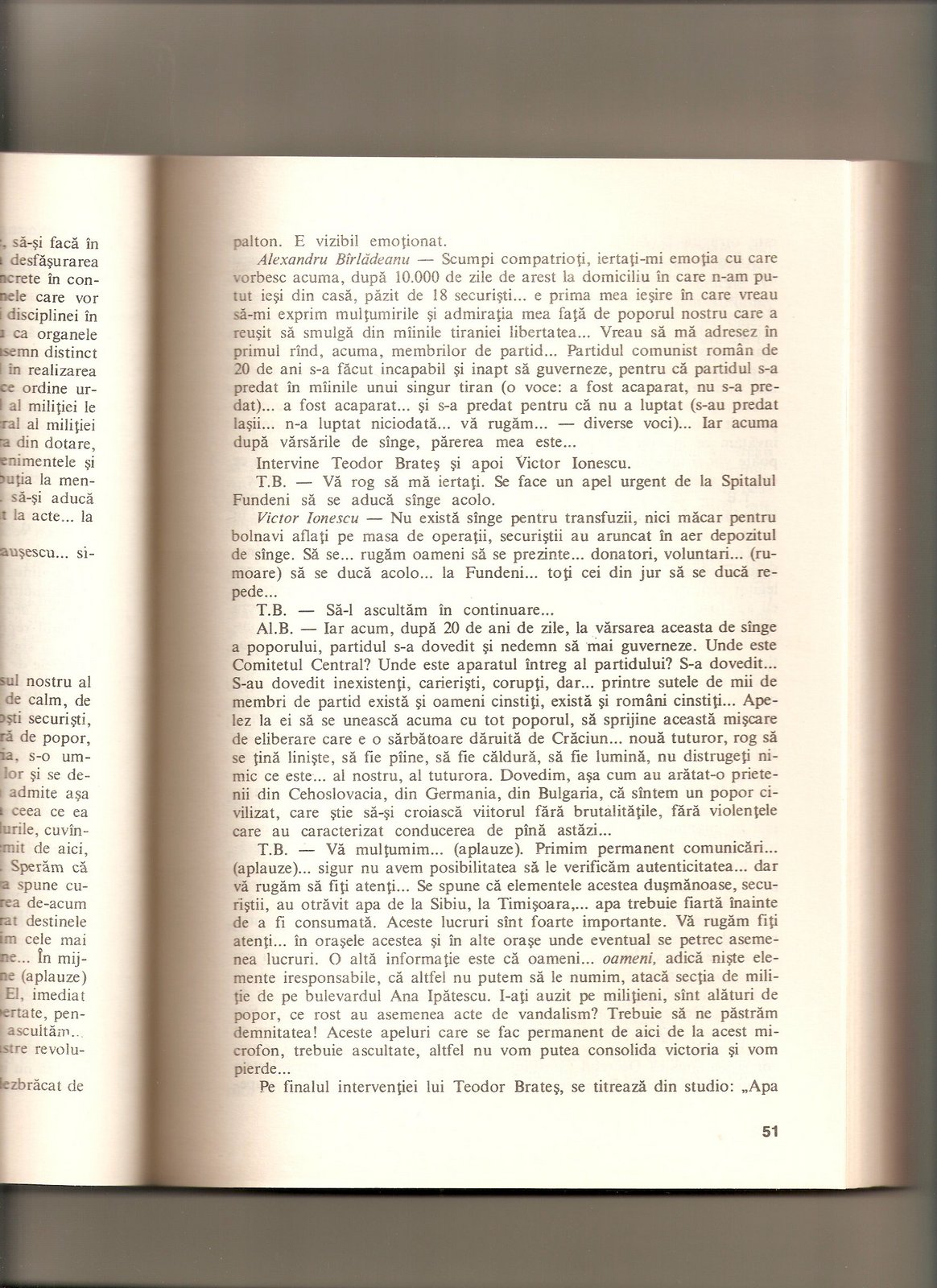
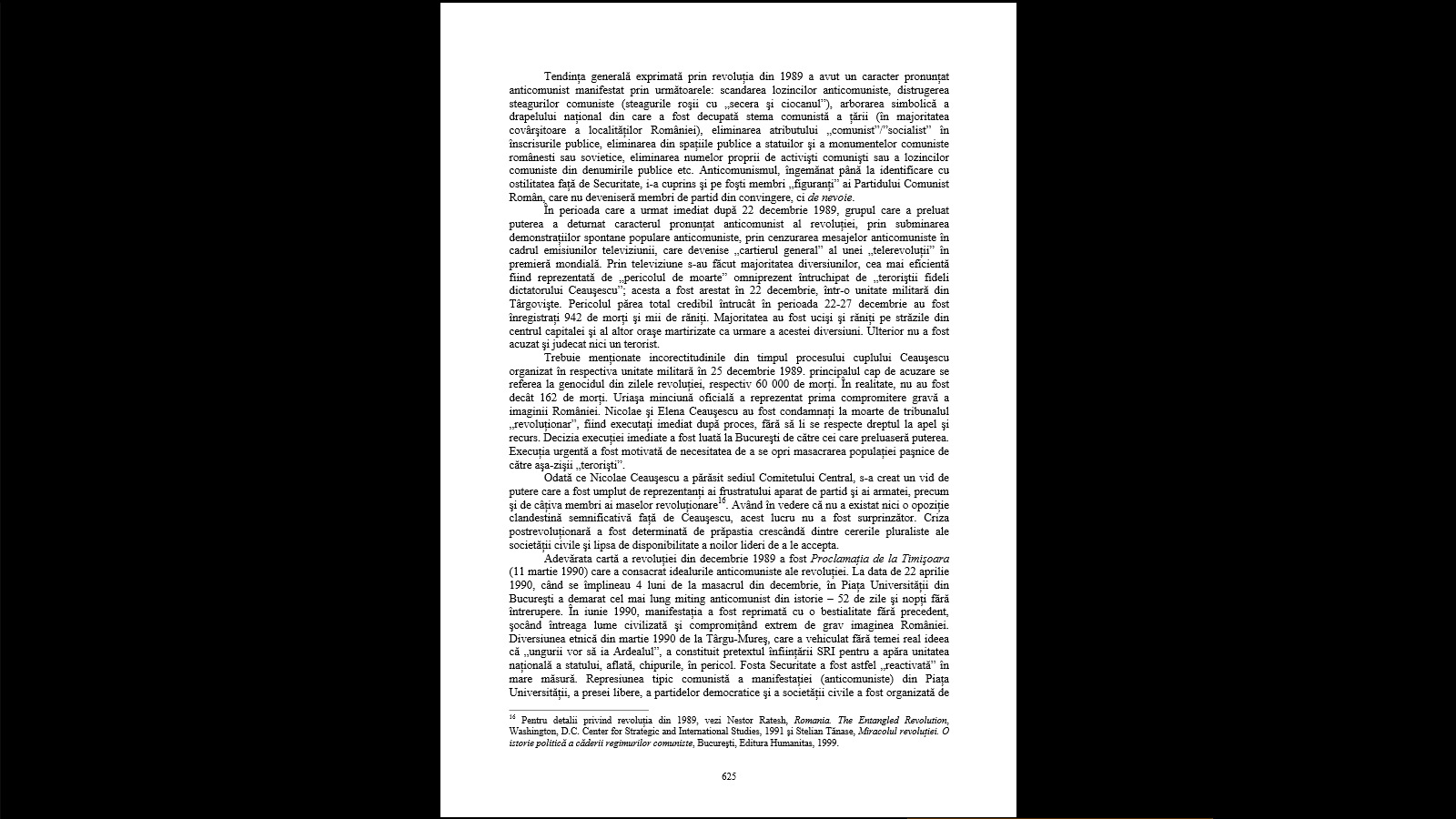
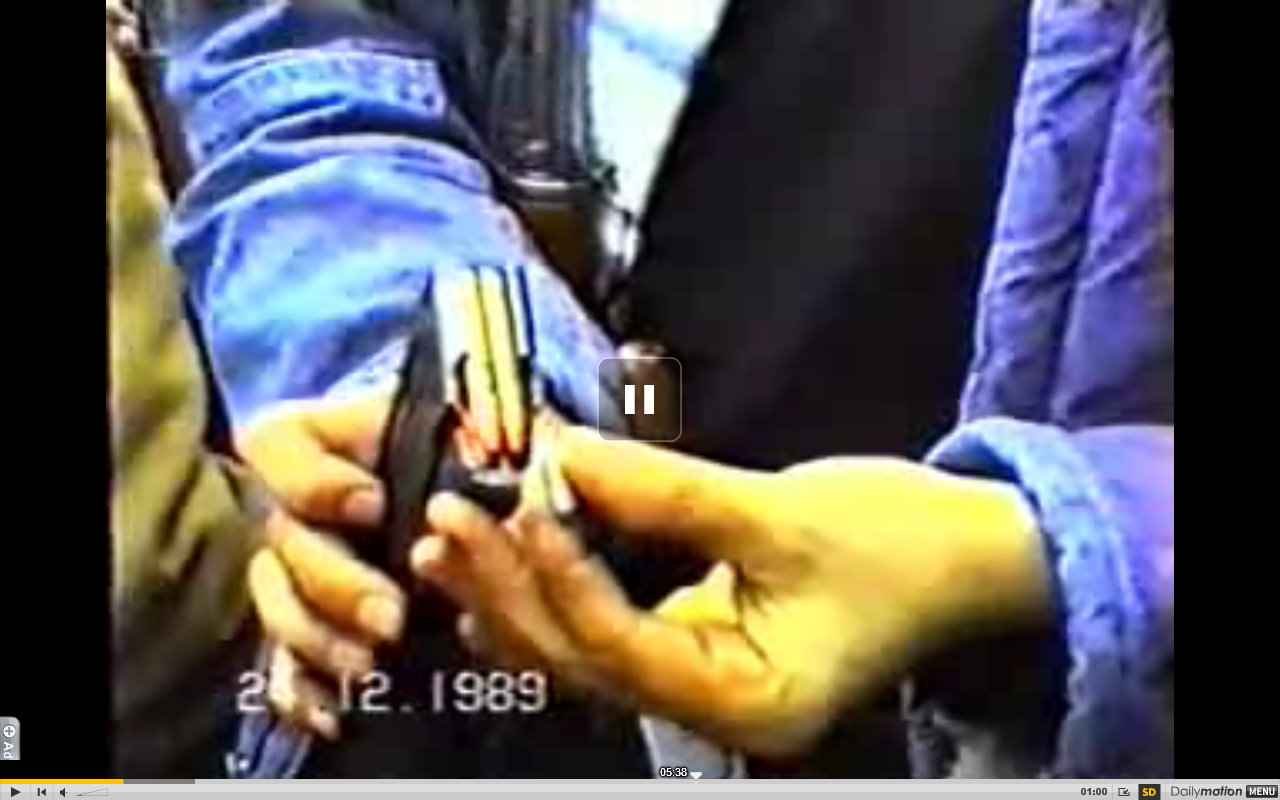
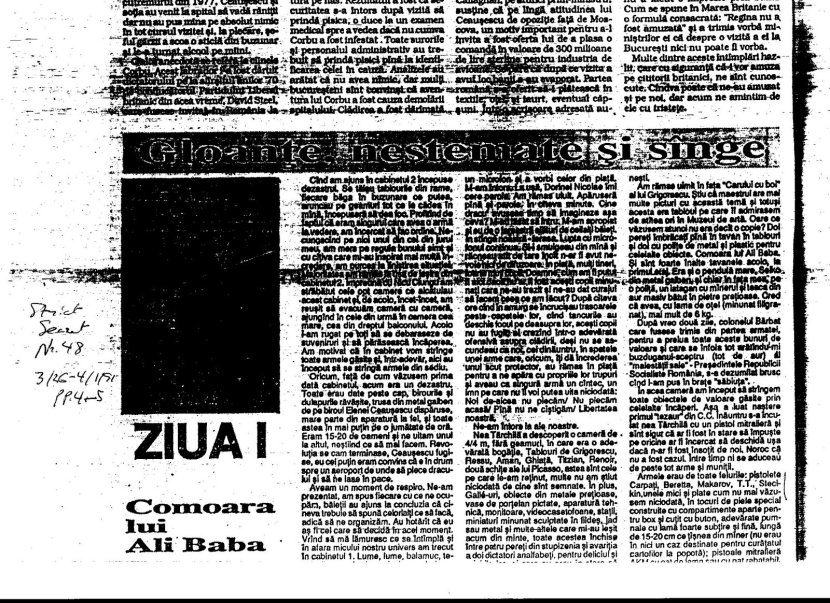
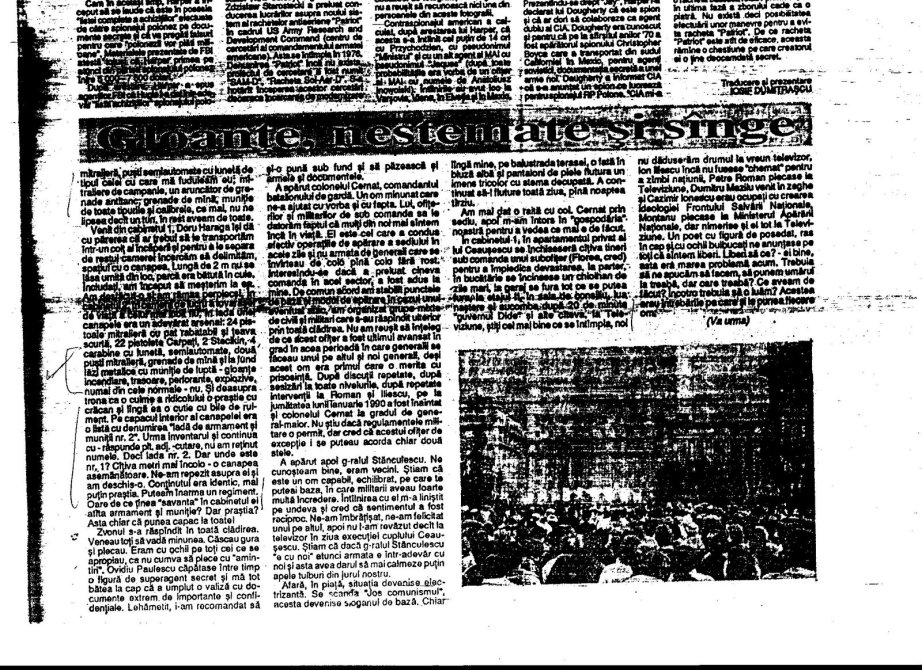

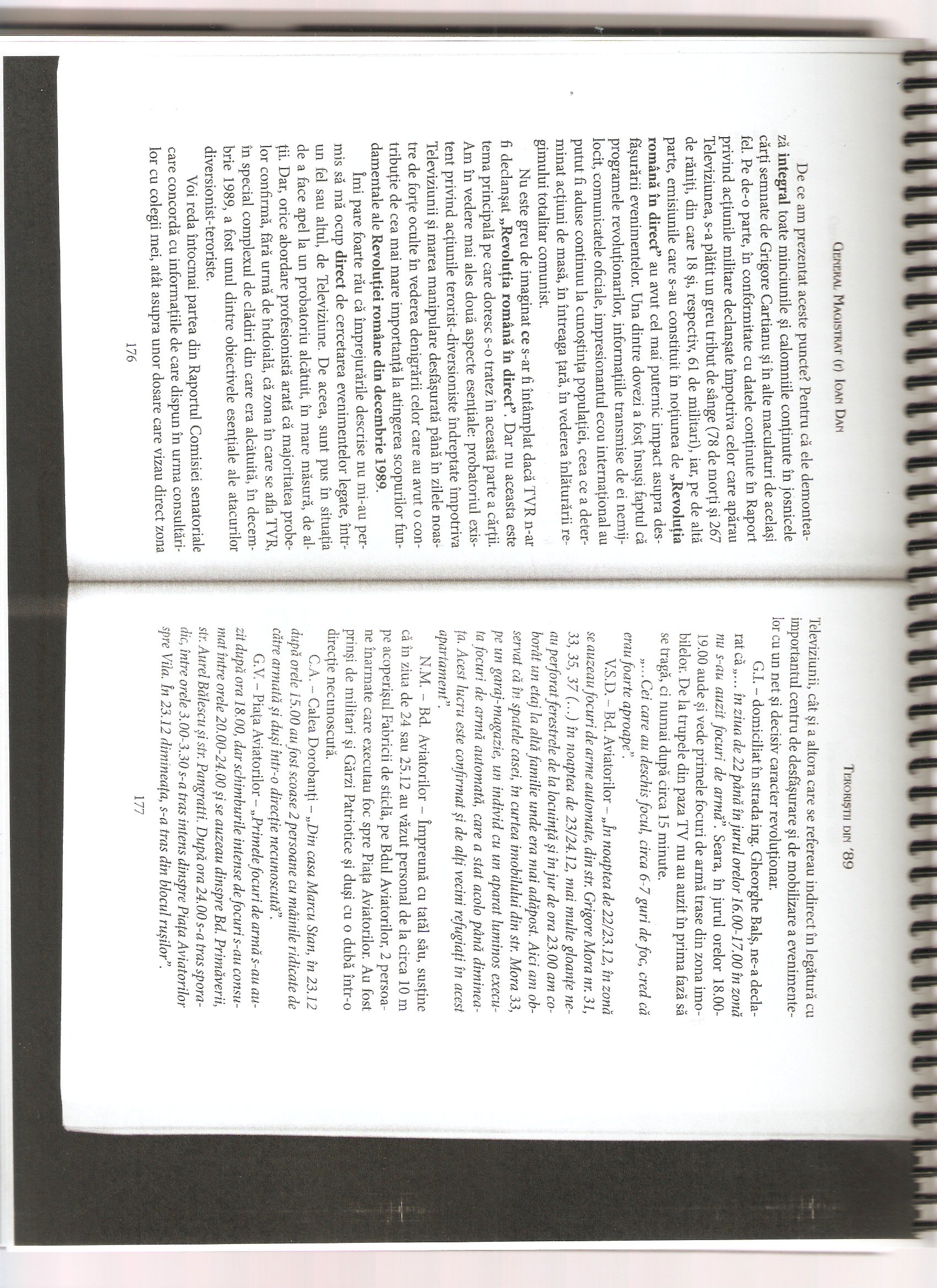
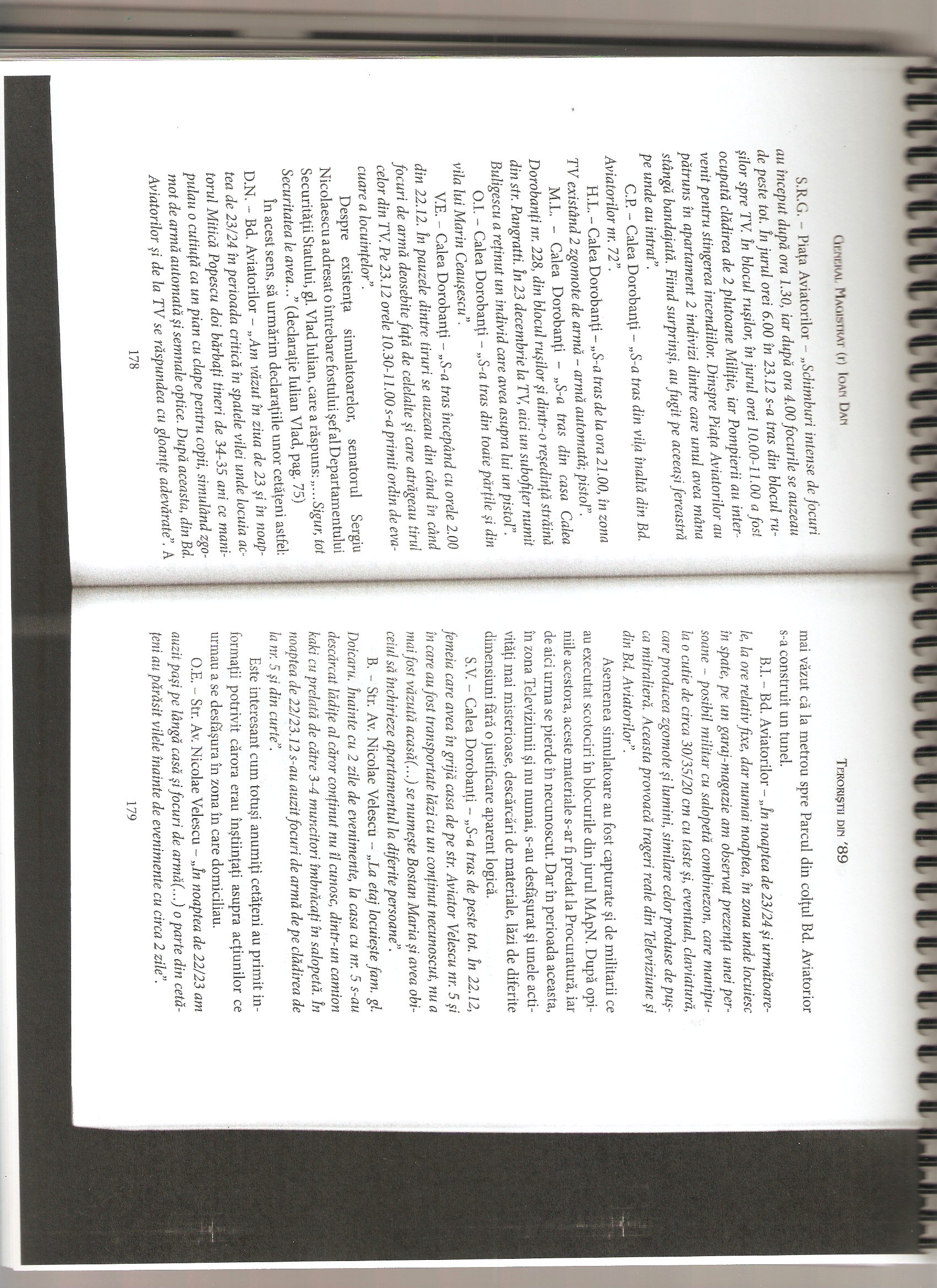
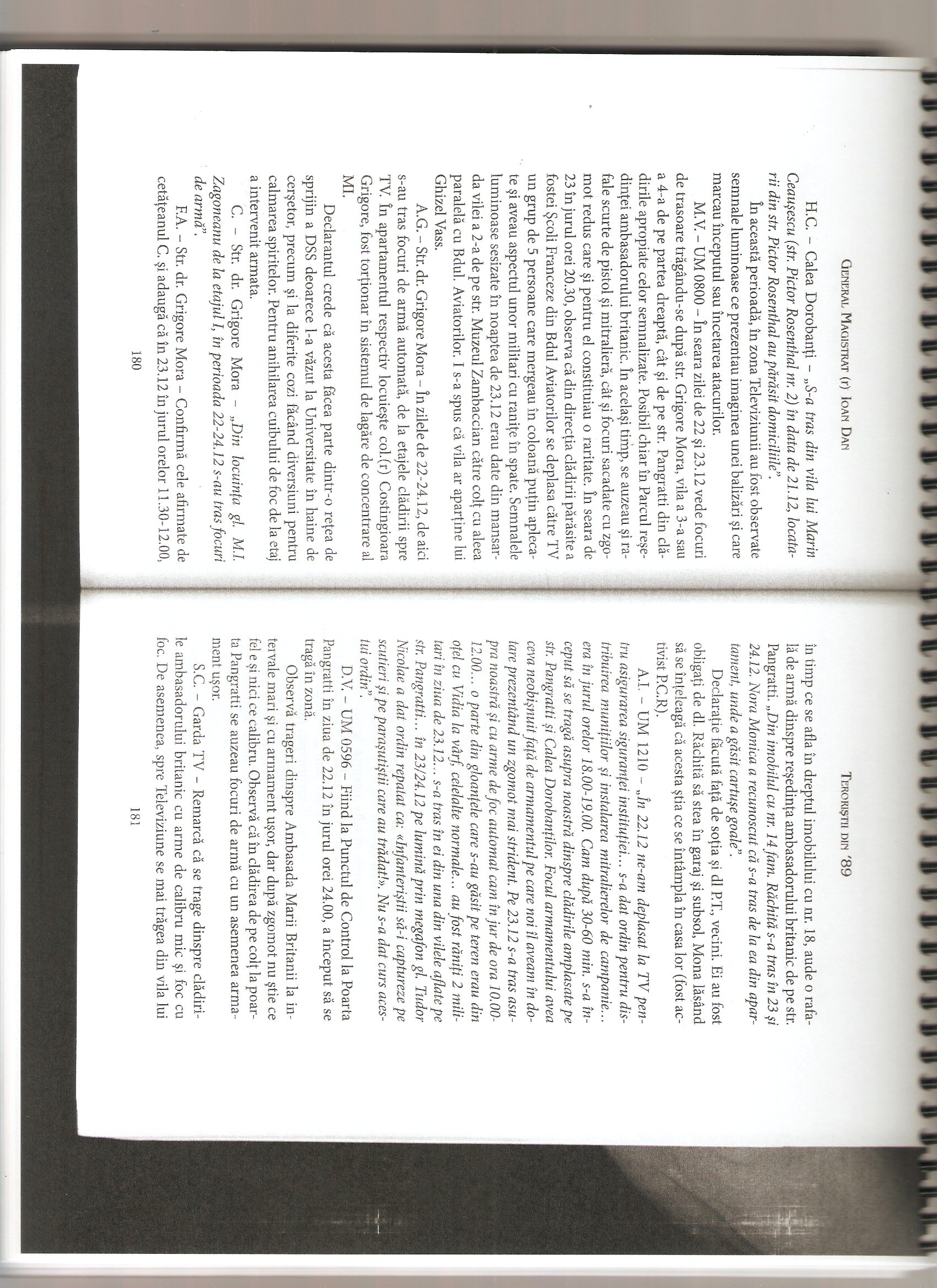
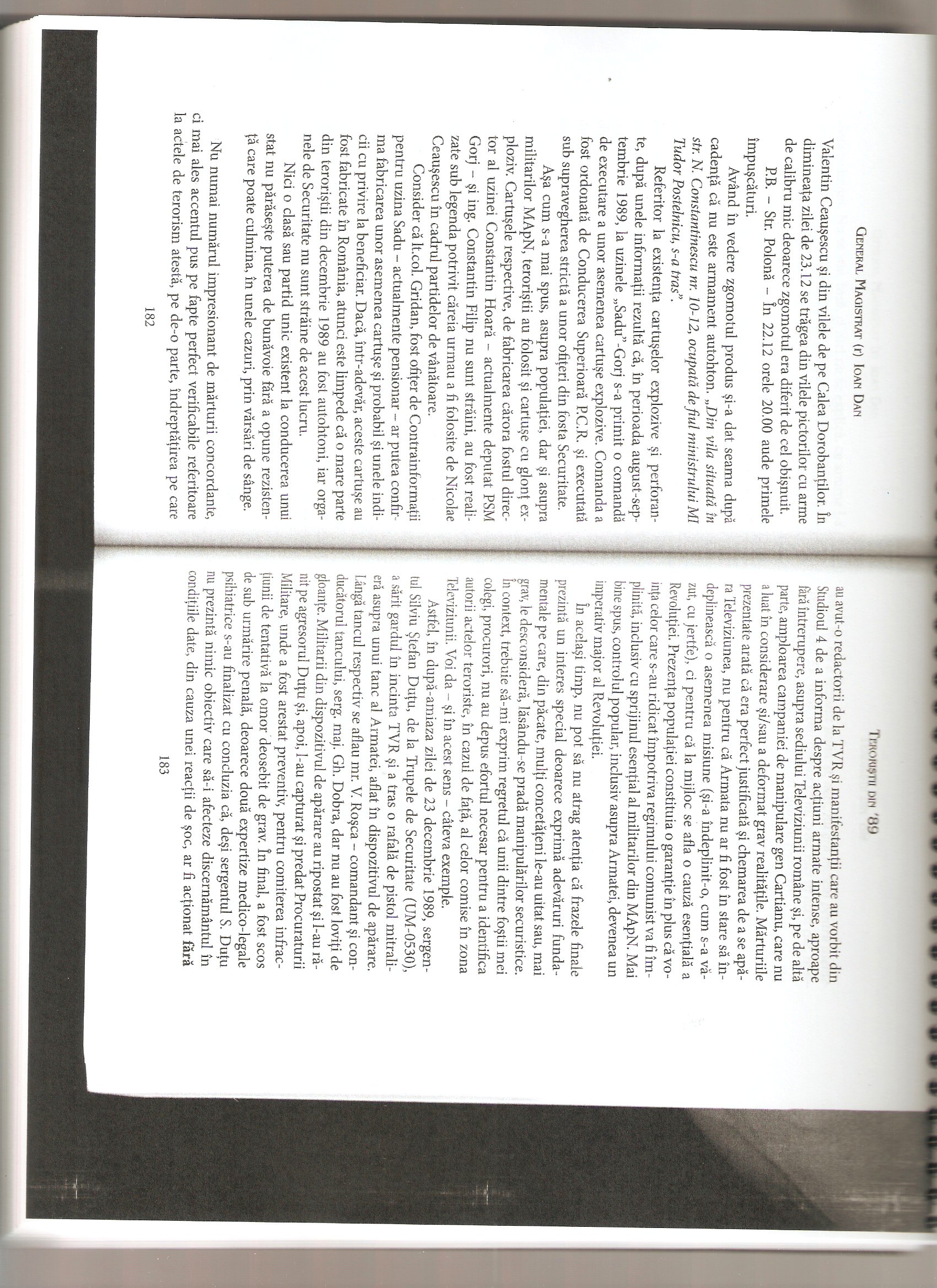
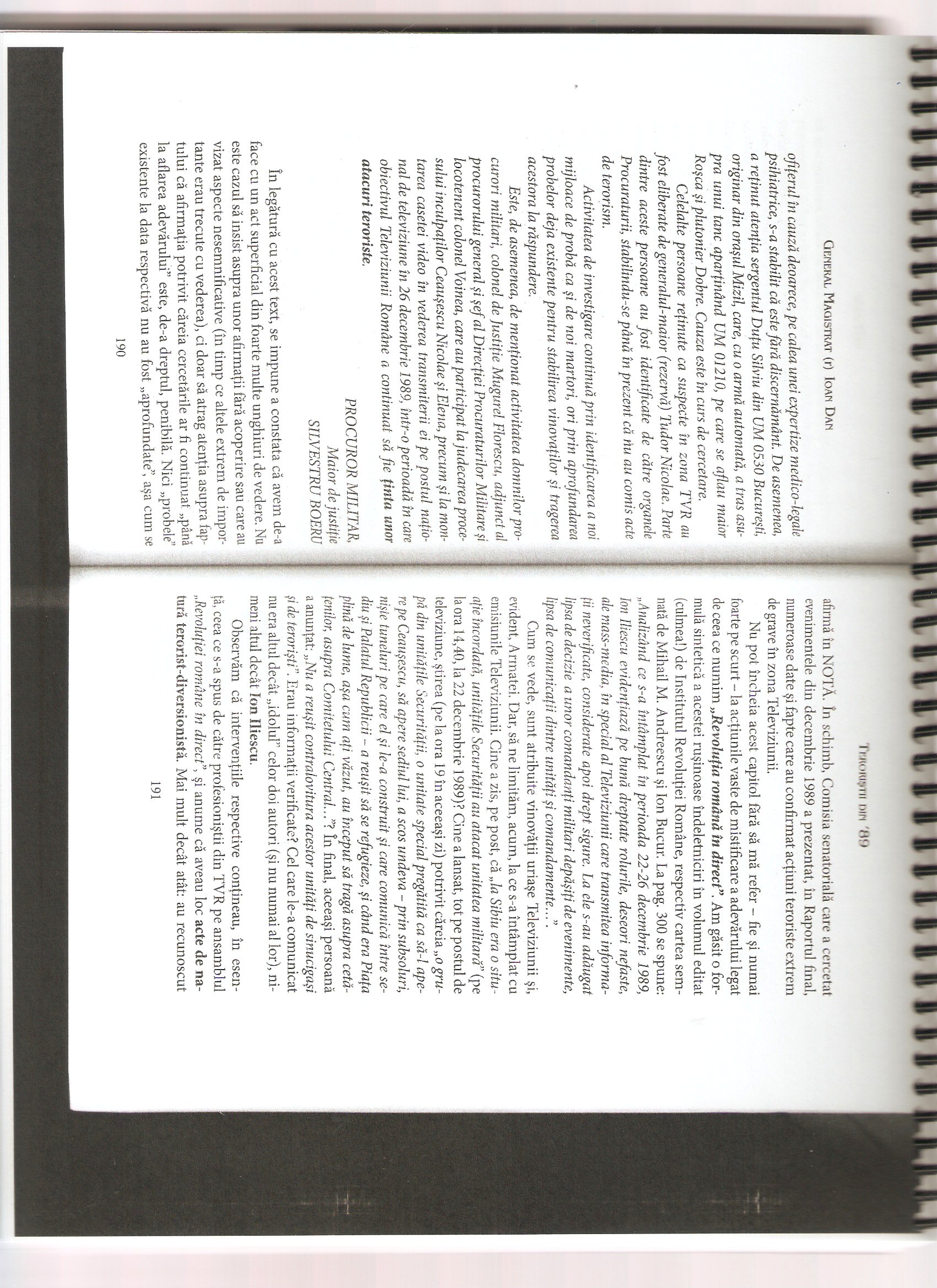
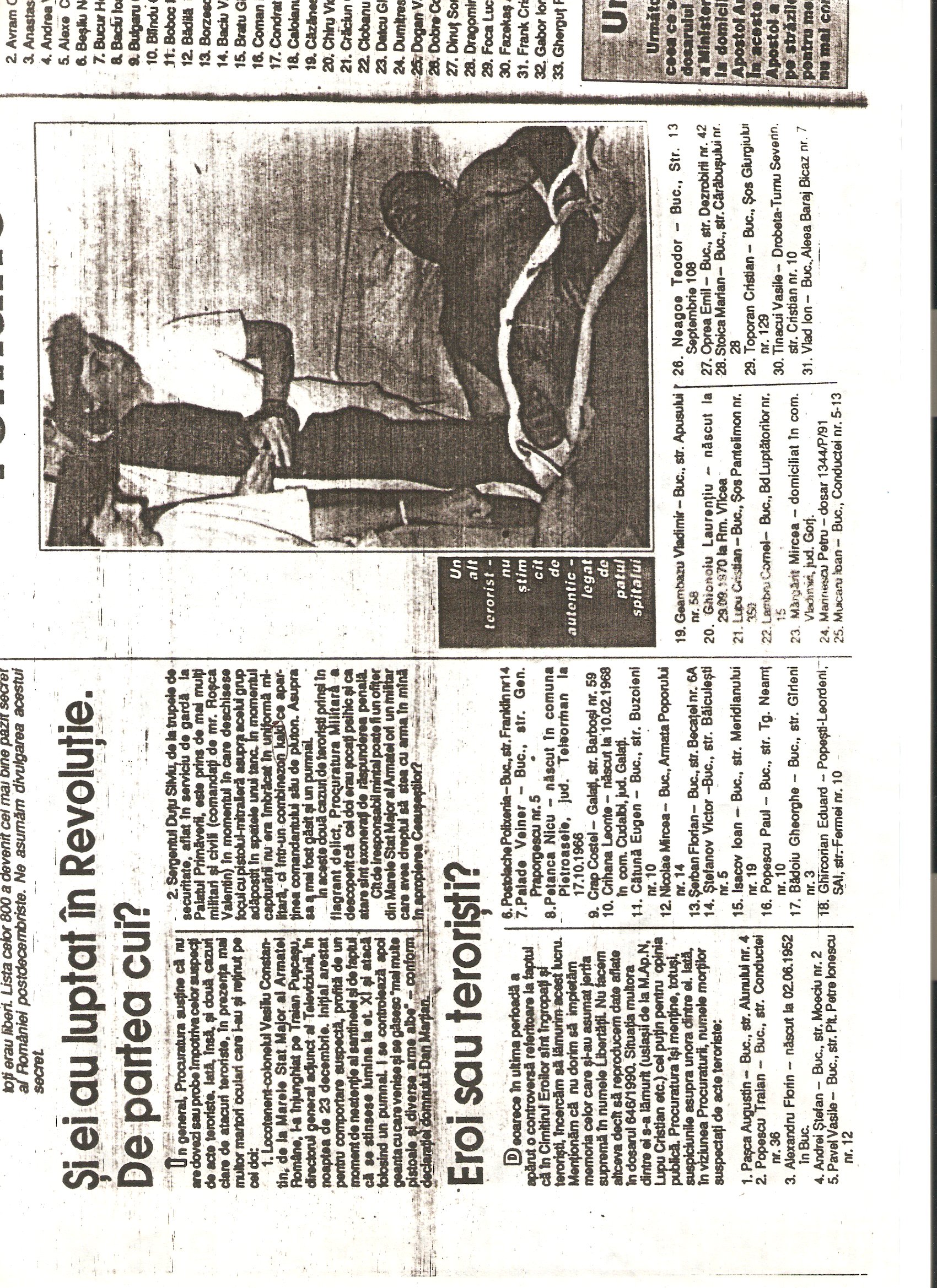
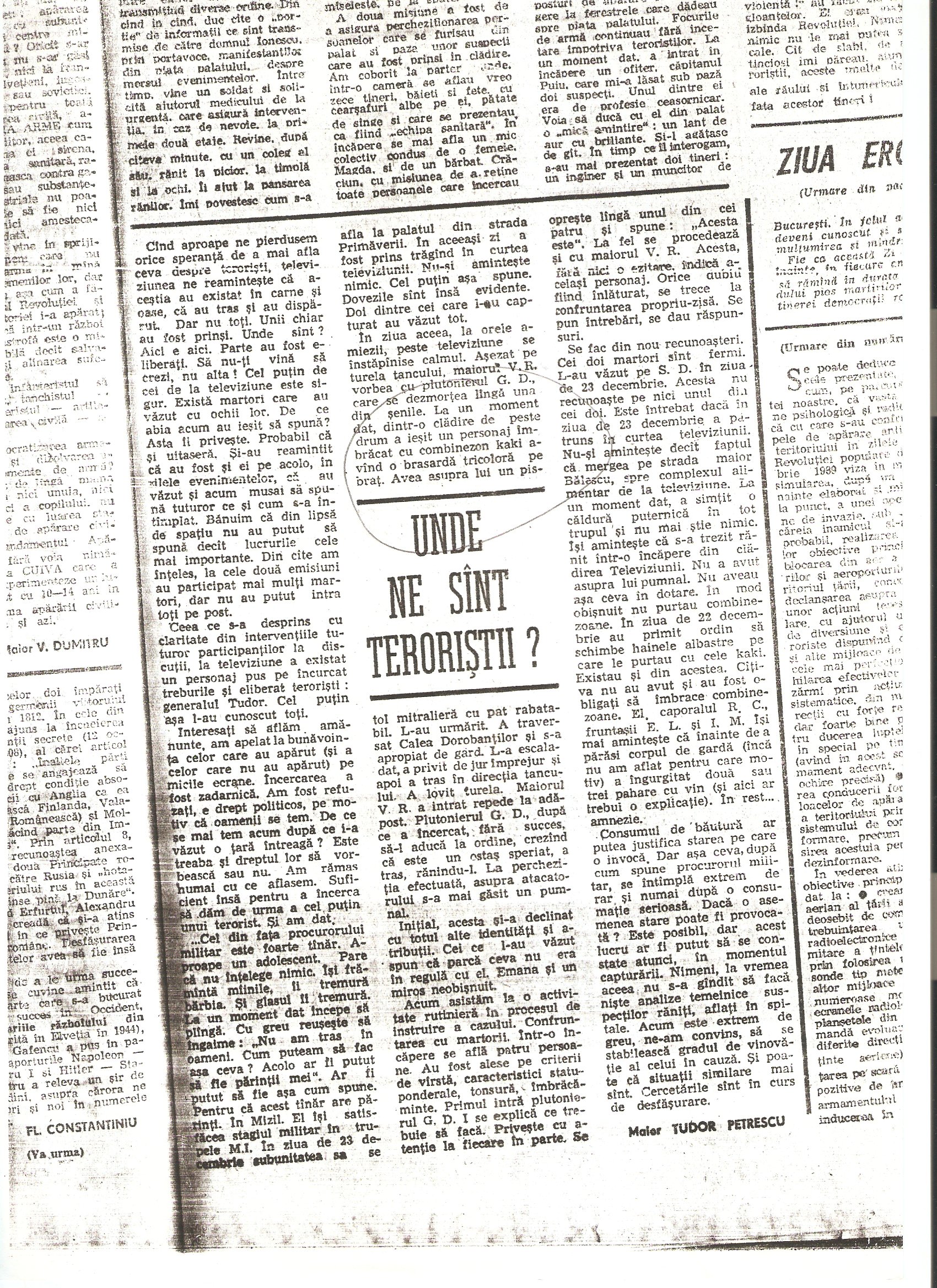
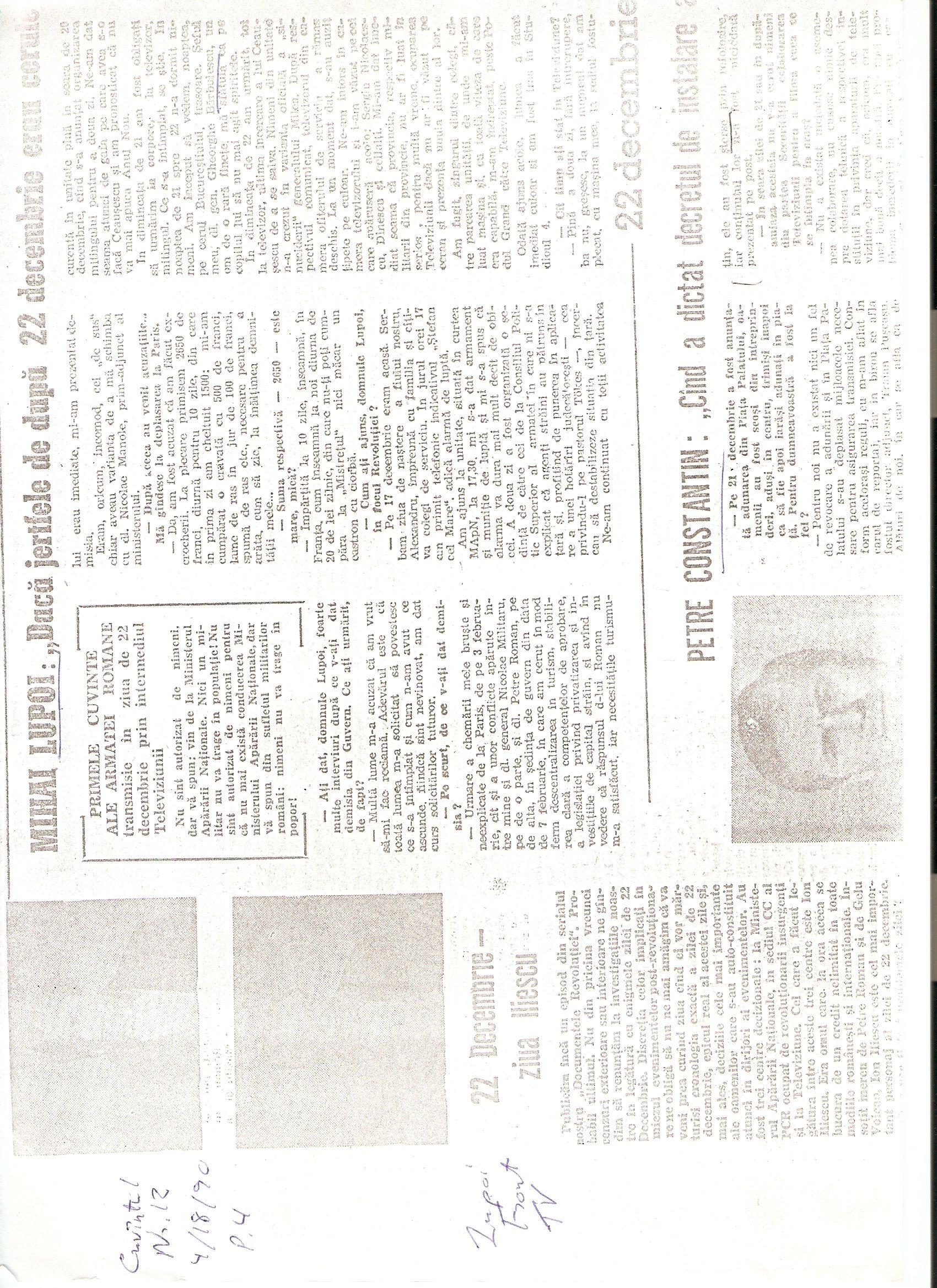
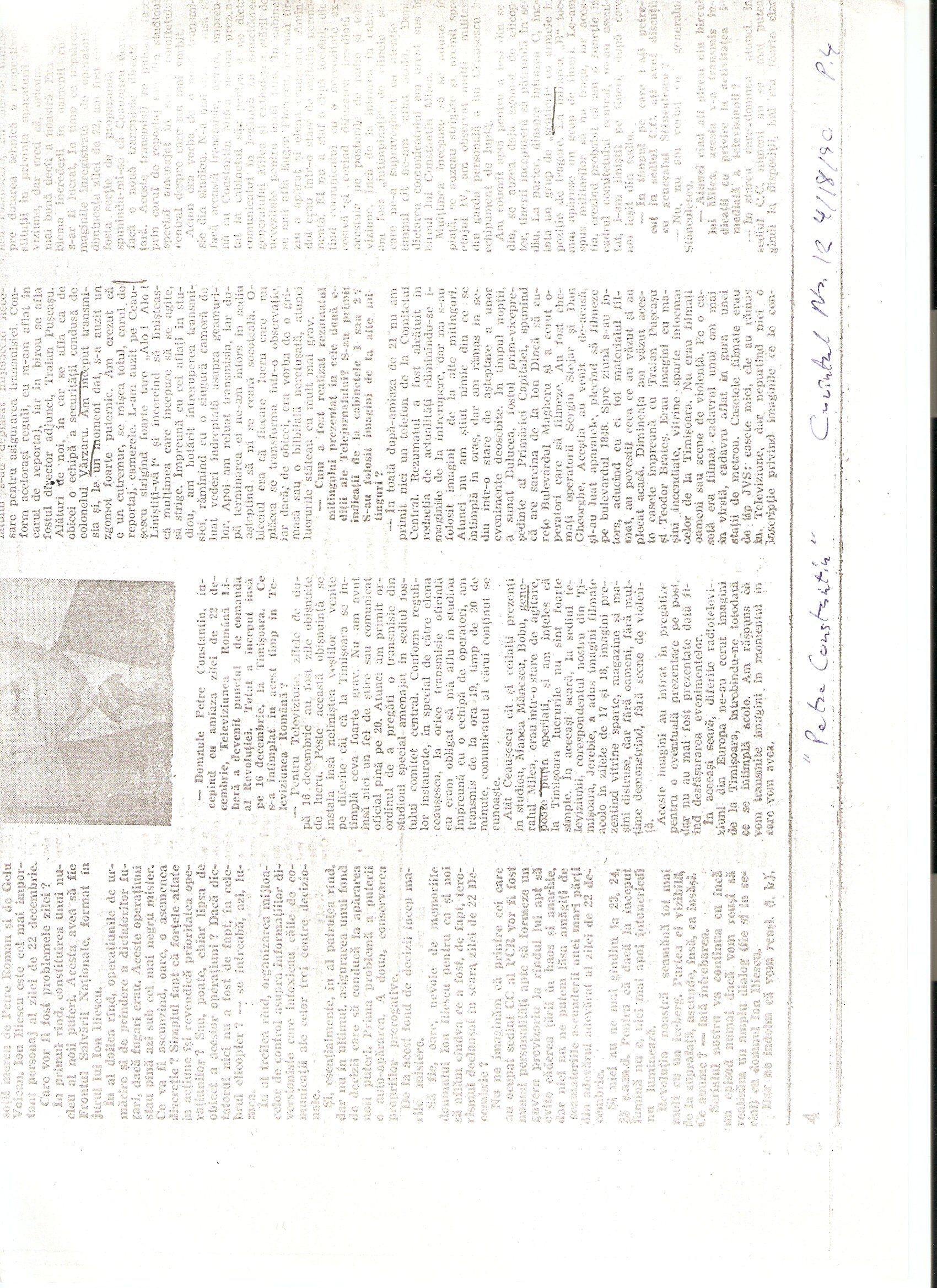
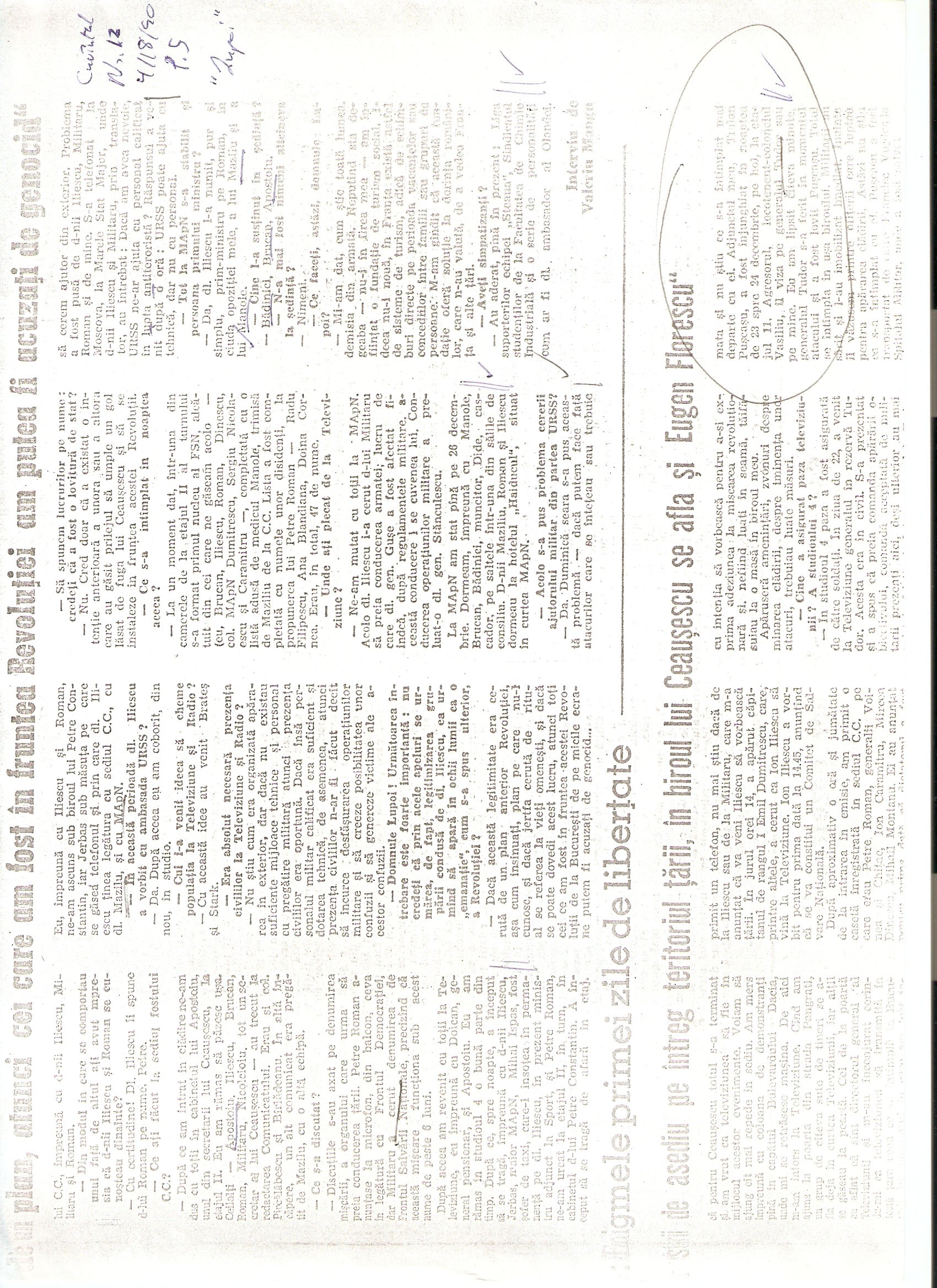
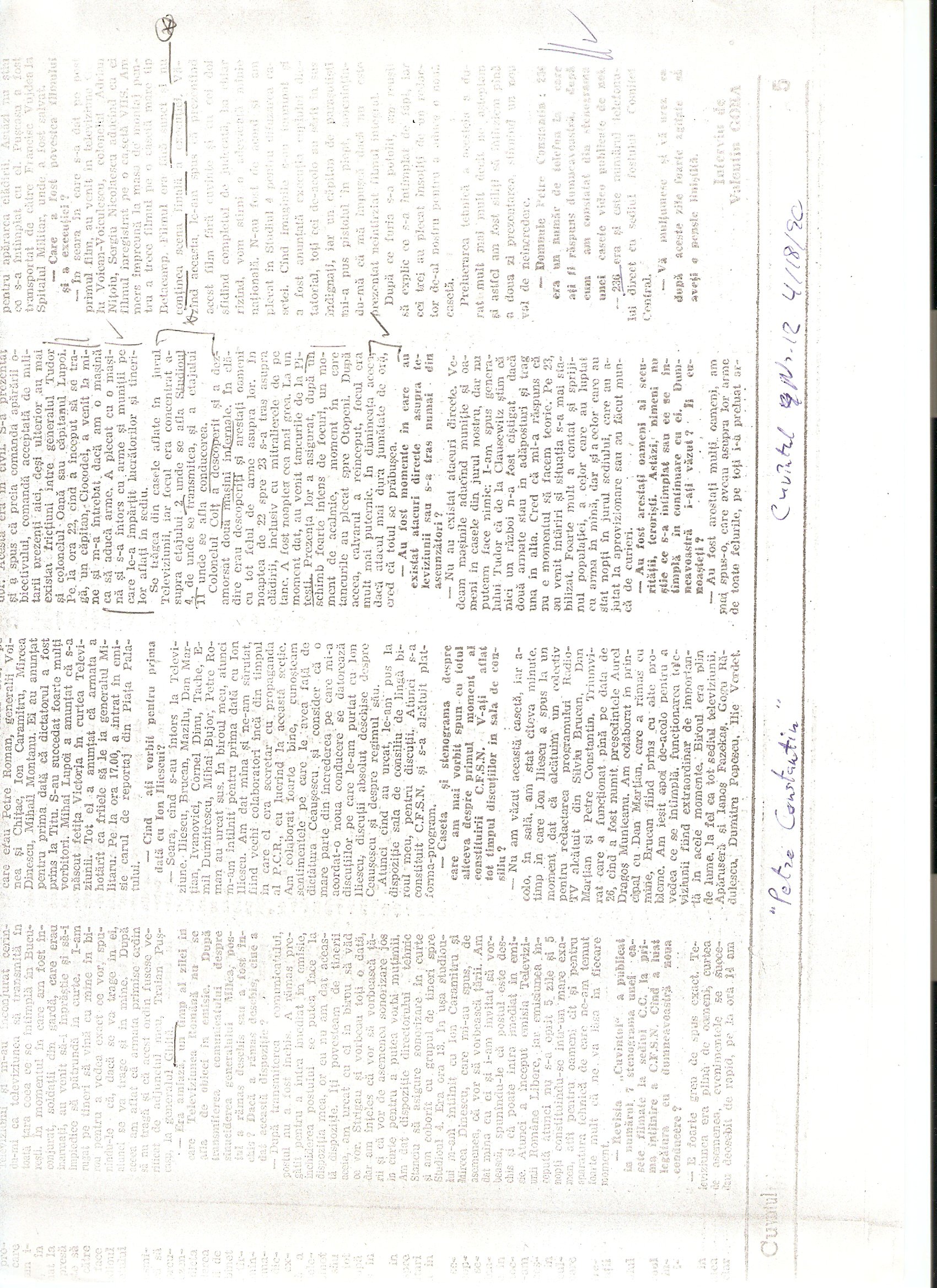
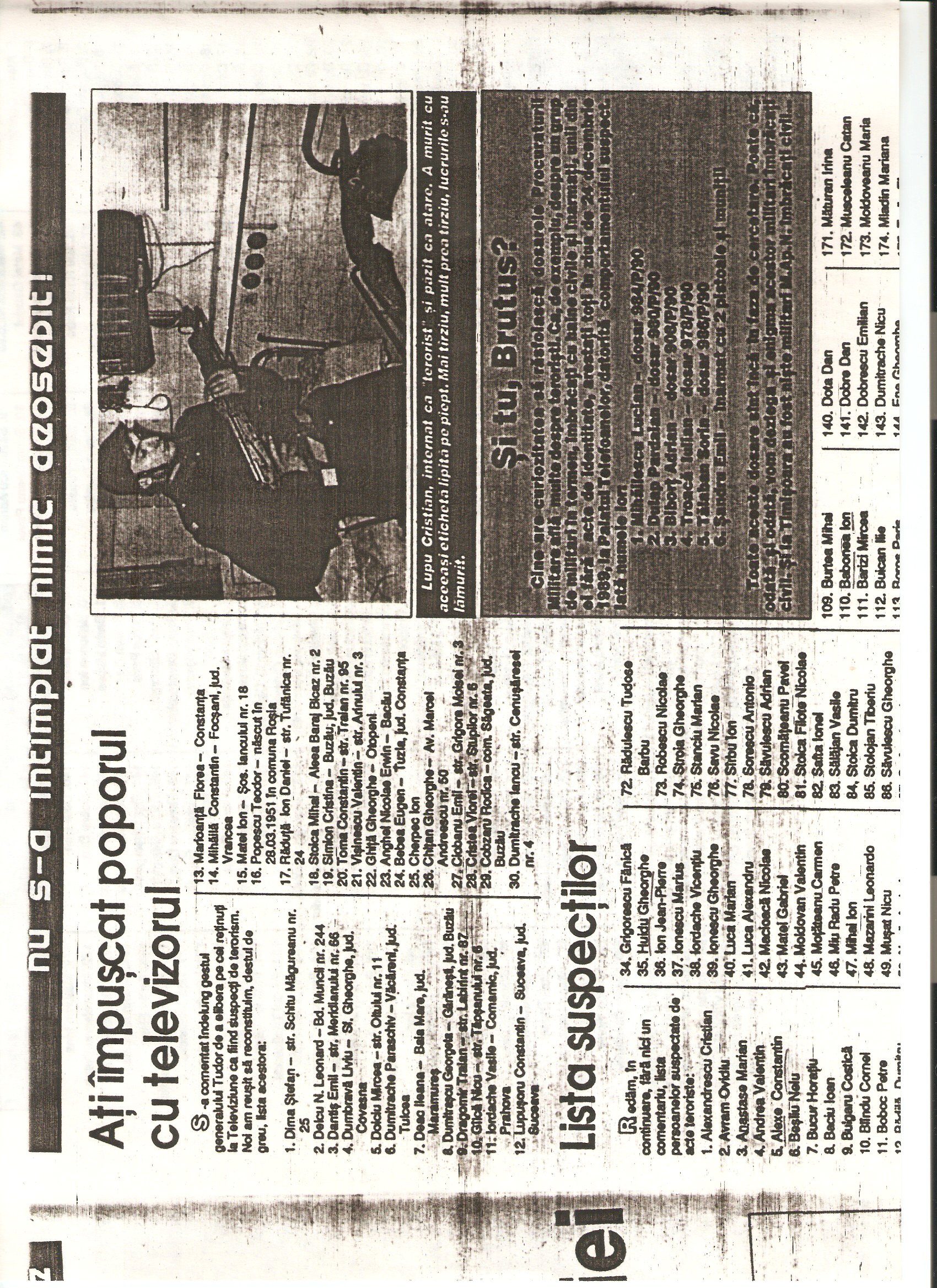
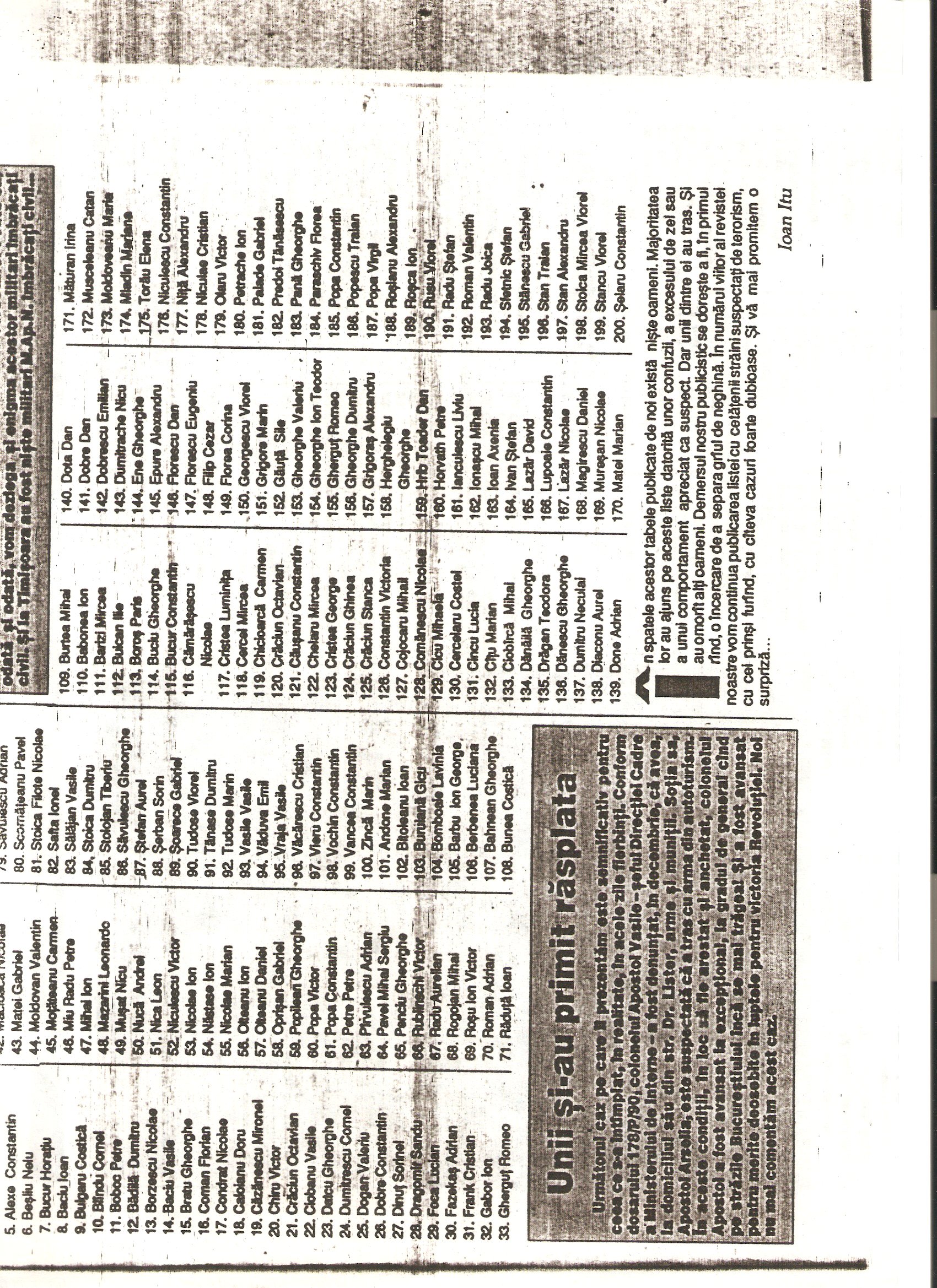
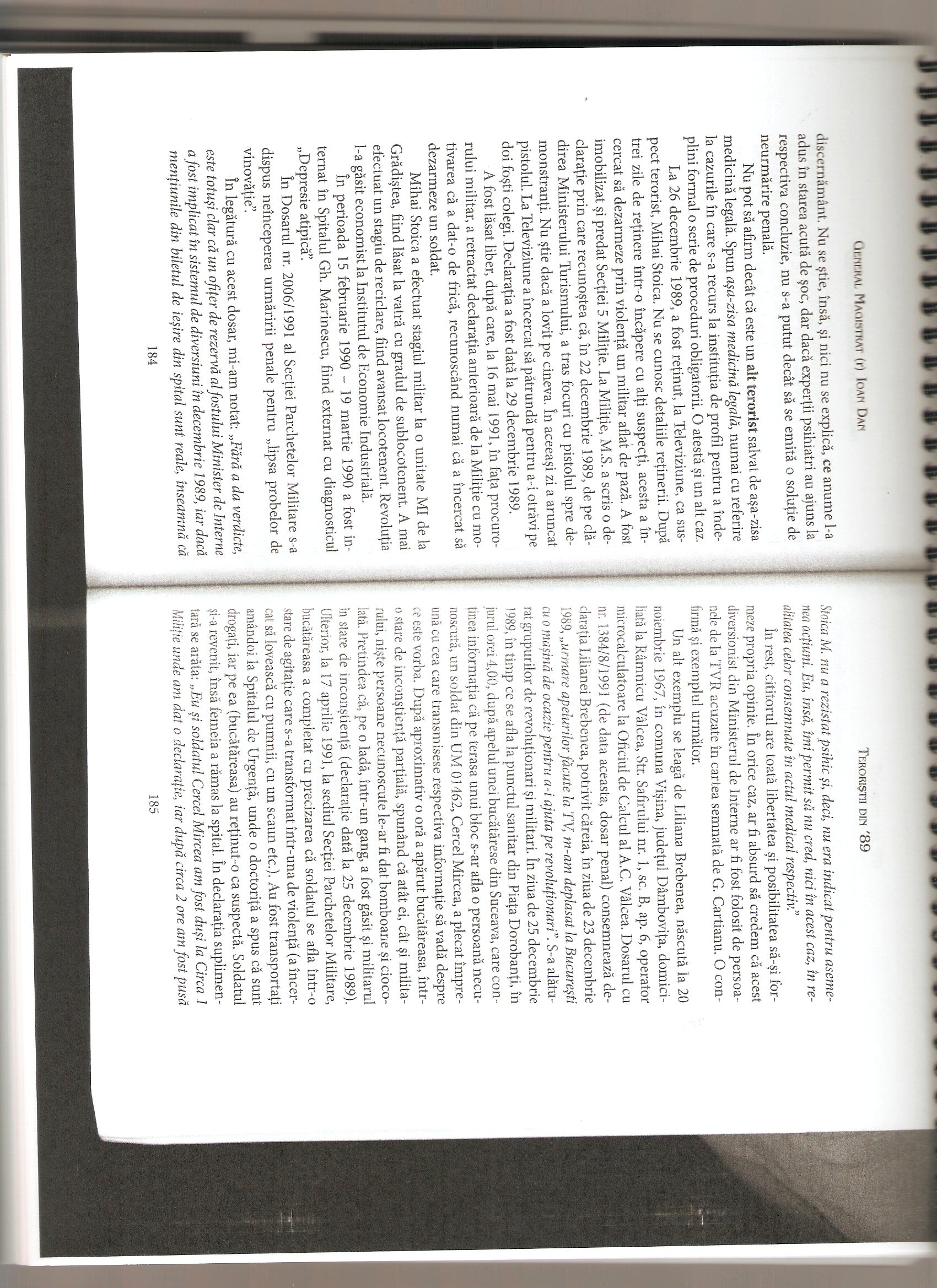
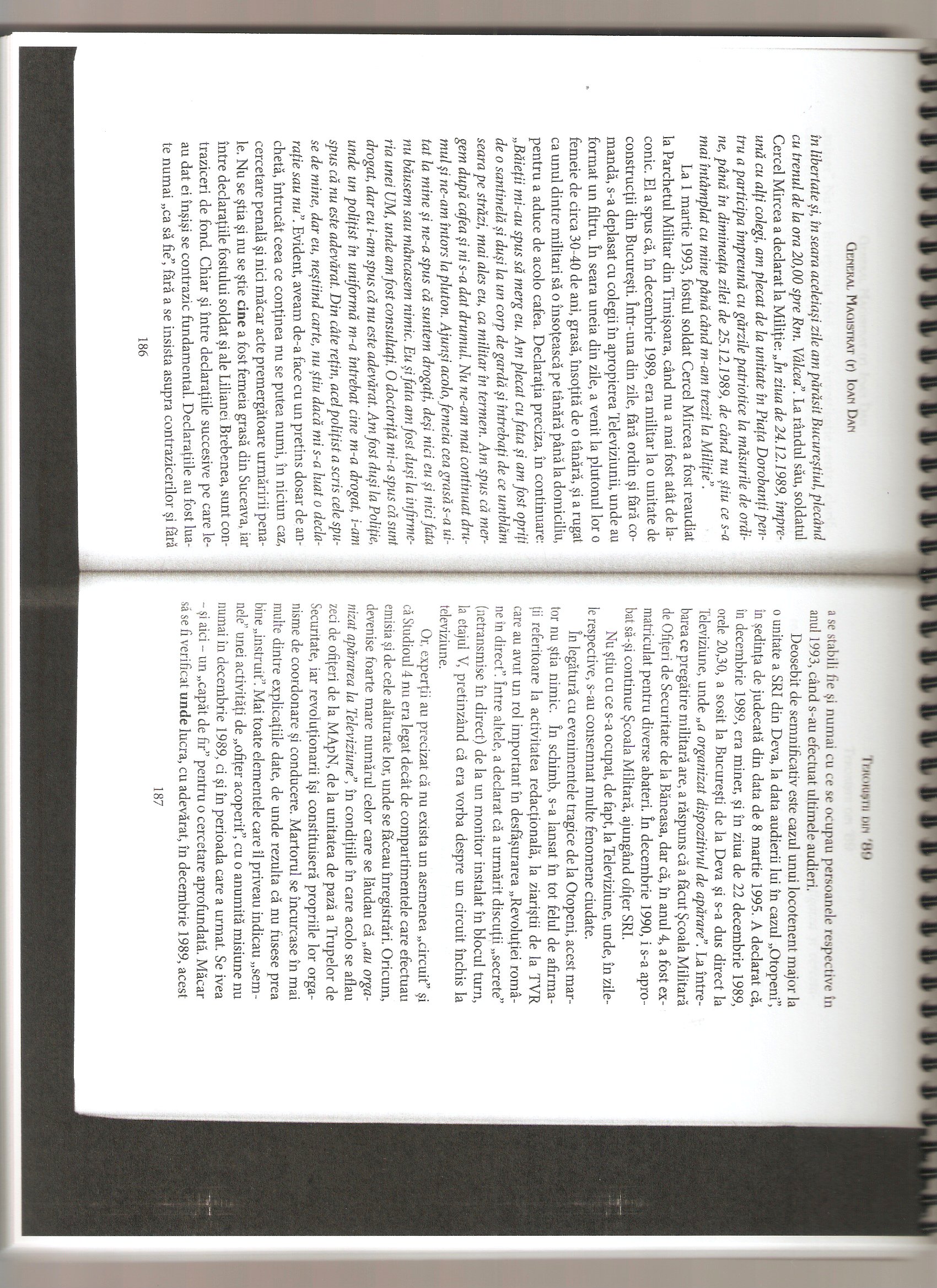
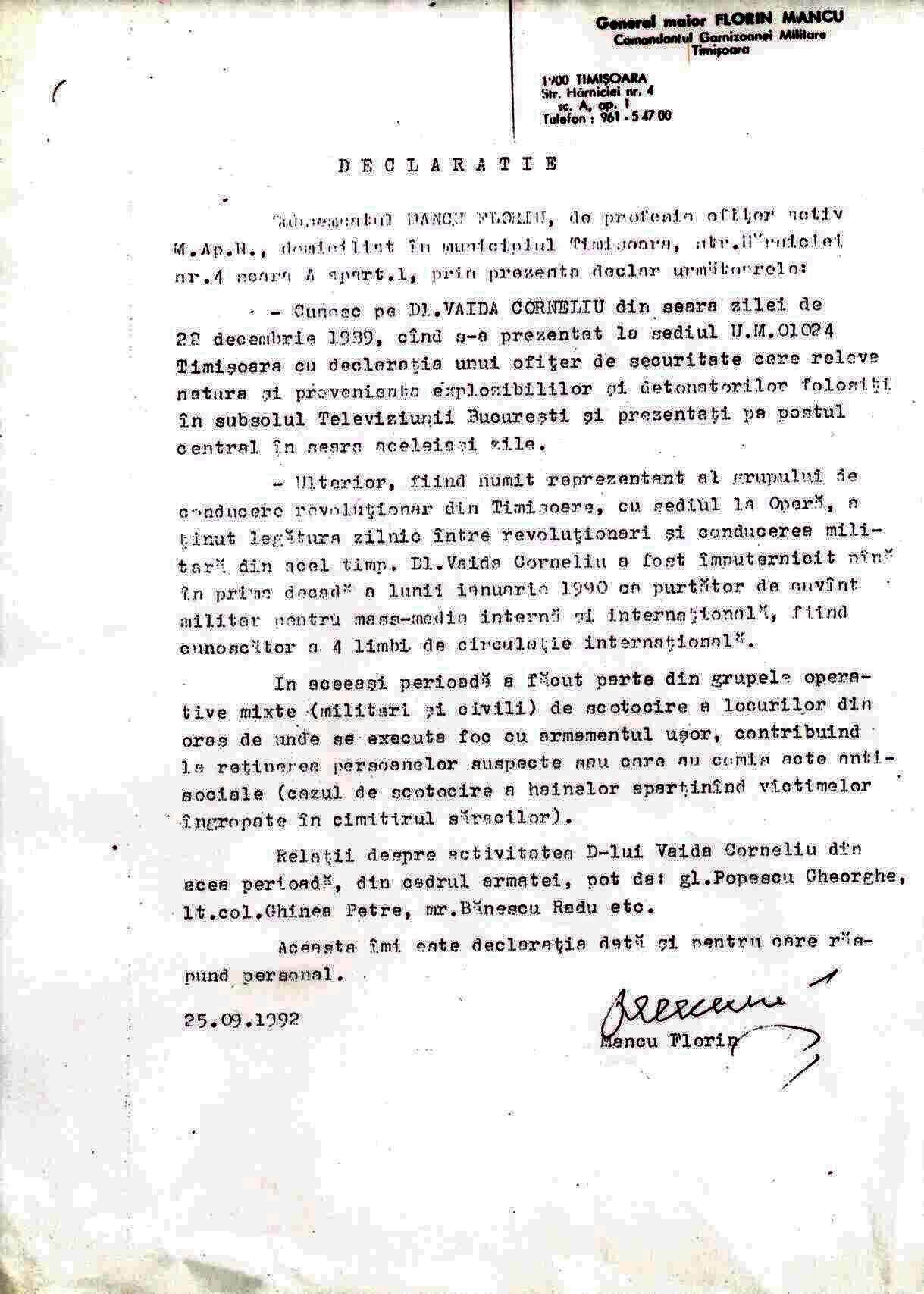
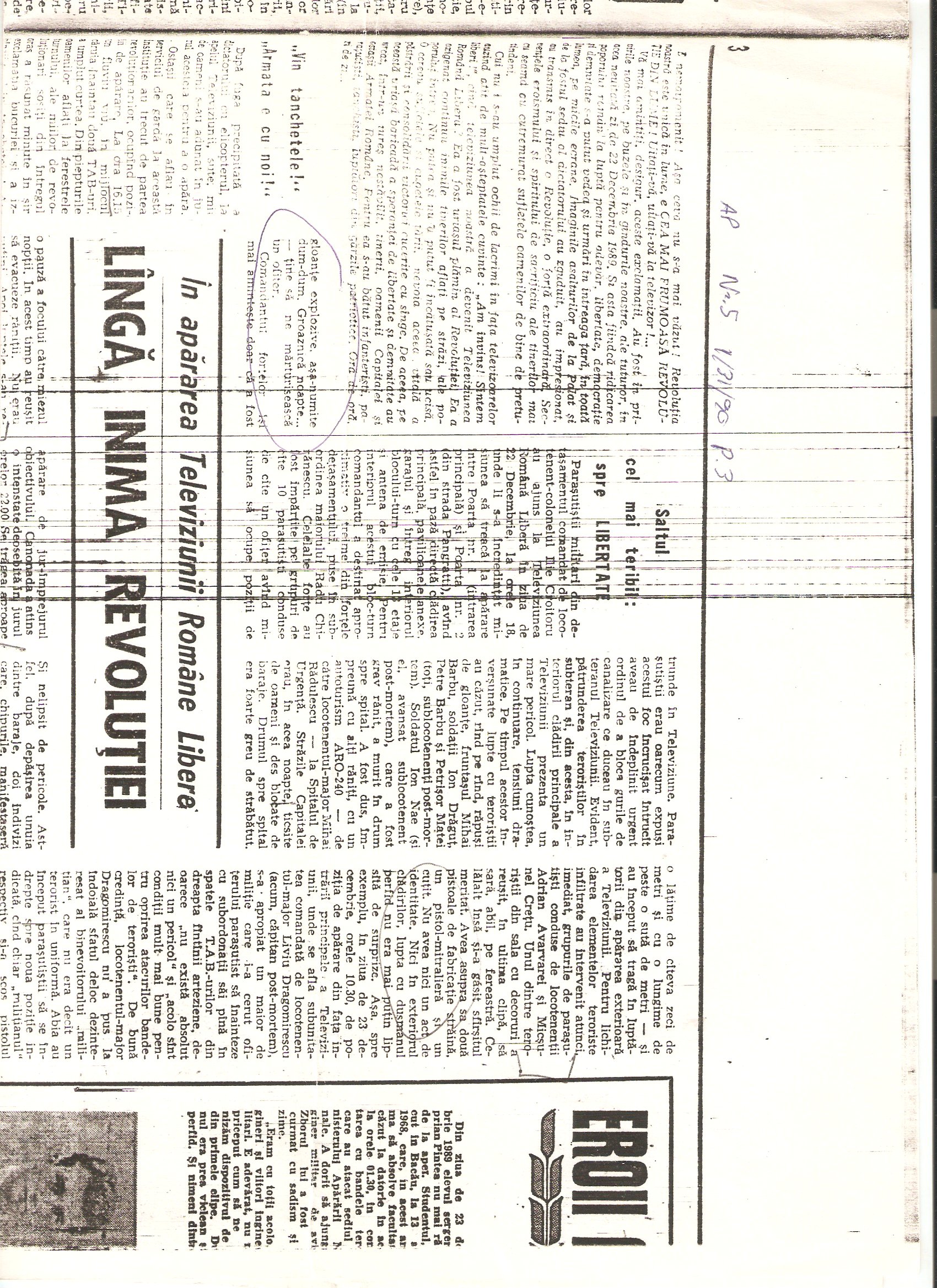
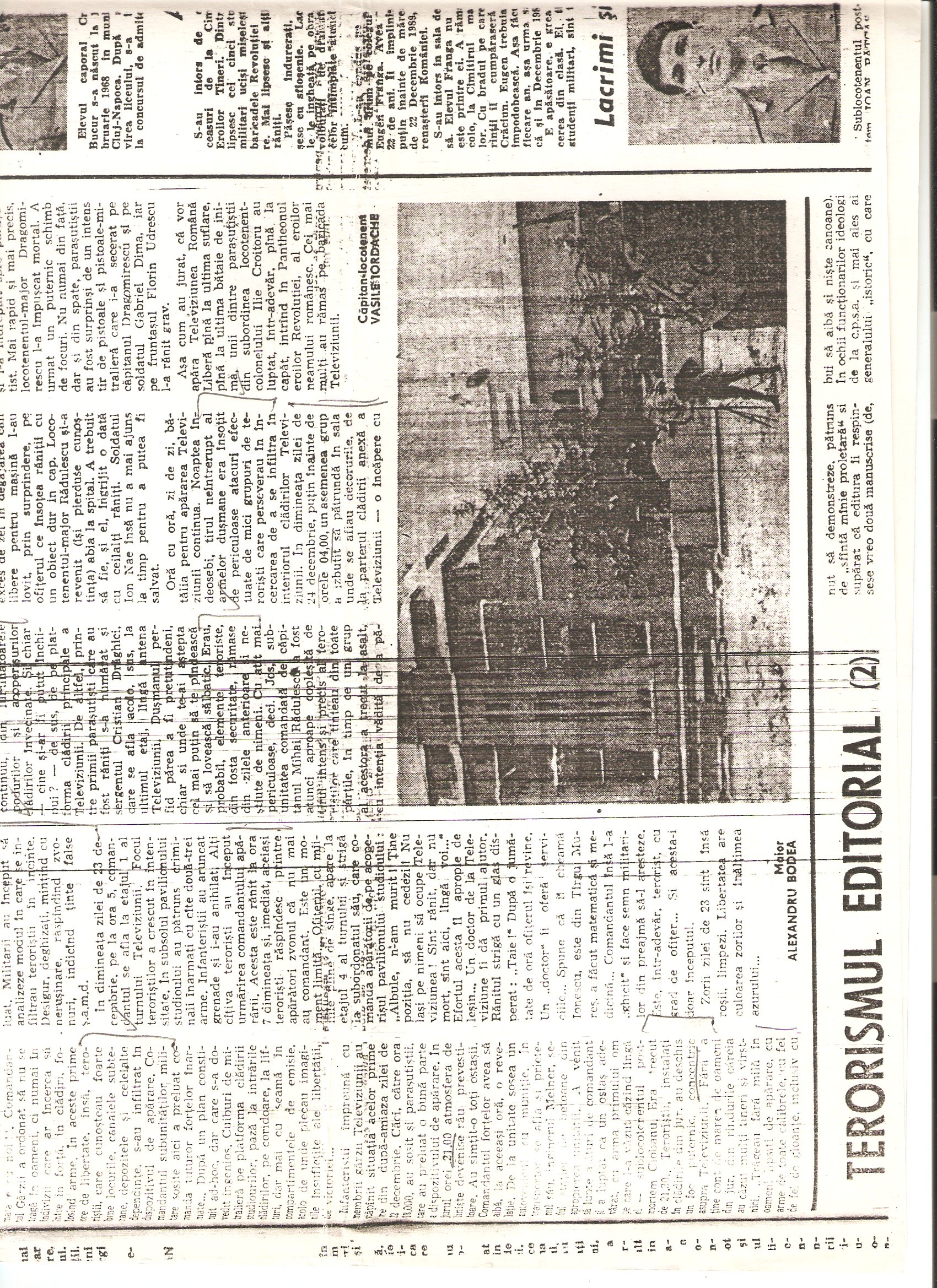
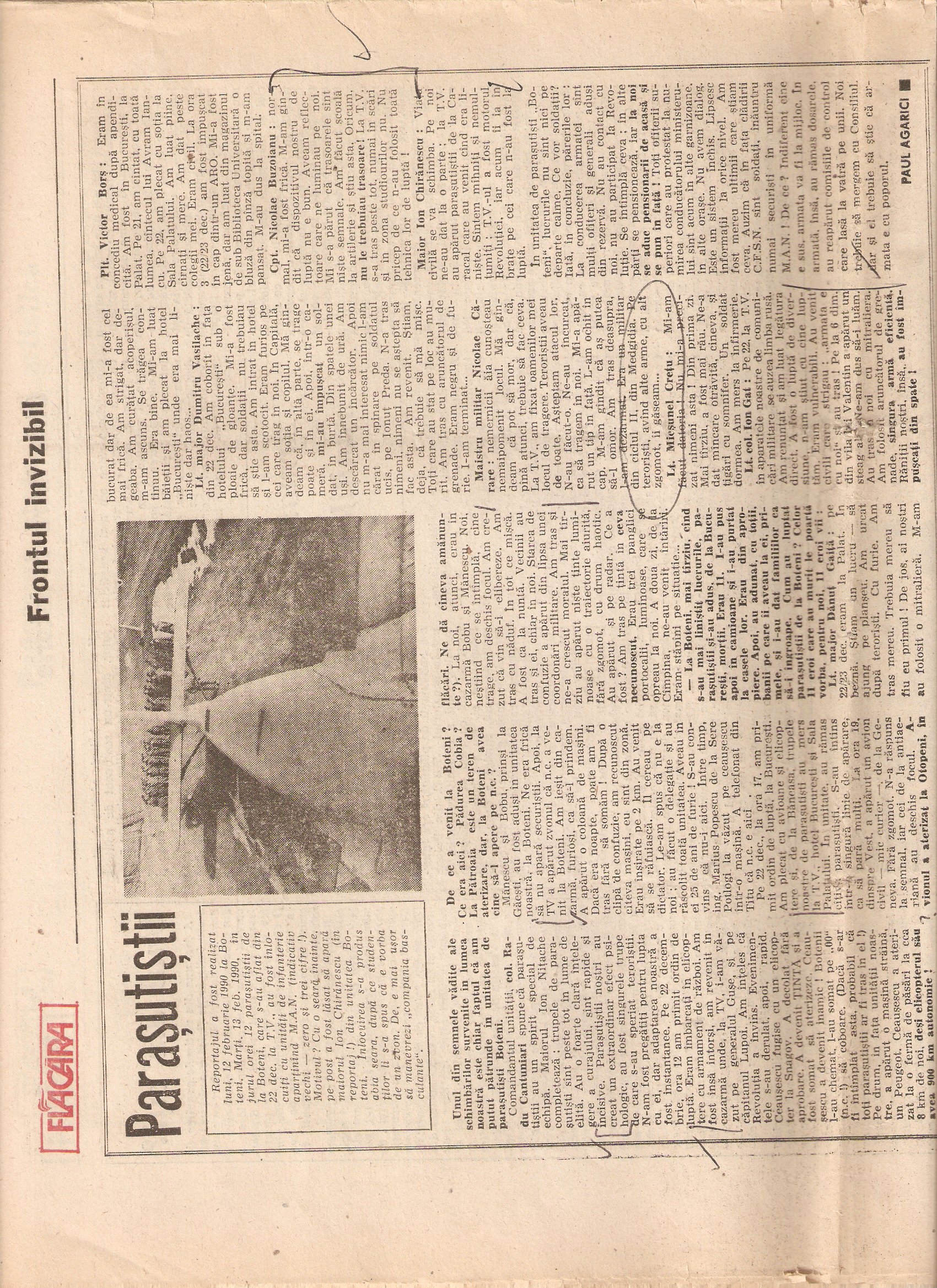
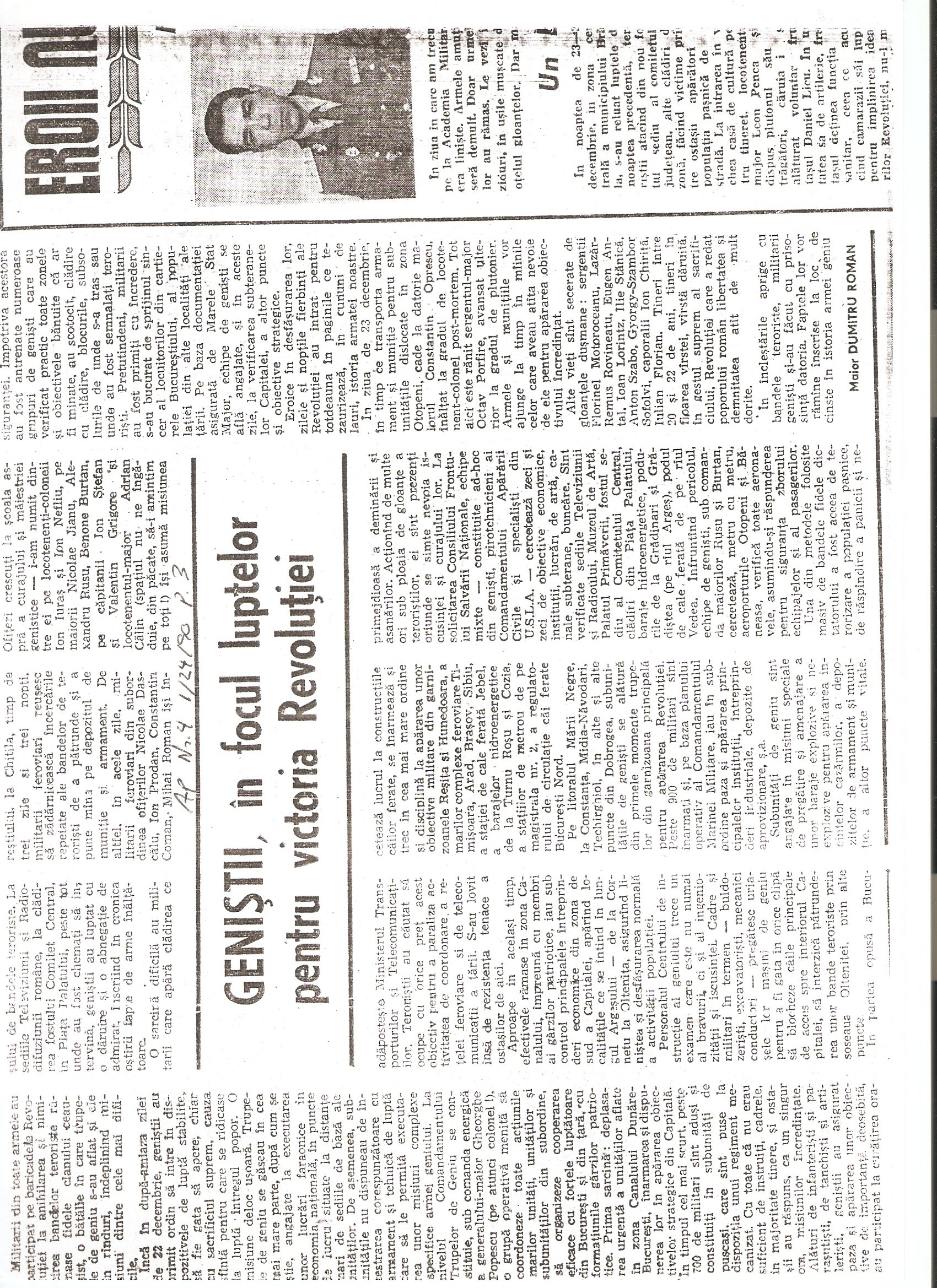
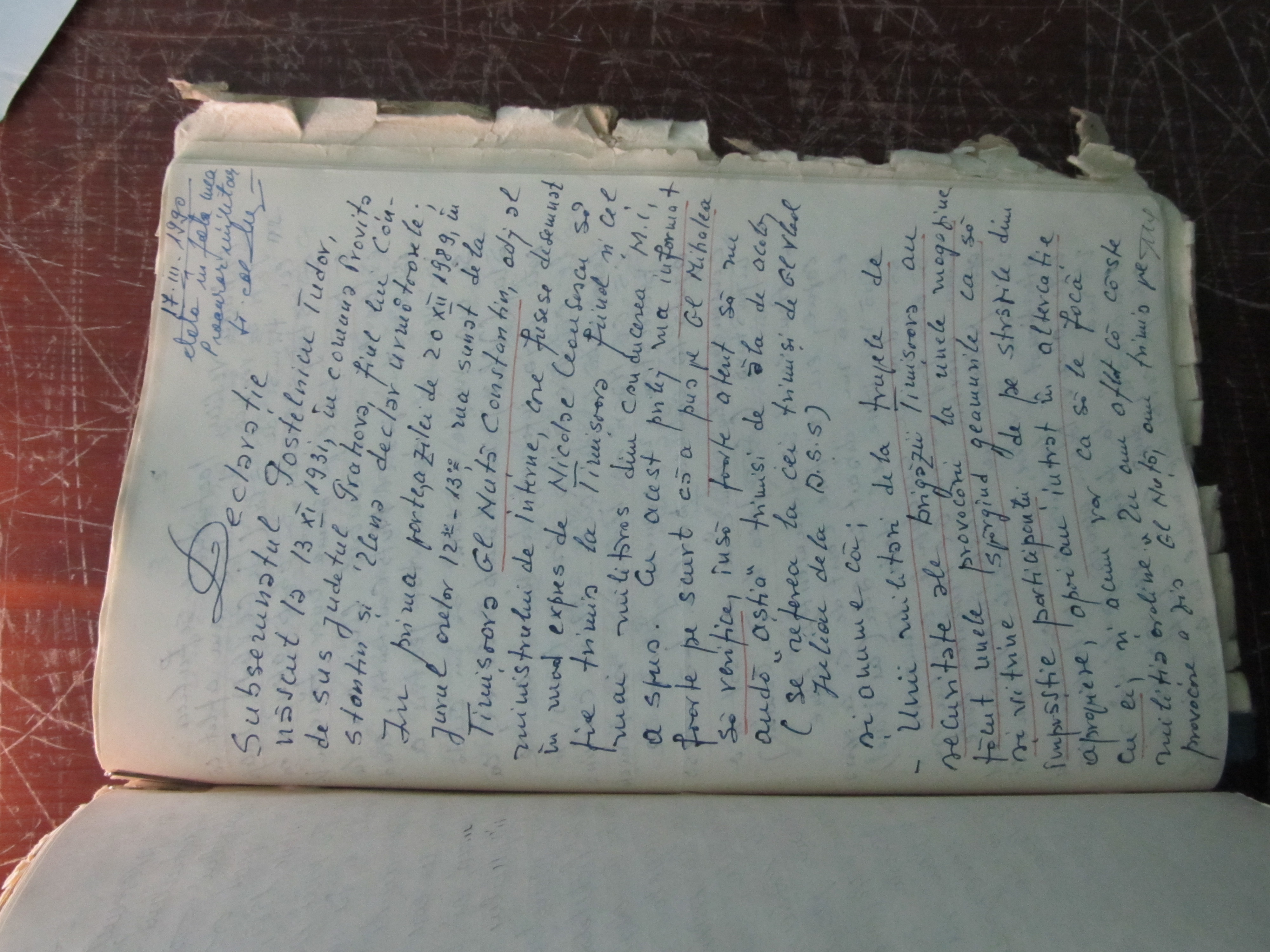
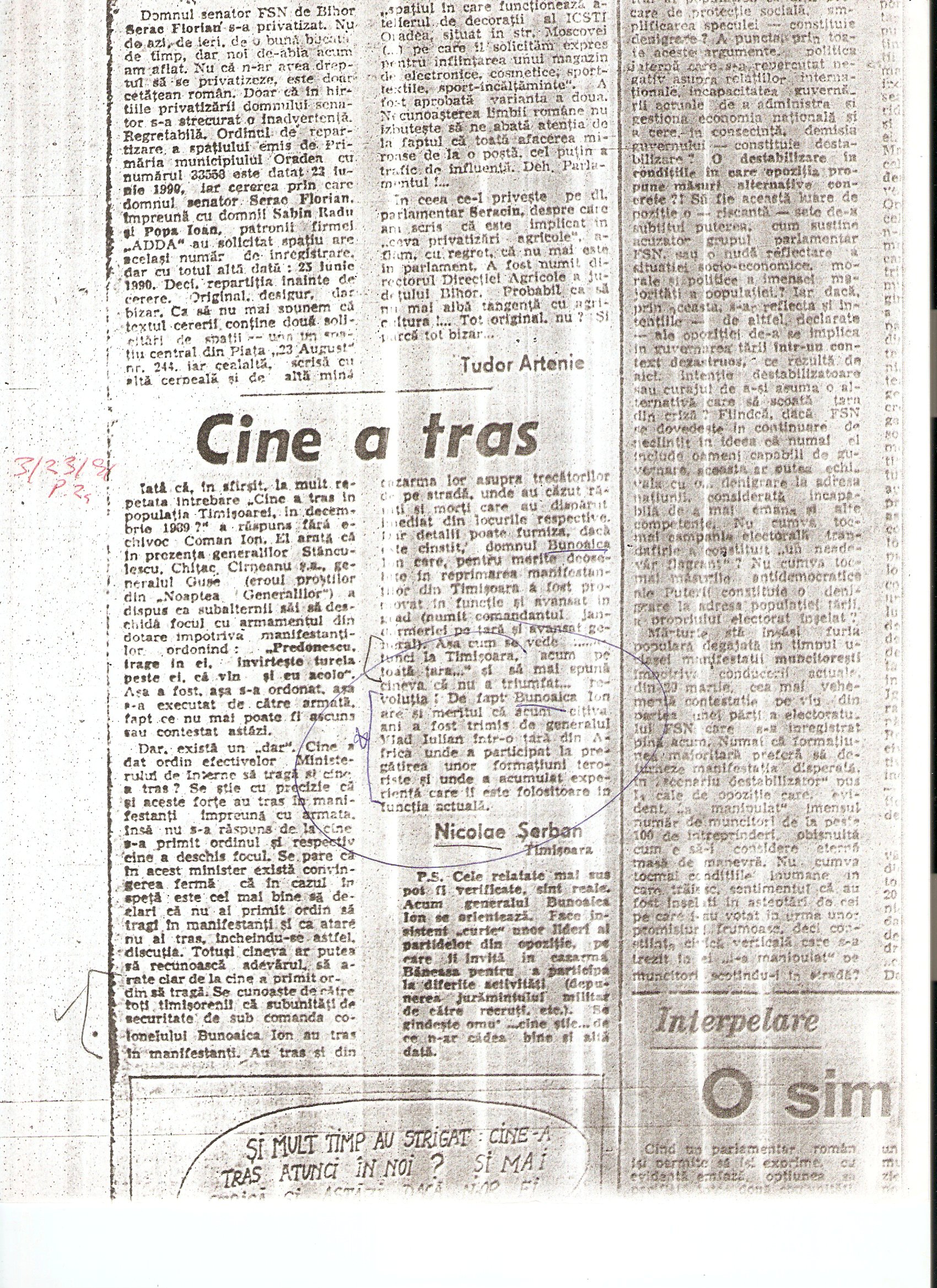
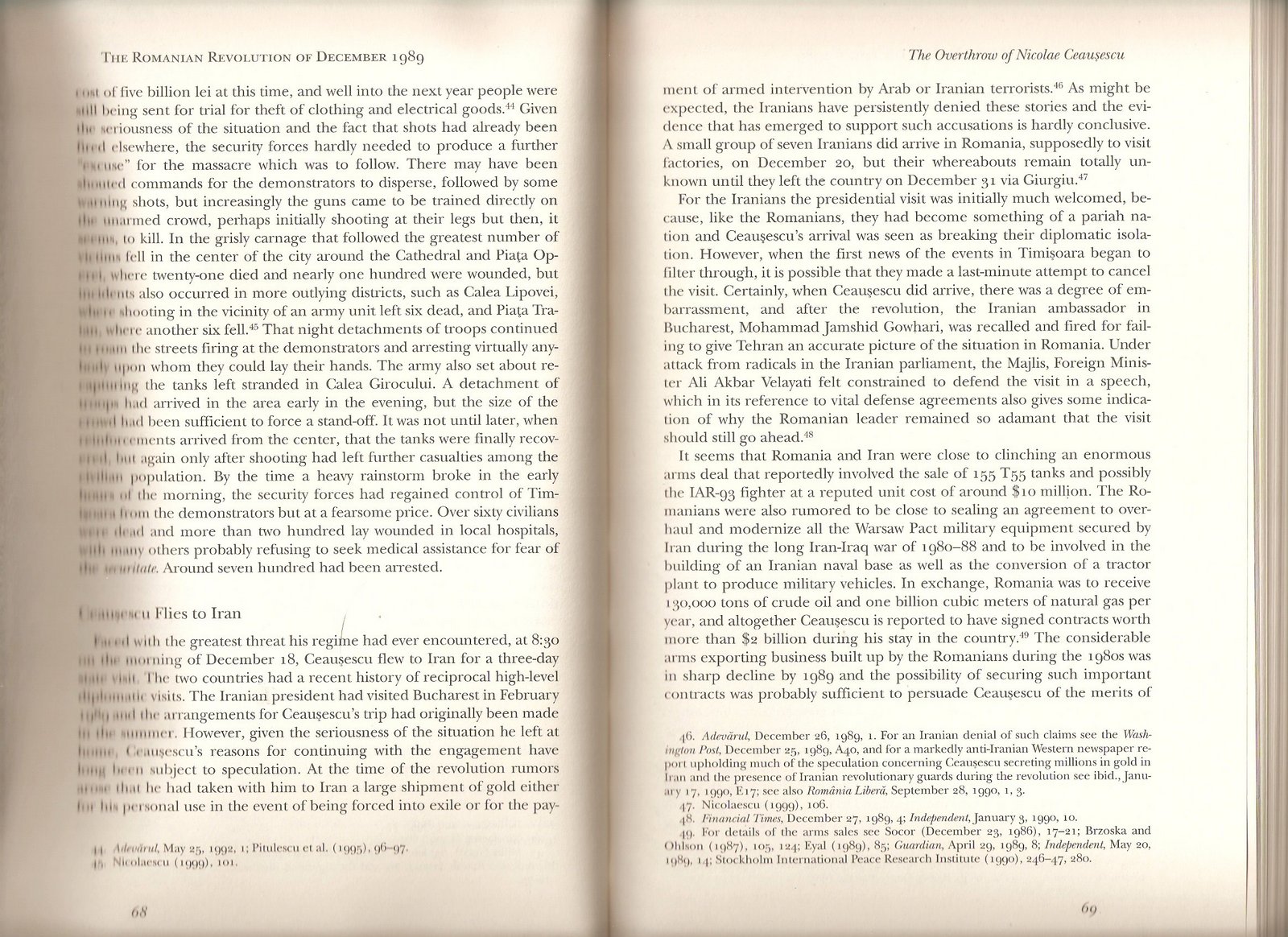
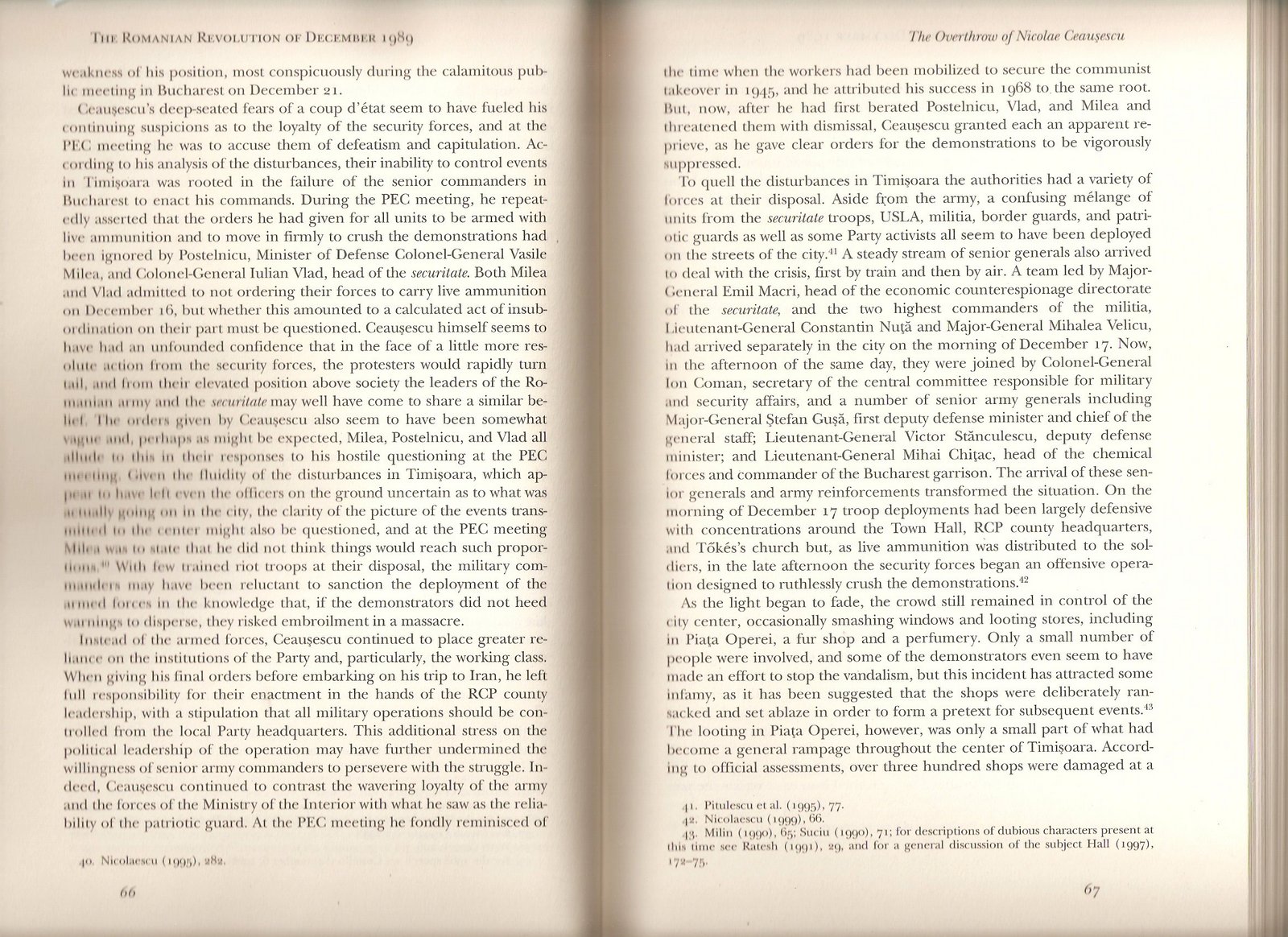
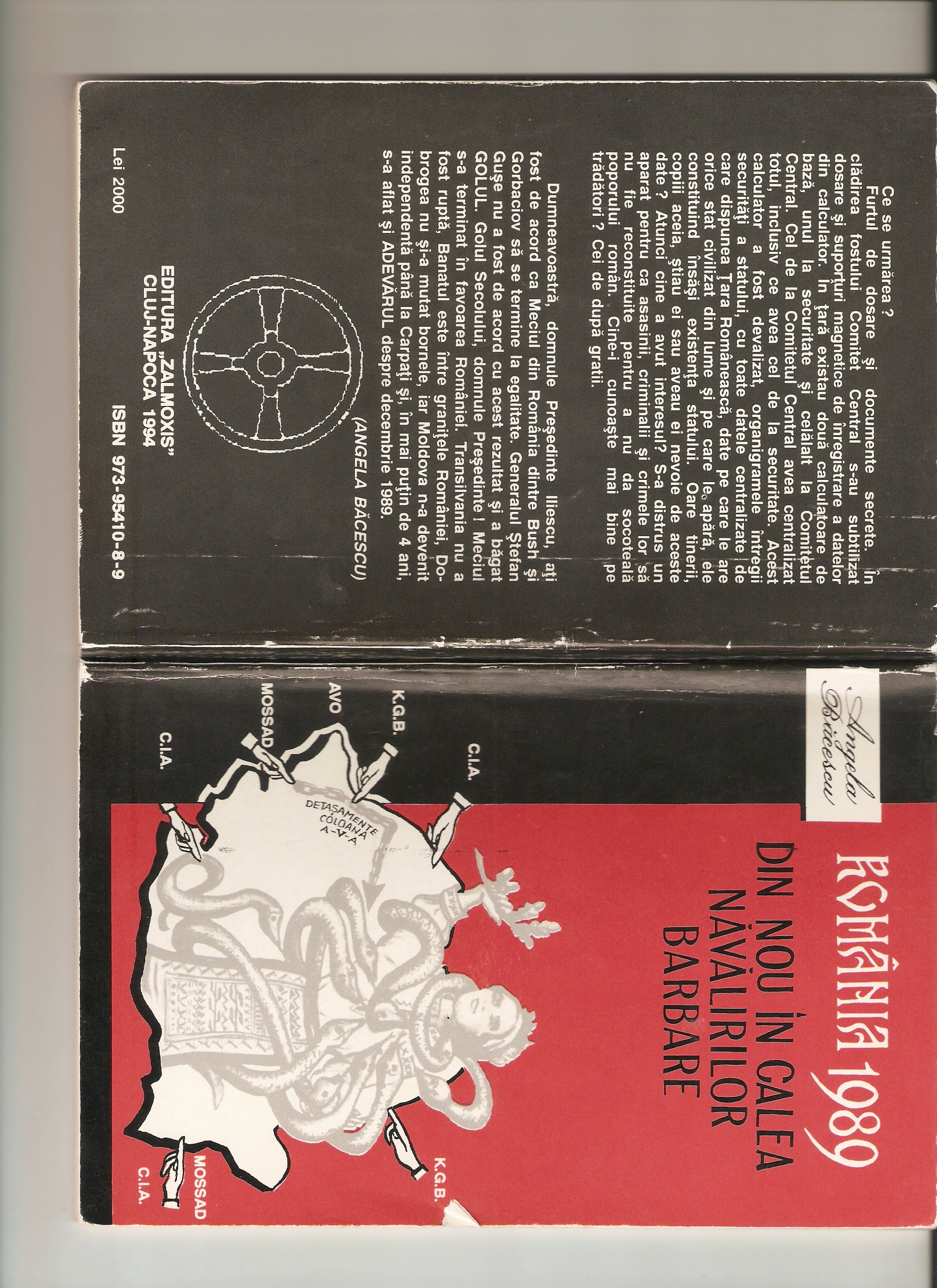
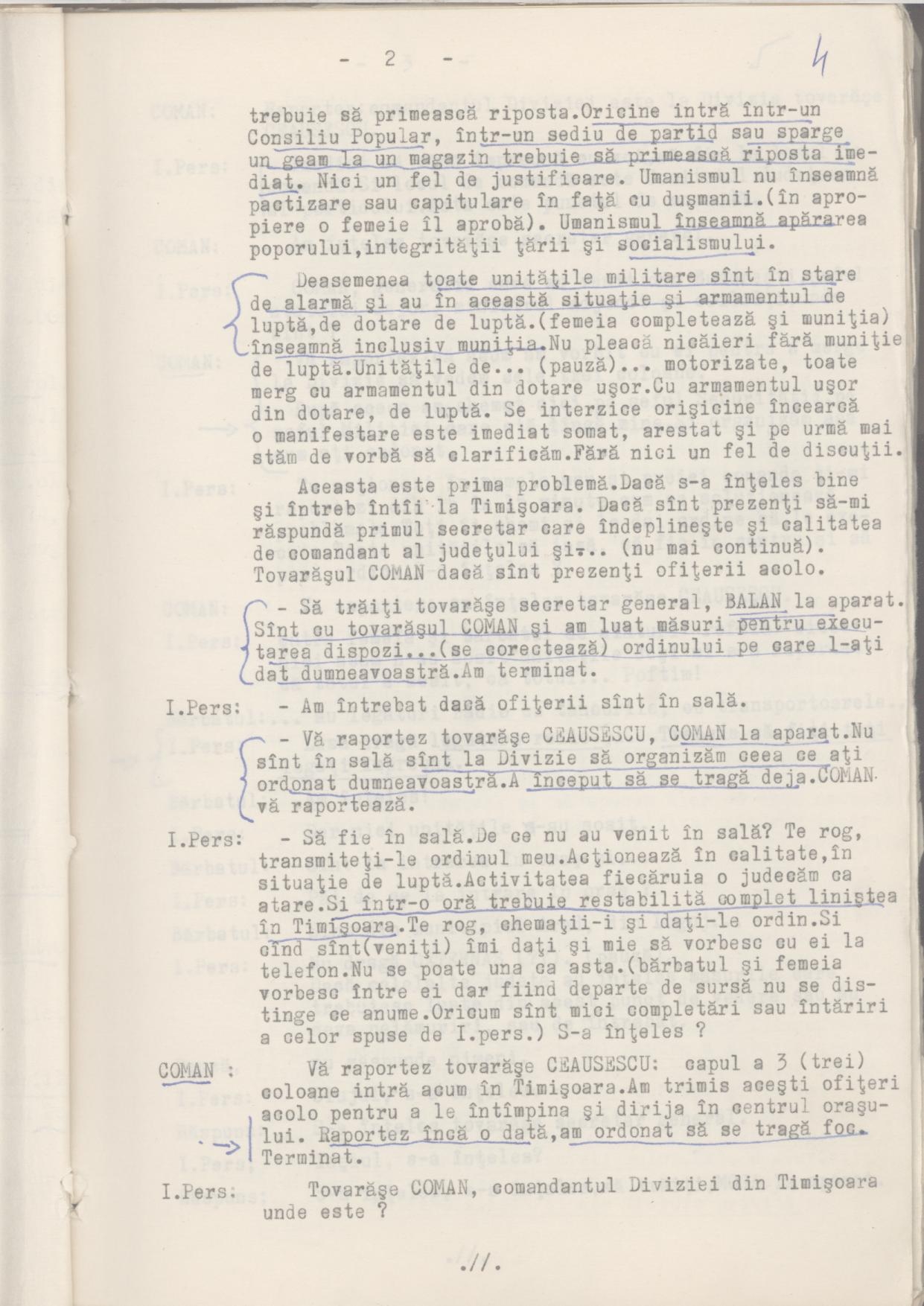
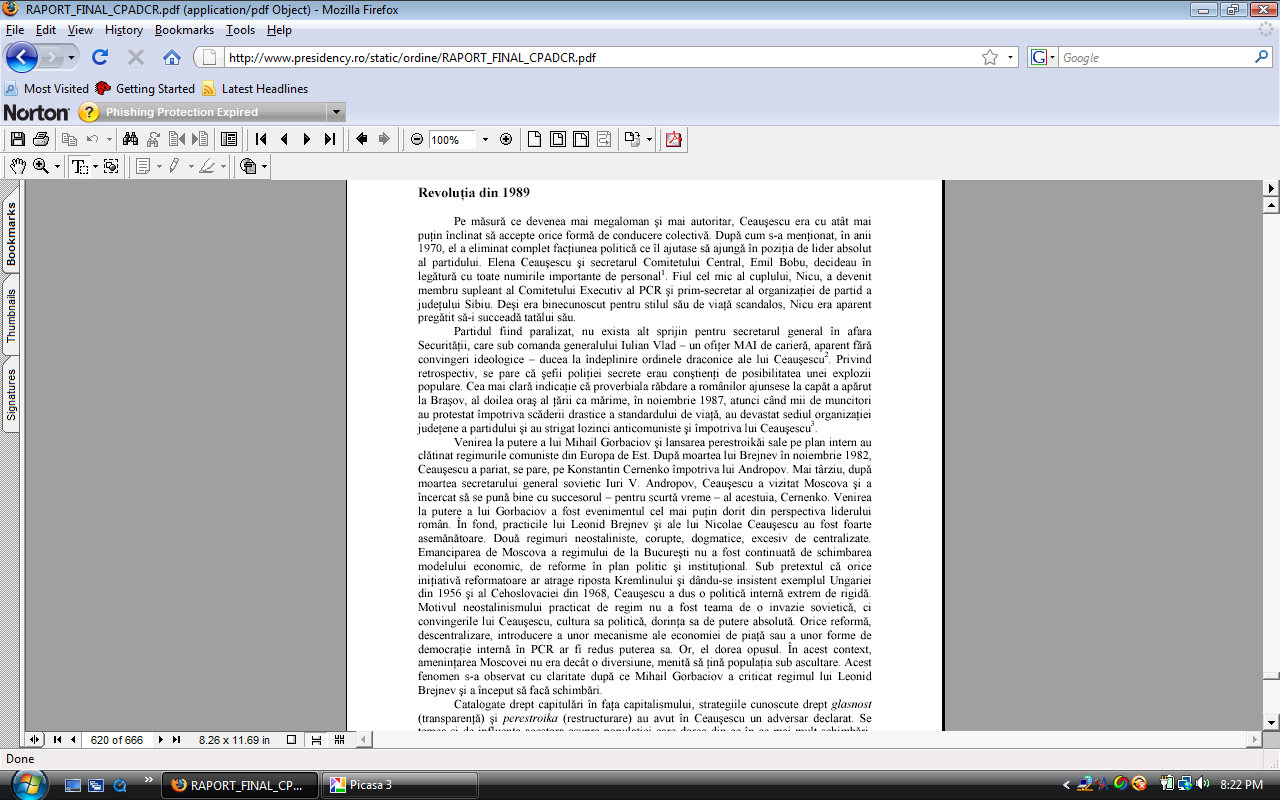

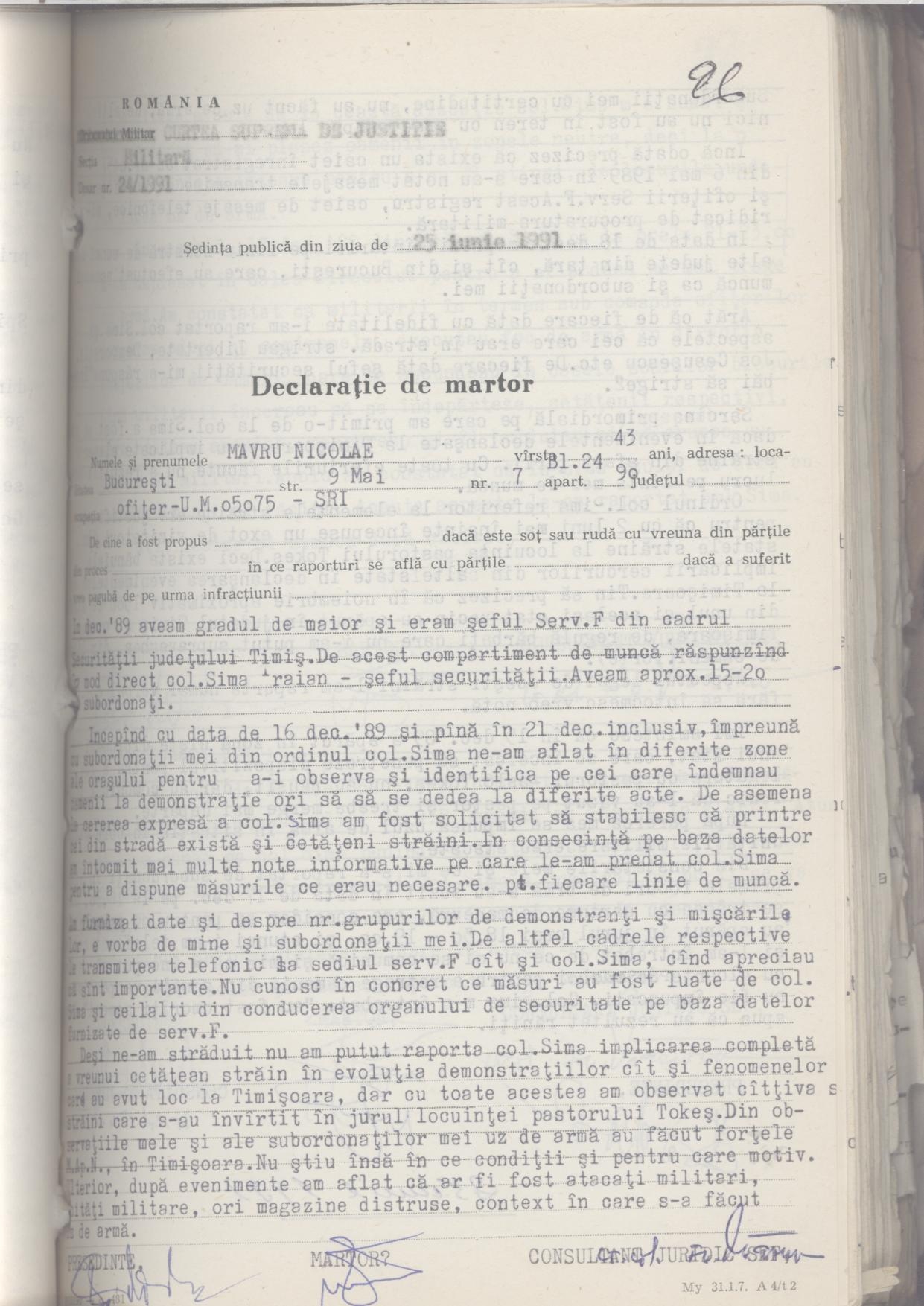


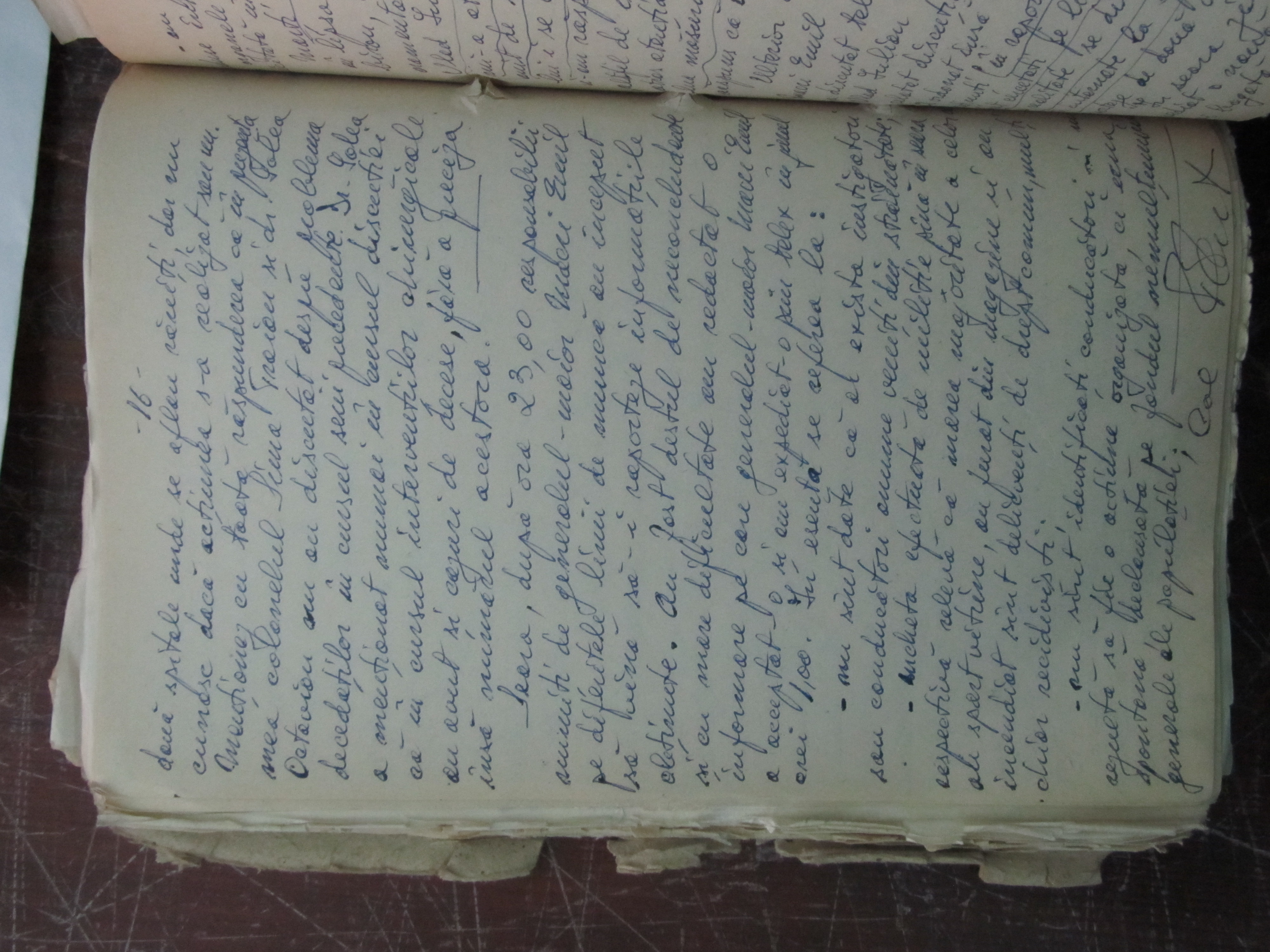
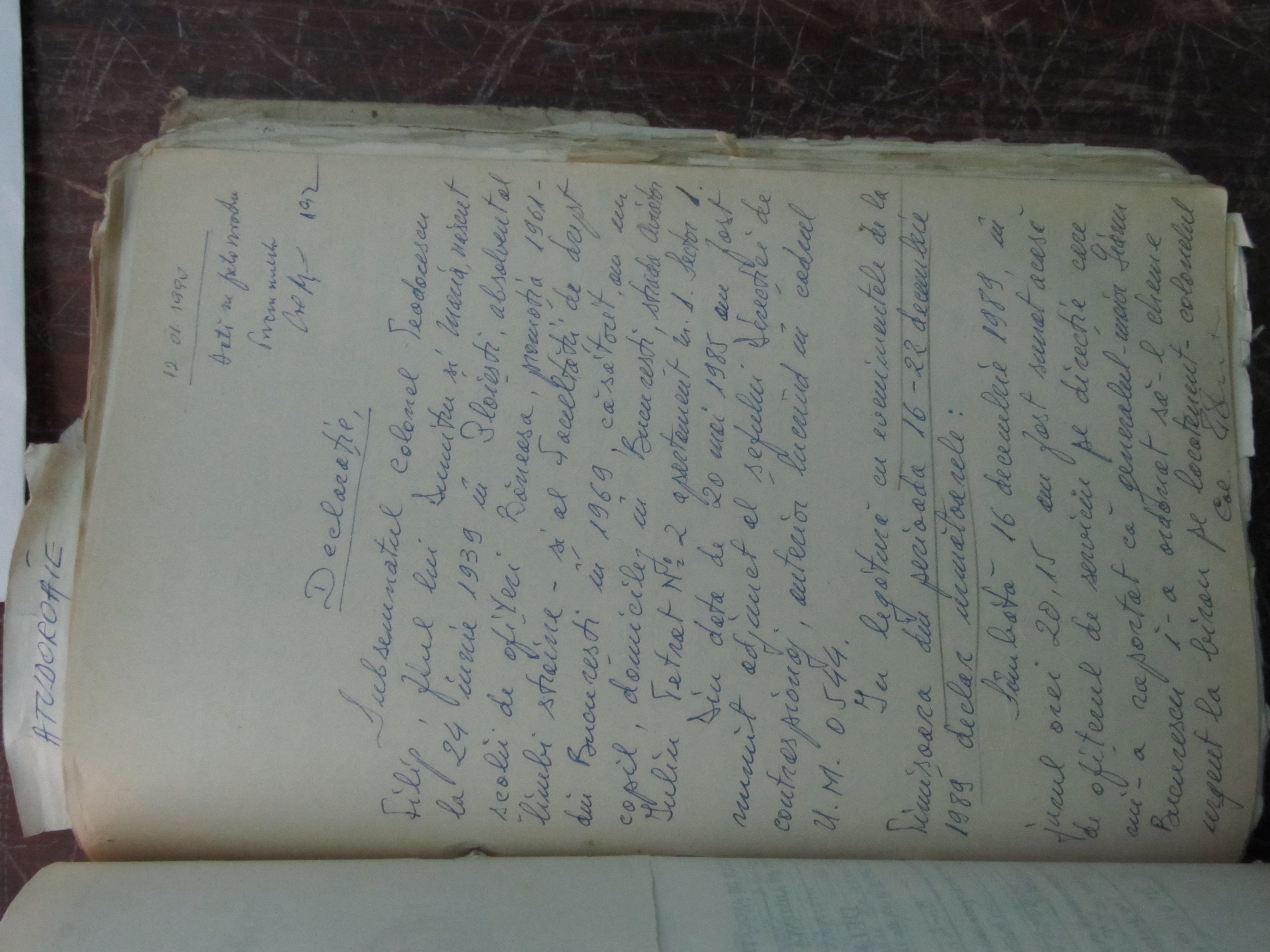
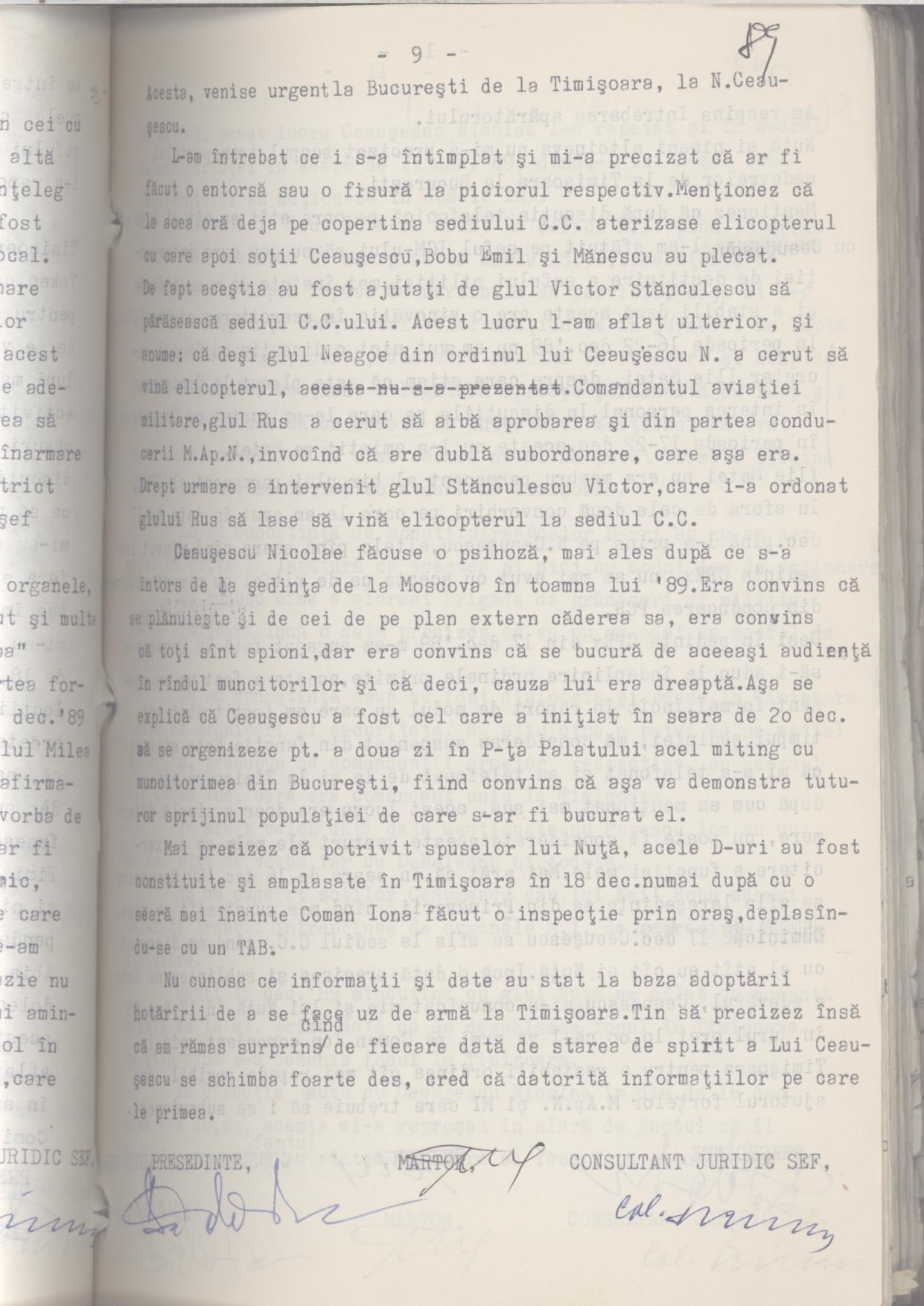
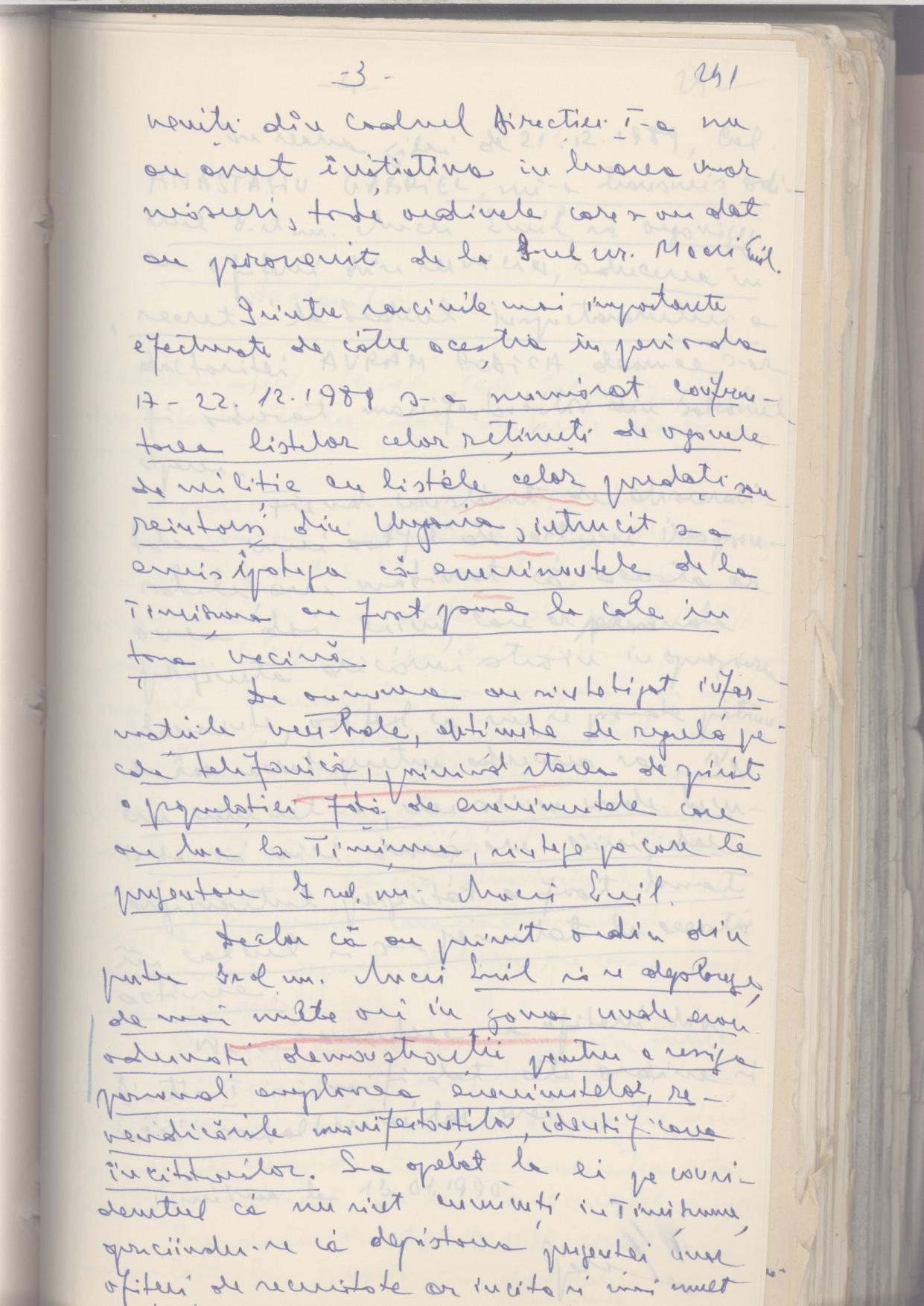
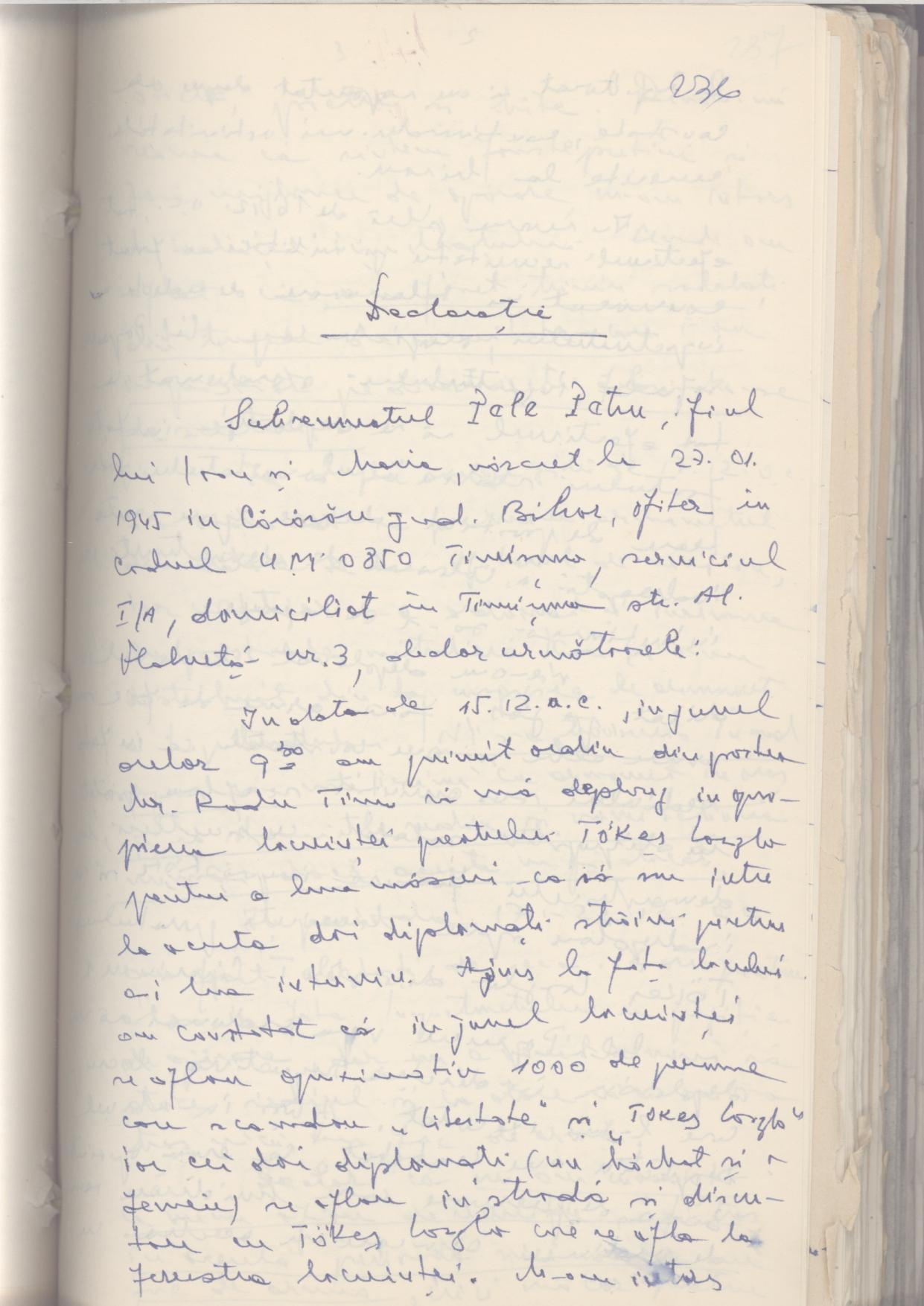
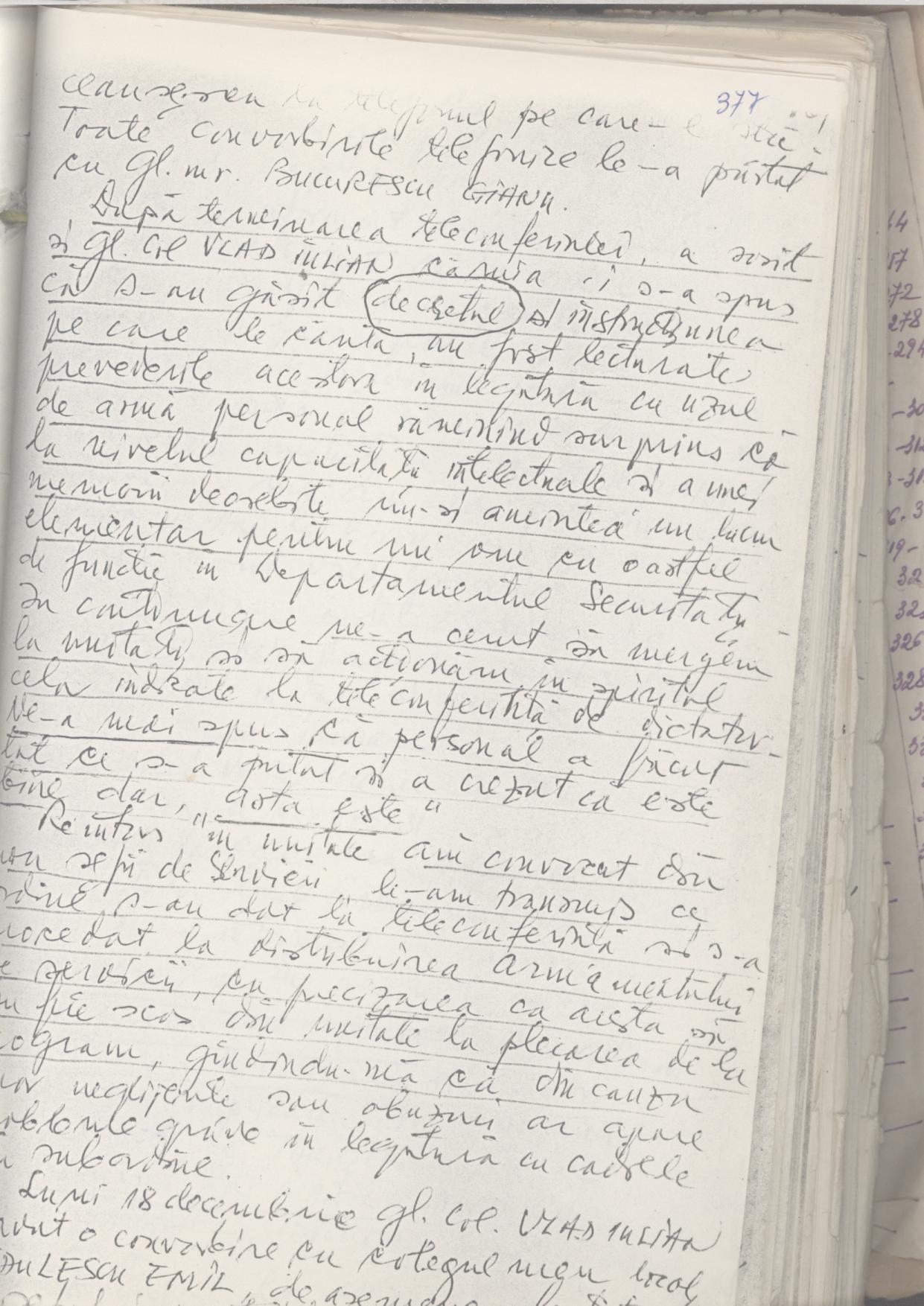
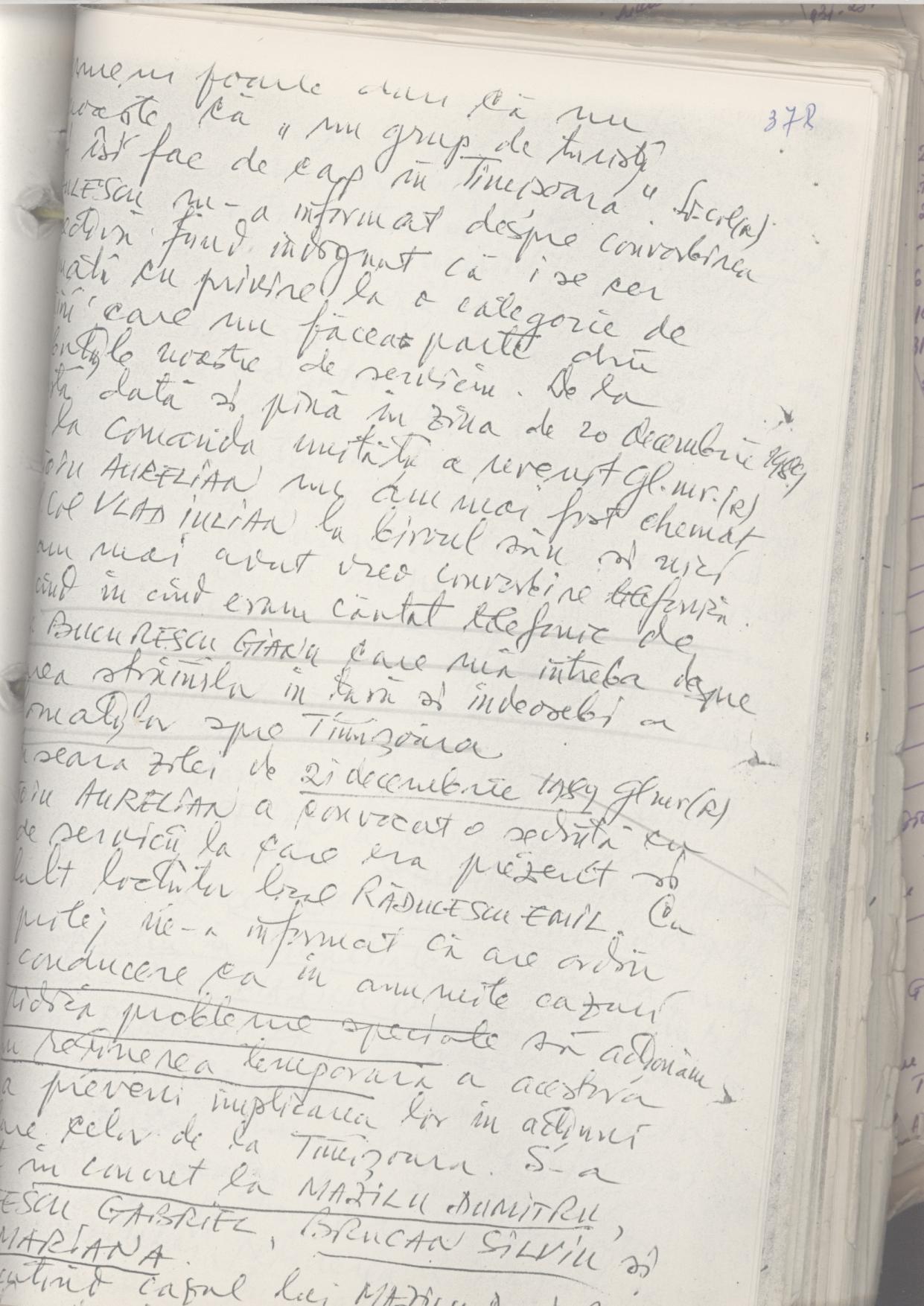
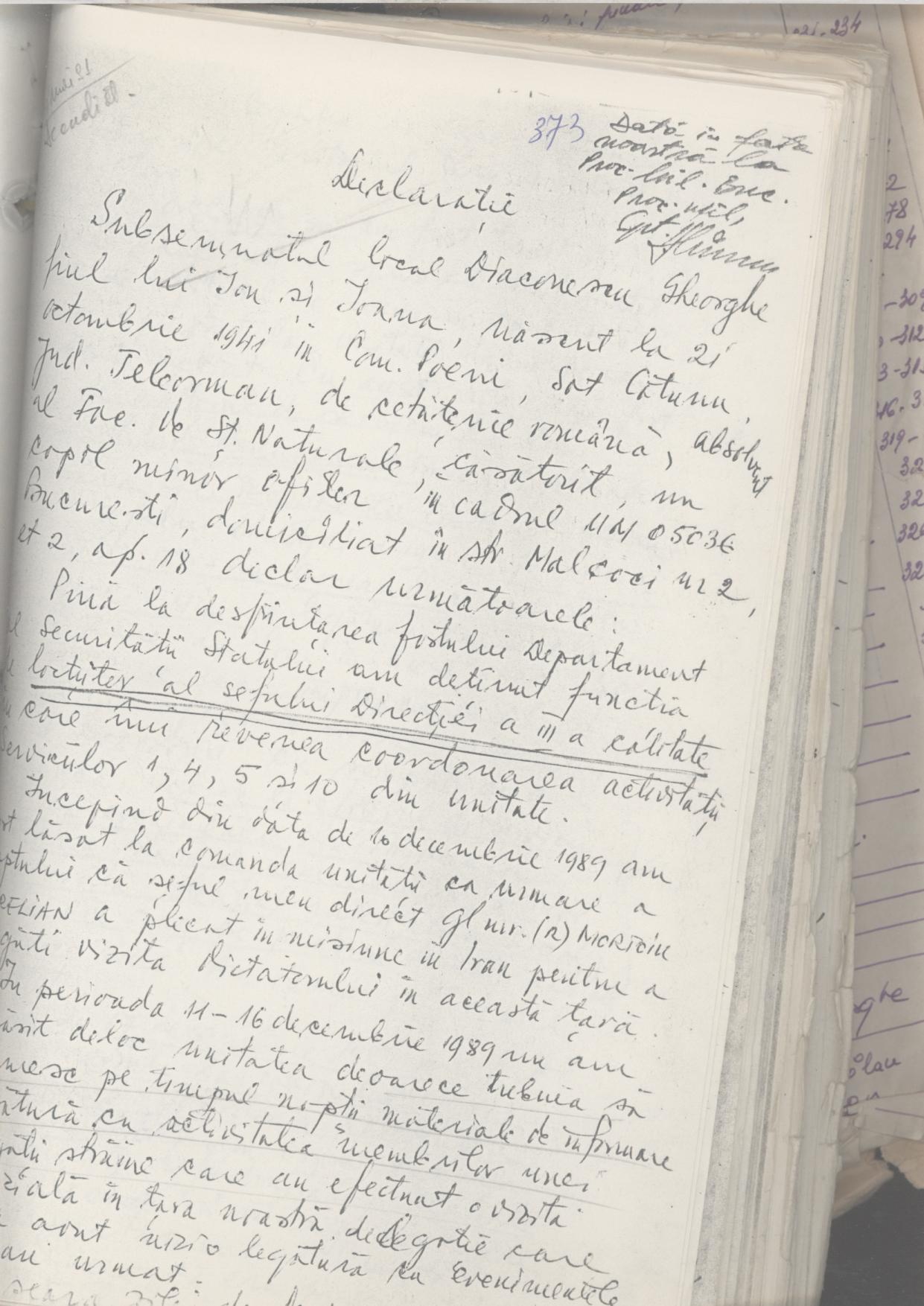
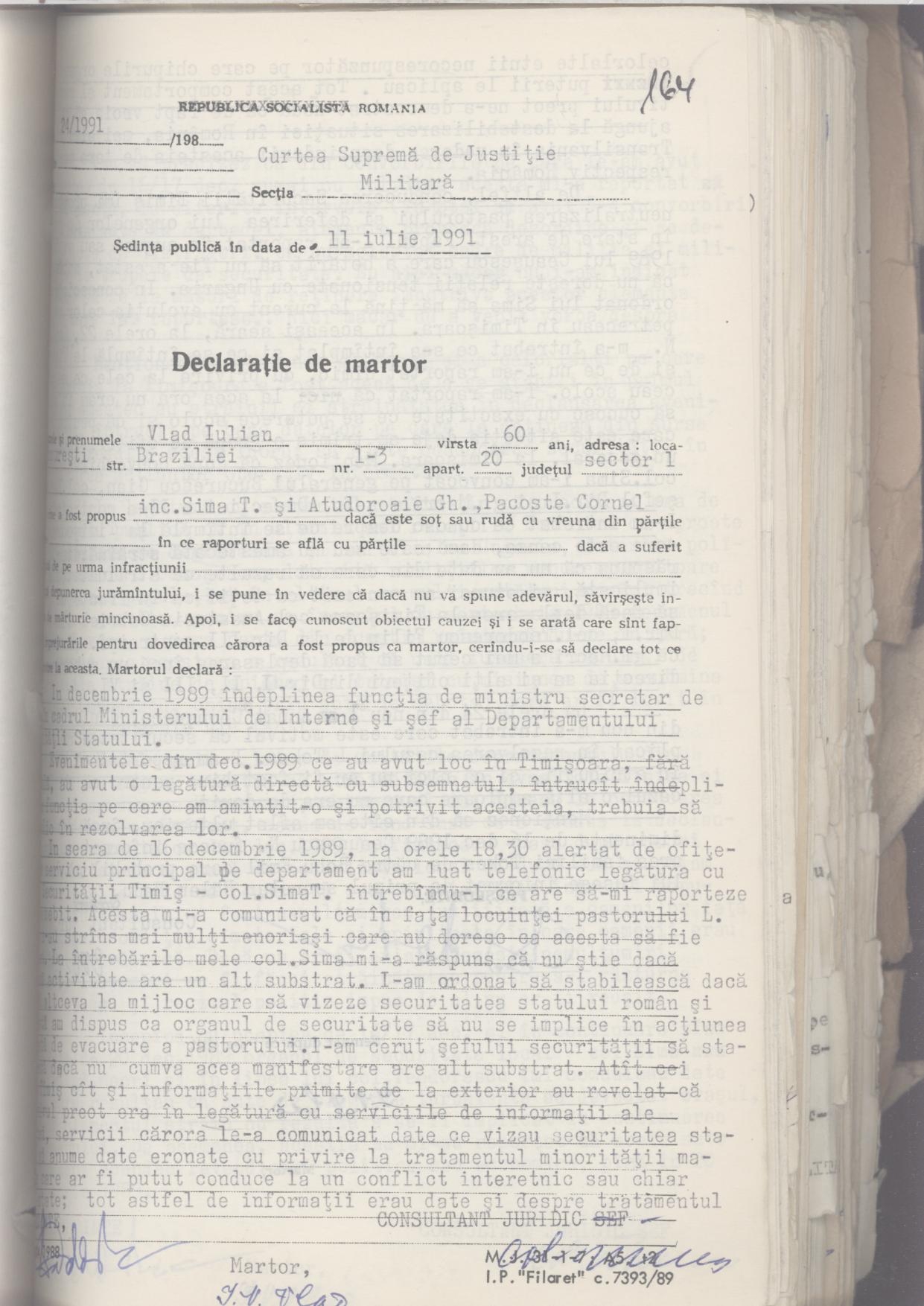
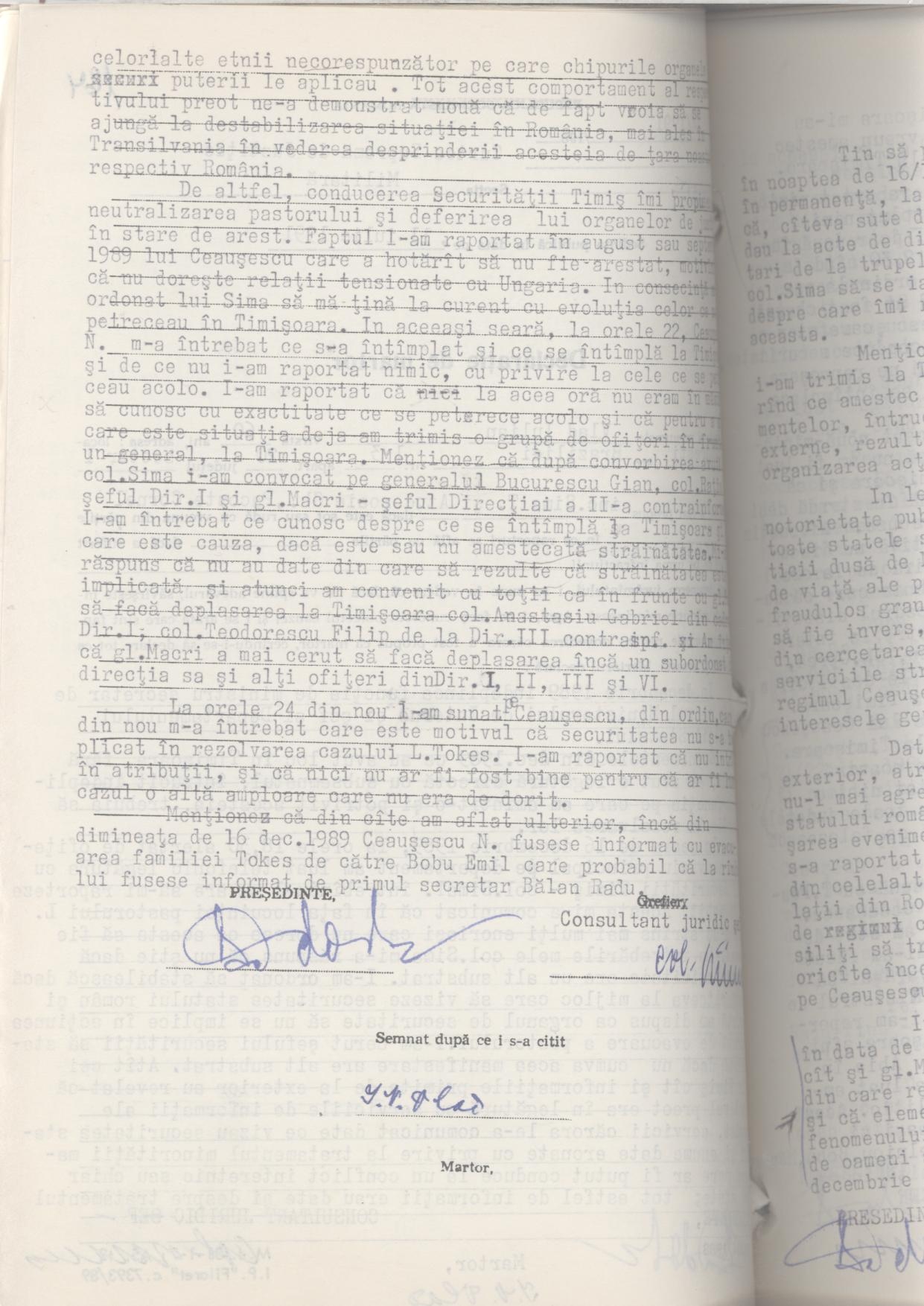
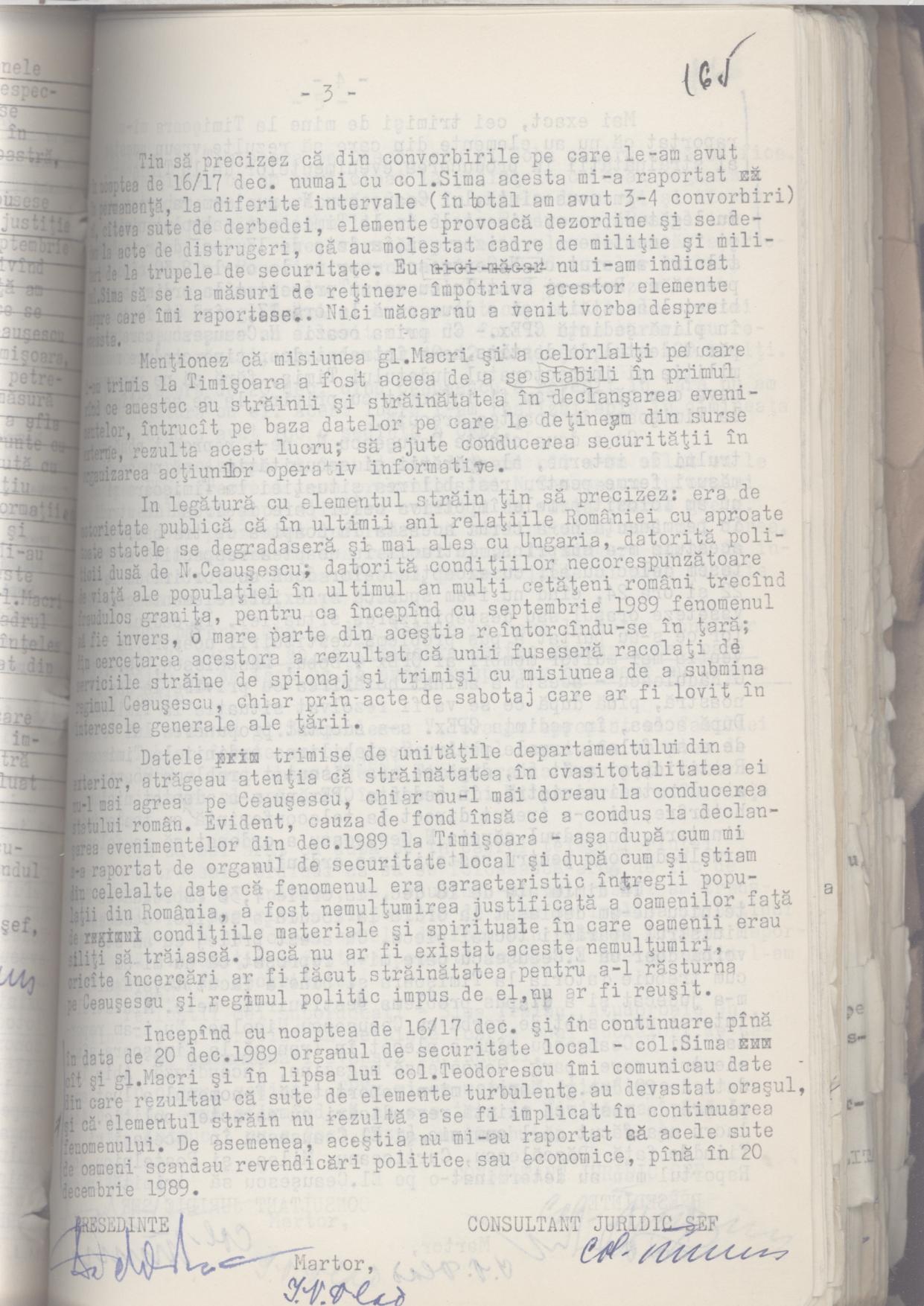
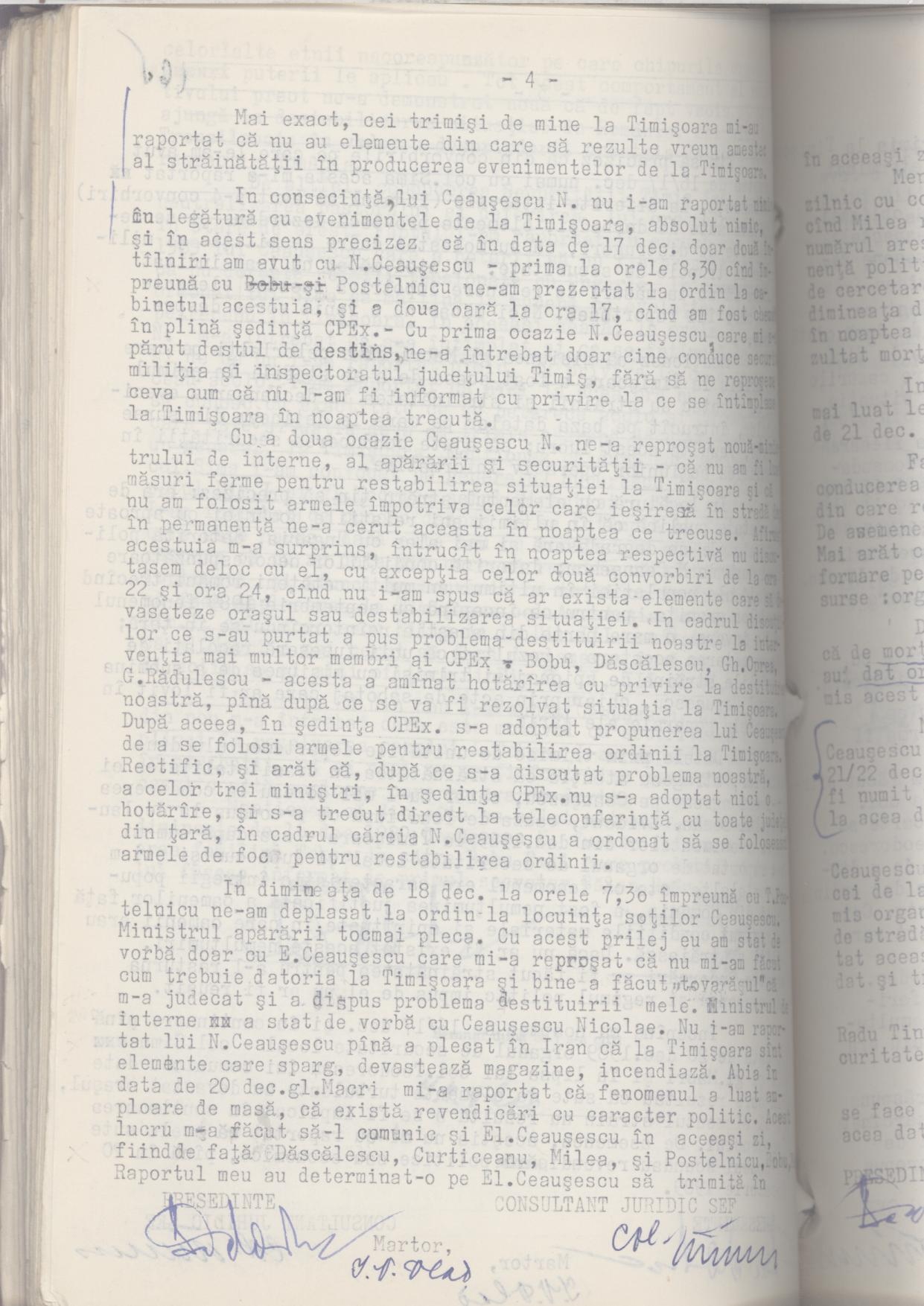

 The Archive of the Romanian Revolution of December 1989

22/02/2013 la 15:45