“Radu Balan ‘isi aminteste’ ca in 18 decembrie la ora 24:00 se indrepta spre IAEM si depasea un grup de zece masini sovietice oprite in 100 de metri de Spitalul Judetean (Rezulta ca in noaptea acea, sub privirile sovieticilor au fost incarcate cadavrele !)”–care este varianta mai plauzibila? Au apartinut sovieticilor…sau securistilor romani?!

Rewriting the Revolution (1997): Chapter 5 Timisoara 15-17 December 1989
A chapter from my Ph.D. Dissertation at Indiana University: Richard Andrew Hall, Rewriting the Revolution: Authoritarian Regime-State Relations and the Triumph of Securitate Revisionism in Post-Ceausescu Romania (defended 16 December 1996). This is the original chapter as it appeared then and thus has not been revised in any form.
Chapter Five
…
“Yalta-Malta” and the Theme of Foreign Intervention in the Timisoara Uprising
At an emergency CPEx meeting on the afternoon of 17 December 1989, Nicolae Ceausescu sought to make sense out of the news from Timisoara by attempting to fit it in with what had happened elsewhere in Eastern Europe thus far that fall:
Everything which has happened and is happening in Germany, in Czechoslovakia, and in Bulgaria now and in the past in Poland and Hungary are things organized by the Soviet Union with American and Western help. It is necessary to be very clear in this matter, what has happened in the last three countries–in the GDR, in Czechoslovakia, and Bulgaria, were coups d’etat organized by the dregs of society with foreign help.[1]
Ceausescu was giving voice to what would later become known as the “Yalta-Malta” theory. Significantly, the idea that the Soviet Union and, to different degrees of complicity, the United States and the West, played a pivotal role in the December 1989 events pervades the vast majority of accounts about December 1989 in post-Ceausescu Romania, regardless of the part of the ideological spectrum from which they come.
The theory suggests that after having first been sold out to Stalin and the Soviet Union at Yalta, in early December 1989 American President George Bush sold Romania out to Mikhail Gorbachev during their summit in Malta. The convenient rhyme of the two sites of Romania’s alleged betrayal have become a shorthand for Romania’s fate at the hands of the Russians and other traditional enemies (especially the Hungarians and Jews). To be sure, similar versions of this theory have cropped up throughout post-communist Eastern Europe among those disappointed with the pace and character of change in their country since 1989.[2] The different versions share the belief that Mikhail Gorbachev and the Soviet KGB engineered the sudden, region-wide collapse of communism in 1989. Their successors in Russia have been able to maintain behind-the-scenes control in Eastern Europe in the post-communist era by means of hidden influence and the help of collaborators within those countries. “Yalta-Malta” has become the mantra of those who seem to have experienced Eastern Europe’s el desencanto most deeply.[3]
Although one can probably find adherents to the Yalta-Malta theory in every East European country–particularly since the “Return of the Left” through the ballot box–there is little doubt that the theory finds its widest and most convinced audience–both at elite and mass levels–in Romania.[4] This is because, as we have seen, the suggestion that the Soviet Union and the KGB were attempting to undermine the regime leadership and infringe upon national sovereignty was not an ad hoc slogan in Romania in 1989, as it was in East Germany, Czechoslovakia, and Bulgaria where aging political leaderships hinted at such arguments in a last-ditch effort to save their positions. Such appeals had far greater resonance in Romania in December 1989–particularly within the regime–because they had been tenets of the Romanian regime’s ideology for well over two decades. And they have had a lingering popularity in the post-Ceausescu era for that same reason. It is the uniquely antagonistic character of the relationship between the Securitate and the KGB during the Ceausescu era (discussed in chapter four), and the genuine, scarcely-veiled animosity between Ceausescu and Gorbachev, which give the Yalta-Malta scenario a plausibility and credibility (however spurious) in Romania it cannot find elsewhere in Eastern Europe.
Western analysts have frequently caricatured the views of the former Securitate towards the Ceausescu era by suggesting that they uniformly look back favorably and nostalgically upon it. In fact, many of them now openly criticize Nicolae Ceausescu’s misguided policies, erratic behavior, and harsh rule.[5] Clearly, much of this is post facto judgement. The deceased Ceausescu serves as a convenient scapegoat for all that went wrong during his rule and by blaming him they can absolve themselves. Nevertheless, regardless of how they now view Nicolae Ceausescu, almost every former Securitate officer challenges the spontaneity of the Timisoara protests and suggests that the catalyst for the unrest came from outside Romania’s borders. Thus, they argue, even if Nicolae Ceausescu had brought the country to the point of profound crisis, this “foreign intervention” converted the Timisoara events primarily into a matter of national security.
It is interesting to recall Nicolae Ceausescu’s own interpretation of the Timisoara events during a rambling, scarcely coherent teleconference on 20 December 1989:
…all of these grave incidents in Timisoara were organized and directed by revanchist, revisionist circles, by foreign espionage services, with the clear intention of provoking disorder, of destabilizing the situation in Romania, of acting in order to eliminate the independence and territorial integrity of Romania….It is necessary to attract the attention of everyone, not only of the communists [emphasis added], but everyone to the shameful…campaign… unleashed right now by different circles, beginning with Budapest, convincingly demonstrates that…, including the declarations of the president of the United States, who declared that he had discussed the problems of Romania with Gorbachev at Malta…[6]
In their discussion of the December events, the former Securitate have expanded upon Ceausescu’s allegations of “foreign intervention.”
In February 1991, while on trial for his part in ordering the repression of demonstrators in December 1989, the former director of the Securitate, General Iulian Vlad, proposed two principal groups of suspects for the Timisoara unrest.[7] He described the first group as Romanian citizens (the majority of whom were presumably of Hungarian ethnicity) who had fled to Hungary, passed through refugee camps, and been sent back to Romania with a mission to engage in “destabilizing acts.” According to Vlad, “only able-bodied males” were sent back. The second group of suspects were large groups of so-called Soviet “tourists.” Here is Vlad’s depiction of this second group:
Halfway through December 1989 massive groups of Soviet tourists began to enter the country. They entered coming directly from the USSR or from Yugoslavia or Hungary. The majority were men and–in a coordinated fashion–they deployed in a convoy of brand-new “LADA” automobiles. During the night of 16-17 December ‘89 such a column attempted to enter Timisoara. Some of these cars were forced to make a detour around the town, others managed to enter it…[8]
Pavel Corut, a former high-ranking Securitate counter-military intelligence officer who has written dozens of novels seeking to rehabilitate the reputation of the former Securitate, has written of “the infiltration on Romanian territory of groups of Soviet commandos (Spetsnaz) under the cover of being tourists. It is noteworthy that December is not a tourist month and nevertheless the number of Soviet tourists grew greatly.”[9]
In 1994, the Securitate’s official institutional heir, the Romanian Information Service (or SRI), declared in a report on the December events:
In addition to gathering information, some Soviet agents from among our ranks received the mission to make propaganda for “changes,” even at the risk of being found out. Actions at direct incitement [of the population] were also initiated by Soviet “tourists,” whose number had grown in the preceding period and had taken on exceptional proportions by the end of 1989.
Beginning on 9 December 1989, the number of Soviet “tourists” in “private” vehicles grew from around 80 to 1,000 cars a day. This phenomenon, although realized at the time, did not lead to the necessary conclusions and measures. The occupants (two to three per car), athletic men between 25 and 40 years in the majority, avoided lodging facilities, sleeping in their cars…The cars were mostly of a “LADA” and “MOSKOVICI” make, deployed in a convoy, and had consecutively-numbered license plates and similar new equipment. The majority were “in transit towards Yugoslavia”…
It is certain that during the Timisoara events there was a large number
of Soviet “tourists.” During 15, 16, and 17 December 1989, to these already in the country were added those “returning from Yugoslavia,” the majority by car.[10]
But the reach of this theory extends well beyond the former Securitate and their cheerleaders in the Ceausist nostalgic press. The head of the first Senatorial commission investigating the December events, film director Sergiu Nicolaescu–a key figure in the newly-formed National Salvation Front during the events of 22-25 December 1989 and a legislator of the ruling Front after 1989–described the catalyst of the December events to a journalist in December 1993 as follows:
By chance, everything began in Timisoara. It could have begun elsewhere since many places were prepared. It is known that in Iasi something was being prepared, and also in Brasov and Bucharest. There was clearly foreign intervention….For example, the intervention of the Russians in Romania. A year before in 1988 about 30,000 Russians came. A year later in 1989, in December, the number doubled. Thus, it reached 67,000. It is known that there were at least 1,000 automobiles in which there were two to three men between the ages of 30 and 40 years old, at a maximum 45 years old. It is very interesting to observe that, only a few months earlier, the Securitate had ordered that for those from socialist countries crossing the border, it was no longer necessary to note their license plate number or how many people were on board.[11]
Asked who in the Securitate gave the order to no longer record this information, Nicolaescu insinuated that they were Soviet “moles” who had been placed there “4, 5, 10, and even 30 years earlier.”[12]
The theory has also found its way into the opposition media. Cornel Ivanciuc, who in 1995 wrote one of the most influential exposes to date on the former Securitate for the weekly 22, maintains that the Soviets achieved their aims in December 1989 by means of the so-called “tourist-incursionists, whose activity during the revolution was identical to those of the Spetsnaz special troops for reconnaissance and diversion of the GRU [Soviet military intelligence].”[13] Two months after General Vlad’s 1991 court statement, Sorin Rosca Stanescu, one of the most prominent journalist critics of the Iliescu regime and the SRI, presented an interview in the leading opposition daily Romania Libera with an anonymous KGB officer residing in Paris who outlined a familiar scenario.[14] The KGB officer claimed that he had entered Romania on 14 December with others as part of a KGB plan to open fire and create confusion. He had been in Timisoara during the events, but suggested he never received the anticipated order to open fire and left the country on 26 December. Rosca Stanescu, however, made sure to remind his audience of “the insistent rumors which have been circulating referring to the existence on Romanian territory of 2,000 “LADA” automobiles with Soviet tags and two men inside each car…”[15] Stanescu closed by asking his readers: “What did the Ceausescu couple know but were unable to say? Why is general Vlad held in this ambiguous chess game?…Is Iliescu protected by the KGB?”
Stanescu’s intentions are further drawn into question by the fact that this particular article has been cited positively by former Securitate officers in their writings. Colonel Filip Teodorescu of the Securitate’s Counter-espionage Directorate, the second highest-ranking Securitate officer in Timisoara during the repression and sentenced to prison for his role in those events, cites extensively and favorably from this very article by Stanescu in a book on the December events.[16] Pavel Corut also invokes Rosca Stanescu’s interview in support his arguments.[17] Moreover, Rosca Stanescu’s questionable comments make the issue of his (revealed and acknowledged) past collaboration with the Securitate’s USLA unit between 1975 and 1985 relevant.[18]
Securitate accounts also routinely insinuate that foreign diplomats who came to Timisoara ostensibly to “monitor the situation” there, and foreign radio stations such as Radio Free Europe, Voice of America, the BBC, and Deutsche Welle which transmitted information about Timisoara developments, contributed directly and intentionally to the unrest.[19] For example, the former deputy director of the Timis county Securitate, Major Radu Tinu, highlights the allegedly suspicious role played by representatives of the American and British embassies who came to Timisoara on 15 December 1989 and transmitted back to Bucharest that “everything is in order, we have seen him,” apparently referring to pastor Tokes.[20]
Similar elements also creep into some opposition accounts. Ilie Stoian, a journalist for Expres and then Tinerama, ranks among those who have written most extensively about the December events. Stoian argues for a “Yalta-Malta” interpretation of the December events.[21] In discussing the Timisoara events, he notes the presence of Hungarians who were filming the events from their “LADA” automobiles and the expulsion of Russians across the Yugoslav border by the Securitate–thus insinuating that they were somehow implicated in the unrest.[22] According to Stoian:
…the December revolution was prepared in advance. In order to make things even clearer, we draw your attention to the fact that prior to the date fixed by the authorities for the evacuation of pastor Tokes from the parochial residence, in almost every evening Voice of America and Radio Free Europe would broadcast long pieces about this personage. Moreover, inside the country, foreign diplomats began to fuss….[23]
Finally, Stoian asks:
Wasn’t the presence of foreign diplomats somehow to verify if everything “was in order,” as was said during a telephone conversation intercepted on 15 December? Weren’t they somehow doing more than just supervising and reporting on these events to their superiors? We think the answer is yes.[24]
Questioning the Regime’s Treatment of the Tokes Case
What of the scheduled eviction of the Hungarian pastor, Laszlo Tokes, which apparently sparked the Timisoara uprising? It is known that the Securitate had placed Tokes under heavy surveillance for a long time prior to this event because of his persistent criticism of the subservient hierarchy of the Reformed Church and of the Ceausescu regime’s violation of human rights. At the same time, given the Ceausescu regime’s tradition of snuffing out dissidence before it could gain a foothold among the population–Ceausescu reportedly was fond of counseling his subordinates to “avoid creating martyrs”–the regime’s failure to isolate or silence Tokes appears uncharacteristic. Moreover, the fact that demonstrators could gather to prevent his eviction without being immediately and brutally dispersed is also unexpected.
Radu Ciobotea’s summary of the circumstances surrounding the outbreak of the Timisoara events captures the suspicions of many Romanians:
The Securitate hurries slowly, makes noisy efforts…but doesn’t resolve anything. The situation is quite strange. In a totalitarian state with a top-notch information and counter-information service and a “case” which had been pursued not for months but for years, the chiefs of state security…don’t make a decision, thus allowing matters to proceed. Moreover, the intervention of these organs is–as we say–too noisy to camouflage other hidden projects.
From May until December, a simple eviction from a residence–even if it was a parochial residence–cannot be fulfilled! A single man who had the “daring” to collaborate before all of Europe with the Hungarian mass-media (and not only with them) cannot be “neutralized”! We are looking at a dubious reality, especially when we are speaking of the activity and discretion of the Securitate.
No real threat, no sickness, not even an accident, in the end, nothing, blocks the way of this person, who under the eyes of agents, becomes a personality and gives birth by way of an almost inexplicable stubbornness to a conflict which resonates in the social consciousness…of Romanians.
Where? In Timisoara…[i]n “the Western city” close to the border full of tourists and foreign and Romanian students.
When? During winter vacation when tens of thousands of young people would be on the move from their schools and university departments. When Ceausescu’s trip to Iran was certain. When–around the holidays–Romanians had nothing to put on their tables, nothing to heat their homes with, nothing with which to heal the old and young sick with pneumonia or rheumatism. When nothing was possible.
Upon close scrutiny–with the exception of the date–everything was therefore predictable.[25]
“Romania: Revelations of a Coup d’etat,” the influential expose by the French journalists Radu Portocala and Olivier Weber, challenged the spontaneity of the Timisoara protests.[26] Because the authors suggest that their conclusions are based on information provided by Romanian sources; their account was rapidly translated and published widely in the Romanian press during 1990; and it was the first concerted attempt to analyze the December events and therefore “framed the dialogue” so-to-speak–by creating a paradigm to which future analyses would implicitly have to respond–the article deserves mention.
The authors allege a “Yalta-Malta” scenario in which the KGB plays the pivotal role. They suggest that the Securitate purposely attempted to instigate the Timisoara uprising:
In Romania, it was always known when somebody was arrested, but never that somebody will be arrested. However, in the case of Laszlo Tokes this is exactly what happened. The Securitate launched the rumor from the beginning of December that the pastor would be arrested on the sixteenth or seventeenth of that month. Public opinion was therefore carefully prepared.[27]
“Someone therefore had an interest for this small demonstration of 300 to 500 people in support of Tokes to degenerate into a revolt, and then a revolution,” they conclude. In support of their allegation that foreign security services were involved in the Timisoara events, the authors marshal the court statement of Colonel Filip Teodorescu, the Securitate’s alleged “master spycatcher,” in which he claimed to have personally arrested “foreign agents” during the Timisoara unrest. Regime forces opened fire against the protesters on the evening of 17 December because “in order to create and then maintain a state of revolutionary spirit, a brutal repression also must occur.” In other words, the Timisoara events, from the genesis of the protests, to the crackdown on demonstrators, were staged, part of an elaborate coup d’etat supported–and even masterminded–by the Securitate.
Such arguments have found an echo among some opposition journalists within Romania. For example, Ilie Stoian insinuates that at least a part of the Securitate must have been trying to undermine regime policy towards Tokes:
Returning to the name of pastor Tokes, we must say that very few remember that in the months leading up to the events, [Tokes] was guarded day and night by the Securitate. Well, if he was guarded, then how did he wind up on Radio Budapest every week giving interviews? And how could the reporters who were taping his sermons or opinions smuggle the tapes out of the country? The Securitate, after all, was not made up of children! Don’t we witness in this case, a tacit accord of some men from the D.S.S. [i.e. the Securitate] with the very acts which they were supposed to stop?[28]
Ecaterina Radoi alleges that Tokes had informed his congregation of his imminent arrest on Sunday, 10 December 1989.[29] Sarcastically she asserts: “And, indeed, Friday, 15 December, the authorities intended for this event–announced long ago, and given ample media coverage in Hungary and the West–to take place.” After the protest got under way, “the forces of order intervened, dispersed the few protesters there and arrested a few so that the next day they could be let free.” Moreover, Pastor Tokes has himself become the subject of scrutiny. In 1994, the opposition weekly Tinerama published documents it maintained revealed that ever since the mid-1970s Pastor Tokes had been an informer for the Securitate.[30] Well-known journalist Ioan Itu hinted that the revelation of this fact meant that the story of December 1989 needed to be completely reconsidered in light of this new information.
A Review of the Evidence
Although at first glance the regime’s treatment of Pastor Tokes seems strange and even illogical, within the context of the workings of the Ceausescu regime and the regime’s strategy for dealing with dissent it makes perfect sense. There is simply no convincing evidence to believe that the Securitate–or a faction within it–purposely dragged its feet in enforcing Pastor Tokes’ eviction, or was attempting to spark a demonstration in the hopes of precipitating Ceausescu’s fall. The regime’s decision to evict Tokes was not a last-minute decision. Moreover, the regime exerted tremendous and sometimes brutal pressure to silence Tokes in the months preceding this deadline. Interestingly, according to high-ranking members of the former Securitate, Nicolae Ceausescu’s unwillingness to approve the more definitive measures requested by the Securitate allowed the Tokes case to drag on without resolution (see below). The Tokes case suggests the bureaucratic and byzantine mentalities of the Ceausescu regime, and the clash between a dictator’s instructions and how the institutions charged with defending him interpret their mission.
Contrary to its presentation in the aforementioned accounts, the plan to evict Tokes had not appeared overnight. Tokes had known since 31 March 1989 that he had been suspended from his position as pastor in Timisoara. In August, the Hungarian Reformed Calvinist Bishop of Oradea, Laszlo Papp, had responded to Tokes’ appeal of his suspension. Papp informed Tokes that he was to vacate his residence in Timisoara by 15 December 1989 and leave for the remote village of Mineu. On 14 October 1989, the Reformed Church Council met–according to Tokes, under duress, as a result of Papp’s heavy-handed intimidation of other council members–and sent an ultimatum to Tokes stating that he must leave Timisoara by 20 October 1989 at the latest. In response, Tokes placed himself under “voluntary house arrest” and launched another appeal claiming that the bishop’s actions lacked a legal basis. On 28 November, Tokes received a rejection of this new appeal and was informed that his eviction would definitely be enforced on Friday, 15 December 1989.[31]
Both Laszlo Tokes and his father (who was also a minister) had long had run-ins with the regime. In the mid-1980s, Laszlo Tokes had been defrocked from the ministry because of his persistent criticism of collaboration and corruption among the church’s leadership and of the regime’s policies towards the Hungarian minority. Tokes proved to be more of a problem outside of the church and unemployed than he had been as a pastor, however. Radicalized by his expulsion, he began a letter-writing campaign to slow the regime’s ongoing elimination of Hungarian educational facilities. Moreover, his fight for reinstatement in the church caught the attention of Western embassies and international organizations. This occurred right as the West was beginning to conclude that Gorbachev’s emerging reformist course in the Soviet Union and the deteriorating quality of human rights in Romania were devaluing Romania’s “maverick” status within the bloc. Thus, in 1986, apparently after the issue had been raised in the Foreign Relations Committee of the U.S. Senate and considerable diplomatic pressure had been applied, the Reformed church reinstated Tokes. This incident was once again evidence that in individual, high-profile cases, Nicolae Ceausescu could upon occasion prove surprisingly pliable in the face of external pressure.[32]
Transferred to Timisoara, Tokes rapidly became a popular preacher and continued where he had left off: in his sermons, he routinely made “scarcely veiled attacks” on Ceausescu and assailed regime policies such as the “systematization” (de-villagization) program.[33] Upon Tokes’ arrival in Timisoara in 1986, the Timis county bureau of the Securitate’s First Directorate (Internal Affairs) “Office for the Study of Nationalists, Fascists, and Hungarian Irredentists” took control of his file and placed him under surveillance. According to Puspoki, by the end of 1987 Tokes had become “public enemy number one of the Timis county Securitate” and the newly appointed director of the local Securitate, Colonel Traian Sima, had taken personal charge of the Tokes case.[34] This reflected both the regime’s increasing fear of Tokes’ dissidence and Sima’s well-known zealotry.[35]
At least initially, the Securitate pursued less heavy-handed tactics in dealing with Tokes. Laszlo Tokes has himself acknowledged the changed methods of the Securitate:
In Dej, I had been threatened, harassed and constantly pressured by the Securitate. Now my chief Securitate spy was Laszlo Papp [the Bishop of Oradea and Tokes’ superior]. From my arrival at the church in 1986 to my departure, I never saw a Securitate man in my office. They were present at Sunday services, visited the presbyters and questioned people with whom I was in close contact. But they did not approach me. At Dej I had made public outside Romania the persecution I was receiving; this time, the Securitate and the authorities were changing their tactics.[36]
Thus, when in March 1989 the regime believed Tokes’ behavior was becoming a serious threat, Tokes was not kicked out of the church as had happened several years earlier, but was instead banished to the remote village of Mineu. As Tokes comments:
open expulsion would have provoked a Church incident and considerable interest from the West. Refusal to accept a bishop’s instruction, however, would look like deliberate disobedience on my part. The skilled foresight that had ensured I was kept a probationary pastor had kept me firmly under the direct jurisdiction of the bishop.[37]
As 1989 progressed and the confrontation between Tokes and the Reformed Church leadership deepened, Tokes’ case once again emerged into the international spotlight. The BBC, Radio Free Europe, and Deutsche Welle began to follow the Tokes case closely and beamed news of it back into Romania. Reflecting the scope of political change inside Hungary, Hungarian state radio broadcast weekly reports on the pastor’s fate. The broadcast by Hungarian state television on 26 July 1989 of an interview with Pastor Tokes (secretly taped earlier that spring) seemed to precipitate a change in the Securitate’s treatment of Tokes.[38] The Securitate moved beyond the habitual telephone threats and rumor-mongering about Tokes, to detaining, beating up, and arresting (on the pretext of foreign currency violations) members of his congregation and relatives. On 14 September 1989, the church elder Erno Ujvarossy, who had previously organized a petition in defense of Tokes, was found murdered in the woods outside Timisoara. Uniformed and plainclothes Securitate men were posted permanently outside the parochial residence and in the surrounding buildings. About all Tokes was able to do by this time was to go the cemetery to conduct burials.[39]
The suggestion that the Securitate treated Tokes gently prior to his eviction is simply incorrect. On 2 November 1989, four masked men burst through the locked doors of the parochial residence, wielding knives and screaming in a fury. Tokes was slashed on the forehead before his church bodyguards could come to his rescue, causing the four to flee. The numerous Securitate men posted out front of the building had done nothing to intervene in spite of calls for help. Puspoki suggests that these “Mafia-like thugs,” who attacked as if from “an Incan tribe,” were some of Colonel Sima’s “gorillas,” sent to deliver a clear message to Tokes that he should leave immediately.[40] The view of the former Securitate–as expounded by Colonel Sima’s senior deputy, Major Radu Tinu–insinuates a “tourist”-like scenario. According to Tinu, the incident was clearly a “set-up” designed to draw sympathy to Tokes’ cause since the assailants fled away in a car with West German tags.[41] Not for the last time, the Securitate thus appears to attempt to attribute its own actions to foreign agents.
Endnotes
[1].. See the stenogram from the emergency CPEx meeting of 17 December 1989 in Mircea Bunea,
Praf in ochi. Procesul celor 24-1-2. (Bucharest: Editura Scripta, 1994), 34.
[2].. Tina Rosenberg, The Haunted Land. Facing Europe’s Ghosts after Communism (New York: Random House, 1995), 109-117, 235. Rosenberg suggests the theory’s popularity in Poland and especially in the former Czechoslovakia.
[3].. Huntington discusses the concept of el desencanto (the characteristic disillusionment or disenchantment which sets in after the transition) in Samuel P. Huntington, The Third Wave. Democratization in the Late Twentieth Century (Norman, OK: University of Oklahoma Press, 1993), 255-256.
[4].. By contrast, Rosenberg clearly suggests that those who buy into the Yalta-Malta conspiracy theory elsewhere in Eastern Europe are a distinct minority in political circles and marginal figures in the post-communist era.
[5].. This has come through, for example, in the novels and articles of the well-known, former high-ranking military counter-intelligence officer, Pavel Corut, and in the comments of the former head of the First Directorate (Internal Affairs), Colonel Gheorghe Ratiu, in an extended interview during 1994 and 1995 with the Ceausist weekly Europa.
[6].. See the transcript in Bunea, Praf in Ochi, 47. Ceausescu goes on to link the US invasion of Panama which was taking place at this time to a general offensive by the superpowers to eliminate the sovereignty of independent states. The fact that Ceausescu appeals “not only to the communists” suggests his attempt to play on a non-ideological Romanian nationalism.
[7].. See Vlad’s testimony in Mircea Bunea, “Da sau Ba?” Adevarul, 16 February 1991, in Bunea, Praf in Ochi, 460-461.
[8].. Ibid.
[9].. Pavel Corut, Cantecul Nemuririi [The Song of Immortality] (Bucharest: Editura Miracol, 1994), 165.
[10].. See the excerpts of the SRI’s preliminary report on the December events in “Dispozitivul informativ si de diversiune sovietic a fost conectat la toate fazele evenimentelor (III) [Soviet information and diversion teams were connected to all phases of the events],” Curierul National, 11 July 1994, 2a.
[11].. Sergiu Nicolaescu, interview by Ion Cristoiu, “Moartea lui Milea, Momentul Crucial al Caderii,” Expres Magazin, no. 48 (8-15 December 1993), 31.
[12].. Ibid.
[13].. Cornel Ivanciuc, “Raporturile dintre Frontul Salvarii Nationale si KGB [The Relations between the National Salvation Front and the KGB],” 22, no. 21 (24-30 May 1995), 11.
[14].. Sorin Rosca Stanescu, “Iliescu aparat de K.G.B.? [Iliescu defended by the KGB]” Romania Libera, 18 April 1991, 8.
[15].. Ibid. Rosca Stanescu had in fact already floated this theory. In June 1990, he wrote: “…in the Army, more and more insistently there is talk of the over 4,000 ‘LADA’ automobiles with two men per car, which travelled by various routes in the days preceding the Revolution and then disappeared…” (Sorin Rosca Stanescu, “Se destrama conspiratia tacerii? [Is the conspiracy of silence unravelling?]” Romania Libera, 14 June 1990, 2a). At that time it could be argued that Rosca Stanescu was unaware of the Securitate account. It is difficult to say the same of his comment in April 1991.
[16].. Filip Teodorescu, Un Risc Asumat: Timisoara, decembrie 1989 (Bucharest: Editura Viitorul Romanesc, 1992), 93-94. Curiously, Teodorescu adds: “Besides, I have no reason to suspect that the journalist Sorin Rosca Stanescu would have invented a story in order to come to the defense of those accused by the judicial system and public opinion of the tragic consequences of the December 1989 events.”
[17].. Although Corut does not mention Stanescu by name as does Teodorescu, the references are unambiguous. See Pavel Corut, Floarea de Argint [The Silver Flower] (Bucharest: Editura Miracol, 1994), 173; idem, Fulgerul Albastru [Blue Lightning] (Bucharest: Editura Miracol, 1993), 211.
[18].. In April 1992, documents were leaked (presumably by regime sources) to the media and foreign embassies showing that Stanescu had been an informer for the Securitate’s elite anti-terrorist unit (the USLA) between 1975 and 1985. Stanescu admitted that the charges were true. Although released from Romania Libera in June 1992, he was picked up elsewhere in the opposition press, returned to Romania Libera the following year, and eventually became editor of an opposition daily owned by the trust which runs Romania Libera. Prominent opposition figures have steadfastly defended him as a victim of the Iliescu regime, and in spite of his past, his writings have largely gone unscrutinized. On Stanescu’s case, see Sorin Rosca Stanescu, “Securea lui Magureanu,” Romania Libera, 17 April 1992, 1, 3 (the article which personally attacked the SRI’s Director Virgil Magureanu and appears to have prompted the release of Stanescu’s file); Anton Uncu, “Opriti-l pe Arturo Ui,” Romania Libera, 30 April 1992, 1, 3; Rosca Stanescu, “Sint H-15,” Romania Libera, 9 May 1992, 5; idem, interview by Andreea Pora, “‘H-15′ in slujba patriei,” 22, no. 120 (15-21 May 1992), 13; “Catre SRI,” Romania Libera, 9 June 1992, 1; “Goodbye Magureanu,” The Economist, no. 2212 (18 June 1992) in Tinerama, no. 85 (10-17 July 1992), 3.
[19].. See, for example, the comments of the deputy director of the Timis county Securitate, Major Radu Tinu, in Angela Bacescu, Din Nou in Calea Navalirilor Barbare [Once again in the path of barbaric invaders] (Cluj-Napoca: Editura “Zalmoxis,” 1994), 72-74. This book consists of articles and interviews which appeared in the Ceausist weekly Europa between 1990 and 1994.
[20].. Ibid., 73.
[21].. Ilie Stoian, Decembrie ‘89: Arta diversiunii. (Bucharest: Editura Colaj, 1993), 7-10. This book is a collection of articles he wrote while at Expres between 1991 and 1993.
[22].. Ibid., 11.
[23].. Ibid.
[24].. Ibid., 12.
[25].. Excerpts from Ultimul Decembrie in Radu Ciobotea, “Inceputul Sfirsitului [The Beginning of the End],” Flacara, no. 51 (19 December 1990), 6.
[26].. See, for example, Radu Portocala and Olivier Weber, trans. Liviu Man, “Romania: Revelatii asupra unui complot,” Nu, no. 17 (July 1990), 6-7. The original article appeared in Le Point, no. 922 (27 May 1990).
[27].. Ibid.
[28].. Stoian, Decembrie ‘89, 9.
[29].. Ecaterina Radoi, “Remember 15 decembrie 1989-20 mai 1990,” Zig-Zag, no. 190 (23-31 December 1993), 4-7.
[30].. Ioan Itu, “Laszlo Tokes nu e un episcop real [Laszlo Tokes is not a real bishop],” Tinerama, no. 178 (12-19 May 1994), 2; idem, “Laszlo Tokes–informator al Securitatii [Laszlo Tokes–Securitate informer,” Tinerama, no. 182 (10-16 June 1994), 3.
<!–[if !supportFootnotes]–>[31].. Laszlo Tokes, with David Porter, With God, For the People: The Autobiography of Laszlo Tokes (Toronto: Hodder and Stoughton Publishers, 1990), 2-3, 121, 138-139, 141.
[32].. Martyn Rady, Romania in Turmoil (New York: IB Tauris & Co. Ltd., 1992), 83-86.
[33].. Ibid., 86; Tokes, With God, for the People, 105-109.
[34].. F. Puspoki, “Piramida Umbrelor (II) [The Pyramid of Shadows (II)],” Orizont, no. 10 (9 March 1990), 4.
[35].. Ibid. Colonel Sima had been transferred from Oradea to Timisoara after a particularly ugly action carried out against several Roman Catholic priests had gotten him into trouble with his superiors. Radio Free Europe had drawn attention to the incident and, according to Puspoki, news of it had reached the “’sensitive’ ears of the dictator,” prompting Sima’s reassignment. Upon arriving in Timisoara, the particularly ambitious and unscrupulous Sima immediately set about replacing those in the “Office for the Study of Nationalists, Fascists, and Hungarian Irredentists” with young officers who were personally loyal and appealed to his sense of zealotry for such work.
[36].. Tokes, With God, for the People, 102. According to Puspoki F., the pre-existing relationship between Securitate chief Traian Sima and Bishop Laszlo Papp facilitated Tokes’ surveillance: Papp had been “initiated into ‘the secrets’ of security work by the same Colonel Sima when the latter was Securitate chief of Bihor country.” See Puspoki, “Piramida Umbrelor (II).”
[37].. Ibid., 120.
[38].. The very fact that this broadcast was permitted in Hungary was symbolic of the scope of political change which had occurred in that country in the preceding two years alone. As the transition from one-party communist rule unfolded and political pluralization became more and more tolerated and formalized, Hungarian nationalism (which had theretofore been muted by the technocratic bent of the Kadar regime’s legitimacy) gained greater public expression. Inevitably, this meant raising the issue of the Romanian regime’s treatment of its approximately two million member Hungarian minority–something which had been done gingerly in the past.
A month after Kadar’s removal from power in May 1988, on 27 June 1988 40,000 Hungarians demonstrated in the largest protest since the 1956 uprising against the systematization program and human rights abuses in Romania (Rady, Romania in Turmoil, 73). During 1989, the Hungarian government launched protests at the United Nations against Tokes’ treatment and the Hungarian parliament nominated Tokes in conjunction with the ethnic Romanian dissident Doina Cornea from Cluj for the Nobel peace prize (Ibid., 88).
[39].. Rady, Romania in Turmoil, 87; Puspoki, “Piramida Umbrelor (II)”; Tokes, With God, for the People, 139.
[40].. Puspoki, “Piramida Umbrelor (III),” Orizont, no. 11 (16 March 1990), 4.
[41].. Bacescu, Din Nou in Calea, 78.
———————————————————————-
General Stanculescu’s recent comments have produced predictable results in the Romanian media (Cine ne \”abureste\” cu privire la evenimentele din decembrie 1989 , O zi din viaţa lui Victor Athanasie Stănculescu , Generalul Stănculescu şi-a băgat piciorul în gipsul istoriei). As for me: I have been down this rue of ruses, more than a few times. Enjoy!
THE 1989 ROMANIAN REVOLUTION AS GEOPOLITICAL PARLOR GAME: BRANDSTATTER’S “CHECKMATE” DOCUMENTARY AND THE LATEST WAVE IN A SEA OF REVISIONISM (cleared March 2005)
By Richard Andrew Hall
Disclaimer: This material has been reviewed by CIA. That review neither constitutes CIA authentification of information nor implies CIA endorsement of the author’s views.
Part 3: Ruse
A SECURITATE RIDDLE: SOVIET “TOURISTS” AND THE OVERTHROW OF THE CEAUSESCU REGIME
Although I have written a good deal on the “tourist” conundrum in the past (see, for example, Hall 2002), I have not formally addressed the role of foreign histories of Ceausescu’s overthrow in the historiography of December 1989, particularly in regard to this topic. In the wake of the broadcast of Brandstatter’s “Checkmate” documentary in February 2004, Vladimir Bukovski’s invocation of journalist John Simpson’s 1994 article on the topic (discussed in Part 2 of this series) suggests, however, that it needs to be broached in greater detail. Moreover, as the year-long look-back at the December 1989 events in “Jurnalul National” shows, the “tourist” question—somewhat surprisingly to me—has become more and more central to arguments about the Revolution, thereby amplifying what is already tremendous confusion over the events in the Romanian press and public. Of course, as has traditionally been the case, the Soviet/Russian tourists figure prominently, and, to a lesser extent, the Hungarian tourists. However, the stock of other tourist groups has also gone up. For example, the role of Yugoslav (specifically Serb) tourists has found a greater emphasis, and, seemingly out of nowhere, so have East German/STASI tourists! The principal sources for all of these allegations are, as usual, former Securitate and Militia officers, with some military (intelligence) personnel thrown in for good measure.
FOREIGN FORUM, ROMANIAN CONTEXT
It is difficult to pinpoint the exact first mention of “the tourists” and their alleged role in the Revolution, but it appears that although the source of the claim was Romanian, the publication was foreign. James F. Burke, whose name is unfortunately left off the well-researched and widely-consulted web document “The December 1989 Revolt and the Romanian Coup d‘etat,” alludes to the “Romanian filmmaker” who first made these allegations (Burke, 1994). The claims are contained in an article by Richard Bassett in the 2 March 1990 edition of “The Times (London).” According to Bassett,
“Mr. [Grigore] Corpacescu has no doubt that the revolution here was carefully stage-managed—as was the case in Prague and East Berlin—by the Russians…According to Mr. Corpacescu a party of Soviet ‘tourists,’ all usually on individual visas, arrived in Timisoara two days before the first demonstration outside Mr. [i.e. Pastor] Tokes’ house. Police records trace them reaching Bucharest on December 20. By the 24th, two days after Ceausescu fled by helicopter, the Russians had disappeared. No police records exist to indicate how they left the country. (“The Times (London),” 2 March 1990)
But Bassett’s interlocutor, Mr. Corpacescu, says some strange things. Bassett is not clear but it appears that Corpacescu suggests that the post-Revolution Interior Minister Mihai Chitac, who was involved in the Timisoara events as head of the army’s chemical troops, somehow purposely coaxed the demonstrations against the regime because the tear-gas cannisters his unit fired failed to explode—the failure somehow an intended outcome. But beyond this, Corpacescu, who is at the time of the article filming the recreation of Ceausescu’s flight on the 22nd—using the same helicopter and pilot involved in the actual event—makes the following curious statement:
“The pilot of this helicopter is an old friend. I have many friends in the police, Timisoara was not started by the Hungarian pastor, the Reverend Laszlo Tokes [i.e. it was carefully stage-managed…by the Russians].” (“The Times (London),” 2 March 1990)
The pilot of the helicopter was in fact Vasile Malutan, an officer of the Securitate’s V-a Directorate. What kind of a person would it have been at that time—and how credible could that person have been–who has the pilot as an old friend and “many friends in the police?” And it would have been one thing perhaps two months after the revolution to talk about the presence of foreign agents “observing” events in Timisoara, but to deny the spontaneity of the demonstrations and denigrate Tokes’ role at this juncture is highly suspicious. I have been unable to unearth additional information on Mr. Corpacescu, but his revelations just happen to serve his friends extremely well—particularly at at time when the prospect of trials and jail time, for participation in the repression in Timisoara and elsewhere during the Revolution, still faced many former Securitate and Militia [i.e. police] members.
THE FORMER SECURITATE AND MILITIA REMINISCE ABOUT THE SOVIET “TOURISTS”
A week after “The Times” article, the chief of the Securitate’s Counter-espionage Directorate, Colonel Filip Teodorescu, mentioned at his trial for his role in the Ceausescu regime’s crackdown in Timisoara that he had in fact detained “foreign agents” during the events there (“Romania Libera,” 9 March 1990). In his 1992 book, he developed further on this theme, specifically focusing on the role of “Soviet tourists:”
“There were few foreigners in the hotels, the majority of them having fled the town after lunch [on 17 December] when the clashes began to break out. The interested parties remained. Our attention is drawn to the unjustifiably large number of Soviet tourists, be they by bus or car. Not all of them stayed in hotels. They either had left their buses or stayed in their cars overnight. Border records indicate their points of entry as being through northern Transylvania. They all claimed they were in transit to Yugoslavia. The explanation was plausible, the Soviets being well-known for their shopping trips. Unfortunately, we did not have enough forces and the conditions did not allow us to monitor the activities of at least some of these ‘tourists'” (Teodorescu, 1992, p. 92).
Reporting in July 1991 on the trial involving many of those involved in the Timisoara repression, Radu Ciobotea noted with what was probably an apt amount of skepticism and cynicism, what was telling in the confessions of those on trial:
“Is the End of Amnesia Approaching?…
Without question, something is happening with this trial. The Securitate doesn’t say, but it suggests. It let’s small details ‘slip out.’…Increasingly worthy of interest are the reactions of those on trial….Traian Sima (the former head of the county’s Securitate) testifies happily that, finally, the Securitate has been accepted at the trial, after having been rejected by Justice. Filip Teodorescu utters the magic word ‘diplomats’ and, suddenly, the witness discovers the key to the drawer with surpise and declares, after five hours of amnesia, that in Timisoara, there appeared in the days in question, foreign spies under the cover of being journalists and diplomats, that in a conversation intercepted by a mobile Securitate surveillance unit Tokes was reported as ‘well,’ and that all these (and other) counterespionage actions that can’t be made public to the mass media can be revealed behind closed doors to the judge….[Timis County party boss] Radu Balan ‘remembers’ that on 18 December at midnight when he was heading toward IAEM, he passed a group of ten soviet cars stopped 100 meters from the county hospital. (It turns out that in this night, in the sight of the Soviets, the corpses were loaded!).” [emphasis in the original] (Flacara, no. 27, 1991, p. 9).
The reference to the corpses being loaded is to an operation by the Militia and Securitate on the night of 18-19 December 1989, in which the cadavers of 40 people killed during the repression of anti-regime protesters were secretly transported from Timisoara’s main hospital to Bucharest for cremation (reputedly on Elena Ceausescu’s personal order).
Finally, as yet another of many possible examples, we have the recollections of Bucharest Militia Captain Ionel Bejan, which apparently appeared in print for the first time only in 2004, in a book by Alex Mihai Stoenescu (excerpted in “Jurnalul National,” 7 December 2004). According to Bejan, around 2 AM on the night of 21-22 December, not far from University Plaza, where at that moment regime forces were firing their way through a barricade set up by protesters (48 were killed that night, 604 wounded, and 684 arrested), he spotted two LADA automobiles with Soviet plates and two men and a woman studying a map and pointing to different locations among the surrounding buildings. Bejan recalled:
“One thing’s for sure, and that is that although they looked like tourists, they didn’t behave like tourists who had just arrived in town or were lost, especially as close by there were compact groups of demonstrators, while from armored personnel carriers there was intense warning fire and a helicopter hovered overhead with lights ablaze. I don’t know what kind of tourist tours somewhere in such conditions. They left the impression that they were sure of themselves, they didn’t need any directions, proof which was that they didn’t ask us anything even though we were nearby and, being uniformed Militia, were in the position to give them any directions they needed. One thing’s for sure when I returned to that location in January 1990…the buildings displayed visible signs of bullet holes…[emphasis added]” (“Jurnalul National,” 7 December 2004)
STRANGE “TOURISTS”…STRANGER STILL, THE REACTIONS OF THE AUTHORITIES
We can agree with Ionel Bejan in one respect. One thing is for sure: these were some very strange tourists. (They give a whole new meaning to the term, “adventure tourism.”) As curious as the “Soviet tourists” themselves is how little the Romanian authorities who claim to have seen them did to stop them—or even try to collect more information about them. Why is it that no official questioned the enigmatic “Soviet tourists” or asked them to leave the area when, as Radu Balan claims, he saw ten LADAs outside the Timis county hospital at 1 AM in the morning the night the cadavers of protesters were being loaded onto a truck for cremation? Or, as Ionel Bejan claims, he spotted several of them in the center of Bucharest at 2 AM, when the area was essentially a warzone of regime repression? The regime had closed the borders to virtually all other foreigners, tourists or otherwise, it was trying to prevent any word of the repression from reaching the outside world, and yet Romanian authorities were not concerned about these “tourists” taking pictures or relaying what they were seeing?!
As I have written before, if it was obvious before 18 December, as these Ceausescu regime officials claim, that “Soviet tourists” were involved in the events in Timisoara, then why was it precisely “Soviet travelers coming home from shopping trips to Yugoslavia” who were the only group declared exempt from the ban on “tourism” announced on that day (see AFP, 19 December 1989 as cited in Hall 2002b)? In fact, an Agent France-Presse correspondent reported that two Romanian border guards on the Yugoslav frontier curtly told him: “Go back home, only Russians can get through”!!! The few official documents from the December events that have made their way into the public domain show the Romanian Ambassador to Moscow, Ion Bucur, appealing to the Soviets to honor the Romanian news blackout on events in Timisoara, but never once mentioning—let alone objecting to—the presence or behavior of “Soviet tourists” in Romania during these chaotic days of crisis for the Ceausescu regime (CWHIP, “New Evidence on the 1989 Crisis in Romania,” 2001). It truly strains the imagination to believe that the Romanian authorities were so “frightened” of committing a diplomatic incident with the Soviets that they would allow Soviet agents to roam the country virtually unhindered, allowing them to go anywhere and do anything they wanted.
BUT WAIT, THERE’S MORE…A “SOVIET TOURIST” ENCORE IN 1990
Add to all of this (!), the allegations that the “Soviet tourists” were seen again on the streets during major crises in 1990, such as the ethnic clashes between Romanians and Hungarians in Tirgu Mures in March 1990 (for evidence of the reach of the allegation of KGB manipulation via the “tourist” mechanism both in December 1989 AND in March 1990, see Emil Hurezeanu, “Cotidianul,” 23 December 1999; according to Hurezeanu, “It appears they didn’t leave the country until 1991, following a visit by [SRI Director] Virgil Magureanu to Moscow”!). Then there is the famous April 1991 interview of an alleged KGB officer—who spoke flawless Romania and was in Romania during the December 1989 events—who the interviewer, the vigorous anti-Iliescu foe, Sorin Rosca Stanescu, claimed to have just stumbled into in Paris. Of all the reporters who could have stumbled into a KGB officer present in Romania during the Revolution—the only such case I know of—it was Rosca Stanescu, who, it turned out later, had been an informer for the Securitate until the mid-1980s—but not just for anybody, but for the USLA. Intererstingly, although the article appeared on the non-descript page 8 of the primary opposition daily at the time (“Romania Libera”), the aforementioned Filip Teodorescu and Radu Balan invoked it in support of their contentions regarding the the “tourists” (for a discussion of this, see Hall 2002). Even more suprising, or not, depending on your point of view, in his April 1991 article, Stanescu attempted to tie together December 1989 with December 1990 (!):
“As you will recall, persistent rumors have circulated about the existence on Romanian soil [in December 1989] of over 2,000 Lada automobiles with Soviet tags and two men in each car. Similar massive infiltrations were witnessed in December 1990, too, with the outbreak of a wave of strikes and demonstrations. What were the KGB doing in Romania?” (emphasis added) (“Romania Libera,” 18 April 1991)
Indeed, what were they doing in Romania? But, more aptly:
WHO COULD THEY HAVE BEEN?
Some other recollections and comments may offer clues to the answer to this vexing question. For example, the Caransebes Militia Chief claims he helped a group of “Soviet tourists” coming from Timisoara on the night of 20-21 December when one of their cars—as usual, “it was part of a convoy of 20 cars, all of the same make and with 3-4 passengers per car”—went off the road (from “Europa,” no. 20, 1991, see the discussion in Hall 2002b). According to Teodorescu, the “tourists” greeted the militia chief with the phrase “What the hell? We are colleagues; you have to help us” (Teodorescu, 1992, p. 93). The militia chief opines that despite their Soviet passports, “to this day, I don’t really know where they were from.”
Nicu Ceausescu, Nicolae’s son and most likely heir and party secretary in Sibiu at the time of the Revolution, claimed that he also had to deal with enigmatic “tourists” during these historic days (the following several paragraphs borrow heavily from Hall 2002b). From his prison cell in 1990, Nicu recounted how on the night of 20 December 1989, a top party official came to inform him that the State Tourist Agency was requesting that he — the party secretary for Sibiu! — “find lodgings for a group of tourists who did not have accommodation” He kindly obliged and made the appropriate arrangements (interview with Nicu Ceausescu in “Zig-Zag,”, no. 20, 21-27 August 1990).
Interestingly, in the same interview Nicu discusses the “tourists” for which he was asked to find accommodations in the context of a group of mysterious passengers who had arrived by plane from Bucharest on the evening of 20 December 1989. We know that in the period immediately following these events, the then-military prosecutor, Anton Socaciu, had alleged that these passengers from Bucharest were members of the Securitate’s elite USLA unit (Special Unit for Antiterrorist Warfare) and were responsible for much of the bloodshed that occurred in Sibiu during the December events. Nicu Silvestru, chief of the Sibiu County Militia, admitted in passing in a letter from prison that on the afternoon of 19 December in a crisis meeting, Ceausescu’s son announced that he was going to “call [his] specialists from Bucharest” to take care of any protests (“Baricada,” no. 45, 1990). Ceausescu’s Interior Minister, Tudor Postelnicu, admitted at his trial in January 1990 that Nicu had called him requesting “some troops” and he had informed Securitate Director General Iulian Vlad of the request (“Romania Libera,” 30 January 1990.)
The rewriting of the story of the Revolution, the “tourists,” and the “terrorists” was already in full swing, when in August 1990, Nicu wryly observed:
“…[T]he Military Prosecutor gave me two variants. In the first part of the inquest, they [the flight’s passengers] were from the Interior Ministry. Later, however, in the second half of the investigation, when the USLA and those from the Interior Ministry began, so-to-speak, to pass ‘into the shadows,’ — after which one no longer heard anything of them — they [the passengers] turned out to be simple citizens…” (interview with Nicu Ceausescu in “Zig-Zag,” no. 20, 21-27 August 1990).
The impact of this “reconsideration” by the authorities could be seen in the comments of Socaciu’s successor as military prosecutor in charge of the Sibiu case, Marian Valer (see Hall 1997, pp. 314-315). Valer commented in September 1990 that investigations yielded the fact that there were 37 unidentified passengers on board the 20 December flight from Bucharest and that many of the other passengers maintained that “on the right side of the plane there had been a group of tall, athletic men, dressed in sporting attire, many of them blond, who had raised their suspicions.” The USLA, which were responsible for airport security and had “air marshals” on all flights (three in this case), refused to discuss the identity of these passengers with Valer. While investigations revealed that during this time there “were many Soviet tourists staying in Sibiu’s hotels,” they also established that “military units were fired upon from Securitate safehouses located around these units as of the afternoon of 22 December, after the overthrow of the Ceausescu regime.” He thus carefully concludes:
“As far as the unidentified passengers are concerned, there are two possible variants: Either they were USLA fighters sent to defend Nicu Ceausescu, or they were Soviet agents sent to act with the intent of overthrowing the Ceausescu regime” (“Expres,” no. 33, September 1990).
Clearly, one of these hypotheses is a lot more plauisble than the other…As I wrote in December 1996, partly based on the statements of the Military Prosecutor Marian Valer who stepped down from investigating the Sibiu events in fall 1990, citing duress: “thus as the USLA began to disappear from the historiography and therefore history of the Revolution, so the Soviet tourists began to enter it.” (Hall, 1996).
———————————
“ORWELLIAN…POSITIVELY ORWELLIAN:”
PROSECUTOR VOINEA’S CAMPAIGN TO SANITIZE
THE ROMANIAN REVOLUTION OF DECEMBER 1989
(submitted July 2006, cleared September 2006)
by Richard Andrew Hall
Disclaimer: All statements of fact, opinion, or analysis expressed are those of the author and do not reflect the official positions or views of the Central Intelligence Agency (CIA) or any other U.S. Government agency. Nothing in the contents should be construed as asserting or implying U.S. Government authentication of information or CIA endorsement of the author’s views. This material has been reviewed by CIA to prevent the disclosure of classified information.
Sibiu, 19-22 December 1989
In Sibiu, Siani-Davies tells us:
Controversy also continues to surround a commercial TAROM flight, which is alleged to have brought up to eighty USLA troops from Bucharest to Sibiu on December 20, 1989. It is not clear if the USLA forces were actually on the airplane, or, even if they were, what they actually did in Sibiu…[Serban] Sandulescu (c1996), 57-58…suggests they were not members of USLA but the DIA [Army’s Intelligence Unit].[151]
From the standpoint of Siani-Davies’ unsuspecting reader such a conclusion may seem not only credible, but judicious. But one of Siani-Davies’ habits—identified negatively by even those who praise the book—is his tendency to draw negative equivalencies: i.e. there is about as much evidence to support x as there is to support y, in order to disprove or discount both propositions. In a review, Doris Mironescu writes:
“Very common are claims such as the following: ‘Finding the proof to sustain such an explanation of the events [that the Army’s Intelligence arm, the DIA simulated the “terrorist diversion,” to permit the Front’s takeover and a possible Warsaw Pact invasion of the country] is as difficult as proving that special units of the securitate took up arms against the revolution’ (p. 154). Mutually contradictory hypotheses are invoked in order to negate each other, not so much because of the weight of the claims, but through the ideological similarity of both.”[152]
This tendency definitely affects Siani-Davies’ analysis of the “terrorists” and its accuracy. To begin with, in the very book (Sandulescu) invoked by Siani-Davies, the head of the DIA (Battalion 404 Buzau), Rear Admiral Stefan Dinu, is quoted as having told the Gabrielescu commission investigating the December events (of which Sandulescu was a member) that “we hardly had 80 fighters in this battalion.”[153] It is known that 41 of them were in Timisoara from the morning of 18 December and only returned to their home base in Buzau on 22 December.[154] This makes it highly unlikely that they were on the 20 December TAROM flight to Sibiu that is in question.[155]
Contrast this with the signs that exist pointing to the mystery passengers as having been from the Securitate/Interior Ministry, in particular the USLA. Nicu Silvestru, chief of the Sibiu County Militia, admitted in passing in a letter from prison that on the afternoon of 19 December 1989, in a crisis meeting, Nicolae Ceausescu’s son, Nicu, party head of Sibiu County, announced that he was going to “call [his] specialists from Bucharest” to take care of any protests.[156] Ceausescu’s Interior Minister, Tudor Postelnicu, admitted at his trial in January 1990 that Nicu had called him requesting “some troops” and he had informed Securitate Director General Iulian Vlad of the request.[157] If they were, indeed, DIA personnel, why would Nicu have called Postelnicu, and Postelnicu informed Vlad of the request—would such a request not have been relayed through the Defense Minister?
The first two military prosecutors for Sibiu, Anton Socaciu and Marian Valer, identified the passengers as USLA. Even Nicu Ceausescu admits that this was the accusation when he stated in August 1990:
“…[T]he Military Prosecutor gave me two variants. In the first part of the inquest, they [the flight’s passengers] were from the Interior Ministry. Later, however, in the second half of the investigation, when the USLA and those from the Interior Ministry began, so-to-speak, to pass ‘into the shadows,’ – after which one no longer heard anything of them – they [the passengers] turned out to be simple citizens…”[158]
Beginning, at least as early as August 1990, with the allusions of Major Mihai Floca, and later seemingly indirectly confirmed by former USLA officer Marian Romanescu, it was suggested that when USLA Commander Ardeleanu was confronted at the Defense Ministry on the night of 23/24 December 1989, Ardeleanu reportedly admitted that “30 were on guard at [various] embassies, and 80 had been dispatched to Sibiu with a Rombac [aircraft] from 20 December 1989 upon ‘orders from on-high’.”[159] Finally, and along these lines, we bring things full circle—and recall our “phantoms in black” again in the process—with the testimony of Army officer Hortopan to the same Serban Sandulescu at the Gabrielescu Commission hearings:
Sandulescu: About those dressed in black jumpsuits do you know anything, do you have any information about whom they belonged to?
Hortopan: On the contrary. These were the 80 uslasi sent by the MI [Interior Ministry], by General Vlad and Postelnicu to guard Nicolae Ceausescu [i.e. Nicu]. I make this claim because Colonel Ardelean[u] in front of General Militaru, and he probably told you about this problem, at which I was present when he reported, when General Militaru asked him how many men he had in total and how many were now present, where each of them was: out of which he said that 80 were in Sibiu based on an order from his commanders. Thus, it is natural that these are who they were.[160]
Bringing us up to the morning of 22 December 1989, and setting the stage for what was to come, Lt. Col. Aurel Dragomir told the Army daily in November 1990:
Dragomir: Events began to develop quickly on 22 December. In the morning some of the students posted in different parts of the town began to observe some suspect individuals in black jumpsuits on the roofs in the lights of the attics of several buildings.
Reporter: The same equipment as the USLAsi killed out front of the Defense Ministry…
Dragomir: And on the roof of the Militia building there were three or four similar individuals…[161]
Of course, the fact that these individuals were posted on the top of the Militia building on this morning, speaks volumes in itself about their affiliation. Indeed, in a written statement dated 28 January 1990, Ioan Scarlatescu, (Dir. Comm. Jud. Sibiu), admitted that he was asked by the Army on that morning if the unknown individuals “could be from the USLA?”[162]
[151] Siani-Davies, 2005, p. 152, fn. no. 32.
[152] Doris Mironescu, “Revolutia româna, asa cum (probabil) a fost,” Timpul no. 1 (January 2006), at http://www.romaniaculturala.ro.
[153] Serban Sandulescu, Lovitura de Stat a Confiscat Revolutia Romana (Bucharest: Omega, 1996), p. 214. Sandulescu’s book was marketed and printed by Sorin Rosca Stanescu’s Ziua press. Rosca Stanescu was a former USLA informer between the mid-1970s and mid-1980s. Who was Sandulescu’s chief counselor on these matters? Stefan Radoi, a former USLA officer in the early 1980s! These are the type of people who, of course, believe the passengers were DIA and not USLA! See my discussion of this whole fiasco in “The Securitate Roots of a Modern Romanian Fairy Tale,” RFE “East European Perspectives” 4-6/2002, online.
[154] See Dinu’s testimony in Sandulescu, Lovitura de Stat, p. 220. Also see the claims of another senior DIA officer Remus Ghergulescu in Jurnalul National, March 2004, online edition.
[155] Speaking even more broadly, Army parachutists (whether from Buzau, Caracal, Campia Turzii, or Boteni) were in Timisoara, Caransebes, and Television, Piata Palatului and the Otopeni Airport in Bucharest during the December events, but that clearly leaves many places where there were “terrorist actions”—including Sibiu—without them, decreasing their likelihood as plausible suspects. See Catalin Tintareanu, “Sarbatoare la Scoala de Aplicatie pentru Parasutisti ‘General Grigore Bastan,” Opinia (Buzau), 10 June 2005, online edition.
[156] Nicu Silvestru, “Cine a ordonat sa se traga la Sibiu?” Baricada, no. 45, 1990, p.5.
[157] Emil Munteanu, “Postelnicu a vorbit neintrebat,” Romania Libera, 30 January 1990, p. 1
[158] Interview with Nicu Ceausescu in Zig-Zag, no. 20, 21-27 August 1990.
[159] Adevarul, 29 August 1990. Also, Romanescu with Badea “U.S.L.A, Bula Moise…” 1991.
[160] “Virgil Magureanu sustine ca revolta din 1989 a fost sprijinita din interiorul sistemului,” Gardianul, 12 November 2005, online edition.
[161] Lt. Col. Aurel Dragomir, interview by Colonel Dragos Dragoi, “Sub tirul incrucisat al acuzatiilor (II),” Armata Poporului, no. 46 (November 1990), p. 3. Remus Ghergulescu specified USLA appearance as follows: “Over their black jumpsuits (‘combinezoanele negre’) in which they were dressed they had kaki vests. This was normal. They were equipped with the jumpsuits as “war gear,” while the vests were “city wear.’” (Colonel Remus Ghergulescu, interview with Razvan Belciuganu, “Teroristii au iesit din haos,” Jurnalul National, 29 November 2004, online edition.)
[162] See Evenimentul Zilei, 25 November 1992, p. 3.
——————————————————————
cleared March 2002
RFE/RL Reports Print Version E-mail this page to a friend
17 April 2002, Volume 4, Number 8
THE SECURITATE ROOTS OF A MODERN ROMANIAN FAIRY TALE: THE PRESS, THE FORMER SECURITATE, AND THE HISTORIOGRAPHY OF DECEMBER 1989
By Richard Andrew Hall
Part 2: ‘Tourists Are Terrorists and Terrorists are Tourists with Guns…’ *
The distance traveled by Securitate disinformation on the December 1989 events can be breathtaking. Bubbling up through the springs of popular rumor and speculation, it flows into the tributaries of the media as peripheral subplots to other stories and eventually wends its way — carried upon the waves of consensus and credibility that flow from its acceptance among prominent Romanian journalists and intellectuals — into the writings of Western journalists, analysts, and academics. Popular myths, which either have their origins in disinformation disseminated by the former Securitate, or which originated in the conspiratorial musings of the populace but proved propitious for the former secret police and thus were appropriated, nurtured, and reinjected into popular discourse, are today routinely repeated both inside and outside Romania. Frequently, this dissemination occurs without the faintest concern over, or knowledge of, the myth’s etymology or much thought given to the broader context and how it plays into the issue of the Securitate’s institutional culpability.
Take, for example, the “tourist” myth — perhaps the former Securitate’s most fanciful and enduring piece of disinformation. This myth suggests that in December 1989, Soviet, Hungarian, and other foreign agents posing as “tourists” instigated and/or nurtured anti-Ceausescu demonstrations in Timisoara, Bucharest, and elsewhere, and/or were responsible for the “terrorist” violence after 22 December that claimed over 900 victims, or almost 90 percent of those killed during the Revolution. The implication of such allegations is clear: It questions the spontaneity — and hence, inevitably, to a certain degree, the legitimacy — of the anti-Ceausescu demonstrations and the overthrow of the Ceausescu regime; it raises doubt about the popular legitimacy of those who seized power during the events; and it suggests that those who seized power lied about who was responsible for the terrorist violence and may ultimately have themselves been responsible for the bloodshed.
A robust exegesis of the “tourist” hypothesis was outlined on the eve of the 10th anniversary of the December 1989 events in the pages of the daily “Ziua” by Vladimir Alexe. Alexe has been a vigorous critic of Ion Iliescu and the former communists of the National Salvation Front (FSN) who took power in December 1989, maintaining that they overthrew Ceausescu in a Soviet-sponsored coup d’etat:
“The outbreak of the December events was preceded by an odd fact characteristic of the last 10 years. After 10 December 1989, an unprecedented number of Soviet ‘tourists’ entered the country. Whole convoys of Lada automobiles, with approximately four athletic men per car, were observed at the borders with the Moldovan Socialist Republic, Bulgaria, and Hungary. A detail worthy of mention: The Soviet ‘tourists’ entered Romania without passports, which suggests the complicity of higher-ups. According to the statistics, an estimated 67,000 Soviet ‘tourists’ entered Romania in December 1989” (“Ziua”, 24 December 1999).
It is worth noting that Alexe considers elsewhere in this series of articles from December 1999 that the Russian “tourists” were an omnipresent, critical, and catalytic factor in the collapse of communism throughout ALL of Eastern Europe in December 1989.
Nor has the “tourist” hypothesis been confined strictly to the realm of investigative journalism. Serban Sandulescu, a bitter critic of Ion Iliescu and the former communists who seized power in December 1989, led the third parliamentary commission to investigate the December 1989 events as a Senator for the National Peasant Party Christian Democratic (PNTCD). In 1996, he published the findings of his commission as a book titled “December ’89: The Coup d’Etat That Abducted The Romanian Revolution.” He commented on the “tourists” as follows:
“From the data we have obtained and tabulated it appears that we are talking somewhere in the neighborhood of 5,000-6,000 ‘tourists’…. Soviet agents [who] came under the cover of being ‘tourists’ either in large organized groups that came by coach, or in smaller groups of 3-4 people that fanned out in Lada and Moskvich automobiles. They covered the whole country, being seen in all the important cities in the country. They contributed to the stoking of the internal revolutionary process, supervising its unfolding, and they fought [during the so-called ‘terrorist’ phase after 22 December]…” (Sandulescu, 1996, pp. 35, 45).
DECEMBER 1989: NICOLAE CEAUSESCU INITIATES THE ‘TOURIST’ MYTH
Not surprisingly, the “tourist” myth originated with none other than Nicolae Ceausescu. This myth inevitably implies illegitimate and cynical “foreign intervention,” and Ceausescu used it to make sense of what were — probably genuinely, for him — the unimaginable and surreal antiregime protests which began in Timisoara on 15 December 1989.
In an emergency meeting of the Romanian equivalent of the politburo (CPEX) on the afternoon of Sunday, 17 December 1989 — the afternoon on which regime forces were to open fire on the anti-Ceausescu demonstrators in Timisoara, killing scores and wounding hundreds — Ceausescu alleged that foreign interference and manipulation were behind the protests:
“Everything that has happened and is happening in Germany, in Czechoslovakia, and in Bulgaria now, and in the past in Poland and Hungary, are things organized by the Soviet Union with American and Western help” (cited in Bunea, 1994, p. 34).
That Ceausescu saw “tourists” specifically playing a nefarious role in stimulating the Timisoara protests is made clear by his order at the close of this emergency meeting:
“I have ordered that all tourist activity be interrupted at once. Not one more foreign tourist will be allowed in, because they have all turned into agents of espionage…. Not even those from the socialist countries will be allowed in, with the exception of [North] Korea, China, and Cuba. Because all the neighboring socialist countries are untrustworthy. Those sent from the neighboring socialist countries are sent as agents” (cited in Bunea, 1994, p. 34).
A CHRONOLOGY OF THE ‘TOURISTS’ ITINERARY AND ACTIVITIES ACCORDING TO TOP SECURITATE AND PARTY OFFICIALS IN THE IMMEDIATE AFTERMATH OF DECEMBER 1989
Filip Teodorescu, who as head of the Securitate’s Counterespionage Directorate (Directorate III) had been dispatched to Timisoara and was later arrested for his role in the repression there, maintained in March 1990 at his trial that he detained “foreign agents” during the Timisoara events (“Romania libera,” 9 March 1990). In a book that appeared in 1992, Teodorescu described as follows the events in Timisoara on Monday, 18 December — that is, after the bloody regime repression of anti-Ceausescu demonstrators the night before:
“There were few foreigners in the hotels, the majority of them having fled the town after lunch [on 17 December] when the clashes began to break out. The interested parties remained. Our attention is drawn to the unjustifiably large number of Soviet tourists, be they by bus or car. Not all of them stayed in hotels. They either had left their buses or stayed in their cars overnight. Border records indicate their points of entry as being through northern Transylvania. They all claimed they were in transit to Yugoslavia. The explanation was plausible, the Soviets being well-known for their shopping trips. Unfortunately, we did not have enough forces and the conditions did not allow us to monitor the activities of at least some of these ‘tourists'” (Teodorescu, 1992, p. 92).
Teodorescu appears here to be attempting to account for the fact that on Monday, 18 December 1989 — presumably as a consequence of Ceausescu’s tirade the afternoon before about the malicious intent of virtually all “tourists” — Romania announced, in typically Orwellian fashion, that it would not accept any more tourists because of a “shortage of hotel rooms” and because “weather conditions are not suitable for tourism” (Belgrade Domestic Service, 20 December 1989). Ironically, the only ones exempted from this ban were “Soviet travelers coming home from shopping trips to Yugoslavia” (!) (AFP, 19 December 1989).
Radu Balan, former Timis County party boss, picks up the story from there. While serving a prison sentence for his complicity in the Timisoara repression, in 1991 Balan told one of Ceausescu’s most famous “court poets,” Adrian Paunescu, that on the night of 18-19 December — during which in reality some 40 cadavers were secretly transported from Timisoara’s main hospital to Bucharest for cremation (reputedly on Elena Ceausescu’s personal order) — he too witnessed the role of these “foreign agents”:
“We had been receiving information, in daily bulletins, from the Securitate, that far more people were returning from Yugoslavia and Hungary than were going there and about the presence of Lada automobiles filled with Soviets. I saw them at the border and the border posts, and the cars were full. I wanted to know where and what they were eating and how they were crossing the border and going through cities and everywhere. More telling, on the night of 18-19 December, when I was at a fire at the I.A.M. factory, in front of the county hospital, I spotted 11 white ‘Lada’ automobiles at 1 a.m. in the morning. They pretended to ask me the road to Buzias.The 11 white Ladas had Soviet plates, not Romanian ones, and were in front of the hospital” (“Totusi iubirea,” no. 43, 24-31 October 1991).
Nicu Ceausescu, Nicolae’s son and most likely heir and party secretary in Sibiu at the time of the Revolution, claimed that he also had to deal with enigmatic “tourists” during these historic days. From his prison cell in 1990, Nicu recounted how on the night of 20 December 1989, a top party official came to inform him that the State Tourist Agency was requesting that he — the party secretary for Sibiu! — “find lodgings for a group of tourists who did not have accommodation.” He kindly obliged and made the appropriate arrangements (interview with Nicu Ceausescu in “Zig-Zag,”, no. 20, 21-27 August 1990).
Nor was Gheorghe Roset, head of the Militia in the city of Caransebes at the time of the Revolution, able to elude a visit from the “tourists” during these days. Writing from his prison cell in January 1991, he recounted:
“Stationed on the night of 20-21 December 1989 at headquarters, I received the order to issue an authorization for repairs for a Lada automobile that had overturned in Soceni, in Caras-Severin county, an order that was approved by the chief of the county Militia with the clarification that the passengers of this car were military personnel from the USSR. I was more than a little surprised when this car arrived in Caransebes and I saw that it was part of a convoy of 20 cars, all of the same make and with 3-4 passengers per car. Lengthy discussions with the person who had requested the authorization confirmed for me the accident and the fact that this convoy of cars was coming from Timisoara, on its way to Bucharest, as well as the fact that these were colleagues of ours from the country in question. He presented a passport in order to receive the documents he had requested, although not even today can I say with certainty that he belonged to this or that country. A short time after the convoy left on its way, it was reported to me that five of the cars had headed in the direction of Hateg, while the more numerous group headed for Bucharest” (“Europa,” no. 20, March 1991).
A September 1990 open letter authored by “some officers of the former Securitate” — most likely from the Fifth Directorate charged with guarding Ceausescu and the rest of the Romanian communist leadership — and addressed to the xenophobic, neo-Ceausist weekly “Democratia” (which was edited by Eugen Florescu, one of Ceausescu’s chief propagandists and speechwriters), sought to summarize the entire record of the “tourists” wanderings and activities in December 1989 as follows:
“11-15 [December] — a massive penetration of so-called Hungarian tourists takes place in Timisoara and Soviet tourists in Cluj;
15-16 [December] — upon the initiative of these groups, protests of support for the sinister ‘Priest [Father Laszlo Tokes of Timisoara]’ break out;
16-17-18 [December] — in the midst of the general state of confusion building in the city, the army intervenes to reestablish order;
— this provides a long-awaited opportunity for the ‘tourists’ to start — in the midst of warning shots in the air — to shoot and stab in the back the demonstrators among whom they are located and whom they have incited;…
19-20-21 — a good part of the ‘tourists’ and their brethren among the locals begin to migrate — an old habit — from the main cities of Transylvania, according to plan, in order to destabilize: Cluj, Sibiu, Alba Iulia, Targu Mures, Satu Mare, Oradea, etc.” (“Democratia,” no. 36, 24-30 September 1990).
The authors of this chronology then maintain that this scene was replicated in Bucharest on 21 December, causing the famous disruption of Ceausescu’s speech and the death of civilians in University Square that evening.
Not to be out-done, Cluj Securitate chief Ion Serbanoiu claimed in a 1991 interview that, as of 21 December 1989, there were over 800 Russian and Hungarian tourists, mostly driving almost brand-new Lada automobiles (but also Dacia and Wartburg cars), in the city (interview with Angela Bacescu in “Europa,” no. 55, December 1991). In February 1991 during his trial, former Securitate Director General Iulian Vlad, not surprisingly, also spoke of “massive groups of Soviet tourists…the majority were men…deploy[ing] in a coordinated manner in a convoy of brand-new Lada automobiles” (see Bunea, 1994, pp. 460-461), while the infamous Pavel Corut has written of “the infiltration on Romanian territory of groups of Soviet commandos (“Spetsnaz”) under the cover of being tourists” (Corut, 1994).
REBUTTING THE ‘TOURIST’ MYTH
I vividly recall early on in my research of the December 1989 events being told emphatically, and not for the last time, by a journalist at the Cluj weekly “Nu” — a publication staunchly critical of the Iliescu regime — that the guest lists of Romanian hotels for December 1989 were nowhere to be found because they contained the secrets of the Revolution. Certainly, this rumor has intersected with the “tourist” myth and has been used as confirmation of the latter.
Significantly, Marius Mioc has sought to investigate the reality of this matter in Timisoara (Mioc, 2000). The numbers provided to the 17 December Timisoara Association (which Mioc heads) by all of Timisoara’s hotels and by the State Tourist Agency for Timisoara lay bare two of the key components upon which the “tourist” myth has relied: a) that the records of the December 1989 manifests do not exist, and b) that there was an unusually dramatic increase in the number of foreign tourists staying in Romanian hotels during this period. In fact, the opposite proves to be true, the number of foreign tourists — and specifically those from other “socialist” countries — declined in December 1989 both in comparison to the previous December and in comparison to November 1989!
Of course, as we have seen, proponents of the “tourist” myth have also suggested that many of the alleged foreign agents posing as tourists “avoided staying in hotels.” But this still raises the question of why the Securitate allowed them into the country in the first place and why they then seemed unable to follow their movements and prevent their activities. A 1991 open letter by “a group of [Romanian Army] officers from the Timisoara garrison” perhaps provides the best riposte to the dubious logic underlying the “tourist” hypothesis:
“If they [the tourists] appeared suspect to the special forces of the Securitate and military counterintelligence, why did they not attempt to keep them under surveillance? During this period, did the Securitate and the counterintelligence officers not know how to do their jobs? Did they somehow forget why they were paid such weighty sums from the state budget?” (“Romania libera,” 15 October 1991).
One must also ask: If it was precisely Soviet tourists who were most suspected at the time of being up to no good in the country, then why was it precisely they who were the sole group among “tourists” in the country at the time to be permitted to stay and go about their business unhindered?
HOW THE ‘TOURISTS’ ENTRY INTO THE HISTORIOGRAPHY OF DECEMBER 1989 PARALLELS THE EXIT OF THE SECURITATE
In commenting in August 1990 upon how the details of the state’s case against him had changed since early in the year, Nicolae Ceausescu’s son, Nicu, ironically highlighted how Securitate forces had begun to fade away from the historiography of the December 1989 events. In the August 1990 interview from his prison cell with Ion Cristoiu’s “Zig-Zag” (mentioned above), Nicu discusses the “tourists” for which he was asked to find accommodations in the context of a group of mysterious passengers who had arrived by plane from Bucharest on the evening of 20 December 1989. We know that in the period immediately following these events, the then-military prosecutor, Anton Socaciu, had alleged that these passengers from Bucharest were members of the Securitate’s elite USLA unit (Special Unit for Antiterrorist Warfare) and were responsible for much of the bloodshed that occurred in Sibiu during the December events (for a discussion, see Hall, 1996). In August 1990, however, Nicu wryly observed:
“…[T]he Military Prosecutor gave me two variants. In the first part of the inquest, they [the flight’s passengers] were from the Interior Ministry. Later, however, in the second half of the investigation, when the USLA and those from the Interior Ministry began, so-to-speak, to pass ‘into the shadows,’ — after which one no longer heard anything of them — they [the passengers] turned out to be simple citizens…” (interview with Nicu Ceausescu in “Zig-Zag,” no. 20, 21-27 August 1990).
The impact of this “reconsideration” by the authorities could be seen in the comments of Socaciu’s successor as military prosecutor in charge of the Sibiu case, Marian Valer (see Hall 1997a, pp. 314-315). Valer commented in September 1990 that investigations yielded the fact that there were 37 unidentified passengers on board the 20 December flight from Bucharest and that many of the other passengers maintained that “on the right side of the plane there had been a group of tall, athletic men, dressed in sporting attire, many of them blond, who had raised their suspicions.” While investigations revealed that during this time there “were many Soviet tourists staying in Sibiu’s hotels,” they also established that “military units were fired upon from Securitate safehouses located around these units as of the afternoon of 22 December, after the overturning of the Ceausescu regime.” He thus carefully concludes:
“As far as the unidentified passengers are concerned, there are two possible variants: Either they were USLA fighters sent to defend Nicu Ceausescu, or they were Soviet agents sent to act with the intent of overthrowing the Ceausescu regime” (“Expres,” no. 33, September 1990).
Thus, as the “tourists” began to enter the historiography of the December 1989 events, so the Securitate — specifically the USLA — began to disappear.
HOW THE ‘TOURIST’ MYTH NEVERTHELESS GAINED MAINSTREAM CREDIBILITY AND ACCEPTANCE
How, then, did the “tourist” myth gain credibility and acceptance in the Romanian press, given its rather obvious pedigree in the remnants of the Ceausescu regime, especially among former high-ranking Securitate officers and others most in need of an alibi/diversion to save their careers and avoid the possibility of going to jail? Although the reference to “tourists” during the December events probably entered the lexicon of mainstream reporting on the Revolution as early as April 1990 — not insignificantly, first in the pages of Ion Cristoiu’s weekly “Zig-Zag,” it appears — it was in particular journalist Sorin Rosca Stanescu who gave the theme legitimacy in the mainstream press.
Without specifying the term “tourists” — but clearly speaking in the same vein — Stanescu was probably the first to articulate the thesis most precisely and to tie the Soviet angle to it. In June 1990 in a piece entitled “Is The Conspiracy of Silence Breaking Down?” in the sharply anti-government daily “Romania libera,” Stanescu wrote:
“And still in connection with the breaking down of the conspiracy of silence, in the army there is more and more insistent talk about the over 4,000 Lada cars with two men per car that traveled many different roads in the days before the Revolution and then disappeared” (“Romania libera,” 14 June 1990).
Stanescu’s article was vigorously anti-FSN and anti-Iliescu and left little doubt that this thesis was part of the “unofficial” history of the December events, injurious to the new leaders, and something they did not wish to see published or wish to clarify.
But it was Stanescu’s April 1991 article in “Romania libera,” entitled “Is Iliescu Being Protected By The KGB?,” that truly gave impetus to the “tourist” thesis. Stanescu wrote:
“A KGB officer wanders in France. He is losing his patience and searching for a way to get to Latin America. Yesterday I met him in Paris. He talked to me after finding out that I was a Romanian journalist. He fears the French press. He knows Romanian and was in Timisoara in December 1989. As you will recall, persistent rumors have circulated about the existence on Romanian soil of over 2,000 Lada automobiles with Soviet tags and two men in each car. Similar massive infiltrations were witnessed in December 1990, too, with the outbreak of a wave of strikes and demonstrations. What were the KGB doing in Romania? Witness what the anonymous Soviet officer related to me in Paris:
‘There existed an intervention plan that for whatever reason was not activated. I received the order to enter Romania on 14 December and to head for Timisoara. Myself and my colleague were armed. During the events, we circulated in the military zone around Calea Girocului [Giriocul Road]. Those who headed toward Bucharest had the same mission. Several larger cities were targeted. We were to open fire in order to create a state of confusion. I never, however, received such an order. I left Romania on 26 December.’
I don’t have any reason to suspect the validity of these revelations. This short confession is naturally incomplete, but not inconclusive. What purpose would this elaborate, but aborted, KGB plan have had? The only plausible explanation is that it wasn’t necessary for KGB agents to intervene. The events were unfolding in the desired direction without need for the direct intervention of the Soviets. But this leads to other questions: What did the Ceausescu couple know, but were not allowed to say [prior to their hurried execution]? Why is Securitate General Vlad being held in limbo? To what degree has President Iliescu maintained ties to the Soviets? What are the secret clauses of the Friendship Treaty recently signed in Moscow? Is Iliescu being protected by the KGB or not? Perhaps the SRI [the Securitate’s institutional successor, the Romanian Information Service] would like to respond to these questions?”
Stanescu’s April 1991 article did not go unnoticed — despite its nondescript placement on page eight — and has since received recognition and praise from what might seem unexpected corners. For example, previously-discussed former Securitate Colonel Filip Teodorescu cited extensive excerpts from Stanescu’s article in his 1992 book on the December events, and he added cryptically:
“Moreover, I don’t have any reason to suspect that the journalist Sorin Rosca Stanescu would have invented a story in order to come to the aid of those accused, by the courts or by public opinion, for the results of the tragic events of December 1989” (Teodorescu, 1992, pp. 92-94).
Radu Balan, former Timis County party secretary, imprisoned for his role in the December events, has also invoked Stanescu’s April 1991 article as proof of his revisionist view that “tourists” rather than “non-existent ‘terrorists'” were to blame for the December 1989 bloodshed:
“…[W]hile at Jilava [the jail where he was imprisoned at the time of the interview, in October 1991], I read ‘Romania libera’ from 18 April. And Rosca Stanescu writes from Paris that a KGB agent who deserted the KGB and is in transit to the U.S. stated that on 18 December [1989] he had the mission to create panic on Calea Girocului [a thoroughfare in Timisoara]. What is more, on the 18th, these 11 cars were at the top of Calea Girocului, where I saw them. I was dumbfounded, I tell you. I didn’t tell anybody. Please study ‘Romania libera,’ the last page, from 18 April 1991” (“Totusi iubirea,” no. 43, 24-31 October1991).
In this regard, it would be irresponsible to totally discount the relevance of Rosca Stanescu’s past. Since December 1989, Stanescu has undeniably been a vigorous critic of, and made damaging revelations about, the Securitate’s institutional heir, the SRI, and the Iliescu regime, and he has frequently written ill of the former Securitate and the Ceausescu regime. Nevertheless, in 1992 it was leaked to the press — and Rosca Stanescu himself confirmed — that from the mid-1970s to the mid-1980s he was an informer for the Securitate (for a discussion, see Hall, 1997b, pp. 111-113). What was significant, however, was precisely for which branch of the Securitate Rosca Stanescu had been an informer: the USLA.
THE ‘TOURISTS’ MYTH TRAVELS WESTWARD
Almost inevitably, the “tourist” thesis has made its way into Western academic literature. For example, in a book lauded by experts (see for example, Professor Archie Brown’s review in “Slavic Review,” Winter 1998), Jacques Levesque invokes as “rare evidence” that the Soviets were responsible for igniting and fanning the flames of the Timisoara uprising the following:
“…testimony of an imprisoned Securitate colonel who was freed in 1991 [he is referring to the aforementioned Filip Teodorescu]. He writes that the Securitate had noted the arrival of ‘numerous false Soviet tourists’ in Timisoara in early December, coming from Soviet Moldova. He also reports that a convoy of several Lada cars, with Soviet license plates and containing three to four men each, had refused to stop at a police checkpoint in Craiova. After the Romanian police opened fire and killed several men, he claims that the Soviet authorities recovered the bodies without issuing an official protest. To the extent that this information is absolutely correct, it would tend to prove the presence of Soviet agents in Romania (which no one doubts), without, however, indicating to us their exact role in the events” (Levesque, 1997, p. 197).
Levesque seems generally unaware of or concerned with the problematic nature of the source of this “rare evidence” and thus never really considers the possibility that the Securitate colonel is engaging in disinformation. This is indicative of how upside-down the understanding of the December 1989 events has become in the post-Ceausescu era — and of the influence of the far-reaching and generally unchallenged revisionism of the events within Romania itself — that Western writers invoking the thesis seem to accept the claims at face value, never even enunciating any doubt about why the Securitate source in question might seek to make such an argument.
* A memorable phrase from Andrei Codrescu’s PBS special “Road Scholar” of the early 1990s.
(Richard Andrew Hall received his Ph.D. in Political Science from Indiana University in 1997. He currently works and lives in northern Virginia. Comments can be directed to him at hallria@msn.com.)
SOURCES
AFP, 19 December 1989, in FBIS-EEU-89-242, 19 December 1989.
Belgrade Domestic Service, 1400 GMT 20 December 1989, in FBIS-EEU-89-243, 20 December 1989.
Brown, A., 1998, “Review of Jacques Levesque, The Enigma of 1989: The USSR and the Liberation of Eastern Europe,” in “Slavic Review,” Vol. 57, no. 4 (Winter), pp. 882-883.
Bunea, M., 1994, Praf in ochi: Procesul celor 24-1-2 [Mud in the Eyes: The Trial of the 24-1-2], (Bucharest: Editura Scripta).
Court, P., 1994, Cantecul Nemuririi [Song of Immortality], (Bucharest: Editura Miracol).
“Democratia” (Bucharest), 1990.
“Europa,” (Bucharest), 1991
“Expres,” (Bucharest), 1990.
Hall, R. A., 1996, “Ce demonstreaza probele balistice dupa 7 ani?” [Seven Years Later What Does the Ballistic Evidence Tell Us?] in “22” (Bucharest), 17-23 December.
Hall, R. A. 1997a, “Rewriting the Revolution: Authoritarian Regime-State Relations and the Triumph of Securitate Revisionism in Post-Ceausescu Romania,” (Ph.D. Dissertation, Indiana University).
Hall, R. A., 1997b, “The Dynamics of Media Independence in Post-Ceausescu Romania,” in O’Neil, P. H. (ed.) Post-Communism and the Media in Eastern Europe, (Portland, OR: Frank Cass), pp. 102-123.
Levesque, J., 1997, The Enigma of 1989: The USSR and the Liberation of Eastern Europe, (Berkeley: University of California Press).
Mioc, Marius, 2000, “Turisti straini in timpul revolutiei,” [Foreign Tourists During the Revolution] timisoara.com/newmioc/54.htm.
“Romania libera” (Bucharest), 1990-91.
Sandulescu, S., 1996, Decembrie ’89: Lovitura de Stat a Confiscat Revolutia Romana [December ’89: The Coup d’tat Abducted the Romanian Revolution], (Bucharest: Editura Omega Press Investment).
Teodorescu, F., 1992, Un Risc Asumat: Timisoara, decembrie 1989, [An Assumed Risk: Timisoara, December 1989] (Bucharest: Editura Viitorul Romanesc).
“Totusi iubirea” (Bucharest), 1991.
“Ziua” (Bucharest), 1999.
“Zig-Zag” (Bucharest), 1990.
Compiled by Michael Shafir
—————————————–
Vorbele lui Stanculescu continua sa fie interpretate strict literal: Stănculescu reconfirmă teoria agenţilor străini. Teroriştii – un scenariu testat pe România. Hai sa ne intoarcem inapoi in 1990 sa vedem cum au fost discutat “misterul” acesta atunci…foarte lamuritor:
Monica N. Marginean: Sa revenim la datele concrete ale regiei de care vorbeam anterior. Cum arata, de pilda, povestea atit de dezbatuta la procesul lui Nicu Ceausescu a cursei ROMBAC, daca o privim din perspectiva Comisiei de ancheta?
fostul procuror Marian Valer: In mod normal, cursa de avion Bucuresti-Sibiu trebuia sa decoleze de pe aeroportul Baneasa, la orele 17,10 folosindu-se pe acest traseu avioane marca Antonov. In dupa-amiaza zilei de 20 decembrie, insa, in jurul orelor 17, deci in apropierea orei prevazute pentru decolarea cursei obisnuite, pasagerii pentru Sibiu au fost invitati si dusi la Aeroportul Otopeni unde au fost imbarcati intr-un avion marca ROMBAC care a decolat in jurul orelor 18,30 si a aterizat pe aeroportul Sibiu in jur de ora 19. Fac precizarea ca in dupa-amiaza aceleiasi zile, cu aproape 2 ore inaintea decolarii acestei curse, a aterizat pe aeroportul Otopeni avionul prezidential cu care Ceausescu s-a reintors din Iran. Conform datelor furnizate de agentia TAROM Bucuresti, in avionul respectiv spre Sibiu au fost imbarcati 81 pasageri. In radiograma cursei sint consemnate domiciile doar la o parte din pasageri, cu mentiunea ca unele sint incomplete, lipsind fie localitatea, fie strada, fie numarul, iar la restul pasagerilor figureaza doar mentiunile ,rezervat’ sau Pasaport RSR. In urma investigatiilor efectuate, au putut fi identificati doar 44 de pasageri, majoritatea avind domiciliul in municipul si judetul Sibiu, stabilindu-se ca au fost persoane trimise in delegatie la foruri tutelare din capitala, sau studenti plecati in vacanta, iar citiva domiciliati in judetul Alba. Mentionez ca asupra acestor persoane nu planeaza nici un dubiu. Dubiile sint create insa in primul rind de faptul ca mai multi pasageri figureaza cu domiciliul in municipiul Bucuresti, dar in realitate nu domiciliaza la adresele consemnate, iar la unele adrese sint intreprinderi. Un alt element creator de dubii il constituie prezenta in avionul respectiv a unui inspector de la Departmentul Aviatiei Civile, cu numele de Nevrozeanu, care nu figureaza pe lista pasagerilor si cu privire la care s-a stabilit ca, in trecut, se deplasa cu avionul in cazuri speciale doar pe relatia Moscova, fiind un bun cunoscator al limbii ruse. Mai multi pasageri sustin ca in partea dreapta din fata a avionului au sesizat un grup de barbati, mai inalti, atletici, imbracati sportiv, multi dintre ei fiind blonzi, grup care li s-a parut suspect. Aceste afirmatii se coroboreaza cu faptul ca in zona respectiva a avionului nu a stat nici unul din pasagerii identificati. Mai mult, verificindu-se la hotelurile din municipiul Sibiu persoane care aveau numele celor 37 de persoane neidentificate, s-a constatat ca doar un pasager neidentificat care figureaza pe listele TAROM-ului cu domiciliul in municipiul Bucuresti, care nu exista la adresa respectiva din localitate, a fost cazat la hotelul Bulevard, dar in registrul de evidenta figureaza cu un alt domiciliu din Bucuresti. Ambele domicilii, si cei din diagrama TAROM si cel de la hotel sint false. Cu ocazia acelorasi verificari s-a constatat ca in perioada respectiva in hotelurile din Sibiu au fost cazati multi turisti sovietici, in special la Imparatul Romanilor, Continental, si Bulevard, situate in zona centrala a municipiului. Fac mentiunea ca din hotelurile respective s-a tras asupra manifestantilor si a armatei. Am omis sa precizez ca pe aeroportul Otopeni, in avionul ROMBAC au fost incarcate sute de colete identice ca format, dimensiuni si culoare, de marime apropriata unei genti diplomat, precum si ca, cu citeva minute inaintea decolarii cursei spre Sibiu, de pe acelasi aeroport au decolat curse ROMBAC spre Timisoara si Arad. Consider ca, in legatura cu pasagerii neidentificati, sint posibile doua versiuni, respectiv sa fie au fost luptatorii U.S.L.A. trimisi in sprijinul lui Nicu Ceausescu, fie au fost agenti sovietici trimisi sa actioneze in scopul rasturnarii regimului Ceausescu.
Monica N. Marginean: Ce alte demersuri a facut Comisia de ancheta pentru elucidarea misterului celor 37 de pasageri neidentificati?
Marian Valer: Am luat contact cu unul din loctiitorii comandamentului trupelor U.S.L.A. din capitala, caruia i-am solicitat sa-mi puna la dispozitie pe cei trei insotitori U.S.L.A. ai avionului ROMBAC. Loctiitorul mi-a spus ca acestia au fost audiati de un procuror militar si nu mai este de acord sa fie audiati inca o data.
Monica M. Maginean: “MARIAN VALER: Asistam la ingroparea Revolutiei,” Expres nr. 33, septembrie 1990, p. 2.
[Observatiile mele: S-a stabilit ca pe 19 decembrie Nicu Ceausescu a cerut din partea lui Tudor Postelnicu “ceva trupe” (Nicu Silvestru, fostul sef al Militiei din Sibiu, spune ca Nicu i-a povestit ca ar cerea “specialistii [lui] din Bucuresti”) si Postelnicu i-a instiintat lui Iulian Vlad, seful Securitatii despre cererea aceasta. Si insotitorii USLA n-au vrut sa povesteasca despre acesti 37 pasageri neidentificati. Ce putem credea? Ca acesti 37 pasageri neidenticati au fost inventati? Au fost oamenii DIA (care de altfel au calatorit de la Buzau, nu de la Bucuresti, si nu cu un avion ROMBAC)? Sau au fost intr-adevar turisti sovietici, spetznaz acoperiti? HAI SA FIM SERIOSI! Acesti pasageri neidentificati au venit cu insotitorii USLA, dupa o cerere a lui Nicu Ceausescu pentru “ceva trupe” de la Postelnicu si Vlad (atentie! nu de la Milea). Nu e destul de clar ca au fost securisti?!!!
————————————————————————————————————————————————-
Richard Andrew Hall. The 1989 Romanian Revolution as Geopolitical Parlor Game (2005)
CWIHP. New Evidence on the 1989 Crisis in Romania (December 2001)
e-Dossier No. 5
New Evidence on the 1989 Crisis in Romania
Documents Translated and Introduced
by Mircea Munteanu
1
Recently released Romanian documents translated by the Cold War International History
Project (CWIHP) shed new light on how, in December 1989, the dramatic albeit mostly peaceful
collapse of Eastern Europe’s communist regimes came to its violent crescendo with the toppling
and execution of Romanian dictator Nicolae Ceausescu. Following Solidarity’s electoral victory
in Poland, the demise of Communist authority in Hungary, the fall of Erich Honecker, a close
friend and ally of Ceausescu, and, finally, the deposing of Bulgaria’s Todor Zhivkov, Romania
had remained the last Stalinist bulwark in Eastern Europe. Much to everybody’s surprise,
however, an explosion of popular unrest in mid December 1989 over Securitate actions in
Timisoara quickly engulfed the Ceausescu regime, leading to the dictator’s ouster and execution.
CWIHP previously documented from Russian sources how, confronted with the violent
turmoil in Romania, the US administration sought intervention by the Soviet Union on behalf of
the oppositionforces. On Christmas Eve, 24 December 1989, with Moscow some eight hours
ahead of Washington, US Ambassador Jack Matlock went to the Soviet Foreign Ministry and met
with Deputy Foreign Minister I. P. Aboimov. According to the Soviet documents, the message
Matlock delivered— while veiled in diplomatic indirection— amounted to an invitation for the
Soviets to intervene in Romania. The Russian documents recorded that Matlock, apparently on
instructions from Washington, “suggested the following option: what would the Soviet Union do
if an appropriate appeal came from the [opposition] Front? He let us know that under the present
circumstances the military involvement of the Soviet Union in Romanian affairs might not be
regarded in the context of ‘the Brezhnev doctrine.’” Repudiating “any interference in the
domestic affairs of other states,” Aboimov— probably referring to the then ongoing US invasion
of Panama— proposed instead “that the American side may consider that ‘the Brezhnev doctrine’
is now theirs as our gift.”
2
The newly accessible Romanian documents, obtained by Romanian historians Vasile
Preda and Mihai Retegan, bring to light the Soviet reaction to the Romanian events in Timisoara
and Bucharest through the perspective of the Romanian ambassador in Moscow, Ion Bucur. His
cables, now declassified, illustrate the isolated and paranoid stance of the Ceausescu regime at the
height of its final crisis.
The events of December 1989 in Romania started, inconspicuously enough, with the
attempted relocation of the ethnic Hungarian Calvinist pastor László Tökés from his parish in
Timisoara. The failed attempts of the police (Militia) forces, joined by the secret police
(Securitate), to remove the pastor from his residence enraged the local population. Dispelling the
so-called “historical discord” between Hungarians and Romanians in the border region, the
population of Timisoara united together to resist the abuses of the regime.
Ceausescu’s reaction was a violent outburst. Blaming “foreign espionage agencies” for
inciting “hooligans” the ordered the Militia, the Securitate, the patriotic guards and the army to
use all force necessary to repress the growing challenge to the “socialist order.” The repression
caused over 70 deaths in the first few days alone; hundreds suffered injuries. By 20 December
however, it became clear that the popular uprising could not be put down without causing
massive casualties, an operation which the army did not want to undertake while Ceausescu was
1
For more information, please contact the CWIHP at Coldwar1@wwic.si.edu or 202.691.4110 or Mircea
Munteanu at MunteanuM@wwic.si.edu or 202.691.4267
2
See Thomas Blanton, “When did the Cold War End” in CWIHP Bulletin #10, (March 1998) pp. 184-191.
out of the country. After the army withdrew in the barracks on 20 December, the city was
declared “liberated” by the demonstrators.
Ceausescu returned from a trip in Iran on 20 December and immediately convened a
session of the Politburo. He demanded that a demonstration be organized in Bucharest
showcasing the support of the Bucharest workers for his policies. The demonstration proved to be
a gross miscalculation. The popular resentment had, by that time, reached a new peak: The
demonstration quickly degenerated into chaos and erupted in an anti-Ceausescu sentiment. The
violent suppression of the Bucharest unrest rivaled that of Timisoara.
3
Securitate, police and army
forces fired live ammunition into the population in Piata Universitatii (University Plaza) and
close to Piata Romana (Roman Square).
The following documents show the attempts of the Romanian regime to maintain secrecy
on the events taking place in Romania— even with regard to its increasingly estranged Soviet ally.
From restricting the access of Russian tourists in Romania beginning with 18 December
4
(Document No. 1) to the demands made by the Romanian embassy in Moscow to the Soviet
leadership to prevent the Soviet media from publishing news reports about “alleged events”
taking place in Timisoara, Cluj and, later, Bucharest (Documents Nos. 4 and 5),Bucharest sought
to limit the damage to the regime’s image of stability. Afraid that information about the events
taking place in Romania would tarnish Ceausescu’s image of “a world leader,” the Foreign
Ministry instructed the Romanian embassies not to respond to any questions concerning the
“alleged” events and demanded that all actions taken by the Romanian government were
legitimate by virtue of its sovereignty. (Document No. 2).
The documents also present a picture of a regime grasping at straws, accusing even
former allies of conspiracy, and believing that isolation would insure its survival. Ceausescu’s
longstanding hysteria about the machinations of “foreign espionage agencies” — and his growing
mistrust towards Soviet leader Mikhail Gorbachev— reached new heights in his accusation that
turmoil in Romania was used by the Warsaw Pact to oust him (Ceausescu) from office, a
suggestion that struck Aboimov as utter “insanity.” (Documents Nos. 5 and 7). Quite the
contrary, the US-Soviet conversations suggest, was actually the case.
3
Official statistics place the death figure at 162 dead (73 in Timisoara, 48 in Bucharest, and 41 in the rest
of the country) and 1107 wounded (of which 604 in Bucharest alone).
4
There were persistent rumors, during and after the 1989 events in Romania that the Soviet KGB sent
numerous agents in Romania in December 1989. Some accounts accused the KGB of attempting to
destabilize the regime while others accused them of attempting to shore it up. Likely both accounts are
somewhat exaggerated. While it is clear that the KGB was interested in obtaining information about the
events, it is unlikely that it attempted to interfere, either way in the unfolding of the events. It is more likely
that the closing of the borders both with the USSR but also with Hungary and Yugoslavia, is likely that
stranded numerous transistors on Romanian territory.
Document 1
Telegram from the Romanian Embassy in Moscow
to the Ministry of Foreign Affairs (Bucharest)
18 December 1989, 12:35 pm
Comrade Ion Stoian, Candidate Member of the Executive Political Committee
5
of the Central
Committee of the Romanian Communist Party (CC PCR), Foreign Minister,
1. We took note of your instructions (in your telegram nr. 20/016 750 of 17 December
1989)
6
and we will conform to the orders given.
We have taken actions to implement your instructions, both at the consular section of the
Embassy and at the General Consulate in Kiev.
[Furthermore] we would [like to] inform that the Director of the TAROM
7
office [in
Moscow] received, through his own channels, instructions regarding foreign citizens traveling to
our country.
2. Considering the importance of the problem and the nature of the activity of issuing
visas to Soviet citizens, we would like to mention the following problems [which have arisen],
[problems] to which we would like you to send us your instructions as soon as possible.
A. Beginning with the morning of 18 December of this year, Soviet citizens have begun
to make telephonic inquiries to the Embassy from border crossings into Romania, implying that
there are hundreds of vehicles which are not allowed to cross [the border] into our country. [W]e
anticipate that the Soviet government will ask for an explanation with regard to this decision
taken [by the Romanian government]. We ask that instructions be sent explaining the way we
must deal with the situation if it arises.
B. Continuously, at the Consular Section, we have given transit visas to Soviet Jews
who have the approval [of the Soviet government] to emigrate to Israel, as well as to foreign
students studying in the Soviet Union. Since the director of the TAROM office has received
instructions that he is to continue boarding transit passengers without any changes, we would like
to request instructions with regard to the actions we must take in such situations.
C. Considering the great number of Romanian citizens that are living in the Soviet
Union who during the holidays travel to our country, we would like to know if we should issue
them visas.
D. For business travel to Romania, the instructions given to TAROM are that the
applicants must show proof [of an invitation] from the ir Romanian partners.
Please inform whether we must inform the Soviet government of this requirement since
the official Soviet delegations use, for their travels to Bucharest, exclusively AEROFLOT
8
and
that we have no means of [us] controlling the planning of such travels.
5
Politburo
6
The 17 December telegram is not available at this time.
7
The state-owned Romanian National Airline— Transportul Aerian Român
8
Soviet Airlines.
We are experiencing similar problems in dealing with the possible situation of Soviet
citizens with tourist passports, which have received a visa prior to the [17 December 1989]
instructions and who will be using AEROFLOT for their travel to Romania.
E. We request that the Civil Aviation Department send instruction to the TAROM office
regarding the concrete actions that should be taken in connection with the 20 December flight
[from Moscow to Bucharest] so that they are able to make the final decision, during boarding,
regarding the passengers [that are to be allowed on to the plane].
We would [like to] mention that the list of passengers is given to the Director of
TAROM, from AEROFLOT or other [travel] companies, without any mention of the purpose of
the trip.
(ss) [Ambassador] Ion Bucur
[Source: Archives of the Ministry of Foreign Affairs— Arhivele Ministerului Afacerilor Externe
(AMAE), Moscow/1989, vol. 10, pp. 271-272. Translated for CWIHP by Mircea Munteanu]
Document 2
Telegram from the Minister of Foreign Affairs (Bucharest) to all Embassies
19 December 1989
Cde. Chief of Mission,
In case you are asked during the exercise of your diplomatic attributes (we repeat: only in
case you are asked) about the so-called events taking place in Timisoara, reiterate, with all clarity,
that you have no knowledge of such events. After this short answer, and without allowing you to
be drawn into a prolonged discussion, resolutely present the following:
We strongly reject any attempts to intervene in the internal affairs of S.R. Romania, a free
and independent state. [We reject] any attempt to ignore the fundamental attributes of our
national independence and sovereignty, any attempt at [harming] the security interests of our
country, of violating its laws. The Romanian [government] will take strong actions against any
such attempts, against any actions meant to provoke or cause confusion, [actions] initiated by
reactionary circles, anti-Romanian circles, foreign special services and espionage organizations.
The [Romanian] socialist state, our society, will not tolerate under any circumstances a violation
of its vital interests, of the Constitution, and will take [any] necessary action to maintain the strict
following of the letter of the law, the rule of law, without which the normal operation of all
spheres of society would be impossible. No one, no matter who he is, is allowed to break the laws
of the country without suffering the consequences of his actions.
Instruct all members of the mission to act in conformity with the above instructions.
Inform [the Minister of Foreign Affairs] immediately of any discussions on this topic.
Aurel Duma [Secretary of State
9
, MFA]
[Source: Archives of the Ministry of Foreign Affairs— Arhivele Ministerului Afacerilor Externe
(AMAE), Ministry Telegrams, vol. 4/1989, pp. 387-388. Translated for CWIHP by Mircea
Munteanu.]
9
Assistant Deputy Minister— Secretar de State.
Document 3
Telegram from the Romanian Embassy in Moscow
to the Ministry of Foreign Affairs
21 December 1989, 7:35 am
Cde. Ion Stoica, Minister [of Foreign Affairs],
Cde. Constantin Oancea, Deputy Minister [of Foreign Affairs],
DRI
10
On 20 December 1989, during a discussion with G. N. Gorinovici, Director of the
General Section for Socialist Countries in Europe, I expressed [the Romanian government’s] deep
indignation in regards with the inaccurate and tendentious way in which the Soviet mass media is
presenting the allegedevents taking place in Timisoara. I stressed that the stories made public by
radio and television are based on private, unofficial sources, and not on truthful information.
Many stories refer to the Hungarian press agency MTI, which is known for its antagonistic
attitude towards our country. I mentioned that V. M. Kulistikov, Deputy Chief Editor of the
publication Novoe Vremia, during an interview given to Radio Svoboda, expressed some opinions
vis-ŕ-vis Romania with are unacceptable. I brought to his [Gorinovici’s] attention the fact that on
19 December, Soviet television found it necessary to air news regarding the events in Timisoara
in particular, and in Romania in general, four separate occasions.
I argued that such stories do not contribute to the development of friendly relations
between our two countries and that they cannot be interpreted in any other way but as an
intervention in the internal affairs concerning [only] the Romanian government. I asked that the
Soviet government take action to insure the cessation of this denigration campaign against our
country and also to prevent possible public protests in front of our embassy. Gorinovici said that
he will inform the leadership of the Soviet MFA. In regards with the problems raised during our
discussion, he said that, in his opinion, no campaign of denigrating Romania is taking place in the
Soviet Union. “The mass media had to inform the public of the situation,” Gorinovici indicated,
in order to “counter-balance the wealth of information reaching the Soviet Union through
Western airwaves. Keeping silent on the subject would have only [served to] irritate the Soviet
public.” Following this statement, he recapitulated the well-known Soviet position with regards to
the necessity of allowing a diversity of opinions and ideas be expressed in the context of
informing the Soviet public about world events.
(ss) [Ambassador] Ion Bucur
[Source: Archives of the Ministry of Foreign Affairs— Arhivele Ministerului Afacerilor Externe,
Moscow/1989, vol. 10, pp. 297-298. Translated for CWIHP by Mircea Munteanu.]
10
Directia Relatii I— Directorate 1, Socialist Countries, Europe
Document 4
Informational Note from the Romanian Embassy in Moscow
to the Ministry of Foreign Affairs (Bucharest)
21 December 1989, 8:00 am
Cde. Ion Stoian, Minister of Foreign Affairs,
Cde. Costantin Oancea, Deputy Foreign Minister,
DR1
During the evening of 20 December 1989, I was invited in audience at I. P. Aboimov,
Deputy Foreign Minister of USSR. He related to me the following:
1. Lately, the Soviet press published news in connection to events unfolding in Romania,
specifically with the events in Timisoara. It is true that some of the published materials are based,
generally, on foreign [i.e. not Romanian] sources. It is evident that the [Soviet] mass media need
information on the basis of which to inform the public. Aside from this, during meetings with
foreign journalists, there were many requests addressed to the Soviet [government] to state its
position in regards with the events taking place in Romania as they were presented by various
press agencies. Furthermore, during his recent visits in Brussels and London, [Foreign Minister
Edward] Shevardnadze
11
was asked to state his opinion vis-ŕ-vis those events. In London, after
the official talks ended,
12
the Soviet Foreign Minister had a difficult time convincing [Prime
Minister Margaret] Thatcher that there should be no comments to the press on the events
allegedly taking place in Romania. The [Romanian] Foreign Ministry is also informed that
interest in this matter was expressed during working meetings of the Second Congress of the
People’s Deputies taking place in Moscow at this time.
13
The [Soviet] ambassador in Bucharest
was instructed to contact the Romanian government and obtain, from authorized officials,
information to confirm or refute the version of the events distributed by foreign press agencies.
To this date, the Soviet Embassy was unable to obtain and transmit any such information.
Due to such problems, the Soviet government asks that the Romanian government send
an informational note, even one that is restricted [cu caracter închis] regarding the events that are
really taking place in Romania. [The Soviet government] is interested in receiving information
that is as comprehensive as possible. If information is not received, it would be extremely
difficult to create an effective set of directions for the Soviet mass media, with which there are,
even so, many difficulties. [The Soviet government] is worried that, based on the news reported
in the press, some of the deputies participating at the sessions, would ask that the 2
nd
Congress of
the People’s Deputies take a position vis-ŕ-vis the alleged events taking place in Romania. The
MFA prepared for the deputies an information note in which it stresses that it does not have any
official information, but it is possible that this argument will not accepted long. Based on the
information available to the MFA, the Congress will adopt a resolution with regards to the US
military actions in Panama.
Of course, there is no connection between the two events. In Panama, a foreign military
intervention is taking place, while in Romania the events are domestic in nature. I. P. Aboimov
stressed his previous request that the Romanian government send, in the spirit of cooperation
11
Edward Sevardnadze traveled to Brussels and London at the end of 1989. On 19 December he met at
NATO HQ with NATO Secretary General Manfred Woerner and Permanent Representatives of NATO
countries.
12
Prime Minister Thatcher met Shevardnadze in London on 19 December 1989.
13
The Second Congress of the People’s Deputies began its session on 12 December 1989.
between the two countries, an informational note truthfully describing the current situation in the
country.
2. The Soviet MFA received a series of complaints that the border between the Soviet
Union and Romania has been closed for Soviet citizens, especially tourists. The Soviet
government was not previously informed with regards to this development. [T]his omission
causes consternation. The Soviet government is not overly concerned with the situation, but
[notes that] it creates difficulties with tourists that have already paid for and planned their
vacations accordingly.
3. With regards to the above statements, I said that I would, of course, inform Bucharest
of this. At the same time, I expressed the displeasure [of the Romanian government] with the fact
that the Soviet radio, television and newspapers have distributed news regarding events in
Romania taken from foreign news agencies, agencies that are distributing distorted and overtly
antagonistic stories regarding the situation in Romania. I gave concrete examples of such stories
published in newspapers such as Izvestia, Pravda, Komsomolskaia Pravda, Krasnaia Zvezda,
stories distributed by western press agencies as well as the Hungarian Press Agency MTI, which
is known for its antagonistic attitude towards our country. In that context, I mentioned that the
Romanian government has not requested that the Soviet Union inform it concerning events
unfolding in Grozny or Nagornîi-Karabah, nor has it published any news stories obtained from
Western press agencies, believing that those [events] are strictly an internal matter concerning
[only] the Soviet government.
I expressed my displeasure with the fact that some Soviet correspondents in Bucharest—
including the TASS correspondent— have transmitted materials from unofficial sources, which
contain untruthful descriptions of the events and which create in [the mind of] the Soviet public
an erroneous impression of the situation existing in our country. I stressed the point that such
behavior is not conducive to strengthening the relationship between our peoples and
governments, on the contrary, causing [only] serious damage [to said relationship]. I brought to
the attention of the Deputy Foreign Minister in no uncertain terms that a resolution of the
Congress of the People’s Deputies [concerning] the alleged events taking place in Romania
would be an action without precedent in the history of relations between the two countries and
would cause serious damage to the relationship.
At I. P. Aboimov’s question, I described the events regarding the situation of pastor
László Tökes, as described in your memorandum, stressing that this information does not have an
official character. I presented, in no uncertain terms, the decision of [the government of] Romania
to reject any attempts at interference in the internal matters of Romania. I expressed the decision
[of the Romanian leadership] to take any necessary measures against disruptive and diversionary
actions perpetrated by reactionary, anti-Romanian circles, by foreign special services and
espionage agencies (servicii speciale si oficinele de spionaj staine). With regard to the issue of
tourists crossing the border in Romania, I said that I did not posses an official communication in
this regard. I suggested that some temporary measures were adopted due to the need to limit
access of certain groups of tourists [in the country]. [Those limitats were imposed] due to
difficulties in assuring their access to hotel rooms and other related essential conditions. Those
limitations do not apply to business travel or tourists transiting Romania. I reminded [I. P.
Aboimov] that the Soviet government had introduced at different times such limitations on travel
for Romanian tourists to certain regions [of the Soviet Union] (Grozny and Armenia), which
[had] provoked dissatisfaction.
4. The conversation took place in a calm, constructive atmosphere.
(ss) [Ambassador] Ion Bucur
[Source: Archives of the Ministry of Foreign Affairs— Arhivele Ministerului Afacerilor Externe
(AMAE), Telegrams, Folder: Moscow/1989, vol. 10, pp. 299-302. Translated for CWIHP by
Mircea Munteanu.]
Document 5
Information Note from the Romanian Embassy in Moscow
to the Ministry of Foreign Affairs
21 December 1989, 2:00 pm
Comrade Ion Stoica, Minister of Foreign Affairs,
1. On 21 December 1989, at 12:00 pm, I paid a visit to Deputy Foreign Minister I. P.
Aboimov to whom I presented a copy of the speech given by Comrade Nicolae Ceausescu,
General Secretary of the Romanian Communist Party [PCR] and President of the Socialist
Republic of Romania [SRR], on the 20 December 1989 over radio and television. I. P. Aboimov
made no comments with regard to the speech. He requested that the Soviet side receive
information as to whether,during the events taking place in Timisoara, any deaths had occurred
and what the current situation in the city was.
2. Aboimov said that during the 19 December discussions between the Soviet ambassador
in Bucharest and Cde. Nicolae Ceausescu, the latter expressed his disapproval with the official
declarations made by Soviet officials concerning the events in Timisoara. He [Ceausescu] said
that those [actions taking place in Timisoara] are the result of strategies developed beforehand by
[member nations of] the Warsaw Treaty Organization (WTO). [Ceausescu] suggested that certain
officials in Bucharest told ambassadors from socialist countries that they have information with
respect to the intention of the Soviet Union to intervene militarily in Romania.
As for the so-called official declarations [Aboimov added], they probably refer to a reply
made by Cde. E[dward] Shevardnadze, [Soviet] Minister of Foreign Affairs to a question from a
Western journalist during his trip to Brussels. [The question] referred to the events in Timisoara
and [the question of] whether force was used there. Cde. Shevardnadze answered that “I do not
have any knowledge [of this], but if there are casualties, I am distressed.” Aboimov said that, if
indeed there are casualties, he considered [Shevardnadze’s] answer justified. He stressed that E.
Shevardnadze made no other specific announcement in Brussels [with regards to the events in
Timisoara]. Concerning the accusations that the actions [in Timisoara] were planned by the
Warsaw Pact, and specifically the declarations with regard to the intentions of the USSR,
14
Aboimov said that, personally, and in a preliminary fashion, he qualifies the declarations as
“without any base, not resembling reality and apt to give rise to suspicion. It is impossible that
anybody will believe such accusations. Such accusations”— Aboimov went on to say— “have
such grave repercussions that they necessitate close investigation.”
He stressed that the basis of interaction between the USSR and other governments rested
on the principles of complete equality among states, mutual respect, and non-intervention in
internal affairs.
(ss) [Ambassador] Ion Bucur
[Source: Archives of the Ministry of Foreign Affairs— Arhivele Ministerului Afacerilor Externe
(AMAE), Moscow/1989, vol. 10, pp. 303-304. Translated for CWIHP by Mircea Munteanu.]
14
Ceausescu repeatedly accused the Soviet Union in December 1989 of planning an invasion of Romania.
Document 6
Telegram from the Romanian Embassy in Moscow
to the Ministry of Foreign Affairs (Bucharest)
22 December 1989, 07:30 am
Cde. Constantin Oancea, Deputy [Foreign Affairs] Minister
Directorate 1— Socialist Countries, Europe
During a conversation between N. Stânea and V. L. Musatov, Deputy Director of the
International Department of the Central Committee (CC) of Communist Party of the Soviet Union
(CPSU) [Musatov], referring to the situation in Eastern European countries, declared:
The processes taking place [in Eastern Europe] are the result of objective needs.
Unfortunately, these processes taking place are [sometimes] incongruous. In some countries, such
as Hungary and Poland, the changes that took place went outside the initial limits planned by the
[local] communists, who have [now] lost control. The situation is also becoming dangerous in
Czechoslovakia and the German Democratic Republic [GDR]. At this time, in Bulgaria the
[Communist] Party is trying to maintain control, however, it is unknown which way the situation
will evolve. As far as it is concerned, the CPSU is trying to give aid to the communists.
Representatives of the CC of the CPSU have been or are at this time in the GDR [and]
Czechoslovakia to observe the situation personally. The attitude towards the old leadership is
regrettable. For example, [East German Communist Party leader] E[rich] Honecker will be
arrested. In the majority of these countries there are excesses against the communists. The Soviet
government is preoccupied with the future of “Our Alliance.” [The Soviet government] is
especially interested in the evolution of events in the GDR, in the background of the discussions
taking place regarding reunification. The Soviet Union is following all these events, but is not
getting involved in the internal affairs of the respective countries.
.
(ss) [Ambassador] Ion Bucur
[Source: Archives of the Ministry of Foreign Affairs— Arhivele Ministerului Afacerilor Externe
(AMAE), Moscow/1989, vol. 10, p. 313. Translated for CWIHP by Mircea Munteanu.]
Document 7
Telegram from the Romanian Embassy in Moscow
to the Ministry of Foreign Affairs (Bucharest)
22 December 1989, 04:20 pm
Cde. Ion Stoian, Minister of Foreign Affairs,
On 22 December 1989, at 02:00 pm I. P. Aboimov, Deputy Foreign Affairs Minister,
called me at the Soviet Ministry of Foreign Affairs. Accompanying me was I. Rîpan, [Embassy]
secretary. V. A. Lapsin, [Soviet MFA] secretary was also present.
Aboimov said that he was instructed to present, on behalf of the Soviet leadership, the
following reply to the message sent [by the Romanian government] through the Soviet
ambassador in Bucharest [during his discussion with Nicolae Ceausescu on 19 December].
“The message sent [by] the Romanian nation on 20 December of this year, has been
carefully examined in Moscow. We consider the problems raised in the message as very serious,
15
since they are dealing with the basic issues of our collaboration.
In the spirit of sincerity, characteristic for our bilateral relations, we would like to
mention that we are surprised by its tone and the accusations regarding the position and role of
the Soviet Union with respect to the events taking place in Timisoara. We reject wholeheartedly
the statements with regard to the anti-Romanian campaign supposedly taking place in the Soviet
Union, not to mention the accusation that the actions against Romania have allegedly planned by
the Warsaw Treaty Organization [WTO]. Such accusations are unfounded and absolutely
unacceptable. Just as absurd are the declarations of certain Romanian officials who are suggesting
that the Soviet Union is preparing to intervene in Romania. We are starting, invariably, from the
idea that, in our relations with allied nations, as well as with all other nations, the principles of
sovereignty, independence, equality of rights, non-intervention in the internal affairs. These
principles have been once again confirmed during the [WTO] Political Consultative Committee
summit in Bucharest.
It is clear that the dramatic events taking place in Romania are your own internal
problem. The fact that during these events deaths have occured has aroused deep grief among the
Soviet public. The declaration adopted by the Congress of the People’s Deputies is also a
reflection of these sentiments.
Furthermore, I would like to inform you that our representative at the UN Security
Council has received instructions to vote against convening the Security Council for [the purpose
of] discussing the situation in Romania, as some countries have proposed. We consider that this
would be an infringement of the sovereignty of an independent state by an international
organization.
We want to hope that, in the resolution of the events in Romania, wisdom and realism
will prevail and that political avenues to solve the problems to the benefit of [our] friend, the
Romanian nation, will be found.
Our position comes out of our sincere desire not to introduce into our relationship
elements of suspicion or mistrust, out of our desire to continue our relations normally, in the
interest of both our nations, [and in the interest of] the cause of peace and socialism.
I. P. Aboimov asked that this message be sent immediately to Bucharest.
(ss) [Ambassador] Ion Bucur
[Source: Archives of the Ministry of Foreign Affairs— Arhivele Ministerului Afacerilor Externe
(AMAE), Telegrame, Folder Moscow/1989, vol. 10, pp. 324-325. Translated for CWIHP by
Mircea Munteanu]
15
Ceausescu had accused the Soviet leadership, in cooperation with “other Warsaw Pact members” of
masterminding the events taking place in Timisoara, and of preparing an attack on Romania.

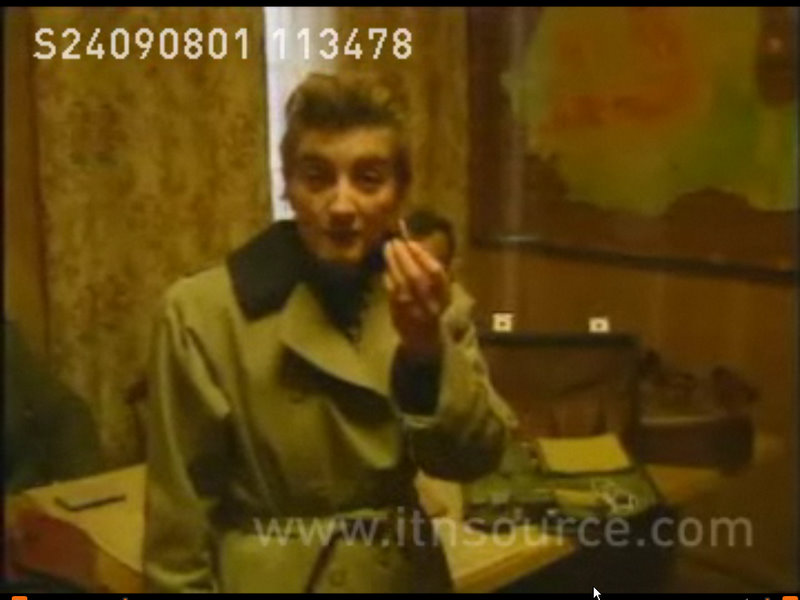
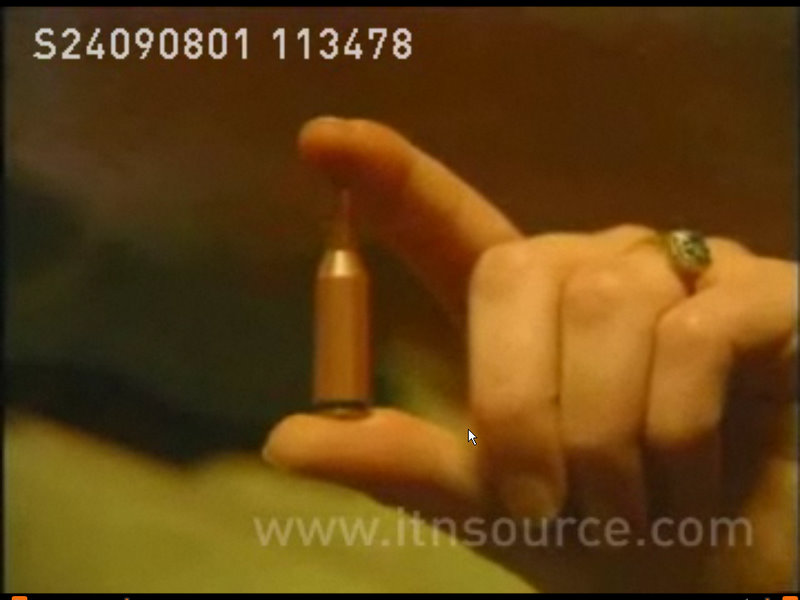
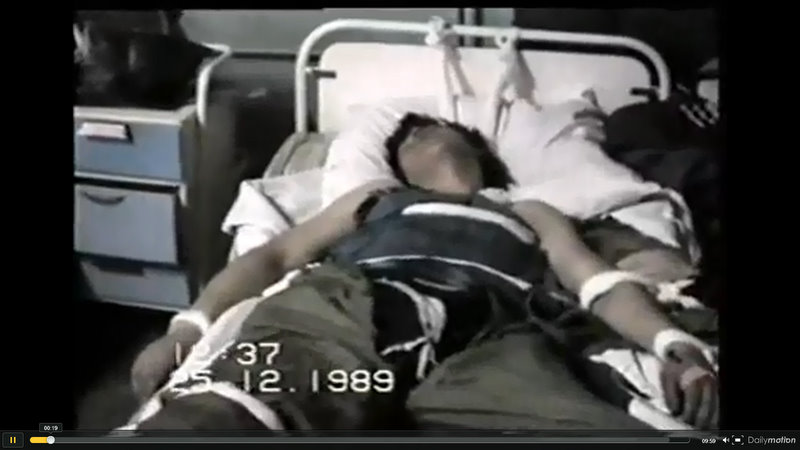
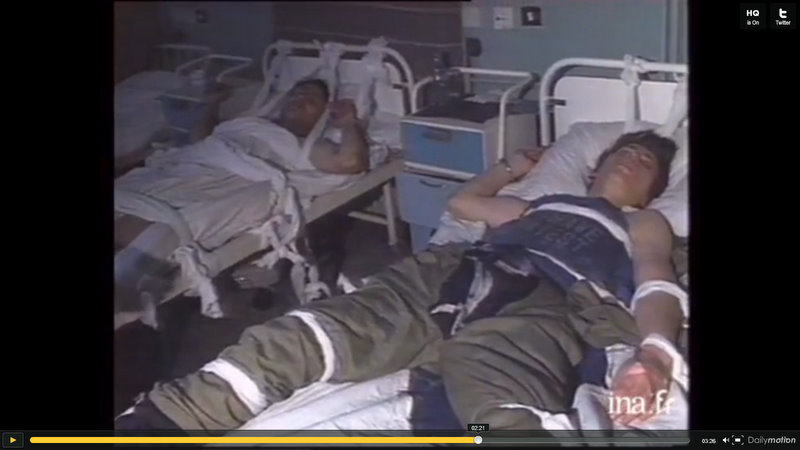


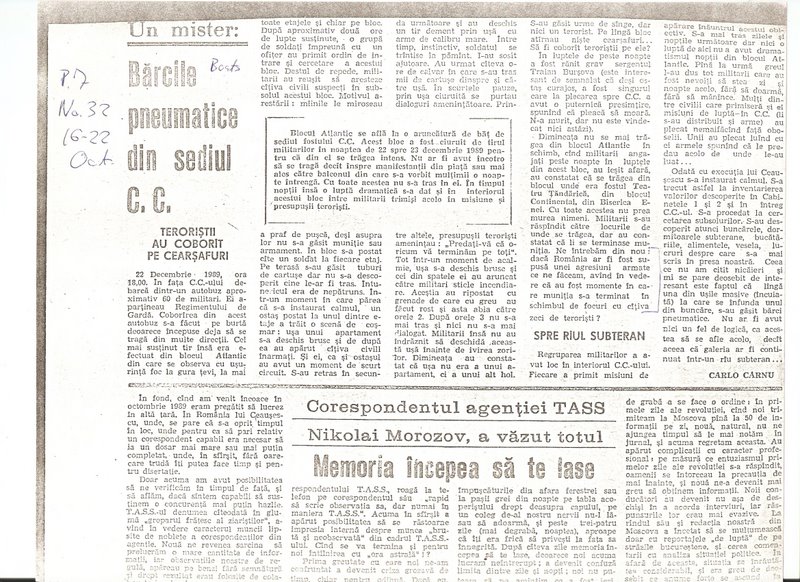


 The Archive of the Romanian Revolution of December 1989